
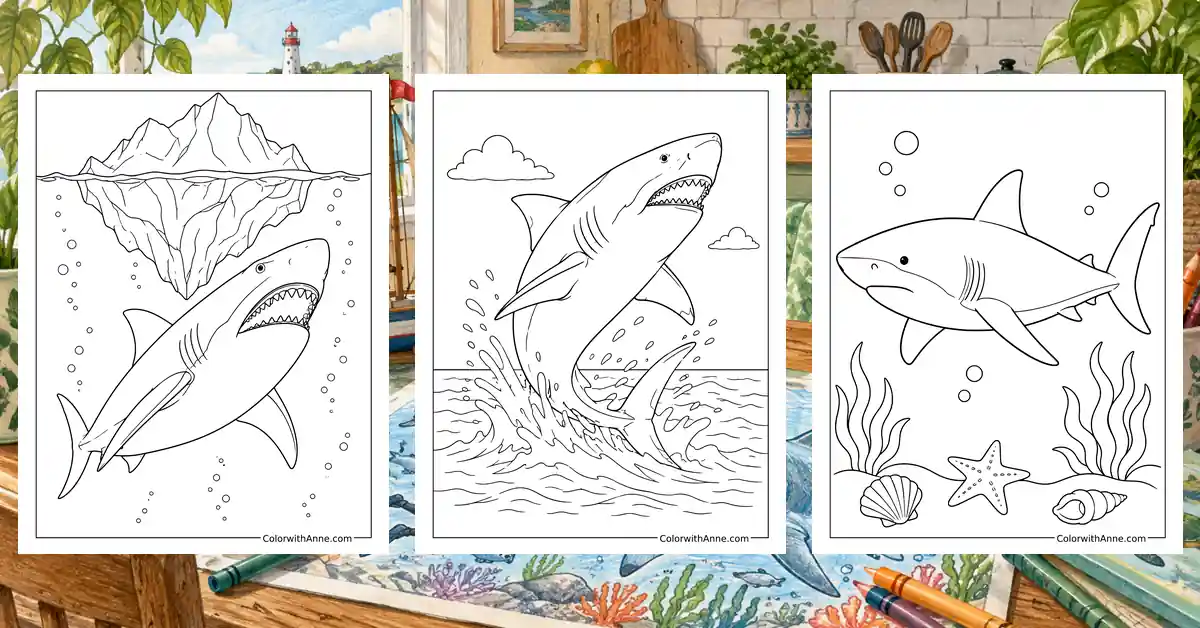
A fossil shark tooth can turn a casual browse through a museum shop into a lengthy discussion about what once swam in the ocean. Megalodon has that effect. Suddenly, the shark book comes off the shelf, the documentary gets another watch, and an ordinary beach holiday feels like an opportunity to inspect every interesting stone.
Megalodon coloring pages bring that prehistoric fascination onto paper, where the broad jaws and rows of teeth naturally hold the attention. The animal’s sheer presence invites a closer look at its shape, from the pointed fins to the sweeping tail. Even a generous sheet of paper seems a modest accommodation.
Free Printable Megalodon Coloring Pages
Click any coloring page below to open the PDF, then print on US Letter or A4 paper.
Did you find what you needed?
Help us choose what to create or improve next.
Coloring Ideas for Megalodon Pages
Try one of these coloring ideas, or use them as a starting point for your own.
Record an Imaginary Deep-Sea Encounter
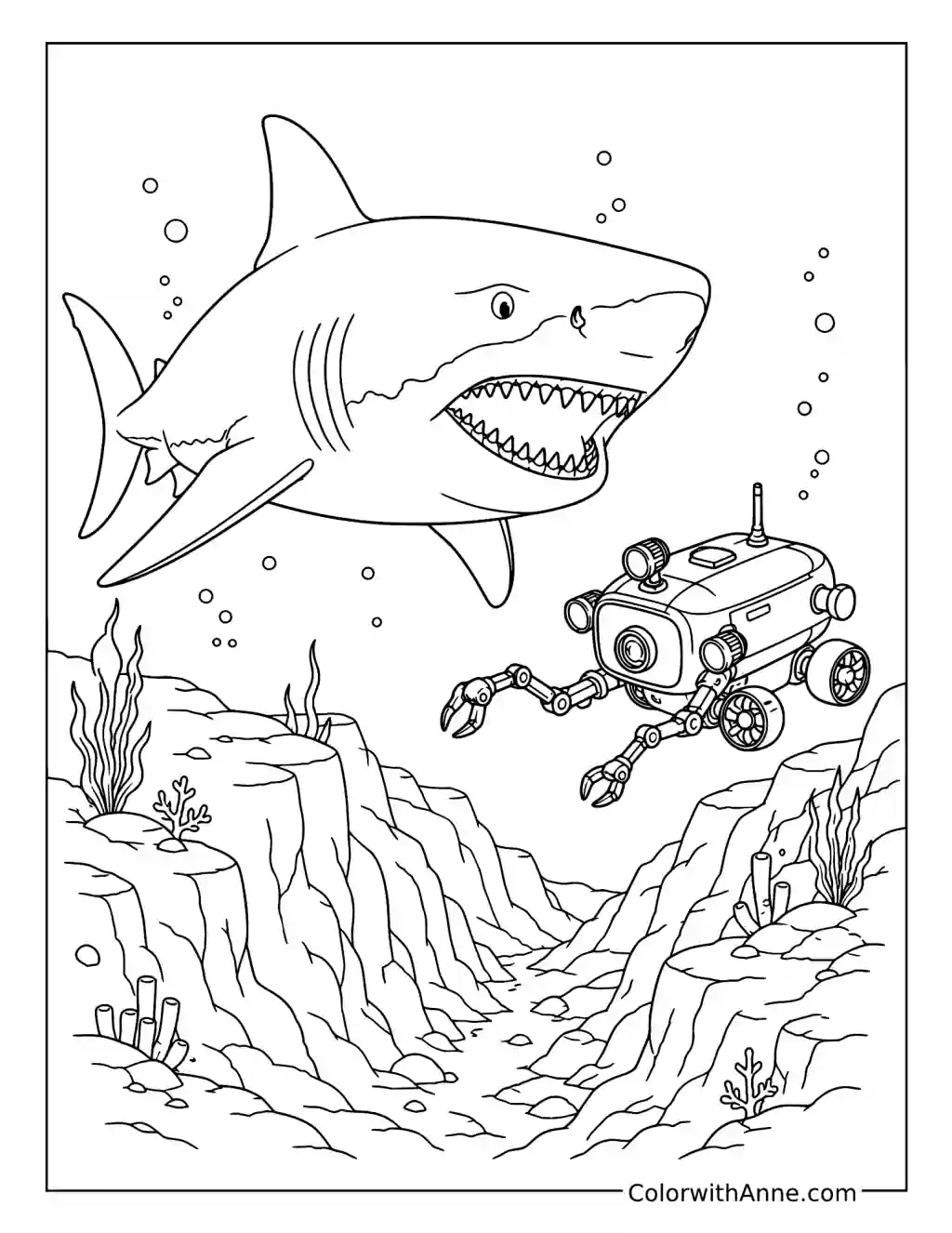
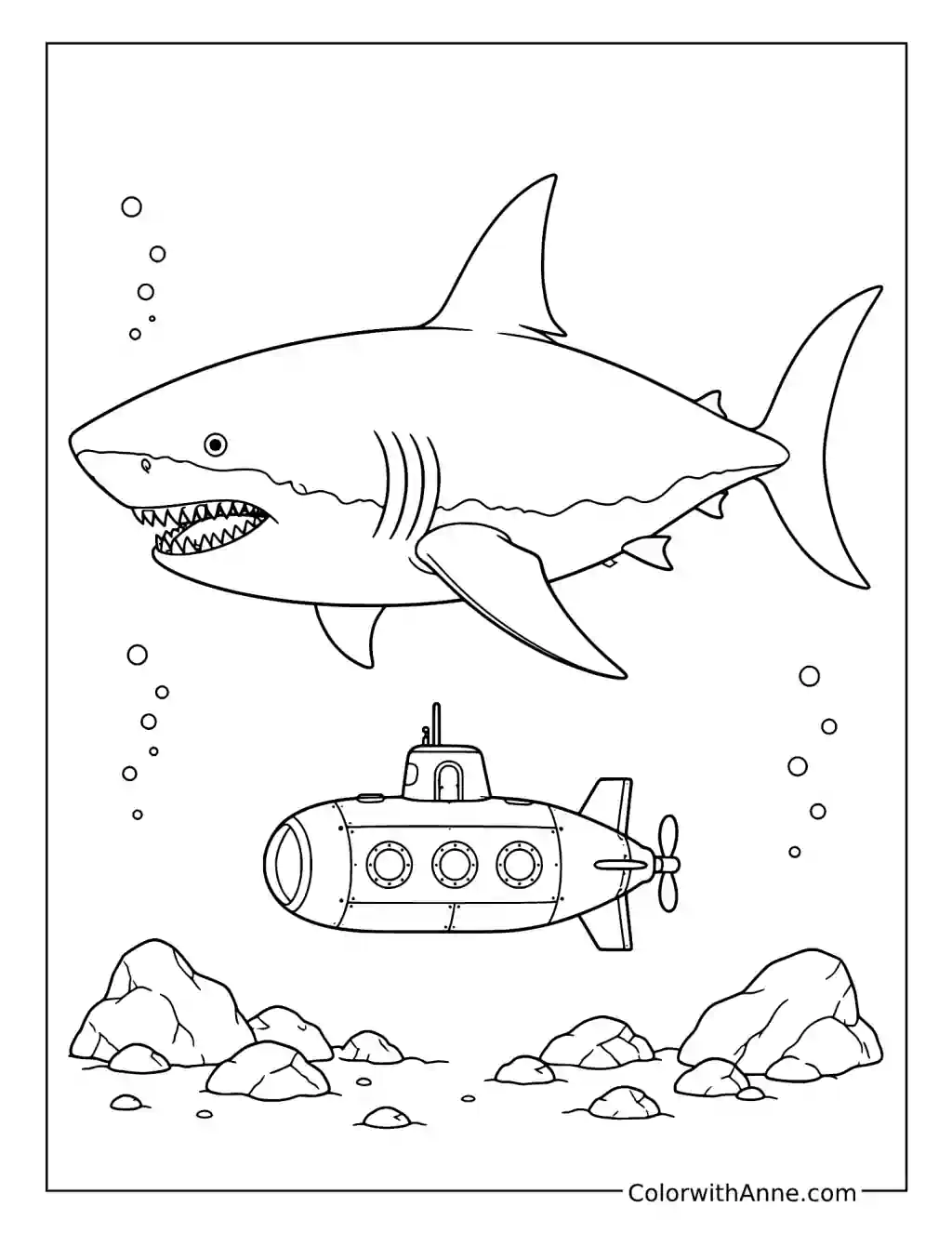
A small rover with wheels and jointed arms faces Megalodon above a rocky underwater channel. This imagined encounter suits anyone who enjoys exploration stories, especially the moment when a camera reveals something nobody expected.
Give the rover a name or a simple emblem on its casing. After coloring, write a short mission report on a separate card: what the camera saw first, what the operator noticed next, and whether the rover managed to keep filming. Keep the observations specific to the picture. A mouthful of teeth entering the frame would certainly deserve an entry in the log.
Leave a Clue at the Sunken Ship
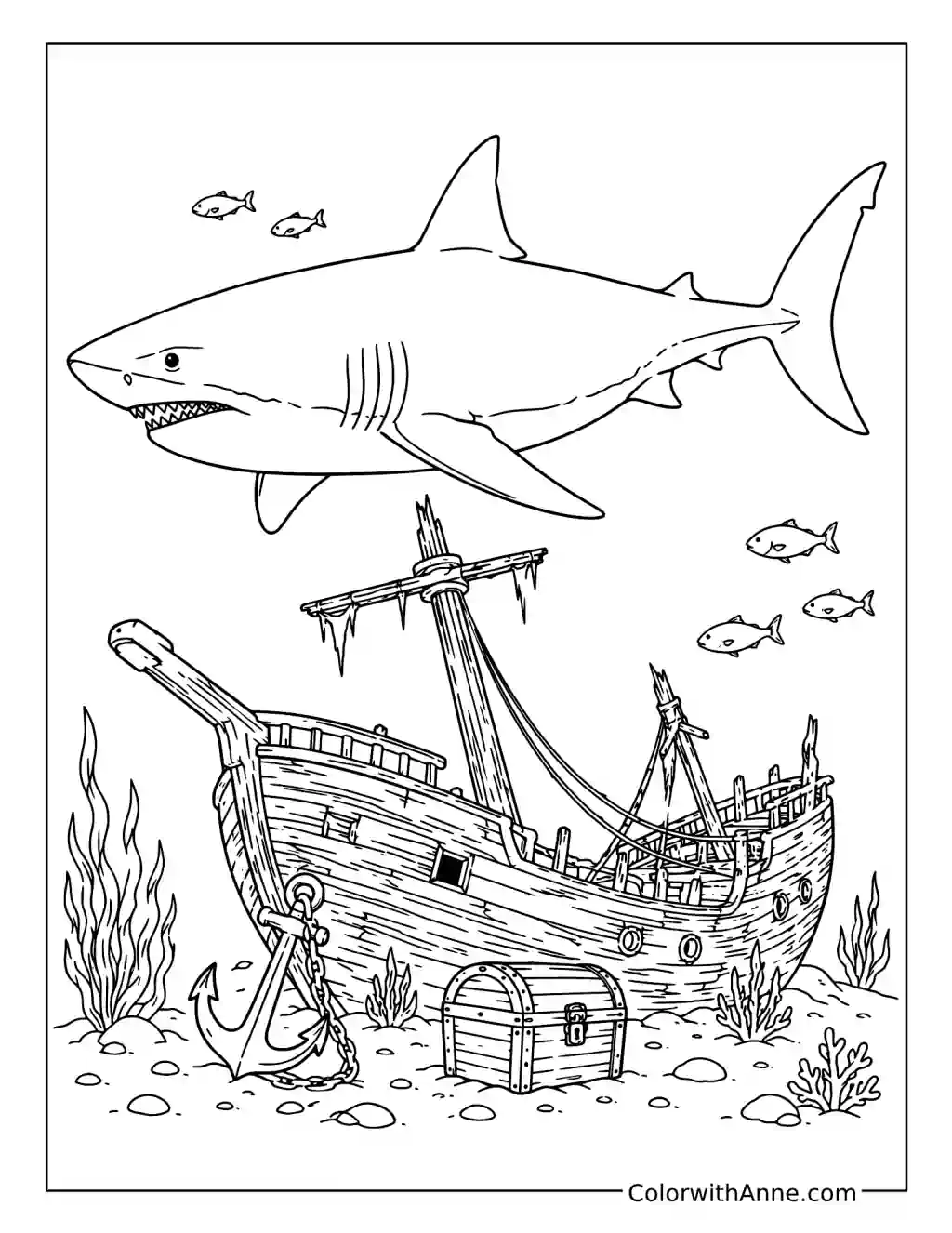
Megalodon swims above a damaged sailing ship, with an anchor and closed chest on the seabed. The wreck has enough detail to suggest a mystery without needing a whole adventure added around it.
Choose one small clue to draw on the chest or hull: an emblem, a faded name, or an unusual lock. Then decide what it might mean. Someone coloring alongside you could invent a different explanation for the same clue. Weathered wood and patches of growth will help the ship look long abandoned, while the shark continues past, apparently uninterested in anyone’s theories about the contents.
Follow the Fish around Megalodon
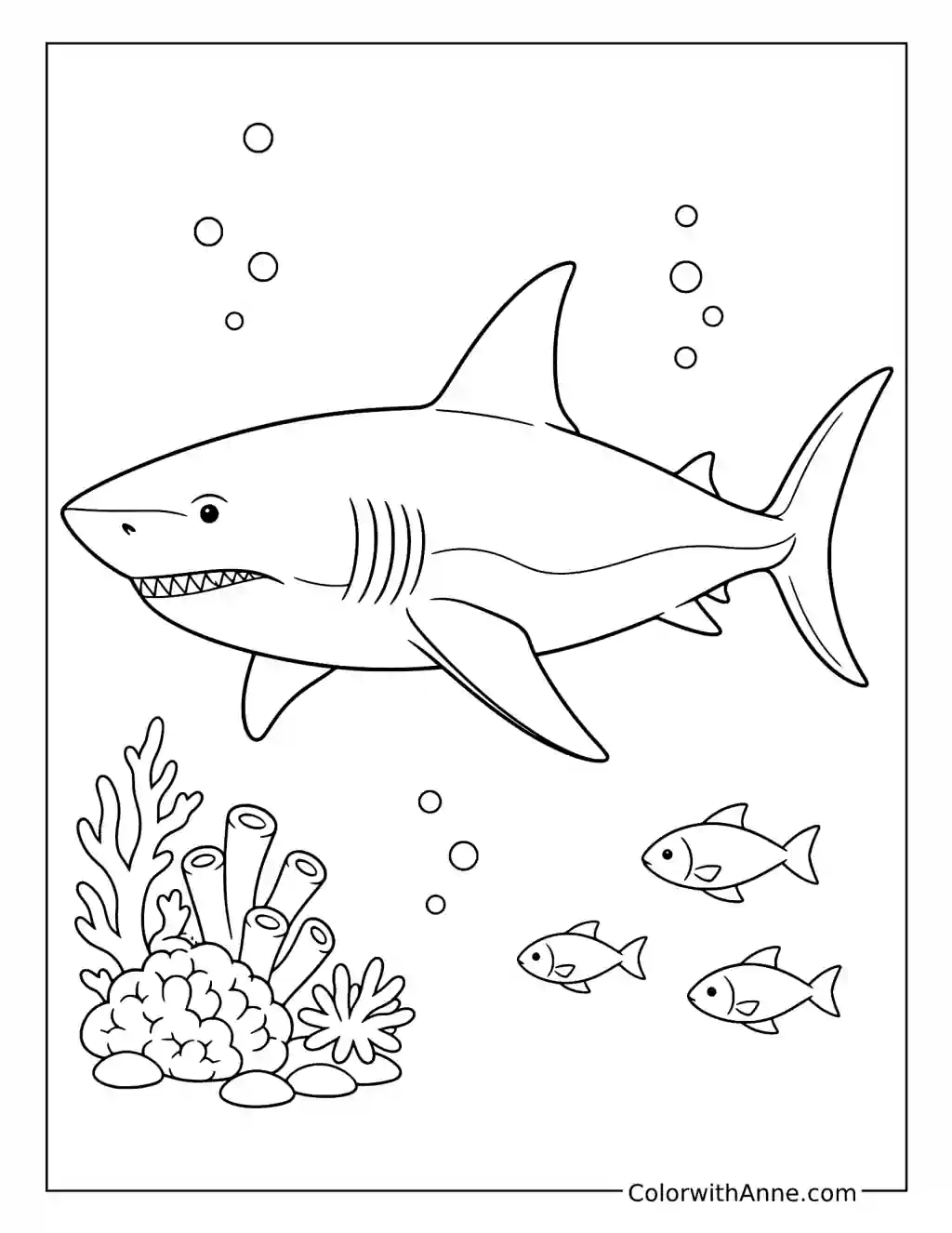
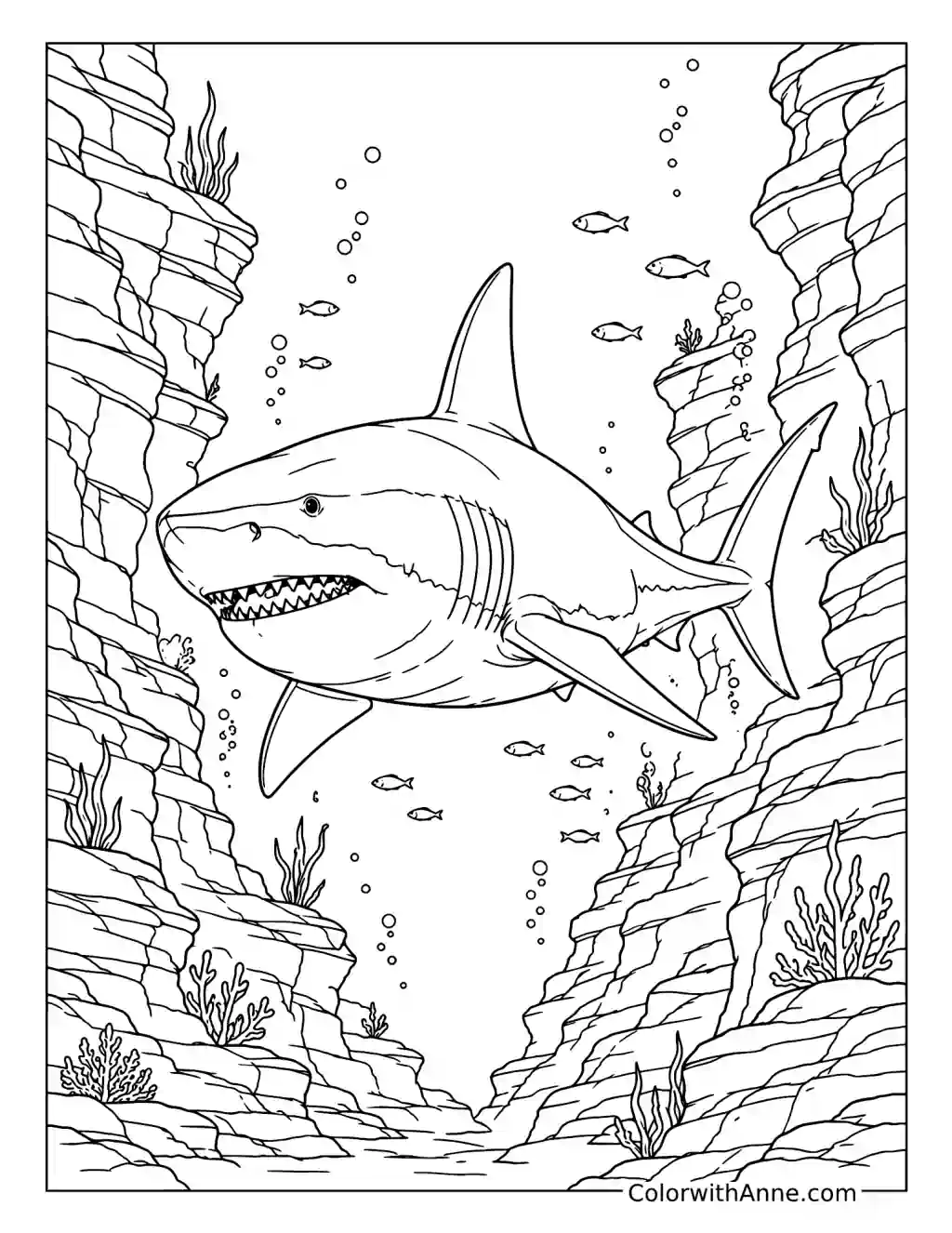
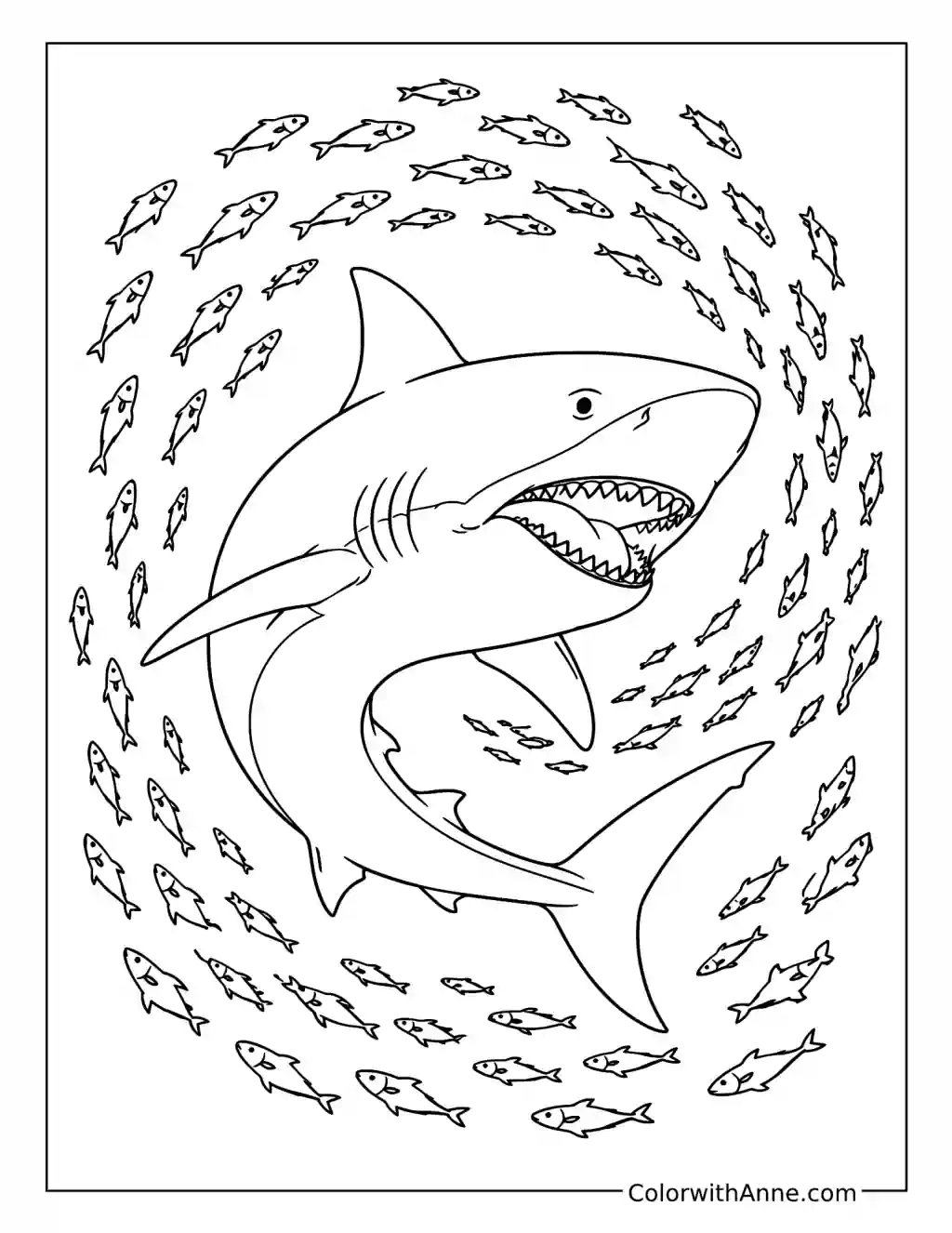
Small fish form a sweeping ring around the much larger shark. Follow their direction around the page before starting, noticing how the curve tightens and opens.
Try giving neighboring groups a repeated marking, such as a dark tail or a narrow stripe. Move around the circle in short stretches rather than treating every fish as a separate project. Keep Megalodon’s body comparatively simple so the school’s pattern remains visible. The repeated shapes supply much of the pleasure here; a few fish at a time gradually become a whole moving formation.
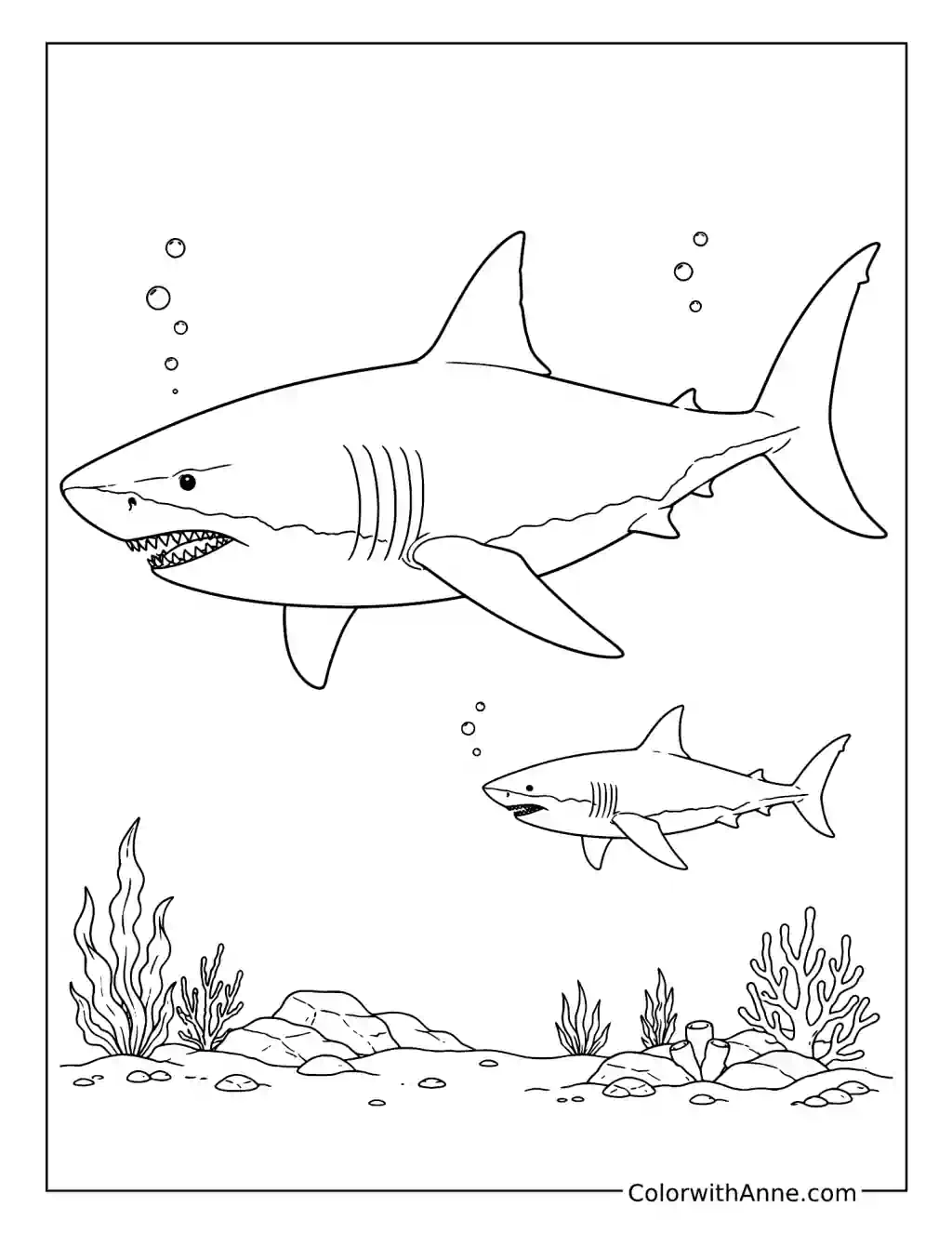
Explore the Size Difference with a Great White
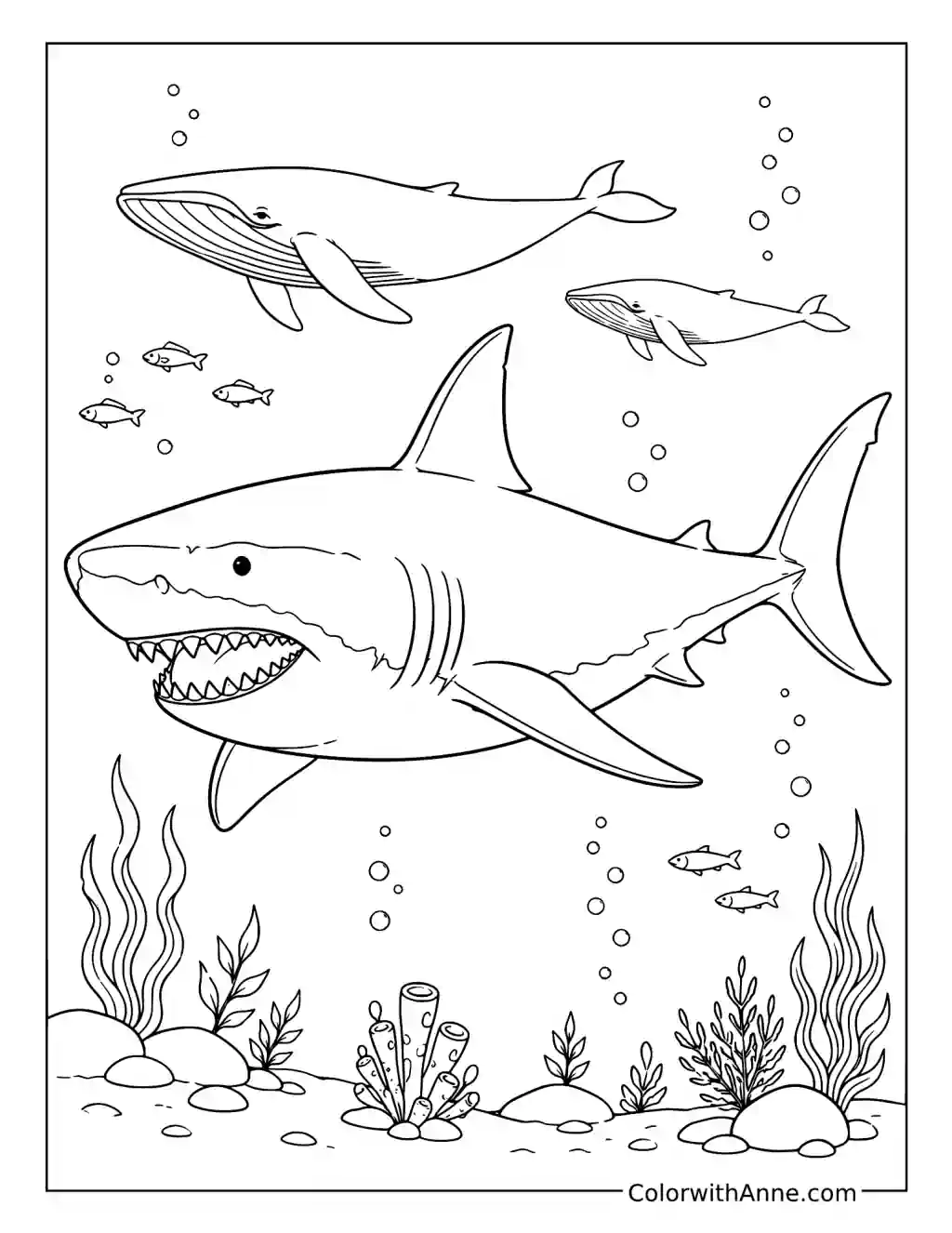
The small great white beneath Megalodon makes the larger shark’s presence immediately noticeable. Color both first, keeping their outlines clear enough to compare the bodies, fins, and tails.
If the size difference sparks questions, use a shark reference book to make a separate comparison strip. Choose one published length estimate for each animal, note the source, and draw both using the same scale. That lets the illustration remain an imaginative scene while the strip handles measurements. It is a worthwhile little extension for someone who always wants to know how an enormous animal compares with something familiar.
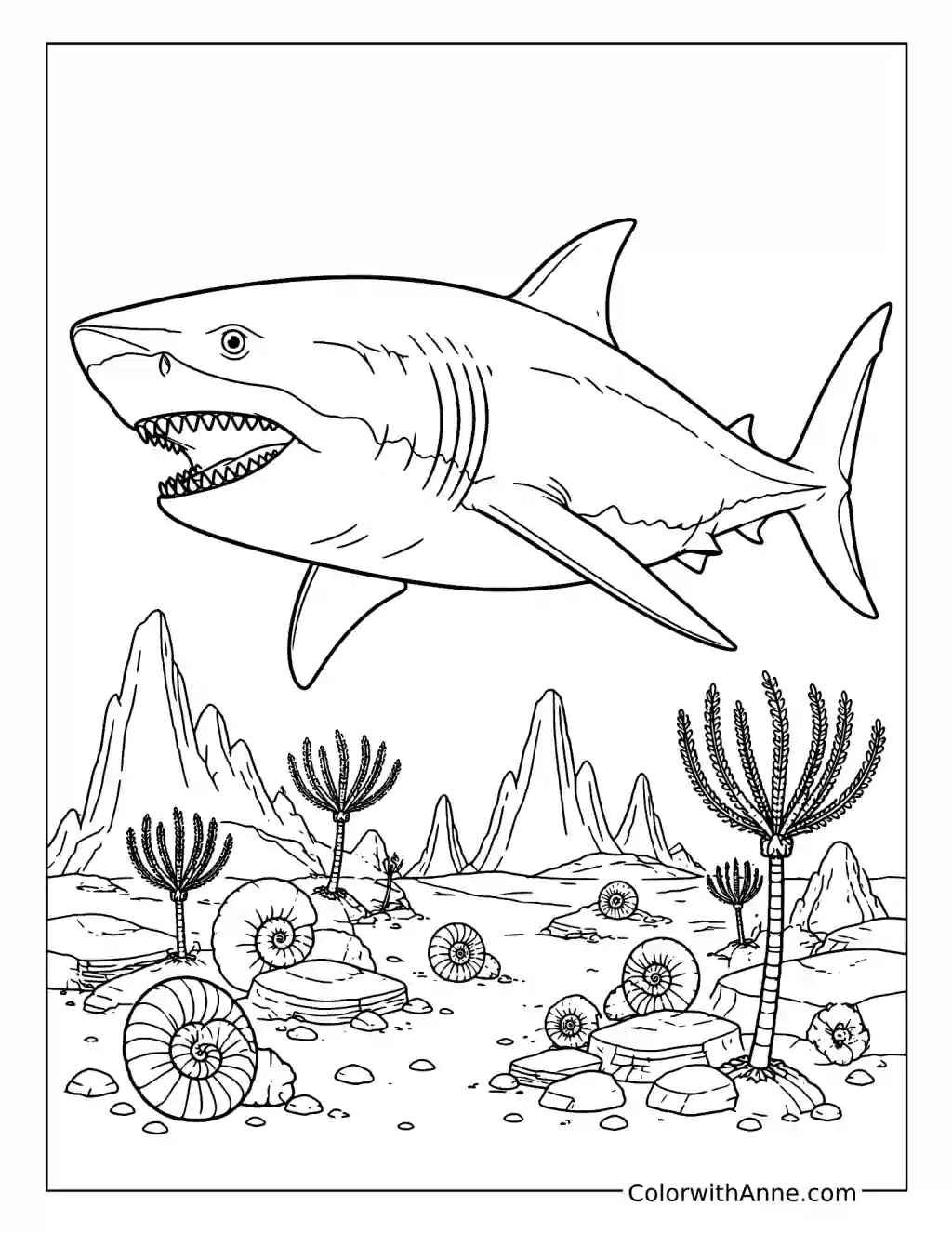
Bring Shell Textures to the Prehistoric Seabed
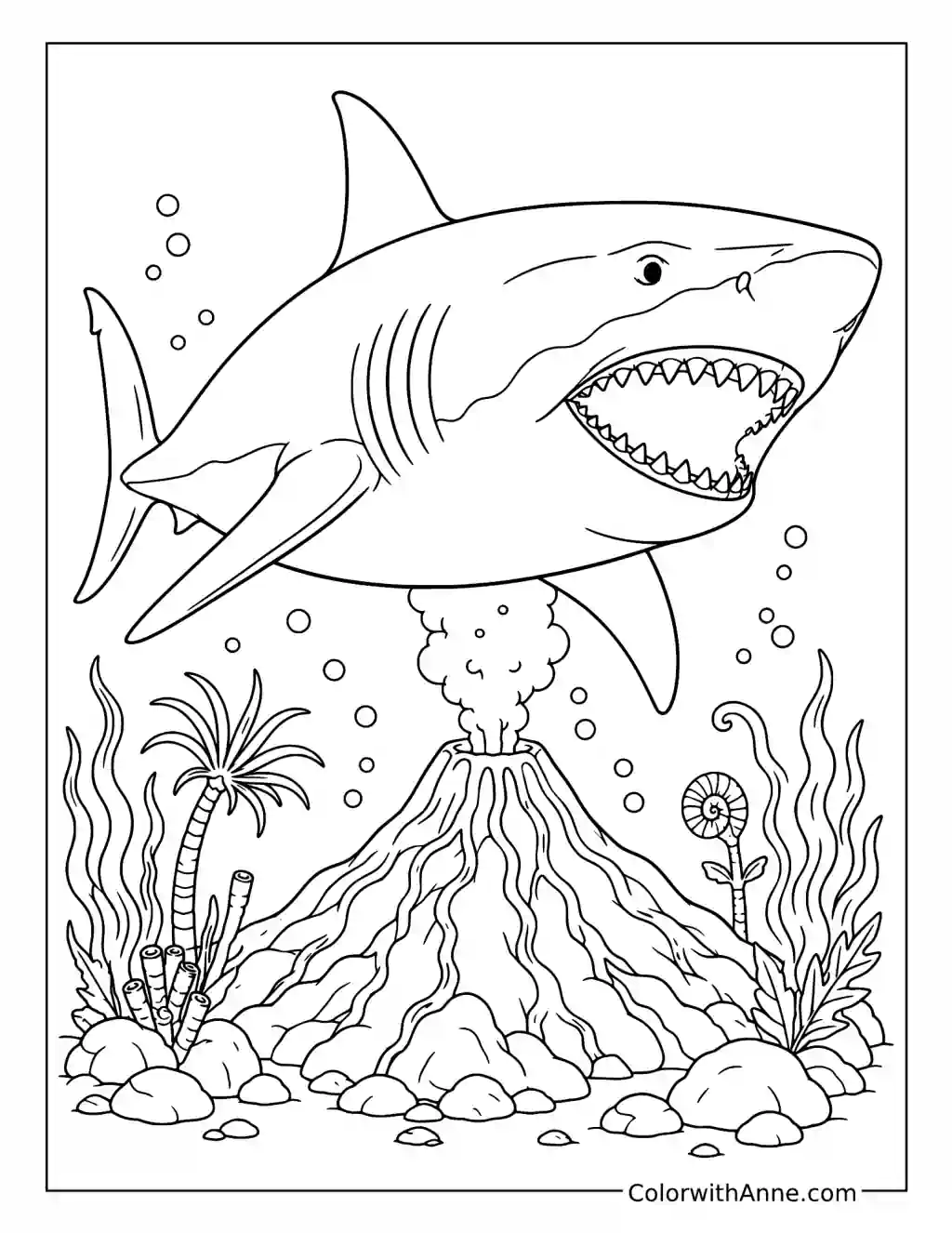
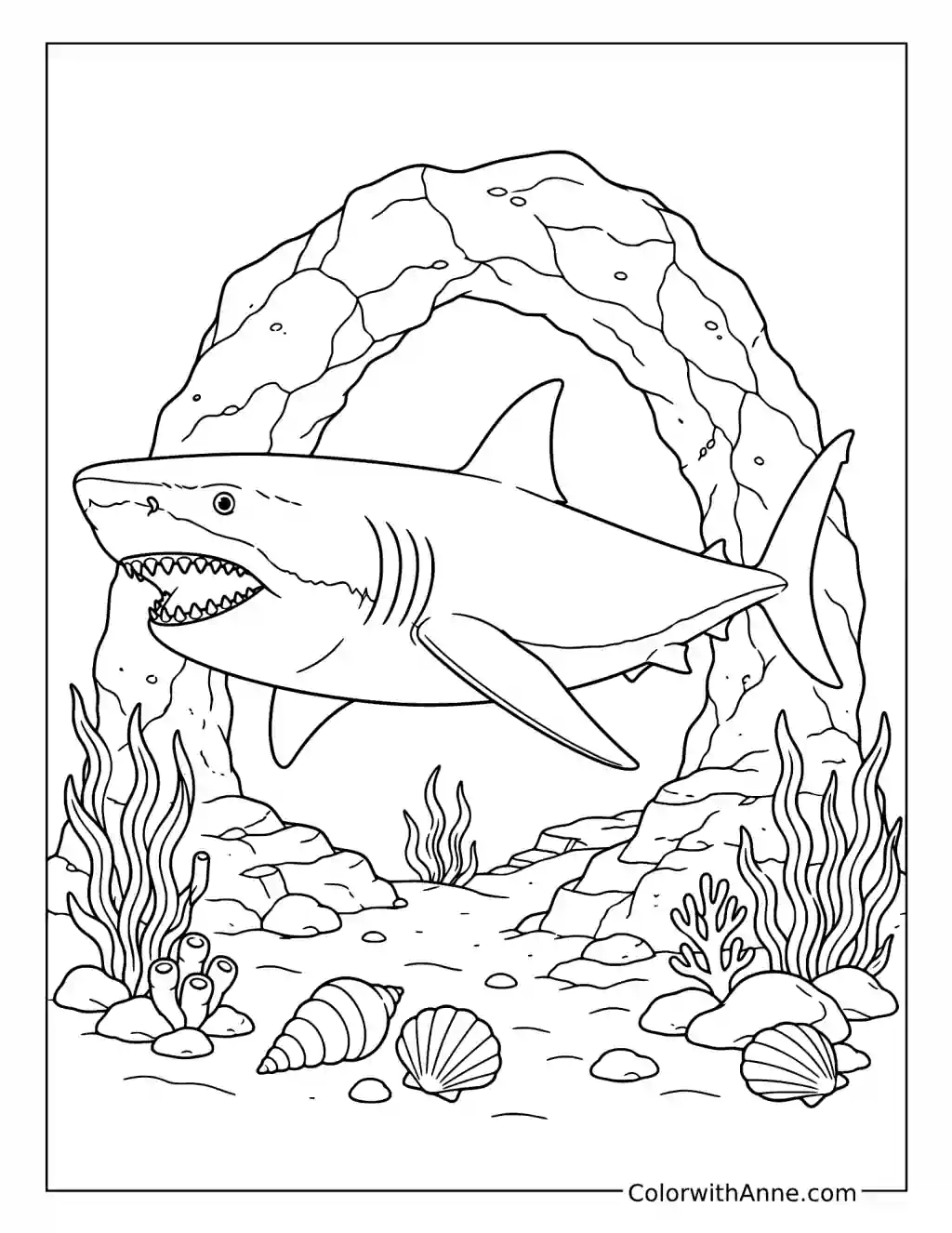
Spiraled forms, branching growths, rocks, and tall formations fill the seabed beneath Megalodon. There is plenty to enjoy below the shark, especially if interesting shells and stones tend to come home from beach walks.
Set a few collected objects beside the page and examine their grooves, ridges, and worn edges. Borrow those textures for the drawn forms without needing to identify every one. Fine curved marks can emphasize a spiral, while irregular patches distinguish rough stone. Leave some gaps between the details so the seabed feels varied rather than uniformly patterned.
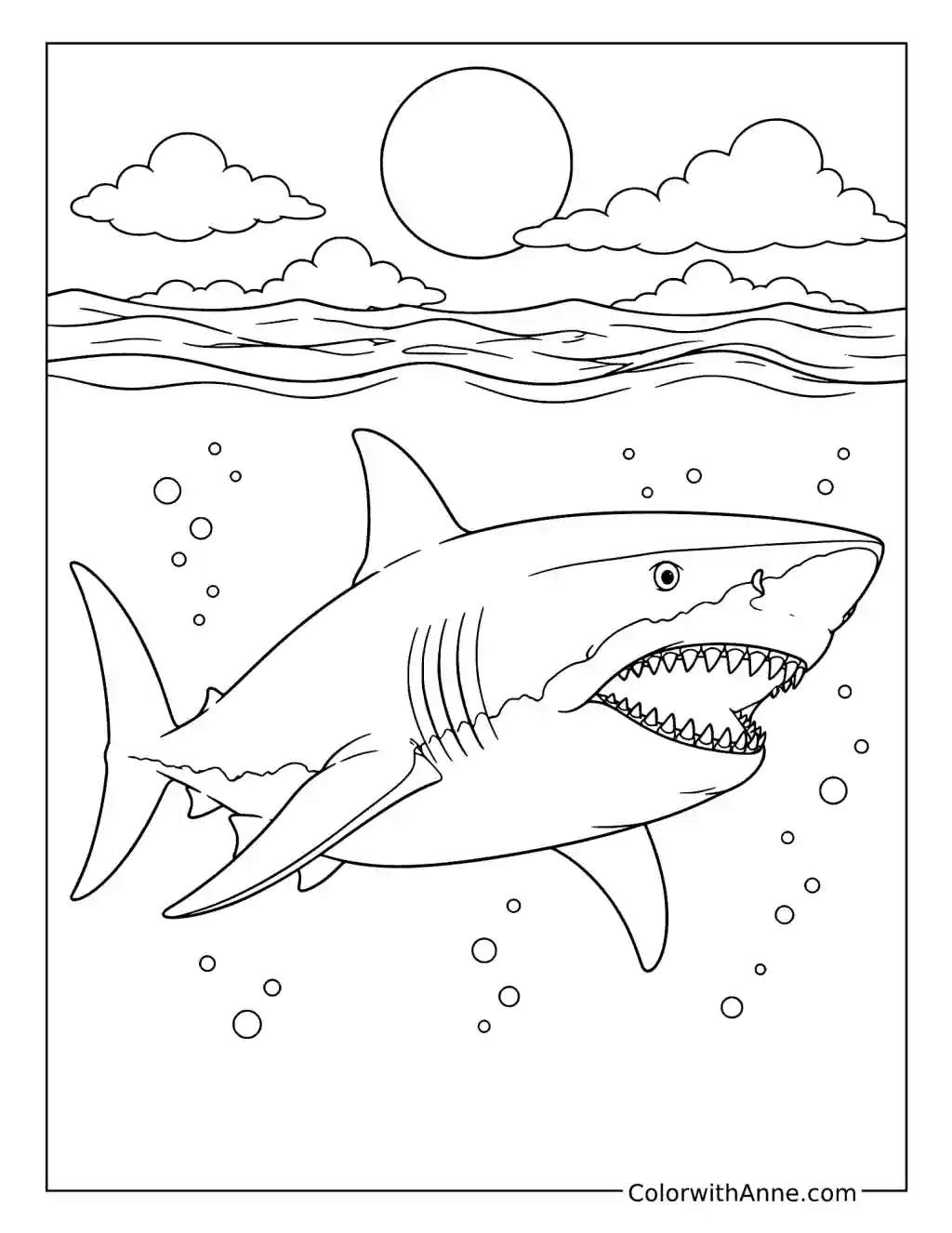
Keep the Moonlit Ocean Quiet
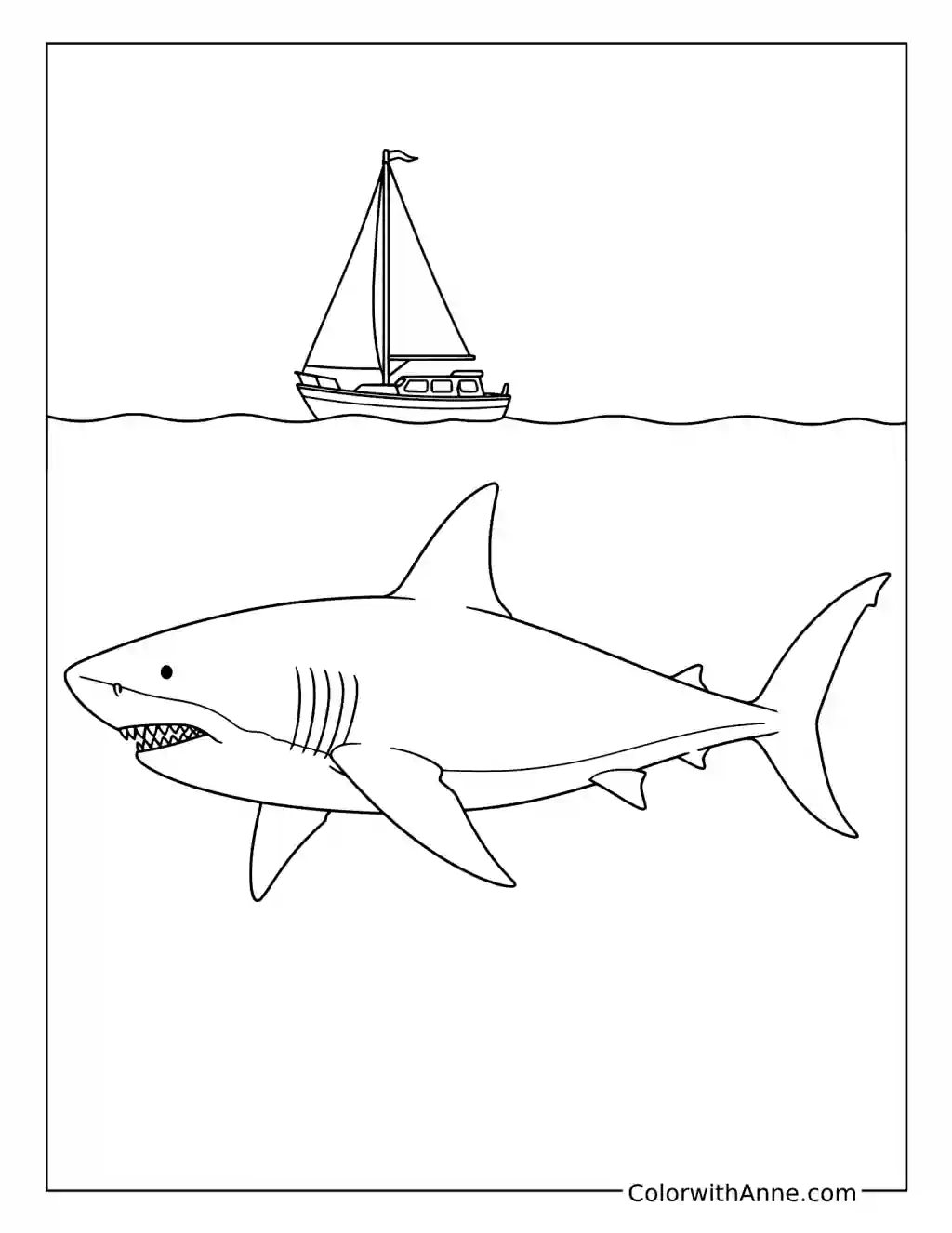
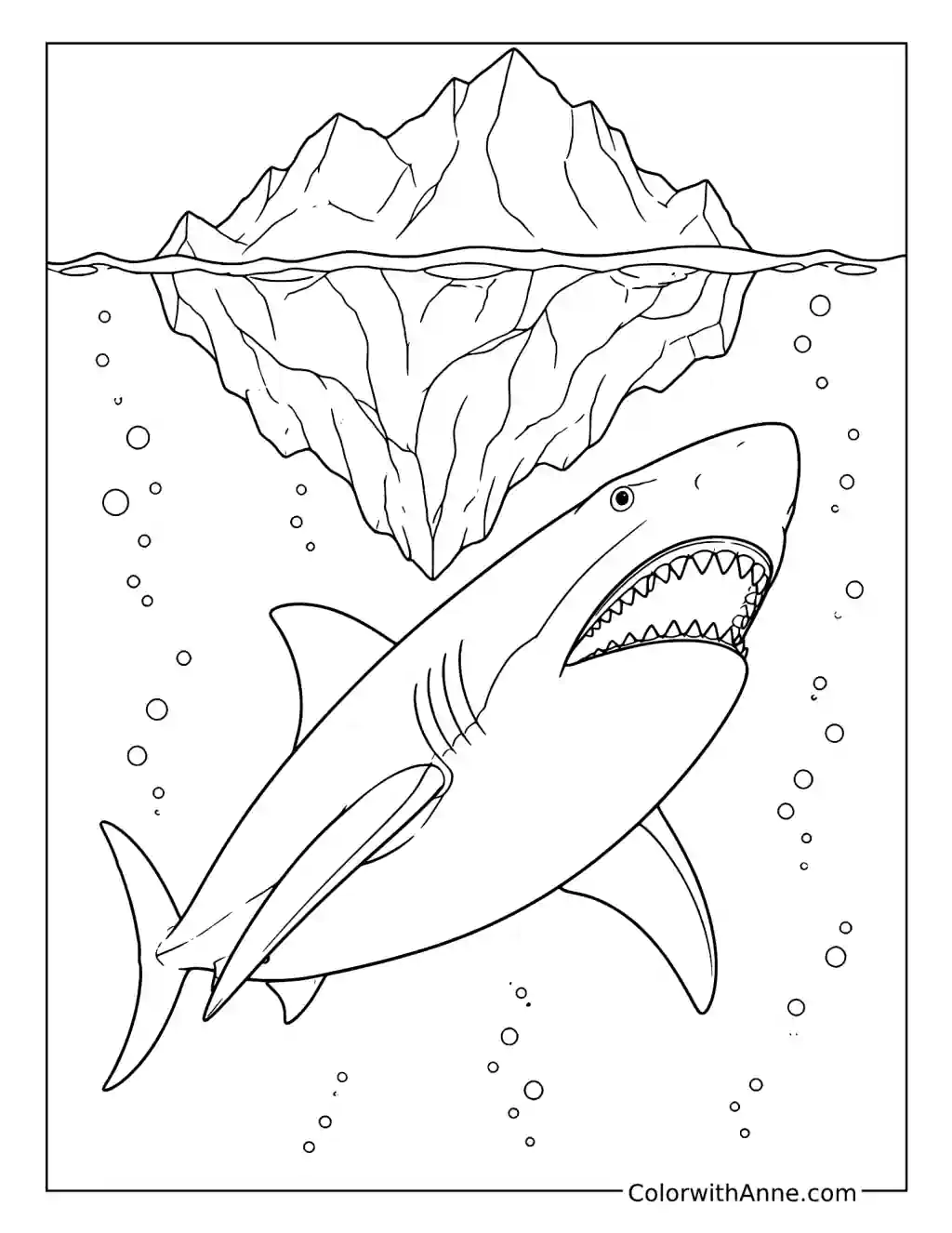
The moon hangs above clouds and rolling waves, while Megalodon swims beneath the surface. The division between sky and water gives this scene its atmosphere.
Try carrying a narrow patch of moonlight across the wave tops, then allowing it to fade below the surface. Keep the shark’s upper outline visible without emphasizing every tooth equally. Viewed from a little distance, the picture can reveal the peaceful sky first and the enormous swimmer second. It is a satisfying choice when the interest lies in what remains partly concealed.
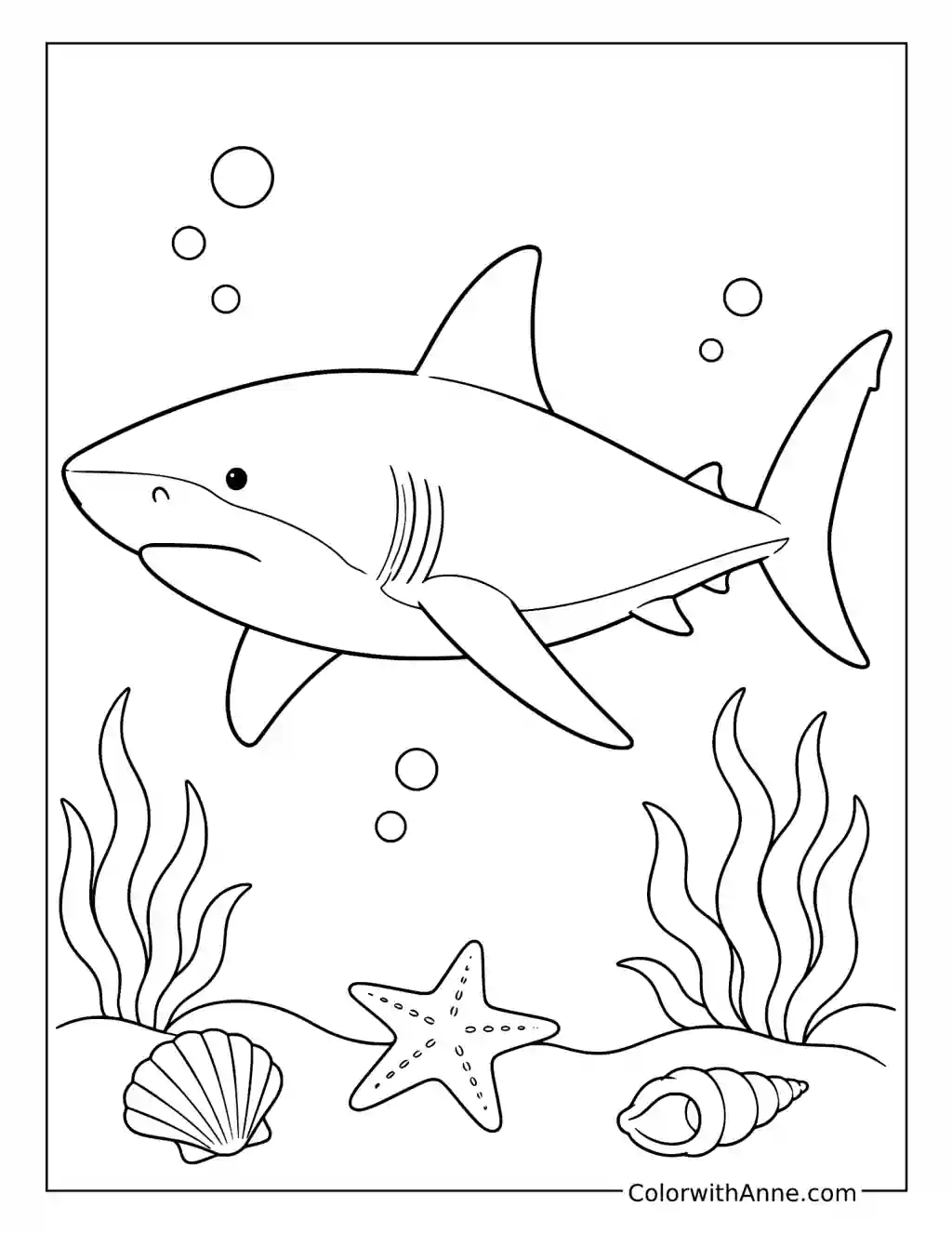
Make a Small Ocean Scene for the Baby Megalodon
This round-eyed baby swims above a starfish and shells, with seaweed rising on either side. Its gentler expression makes it a fitting character for a homemade tabletop ocean.
After coloring, carefully cut around the shark and mount it on a folded card tab. Draw waves on another piece of card to stand behind it, then add the pictured shells and starfish along the base. Keep the pieces movable so the scene can change. A child who enjoys arranging toy animals may have as much fun choosing where this little swimmer goes as finishing the picture.
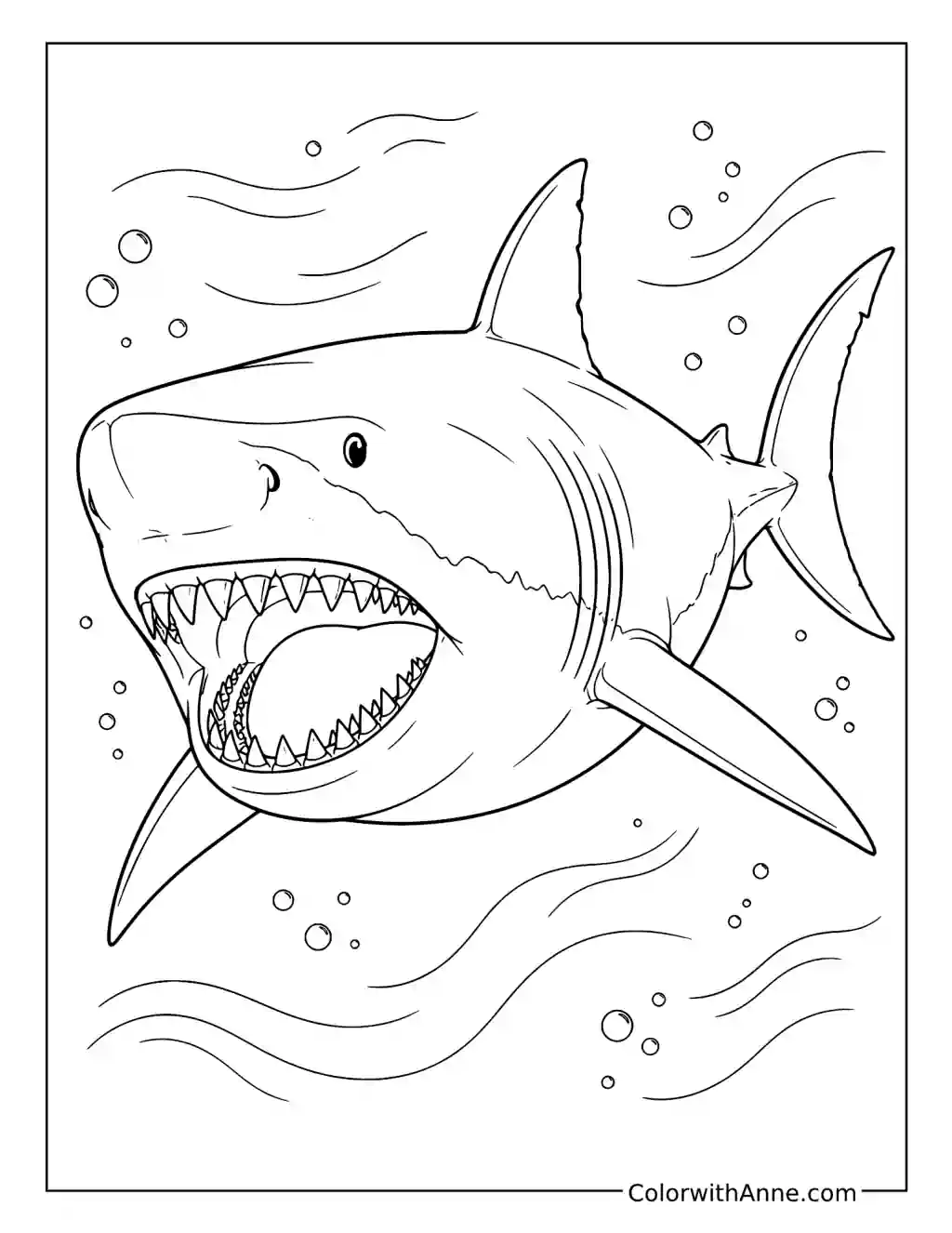
Give the Open Jaws a Movie-Poster Presence
Megalodon turns toward the viewer with its jaws wide open, surrounded by bubbles and curved water lines. The close view already has the impact of a shark-film poster.
Keep the teeth clearly separated from the darker mouth, and let the surrounding water stay less prominent than the head. If shark movies are a favorite, add an original film title in the open space above or below the animal. Try it on scrap paper first so the lettering fits. The image supplies the drama; a short title can do the rest.