
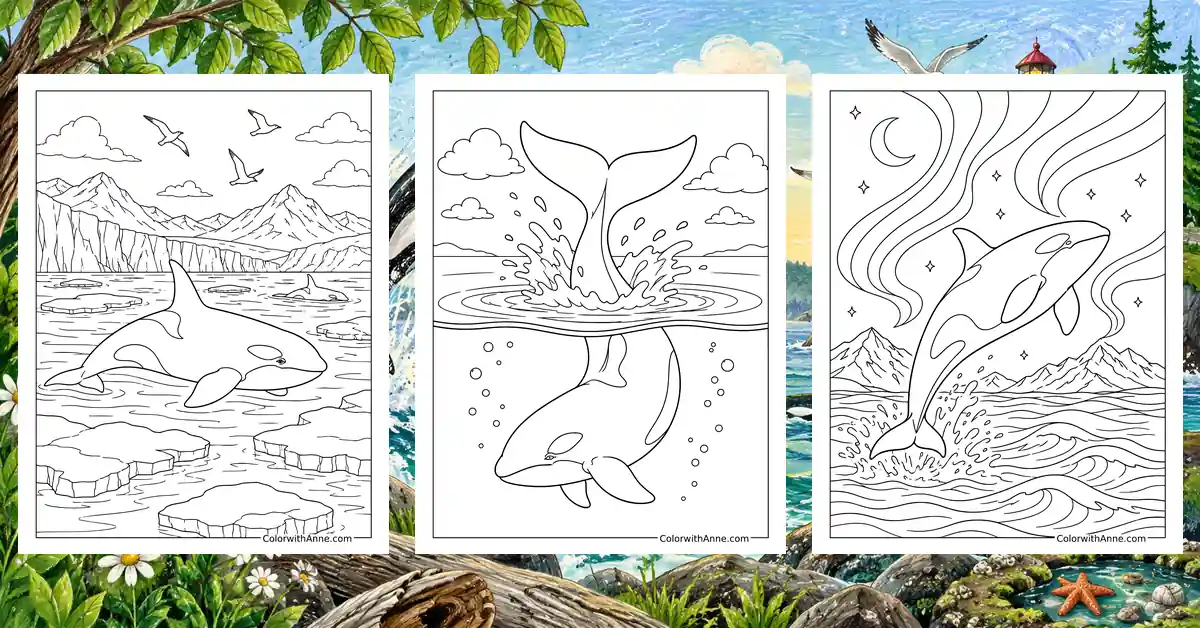
A dark fin breaks the surface, and suddenly everyone watching from shore forgets about the wind. An orca rises for a breath, then slips beneath the water with barely a trace of all that size. The next glimpse might come farther along the coast, leaving binoculars pointed at a perfectly empty patch of sea.
Orca coloring pages bring that fascination closer, without the chilly wait on a shoreline. The familiar black-and-white markings give a child something to recognize, while the picture can make room for questions about life below the waves. An afternoon at the table suddenly has a little ocean in it.
Free Printable Orca Coloring Pages
Click any coloring page below to open the PDF, then print on US Letter or A4 paper.
Did you find what you needed?
Help us choose what to create or improve next.
Coloring Ideas for Orca Pages
Try one of these coloring ideas, or use them as a starting point for your own.
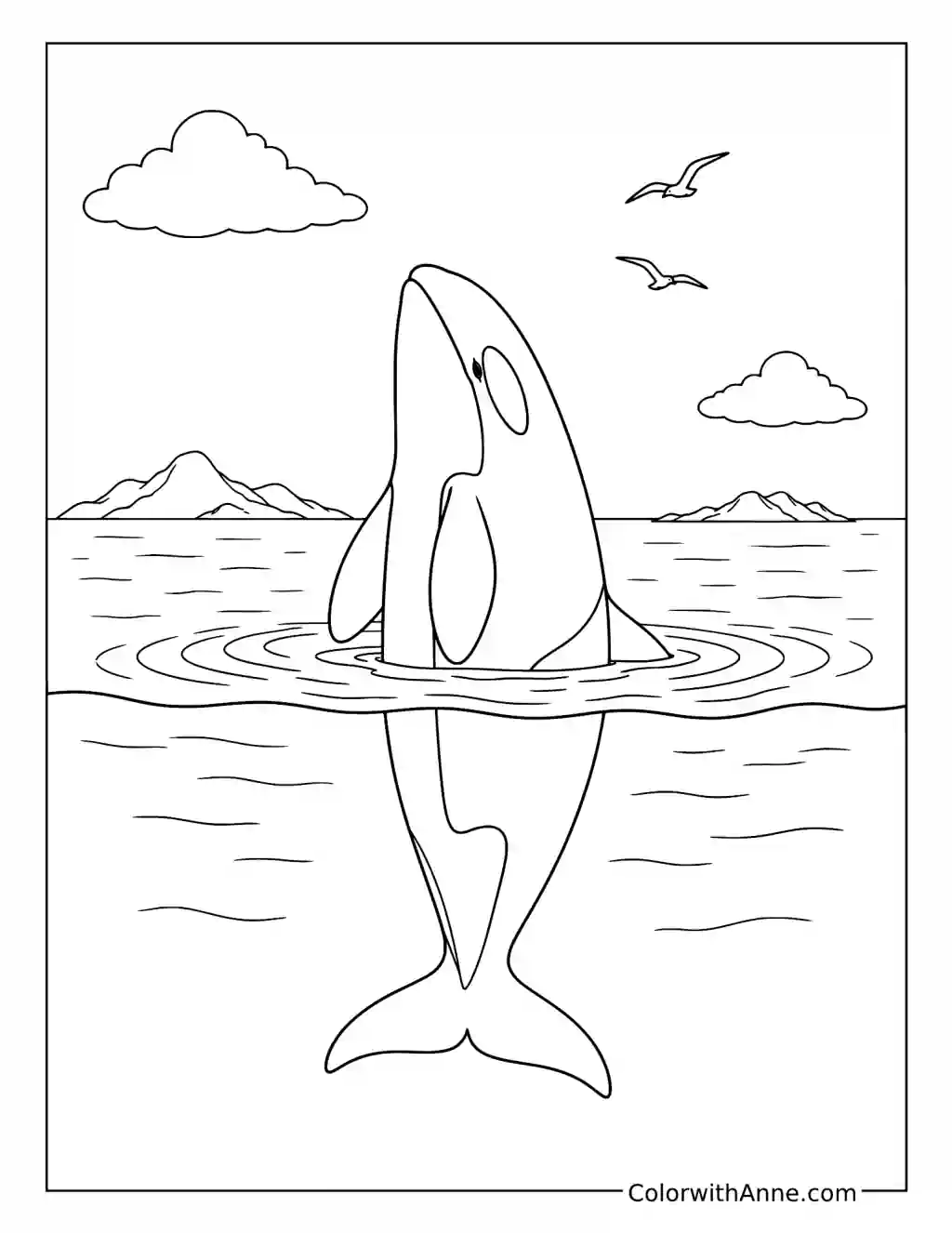
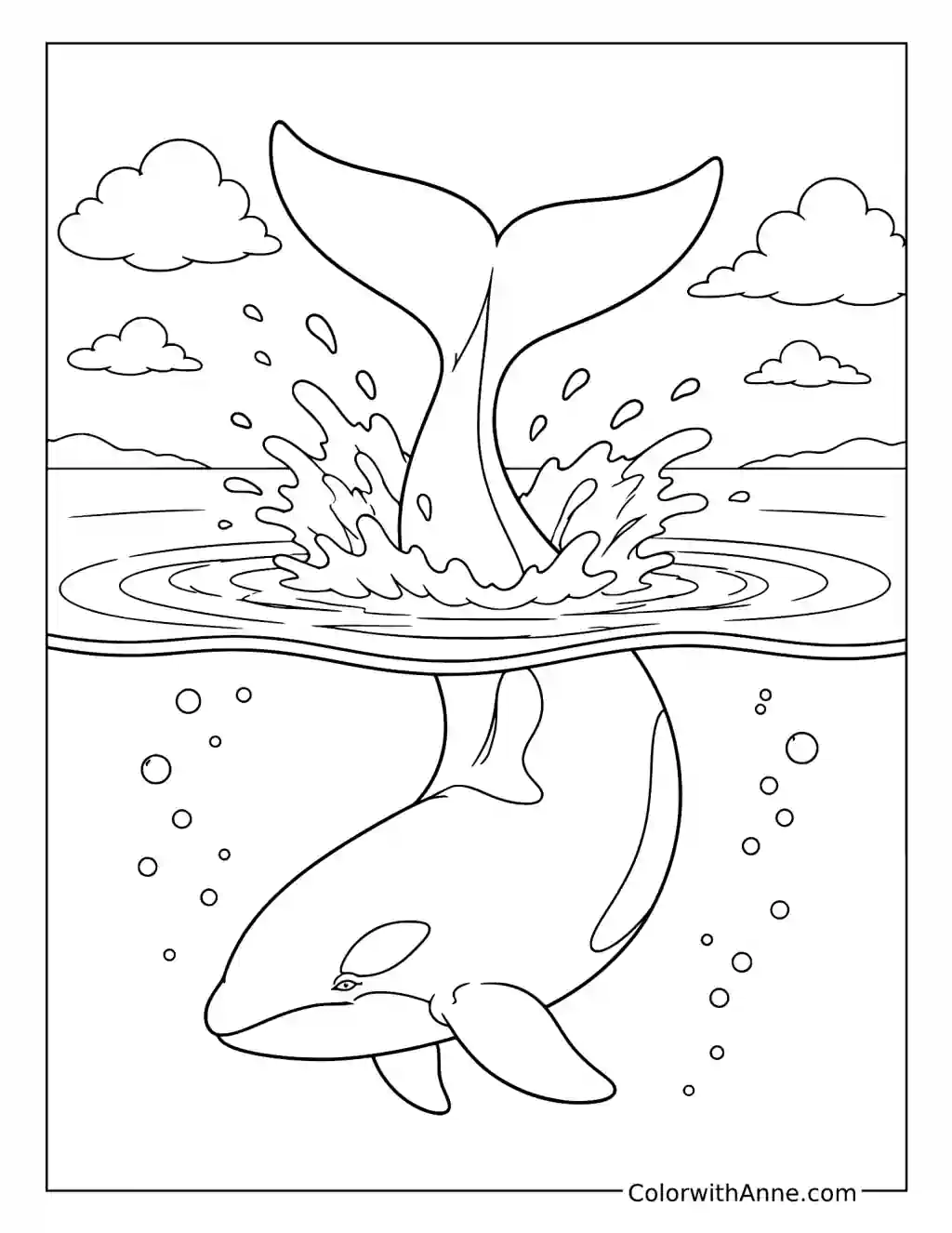
An Orca Takes a Look Above the Surface
The orca rises upright through a ring of ripples, with its tail still visible below the water. That split view is the pleasure of this picture: a watcher on shore would see only part of what the page reveals.
Try giving the water below the surface a light blue tint that passes over the submerged body, while keeping the markings above it crisp. The waterline will then feel like a boundary the animal is moving through.
For a small drawing addition, imagine where the two seabirds might land and sketch a distant rock for them. Keep it near the horizon so the orca’s curious-looking pose remains the center of attention.
The Same Ocean, Two Different Sunsets
The sun sits low behind a breaching orca, and the waves fill the foreground. It is a scene that can change dramatically without adding a single new shape.
Print two copies and try different moments in the evening. Give one a golden sky with warm light on the water; let the other move toward pink, violet, and deep blue. Keep the orca’s markings similar in both so the surroundings do the work.
Display the finished pages together. Comparing them is more interesting than deciding which is better: one may feel like the last bright minutes of a coastal afternoon, while the other seems ready for everyone watching to pull on another layer.
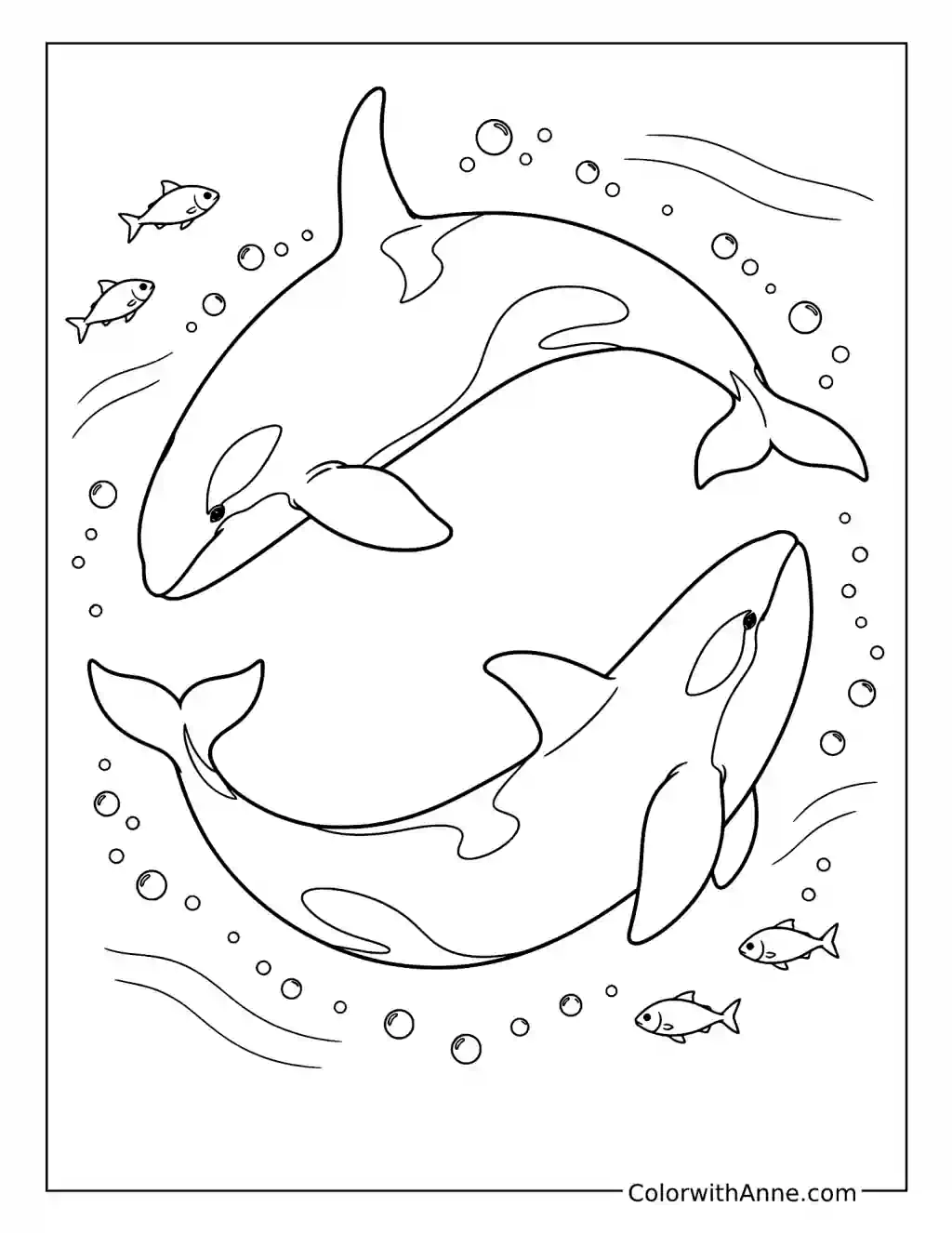
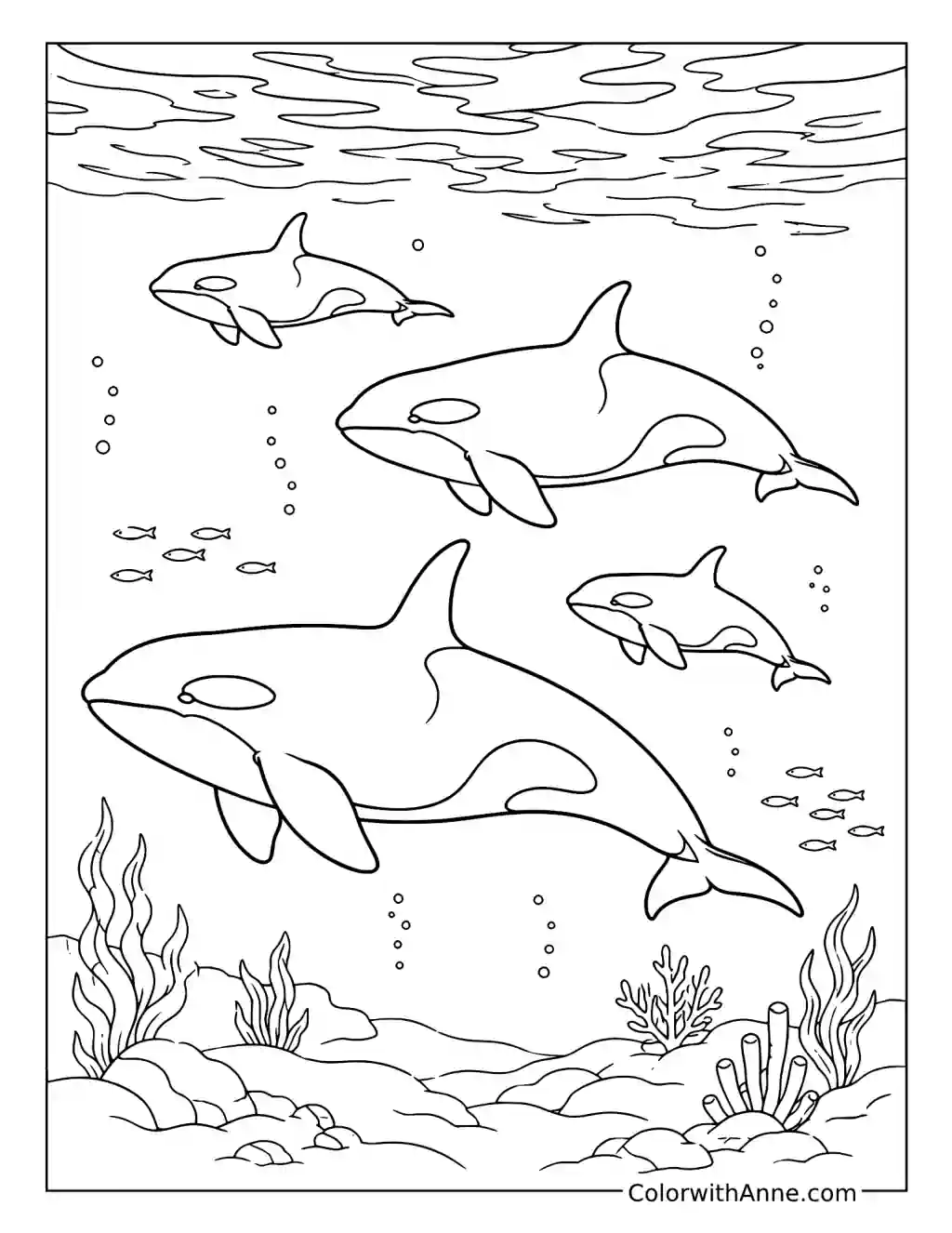
Two Orcas Make a Picture to Share
These two orcas curve around an open center, with bubbles and small fish following the circular arrangement. Neither animal has to be the main character, which makes the design especially inviting for a shared afternoon.
Let each person take one orca, then agree on how to finish the water around them. Turn the page as you work so both animals are comfortable to reach. Their different positions are part of the fun; there is no single right way up while coloring.
The open middle can hold a short handwritten greeting if the finished picture is becoming a gift. Try the wording on scrap paper first, keeping enough space around it for the two swimmers to remain clearly separate.
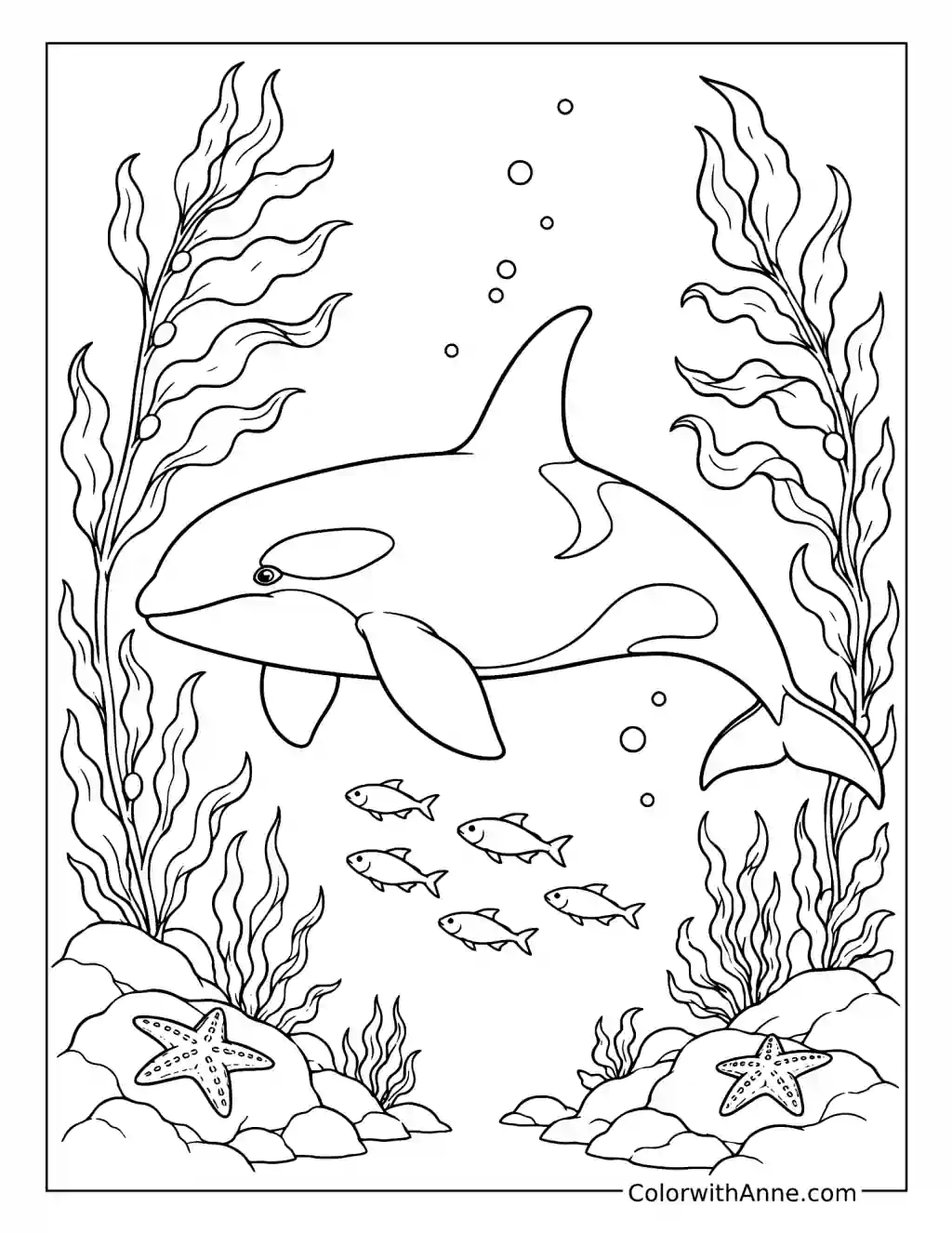
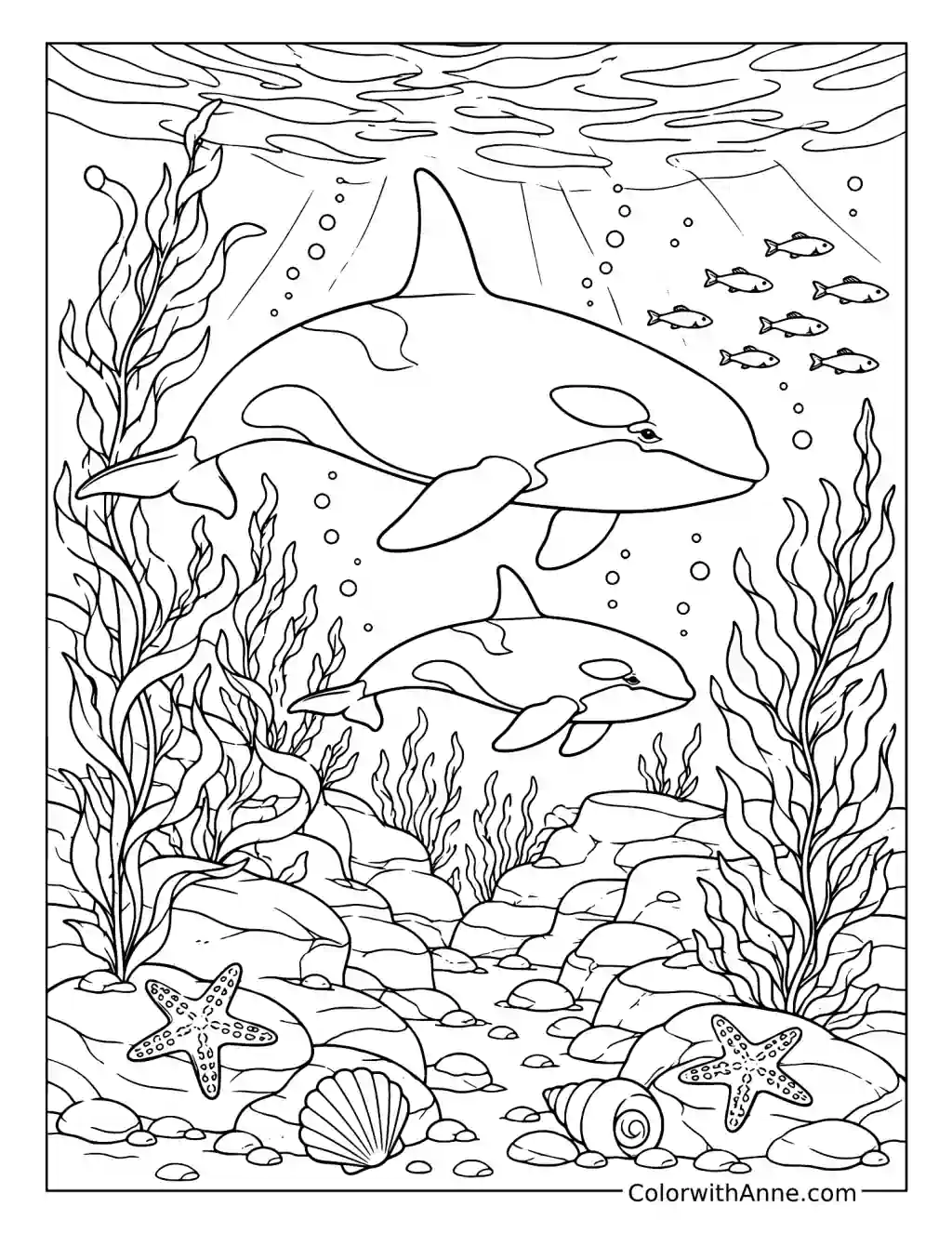
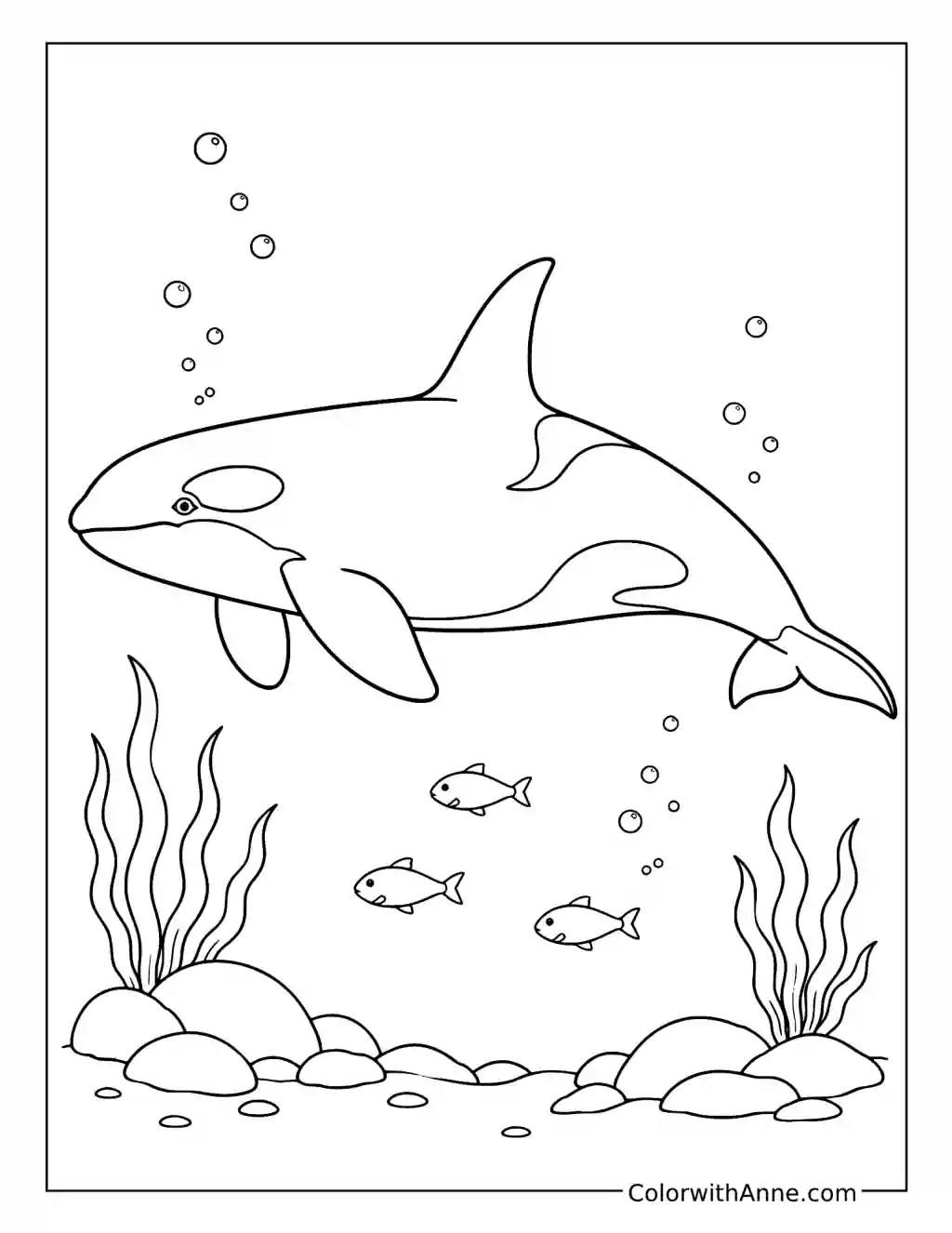
A Slow Swim Through the Kelp
Tall kelp fronds frame the orca, while little fish gather beneath it and two starfish rest on the rocks. The picture invites a slower kind of looking than the splashier ocean scenes.
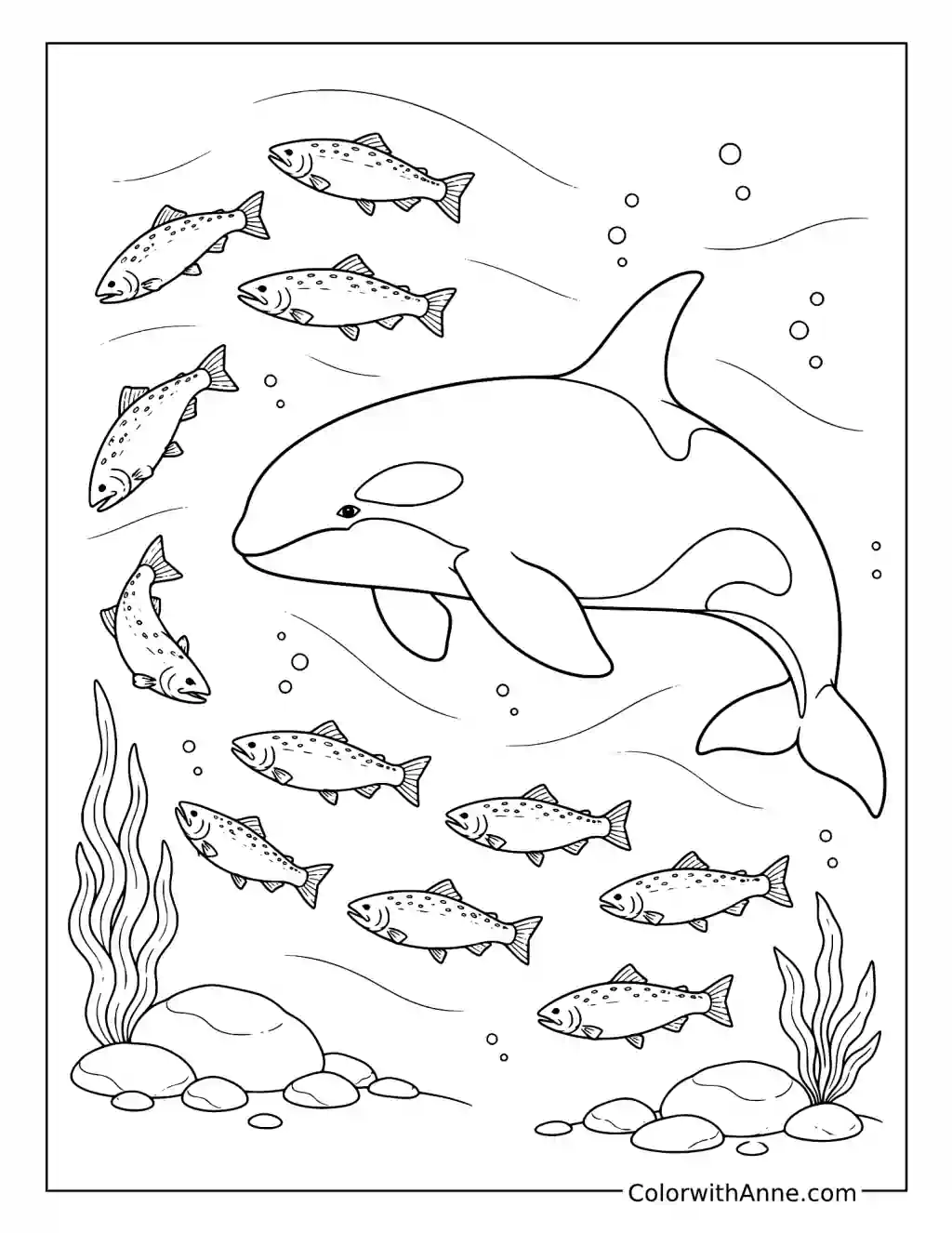
Begin with one kelp stalk and follow it from the rocks to its uppermost leaves. Finishing each connected plant before moving to the next helps the forest feel like growing things rather than a collection of small spaces. A few olive and brown tones among the greens can give the fronds their own character.
Once the page is finished, make a tiny spotting game for someone else: ask them to find both starfish and count the fish. The details are already there, waiting to be noticed.
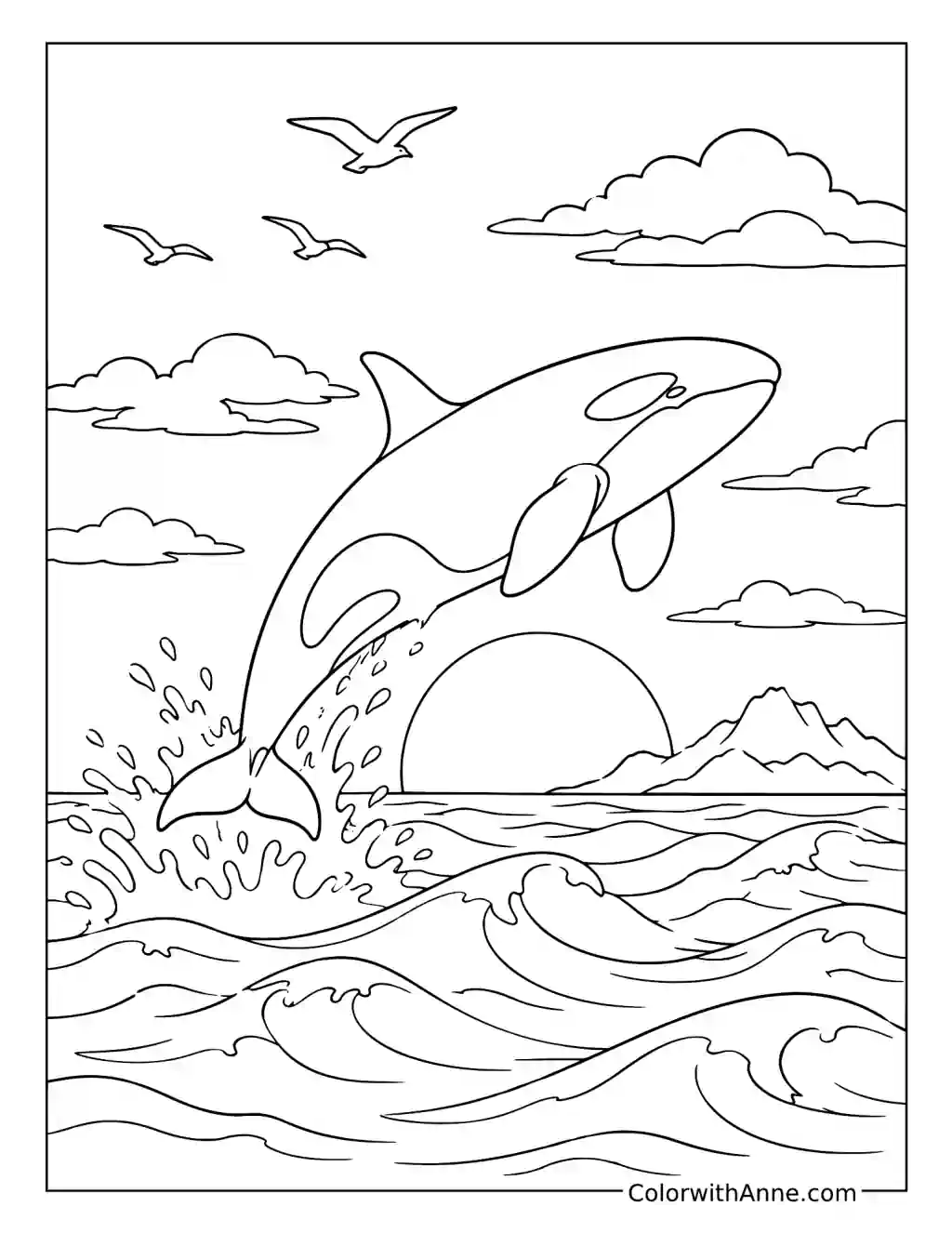
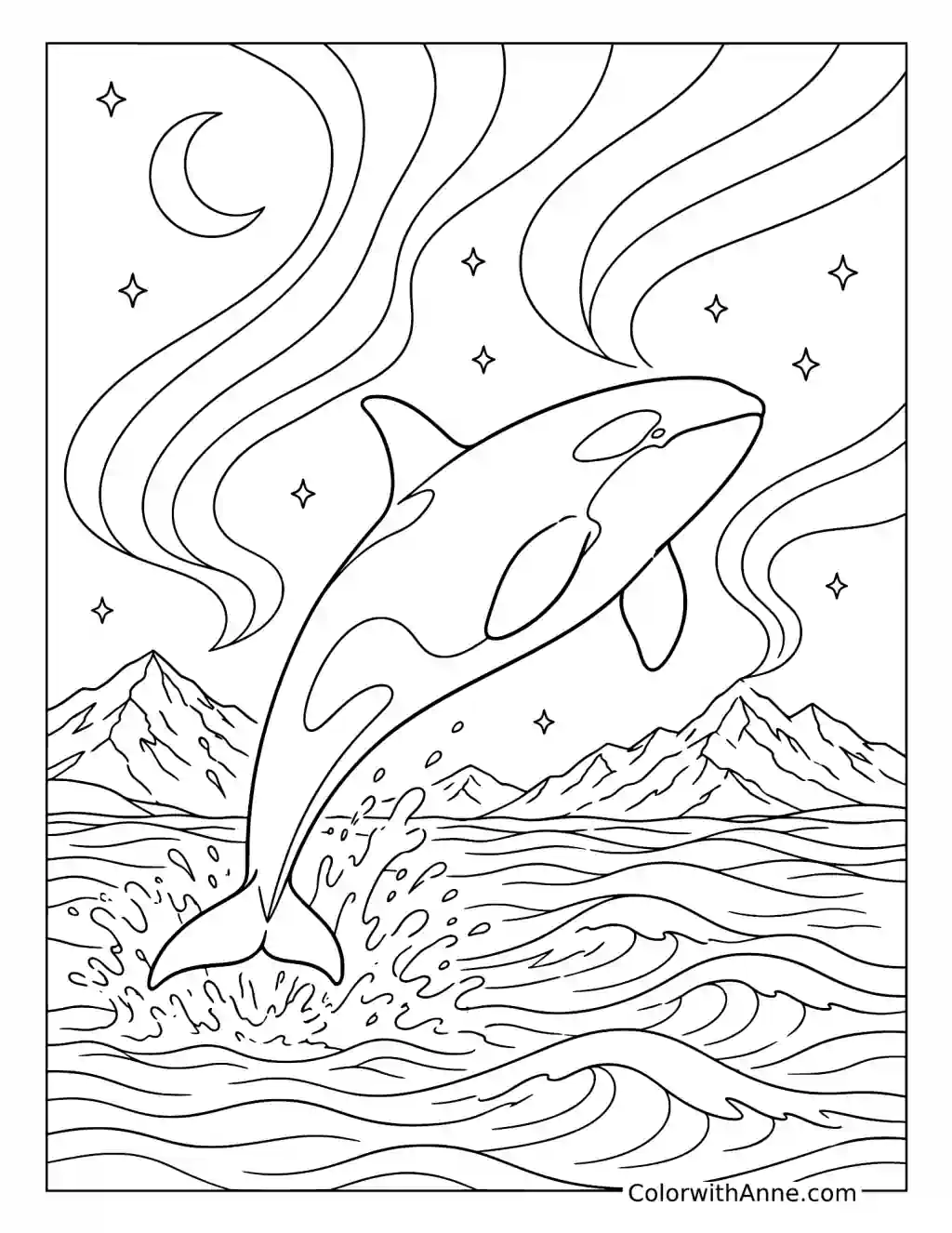
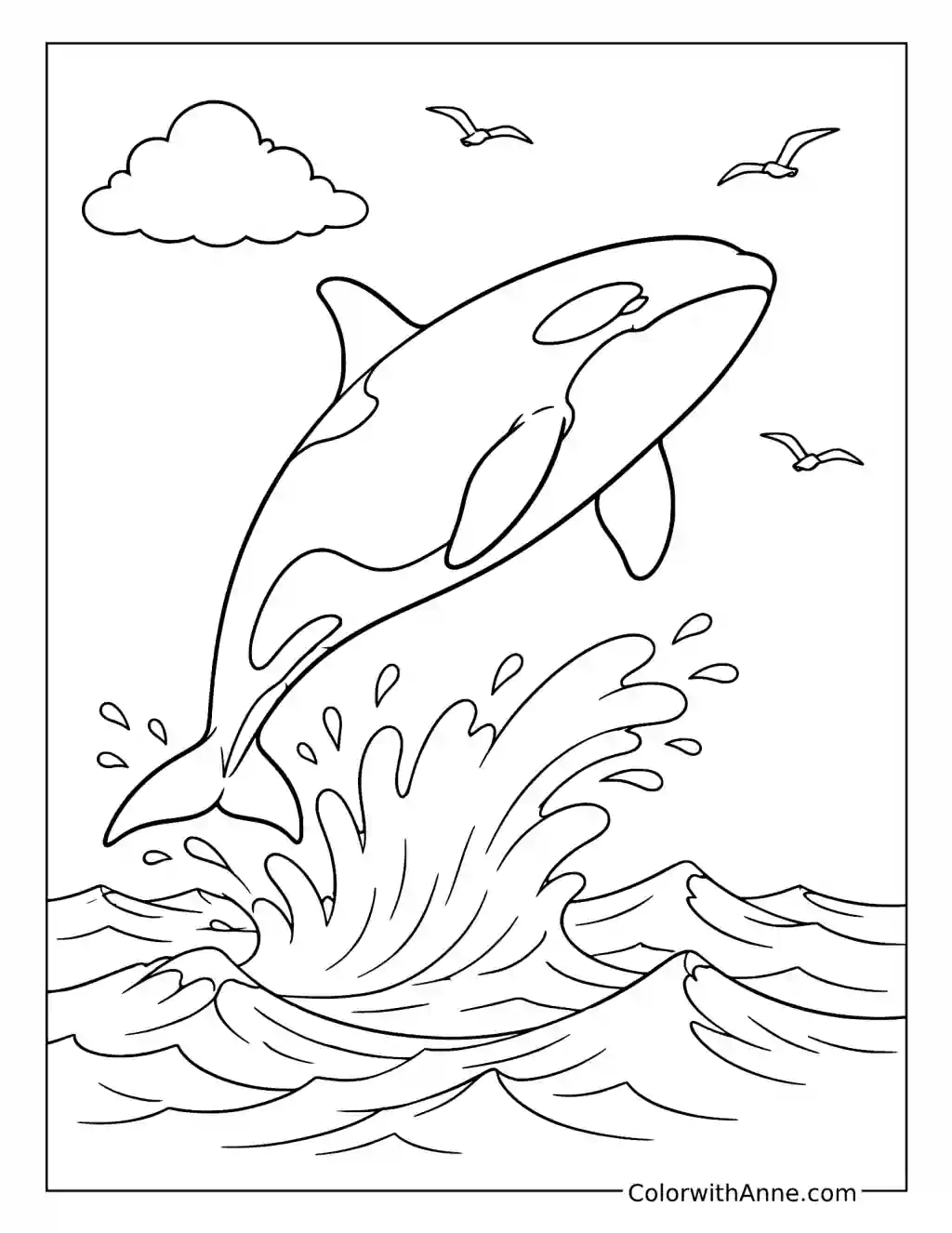
Keep the Splash in an Orca’s Big Leap
The orca stretches diagonally across the page, with a great burst of water beneath its tail. The splash carries much of the movement, so it deserves as much attention as the animal.
Leave the spray mostly white and put your strongest sea colors around it. Pale blue along a few inside edges will suggest water without filling the splash into one solid shape. The separate droplets can stay light, too.
This is a lively choice for a bedroom door or an ocean-themed display. Mounting it on dark blue paper gives the white spray a little more presence, especially when viewed from across the room.
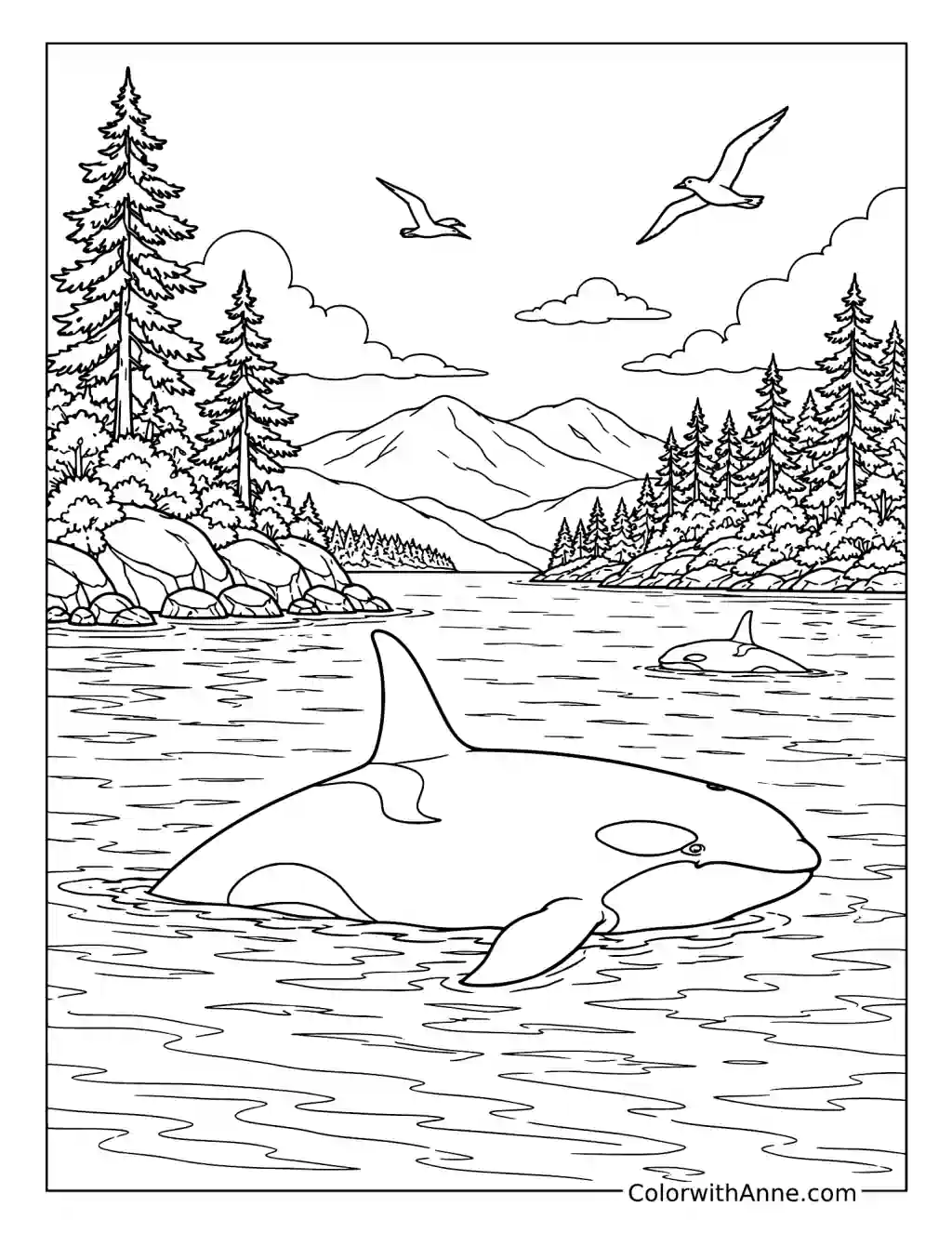
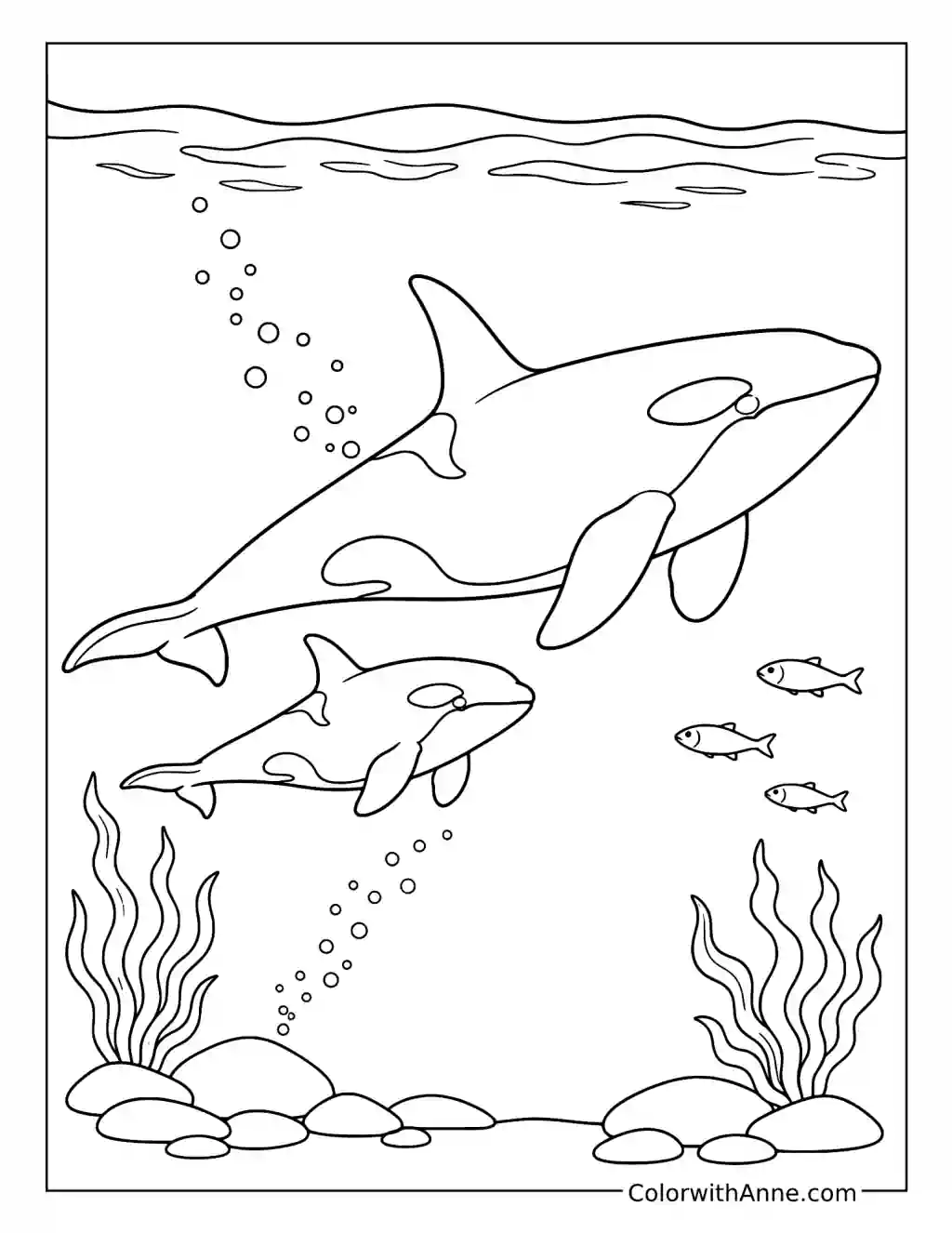
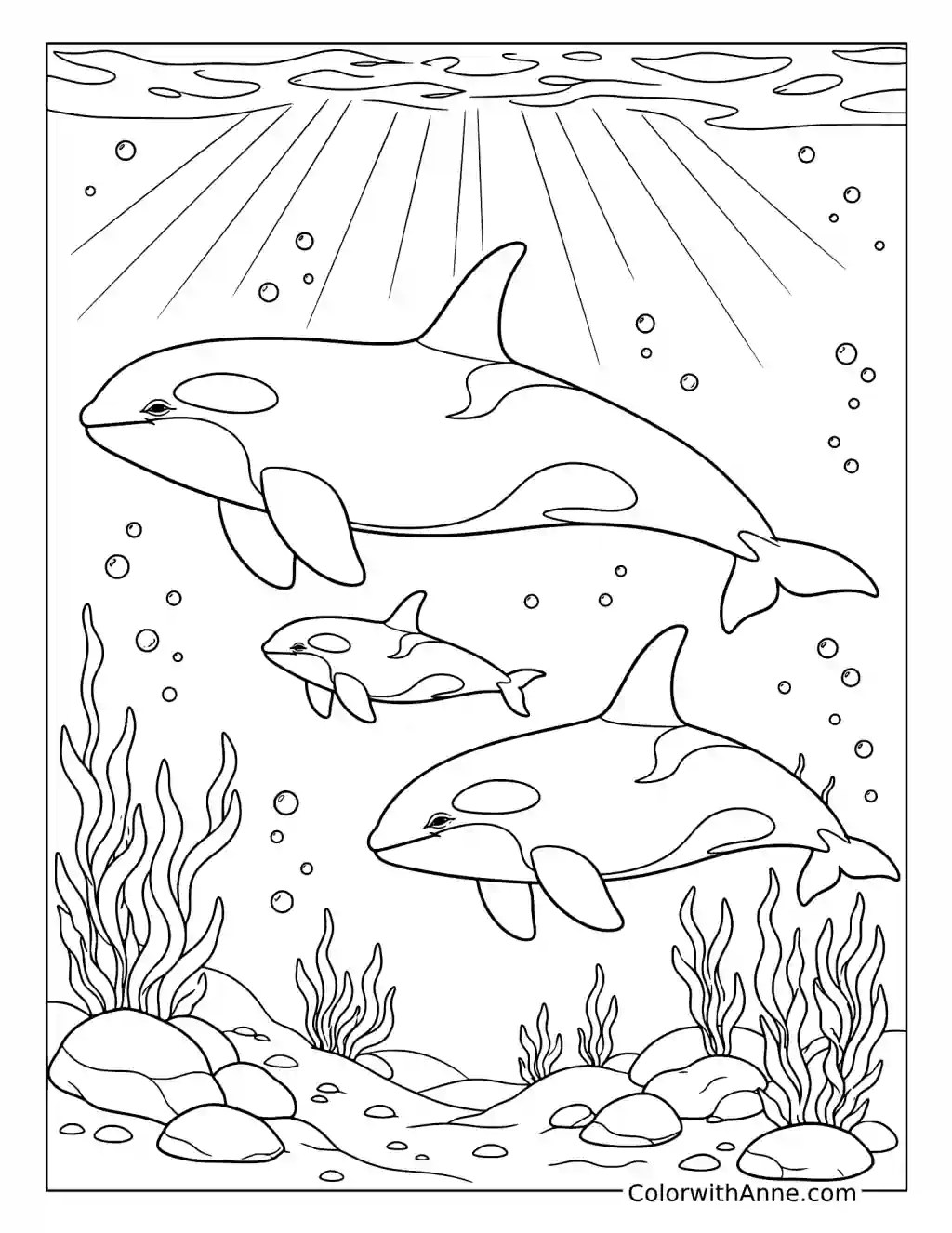
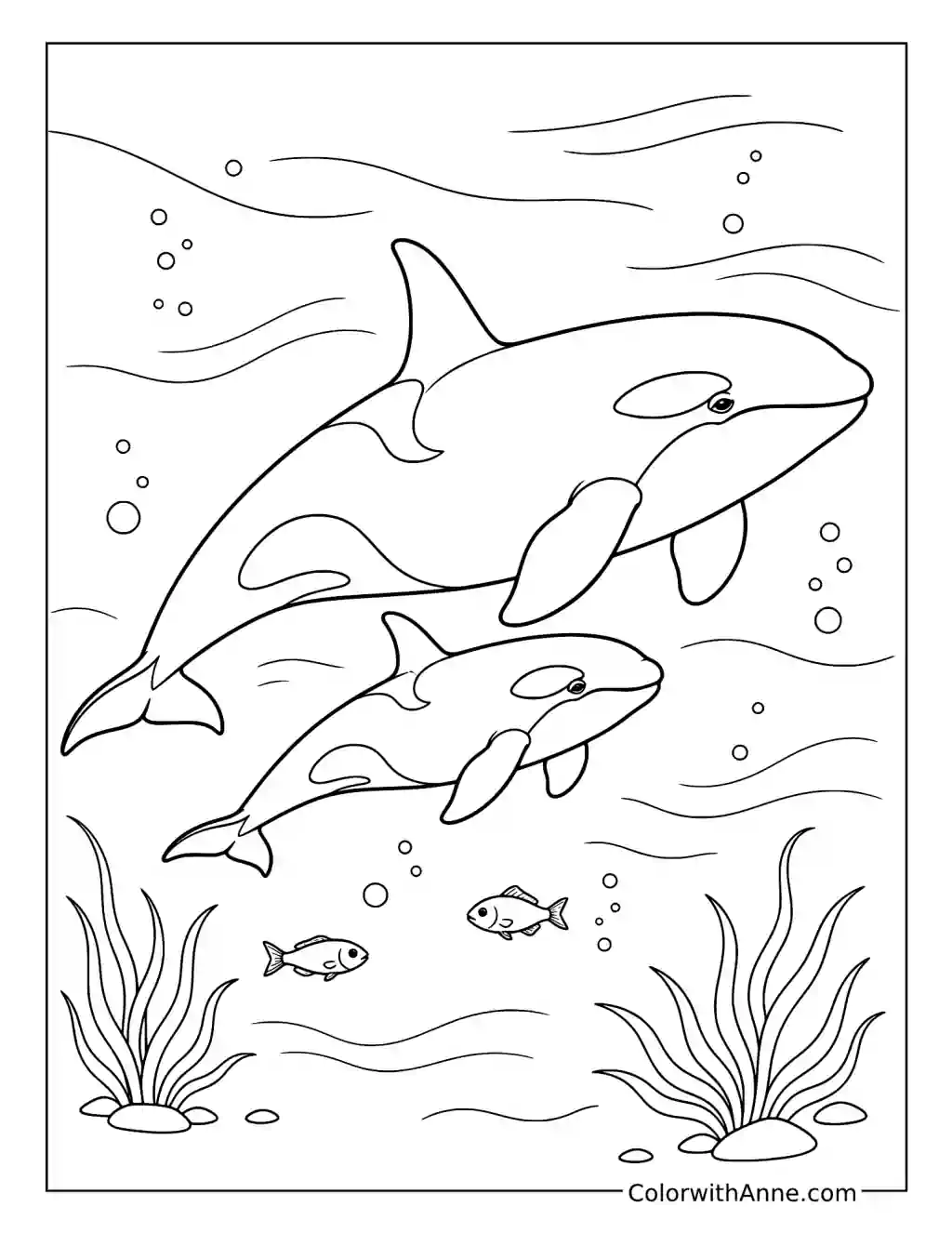
A Mother and Calf, Close Together
The calf swims just below and behind its mother, repeating her streamlined shape on a much smaller scale. There is plenty happening around them, but their closeness gives the scene its gentle feeling.
Work on the pair together, moving between their eye patches, fins, and bellies. Noticing the corresponding shapes can be an enjoyable part of coloring with a child, without needing to turn the afternoon into a lesson.
For a family keepsake, add a name and date on the back, along with one place you enjoyed going together. The picture can remember an ordinary outing as easily as a seaside holiday.
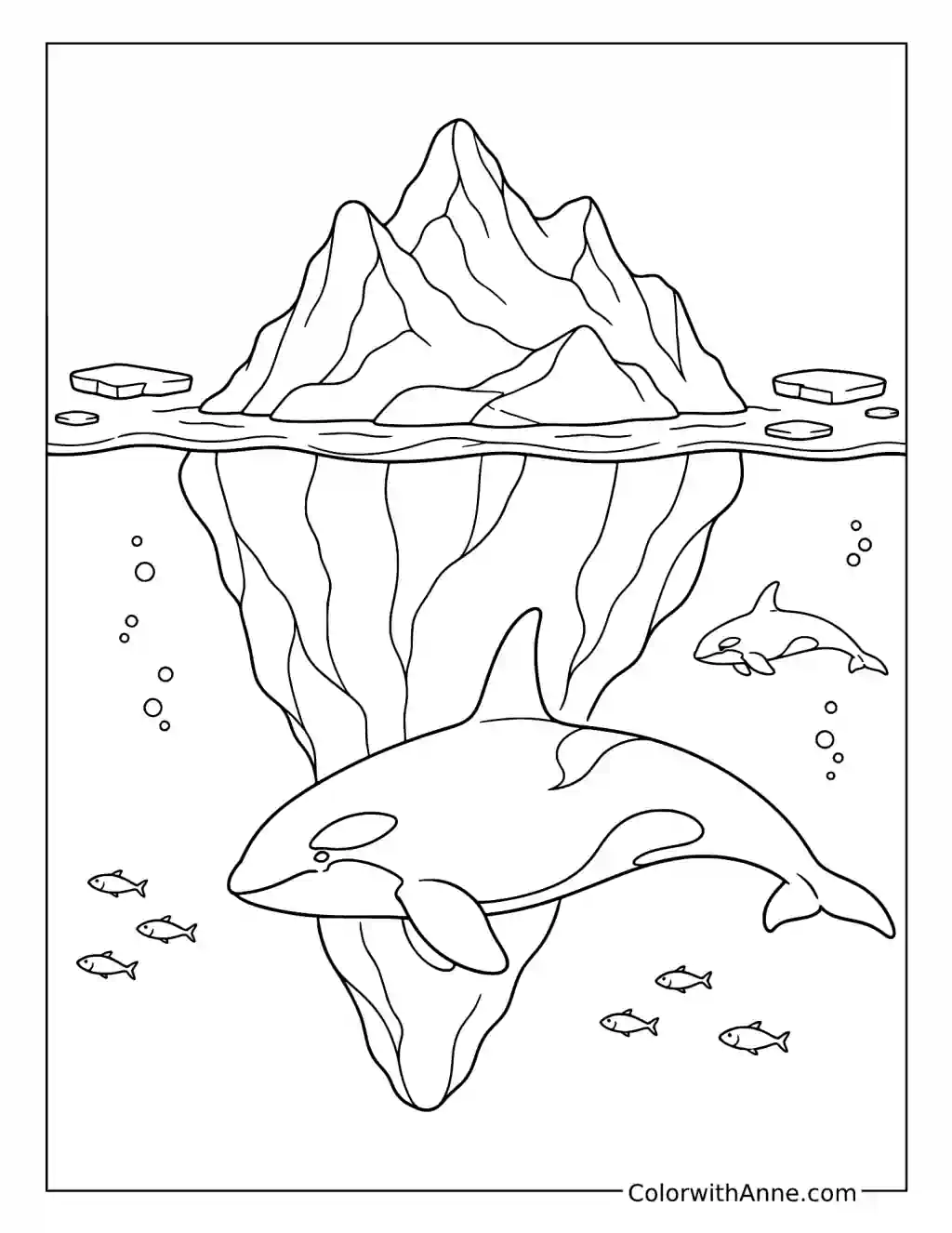
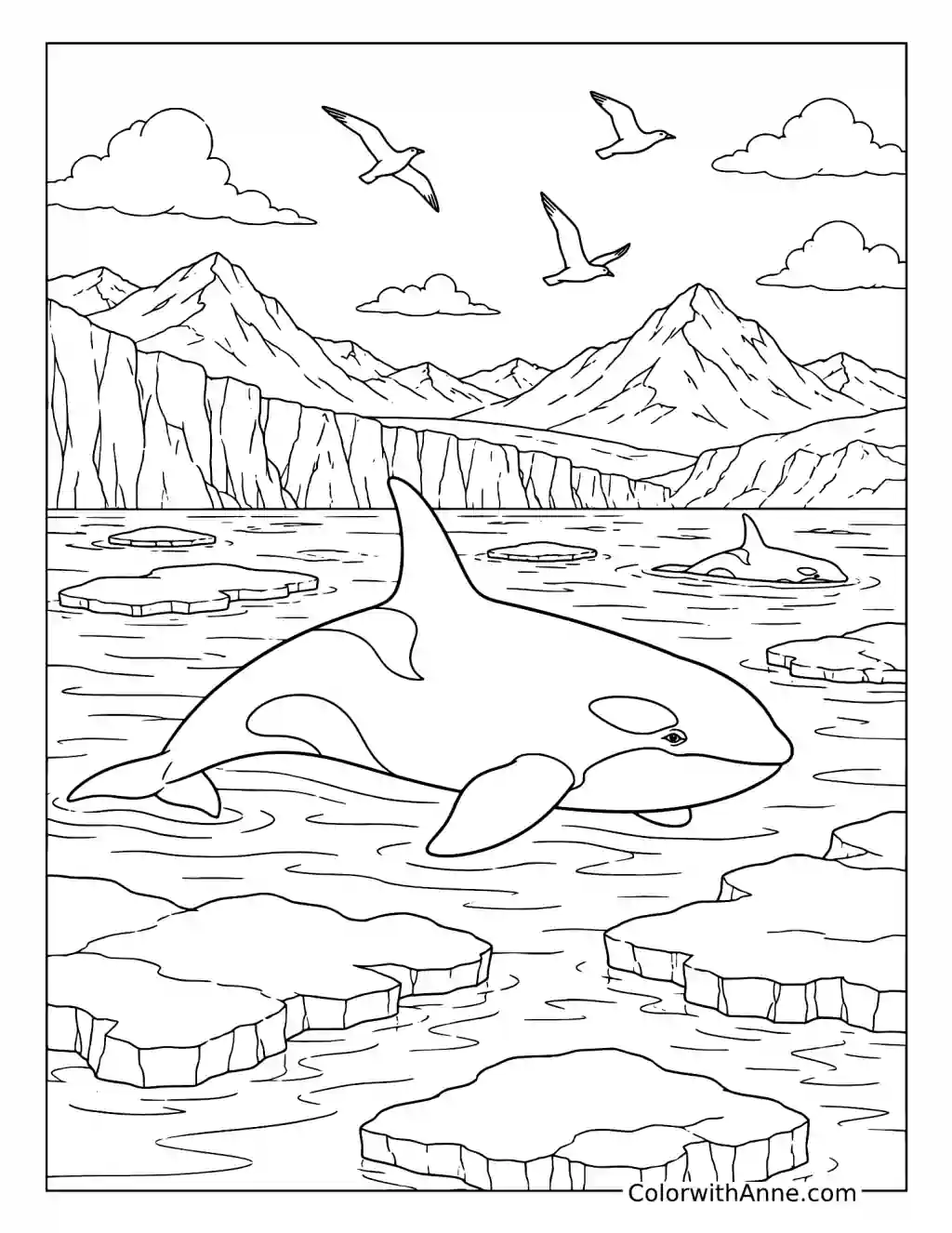
The Iceberg Continues Below the Water
Above the surface, the iceberg rises into jagged peaks. Below it, the ice stretches down behind the swimming orca. The waterline divides the page into two views of the same enormous shape.
Make that division clear by treating the exposed ice and submerged ice differently. Leave generous white areas above the water, then use blue-green shades below it. Follow the printed edges rather than adding lots of extra cracks; the iceberg already has an interesting structure.
For a simple interactive display, cover the lower half with a loose sheet of paper. Someone looking at the peaks can guess what continues underneath before lifting the cover to discover the underwater scene.
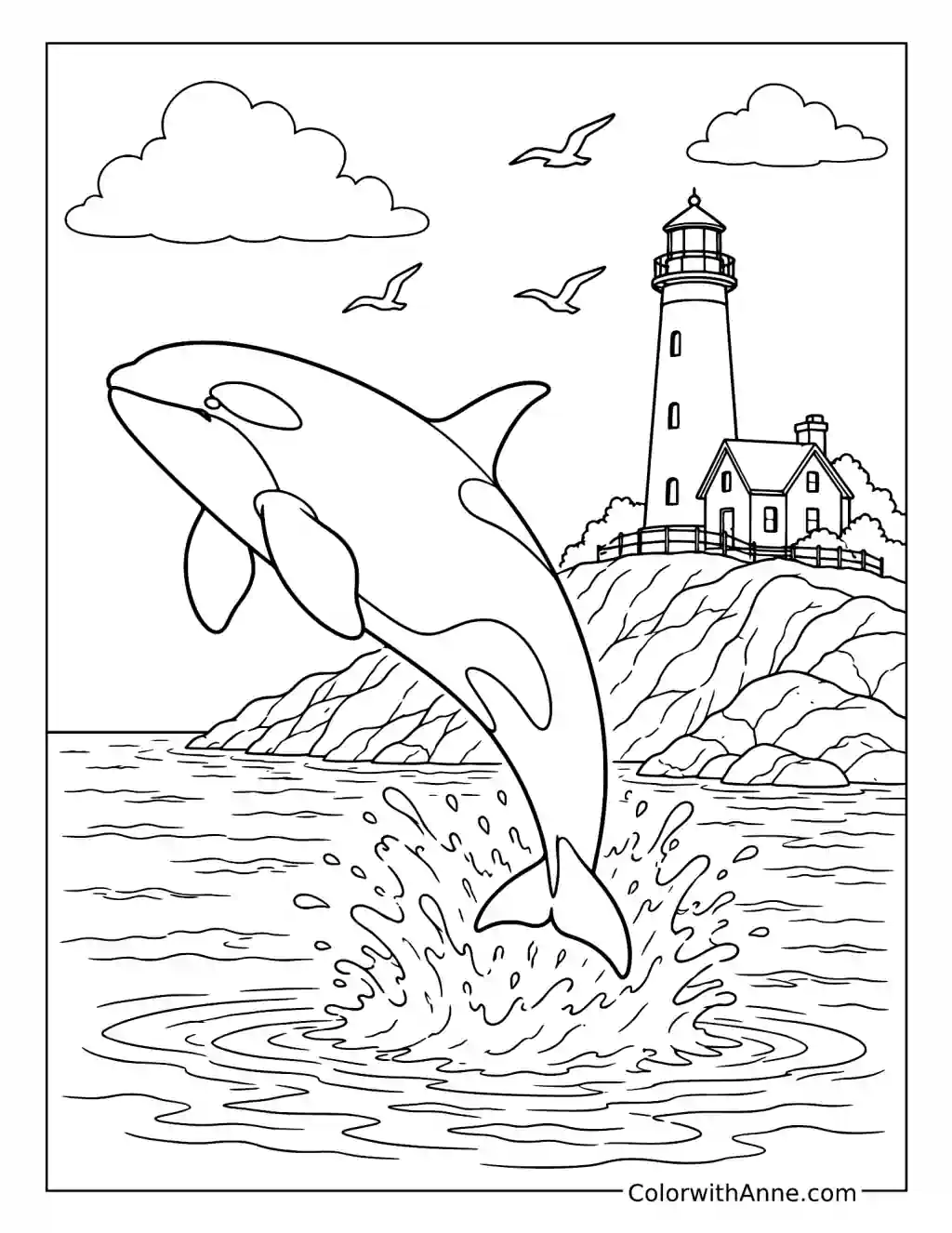
A Lighthouse Picture with a Story Behind It
The lighthouse stands above the rocky shore while an orca leaps from the water in front of it. The small house and fence make the coast feel inhabited, as though someone might glance outside at exactly the right moment.
Choose a color for the lighthouse roof that makes it easy to spot beyond the orca, then keep the rocks in a few related shades. Their printed lines give enough texture without needing every section to differ.
This scene would make a lovely cover for a short homemade ocean story. Fold a separate sheet into a booklet, attach the finished picture to the front, and begin with whoever lives beside that lighthouse. What did they see from the window that morning?