
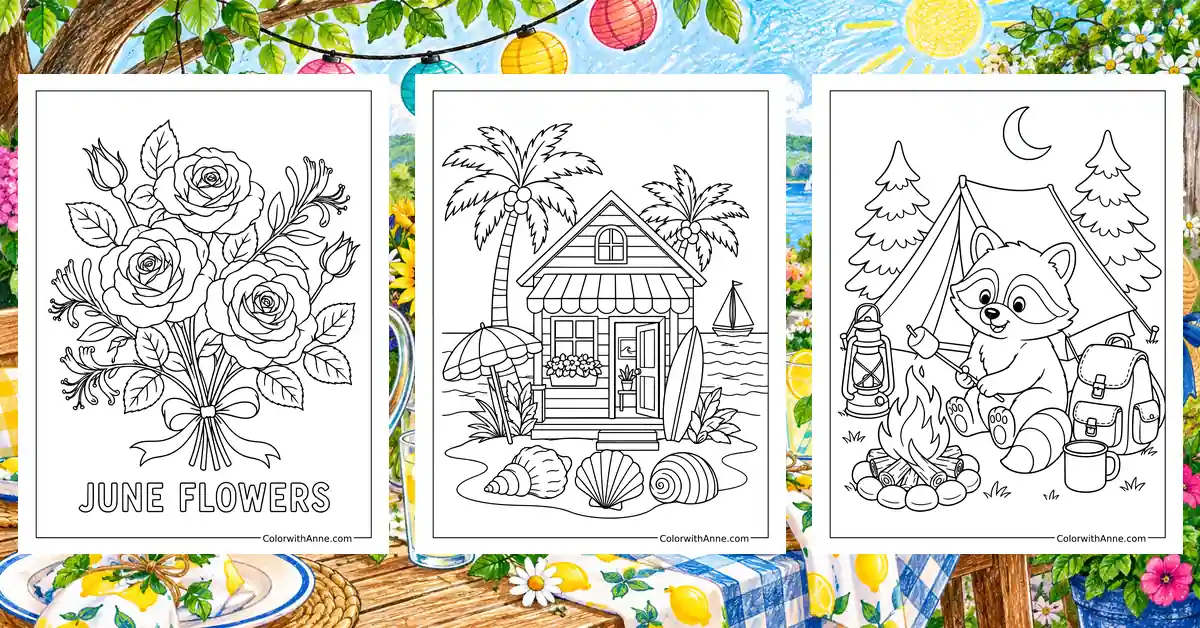
June mornings can begin with birdsong through an open window and end with dinner drifting outdoors. School bags get set aside, strawberries disappear almost as quickly as they are washed, and the garden seems to grow overnight. Even a short evening walk has a habit of becoming a longer one.
June coloring pages fit naturally into those shifting summer routines. A page at the kitchen table offers a pause between a morning outing and whatever the afternoon brings. With daylight lingering and plans staying loose, the month leaves room for small pleasures that do not need much arranging.
Free Printable June Coloring Pages
Click any coloring page below to open the PDF, then print on US Letter or A4 paper.
Did you find what you needed?
Help us choose what to create or improve next.
Coloring Ideas for June Pages
Try one of these coloring ideas, or use them as a starting point for your own.
Give the Last School Day a Proper Ending
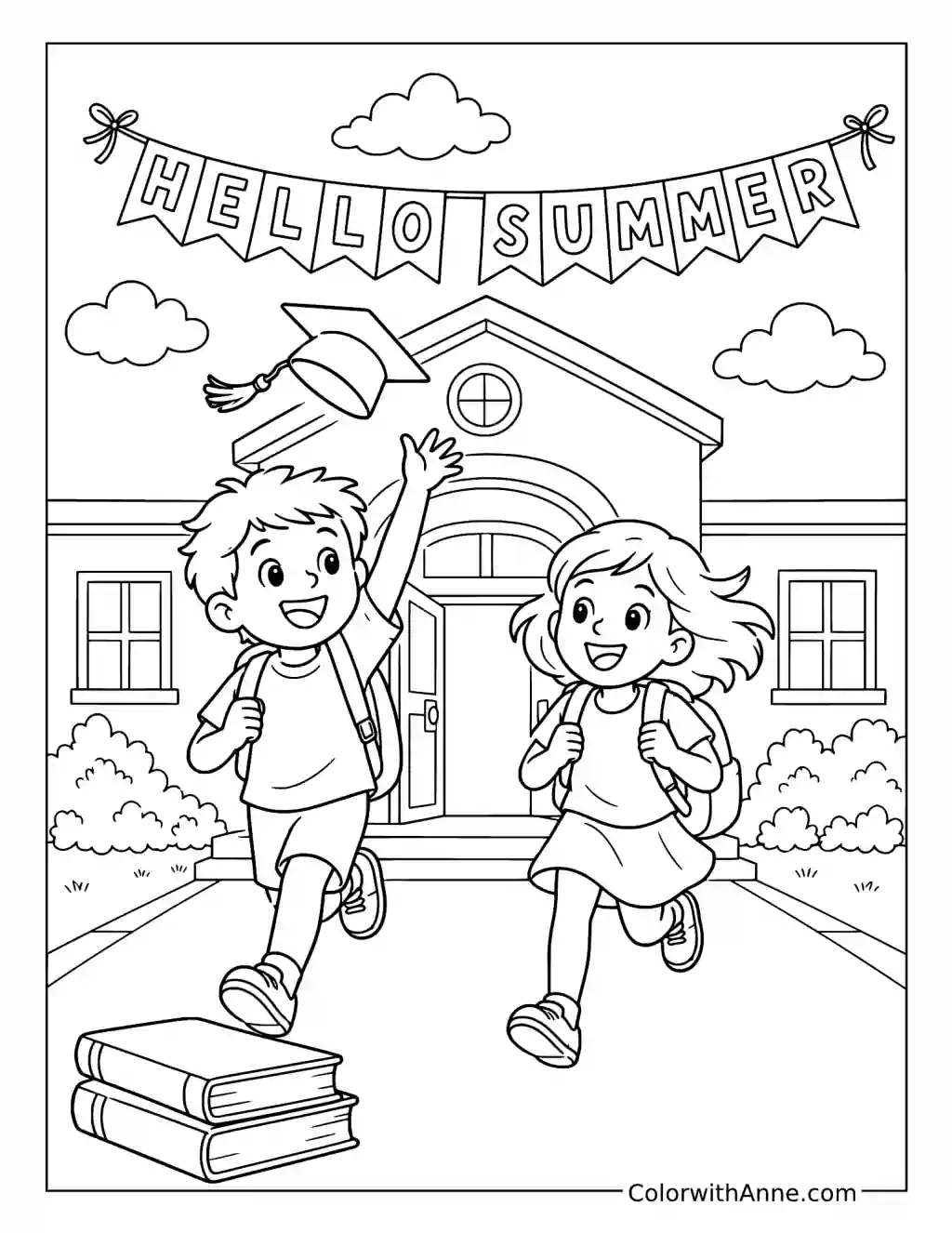
The children hurry away from the school beneath the “Hello Summer” banner, with books left in the foreground. This page captures the exact moment when ordinary routines suddenly open up.
After coloring, turn it over and record one thing from the school year worth remembering: a new friendship, a funny classroom moment, or something that was difficult before it became possible. Then make room for one small first-day-of-holiday plan. Ending one season properly can make the next feel more exciting.
Keep a Little Space Empty on the June Calendar
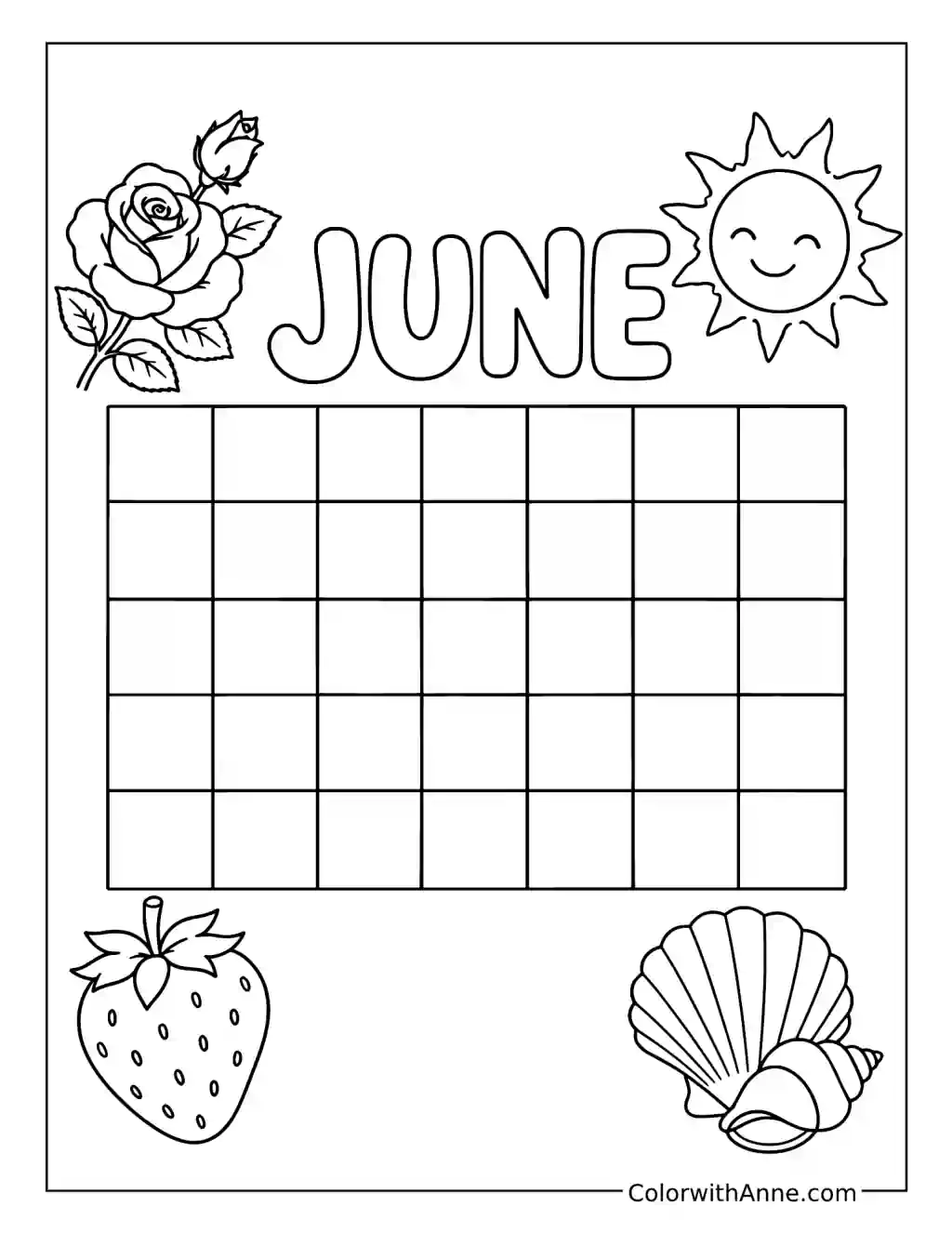
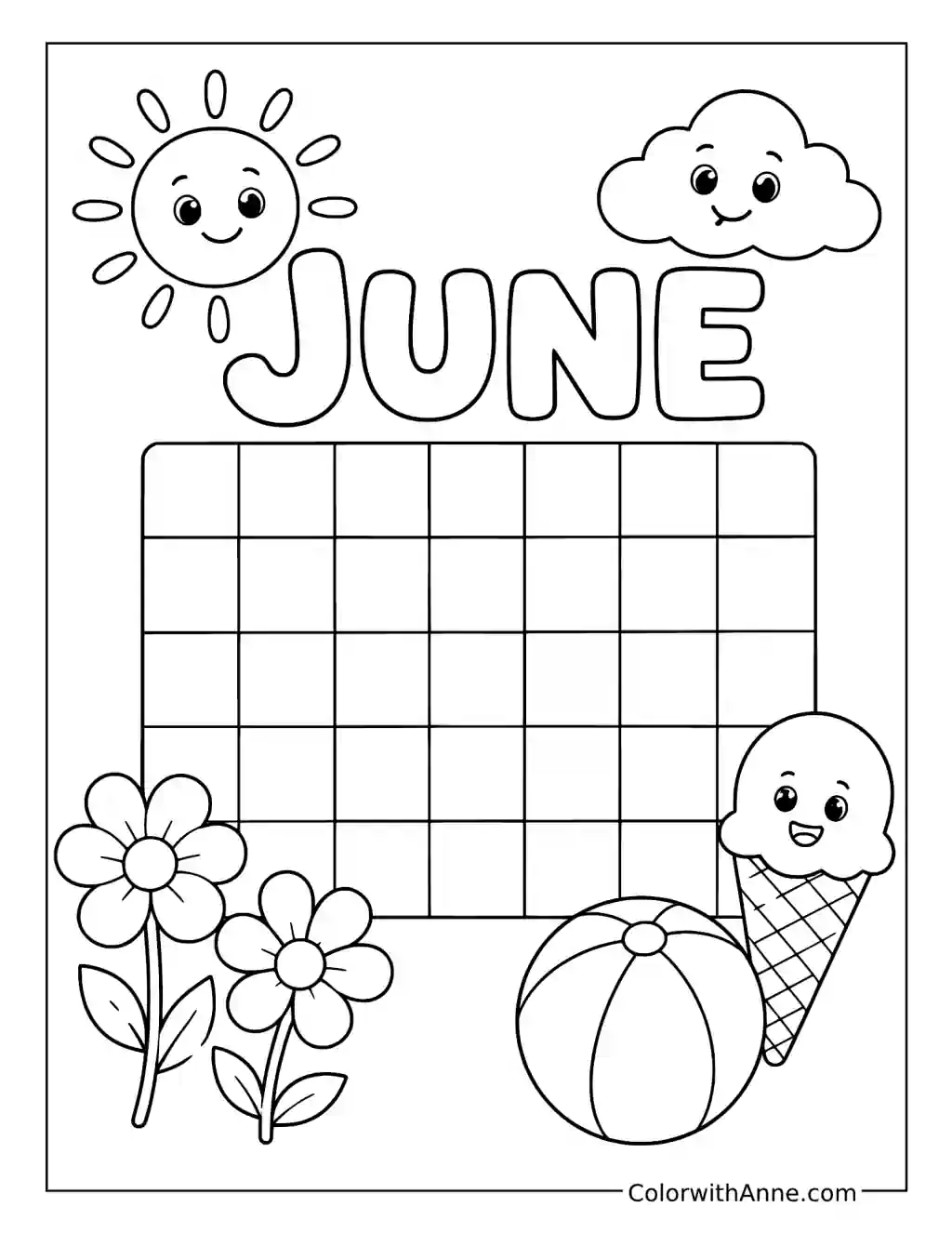
The plain calendar grid sits beneath “June,” with roses, a strawberry, and a shell around its edges. Check the month’s dates against a calendar, then fill in the commitments that genuinely need to be there.
Leave some squares unclaimed. A few can become spaces for spontaneous walks, afternoons at home, or whatever the weather makes appealing. Color the border before crowding the grid with plans. The page is most useful when it helps the month feel visible without making every day look booked.
Arrange a Few Flowers in a Teacup
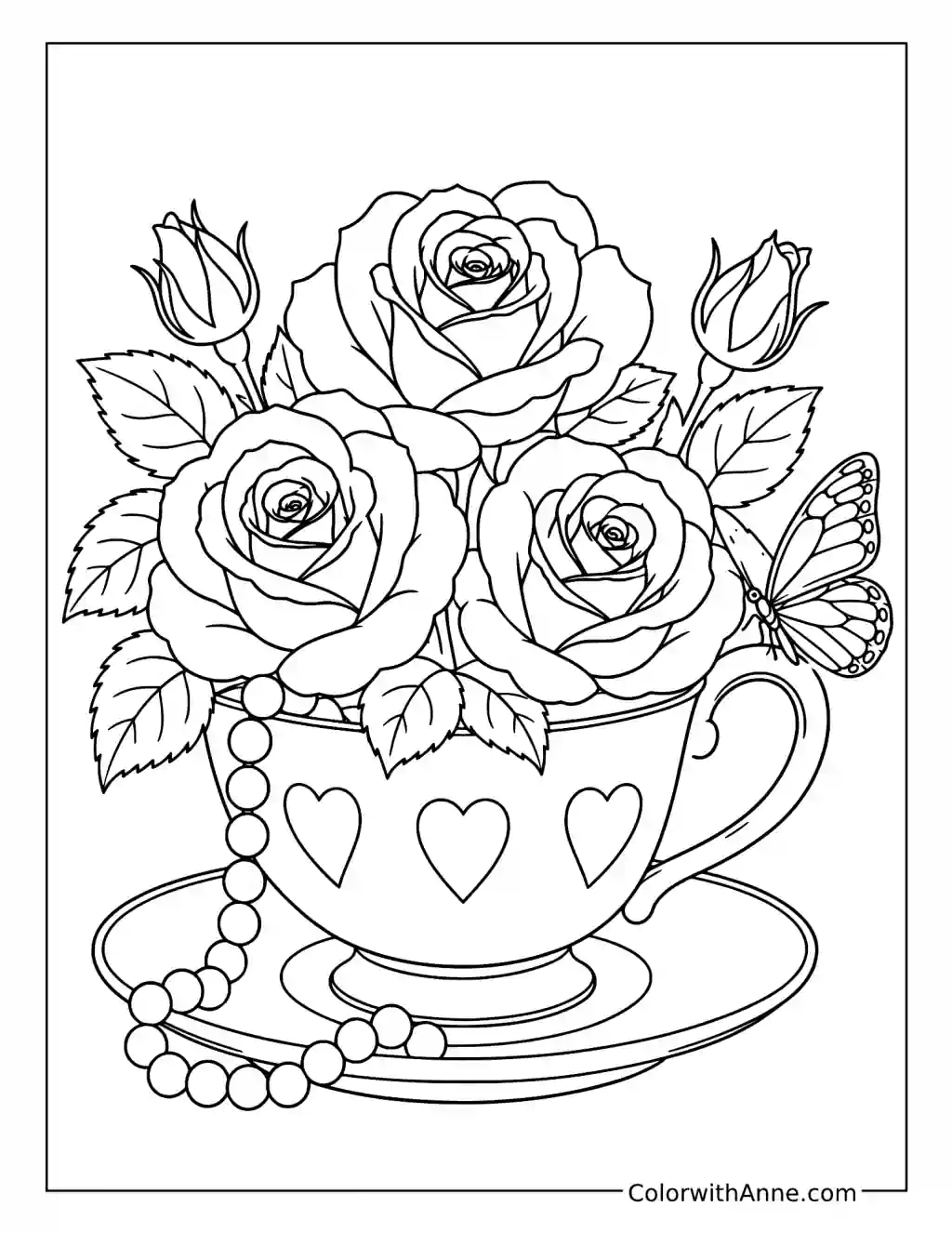
The roses rise from a heart-patterned teacup, with pearls resting around the saucer. It is a small arrangement, which makes it a practical one to borrow.
Use a spare cup and a few short stems to make a low table decoration. Place the largest bloom first and let smaller flowers or greenery fill the spaces around it. On the page, give the cup a quieter color than the roses. The pleasure comes from making a tiny arrangement feel complete, rather than needing a full bouquet.
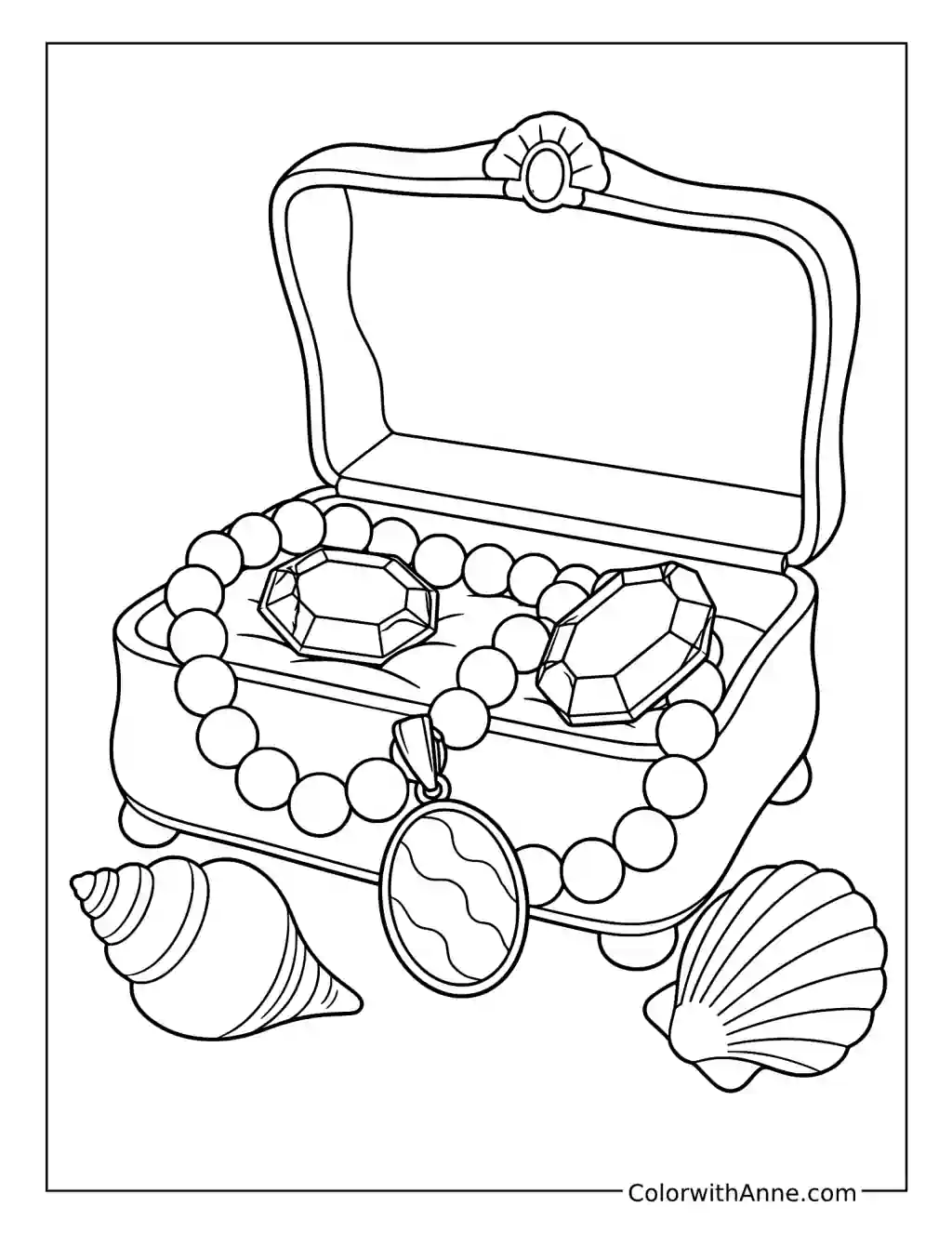
Let the Jewelry Box Hold Different Kinds of Shine
The open jewelry box holds round beads and sharply faceted stones, with shells around its base. Those shapes ask for different treatment: soft, curved shading on the beads and distinct light and dark planes on the angular gems.
Choose one light direction and keep it consistent across the box. A white highlight on every surface is less convincing than a few well-placed glints. The picture becomes an exercise in making each object feel as though it has its own material and weight.
Keep the Hummingbird’s Wings Moving
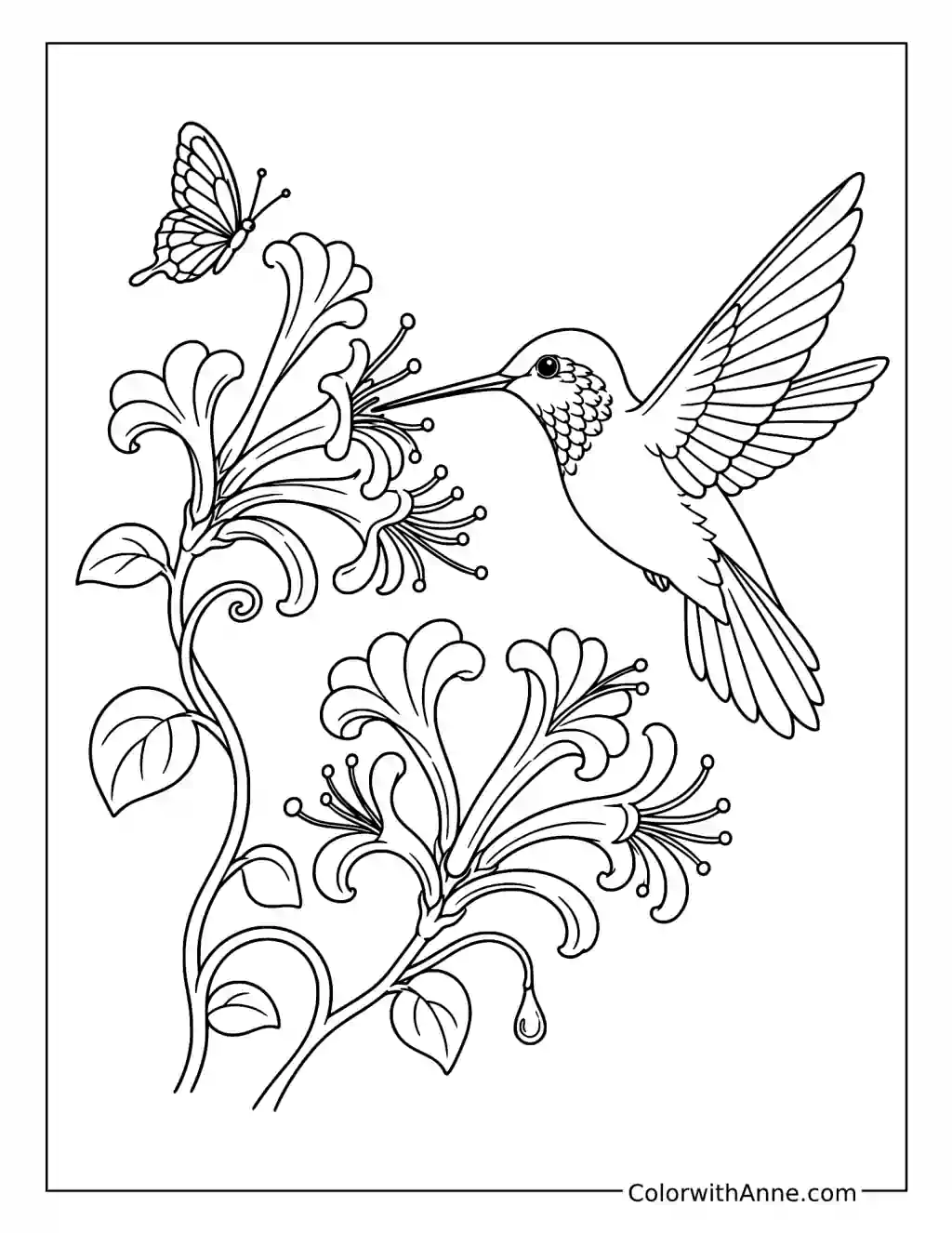
The hummingbird reaches toward the honeysuckle with its wings spread wide. Give its body the strongest color, then keep the wing feathers a little lighter so the bird feels active rather than fixed in place.
The curling flowers can carry warmer tones, drawing attention toward the point where the beak approaches the bloom. For reference, pause a hummingbird video and compare the wing shapes between frames. The drawing catches one moment; the video reveals how quickly that moment changes.
Make the Firefly Light Feel Small and Bright
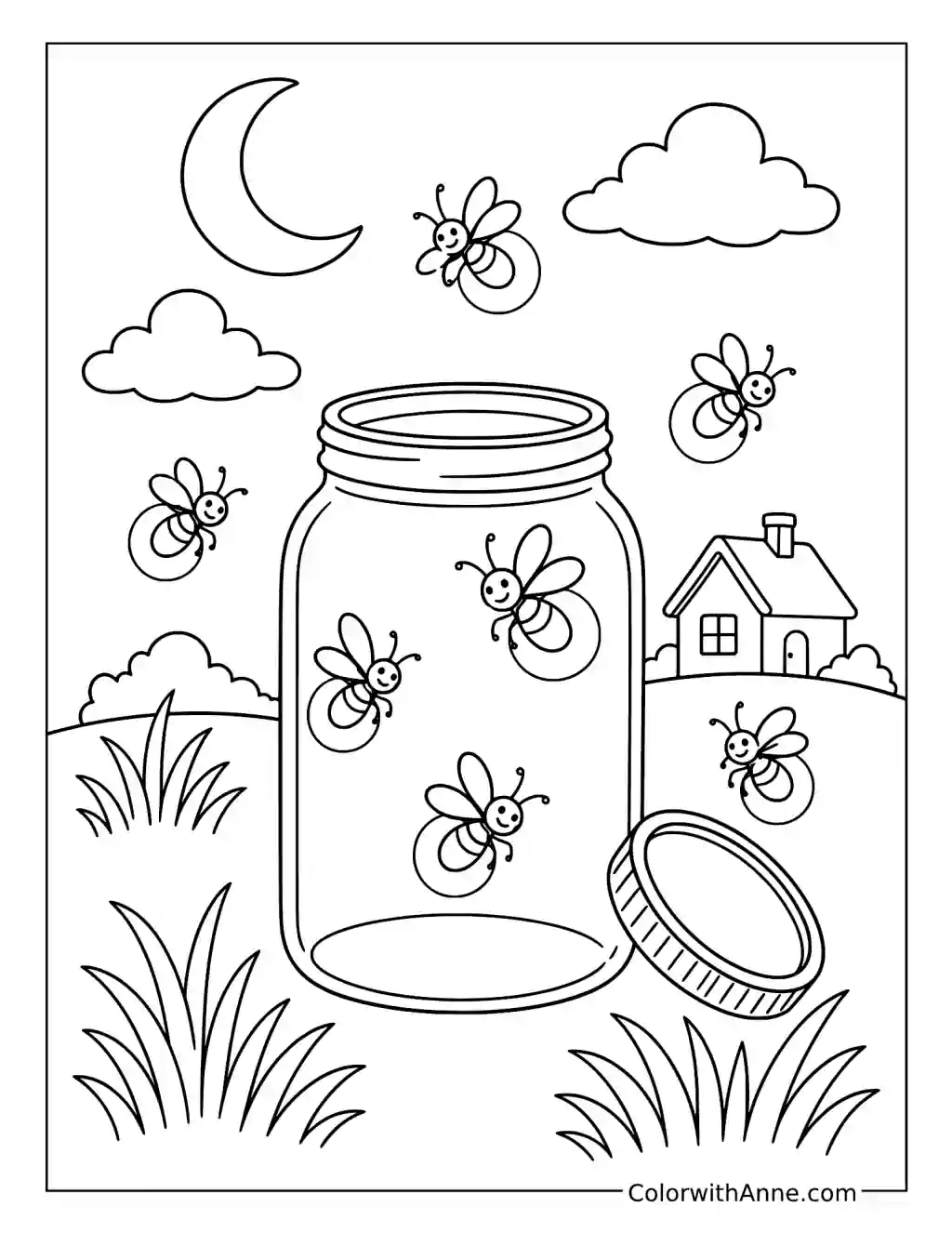
Fireflies appear inside and around the open jar beneath a crescent moon. The nicest effect comes from treating their light as a tiny glow: yellow at the center, fading into a pale surrounding area before meeting the darker evening.
Keep the jar itself mostly transparent, with a few cool shadows along the rim and sides. If fireflies appear locally, take the page along for a quiet dusk watch and leave the real insects free to move. The drawing can hold the lights long after the evening ends.
Take the Strawberry Page on a Picking Day
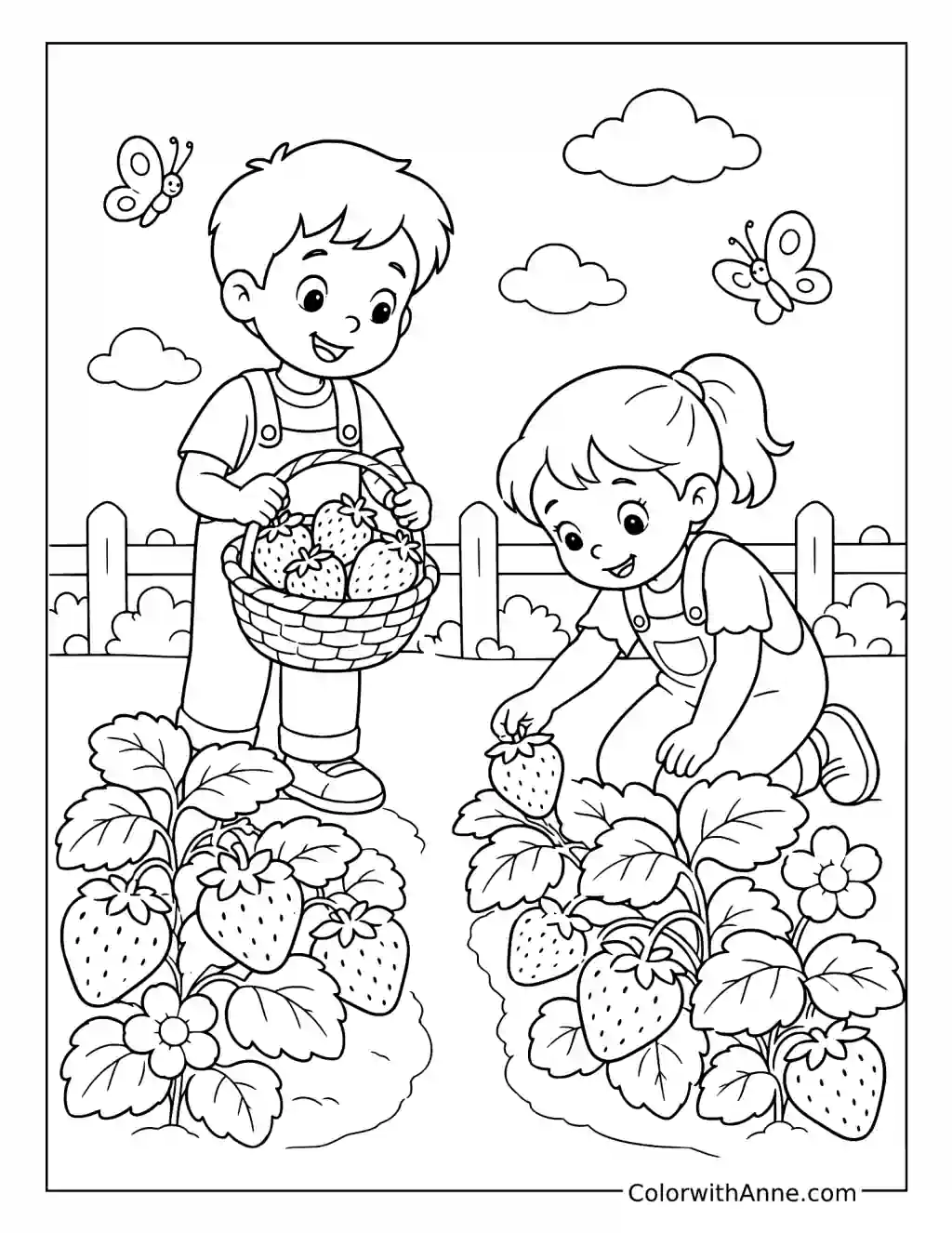
One child holds a basket while the other reaches into the strawberry plants. Color the berries with small variations rather than making every one identical; the partly hidden fruit and overlapping leaves give the patch its fullness.
If a picking visit is planned, finish the page afterward while the details are still fresh. What did the leaves feel like? Which berries were easiest to miss? The picture becomes more personal through those observations, even without adding a name or a date.
Follow the Daylight around the Sunflower Page
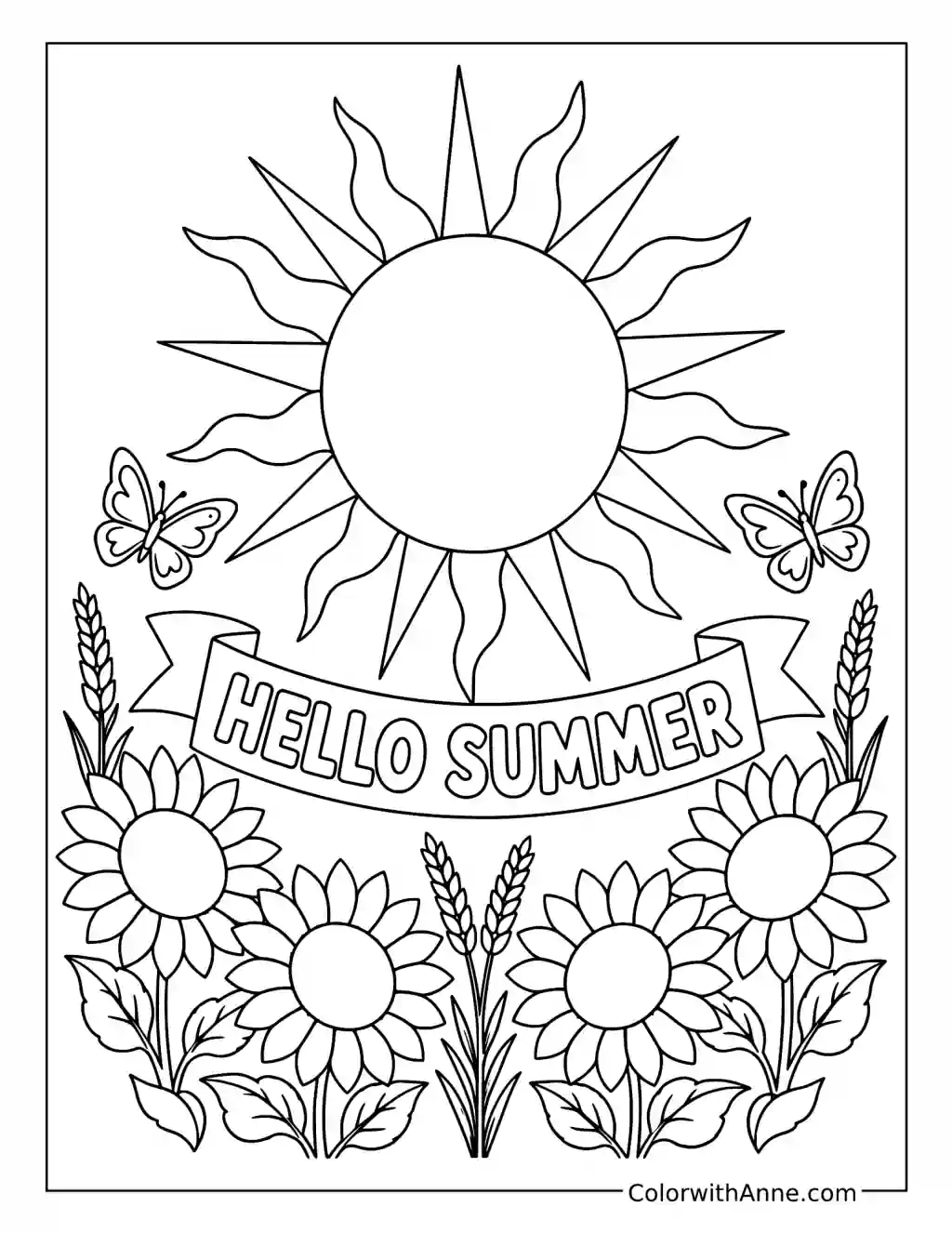
The large sun fills the upper half of the page, with sunflowers and a “Hello Summer” banner below. Let the rays carry gentle changes from yellow to gold while the flower centers provide deeper, earthy contrast.
Use the picture as a reason to notice daylight at different times: morning, midday, and early evening. Look from the same window and see where the light falls. There is no elaborate experiment needed. Watching a familiar room change through the day brings the sun on the page a little closer to home.