
The soft thump of a returned book, the whisper of turning pages, and a chair tucked beside a window give a library its own soundtrack. Somewhere between the shelves, a quick visit can become a much longer stay. Finding one book is easy; leaving without three extras takes considerably more discipline.
Library coloring pages suit the same unhurried mood, making room for a quiet activity after story time or an afternoon of reading. They also offer a natural excuse to talk about favorite books, memorable library visits, and the particular satisfaction of discovering something unexpected on a shelf.
Free Printable Library Coloring Pages
Click any coloring page below to open the PDF, then print on US Letter or A4 paper.
Did you find what you needed?
Help us choose what to create or improve next.
Coloring Ideas for Library Pages
Try one of these coloring ideas, or use them as a starting point for your own.
Take a Book beyond the Reading Room
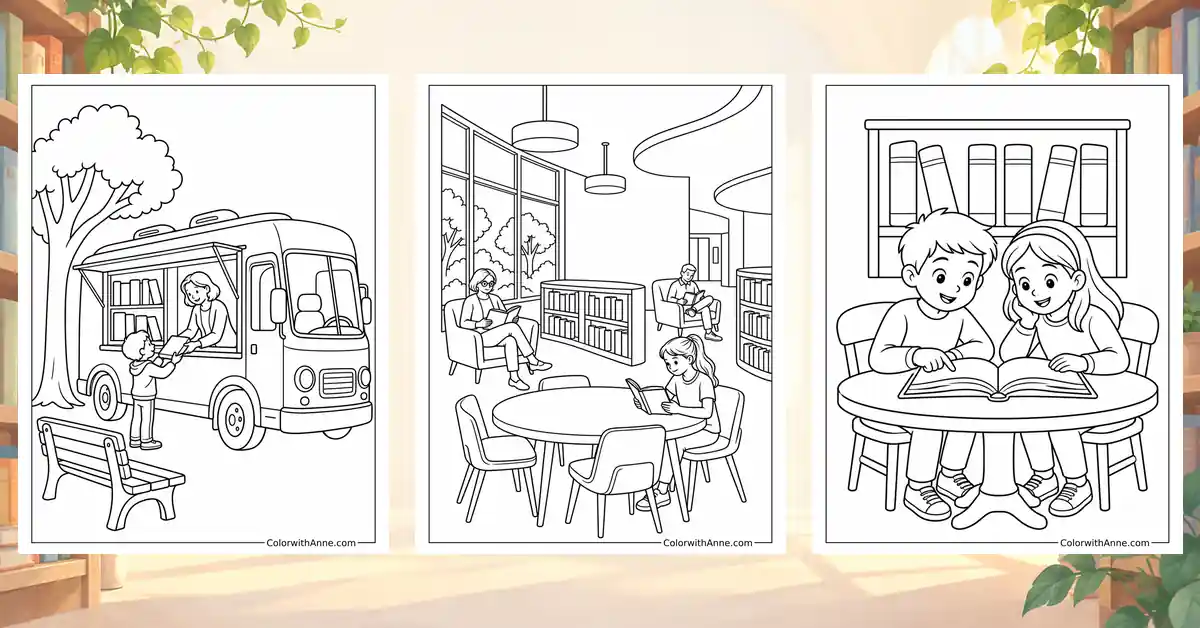
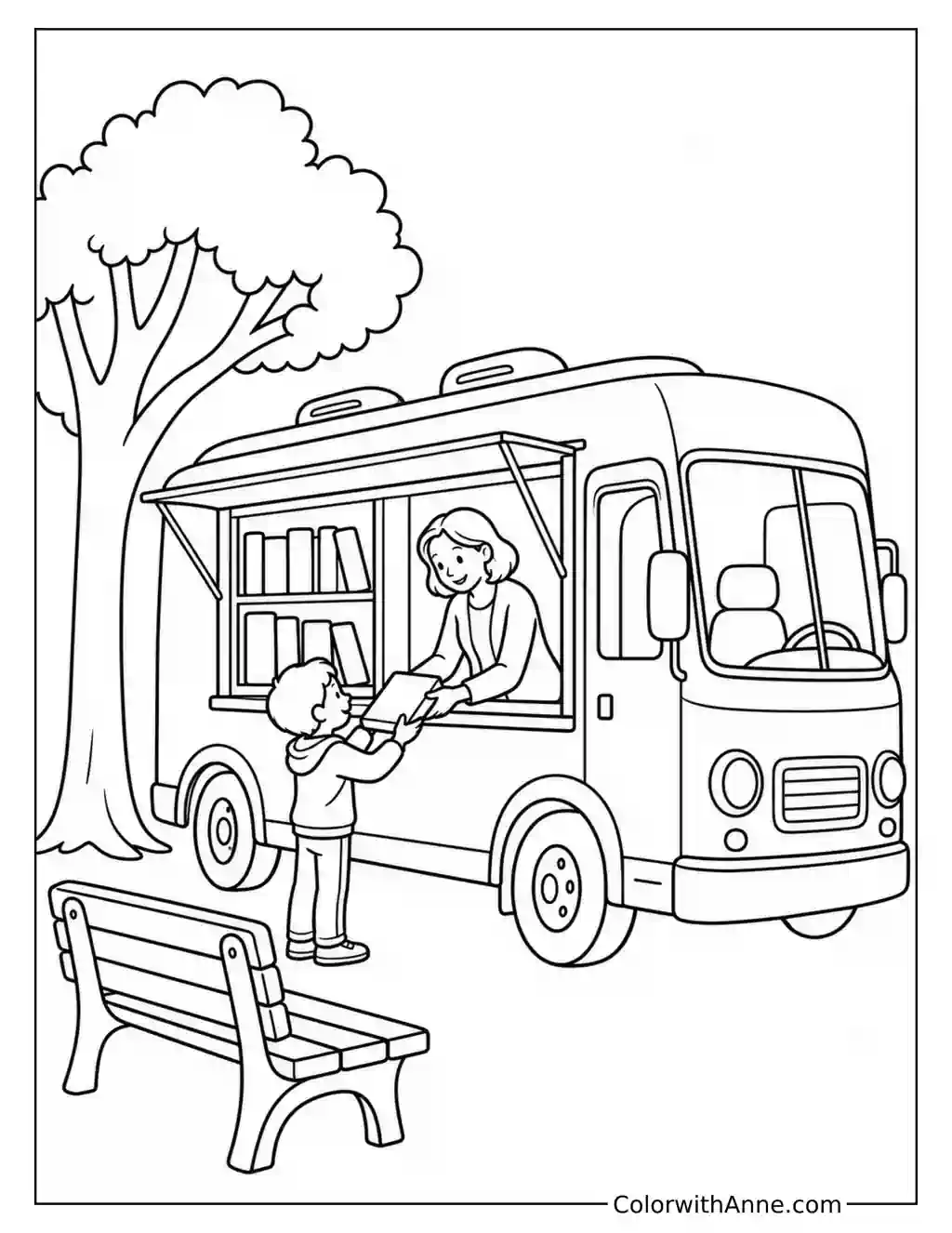
The bookmobile brings shelves into a park, with a bench and stepping-stone path nearby. It makes reading look like something that can travel with the afternoon.
Choose a short book to take on your next park visit, then color the scene before going. Find a comfortable place for a few pages between the other activities. The connection is simple: books can belong beside trees and picnic bags as comfortably as beside indoor lamps. The mobile library provides the picture of that possibility.
Hide a Recommendation behind the Secret Door
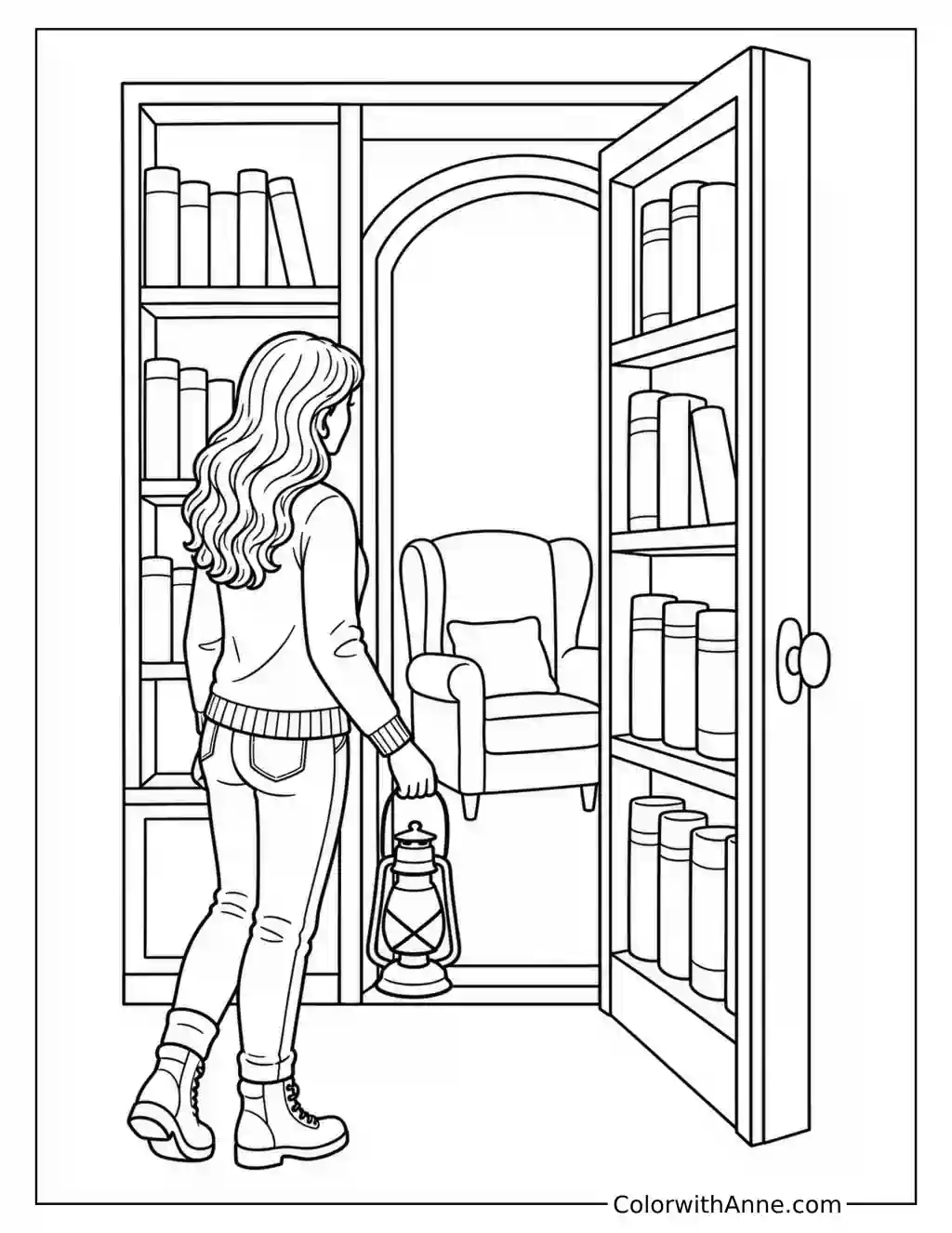
The bookshelf opens onto a passage, turning an ordinary library wall into an invitation to investigate.
After coloring, attach a small hinged paper flap over the revealed opening. Beneath it, tuck a short recommendation for a book you think someone would enjoy. The recipient lifts the flap to discover where the next reading adventure begins. The secret suits the illustration, and the hidden information has a purpose beyond filling another blank space.
Let the Storytime Audience Grow
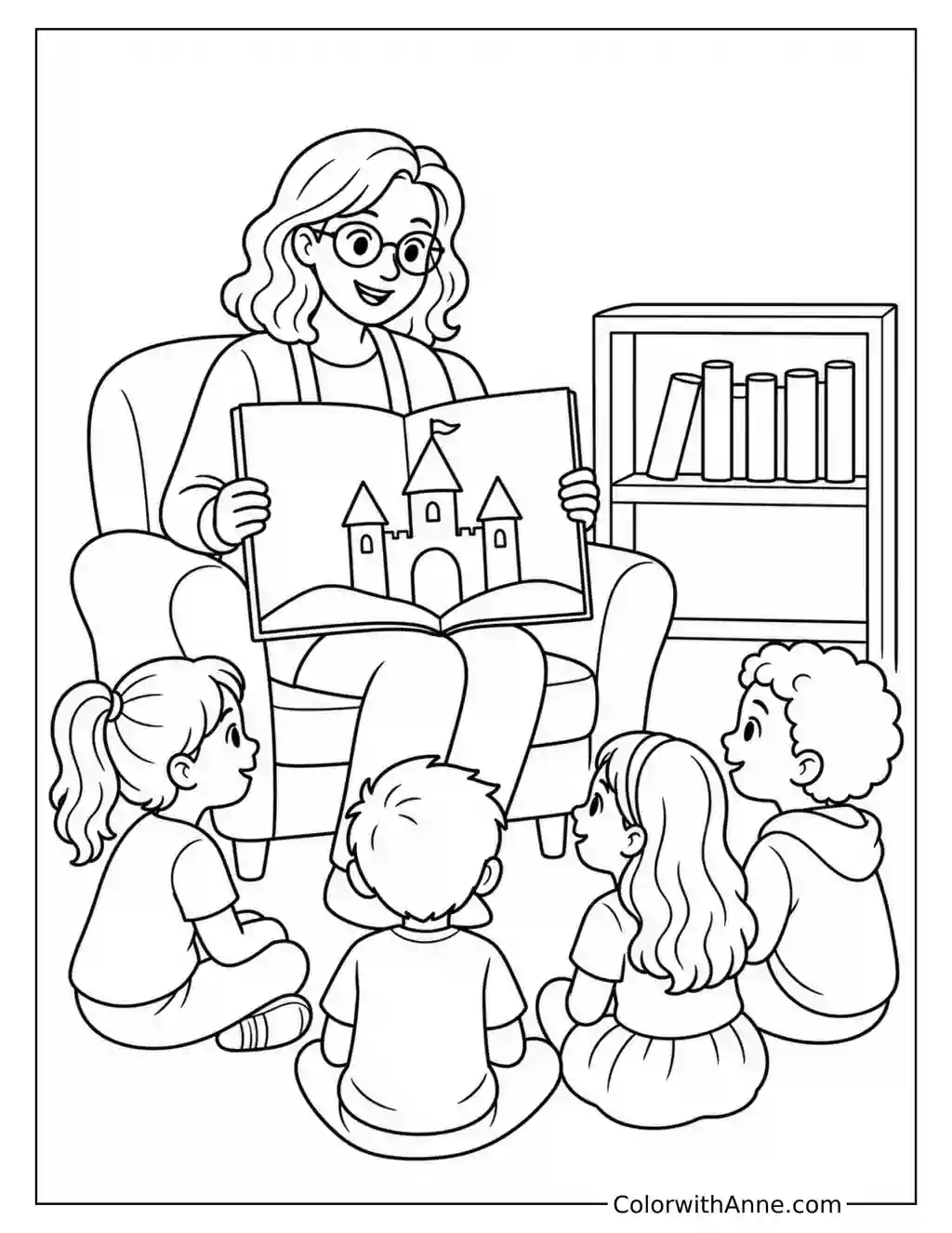
The librarian holds an illustrated book while the children gather close. The scene captures the moment when one reader helps several people enter the same story.
Use the page before a short read-aloud at home. Children can arrange a few toys as the audience, then take turns reading a familiar line or describing an illustration. Color afterward, noticing how the listeners face the book. The shared attention is the part worth borrowing; an elaborate performance is unnecessary when the story already gives everyone somewhere to look.
Make the Sleeping Cat a Bookmark
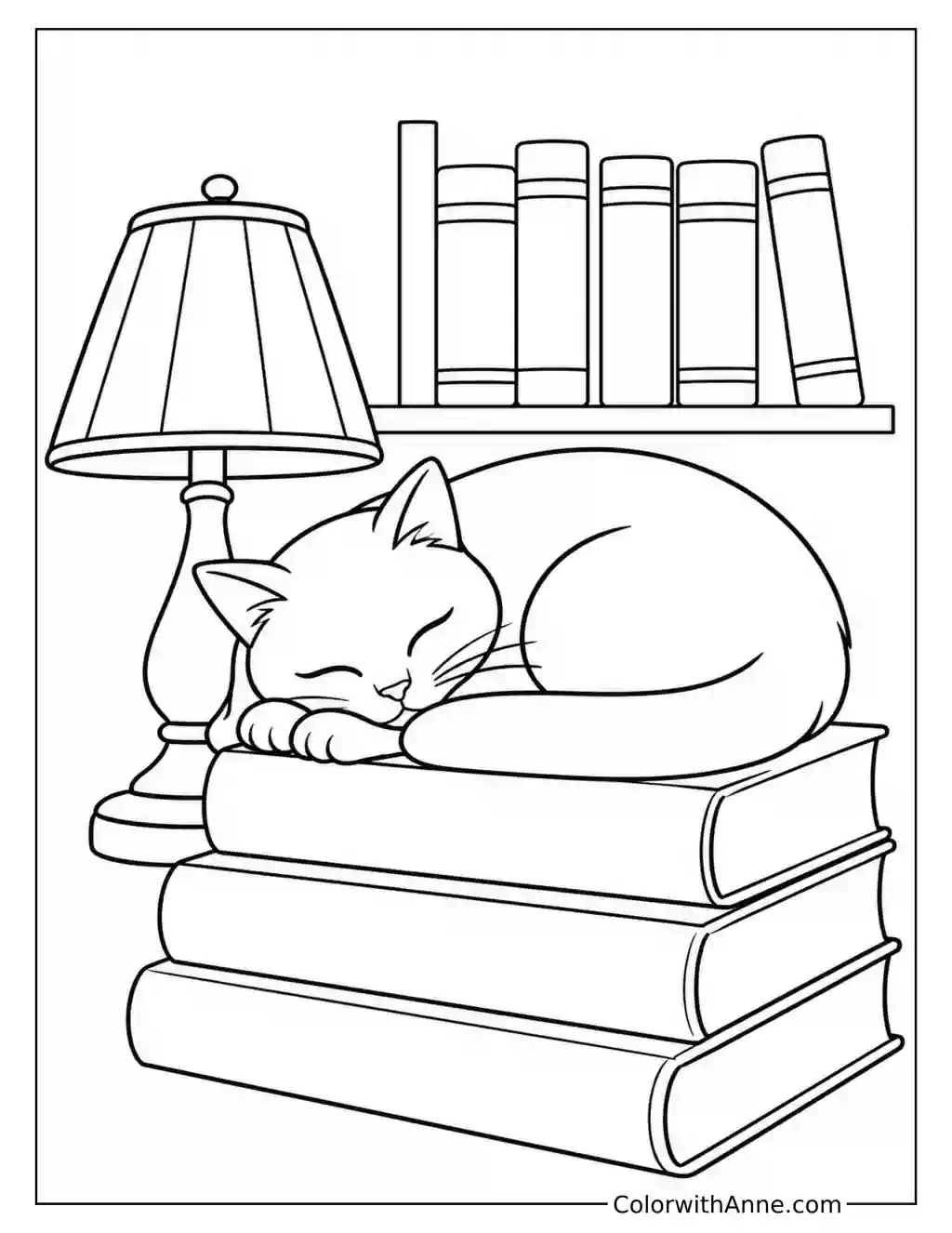
The cat curls across a stack of books, looking thoroughly committed to keeping the next volume unavailable.
Print the design at a size that suits your book, color it, and back it with thin card. Cut around the cat and stack, leaving a narrow straight section below to slip between the pages. The sleeping figure can remain visible above the book’s edge. This is a bookmark whose shape and subject explain its use, with the cat continuing to supervise the reading.
Choose a Book Worth Passing On
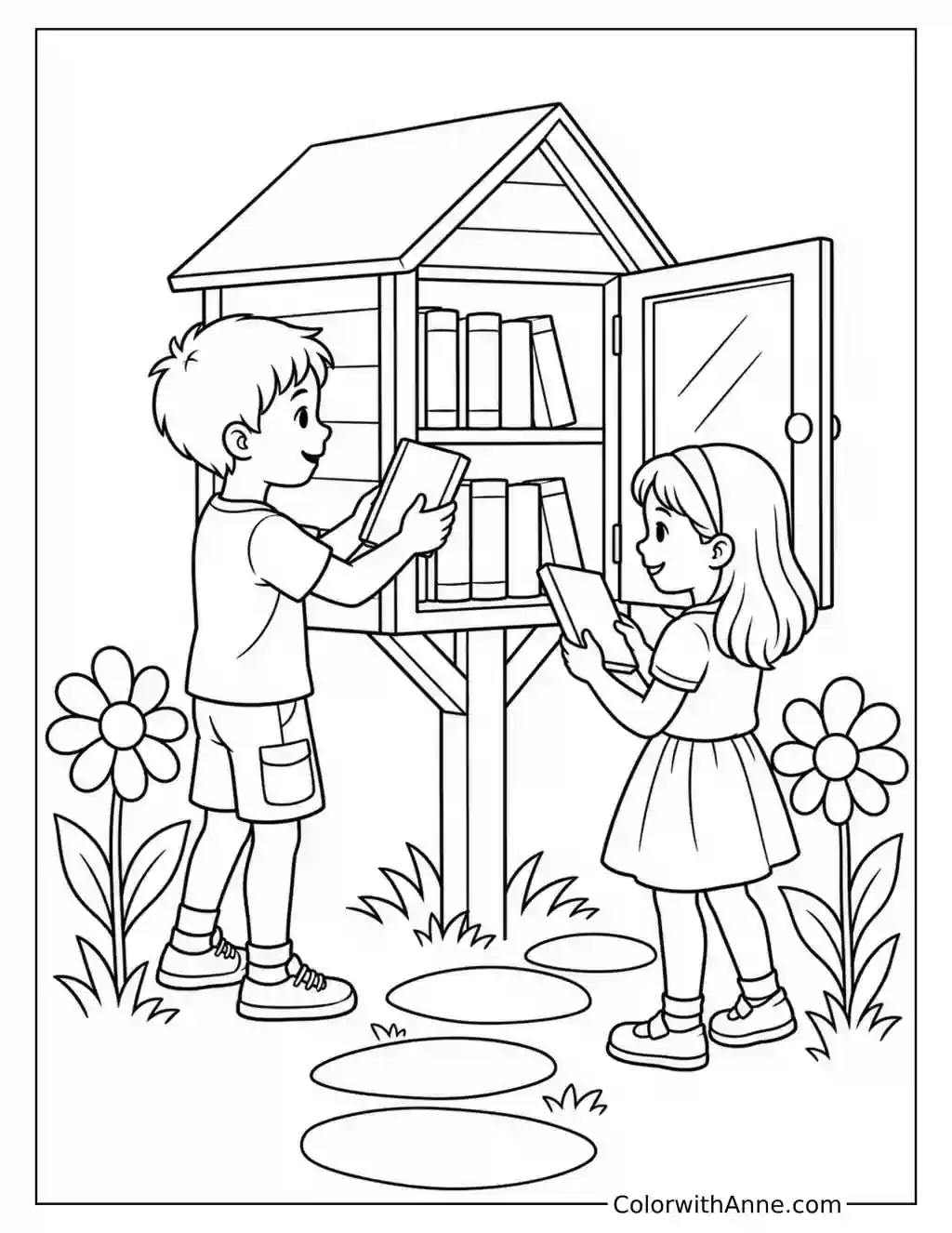
Two children browse the little book cabinet among flowers. The open door makes sharing feel approachable rather than formal.
While coloring, consider a book you have finished and would be happy for someone else to discover. If there is a book-exchange cabinet or community shelf you already use, set that book aside for your next visit. A brief recommendation tucked inside can explain what you enjoyed. The page gives a small nudge toward circulating a story that might otherwise remain unread on your own shelf.
Keep a Rainy-Day Reading Appointment
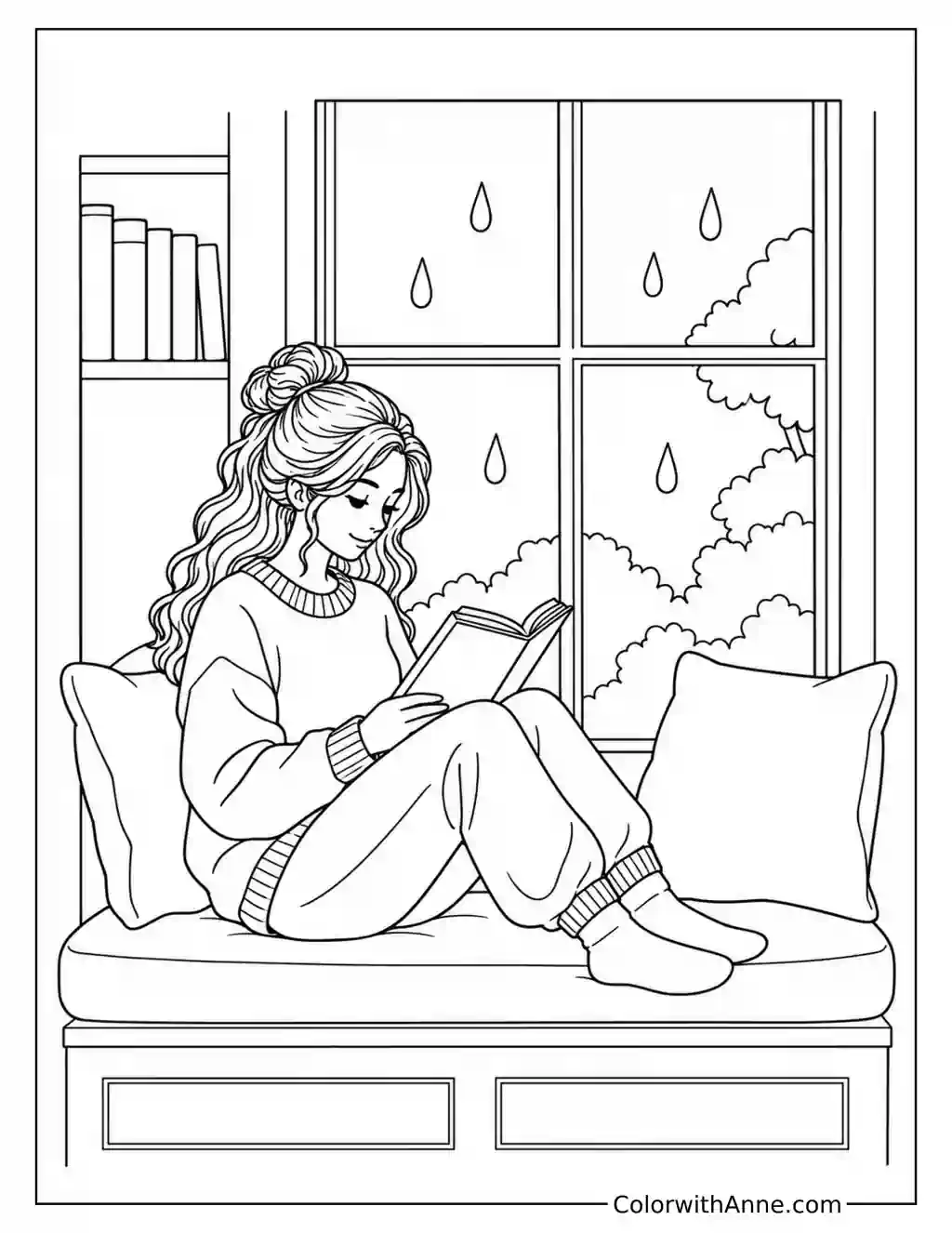
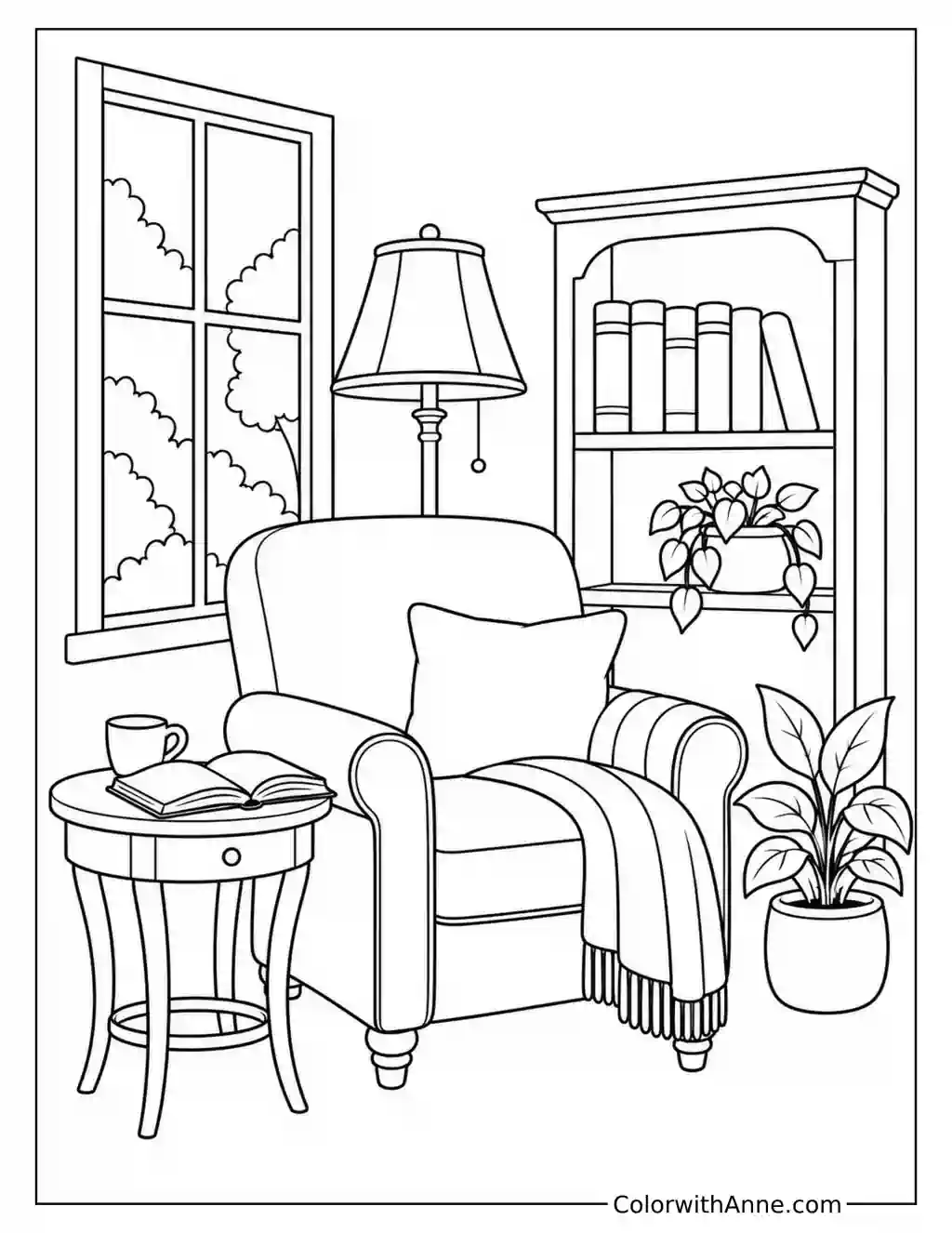
The reader sits beside a rain-covered window with cushions and a blanket close at hand. The scene makes staying in look like a choice worth enjoying.
Choose a chapter or a short reading interval before beginning the page, then leave the book within reach. Let the rain outside stay cooler than the seat and textiles inside. On an actual wet afternoon, alternate a little reading with a little coloring. The activity gains its rhythm from the setting, rather than from a list of tasks to complete.
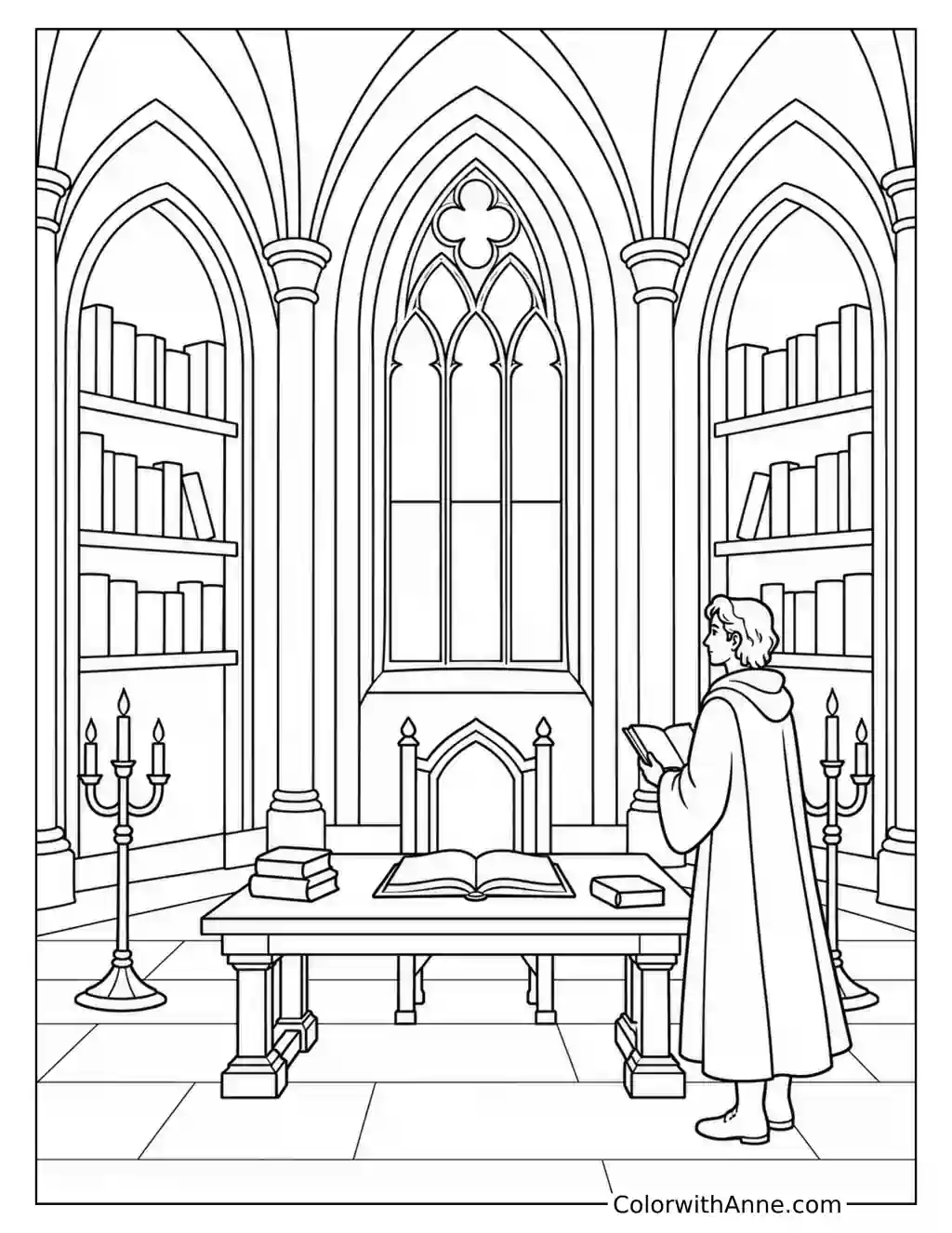
Let the Gothic Room Rise around the Reader
Tall shelves, pointed arches, and a large window surround the small robed reader. The building’s scale is the feature to preserve.
Work the broad architectural sections first, keeping their upward lines clear. Deeper recesses between shelves can contrast with lighter stone edges and the window. Save stronger accents for a few close details. The reader should feel like someone who has entered an enormous collection, not a figure competing with every book spine for attention.
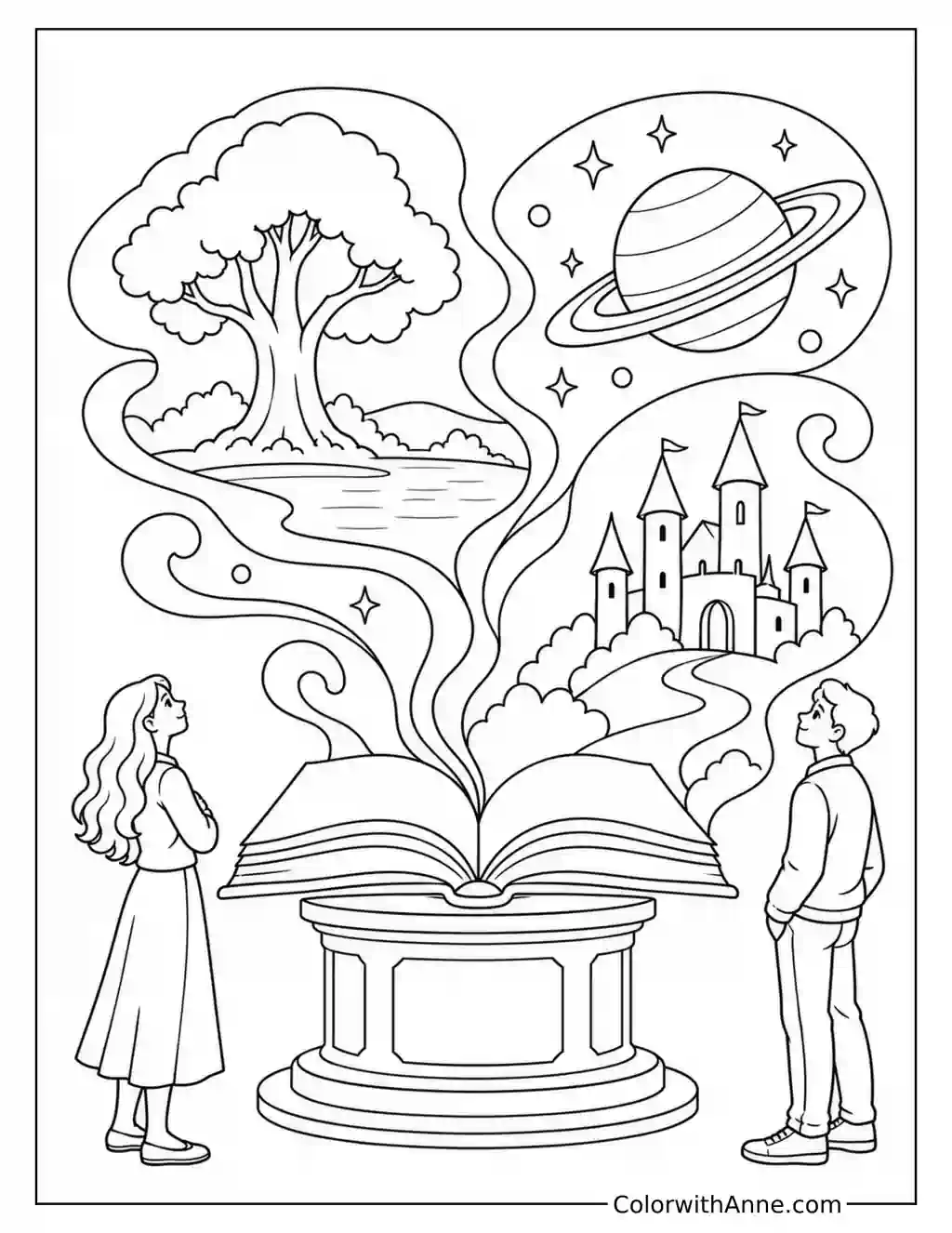
Choose a New Kind of Reading Adventure
Different worlds rise from the open book, including a castle, ocean shapes, trees, and a ringed planet. The picture makes several reading possibilities visible at once.
Start with the world you would normally choose, then spend some time on one you tend to overlook. That second choice could inspire your next library search: a space story, an ocean adventure, or something set in an unfamiliar landscape. The finished page can remain imaginative while the reading choice becomes real. One new direction is enough to expand the afternoon.