
A tabby sits on the windowsill with its tail wrapped neatly around its paws, watching a leaf move outside. One ear turns toward a sound in the kitchen without disturbing the rest of the pose. Apparently, keeping track of the house does not require getting up.
Realistic Cat coloring pages invite the same attention to small details. A familiar pet can make the shape of an ear or the stripes around a muzzle feel unexpectedly important. The real cat may be asleep nearby, offering an excellent reference until it stretches, changes position, and decides the best place to settle is directly on the paper.
Free Printable Realistic Cat Coloring Pages
Click any coloring page below to open the PDF, then print on US Letter or A4 paper.
Did you find what you needed?
Help us choose what to create or improve next.
Coloring Ideas for Realistic Cat Pages
Try one of these coloring ideas, or use them as a starting point for your own.
Make a Portrait of Two Familiar Companions
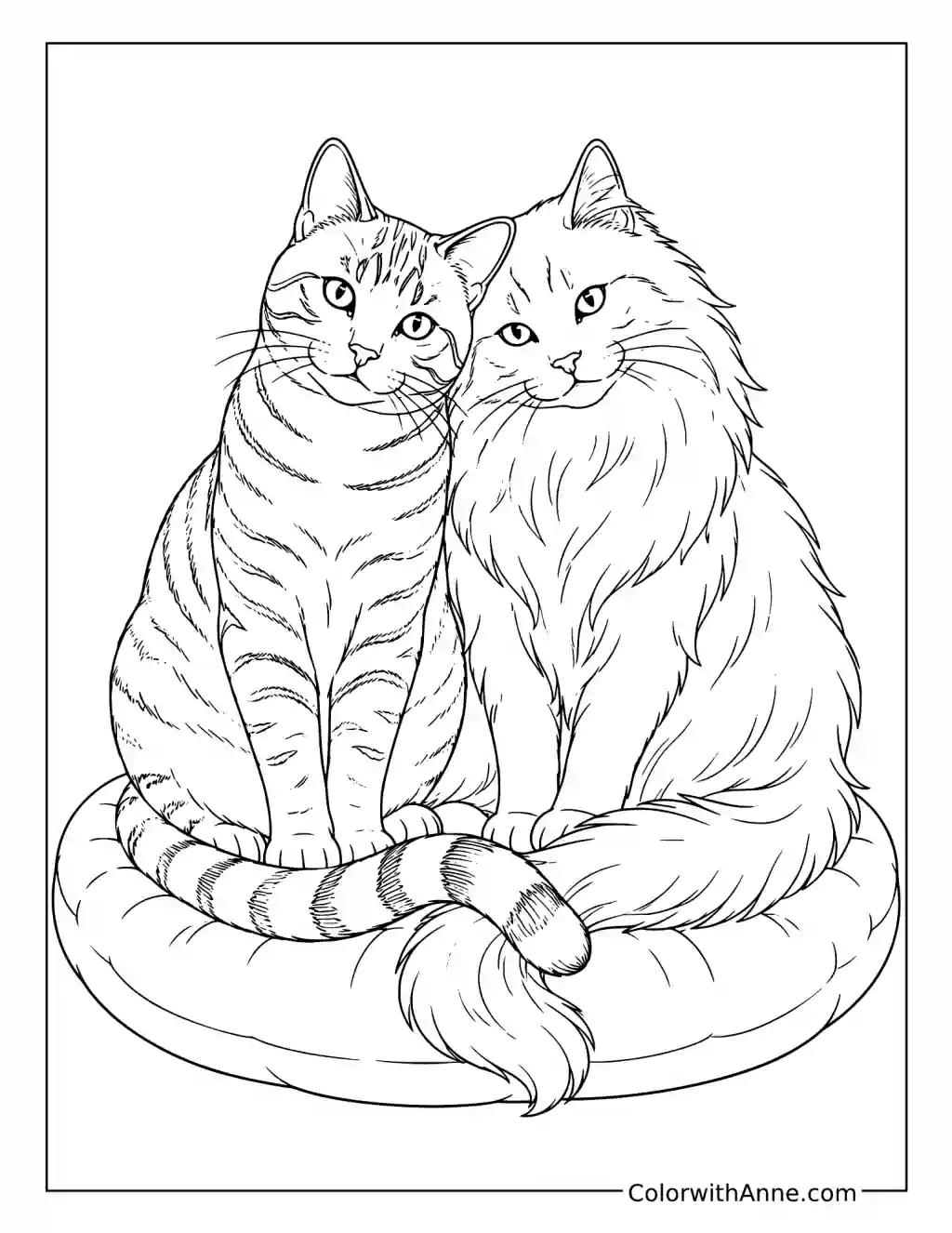
The two cats sit close enough for their coats and tails to overlap. Their different fur patterns make the shared cushion feel like a portrait rather than a repeated pair of animals.
If you know two cats who regularly settle together, use photographs to reproduce their most recognizable markings. Concentrate on the faces and the places where the coats meet. This is a design where personalization has a clear purpose: a finished portrait can become a thoughtful gift for someone who knows exactly which cat usually claims more of the cushion.
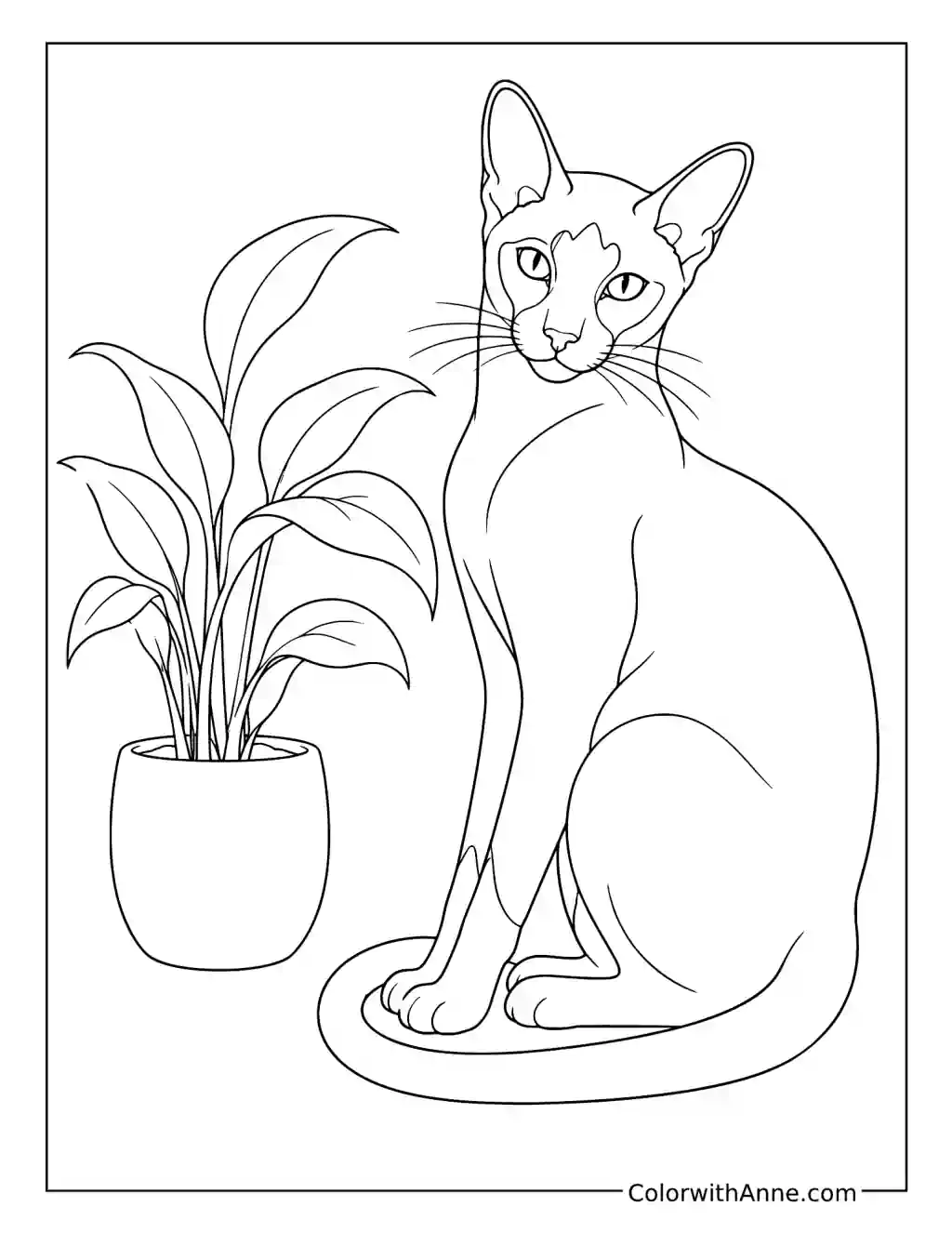
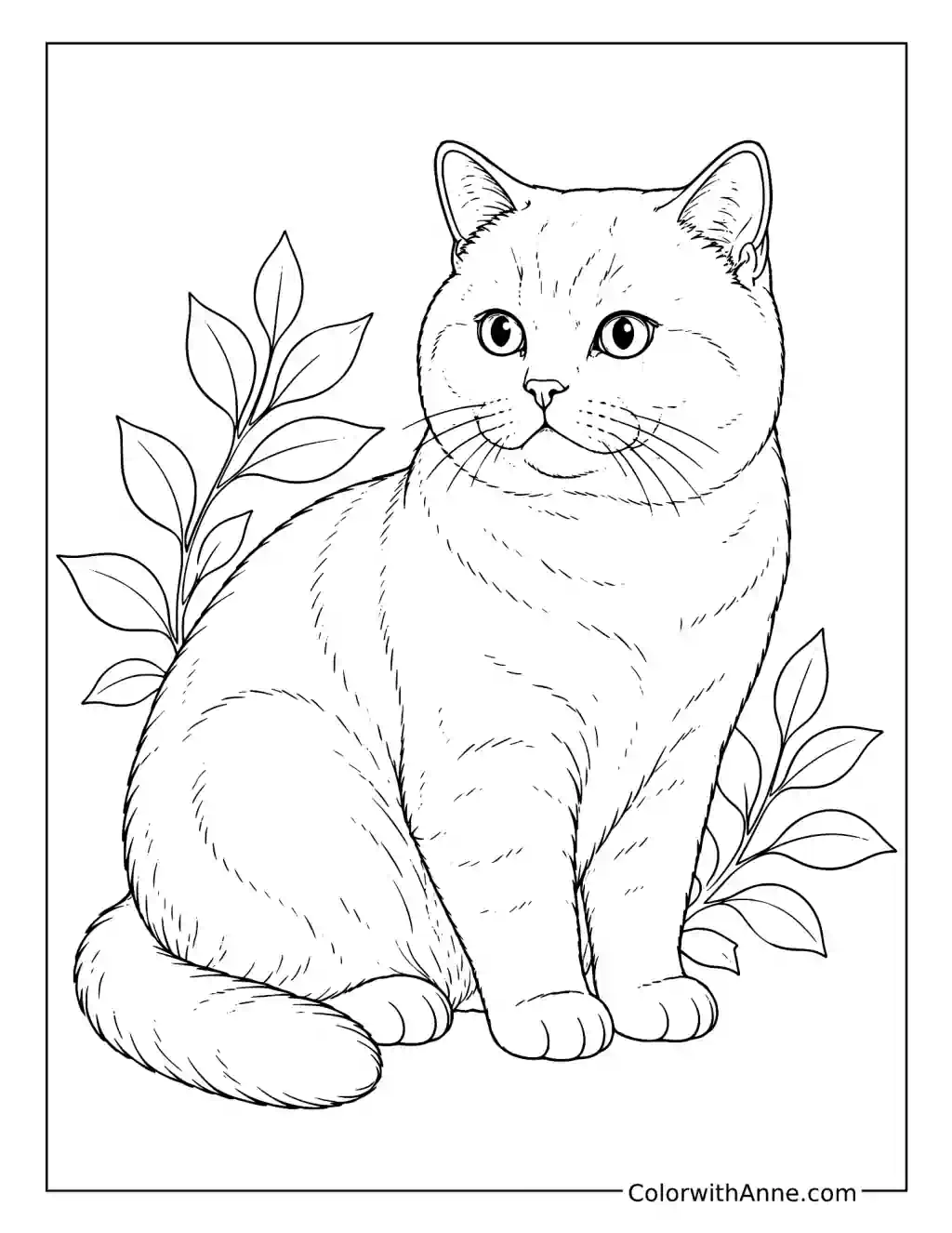
Keep the Siamese Coat Smooth
The Siamese cat has a sleek outline beside the broad leaves of an indoor plant. The open areas of its body invite softer changes than the many short fur strokes used on fluffier cats.
Use a reference photograph to study the darker face, ears, legs, and tail, blending toward a lighter body. Keep the plant’s edges more definite by comparison. The contrast between smooth coat and structured leaves is enough to give this uncluttered scene interest.
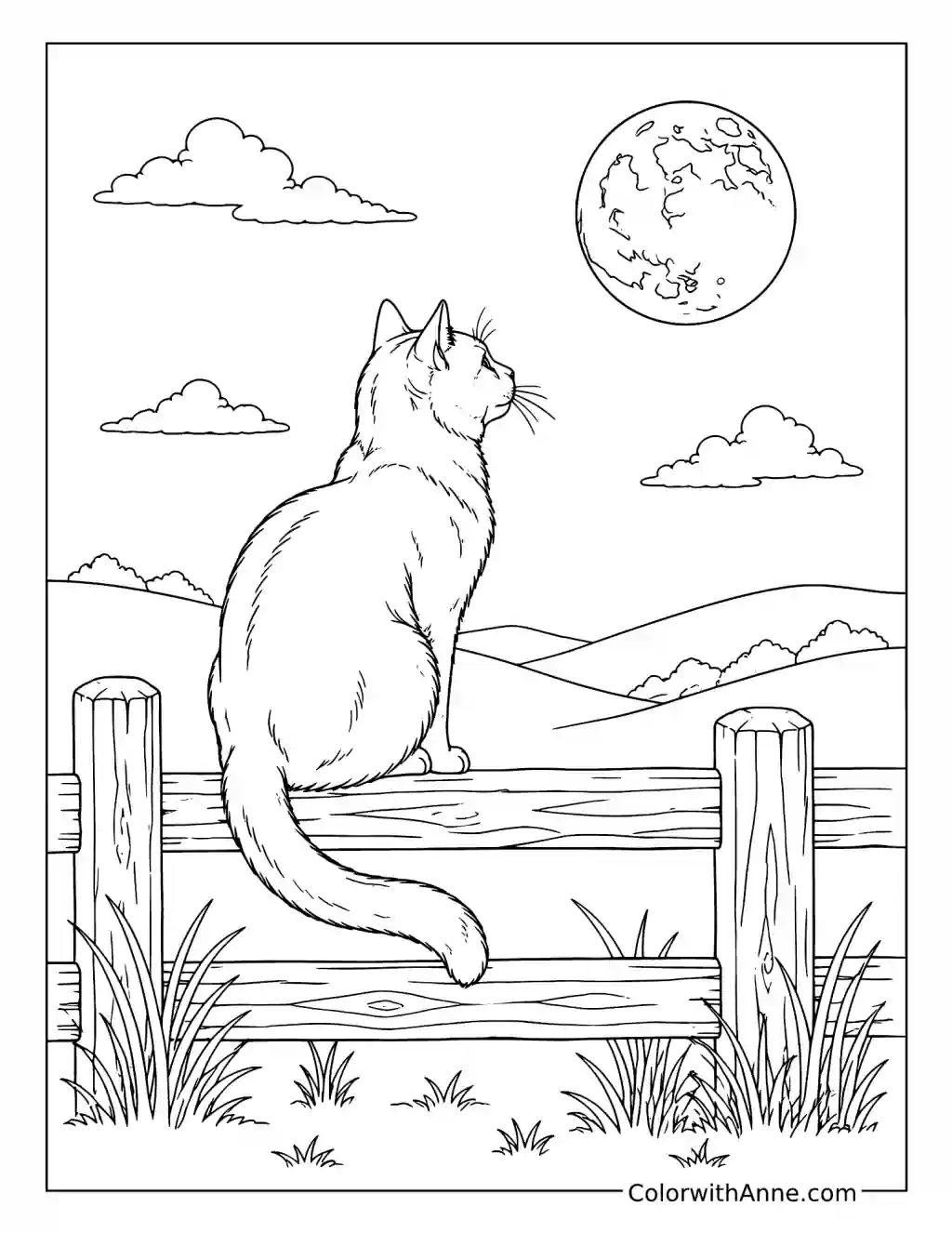
Let Moonlight Find the Cat’s Outline
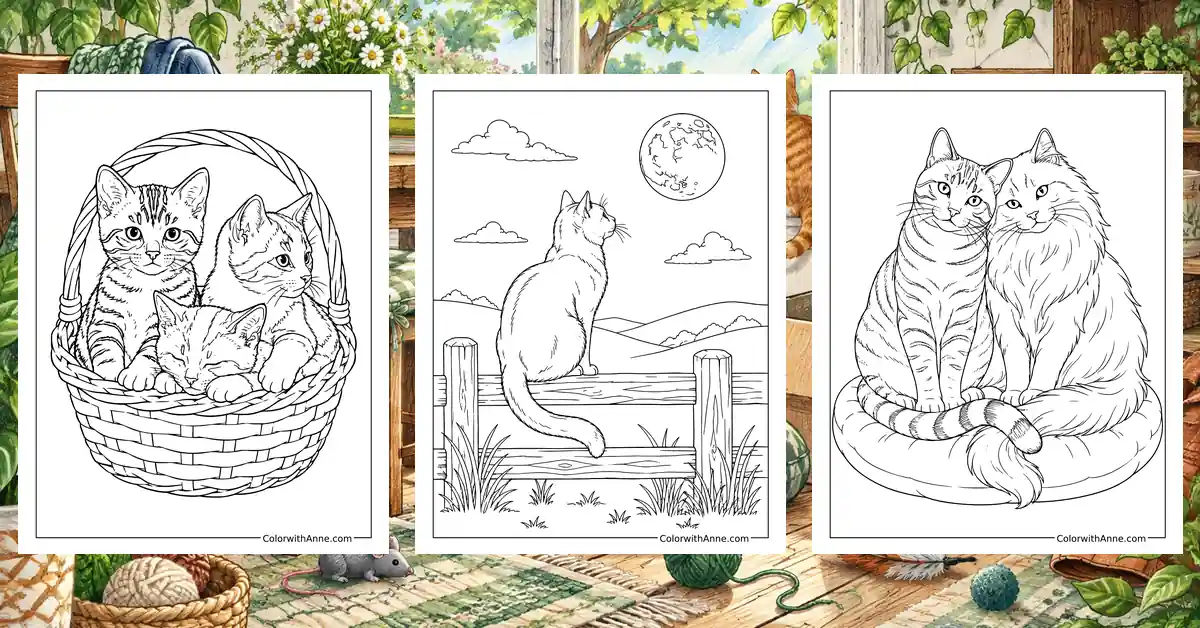
The cat sits with its back partly turned, watching a full moon above the distant landscape. Its profile and long tail do most of the storytelling.
Build a darker sky around a lighter edge of fur, keeping the moon pale. The fence can have rougher, more broken color than the animal. This page is particularly suited to a limited evening palette. The recognizable shape of a watching cat carries the scene even when most of its coat remains quietly shaded.
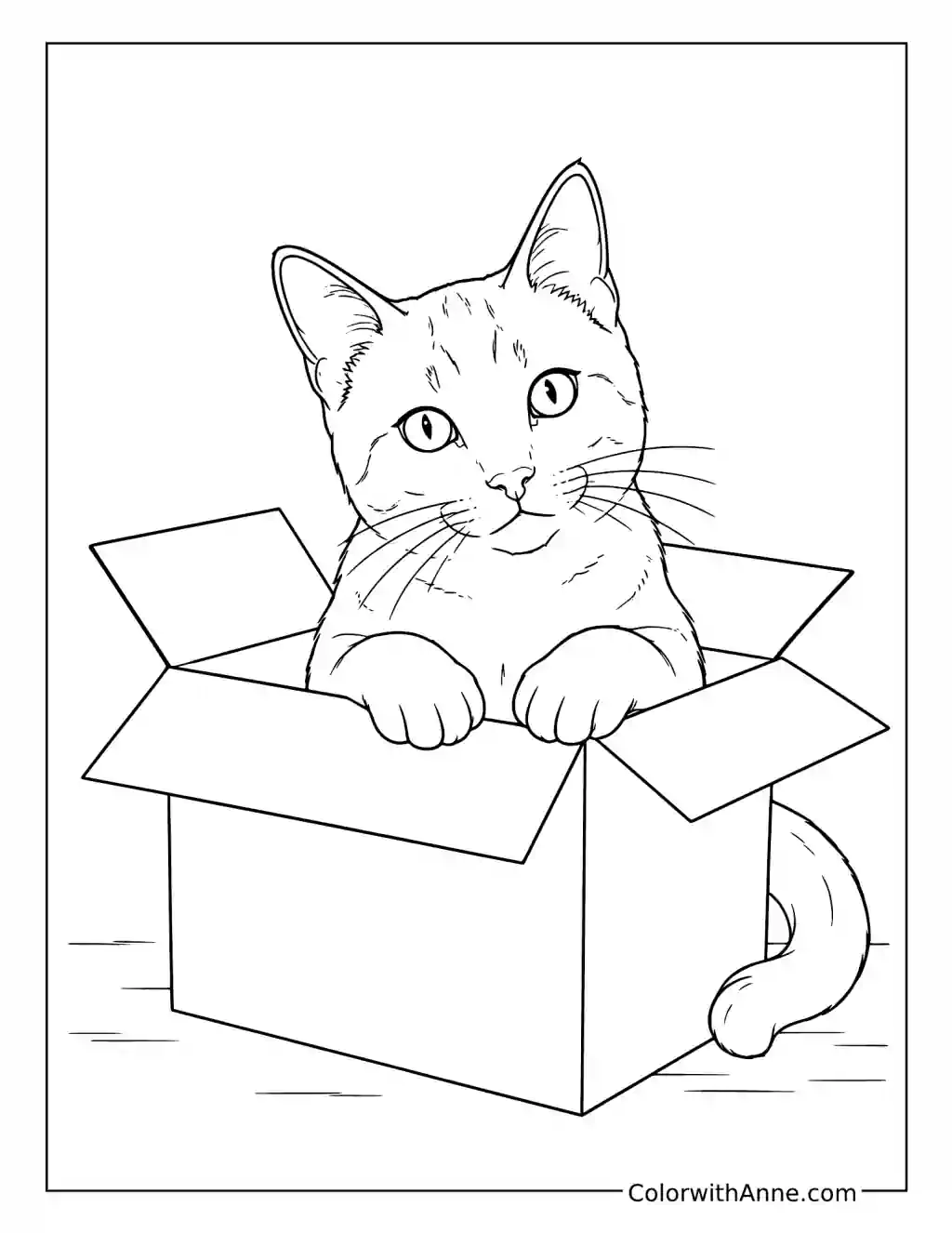
Open the Box to Find the Cat
The cat’s head and paws rise above the box’s open flaps. The cardboard occupies enough of the picture to turn the familiar hiding place into a small reveal.
After coloring, attach an extra flap of matching paper above the opening, large enough to cover the face when folded down. Lift it to uncover the cat. Keeping the added piece close to the box’s color makes the surprise work naturally. It is a simple interactive use of a pose that already looks as though someone has just discovered the occupant.
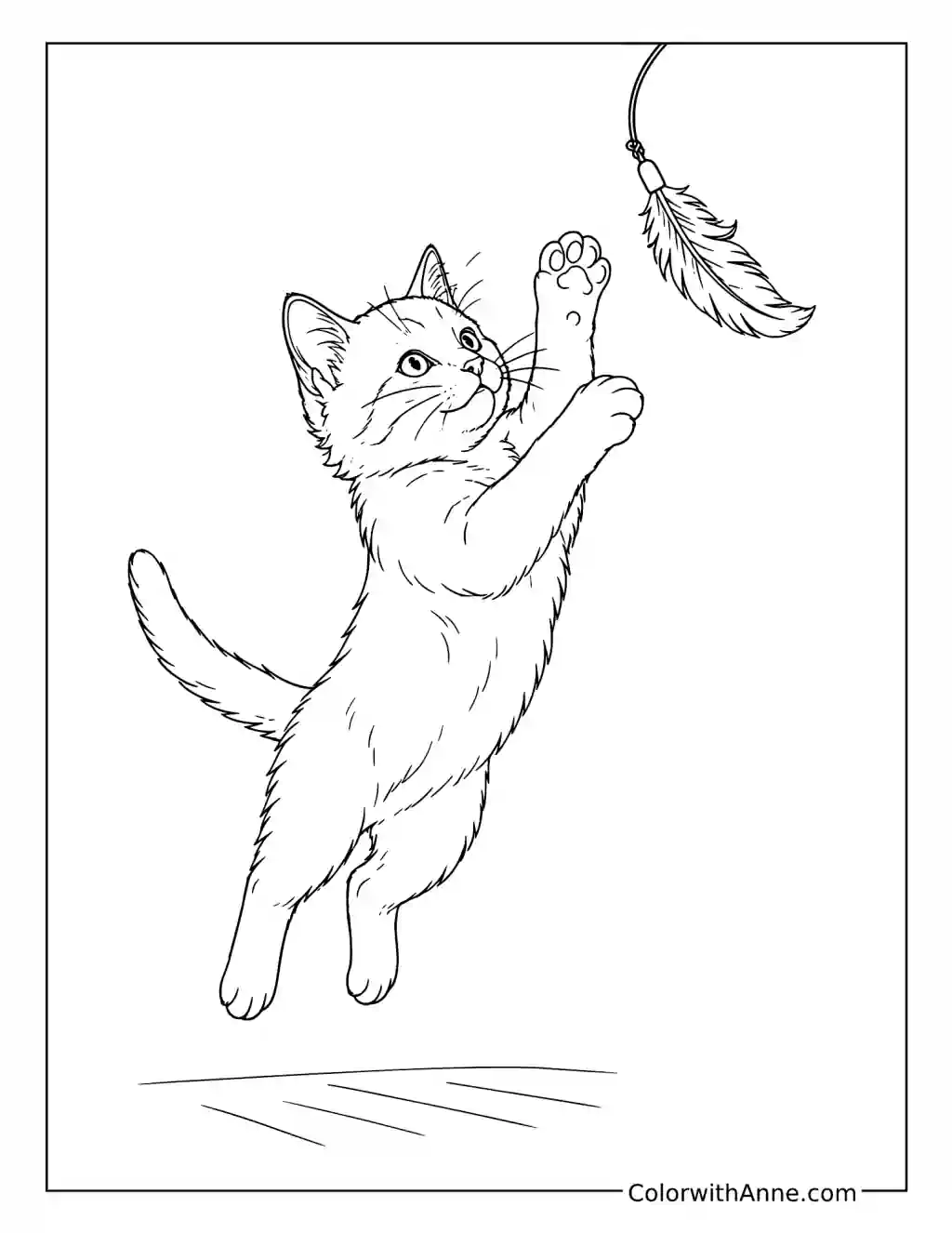
Catch the Kitten in Mid-Reach
The kitten stretches upward toward the hanging feather, with its paws raised and body clear of the floor. The little gap beneath it gives the jump much of its energy.
Keep that gap visible and let the feather’s color attract the eye upward. Short strokes along the stretched body can follow the direction of movement. During a real cat’s playtime, notice whether the eyes, ears, or paws move first. That observation can make this frozen instant feel more familiar when you return to the page.
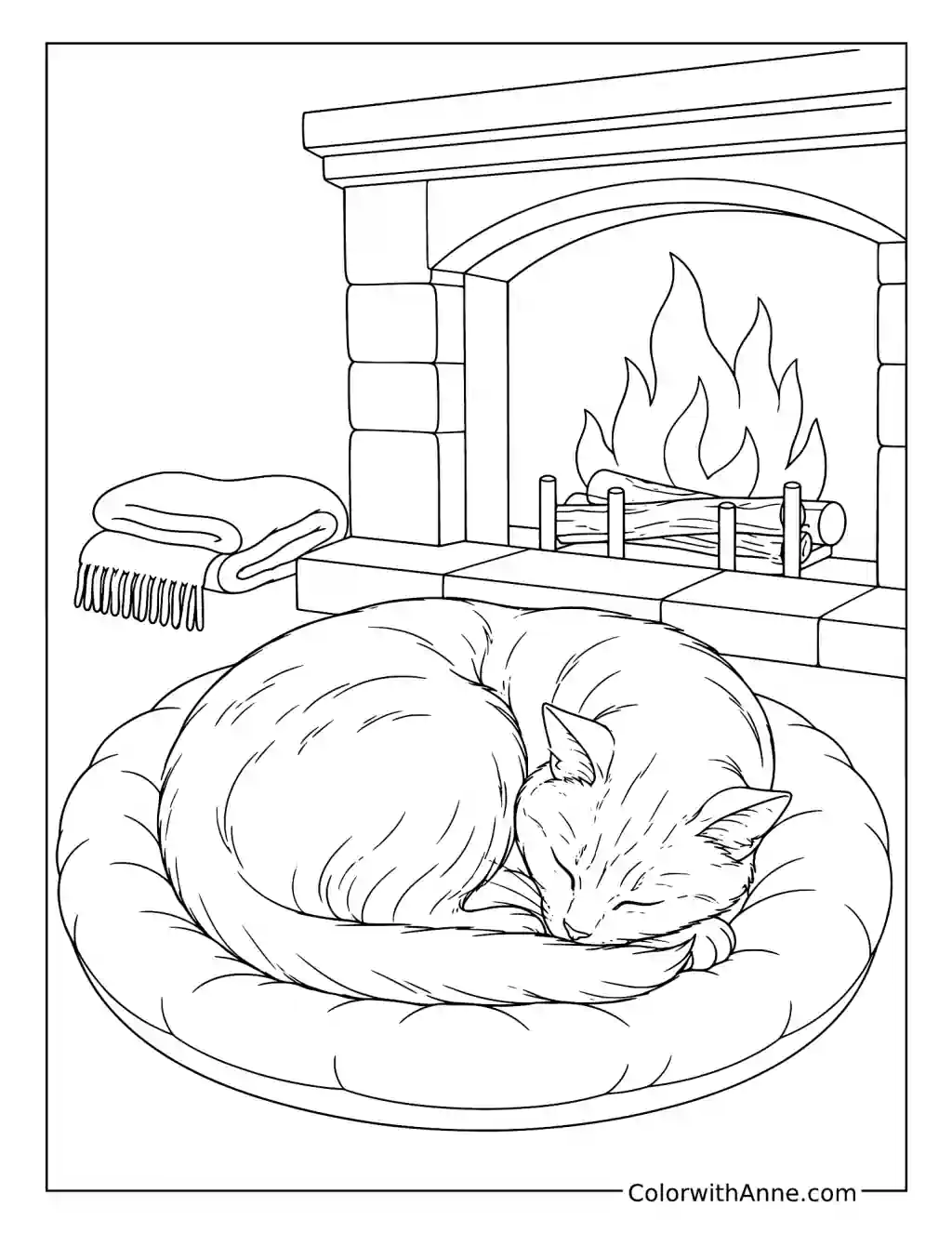
Give the Fireplace Cat a Proper Quiet Corner
The cat curls tightly on a cushion in front of the fireplace, with a folded blanket nearby. The whole arrangement has settled around its sleeping shape.
Let the fire introduce a small amount of warm color into the nearest fur and cushion, keeping the outer room calmer. Follow the curve of the curled body rather than coloring each fur mark in isolation. This is a page that suits an unhurried evening: one comfortable shape, a little warmth, and no expectation that the cat will become more productive.
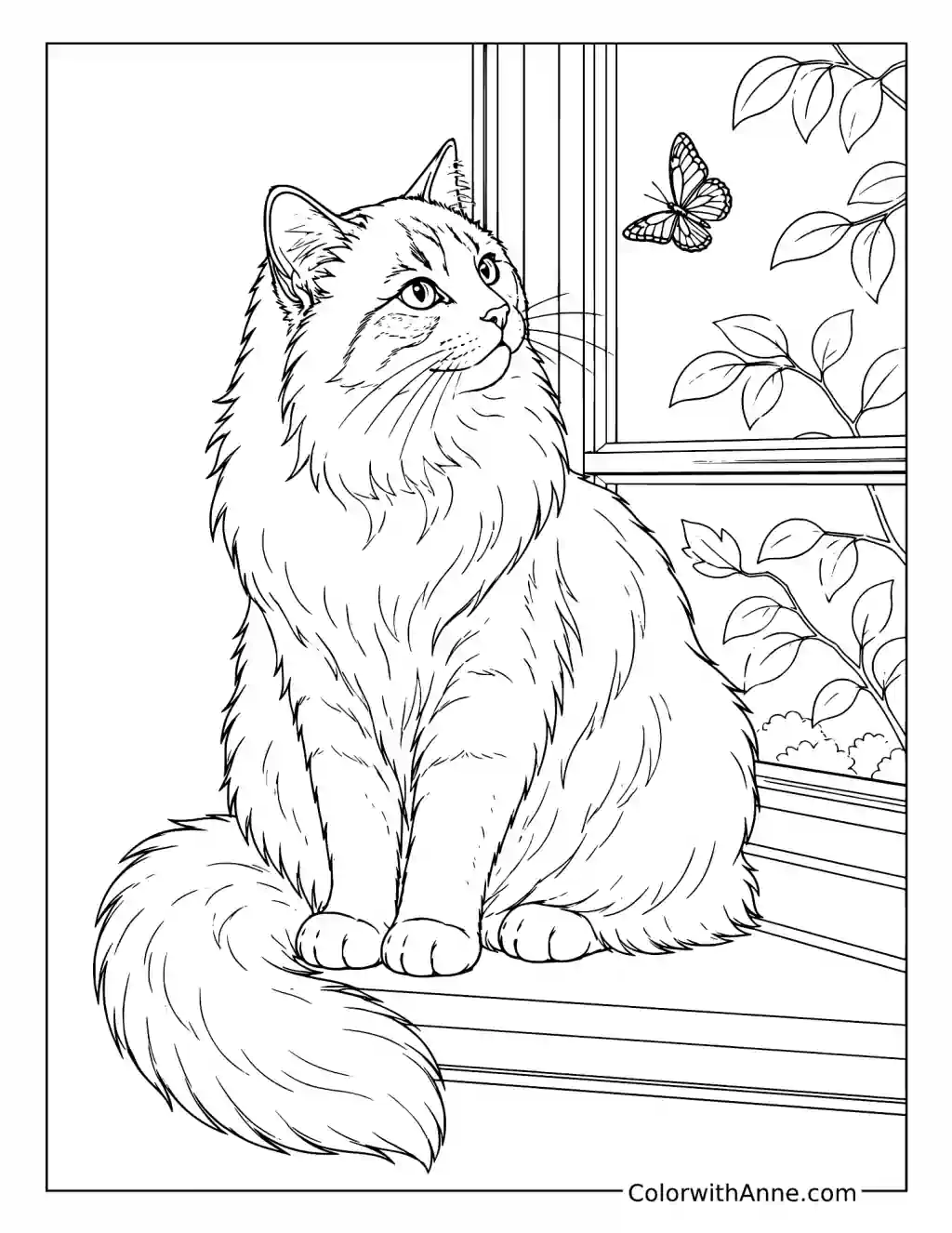
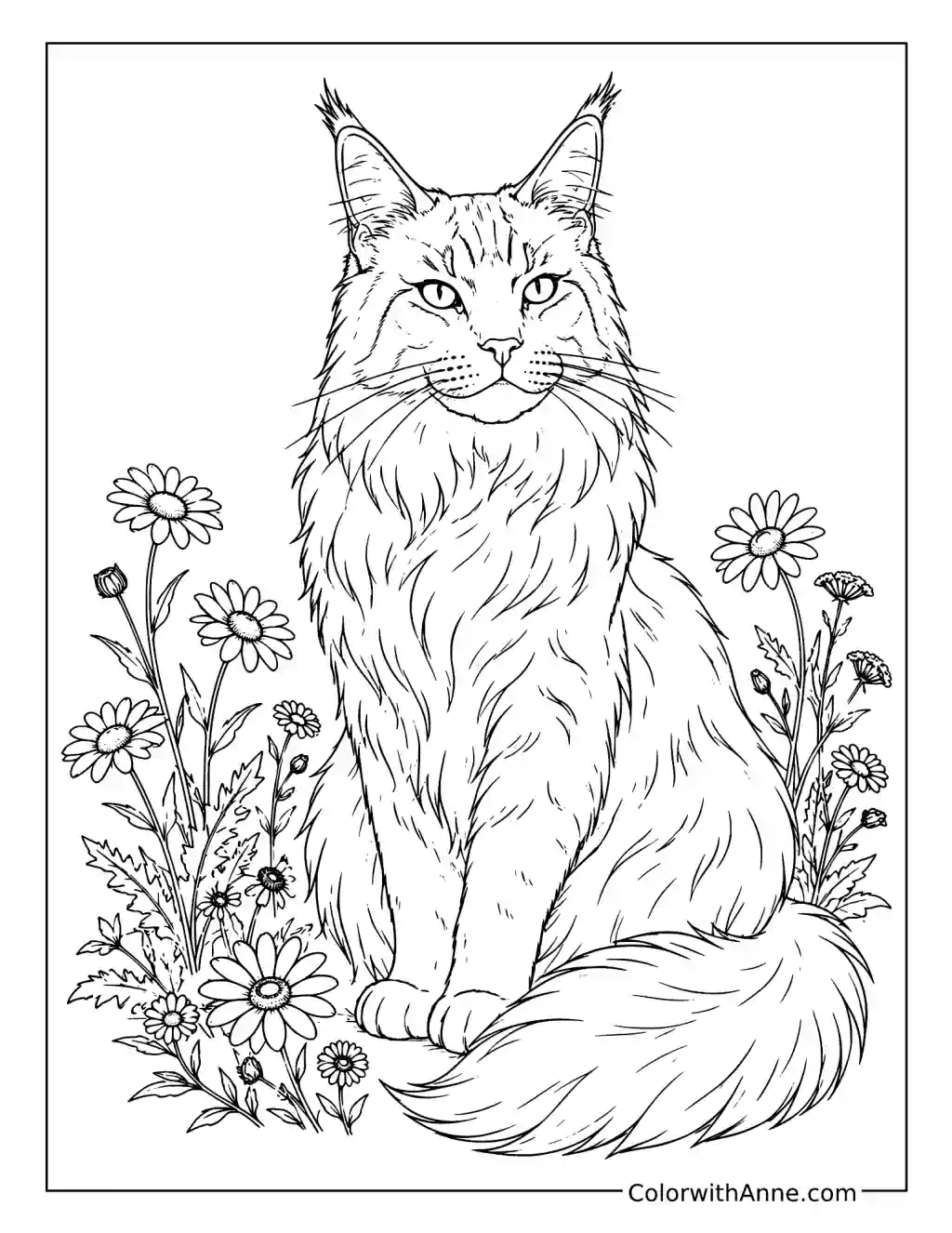
Work through the Maine Coon’s Long Fur
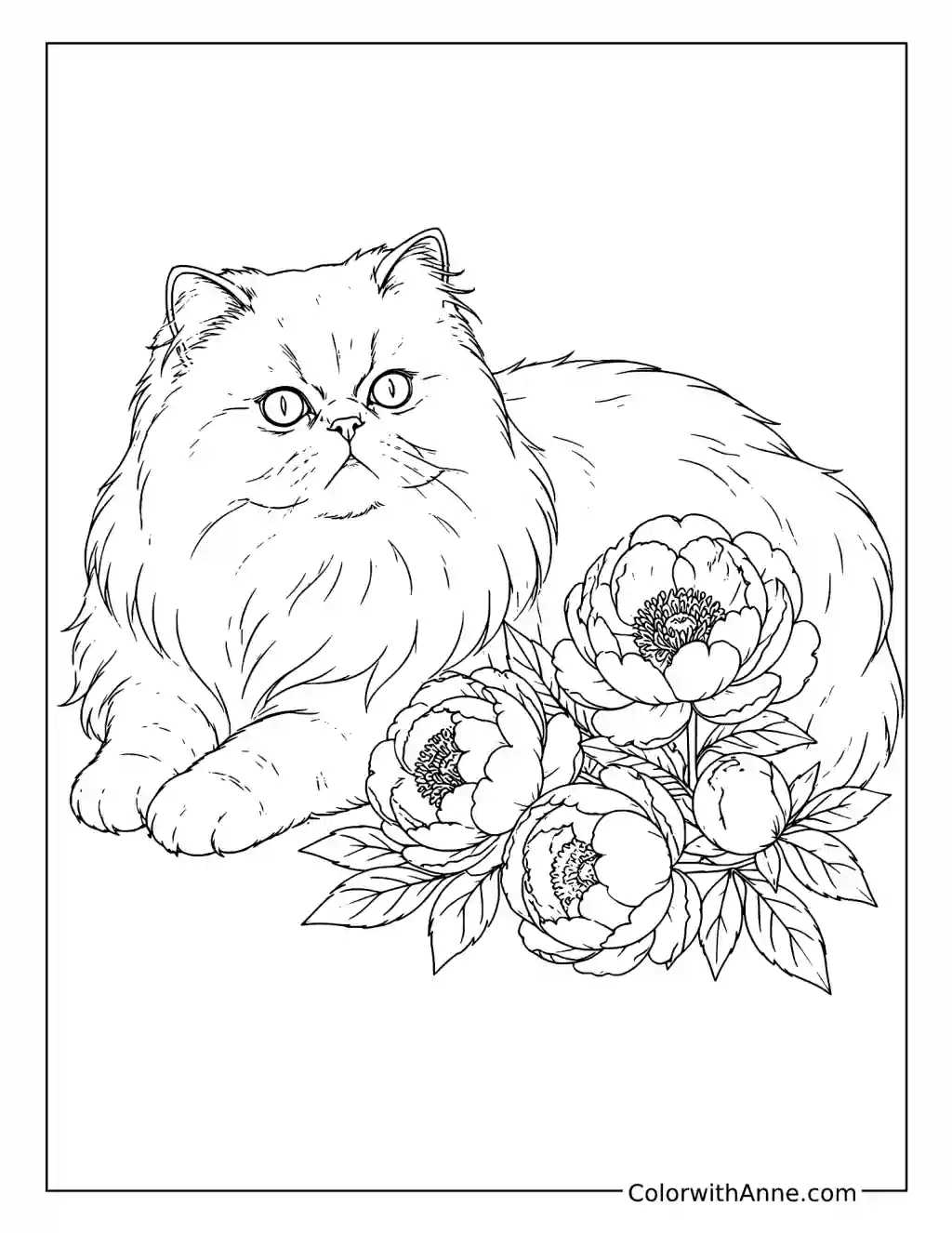
The Maine Coon’s chest, ear tufts, and sweeping tail form different groups of long fur, with smaller wildflowers around them.
Choose the direction of the strokes separately for each area. The chest falls downward, the tail curves around, and the ear tufts lift. Leave narrow pale spaces between stronger strokes so the coat keeps its texture. The flowers can provide brief changes of pace between those larger areas. This portrait is especially satisfying when the fur looks organized by the animal’s shape, rather than uniformly fluffy everywhere.
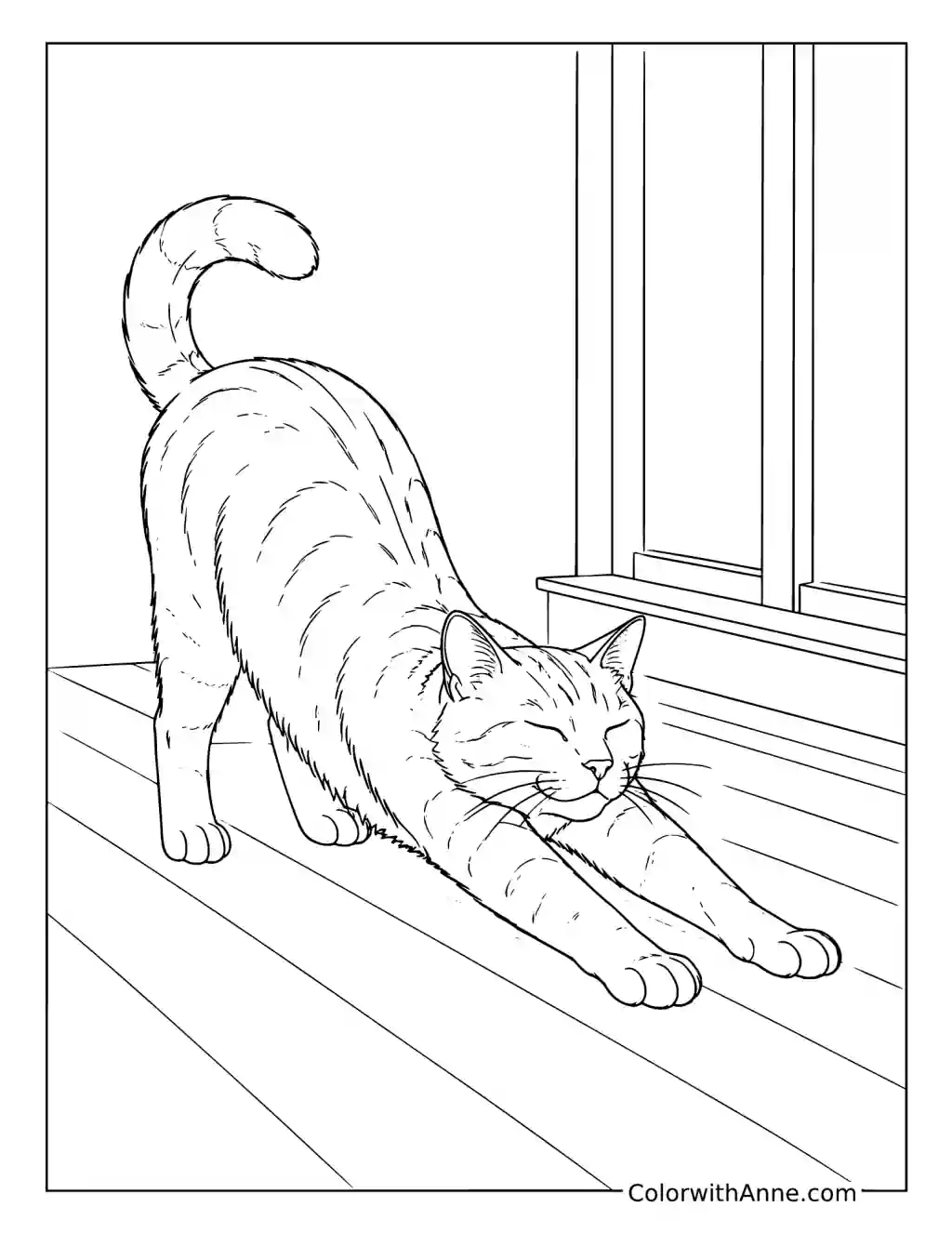
Take the Stretch Break the Cat Suggests
The front legs extend along the floor while the cat’s back rises behind them. It is a thoroughly recognizable pause between resting and deciding what to do next.
Color the floor’s straight lines first, then follow the softer curve of the body. When you reach a natural stopping point, stand up for a comfortable stretch of your own before continuing. The connection is small and useful, especially after sitting for a while. The cat has supplied a reminder without turning the page into an exercise routine.