
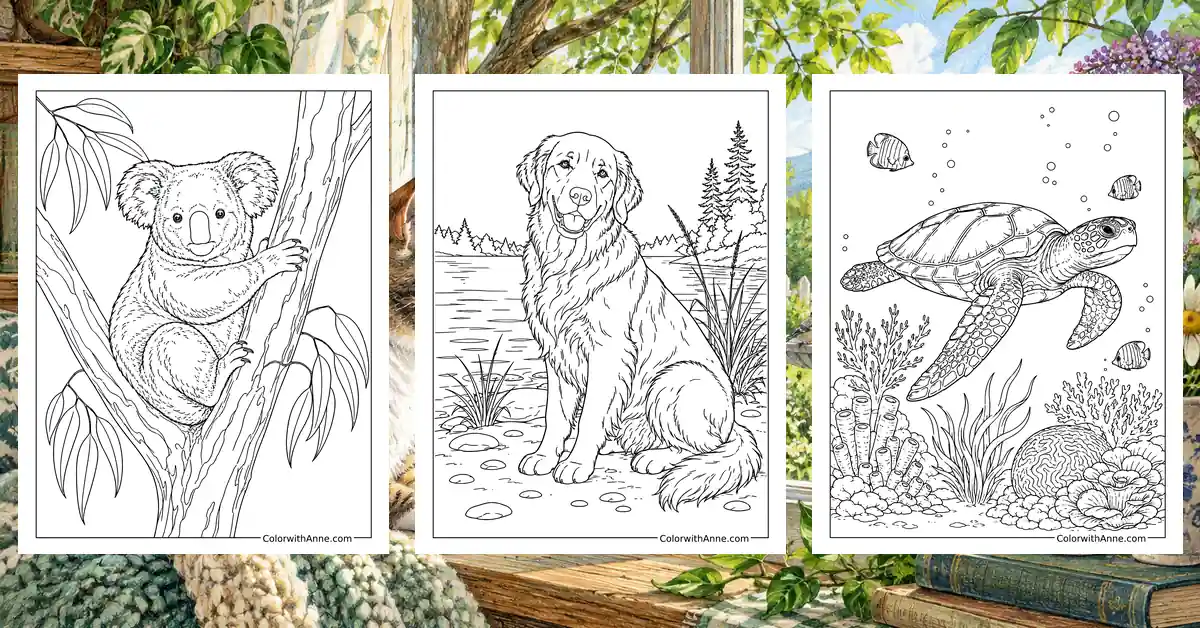
A squirrel pauses halfway up a tree, its claws gripping the bark, and suddenly the walk can wait. Up close, an animal’s familiar outline becomes something more interesting: the curve of an ear or the way fur changes direction around the face. The squirrel, meanwhile, has other appointments.
Realistic Animal coloring pages invite that same lingering look at the table. A wildlife book left open nearby can turn a small detail into a discovery, especially when a child notices something an adult missed. It is a pleasant excuse to study animals without expecting any of them to hold still.
Free Printable Realistic Animal Coloring Pages
Click any coloring page below to open the PDF, then print on US Letter or A4 paper.
Did you find what you needed?
Help us choose what to create or improve next.
Coloring Ideas for Realistic Animal Pages
Try one of these coloring ideas, or use them as a starting point for your own.
Follow the Butterfly’s Matching Wing Patterns
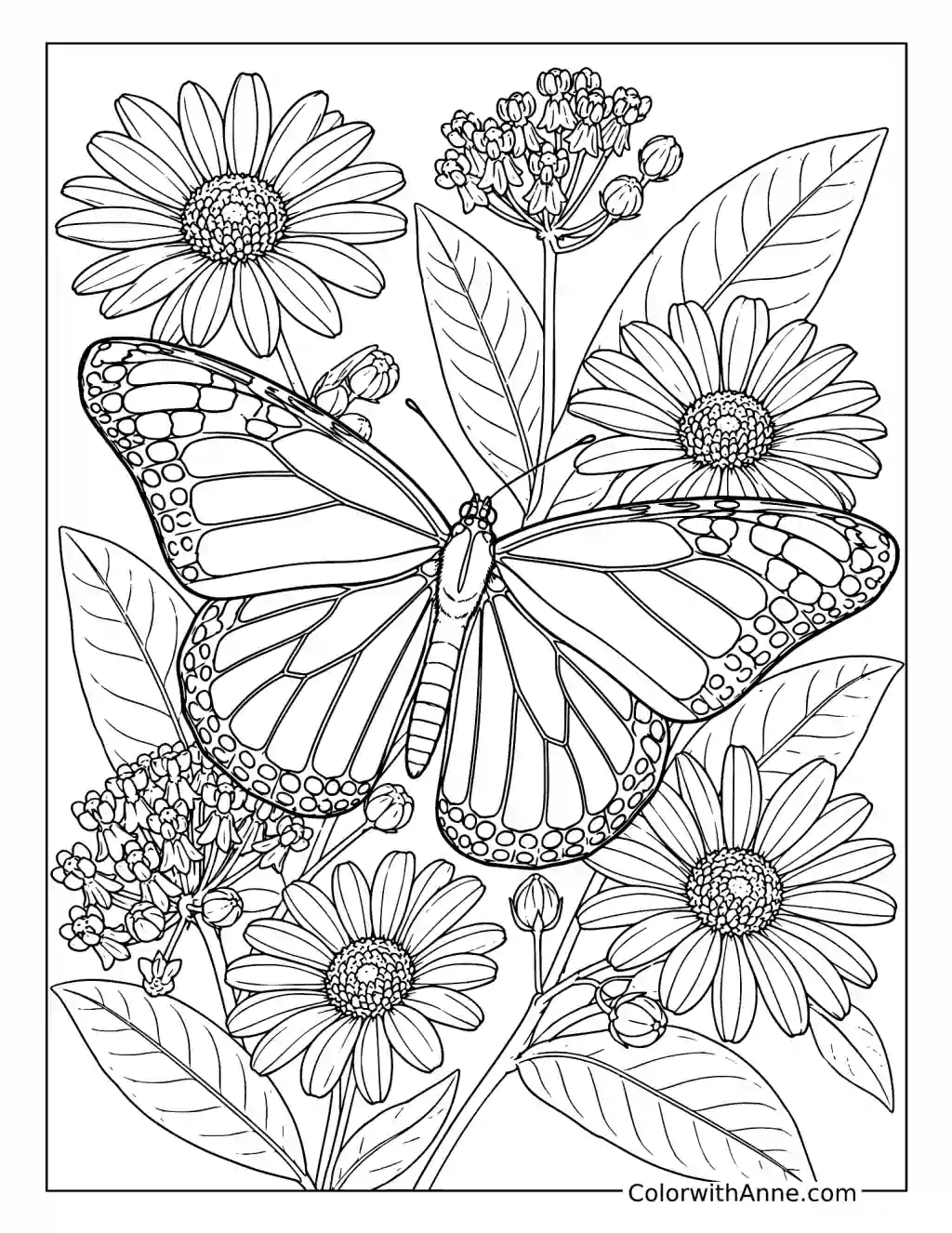
The butterfly spreads its wings among flowers and leaves, with rows of small shapes along the wing edges. Those little compartments make a satisfying place to begin: color one on the left, then find its partner on the right.
Work outward in pairs, keeping a note of which color belongs where. Once the wings are finished, choose just one flower to echo their brightest shade. The others can stay softer. It gives the butterfly a flower that feels like its own landing spot, without turning every petal into a competition for attention.
Bring an Autumn Walk Back to the Fox
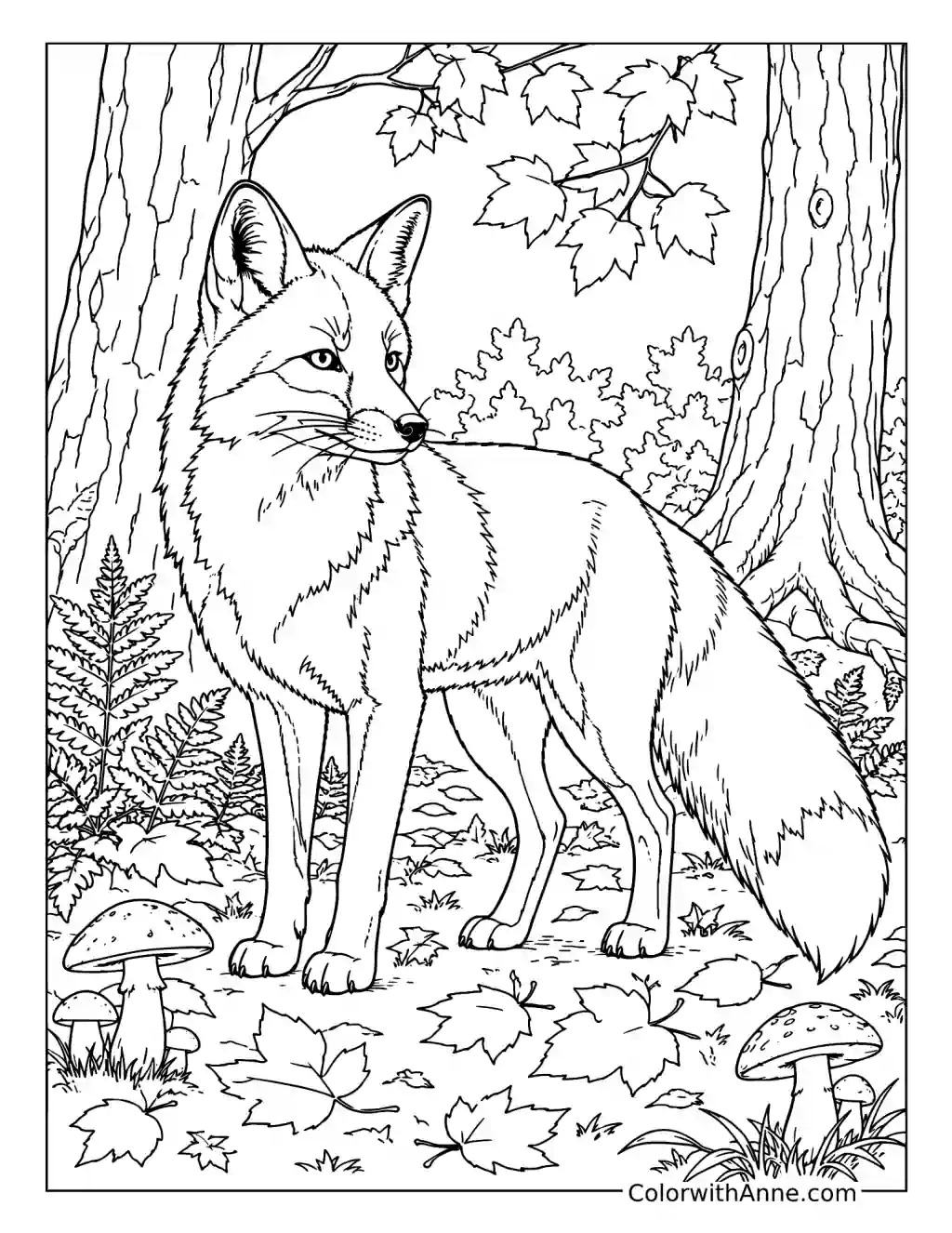
The fox stands between tree trunks, looking to one side, with fallen leaves and mushrooms around its paws. Its bushy tail nearly joins the leaf-covered ground, making the boundary between animal and woodland especially interesting.
Bring home a few fallen leaves from a walk and use them as color references beside the page. Look beyond the obvious orange: a single leaf might hold yellow edges, brown patches, and a little lingering green. Keep the fox’s pale chest and tail tip clear against those warm surroundings. The woodland can borrow its autumn from somewhere you actually know.
Take a Slow Tour Around the Turtle’s Shell
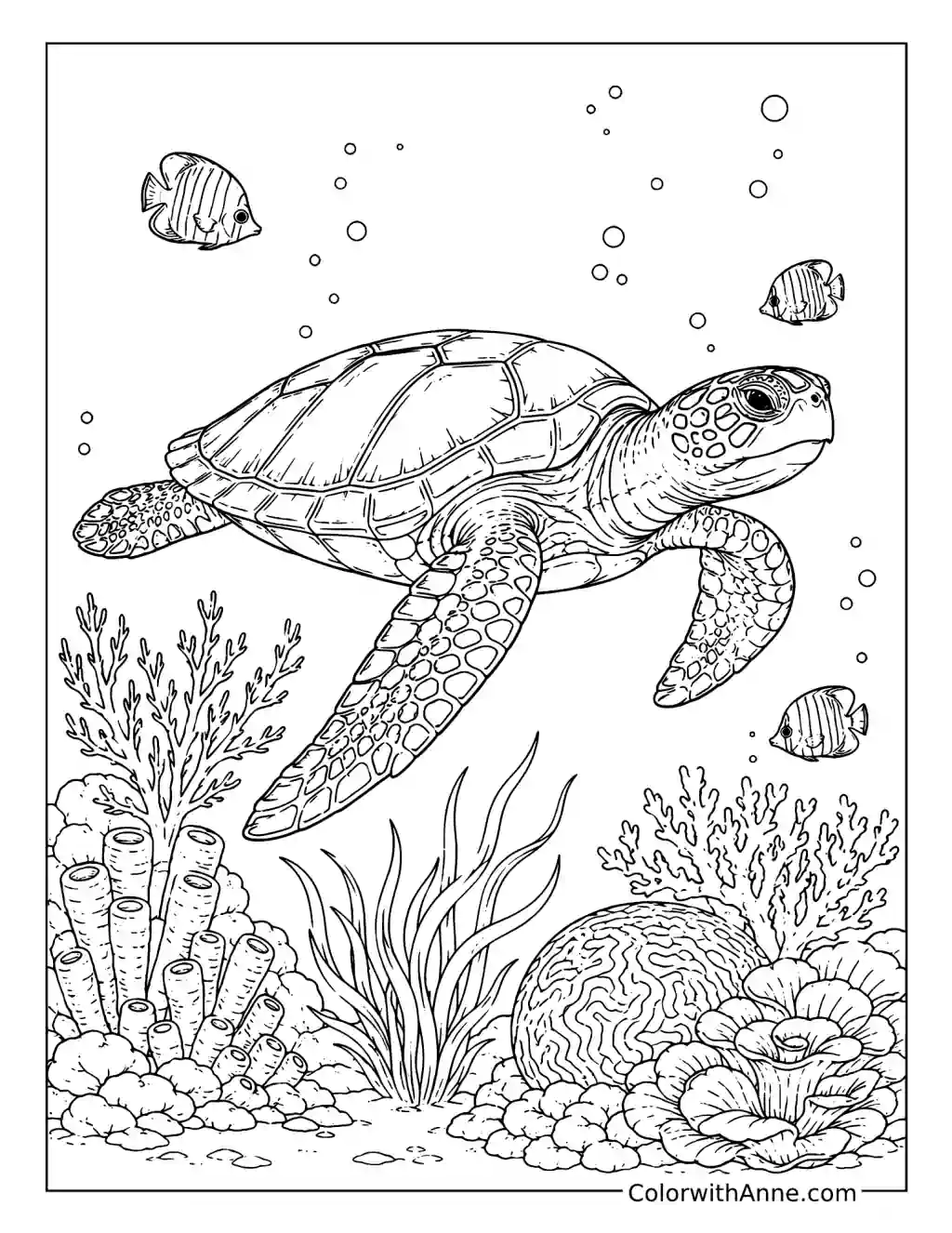
The sea turtle swims above a reef filled with branching coral, rounded shapes, and small fish. Its patterned flippers are lovely details, but the broad shell offers a quieter place to settle in.
Choose a few related olive and brown shades, and let neighboring shell sections differ slightly. They do not need to alternate like a checkerboard. Then leave some open blue water around the turtle before working on the reef. That breathing room keeps the swimmer easy to follow through an otherwise busy underwater scene.
Make the Lakeside Retriever Someone You Know
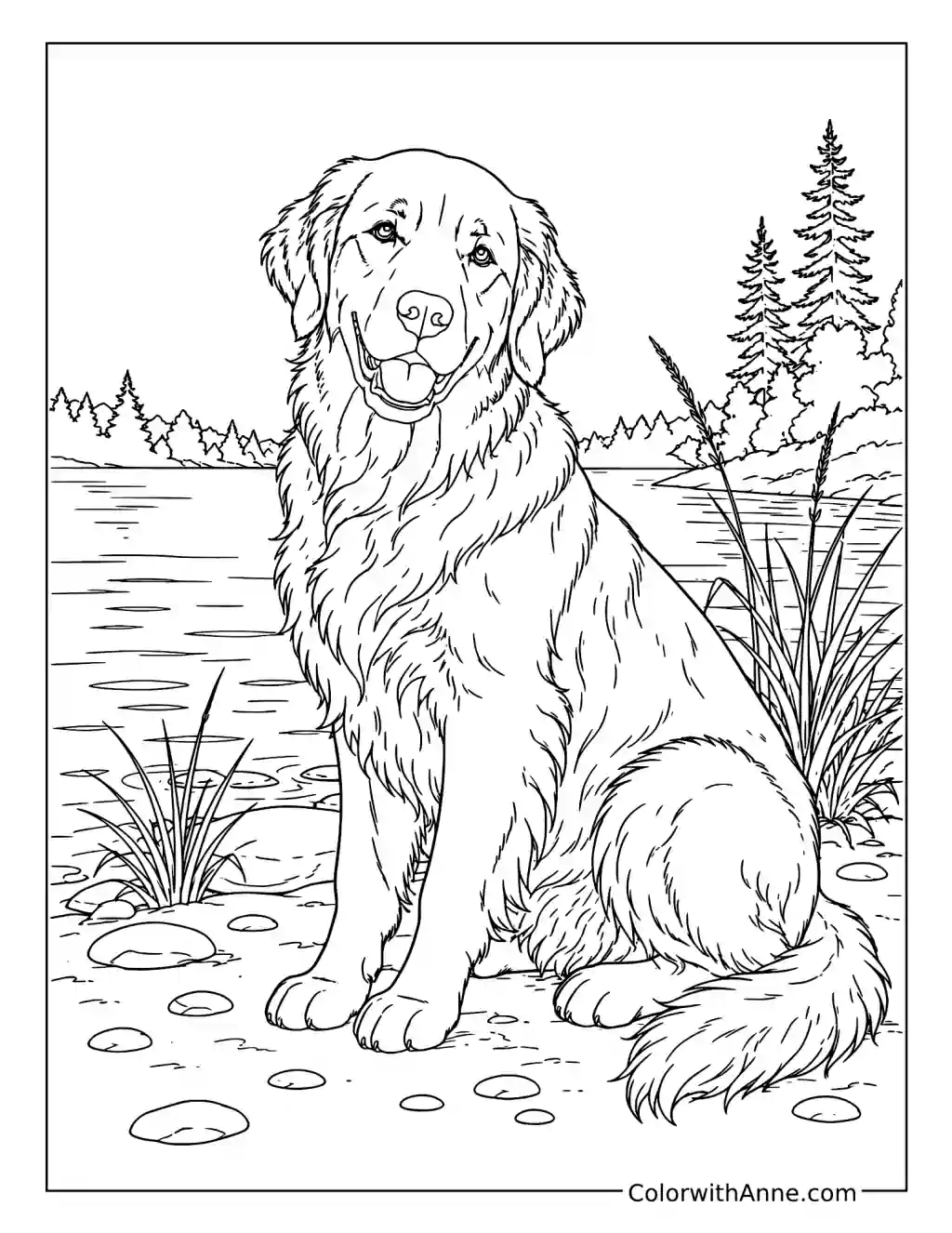
This retriever sits beside the lake with its mouth open, long fur falling around its chest and a feathery tail resting on the ground. Reeds, stones, and distant trees give it a proper outdoor portrait setting.
If there is a retriever in the family, keep a photograph nearby and match the places where its coat changes shade. The ears might be deeper gold than the chest, for example. Follow the drawn fur with short strokes rather than filling every area evenly. Add the dog’s name beneath the portrait if it becomes recognizable; that is the point where the page starts feeling worth sending to its favorite person.
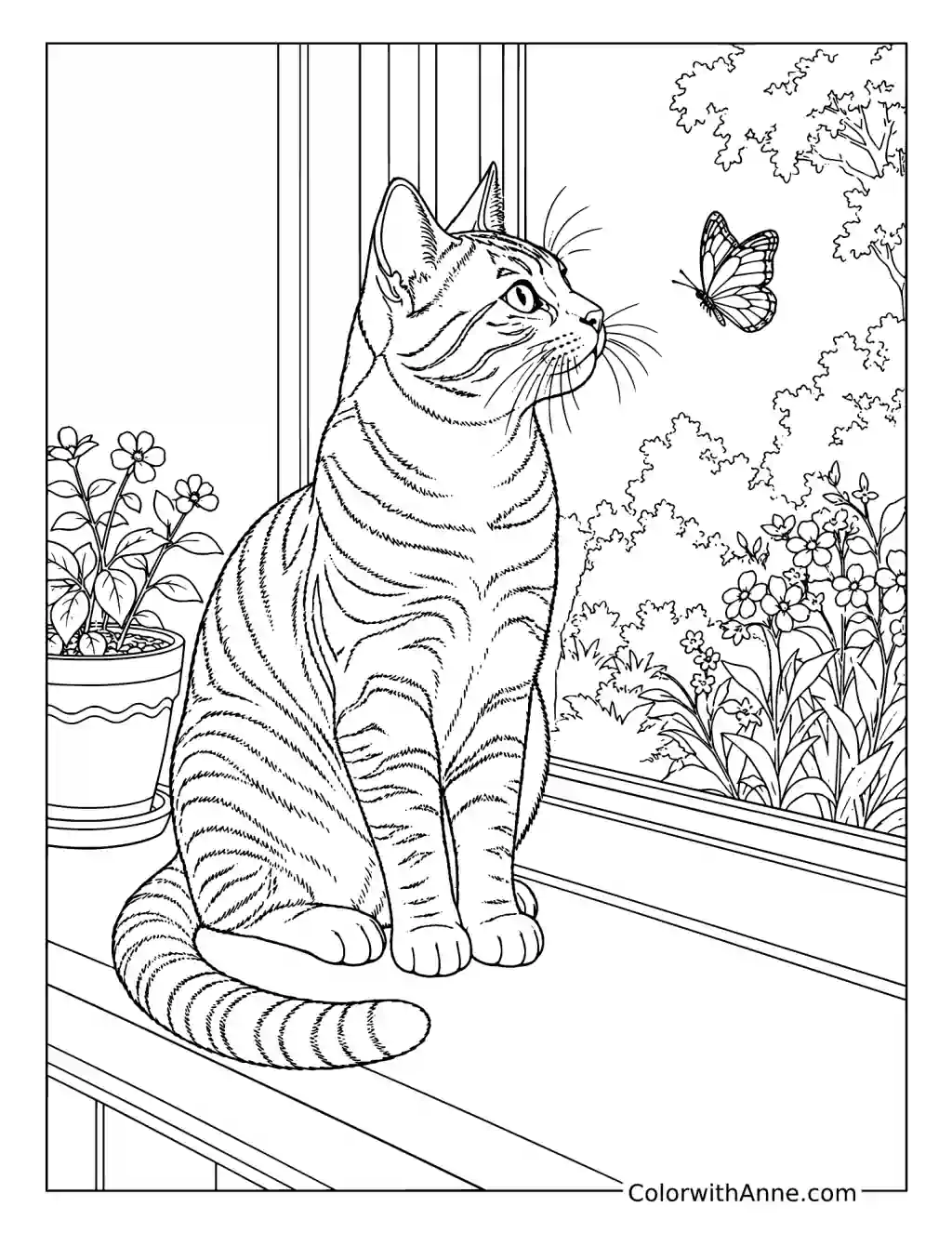
Catch the Cat Watching the Butterfly
The tabby sits on a windowsill, looking toward a butterfly outside. Its curled tail and upright ears make this feel like a very familiar household pause: everything else can wait while something small moves past the glass.
Start with the stripes around the face, where they help frame that upward gaze. Carry the same stripe color down the body and around the tail, leaving lighter fur between the markings. Give the butterfly one bright accent and keep the window view gentle. A tiny visitor should be enough to explain why the cat has stopped paying attention to the room.
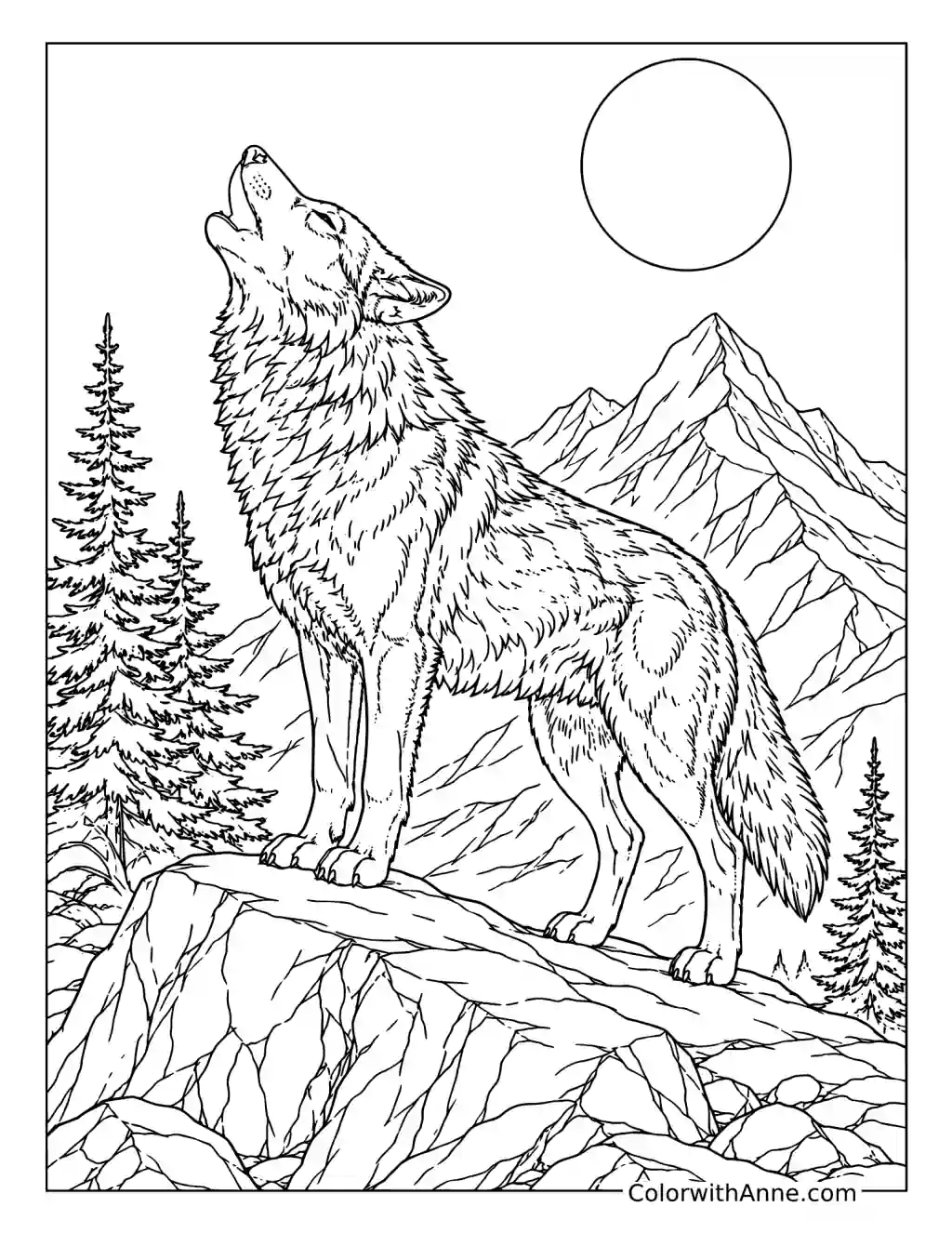
Give the Howling Wolf a Moonlit Setting
The wolf stands on a rocky ledge with its muzzle lifted toward a large moon. Pine trees and mountain peaks surround it, leaving room for a night scene with very little warmth.
Try blue-gray rocks and a deep blue sky, keeping the moon pale. On the wolf, leave a narrow lighter edge along the raised muzzle and upper back, as though moonlight is catching the fur. Work the darker tones into the underside instead. The result can feel dramatic without adding anything to the drawing; the lifted head already supplies the moment.
Finish the Bear’s Fishing Story
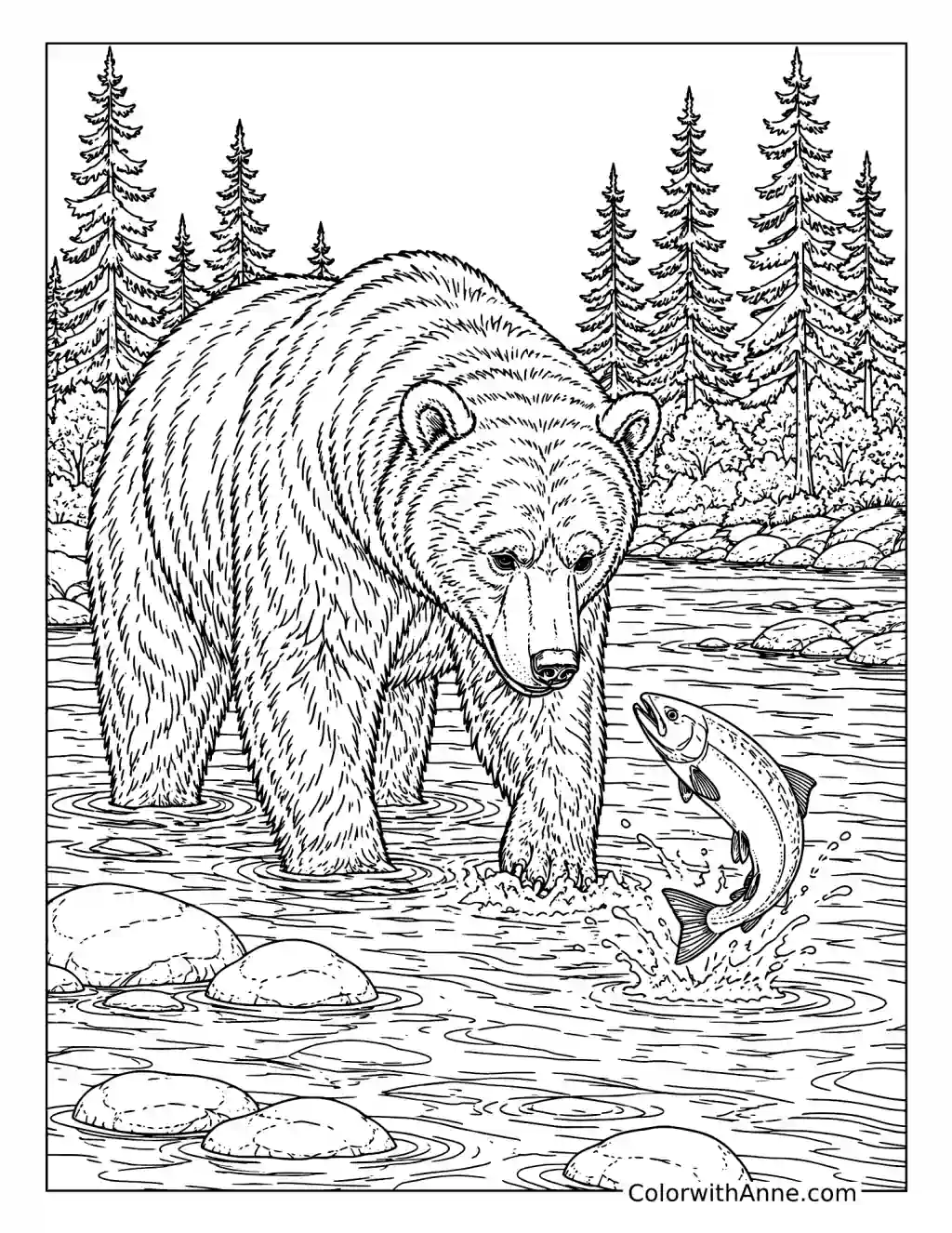
The bear stands in the river as a salmon rises from the water beside it. Stones break up the current, and trees line the bank. The picture catches the instant before the outcome, which leaves a small story unfinished.
Keep the splash pale against darker water so the fish’s movement stays clear. For the bear’s wet lower legs, use a deeper version of its coat color rather than a separate black patch.
Once the scene is finished, add a single sentence beneath it describing what happens next. Does the salmon escape, or does the bear finally get lunch? Either ending belongs to this particular moment.
Work Through the Owl’s Feather Layers
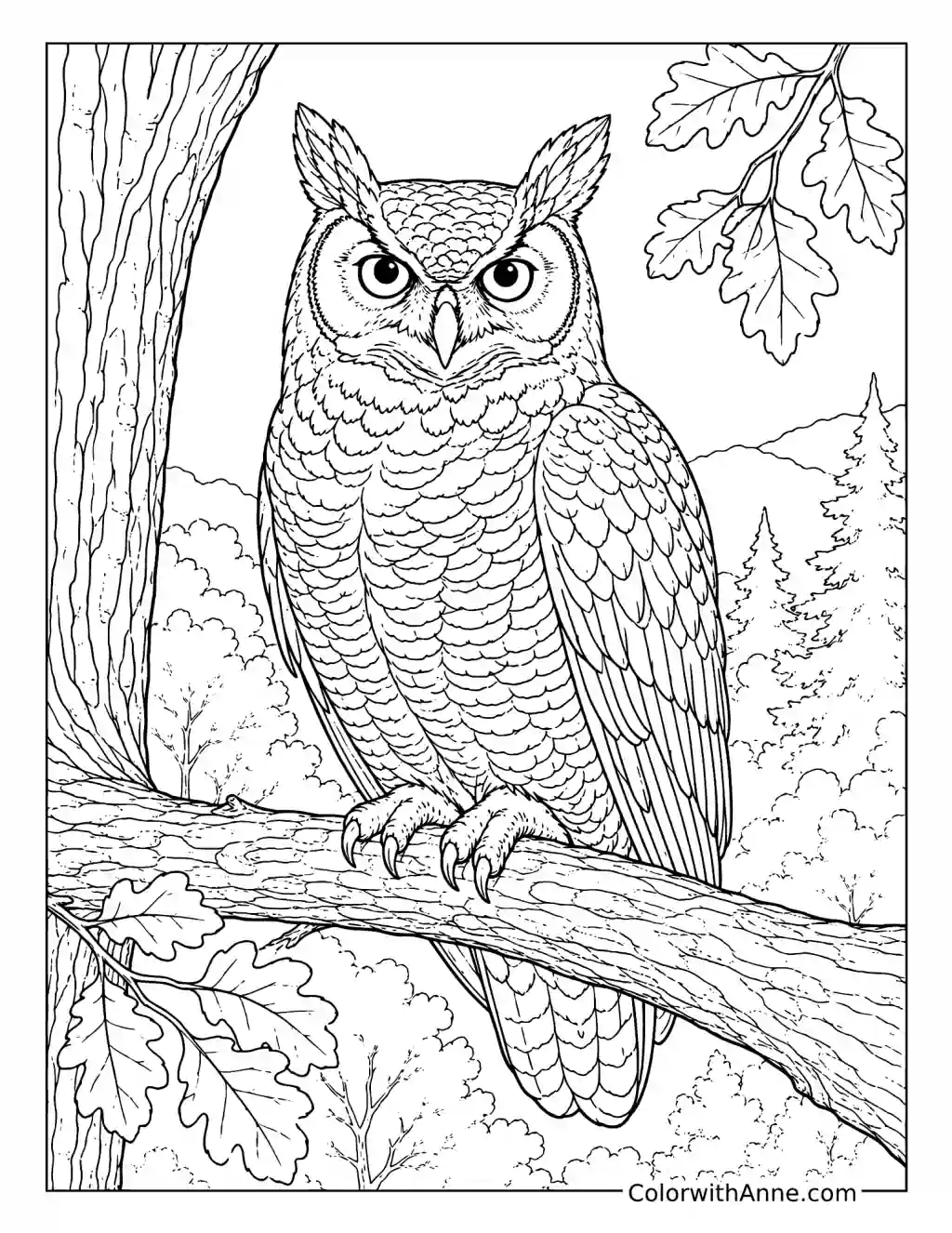
The owl faces forward from its branch, with overlapping feather shapes down its chest and long feathers along its folded wings. Its eyes are already commanding enough; the pleasure here is in noticing how the feather patterns change.
Begin with one short row on the chest, using warm brown and cream, then move into the longer wing feathers with more lengthwise strokes. Pause occasionally to look at the whole bird so the little shapes still form a continuous coat. Leave the surrounding bark rougher and less regular. That difference in texture makes the owl feel settled on the branch rather than patterned exactly like it.