
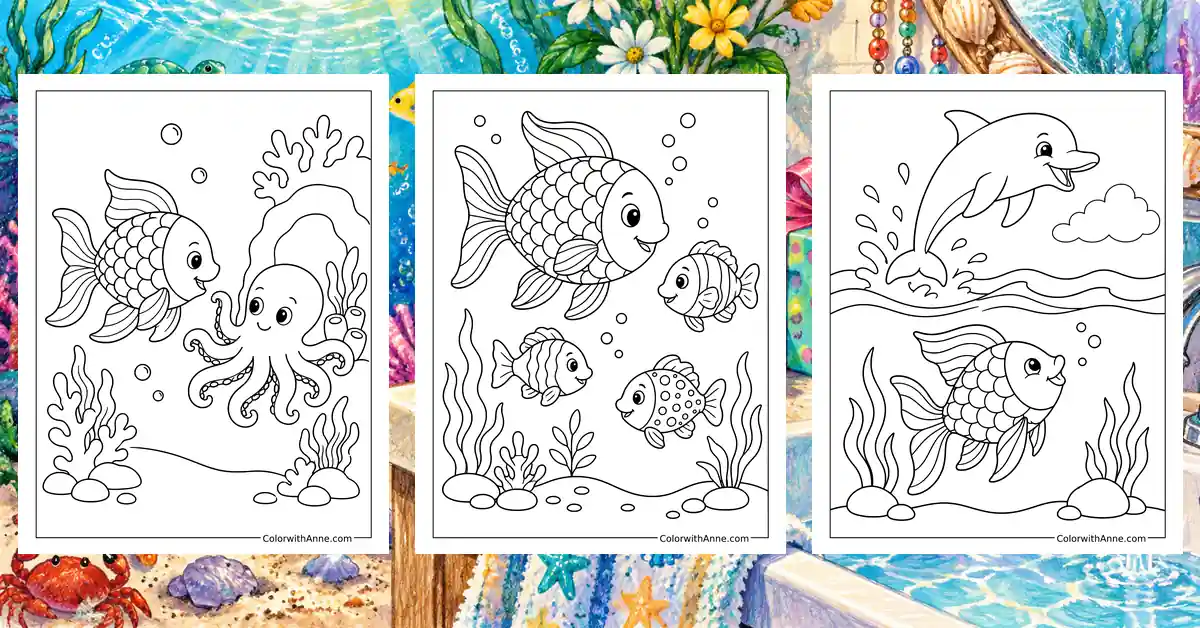
Tilt a fish-shaped foil decoration toward the window, and its shine travels across the surface. That little flash feels at home beside Rainbow Fish, whose sparkling scales make an underwater character memorable long after the book has closed. A child may tilt the page too, just to check.
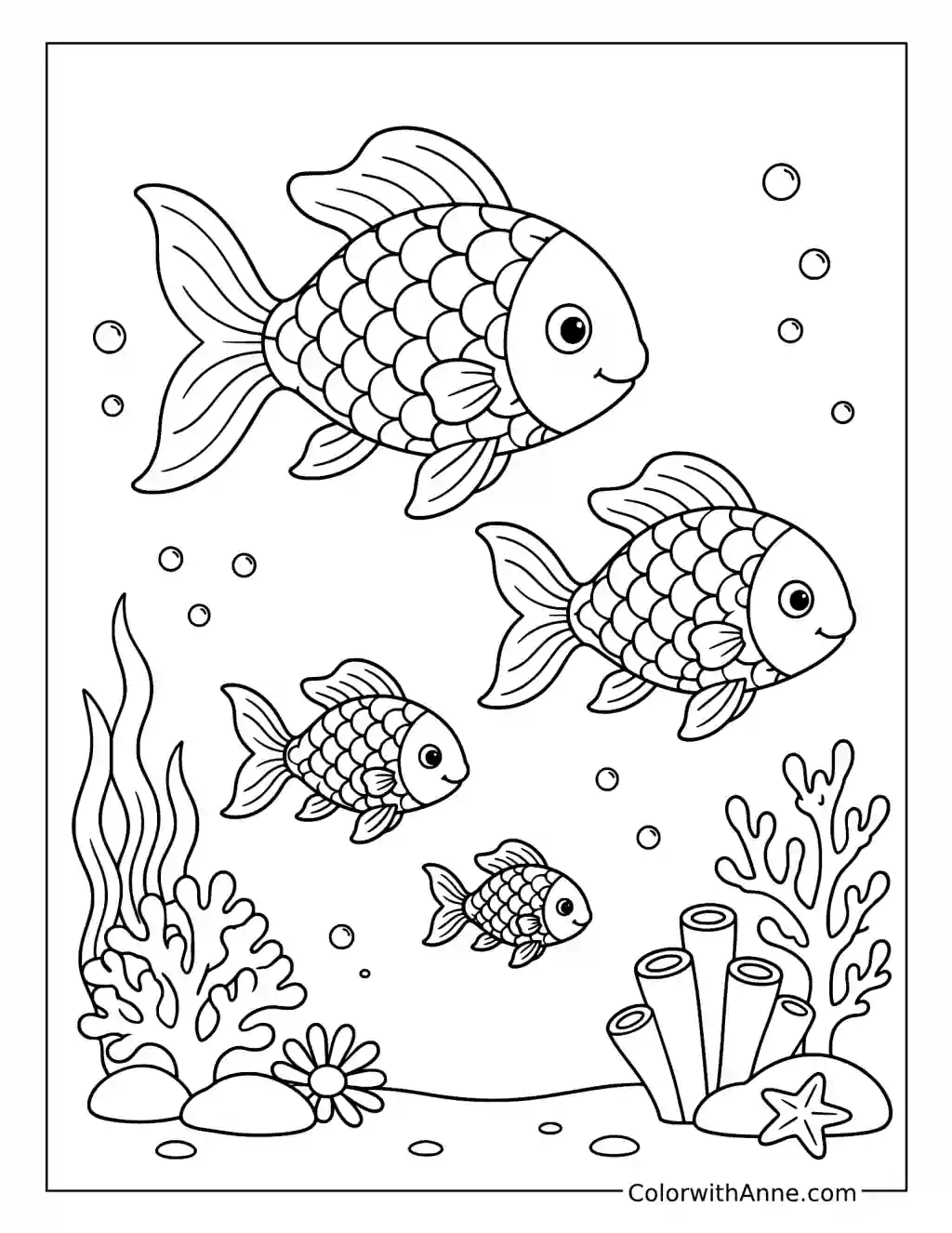
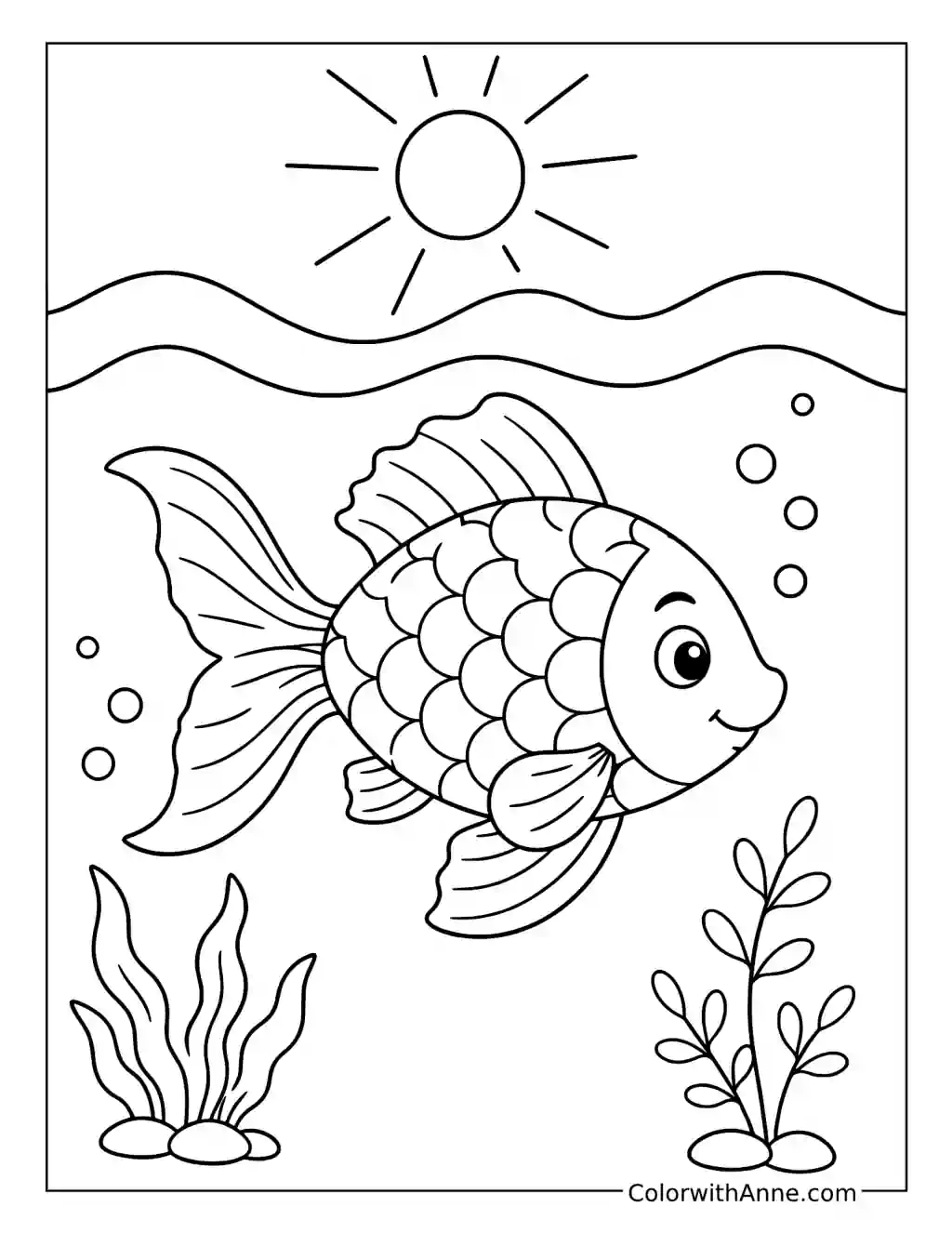
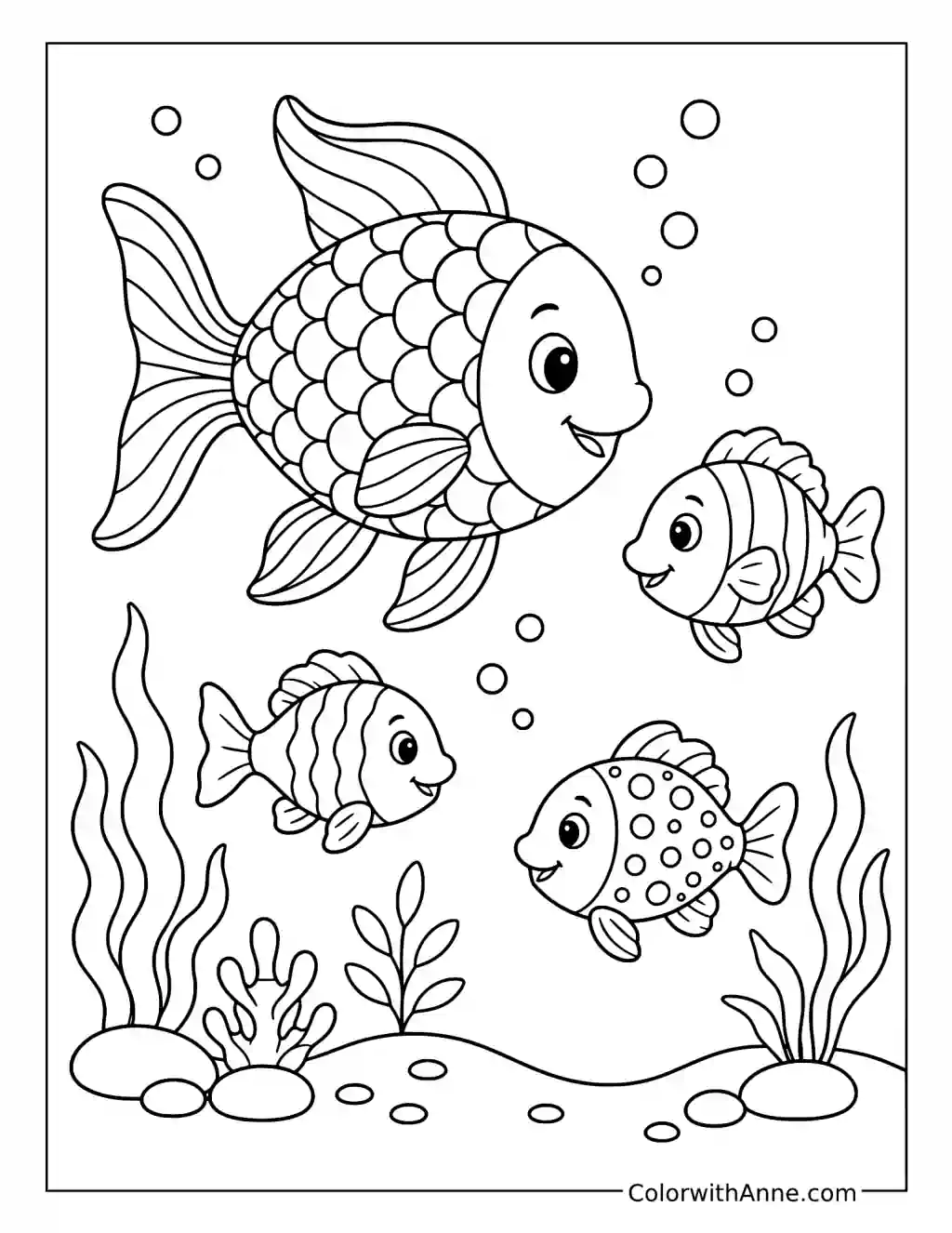
Rainbow Fish coloring pages can keep a reading afternoon going without rushing into the next activity. With the book nearby, there is time to notice how a single bright scale catches attention against softer ocean colors. The conversation might drift toward sharing something treasured, although the last biscuit on the plate could require a separate negotiation.
Free Printable Rainbow Fish Coloring Pages
Click any coloring page below to open the PDF, then print on US Letter or A4 paper.
Did you find what you needed?
Help us choose what to create or improve next.
Coloring Ideas for Rainbow Fish Pages
Try one of these coloring ideas, or use them as a starting point for your own.
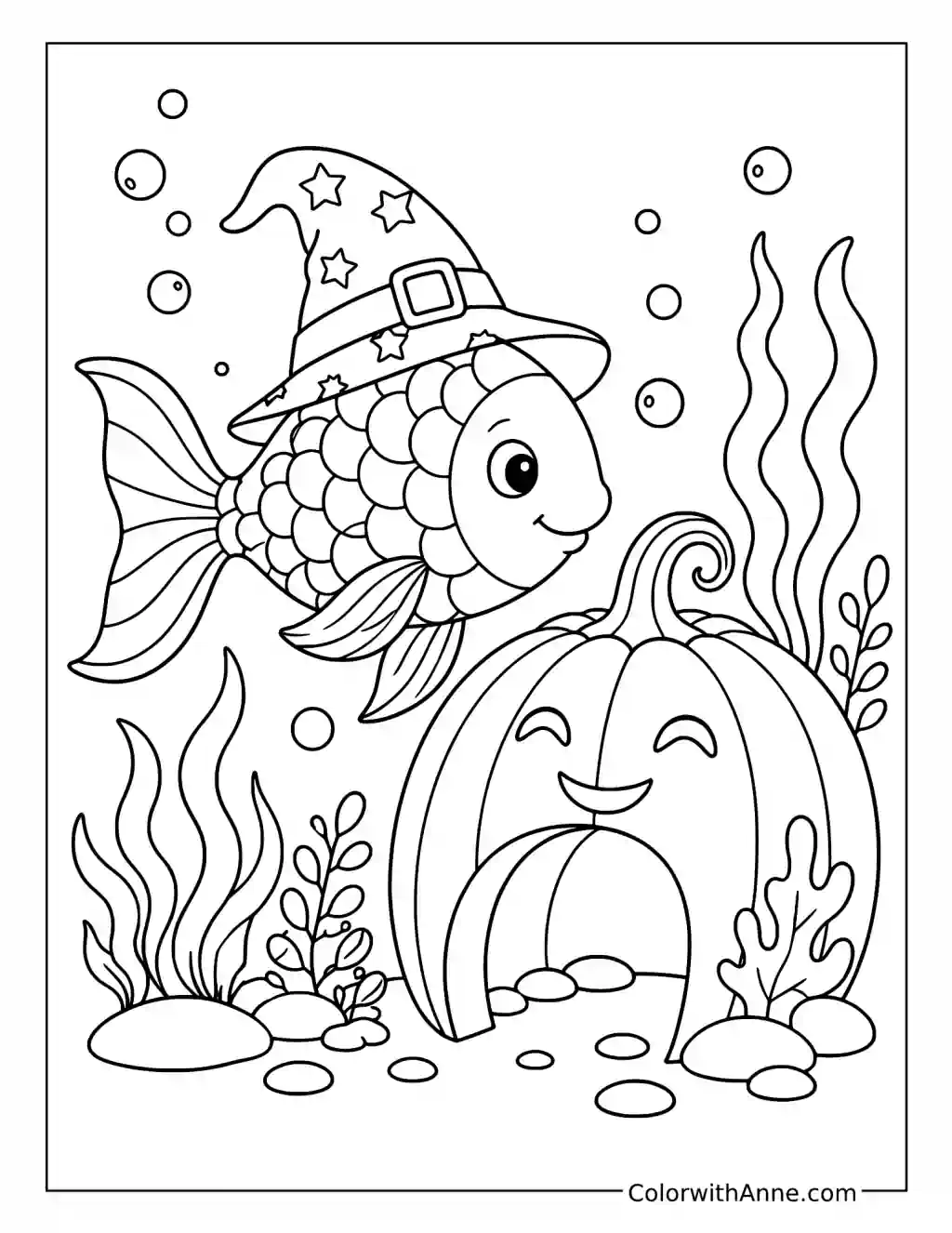
Halloween Can Happen below the Waves
A wizard hat and a pumpkin-shaped cave introduce Halloween into Rainbow Fish’s underwater setting. The bubbles and sea plants keep the usual holiday decorations somewhere unexpected.
Let the pumpkin entrance glow warmly against cooler water, while the hat’s stars remain clear. The fun comes from keeping both worlds recognizable at once. You do not have to explain how an underwater pumpkin works. This is a page where a little visual impossibility is part of the pleasure, rather than a problem to solve.
Follow One Octopus Arm at a Time
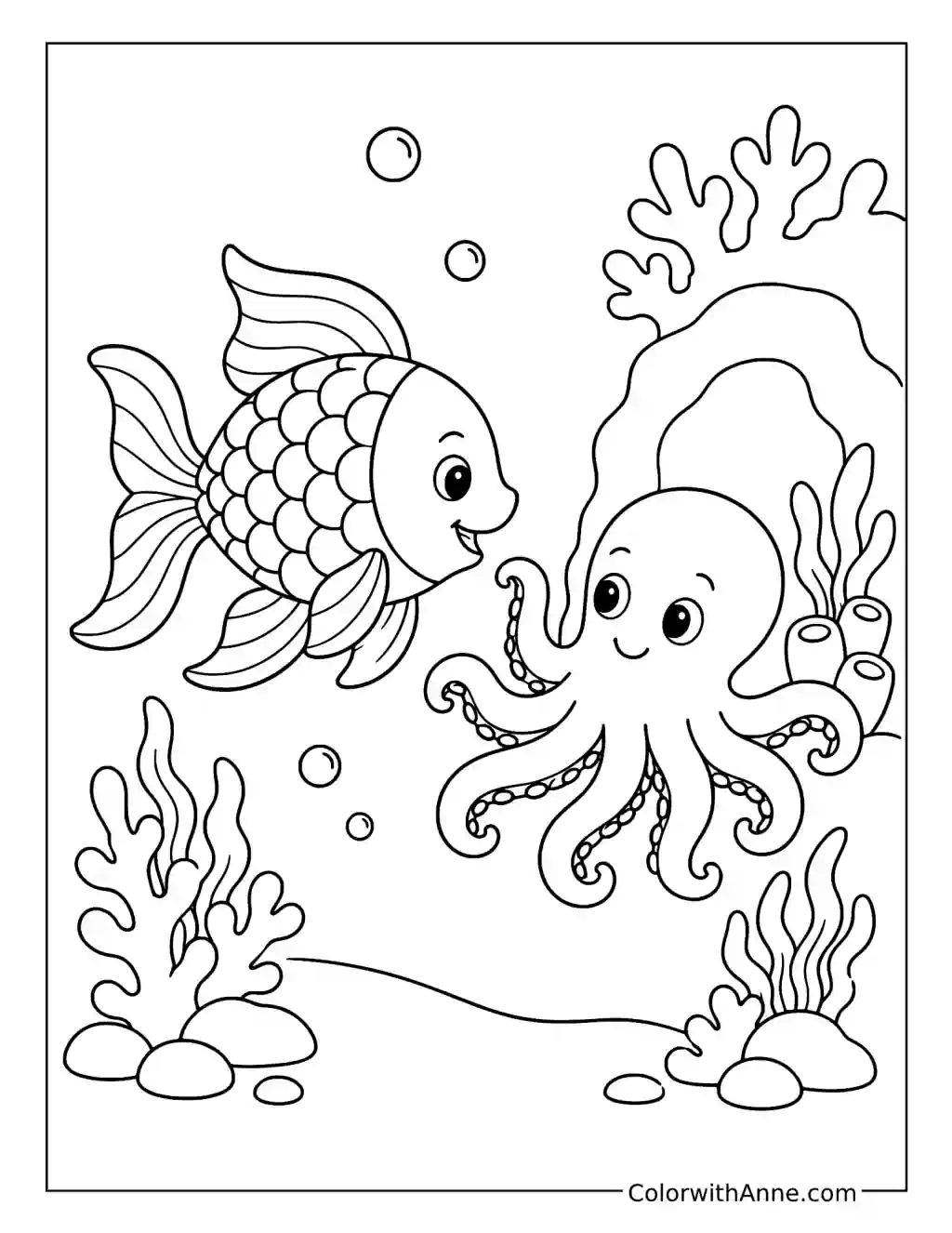
The octopus’s curling arms spread from its rocky hiding place toward Rainbow Fish. Their routes can be surprisingly easy to confuse when viewed all together.
Pick an arm and follow it from the body to the tip before adding color. Keep the suckers lighter than the surrounding surface so the curve remains readable. This gives the page a small searching pleasure inside the coloring itself. The smiling face can stay simple; the intricate part is understanding how all those curling shapes belong to one creature.
Make the Castle Feel Grown from Shells
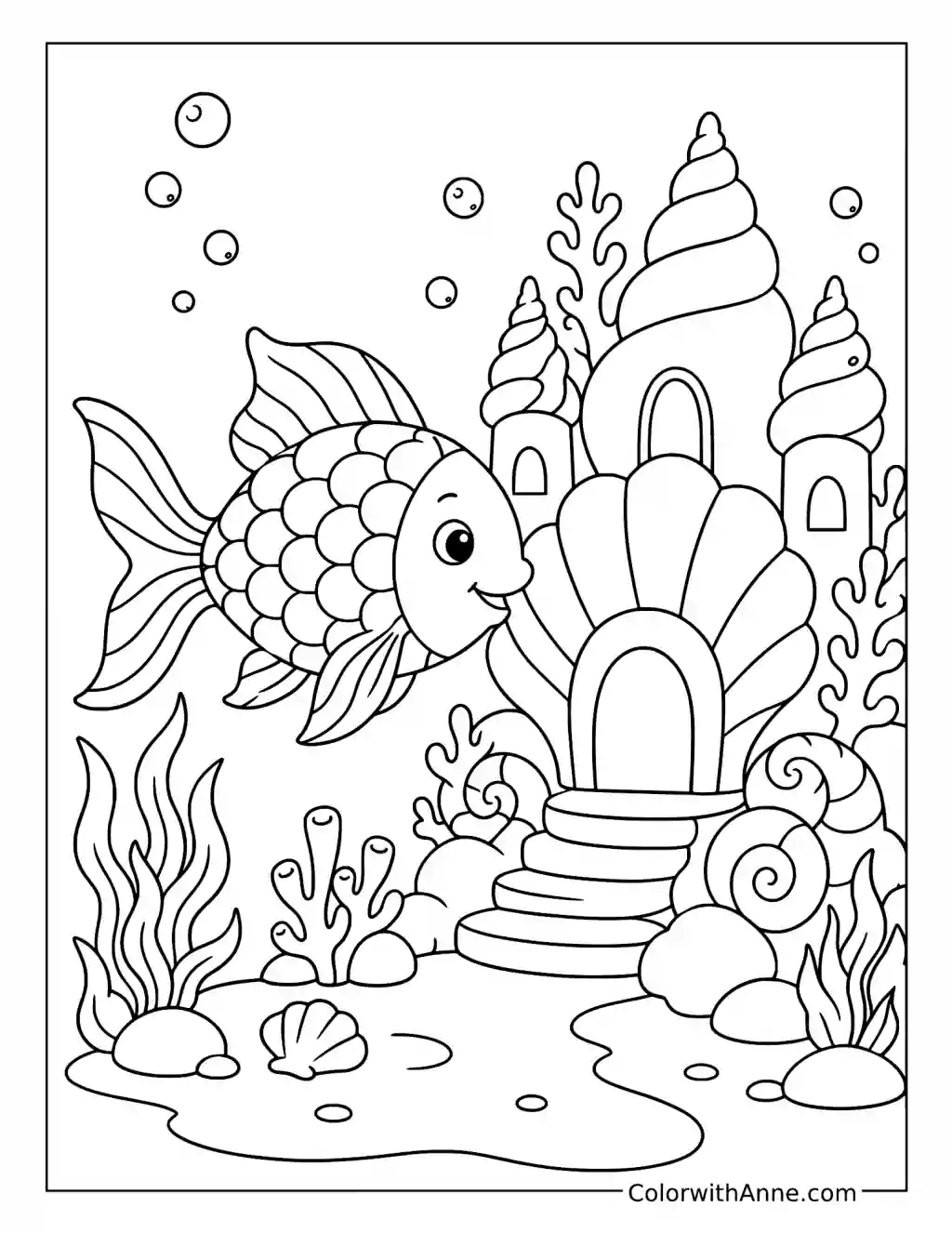
Spiral towers and a shell-shaped entrance give the underwater castle its own building materials. It would lose some character if every surface were treated like an ordinary brick wall.
Follow the curves with gentle changes in shade, making the spiral towers distinct from the flatter steps below. A shell held nearby can show how color gathers along ridges and fades across smoother areas. This is a natural place to connect a collected seaside object with an imaginary building, without needing to construct the castle afterward.
Look for Color in Something Almost Clear
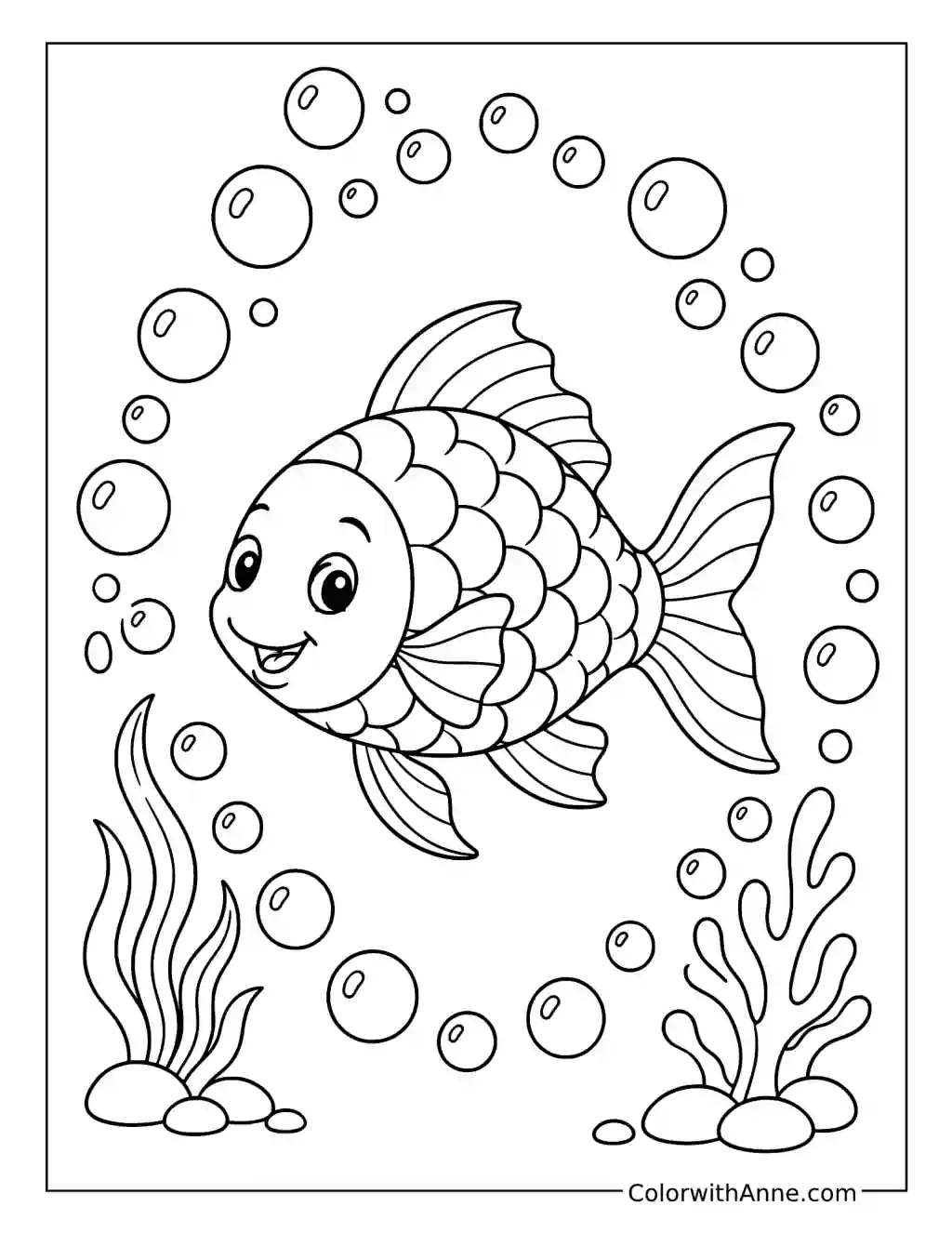
The bubble tunnel surrounds Rainbow Fish without enclosing it in a solid wall. Leaving some of the paper untouched is what makes that frame work.
Watch a soap bubble near a window and notice the brief colors along its surface. Bring only a suggestion of those colors into the drawn bubbles, keeping most interiors pale. Rainbow Fish can remain much more saturated. The page becomes an experiment in restraint: something can look colorful without every part of it being filled.
Give the Night Two Different Depths
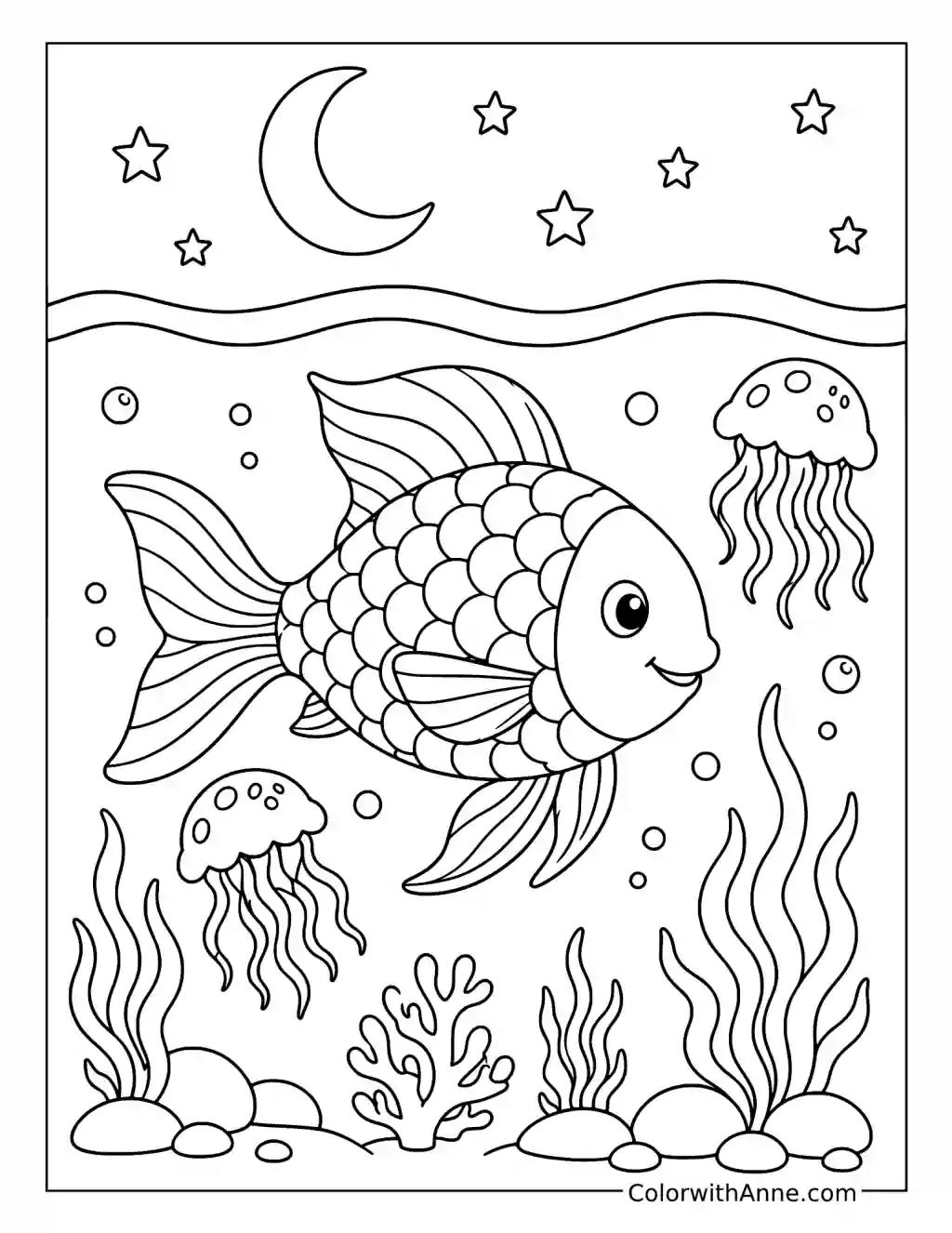
The moon and stars sit above the waterline, while jellyfish float below. Both halves can feel like evening without using precisely the same darkness.
Try a deeper sky above and a softer, cooler sea below, keeping the jellyfish delicate. Rainbow Fish’s scales can carry small points of color inside that quieter setting. This is a good page to leave unfinished between sessions. Returning to it later helps reveal whether the contrast still feels calm, or whether one area has begun to overpower the rest.
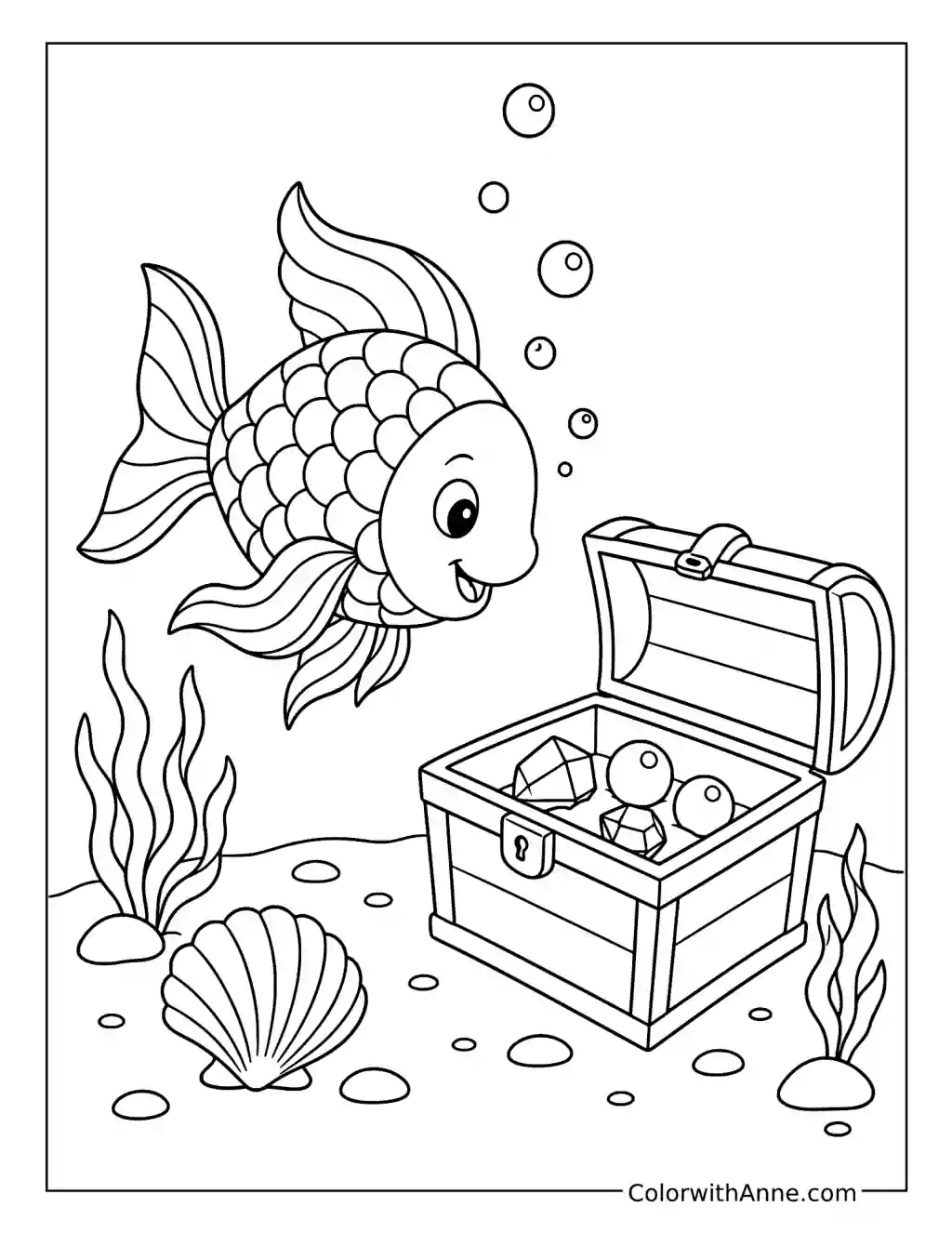
Decide What the Treasure Feels Like
The open chest contains rounded treasures, and Rainbow Fish appears to have arrived at the moment of discovery.
Choose their material before their color. Pearly treasure needs soft changes and pale highlights; metal needs clearer contrast; jewel-like pieces can hold deeper color inside small spaces. Keep the chest less luminous than its contents. The useful idea here is that “treasure” is not simply another instruction to use yellow. Different imagined materials can make the same drawn shapes feel entirely different.
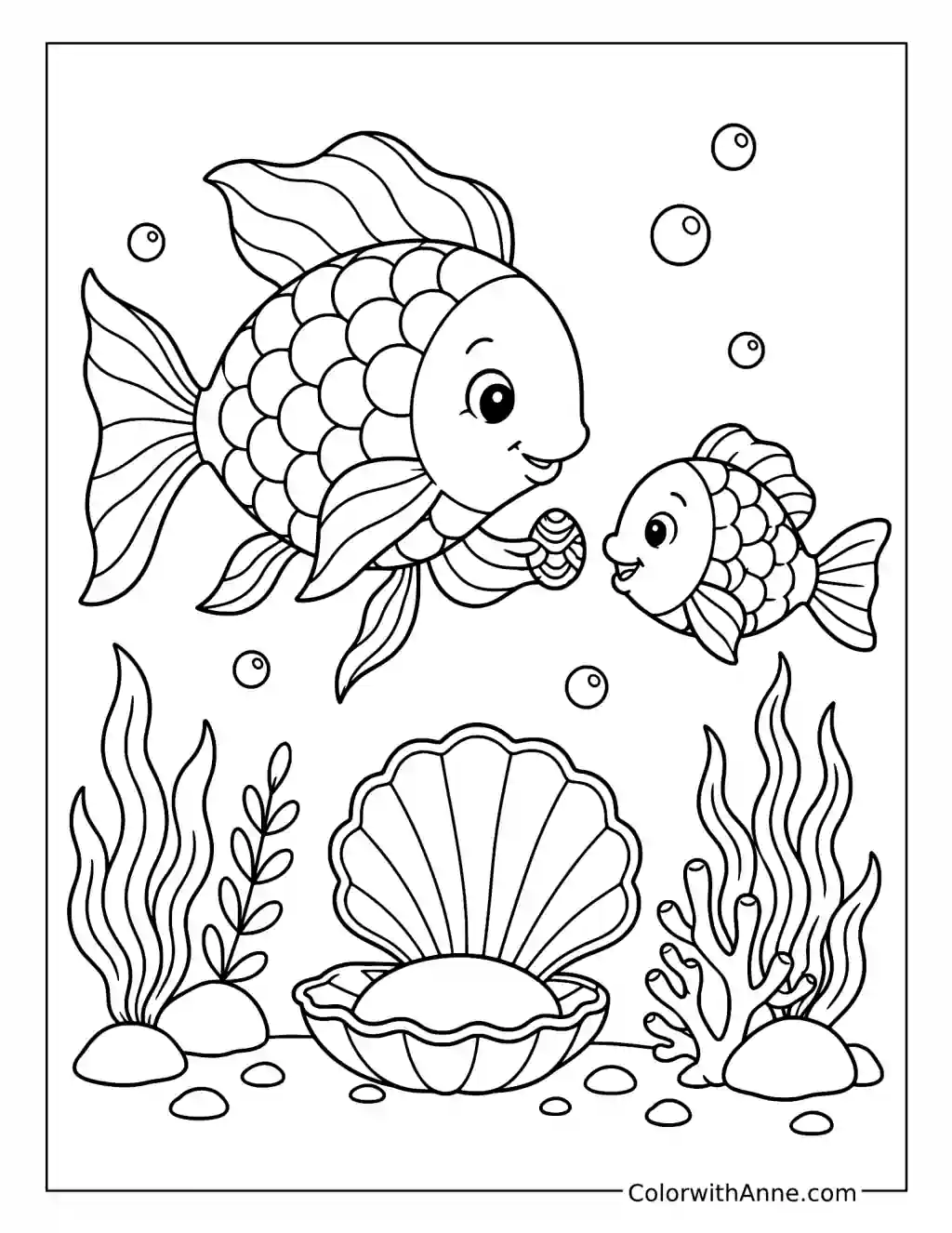
Show a Connection through One Small Scale
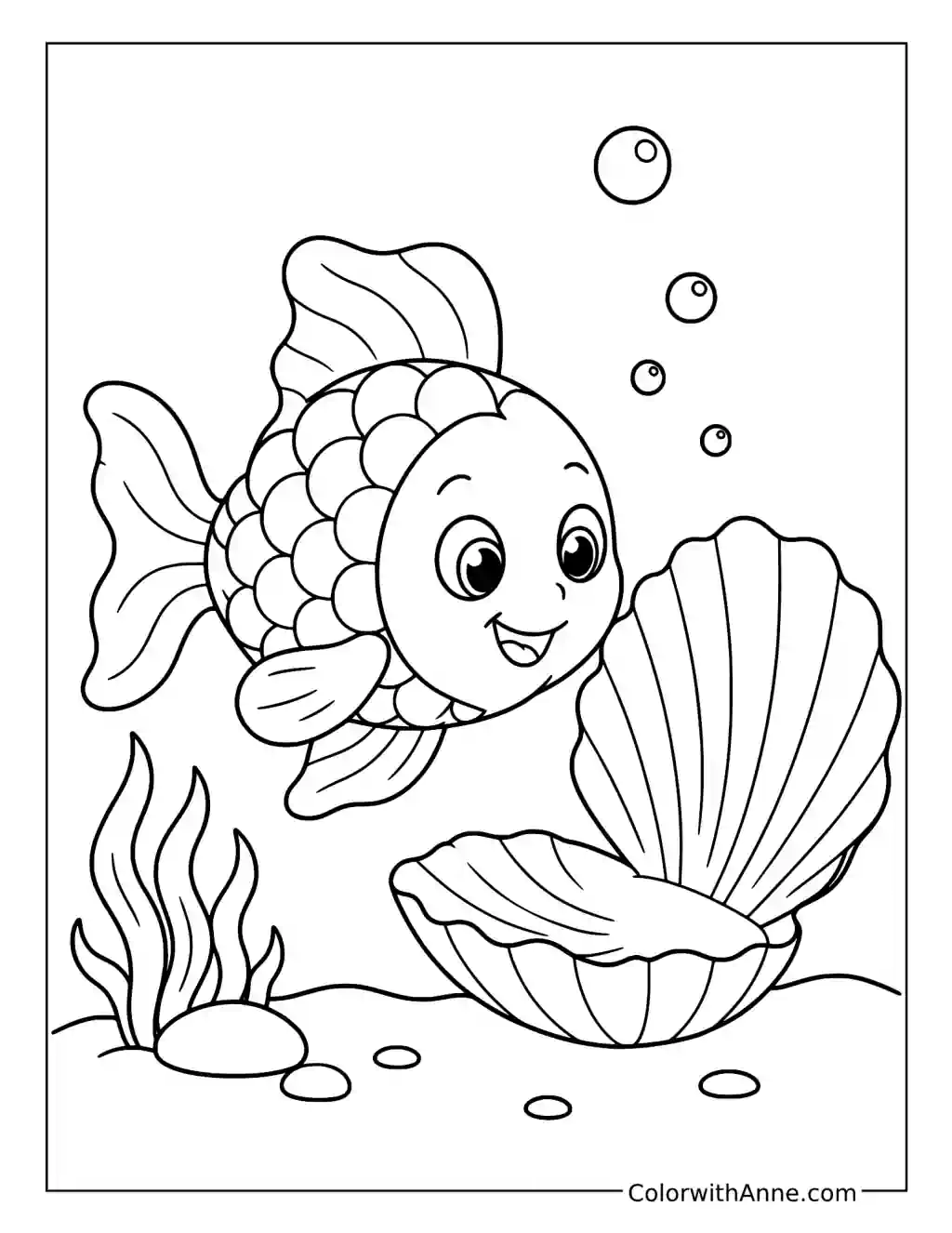
The two fish face each other above an open shell. The picture has enough space for a small gesture to matter.
Keep Little Blue Fish mostly blue, then choose one scale on Rainbow Fish that echoes it. You do not need to make the whole pair match. Beside the book, that single connection can lead into a conversation about sharing without requiring a written moral across the drawing. The visual relationship is already there for someone to notice.
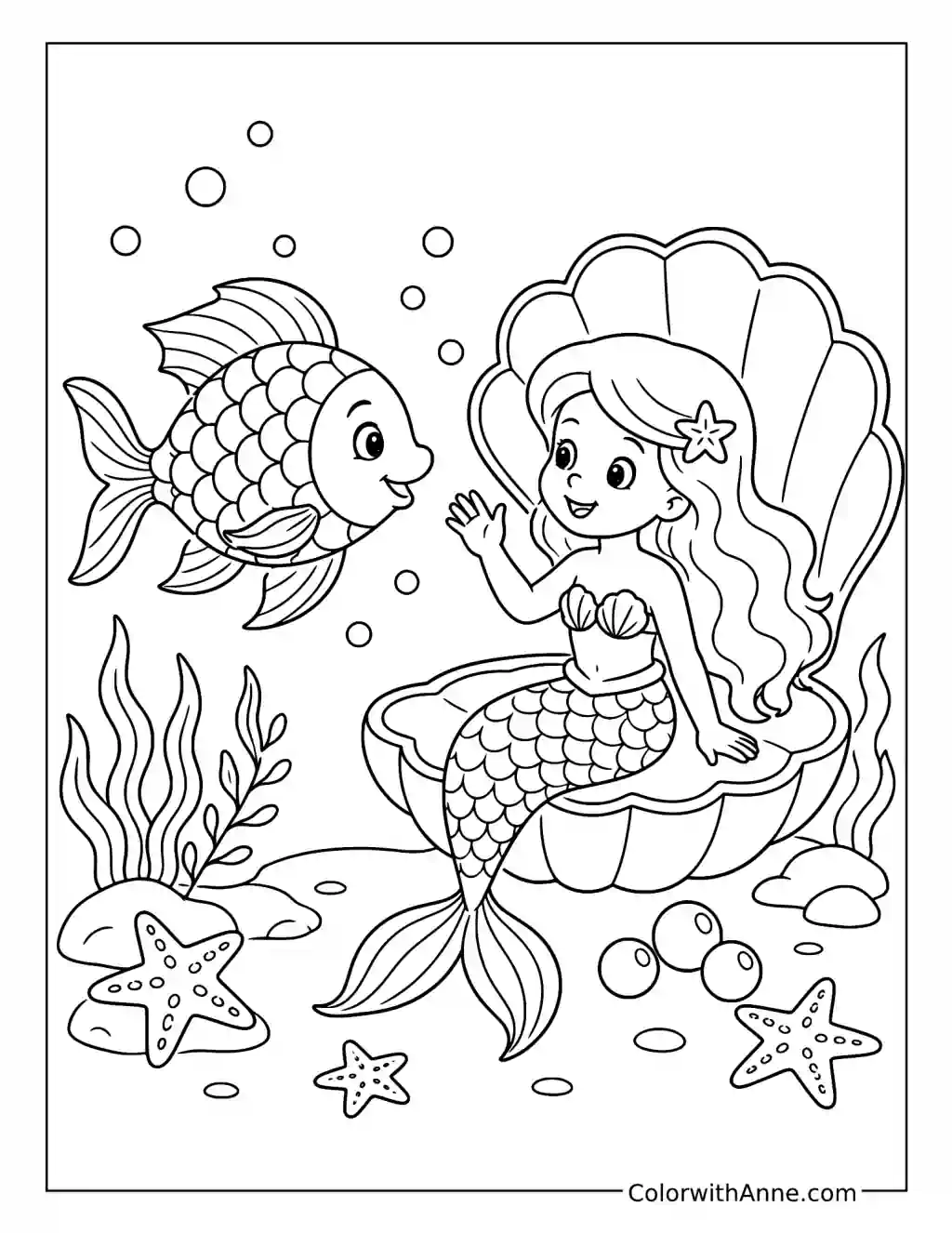
Let the Mermaid Belong to This Particular Sea
The mermaid’s tail repeats the scaled texture of Rainbow Fish, while her open shell introduces broad, curved surfaces behind her.
Build a relationship through texture rather than matching every color. Small changes across the scales can make both tails feel patterned, while the shell stays smooth and softly shaded. Her hair offers another contrast through longer flowing strokes. The page becomes richer when its surfaces differ, even if the palette remains fairly simple. There is enough to explore without adding another underwater activity.