
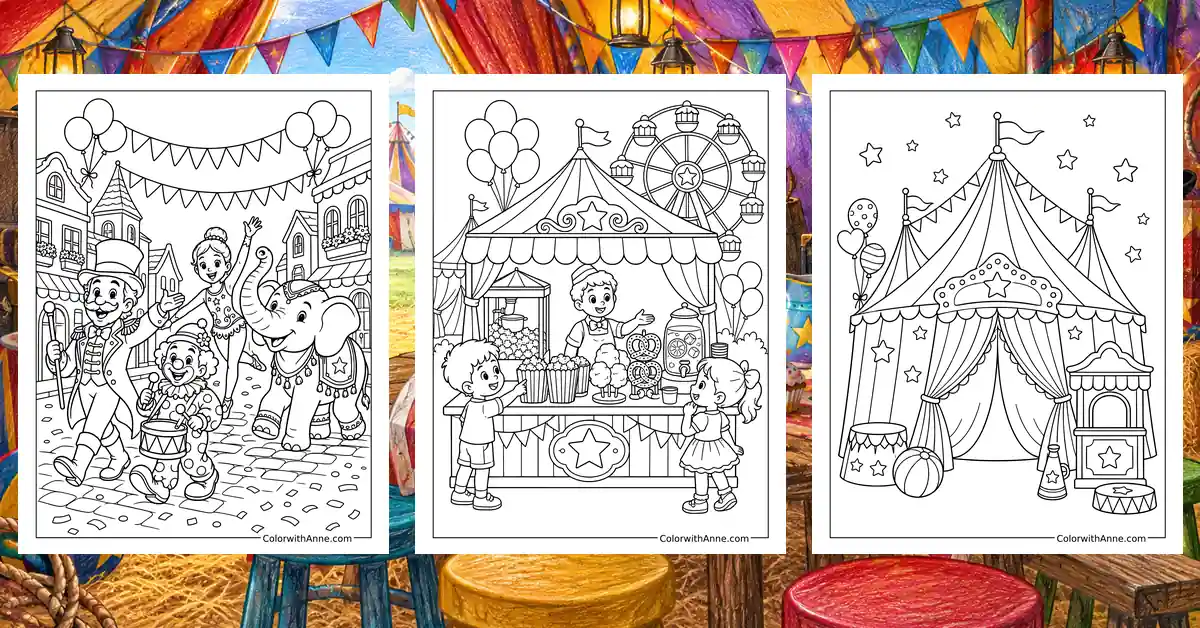
A drumroll starts, and the hand reaching for popcorn stops halfway into the bag. Under the big top, a performer takes one careful step while the audience leans forward together. Then the tension breaks into applause, and the smallest spectator claps as though the whole show depends on it.
Circus coloring pages bring that sense of occasion to the kitchen table. A bright paper ticket beside the plate can make an afternoon snack feel like intermission. There is time to talk about the act that earned the loudest cheer, especially if the clown somehow managed to lose a shoe.
Free Printable Circus Coloring Pages
Click any coloring page below to open the PDF, then print on US Letter or A4 paper.
Did you find what you needed?
Help us choose what to create or improve next.
Coloring Ideas for Circus Pages
Try one of these coloring ideas, or use them as a starting point for your own.
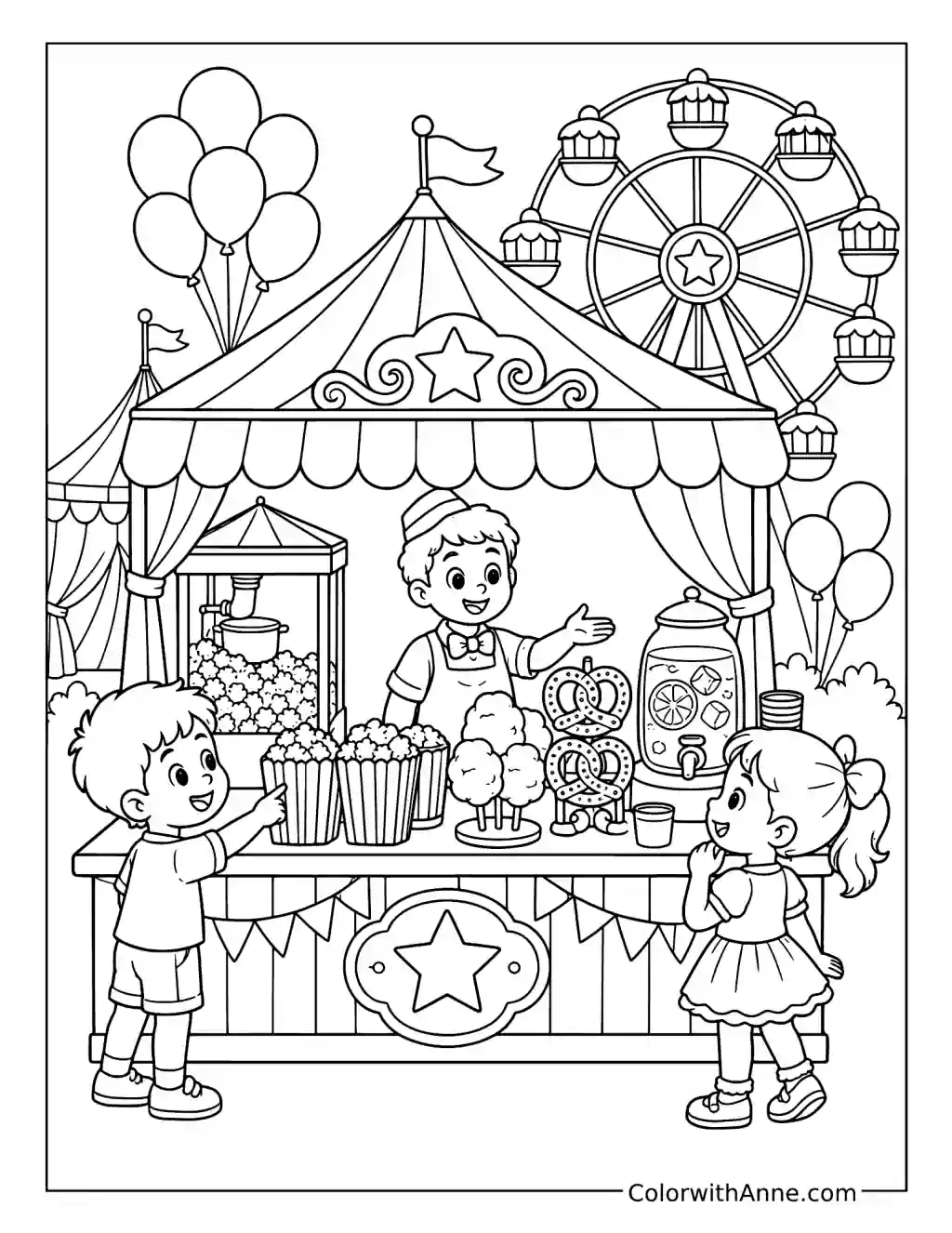
A Snack Stand Worth Stopping At
The popcorn machine and stacked pretzels make this counter a destination in its own right. With the Ferris wheel behind it, the picture captures that delicious pause between choosing a ride and choosing something to eat.
For a circus afternoon at home, fold paper bags into little popcorn sacks and decorate their fronts with the canopy’s stripes. Put the finished page behind the snacks as the stand’s backdrop. A bowl of pretzels completes the connection without requiring anyone to construct an entire carnival.
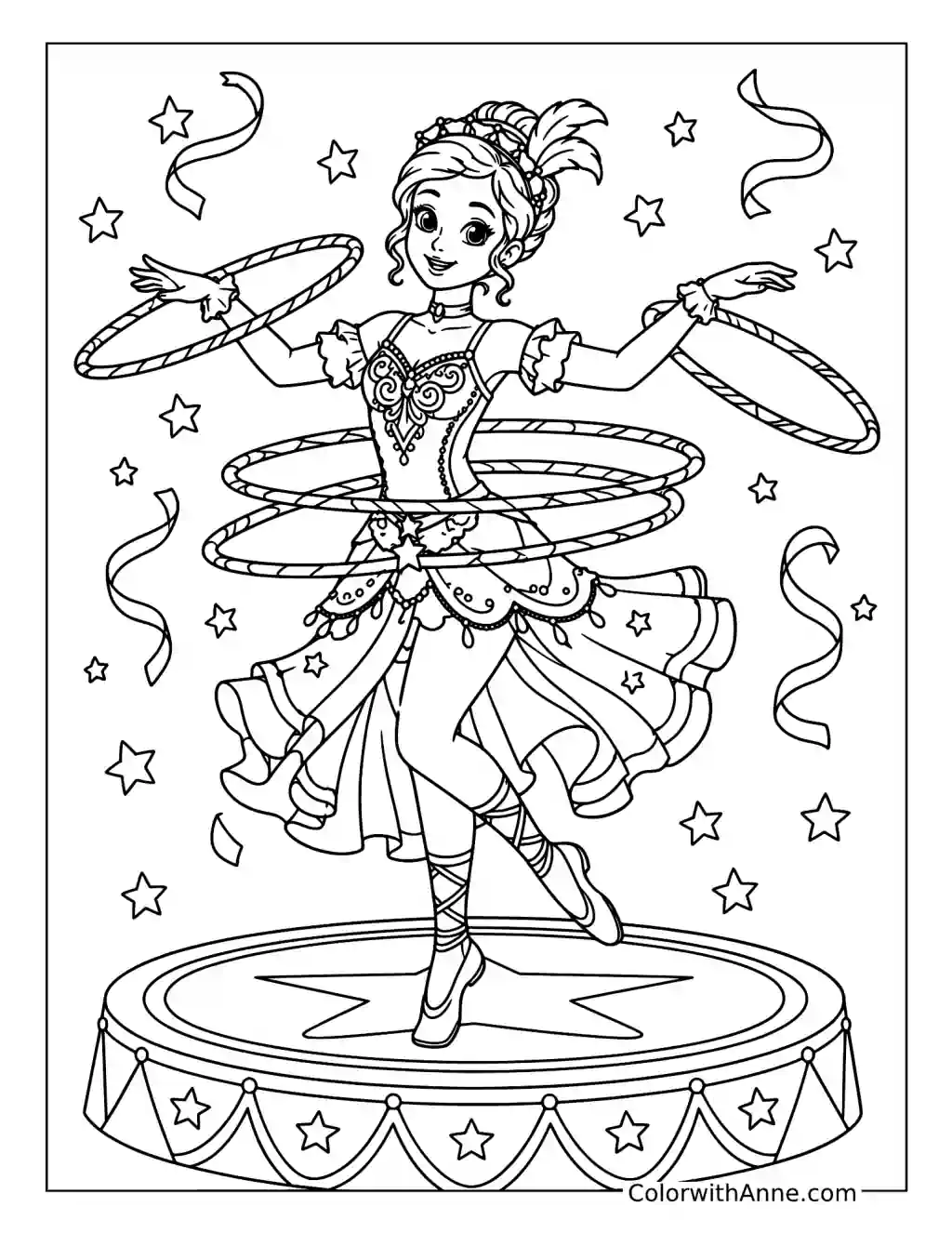
Let the Hoops Look as Though They Are Spinning
The performer’s hoops overlap her costume and one another. Filling every ring with an equally heavy color would make them look more like solid barriers than moving equipment.
Follow the hoops’ curves with narrow bands of color, leaving their centers open. Her skirt can carry a stronger, more solid shade. That difference gives the costume weight while keeping the rings light. Notice where a hoop passes in front of another shape before continuing its color; those little interruptions are what make the movement convincing.
Open the Curtains on Your Own Performance
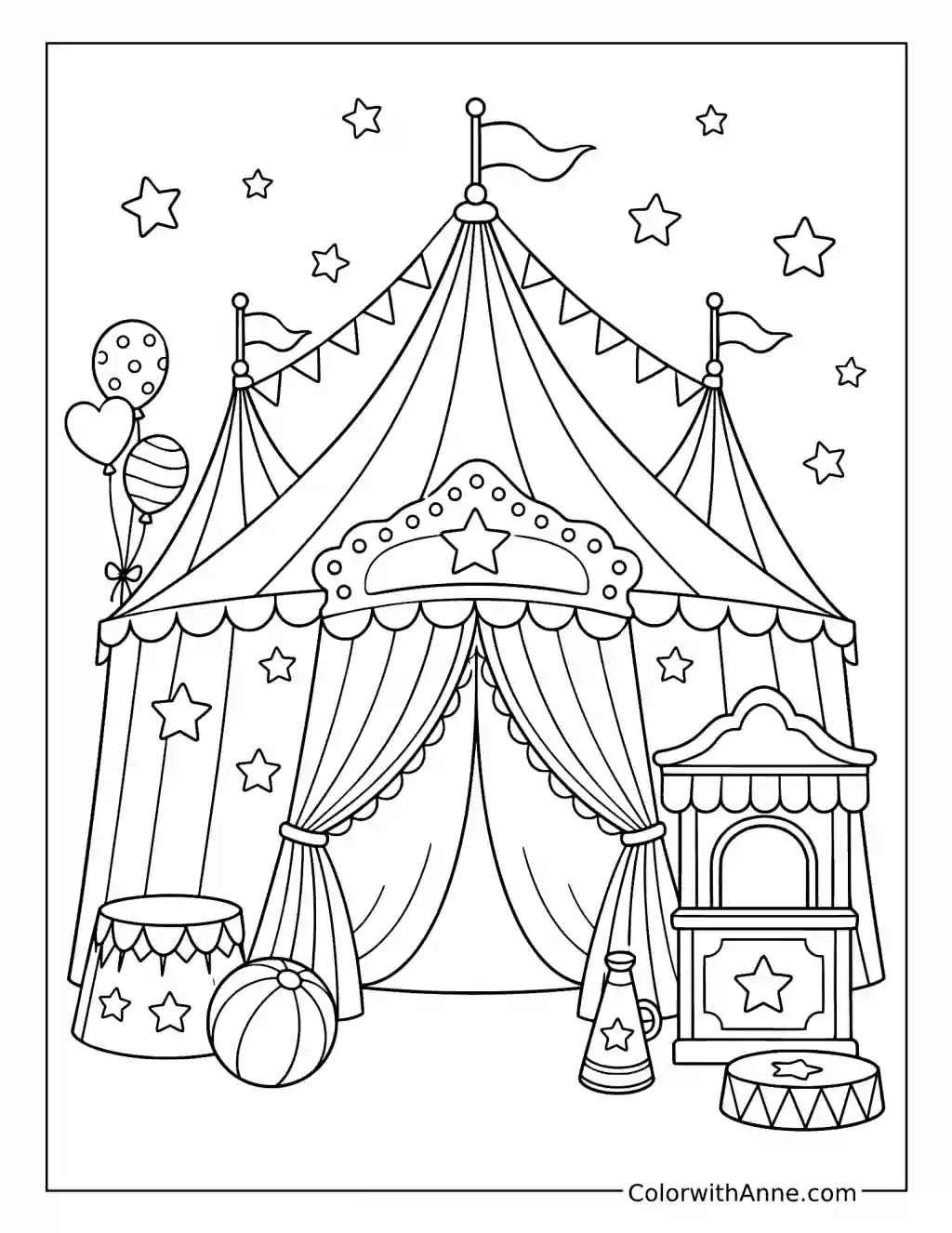
The big top has an open entrance, decorative bunting, and a small booth beside it. It looks ready for an audience, even though the performers have yet to appear.
This page can become the opening image for a family talent show. Finish the tent, then stand it where the audience will sit while each performer prepares one short act: a song, a balancing trick, or something they already enjoy doing. Keep the entrance visible. The picture supplies the occasion; nobody needs to learn an elaborate new skill before joining in.
The Clown’s Clothes Can Break the Rules
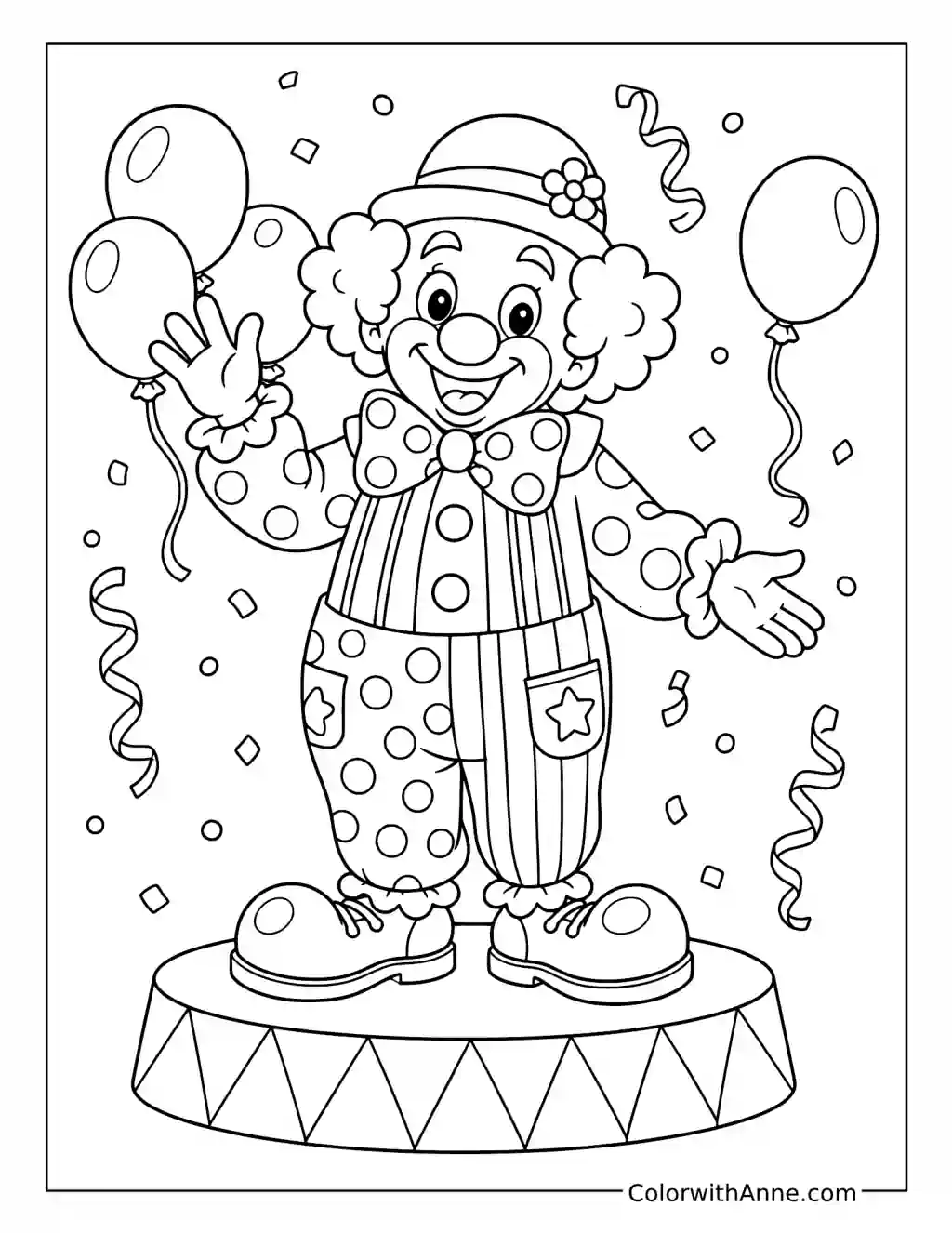
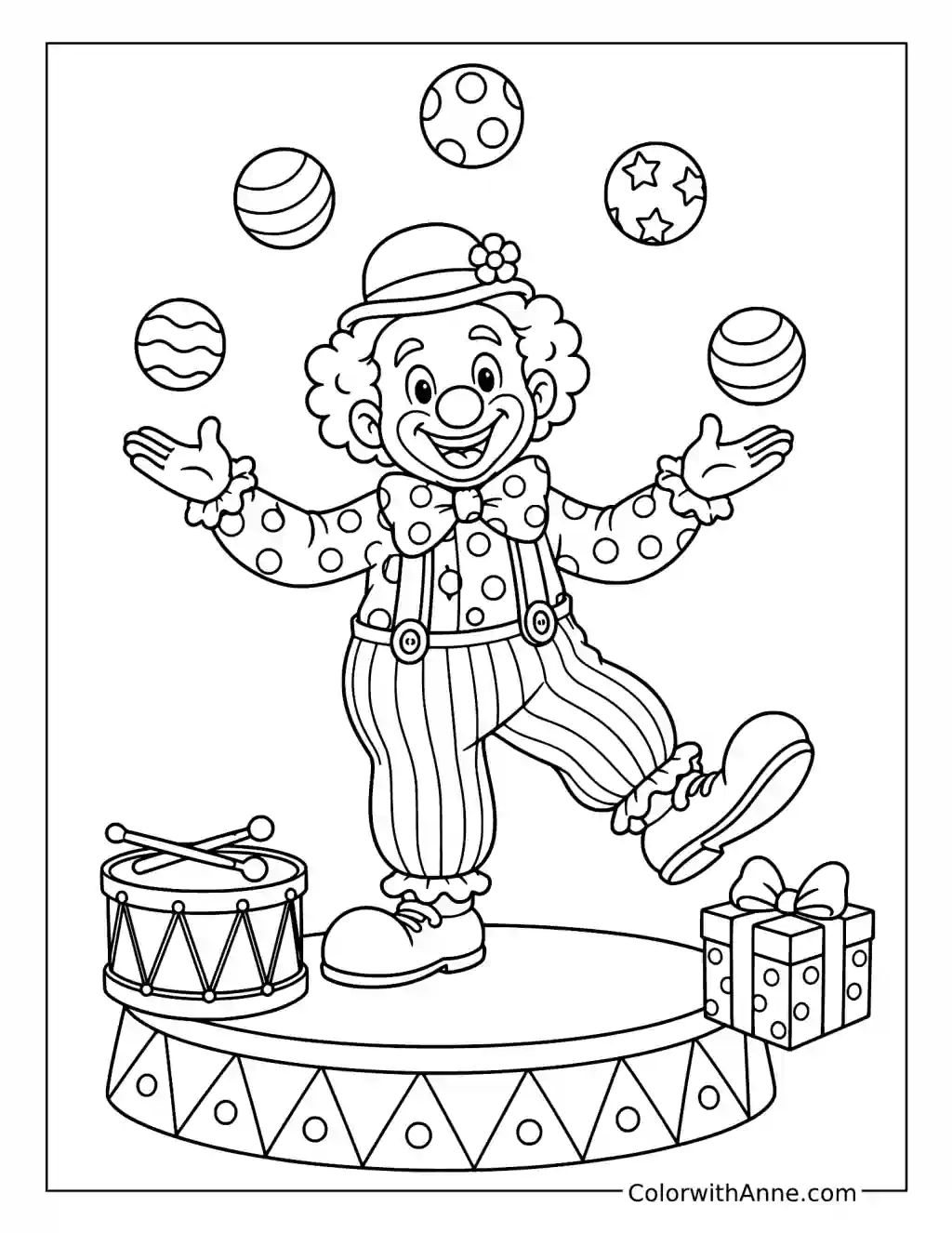
Spots cover one trouser leg while stripes run down the other. The little flowered hat and enormous shoes make ordinary ideas about a sensible outfit rather irrelevant.
Try a combination you would usually reject: orange stripes beside purple spots, perhaps, or a formal-looking jacket above the most ridiculous trousers. Keep one small detail orderly, such as matching buttons, so the deliberate mismatch becomes the joke. There is no need to make every part equally eccentric. The costume is funnier when something still appears to be trying very hard to behave.
Make the Rabbit Appear Twice
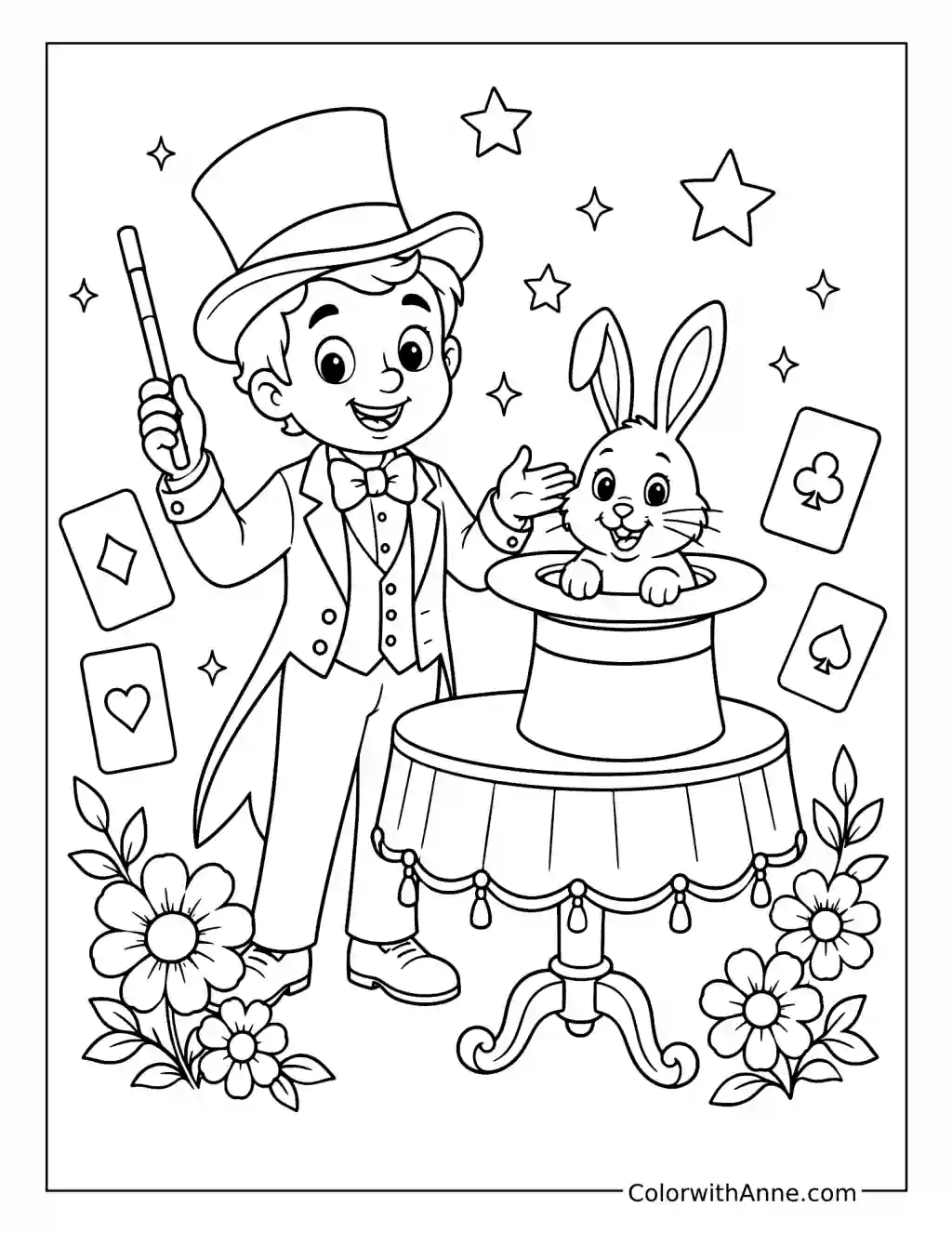
The rabbit is already emerging from the magician’s hat, which makes this picture suitable for a simple reveal rather than another flat display.
After coloring, cover the rabbit with a small flap of dark paper, attached along its top edge. Shape the flap so it reads as an extension of the hat. Lift it slowly: ears first, then the rabbit’s face. The original illustration stays underneath, and the page itself becomes the trick. A practiced pause before lifting the flap will do more for the performance than a complicated speech.
Start Juggling with One Comfortable Throw
The patterned balls form an arc above the clown. Their separate stripes, spots, and stars help the audience follow objects that would otherwise blur together.
Before filling in the page, toss one rolled pair of socks gently between your hands. Aim for the same arc each time rather than throwing higher. Then look back at the picture: where does the ball rise, turn, and come down? Color the airborne balls so each remains distinct. Even a short practice makes the drawing feel like a performance you understand from the inside.
Feel the Pause on the Tightrope
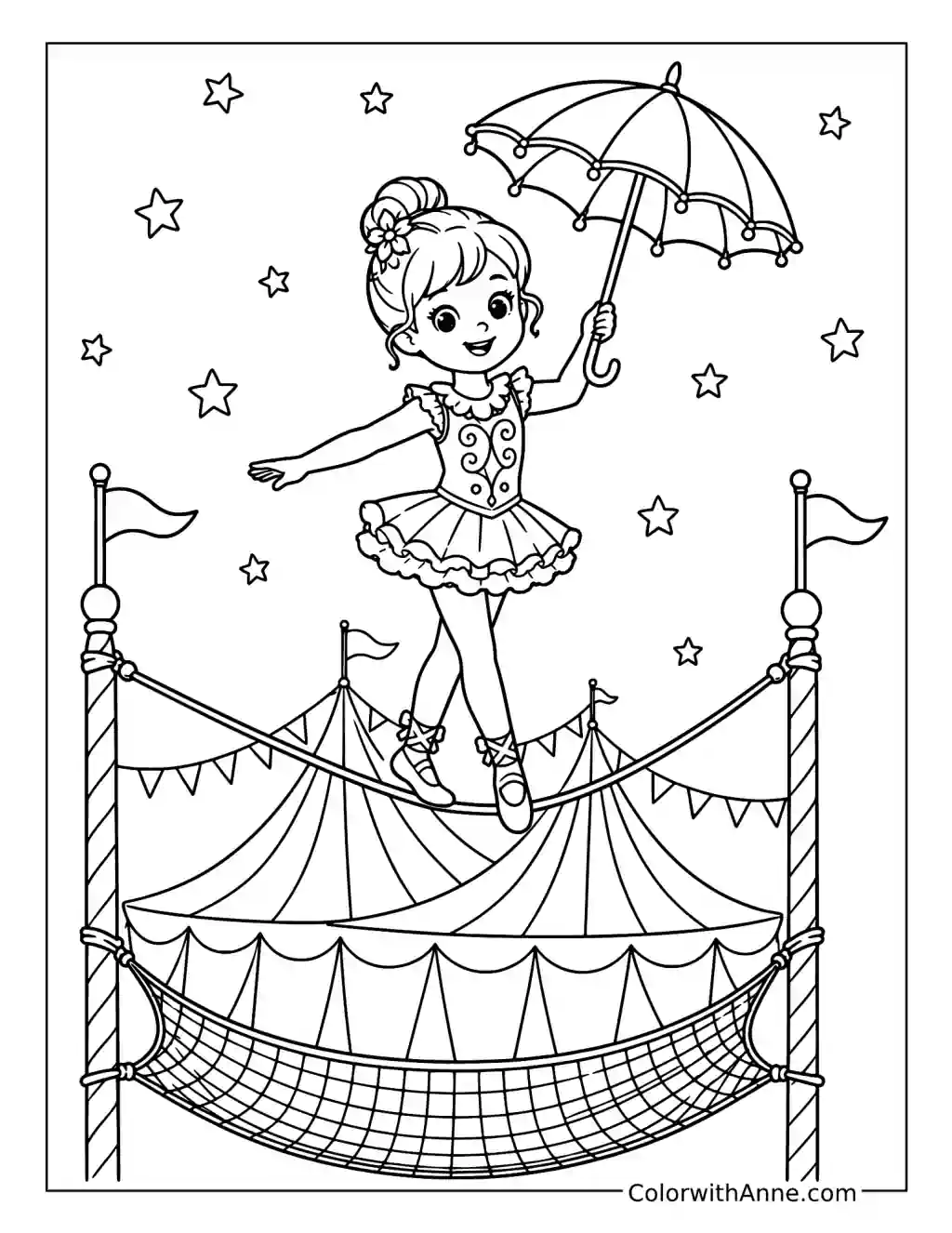
One foot is lifted, the umbrella is held high, and the net waits below. The drawing captures a step that has not quite happened yet.
A straight line of removable tape on the floor lets you try that same deliberate pace. Walk heel to toe, pause halfway, and notice how your arms adjust. When returning to the page, keep the area around the performer’s feet relatively quiet. The interesting detail is the placement of that next step, not another bright patch of tent fabric behind it.
Save the Applause for the Finale
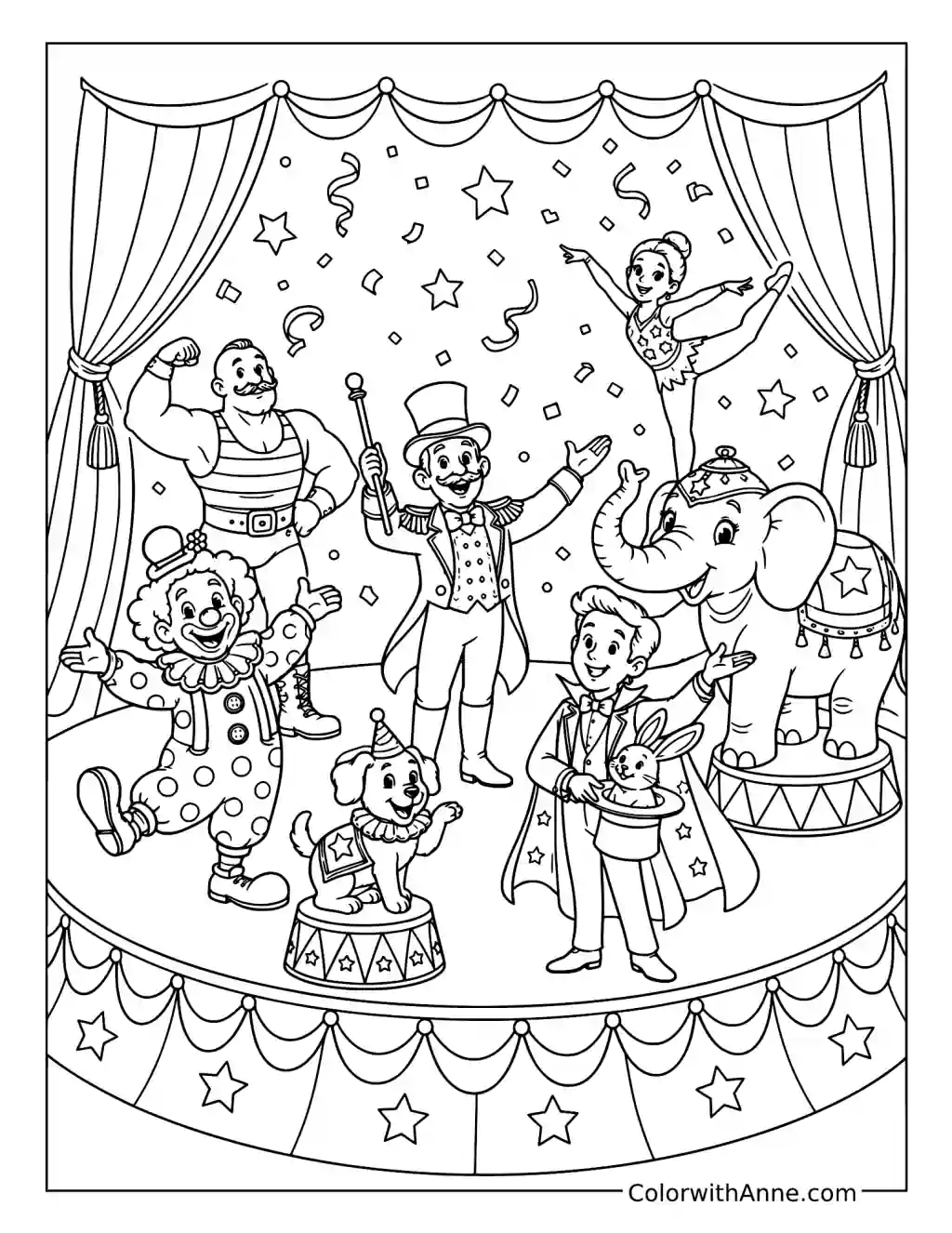
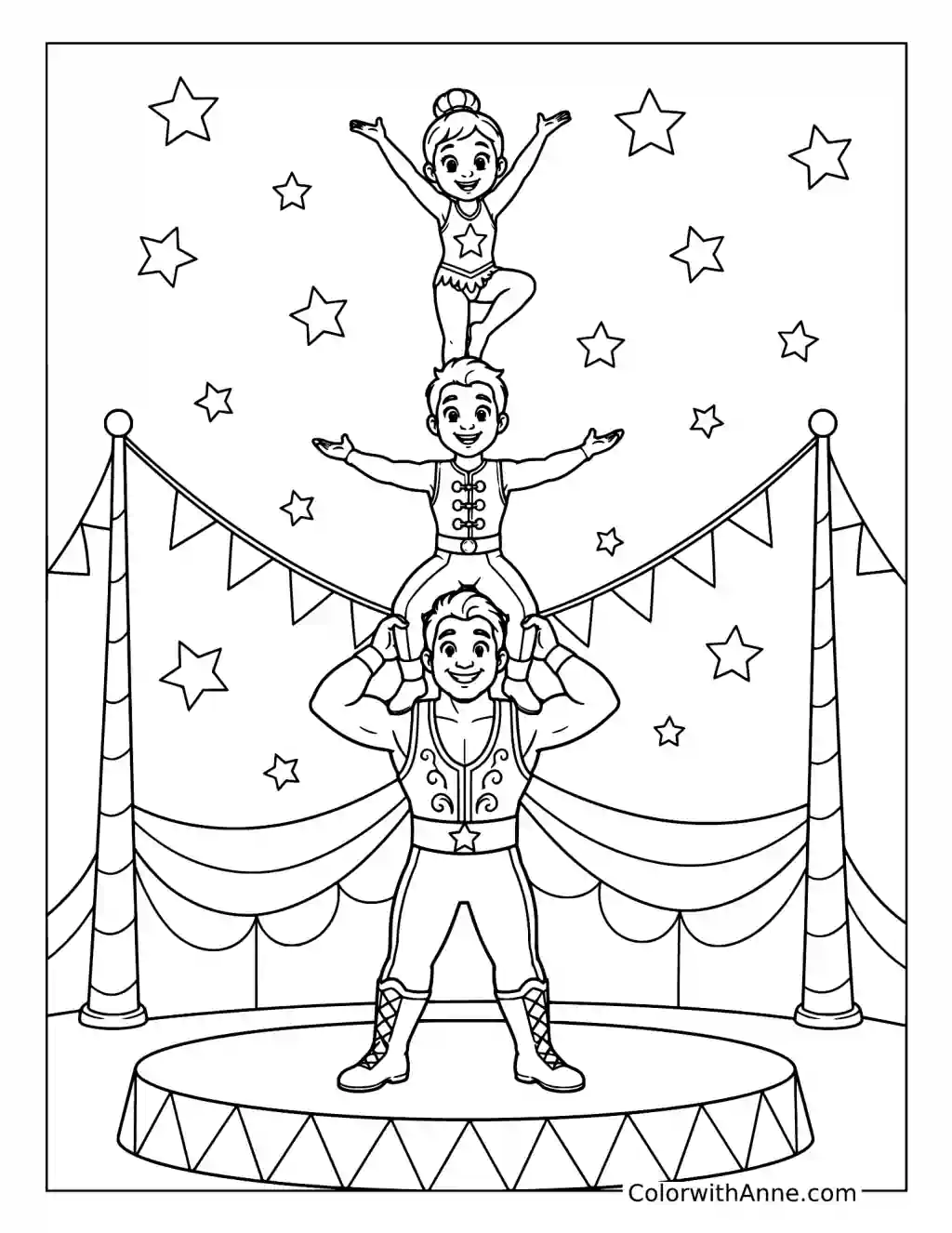
The finale brings performers together beneath the curtains, with confetti and stars scattered above them. Unlike a single-act portrait, it needs the feeling of several people sharing the same stage.
This is a good page to color together. Let each person take a performer, then agree on the curtains and stage decorations so the separate choices still belong to one show. Finish the confetti last. Those final little marks can become the applause after everyone’s contribution is complete, rather than background details filled in automatically.