
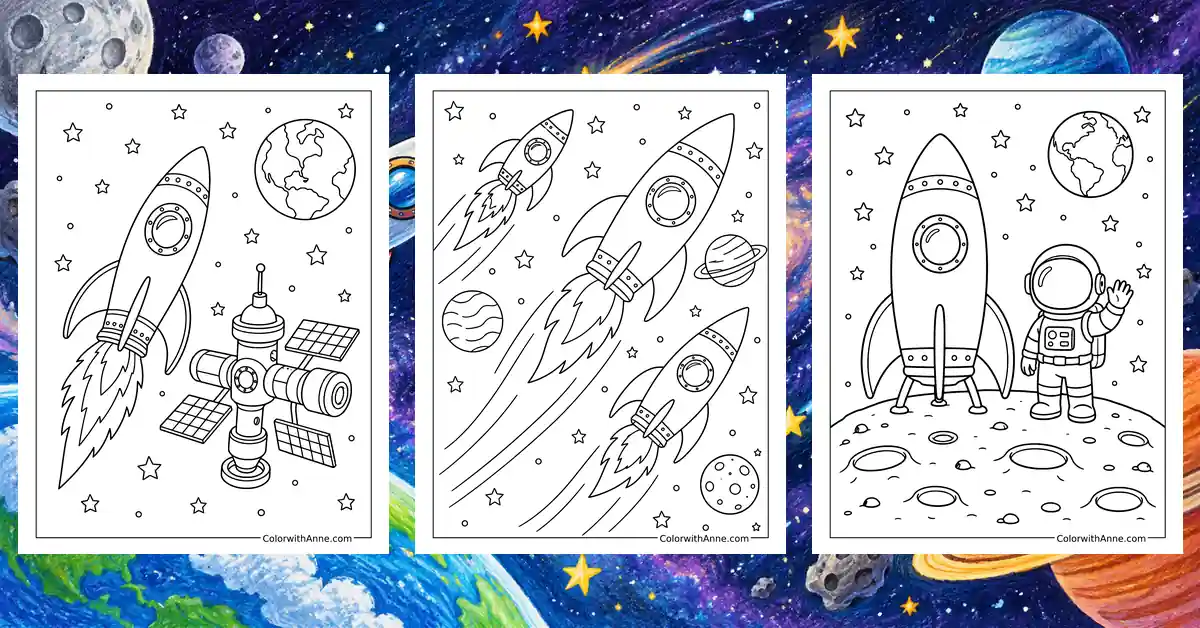
The countdown is often the point when a room full of children becomes completely focused. Numbers descend, the engines flare, and a rocket begins rising with a force that makes even a familiar launch worth watching again. Someone usually starts counting along before being invited.
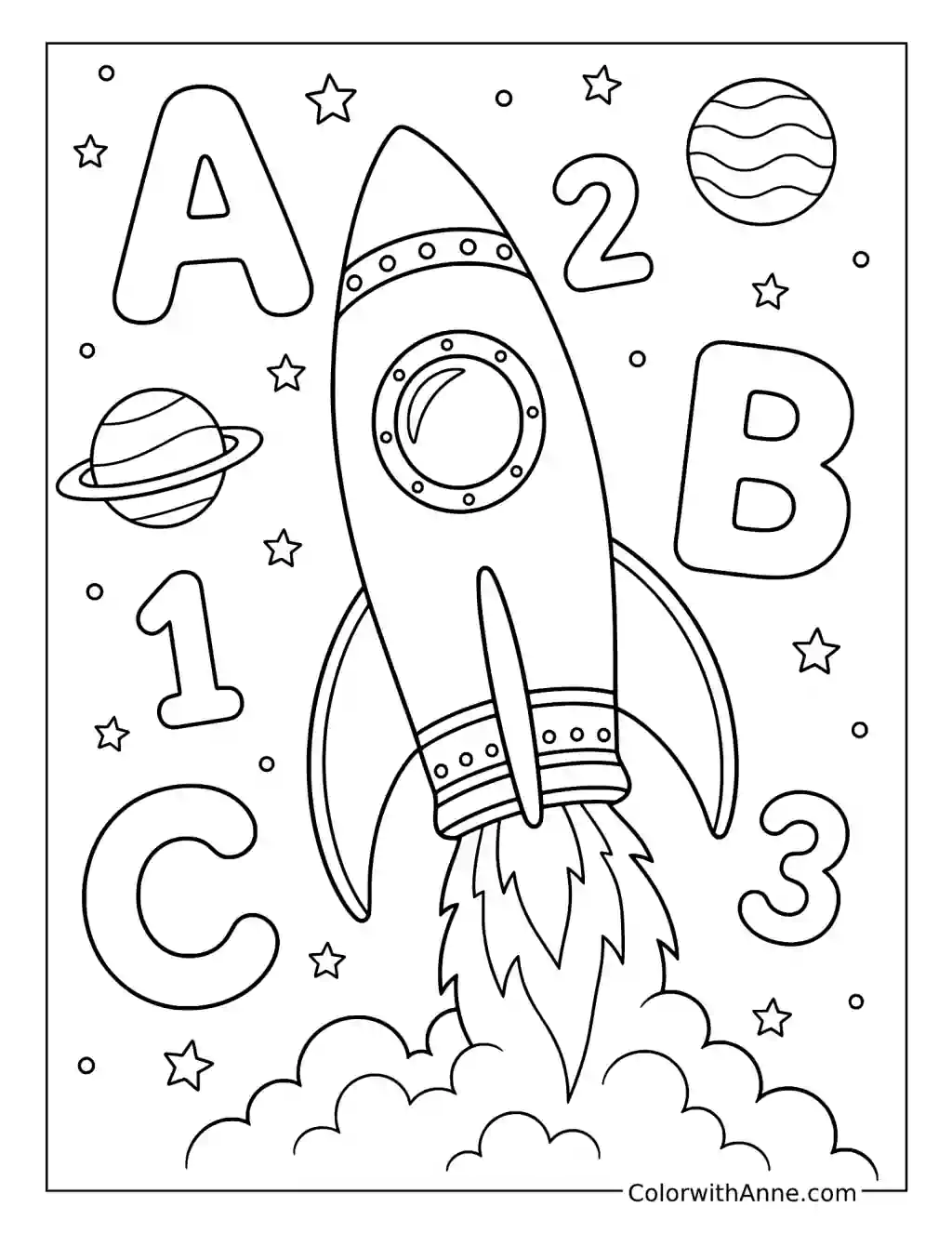
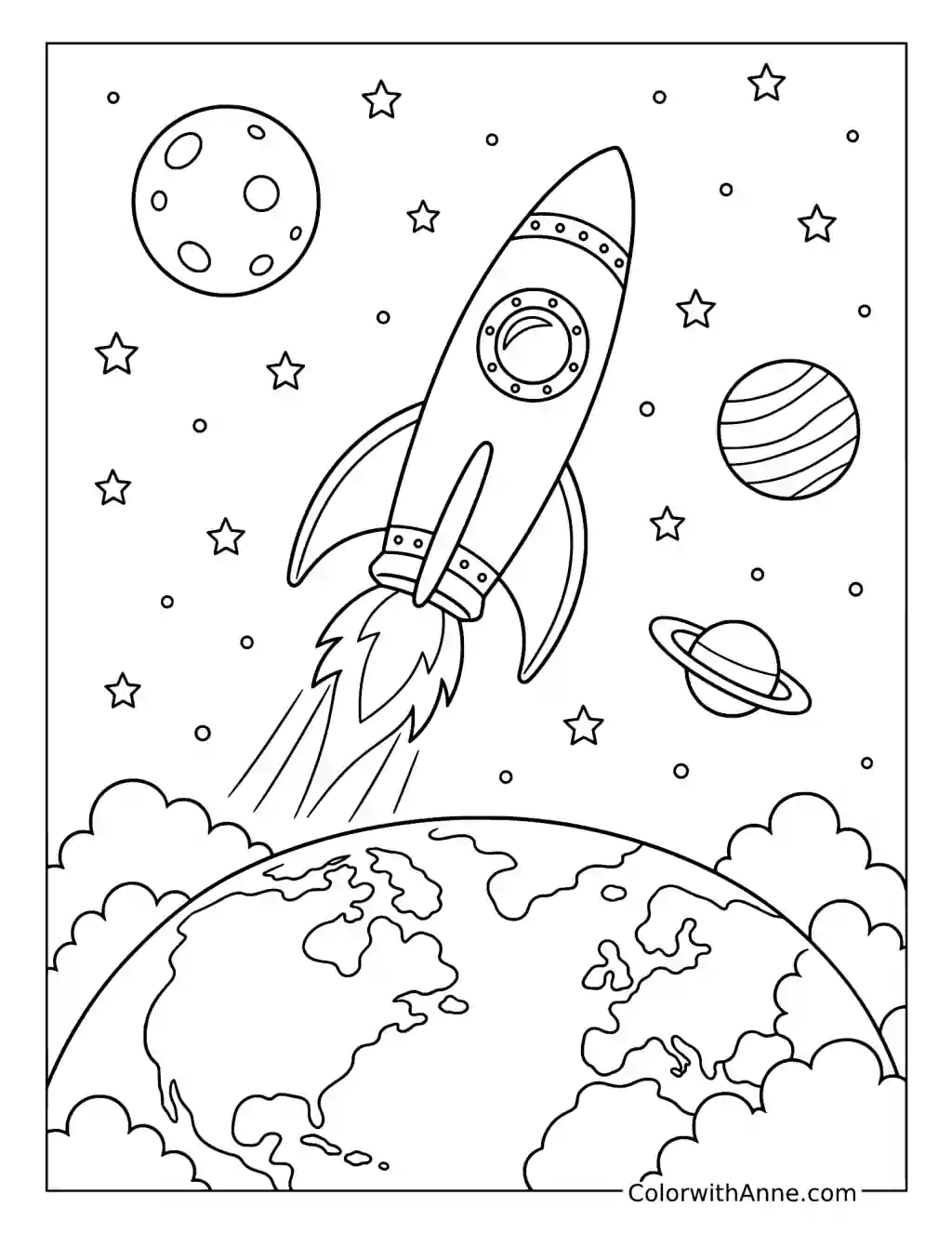
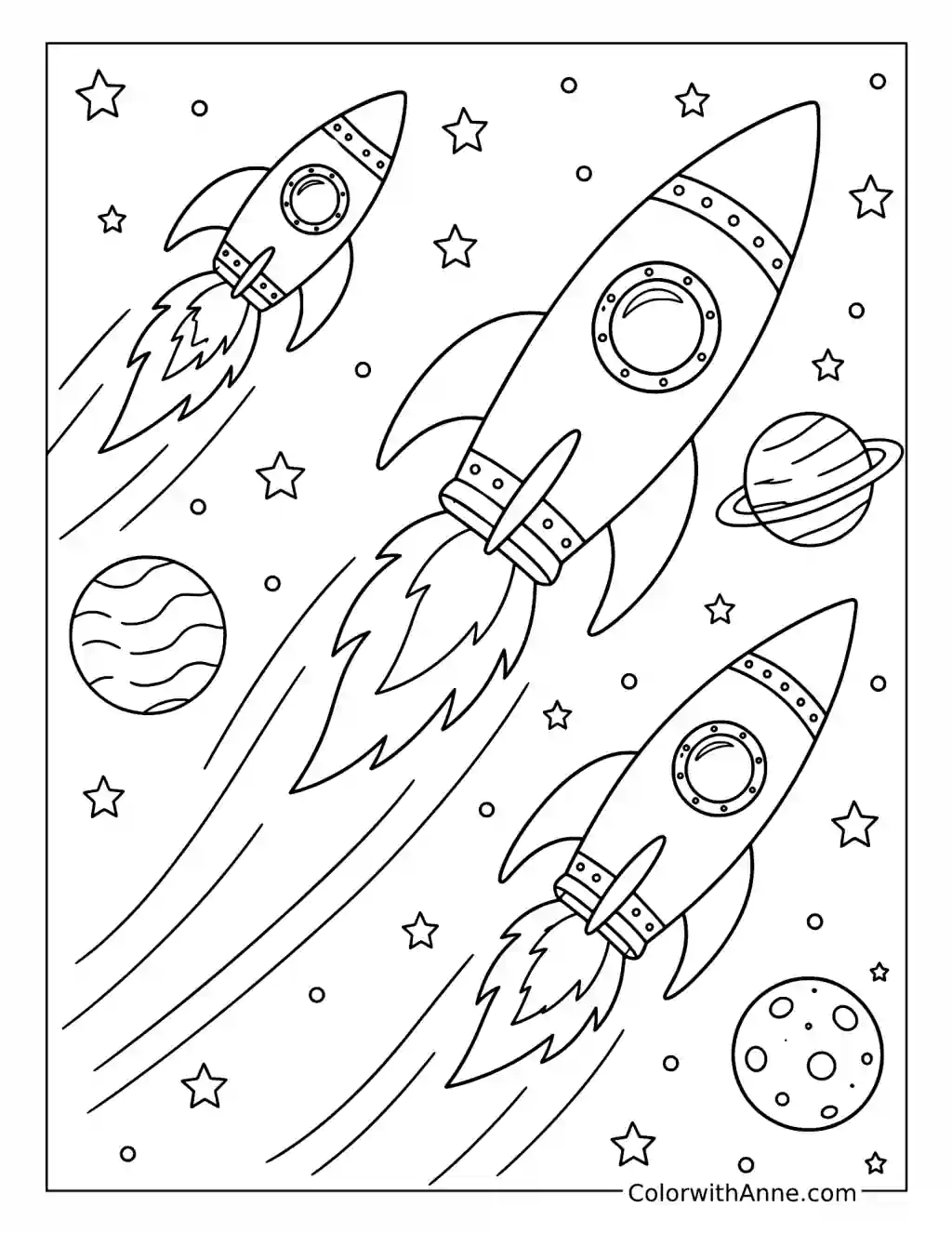
Rocket Ship coloring pages leave room for the questions that follow liftoff. Where is it going, and what would Earth look like through the window? A page can become the starting point for an imagined mission, with a young astronaut deciding the destination. Packing snacks may receive more immediate consideration than the length of the journey.
Free Printable Rocket Ship Coloring Pages
Click any coloring page below to open the PDF, then print on US Letter or A4 paper.
Did you find what you needed?
Help us choose what to create or improve next.
Coloring Ideas for Rocket Ship Pages
Try one of these coloring ideas, or use them as a starting point for your own.
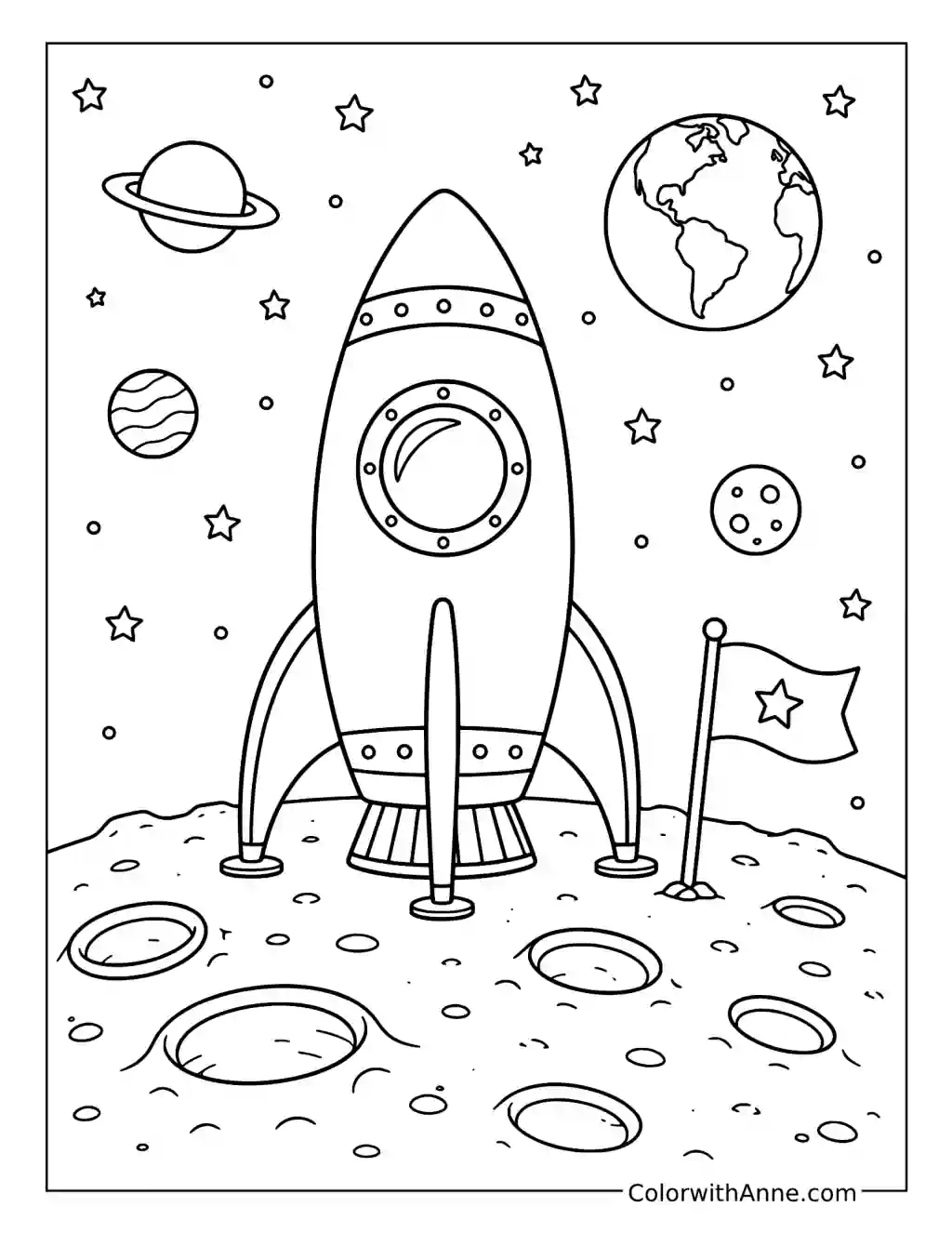
Design a Patch for the Moon Mission
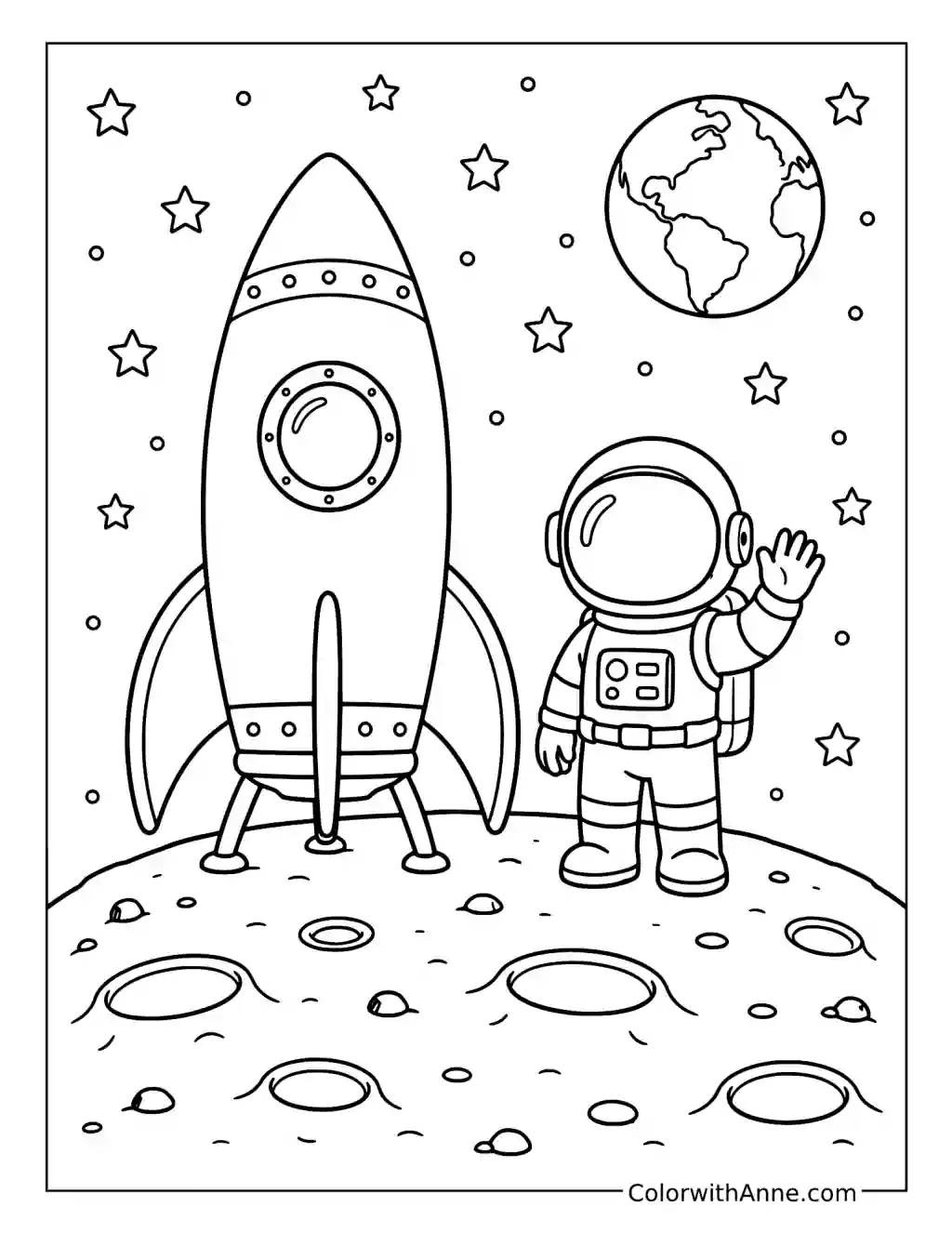
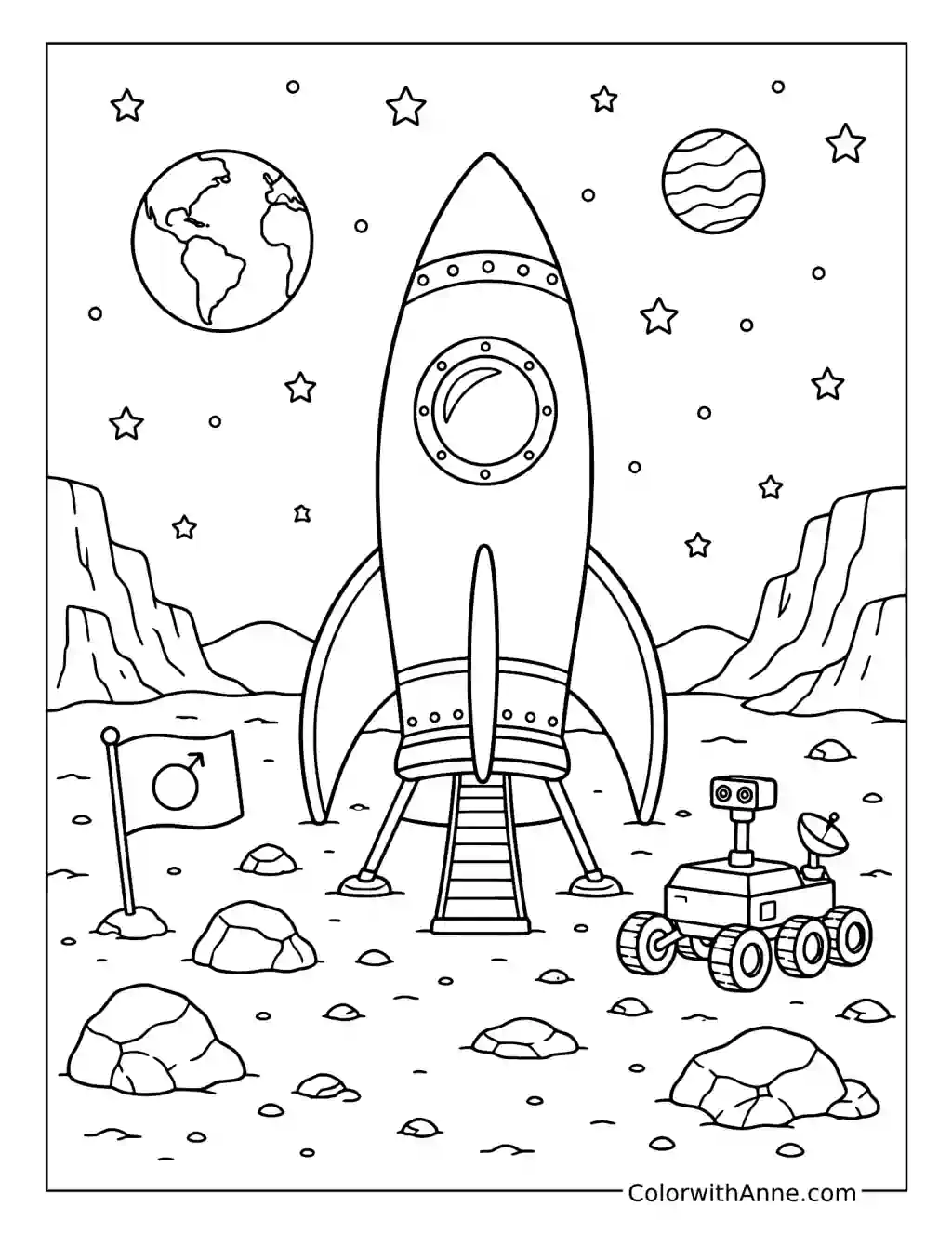
An astronaut stands beside the landed rocket, with Earth visible above the cratered ground. The small expedition already has several shapes that could become a mission emblem.
White and silver with red fins could give the rocket a crisp finish. A muted gray Moon and blue-green Earth would separate the two worlds clearly.
Draw a small circular patch using two or three pictured elements: a rocket, crater, star, or astronaut helmet. Choose one large symbol and keep the others small. The patch can sit in the margin as the identity of this imagined mission.
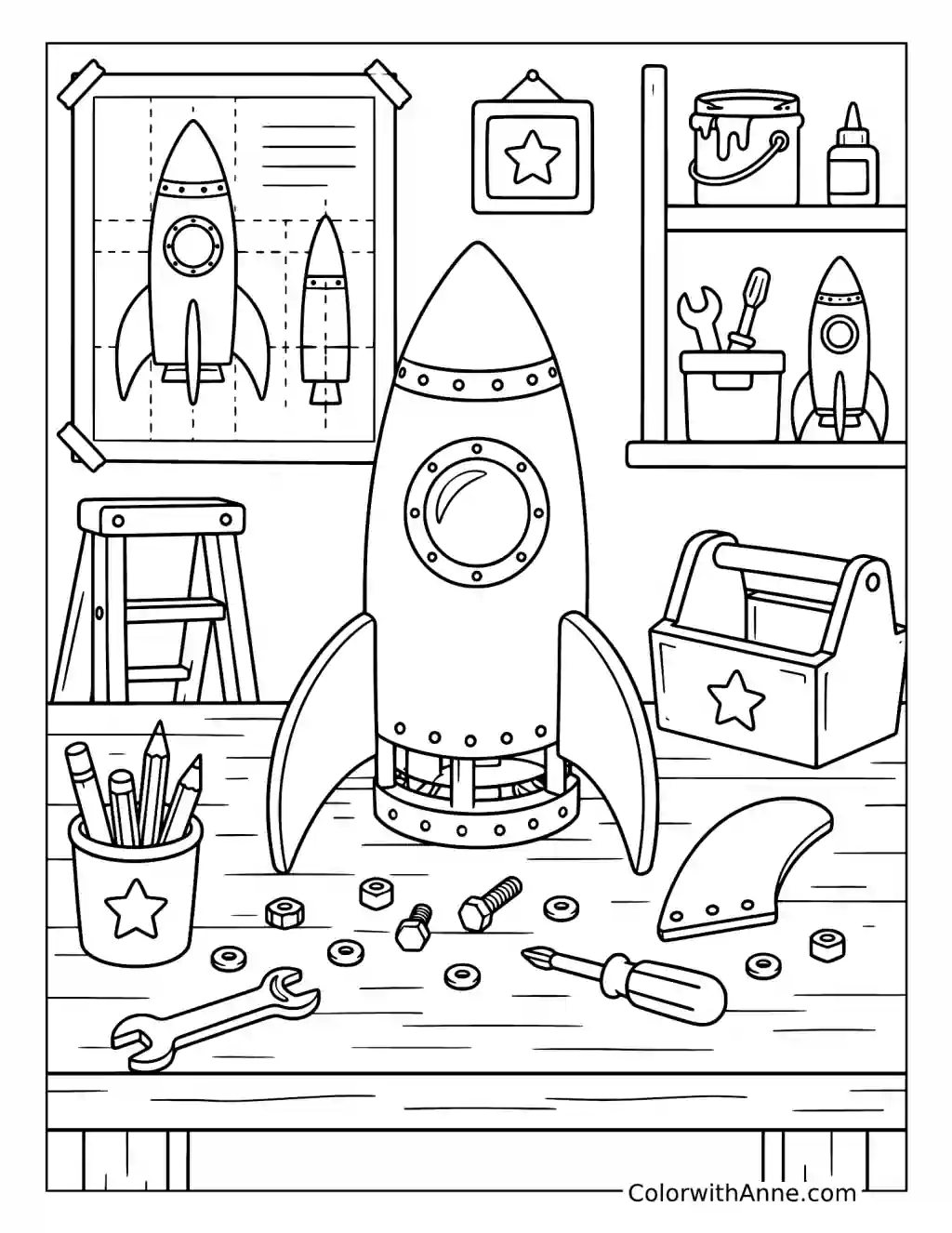
Build the Workshop’s Paper Rocket
A rocket stands on the workbench among tools, loose parts, and drawings. The unfinished workshop setting is a fitting place to plan a simple model.
A silver body with bright fins could make the main rocket stand out from the brown bench. Small red or blue tool details would add color without crowding the workspace.
Roll paper into a tube, add a cone nose, and attach folded triangular fins. Use the printed model to check where each part belongs. Stand it on the table and adjust the fins until the little rocket sits steadily.
Invent a Greeting for the Friendly Alien
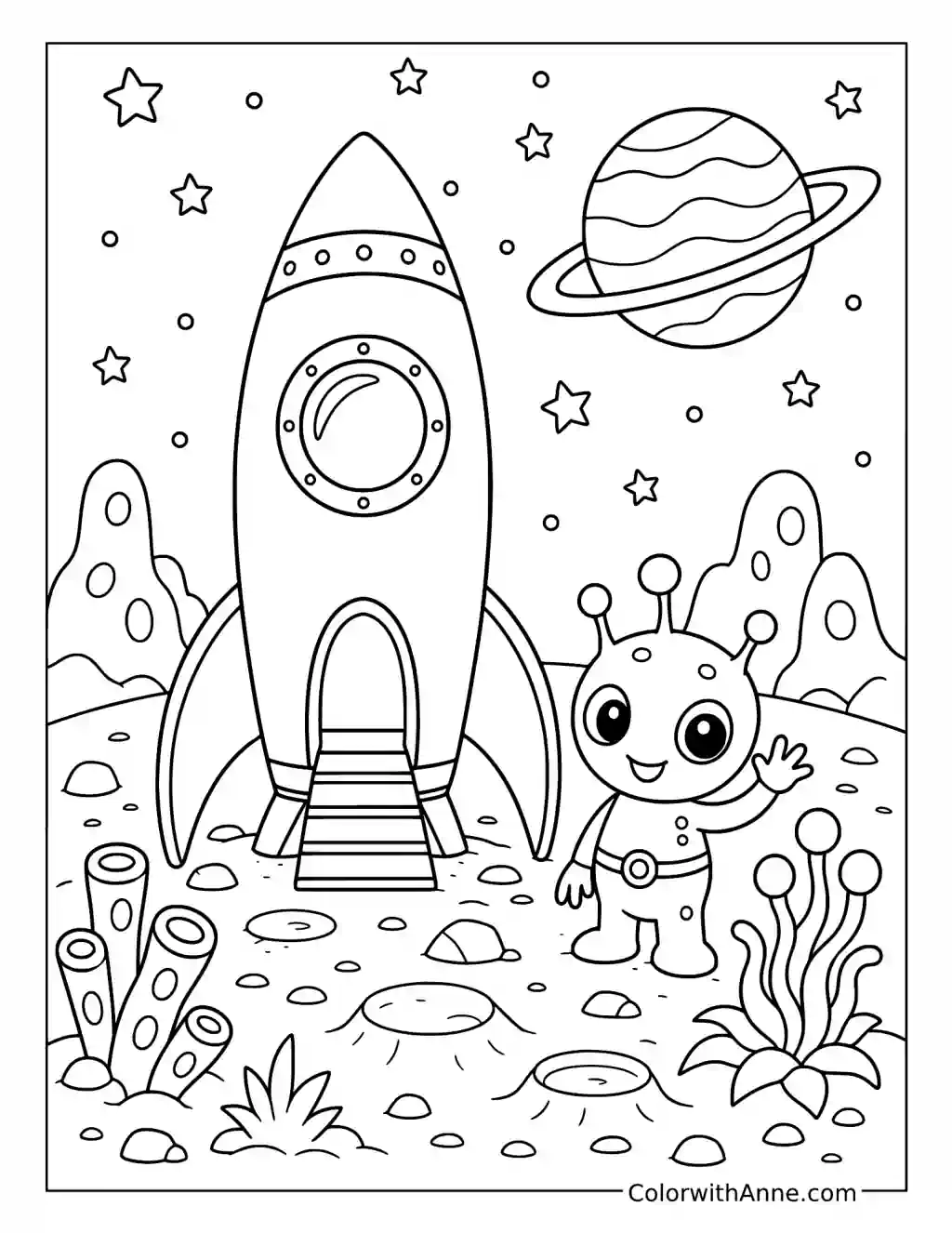
The alien waits beside a landed rocket among unfamiliar plants and rounded rocks. It looks like the beginning of a conversation rather than an emergency.
A lime-green or turquoise alien could look cheerful against pinkish ground. A mostly pale rocket would give the unfamiliar plants room for brighter colors.
Draw a small greeting symbol above the alien, then a different symbol near the rocket. Decide what each means before explaining the exchange to someone else. A wave, shared picture, or offered flower can begin the meeting without a long written dialogue.
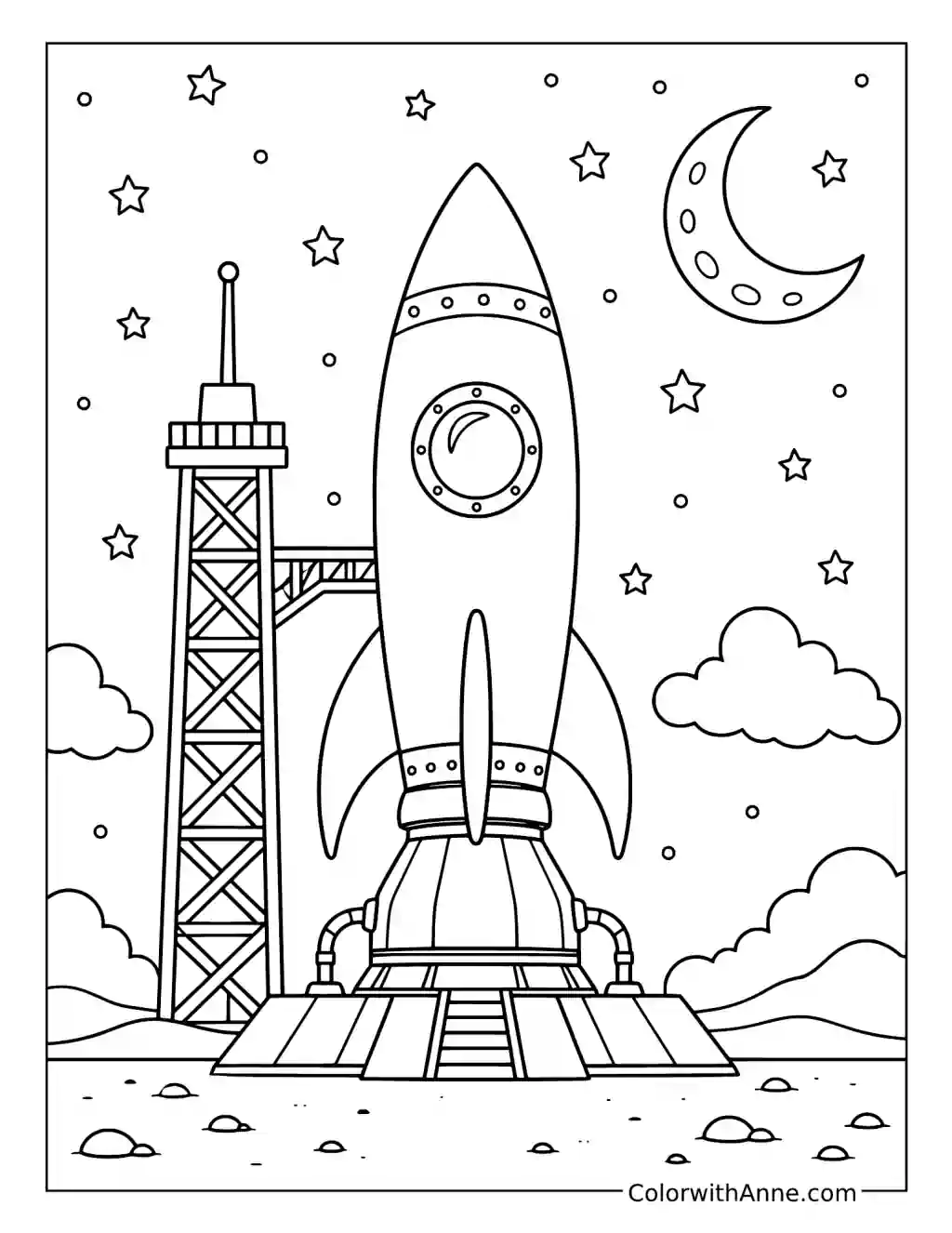
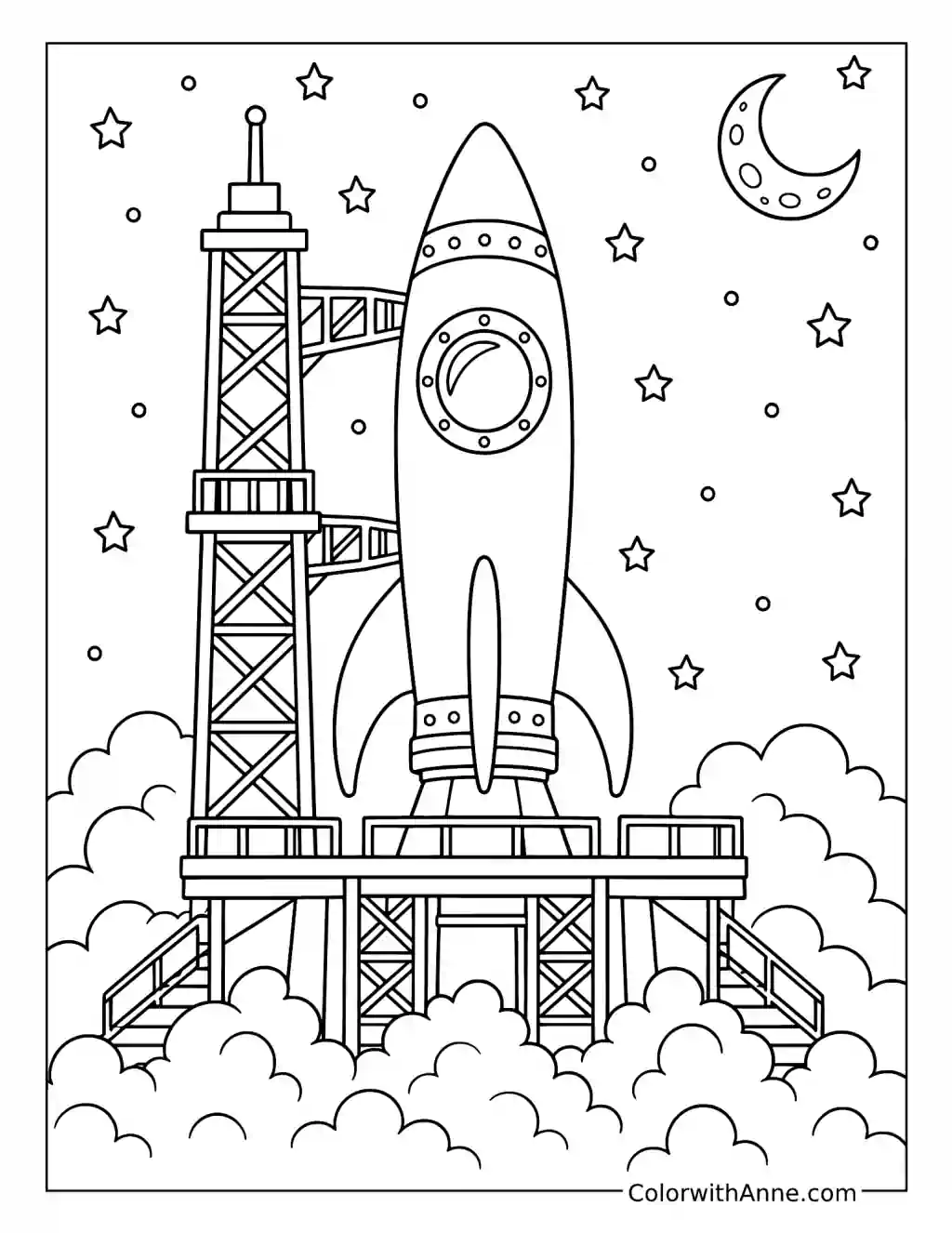
Count Down From the Launch Pad
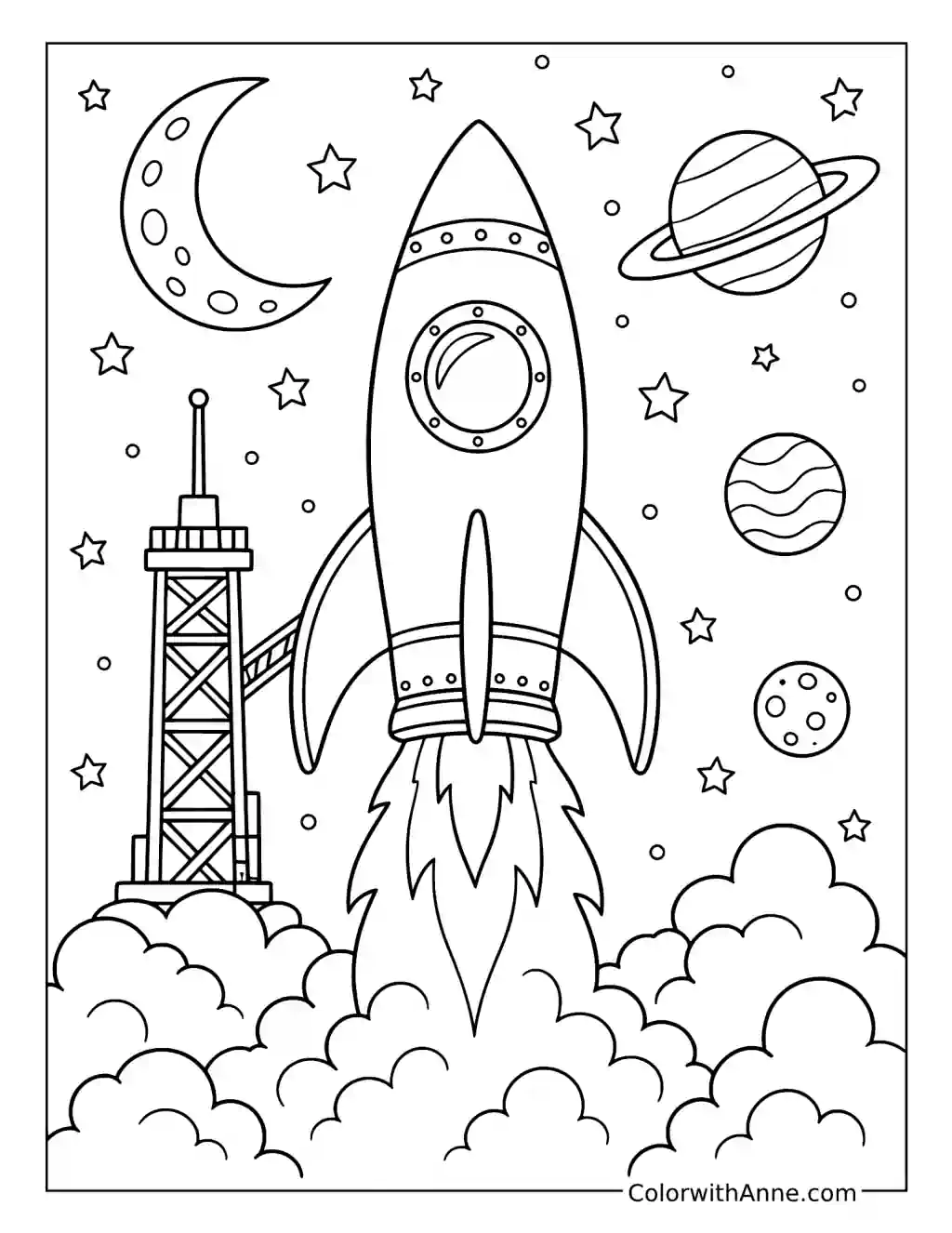
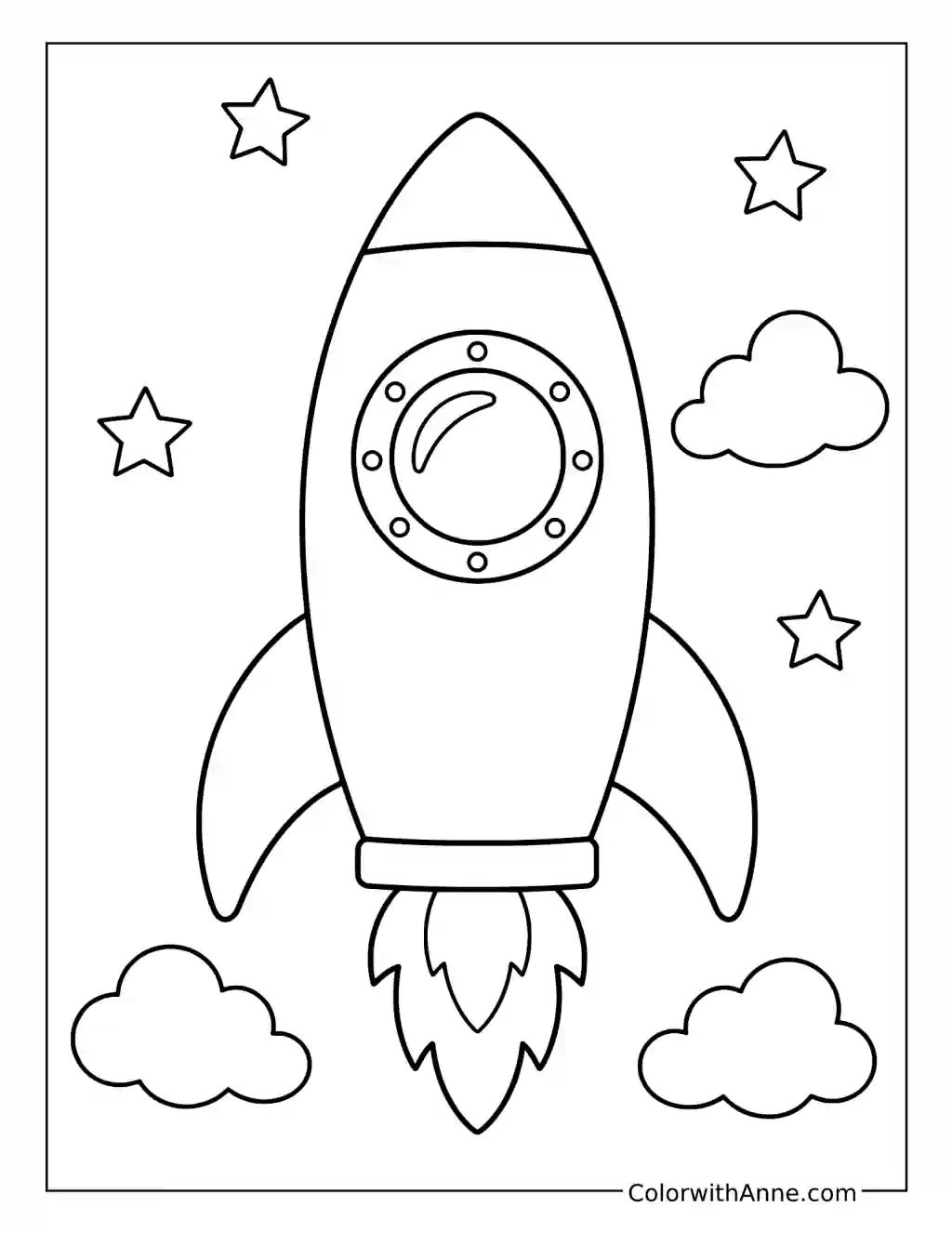
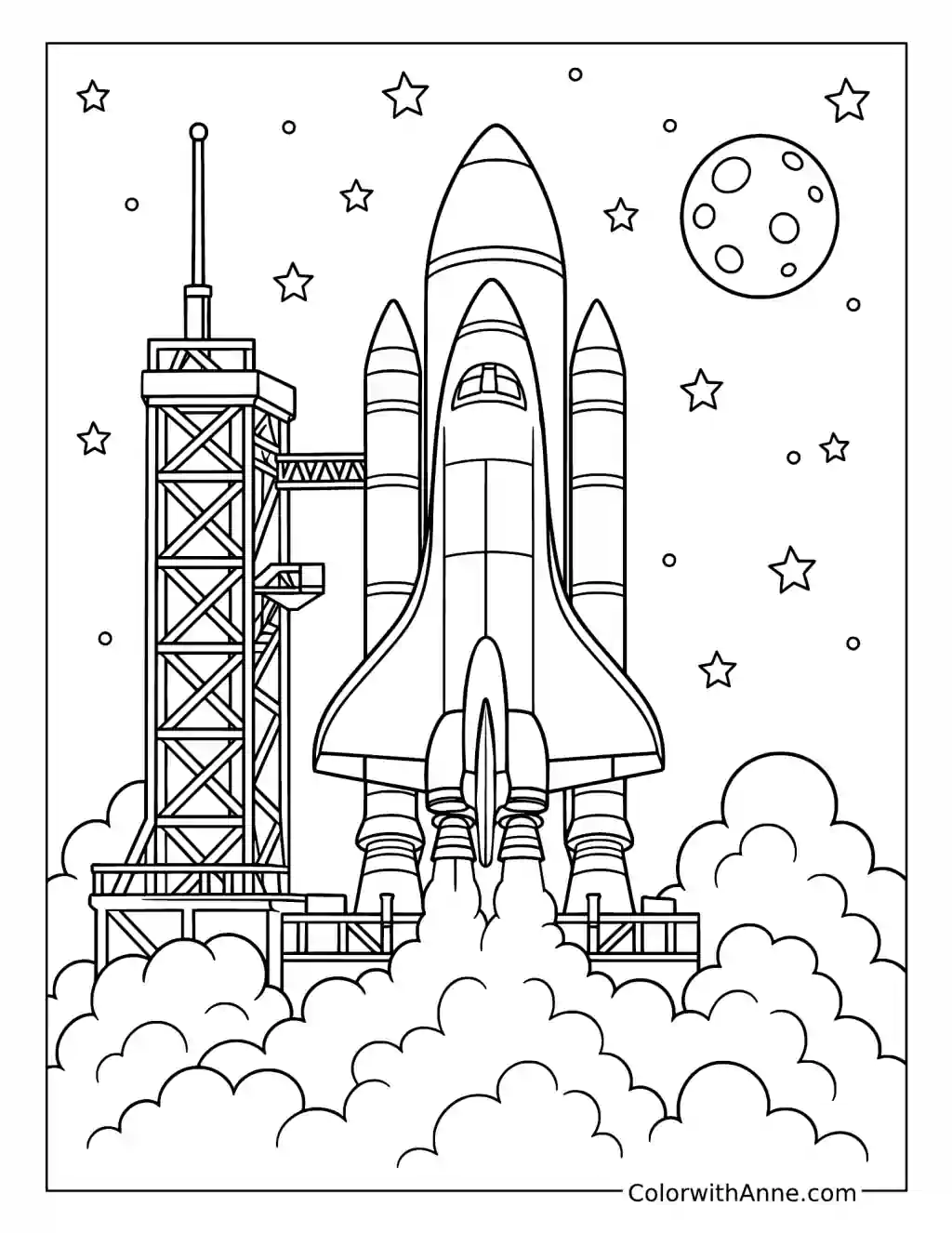
The rocket stands beside its launch tower with clouds gathering below. The upright position makes this the collection’s natural countdown picture.
White panels with red or blue details could give the rocket a bold silhouette. Orange near the base and softer gray clouds would suggest the activity below it.
For a pretend launch, let one person call the countdown while another holds the finished picture low. Raise it at zero and carry it slowly upward. Swap jobs so each person gets a turn controlling the launch.
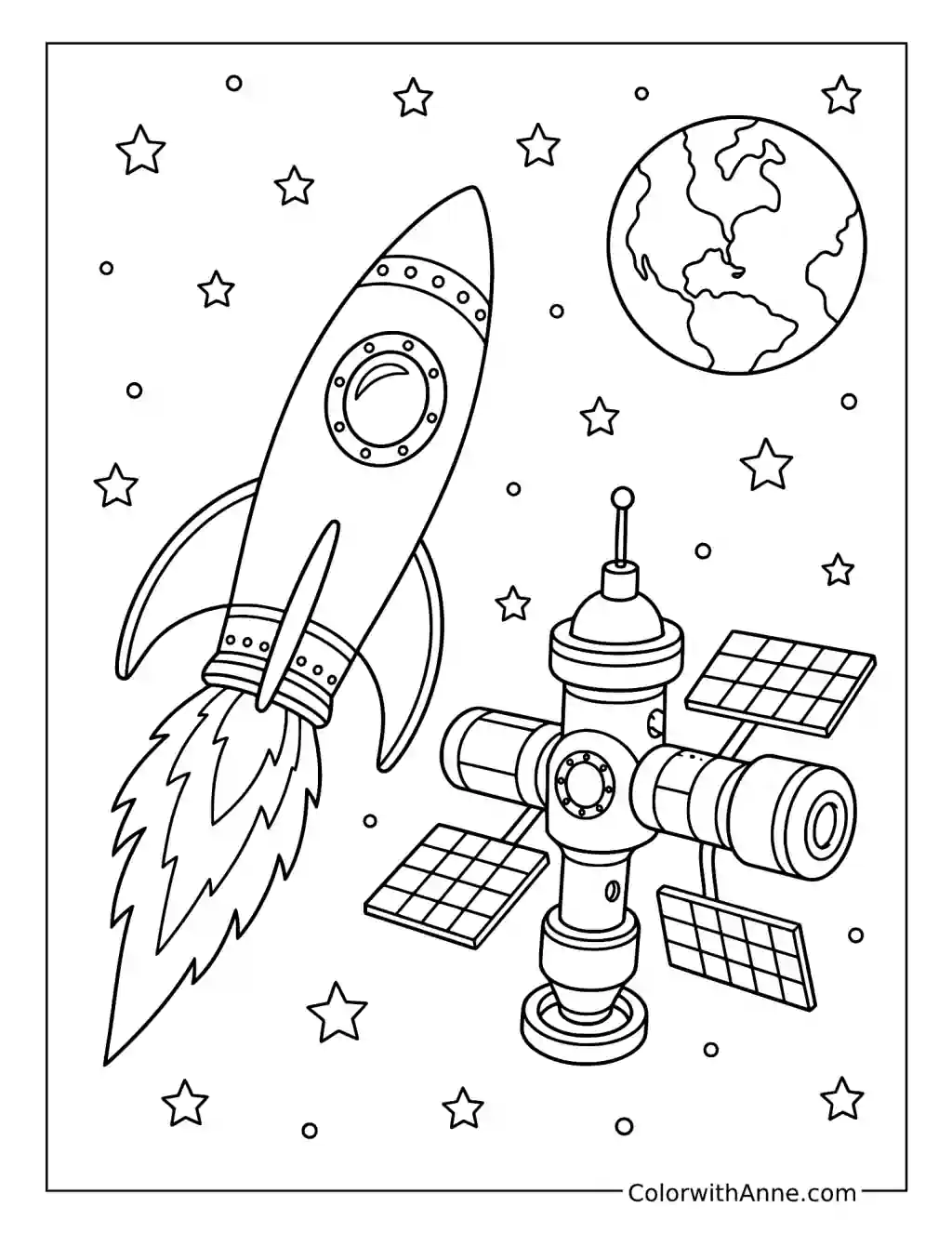
Inspect the Space Station’s Separate Parts
The rocket passes a station assembled from cylinders, round openings, and rectangular panels. The different shapes make the station interesting to examine in its own right.
Cool grays with blue panel sections could give the station a coordinated look. A warm accent on the rocket would help separate the passing vehicle from the larger structure.
Compare the illustration with a NASA space-station photograph. Find a panel, window, and connecting section in each. Notice which details the drawing simplifies, then choose one station part to investigate more closely.
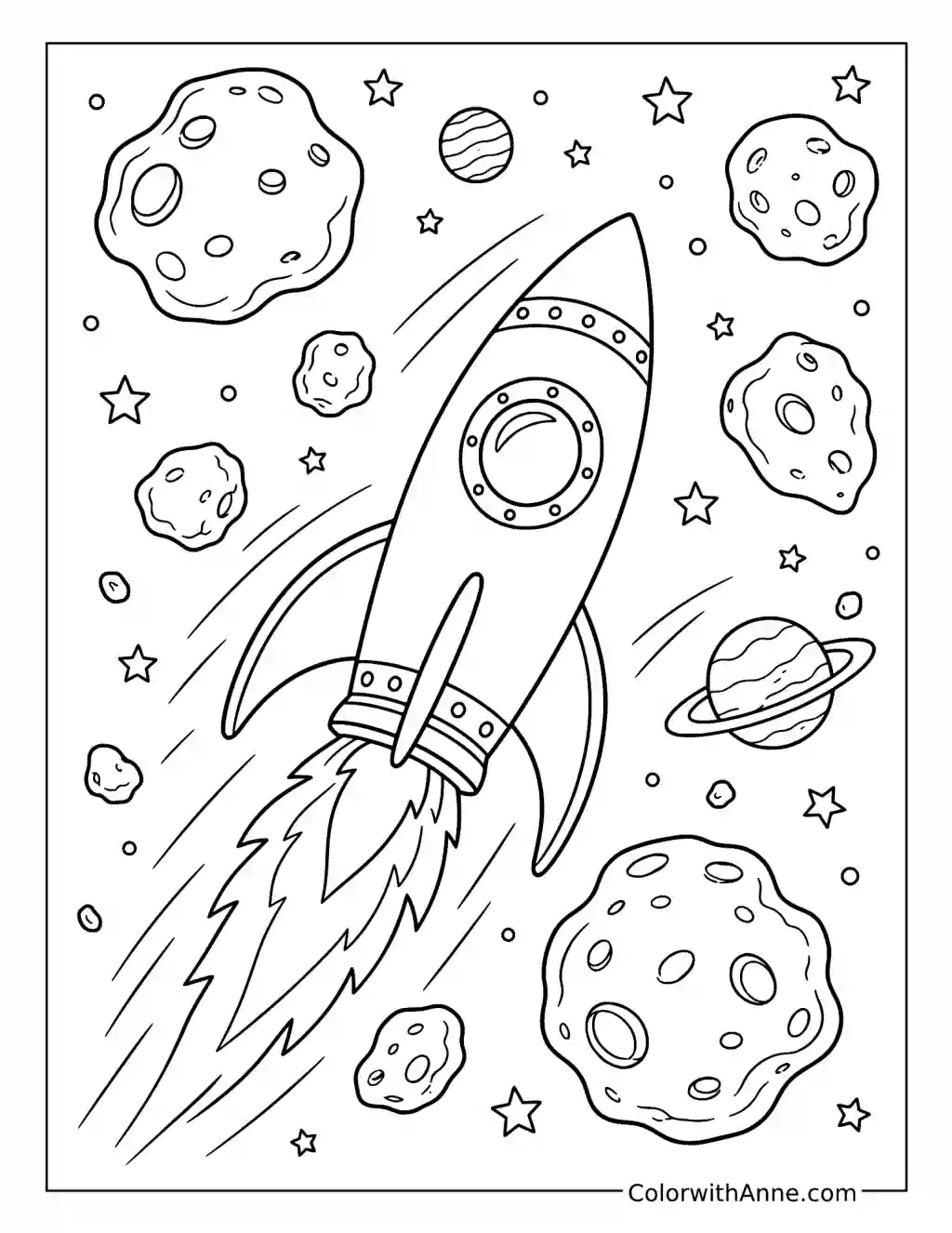
Plot a Route Between the Asteroids
Rocks of different sizes surround the rocket in this imagined obstacle course. The gaps between them offer a route to plan before adding more stars.
Rust, gray, and brown asteroids could sit well against a deep blue background. A pale rocket with bright exhaust would remain easy to follow through the crowded scene.
Lay tracing paper over the page and draw a flight path through the available gaps. Start behind the rocket and choose an exit point near the edge. Try a second route on the same overlay in another color and compare the turns.
Spot What Makes the Shuttle Different
The shuttle’s wings and attached launch equipment give it a different outline from the single-body rockets elsewhere in the gallery. Its upward movement still fills the page.
White surfaces with dark details could make the shuttle’s shape clear. Warm orange near the exhaust and pale gray clouds would concentrate the strongest color beneath it.
Look between this picture and a simpler rocket design. Point out the wings, the attached sections, and the different body shape. A NASA shuttle photograph can help identify those parts before adding small labels beside the drawing.
Choose the Mars Rover’s First Photograph
A rover waits near the rocket on a rocky landscape, ready for an imagined Mars mission. Its low viewpoint offers a different way to explore the scene.
Muted red and ochre ground could suggest Mars, with pale machinery and darker wheels. A few cooler shadows would keep the rocks from becoming one flat orange area.
Choose one pictured rock or surface feature for the rover to inspect. Draw its imagined camera view inside a small circle in the margin, making that detail larger. The little inset gives the rover a specific first job.