
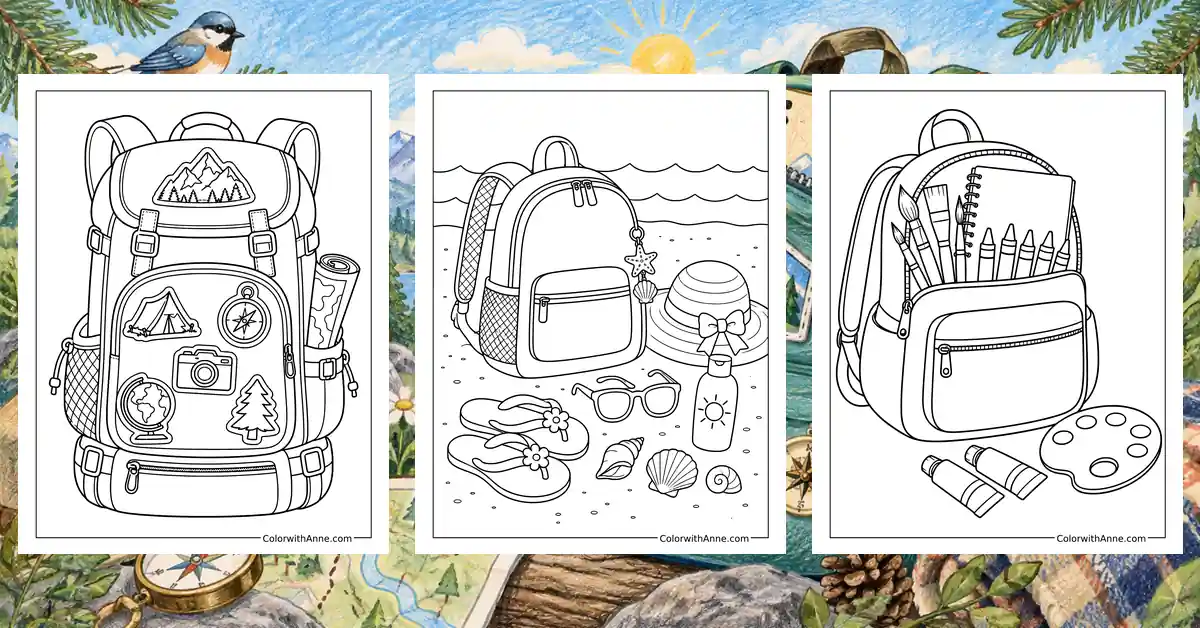
A backpack emptied at the end of term can produce things its owner has not seen in months. Beneath the books, a forgotten note waits beside something that probably should have come out after lunch. Once everything is cleared away, the bag looks ready for a much better organized beginning.
Backpack coloring pages fit the anticipation of preparing for school, when even choosing what to carry feels important. A child may imagine a bag that reflects a favorite interest or decide where a name should go. The page makes room for those small preferences before the real backpack begins collecting another term’s surprises.
Free Printable Backpack Coloring Pages
Click any coloring page below to open the PDF, then print on US Letter or A4 paper.
Did you find what you needed?
Help us choose what to create or improve next.
Coloring Ideas for Backpack Pages
Try one of these coloring ideas, or use them as a starting point for your own.
Choose Patches That Mean Something to You
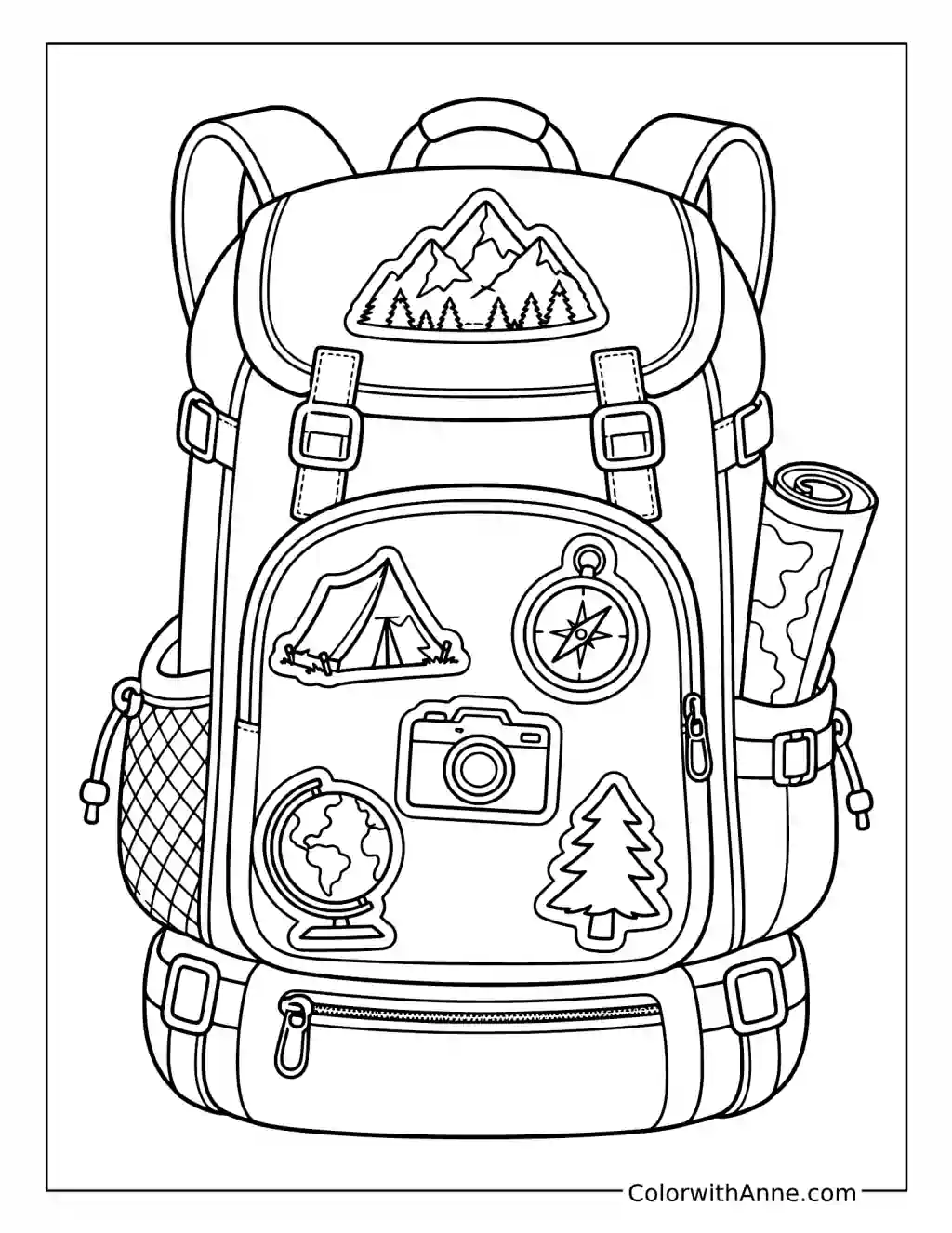
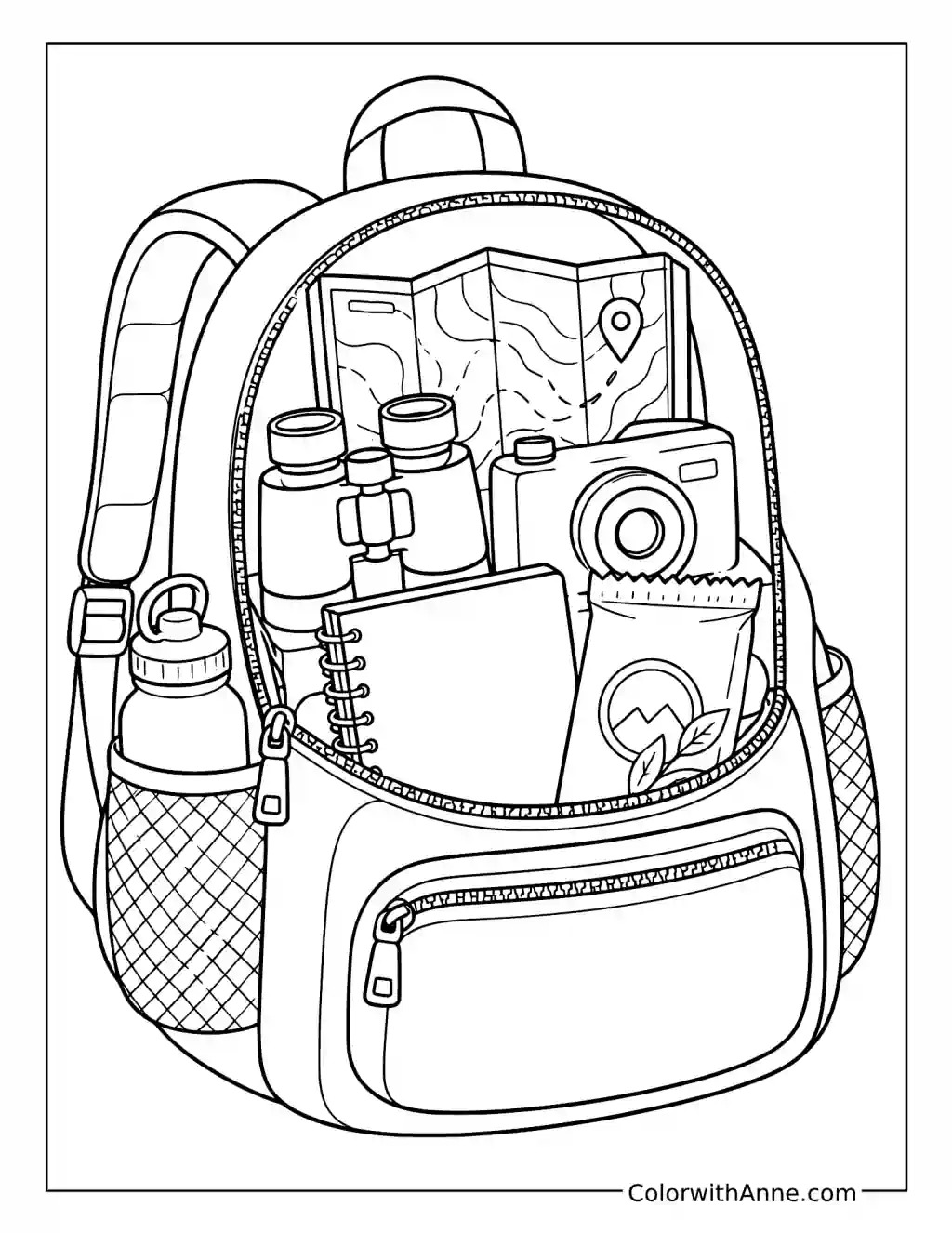
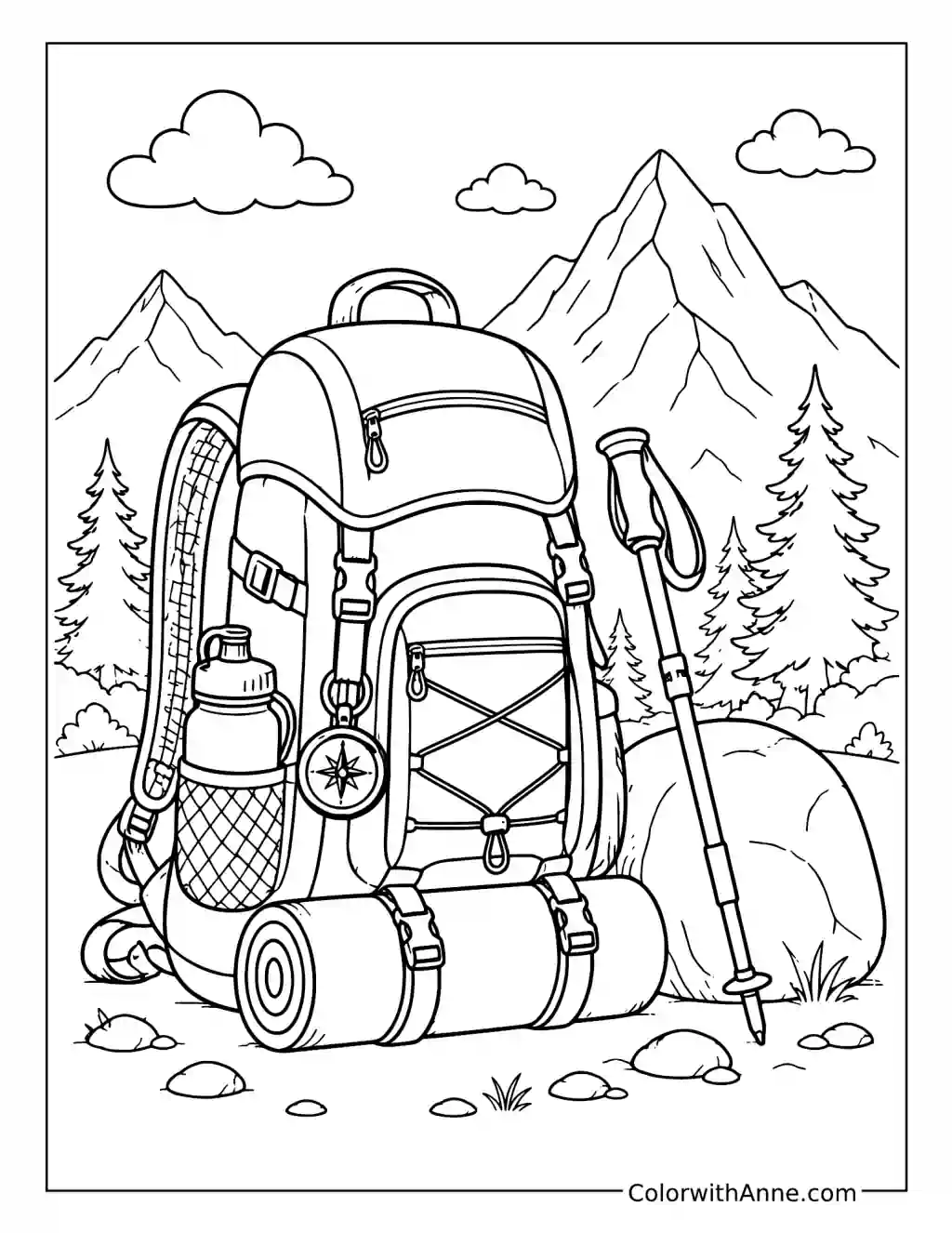
Mountains, a tent, a compass, and trees decorate this adventure backpack, with a rolled map tucked at the side. The patches suggest a bag that has collected a few stories.
Olive fabric with rust or mustard accents could give it a well-traveled outdoor look. Brighter patch backgrounds would make the little symbols easier to distinguish.
Choose one existing patch to adapt with a place, activity, or small symbol meaningful to you. Keep the change inside its border. A single personal patch can give the bag an identity without covering every pocket with writing.
Work Out What Belongs in Each Pocket
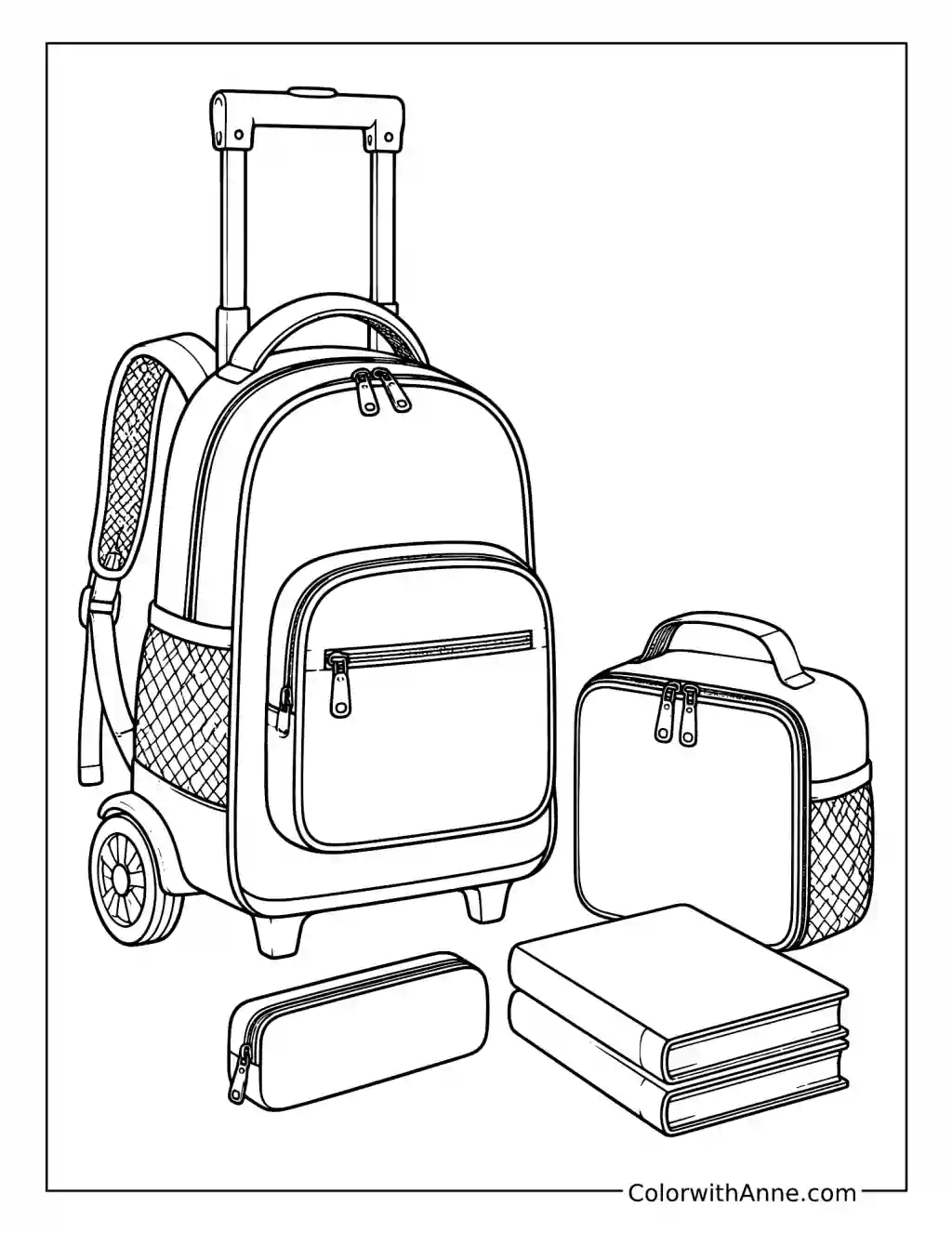
The rolling backpack stands beside books, a lunch bag, and a small case. Its large body and smaller front compartment make a useful starting point for planning where things go.
A navy or teal bag with brighter zipper pulls could feel practical and cheerful. A contrasting lunch bag would help separate the items gathered around it.
Point to an item, then choose the pocket or section where you would put it in a real school bag. Think about what needs to come out first during the day. Test the arrangement with your own belongings before deciding it works.
Design a Backpack Feature You Would Use
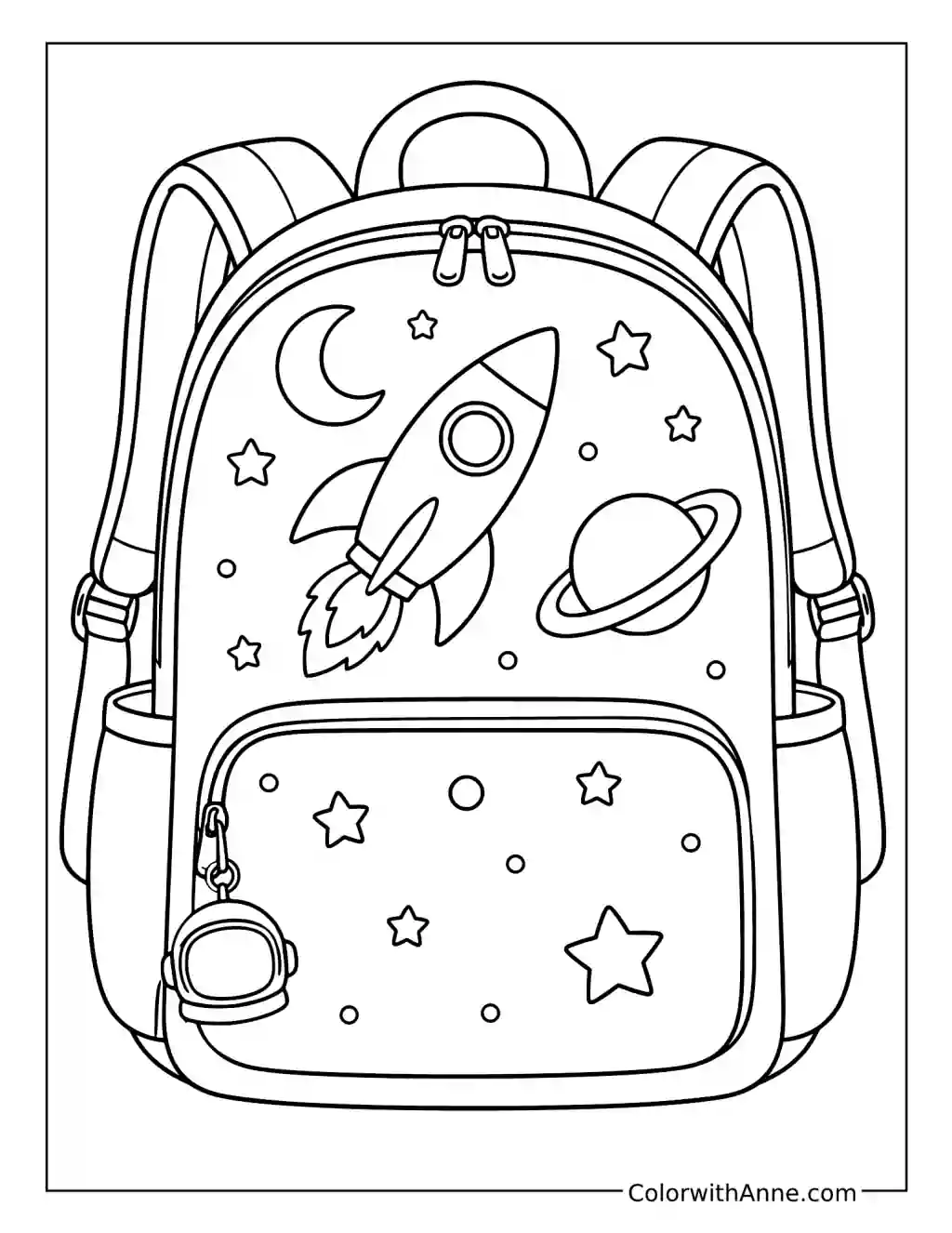
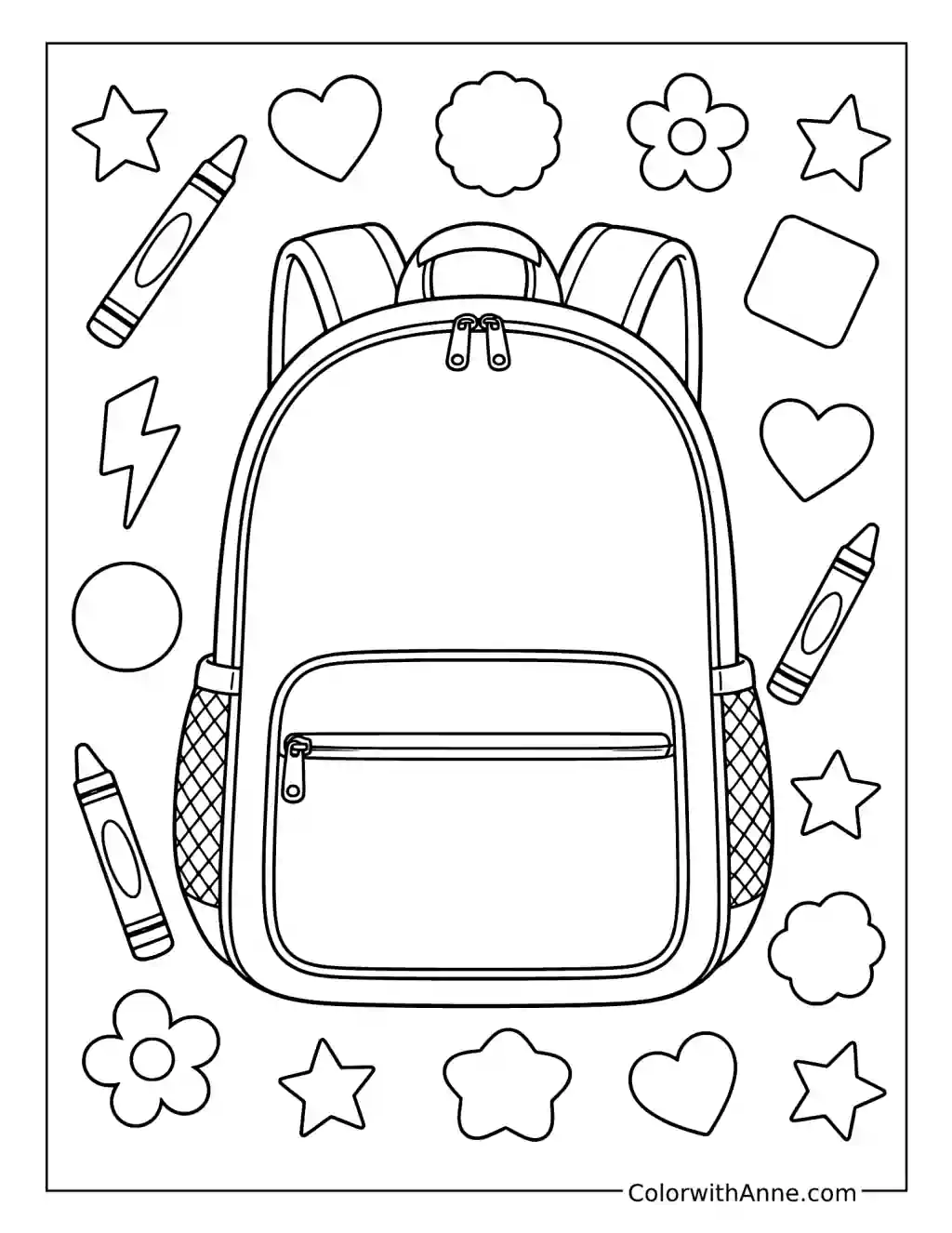
The backpack’s large front panels are mostly blank, with little design symbols around it. There is room to think about function as well as decoration.
Two coordinated fabric colors could give the bag a clear structure, with one brighter accent on the pocket. A simple repeating motif would leave space for a new feature.
Add one useful feature to the drawing: a key clip, an easy-to-reach small pocket, or a place to secure a rolled drawing. Show where it attaches and what it holds. Choose something that would genuinely help during your own day.
Walk Through the First School Morning
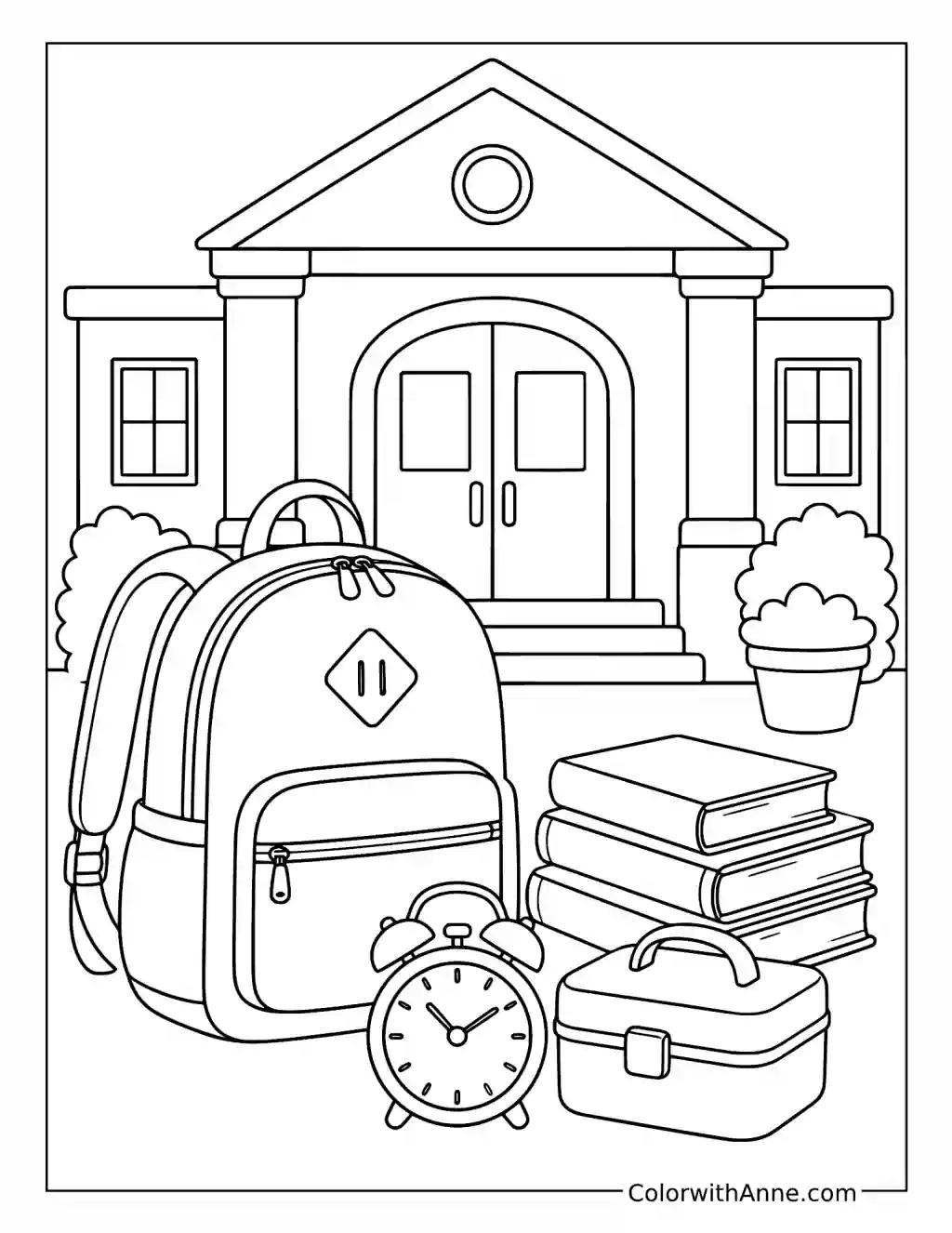
The backpack waits outside the school with books, a lunch box, and an alarm clock nearby. The gathered objects turn the first-day scene into a small morning routine.
A confident blue or red bag could make the main shape stand out. Softer school-building colors and a bright lunch box would keep the surrounding details easy to recognize.
Use the pictured objects to talk through the morning in order: getting ready, collecting belongings, and leaving for school. Check which items should be packed the night before. A child can point through the sequence while explaining it in their own words.
Leave Room for the Wet Beach Things
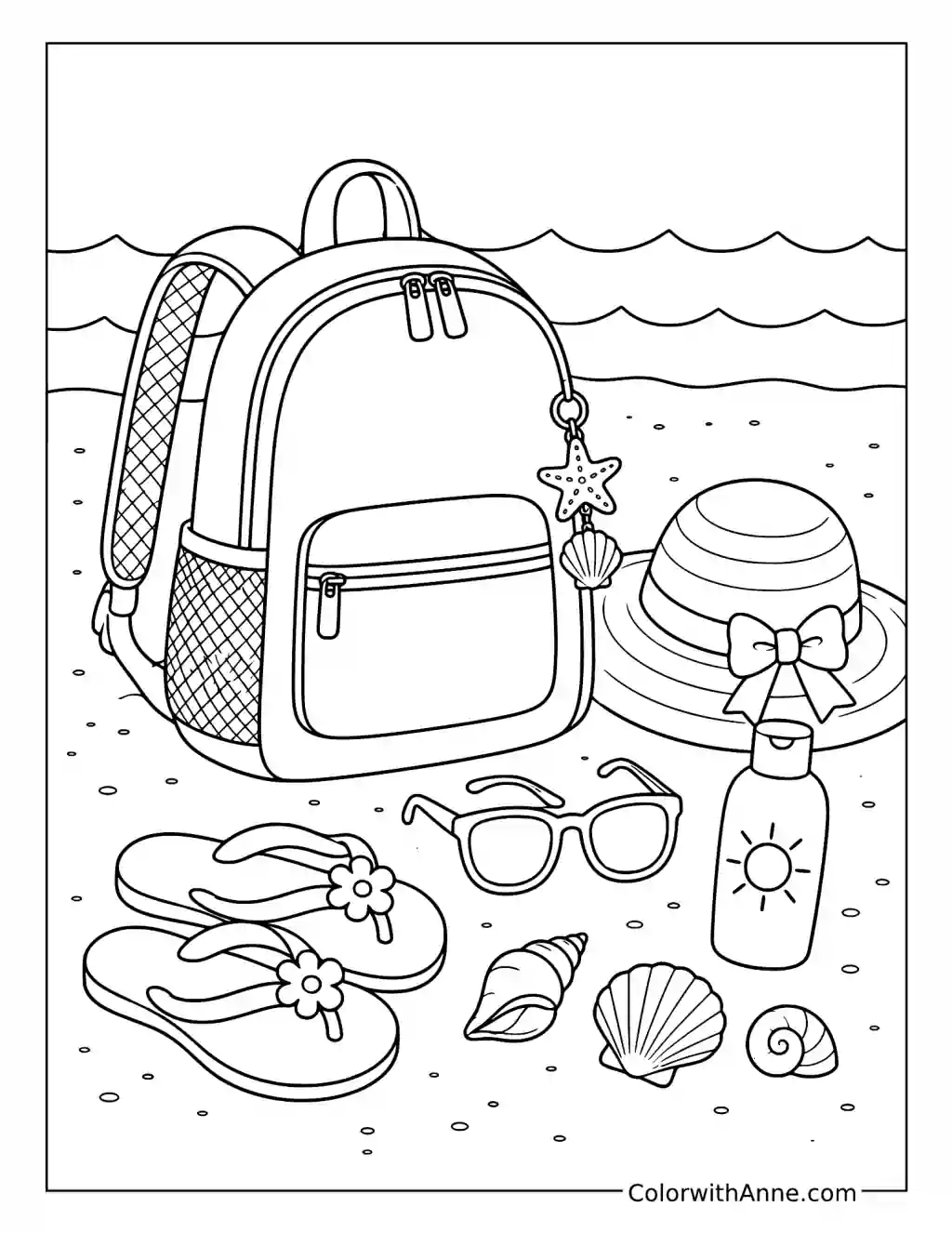
The beach backpack stands among sandals, a hat, sunglasses, and other sunny-day supplies. The picture covers the pleasant arrival; packing to come home needs a little thought too.
Turquoise fabric with coral accents could suit the seaside setting. Sandy yellow around the accessories would connect the bag with the beach without making every item brightly colored.
When preparing a real beach bag, include a separate reusable bag for wet clothing. Decide where it will fit on the return trip while everything is still dry. The finished picture can accompany the packing conversation and a quick check of the visible essentials.
Choose a Small Art Kit You Will Carry
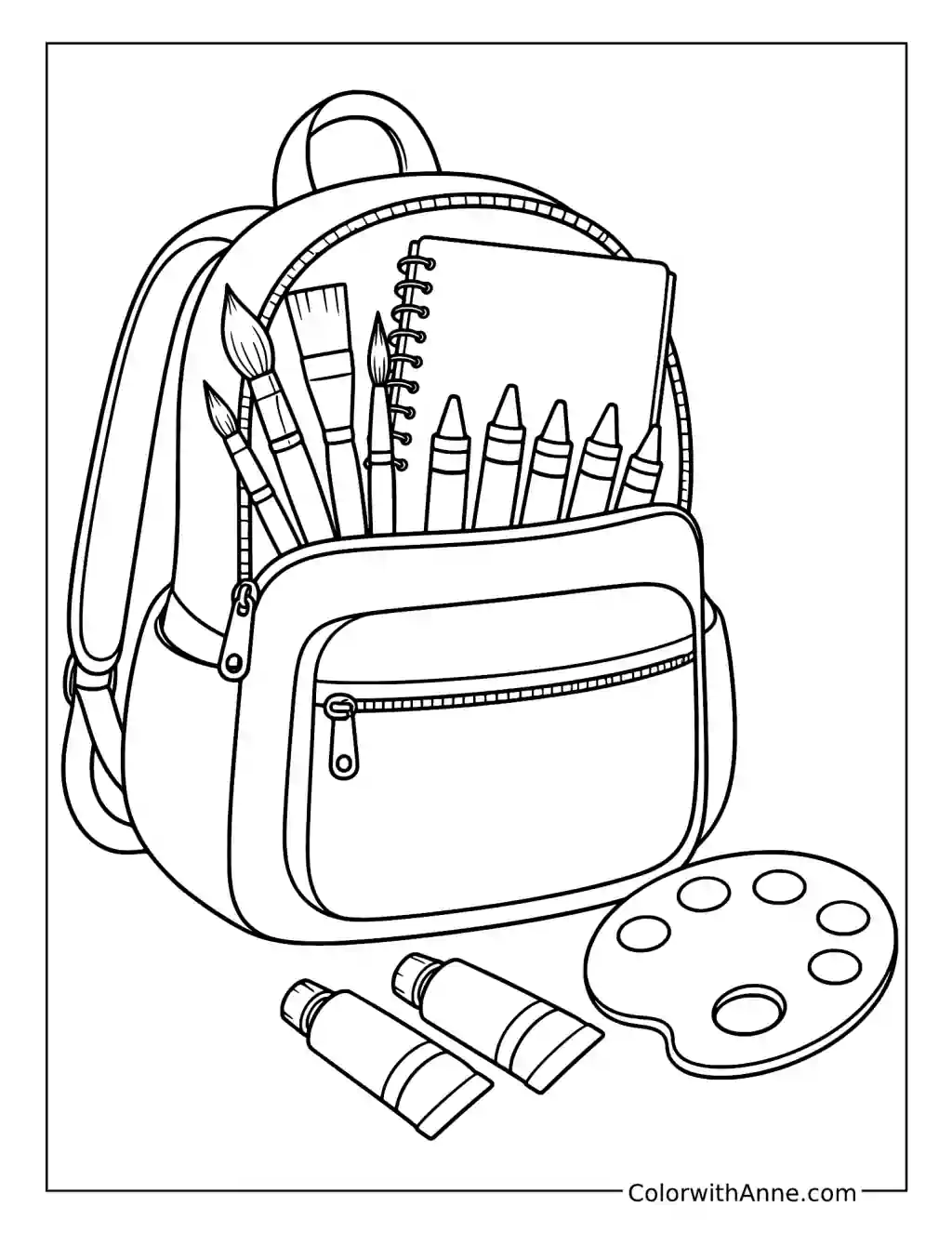
Art tools and a notebook rise from the open backpack, with a palette beside it. The packed bag suggests an outing where making something matters more than taking the whole supply cupboard.
A warm canvas color with a deep blue pocket could give the bag an artist’s-workroom feel. Bright tool handles would add small accents around the open top.
Choose a small notebook and a limited set of markers that fit comfortably in your own bag. Try making one quick sketch with that selection before adding anything else. Keep the kit ready for a waiting room, café stop, or quiet outdoor break.
Reset the Soccer Bag After Practice
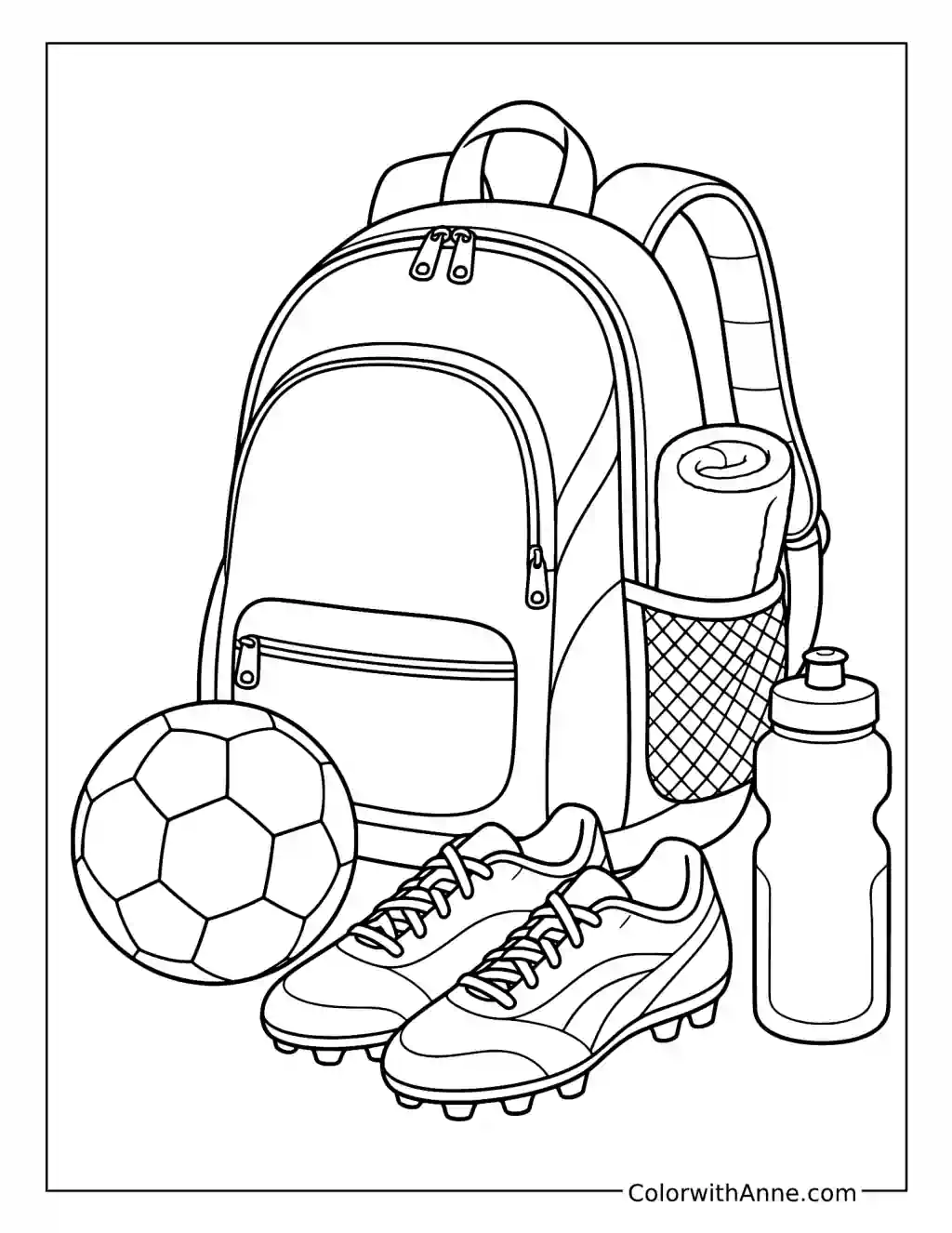
A football, boot, and water bottle sit beside the backpack. The scene shows the kit ready to go, making it a useful reminder of the reset that happens afterward.
Team colors could give the bag a personal connection, with a quieter black-and-white ball. A contrasting bottle would be easy to notice among the larger pieces of equipment.
After practice, take the used kit out, empty the bottle, and check what needs cleaning or replacing before the next session. Keep the picture near the usual storage spot if it helps. A ready bag begins with what happens when you get home.
Pack an Airport Waiting-Time Pocket
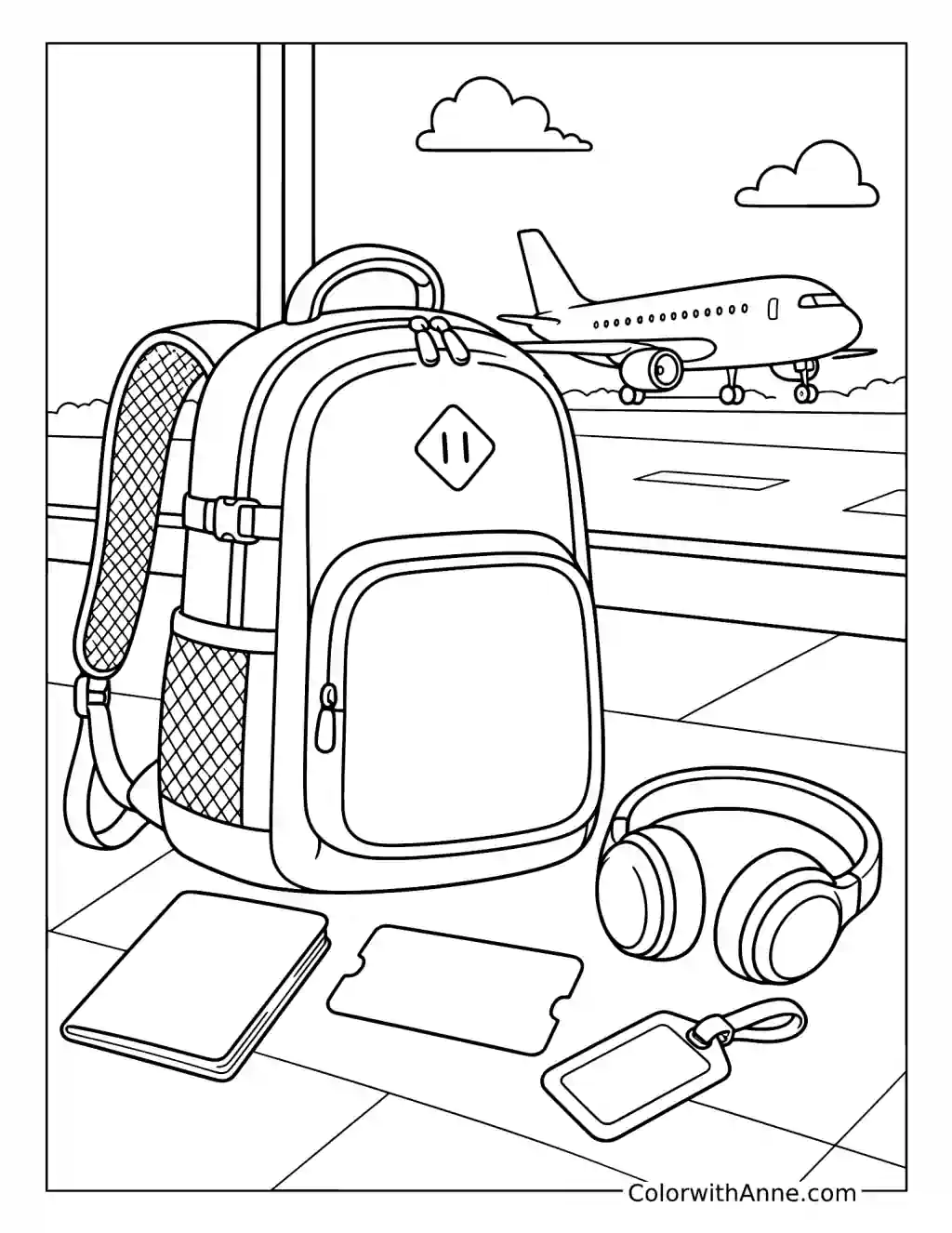
The backpack stands beside a notebook, headphones, and travel items with an aircraft beyond the window. The waiting period has its own needs before the journey continues.
A muted blue or charcoal bag with a warm-colored luggage tag could feel travel-ready. Pale airport surroundings would leave the smaller belongings visible in the foreground.
Set aside one easily reached pocket for something to read, headphones, and a small coloring activity. Test that you can reach the items without emptying the main compartment. The finished page can be the first sheet in that waiting-time selection.