
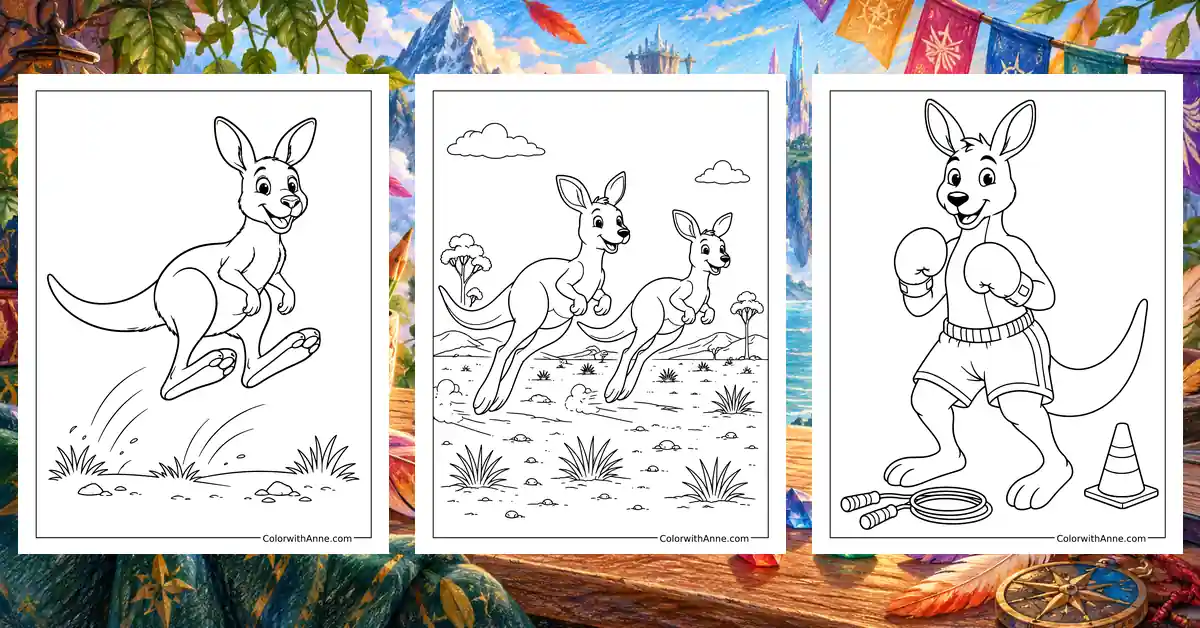
A kangaroo at rest can look remarkably settled, with its tail behind it and its attention somewhere beyond the people watching. Then it starts moving, and that familiar outline suddenly works in a completely different way. The first few bounds often prompt a child to try an imitation on the nearest clear patch of ground.
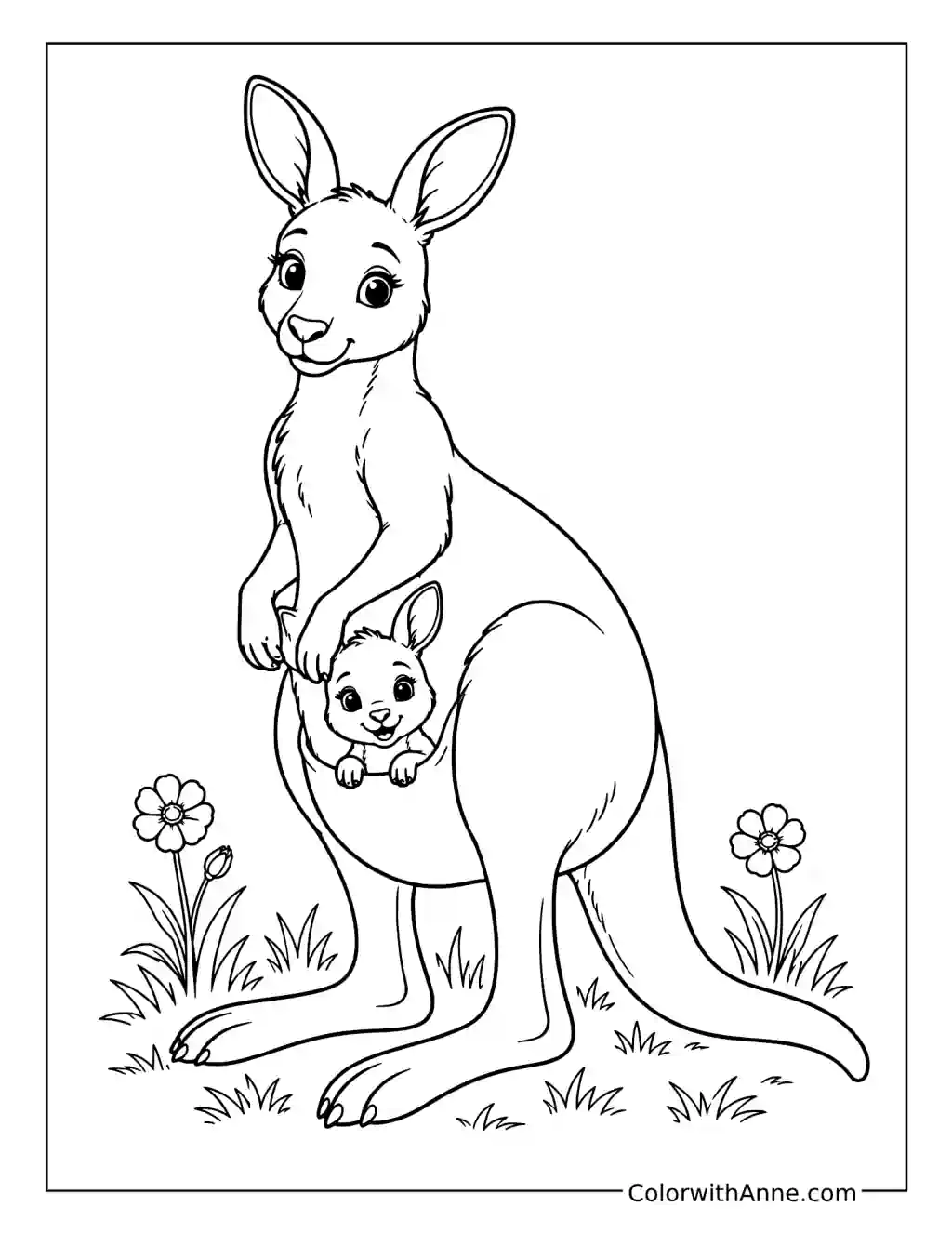
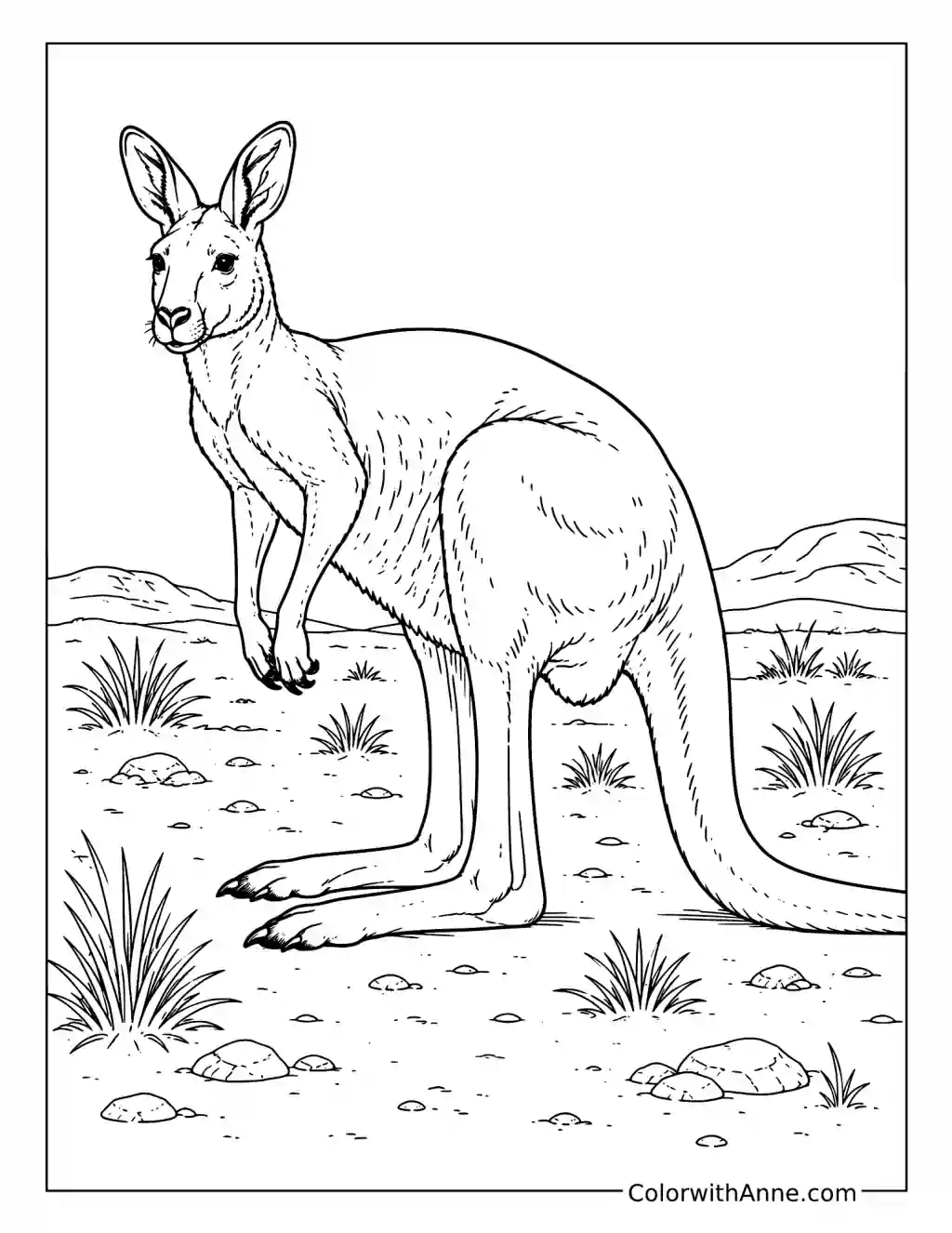
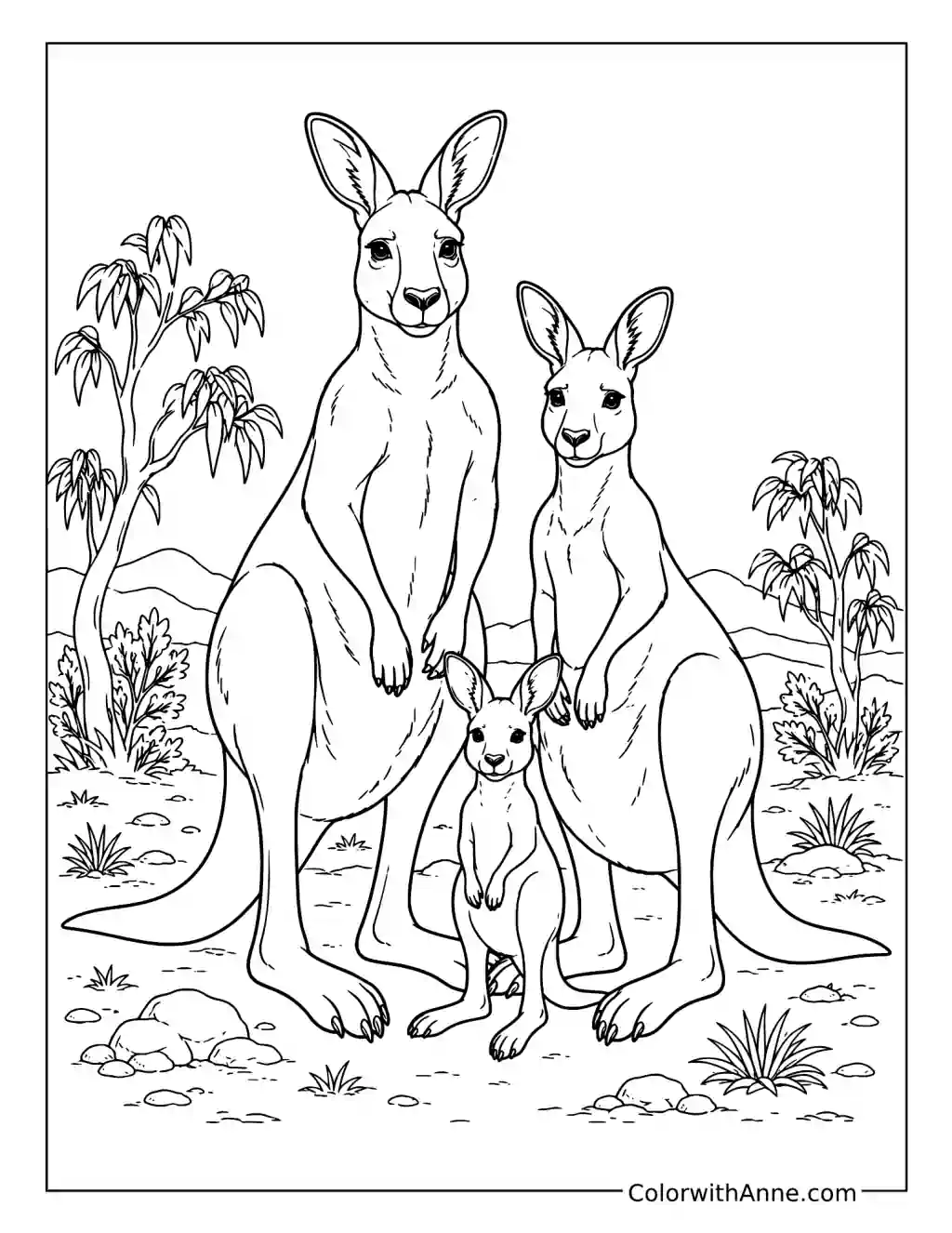
Kangaroo coloring pages allow a closer look once the hopping has paused. The long feet are striking, but a small face peeking from a pouch may attract attention first. Either detail can start a conversation about an animal whose everyday movements seem extraordinary to someone meeting it for the first time.
Free Printable Kangaroo Coloring Pages
Click any coloring page below to open the PDF, then print on US Letter or A4 paper.
Did you find what you needed?
Help us choose what to create or improve next.
Coloring Ideas for Kangaroo Pages
Try one of these coloring ideas, or use them as a starting point for your own.
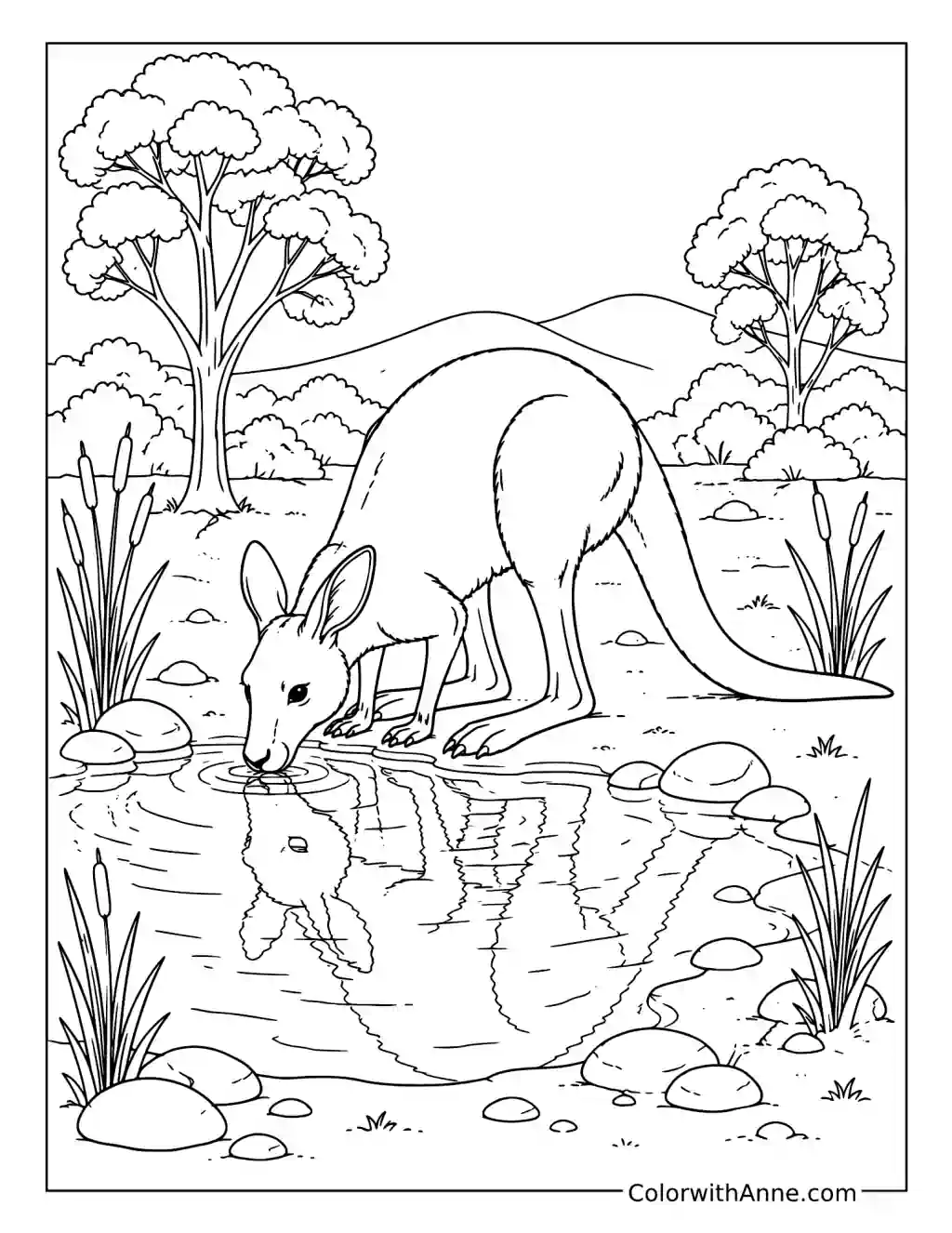
Let the Water Echo the Shore
Color the kangaroo and nearby plants first, then use lighter versions of their colors in the corresponding reflections. Keep your pencil strokes short and horizontal across the pond, leaving narrow white gaps around the ripples. Those broken bands of color will help the water feel gently disturbed where the kangaroo drinks.
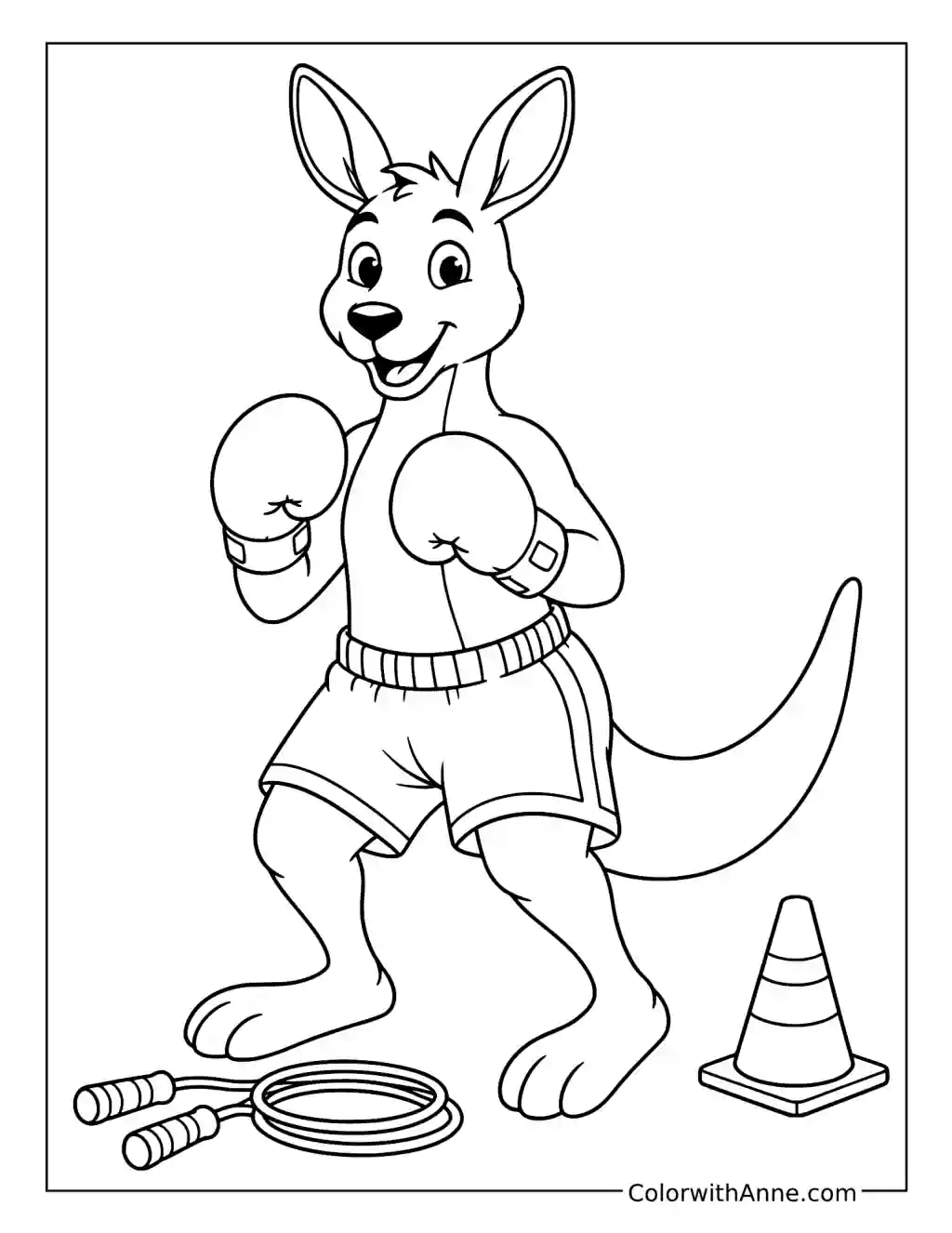
Design a Training Kit
Give the boxing kangaroo a signature pair of team colors. Use one across the gloves and shorts, then pick out the clothing stripes with the second. Repeat a little of that accent on the jump rope to tie the equipment together. Try colors from your own sports kit, or invent a combination you would enjoy wearing.
Invent Tiny Gift-Wrap Patterns
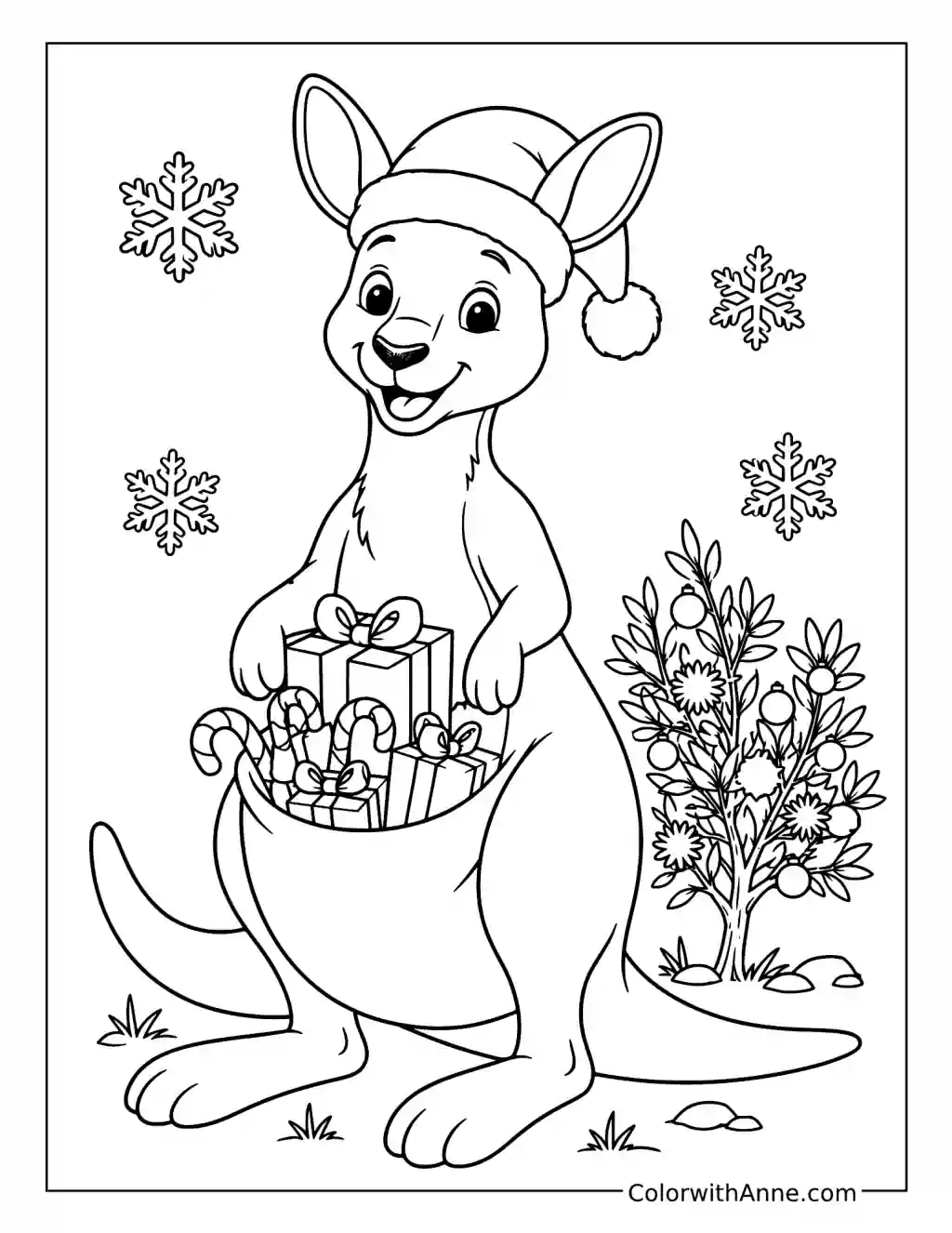
Turn the presents in Santa Kangaroo’s arms into a miniature wrapping-paper collection. Add small dots to one box and thin stripes to another, keeping the bows a solid color so they stand out. Borrow the candy canes’ alternating colors for one pattern, and leave a little white space between marks so the small packages stay clear.
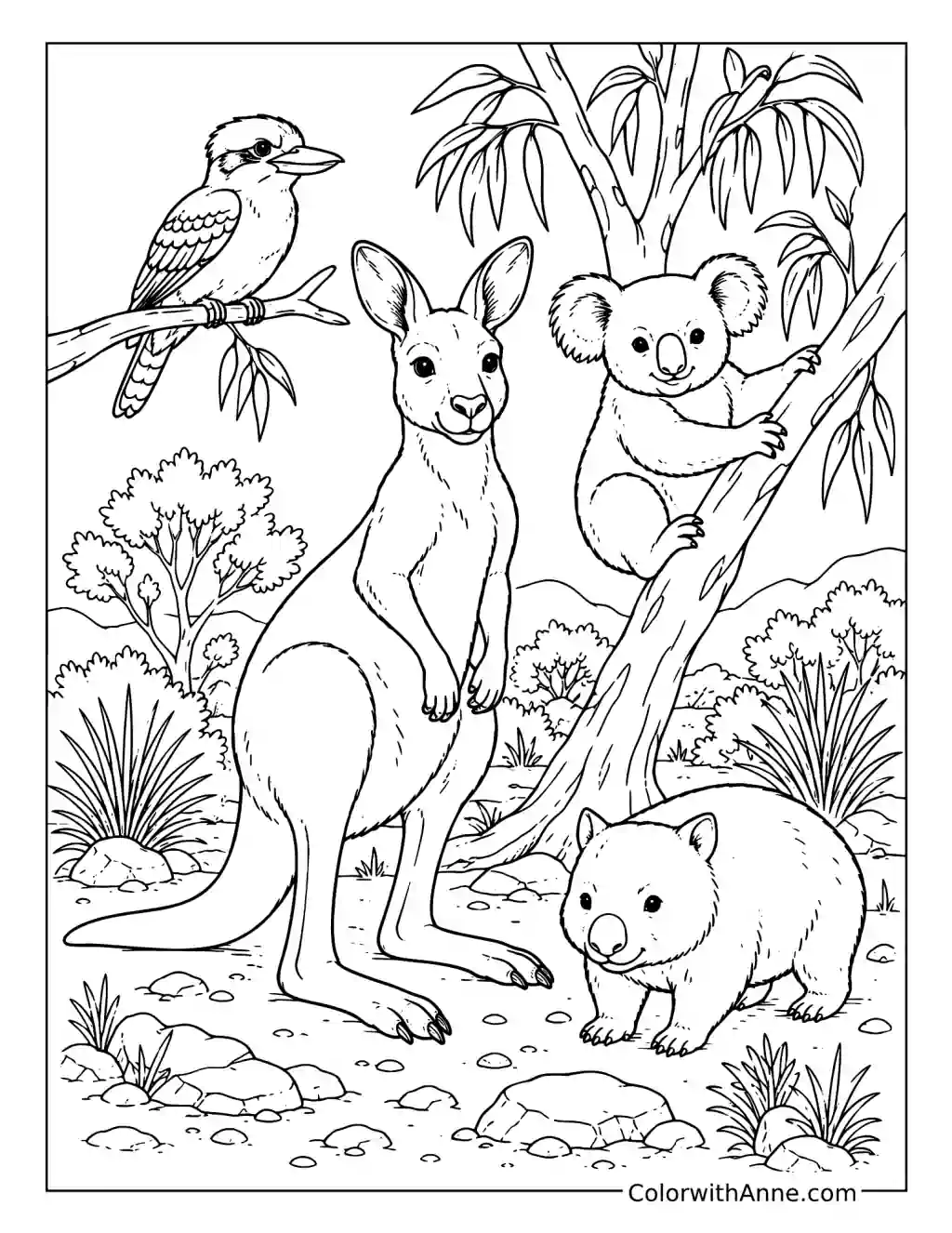
Make Fur, Feathers, and Bark Feel Different
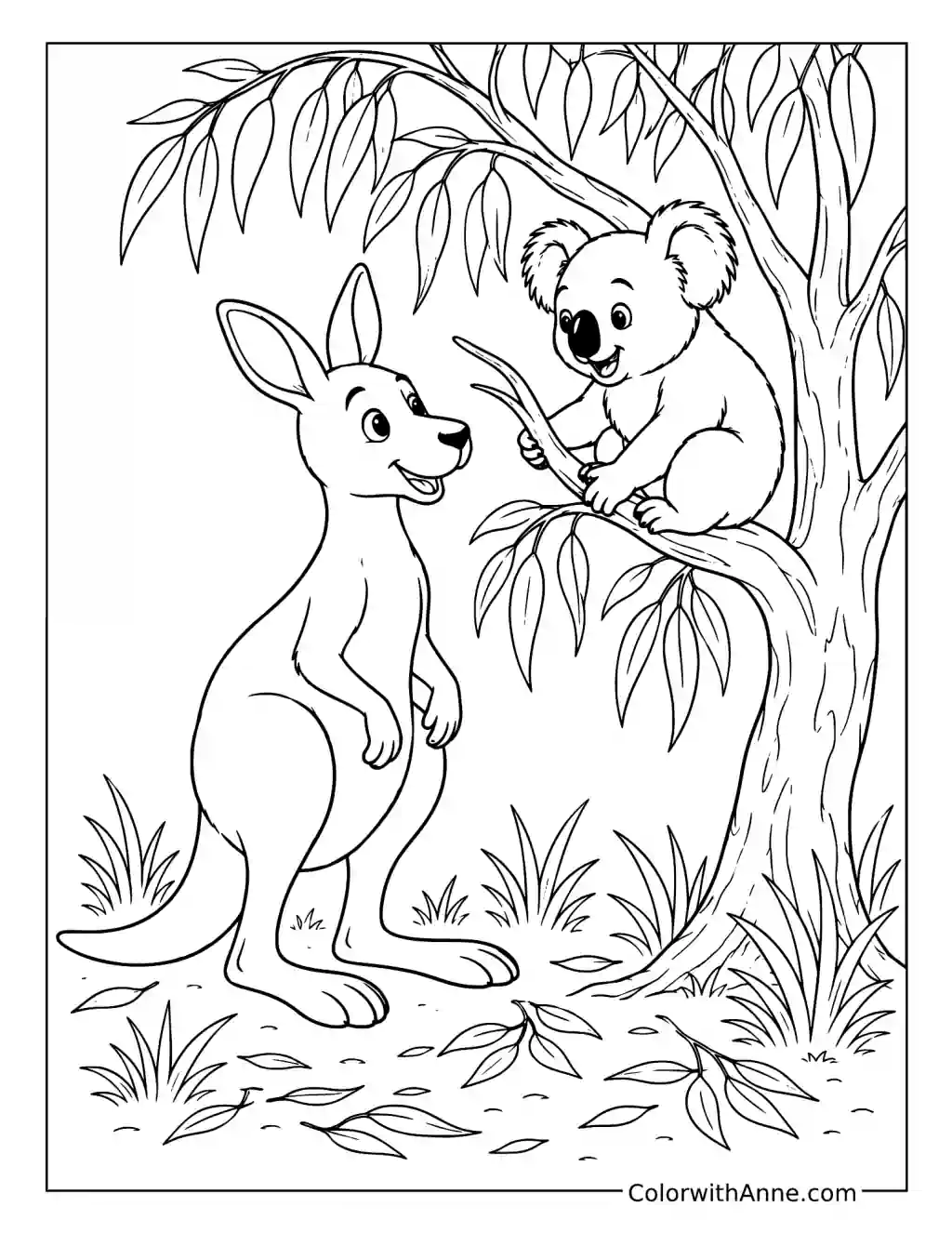
Use the kangaroo and its companions to explore how pencil marks suggest texture. Follow the existing fur lines with short strokes on the kangaroo, koala, and wombat; use neat, tapered strokes within the bird’s feather shapes. Longer marks along the tree trunks will give the animals a contrasting backdrop. A few textured patches are enough to show the difference.
Give the Leap a Color Trail
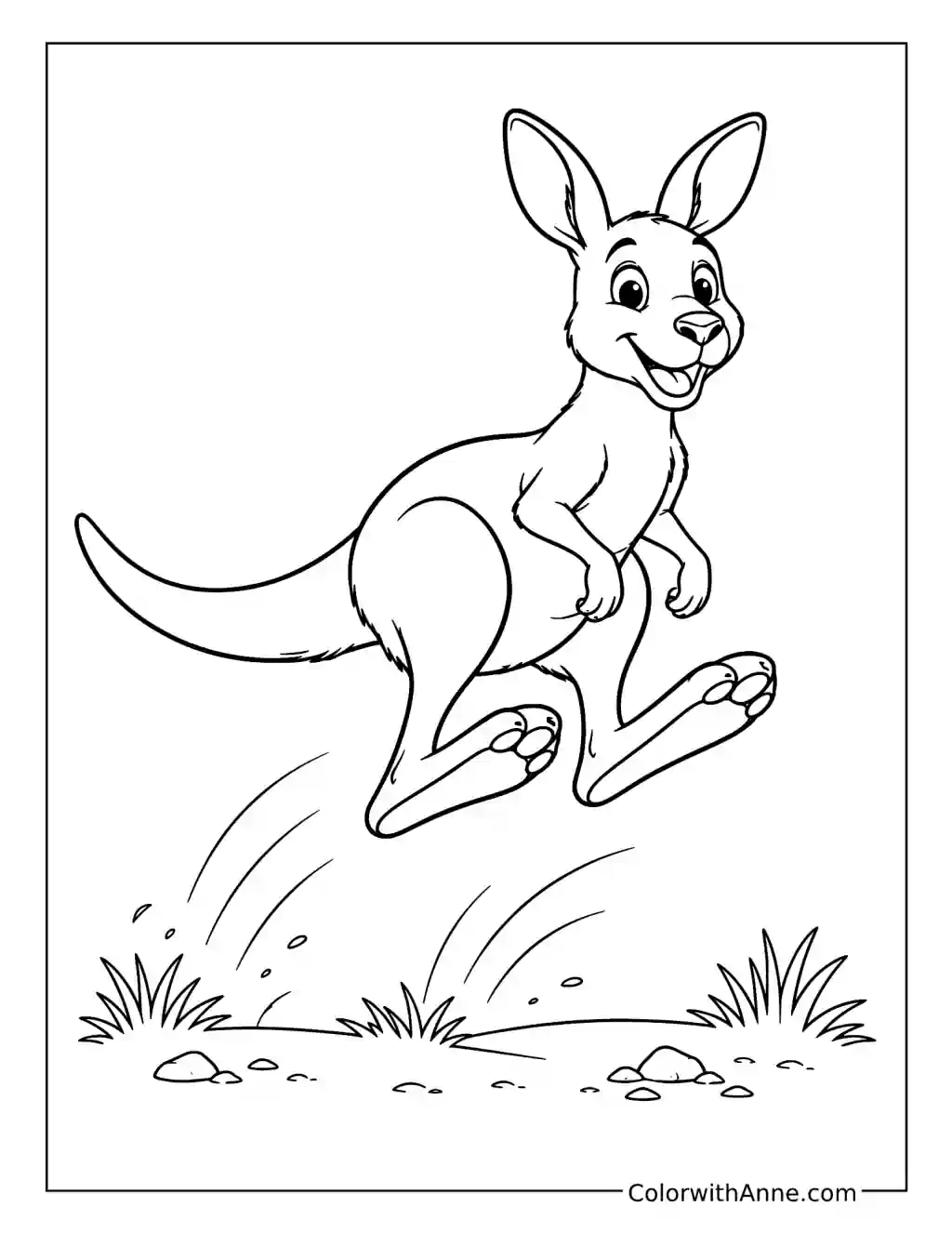
The airborne kangaroo has room for a playful burst of movement. Add two or three curved streaks in the open space behind its body and tail, choosing a bright color that stands apart from its fur. Make the streaks shorter farther from the kangaroo, and keep them clear of its outline so the jumping pose stays easy to see.
Pair the Big and Little Letters
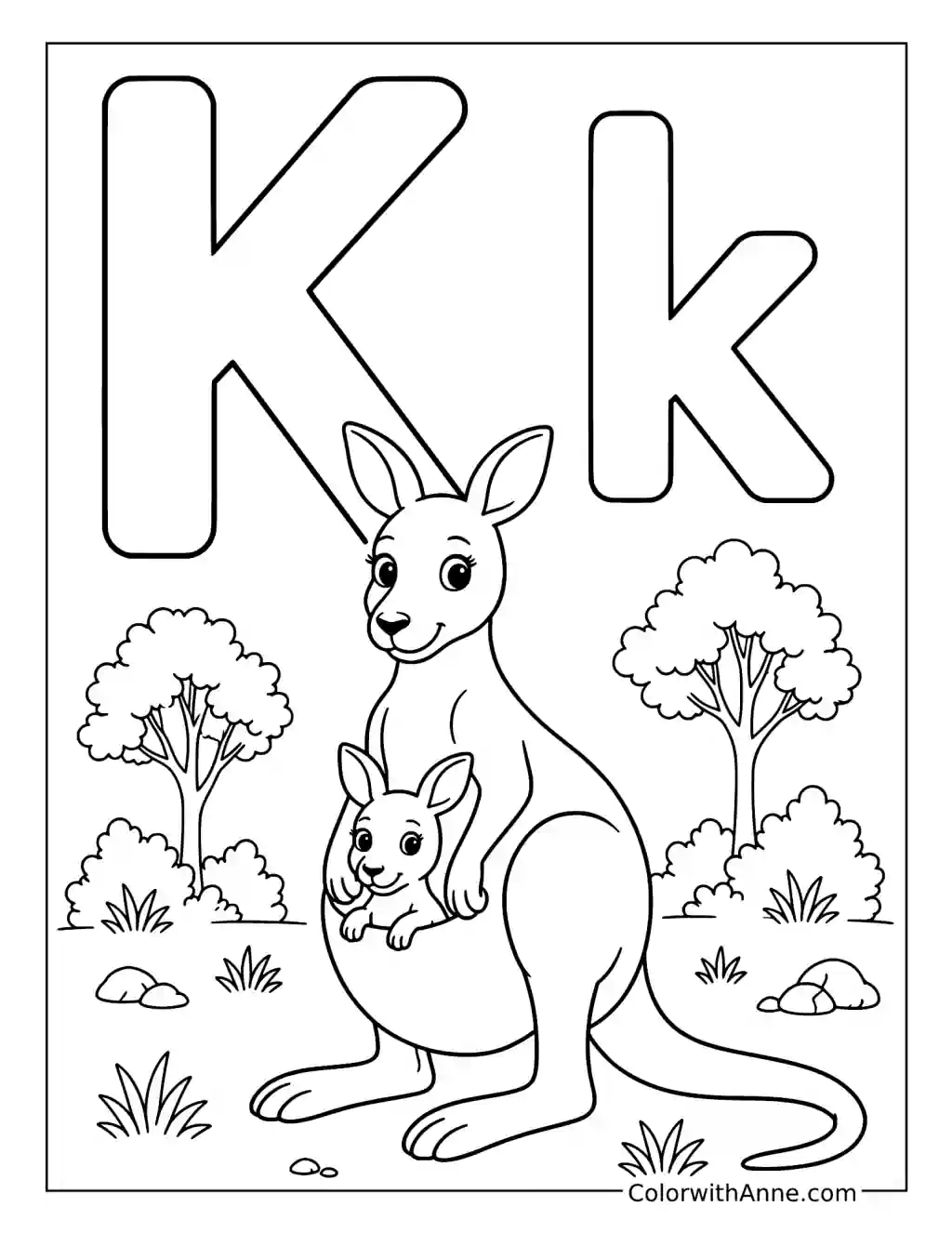
Color the outlined K and k in the same bright shade to show that they belong together. Trace each with a fingertip and say “kangaroo,” then find the adult and the joey resting in the pouch. If you are coloring with a child, let them choose which letter to fill first and point to its partner.
Send a Bouquet That Stays on Paper
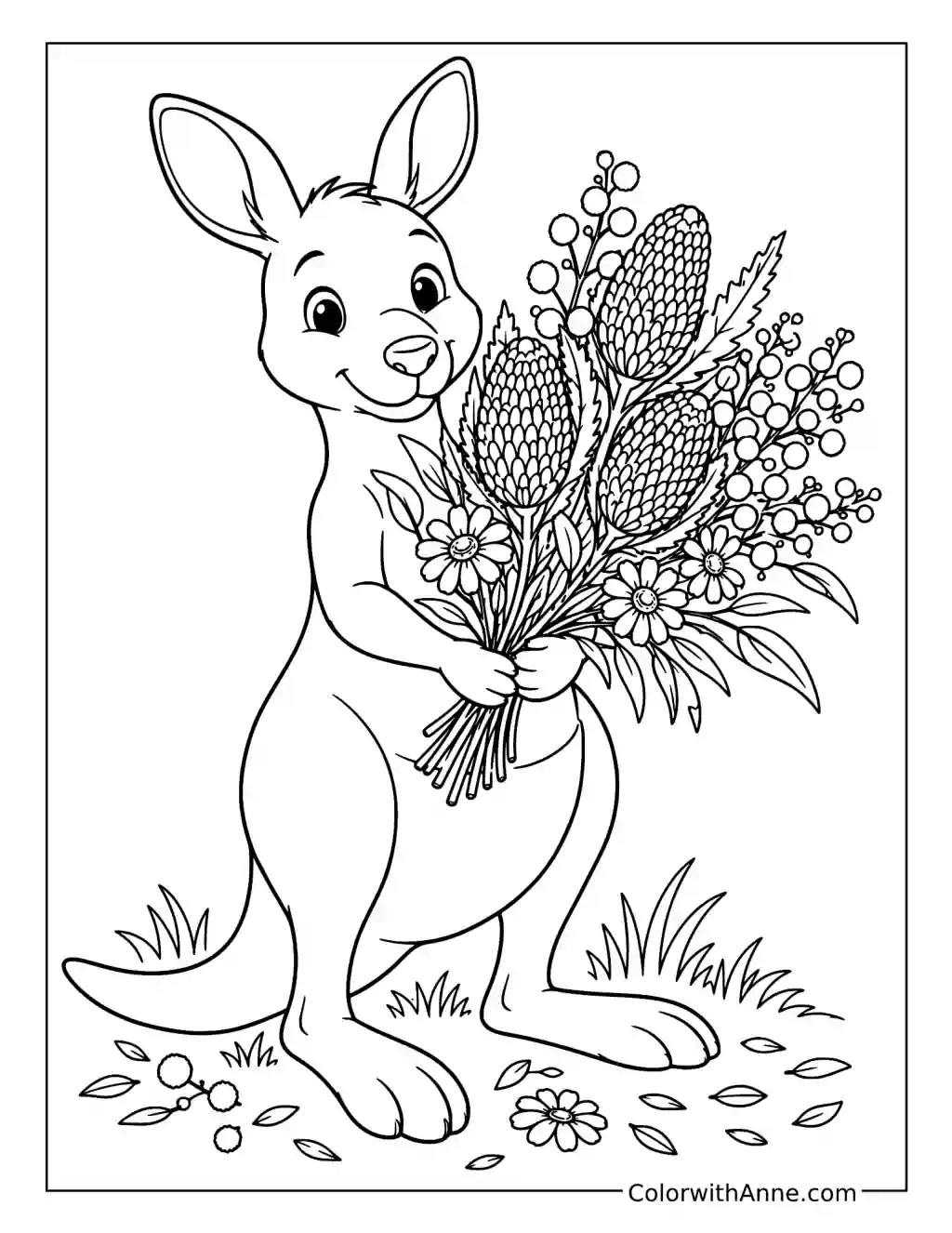
Make the kangaroo’s bouquet into a thank-you page for someone who has helped you. Use their favorite color for the largest flowers, with softer shades around the smaller blossoms so the bouquet has a clear focus. When you finish, write a short note on the back naming one thing you appreciated, then give them the whole page.
Share the Outback Race
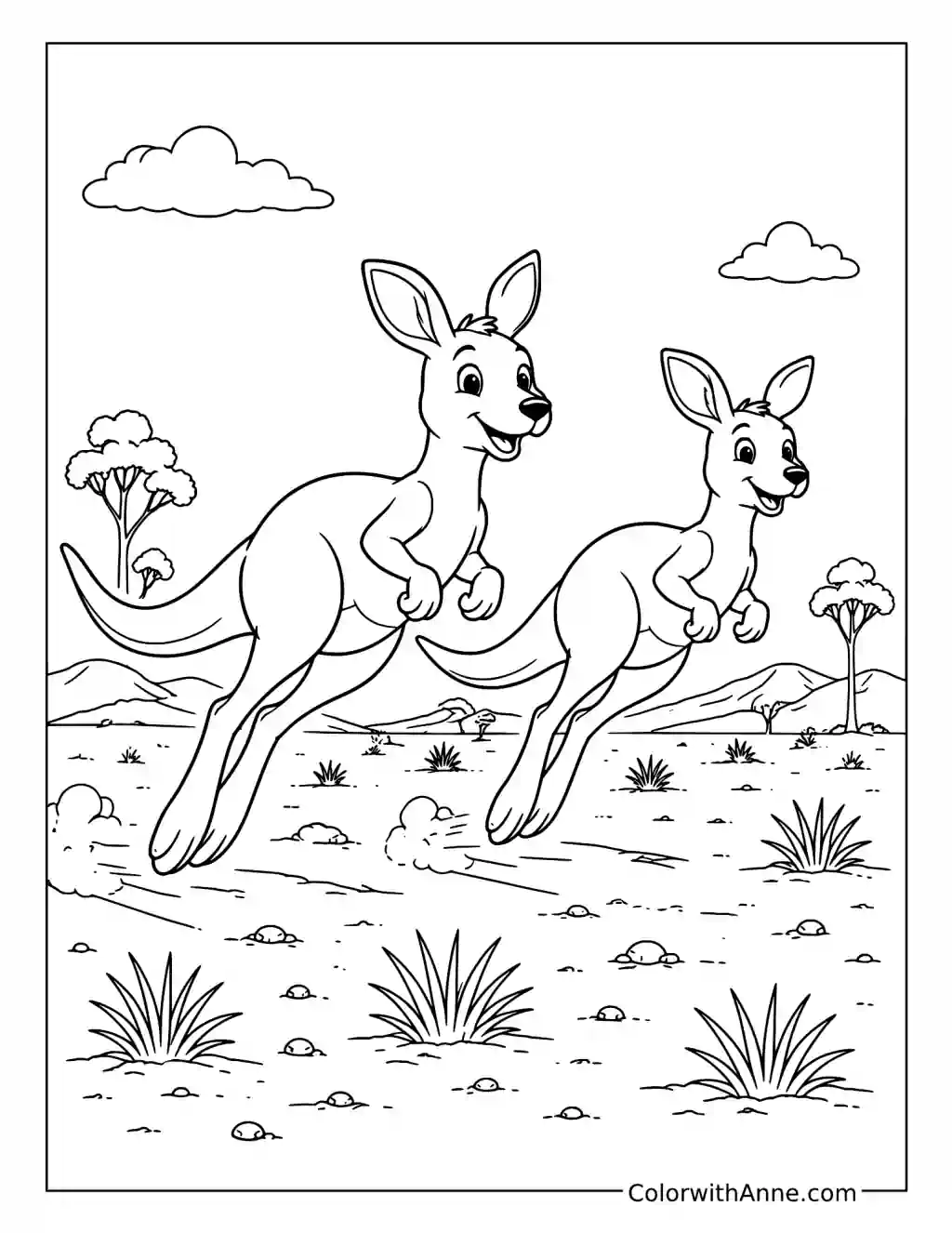
Color this race with a partner, each choosing one of the two leaping kangaroos. Pick your animals’ colors independently, then decide together on the grass, hills, and sky that connect them. Take turns filling a small patch of the landscape until both racers share a finished course. Each kangaroo can keep its own personality within the same scene.