
A leopard resting along a branch can make an awkward position look entirely comfortable. Its paws hang loose, its body follows the wood, and the tail seems to have found somewhere convenient to fall. Anyone who has watched a house cat claim an unsuitable sleeping spot may recognize the attitude.
Leopard coloring pages offer time to appreciate the animal beyond that first impression of effortless ease. The spotted coat draws the eye, but the face and posture give it presence. A child may begin by noticing the resemblance to a pet, then reconsider the comparison once the size of those paws becomes apparent.
Free Printable Leopard Coloring Pages
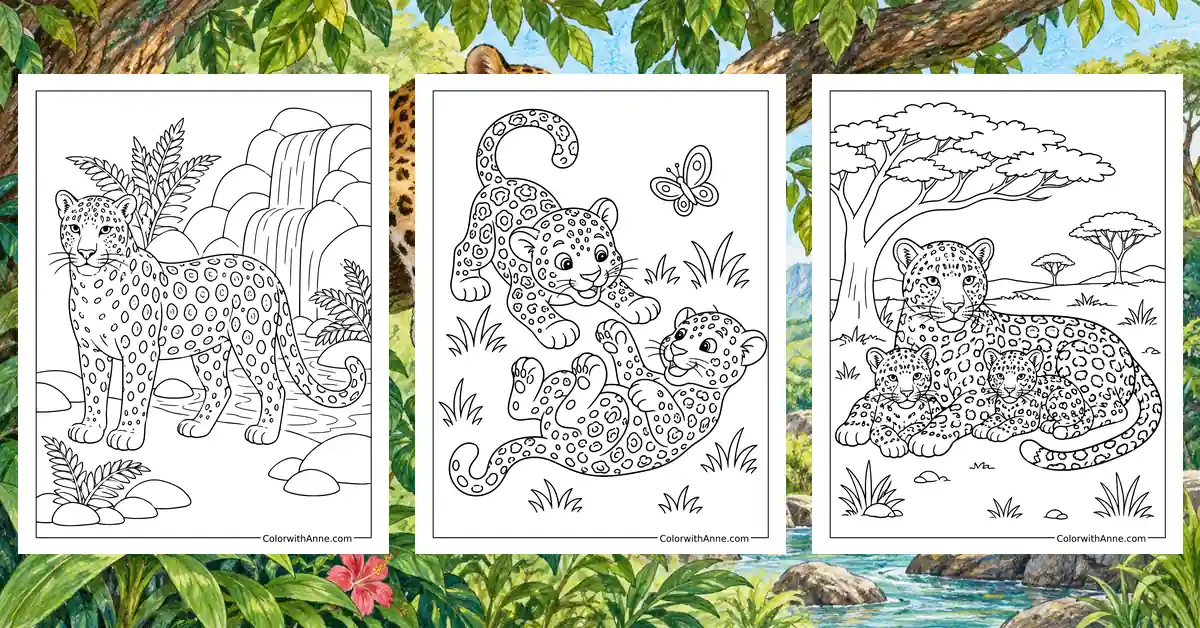
Click any coloring page below to open the PDF, then print on US Letter or A4 paper.
Did you find what you needed?
Help us choose what to create or improve next.
Coloring Ideas for Leopard Pages
Try one of these coloring ideas, or use them as a starting point for your own.
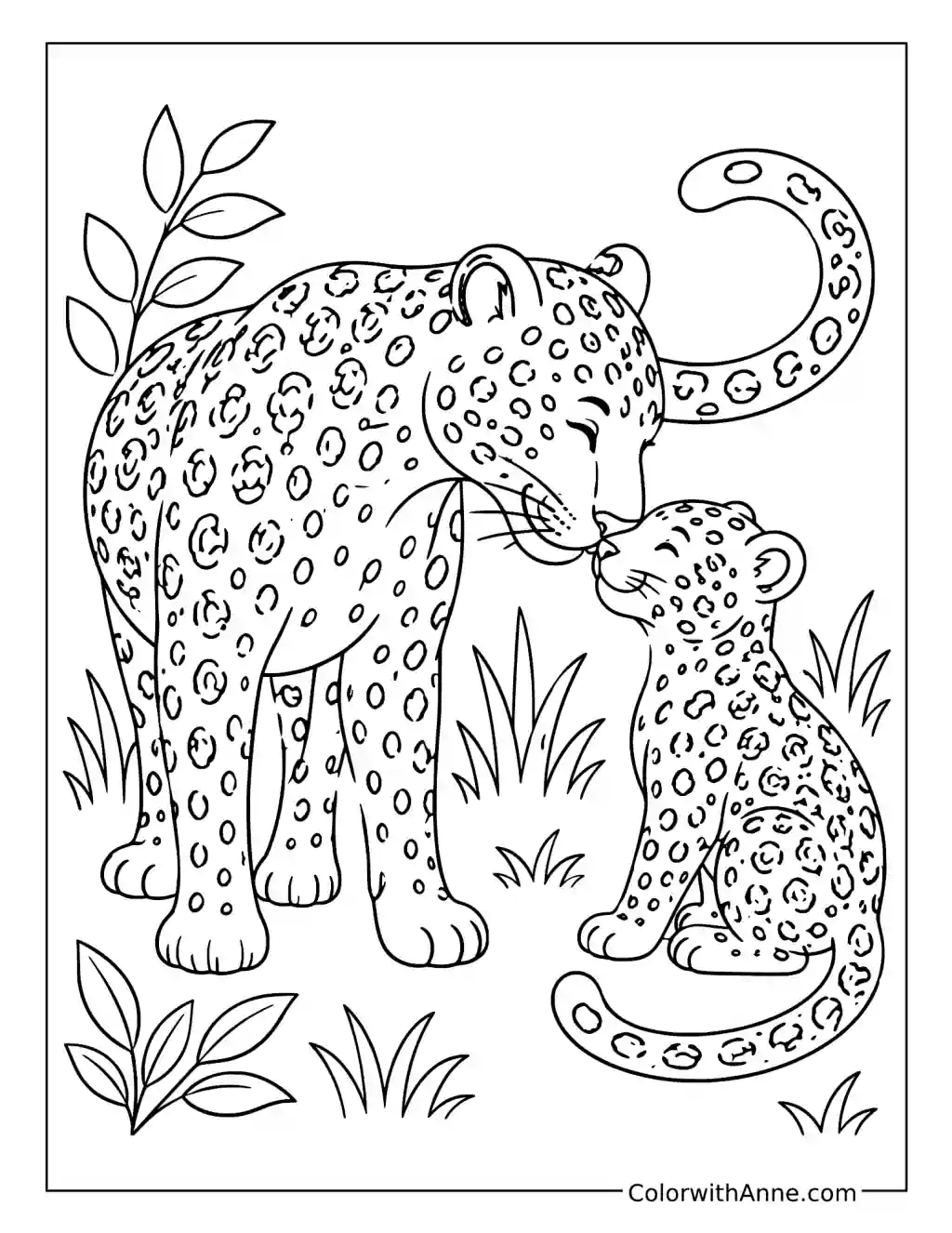
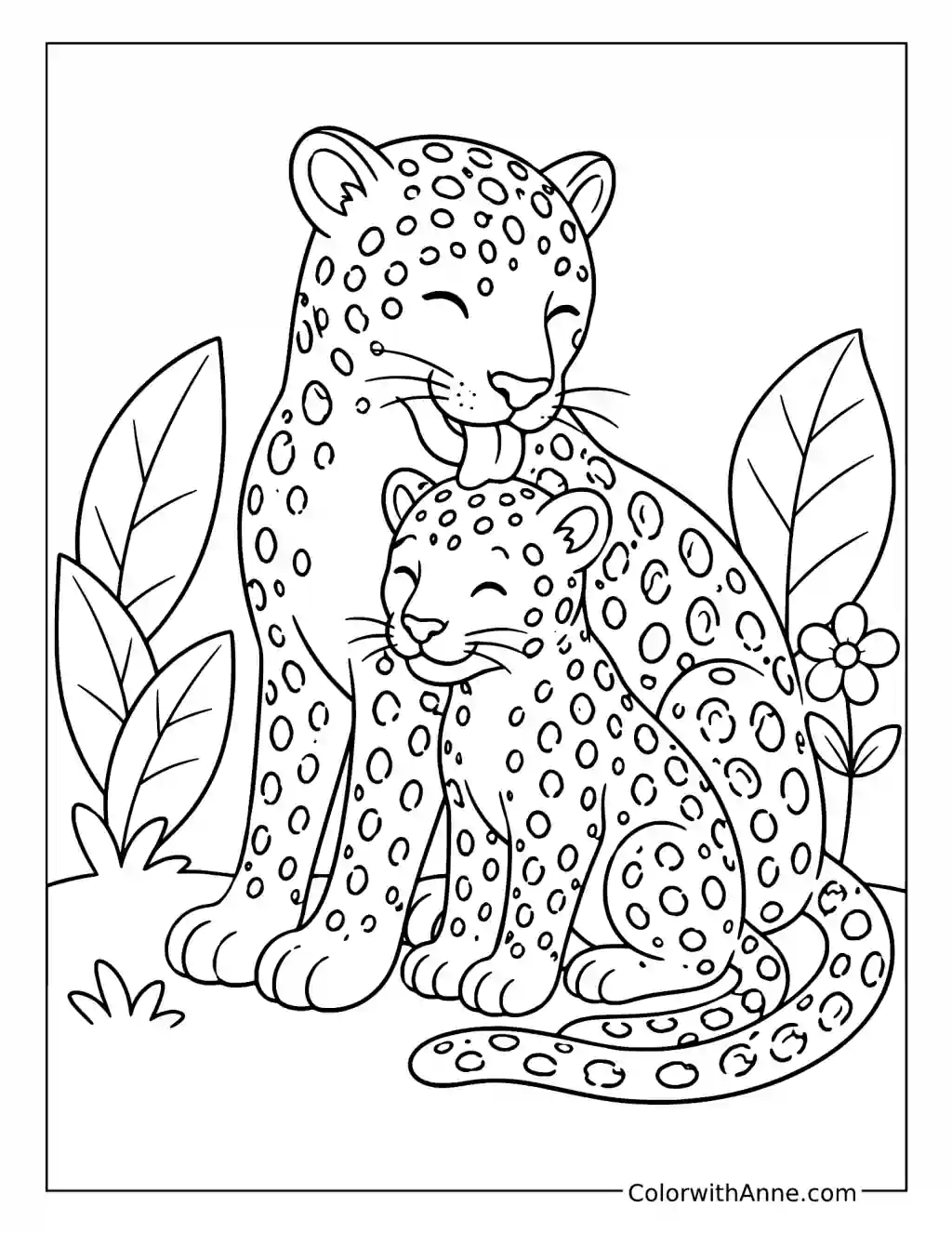
Make a Family Greeting from the Nose Touch
The mother leopard bends toward her cub until their noses meet. The close gesture gives the spotted coats a clear emotional center.
Warm gold fur and soft cream faces could keep the pair connected. Darker markings would stand out best against a quiet background of pale leaves.
Use the finished picture for a note to someone who looks after you. A short message about a familiar moment together will suit the gentle interaction already in the drawing.
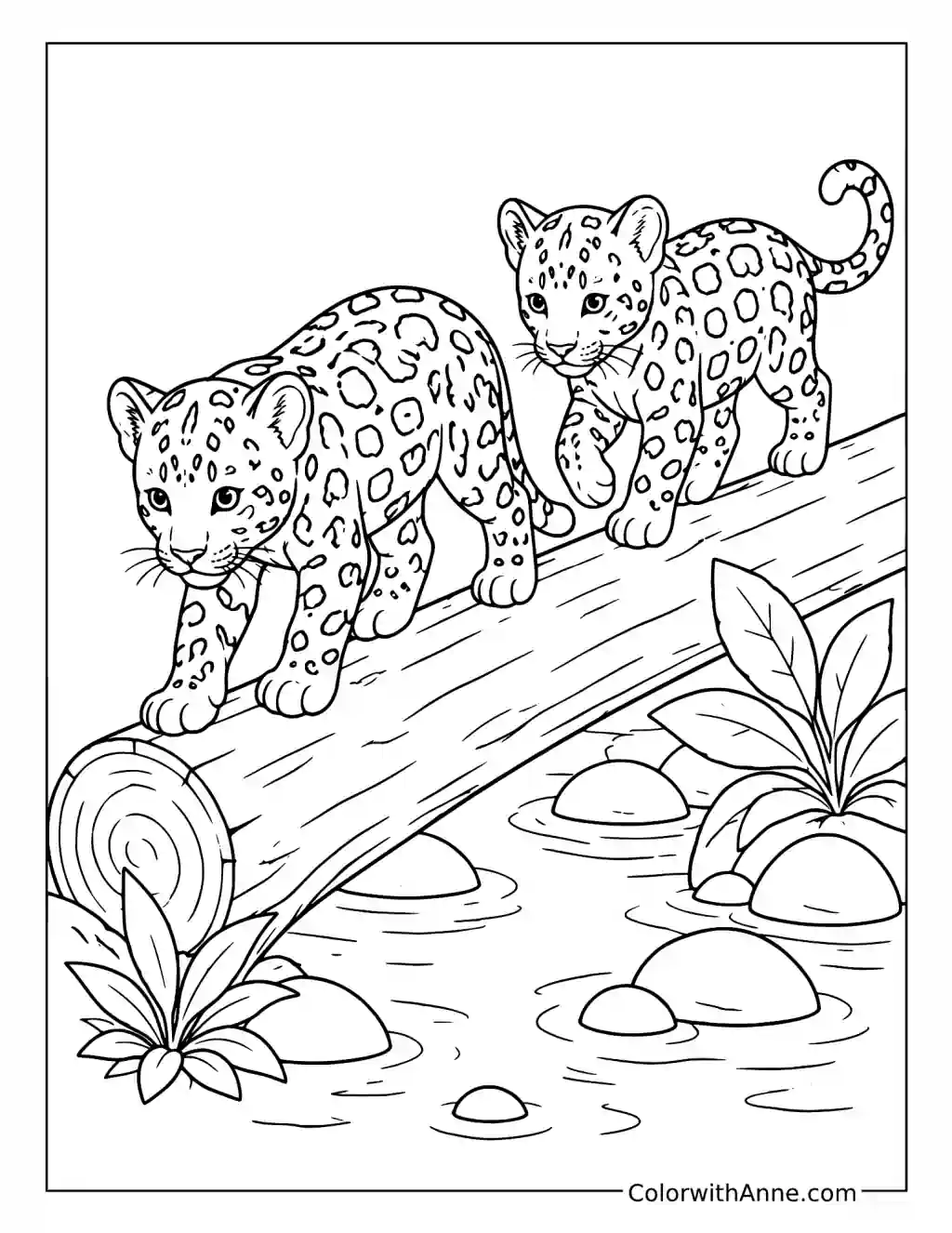
Let Two People Color the Log-Crossing Cubs
Two cubs cross a fallen log above water and stones, one following the other. Their different positions make the shared scene easy to divide.
Related golden shades could connect the cubs while allowing small differences in their coats. Warm brown wood and quieter water would keep their paws visible on the log.
Color with a friend, each taking one cub before working on the surroundings together. Agreeing on the log and water helps the separate contributions become one complete scene.
Give the Resting Leopard a Wildlife-Print Finish
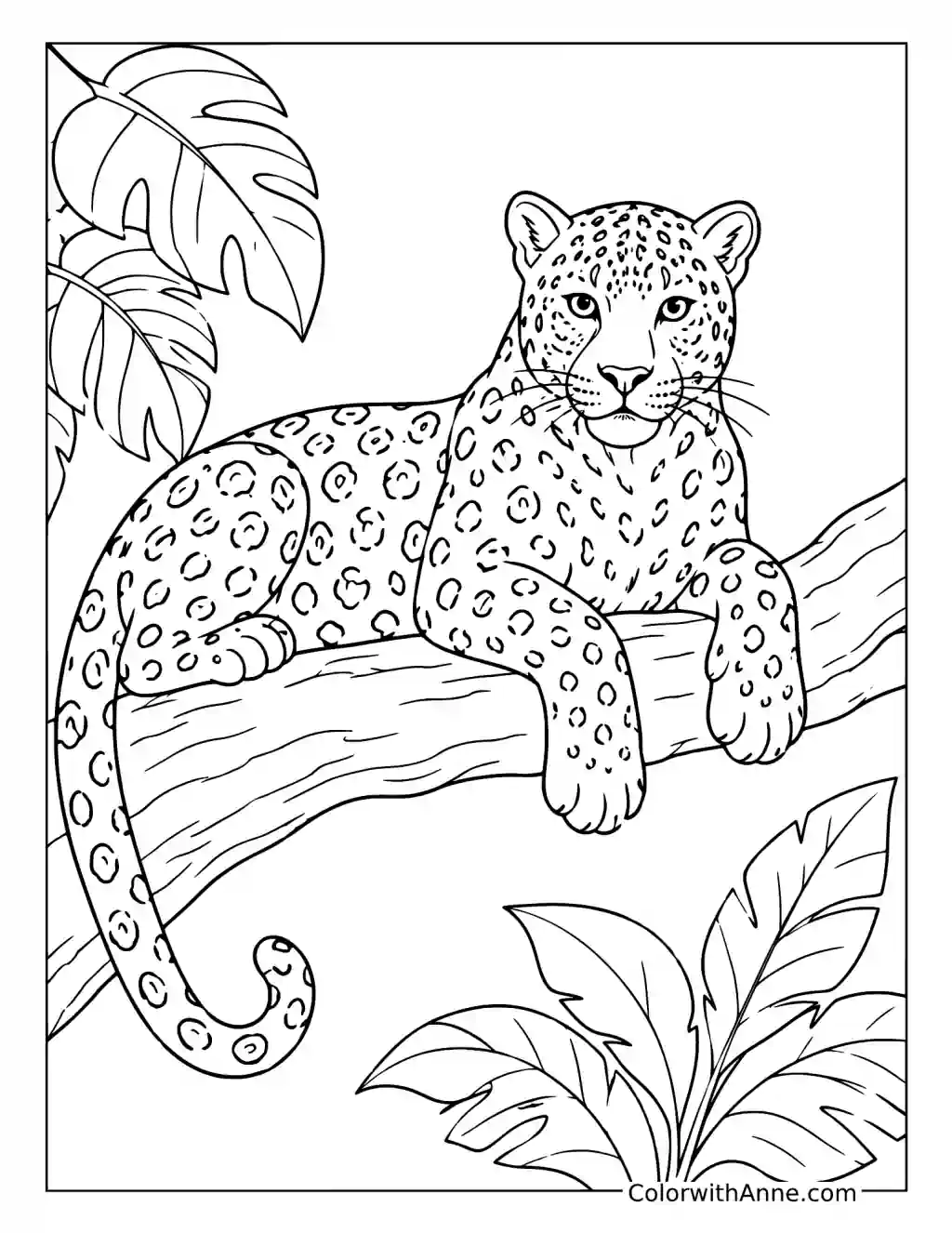
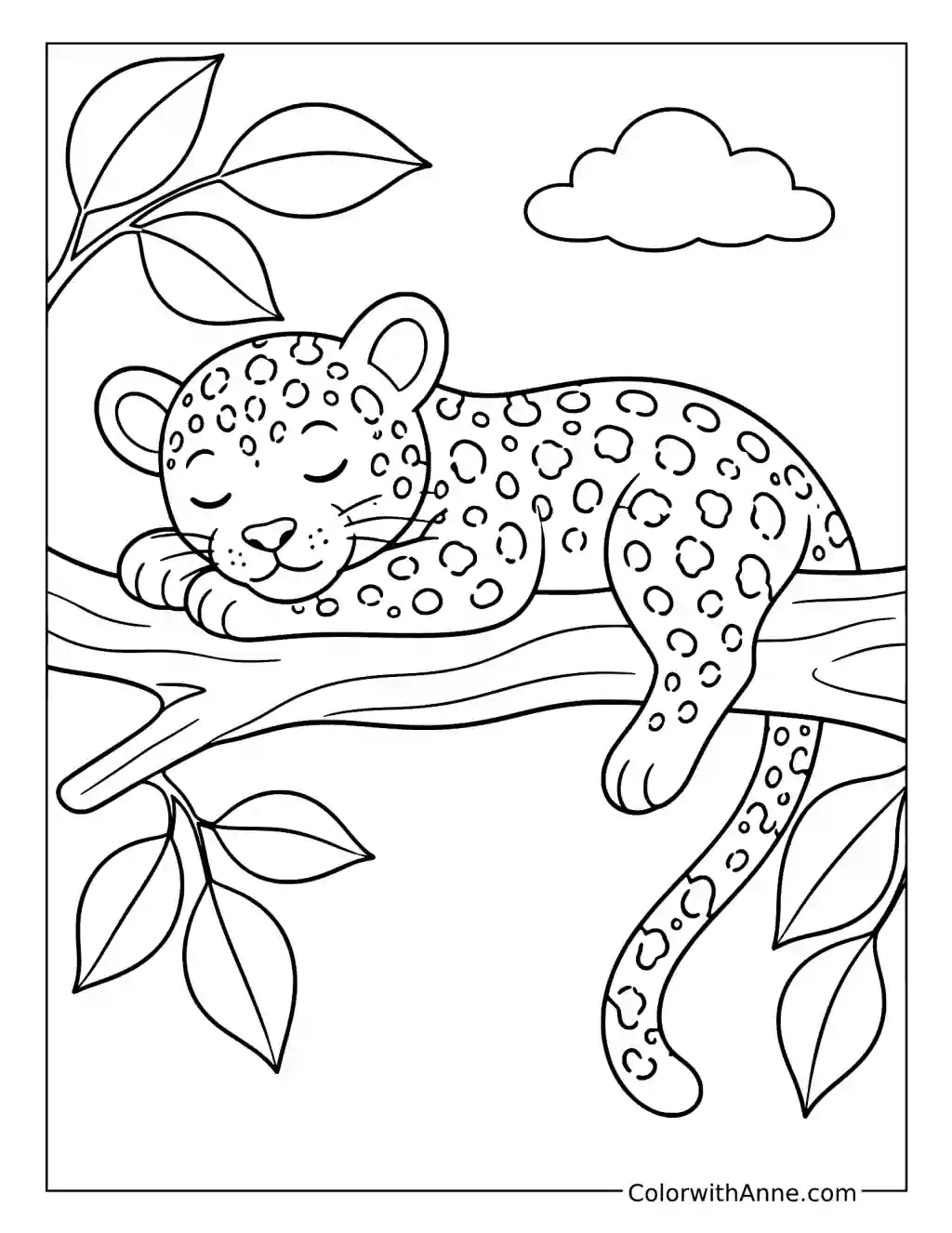
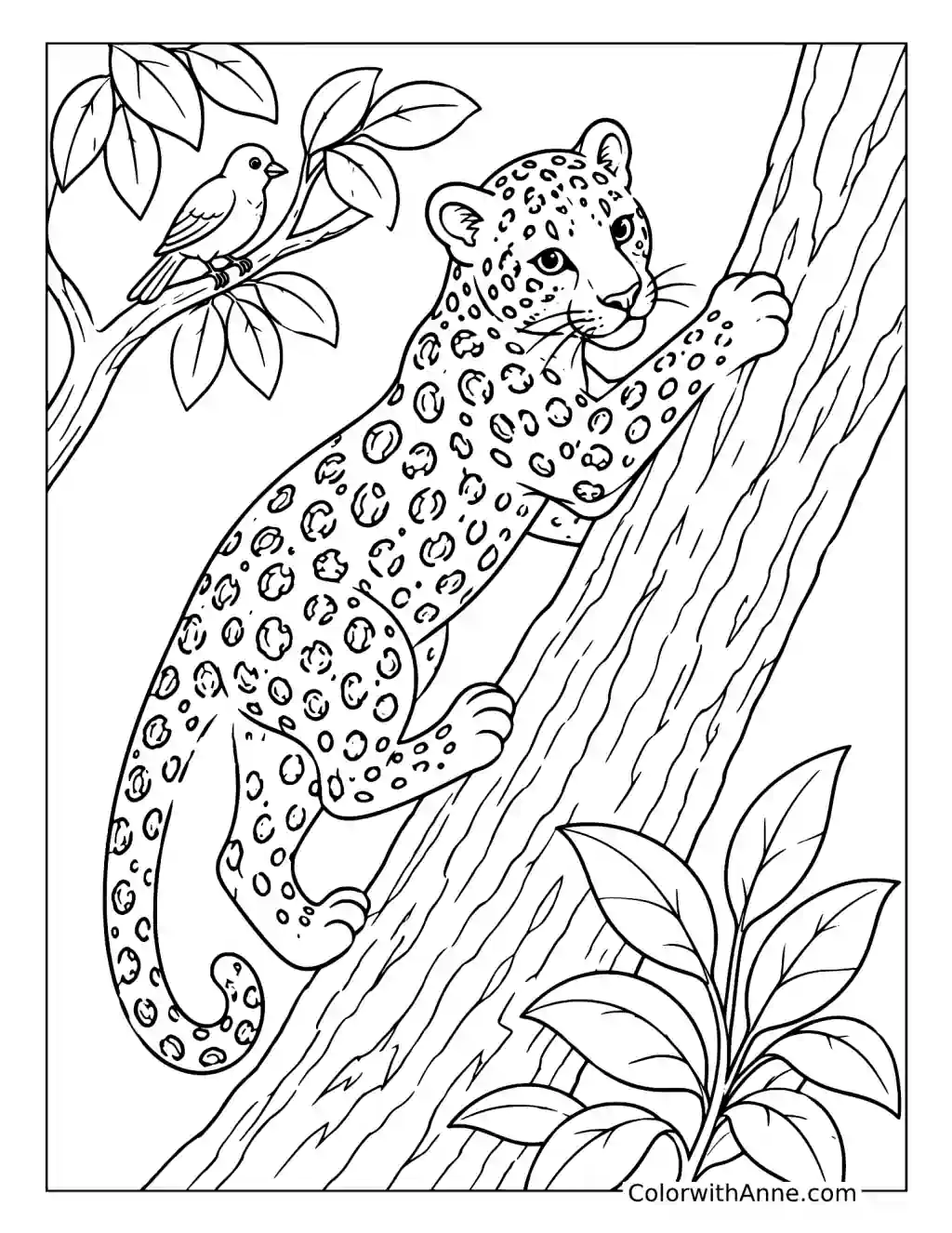
The leopard stretches along a broad branch with its head raised and one foreleg hanging below. The relaxed body fills the page without needing action.
Golden fur and a pale underside could contrast with rich brown bark. Muted leaves would frame the face while the coat markings provide most of the detail.
Mount the finished page on plain dark card for a simple wildlife display. The long branch and hanging paw give this pose enough character to stand on its own.
Let the Cub and Frog Have a Conversation
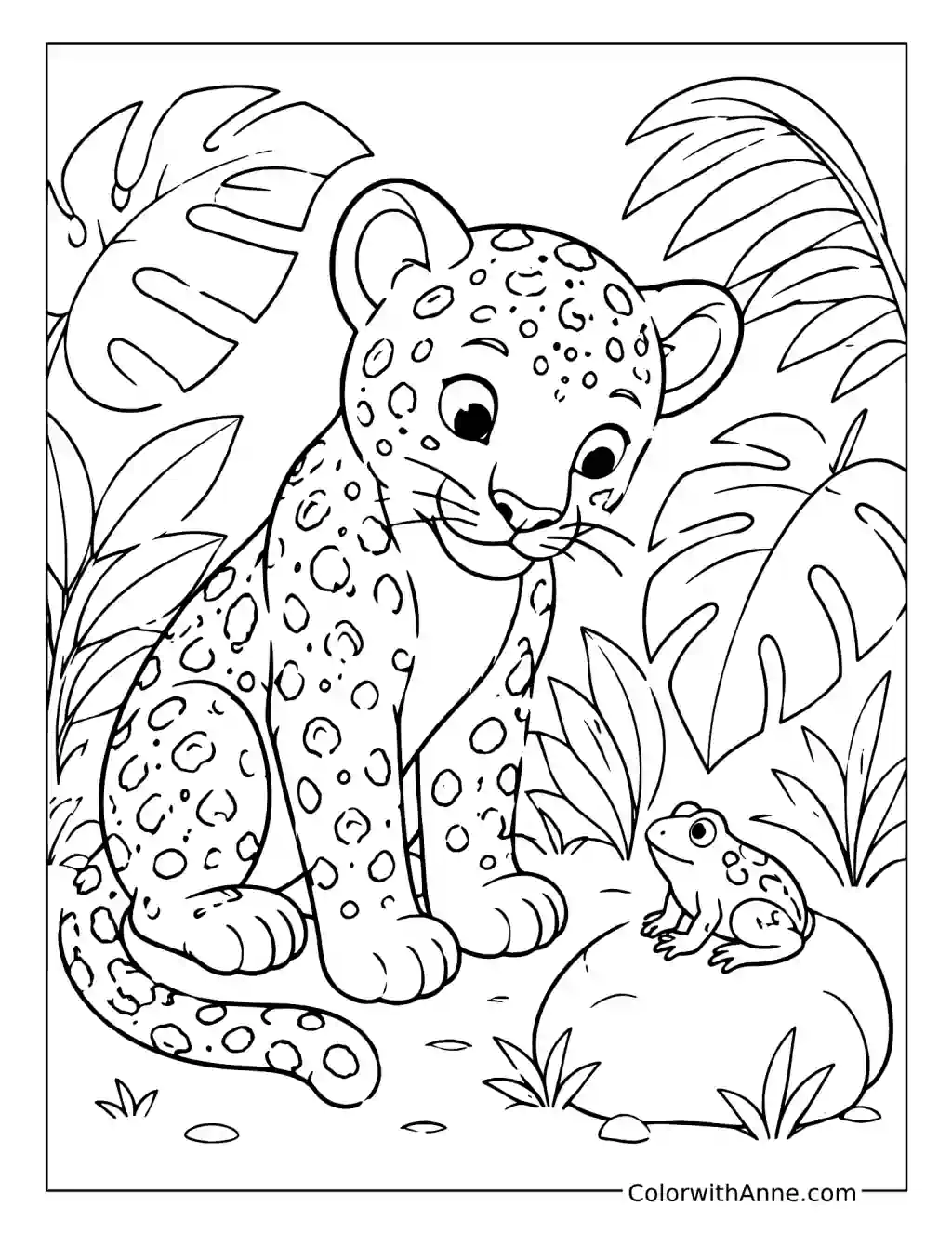
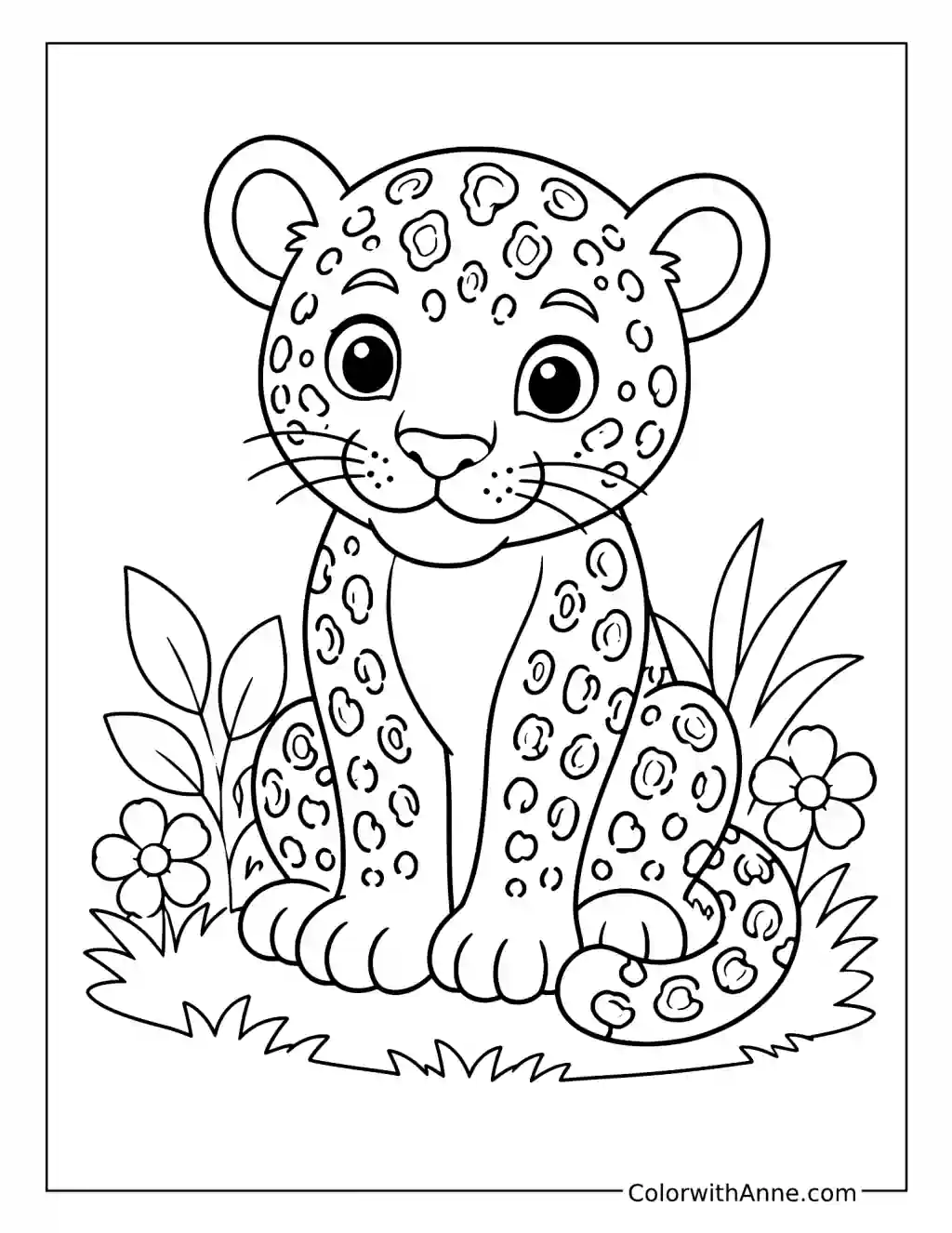
The cub sits with its head tilted toward a small frog among the leaves. Their difference in size gives the meeting a playful uncertainty.
Warm fur and fresh green on the frog would separate the two figures clearly. Softer surrounding leaves could keep the tiny visitor from disappearing.
Add one small speech bubble for each animal. Give them different priorities, such as the cub wanting to play while the frog is trying to get somewhere.
Watch the Stream Change the Reflection
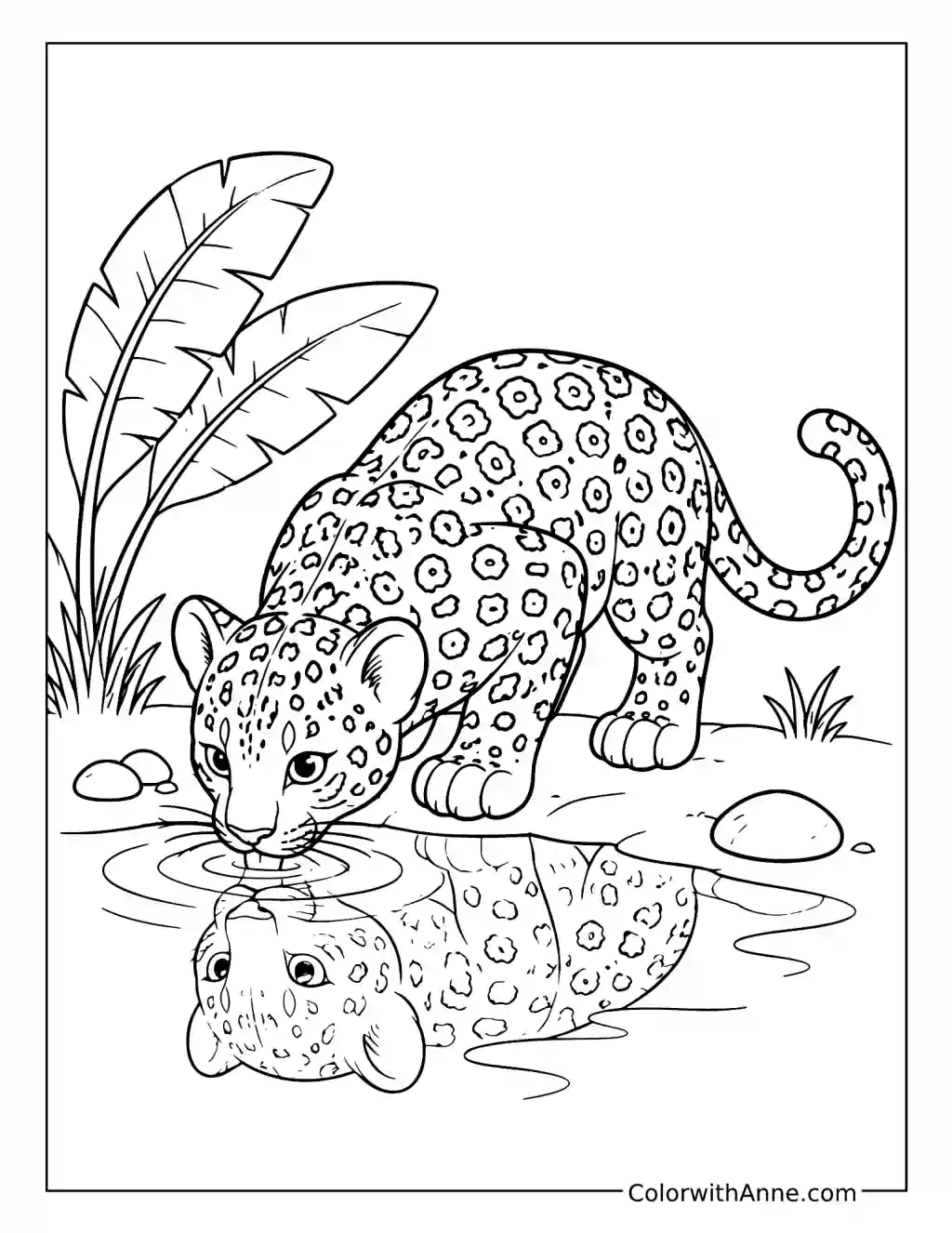
The leopard lowers its head to the stream, with its spotted reflection beneath. The mirrored face gives the quiet scene an extra point of interest.
Warm gold above the water could become softer and cooler in the reflection. Pale blue ripples would help the surface remain visible across the reflected markings.
Look at an object reflected in a bowl of water and gently move the surface. Compare the shifting outline with the drawing before deciding which reflected details to keep crisp.
Follow the Climbing Pose
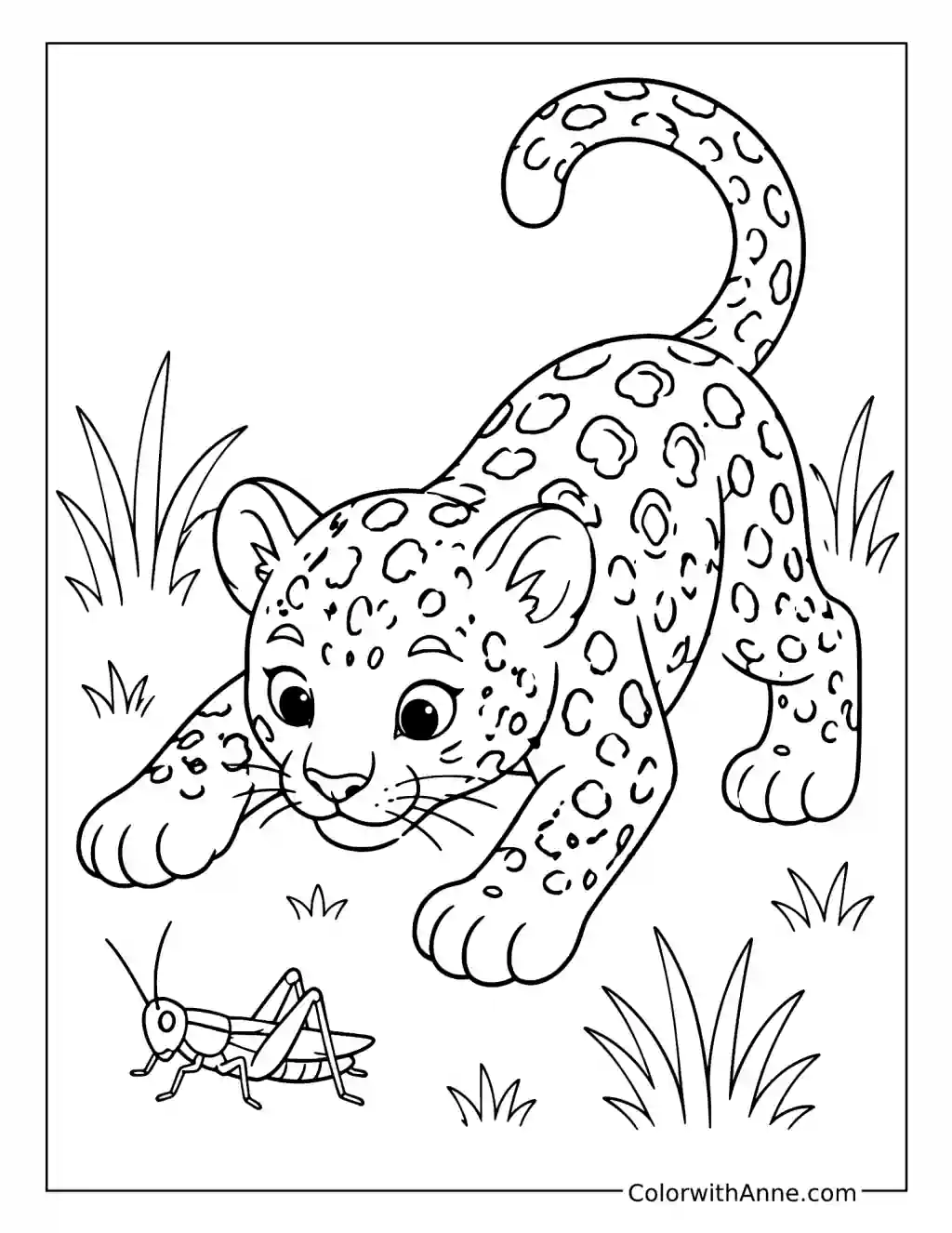
The young leopard grips the trunk with its body stretched upward. Its tail curves away from the bark, making the climbing direction clear.
A slightly darker trunk could separate the paws from the wood, with golden fur above. Pale leaves near the edges would keep the central pose uncluttered.
Watch a short wildlife clip showing a leopard in a tree and pause on a climbing moment. Compare the placement of its paws and tail with the pose you have just colored.
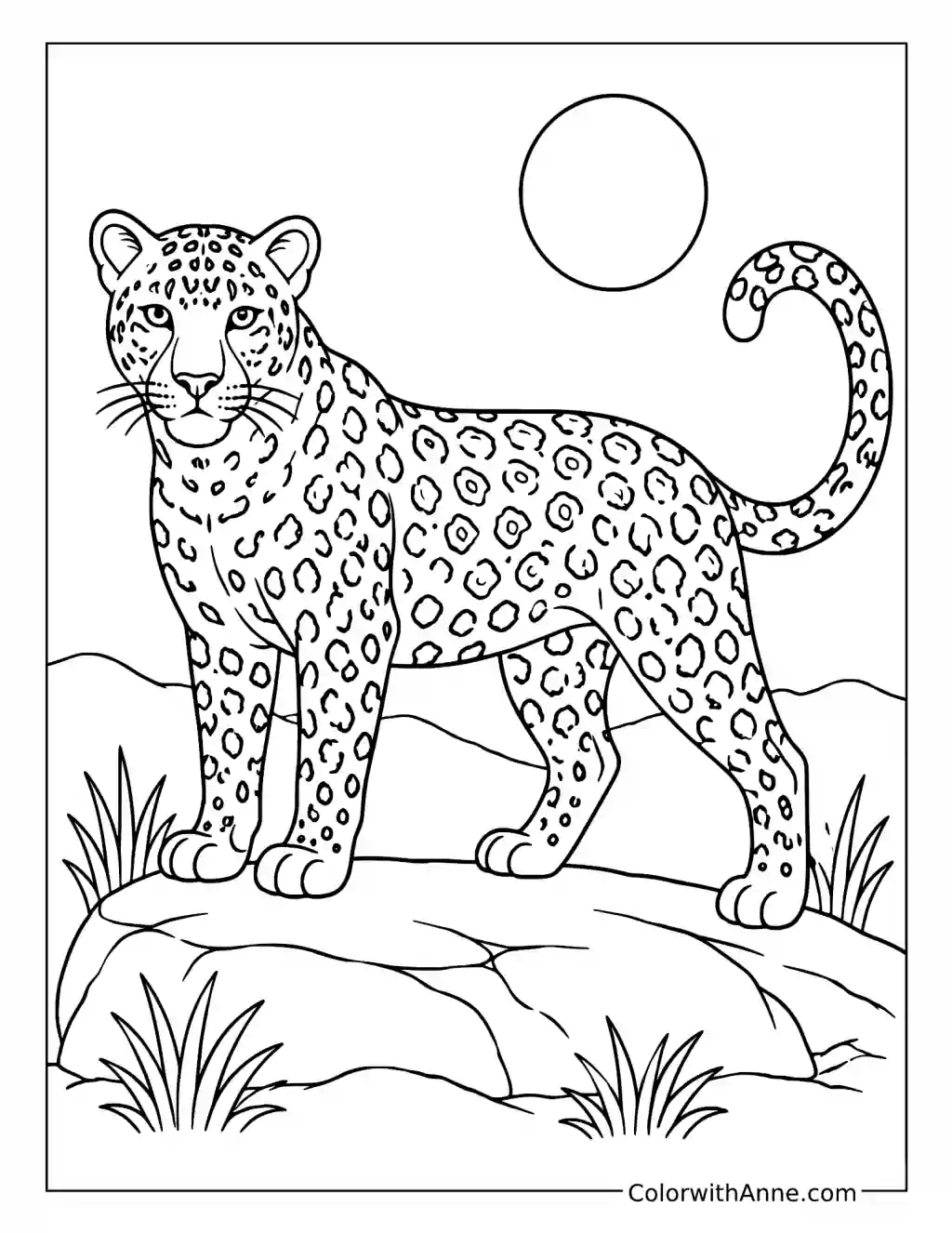
Borrow the Coat Pattern for a Small Design
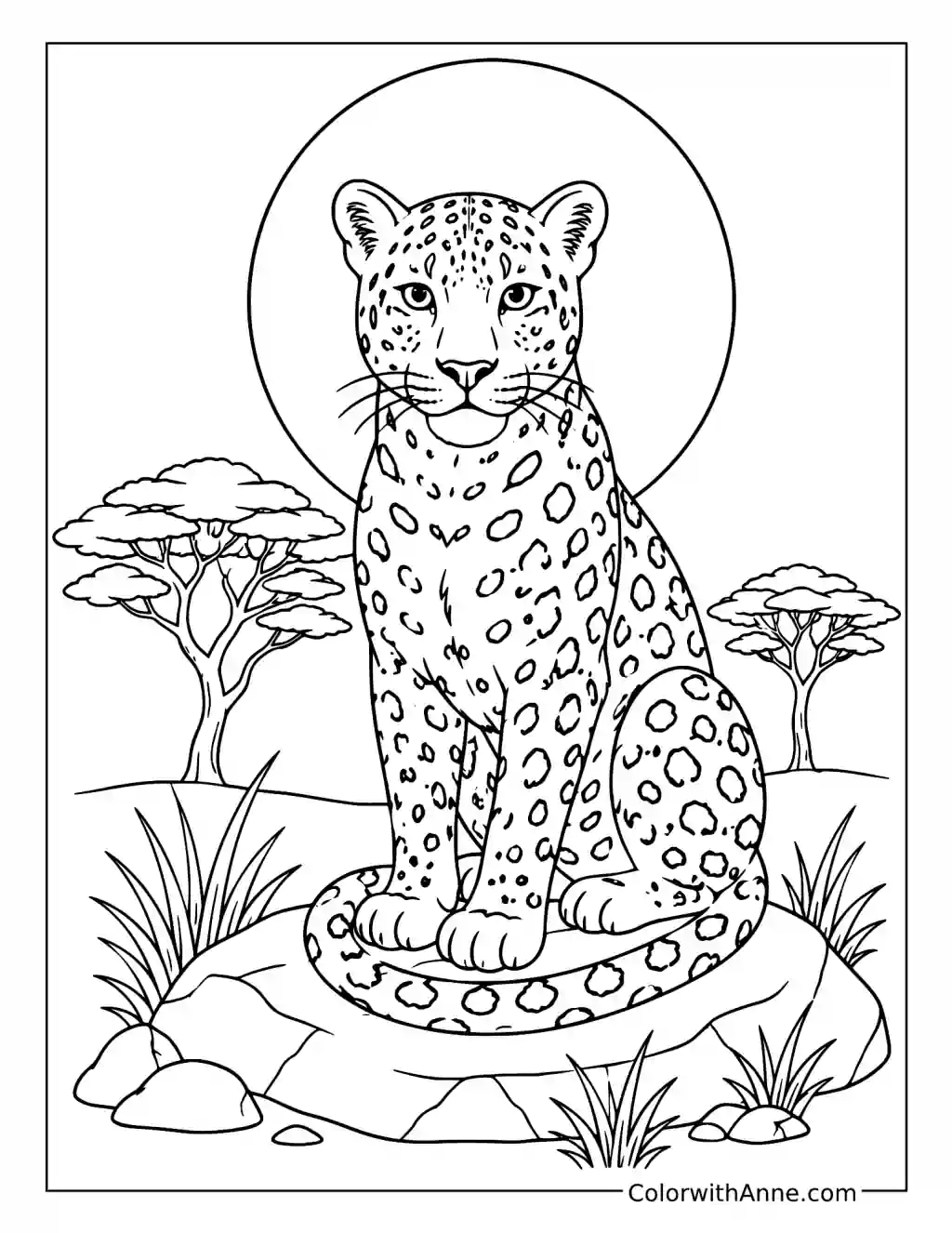
The adult leopard stands on a rock, giving a clear side view of its coat. The broken ring shapes vary across the body rather than repeating perfectly.
Warm honey and cream could establish the fur beneath darker markings. A muted rock and pale sky would leave the coat pattern easy to study.
Choose a small patch of the markings and repeat similar shapes across a paper strip. It can become a border for the picture or a starting point for an animal-print bookmark.
Hide the Cub behind Paper Leaves
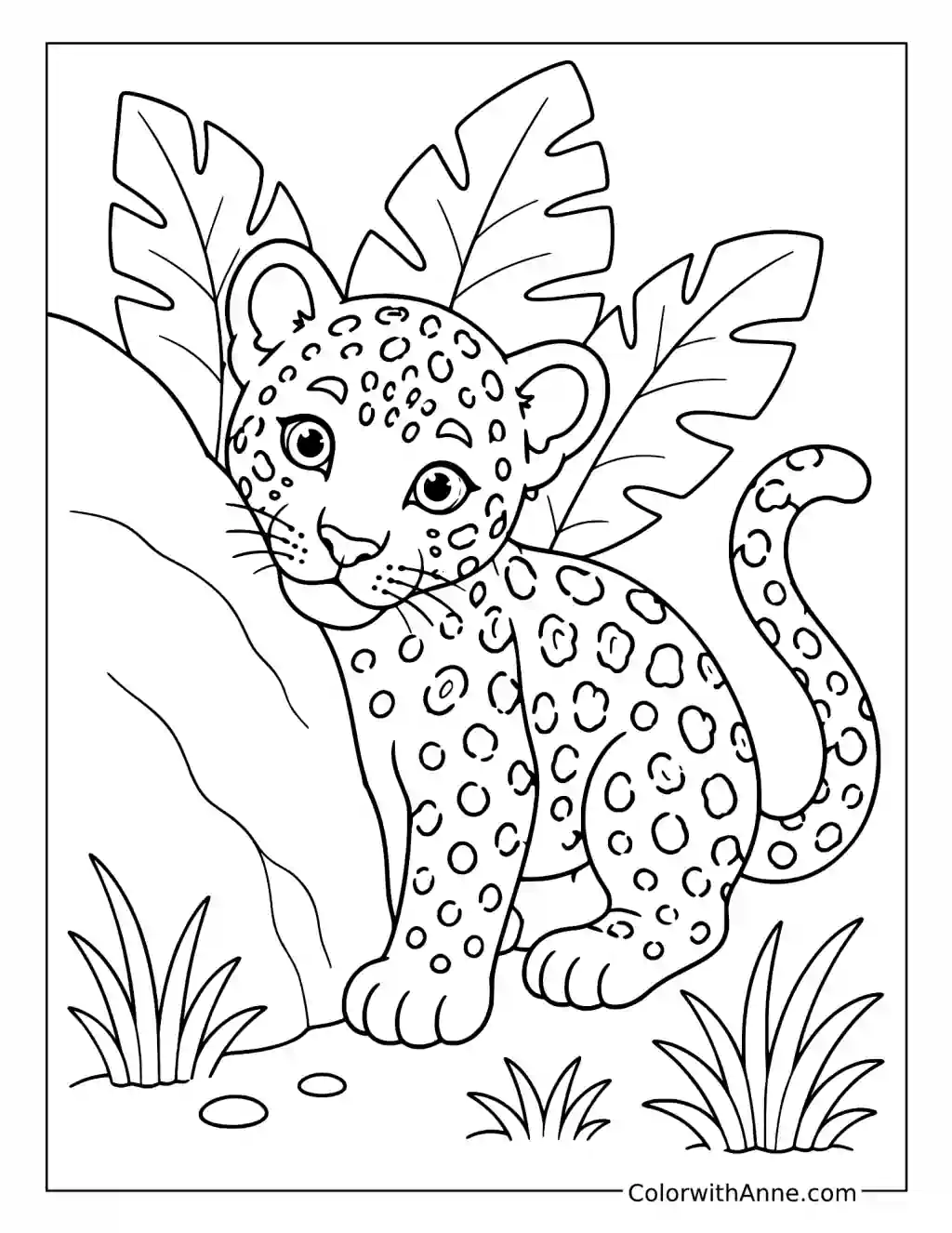
The cub peers from beside a rock with broad leaves framing its face. Enough of the body remains hidden to make the expression feel curious.
Warm golden fur could stand against cooler green leaves and gray stone. Keeping the face slightly brighter would help it remain visible through the surrounding shapes.
Attach a few paper leaves along one edge with their tips left loose. Someone can lift them to discover the cub, turning the existing peek into a small hide-and-find picture.