
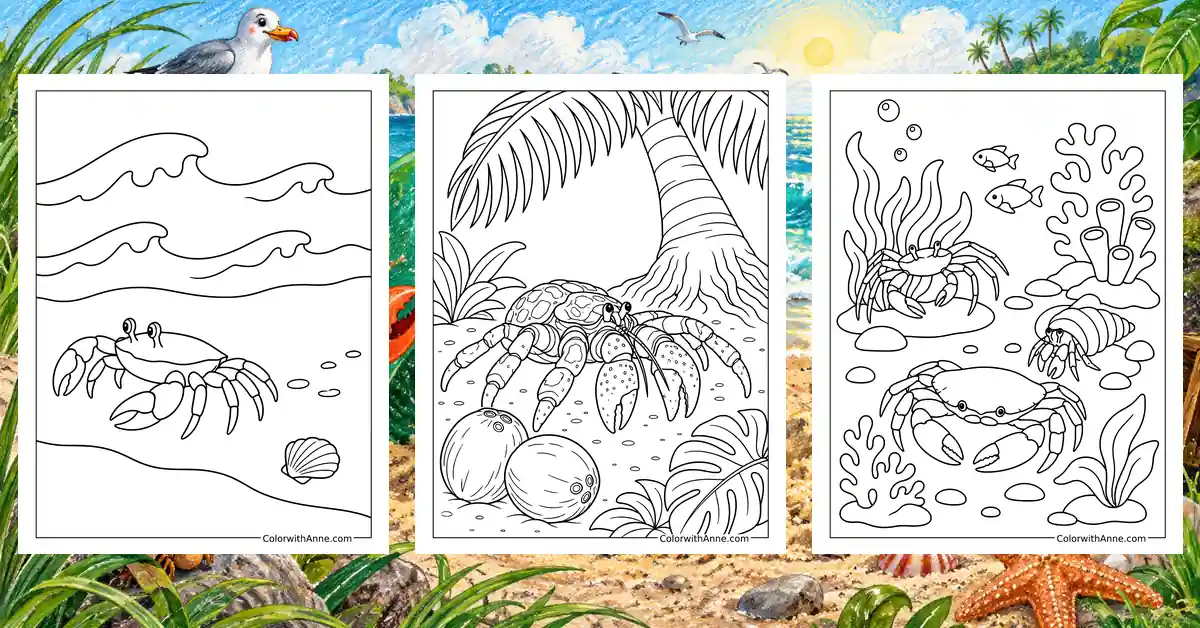
A crab moving sideways across wet sand can make a child change direction just as quickly. The little creature stops, raises its claws, and heads toward a gap that looked far too narrow to be useful. Everyone watching is left staring at the spot where it disappeared.
Crab coloring pages allow a more settled look after that brief beach encounter. The claws usually attract attention first, though counting the legs can become an absorbing business of its own. A child may remember the exact rock where the crab hid and remain convinced that a return visit would find it still waiting underneath.
Free Printable Crab Coloring Pages
Click any coloring page below to open the PDF, then print on US Letter or A4 paper.
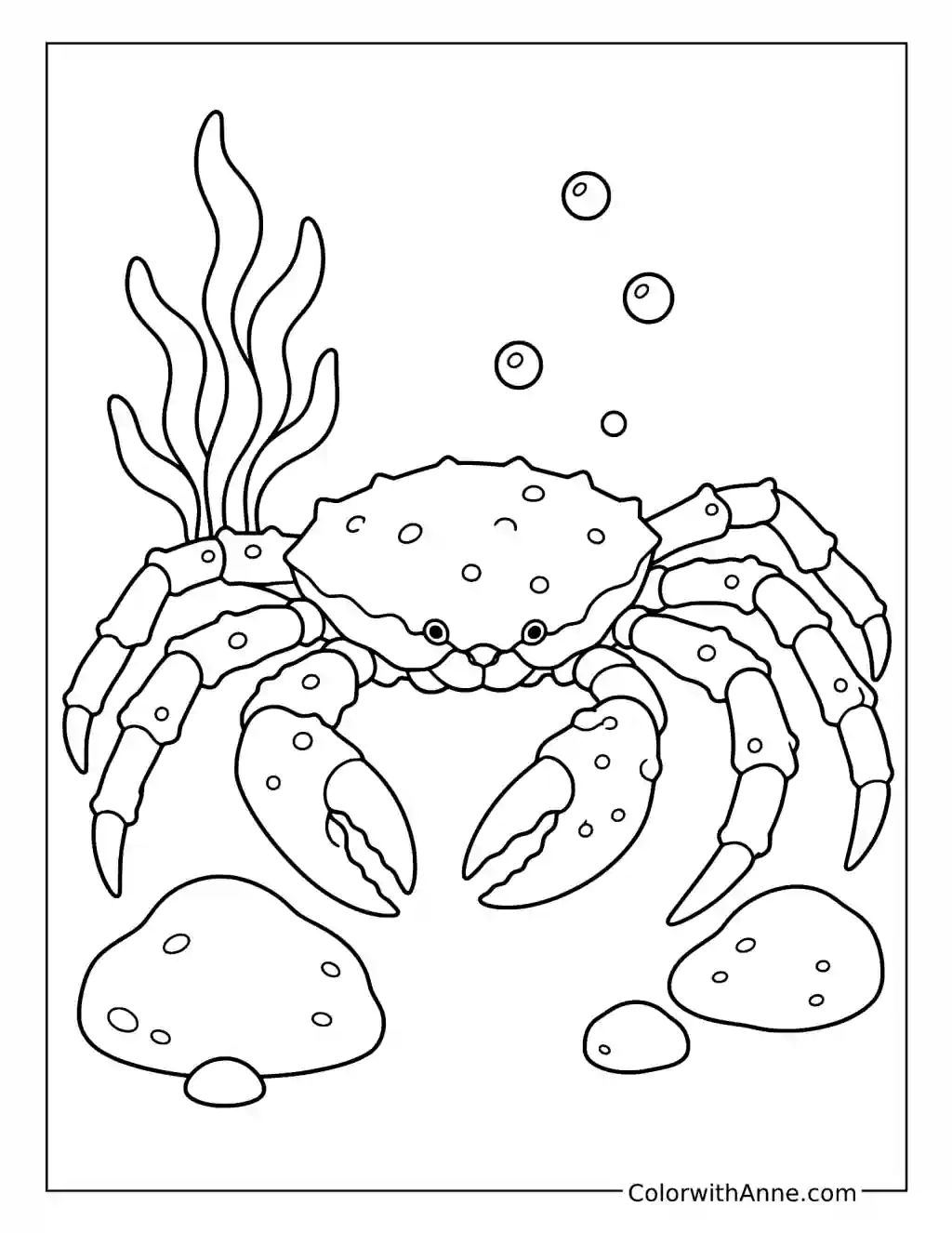
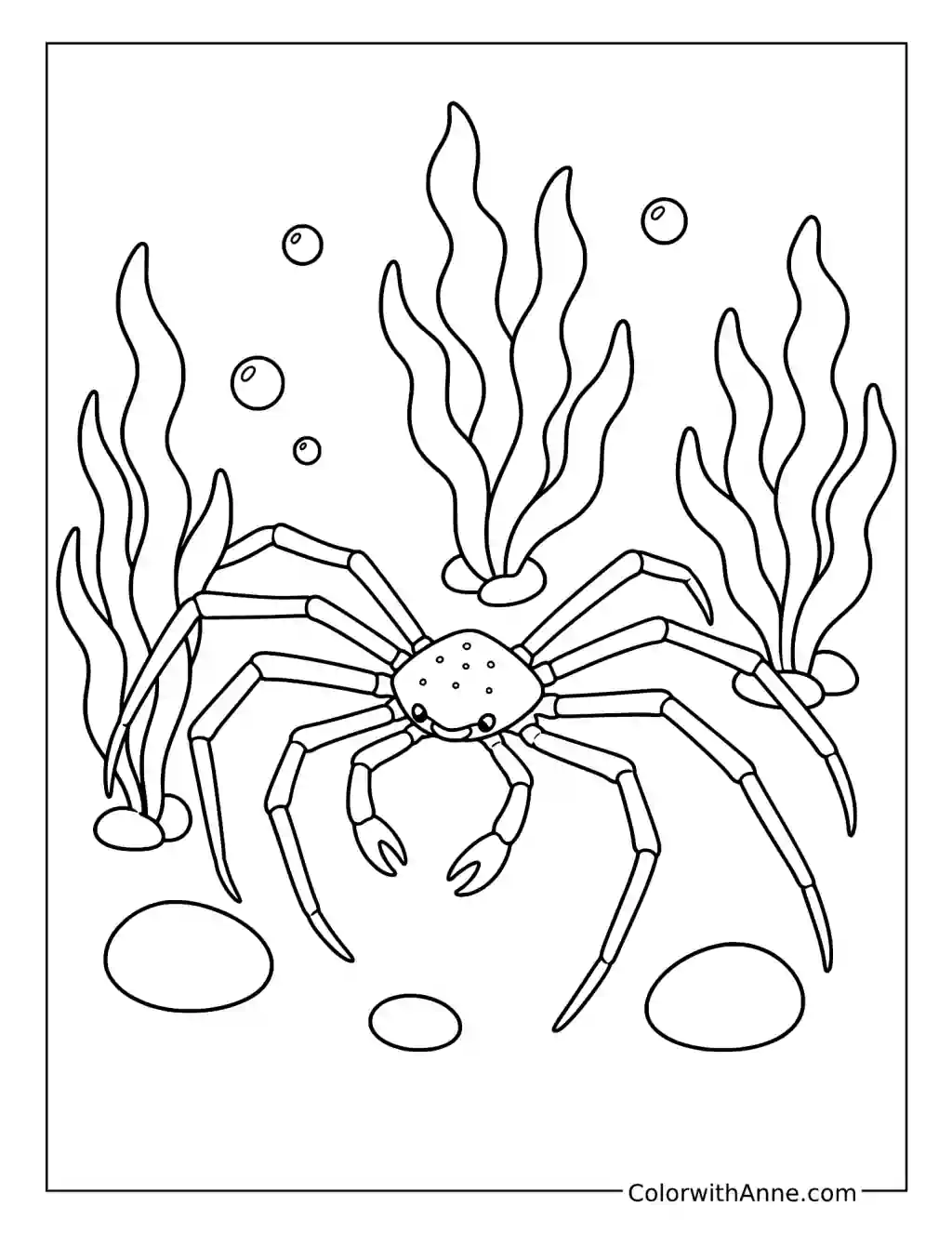
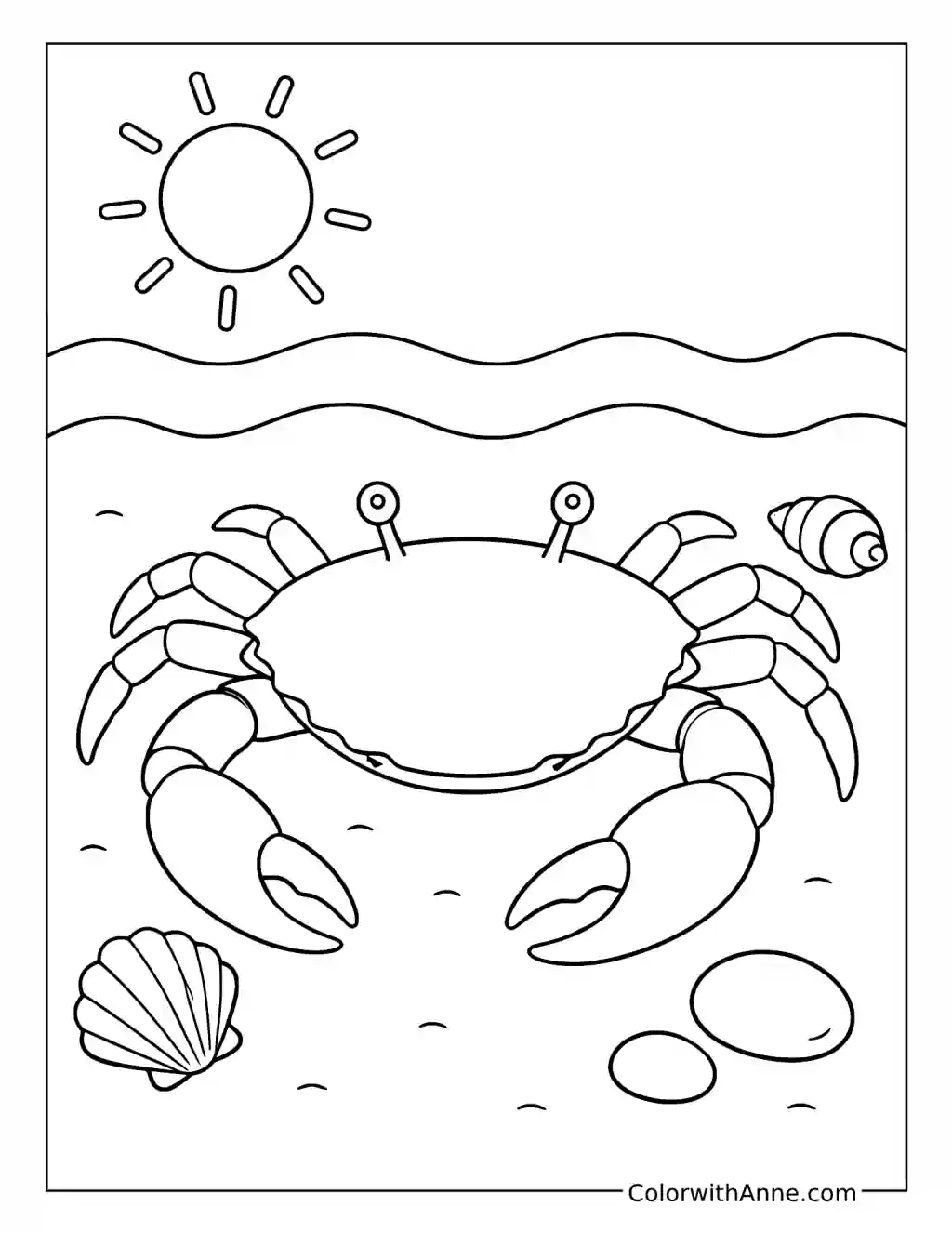
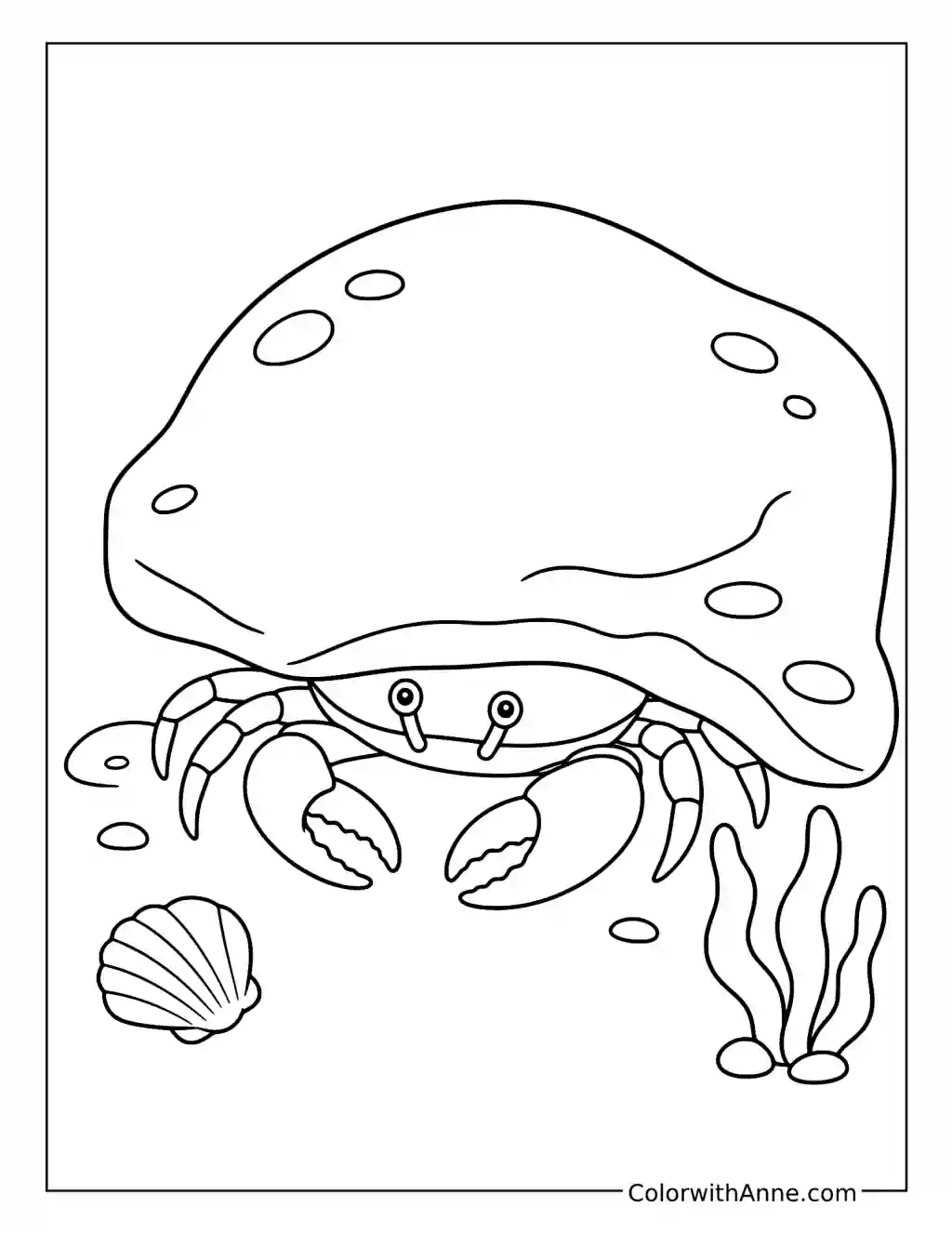
Did you find what you needed?
Help us choose what to create or improve next.
Coloring Ideas for Crab Pages
Try one of these coloring ideas, or use them as a starting point for your own.
See the Beach from the Coconut Crab’s Height
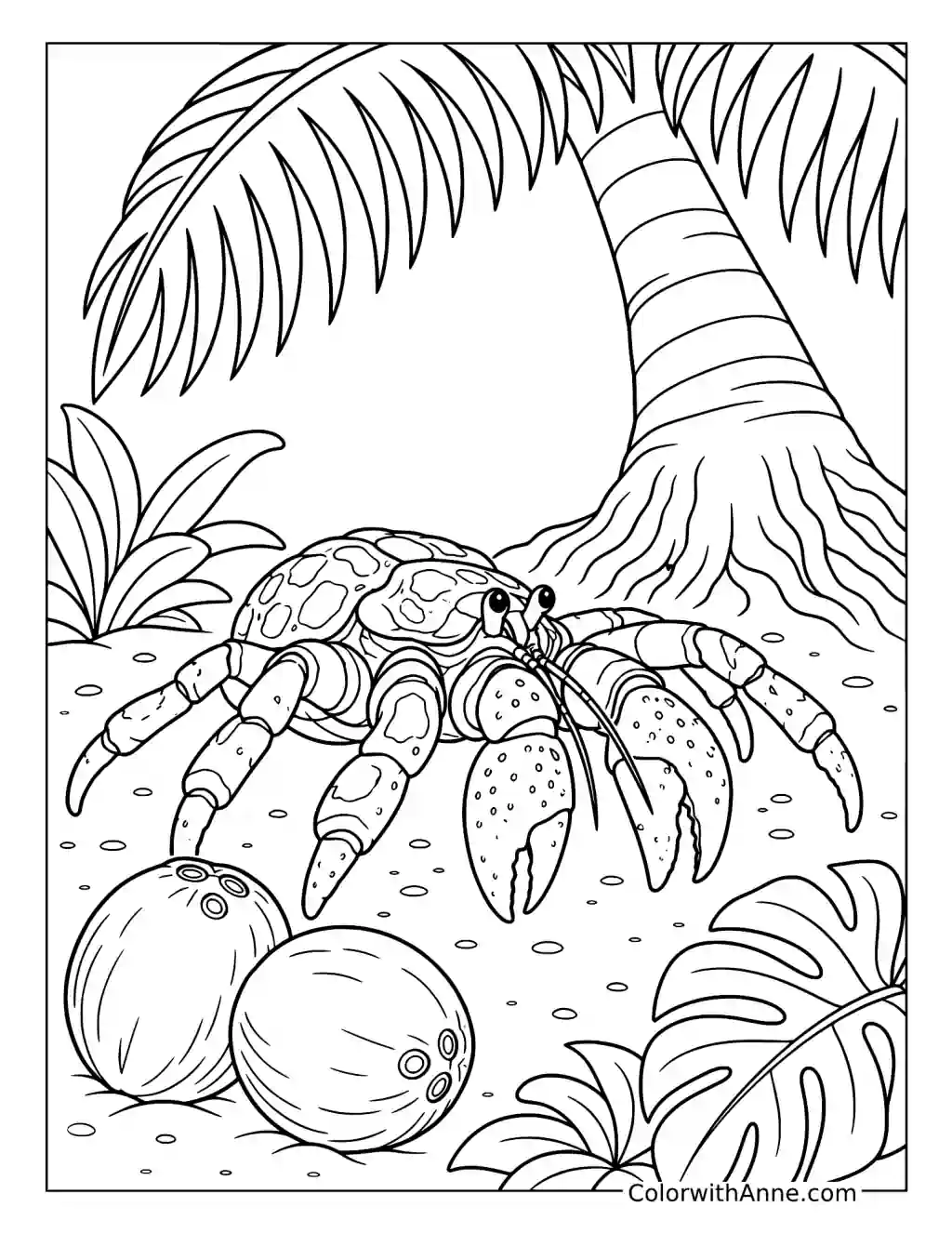
The coconut crab stands beneath a palm beside coconuts and fallen leaves. With everything close to the sand, the scene gives the beach a very different viewpoint from a wide holiday photograph.
Earthy browns and muted violet could suit the crab, with warmer coconuts and green palm leaves around it. Pale sand would keep the many legs distinct.
Place a coconut, shell, or similarly shaped household object beside the finished page and compare the sizes in the drawing. Then imagine another familiar object at crab height. A small paper beach sign or dropped sandal could add a convincing sense of scale to the scene.
Give the Sandcastle a Resident
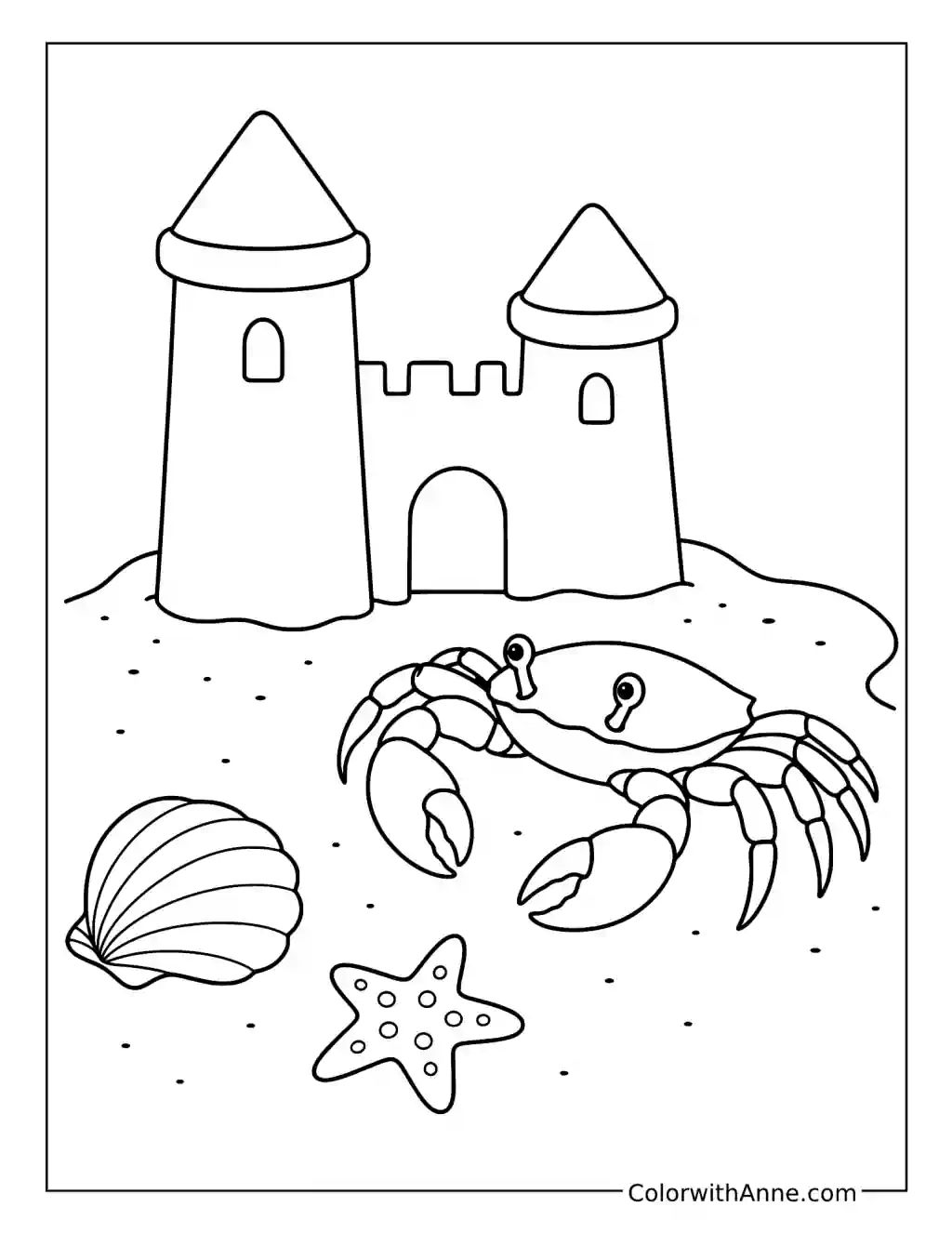
The crab waits beside a neat sandcastle with two towers, while shells and a starfish lie nearby. It looks as though someone has built the grand house and left a local resident to inspect it.
Warm cream sand and a coral-colored crab would make an easy seaside pairing. Slightly darker castle edges could show the towers without making them look like stone.
On the next sandcastle-building day, leave a little courtyard or archway inspired by the picture. A paper crab can visit the finished structure for a photograph. It gives younger builders a small story to play with after the towers are standing.
Hide a Clue in the Treasure Chest
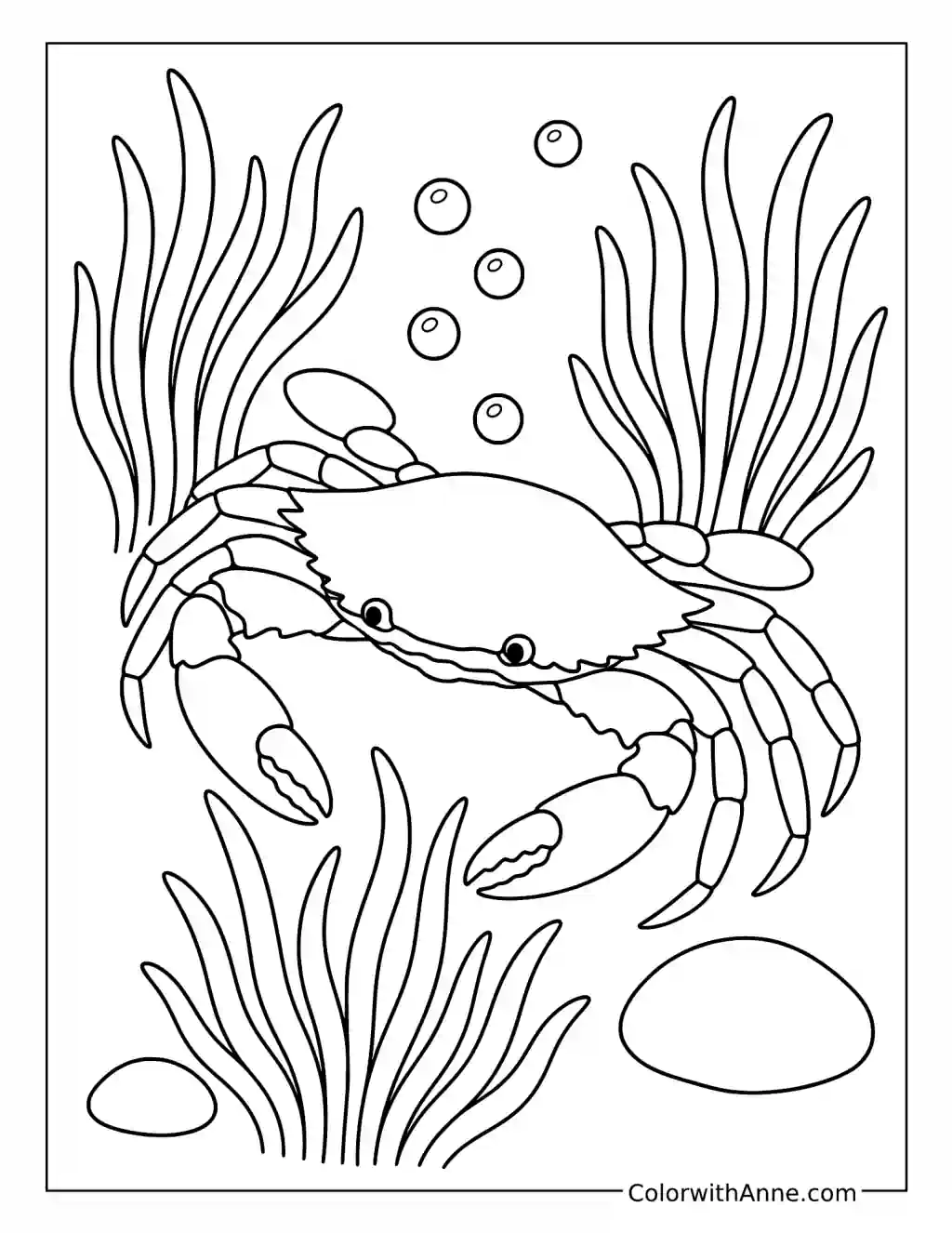
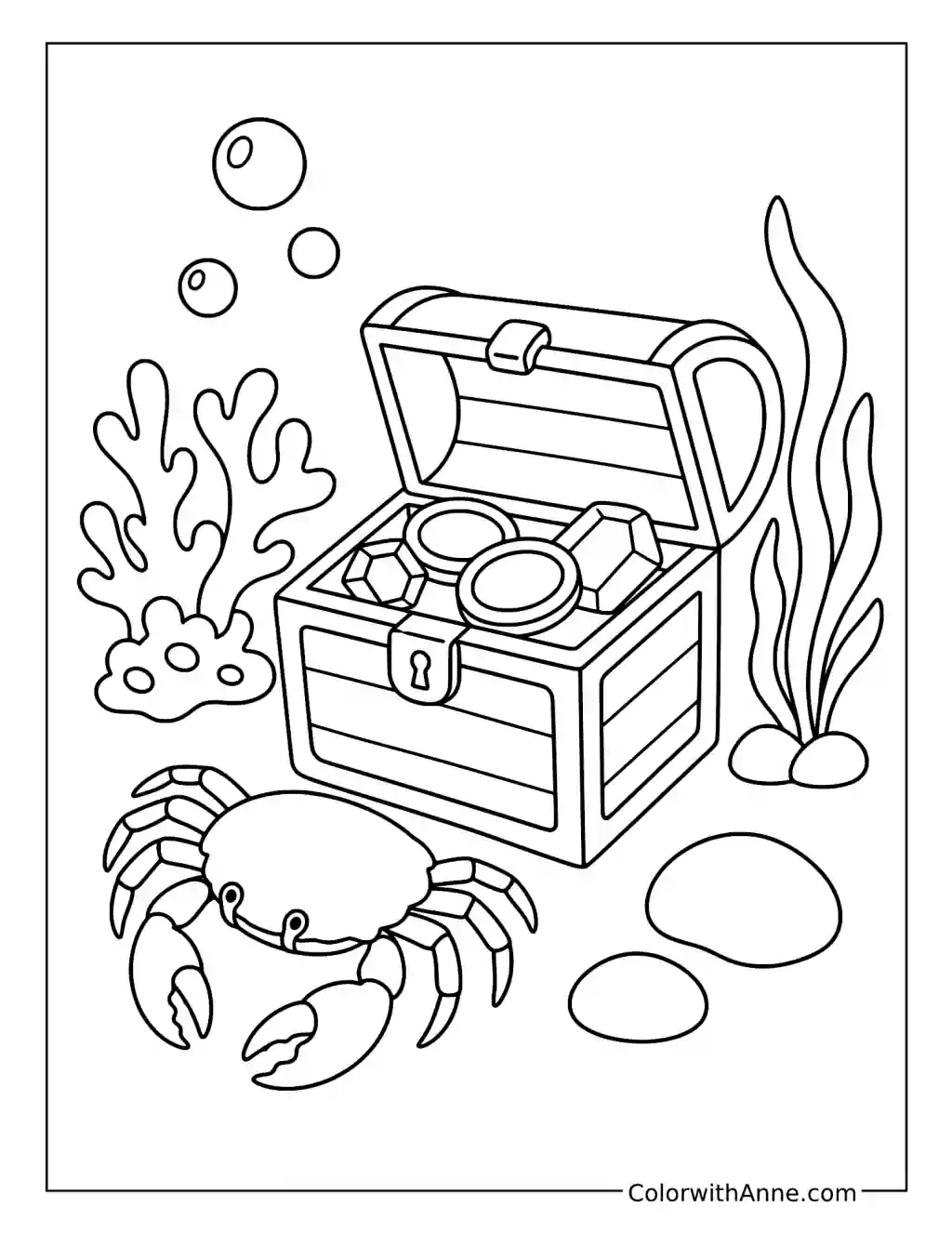
The crab stands near an open treasure chest surrounded by underwater plants and bubbles. The chest has already done the difficult part of looking worth investigating.
Warm gold inside the chest could contrast with cool blue-green water. A red or orange crab would remain visible beside the darker wooden box.
Write a short clue on a small slip and tuck it behind a paper flap attached over the chest. Opening the flap can lead to a simple household treasure hunt. The clue only needs to point toward one recognizable place, keeping the adventure easy to begin.
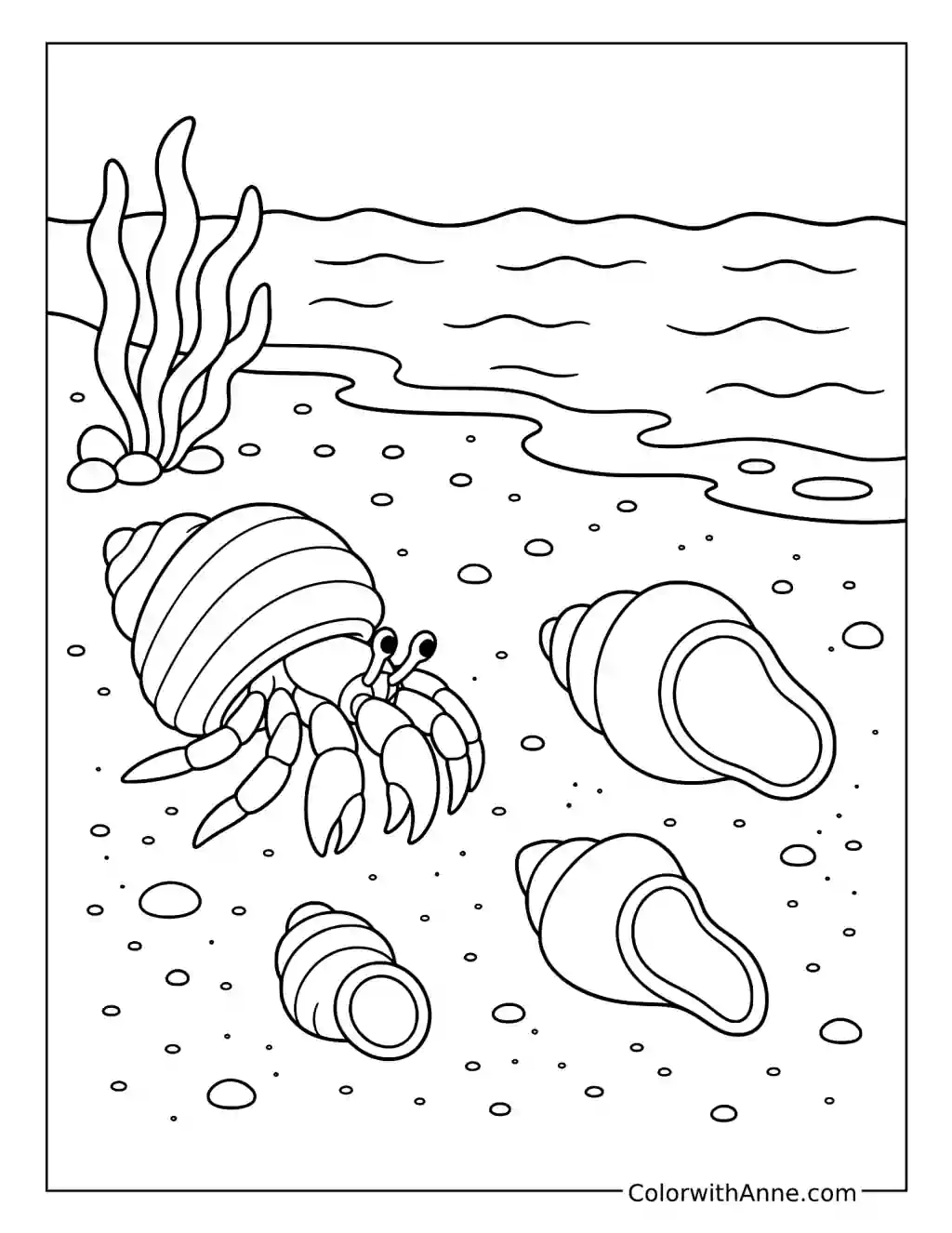
Design a Shell for the Hermit Crab
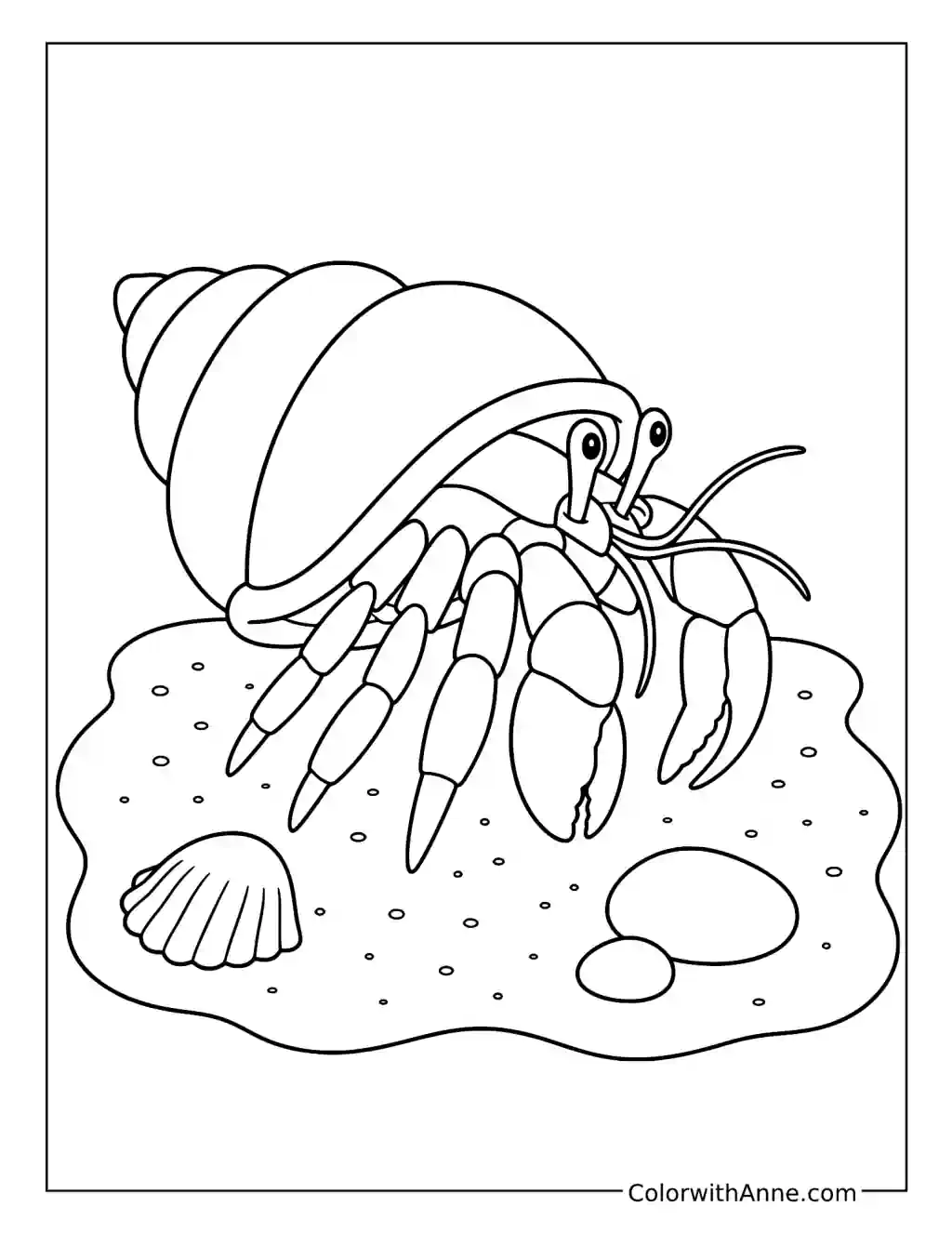
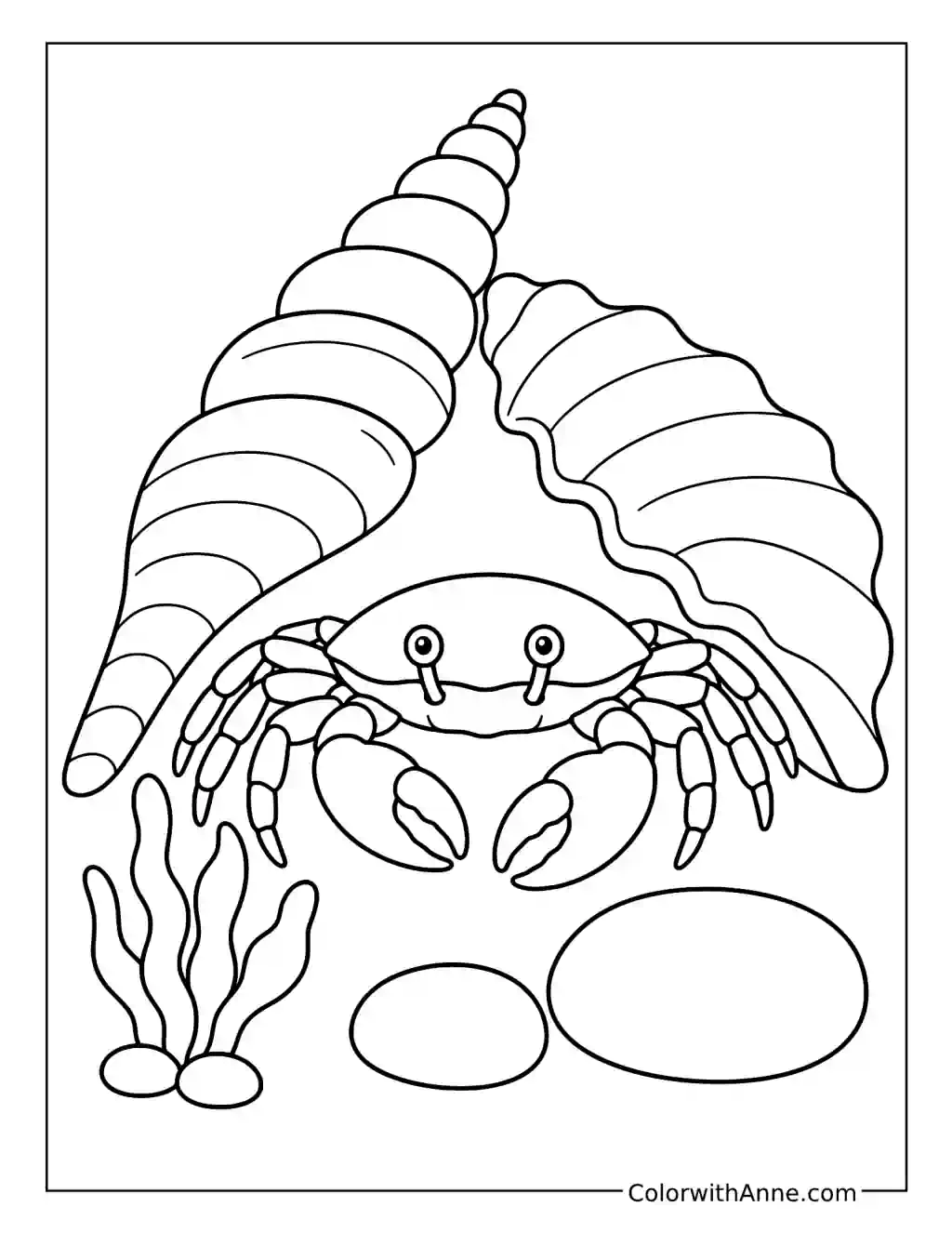
The hermit crab peers from a large spiral shell, with its small legs and claws emerging below. The shell takes up enough space to feel like a proper design opportunity.
A sandy crab could sit beneath a shell in soft peach, blue, or lavender. Following the spiral with slightly deeper color would give the shape some roundness.
Trace the shell outline onto scrap paper and try a new decoration that follows its curve. It might suggest a striped seaside home or a more fantastical jewel-colored one. Keep the crab itself familiar so the changing shell remains the feature that tells the story.
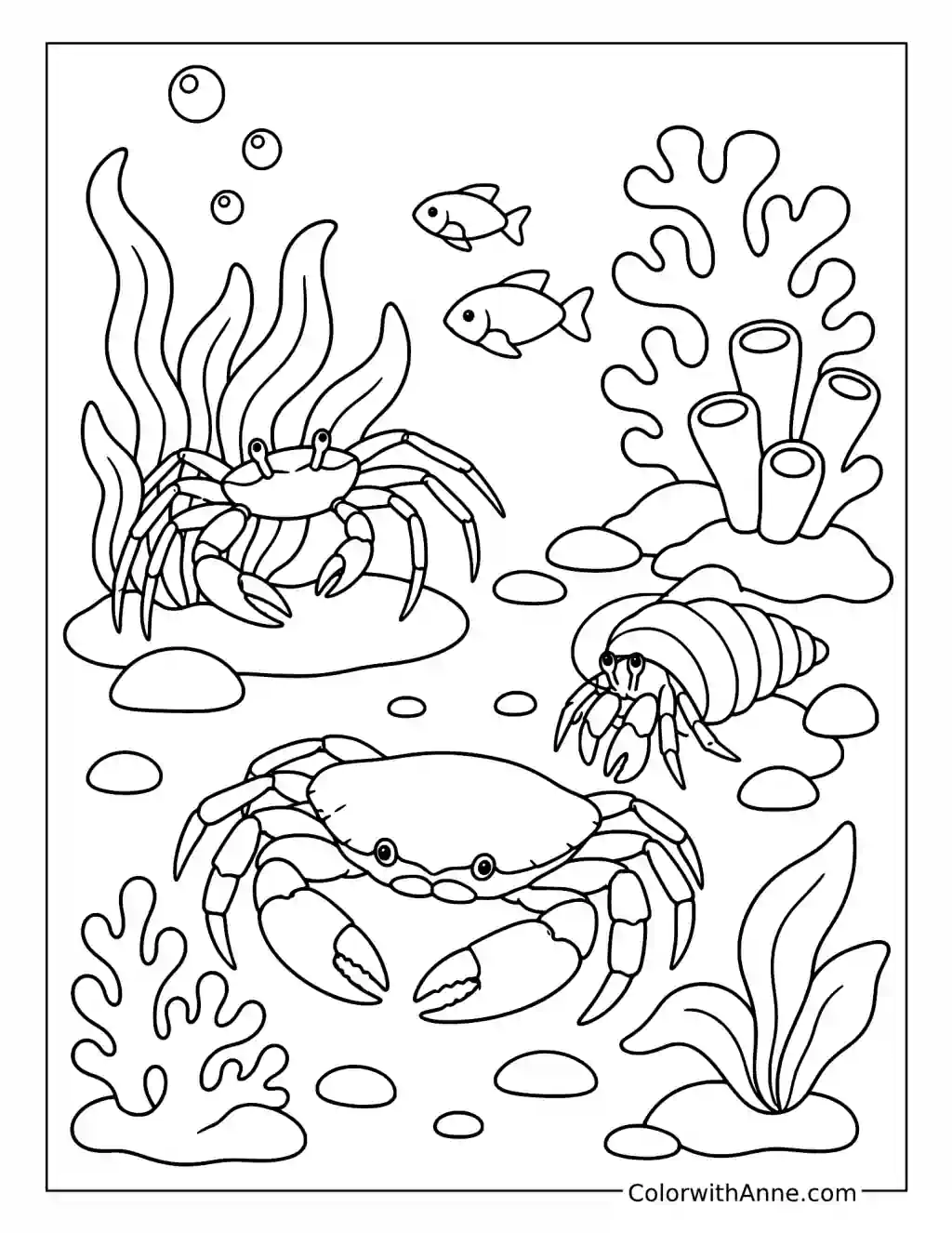
Take a Tide-Pool Picture along for the Visit
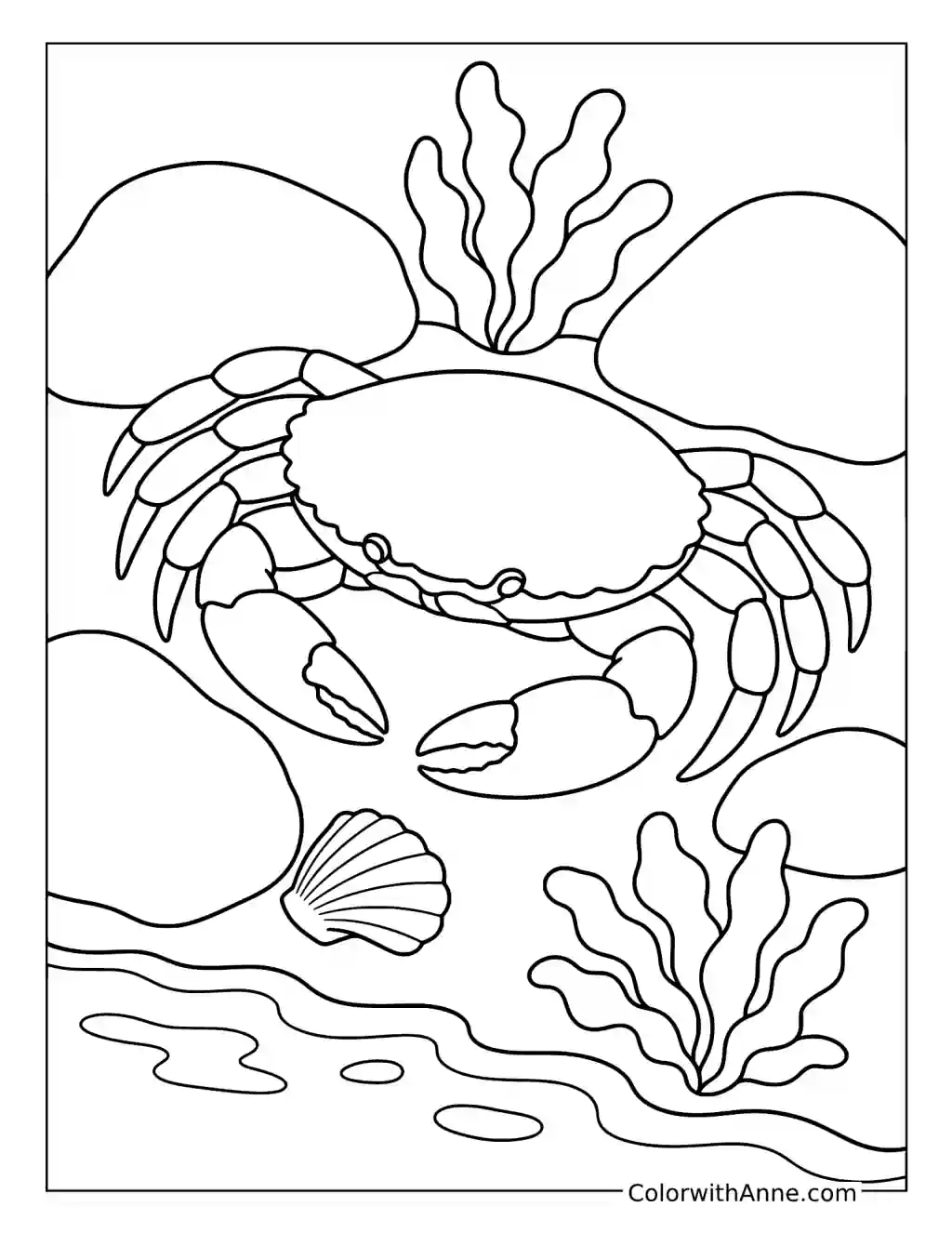
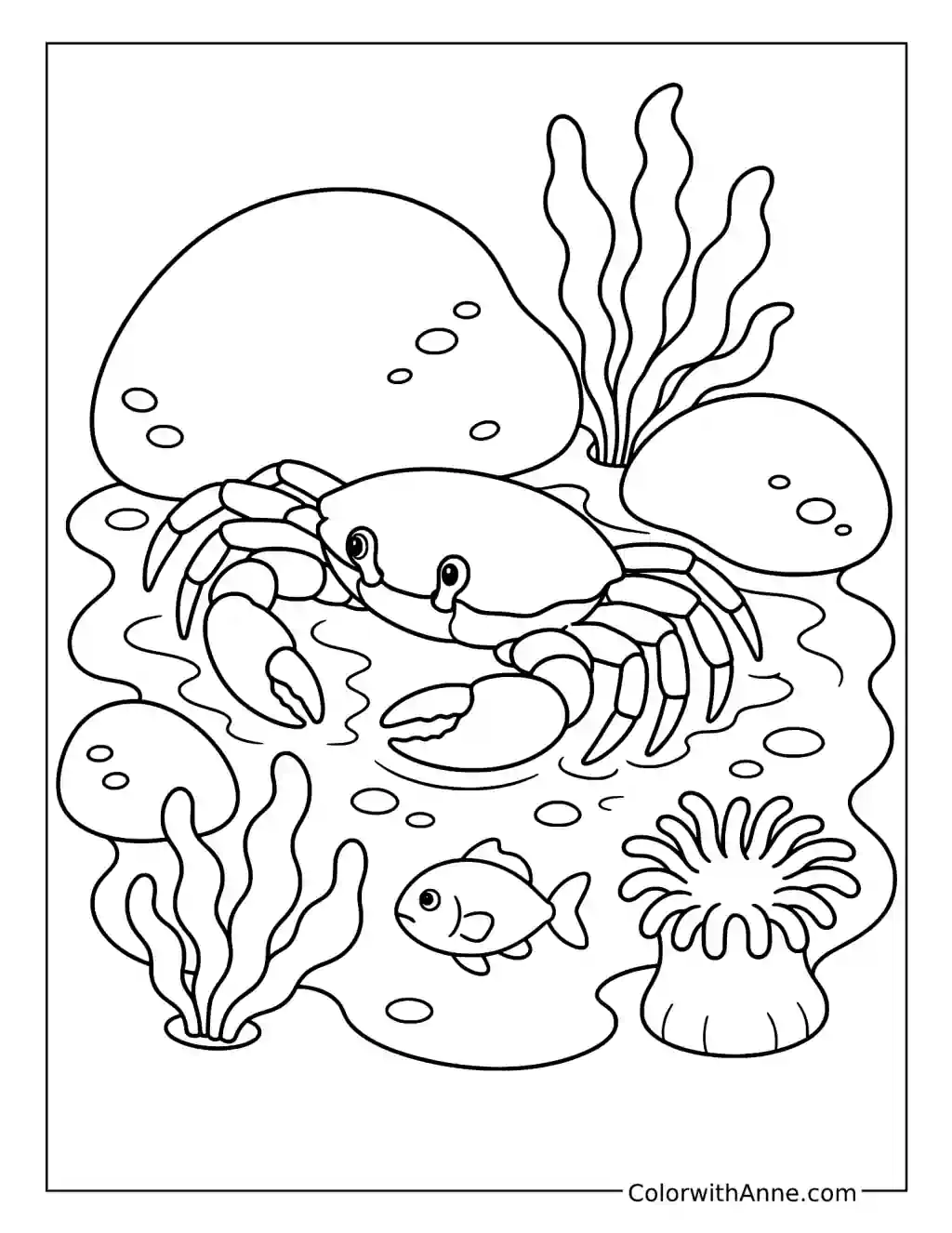
The crab rests among rocks, seaweed, shells, and a small fish in shallow water. There is enough happening around the edges to reward more than a quick glance.
Soft aqua water and warm gray rocks would give the pool a natural base. A stronger crab color could help its body remain easy to find between the stones.
Bring the finished page along on a coastal outing, or compare it with a tide-pool photograph at home. Look for similar shapes and hiding places rather than expecting every pictured animal to appear. The page becomes a starting point for noticing what is actually there.
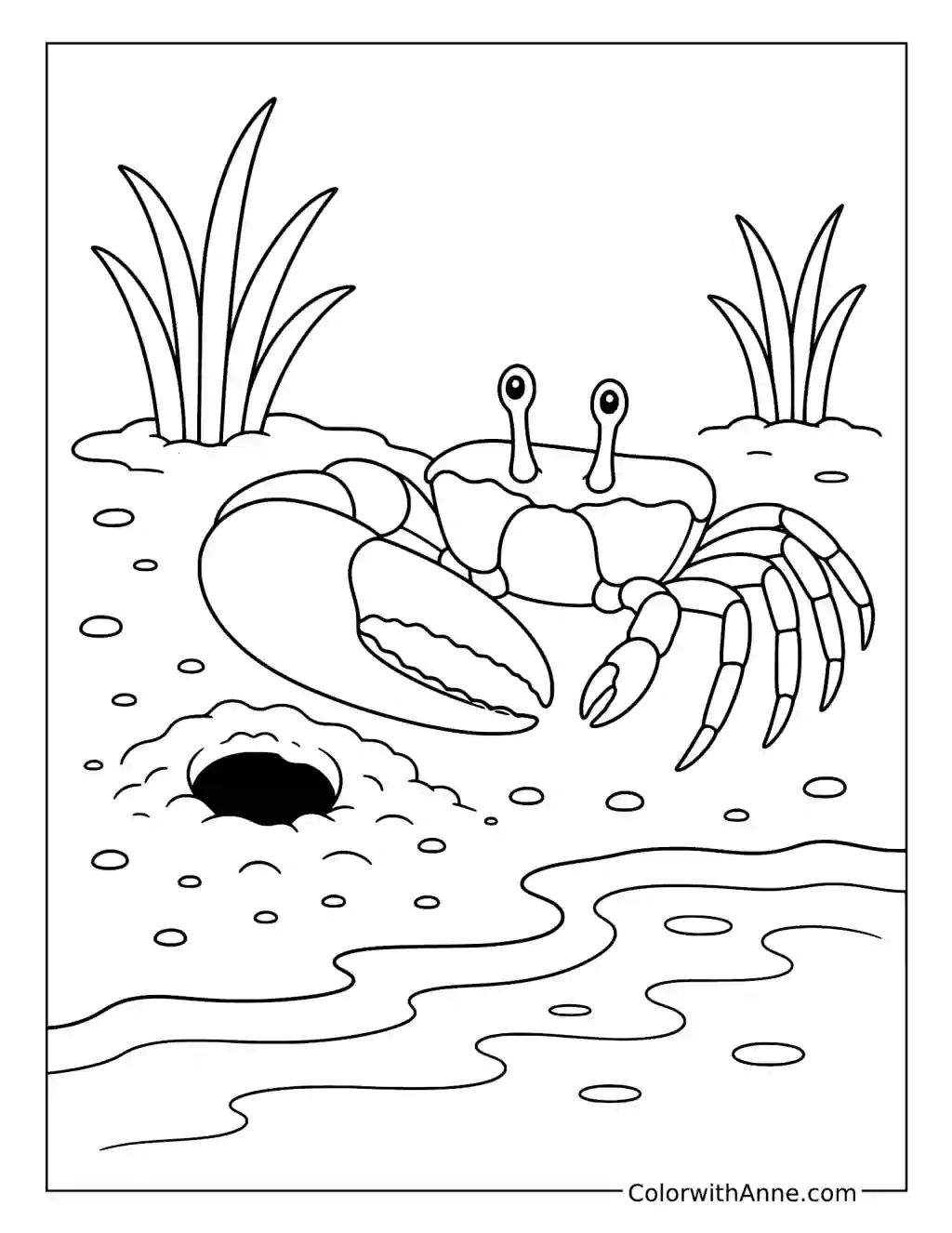
Give the Fiddler Crab a Moving Claw
The fiddler crab stands beside a burrow opening with one claw much larger than the other. That uneven pair gives the little figure a character all its own.
Warm orange and sandy brown could connect the crab with the shore. A slightly deeper shade on the large claw would make its curved outline particularly clear.
Back the crab with card and attach a separate copy of the large claw using a paper fastener. The moving piece makes a simple puppet for a seaside story. A folded paper base lets it stand while someone decides who it might be waving toward.