
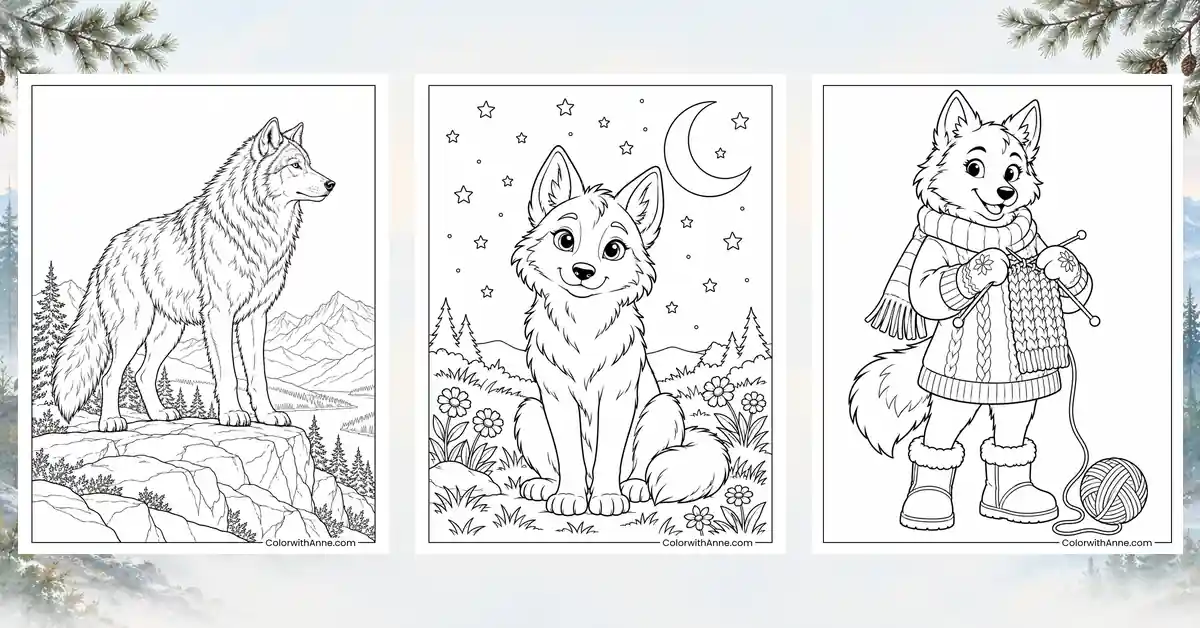
At a steady trot, a wolf can cover a surprising amount of ground. A few minutes of wildlife footage may follow it across an open slope, then lose it behind the next rise. The journey carries on beyond the edge of the camera, over country that makes a human walk look rather short.
With Wolf coloring pages, that interest can carry on after the program ends. There is something absorbing about an animal whose ordinary day reaches so far beyond a familiar neighborhood. A name on a park map or a glimpse of tracks can send an enthusiast back to the books for another look.
Free Printable Wolf Coloring Pages
Click any coloring page below to open the PDF, then print on US Letter or A4 paper.
Did you find what you needed?
Help us choose what to create or improve next.
Coloring Ideas for Wolf Pages
Try these creative ideas to make the most of your coloring sheets.
Borrow the Colors of a Mountain View
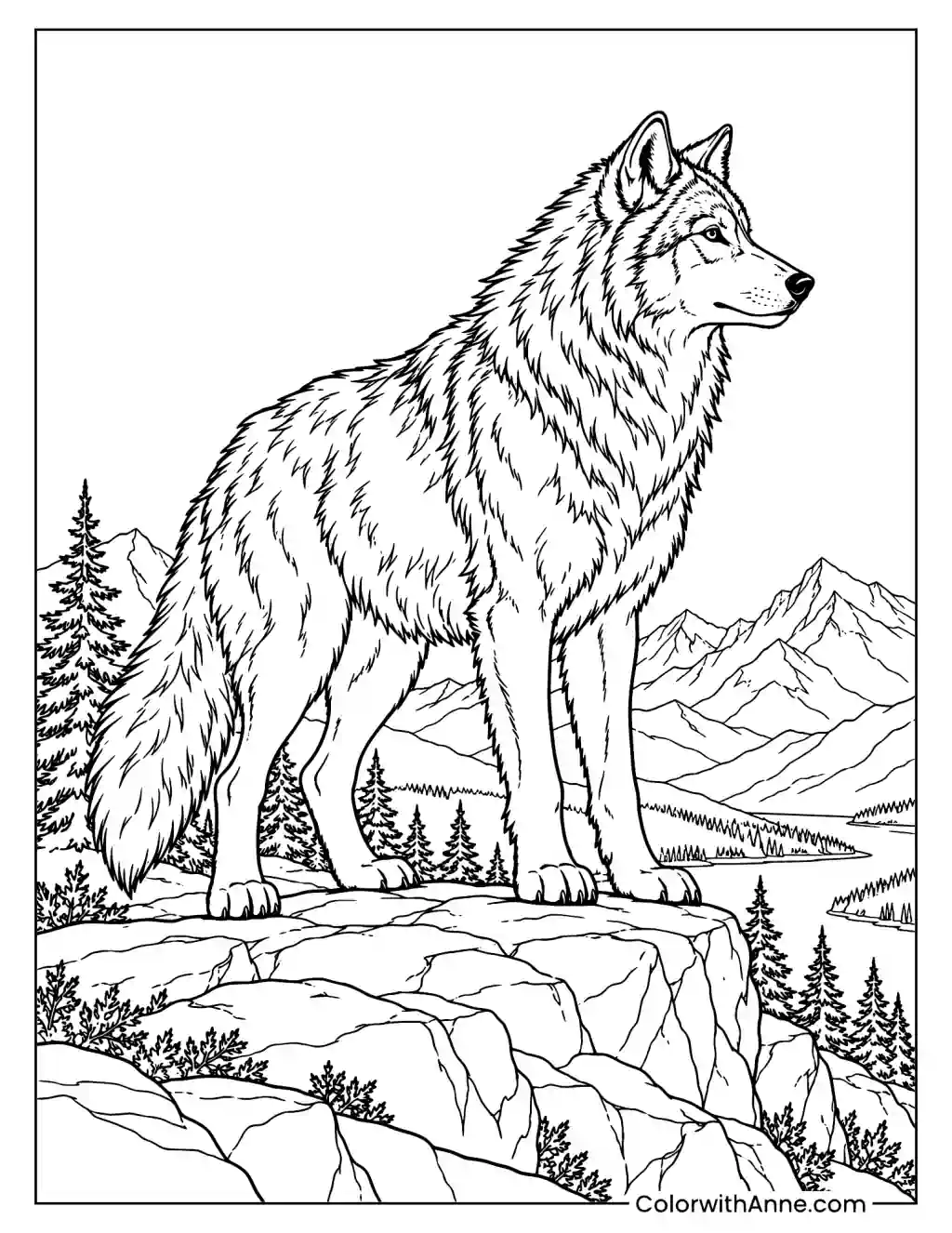
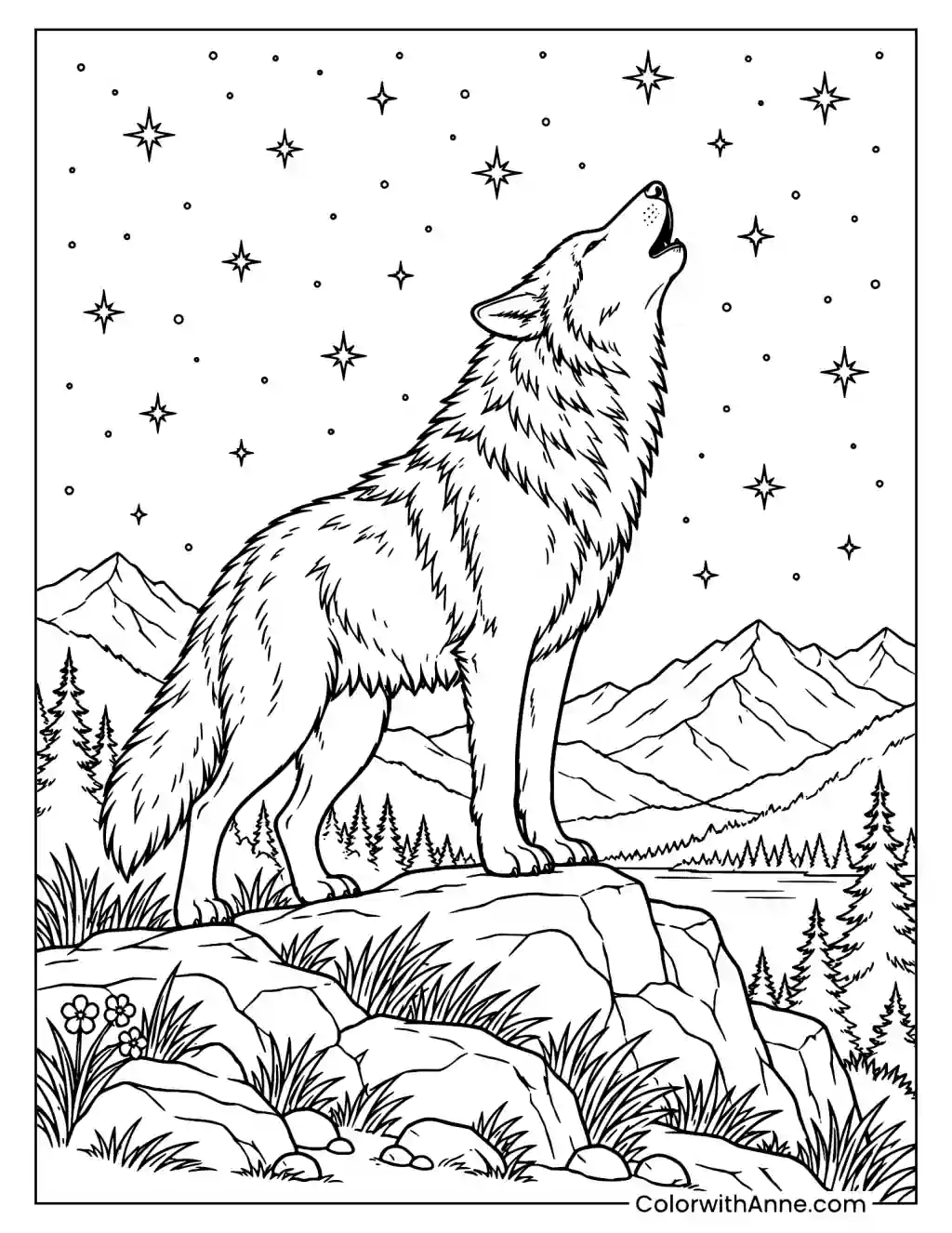
The wolf stands on a broad ledge, with trees, water, and distant peaks behind it. A photograph from a mountain outing could supply the colors for this landscape, even if the animal was nowhere near the trip.
Try warm gray for the wolf and foreground rock, with pale blue on the far mountains. A little dark green among the nearer conifers will separate them from the softer distance.
Choose one feature from the photograph to carry into the page: perhaps a rusty patch of rock or a blue-green stretch of water. Place that color where the matching feature appears in the drawing. The finished landscape can borrow something recognizable from a favorite view.
Bring a Little Bark Texture into the Forest
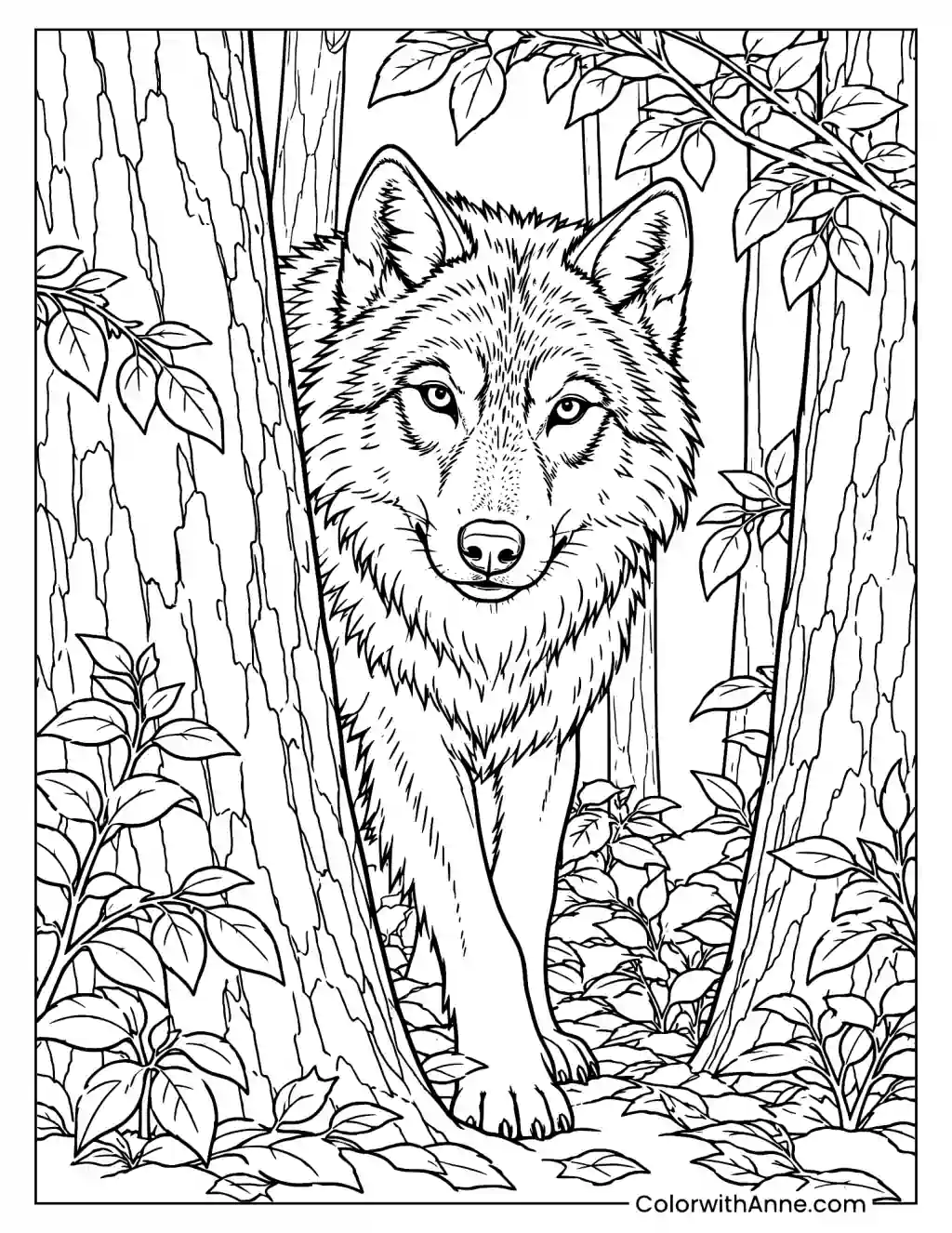
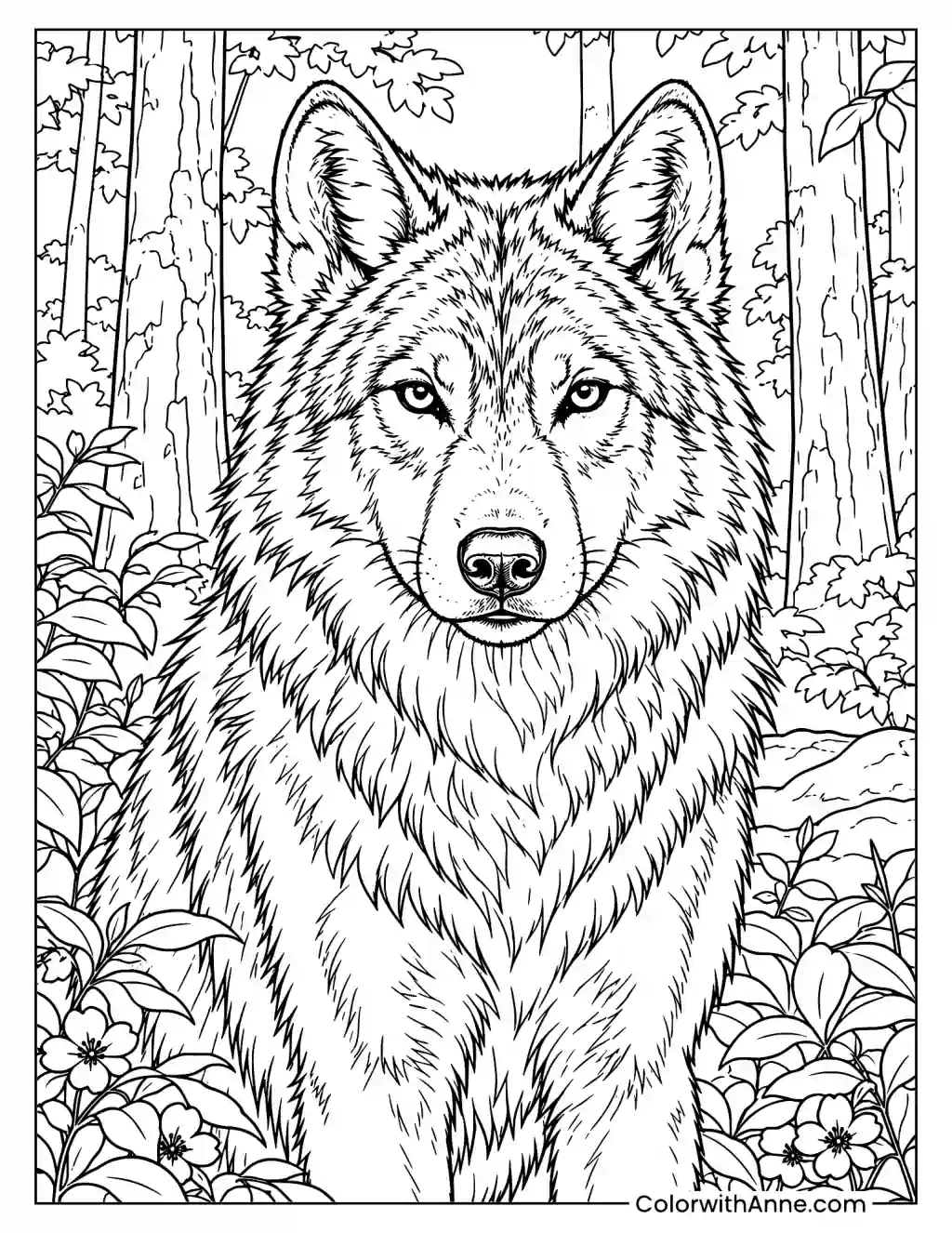
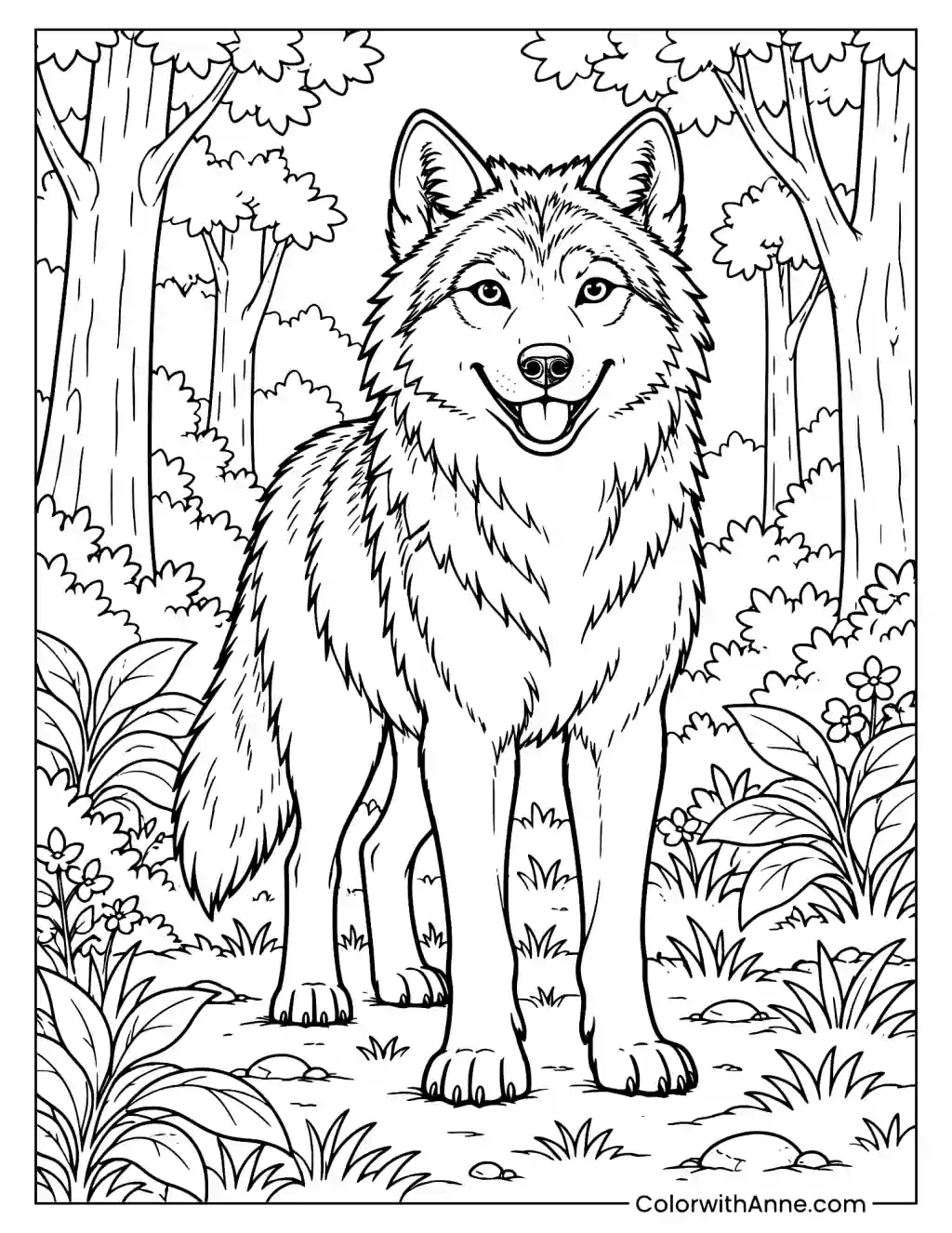
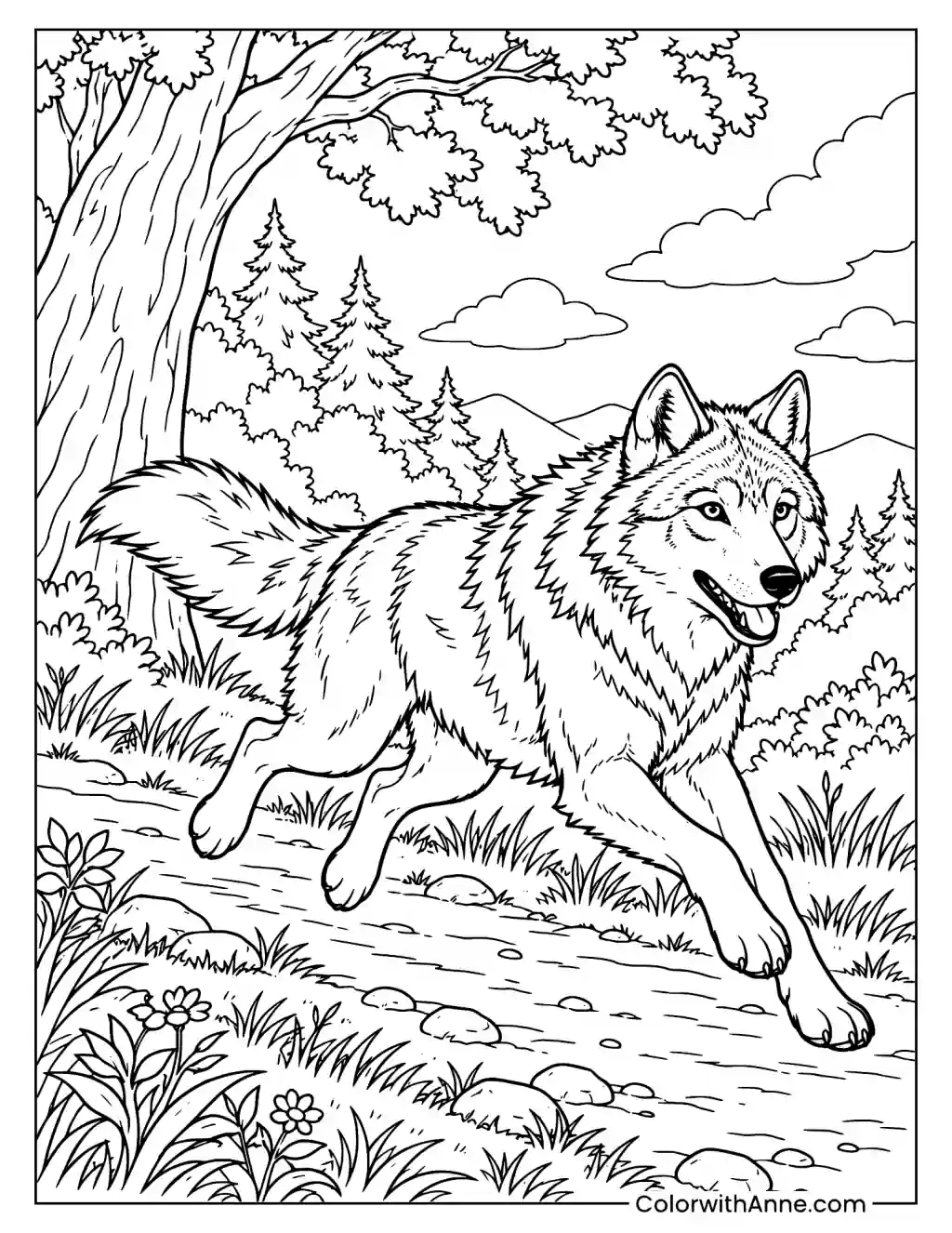
A gray-brown wolf with dark green leaves would suit this close forest scene. The large trunks on either side have room for a little of the rough texture of real bark.
Make a rubbing on a separate sheet first, holding the paper against a bark surface and moving the side of a crayon across it. Compare that pattern with the long printed grooves before deciding which small patches to borrow.
Use short, uneven marks beside a few of those grooves on the coloring page. The trees can have rougher patches while the wolf's face stays softly colored. A fallen piece of bark beside the page makes a useful reference as those different surfaces take shape.
Choose Two Distinct Wolf Coats
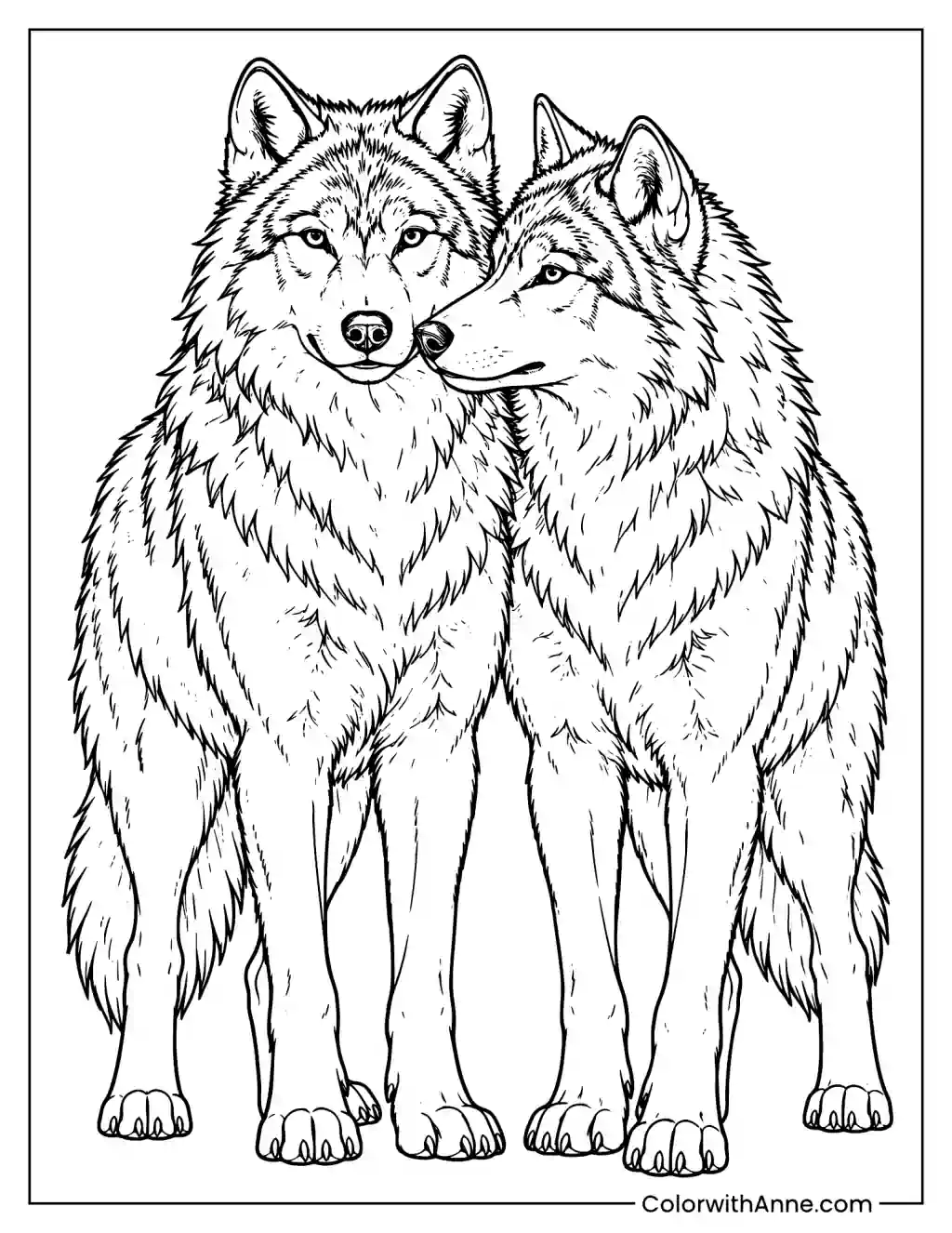
The two wolves stand close together, with one facing forward and the other turning its muzzle sideways. Give each its own coat so the overlapping bodies remain easy to follow.
A wildlife photograph can help with the placement of pale cheek fur and darker patches along the back. Choose a clear view of one animal for each wolf, rather than borrowing small markings from several different photographs.
Try a warm brown-gray coat on the forward-facing wolf and a cooler gray on its companion, with pale chests on both. The near-touching muzzles are a good place to use the difference between those coats. Let the chosen markings continue down the shoulders so each head still belongs to a distinct body.
Keep the Stars Bright above the Howl
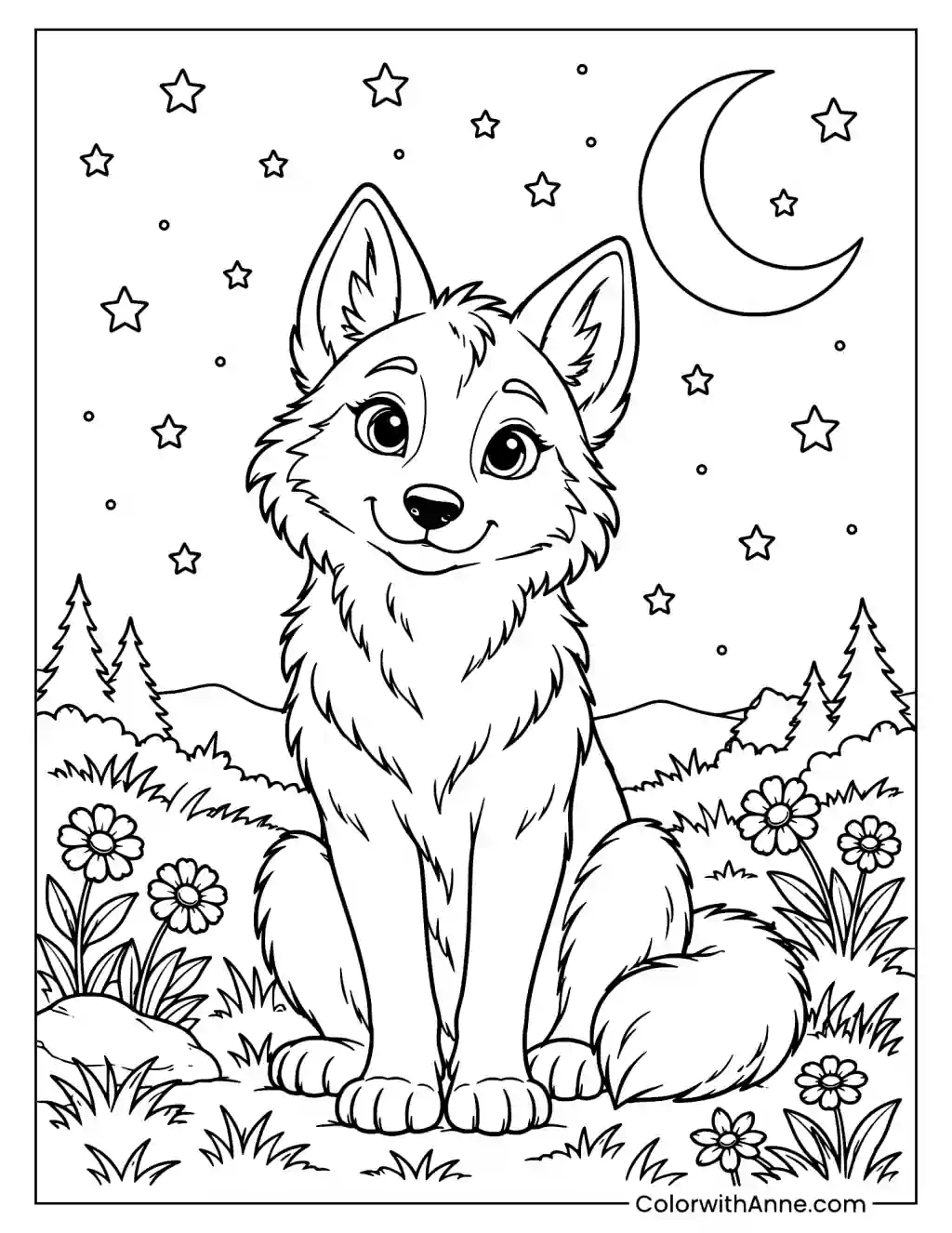
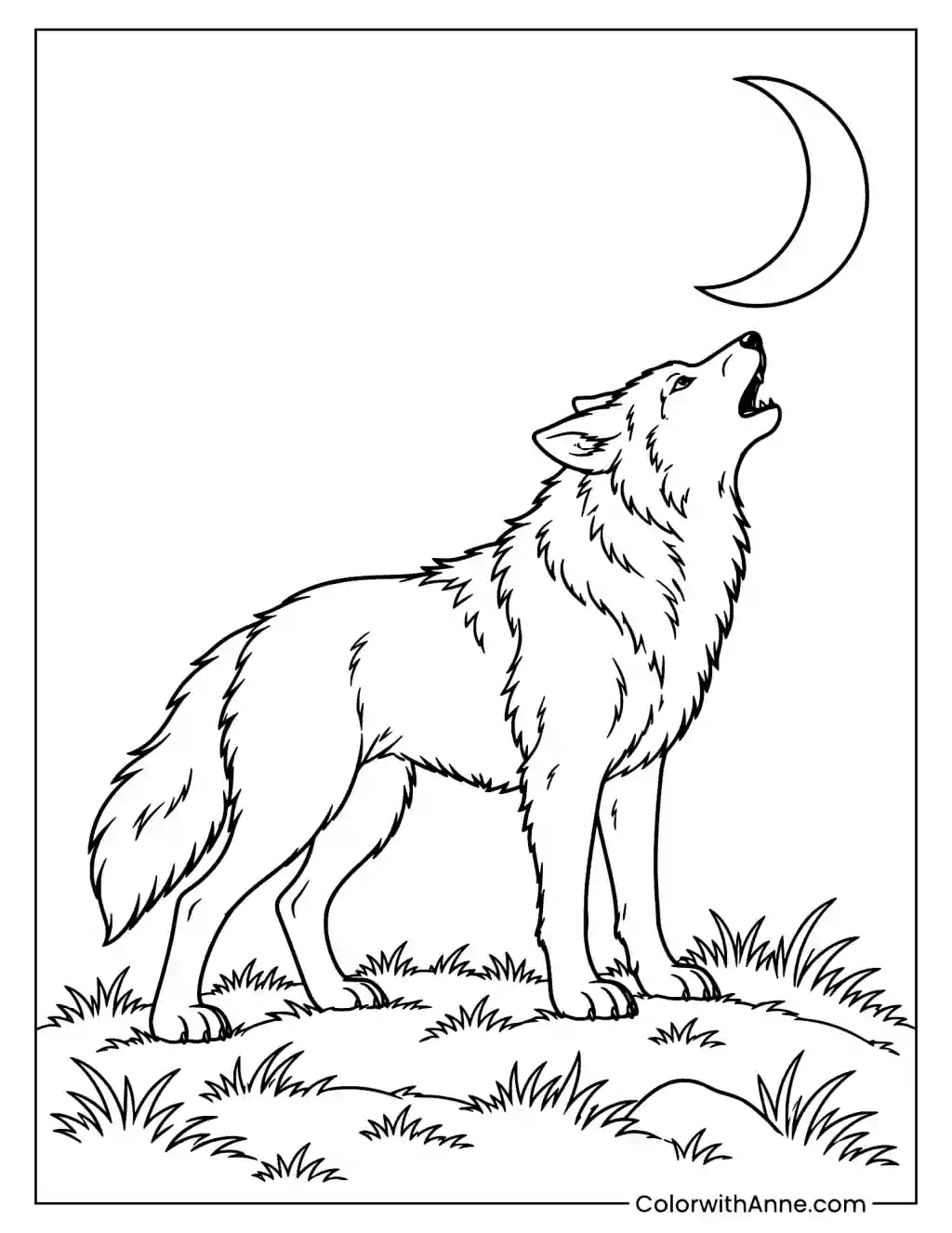
This wolf has its muzzle lifted beneath a sky full of outlined stars. The open sky gives the picture plenty of room for a deep night color, with the little star shapes left bright.
A blue-black sky, pale yellow stars, and a silver-gray wolf would make a striking version. Leave a little of the wolf's upper muzzle and back very light against that dark sky.
For a few larger stars, you could add short rays beyond the printed points. Choose only two or three so they look different from the many tiny dots around them. The added rays can spread into the open sky above the mountains, keeping the space immediately around the raised muzzle clear.
Freeze in the Dancing Cub's Pose
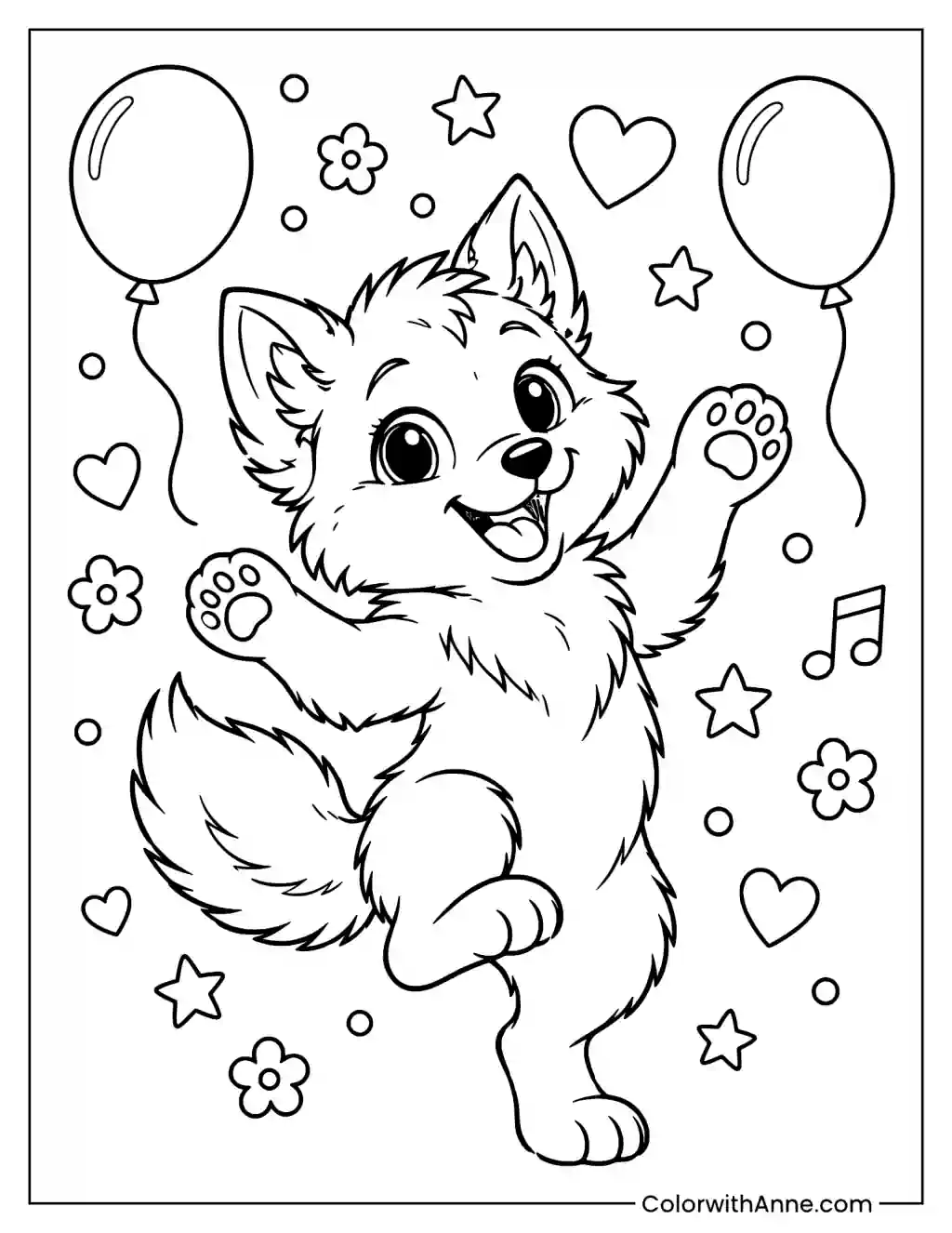
Try a warm brown cub with a red balloon and a blue one, giving the raised paw pads a soft pink. The lifted foot and two waving forepaws make this little dancer a useful cue for musical statues.
Put the finished page where the players can see it. Play a favorite track, then pause the music and let everyone try the cub's pose, with their own hands raised and one foot lifted.
On the next pause, someone can choose a different pose while the cub stays the same. Keep the picture as the familiar starting position each time a new round begins. Its broad smile suits a game where a wobbly statue can still join in.
Draw a Map for a Familiar Walk
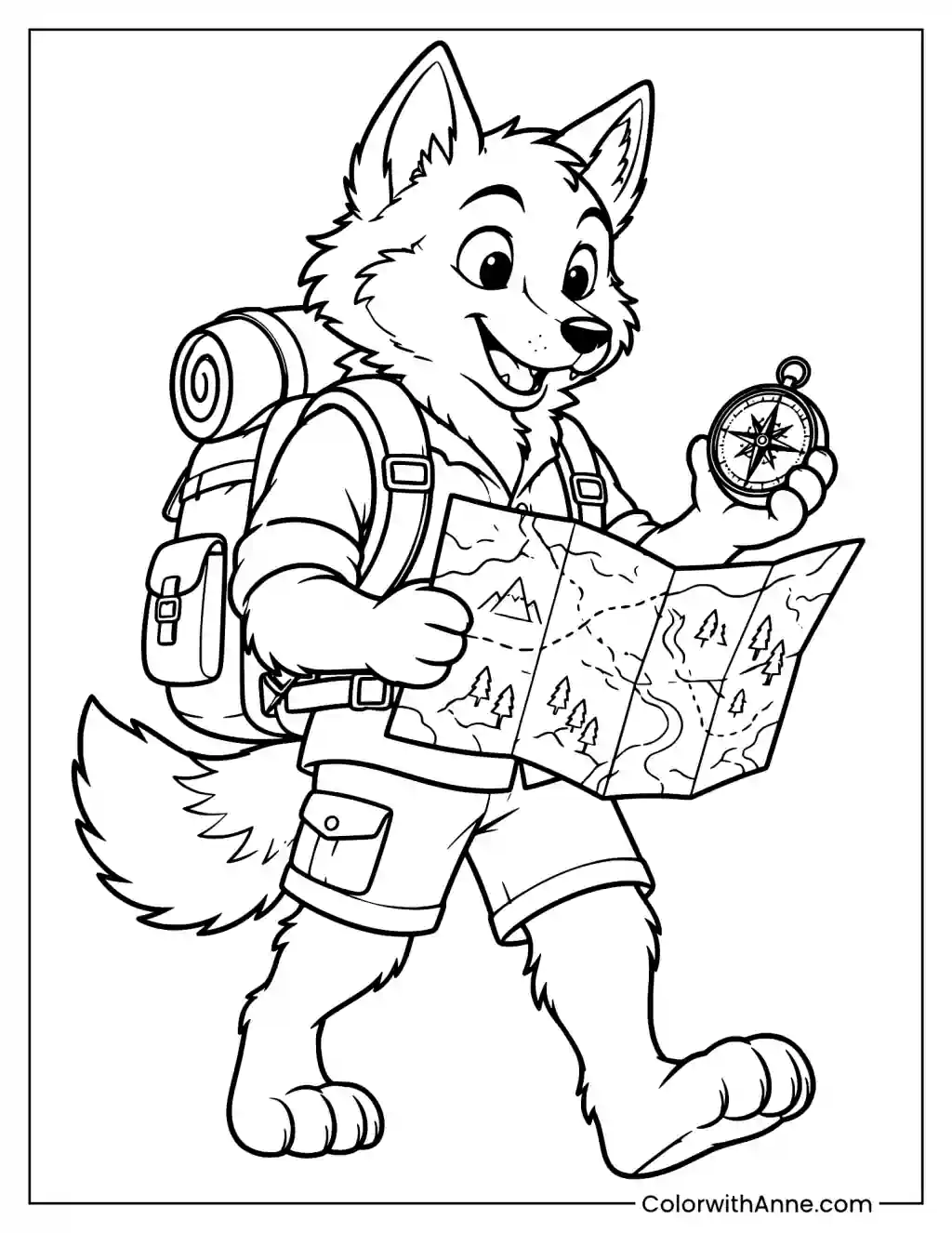
The backpacker has brought an open map and a round dial, with a bedroll strapped above its pack. Before a familiar walk, make a small map of your own on a separate sheet.
Choose three recognizable places along the route, such as a gate, a bench, and a pond. Draw a simple symbol for each one, then join them in the order they appear on the walk.
A blue backpack and orange shorts would give the wolf a cheerful walking outfit. After the outing, add one detail that was missed from the first map, perhaps a winding path or a second bench. The extra mark records something actually noticed along the way, ready for another visit.
Choose Yarn for the Wolf's Knitting
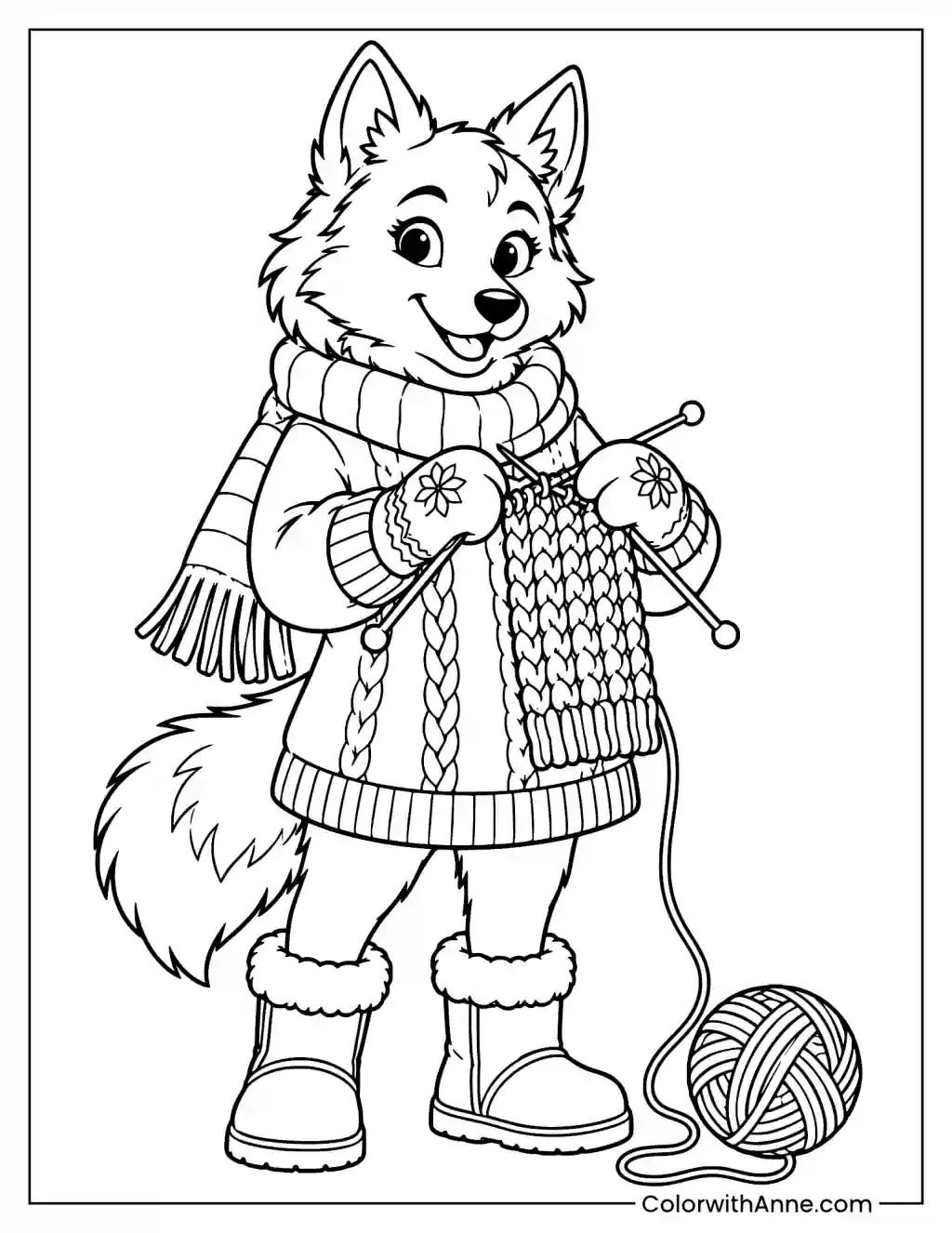
The strand from the ball leads to the panel held between the knitting needles. Choose a leftover piece of wool as a color reference for those connected parts of the picture.
Wrap a little of the wool around a scrap of card and set the swatch beside the page. If it changes color along its length, notice which shades appear next to one another before choosing how much of that variation to borrow.
A blue ball and blue knitted panel would keep the strand easy to follow, with a mustard scarf around the wolf's neck. The flowered mittens can have a separate color; they are already being worn while this new piece of knitting is still on the needles.