
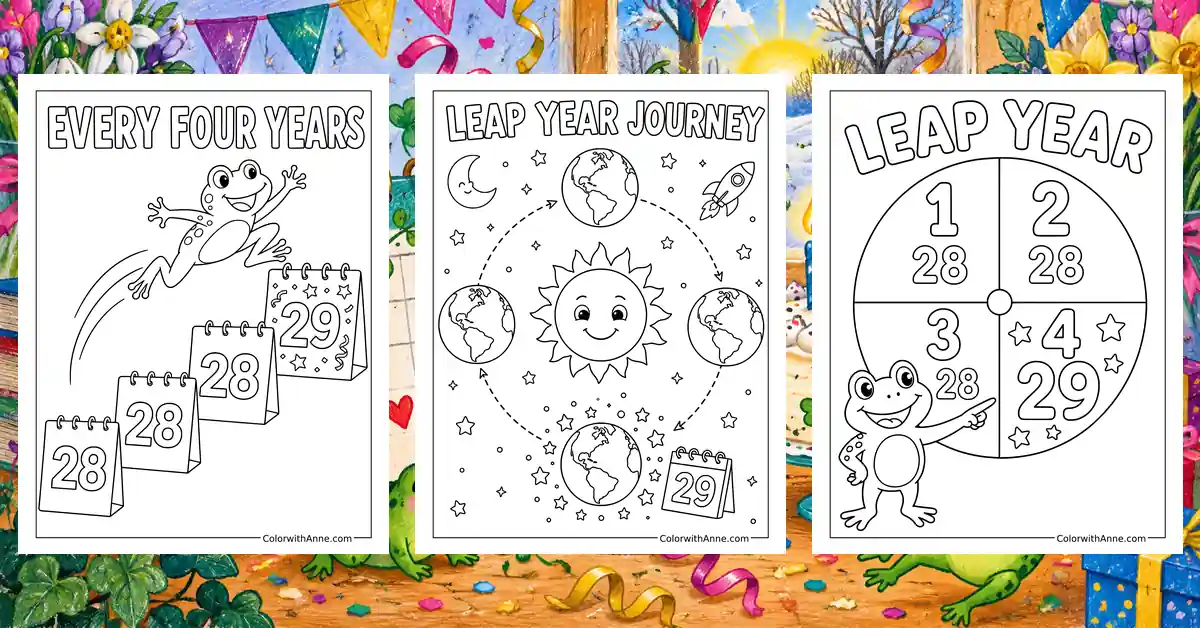
February 29 looks slightly unusual even when it is written neatly on a calendar. A date that does not appear every year invites questions, particularly from a child who has just realized that someone might have a birthday on it. The practical arrangements for cake suddenly deserve investigation.
Leap Year coloring pages can accompany that curiosity without making the extra day feel like a complicated assignment. A page dated February 29 becomes a small record of being there for it. For a class or family marking the occasion, imagining what might change before the next leap day can lead to some ambitious predictions.
Free Printable Leap Year Coloring Pages
Click any coloring page below to open the PDF, then print on US Letter or A4 paper.
Did you find what you needed?
Help us choose what to create or improve next.
Coloring Ideas for Leap Year Pages
Try one of these coloring ideas, or use them as a starting point for your own.
Hop along the Fours
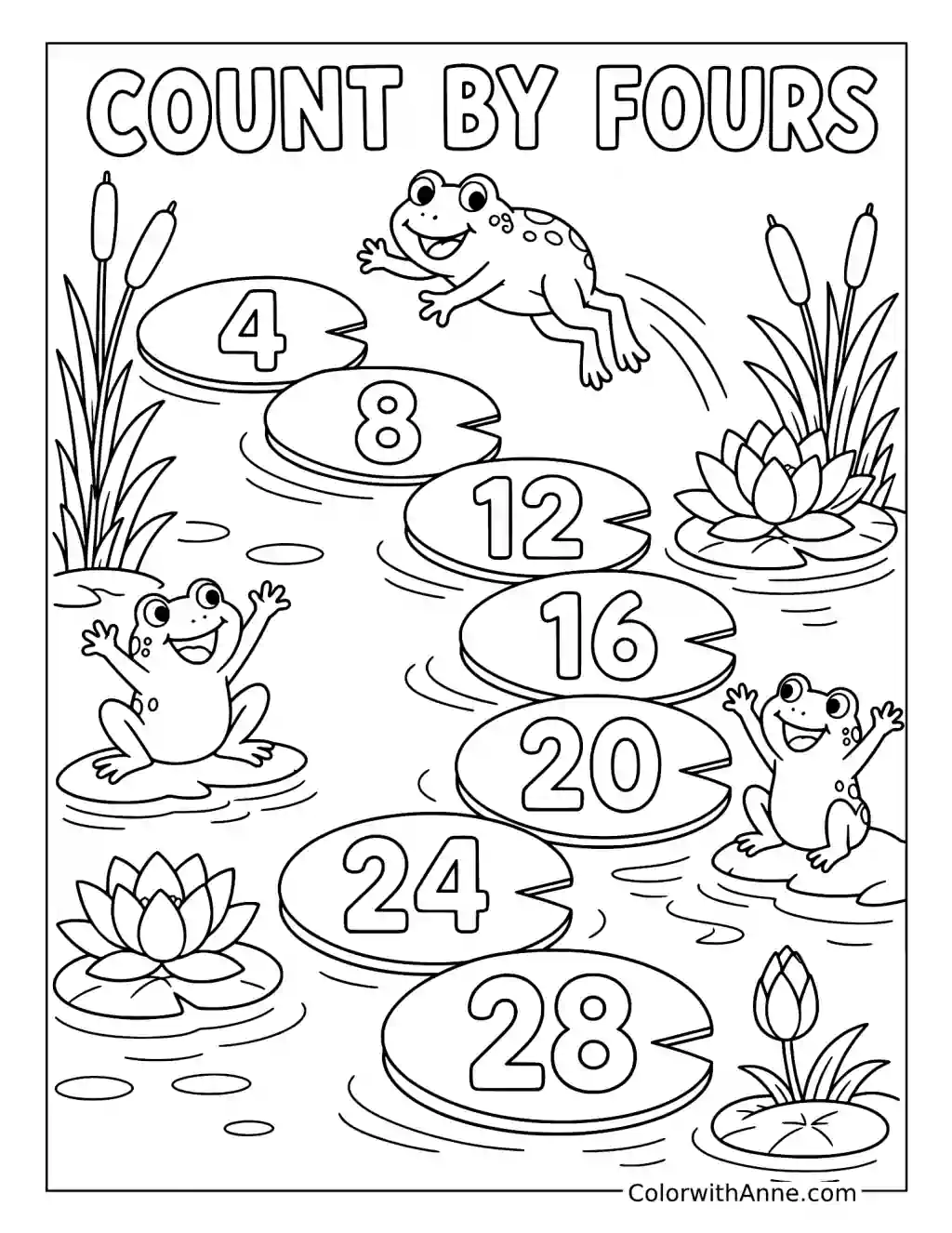
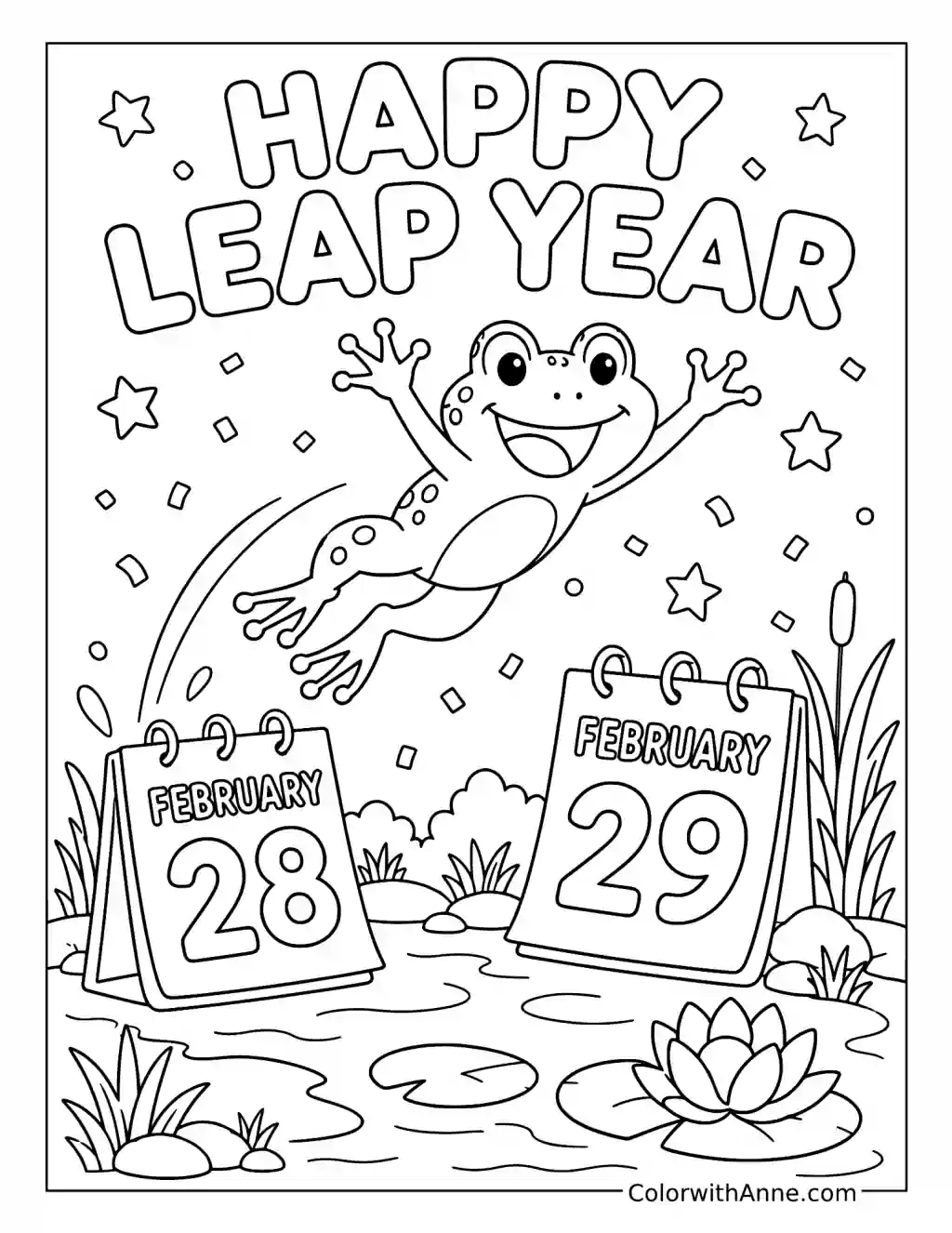
Numbered lily pads make a route through the frog pond, beginning at four and continuing upward. The frogs and flowers give the counting sequence somewhere pleasant to live, with each pad offering an obvious next stop.
Different greens could distinguish the pads from the water. Clear numbers and a few warm flower accents would keep the route readable among the plants.
Move a small counter from pad to pad while saying the numbers aloud. Then cover one number and work out what belongs there. The page makes a straightforward counting game connected to the leap-year theme, without requiring all the calendar rules to be introduced during the same sitting.
Find February’s Extra Date
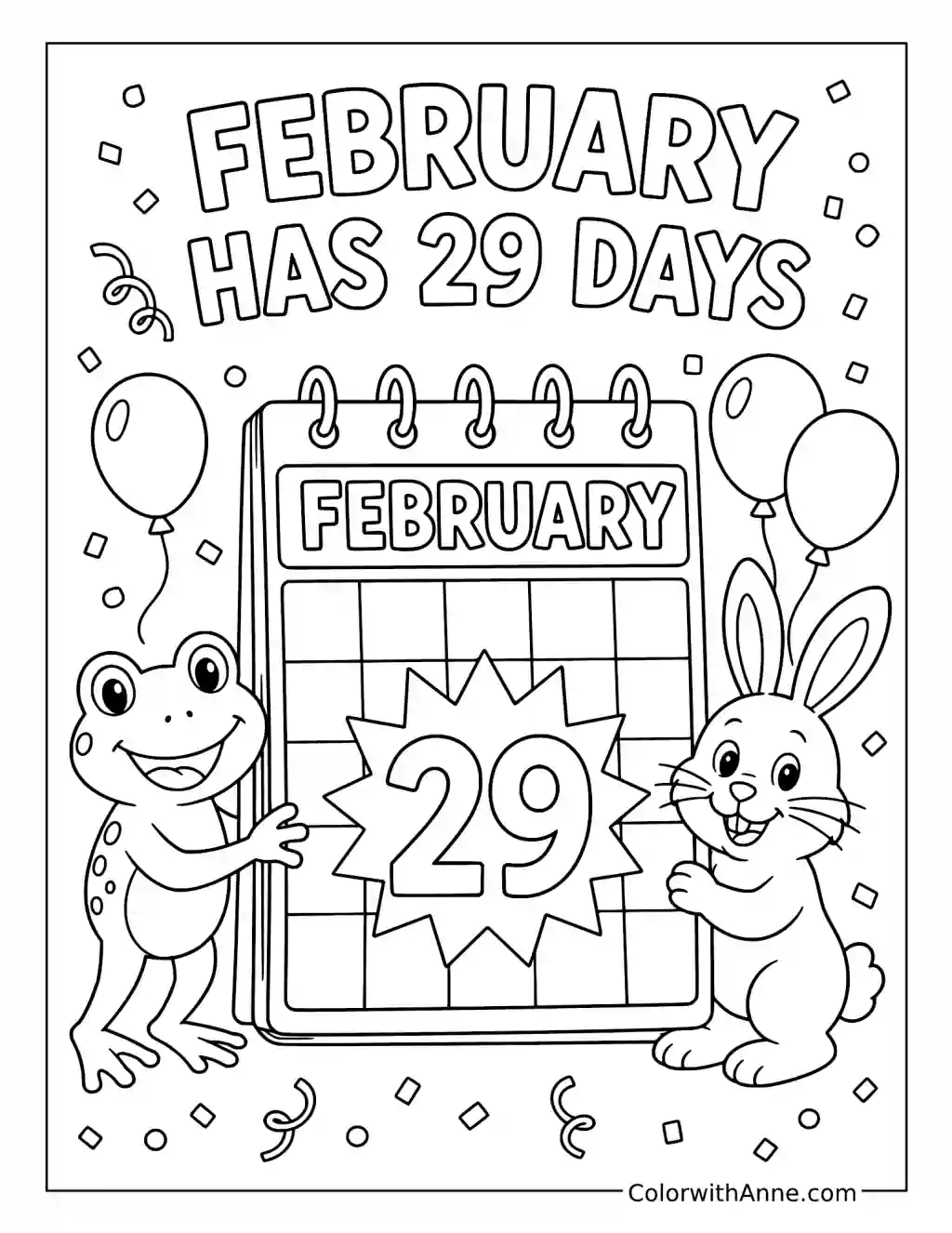
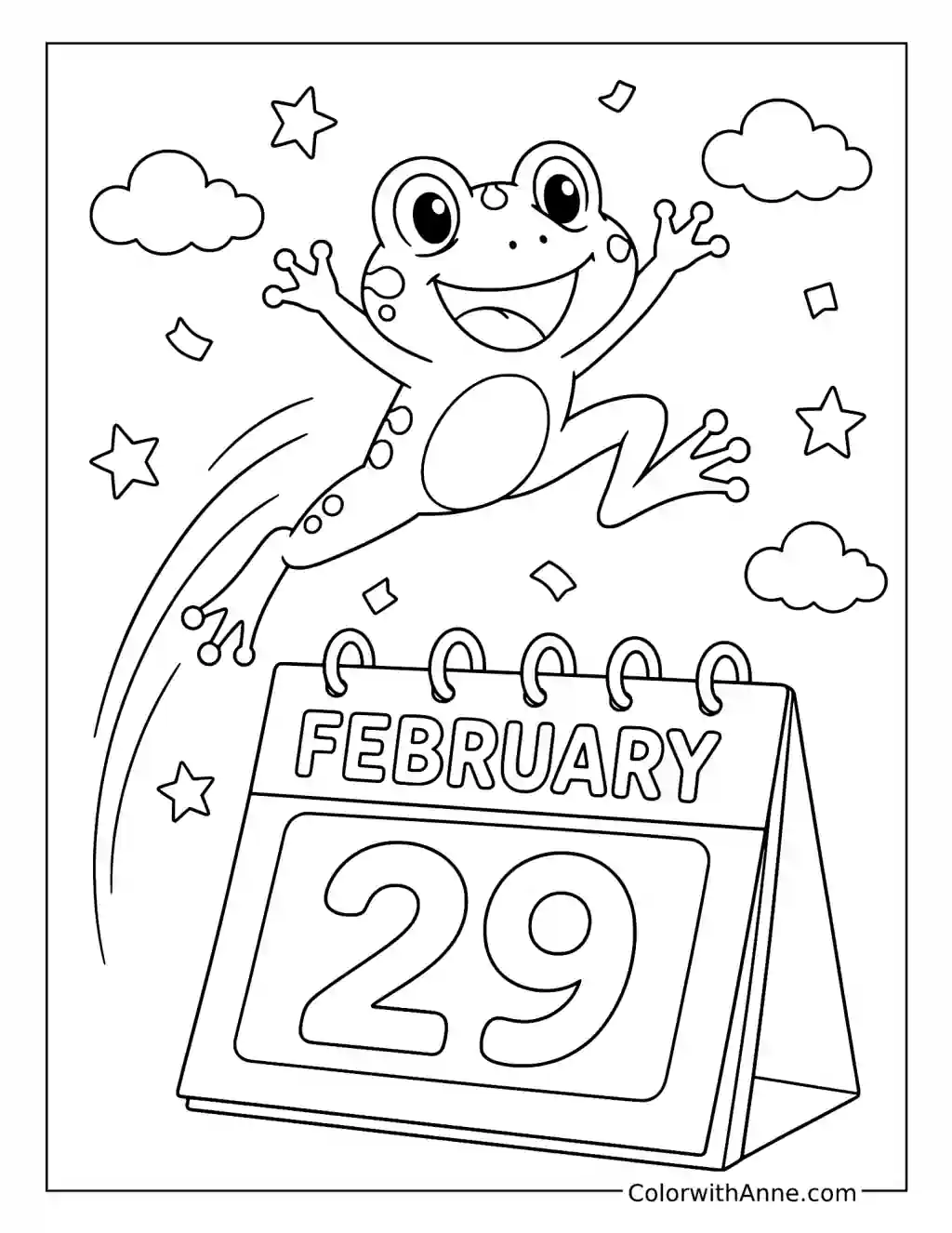
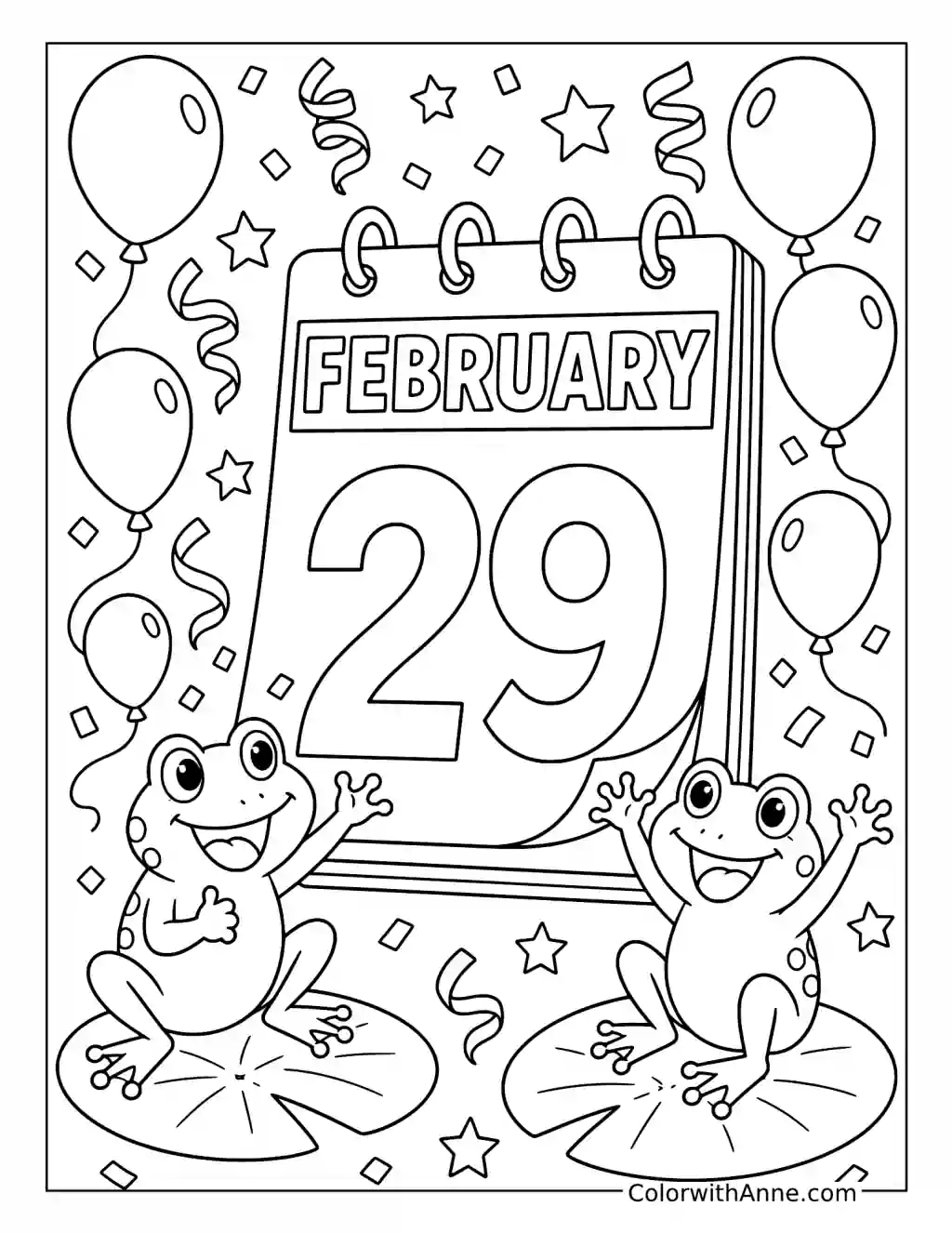
A frog and rabbit celebrate beside a February calendar displaying 29. Balloons and confetti give the additional date a welcome usually reserved for a birthday.
A strong color on 29 would make the central idea clear. Softer calendar pages and coordinated balloon colors could keep the celebration bright without hiding the smaller details.
Put a leap-year February calendar beside one from a common year and compare their final week. Find the extra date, then look at where March begins. The picture can stay nearby as a cheerful reminder of what you are investigating, while the real calendars provide something concrete to count and discuss.
Celebrate the Actual Birthday Date
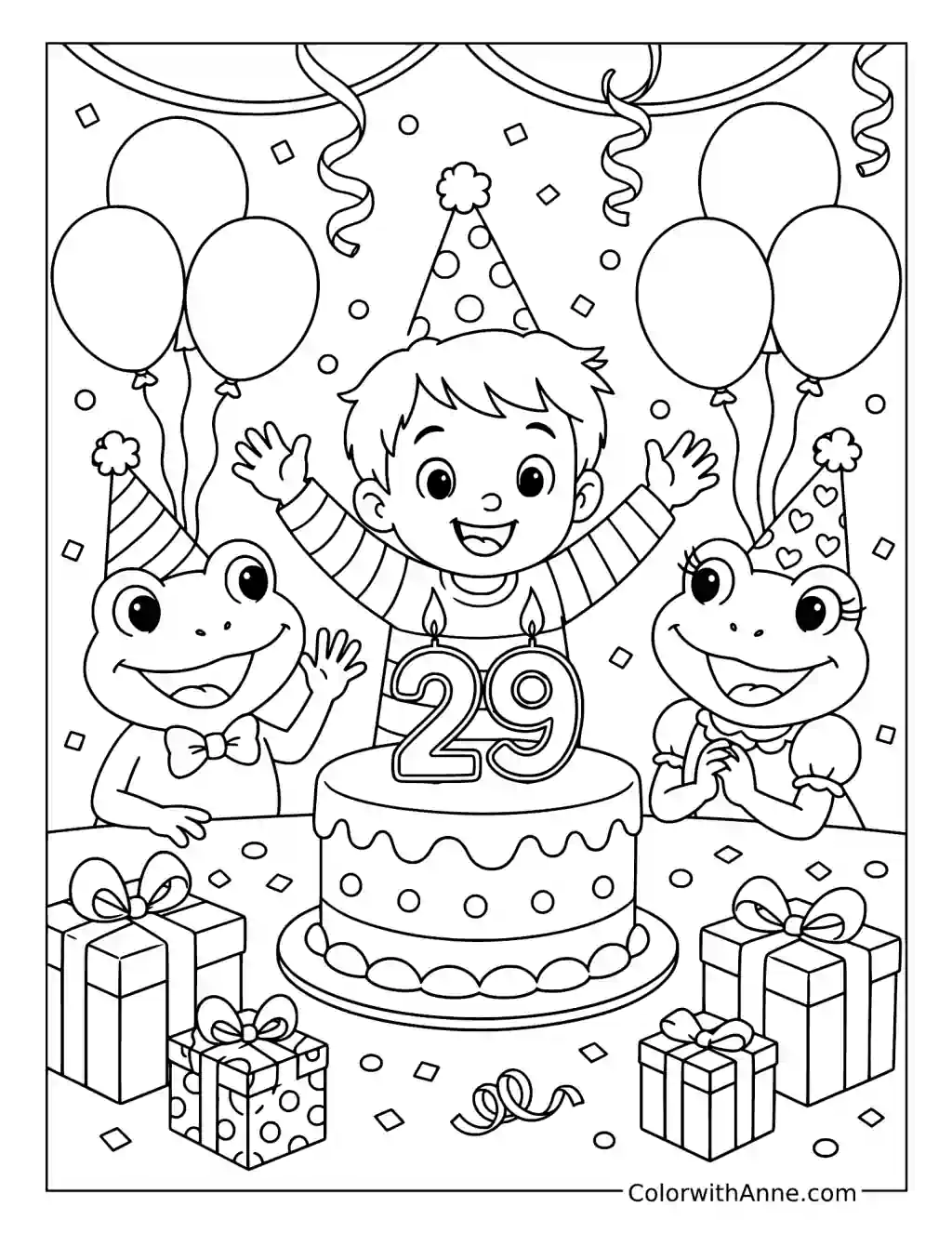
The birthday child stands behind a cake topped with 29, joined by cheerful frogs and balloons. The number is part of the celebration here, giving the familiar party scene its particular occasion.
Favorite party colors could run through the balloons and icing. A quieter table would leave the child’s face and the large 29 easy to see.
Use the finished picture for someone whose birthday falls on February 29. Add a personal message about them inside the card, allowing the unusual date to be one happy detail rather than the whole greeting. The frogs and cake have already supplied the leap-day theme, leaving your words free to sound like you.
Seal a Leap-Day Time Capsule
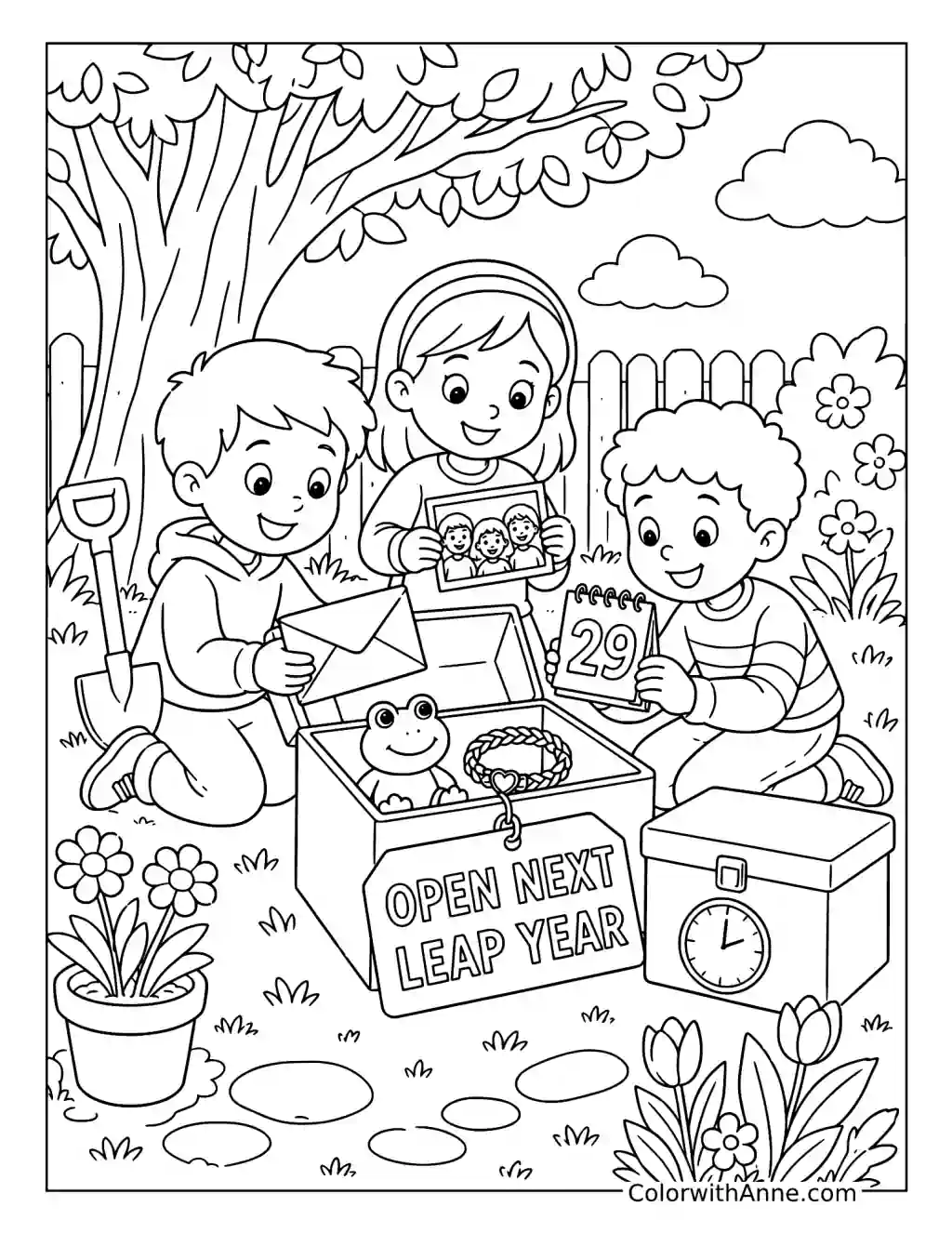
The children gather around a little time capsule with keepsakes spread across the table. The label gives the box a clear appointment with the future, which makes choosing its contents feel pleasantly important.
Warm wood and cheerful clothing would suit the gathering. A stronger capsule color could draw attention to the box while the surrounding garden stays softer.
Include a drawing, a short list of current favorites, and one question you would like your future self to answer. Seal them with the colored page and write the next February 29 opening date on the container. Choose a storage place someone will remember, so the interesting part eventually becomes discovering what has changed.
Take a Paper Earth around the Sun
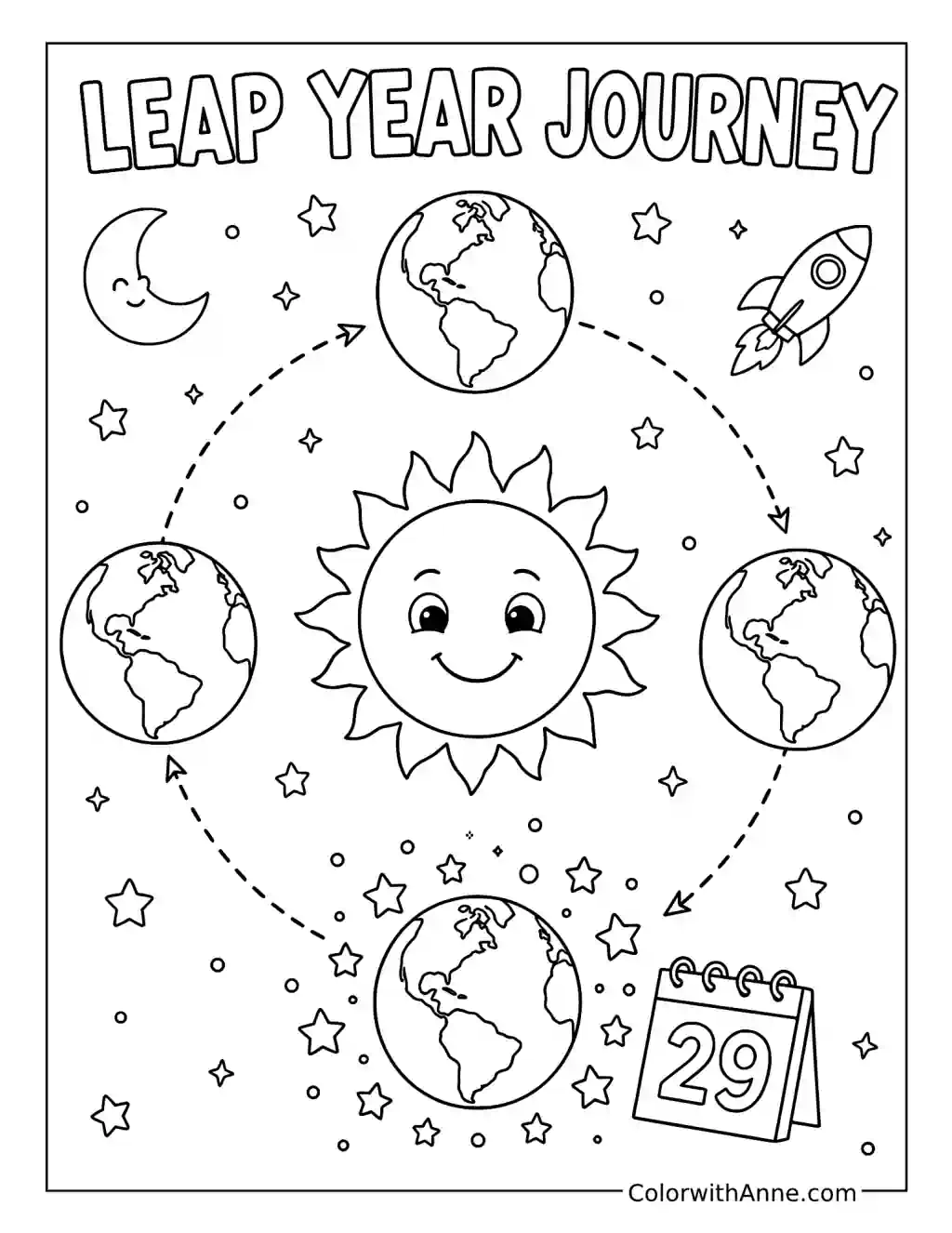
Earth appears at several points around a smiling sun, with arrows carrying the journey onward. The little calendar below connects the large movement in space with a date that can fit on a classroom wall.
Blue and green Earths could circle a warm yellow sun. A clear arrow color would keep the route visible, with surrounding stars left lighter.
Move an Earth cutout around a paper sun to represent one complete year. Keep the model simple and use it to begin a conversation about why calendars sometimes need an additional day. The illustration offers a starting point for that question, rather than an exact diagram of the sizes and distances involved.
Put Four Named Years on the Wheel
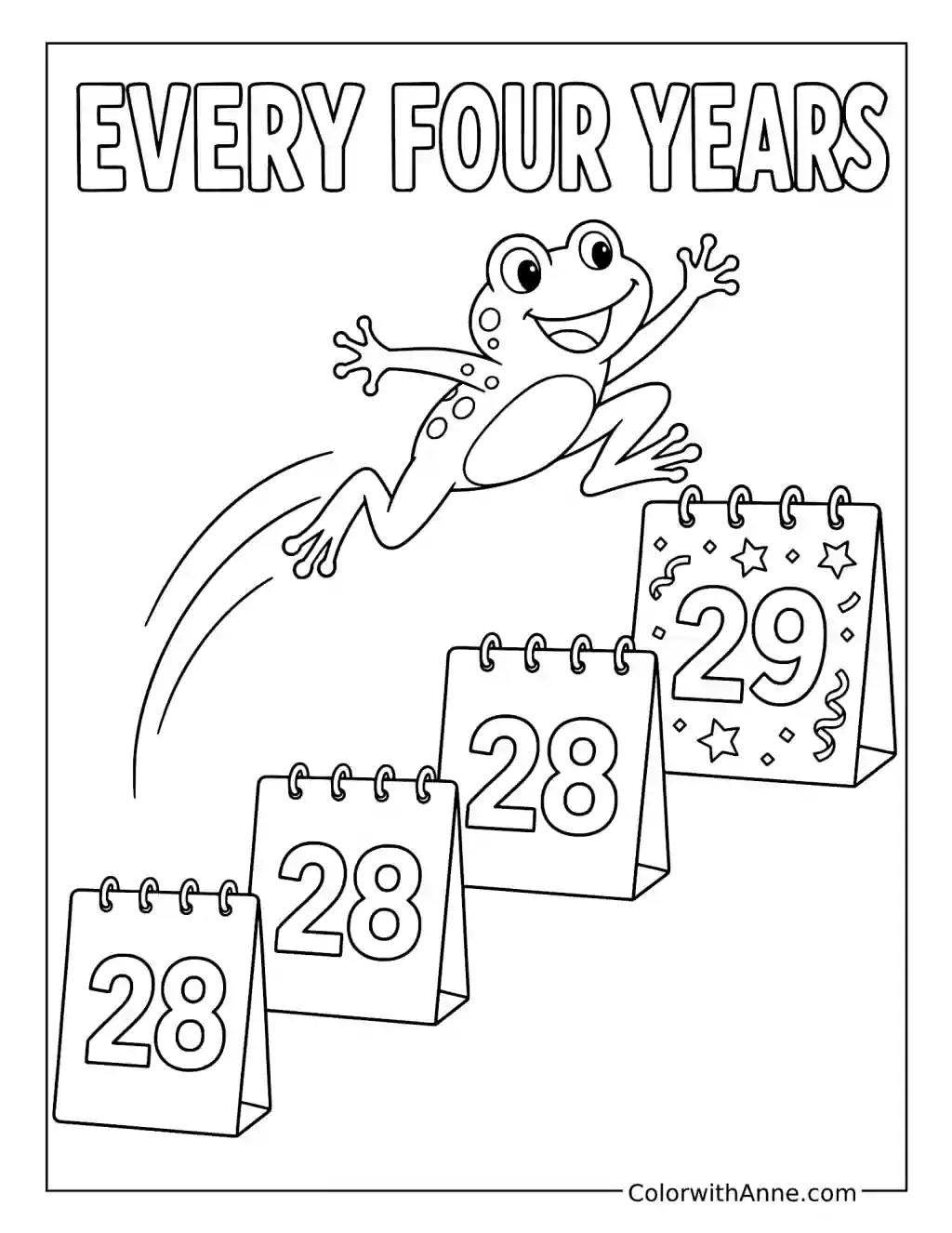
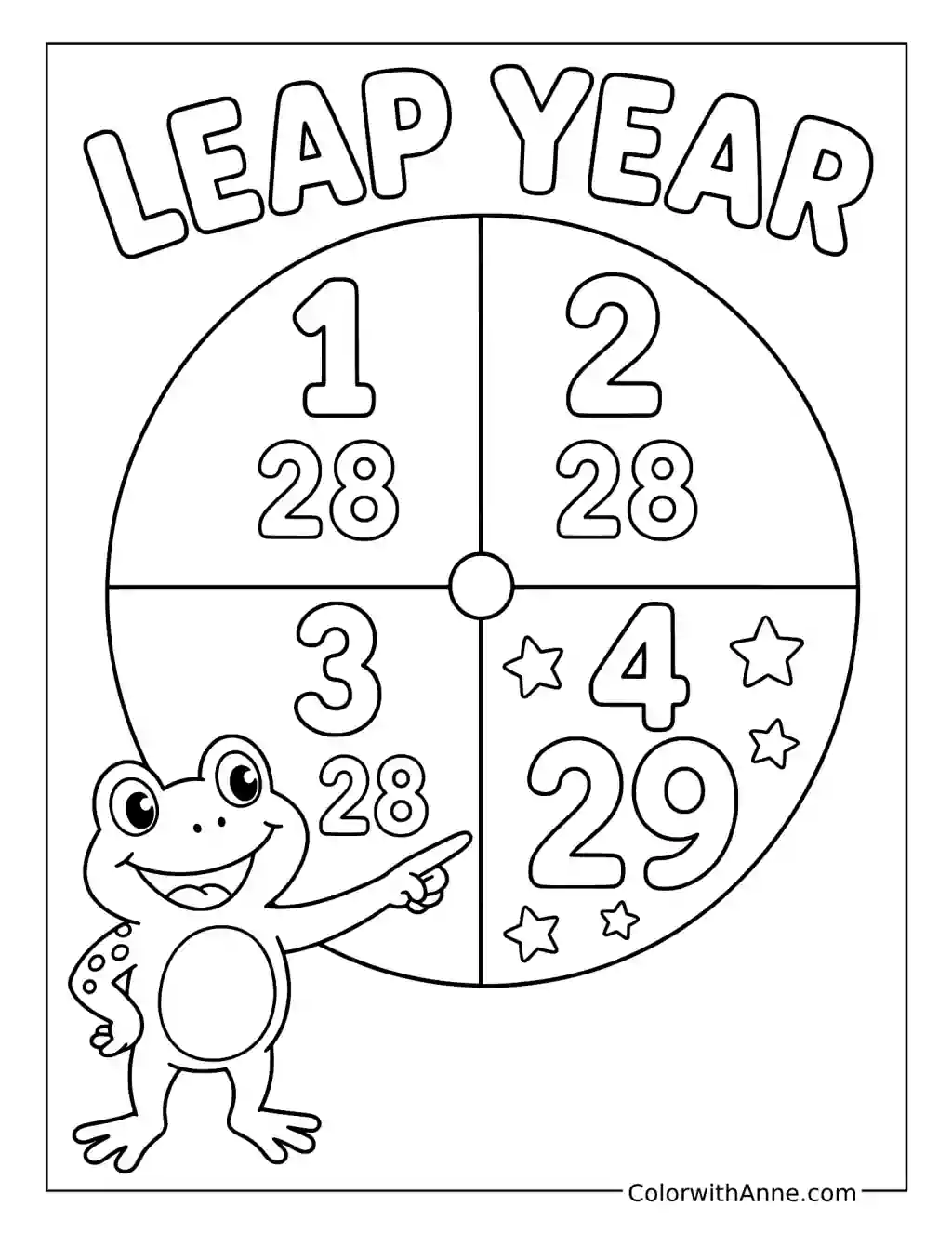
The wheel has four numbered quarters, with three February 28 labels followed by a February 29. The frog points toward the changing section, making the pattern easy to locate.
One color could connect the first three quarters, with a brighter fourth section. Keeping the printed labels pale would preserve their readability.
Label the sections with a specific run of years, such as 2025, 2026, 2027, and 2028. Then turn a small paper pointer through them as each year is named. This makes the simplified wheel concrete; the century-year exceptions belong in a fuller explanation rather than treating the four-part pattern as a rule without exceptions.