
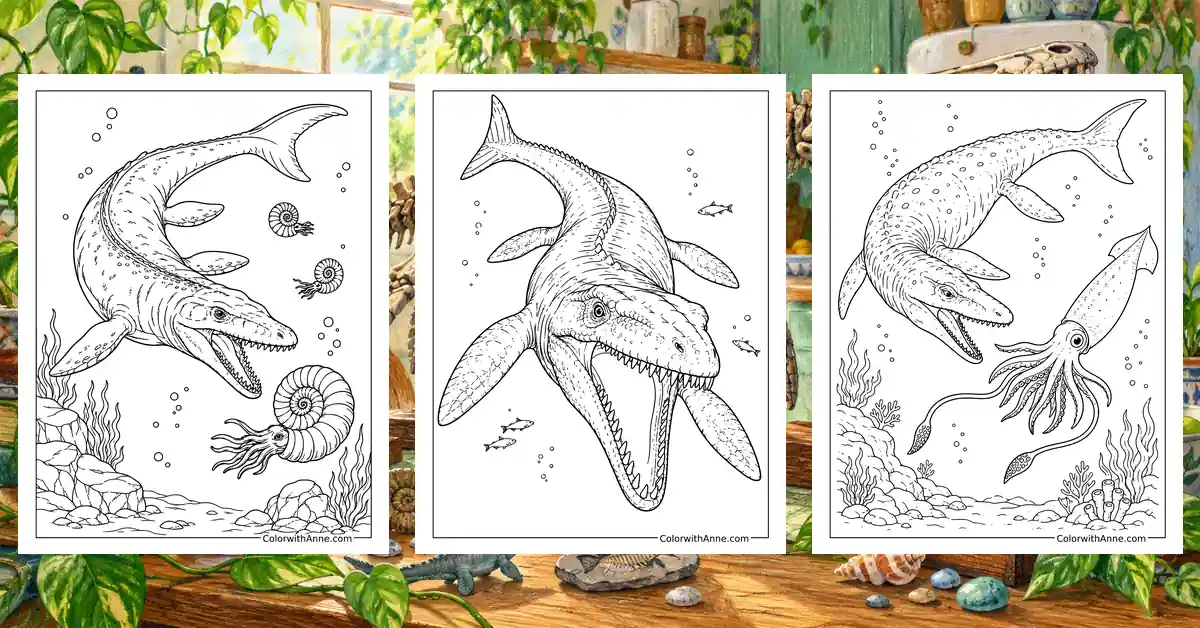
A Mosasaurus toy can make the bathtub seem like rather a small ocean. Its long jaws draw attention immediately, and the child holding it may have a detailed explanation of why every other creature should move aside. A marine reptile of that size makes quite an impression, even in miniature.
Mosasaurus coloring pages leave room for the fascination without requiring more water on the floor. The powerful outline invites a closer look at an animal whose life happened far beyond human observation. A young enthusiast may supply the missing movement with sound effects, though the explanation of its swimming is often the most carefully considered part.
Free Printable Mosasaurus Coloring Pages
Click any coloring page below to open the PDF, then print on US Letter or A4 paper.
Did you find what you needed?
Help us choose what to create or improve next.
Coloring Ideas for Mosasaurus Pages
Try one of these coloring ideas, or use them as a starting point for your own.
Look Down on the Swimming Shape
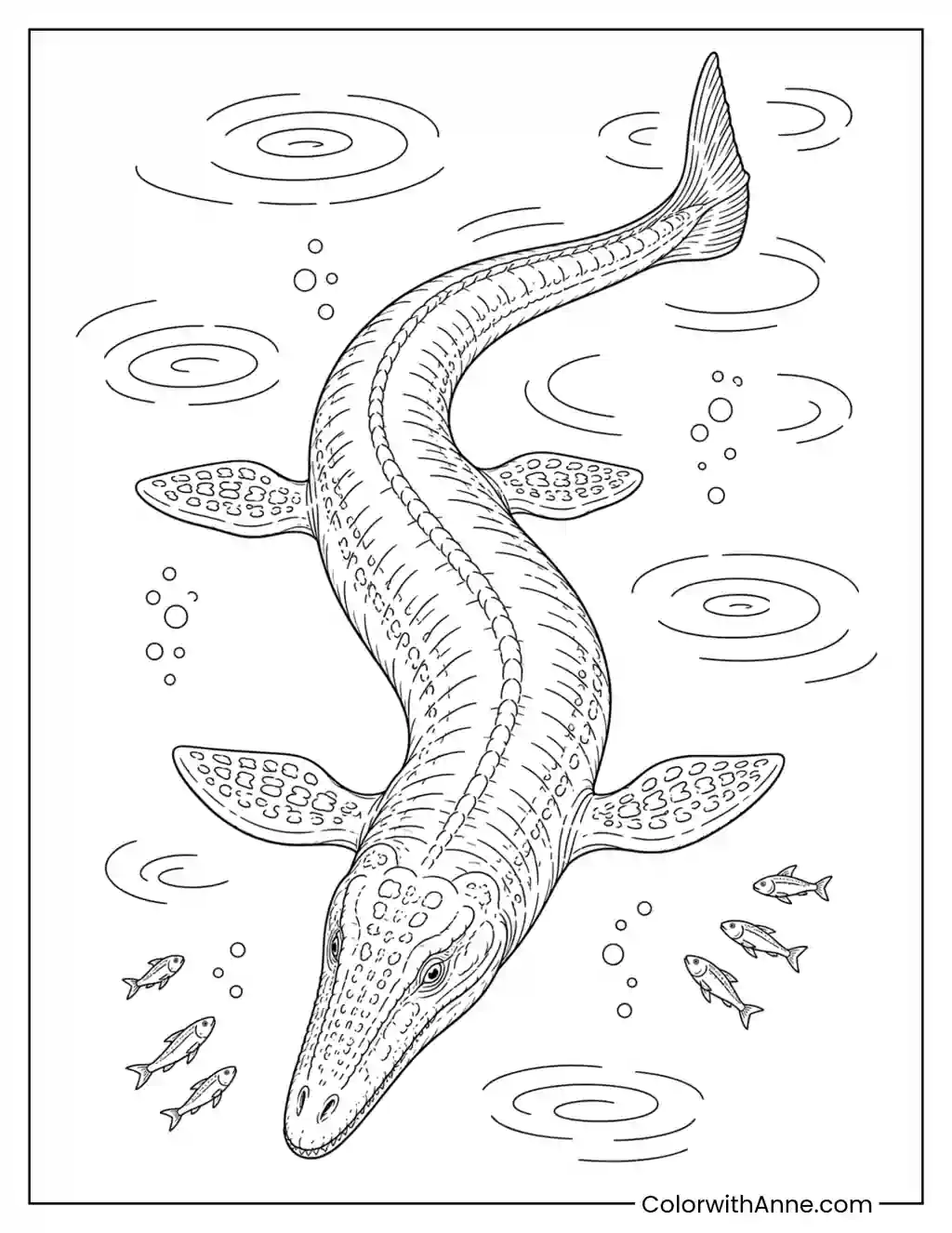
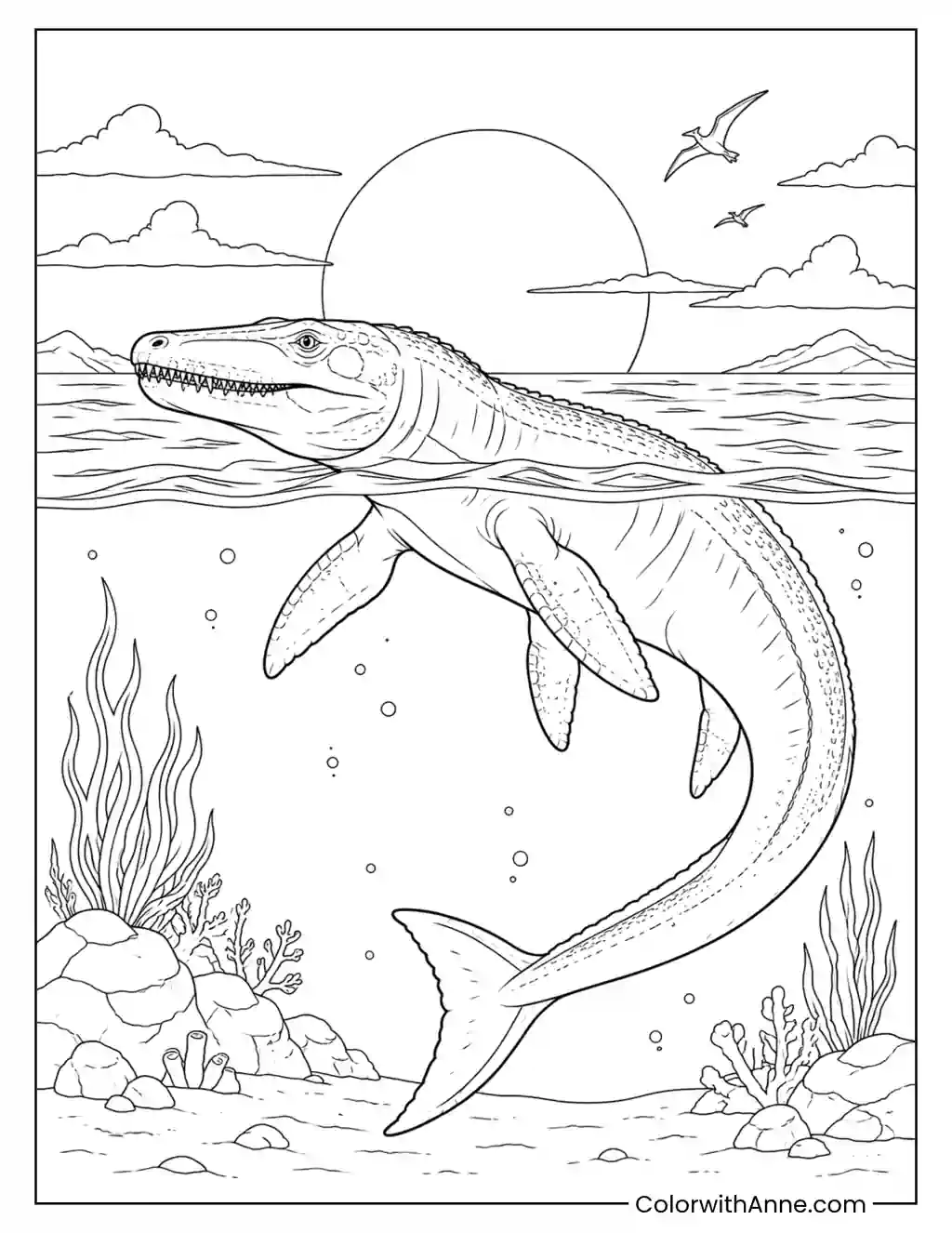
Seen from above, the Mosasaurus curves through the water with its flippers spread and tail sweeping behind it. This angle makes its entire swimming shape visible, rather than letting the open jaws take over the scene.
A blue-gray body with a darker back would suit the watery setting. Pale rings on the surface could stay light against the more strongly colored animal.
If there is a toy marine animal at home, photograph it from above and again from table height. Compare which parts disappear from each view. Trying a simple drawing from both photographs helps explain why the same creature can look so different, and gives this unusual overhead picture a practical connection to drawing from observation.
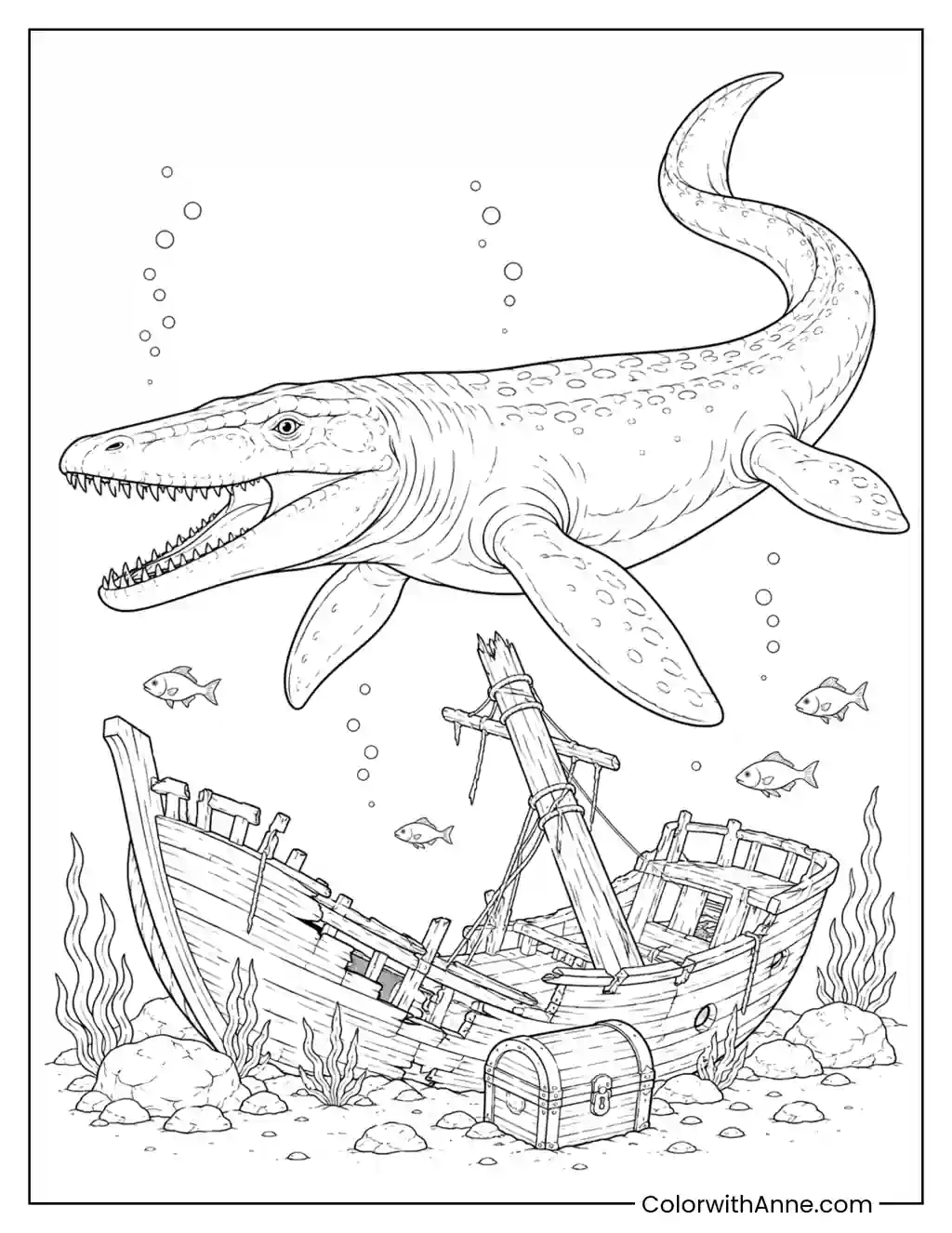
Explore the Shipwreck as a Sea-Monster Fantasy
The Mosasaurus passes above a broken sailing ship, with a chest resting near the wreck. It is an imagined sea-monster adventure, full of places where a smaller explorer might hope to find something interesting.
Weathered brown timber and greenish shadows could give the wreck an old, submerged appearance. A darker blue animal would stand out against the lighter water above it.
Draw a tiny explorer’s route around the wreck on separate paper. Include an entry point, somewhere to investigate, and a way back out. The chest is an obvious destination, but a broken mast or an unfamiliar mark on the hull might lead to a more surprising discovery in the story.
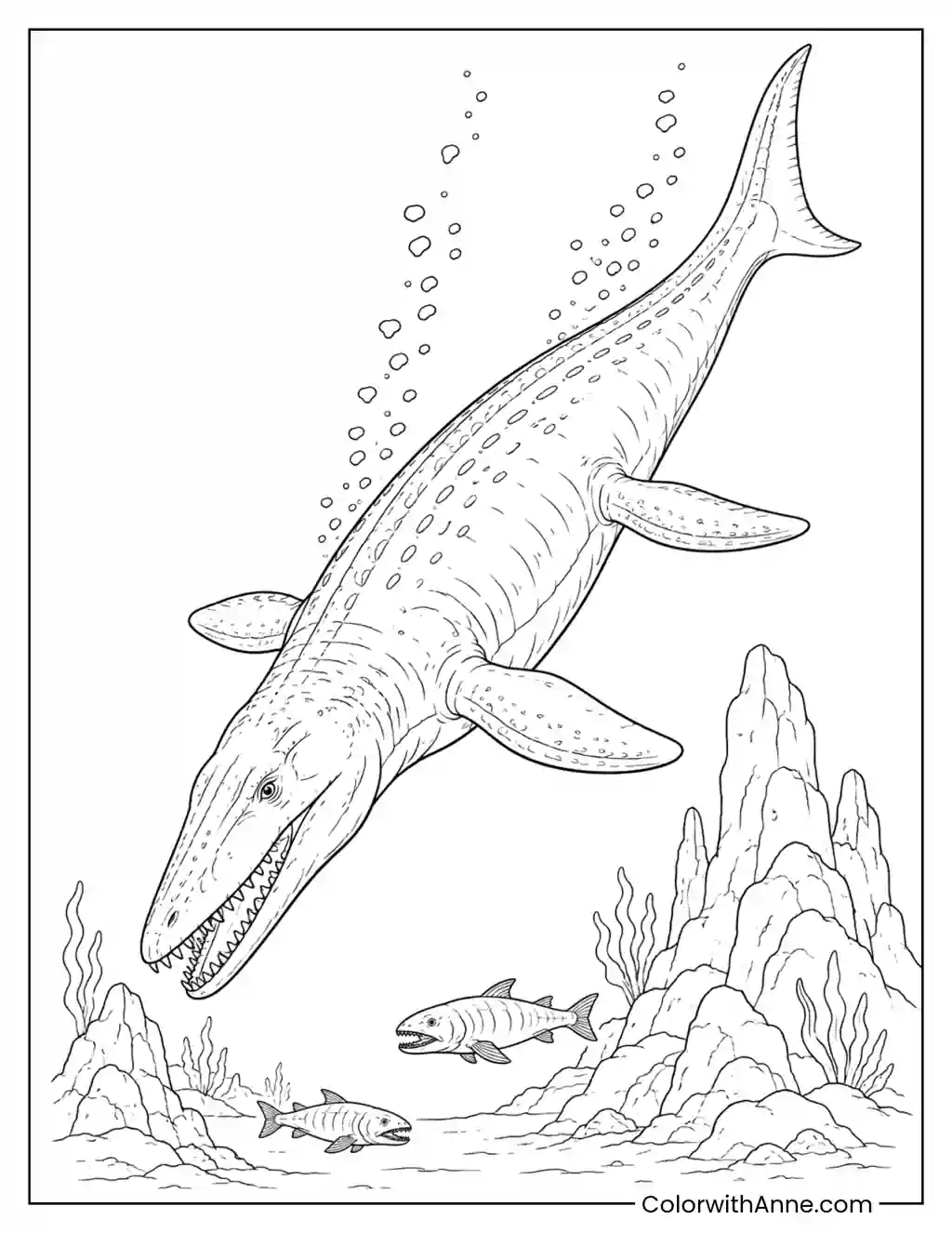
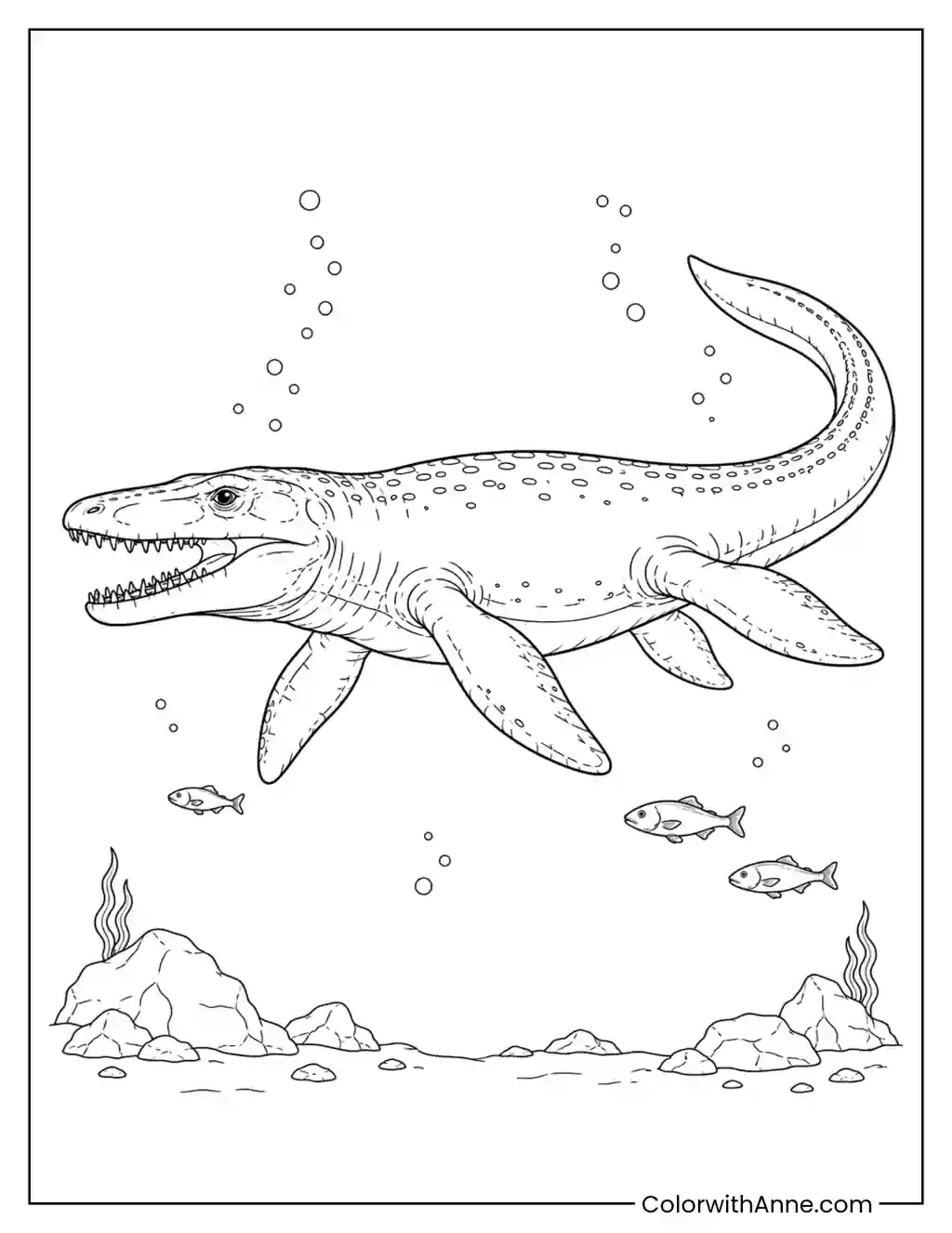
Let the Water Deepen Around the Dive
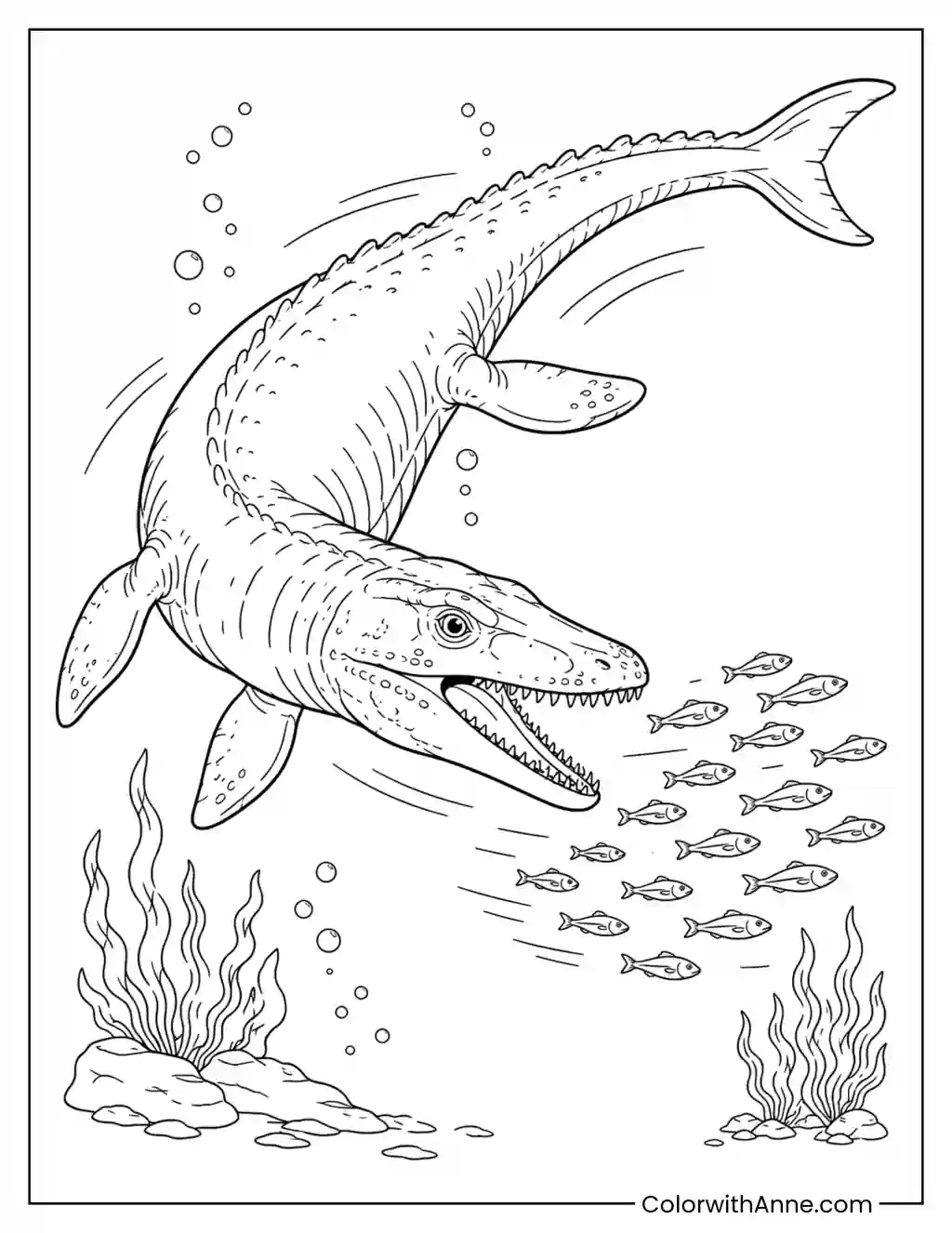
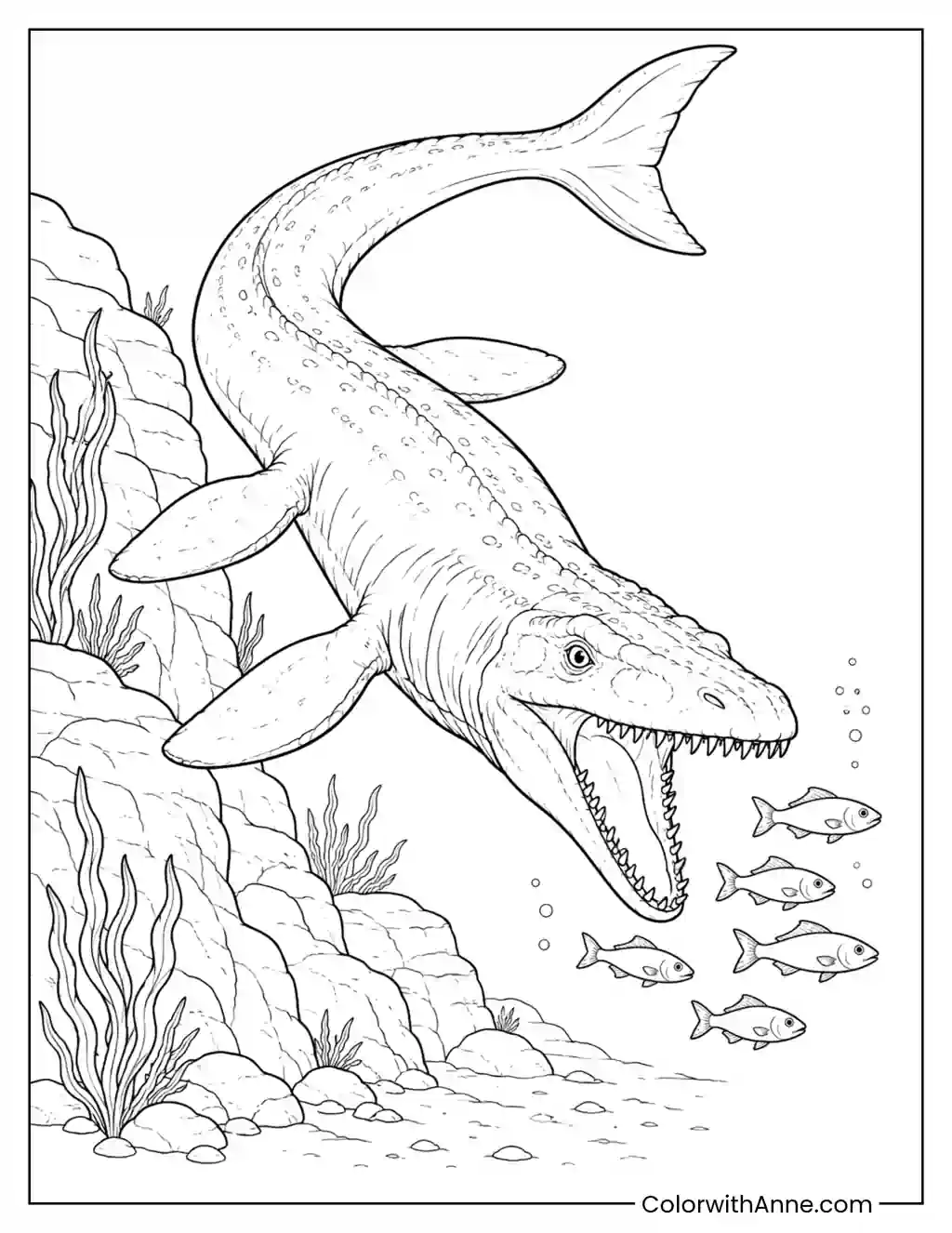
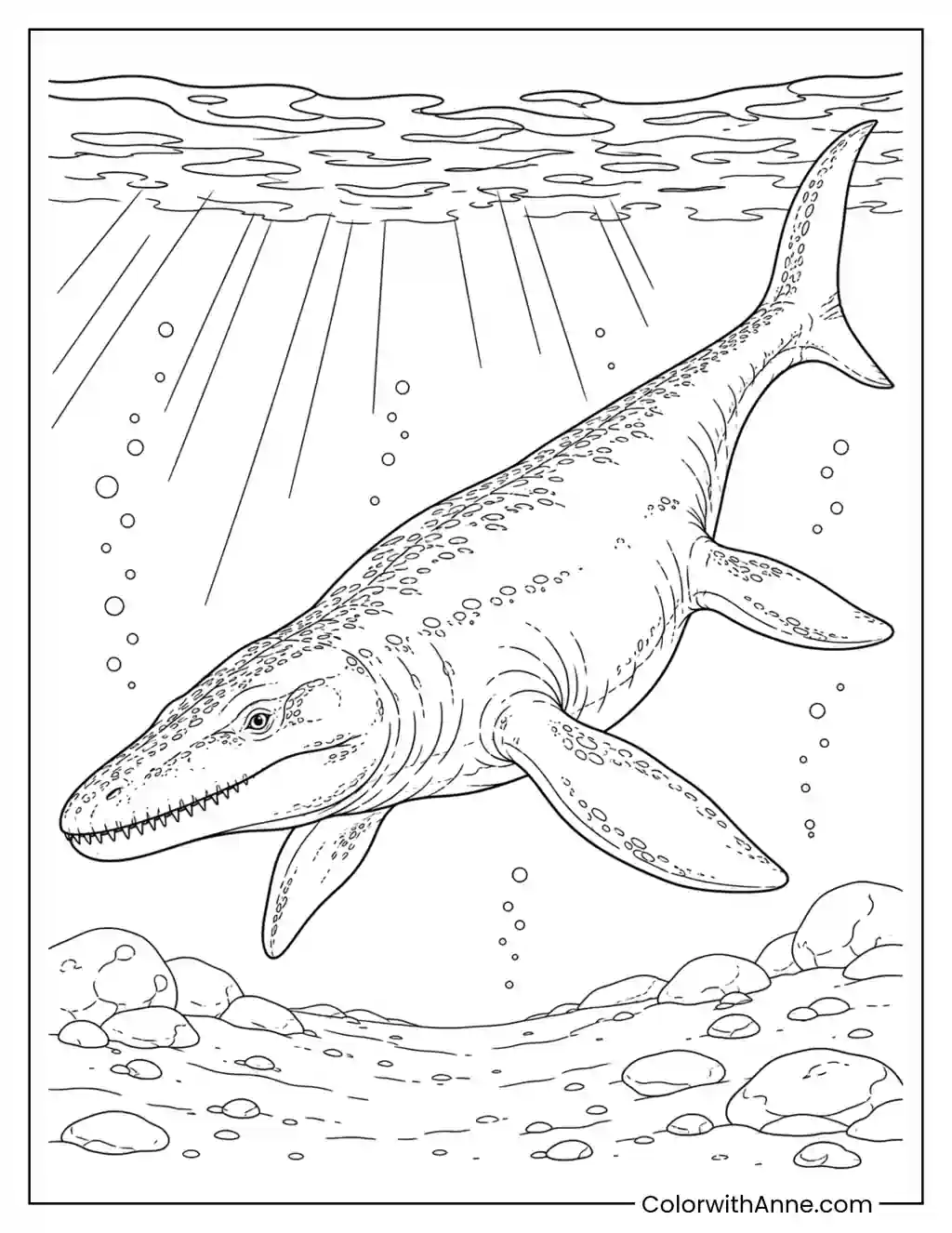
The Mosasaurus angles downward past rocks and small fish, with bubbles rising behind it. The long body leads into deeper water, giving this page a natural reason for the colors to change gradually.
Start with a lighter blue near the top and deepen it toward the lower corners. A subdued gray-green body could remain visible without looking brightly lit all over.
Try the change on a small strip of scrap paper first, overlapping neighboring blues until there are no abrupt bands. Once the transition feels right, carry it into the page. This particular scene rewards that extra test because the deepening water helps tell the story of the dive, rather than simply filling the background.
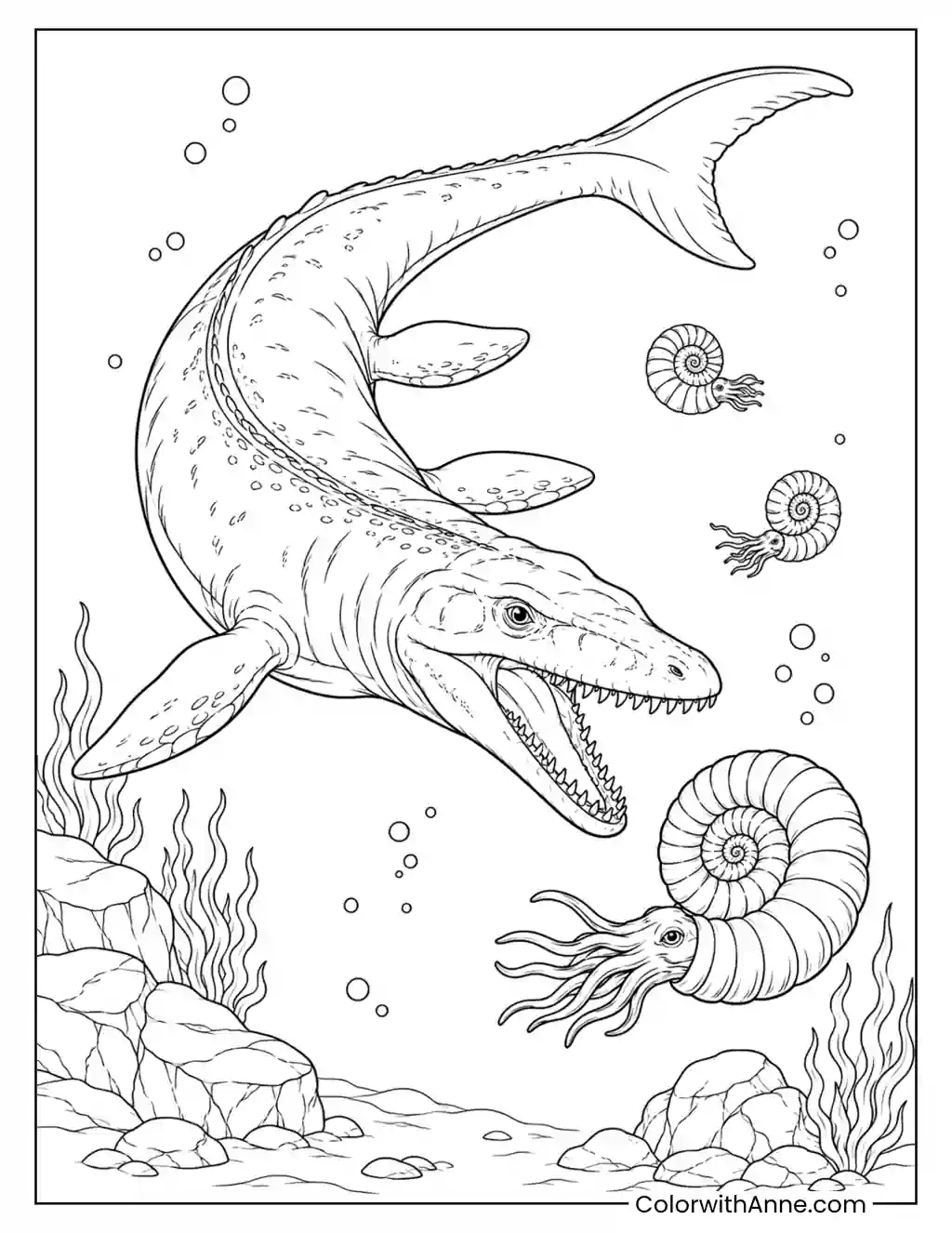
Follow the Ammonite’s Spiral
A large ammonite curls beneath the Mosasaurus, with smaller spiral shells nearby. The contrast between the long swimming body and the tightly coiled shell gives the eye two very different shapes to follow.
An earthy cream shell with warm brown ridges would suit the ammonite. Cooler blue water and a muted green predator could keep those shell details easy to see.
The spiral is worth trying as a drawing of its own. Begin loosely at the center and let the gaps widen gradually as the line travels outward. Add short marks across the curve afterward. A small collection of these drawn shells can become an imagined fossil tray, each one slightly different from the last.
Make a Label for the Museum Specimen
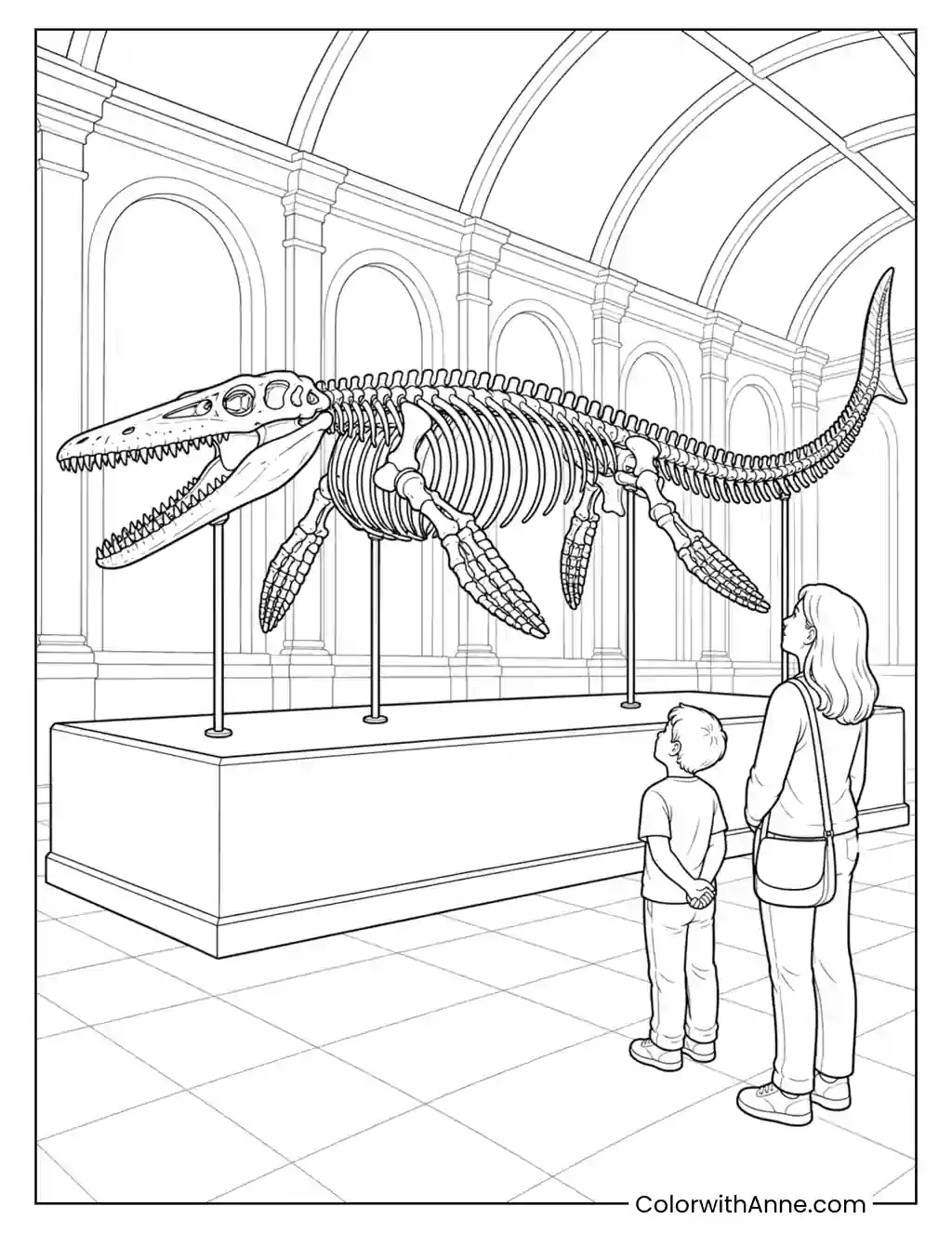
The mounted skeleton stretches through a museum hall while visitors stand below it. The display offers a useful change from the swimming scenes: Mosasaurus was a marine reptile, and its skeleton provides another way to meet the animal.
Ivory and pale gray could distinguish the bones from the room. Muted stone colors around the display would suit the museum setting, with a little color in the visitors’ clothing.
Make a small museum label to sit beside the finished picture. Include the name and one checked fact from a museum source, followed by a question you would ask a curator. A good question might concern the tail, the teeth, or how the skeleton was assembled for display.
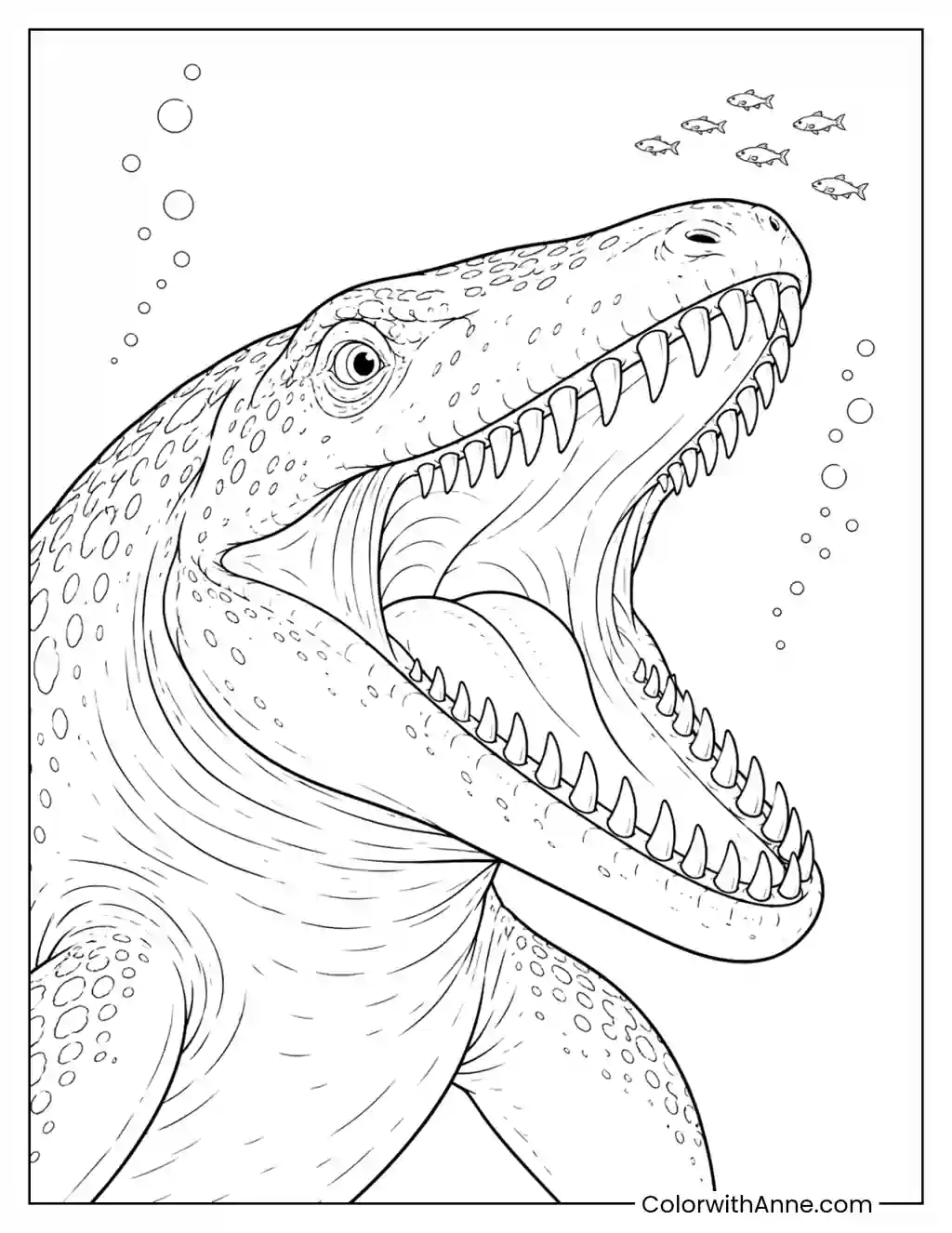
Give the Approaching Mosasaurus a Cinema Entrance
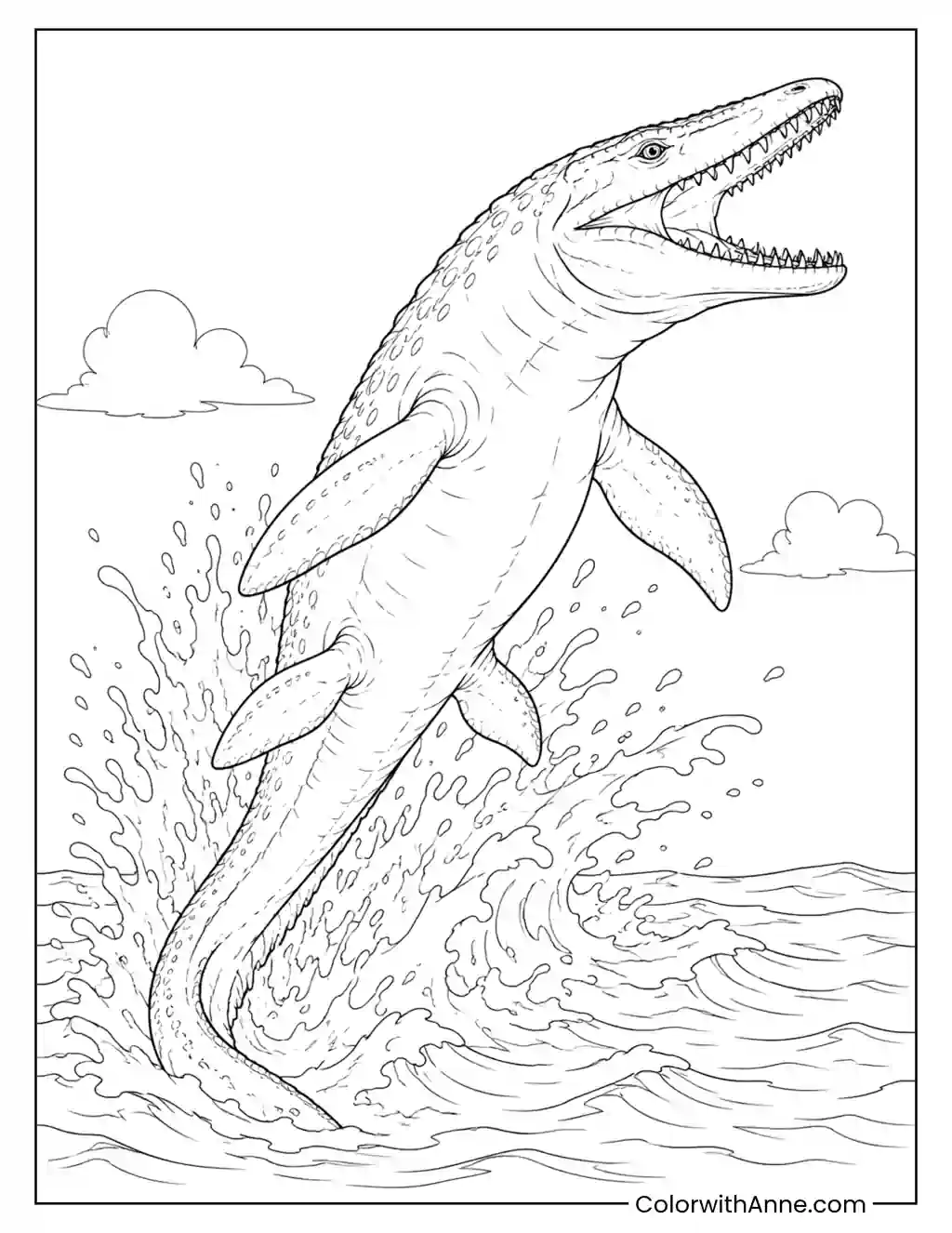
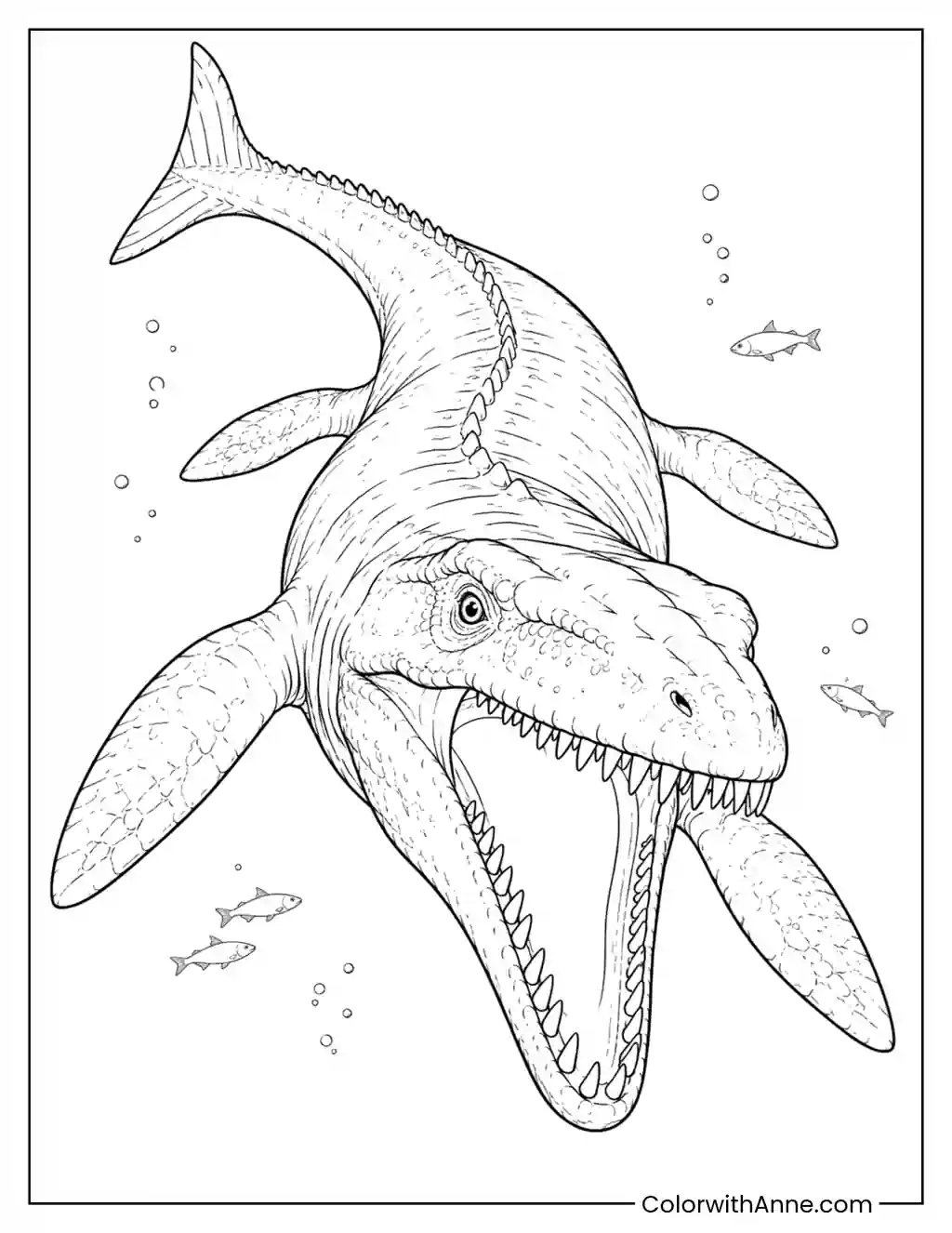
The open jaws come straight toward the viewer, with the body narrowing behind them. The angle turns the picture into a proper sea-monster entrance, leaving very little doubt about which end is arriving first.
Dark blue water would make the pale teeth noticeable. Gray-green skin could deepen around the sides of the head, with a darker mouth behind the teeth.
For a homemade creature-feature poster, place the finished page on a larger sheet and leave a band above it for an original film title. A short title will suit the directness of the image. Add a small imaginary screening date below, keeping the huge approaching head as the main event.
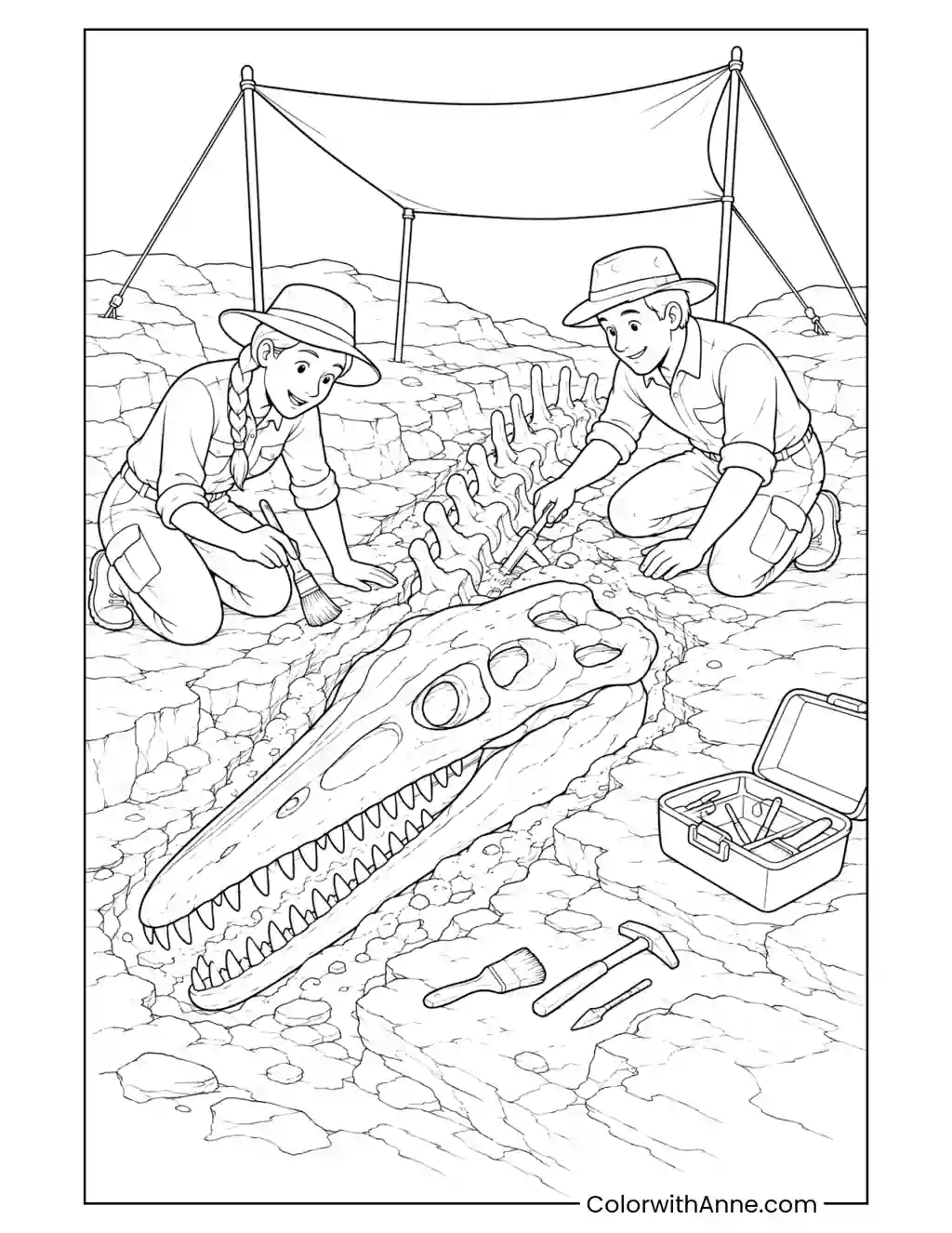
Uncover the Fossil Slowly
Two researchers work around an exposed fossil beneath a simple shelter, with tools arranged nearby. The excitement comes from revealing what is in the ground a little at a time, rather than meeting the animal alive.
Sandy browns and warm gray would suit the dig site. Slightly darker fossil shapes could stand apart from the surrounding earth without becoming solid black.
A shallow tray of play sand can become a small excavation using a buried toy skeleton or another sturdy object. Uncover it with a soft brush, leaving it in place until its outline is clear. Sketching the position before lifting it adds a satisfying extra step, much like recording where something was found.
Find the Baby’s Route Through the Reef
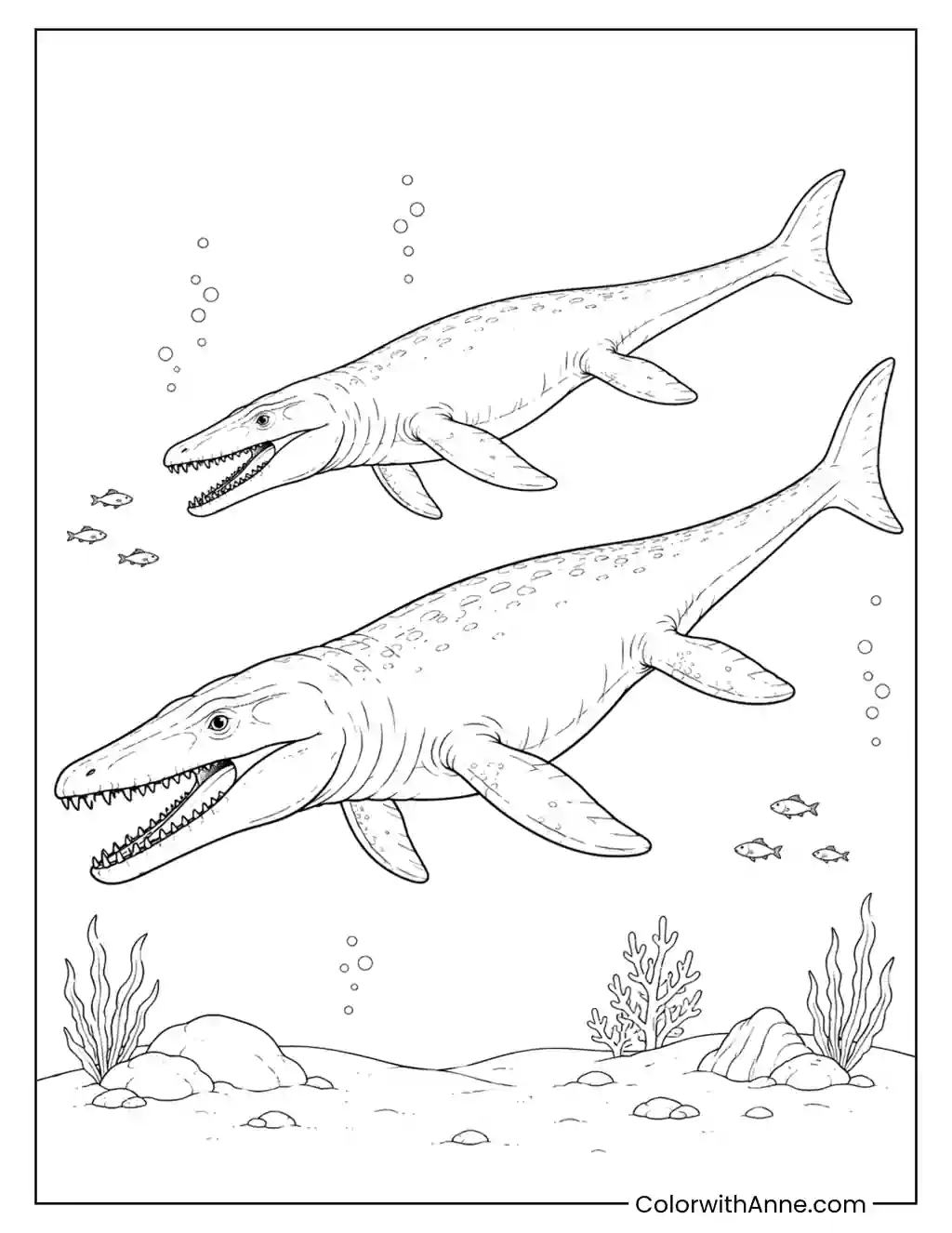
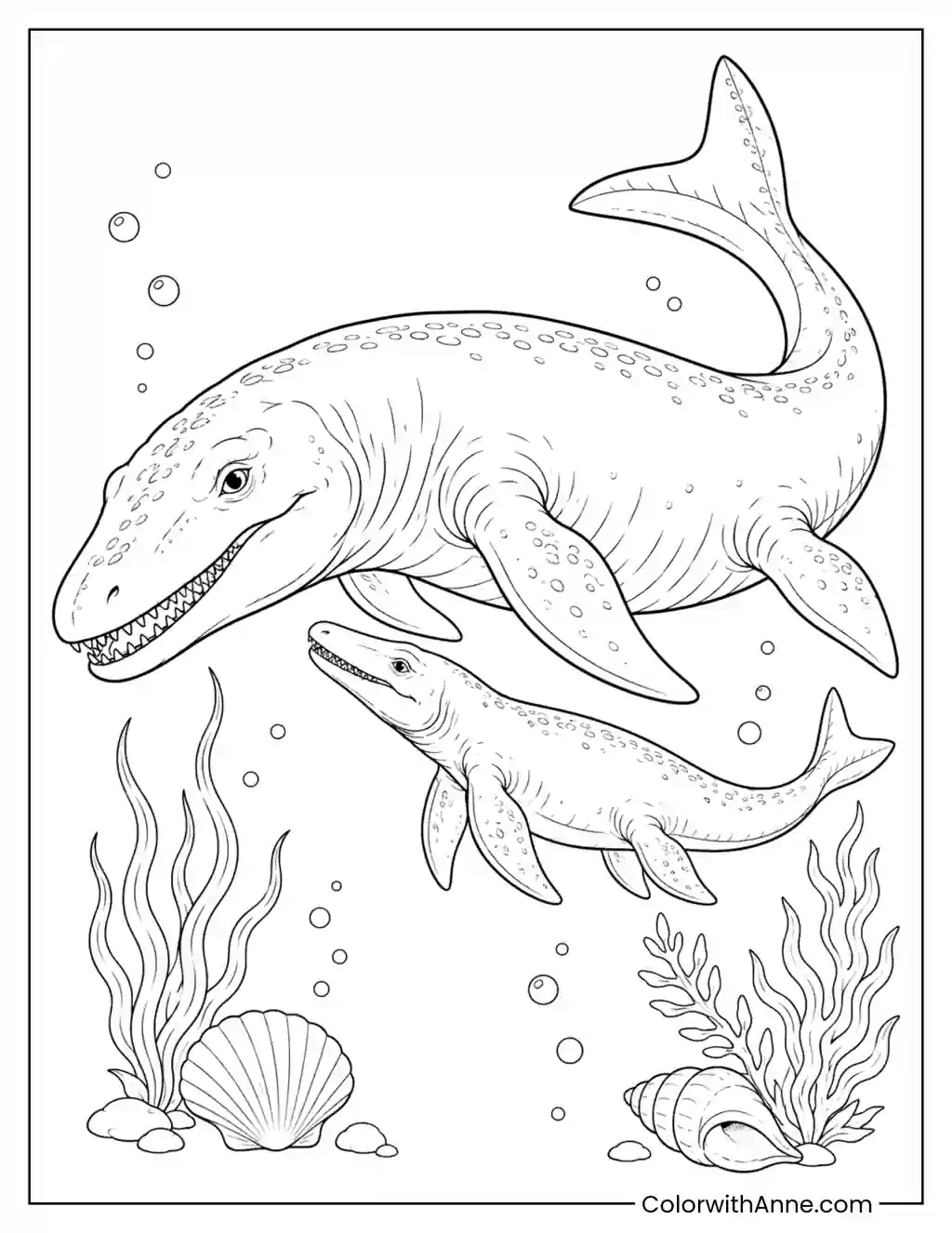
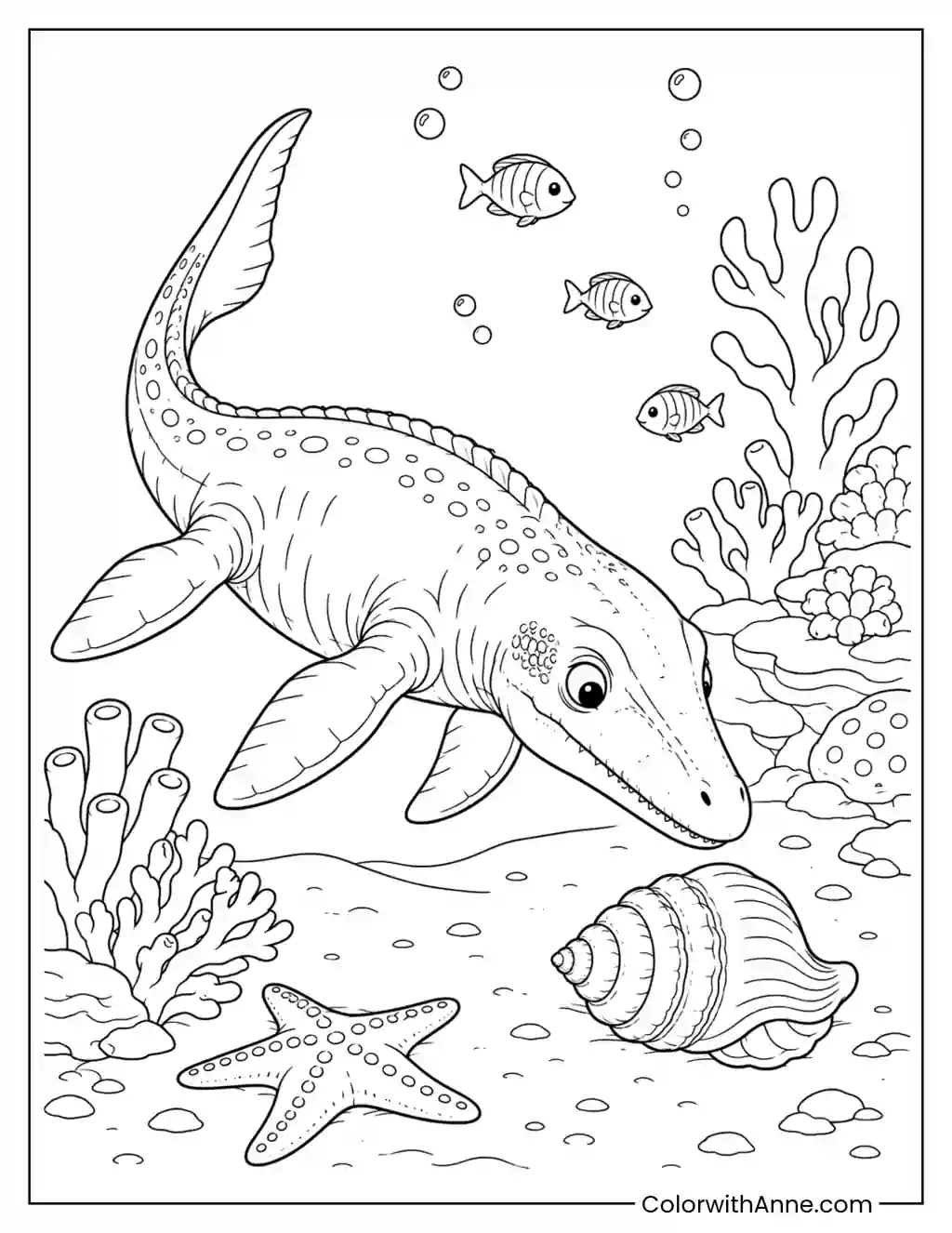
The smaller Mosasaurus moves among coral, shells, and little fish, with its rounded eye giving this page a gentler character. There is plenty nearby for an imagined young explorer to investigate.
Turquoise or soft green would suit the animal. Coral pink and sandy cream could bring warmth to the reef, with lighter blue water between the shapes.
Make a short discovery trail through the picture by choosing three things the baby visits in order. Tell the journey aloud while pointing to each stop, then let someone else choose a different route. The same reef can support several small adventures because the destinations are already drawn and easy to return to.