
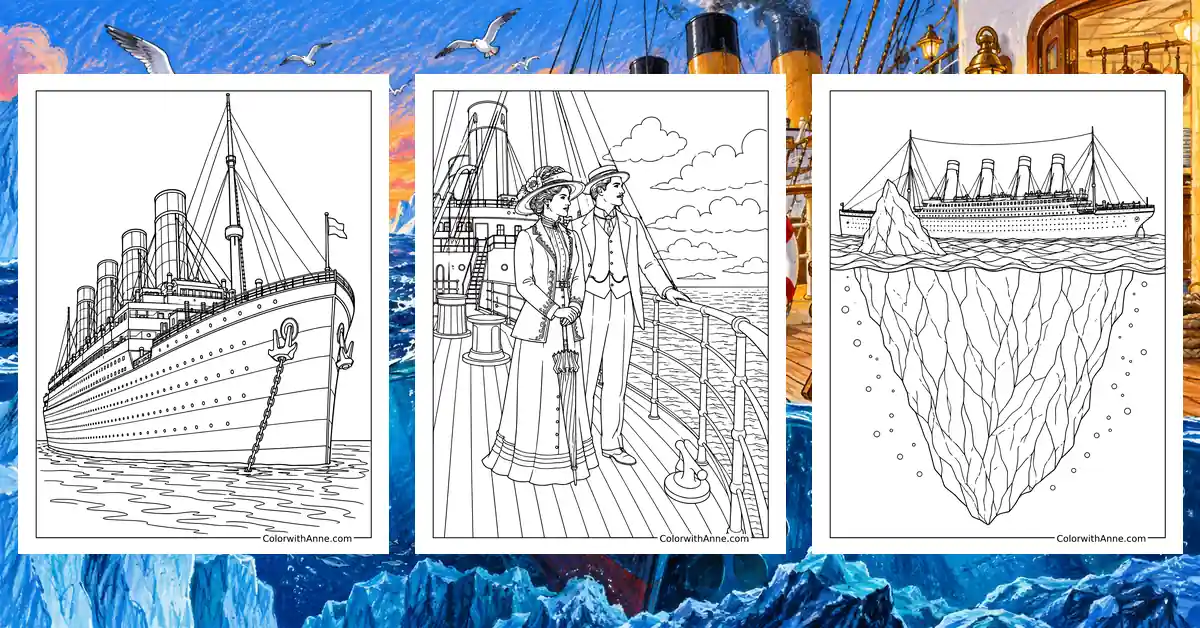
A sea breeze on the promenade, polished shoes on the Grand Staircase, and dinner that calls for more than a clean T-shirt: RMS Titanic brings another era into focus. Its four funnels and long decks invite a closer look, while its history gives even the grandest details a quieter weight.
Titanic coloring pages offer a way to linger over the ship’s appearance without rushing toward the familiar ending. The sweep of the hull and the rows of windows reward the same curiosity that draws people to old photographs and maritime museums. Behind that imposing silhouette were passengers packing trunks, finding cabins, and wondering about the journey ahead.
Free Printable Titanic Coloring Pages
Click any coloring page below to open the PDF, then print on US Letter or A4 paper.
Did you find what you needed?
Help us choose what to create or improve next.
Coloring Ideas for Titanic Pages
Try one of these coloring ideas, or use them as a starting point for your own.
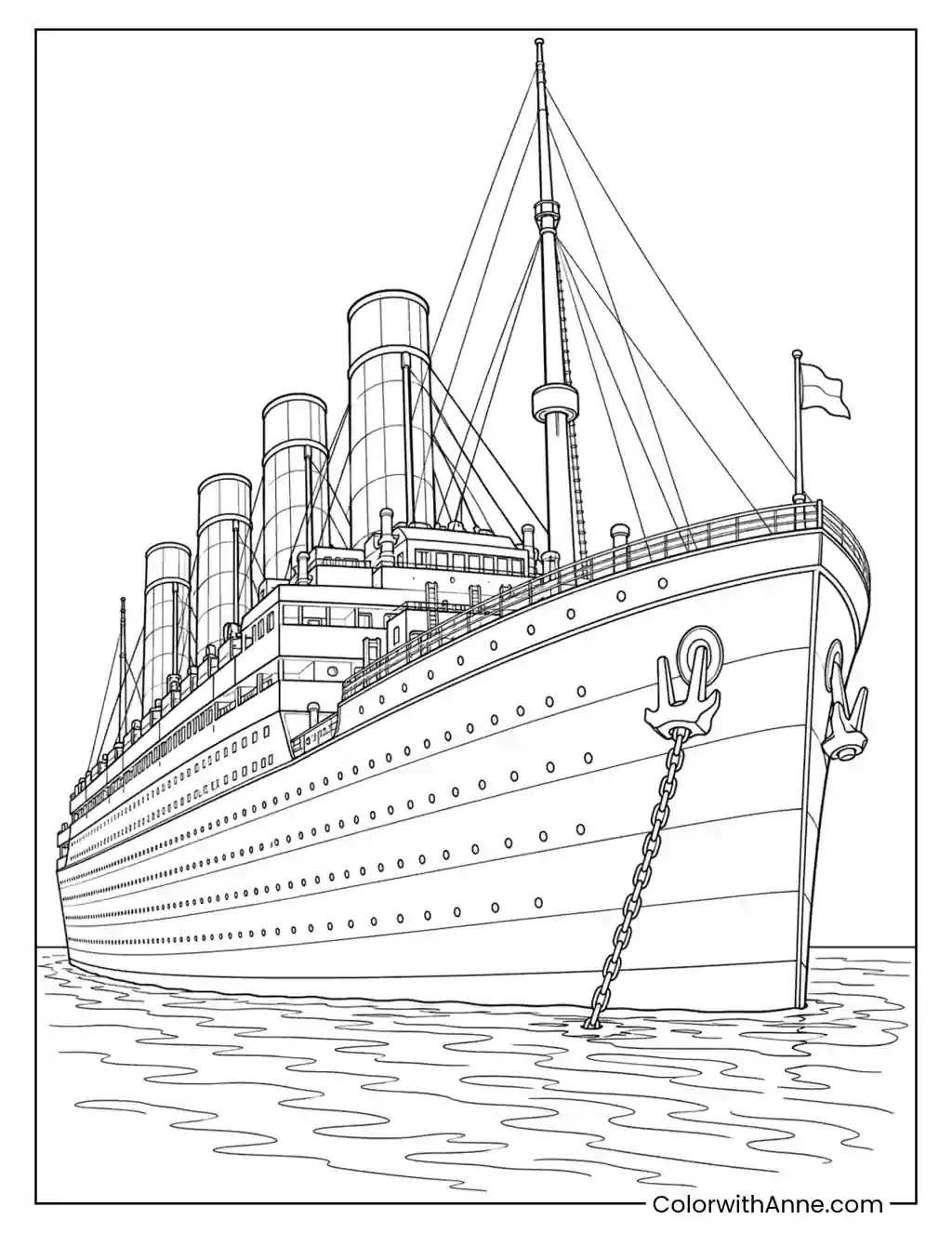
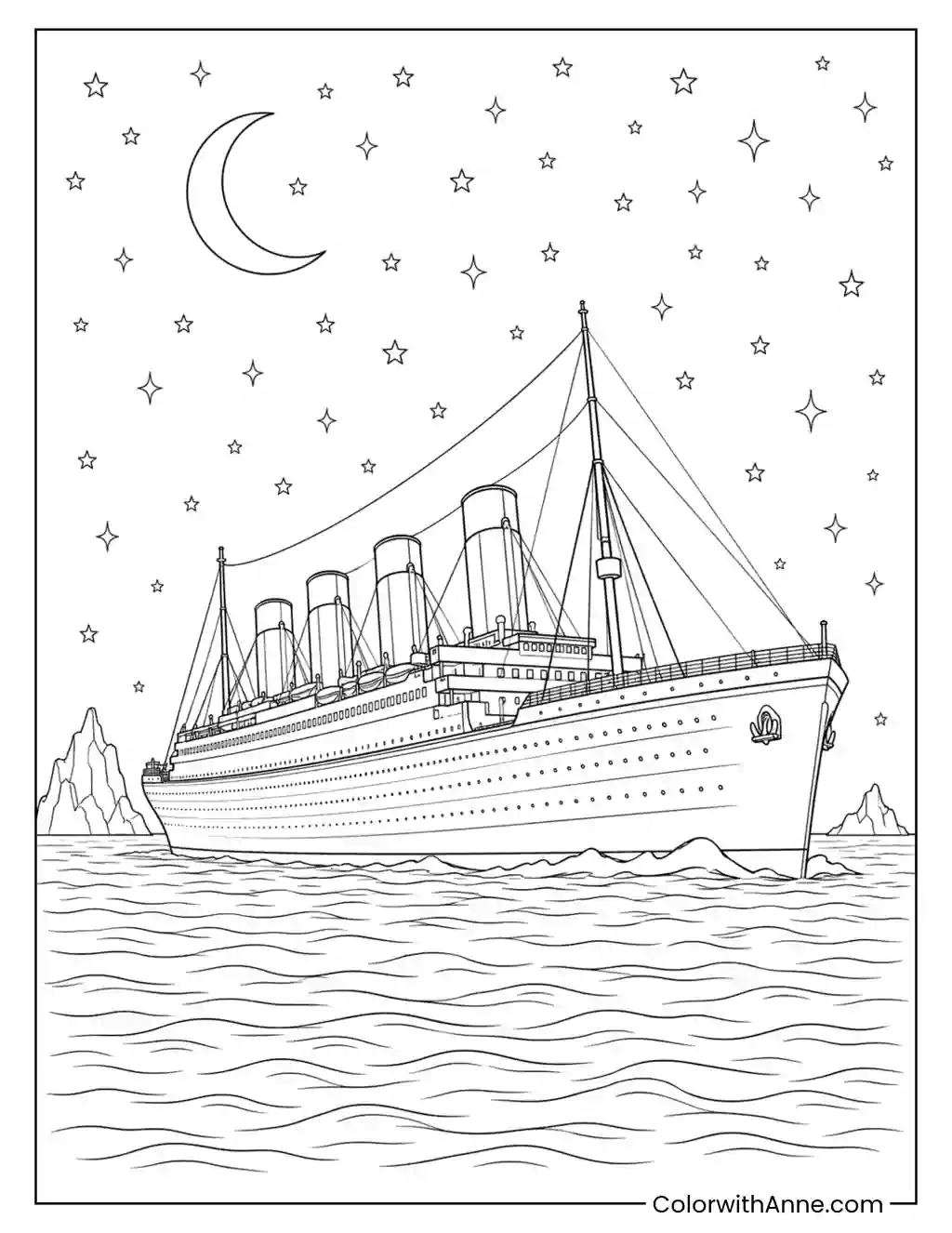
Give Titanic’s Atlantic Crossing a Vintage Travel Poster
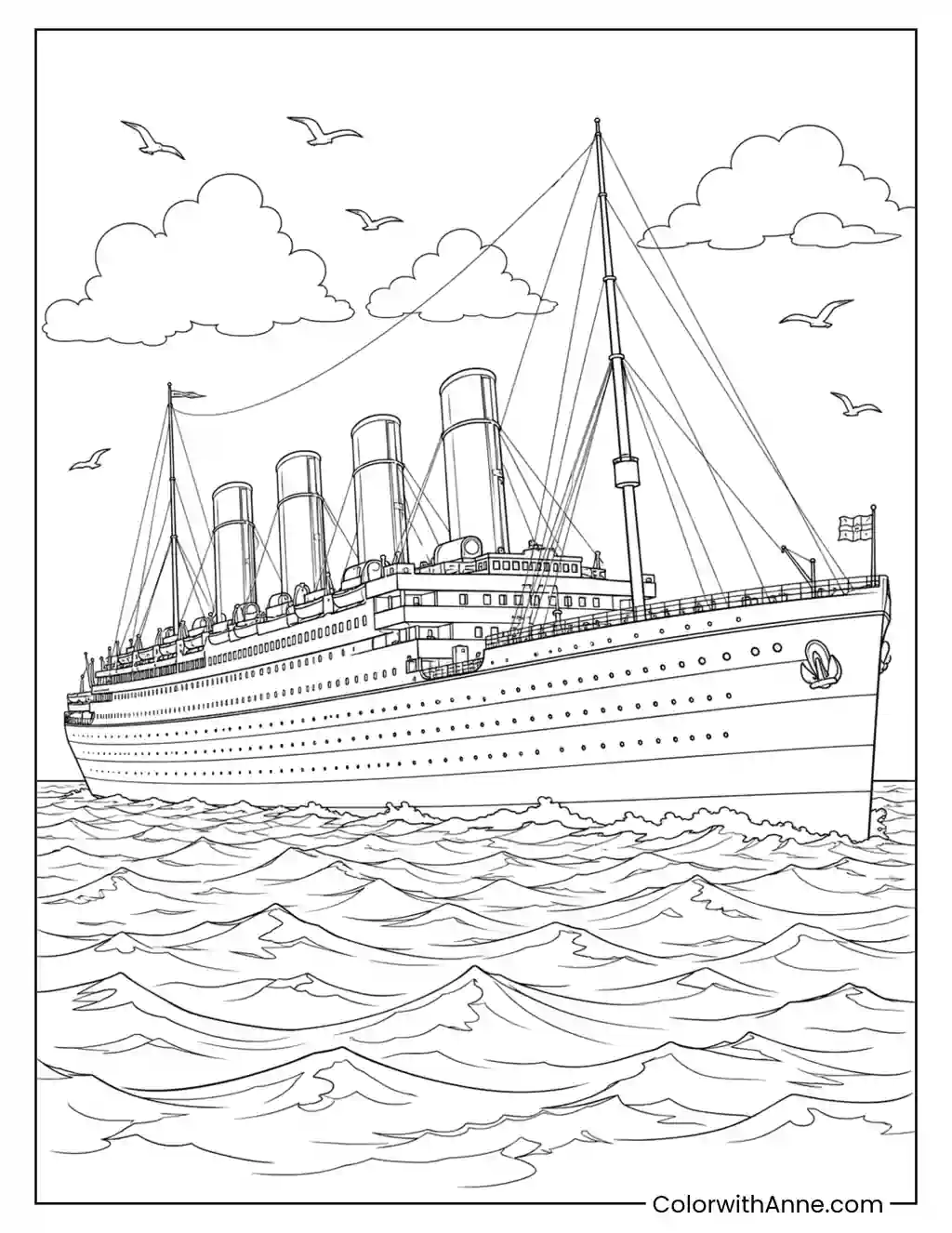
With seabirds overhead, clouds behind the funnels, and waves stretching across the foreground, this broadside view has the makings of an old ocean-travel advertisement. The ship’s long silhouette deserves most of the attention.
Turn the finished page into a poster by mounting it on cream paper and adding a simple “Across the Atlantic” heading outside the printed border. Choose lettering large enough to read from across the room. Muted blue water and a restrained sky will help the ship stand out without competing with its rows of windows and rigging. Keep the caption your own; there is no need to present it as an authentic Titanic advertisement.
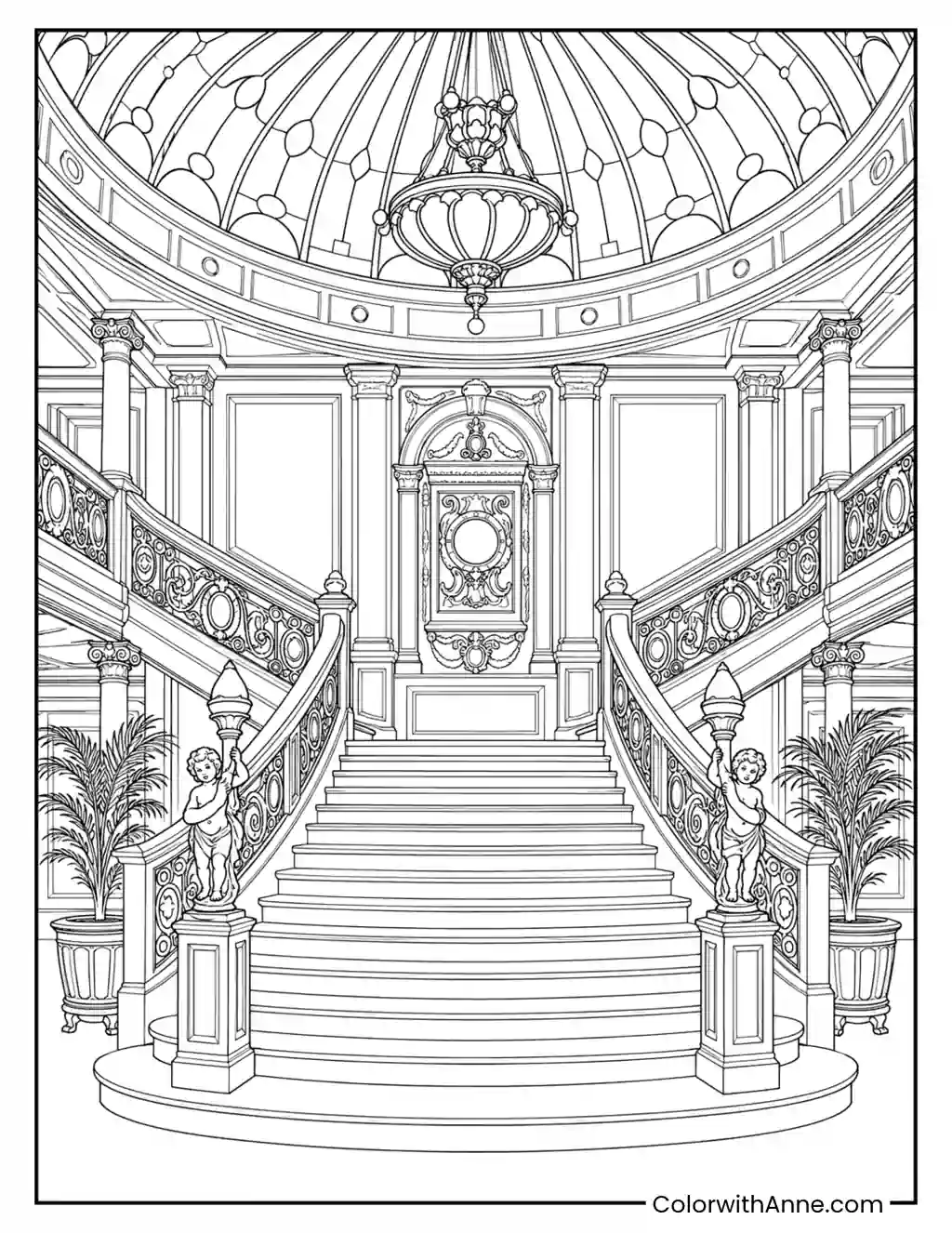
Look Up Before Coloring the Grand Staircase
The stairs draw the eye toward the central clock, but the glass dome and hanging light reward a longer look. Curved railings, decorative panels, and potted plants fill the space with details that might be missed on a quick climb.
Approach this page as an interior-design study. Choose a wood tone for the stair rails and paneling, then decide which decorative details deserve a metallic accent. Leave some of the dome pale to suggest daylight entering from above. Follow the repeated railing patterns from one side to the other; their balance is part of the room’s appeal. Displaying the finished picture near eye level gives the ceiling its proper share of attention.
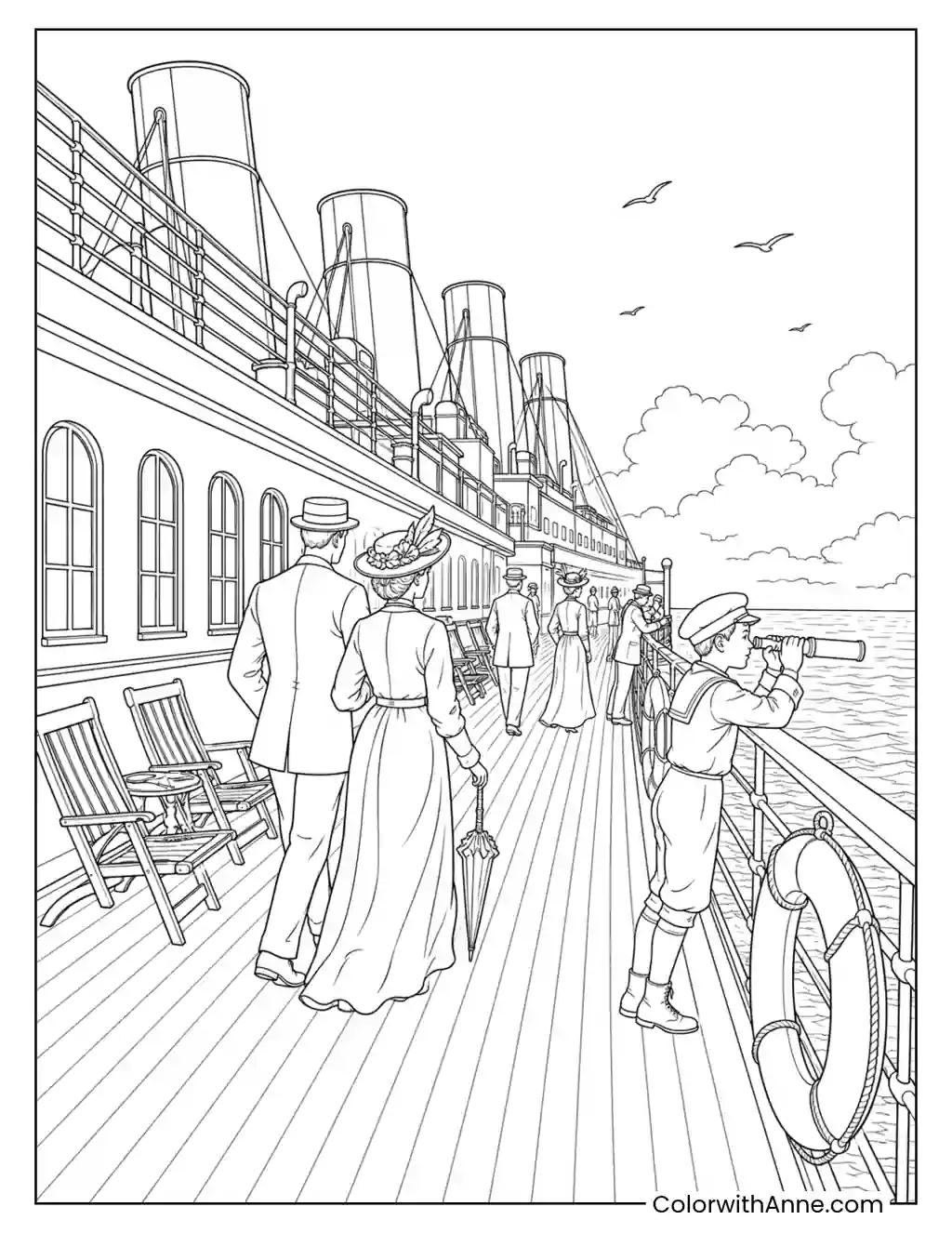
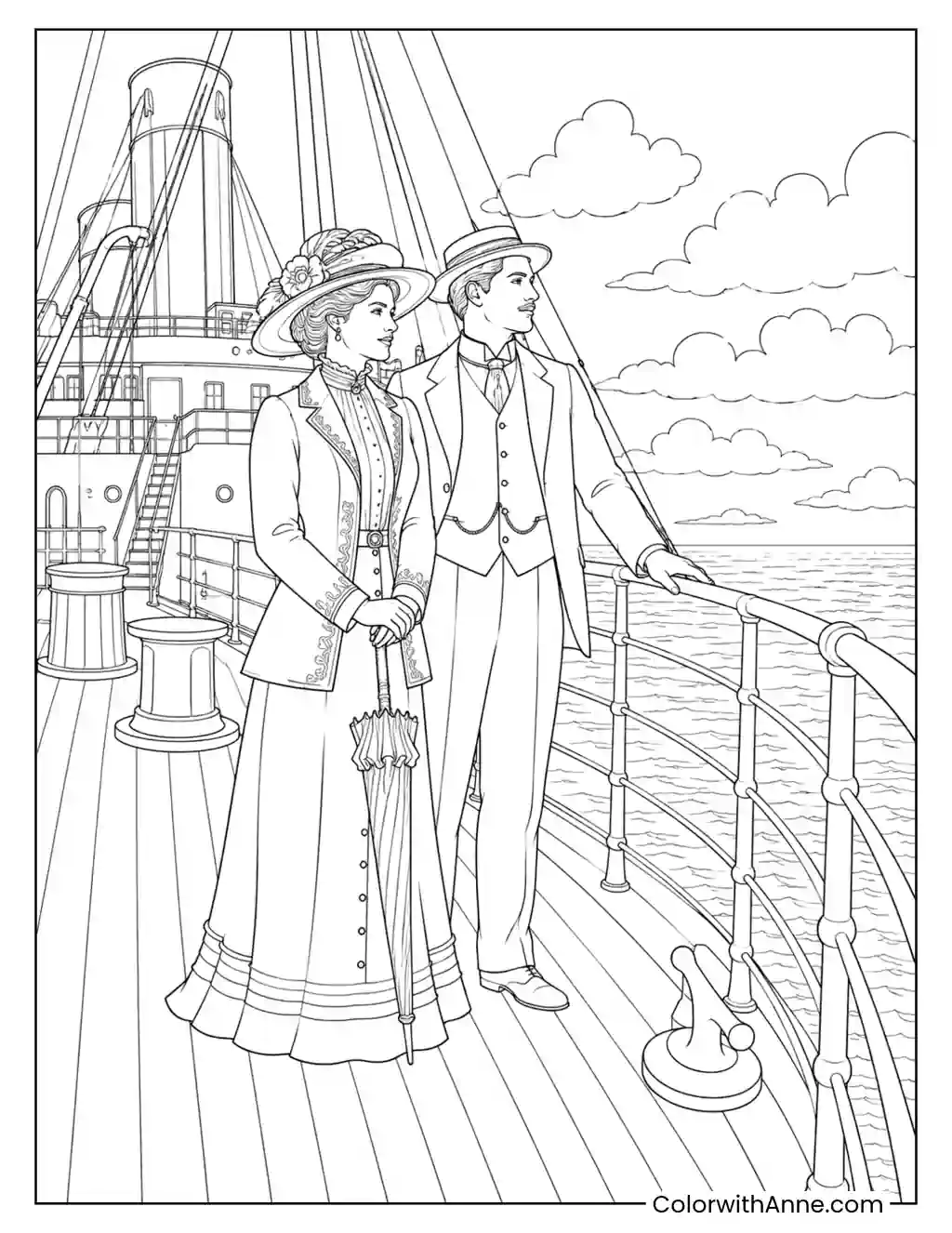
Take a Fashion Walk Along the Promenade Deck
Passengers stroll beside deck chairs while a child looks out over the railing. Long skirts, hats, and coats give this picture a different pace from the ship’s machinery: an afternoon with time to walk, watch the water, and straighten a windblown brim.
Let the passengers’ clothes guide the activity. Choose one outfit as the standout, then give the others quieter combinations that still feel individually chosen. The hat and dress do not have to match exactly; a small repeated accent can connect them. Keep the deck boards relatively consistent so the clothing remains easy to see. It becomes a small fashion scene within the larger voyage.
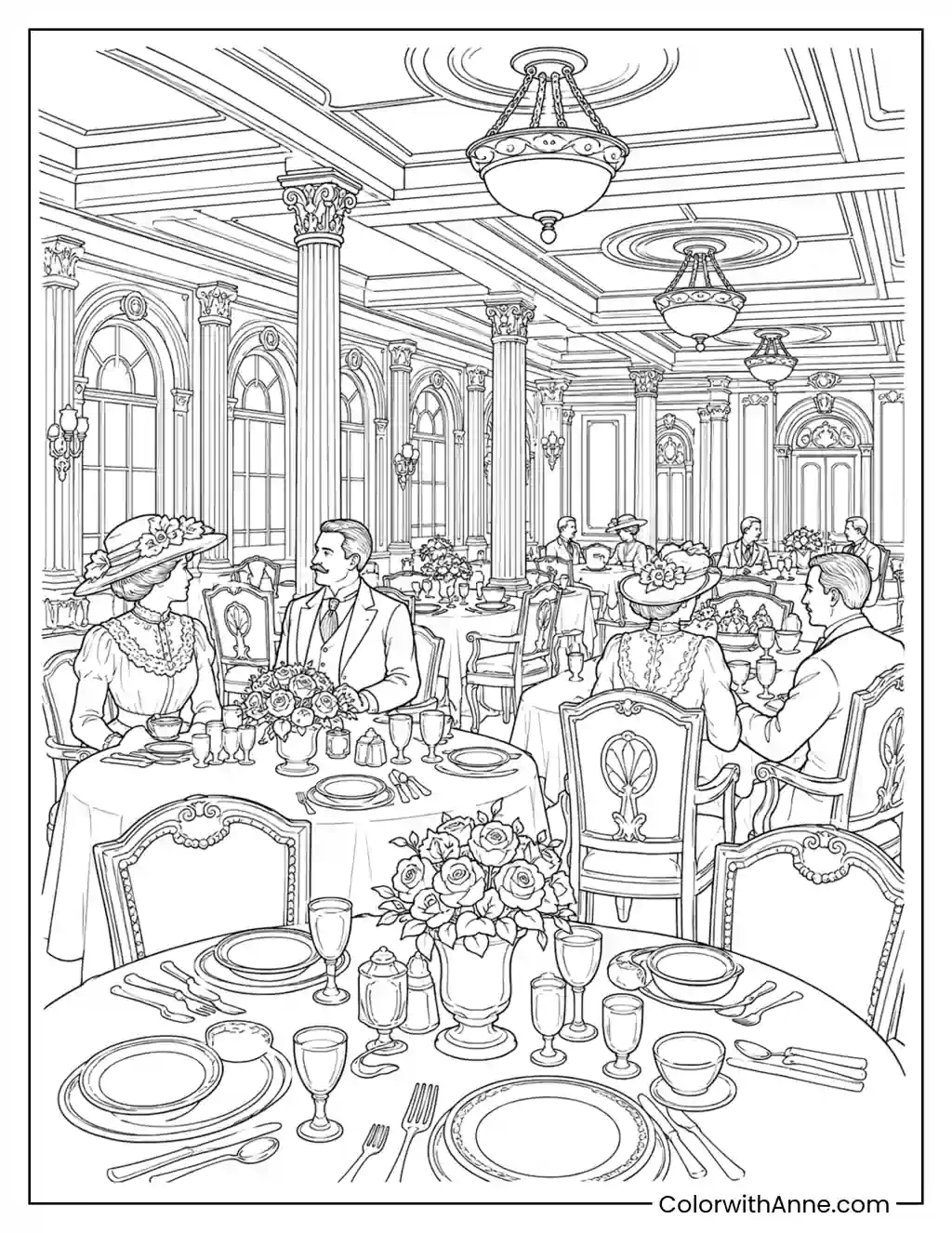
Plan an Evening in the First-Class Dining Saloon
The foreground table is laid with plates, glasses, cups, and cutlery, while diners sit beneath an elaborate ceiling and hanging lights. Even the empty chairs seem to be waiting for someone dressed for dinner.
Pair this picture with a short menu for an imagined evening aboard. Choose a starter, a main course, and a dessert, then write them on a separate card beside the finished page. Treat it as a personal menu inspired by the setting rather than a reconstruction of an actual Titanic meal. Echo one color from the room in the card’s lettering. The table setting provides the occasion; deciding what would be served makes it feel occupied.
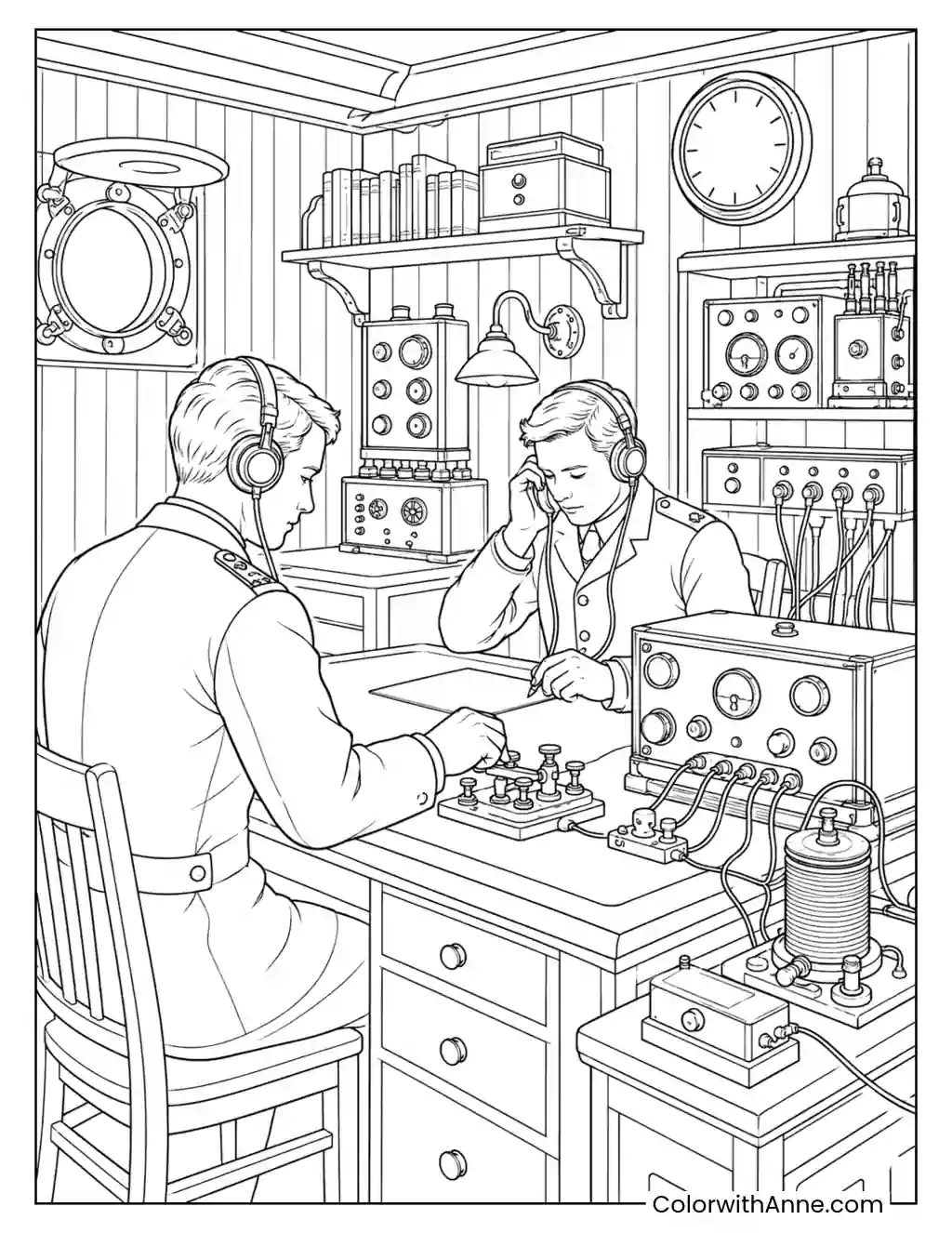
Send a Small Message from the Wireless Room
Two operators work among headphones, switches, dials, and equipment crowded onto shelves and desks. This room offers a closer look at the work happening behind a passenger’s message home.
After coloring, use a Morse-code alphabet to turn a short greeting into dots and dashes. Write the ordinary text underneath so someone else can check the message, then try tapping it out on a tabletop. A few words are enough for the first attempt. Keep the message on a separate slip beside the picture, like a task waiting at the desk. The operators and their equipment give this little exercise a setting far removed from sending a quick phone notification.
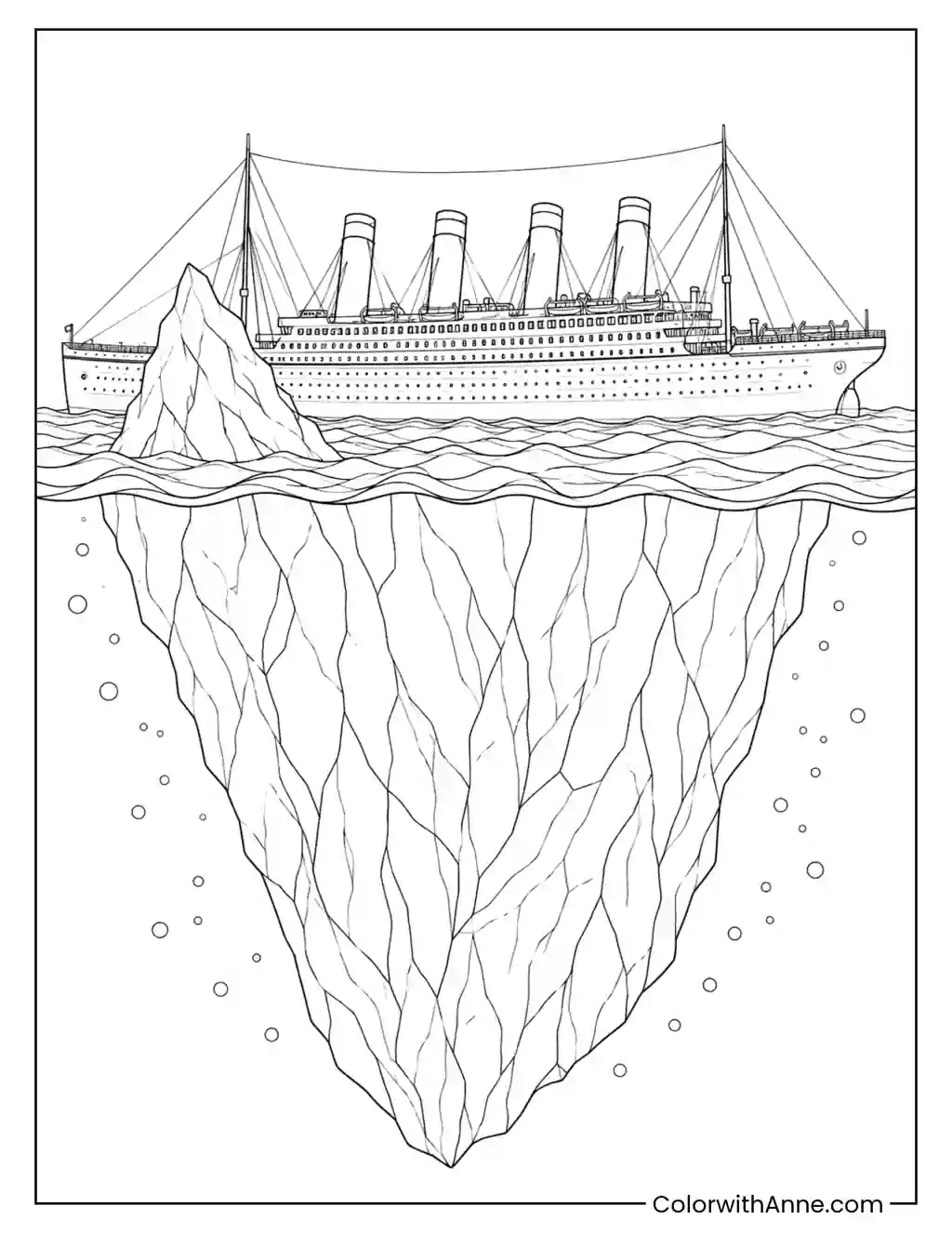
Reveal the Iceberg Beneath the Waterline
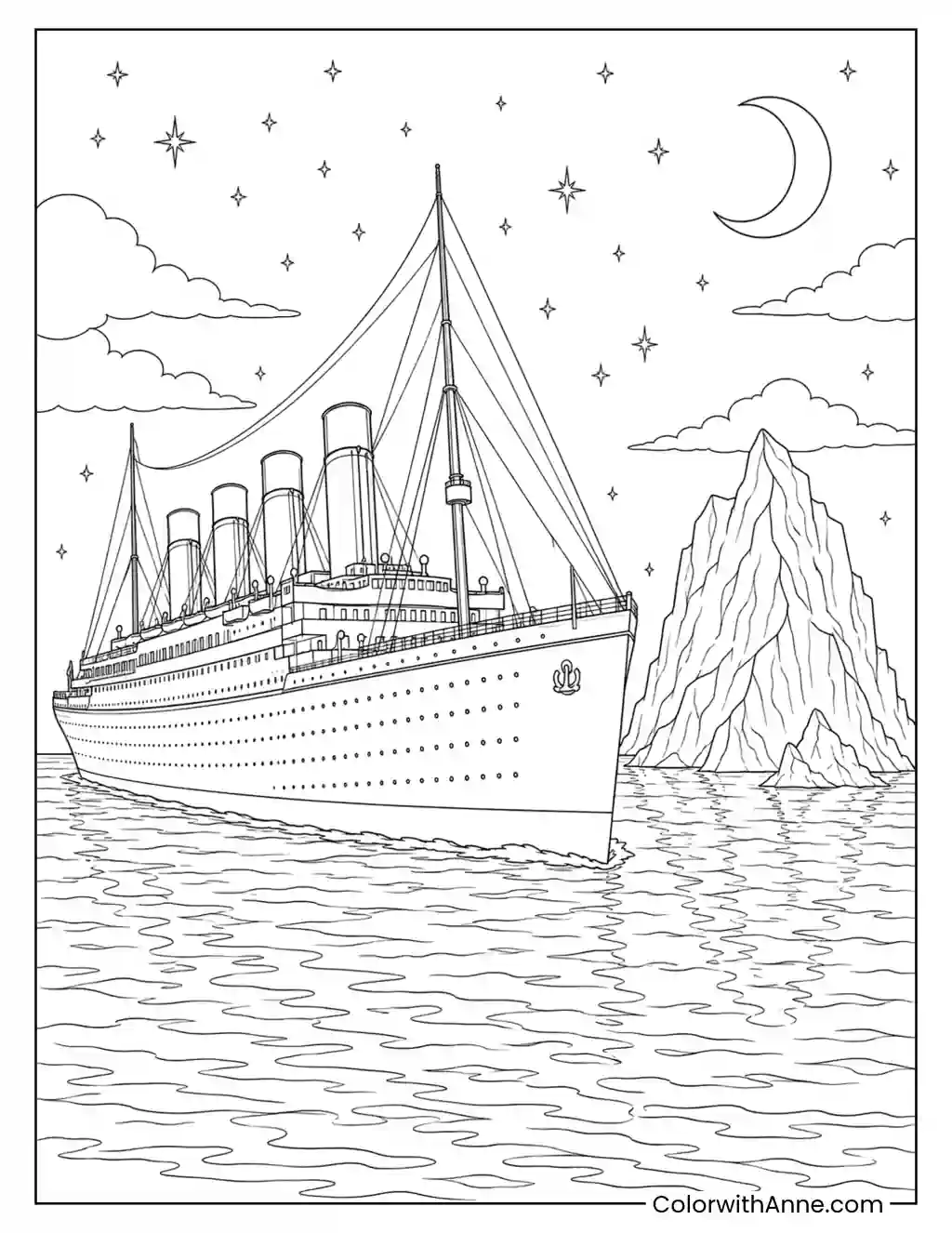
This design shows Titanic above the water and an iceberg extending far below it. The visible tip is only one part of the drawing; the large submerged shape changes how the whole scene is understood.
Make a simple reveal by covering the underwater portion with a loose sheet of blue paper, aligned with the illustrated waterline. Look at the exposed ship and iceberg tip first, then lift the cover. It is a useful way to introduce a conversation about what can remain hidden beneath the surface. Keep the drawing’s proportions as an illustration rather than using them to calculate an exact measurement. The reveal works because the missing information is already on the page.
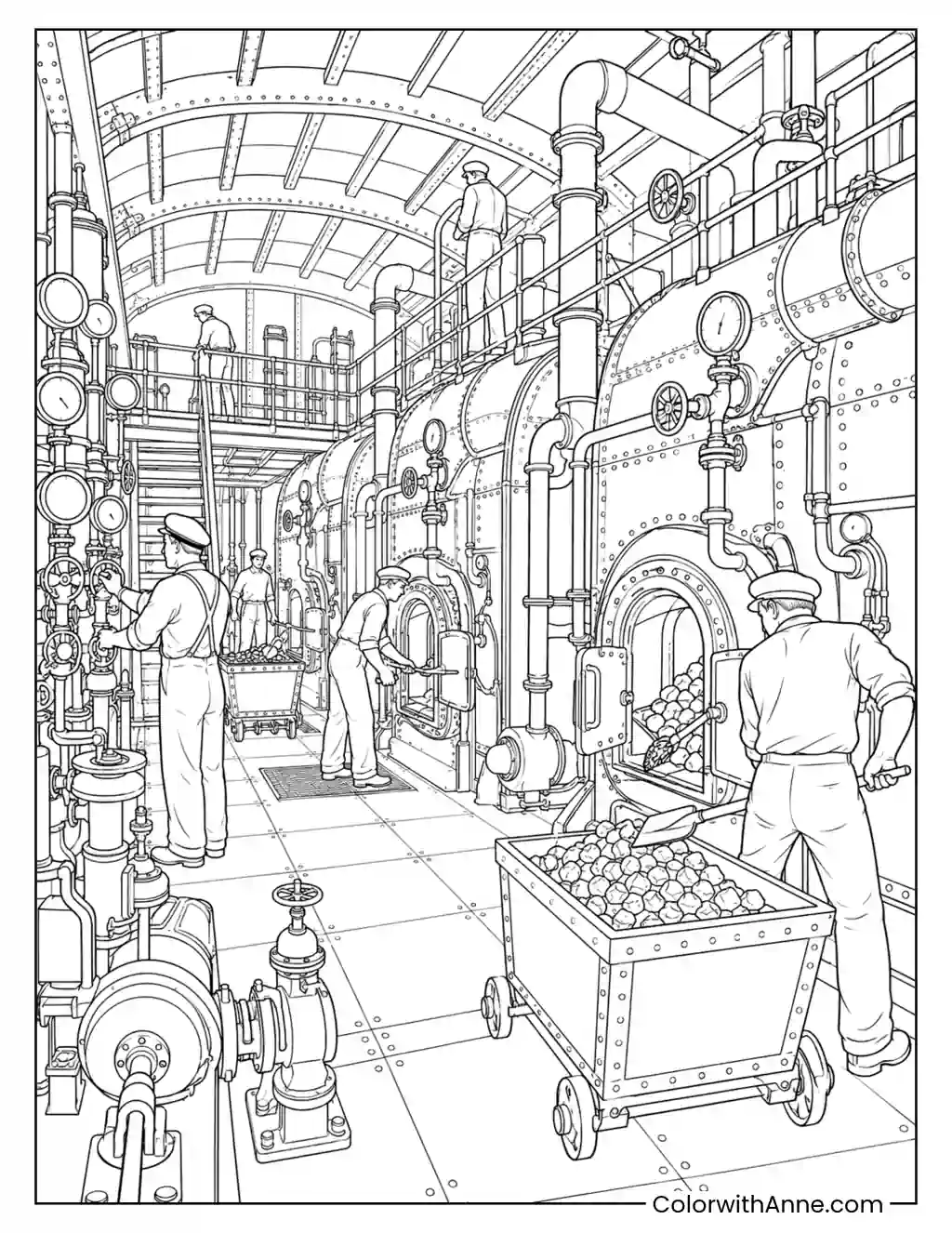
Follow a Worker’s Route Through the Boiler Room
Large machinery, pipes, valves, overhead walkways, and a coal-filled cart make this one of the busiest views in the collection. The workers help give all that equipment a human scale.
Before coloring the smaller parts, trace a possible walking route through the visible floor space with a fingertip. Notice where machinery narrows the passage and where the cart occupies room. Then distinguish the main elements: dark coal, metal equipment, and the workers’ clothes. Avoid assigning a function to every pipe unless it has been checked against a reliable reference. The picture offers plenty to explore simply by considering how someone would move and work inside it.
Give the Ocean-Floor Bow a Quiet Museum Label
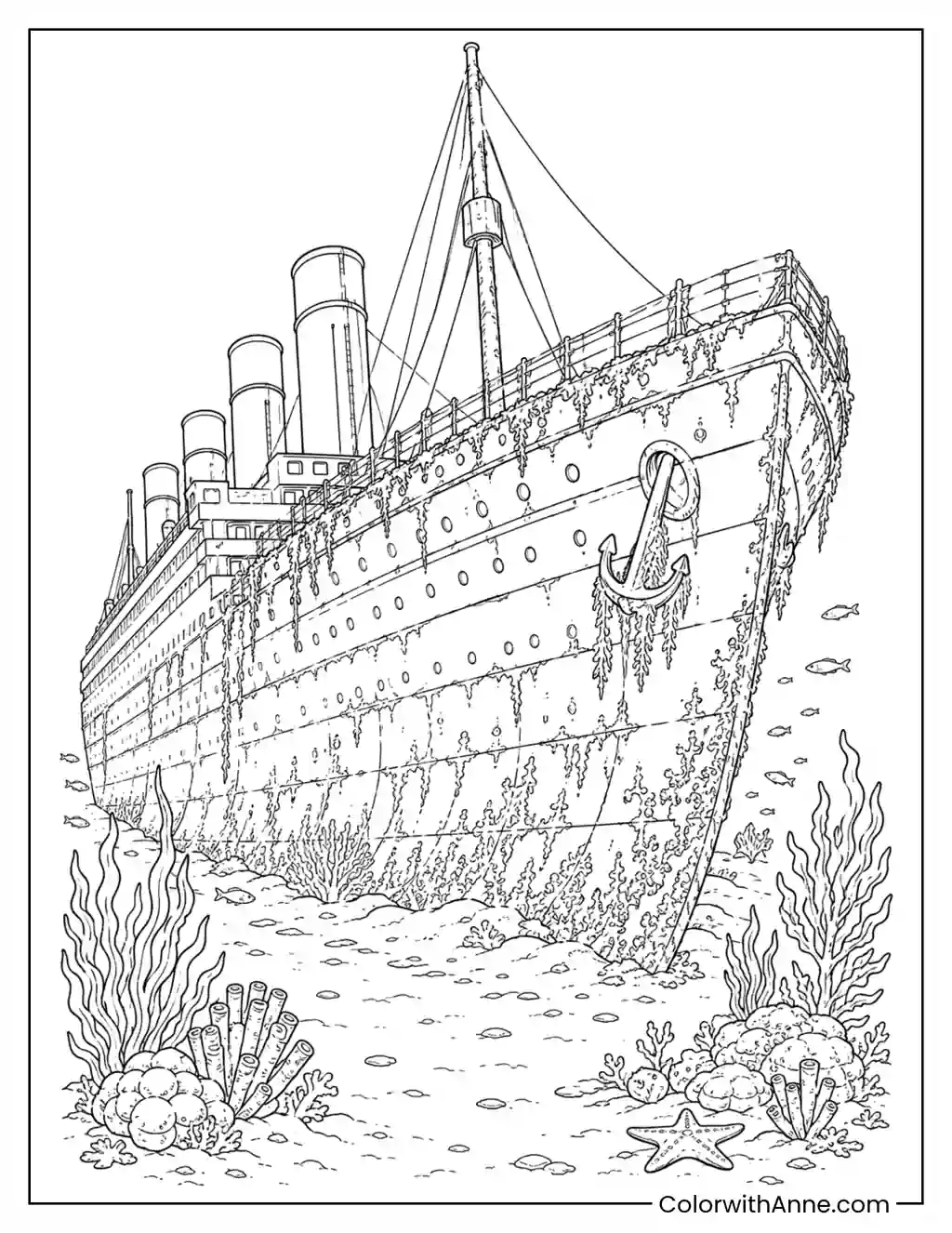
The bow remains recognizable, but its surface is ragged with hanging growth. Fish pass beside it, and the seabed holds plants, rocks, and a starfish. The once-busy ship is presented here as a still underwater scene.
Finish the page as a small museum-style display. Use subdued tones on the hull so its weathered texture remains visible, then place a short label underneath identifying the subject and describing two details shown in the illustration. If adding historical dates or information about the wreck, check them separately. A plain backing and an uncluttered label suit this picture: the remaining shape of the bow carries enough weight on its own.