
The first few notes are enough. Someone recognizes the song before the singing starts, and an ordinary drive becomes a small performance shared between the front and back seats. There may be disagreement over the words, but nobody seems particularly interested in turning the volume down.
Music coloring pages suit the quieter moments that still deserve a soundtrack. A favorite playlist can keep someone company while memories of concerts, lessons, or family car rides drift into the conversation. Even a familiar instrument can bring back the excitement of learning a first tune, including the part that once required everyone else’s considerable patience.
Free Printable Music Coloring Pages
Click any coloring page below to open the PDF, then print on US Letter or A4 paper.
Did you find what you needed?
Help us choose what to create or improve next.
Coloring Ideas for Music Pages
Try these creative ideas to make the most of your coloring sheets.
Accordion on a Stool
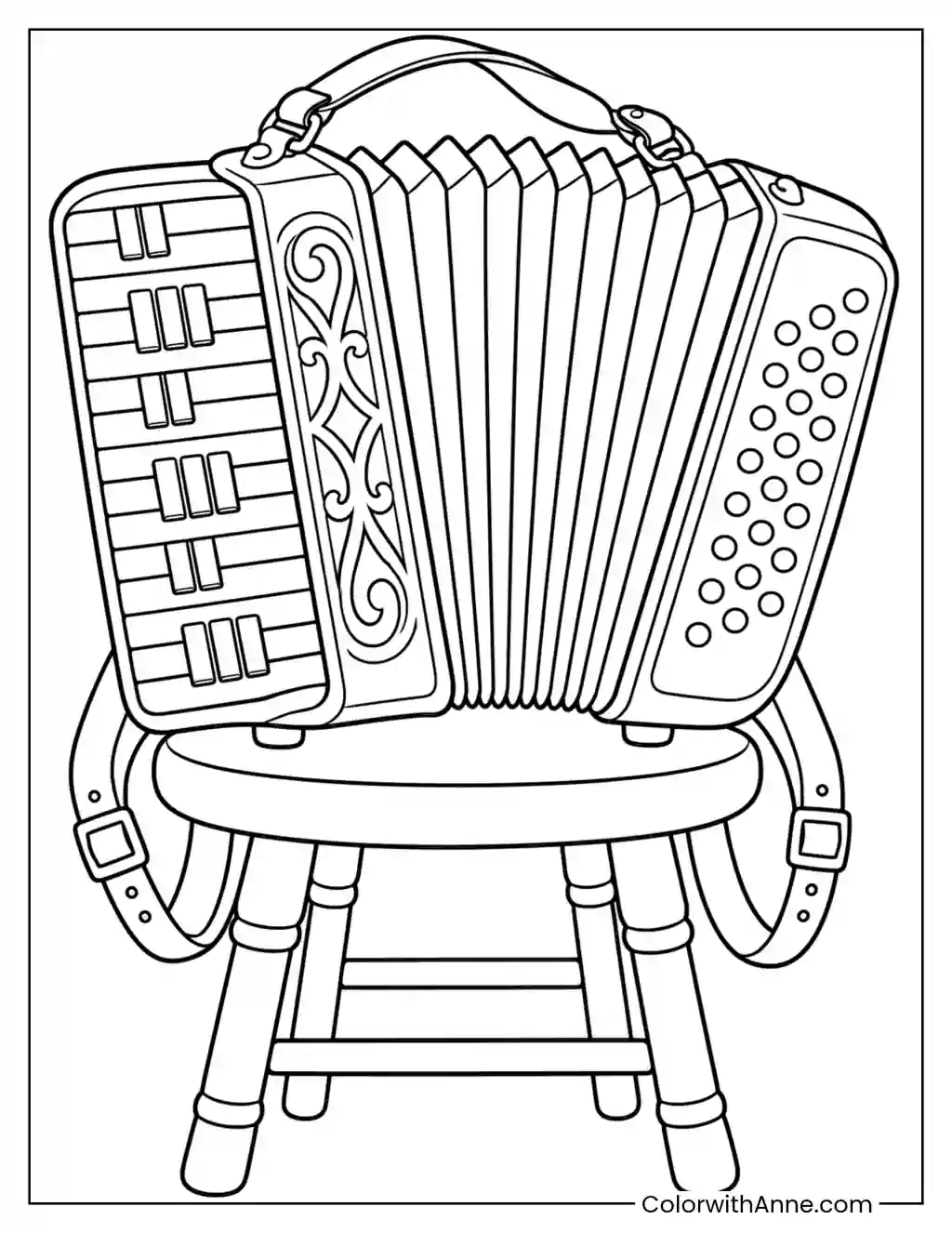
An accordion rests on a round stool with its bellows expanded and its buckled straps hanging down either side. The repeated folds give the center a strong pattern, while the stool and loose straps make the instrument feel ready for someone to pick up.
Try a deep red or forest green accordion with cream details and dark bellows. Alternate lighter and darker shades along the folds to suggest depth. A warm brown stool provides a simple base without drawing attention away from the instrument.
Make a small paper accordion to accompany the page. Fold a strip of paper back and forth into equal sections, then gently open and close it while looking at the illustrated bellows. You can decorate the two ends to match your finished instrument.
Acoustic Guitar and Wildflowers
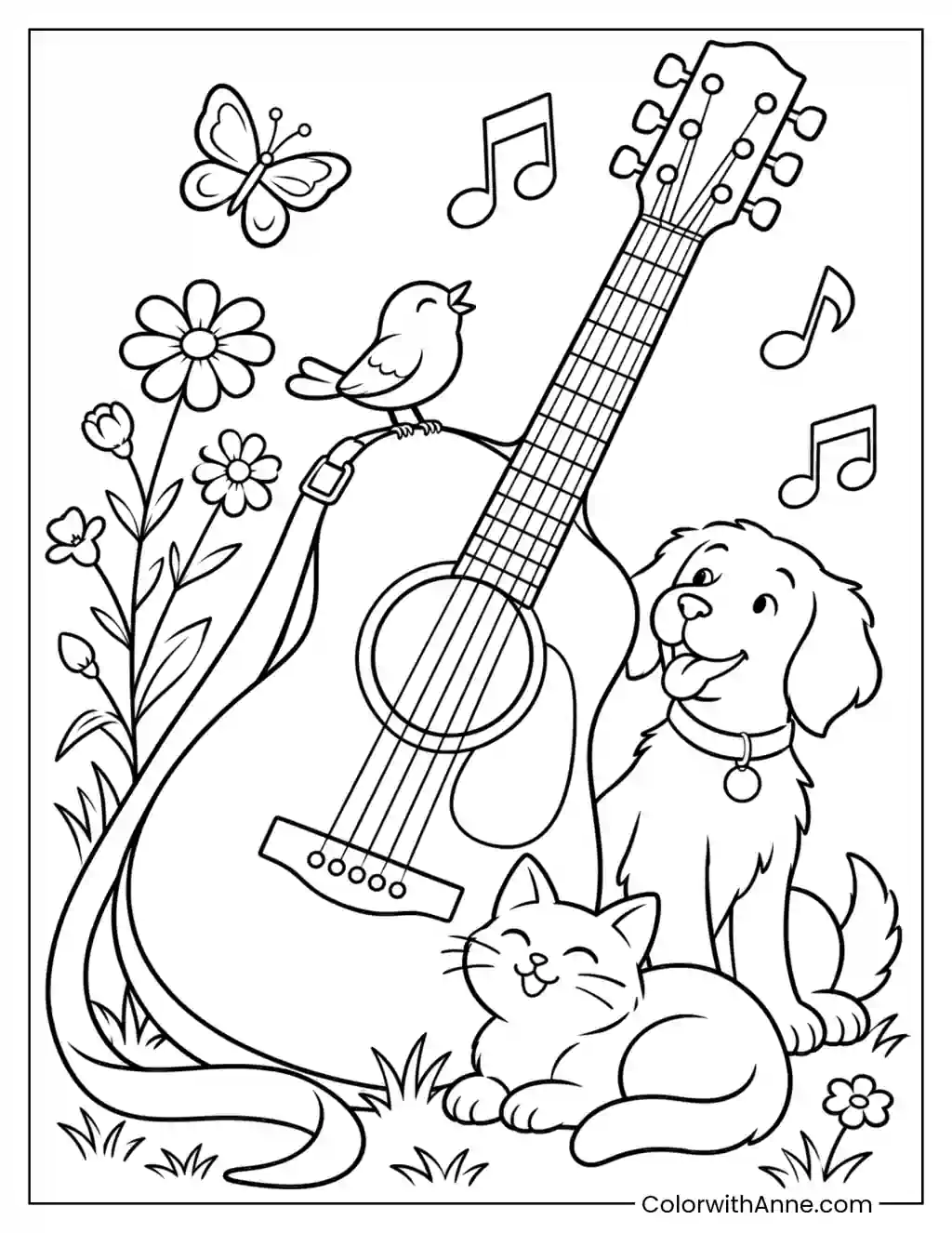
An acoustic guitar stands among wildflowers, accompanied by a perched bird, a resting cat, a seated dog, and a butterfly. Floating musical notes connect the animals and flowers, giving the scene the feeling of an informal outdoor music break.
Use honey brown for the guitar with a darker neck and sound hole. Let the flowers introduce brighter colors in small amounts. Keep the animals’ markings simple, and use light green crayon strokes around the plants to bring the setting together.
Build a short playlist for the scene—three or four songs you would enjoy hearing in a garden or on a quiet afternoon. Write the titles on the back and play them while finishing the page. It can become a picture you associate with a particular listening mood.
Banjo and Straw Hat
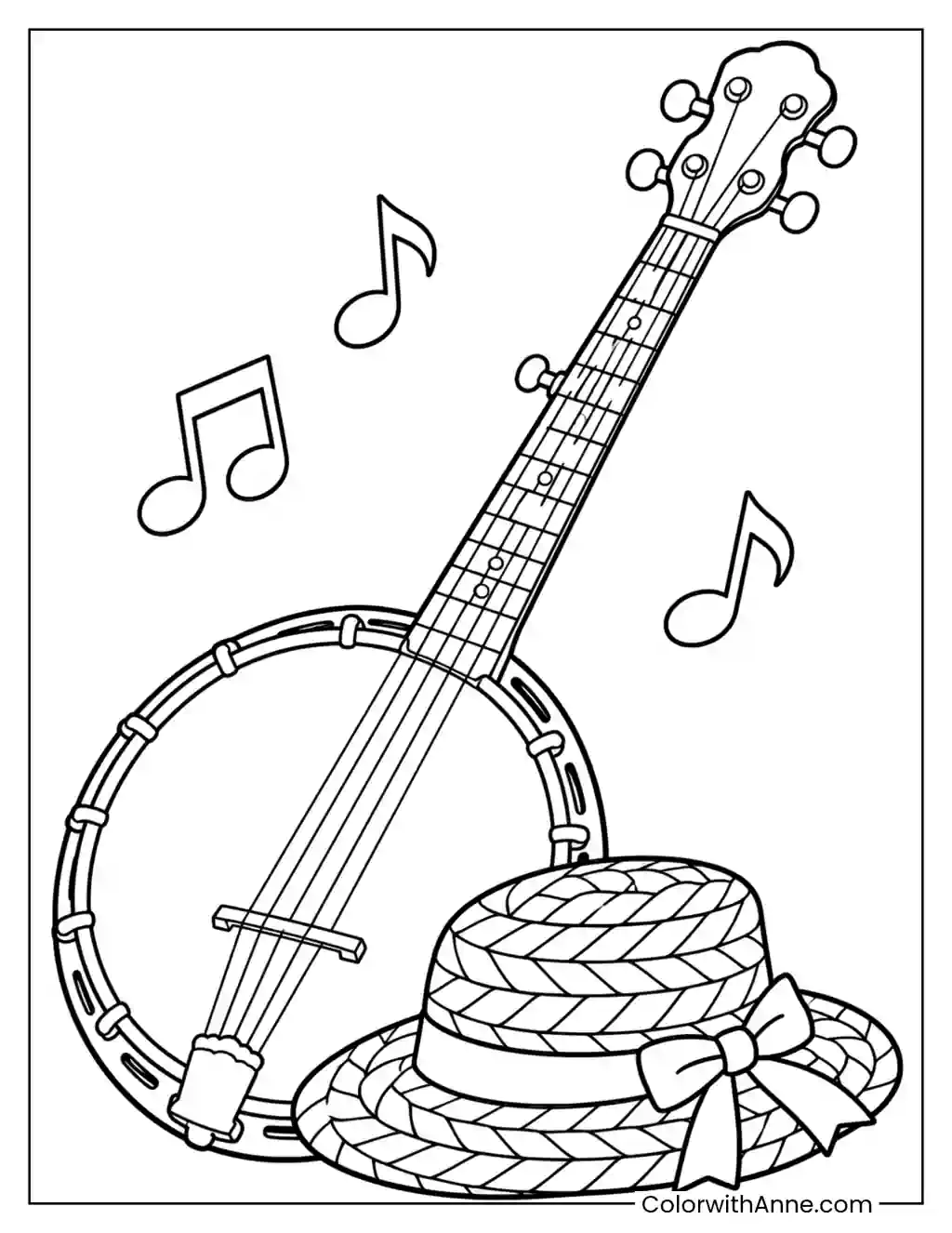
A banjo angles upward behind a woven straw hat tied with a ribbon bow, with musical notes floating nearby. The circular instrument body and broad hat brim overlap in the foreground, while the long neck leads your eye toward the top of the page.
Try a cream banjo head, a warm wooden neck, and light gray metal details. Color the hat in golden straw tones, using slightly darker marks along its woven lines. A blue or red ribbon gives the arrangement a clear finishing accent.
Use the page as the opening sheet for a little music-discovery collection. Listen to a track featuring banjo and write its title, performer, and one thing you noticed on the reverse. Keep later instrument pages together as you find more sounds you enjoy.
Bass Guitar Groove
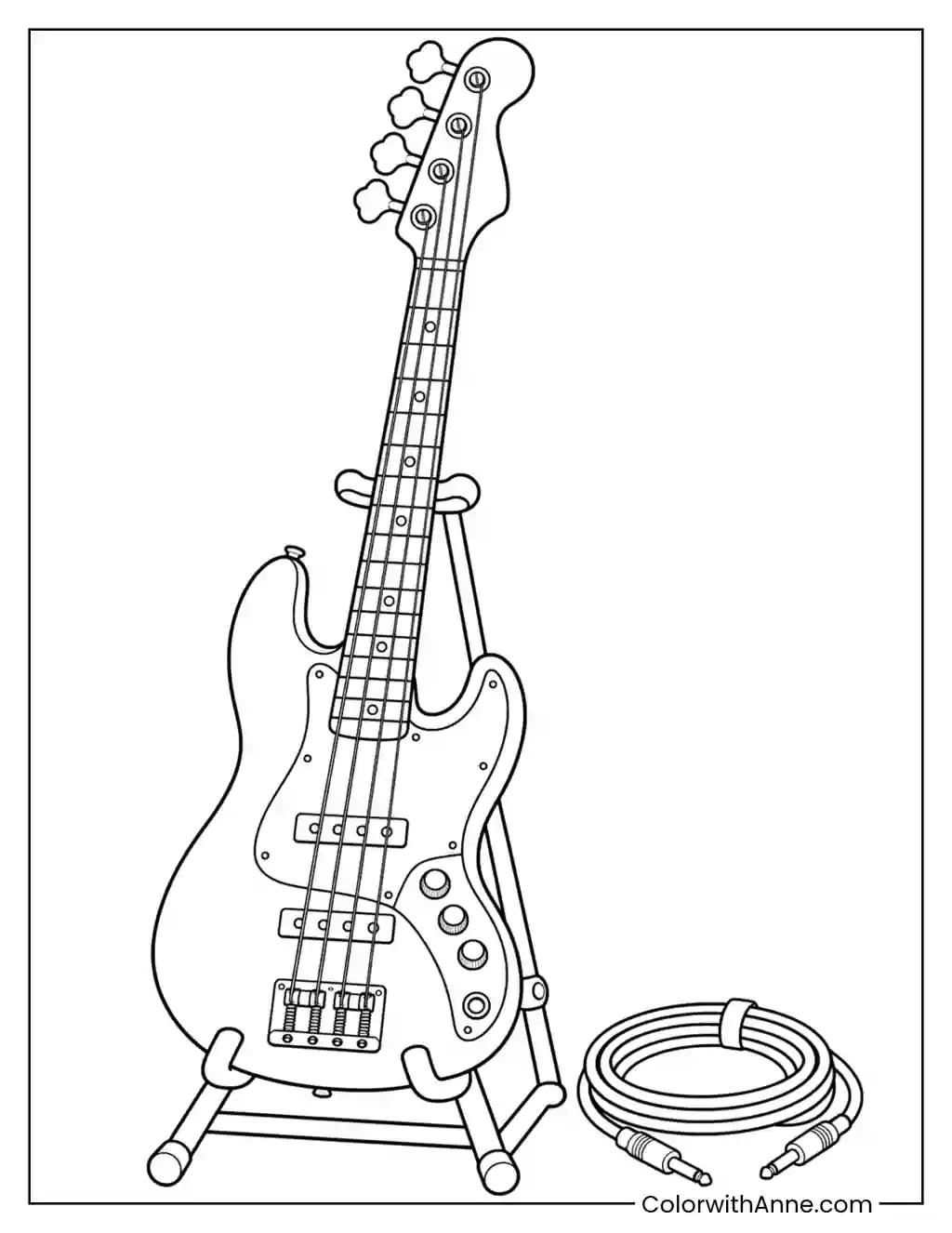
A four-string bass guitar stands upright on a stand beside a neatly coiled instrument cable. The uncluttered arrangement leaves the instrument’s body, long neck, and strings easy to see, with the cable adding a curved shape near its base.
Choose a solid body color such as teal, cherry red, or black, then leave a narrow lighter strip along one edge. Use a fine-tip marker around the strings and frets. Keep the stand dark gray so its structure stays clear.
Put on a favorite song and listen specifically for the bass. Tap along when you can hear its repeating pattern, then replay the same section to see whether it becomes easier to follow. Write the song title on the page as a reminder of the part you discovered.
Bongo Rhythm
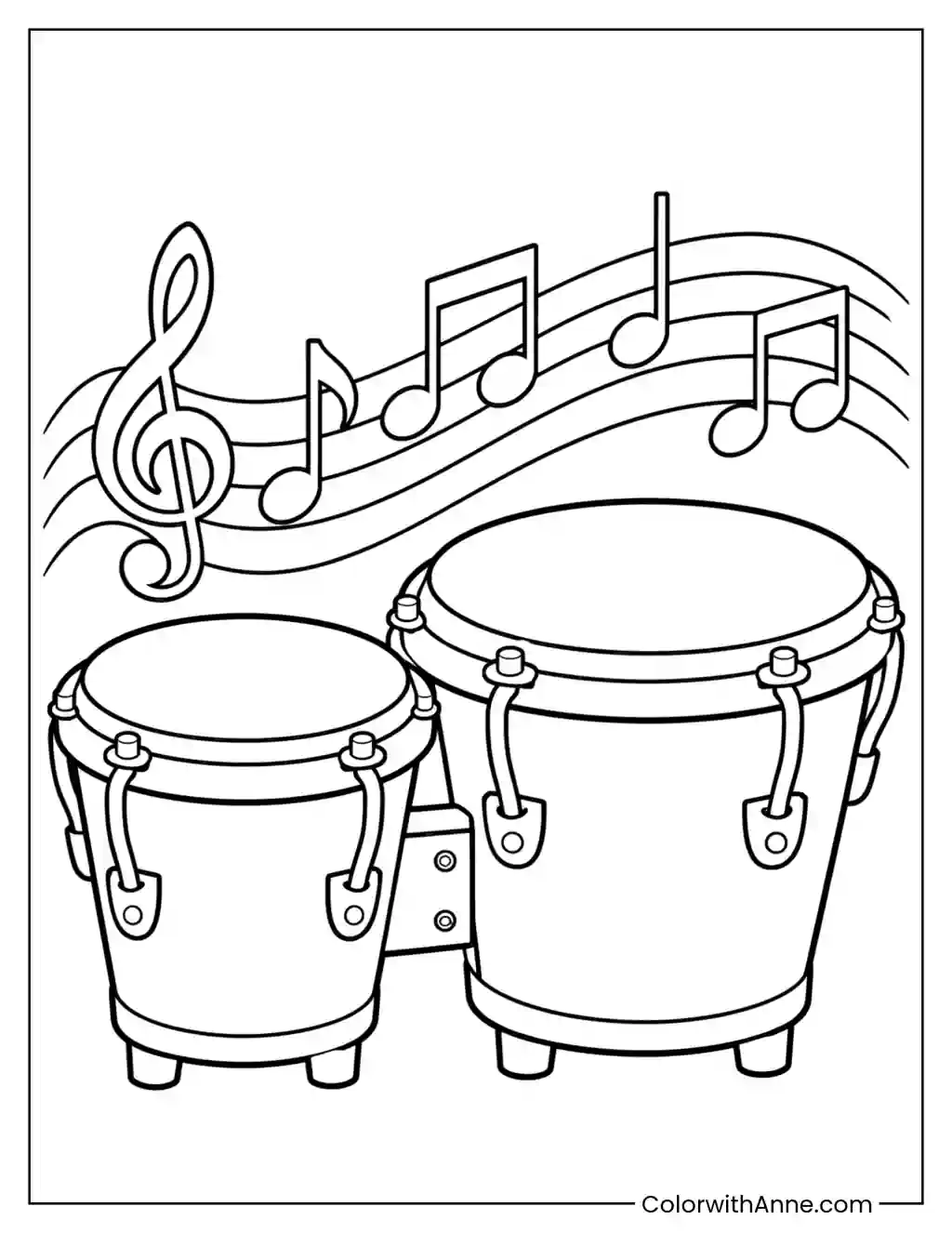
Two connected bongo drums sit beneath a flowing musical staff with a treble clef and notes. The paired drumheads provide broad spaces to color, while the rims and joining section offer smaller details that help the instruments look complete.
Try warm wooden shells with cream drumheads and dark rims. Give the two shells related shades, such as terracotta and deep brown. A brighter color on the floating staff can add energy without taking attention away from the drums themselves.
Create a short tabletop rhythm to go with the picture. Use one hand for each imaginary drum and try a pattern such as left, right, right, pause. Invite someone to echo it, then let them invent the next pattern. Keep the sounds gentle and the sequences short enough to remember.
Cellist in Practice
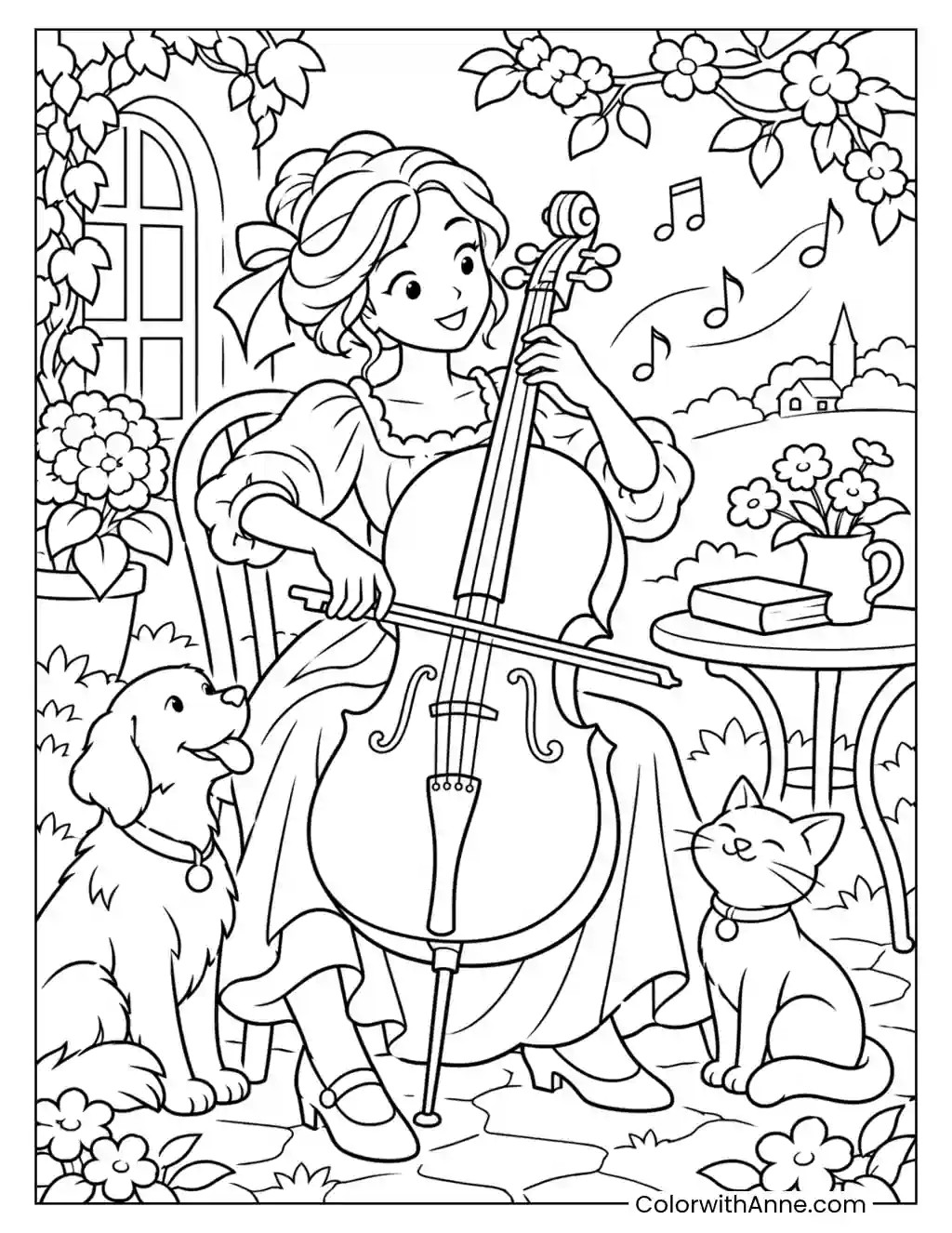
A smiling cellist practices in a flower-filled garden, with a dog and cat seated nearby. The instrument occupies the center of the scene, while the relaxed animals and surrounding flowers make the practice session feel like part of an ordinary pleasant afternoon.
Use reddish brown for the cello, adding a darker shade near its edges. Choose clothing colors that stand apart from the instrument. Keep the garden slightly softer, using small brighter touches on a few flowers rather than giving every bloom equal emphasis.
Borrow the scene’s relaxed approach for something you are learning. Write one small practice goal on the back—playing a few measures, reviewing a phrase, or working on a drawing detail. Set aside a short session, then date the page when you have given it a try.
Concert Grand Piano
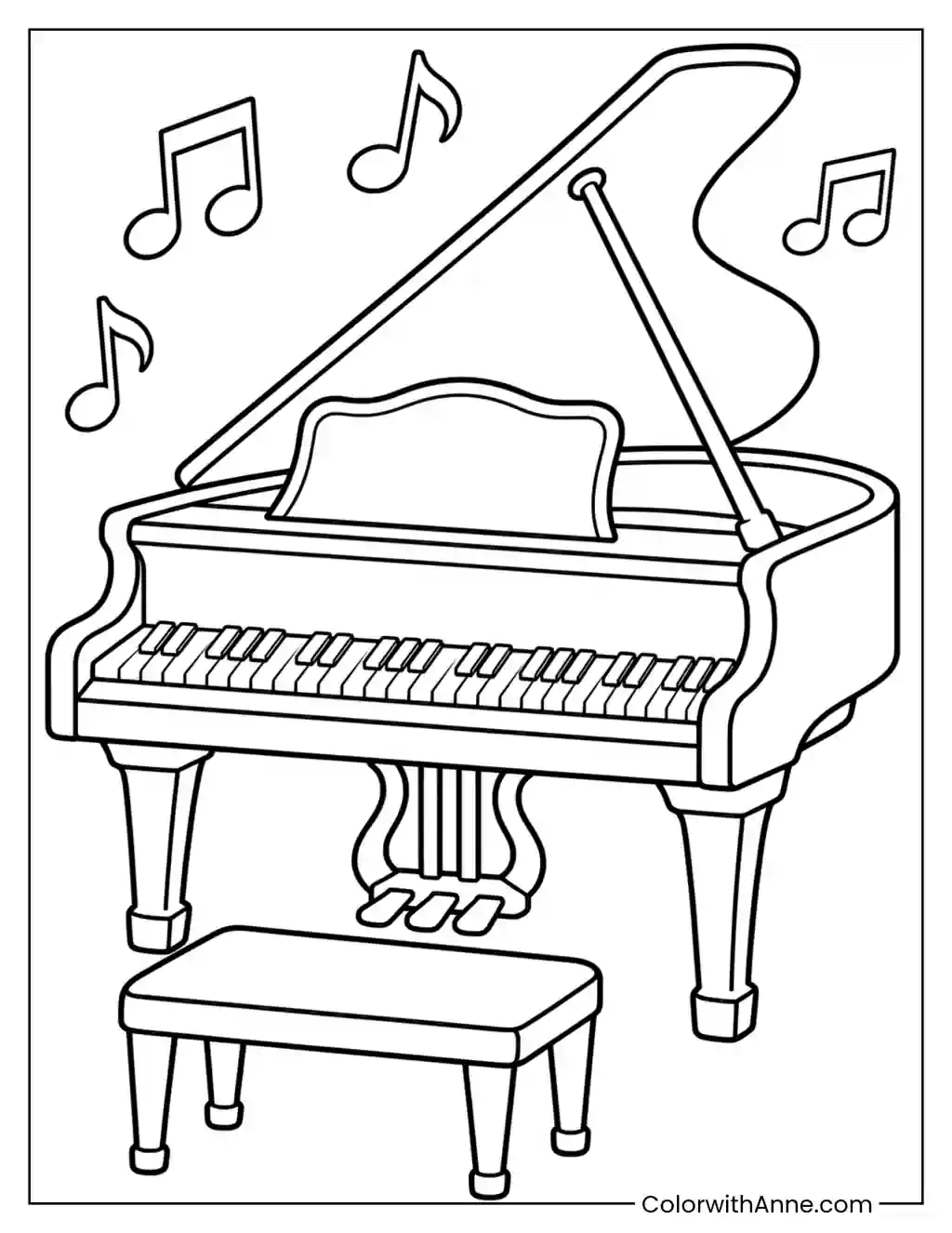
A grand piano stands with its lid raised and a bench placed in front, surrounded by floating musical notes. The open lid gives the instrument a dramatic outline, while the keyboard and legs provide smaller details beneath the broad upper shape.
Try a black, walnut, or white piano, using a lighter shade along selected edges to separate overlapping parts. Color around the keyboard carefully so the keys remain readable. Give the floating notes one accent color to connect them without crowding the instrument.
Make the page into a cover for a personal listening program. On a separate sheet, list three piano pieces or songs you would like to hear, leaving space for a brief reaction to each. Slip the list behind the picture and enjoy your own short concert.
Conductor Leading the Beat
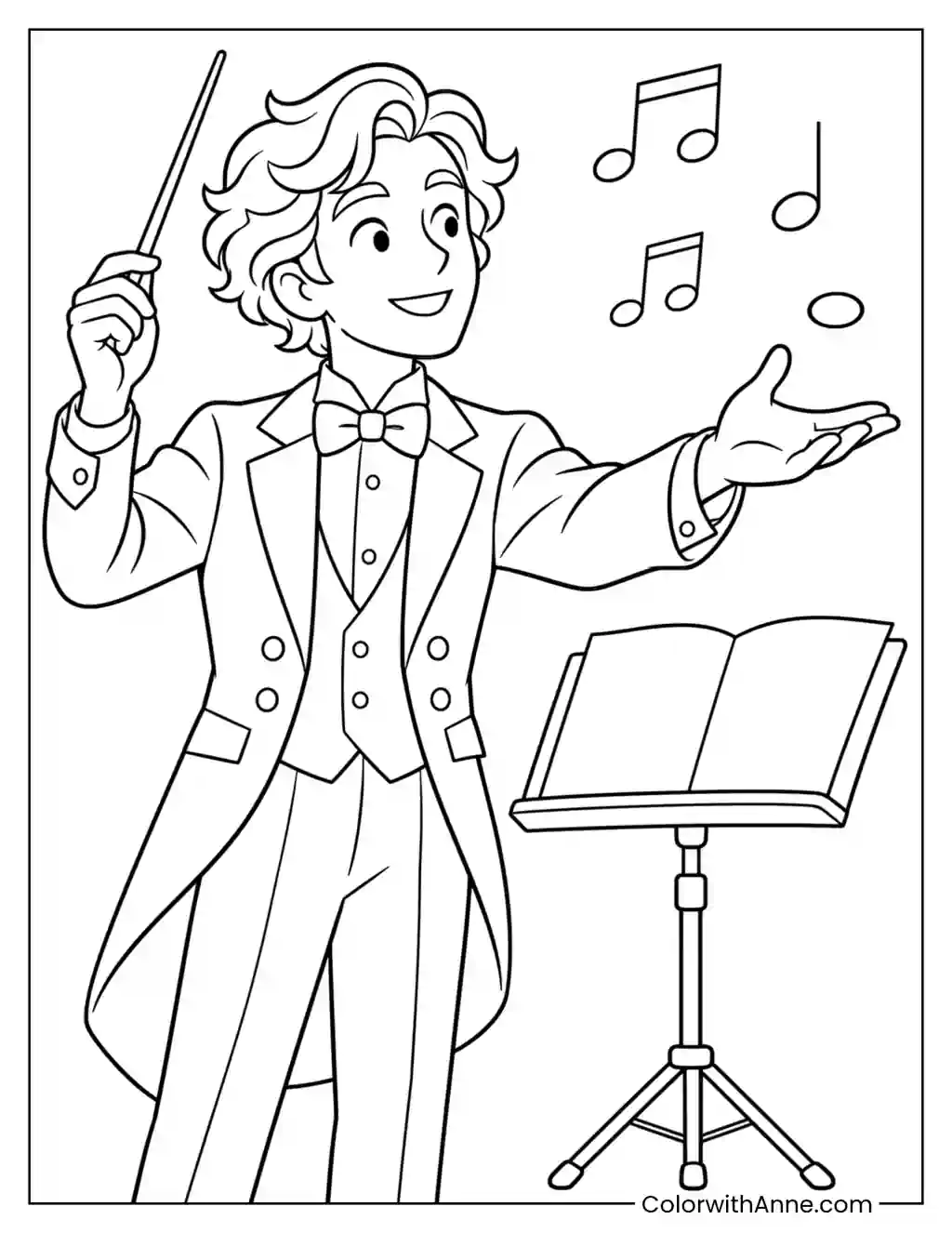
A smiling conductor raises a baton and extends an open hand beside a music stand. Musical notes float overhead, reinforcing the sense that a performance is underway, while the open hand and lifted baton give the figure an expressive pose.
Use navy, charcoal, or another deep shade for the conductor’s clothing, with a lighter shirt underneath. Keep the baton pale enough to stand out against its surroundings. Fine-tip markers help with the hands, face, and narrow edges of the music stand.
Try a simple conducting game with someone else. Agree on three gestures: start, softer, and stop. One person conducts while the other hums or taps gently, then swap roles. The picture becomes a useful prompt for discovering how much you can communicate through movement alone.