
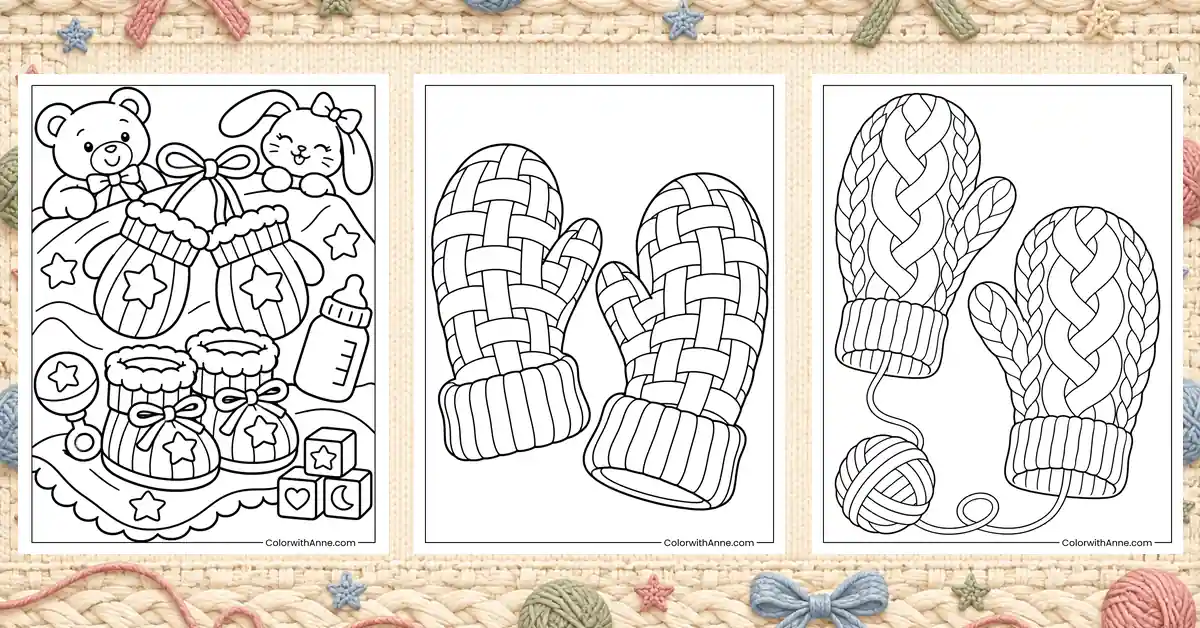
One mitten is on the radiator. The other is almost certainly still in a coat pocket, unless it fell behind the seat on the way home. Winter is full of these little searches, and there is a particular relief in finding both mittens dry and ready before the next trip outside.
Mitten coloring pages bring back the fun of choosing a pair in the first place. Matching colors make them look like a set, though two different designs can be just as appealing. Anyone who has ever chosen mittens for the pattern alone can probably think of a pair worth putting on paper.
Free Printable Mitten Coloring Pages
Click any coloring page below to open the PDF, then print on US Letter or A4 paper.
Did you find what you needed?
Help us choose what to create or improve next.
Coloring Ideas for Mitten Pages
Try these creative ideas to make the most of your coloring sheets.
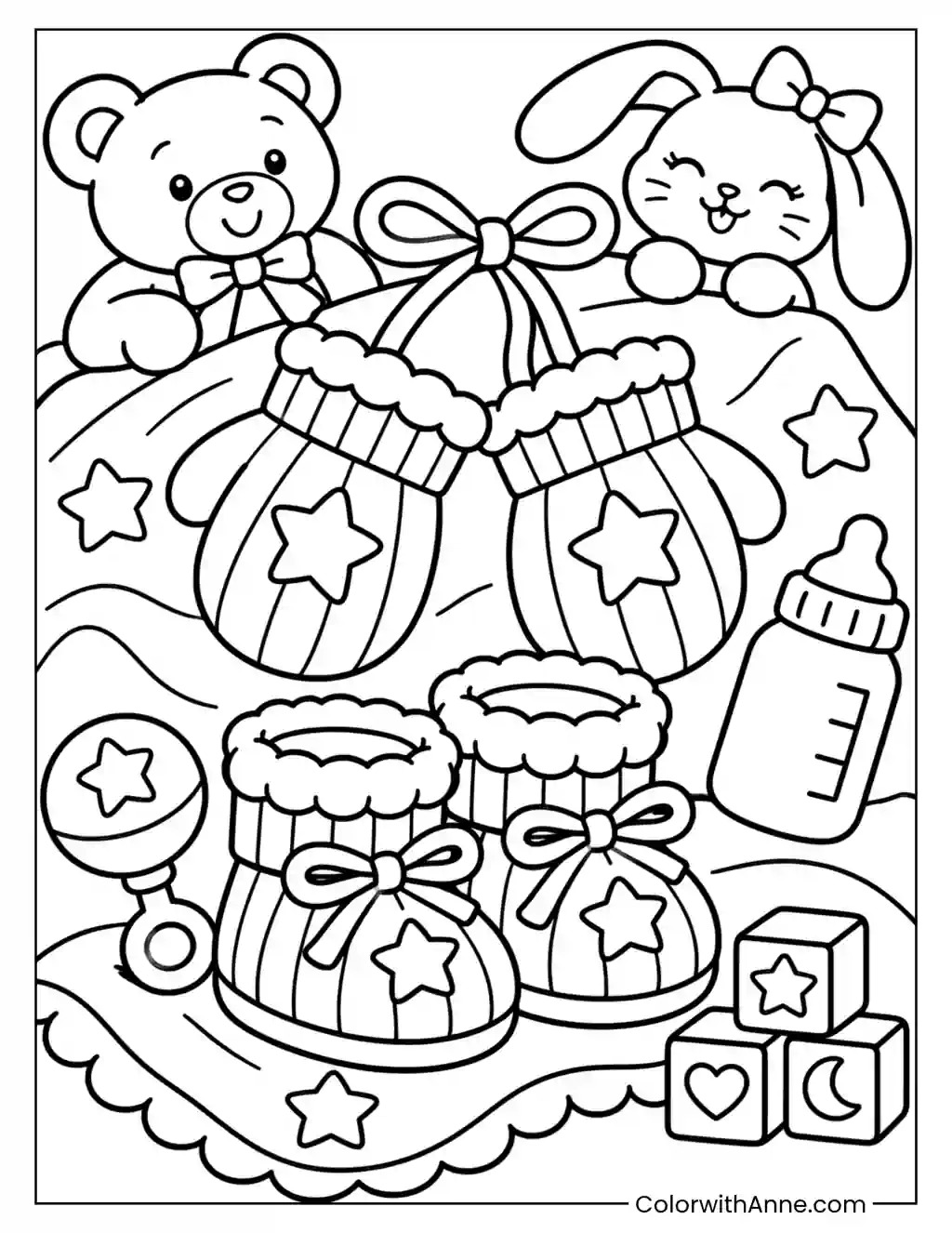
Make the Tiny Mittens a First-Winter Keepsake
Star-patterned baby mittens and bow-tied booties rest on a blanket. Toys and a bottle nearby give the small winter clothes a familiar setting.
Soft blue or lavender can keep the mitten stars clear against the fabric. Repeat one shade in the bootie bows, then use a quieter blanket color to bring out the shape of the little clothes.
If someone in the family is having a first winter, add their name and the year beneath the blanket. Borrowing a shade from a pair of booties they actually wore makes the page a small record of that season.
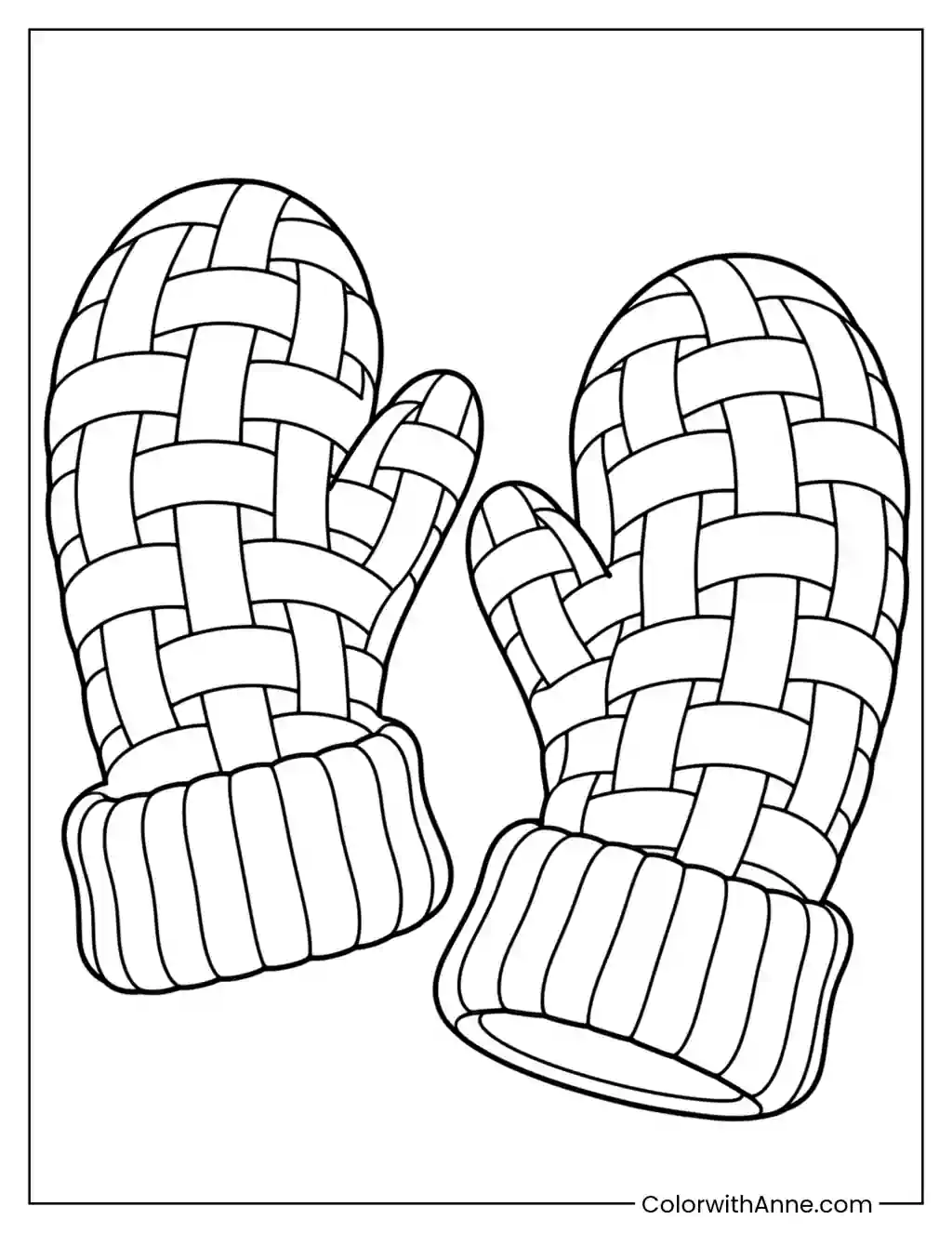
See Where the Basket Weave Goes Under
Two mittens face inward, with thick ribbed cuffs and broad bands woven across their fronts. The interlacing leaves visible sections where one band can be followed before another crosses it.
Use two close shades for the broad bands. A slightly deeper mark just where one passes beneath another will help the weave show. Keep the cuffs quieter so the big pattern remains the focus.
Lay three paper strips across three more and weave one strip over and under. Compare that small section with the mitten before coloring the trickiest crossing. Having a real overlap in front of you makes it easier to work out where a shadow belongs.
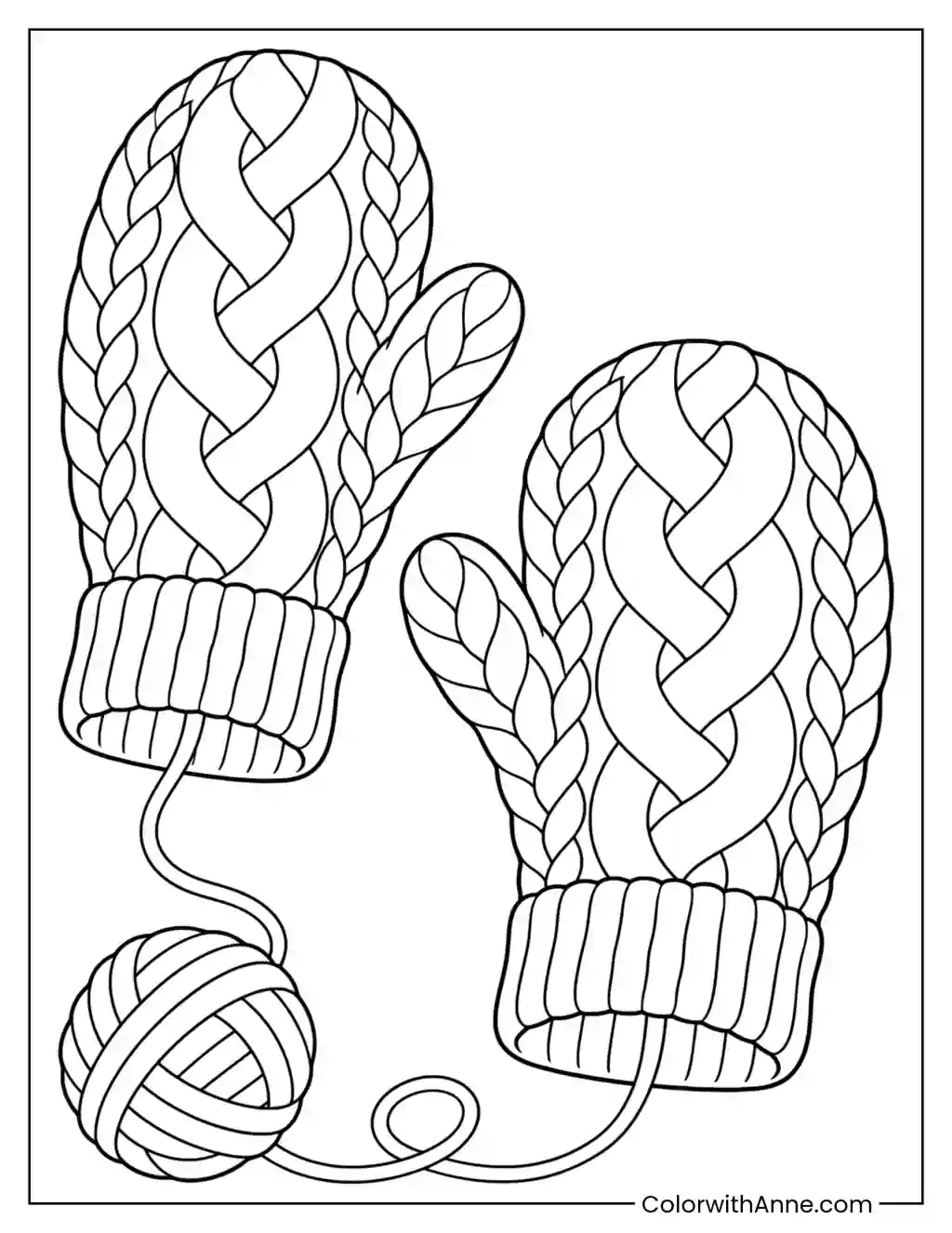
Make a Yarn Swatch You Can Keep
Cable-knit mittens sit above a yarn ball, with loose strands curling between them. The raised cables and the finer ribbed cuffs give the same material two different textures.
Use a lighter crayon touch along the tops of the cables and a stronger one in the narrow spaces between them. Give the ball the same main color, with slightly darker lines where strands overlap.
If the page inspires a knitting project, clip or tape a short length of candidate yarn to the margin. The print gives the swatch a purpose, and a note about the shade or yarn weight makes it useful when tying up the project later.
Compare Quilted Stitching with a Winter Jacket
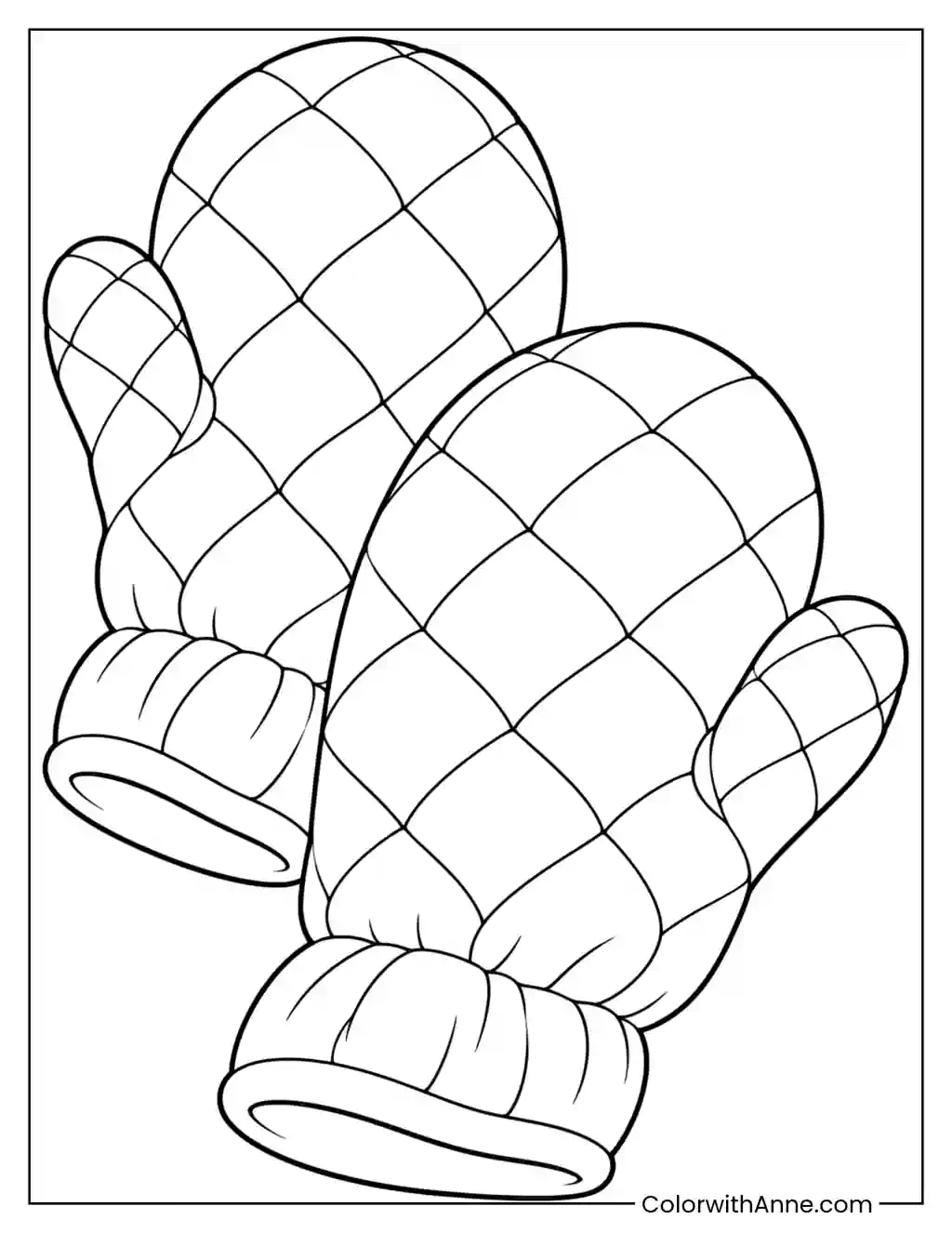
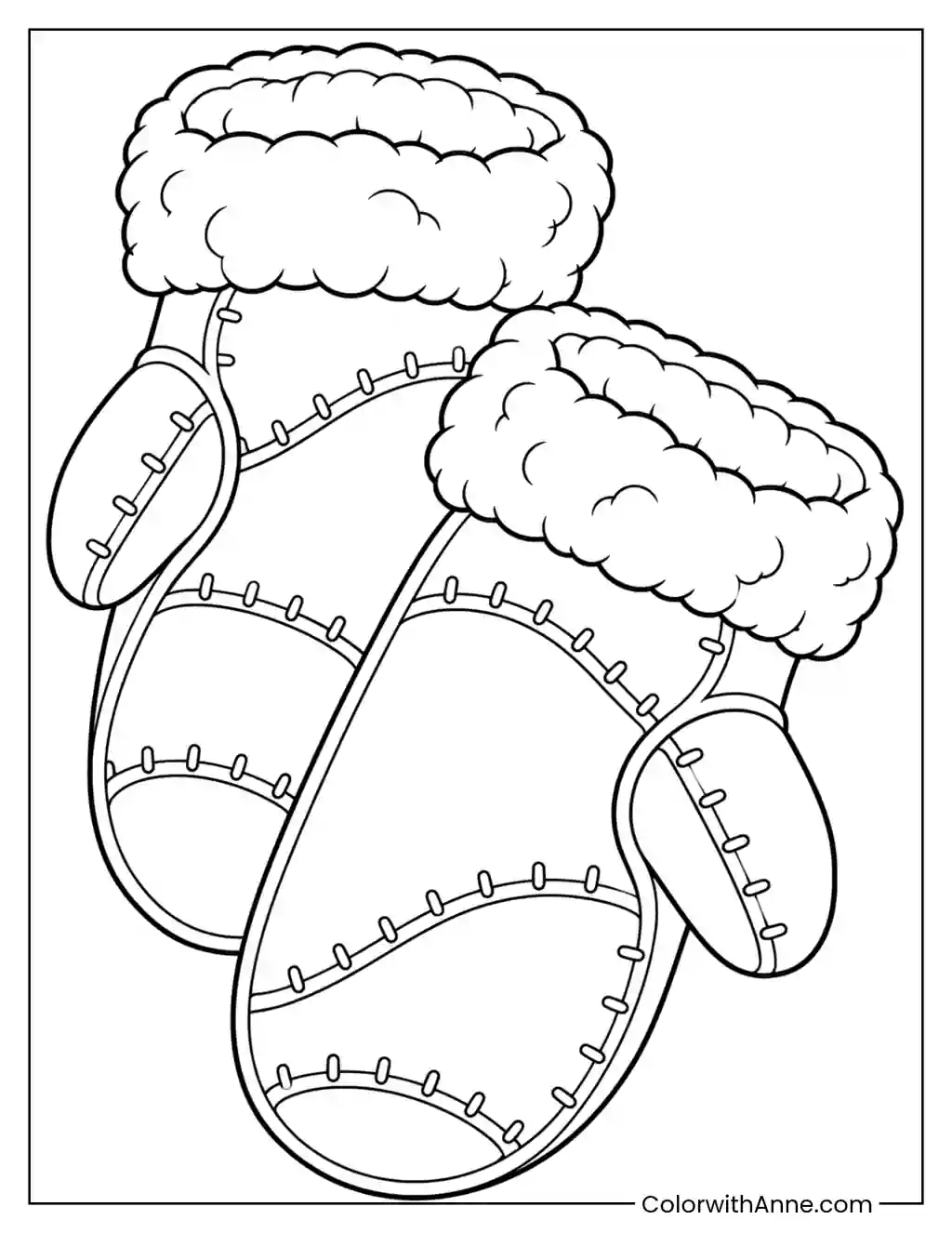
Two quilted mittens overlap, with large diamonds stitched across the padded fabric. The thumbs point away from each other, and the gathered cuffs show where the padding changes shape.
A soft jacket color such as navy, olive, or dusty rose suits the quilted areas. Use gentle shading near the stitch lines and leave the middle of some diamonds lighter to make the padding visible.
A quilted jacket or bag gives you a ready reference. Look at one seam and notice how the material rises on either side of it. Borrow just that small change in depth for the mittens. It will usually tell you more than trying to shade every diamond the same way.
Give Each Heart Mitten to Someone
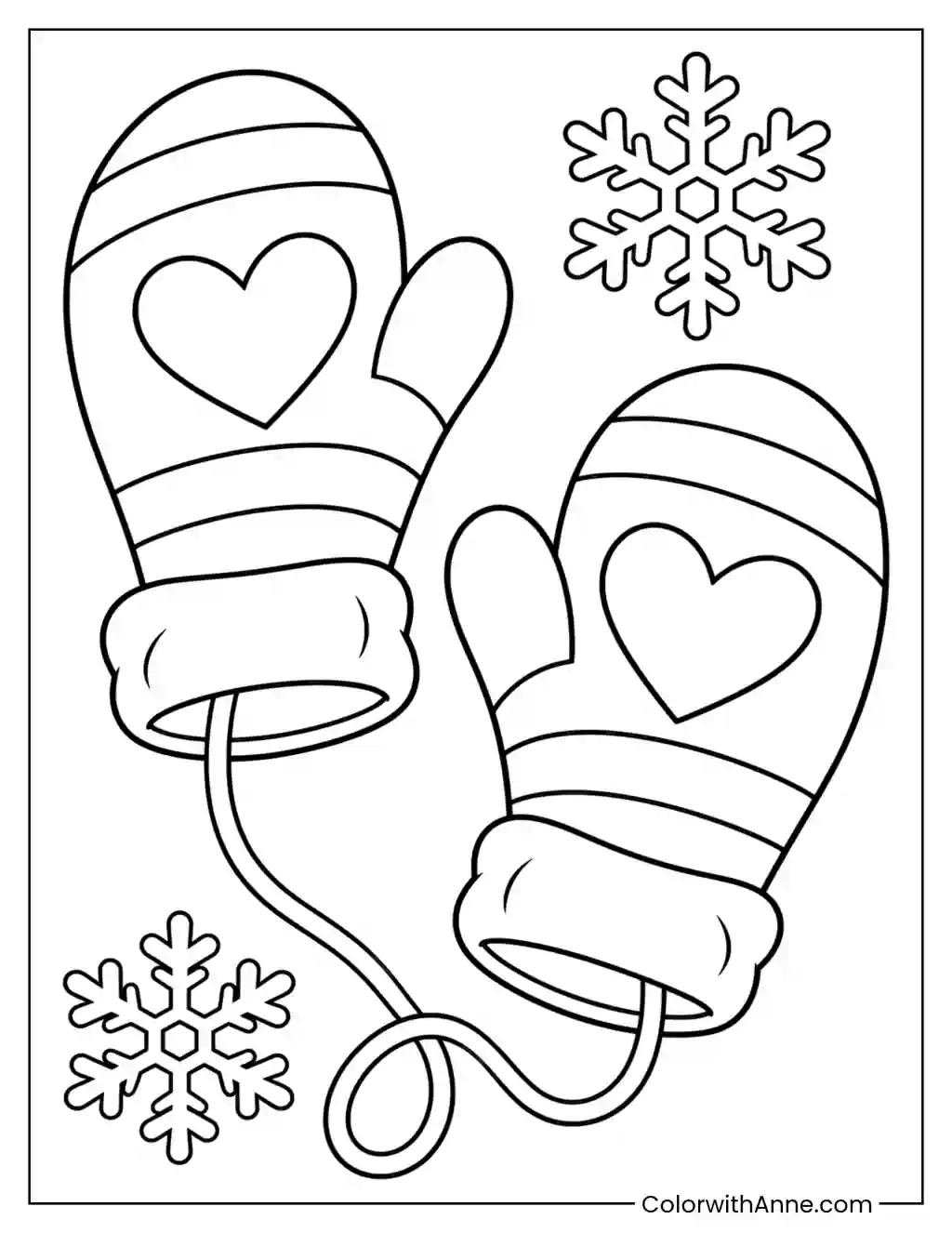
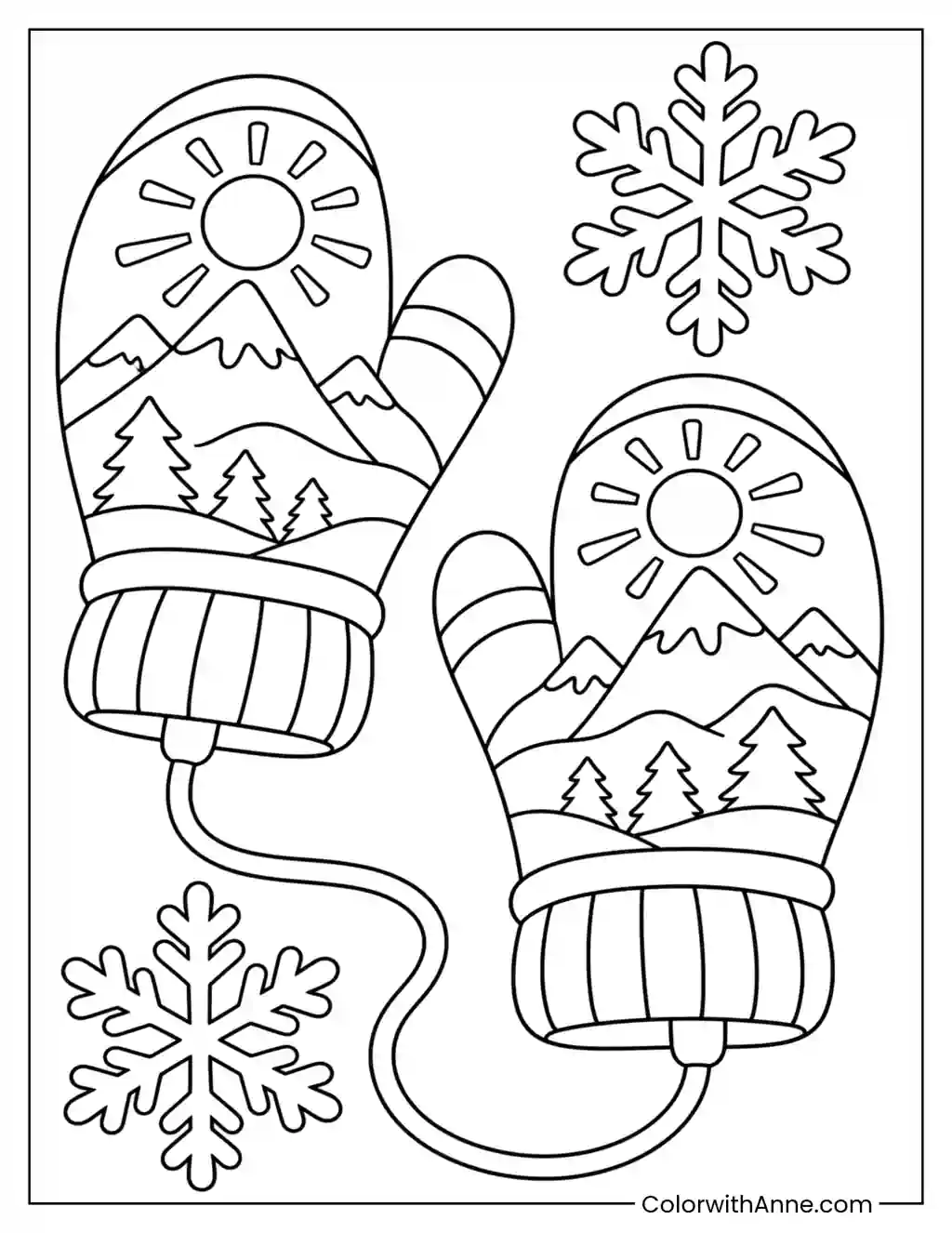
A looping cord joins two heart-patterned mittens between a pair of snowflakes. The striped bands and folded cuffs give the mittens a little structure around the softer heart shapes.
Try one warm mitten and one cool one, with the same accent on their cuffs. Keep the hearts light enough for a small initial or name if you decide to add one.
Pick two people who make a good pair and put one name on each mitten. The cord already connects them, so the picture works as a simple note for siblings, skating friends, or anyone who comes to mind when you see one mitten waiting for the other.
Work a Favorite Hat into a Matching Set
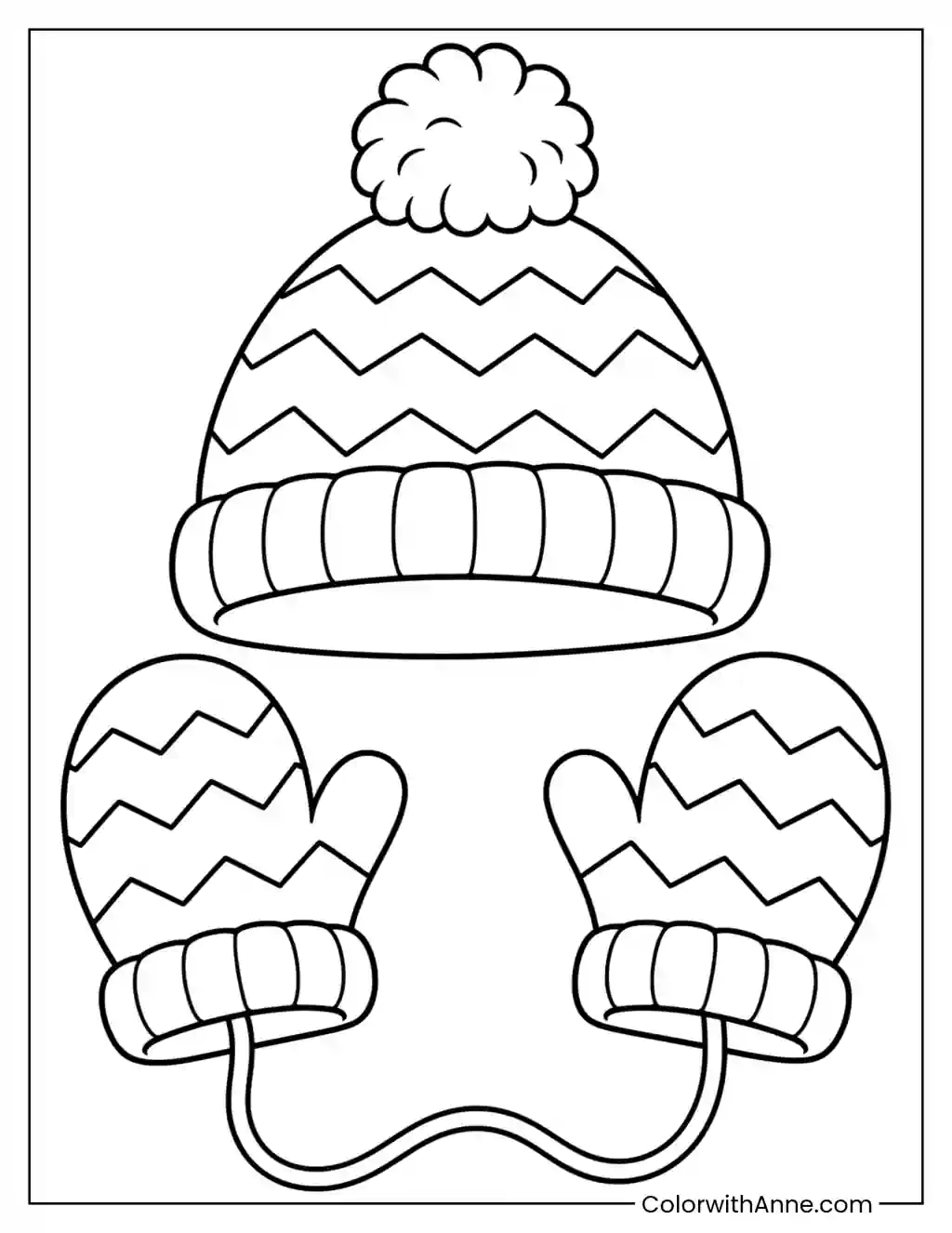
A pom-pom hat sits above zigzag mittens connected by a curved cord. The hat and mittens share the same page like a set laid out for a cold day.
Repeat one strong color in the hat and the mitten zigzags. Give the pom-pom a little extra texture with short strokes and leave the cord in a simple shade that’s easy to follow.
Start with a hat you already wear and see what kind of mittens would go with it. If you’re looking for a pair in a store or planning to knit one, the finished page can serve as a quick reference for which color to look for.
Find a Plaid Pattern in a Real Scarf
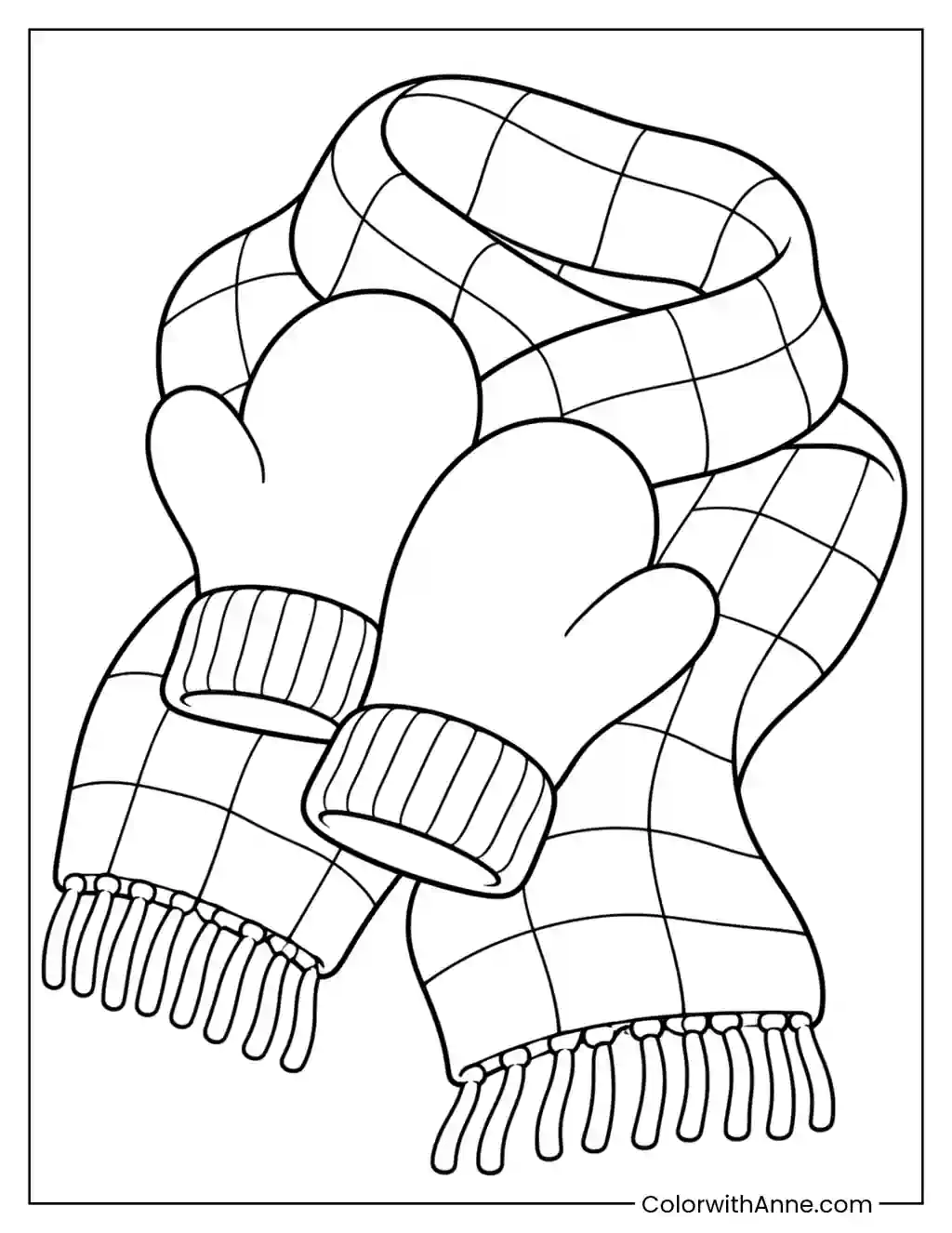
Two plain ribbed mittens overlap a checked scarf that curls loosely around them. The scarf’s fringe and crossing bands make it the busier part of the picture, with the mittens offering broad areas of fabric beside it.
Color the checked bands in two shades and deepen the squares where they cross. A single mitten color drawn from the scarf will keep the pair looking coordinated without repeating the checks.
A favorite scarf can settle where the darker squares belong. Lay it beside the picture and find the smallest block that repeats. Once you’ve worked out that block, the rest of the pictured scarf becomes easier to color without losing your place.
Keep the Woodland Print by the Mitten Basket
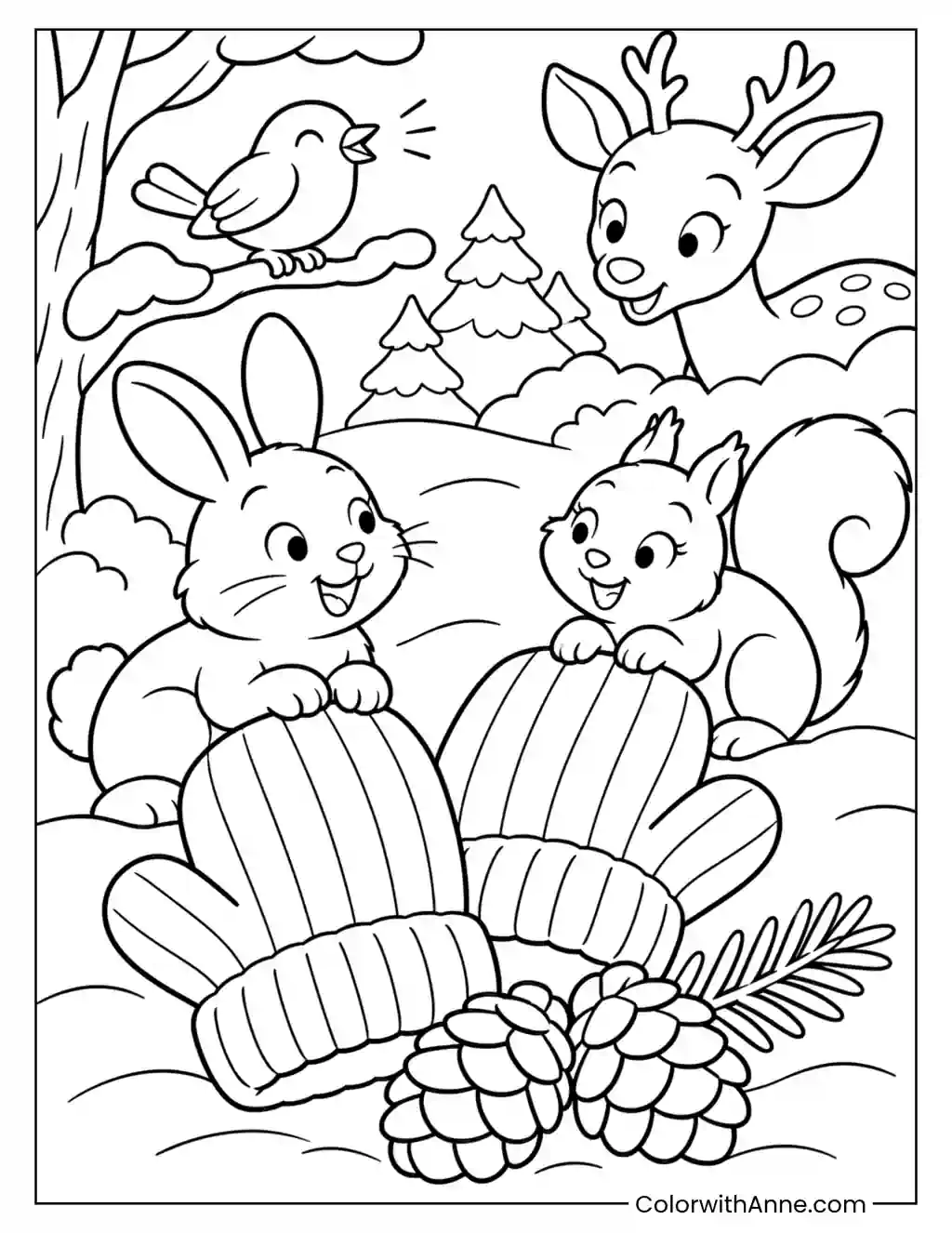
A rabbit and squirrel rest their paws on oversized mittens in a snowy woodland. Pinecones are close by, with a deer and a bird also in the scene. The mittens look unusually large among the forest animals.
Make the mittens a strong berry red or blue so they stay distinct from the animals. Let browns and gray-browns carry most of the woodland detail, leaving the snow light around the pinecones.
If gloves and mittens tend to land in different places at home, use this print to mark their winter basket. The rabbit and squirrel already look as though they’ve found the right pair. A small name or household label at the bottom is enough to put them in charge of the rest.