
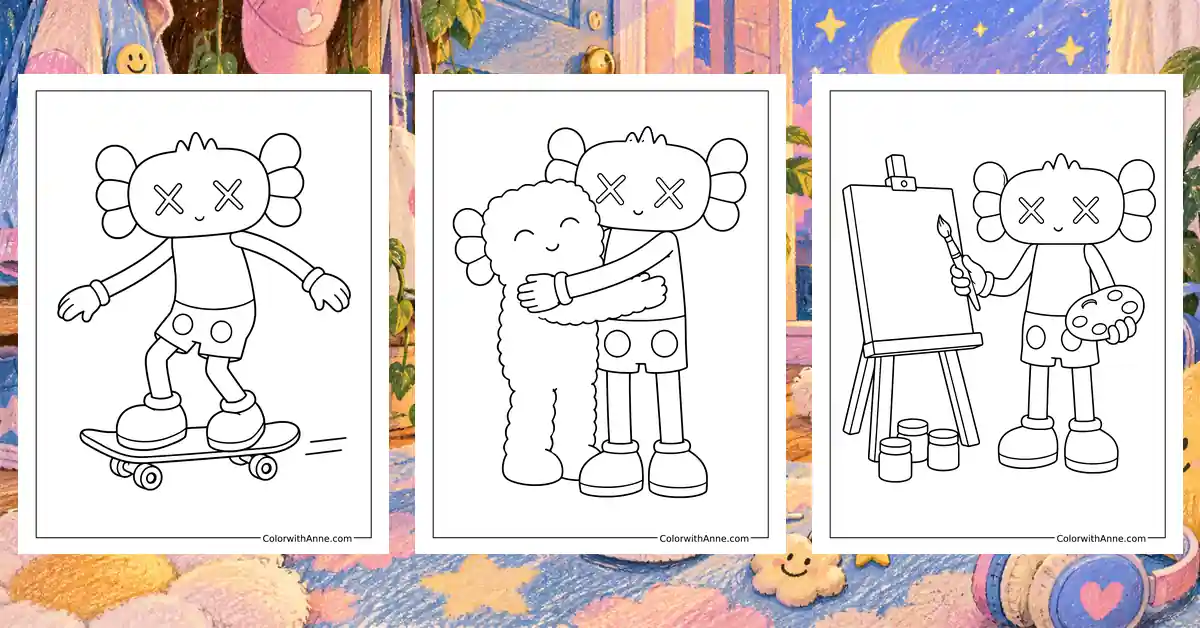
A KAWS figure can seem familiar before the viewer works out why. The rounded gloves suggest a cartoon, but the crossed-out eyes interrupt that easy recognition. A lowered head or slumped posture can make the character look unexpectedly vulnerable, leaving an expression to be read without the usual facial clues.
KAWS coloring pages offer time to sit with that peculiar mix of playfulness and melancholy. The shapes are approachable, yet the mood is not always straightforward. Someone may see weariness where another person sees quiet companionship, and neither needs to settle the matter before enjoying the figure on the page.
Free Printable KAWS Coloring Pages
Click any coloring page below to open the PDF, then print on US Letter or A4 paper.
Did you find what you needed?
Help us choose what to create or improve next.
Coloring Ideas for KAWS Pages
Try one of these coloring ideas, or use them as a starting point for your own.
Design a Box Worth Keeping
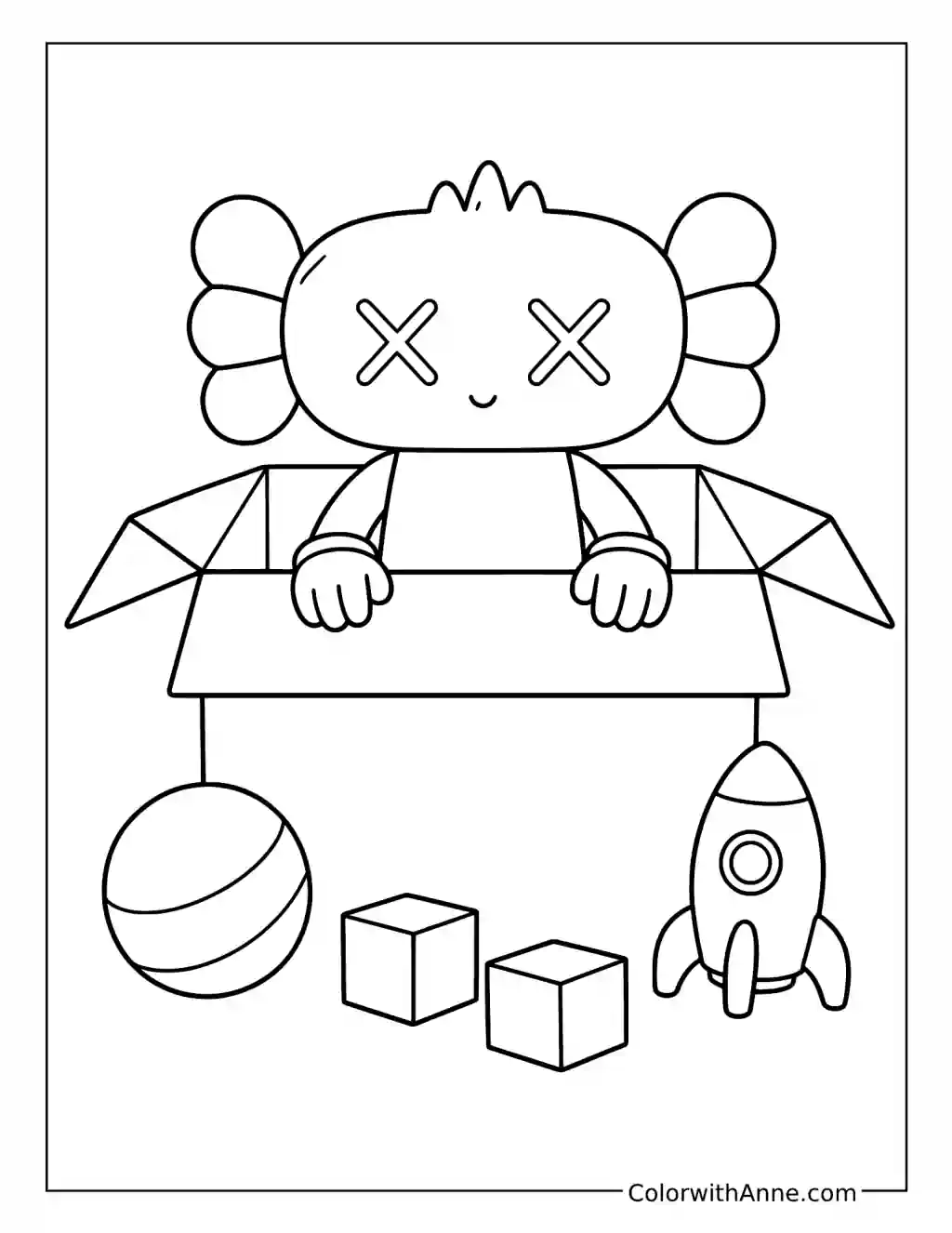
The X-eyed figure leans over an open box, hands resting on its edge, while a ball and tiny rocket wait below. It looks ready to leave the packaging before anyone has found a shelf for it.
A matte gray figure beside a candy-pink box would give the scene a playful art-toy look. For a bolder version, the box and figure could share one color in different shades.
Give the box one clear graphic feature, such as a broad stripe, a small emblem, or a contrasting inner lining. Packaging can have a personality without being covered in decoration. This page makes a useful miniature design exercise because the figure is already there to show how the box and its contents work together.
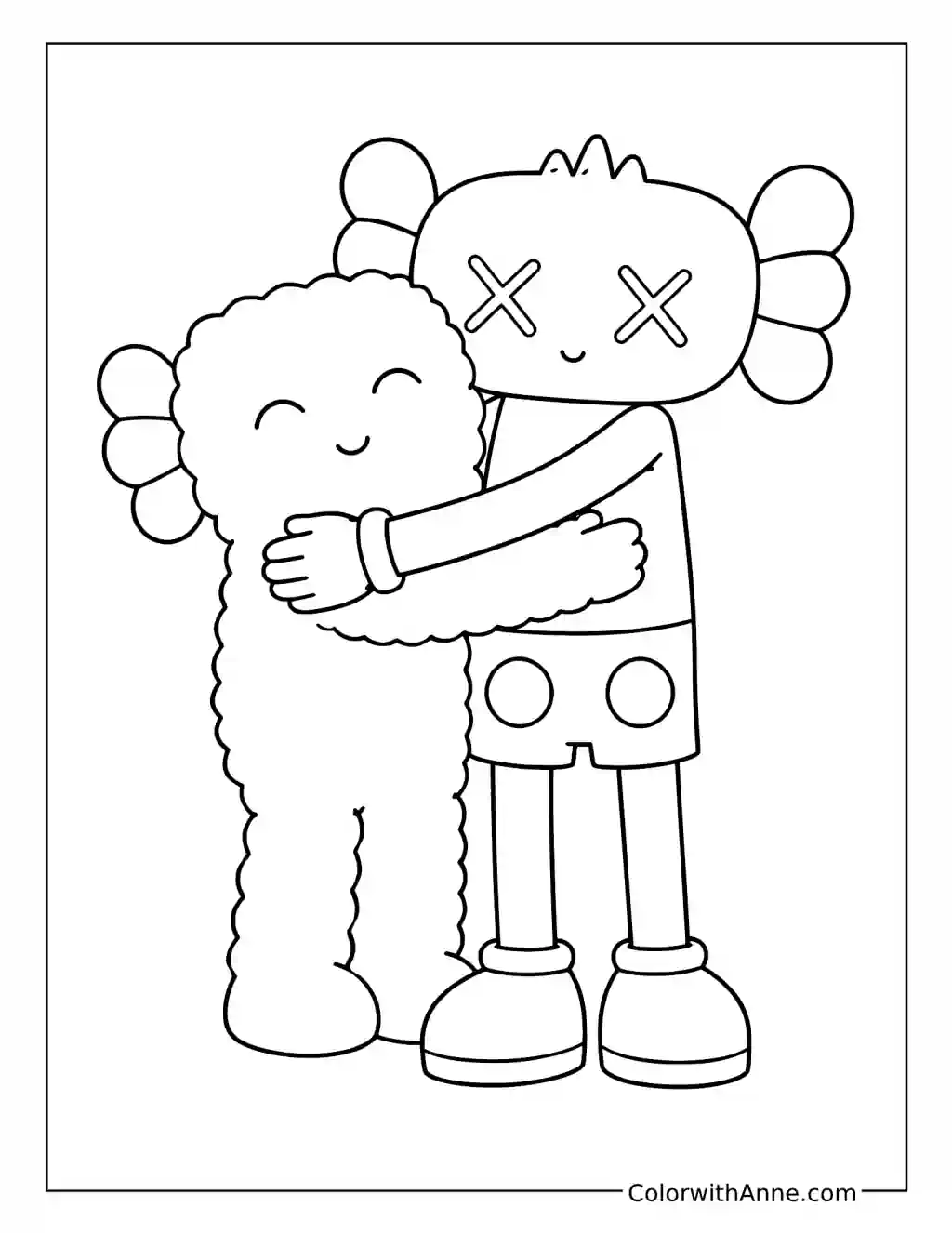
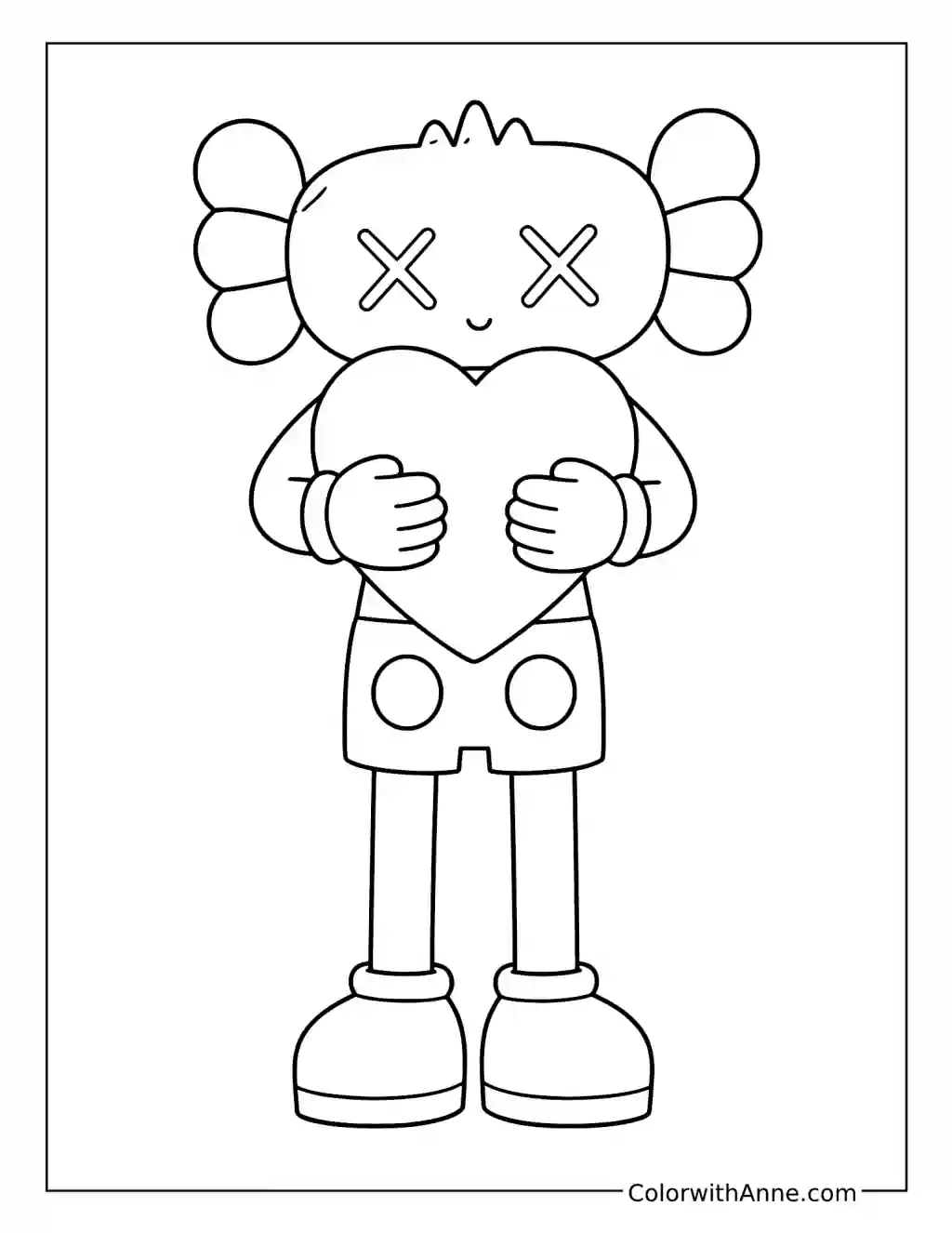
Make the Hug Feel Soft
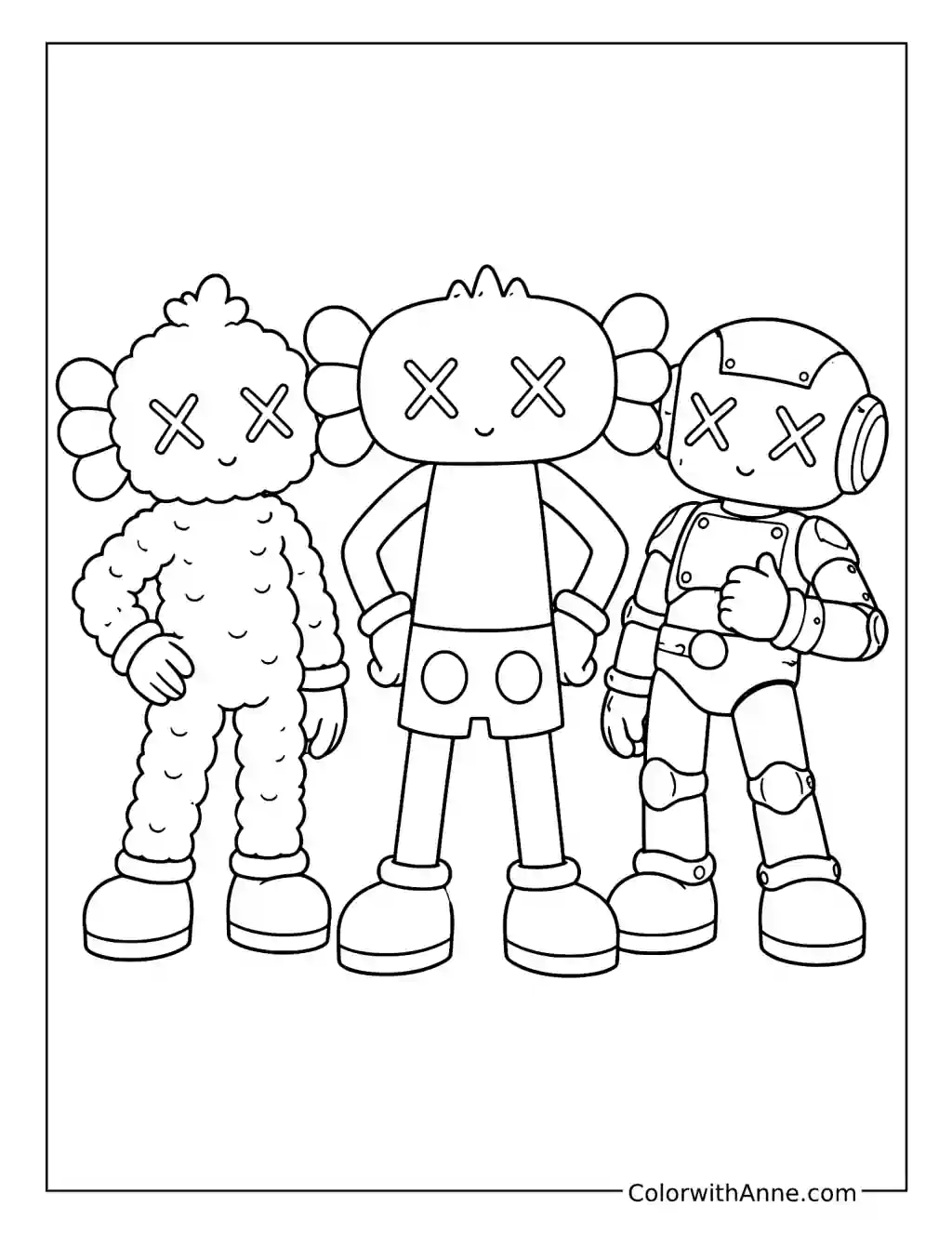
The smooth figure wraps both arms around its fuzzy companion, pressing the two very different shapes together. The simple faces leave the embrace to carry the picture, while the uneven fur outline gives the larger companion a softer presence.
Warm gray beside muted rose or cream would keep the pairing gentle. A pale background could leave a little breathing room around the joined figures.
Try short, irregular marks within the fuzzy character while keeping the other figure smooth. The difference in surface can be more interesting than adding another color. This is also an easy page to share: each person takes a character, then agrees on the small areas where the arms and bodies overlap.
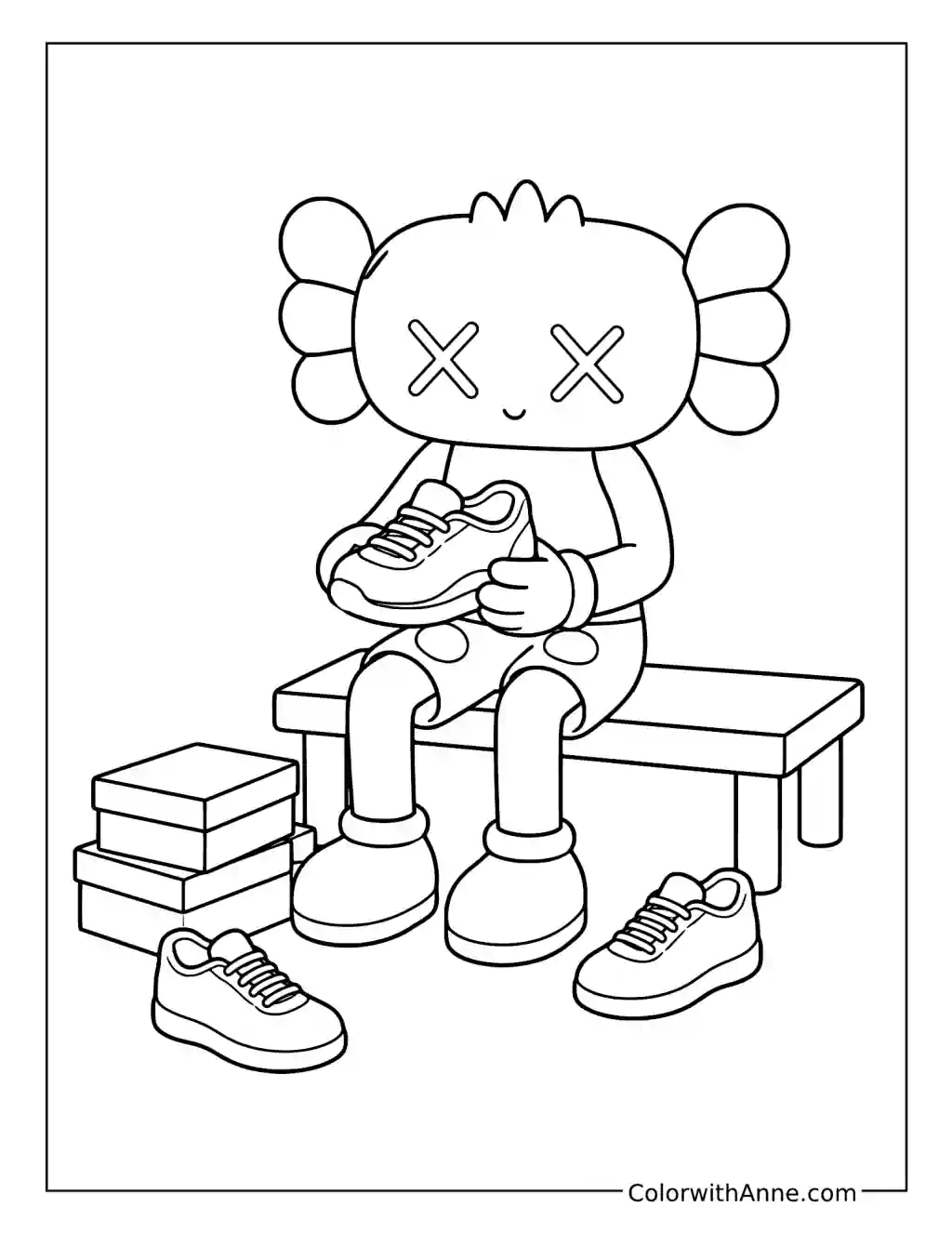
Put a Favorite Sneaker Colorway in Miniature
The seated figure studies a sneaker with boxes and more shoes nearby. The absorbed pose captures a very particular pleasure: looking closely at something whose differences may seem tiny to everyone else.
Neutral clothes would let the sneakers carry the strongest accents. A little color repeated on the held shoe and one pair below could make the collection feel deliberately chosen.
Look at how a favorite sneaker divides color between its panels, sole, and laces. Borrow that arrangement for the miniature shoes rather than trying to reproduce every seam. The reduced scale makes the main choices especially clear, and the surrounding figure gives the finished design more character than a shoe outline on its own.
Put Your Painting on the Easel
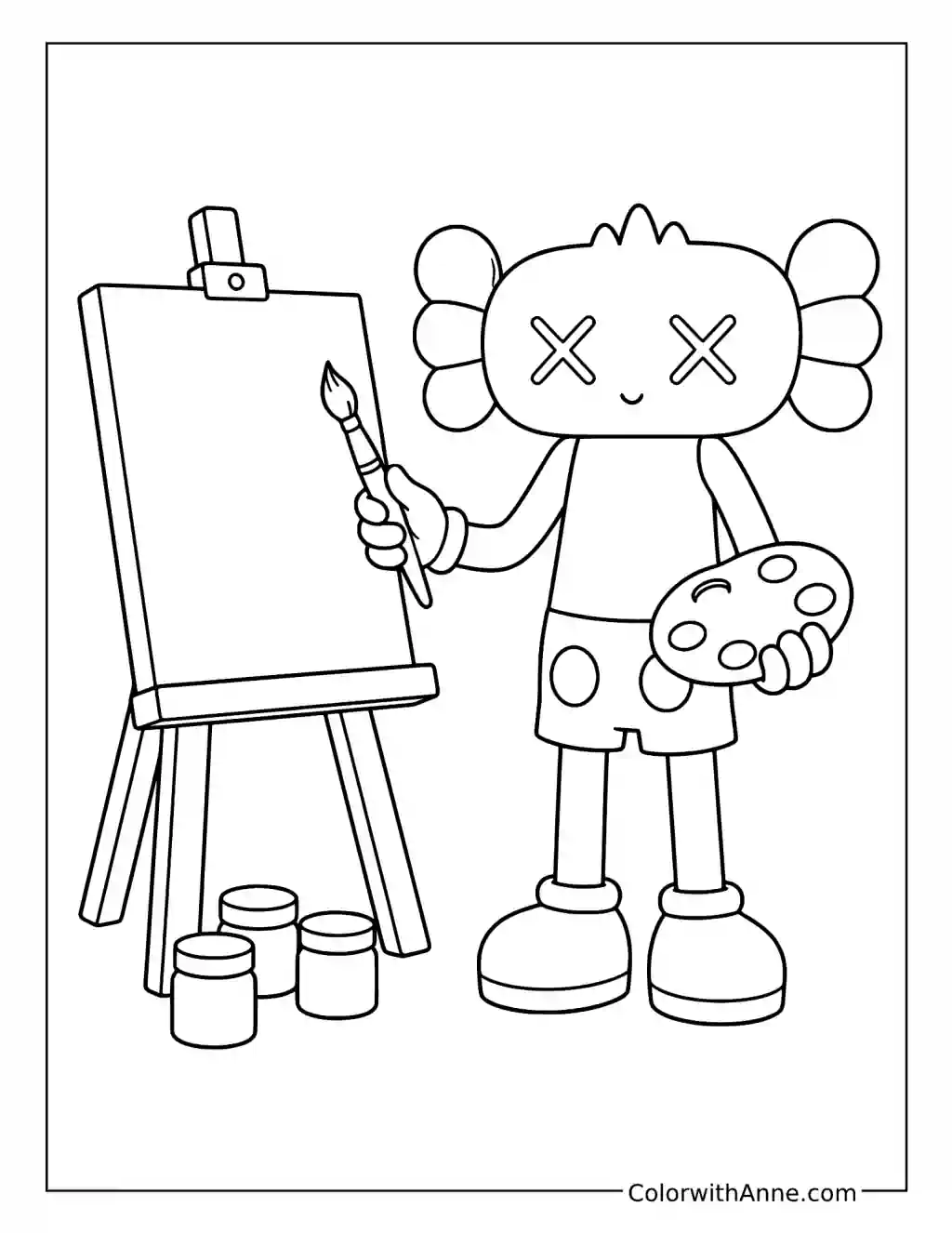
The figure waits beside a blank canvas with a brush and palette in hand. The jars are ready underneath, so the only missing part of the studio is the painting itself.
A subdued figure color could sit beside a much brighter canvas. Repeating two of the painting’s shades on the palette would make the little setup feel connected.
Keep the canvas design simple enough to read at its small size. An oversized flower, a colored circle against a block, or a loose arrangement of stripes could all work. Choose something you enjoy looking at, then let the rest of the scene support it. The easel is a natural place for the most personal mark on the page.
Keep the Thoughtful Pose Uncluttered
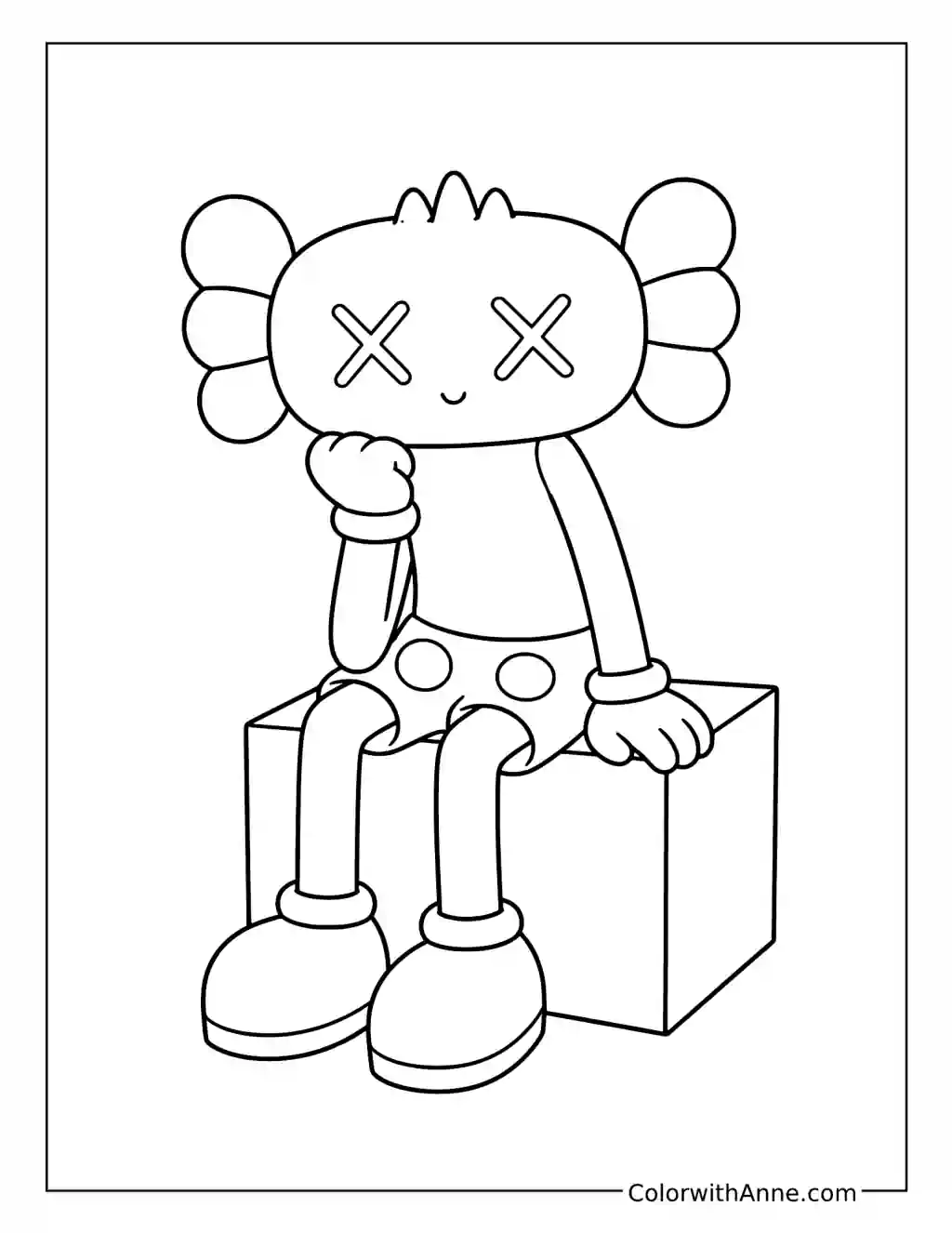
The figure sits on a plain cube with its head resting against one hand. Without props or scenery around it, the drooping shoulders and oversized shoes are enough to suggest a pause.
Dusty blue, warm gray, or muted brown would suit the quiet pose. A slightly different cube shade could separate the seat while keeping the whole piece restrained.
Mount the finished picture with a generous margin and try it in a few places before deciding where it belongs. Beside a plant or a small stack of books, the seated figure can feel like another object sharing the shelf. A simple presentation lets the posture remain interesting without adding a caption to explain it.