
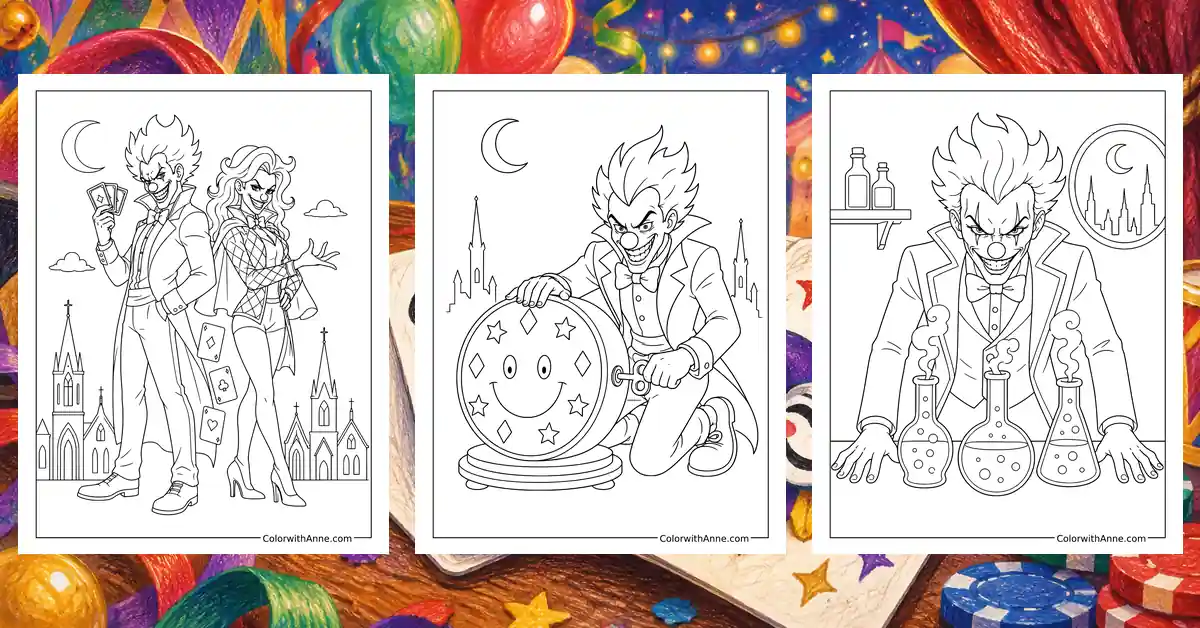
The Joker’s grin rarely offers much reassurance. In Gotham, a cheerful expression can mean that everyone else is about to have a difficult evening, and Batman has good reason to distrust the performance. The theatrical gestures make him compelling to watch even when the joke is clearly his alone.
Joker coloring pages give fans time to consider how much of that personality comes through in a face. A tilted head or an exaggerated smile can change the mood before a word is spoken. For someone interested in comic book villains, that uneasy expressiveness is often more absorbing than the chaos surrounding him.
Free Printable Joker Coloring Pages
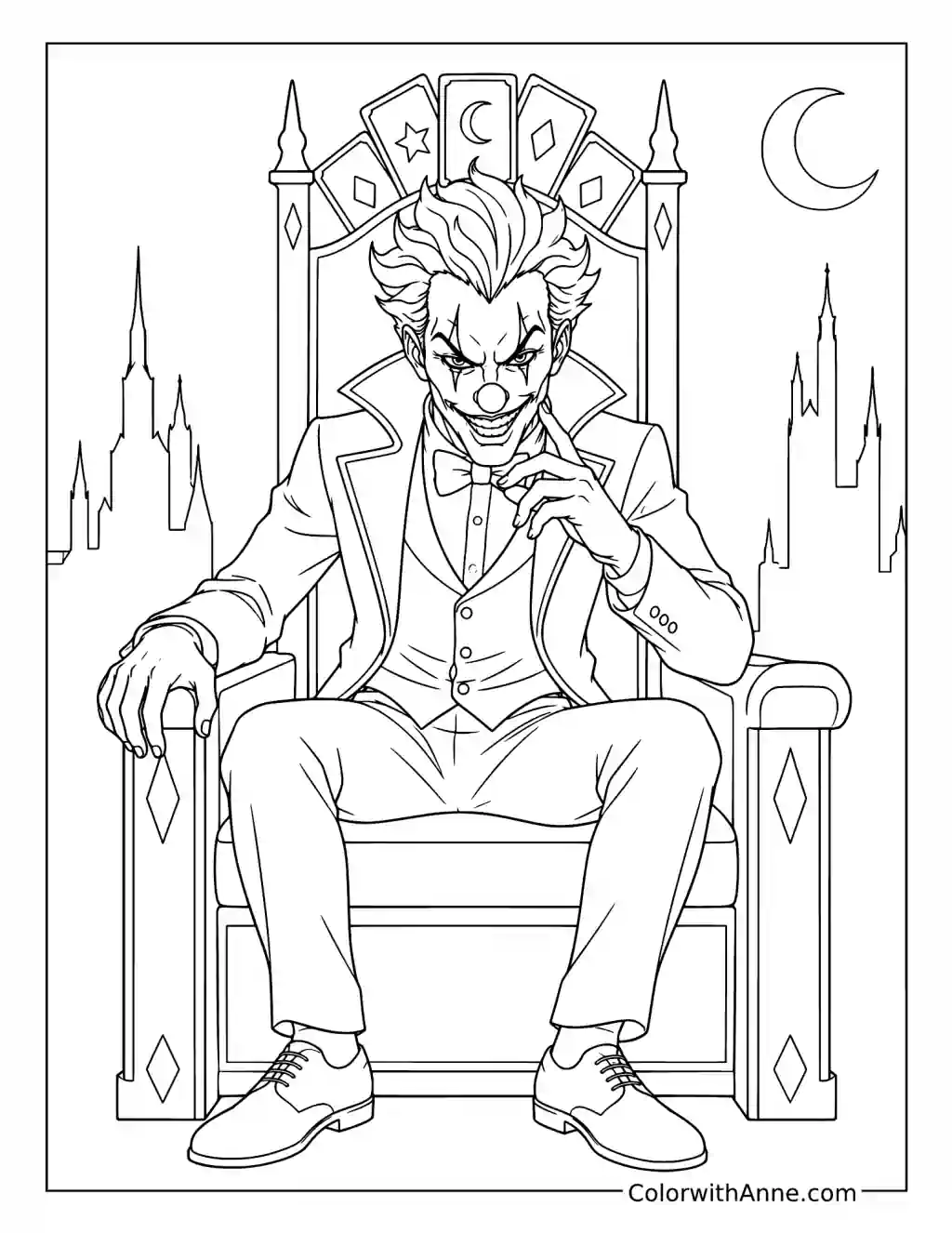
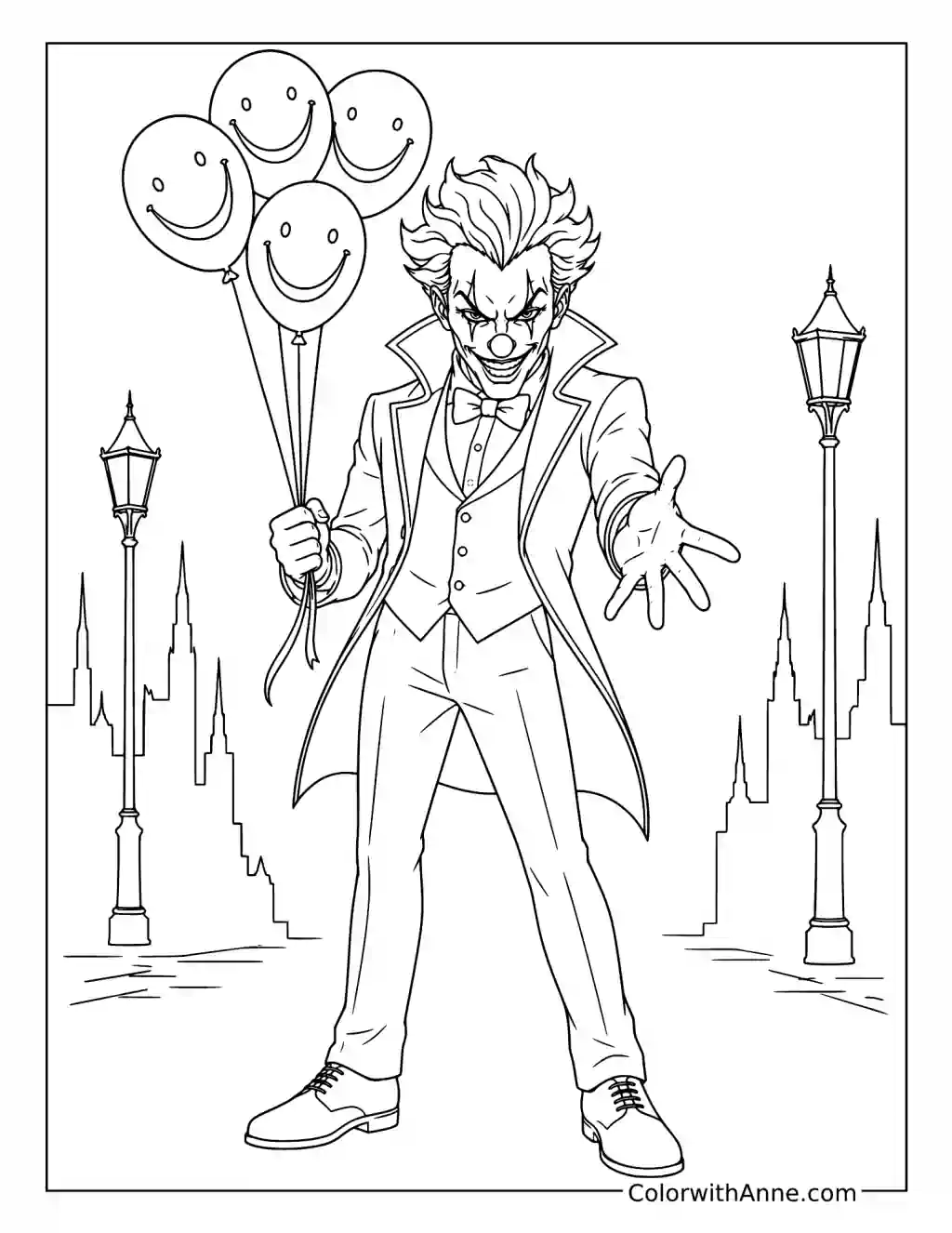
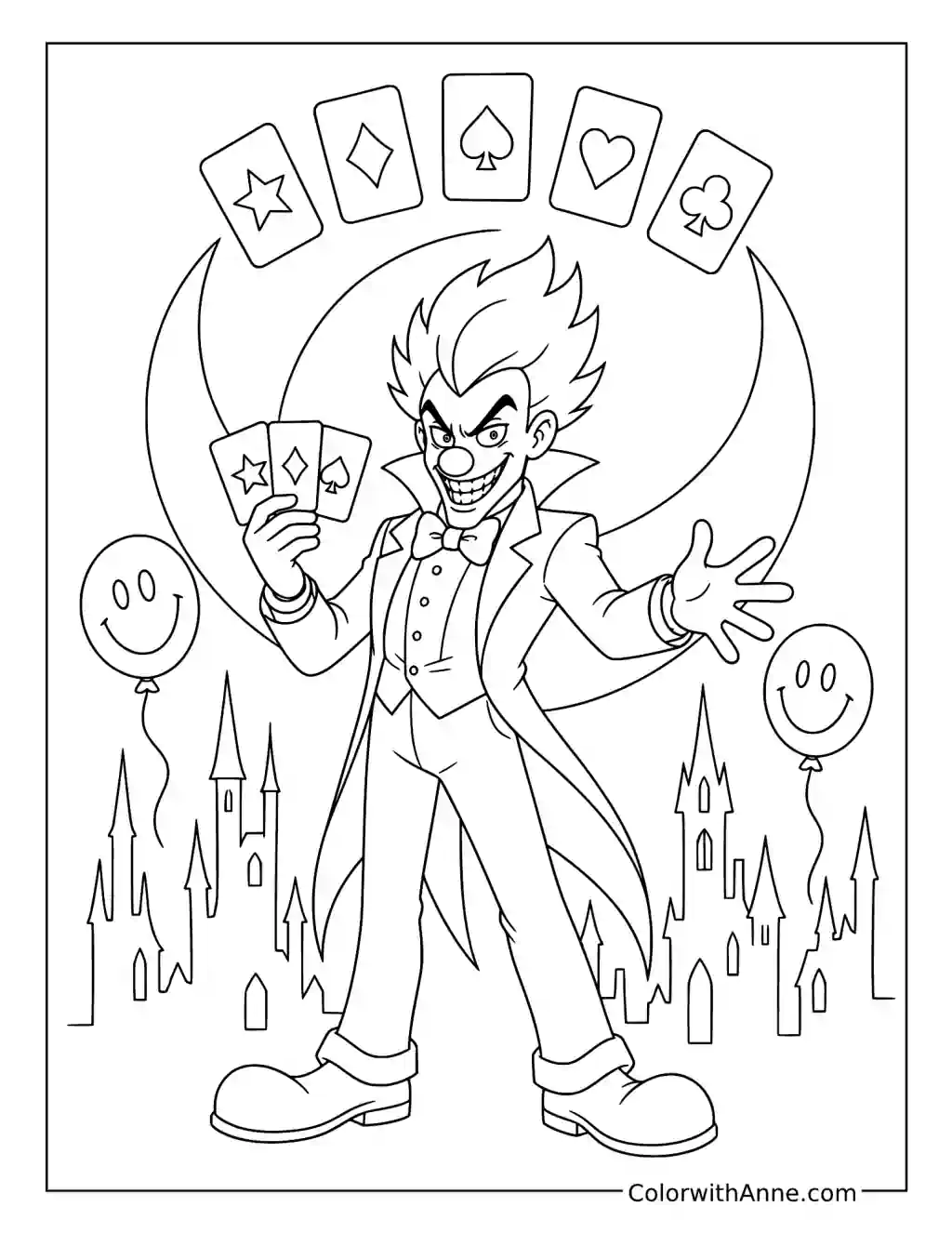
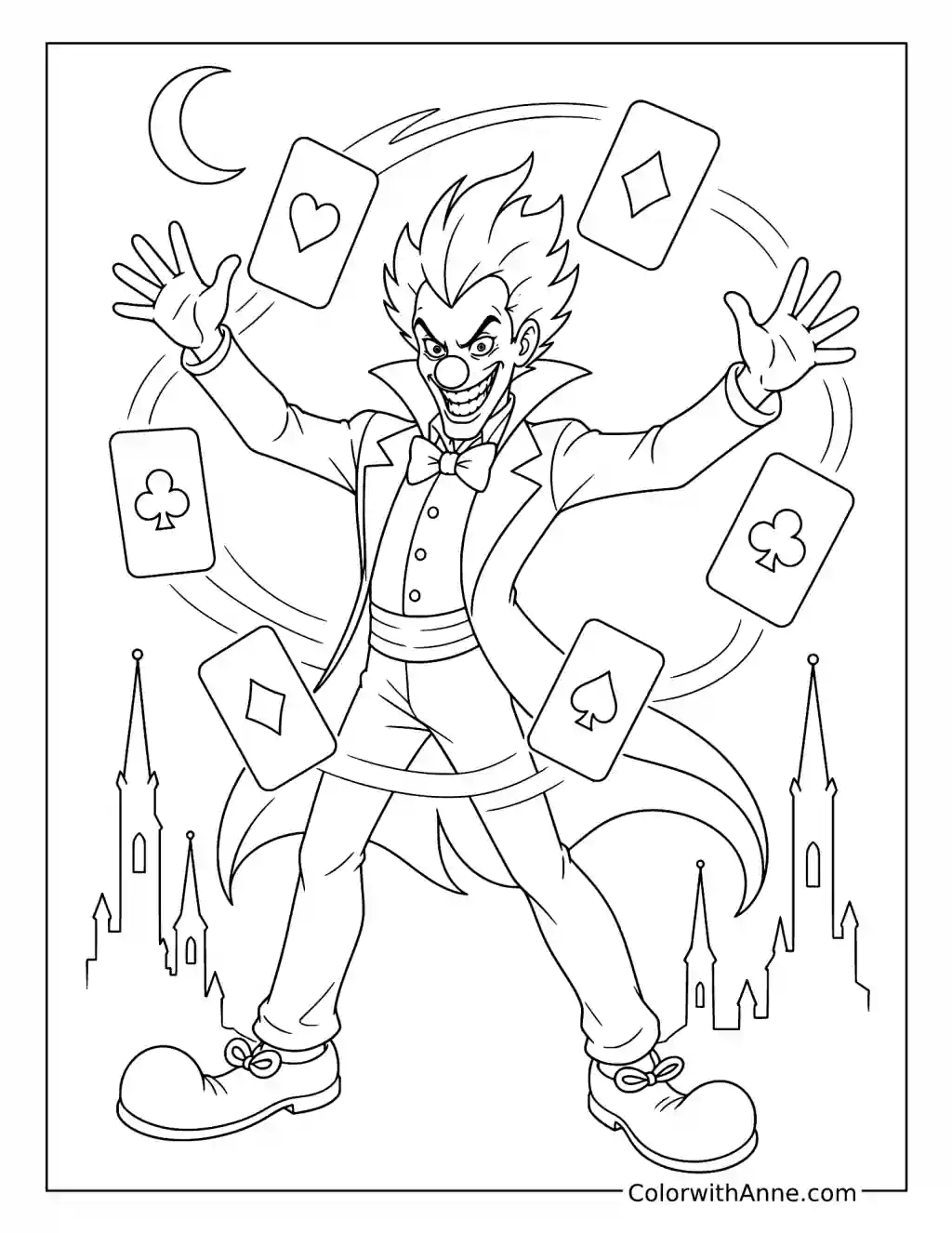
Click any coloring page below to open the PDF, then print on US Letter or A4 paper.
Did you find what you needed?
Help us choose what to create or improve next.
Coloring Ideas for Joker Pages
Try one of these coloring ideas, or use them as a starting point for your own.
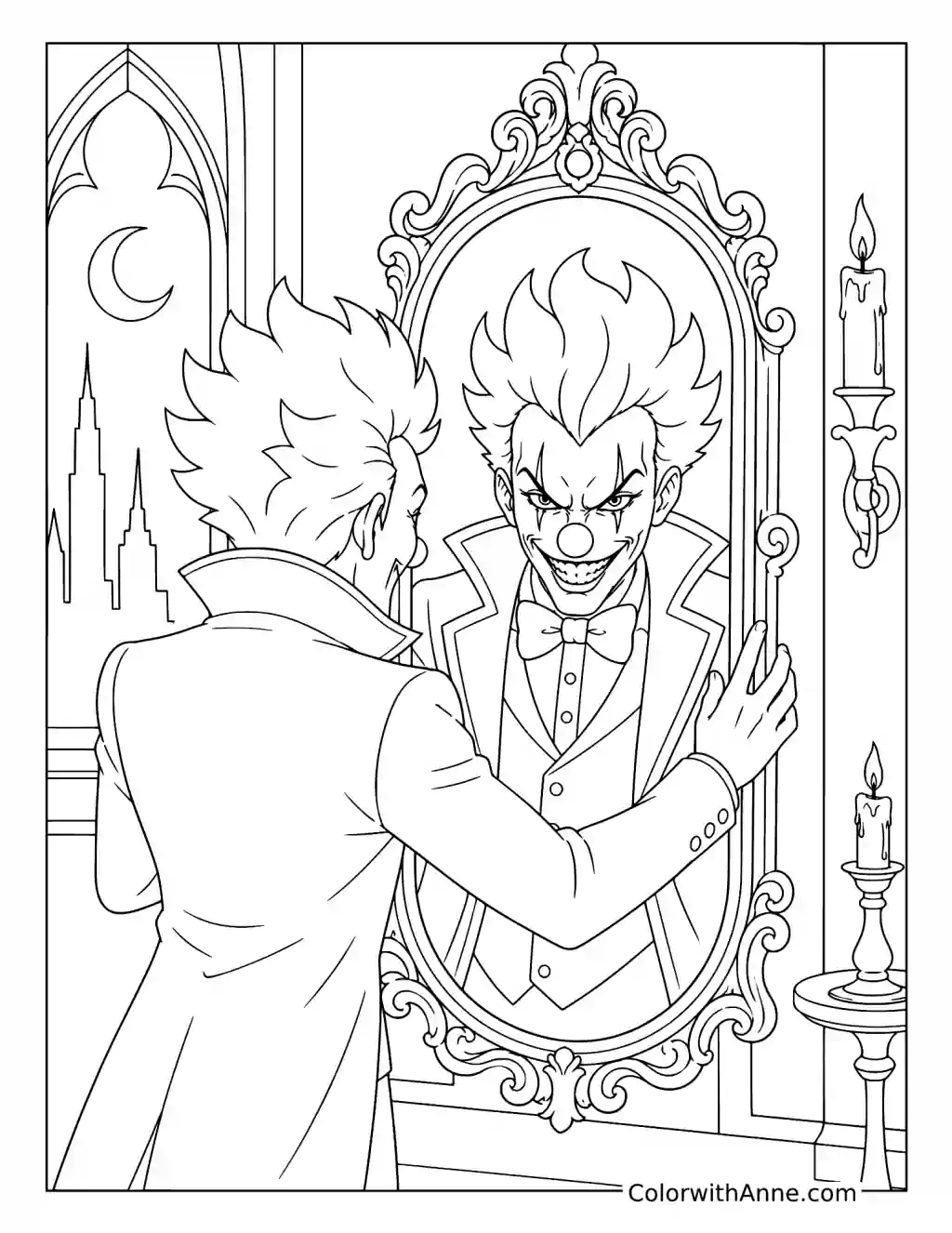
Give the Reflection One Wrong Detail
The clown faces an elaborate mirror with his reflected grin looking back at him. The paired figures make one small inconsistency particularly effective.
A deep purple coat and green hair could give the portrait a theatrical edge. Cooler silver around the mirror would separate its reflected figure from the warmer foreground.
Change one tiny detail in the reflection: a button, an eye highlight, or a small part of the collar. Keep everything else closely related. Let another viewer look for the difference, preserving the uncertainty until they find it.
Finish the Floating Playing Cards
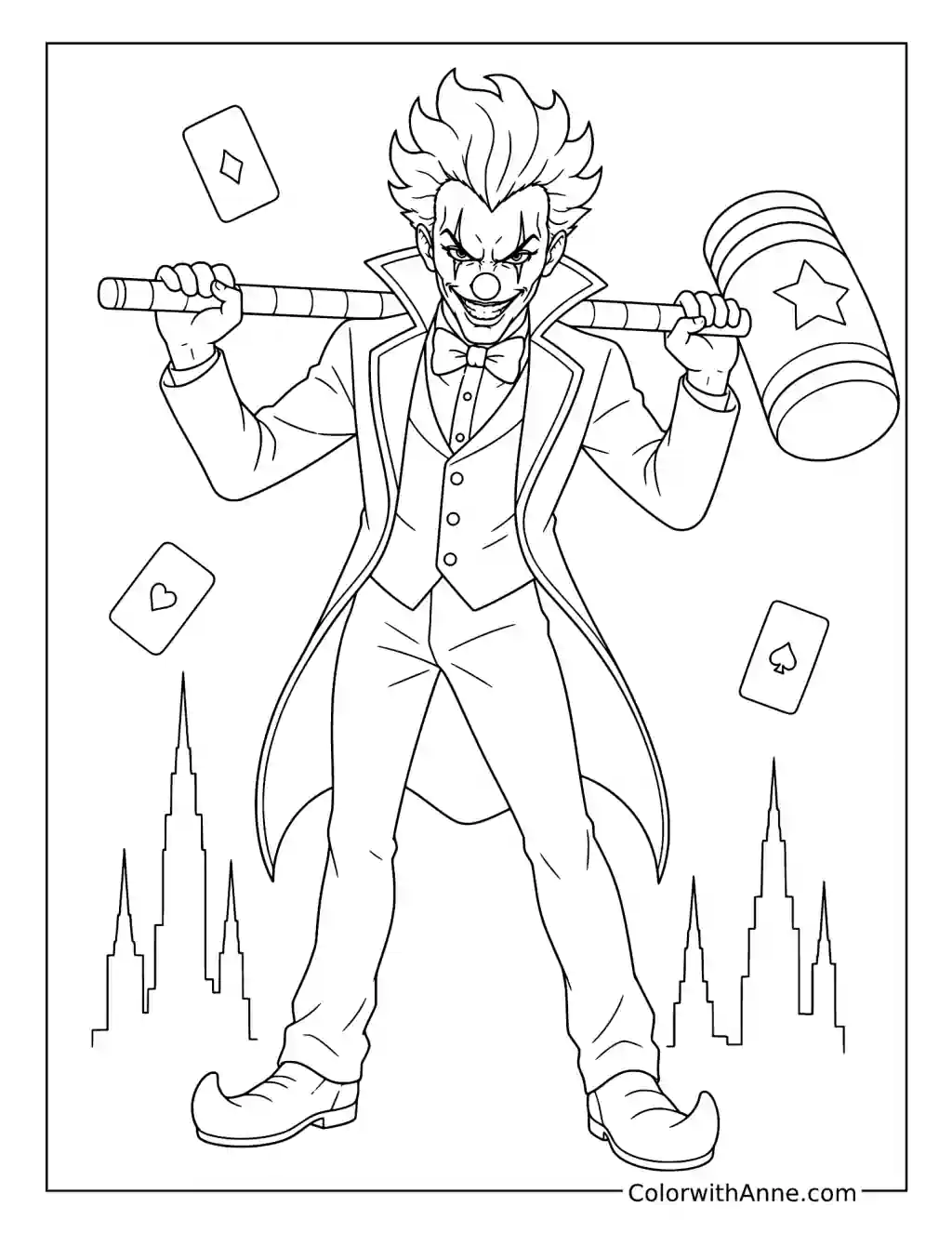
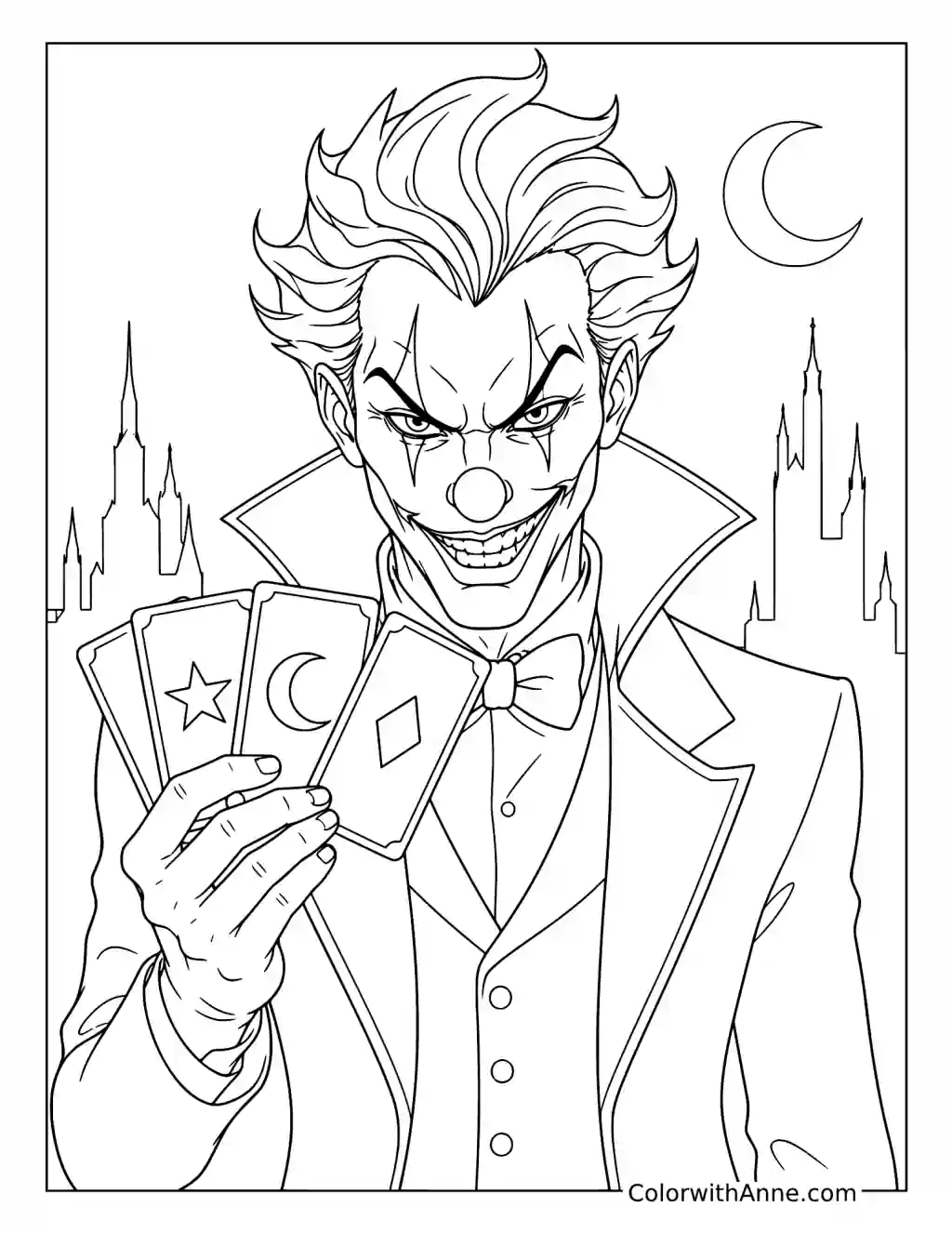
Six cards circle the magician’s raised hands, with curved trails marking their movement. Their large suit symbols leave room to finish them as individual card designs.
Red hearts and diamonds with black clubs and spades would give the cards a familiar appearance. A purple or dark green costume could hold the center of the composition.
Add a chosen rank to opposite corners of each card, turning the lower marking upside down. Use a real playing card as a layout guide. Keep the lettering small enough that the central suit symbols remain clear.
Label the Joker’s Impossible Laboratory
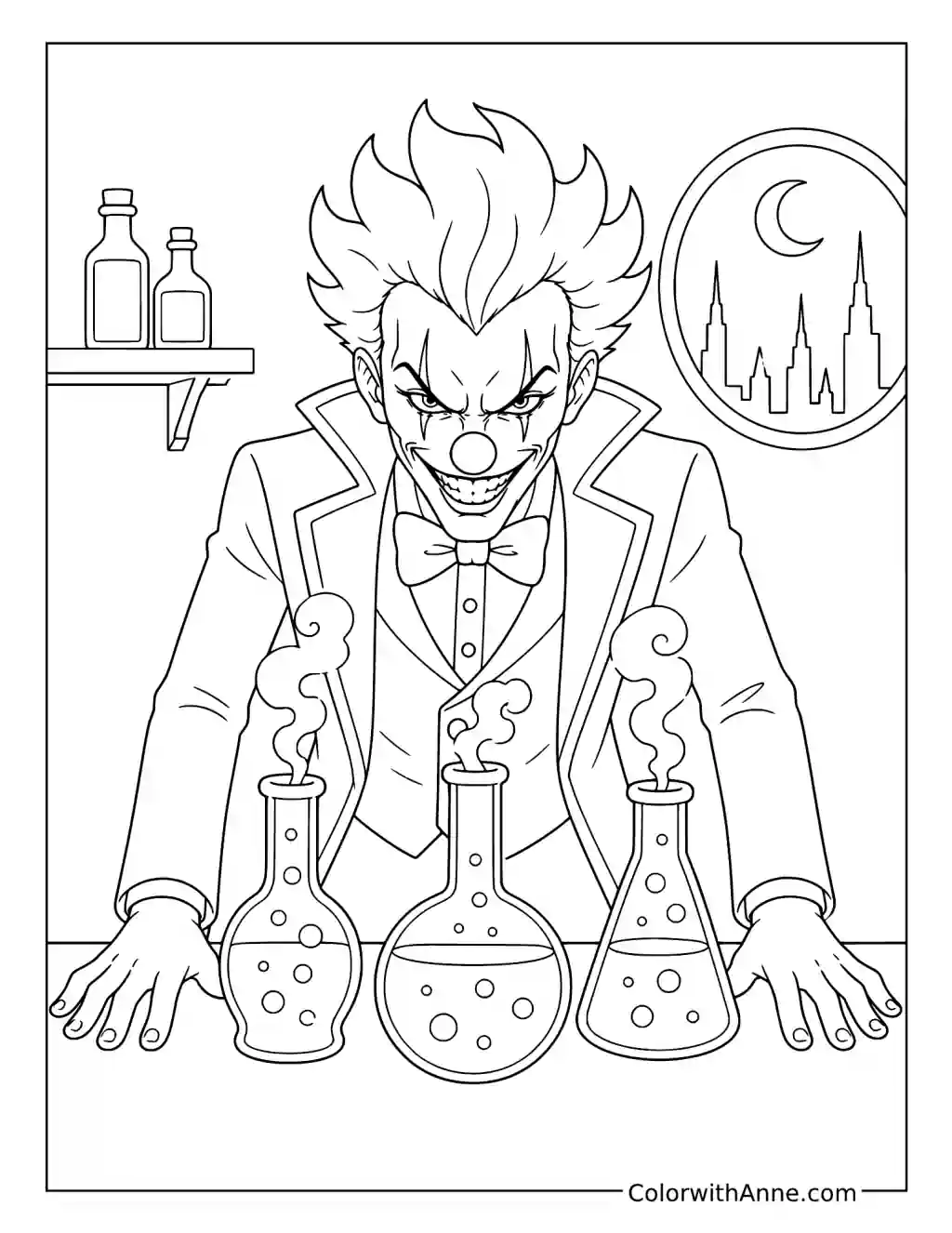
The Joker leans over a row of bubbling flasks beneath a moonlit window. The theatrical laboratory has plenty of equipment but no explanation of its contents.
Acid green and violet liquids could create a sharp contrast against dark clothing. Pale glass edges and a quieter background would help the individual flasks remain distinct.
Give the flasks fictional labels based on playing-card suits. Repeat one of those symbols on a sleeve or button to connect the character with a particular bottle. Keep the additions small, like clues within the existing scene.
Complete the Giant Joker Card
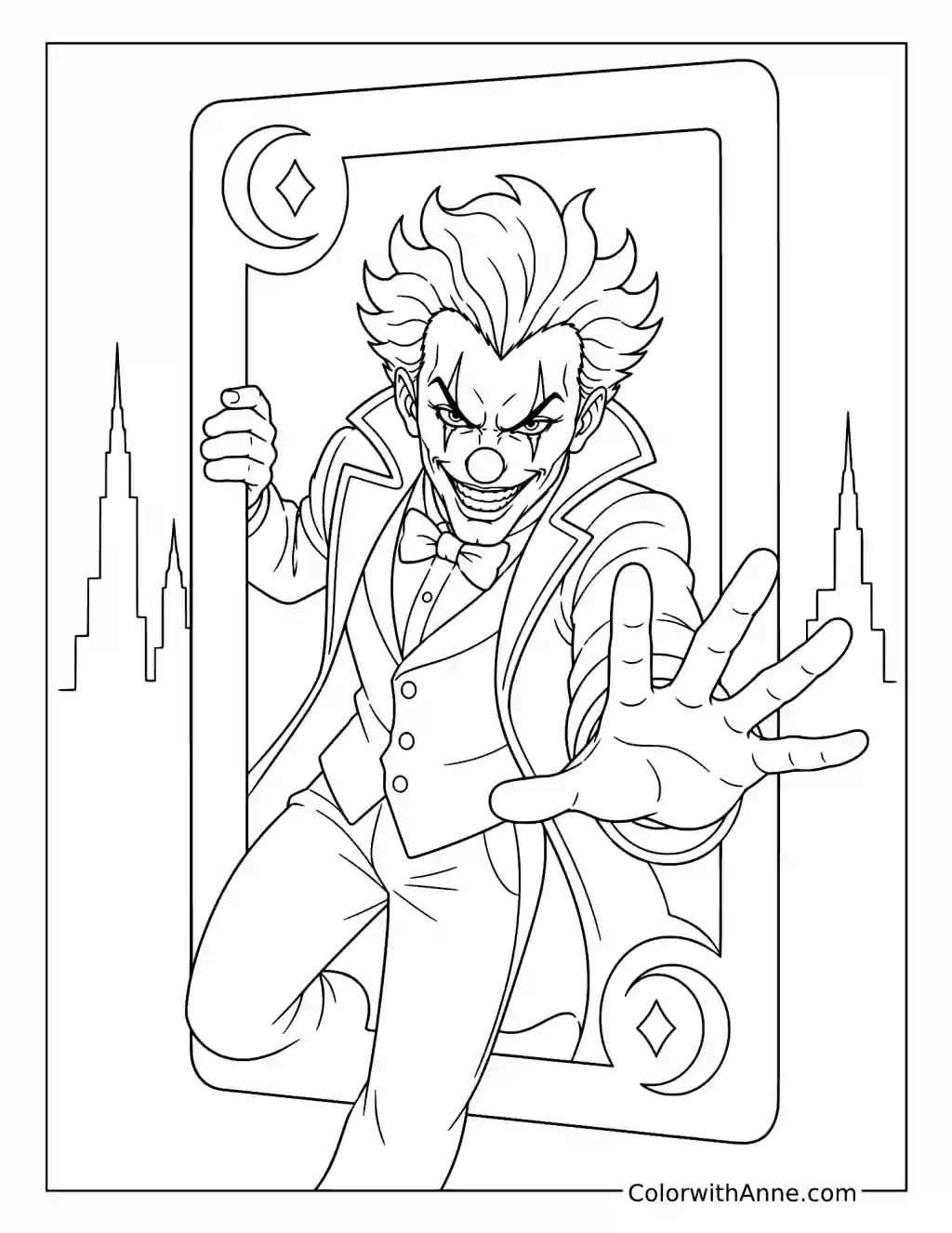
The Joker pushes beyond the edge of an enormous playing card, with one hand reaching toward the viewer. The card itself provides a strong frame around the figure.
Cream card stock with dark red suit symbols could give the design a slightly aged look. Bright hair and a deep purple coat would make the emerging figure feel separate from it.
Mount the finished design on firm card and give the reverse a repeated diamond pattern. A narrow border around that pattern can make the back feel deliberately designed. The result works as an oversized fan-art card for a display.
Give the Show Car a Coordinated Paint Scheme
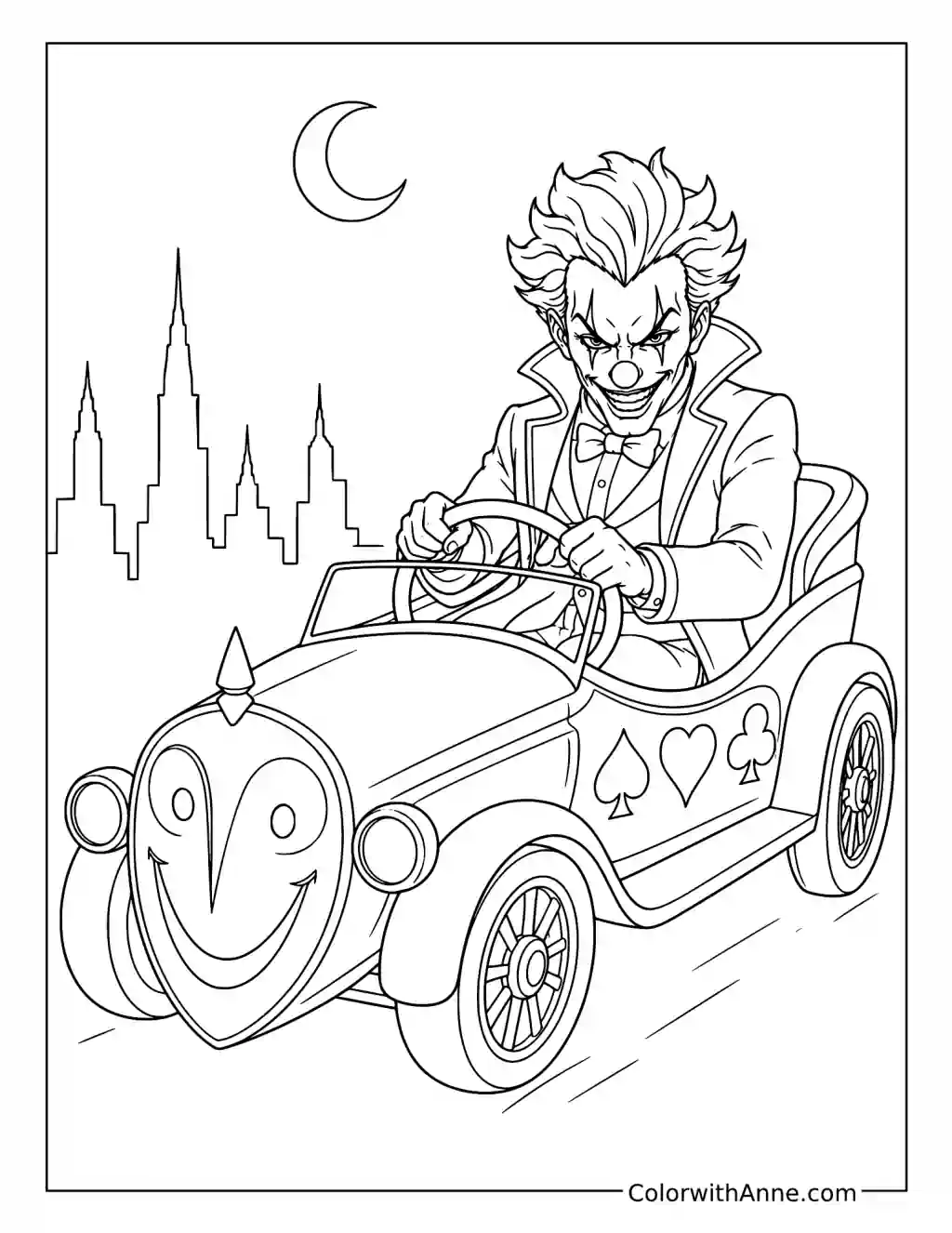
The Joker drives a theatrical open-top car beneath a crescent moon. Its expressive front and broad body panels make the vehicle more than a background prop.
Purple bodywork with green accents could connect the car to a familiar Joker palette. Darker wheels and a muted skyline would leave the flamboyant front as the main feature.
Borrow one pattern from the character’s clothing and repeat it on a small car panel. Keep the rest of the bodywork simpler so the pattern remains noticeable. The picture can serve as a paint-scheme sketch for an imagined show vehicle.
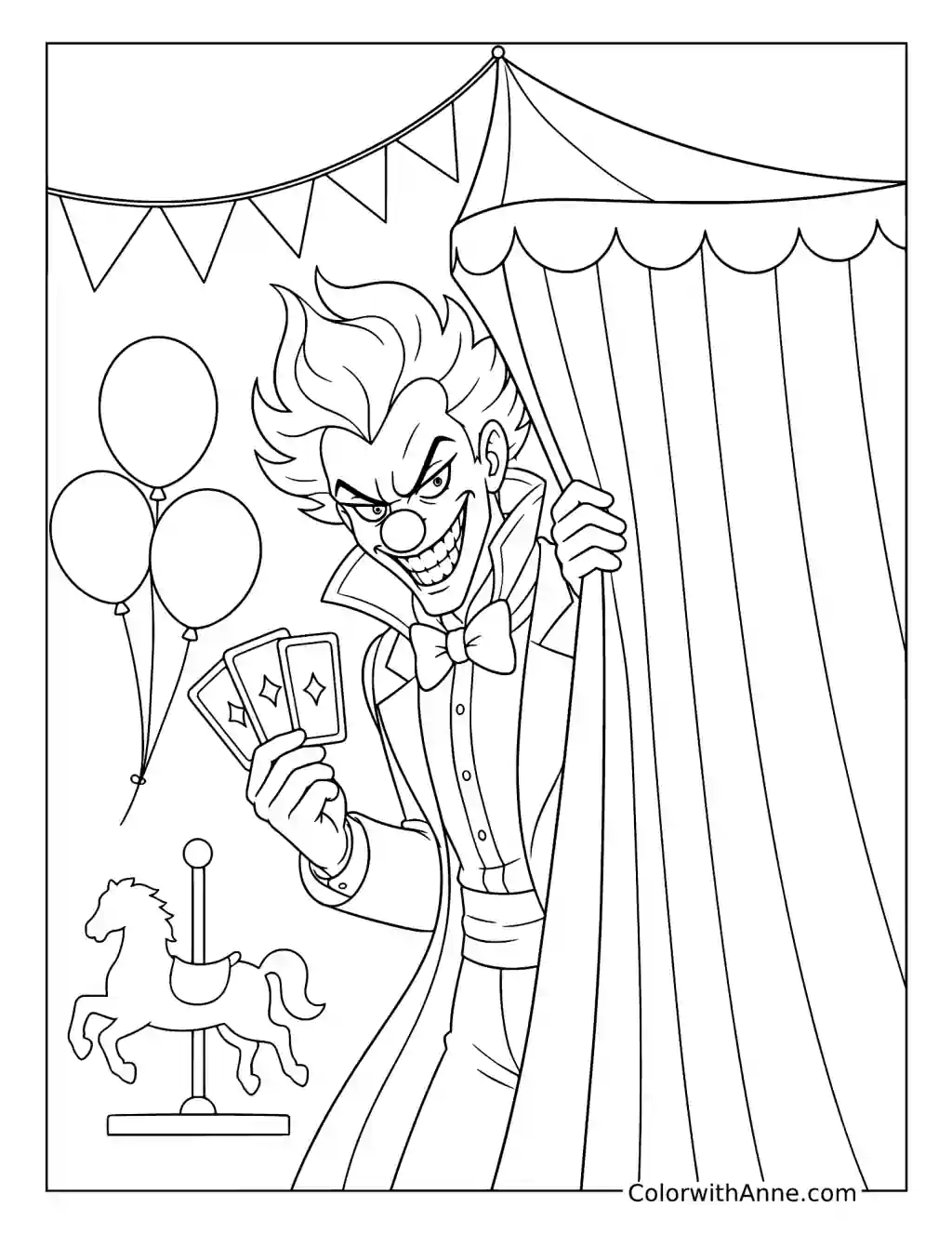
Pull Back the Carnival Curtain
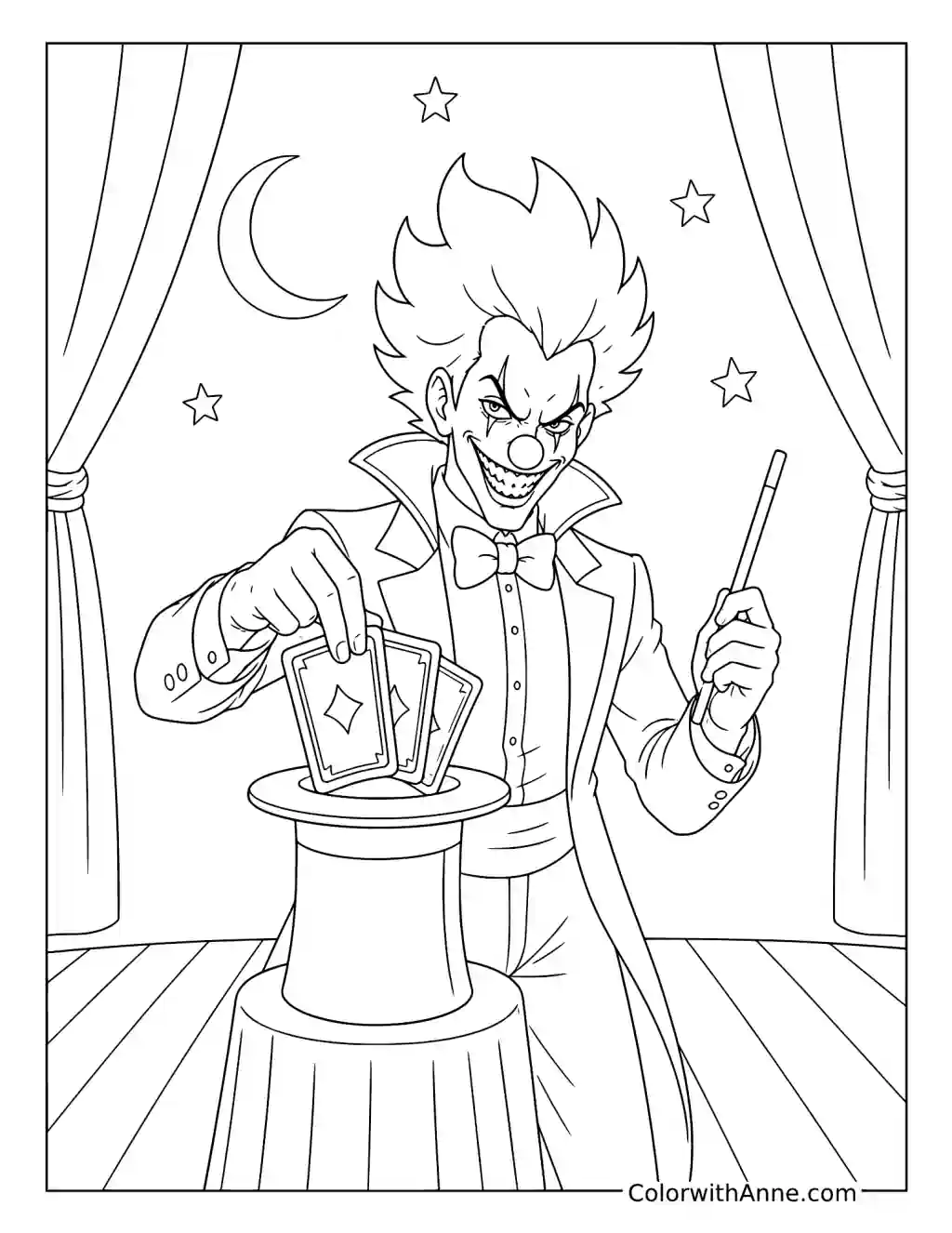
The magician peers from behind a striped curtain with playing cards in hand. The partly concealed entrance gives this scene its sense of an approaching performance.
Burgundy and cream stripes could give the curtain a faded carnival feel. A darker costume and pale face would keep the figure readable within the narrow opening.
Add a folded-paper curtain along one side of the picture, attaching only its outer edge. Open it slowly to reveal the performer, then close it again. The extra layer follows the action already suggested by the printed curtain.