
Peeling back corn husks is satisfying until the silk begins sticking to everything. A child helping with dinner may take the job seriously, inspecting each ear for the last stubborn strand. Nearby, the pot is heating, and someone is already looking for the butter before the corn has reached the kitchen.
Corn coloring pages bring that familiar shape to the table without leaving any silk behind. The rows of kernels invite a closer look at something usually eaten rather quickly. After a farm visit or a summer meal, a page can keep the conversation going about how those neatly packed ears actually grow.
Free Printable Corn Coloring Pages
Click any coloring page below to open the PDF, then print on US Letter or A4 paper.
Did you find what you needed?
Help us choose what to create or improve next.
Coloring Ideas for Corn Pages
Try one of these coloring ideas, or use them as a starting point for your own.
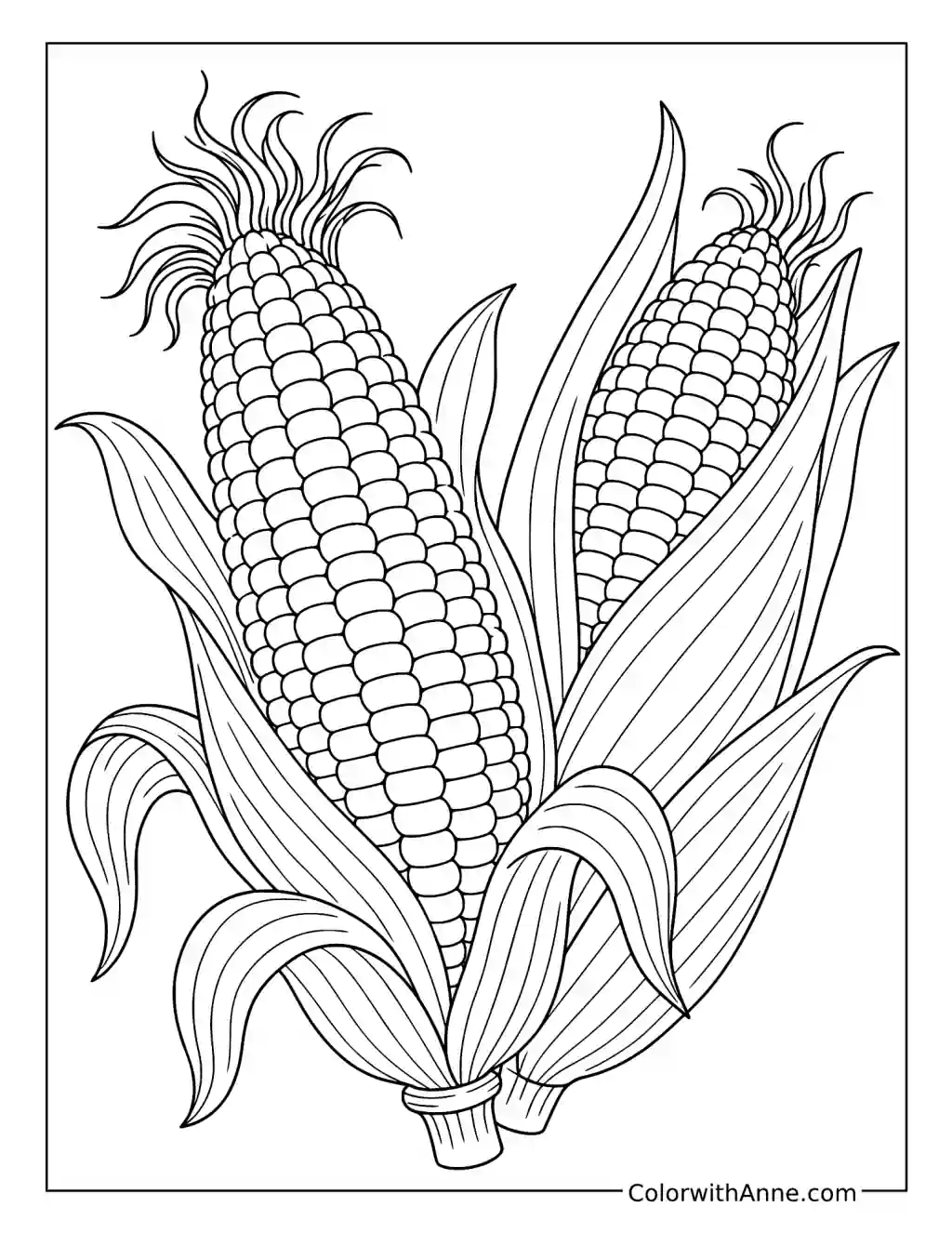
Look Closely at a Real Ear of Corn
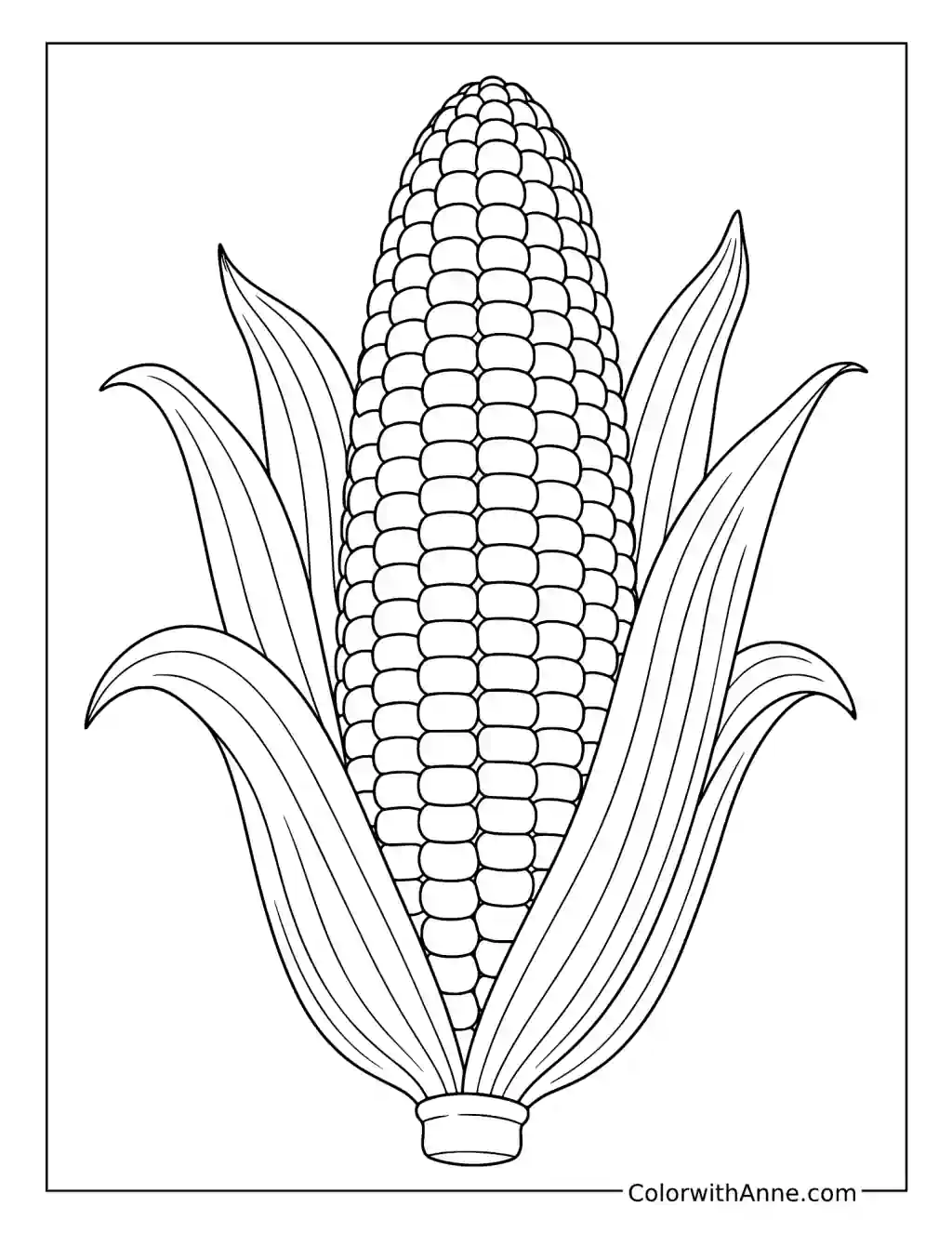
The peeled-back husks expose neat rows of kernels, with very little background competing for attention. This is a useful page to bring to the kitchen when fresh corn is being prepared.
Golden yellow and soft green would give it a familiar fresh-corn look. Cream-colored kernels mixed among the yellow could add a little variation without complicating the picture.
Place a real ear beside the sheet and compare the kernel shapes, husks, and pointed tip. Follow one row from top to bottom. Notice which details the drawing includes and which are easier to see on the real vegetable.
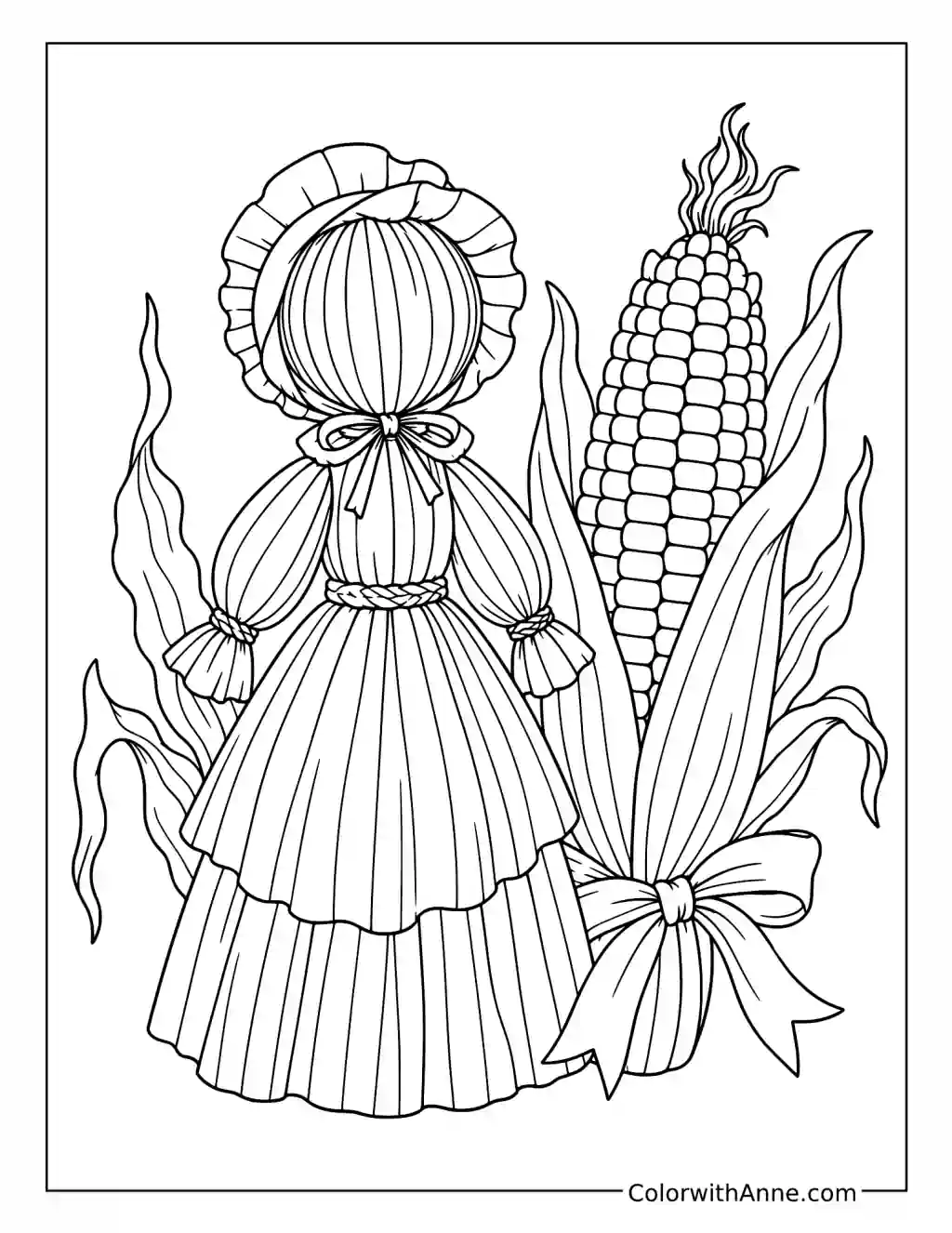
Make a Paper Version of the Corn-Husk Doll
The doll’s pleated skirt and tied waist echo the long husks beside it. Its simple, flowing shapes offer a manageable starting point for a small paper figure.
Straw, cream, and warm tan would suit the husk texture. A muted ribbon color could give the waist a focal point while leaving the folded skirt prominent.
An accordion-folded paper skirt and rolled-paper body can form a simple companion doll. Tie a narrow ribbon around the waist and add a paper head. Use the printed figure to judge the proportions before attaching the pieces.
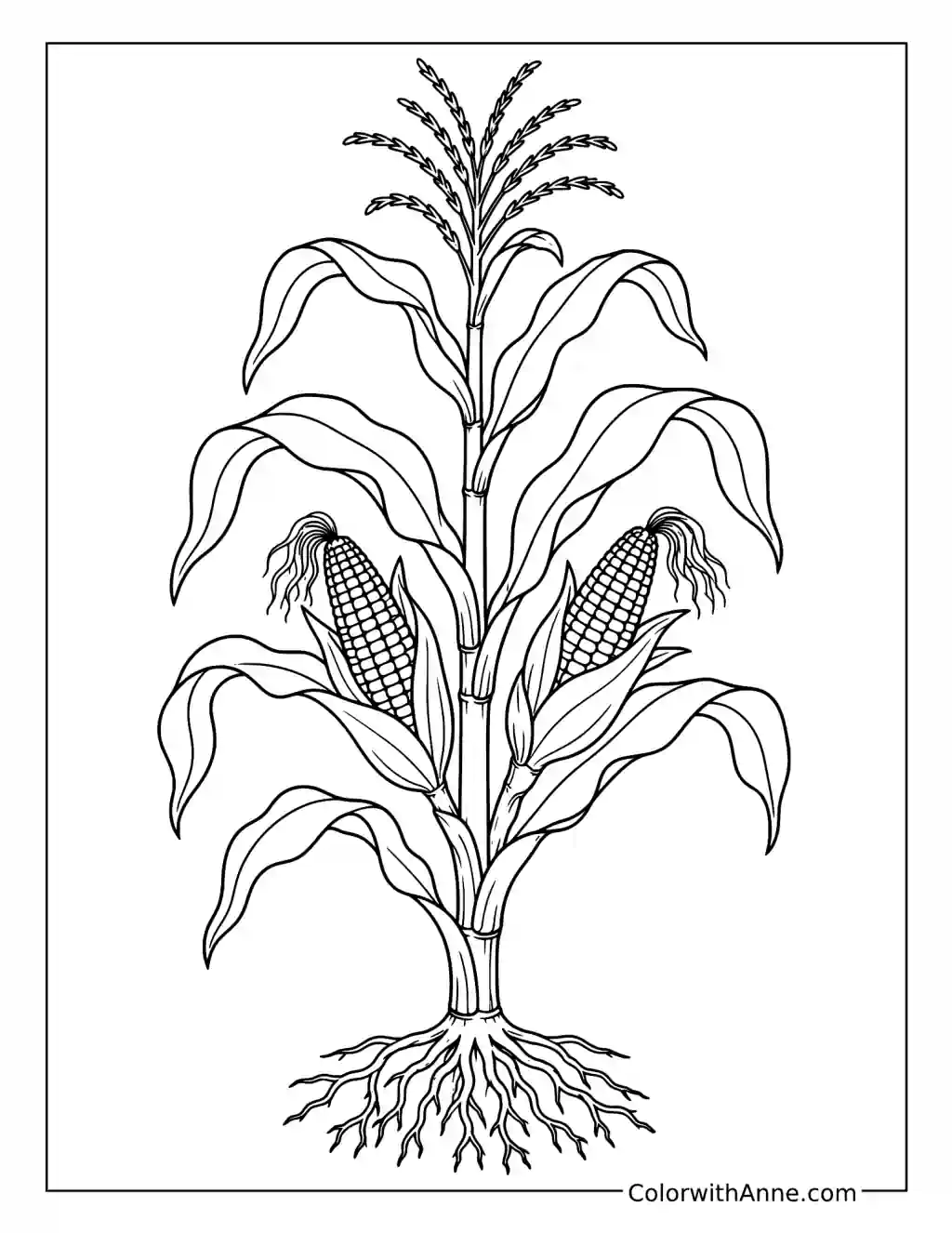
Find Where the Corn Grows
The whole plant appears from roots to tassel, with ears emerging beside the tall stem. It shows much more than the familiar corn found on a plate.
Leafy greens with pale yellow ears would make the plant easy to follow. Brown roots and a light background could help separate the underground portion from the taller growth.
Add a light soil line just above the roots, then point out the stem, leaves, ears, and tassel. If you have an ear of corn nearby, find its corresponding place on the plant. That connection makes the dinner-table vegetable part of a much larger structure.
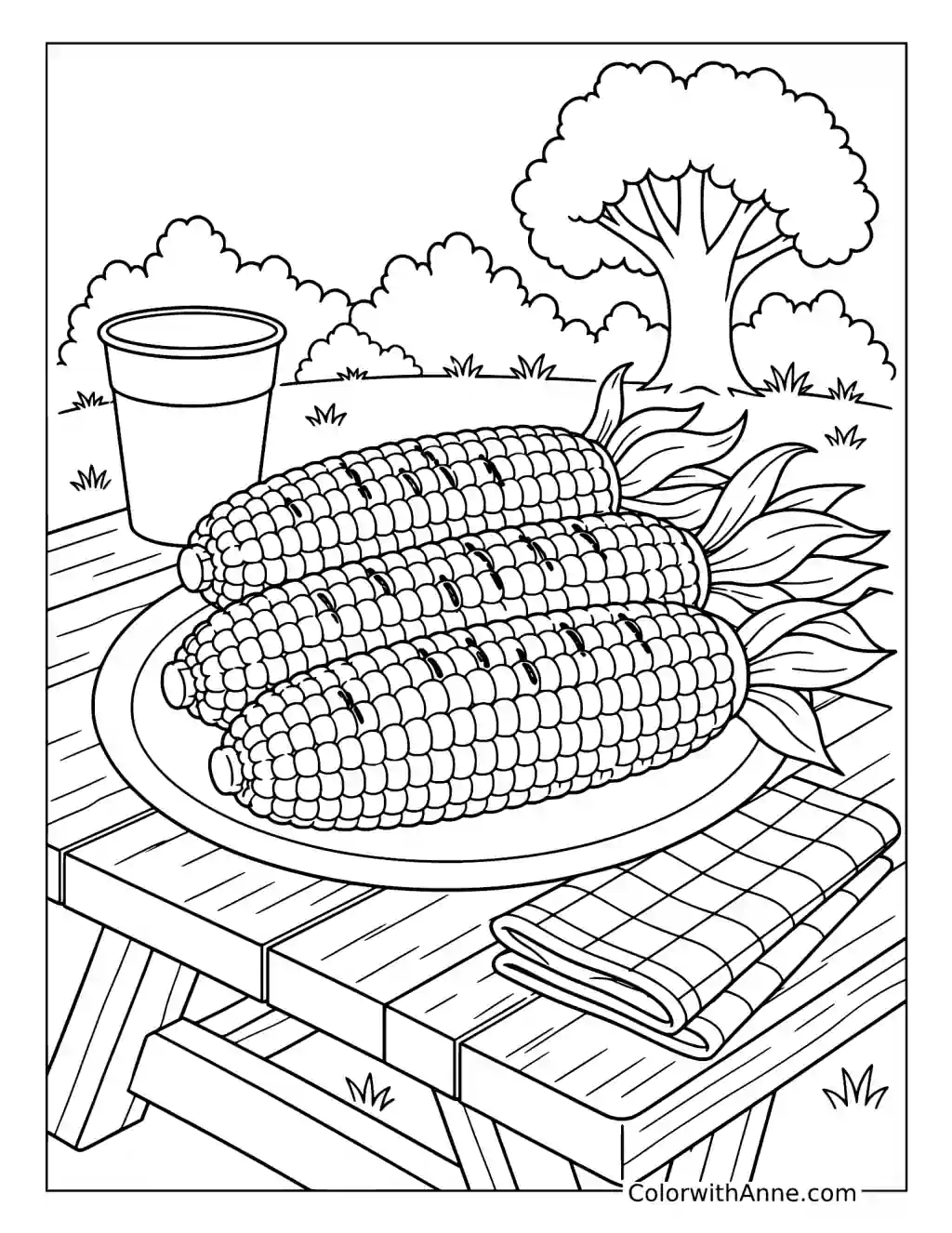
Let Everyone Choose a Corn Topping
Corn fills a platter on the picnic table, with a cup and cutlery ready nearby. The scene is already close to serving time.
Buttery yellow kernels and a red checked cloth could give the picture a cheerful picnic feel. Softer green husks would keep the food distinct from the table beneath it.
If corn is on your next picnic menu, offer a couple of simple finishing choices, such as butter and black pepper or lime wedges. Let each person choose their own. The page can sit nearby while everyone decides how to dress their portion.
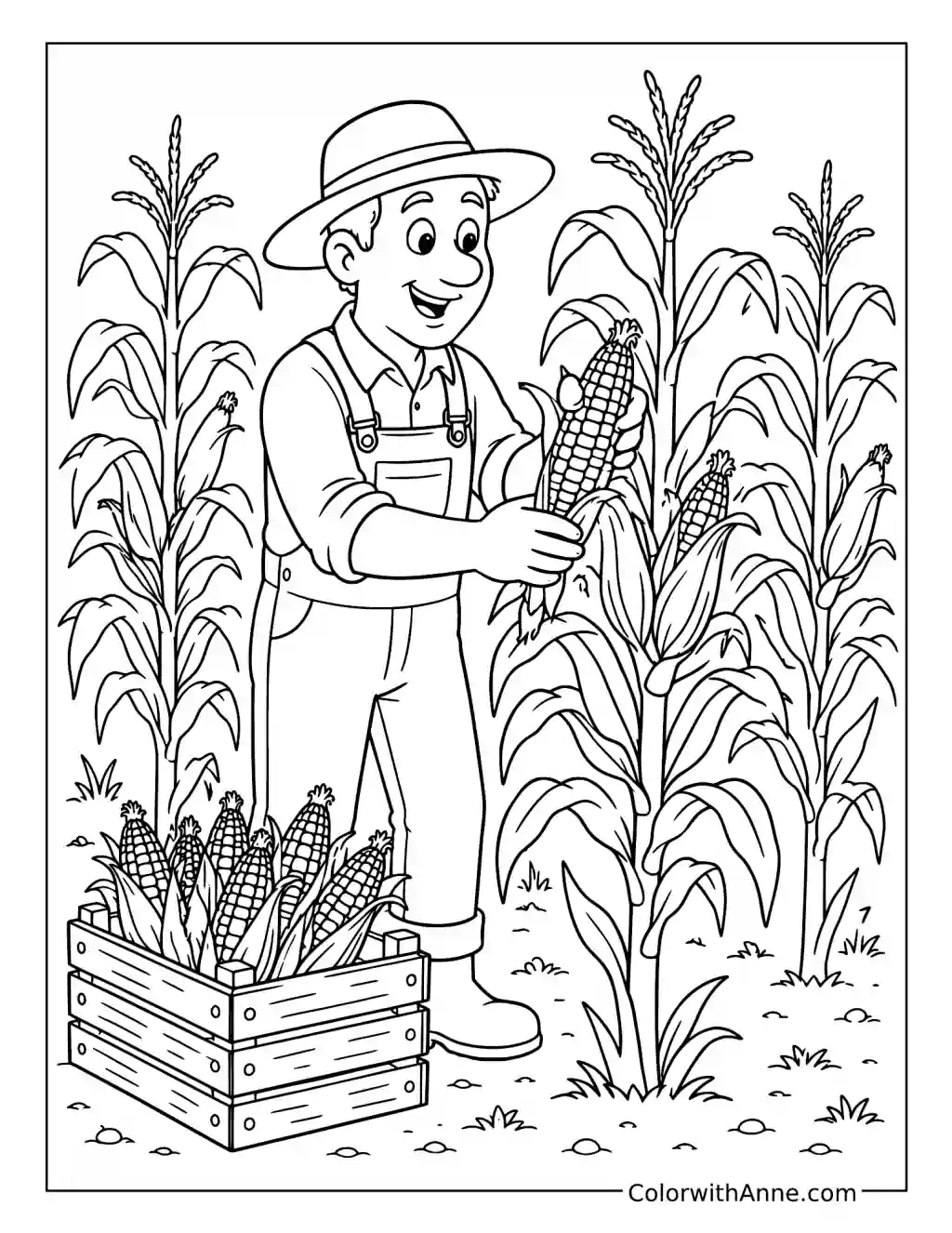
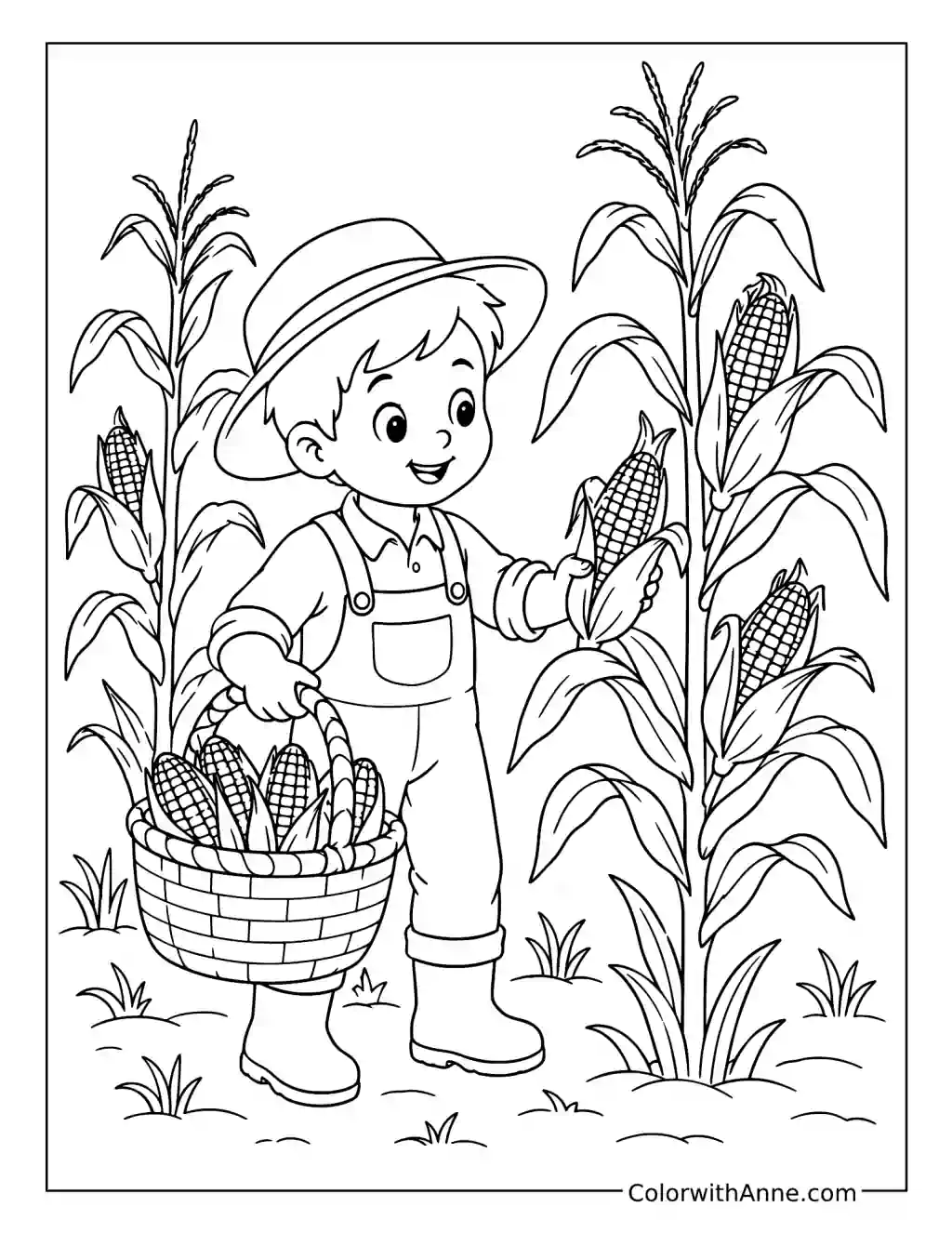
Follow the Harvest From Field to Table
The farmer holds a freshly picked ear beside a filled crate, with more stalks behind him. This picture captures the middle of a food journey.
Warm yellow corn against deeper green stalks would make the harvest stand out. A blue shirt or denim overalls could give the farmer a clear place within the field.
Draw three small pictures along the back: corn growing, corn being gathered, and corn ready to eat. Use the printed scene to guide the middle picture. Ask a child to explain the order, including what still needs to happen before the food reaches the plate.
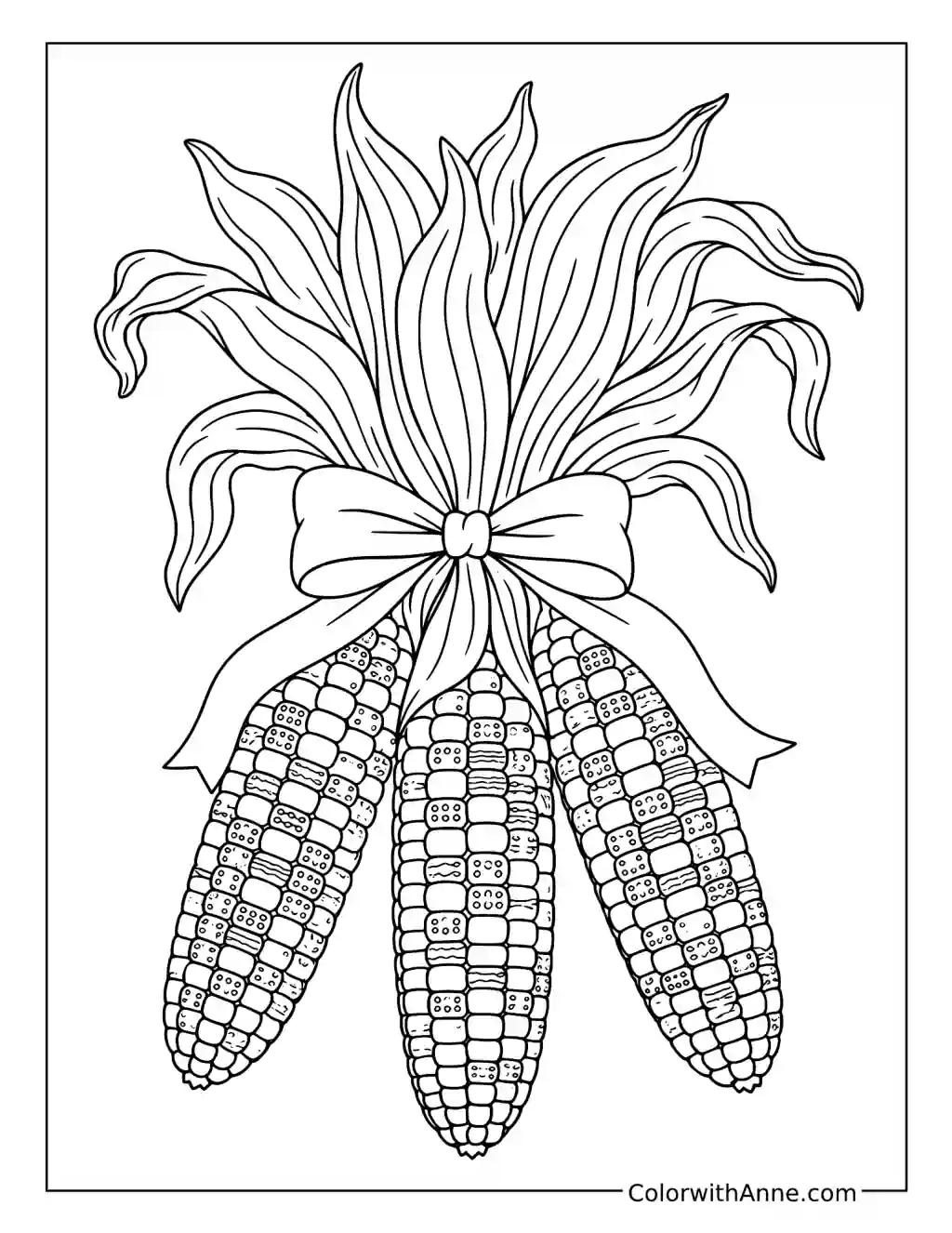
Give the Decorative Corn a Kernel Pattern
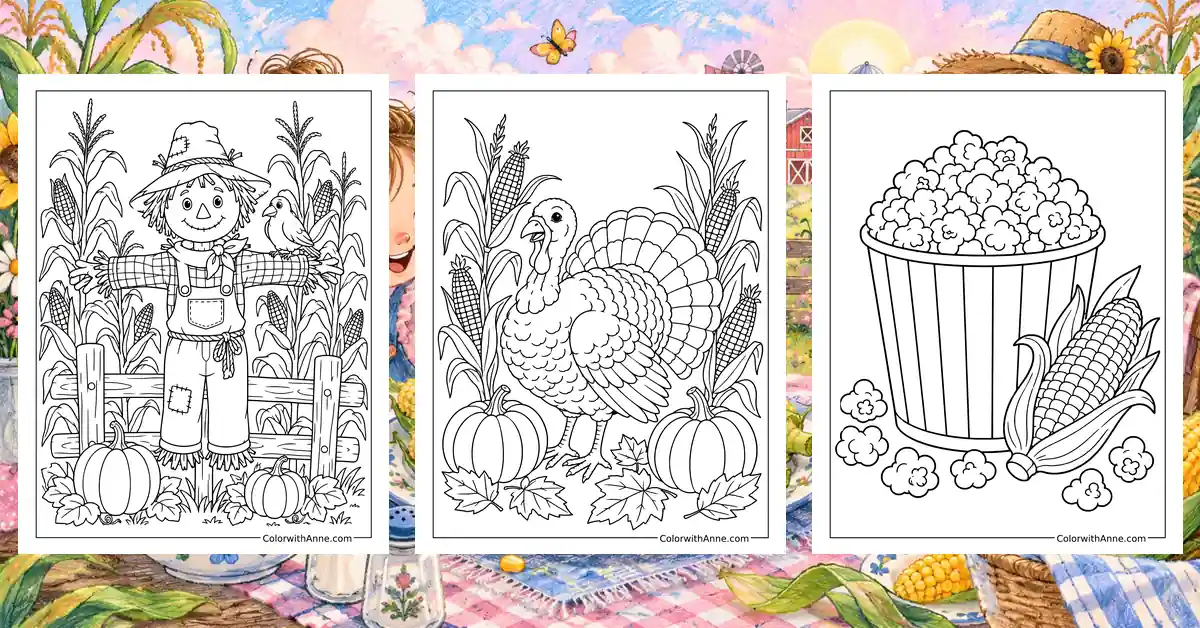
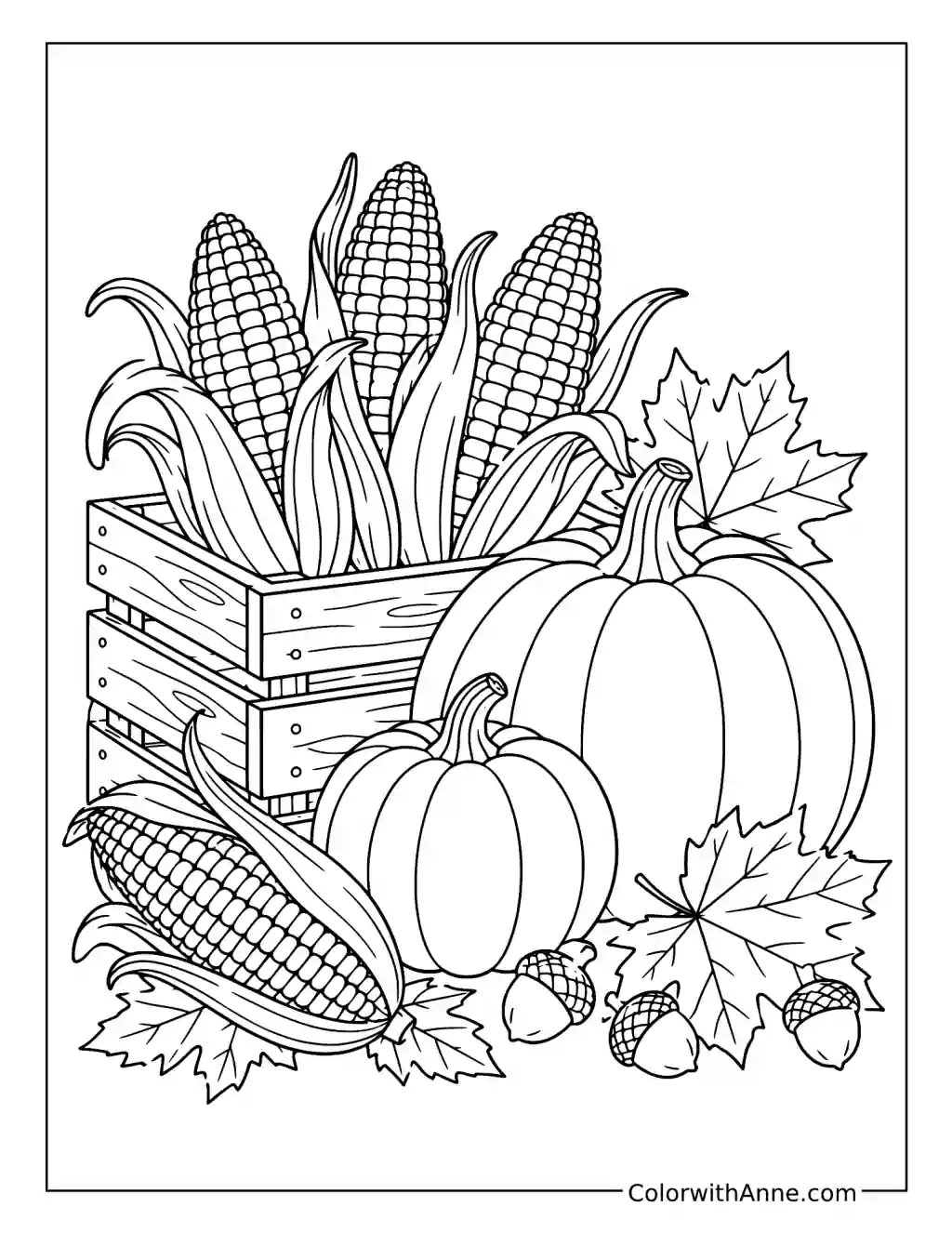
Three ears hang beneath a large bow, with their kernel rows clearly divided. The repeated little shapes offer room for a richer palette than a single yellow cob.
Burgundy, cream, gold, and deep purple could make a handsome autumn combination. Pale tan husks would leave those smaller kernel colors as the main attraction.
Choose a loose pattern for each ear before filling every kernel. One could have alternating colors, another scattered dark kernels, and another a lighter central stripe. Working ear by ear will give the bunch variety while keeping it visually connected.
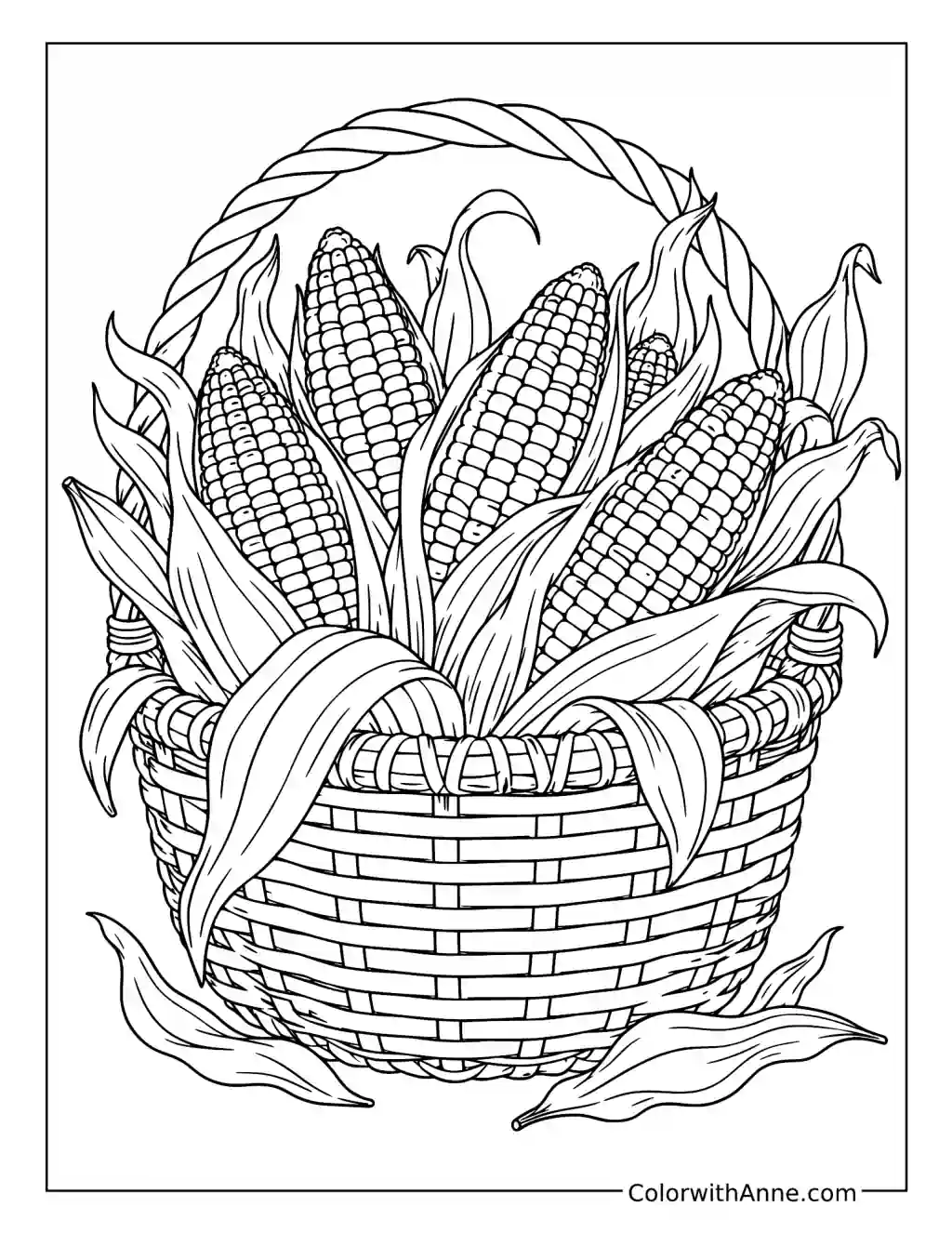
Count a Market Basket Without Losing Your Place
Several ears overlap inside a woven basket, with loose husks around the rim. The crowded arrangement makes counting more interesting than a tidy row.
Golden kernels and sage-green husks would suit a harvest palette. A reddish-brown basket could add warmth, especially around the handle and woven bands.
Place a small paper counter over each ear as it is counted. Check which partially hidden ears belong to the total before removing the counters. Then invent a small market order and decide whether the pictured basket contains enough.
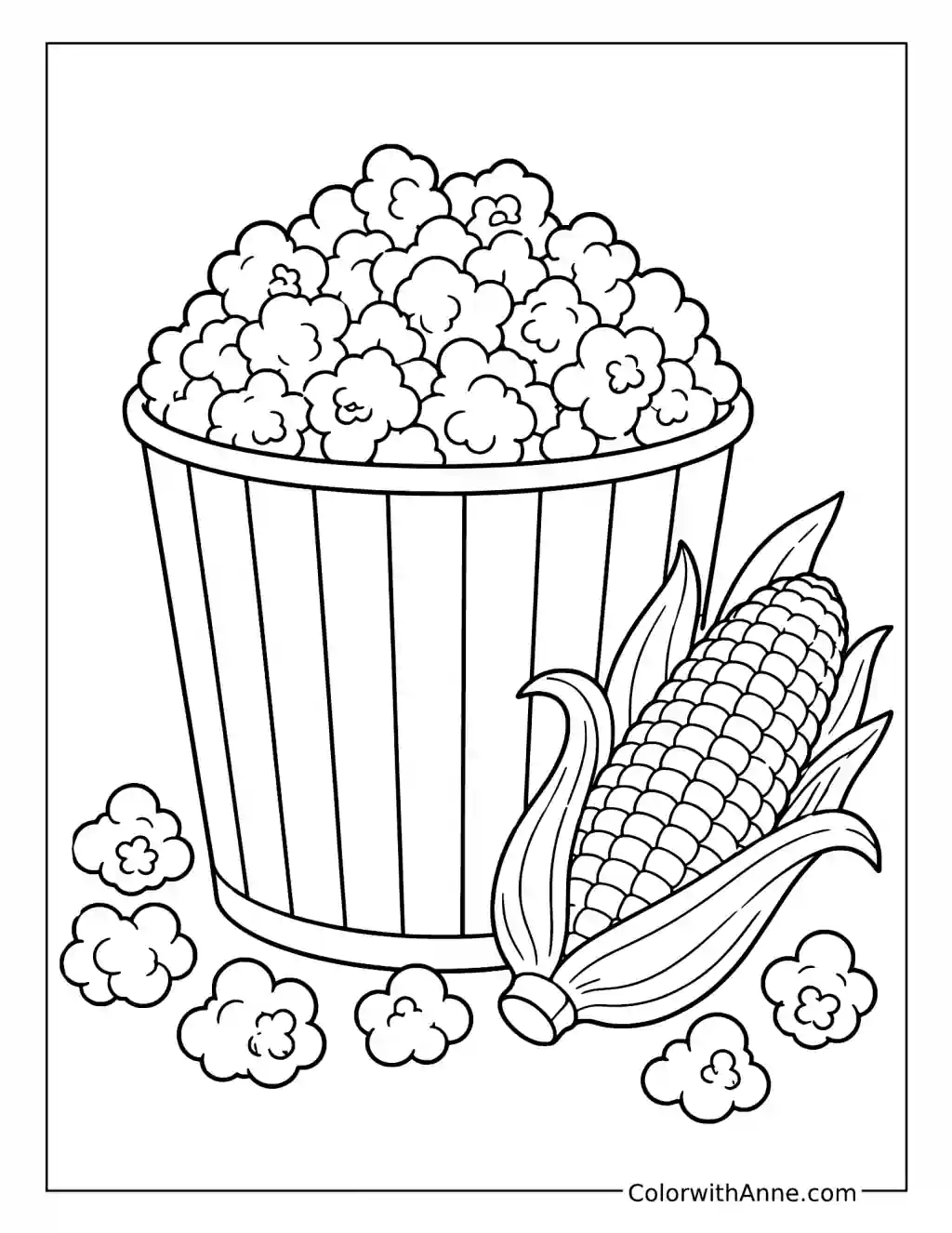
Give the Popcorn Bucket a Movie-Night Job
Popcorn spills above a striped bucket, with an ear of corn beside it. The large bucket panels leave a clear place for a personal movie-night detail.
Red-and-cream stripes would give the bucket a classic cinema look. Pale yellow shadows among mostly white popcorn pieces could help the individual shapes remain visible.
Write the chosen film’s title on one bucket panel and use the page as the evening’s little announcement. Set it beside the real snack bowl before everyone settles down. Next time, a removable paper label can carry a different title.