
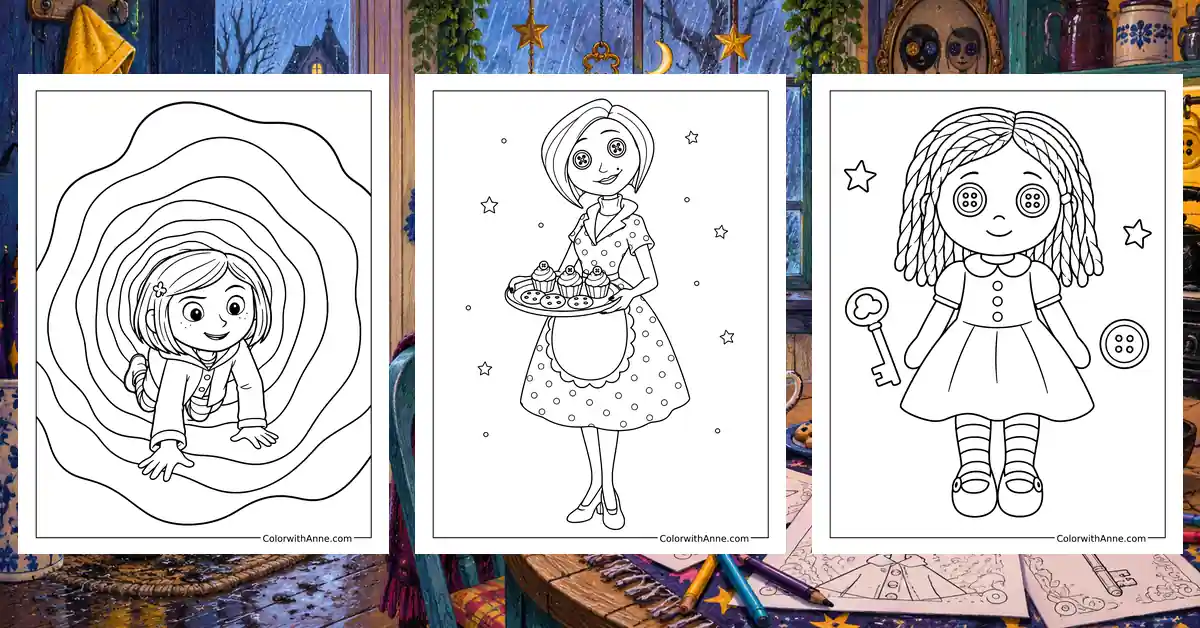
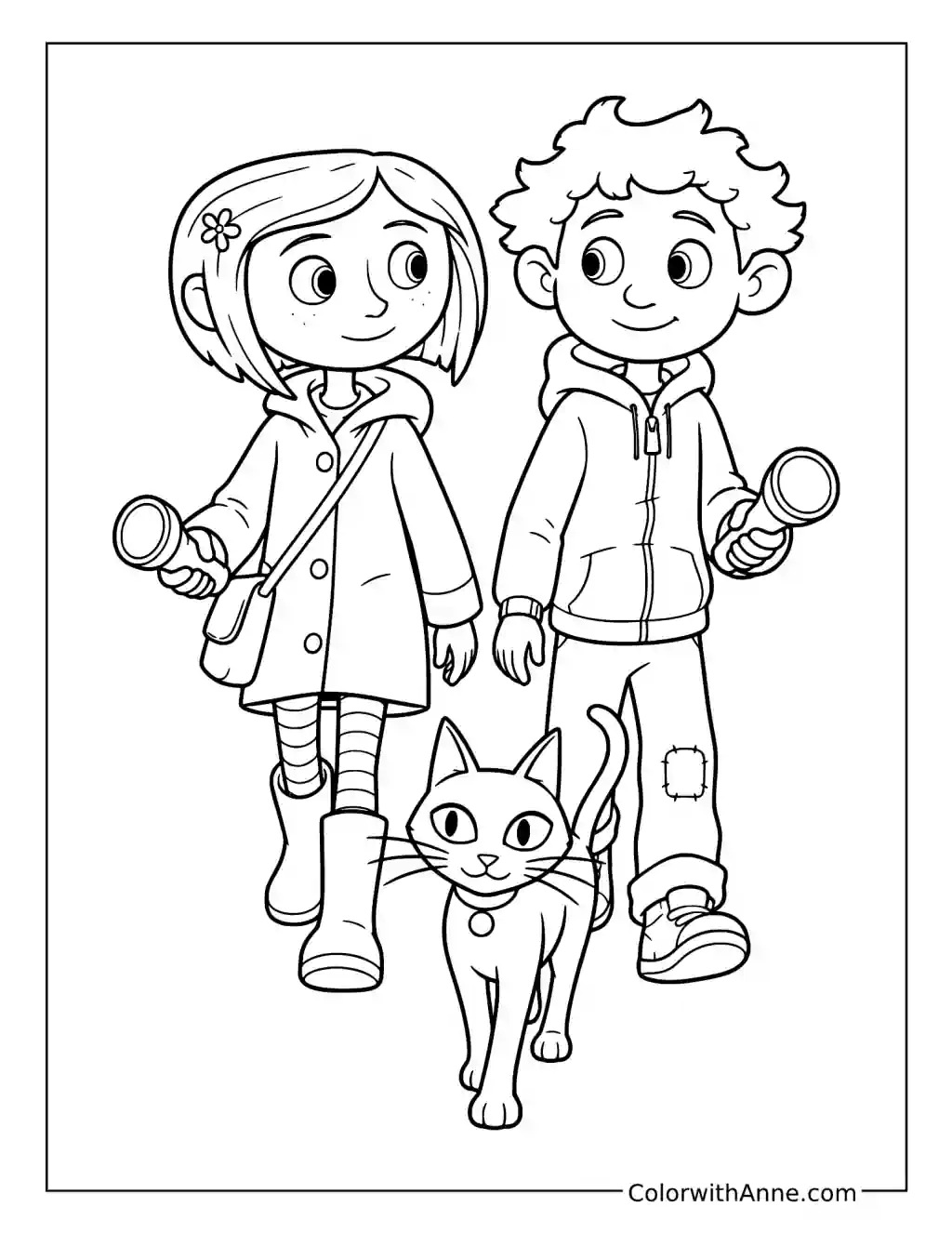
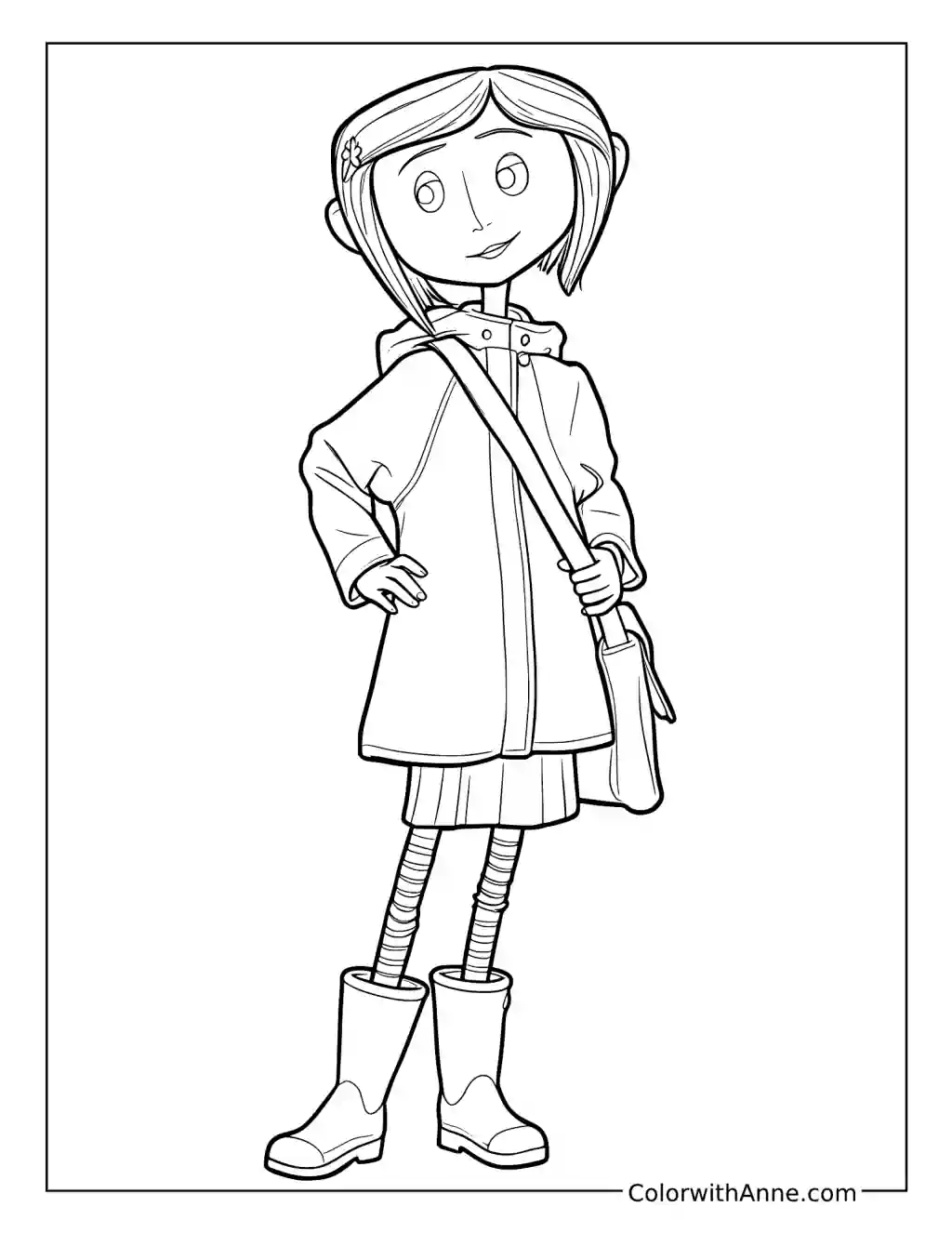
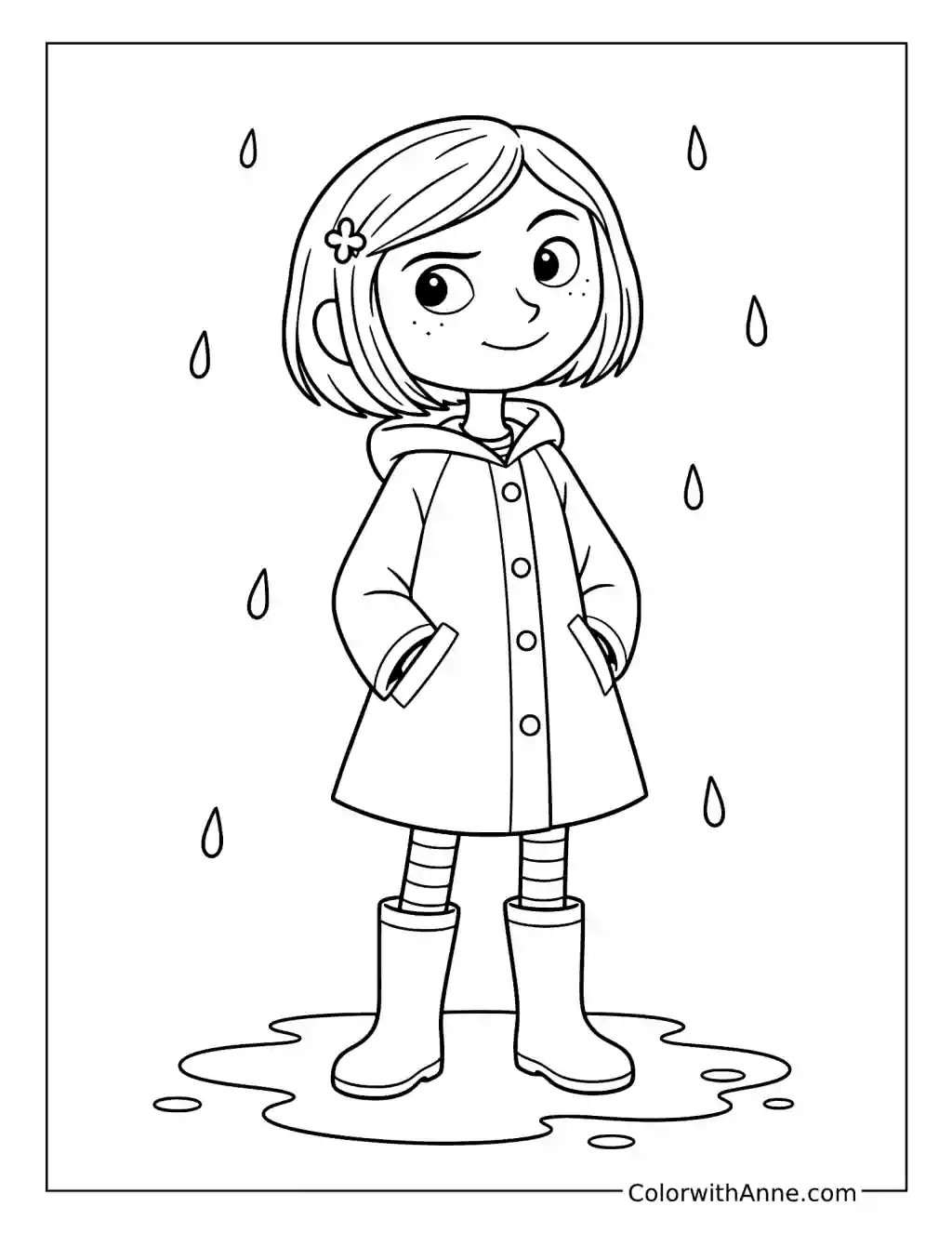
Rain against the window, an unfamiliar house, and adults who are busy doing adult things leave Coraline Jones with plenty of reasons to investigate. Her yellow raincoat brings a stubborn splash of brightness to all that gray. The cat, naturally, behaves as though every secret was obvious from the beginning.
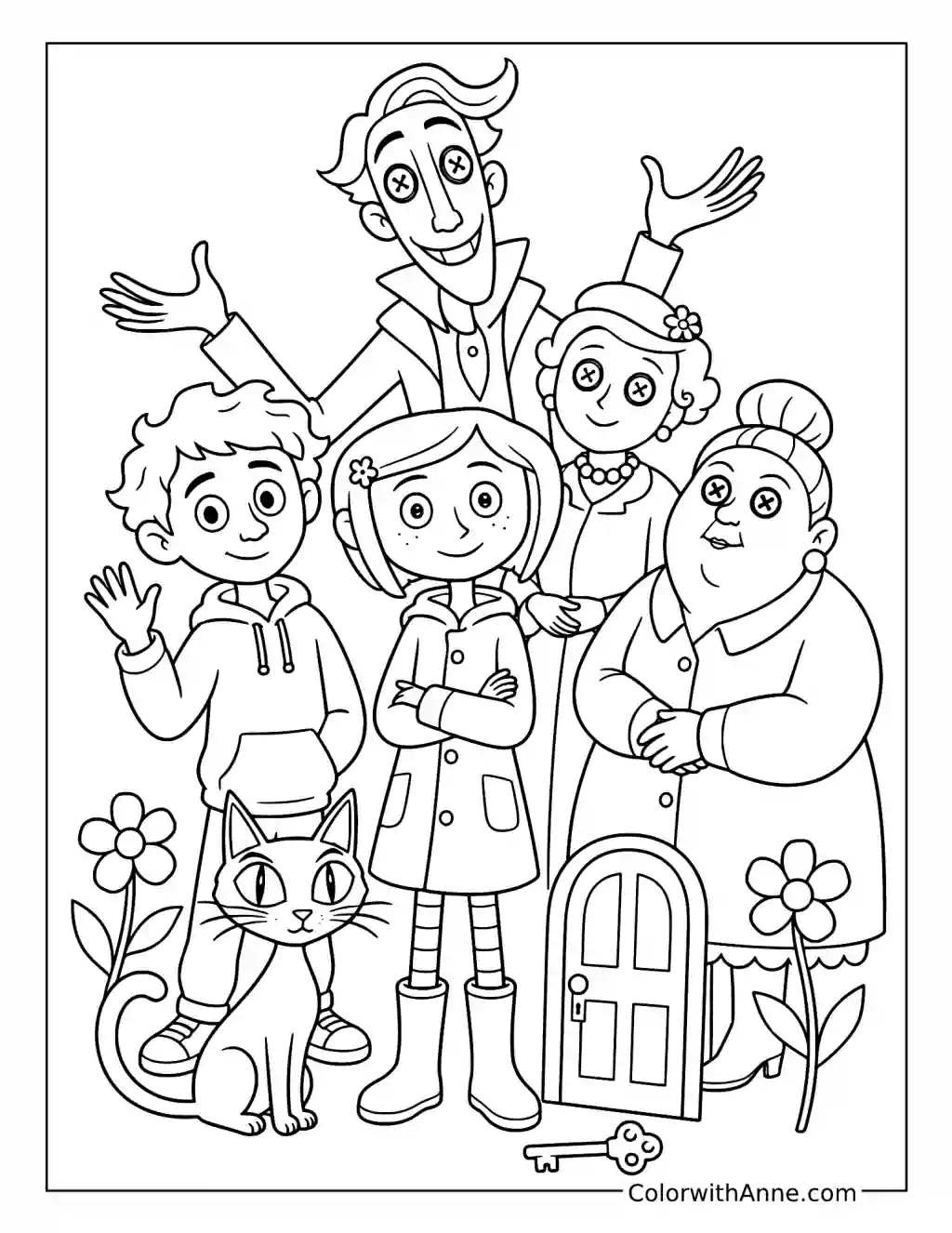
Coraline coloring pages suit an afternoon with a slightly eerie mood and a fondness for curious details. Coraline’s determination, the cat’s knowing manner, and the uneasy charm associated with button eyes give the theme its distinctive character, balancing childhood curiosity with the feeling that something deserves a second look.
Free Printable Coraline Coloring Pages
Click any coloring page below to open the PDF, then print on US Letter or A4 paper.
Did you find what you needed?
Help us choose what to create or improve next.
Coloring Ideas for Coraline Pages
Try one of these coloring ideas, or use them as a starting point for your own.
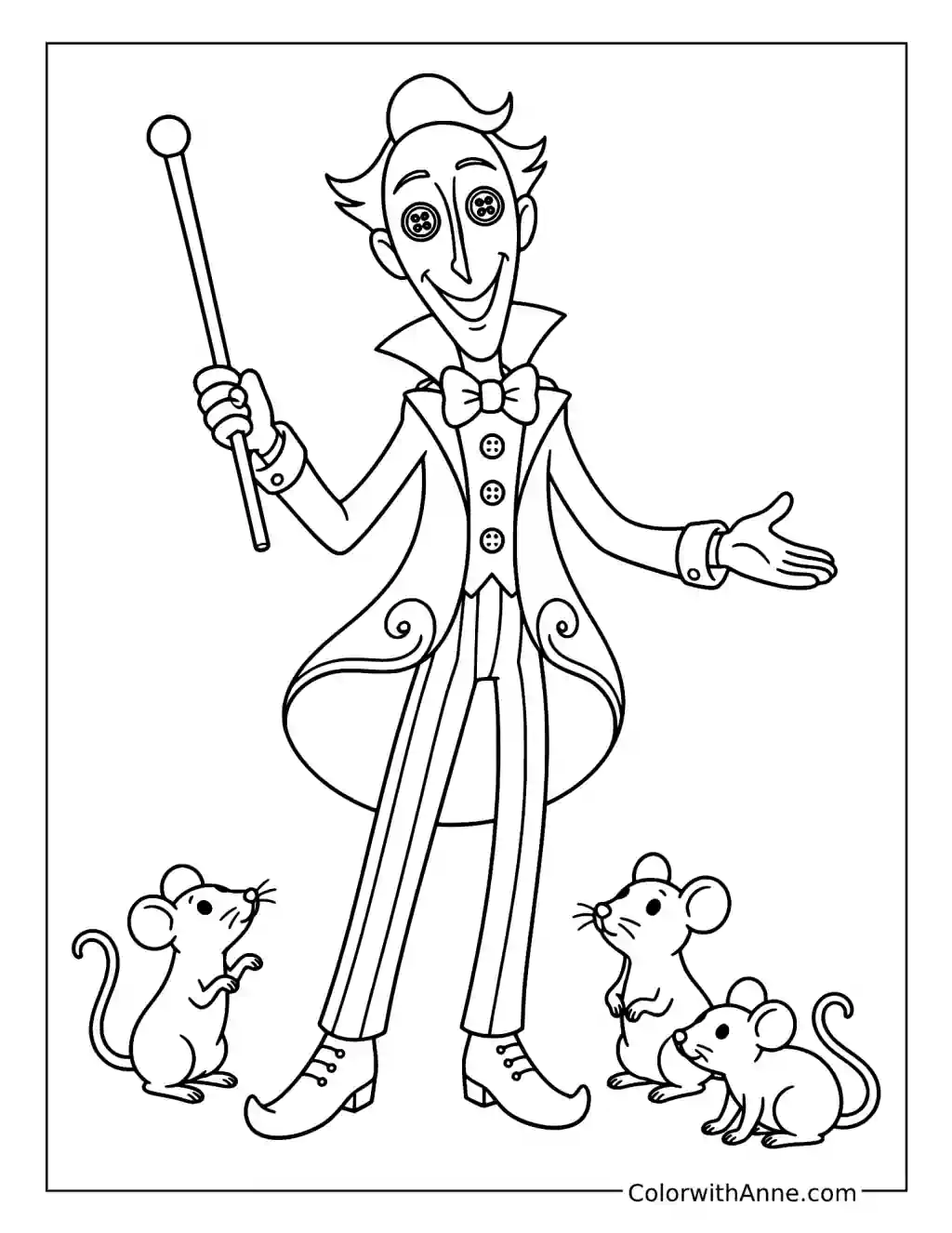
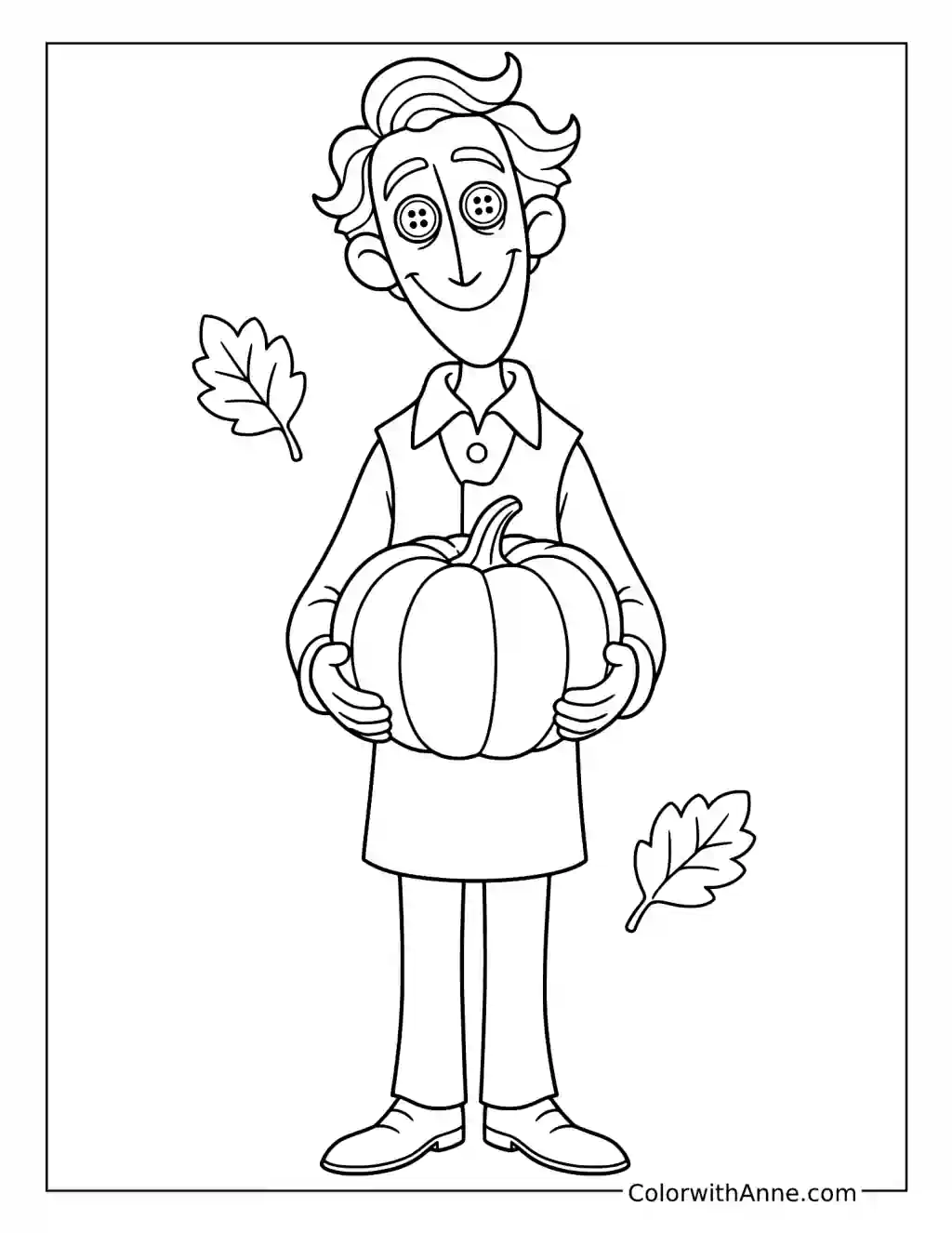
Give the Piano Scene an Uneasy Cheerfulness
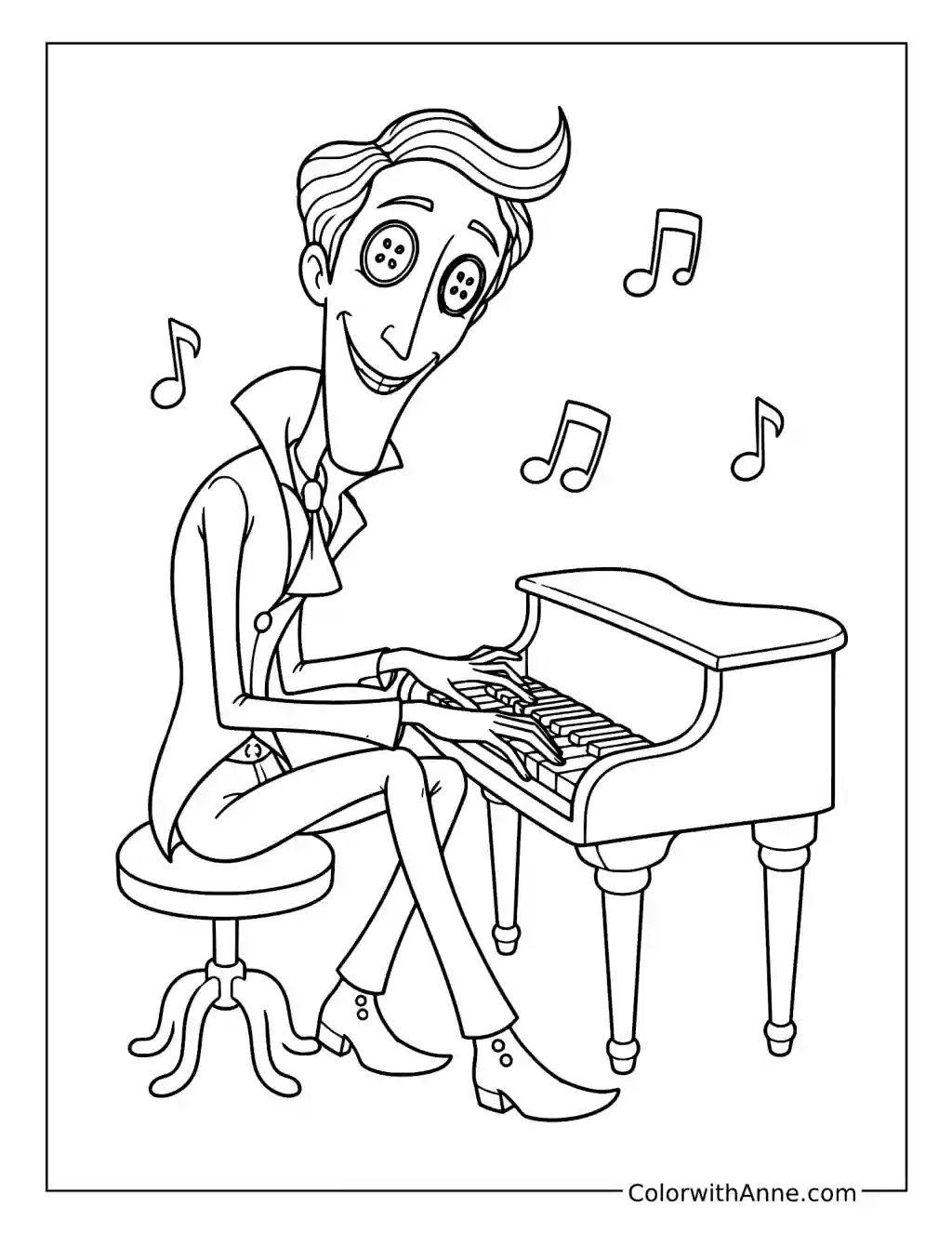
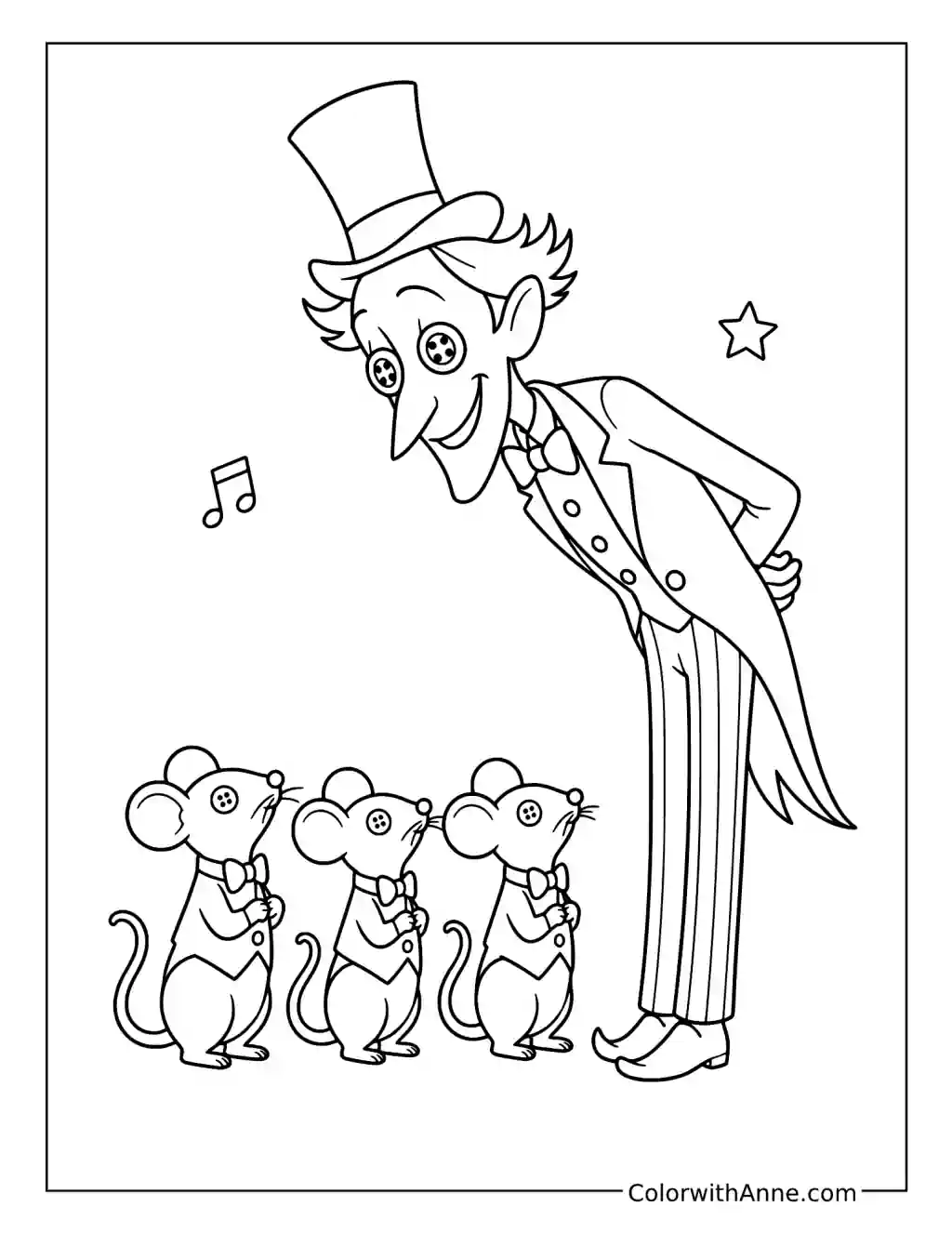
The Other Father sits at the piano with musical notes above him. The smile and button eyes make the scene cheerful and strange at once.
Keep the piano familiar through dark polished surfaces and clear light keys, then let the character carry a slightly unexpected accent. Listen to a piano piece while working if it helps set the mood. The interesting contrast is between an ordinary musical activity and a face that never quite behaves like an ordinary face.
Make the Tunnel Draw the Eye Inward
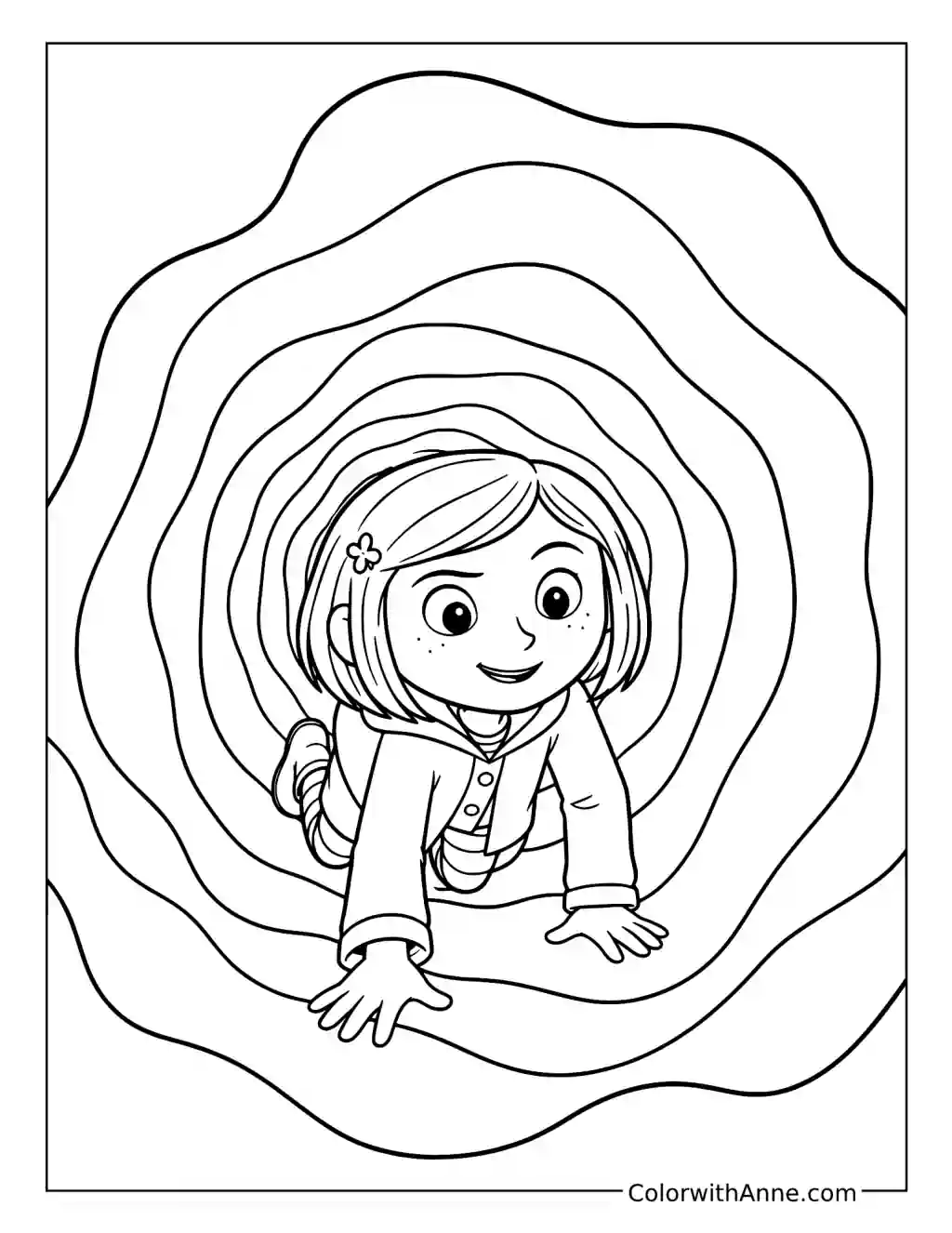
Coraline crawls through a series of rippling rings. Their repeated shapes make depth the main experiment on this page.
Choose related blue, violet, and pink shades, changing their strength gradually toward the deeper rings. Keep Coraline’s face and hands clearly separated from the tunnel around them. Follow each ring around before moving to the next so the passage feels continuous. The result should invite the eye farther in, much as the character’s pose invites another step forward.
Leave Coraline a Quiet Moment at the Window
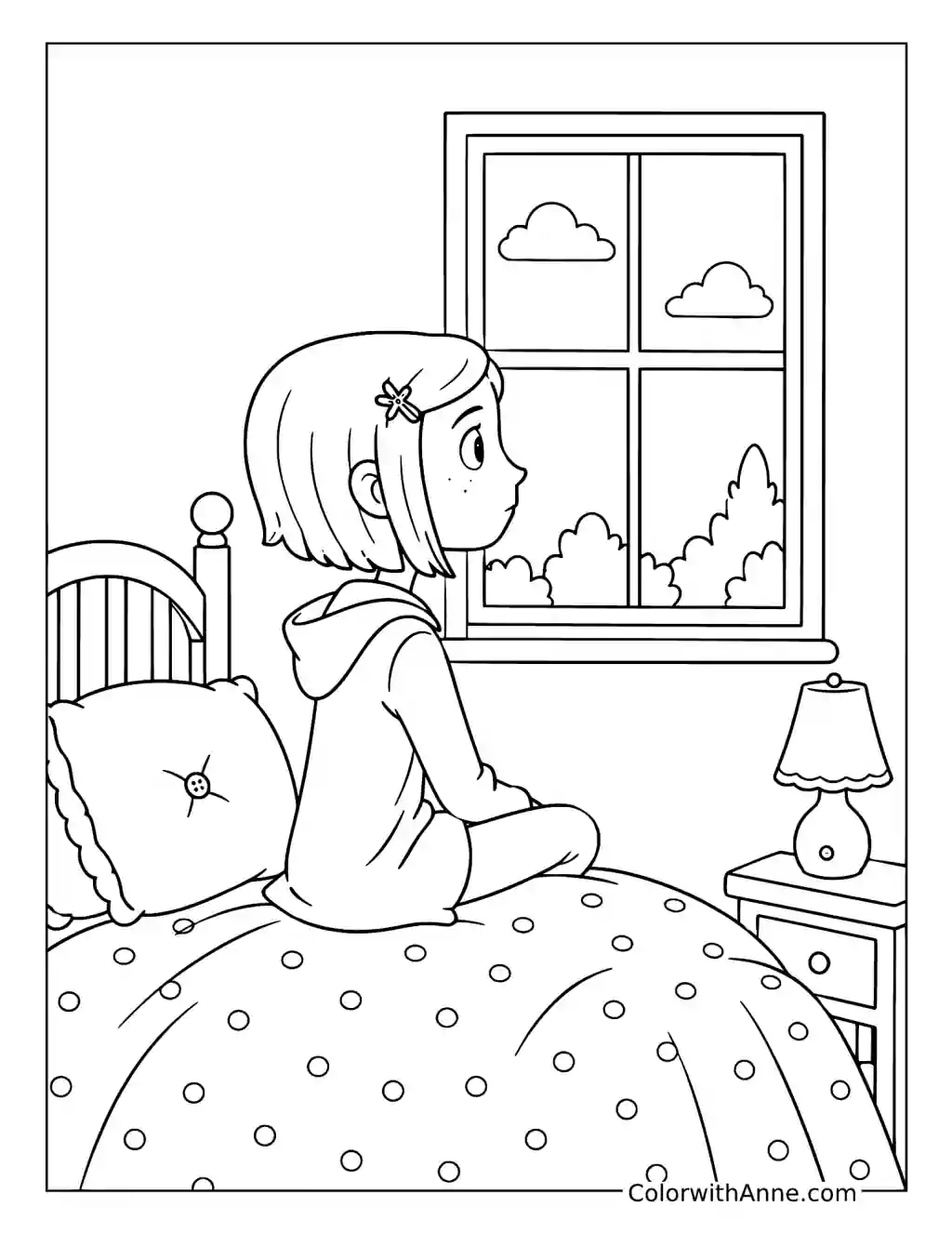
Coraline sits on the patterned bed, looking toward the window. The simple room offers a pause among the collection’s stranger characters and objects.
Let the window carry a little more light than the bedding and wall. Her profile should remain clear against it. This page suits a slower session where the dots, cushion, and curtain can be finished gradually. The stillness is enough of an idea: Coraline’s curious attention gives an ordinary bedroom something to hold the viewer’s interest.
Make the Giant Flower Feel Almost Comfortable
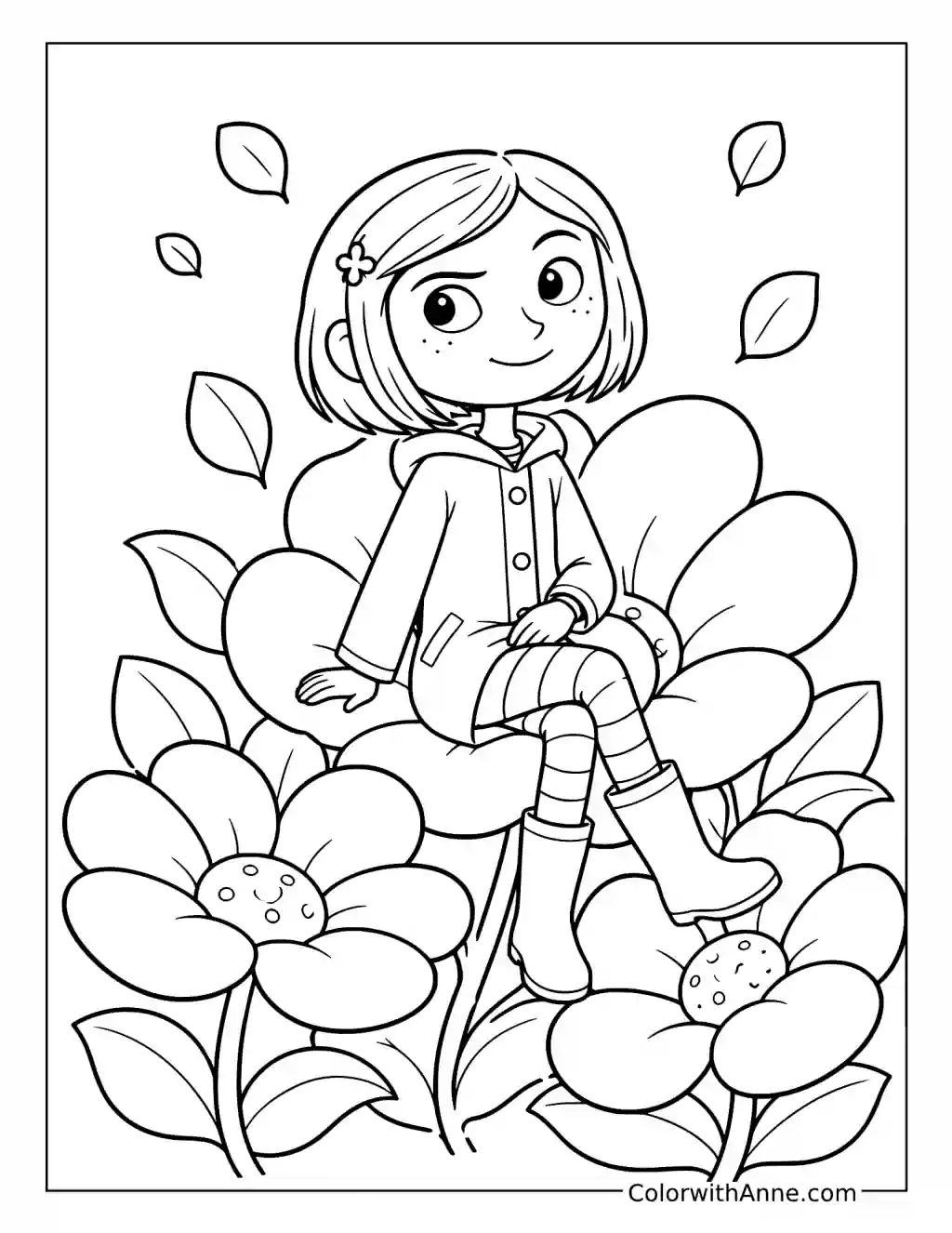
Coraline sits among enormous petals, turning a flower into something close to an outdoor chair. The scale is the part that makes the scene unusual.
Use deeper shades where petals overlap and lighter color across the broad surfaces supporting her. Keep her clothes distinct from the flower so the seated pose remains easy to read. Looking at a real flower can help with the curves, even though the imagined size is extraordinary. The page becomes convincing through familiar petal shapes doing an unfamiliar job.
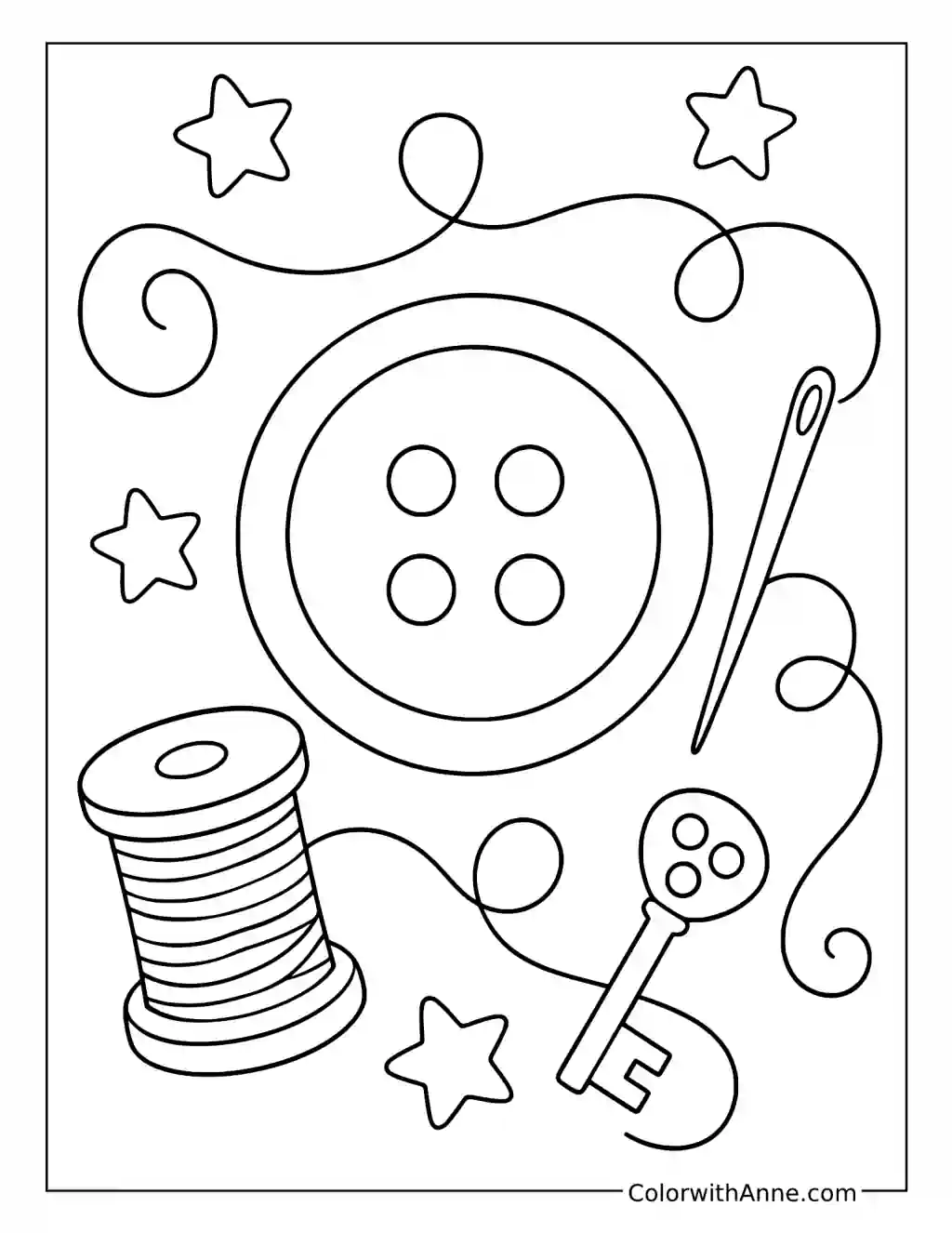
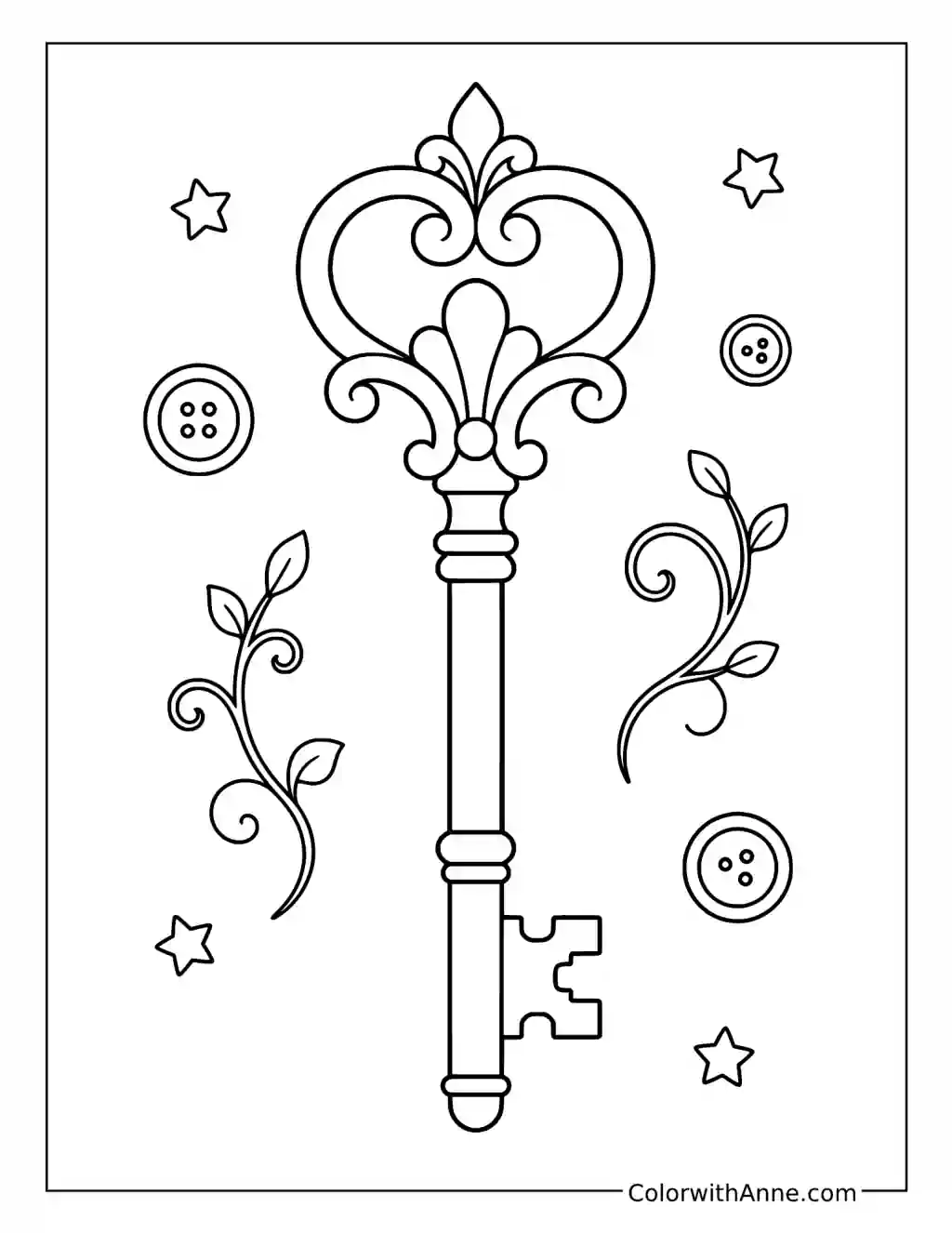
Give the Ornate Key a Metallic Finish
The long decorative key is surrounded by buttons and curling plant shapes. Its broad handle and narrow shaft offer different places for light to catch.
Set a metal spoon beside the page and notice where the brightest strip appears along its curve. Borrow that idea for the key, keeping one edge pale and a neighboring area deeper. Tiny darker marks can suggest age around the ornamentation. The object begins to feel like a found relic, with its mystery carried by the finish rather than an added explanation.
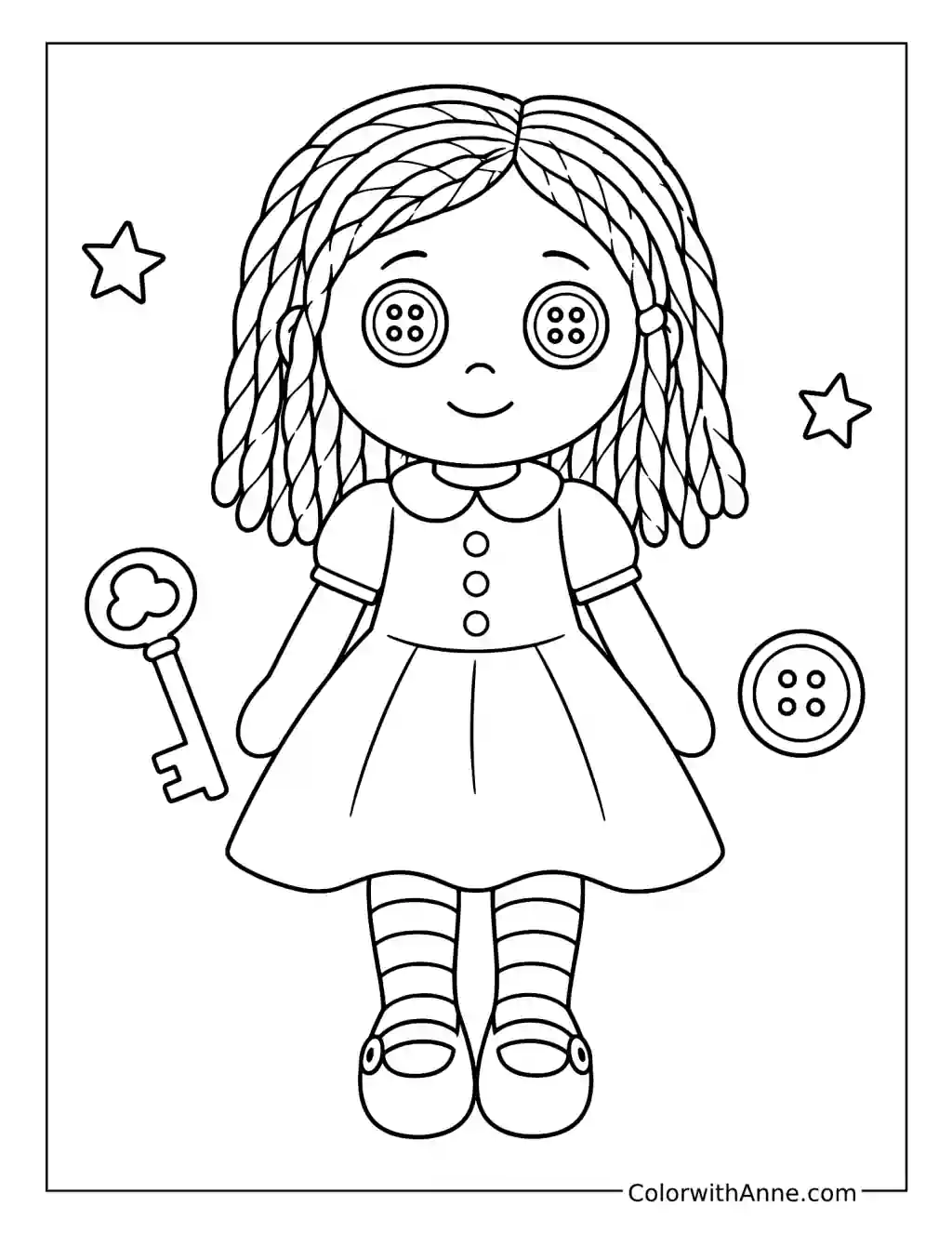
Give the Rag Doll a Little Real Texture
The doll’s button eyes, braided-looking hair, and small dress make its handmade character especially important.
Color the clothing first, then mount the page on card. A pair of suitably sized spare buttons can cover the drawn eyes, with a few short yarn strands adding texture to the hair. Keep the additions limited so the original figure remains clear. The result is a slightly unsettling craft portrait, appropriate to a doll whose ordinary materials are part of its appeal.
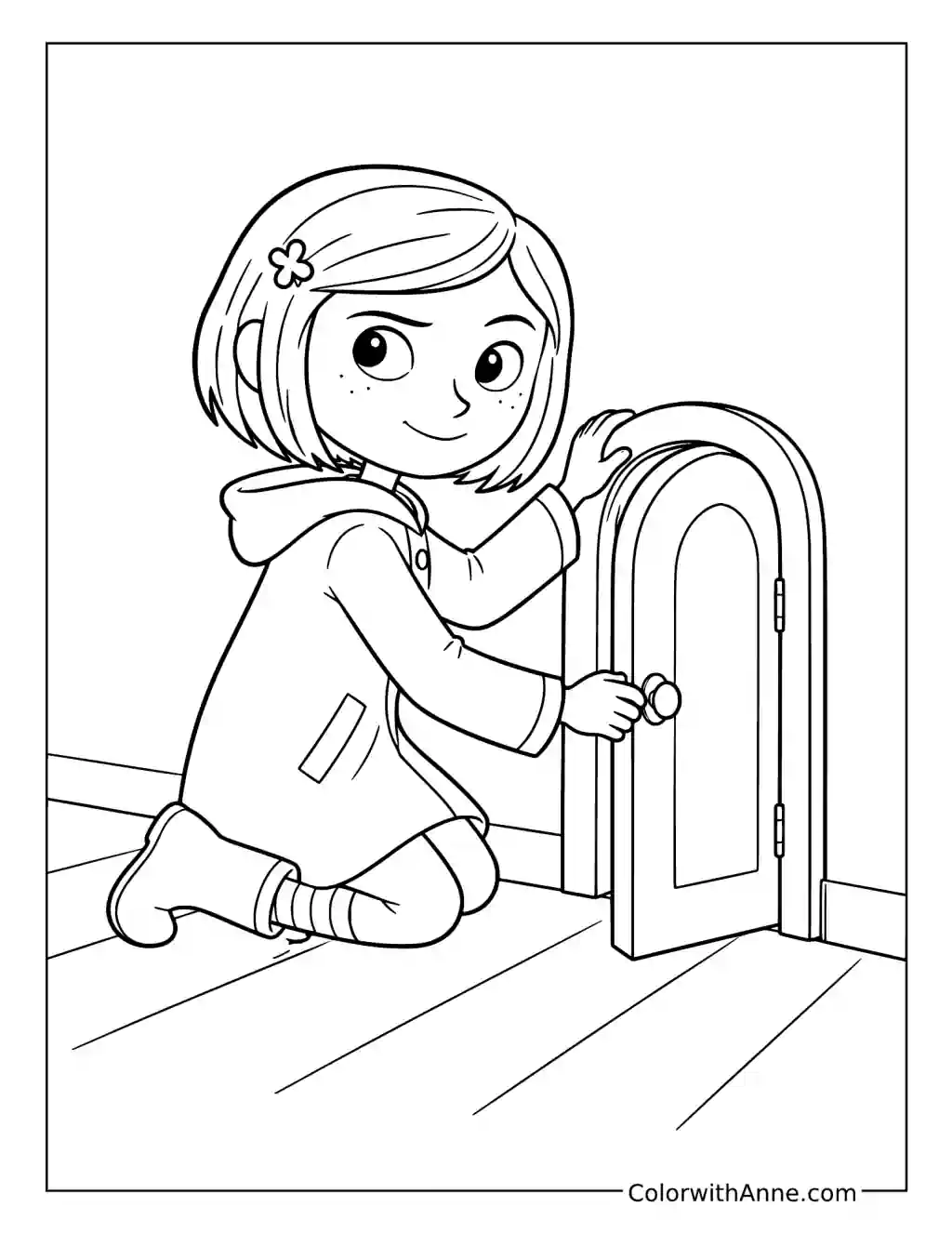
Let the Little Door Reveal Something
Coraline kneels beside the small door with one hand at its edge. It is a picture built around opening, which makes a paper flap feel natural.
After coloring, fit a small hinged piece of card over the doorway. Beneath it, place a patch of patterned paper in tunnel-like colors, or a short clue for another Coraline fan. The reader opens the door to find the hidden detail. The interaction stays centered on the illustration’s action instead of requiring a separate miniature room.
Keep the Cat’s Dark Shape Clear
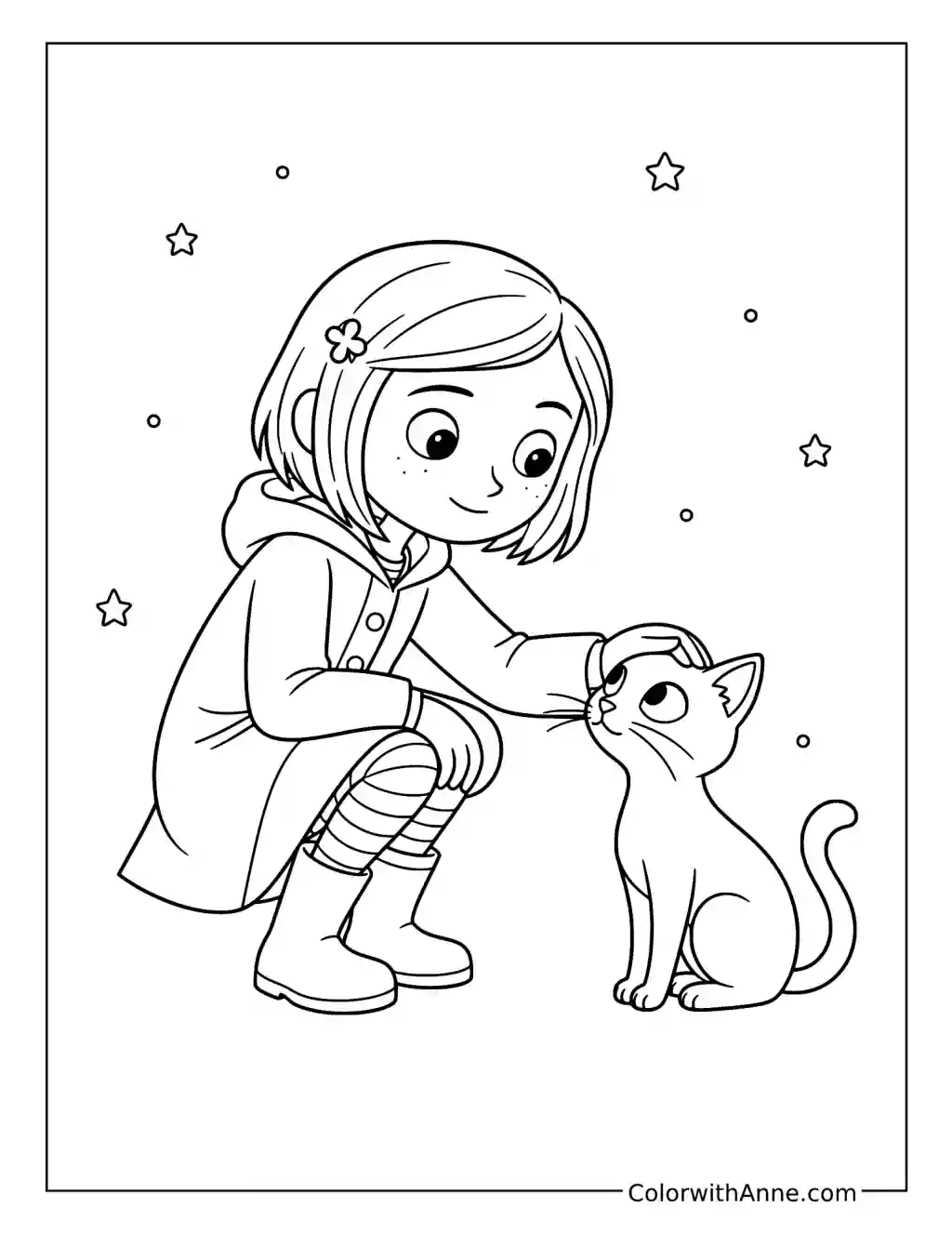
Coraline’s hand rests on the cat’s head as the two face one another. The quiet gesture gives this page a different mood from the tunnel and button-eyed portraits.
Use deeper tones for the cat, preserving clear edges around its face, tail, and the point where her hand meets the fur. Coraline’s expression can remain lighter and more open. The picture works through that small connection. It is a good scene to finish without adding another mystery, because the companionable moment already gives it a reason to pause.