
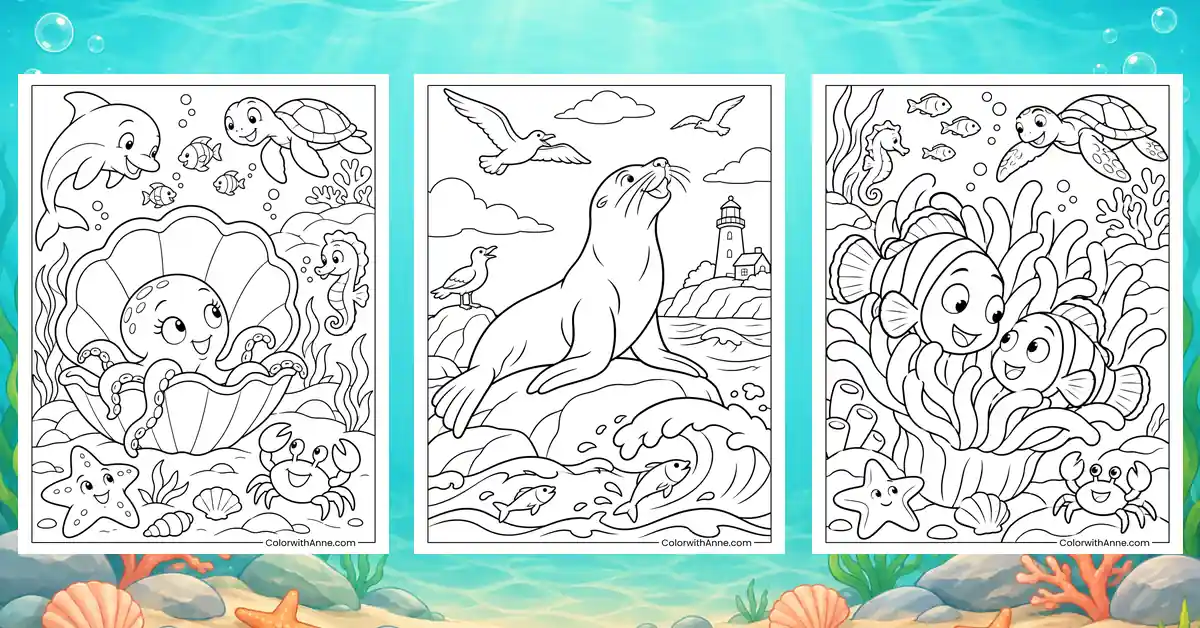
Standing at the water’s edge, it is easy to forget how much lies beyond the waves. A shell rolls in with the foam, a small fish disappears through the shallows, and someone begins wondering what they would see if they could keep walking beneath the surface.
Ocean coloring pages give that curiosity a little longer to wander. The appeal can come from remembering a beach visit or imagining a place too deep to reach. Conversations tend to follow their own course, from something spotted in a tide pool to the question of which sea creature would make the most surprising swimming companion.
Free Printable Ocean Coloring Pages
Click any coloring page below to open the PDF, then print on US Letter or A4 paper.
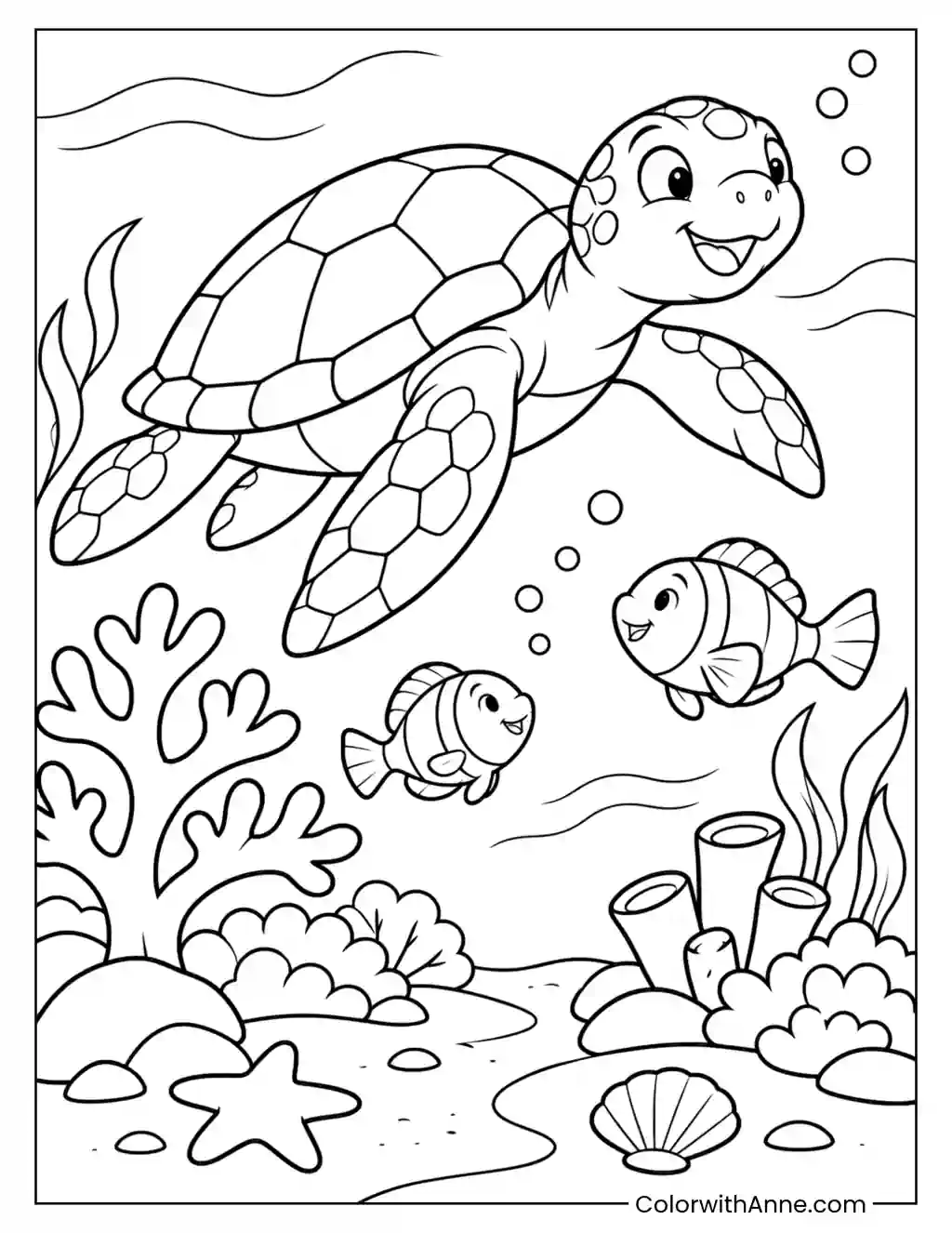
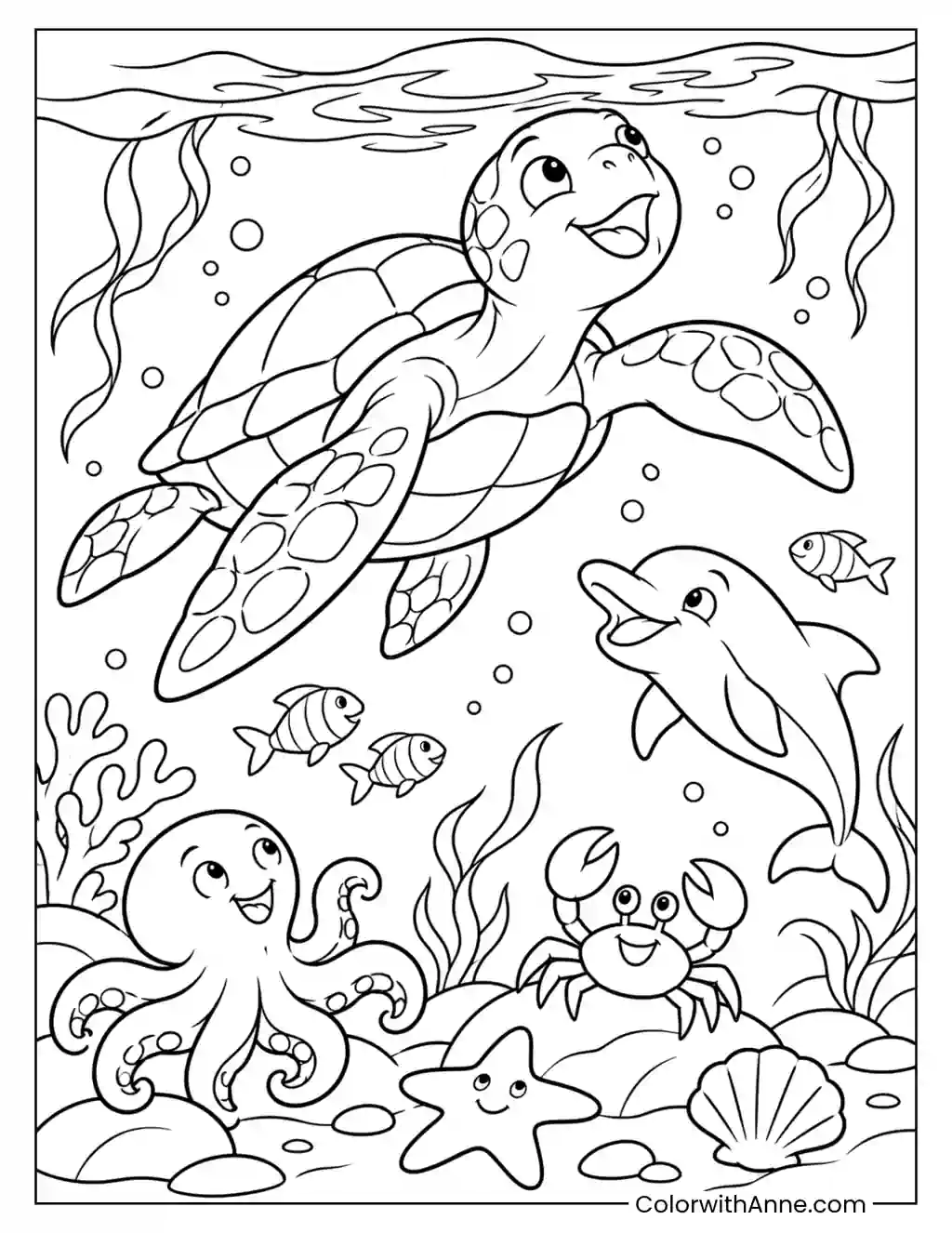
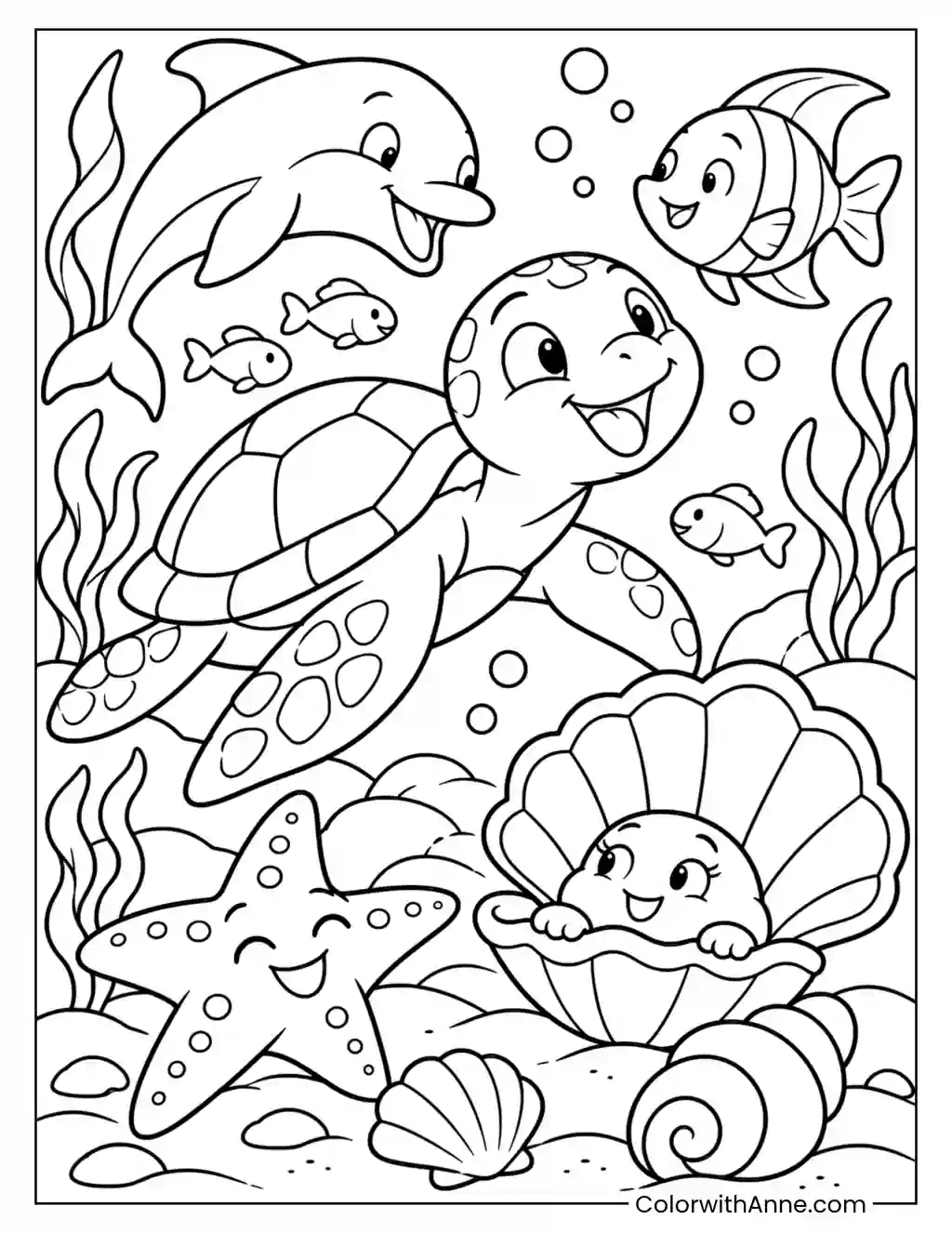
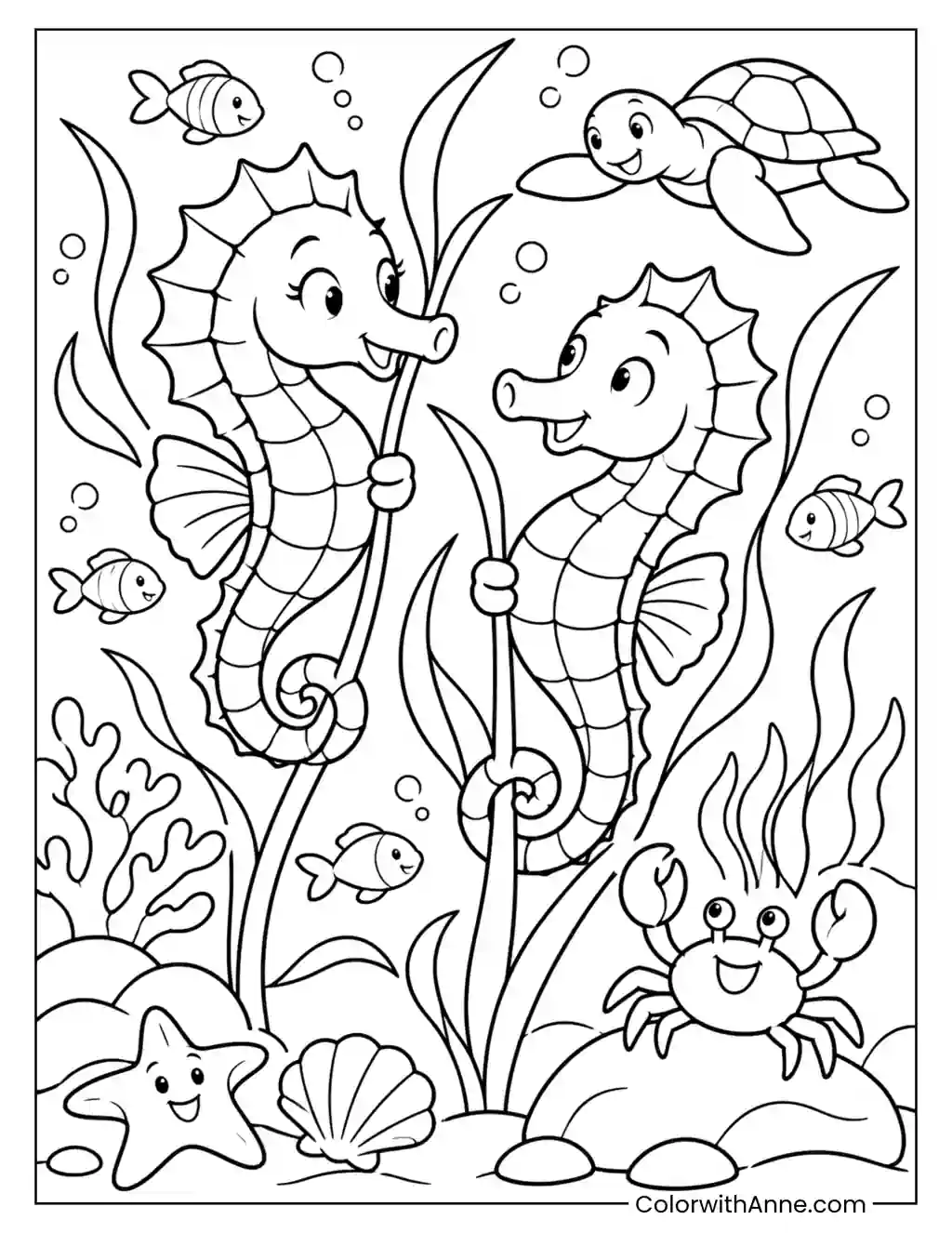
Did you find what you needed?
Help us choose what to create or improve next.
Coloring Ideas for Ocean Pages
Try these creative ideas to make the most of your coloring sheets.
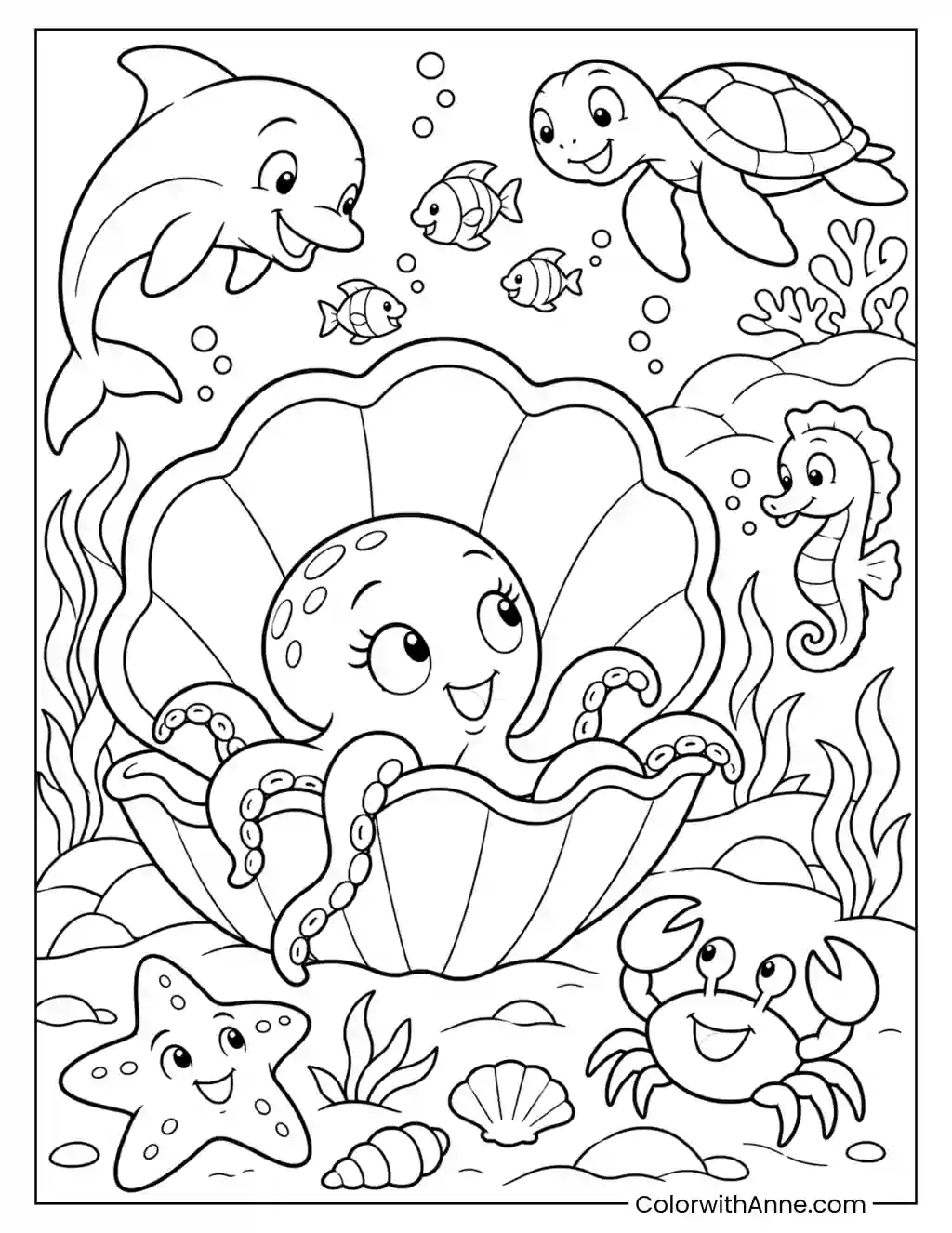
Baby Octopus Peeking from a Shell
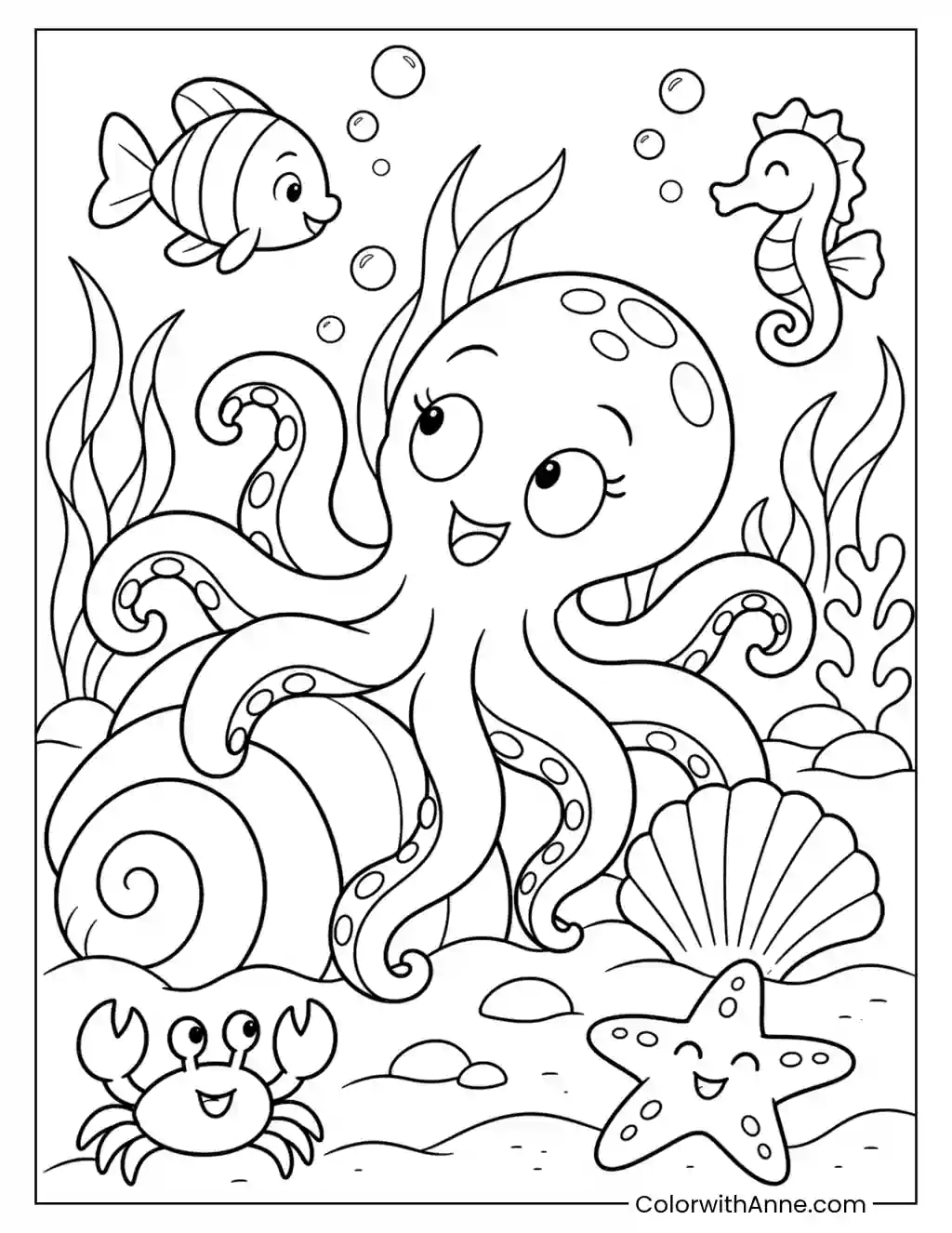
A smiling baby octopus peeks from an open shell, surrounded by a dolphin, a turtle, fish, and smaller seabed creatures. The shell gives the scene an inviting focal point, while the surrounding animals offer plenty to discover across the page.
Try a peach or lavender octopus against a cream shell, then use cooler blues and greens for the surrounding water. Give nearby animals different color families so they remain easy to distinguish. Fine-tip markers help with the smaller seabed details.
Turn the shell into an imaginary front door. Add a tiny nameplate beside it and draw one or two things its octopus resident might keep nearby, such as a shell mailbox or a little seaweed garden. Keep the additions small enough to fit naturally into the existing scene.
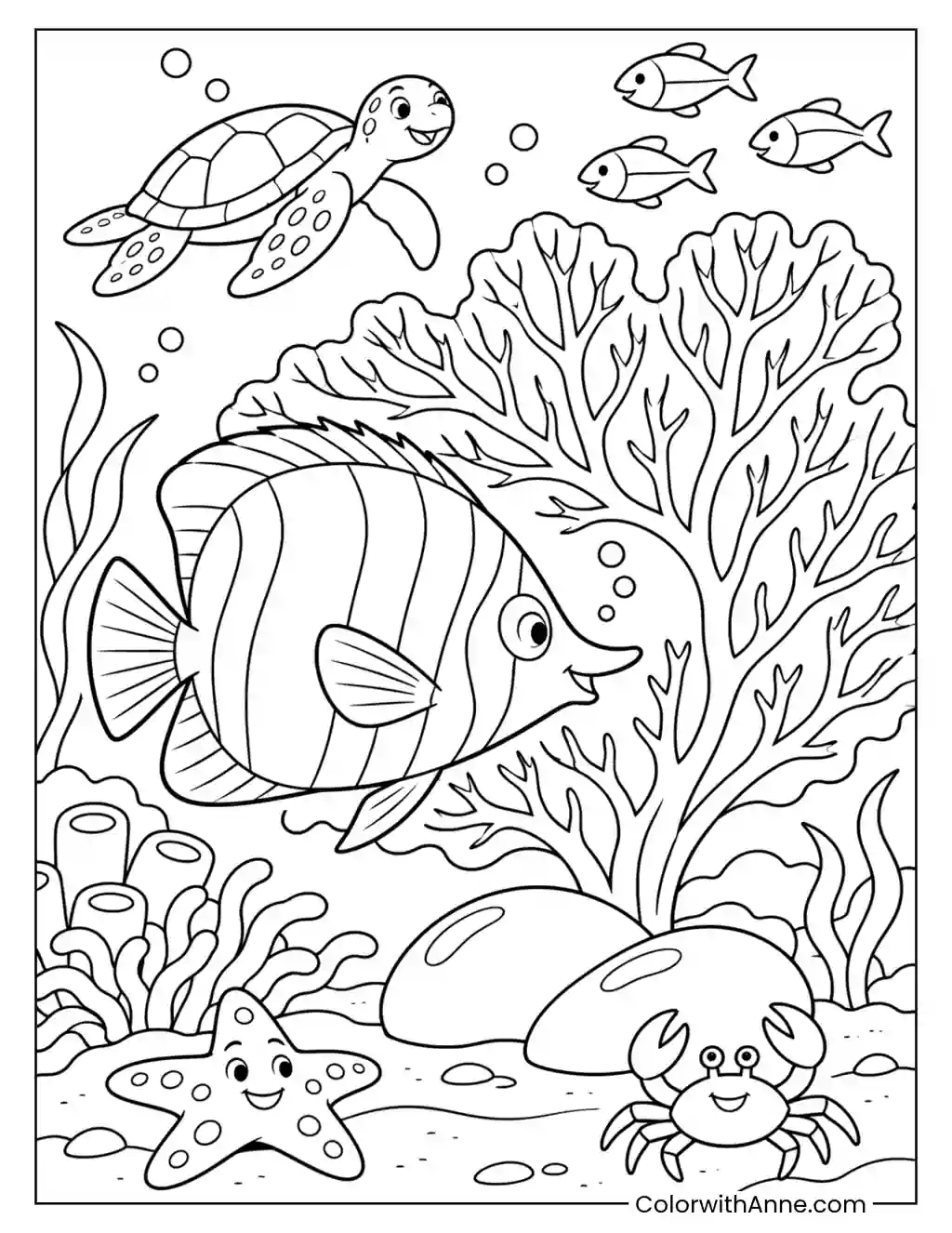
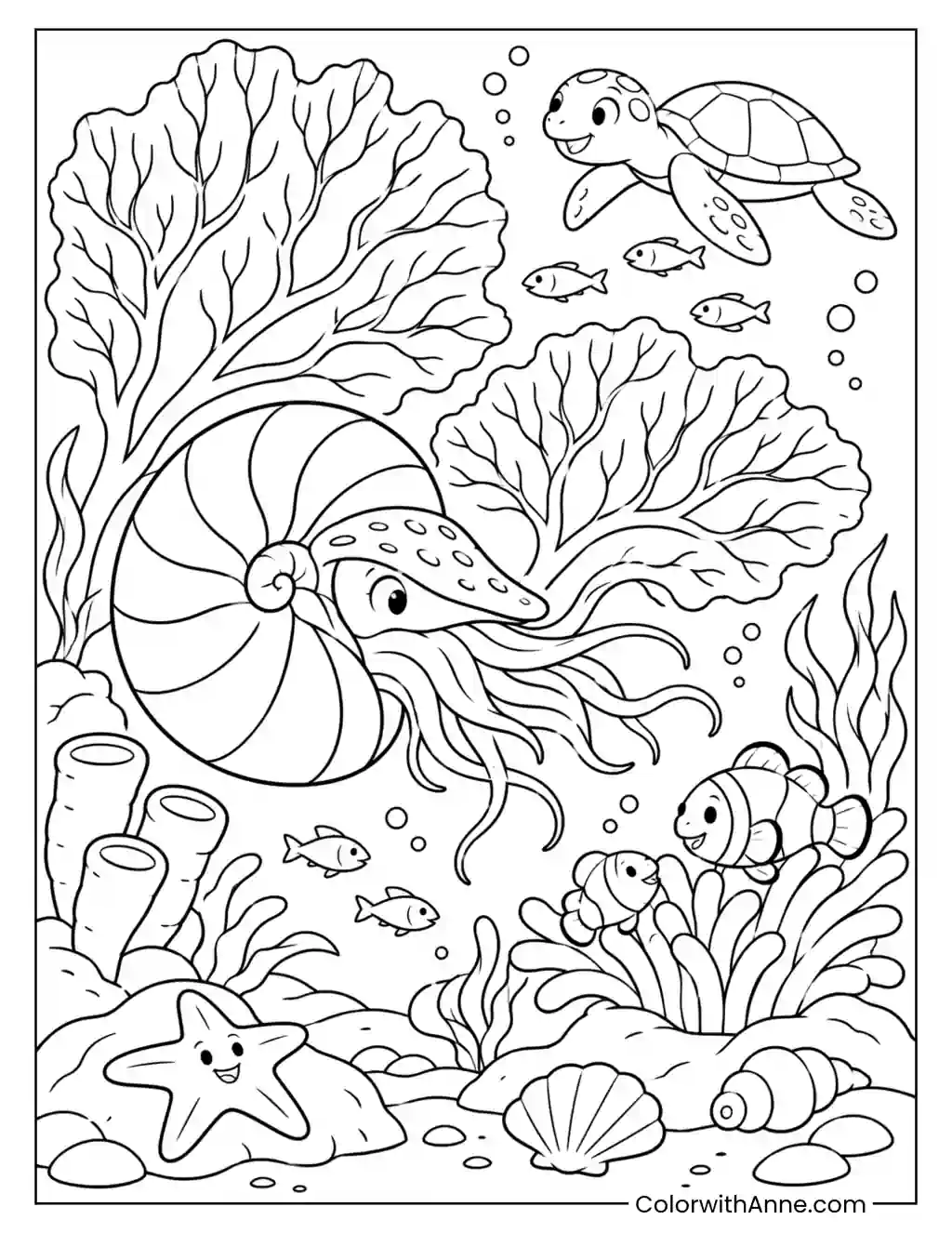
Butterflyfish near a Coral Fan
A striped butterflyfish swims in front of a broad coral fan, with a turtle above and smiling sea creatures below. The fan spreads behind the fish like a detailed backdrop, creating a strong contrast between branching textures and smooth swimming shapes.
Use yellow, cream, and dark gray for the butterflyfish, then try muted pink or orange for the fan. Keep the water pale around the finer branches. A narrow marker tip will help you reach those spaces without losing the delicate outlines.
Try a texture hunt after coloring. Find something nearby with branching lines—a leaf, a bare twig, or even a crack pattern—and compare it with the fan. Draw a small sample on the back of the page to start a collection of similar patterns found in different places.
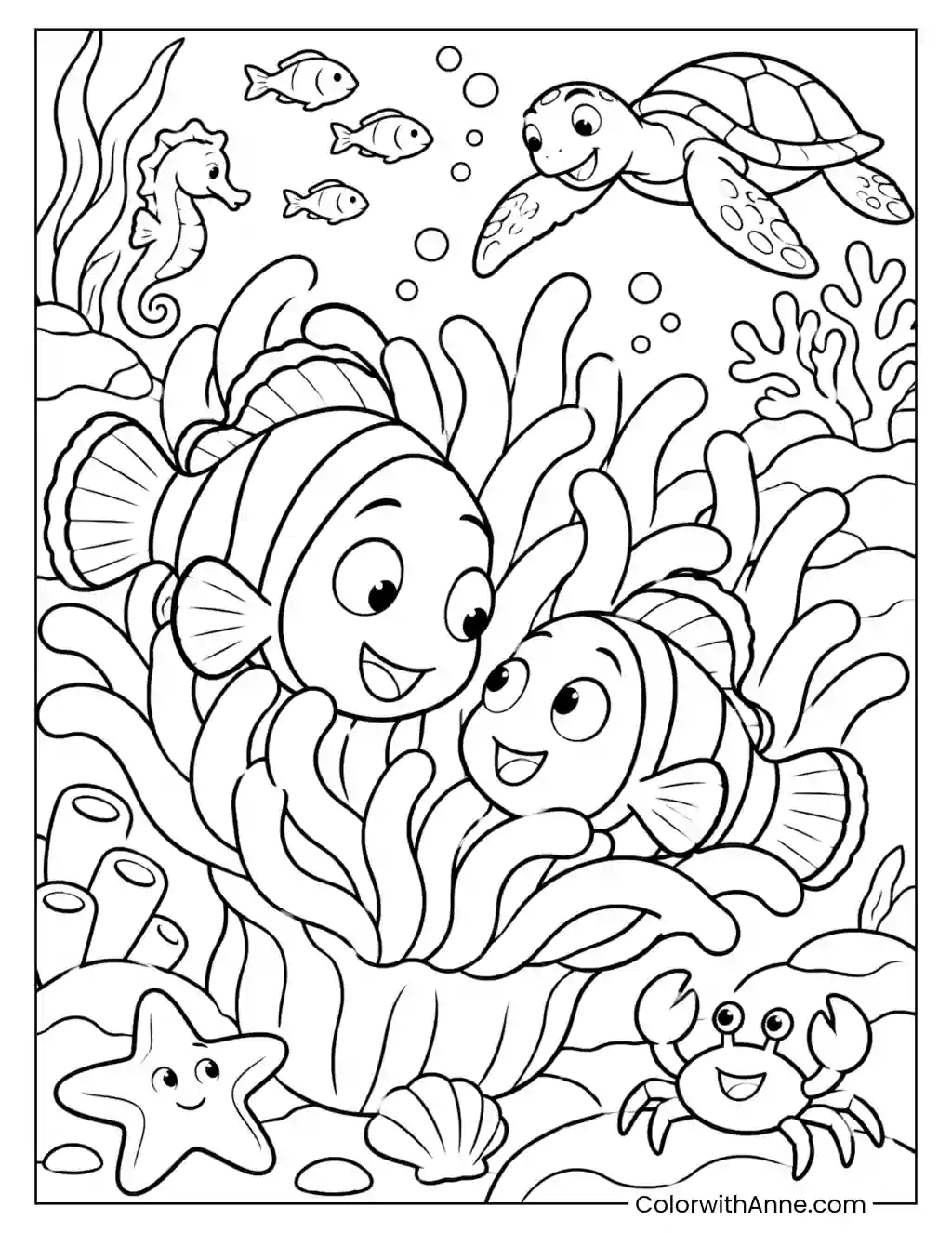
Clownfish in a Sea Anemone
Two smiling clownfish face each other among the long, sweeping tentacles of a sea anemone. A turtle and small fish swim above them, creating a busy upper area while the paired clownfish give the foreground a friendly, conversational feel.
Orange bodies with white bands are a familiar choice for the clownfish. Try lilac or soft green for the anemone so its tentacles remain distinct from the fish. Add the water lightly with a blue crayon, working around the narrow curves.
Give the two clownfish a short exchange using small speech bubbles in an open area. They could be greeting each other, making plans, or sharing a joke. If you are coloring with someone else, each person can write one line without seeing the other’s first.
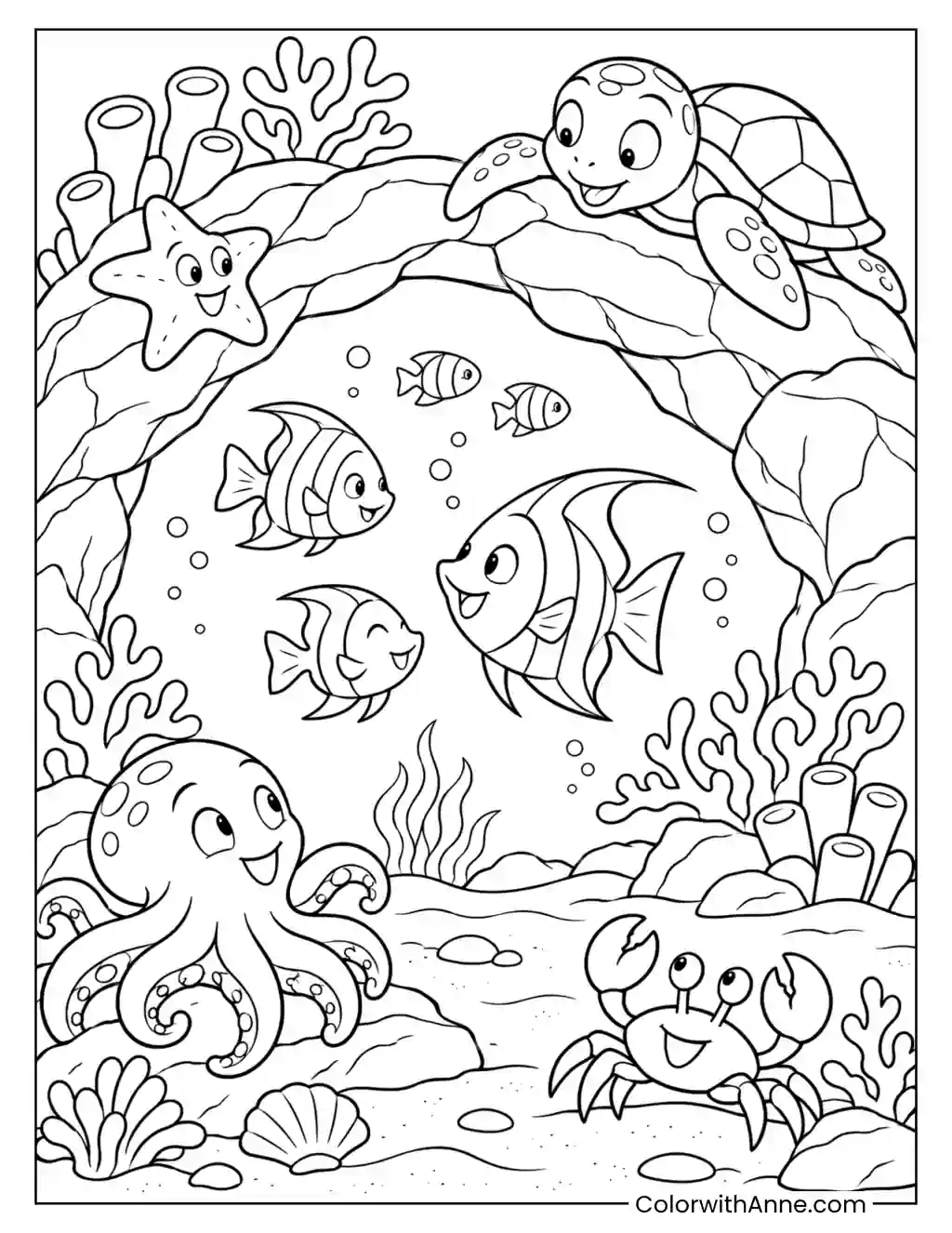
Coral Reef Neighborhood
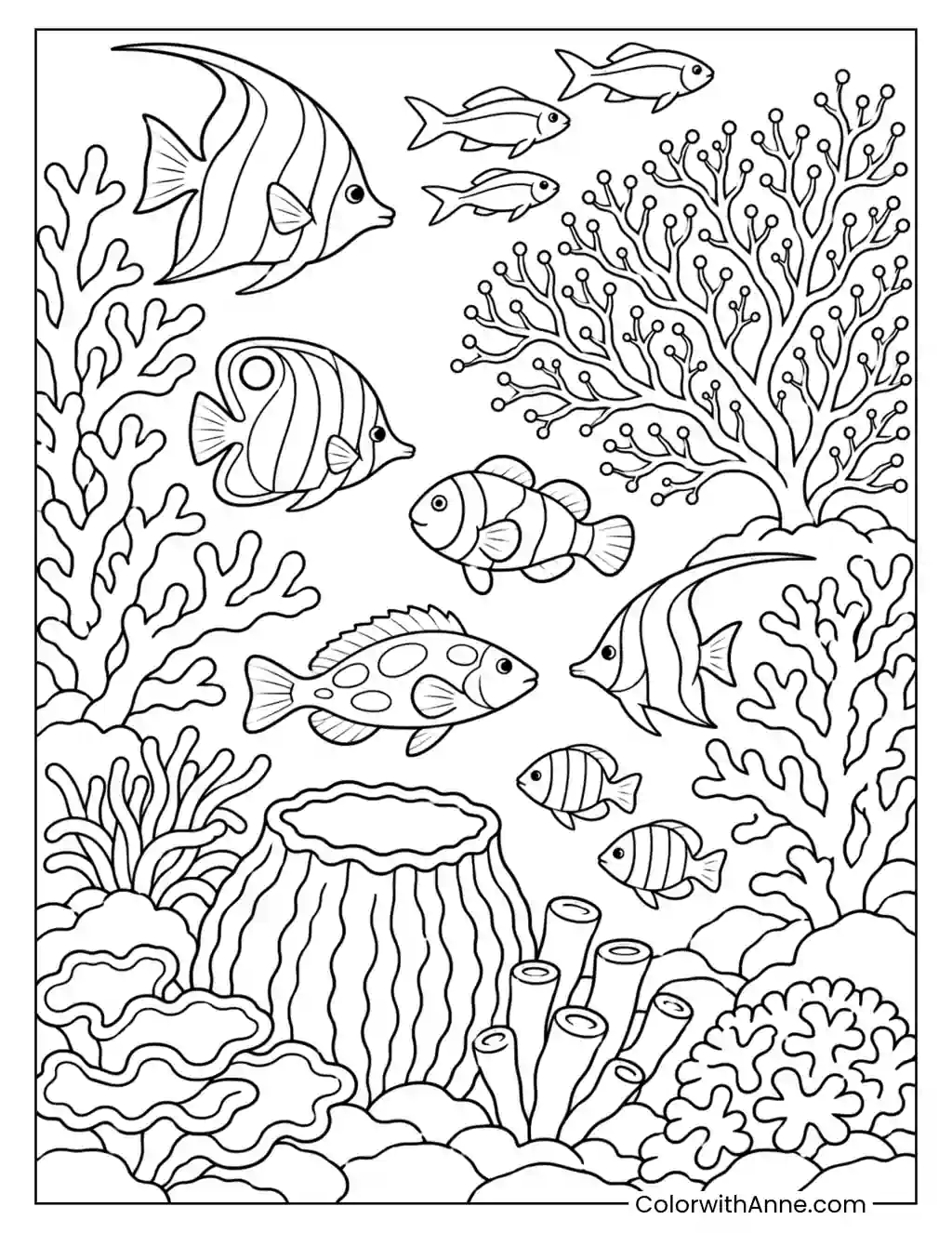
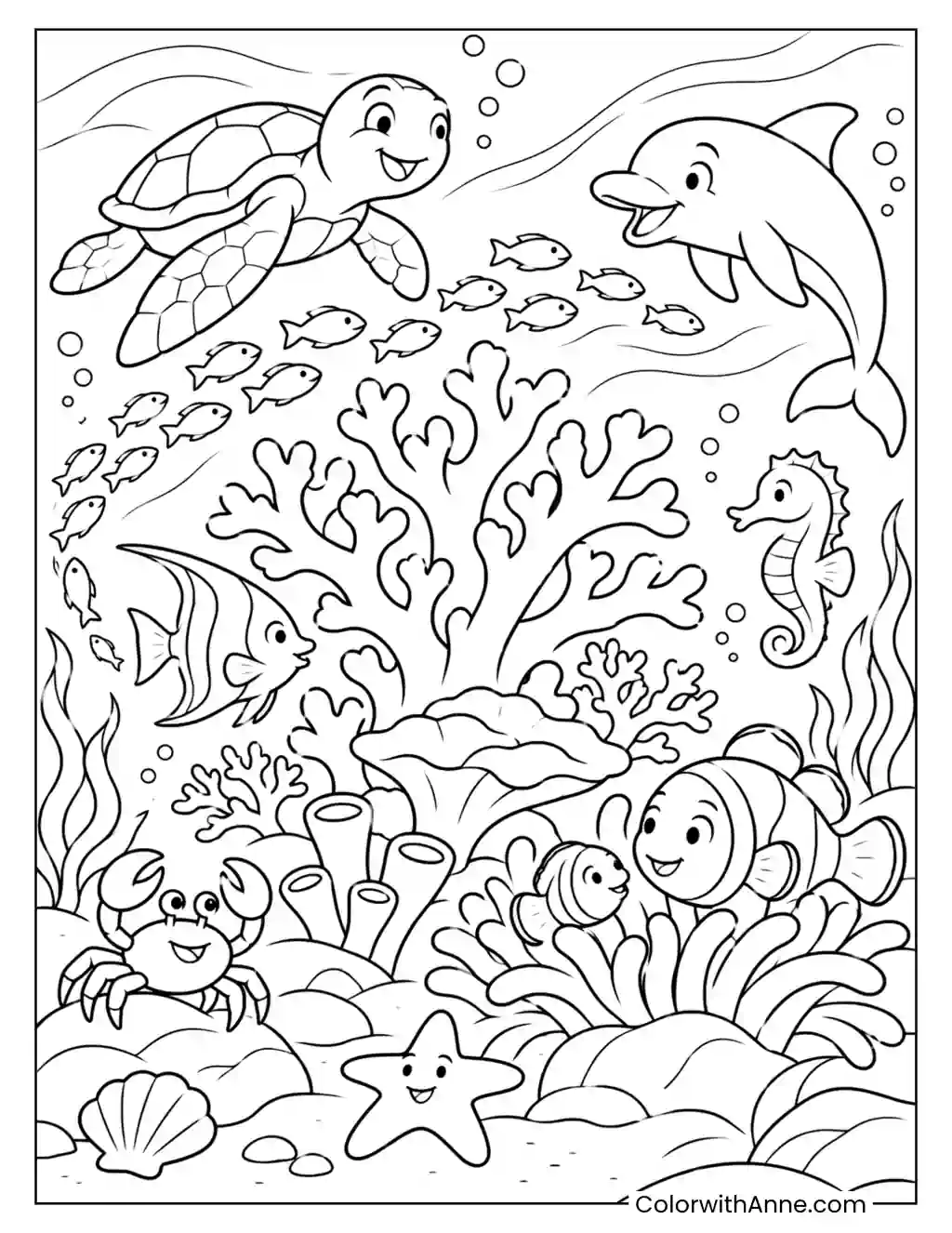
Striped and spotted fish move through a dense reef filled with branching fans, tube sponges, and layered coral formations. The page has many small areas to explore, with different textures providing natural boundaries between one part of the reef and the next.
Choose three main coral colors and distribute them around the page, then give the fish brighter accents. Use fine-tip markers for stripes and spots. Keeping some underwater gaps pale will stop the detailed reef from becoming one solid block of color.
Create a hidden-fish challenge using the finished picture. Choose five fish and write a clue for each on the back, referring to its pattern, position, or nearby coral. Someone else can search the reef using your clues, then make a new set for you.
Crab beside a Tide Pool
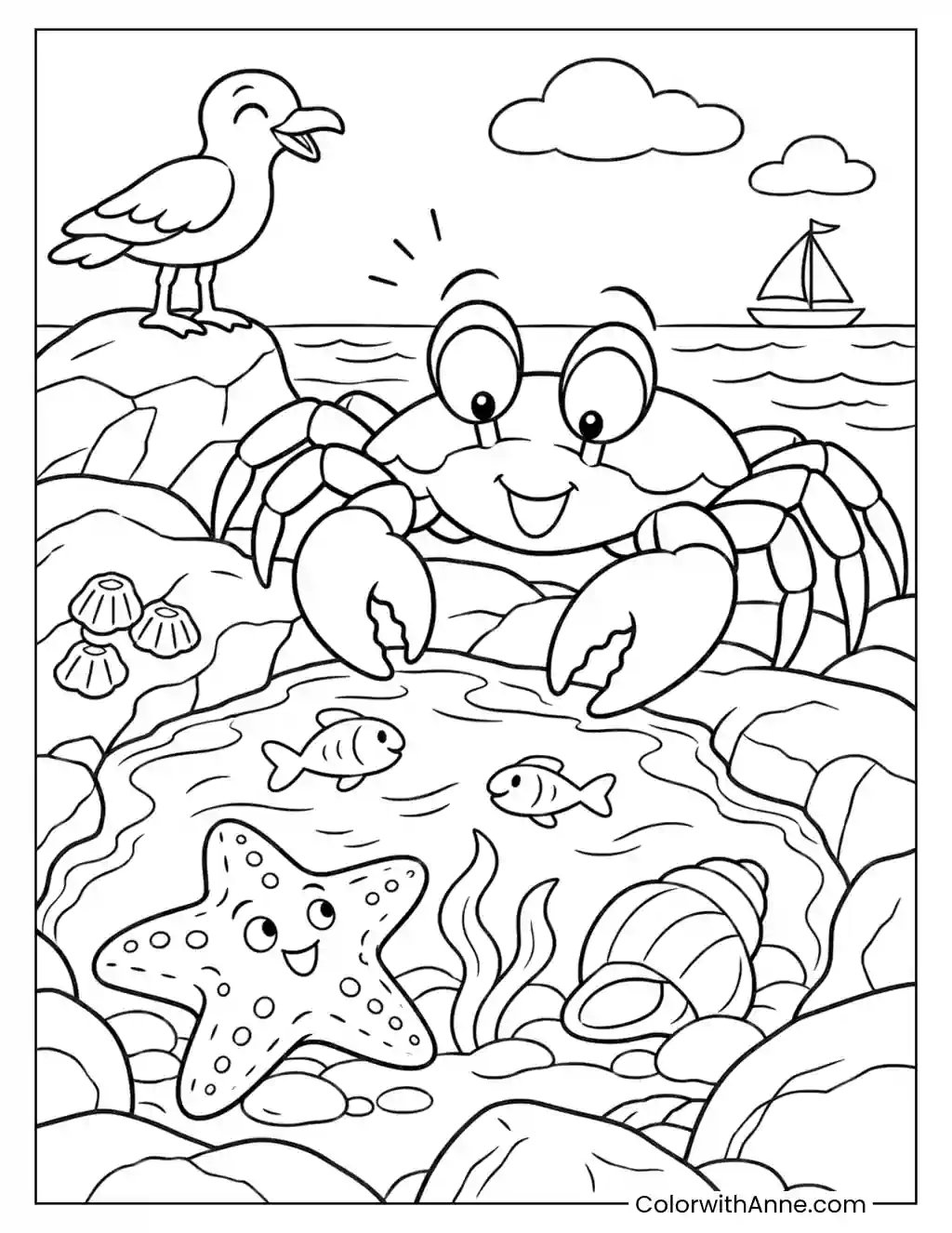
A smiling crab raises its claws beside a rocky tide pool containing fish, a starfish, and shells. The rocks frame the smaller watery world, giving the page a clear contrast between the pool’s contents and the crab watching from its edge.
Try a rusty orange crab, gray-brown rocks, and pale turquoise water. Vary your crayon pressure across the rocks to suggest uneven surfaces. Give the shells individual colors while keeping them softer than the crab so the main character remains easy to spot.
Use the page to prepare for a shoreline visit. On the reverse, make a short “look for” list inspired by the picture: a shell pattern, a rock pool, or a crab-shaped shadow. Take photographs or make quick sketches of discoveries, leaving living creatures and their homes undisturbed.
Dolphins Leaping over Ocean Waves
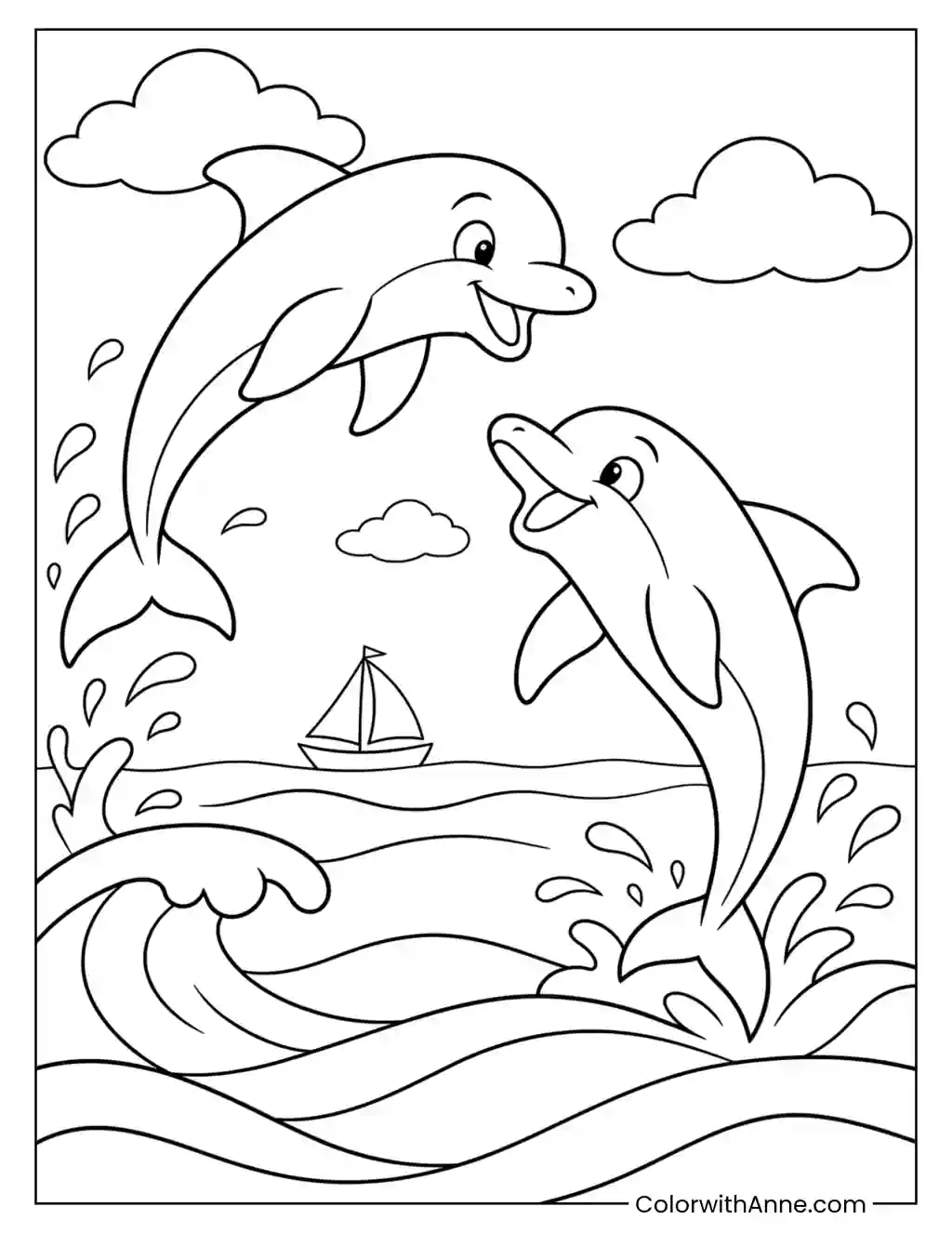
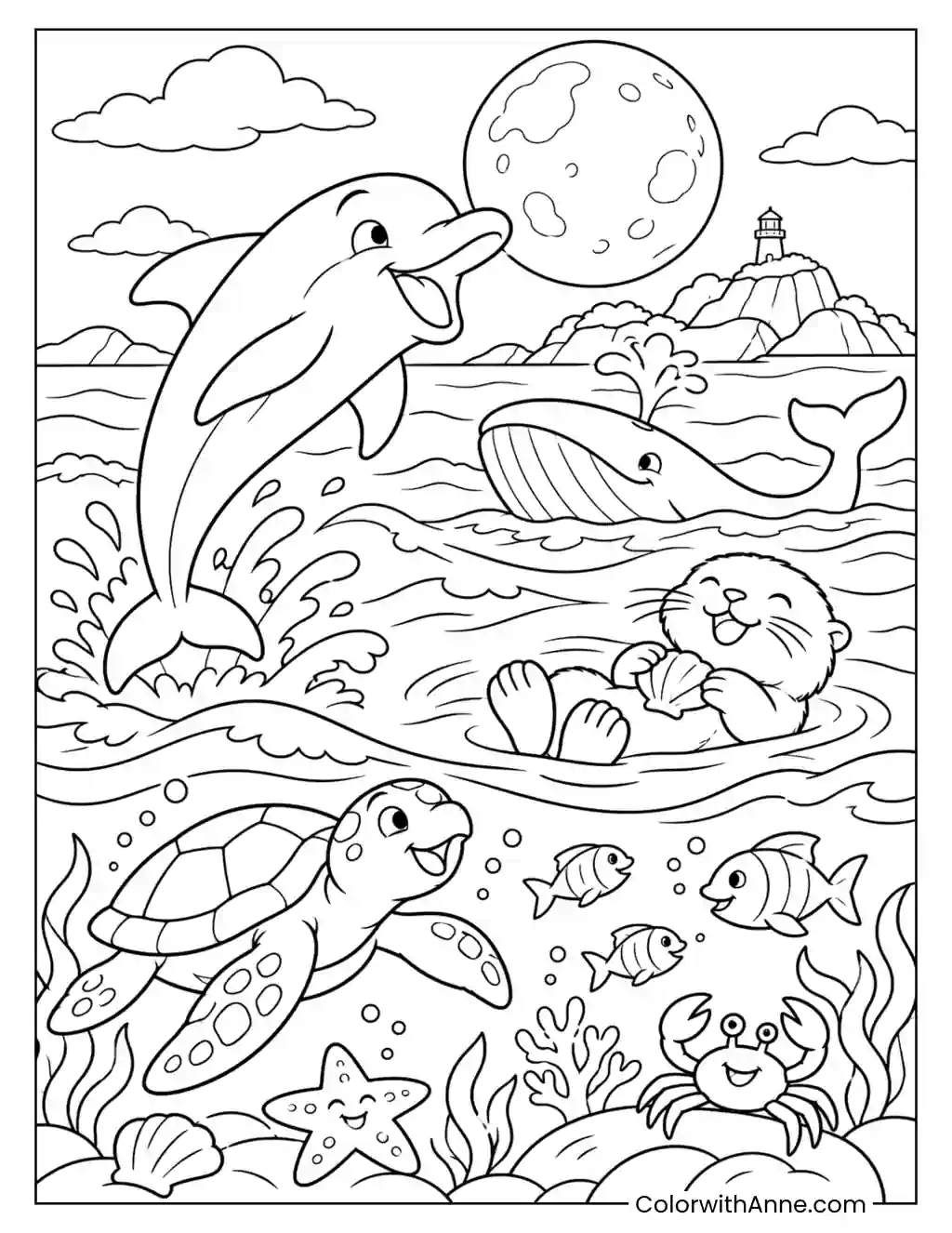
Two smiling dolphins leap toward each other above curling waves, with a small sailboat on the horizon. The space between the dolphins gives the composition an open, airy feeling, while the layered waves bring movement to the lower half.
Use blue-gray for the dolphins, leaving their undersides lighter. Try several blues across the waves, with white edges where the water curls. Keep the distant sailboat relatively simple so its small details do not compete with the leaping pair.
Turn the scene into a memory of a day by the water. Add a date and place in the lower margin, then include one detail you remember in an open area—a particular cloud shape, a distant coastline, or the color of the evening sky.
Hermit Crab at the Water’s Edge
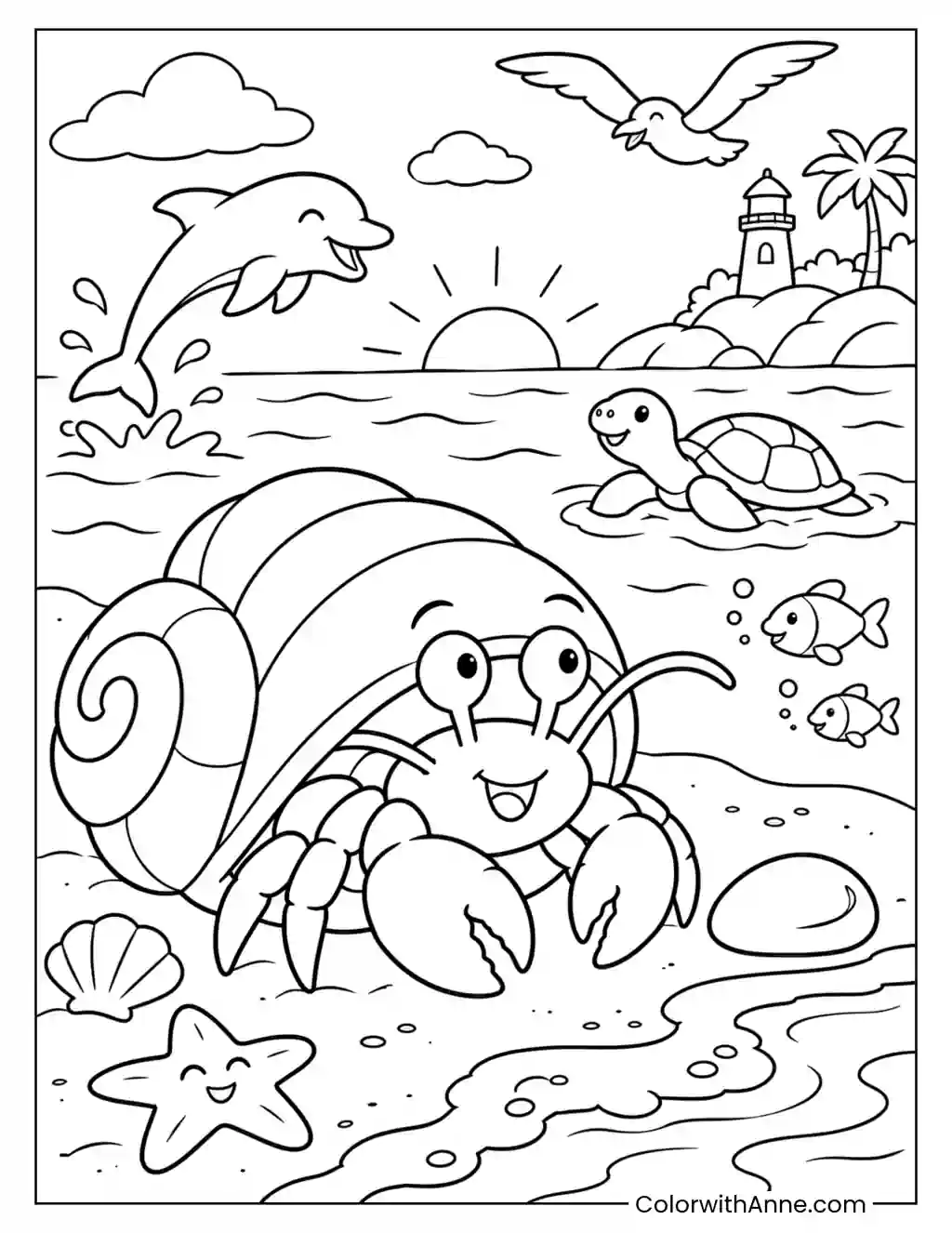
A smiling hermit crab carries a large spiral shell beside the surf. Other sea creatures share the scene, and a lighthouse appears in the distance, giving the page both close-up details to enjoy and a wider coastal setting beyond them.
Try warm orange for the crab and cream, brown, or muted pink for its shell. Follow the spiral with curved crayon strokes. Use softer colors around the distant lighthouse and stronger ones in the foreground to help separate the different parts of the coast.
Give the crab’s shell a personal touch with a few tiny travel symbols, such as a wave, a star, or the initials of a favorite beach. Keep the spiral visible beneath the additions. It becomes a miniature travel shell carrying reminders of places you love.
Jellyfish Drifting in the Current
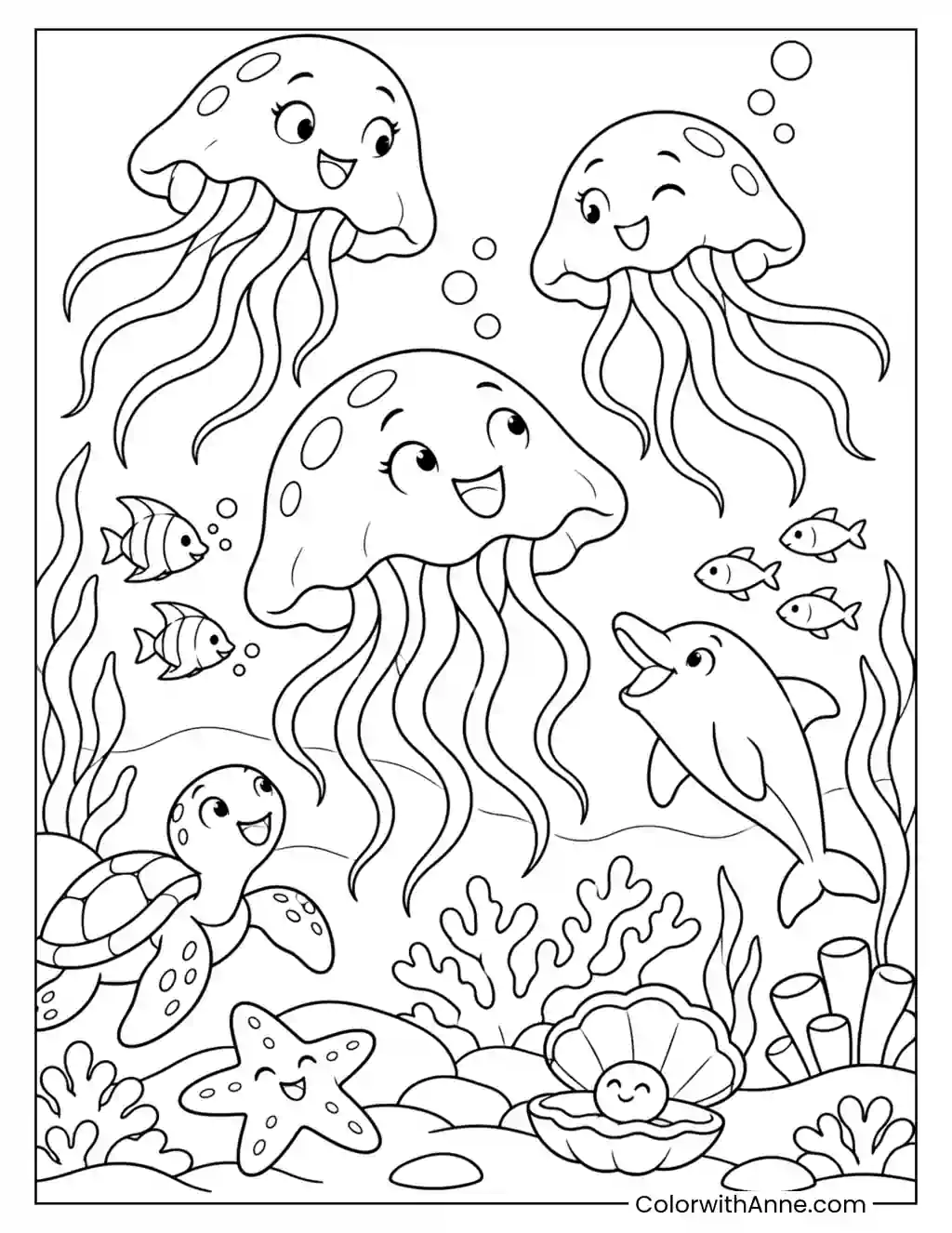
Three smiling jellyfish drift above a seabed shared by a turtle, dolphin, fish, and an open clam. Their rounded tops and trailing tentacles create a gentle sense of movement, balanced by the smaller, more grounded shapes along the bottom.
Use pale pink, lavender, or mint for the jellyfish, applying crayons lightly so they retain a delicate appearance. Make the water slightly darker around their edges. Fine-tip markers can pick out individual tentacles without making the whole group feel heavy.
Make one jellyfish into a separate hanging decoration by tracing its rounded top onto spare card. Color it to match, cut it out, and attach a few paper-strip tentacles underneath. Hang it where ordinary room movement can gently stir the strips and echo the drifting picture.