
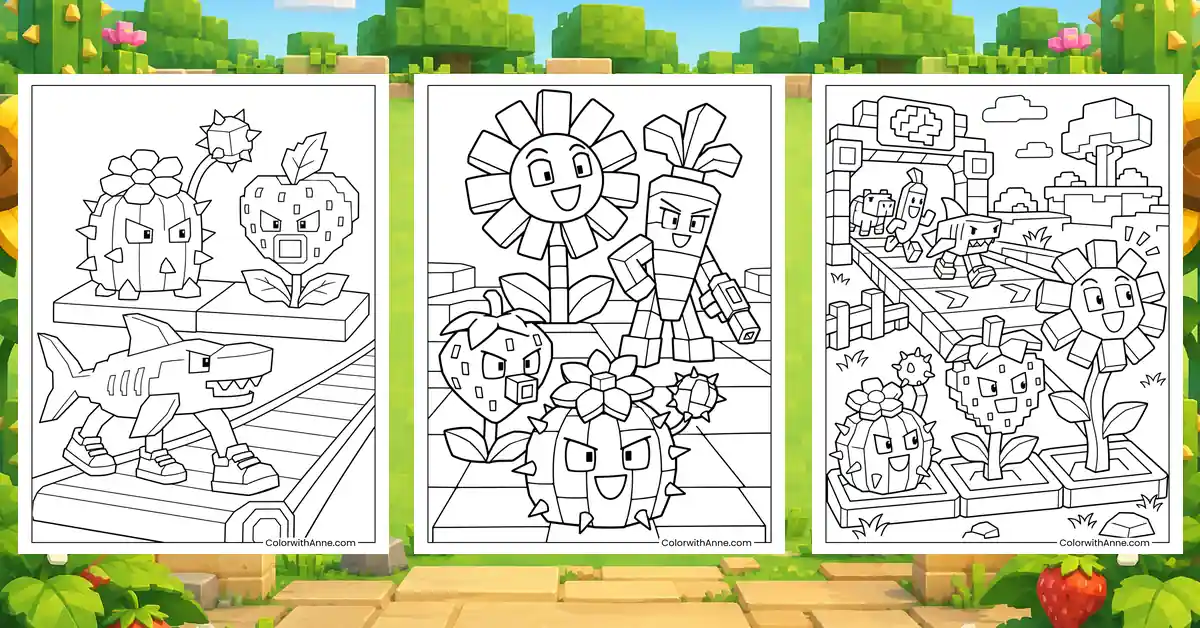
In most gardens, a new sprout is a reason to stand back and admire the progress. In Plants vs Brainrots, it might be the plant that keeps an entire row of bizarre opponents in check. That is the joke at the heart of the Roblox game, and part of the fun is seeing what a carefully planted defense can handle.
Plants vs Brainrots coloring pages give fans a chance to appreciate how odd the matchups look when everything holds still. Bright garden colors can make the brainrots look even more out of place. Someone who has played a few rounds will probably have a favorite pairing in mind already.
Free Printable Plants vs Brainrots Coloring Pages
Click any coloring page below to open the PDF, then print on US Letter or A4 paper.
Did you find what you needed?
Help us choose what to create or improve next.
Coloring Ideas for Plants vs Brainrots Pages
Try these creative ideas to make the most of your coloring sheets.
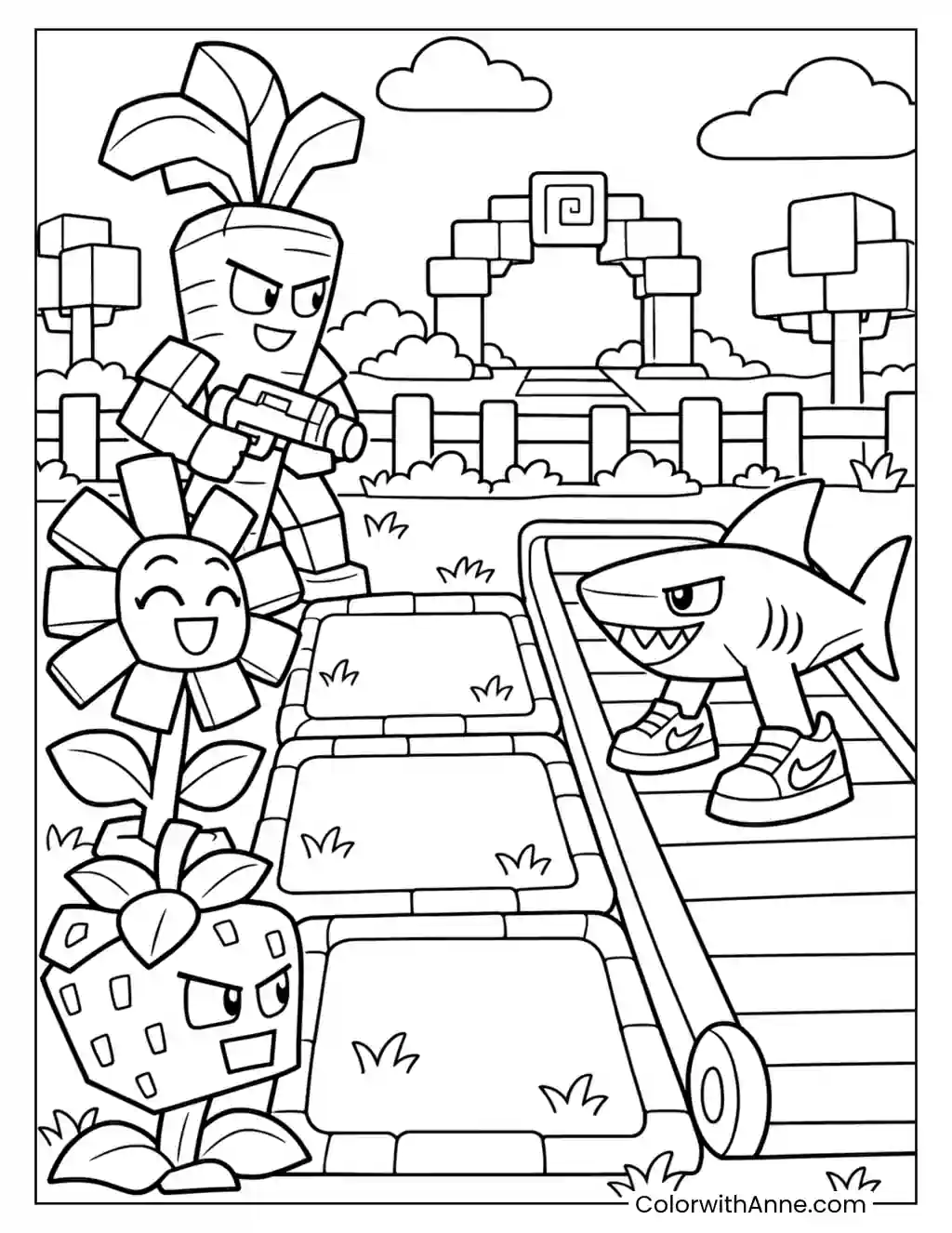
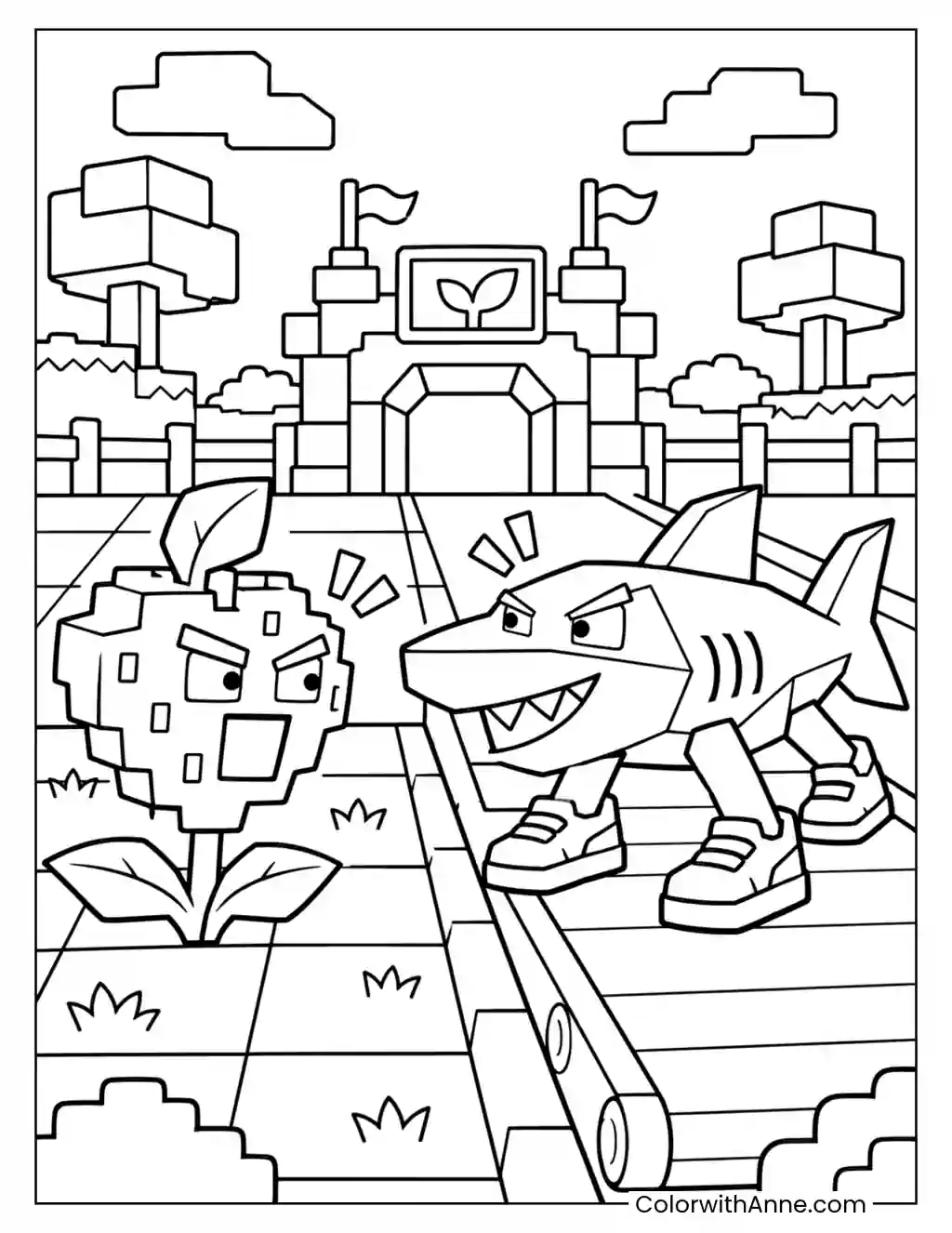
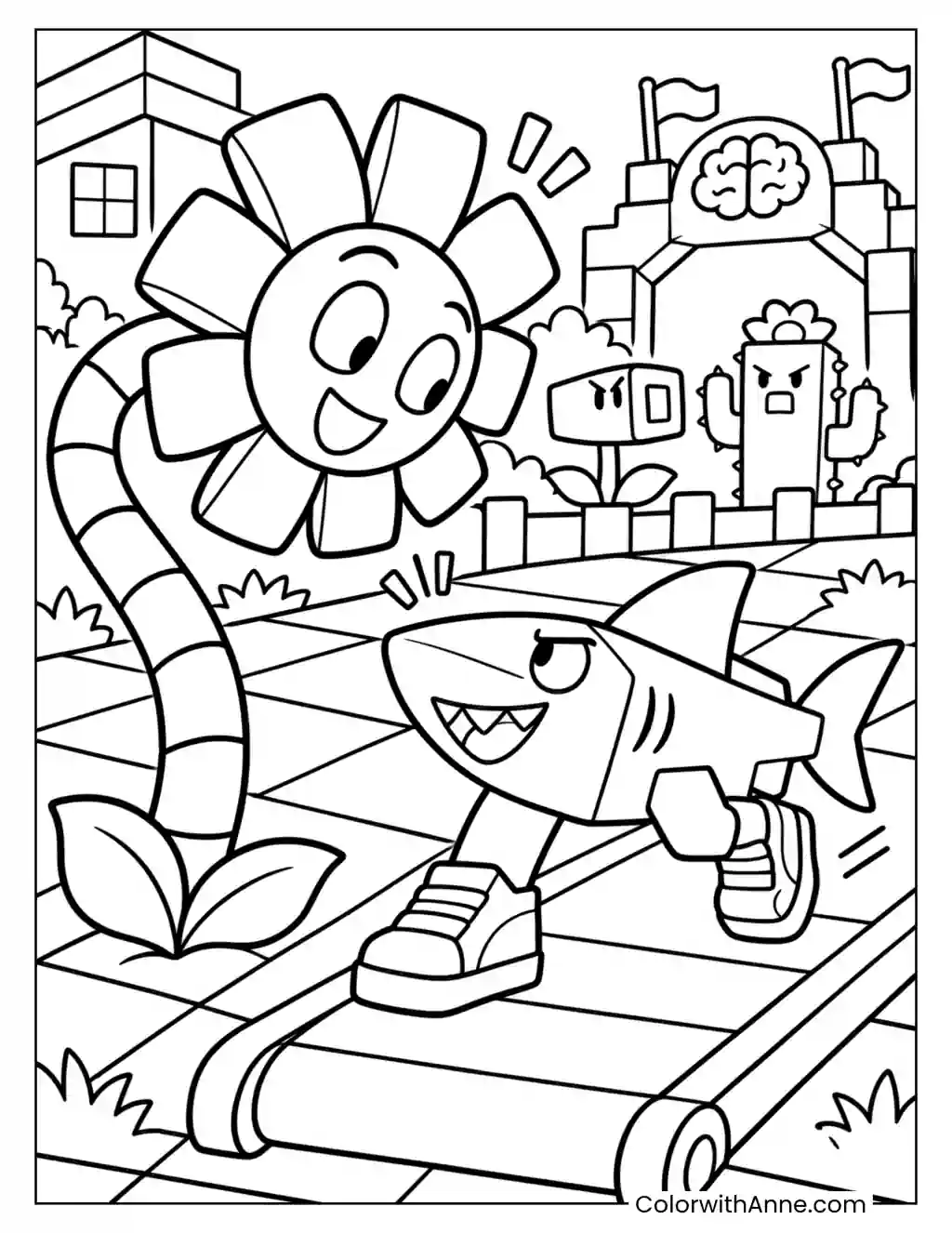
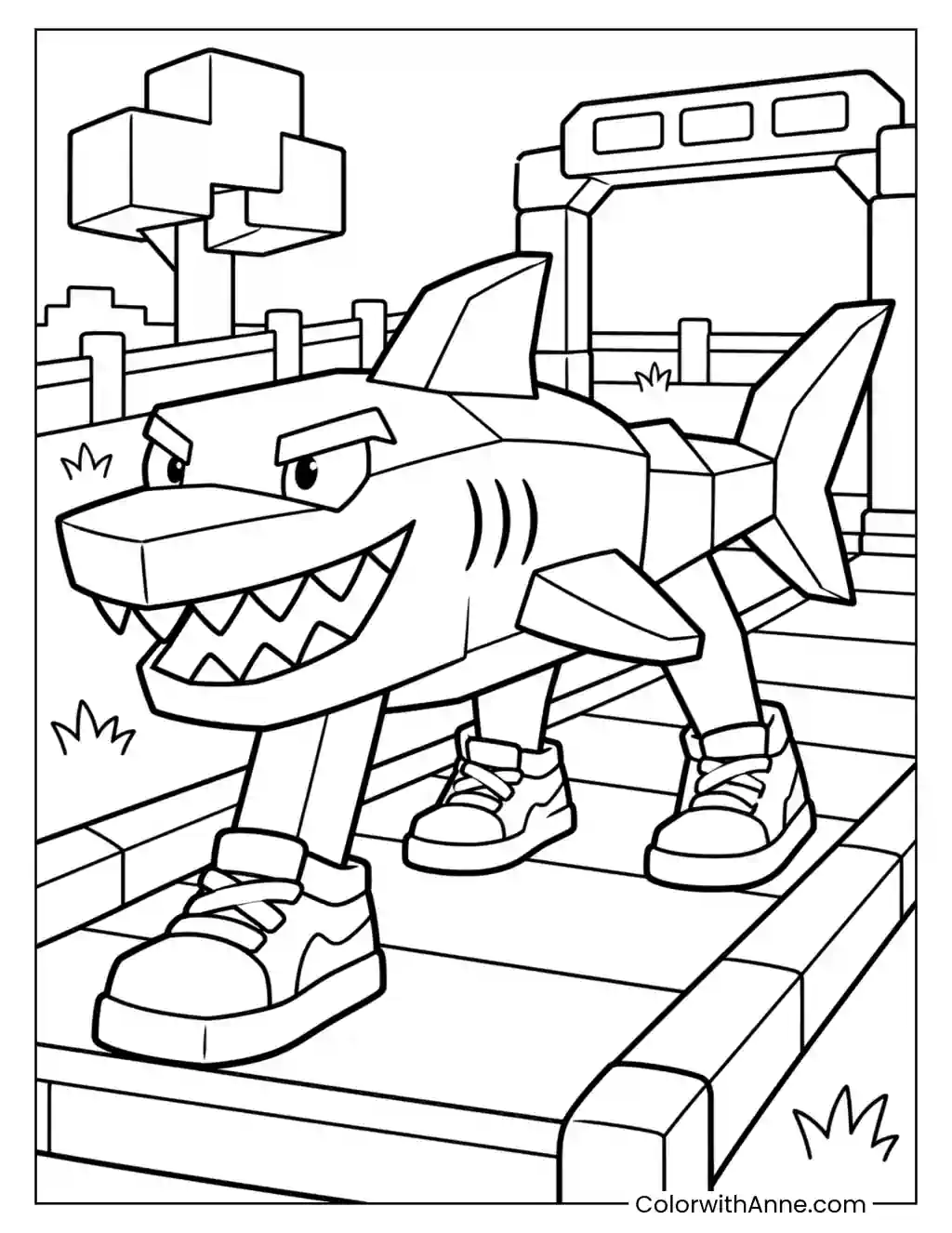
Read the Track from the Shark’s Side
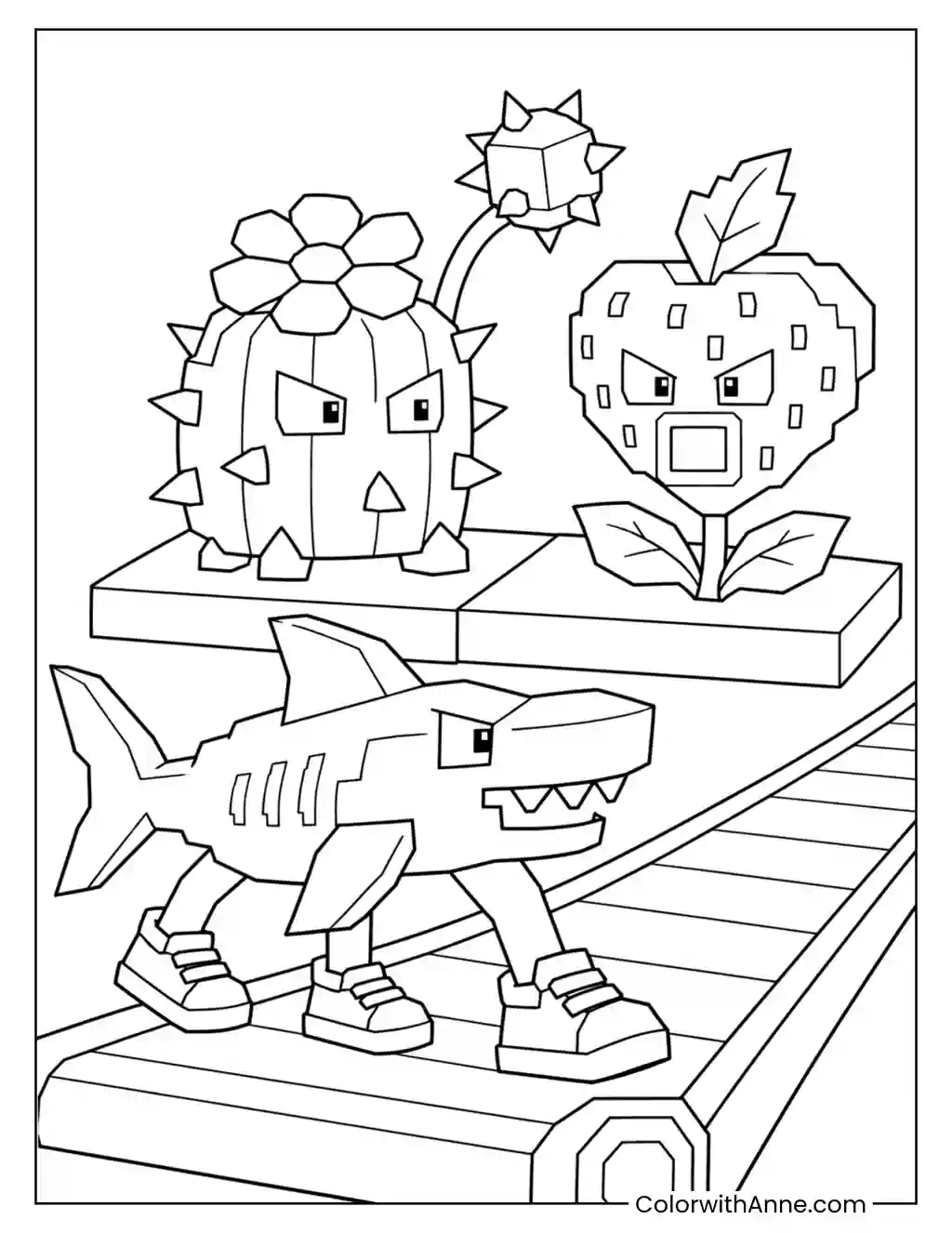
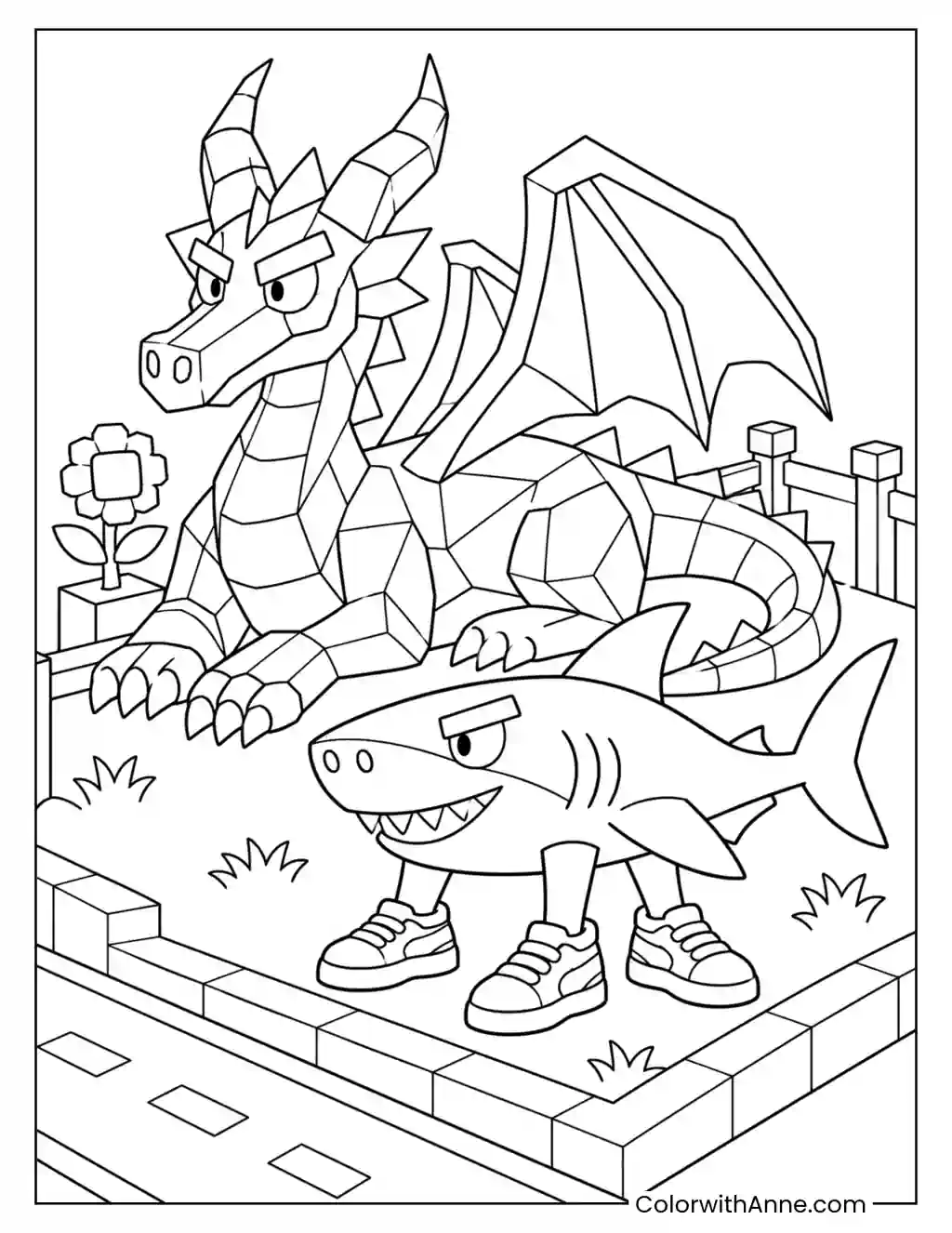
A spiky cactus and stern strawberry stand behind a shark wearing sneakers. The slatted track runs beneath the group, giving the shark a clear route through a scene full of very different shapes.
Use a bright sneaker color to make the shark’s feet easy to follow. Cooler blue-gray works for the shark itself, with stronger green and red distinguishing the two plants behind it.
Trace the track from the shark’s position, then turn the page and look at that same distance from the plants’ side. It’s a quick way to compare how close each side seems to the other. A friend can point to the spot they’d watch first and explain why.
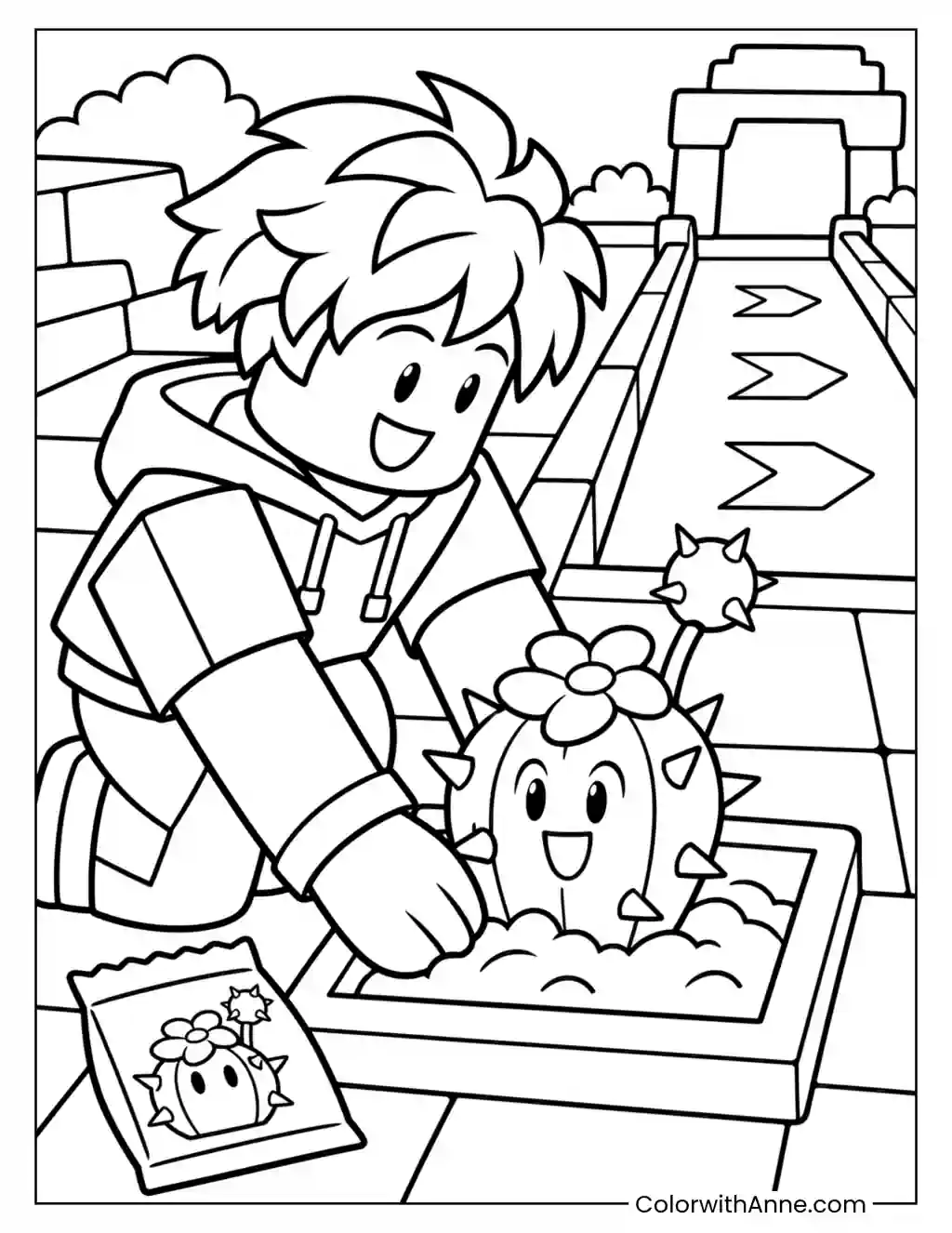
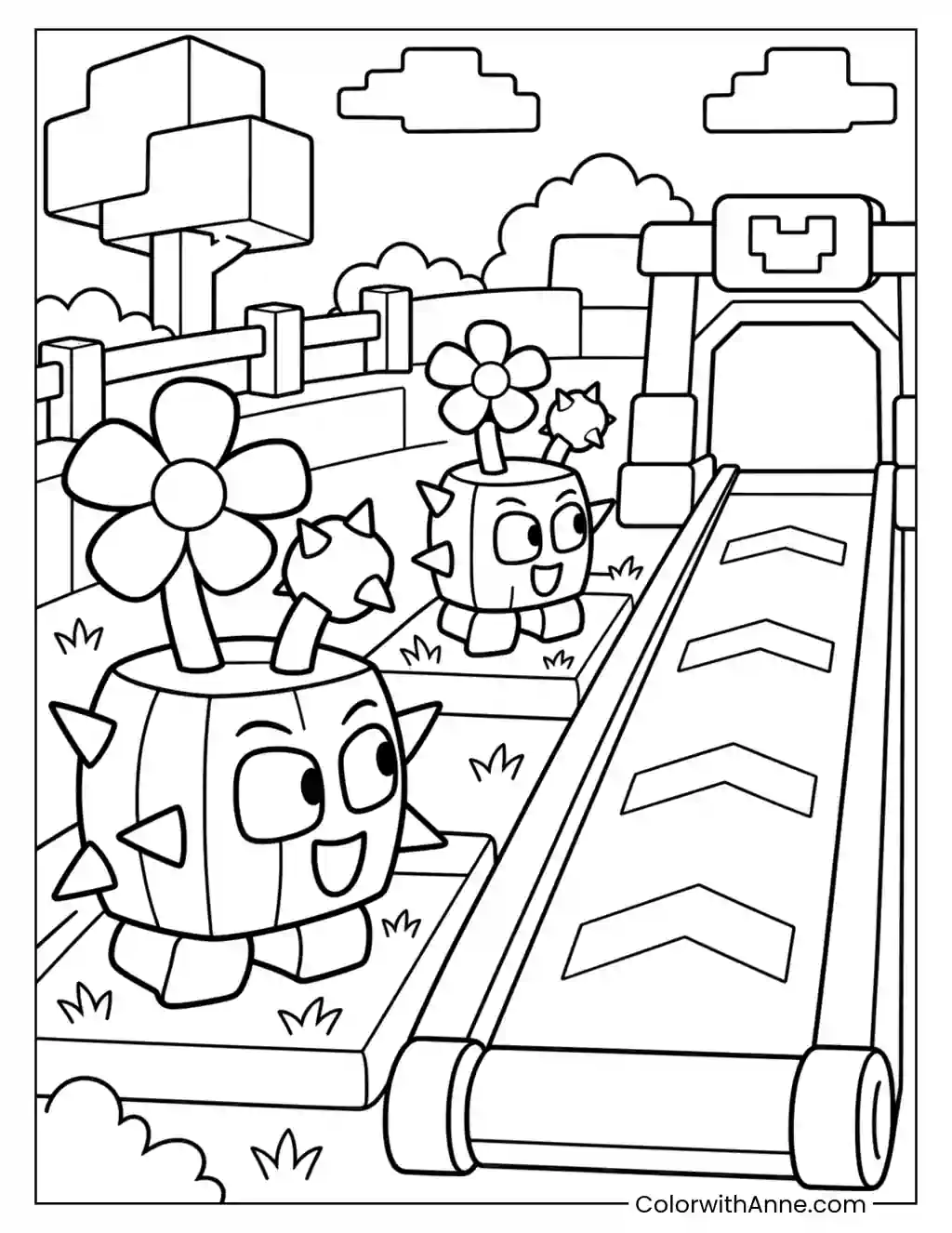
Pick Out the Cactus from Its Outline
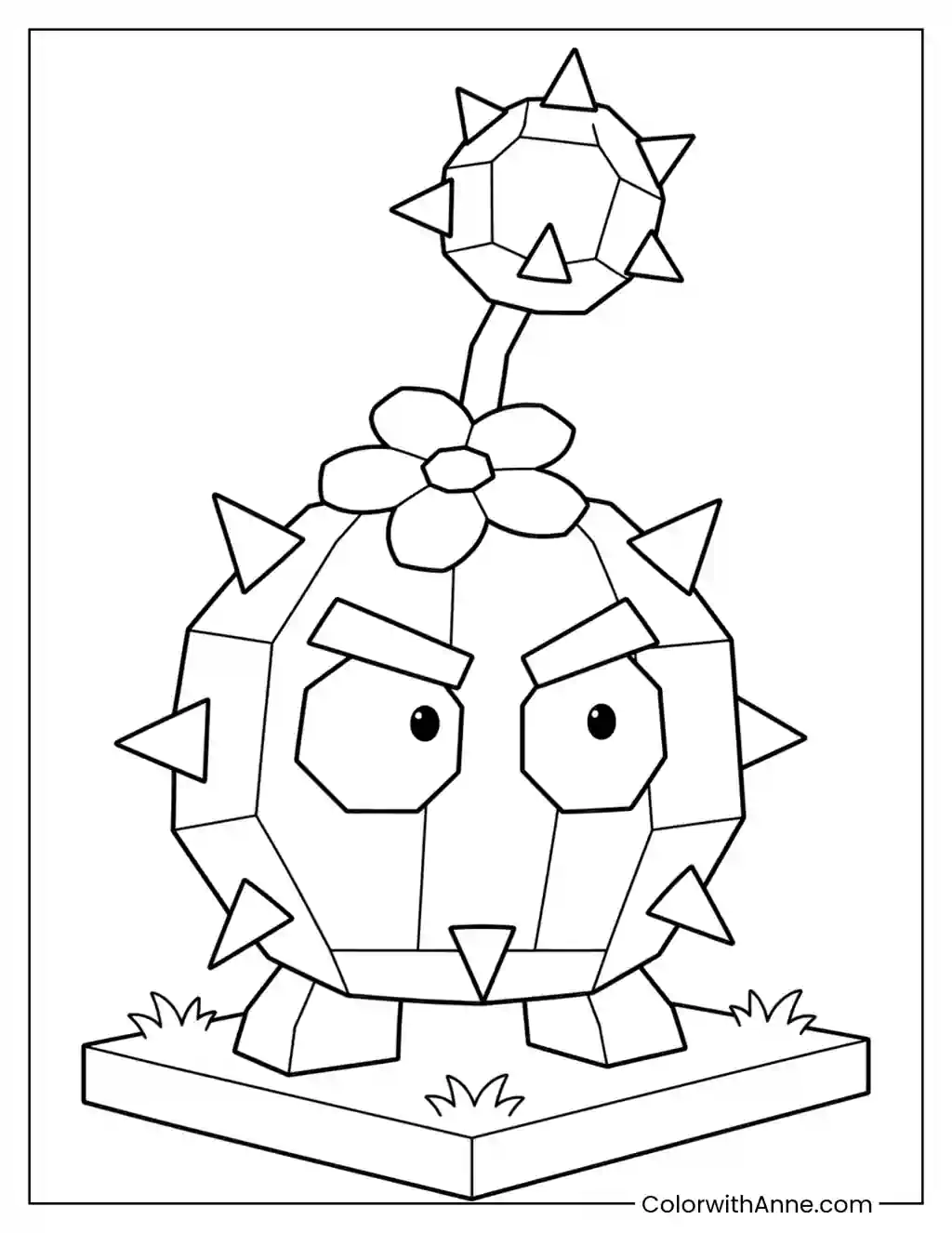
A flower-topped cactus stands beneath a raised spiked ball, with sparse grass around it. The flower, cactus body, and pointed ball each have a distinctive outline, even with very little scenery around them.
A bright flower can sit above a medium green cactus. Keep the spiked ball a darker shade, and leave the grass light enough that it doesn’t compete with the figure.
Look at the page from across the room and see whether the flower or the spikes give the cactus away first. If you’re sketching a plant of your own, try drawing just its outline at thumbnail size. The original page shows how one small feature can keep a character recognizable.
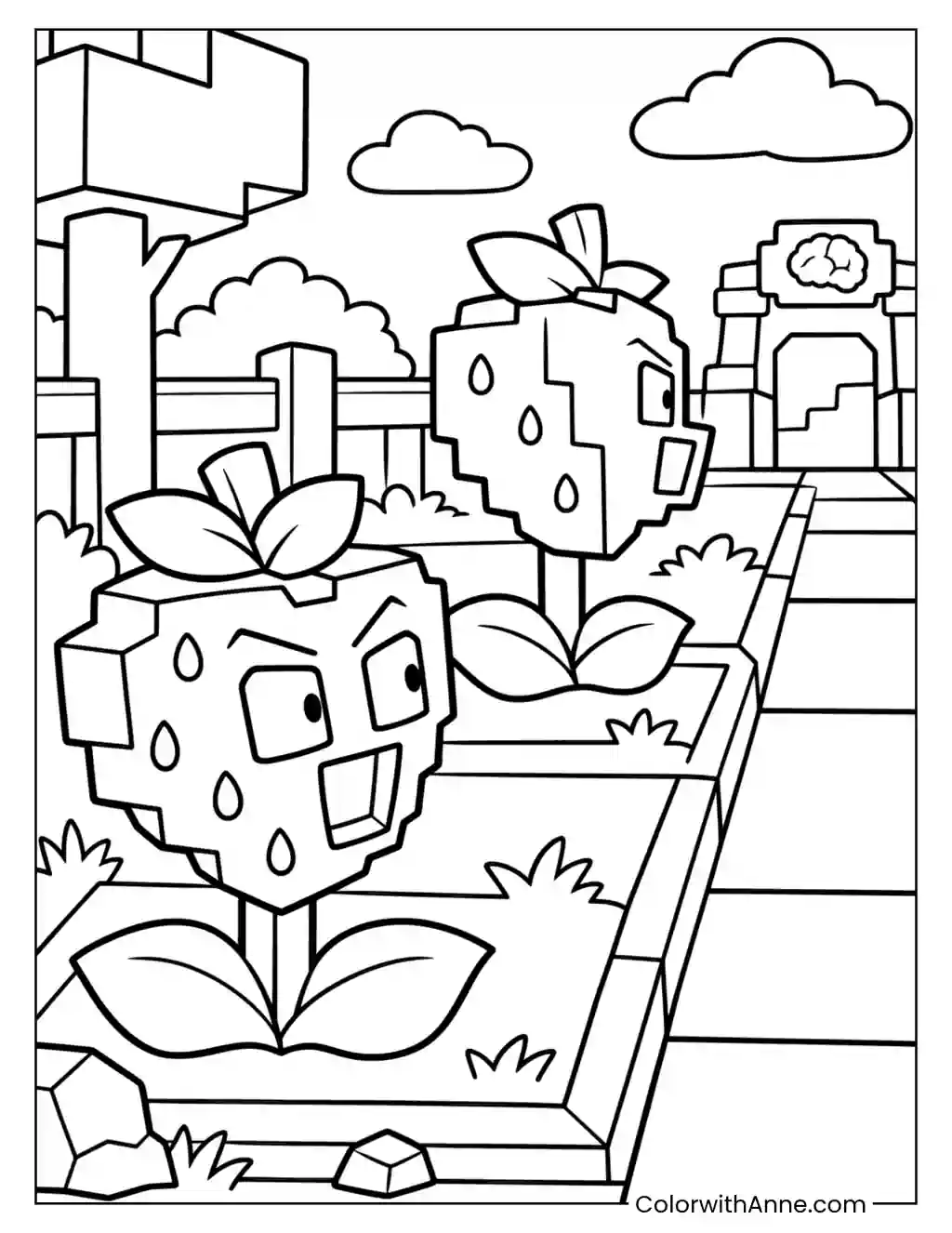
Try a New Lineup on Paper
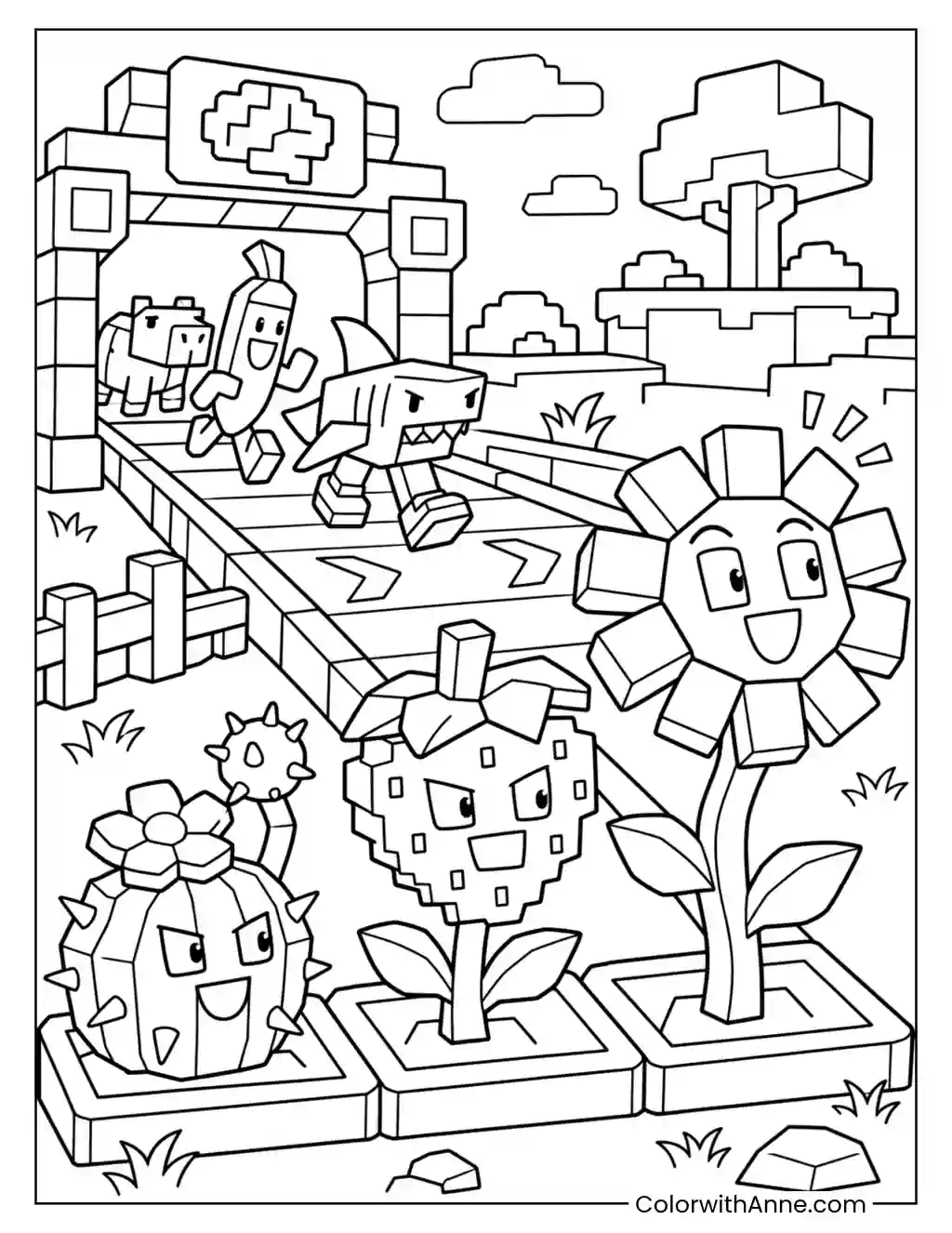
Cactus, strawberry, and sunflower defenders line the foreground. Blocky characters approach along a path marked with arrows, which makes the direction of the encounter easy to read.
Keep the arrows clear with a flat, light path color. Distinct colors for all three plants will help you compare their positions, especially where one figure sits near another.
On scrap paper, draw a short lane with an arrow and move three coins or paper markers along its edges to stand in for the plants. Try one change from the printed lineup and see which plant now faces the approach first. It’s a simple way to play with the scene before drawing a new one.
Draw the Carrot and Corn a Team Badge
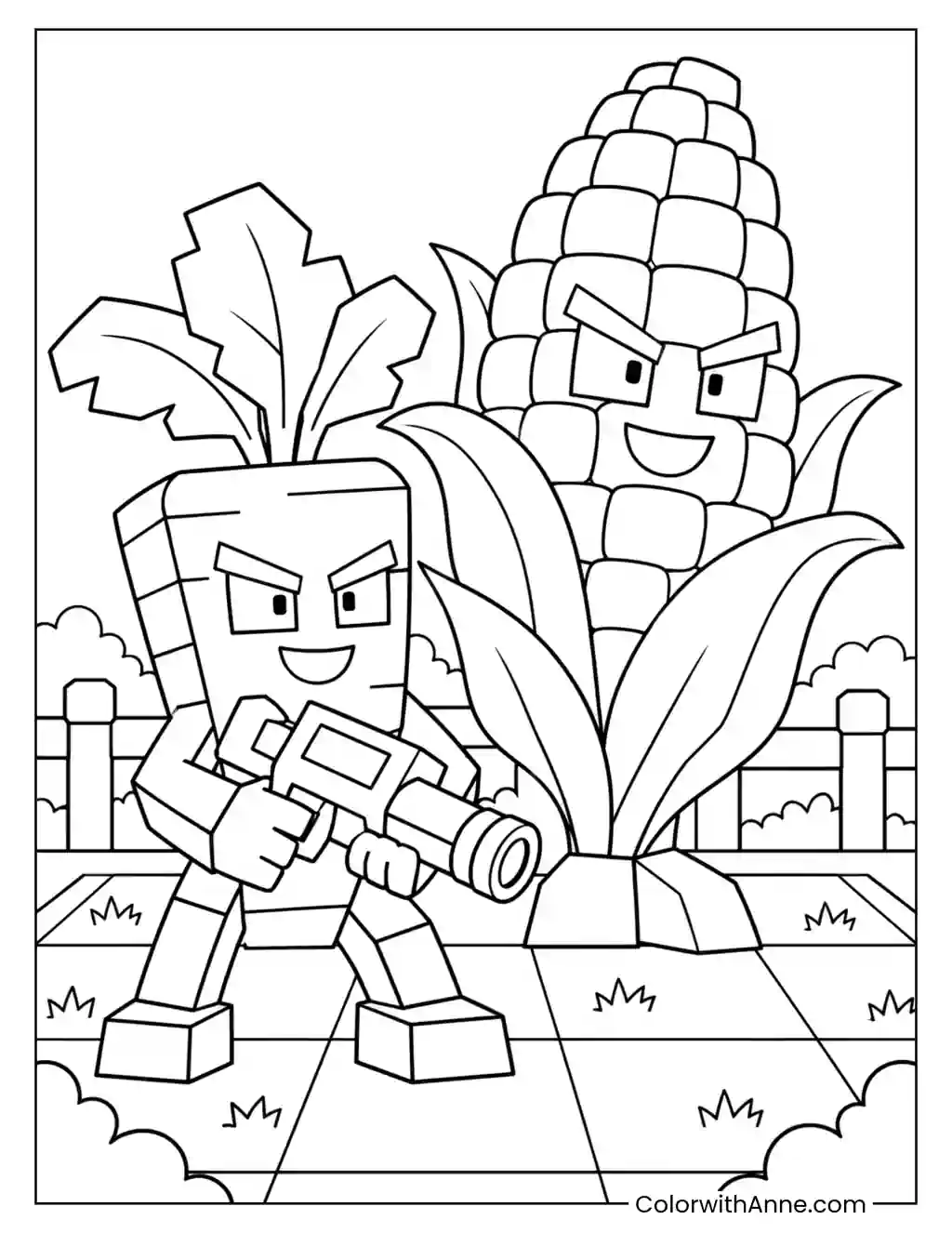
A carrot grips a chunky blaster beside a much taller, smiling corn teammate. The fenced garden puts both figures on the same side of the picture, even with the big difference in their shapes.
Warm orange can separate the carrot from the corn’s yellow kernels. A shared green on the leafy areas will give the pair something in common without making the two figures blend together.
A diagonal carrot shape and two rows of kernels are enough for a tiny team badge. Try it in the margin before adding a name. The badge can mark this pair on a stack of game prints, and both plants are recognizable even when the design is small.
Give Corn and Dragon Cannelloni Five More Seconds
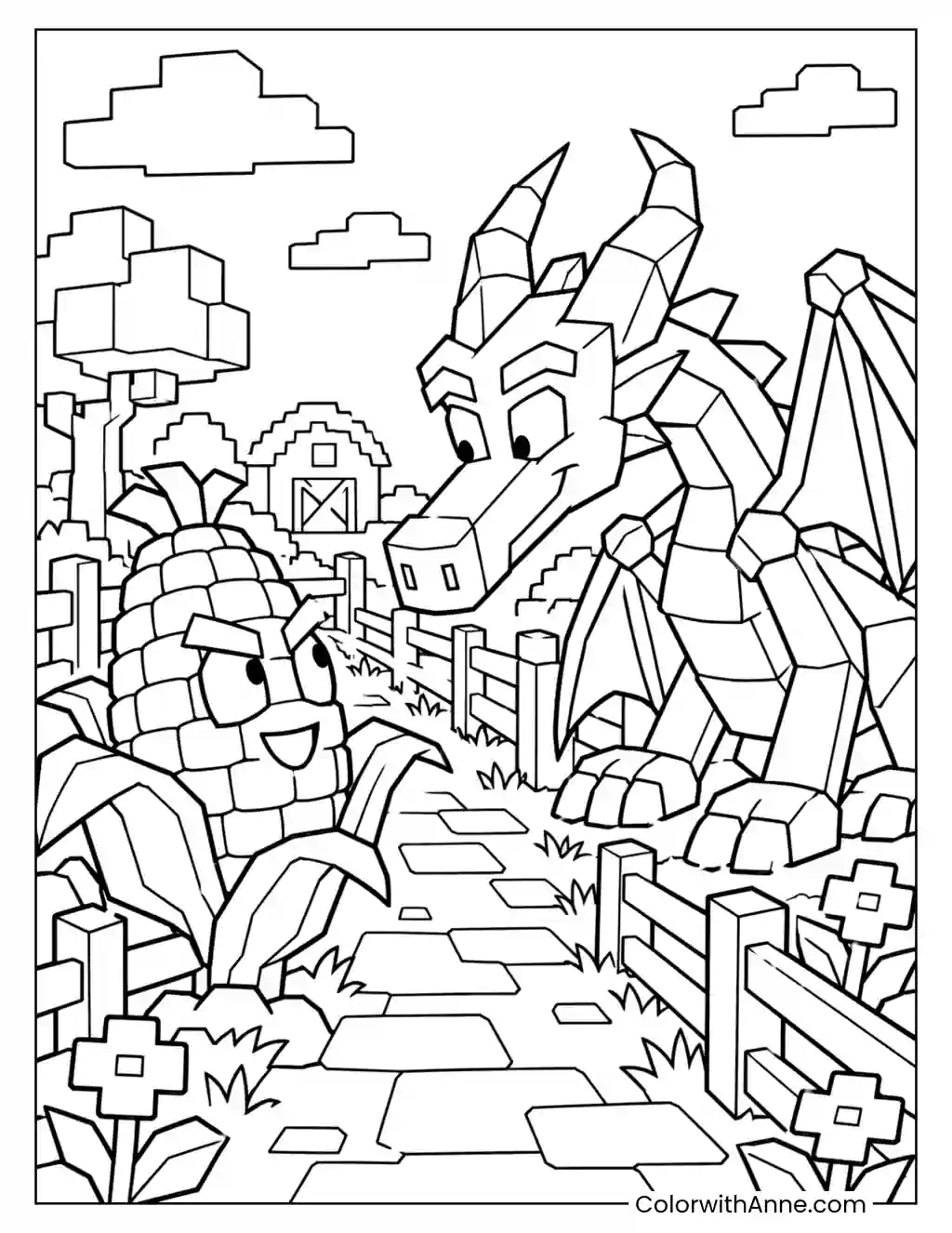
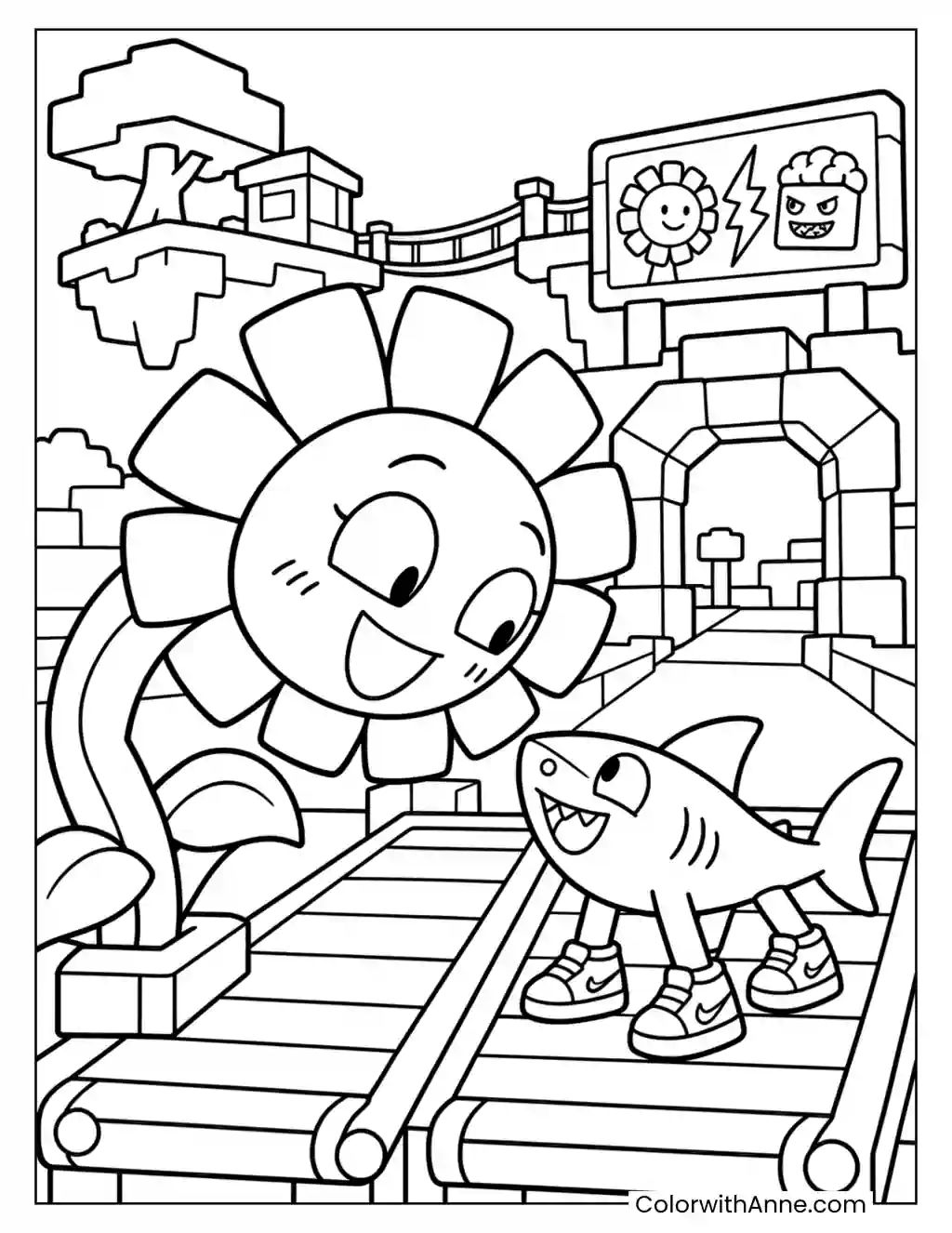
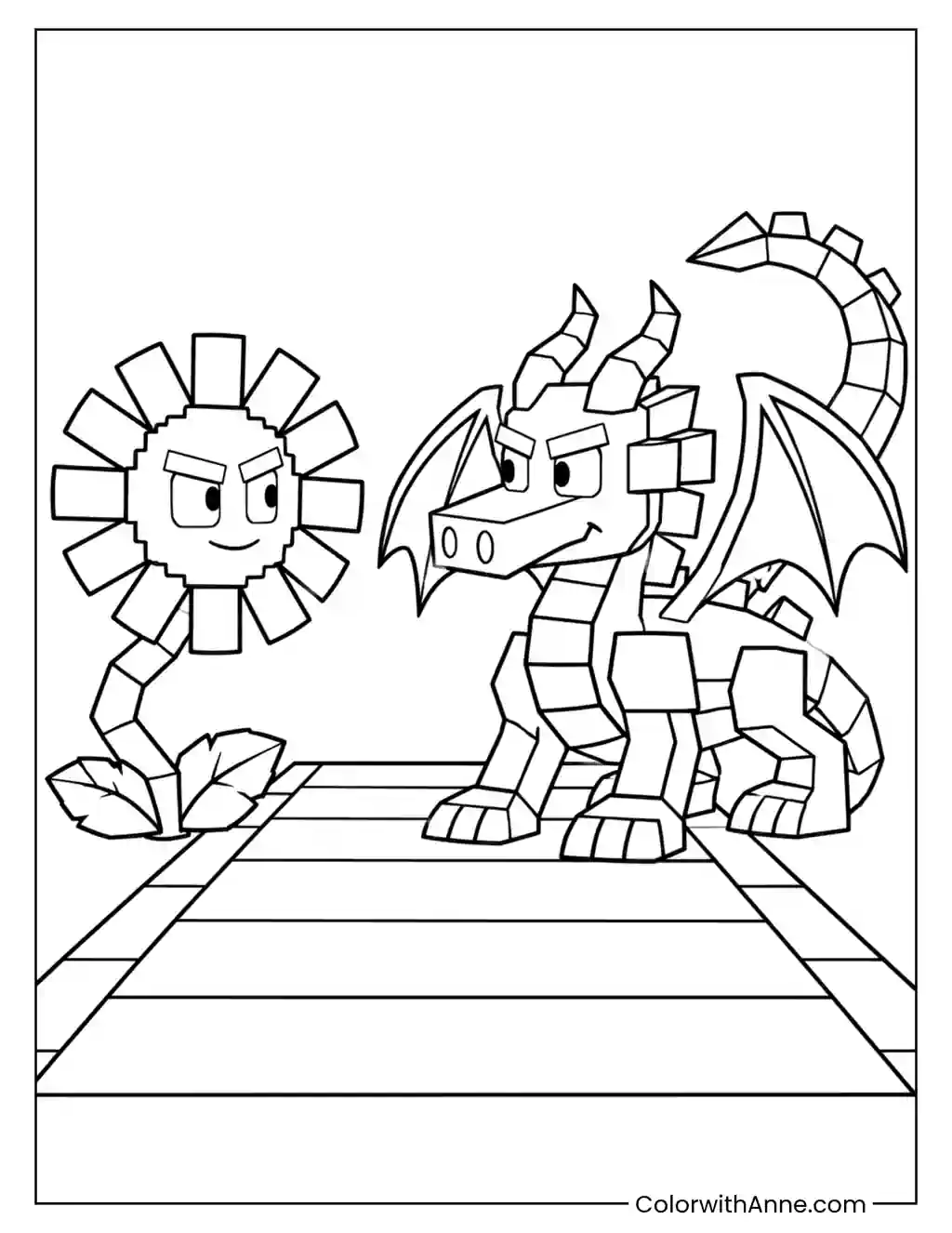
A smiling corn character faces Dragon Cannelloni across a stone path. The fenced, blocky garden frames the gap between them, leaving the scene paused just before either character makes a move.
Bright kernels and a deeper dragon color make the two sides easy to read. Keep the paving a quiet gray so the gap between the characters remains clear.
Draw one small panel showing what happens five seconds later. The corn might hold its ground, or the dragon might step back to make room for something unexpected. One movement carries the joke or surprise and keeps the follow-up as easy to read as the setup.
Give Corn Cobblazzio a Seed-Packet Label
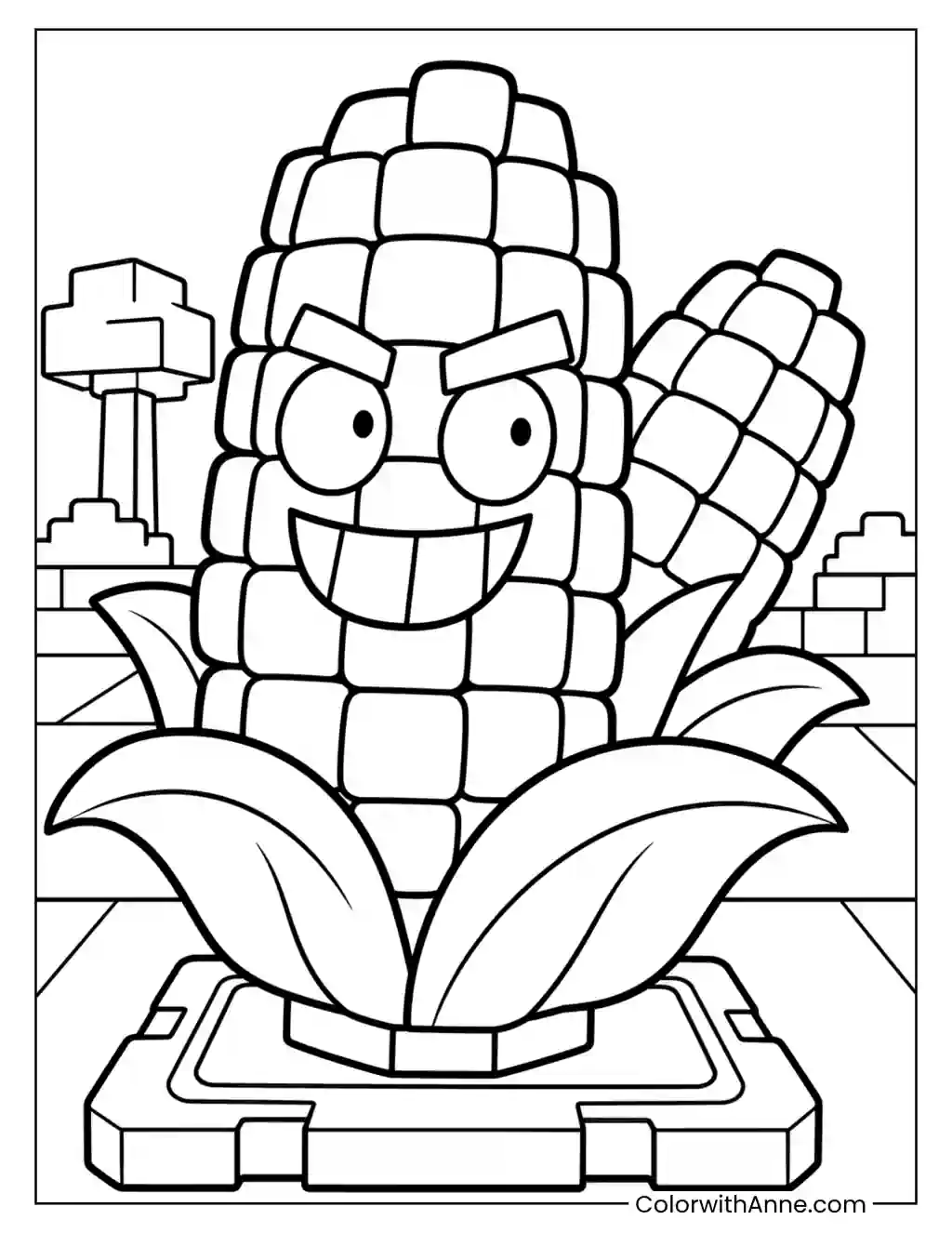
Corn Cobblazzio grins above broad husk leaves on a rectangular garden base. A second cob stands behind, helping the big grin and nearest husks read as the main character.
Try warm yellows across the kernels and two greens along the broad leaves. A subdued garden base can hold the brighter colors together and leave the grin as the liveliest part of the picture.
The rectangular base is a natural place for a make-believe seed-packet label. Add the variety name and one silly planting note, such as “grins by midsummer.” The finished page can sit beside real seed packets during garden planning and still feel like it belongs there.
Make the Portal a Before-and-After Reveal
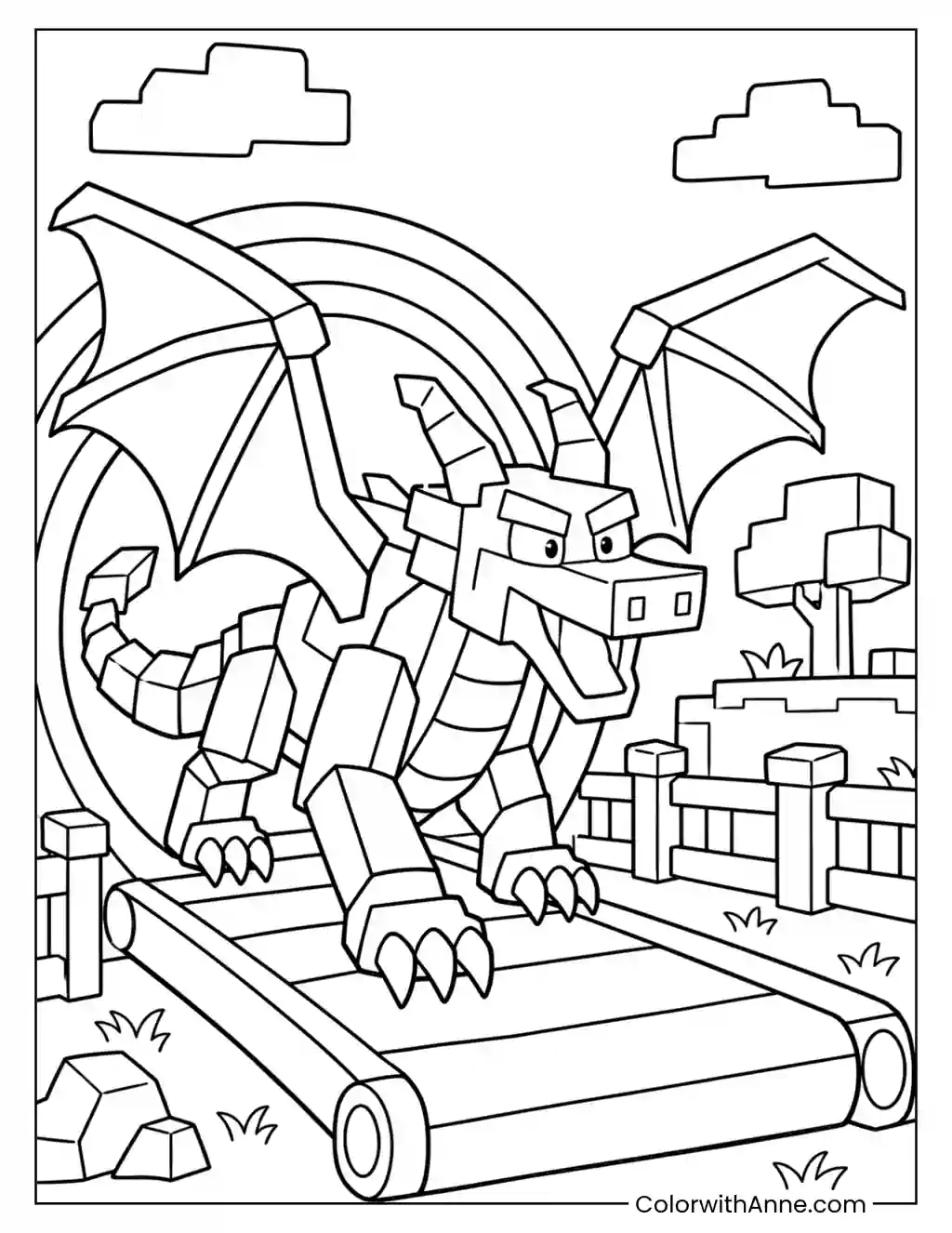
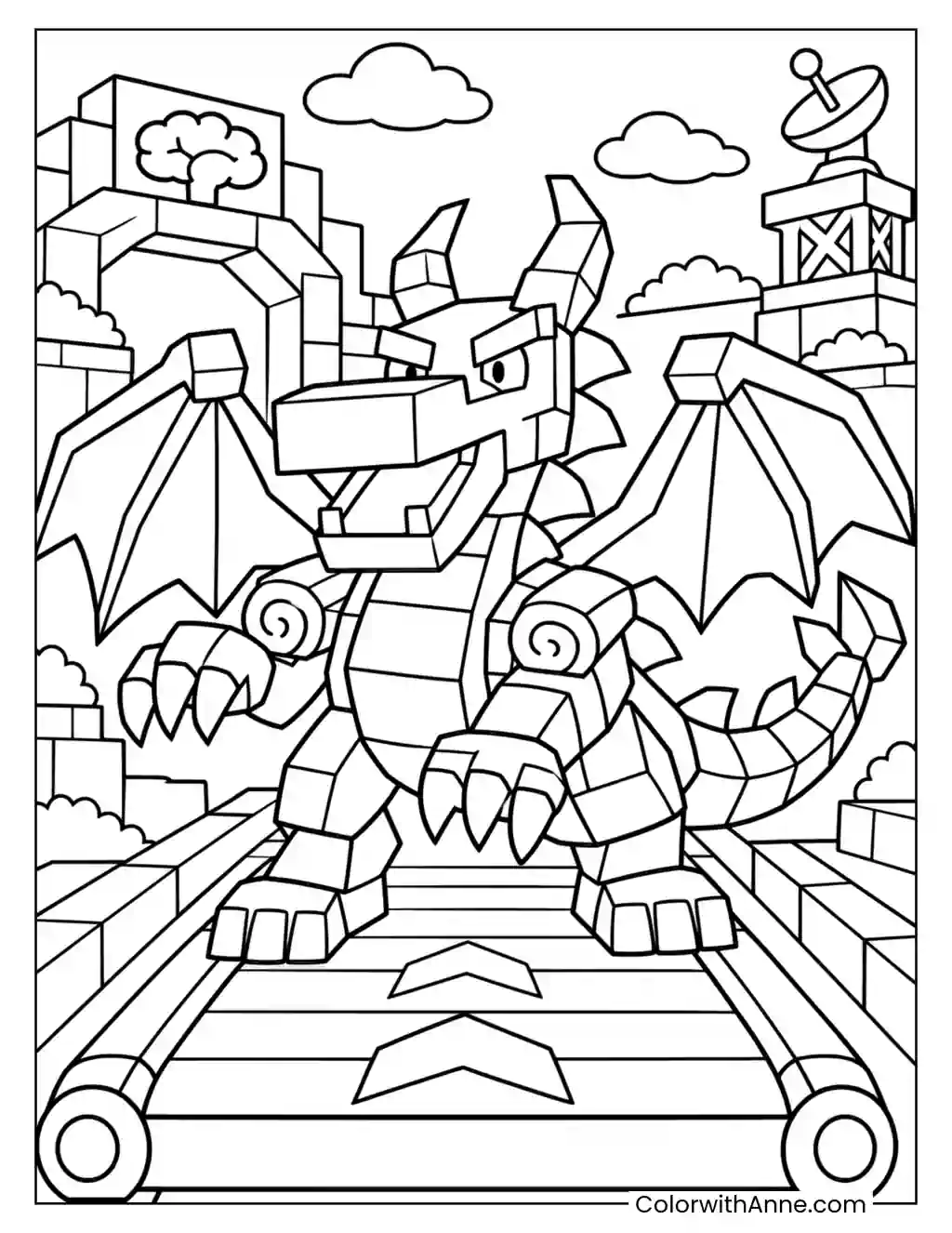
Dragon Cannelloni steps from a circular portal onto a conveyor belt, with wings spread above the blocky landscape. The round opening and the straight belt make it easy to see where the dragon entered the scene.
A vivid rim will make the portal easy to find. Let a little of its color reach the wing or body edge nearest the opening, and keep the belt flatter so the light feels local.
Cover the portal and dragon with a scrap of paper and draw one clue on it, such as a wingtip or a curl of smoke. Let someone guess who’s arriving, then lift the scrap to reveal the picture. The circle gives the surprise a place to happen.
Give the Four Defenders a Readable Roster
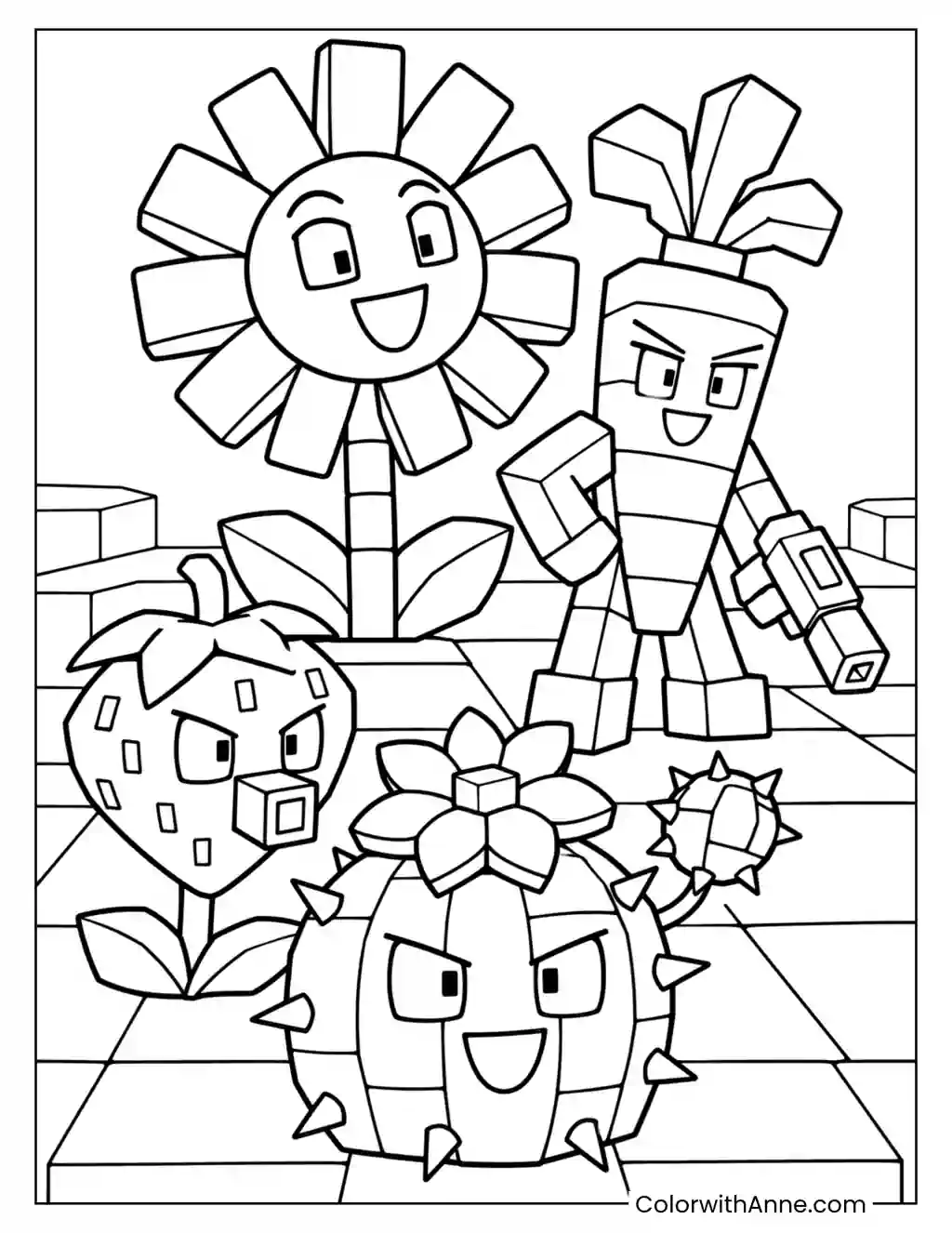
A sunflower, carrot, strawberry, and flower-topped cactus gather on the paving. The group includes rounded, pointed, and leafy shapes, so each defender has a recognizable feature even before the page is colored.
Give each plant a clear main color and keep the paving neutral. Similar shading across the four figures will make them feel like a group while leaving their different outlines easy to compare.
Use the page as a roster when showing the theme to someone who’s never seen it before. Ask them to describe one defender using only its outline, then point to the match. Their description might turn out to be a better nickname than anything you’d have thought of alone.