
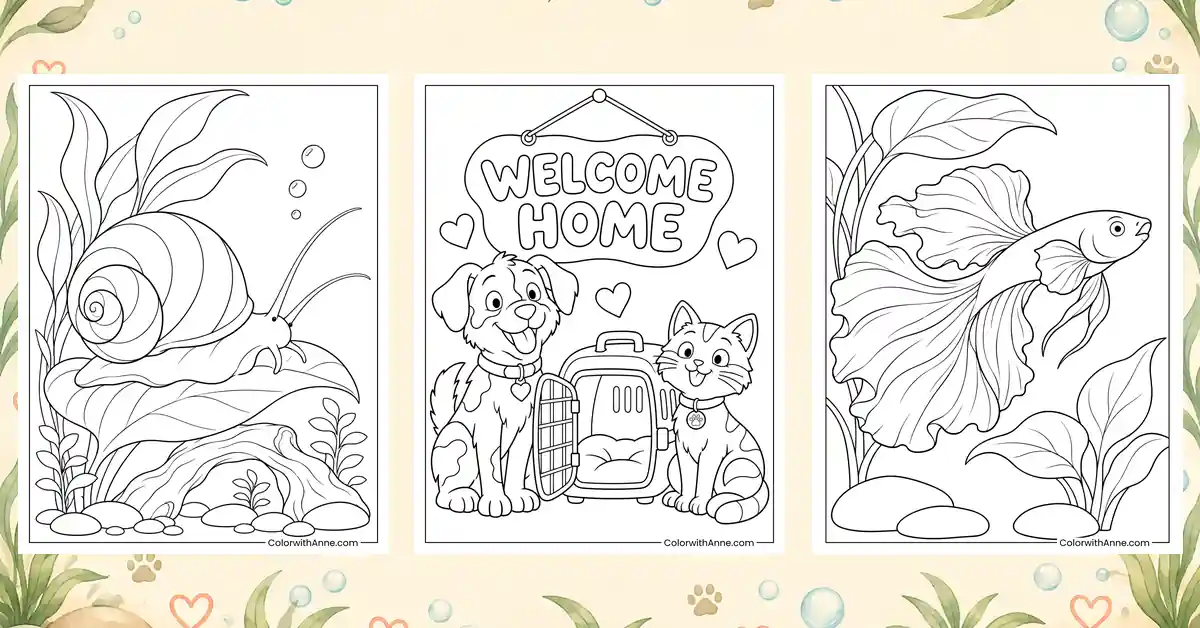
pets pick up household routines surprisingly quickly. The sound of a cupboard opening may bring paws into the kitchen, while the arrival of a blanket is apparently an invitation to claim the best seat. After a while, it is hard to remember how the household ever made these arrangements without them.
Putting a familiar coat color or a crooked patch into pets coloring pages can be enough to turn a picture into a portrait. The likeness might be obvious to one person immediately. Someone else may need to hear the story about the ear that always folds over, which the owner is usually happy to tell.
Free Printable Pets Coloring Pages
Click any coloring page below to open the PDF, then print on US Letter or A4 paper.
Did you find what you needed?
Help us choose what to create or improve next.
Coloring Ideas for Pets Pages
Try these creative ideas to make the most of your coloring sheets.
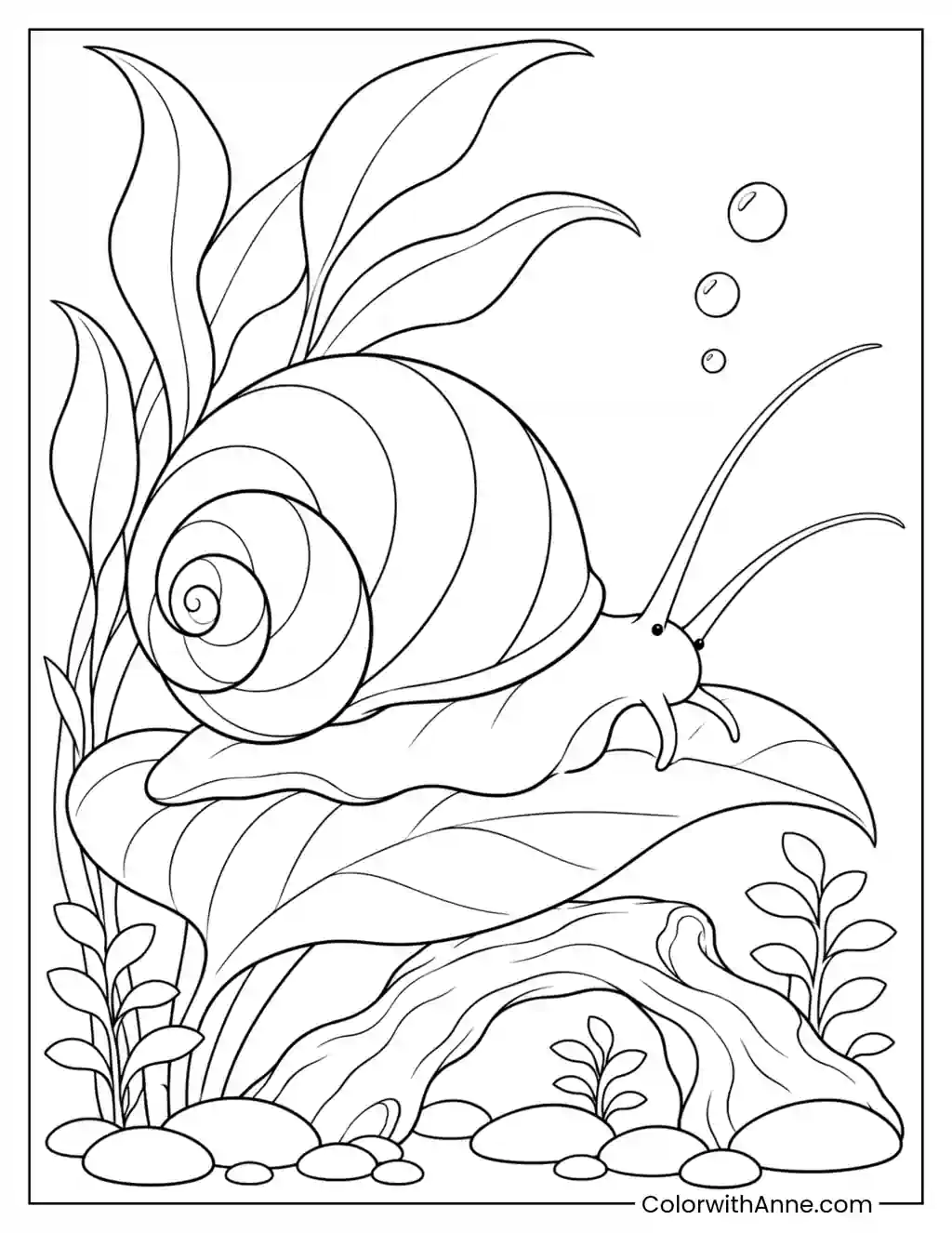
Follow the Spiral on the Aquarium Snail
An apple snail rests on a broad leaf among aquarium plants. Its shell fills much of the scene, and the spiral is clear against the larger, simpler leaves around it.
Use warm amber for the shell and darken a little at the lower curve. Cooler greens around the snail will make the spiral easier to follow without making every plant equally bright.
Trace the spiral outward with a finger and compare it with one on a shell you’ve seen, even in a photo. Pick one difference you can point to, such as how tightly the center curls. The print makes a compact reference for noticing that detail again.
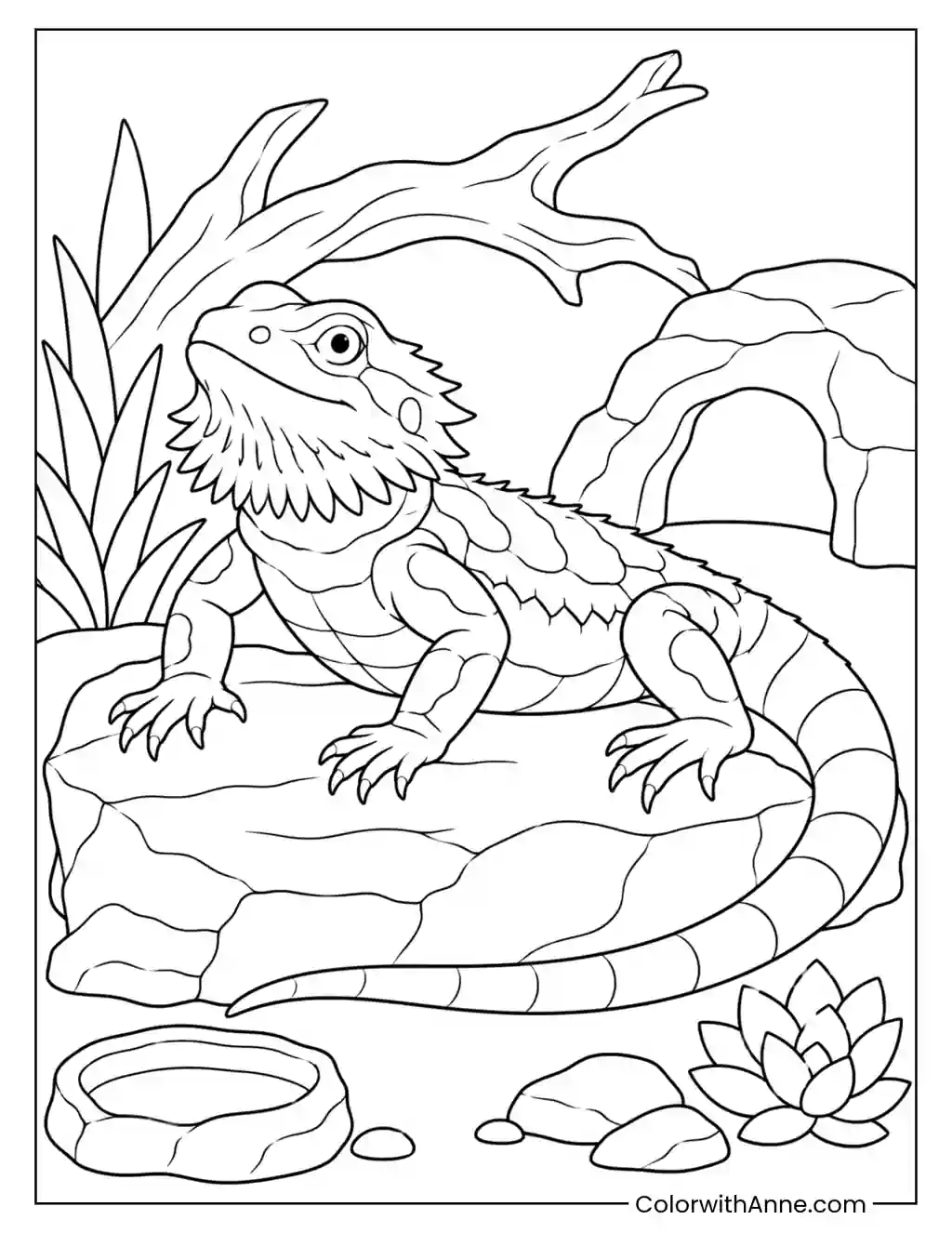
Draw the View Behind the Basking Rock
A bearded dragon rests on a broad rock, with its long tail curling beside a cave shelter. The rock and the dark opening give the reptile two different surfaces around its resting spot.
Try sandy tan on the dragon and a cooler gray on the rock. Keep the cave opening darker and use a lighter stroke on the tail where it curves into view.
The tail leads neatly toward the shelter, making this a good page for a change of viewpoint. Sketch what the same corner might look like from behind the rock. The cave may become the biggest feature in that little sketch, even though the dragon is the first thing you notice in the original.
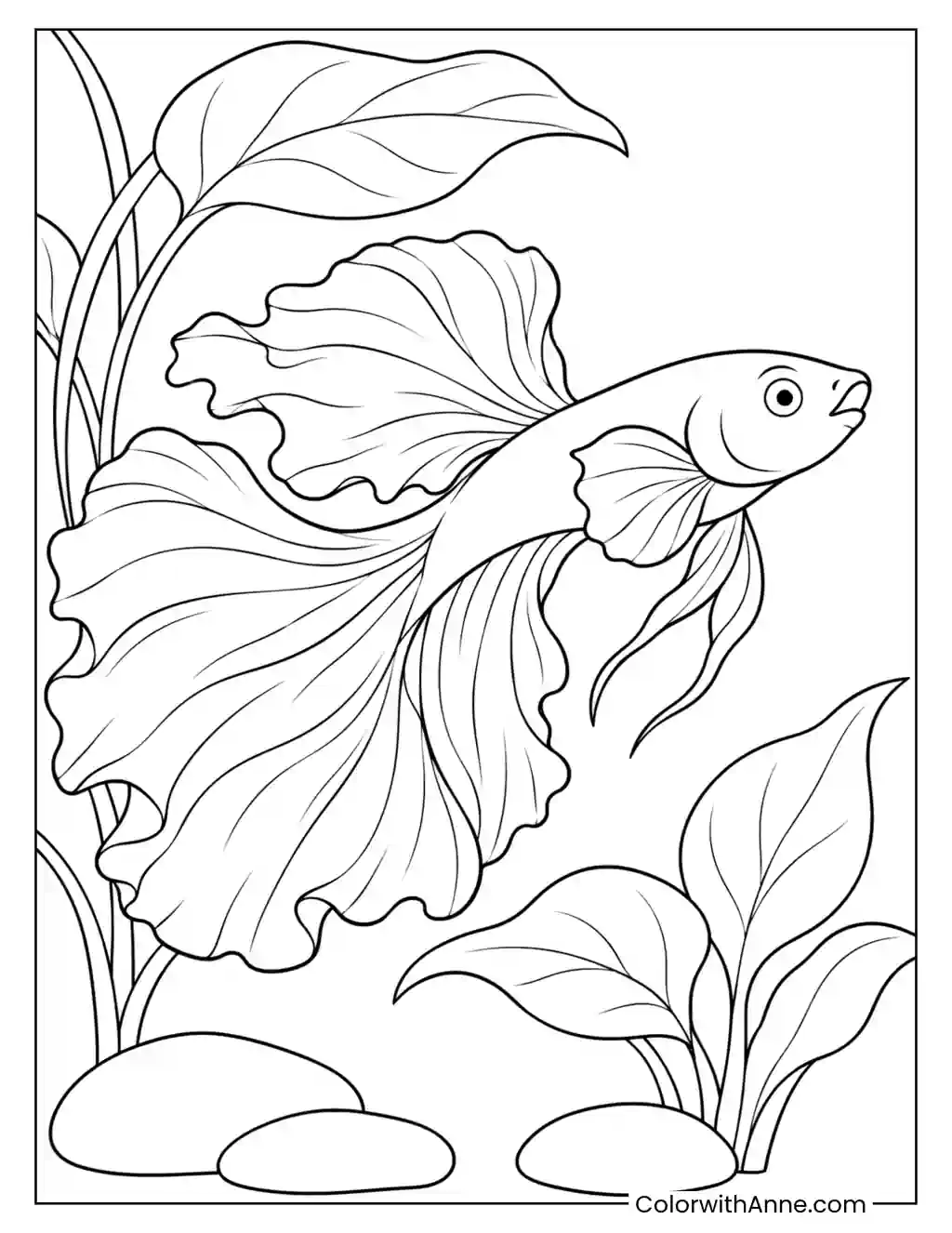
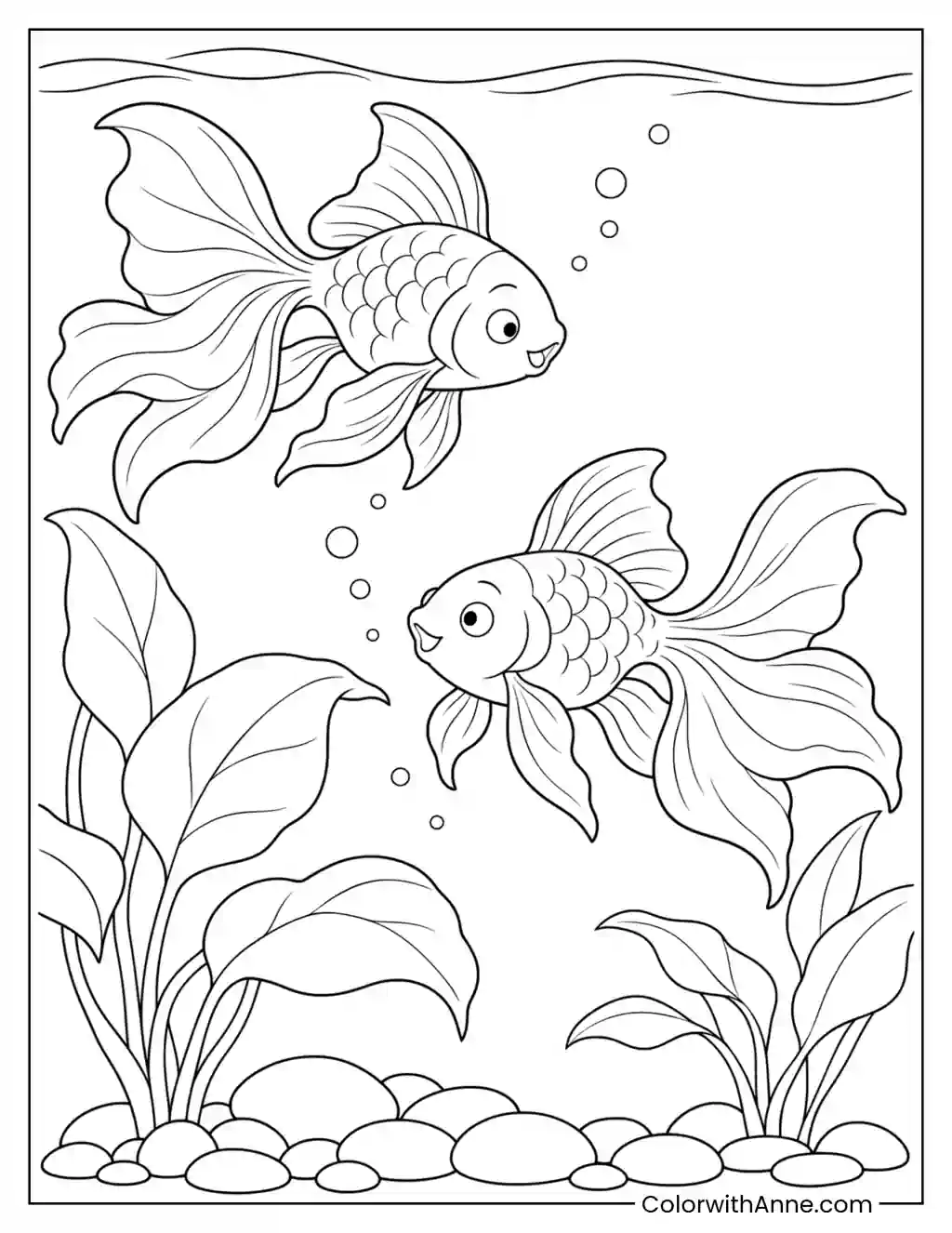
Let the Betta’s Tail Do the Moving
A betta swims past large aquatic leaves and smooth stones. Its broad fins spread behind the body, with plenty of room to follow their curves from the fish outward.
Use long crayon strokes in the direction of the fins. A rich blue near the body can soften into purple or pink toward the edges. Keep the stones quiet so the movement stays with the fish.
Before coloring the last fin, move a narrow ribbon or strip of tissue gently through the air. Notice how one end follows the other with a slight delay. Looking at that curve can help you decide which fin lines to emphasize and which ones to leave soft.
Find the Moment the Budgie Splashes
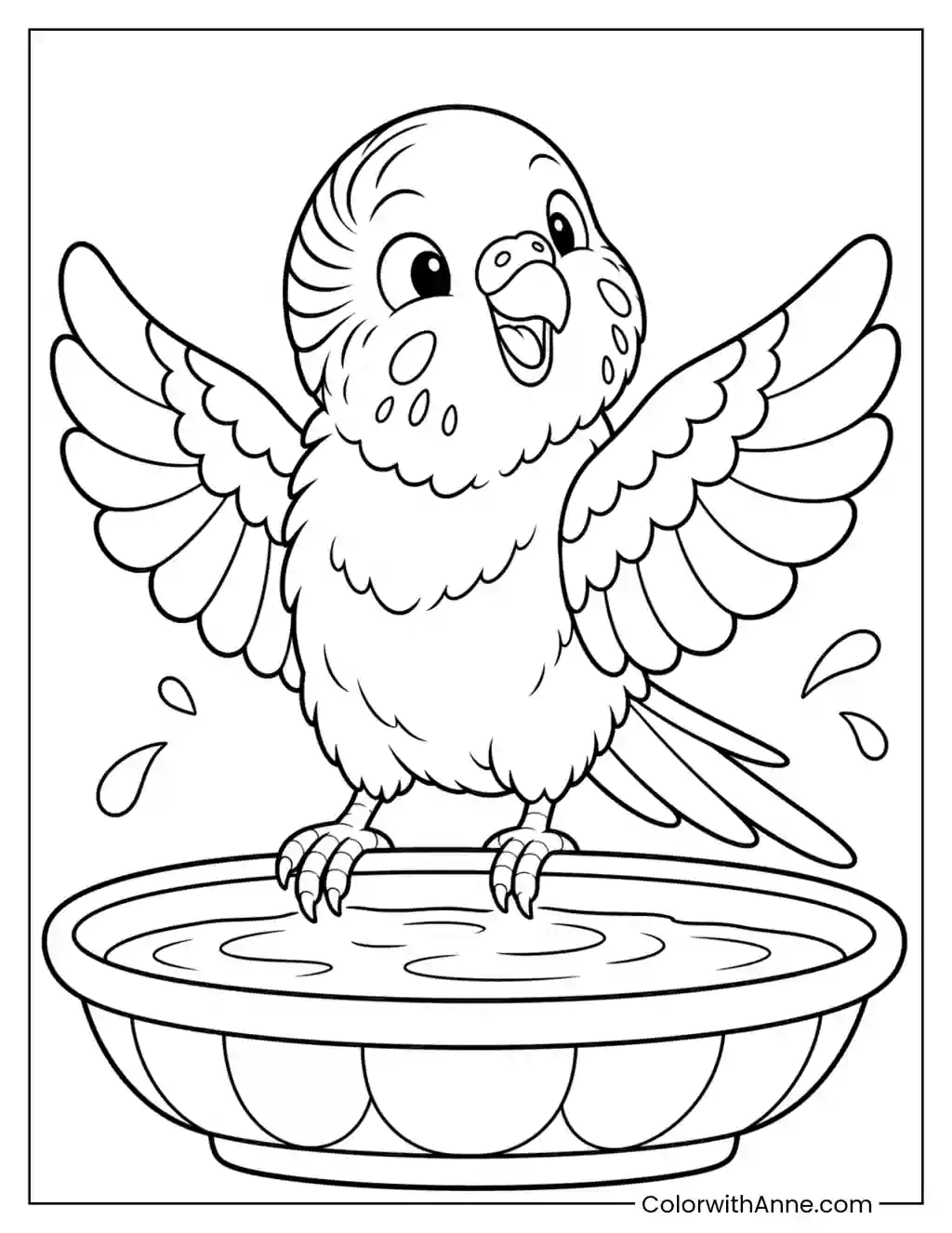
A budgie spreads its wings while gripping the rim of a bath dish. Ripples and droplets surround the dish, so there’s evidence of a splash even with the bird still perched.
Yellow and green can give the budgie a bright shape above the dish. A faint blue-gray along the ripples and tiny white centers in the drops will keep the water looking light.
Watch a drop land in a bowl of water and see which ring appears first. Then look back at the dish and choose where the illustrated splash probably began. It’s a small observation that makes the water on the page easier to understand and more fun to color.
Put Your Cat’s Favorite View Beyond the Cushion
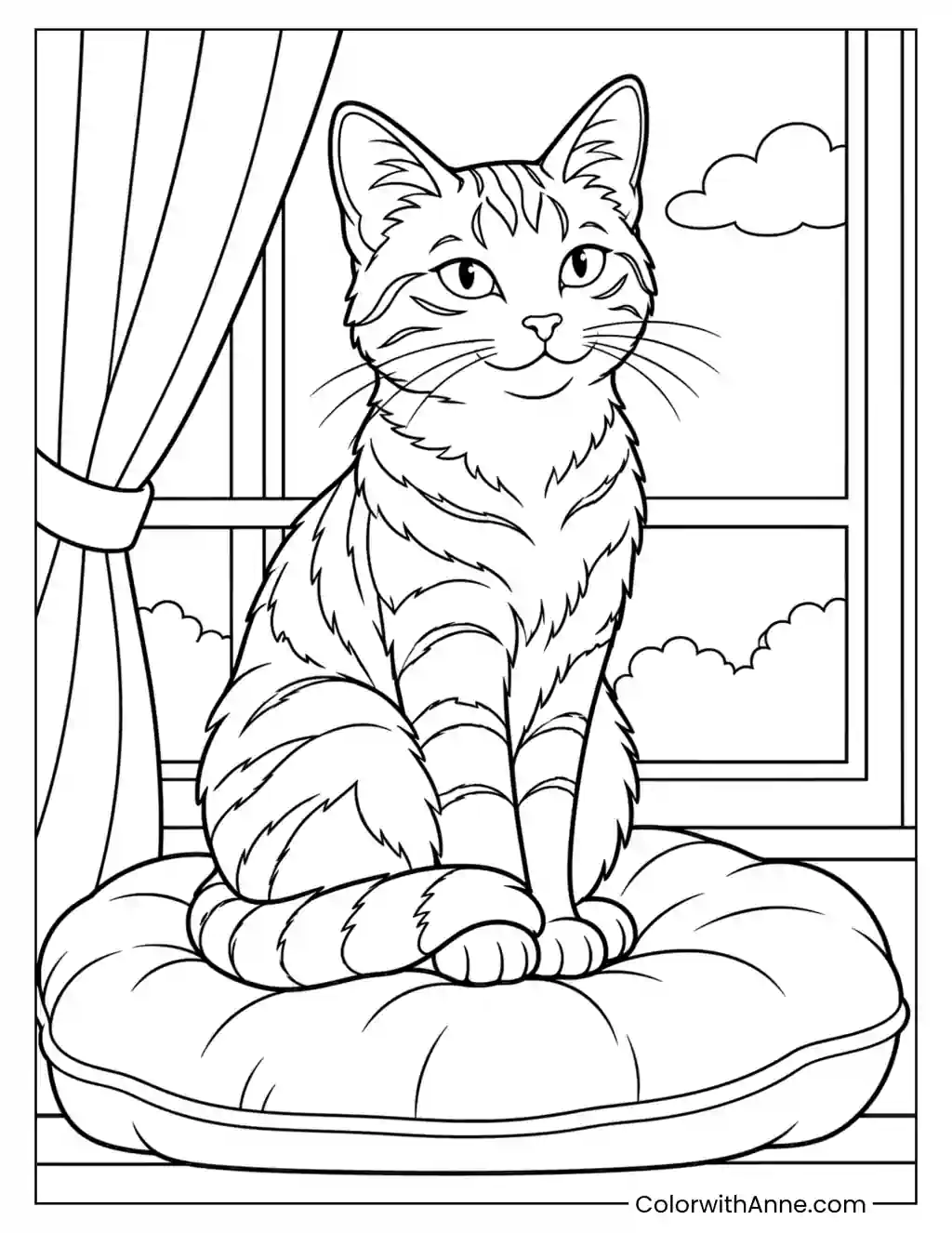
A striped cat sits upright on a plump window cushion beside a tied-back curtain. Its position makes the window feel like a familiar spot in the room.
Give the cushion a solid shade that contrasts with the cat’s coat. Follow the direction of the stripes, and keep the curtain soft enough that the cat remains the first thing you see.
If a cat at home has a favorite window, add one thing it spends time watching. A tiny bird silhouette or a branch outside the glass may be all it takes. Someone who knows the cat will probably recognize the routine as quickly as the coat.
Show What Happens When the Feather Moves
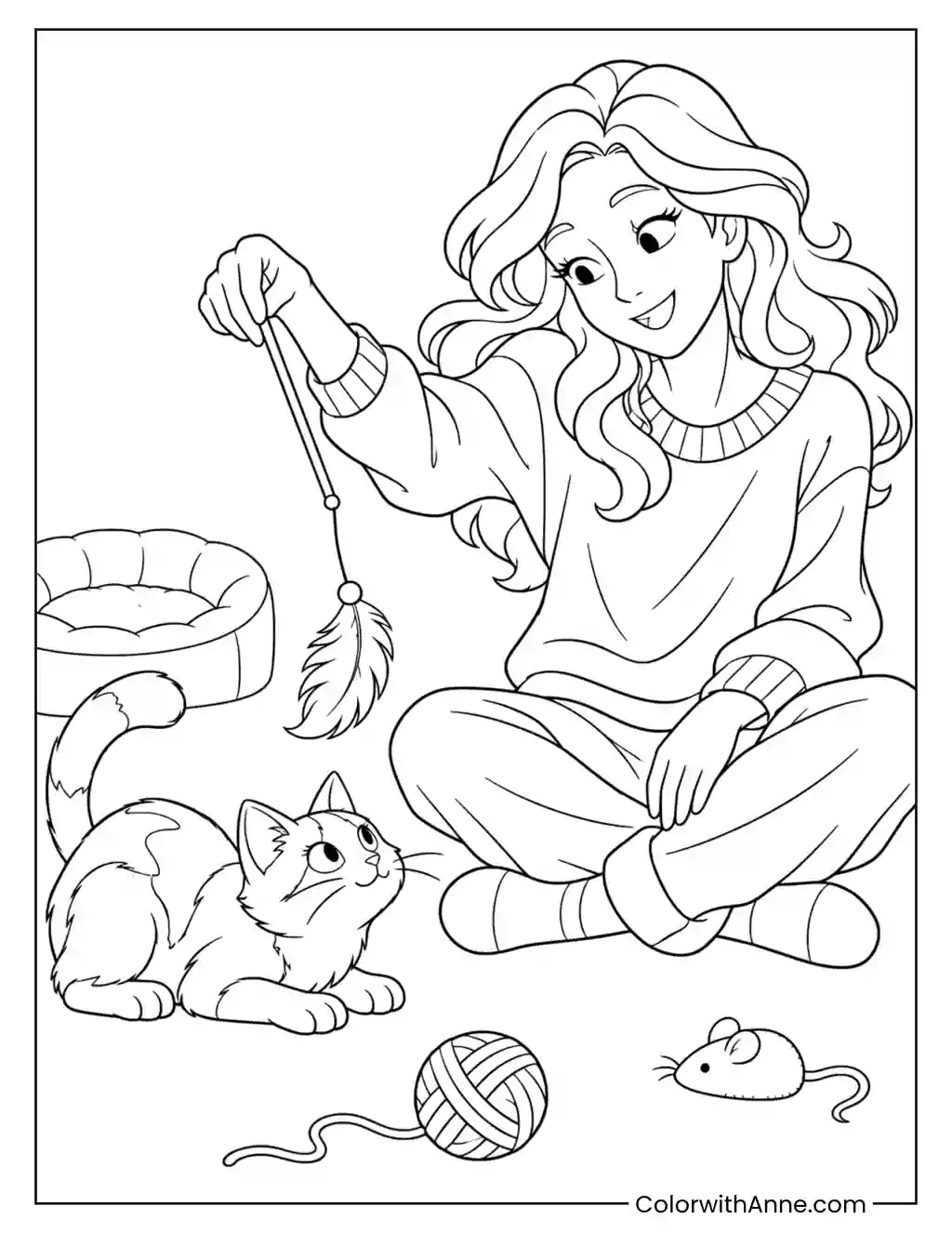
A seated woman dangles a feather wand above an attentive cat. Toys and a pet bed sit nearby, but the cat’s attention is on the feather.
A bright accent on the feather gives it a clear place in the scene. Keep the bed and other toys softer, and use a light or dark coat according to which outline reads best against the floor.
Cover the feather, then look at the cat’s pose and guess where the toy is. Reveal it and see how close the guess was. The next time you watch a cat play, the same clues in its head and body can help you tell where it’s about to look.
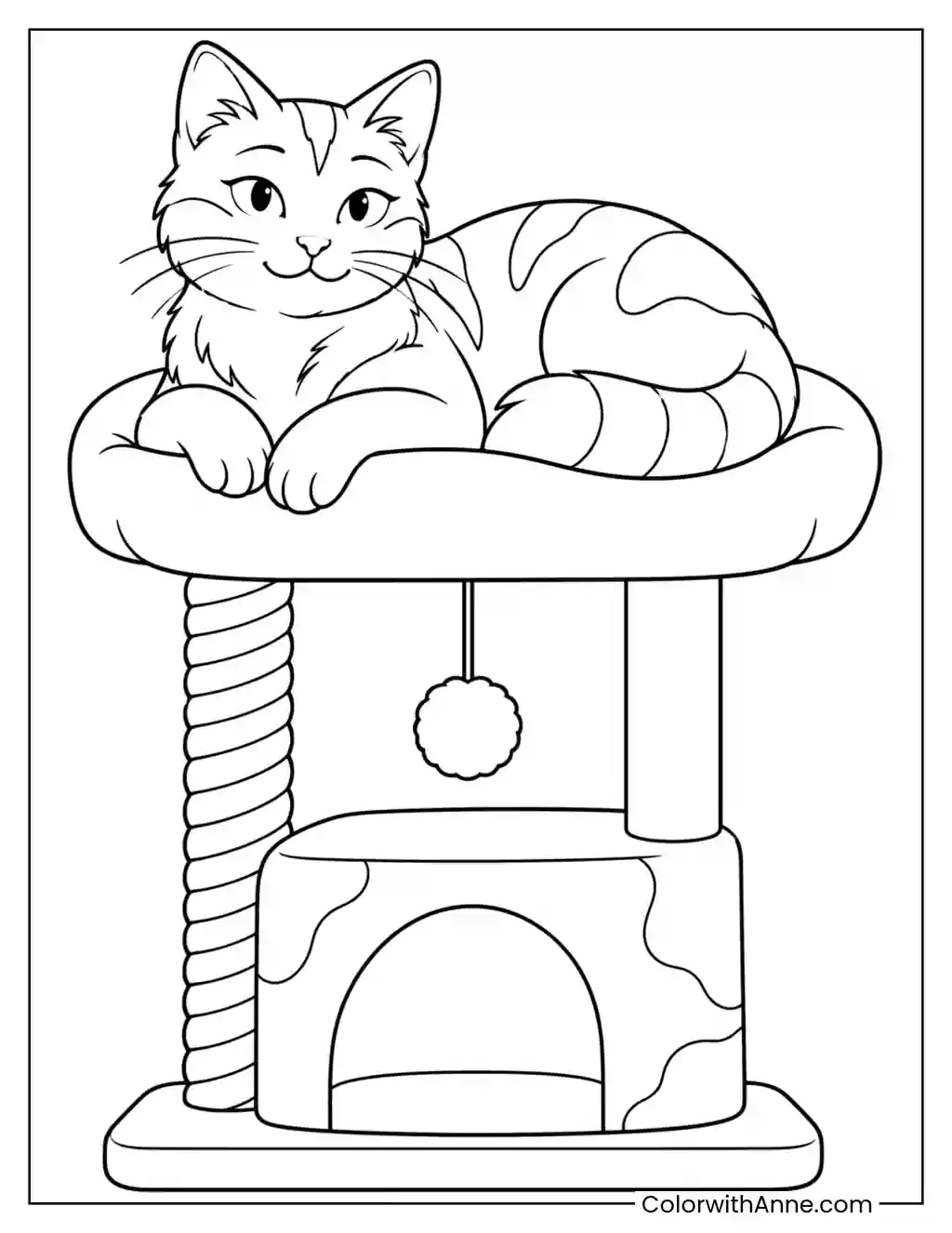
Make the Climbing Tower Fit a Real Corner
A striped cat rests on top of a climbing tower. The post, dangling ball, and arched hideaway give the tower several features below the cat’s perch.
Use different textures for the post and platforms. Short strokes work for the scratching surface, while a softer fill can suggest padded fabric. Leave the arch darker inside so the opening stays easy to see.
Thinking about where a tower might fit at home? Sketch that room corner on paper and place a rough tower shape in it. Leave enough space to pass and open anything nearby. The drawing’s highest perch also gives you a good question to ask: what would the cat be able to see from there?
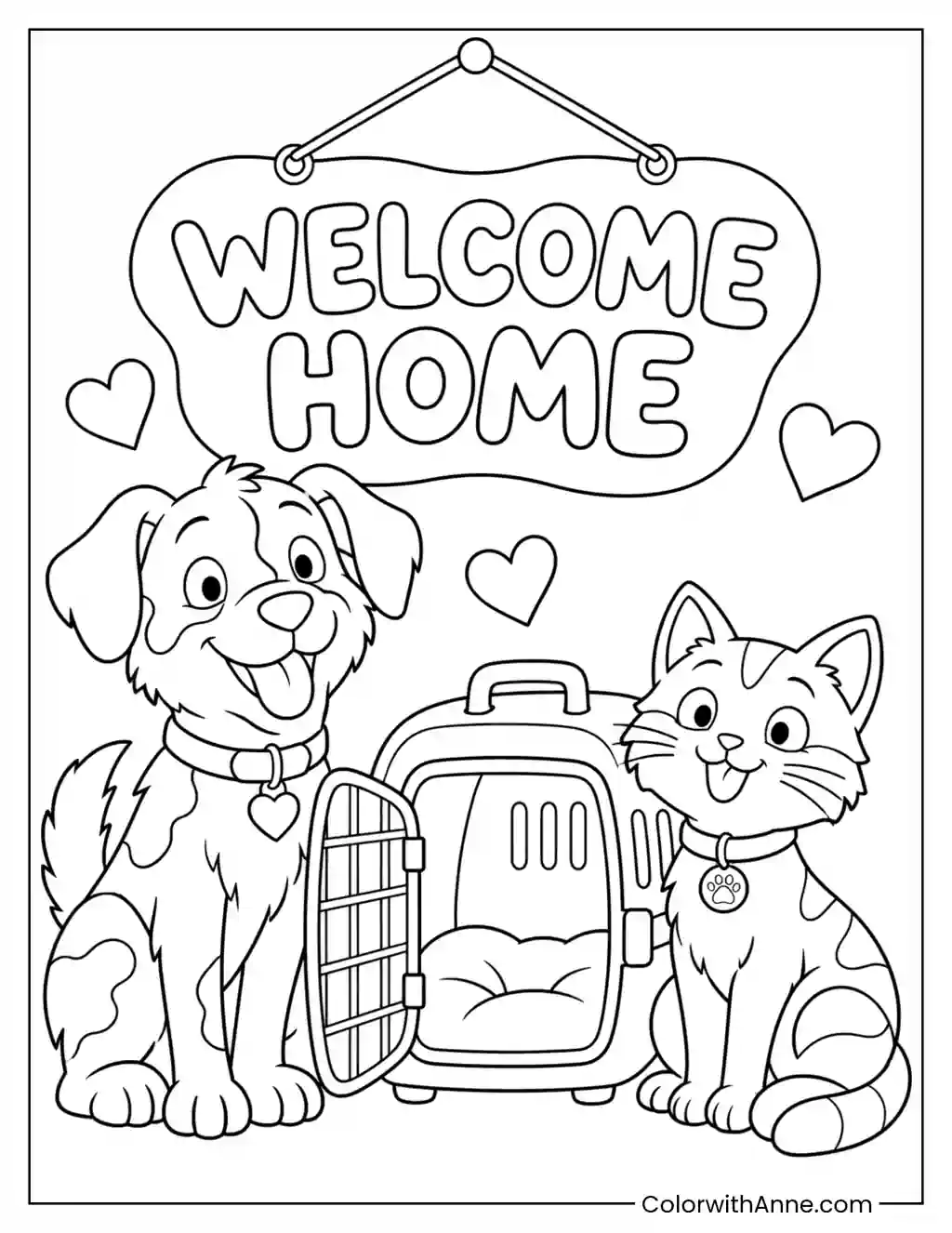
Welcome a New Pet by Name
A dog and cat sit beside an open carrier beneath a large “Welcome Home” sign. The animals and carrier are grouped below the message, which already gives the drawing the shape of a welcome poster.
Match one coat to the pet being welcomed, or borrow a distinctive marking from a photo. Keep the sign’s background light so its lettering stays easy to read.
Add the new pet’s name beneath the sign and put the date on the back. The sheet can go by the door on arrival day. Later, a first photo tucked behind it makes a simple record of the day the household grew by one.