
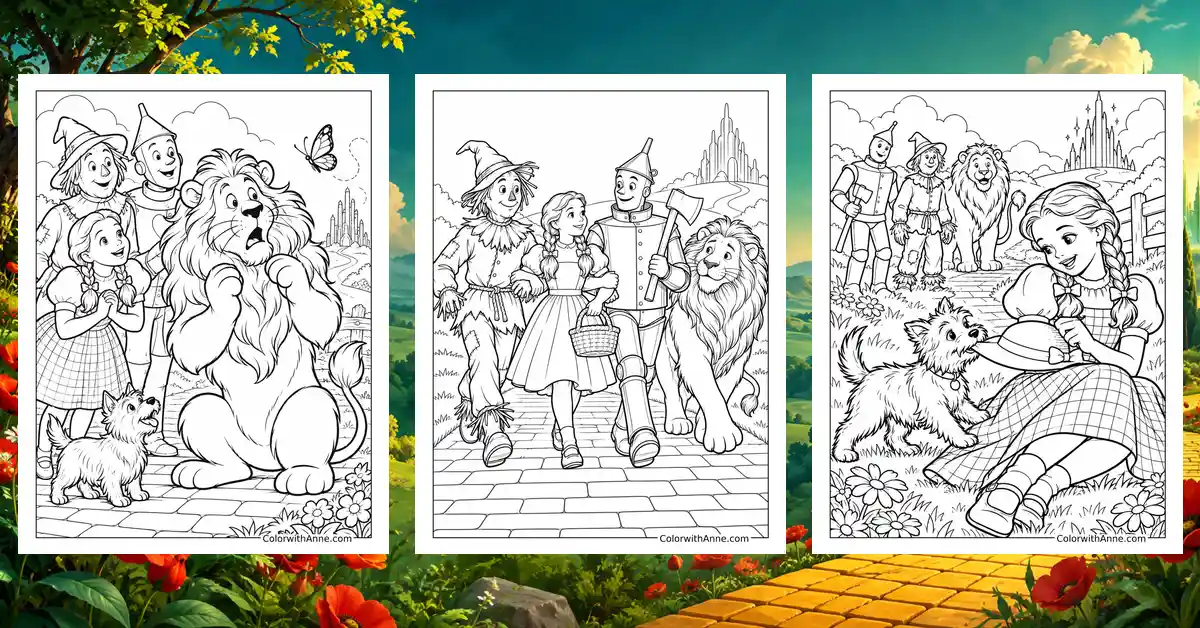
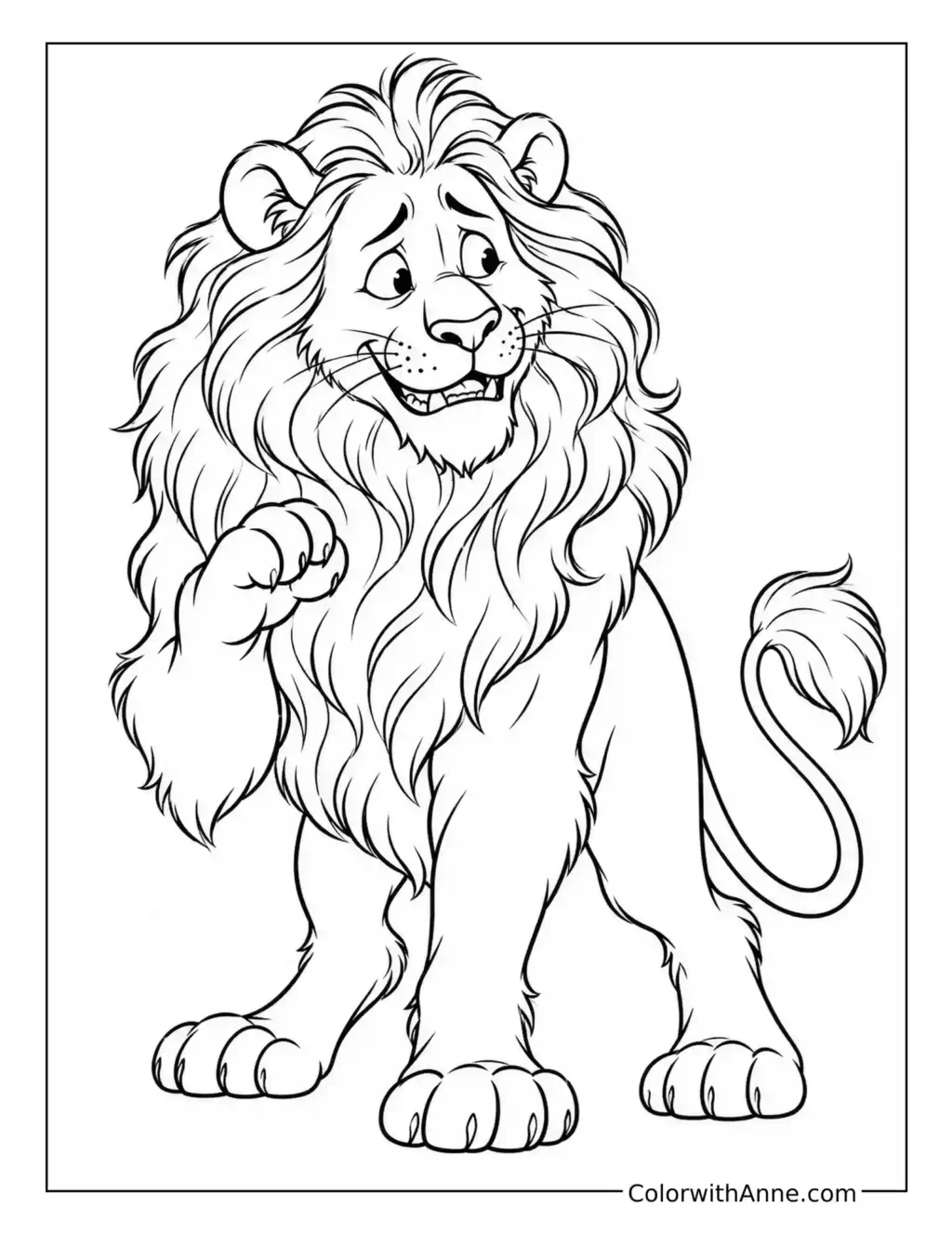
The Scarecrow wants a brain, the Tin Man wants a heart, and the Lion would appreciate enough courage to get through the journey. Dorothy has somehow found traveling companions whose worries make them rather good company. Their arguments and encouragement keep the yellow brick road interesting, even before the next interruption arrives.
The Wizard of Oz coloring pages offer another afternoon with characters who can feel familiar across generations. A child may choose the Lion for his worried expression while a grown-up remembers watching the story years ago. Soon, a conversation about favorites becomes a discussion of who had what they needed all along.
Free Printable The Wizard of Oz Coloring Pages
Click any coloring page below to open the PDF, then print on US Letter or A4 paper.
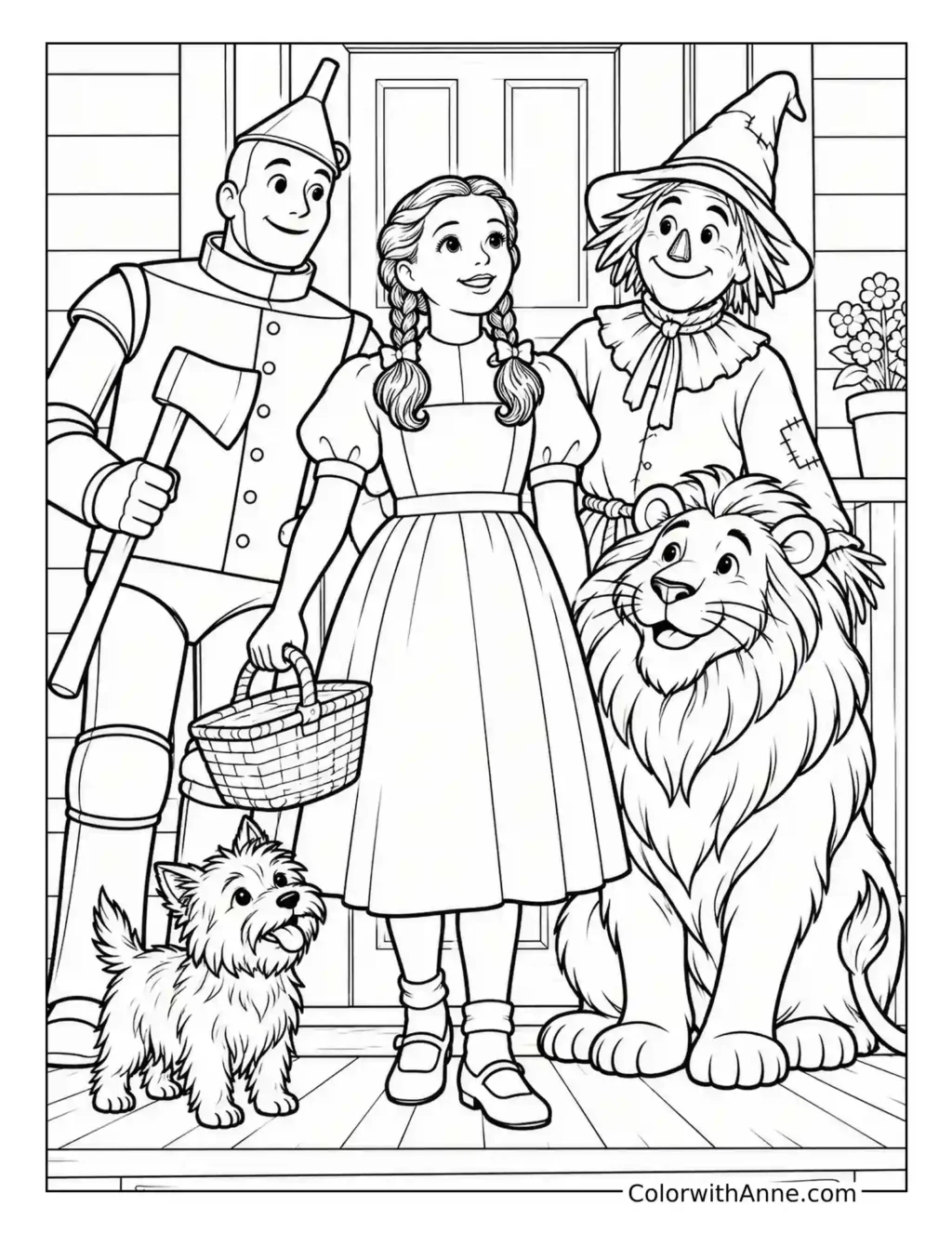
Did you find what you needed?
Help us choose what to create or improve next.
Coloring Ideas for The Wizard of Oz Pages
Try these creative ideas to make the most of your coloring sheets.
A Butterfly Big Enough to Startle a Lion
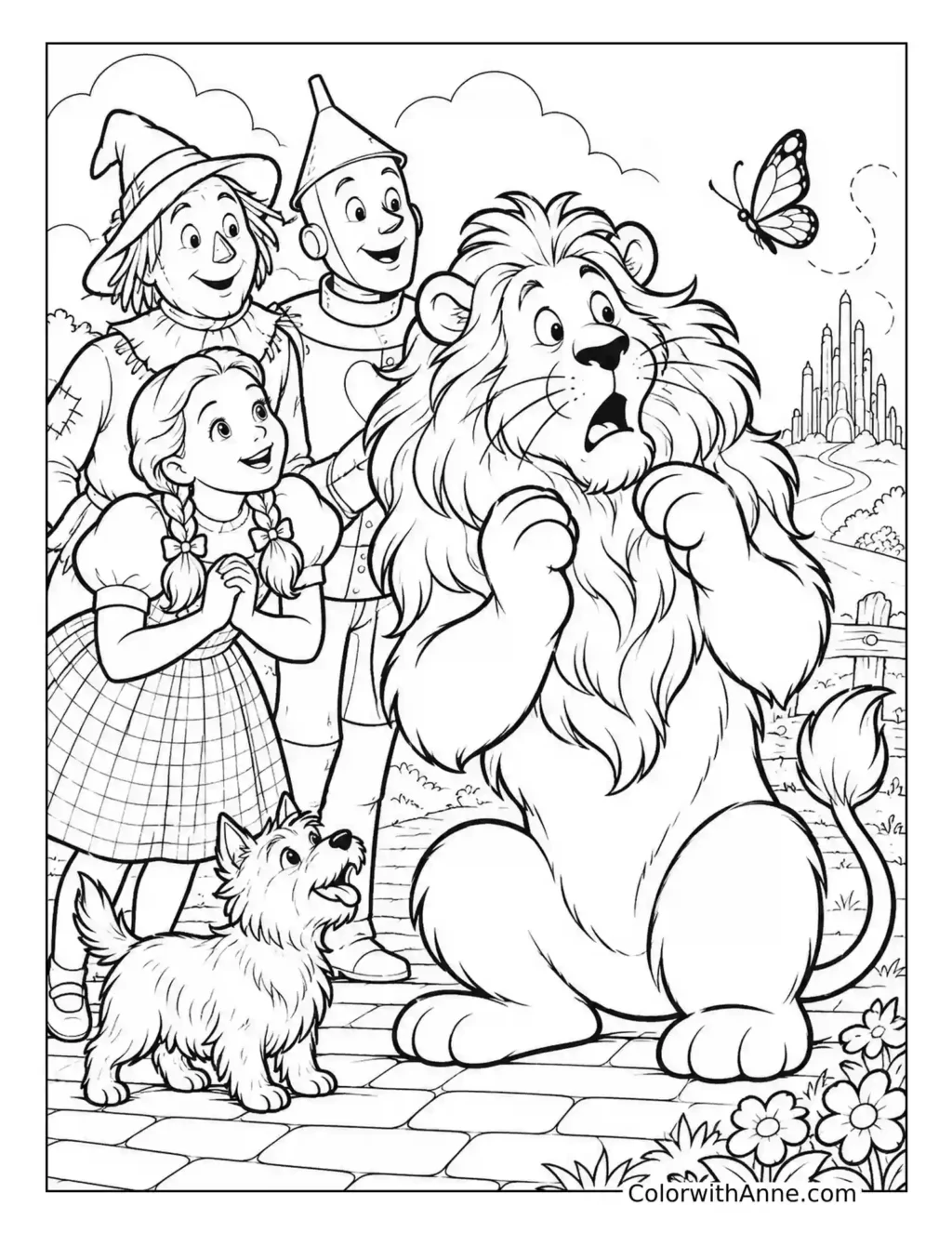
The Cowardly Lion reacts to a butterfly while his companions watch. The difference between the large lion and the small visitor supplies most of the humor.
Warm golden fur with a deeper mane will give the lion a clear shape. Choose one bright butterfly color that stands apart from the surrounding scene.
Write a short exchange on scrap paper: the Lion explains what startled him, and one companion offers a reassuring reply. Let the Lion keep a little dignity in the final line. Read it beside the finished picture, allowing the expressions to carry some of the joke.
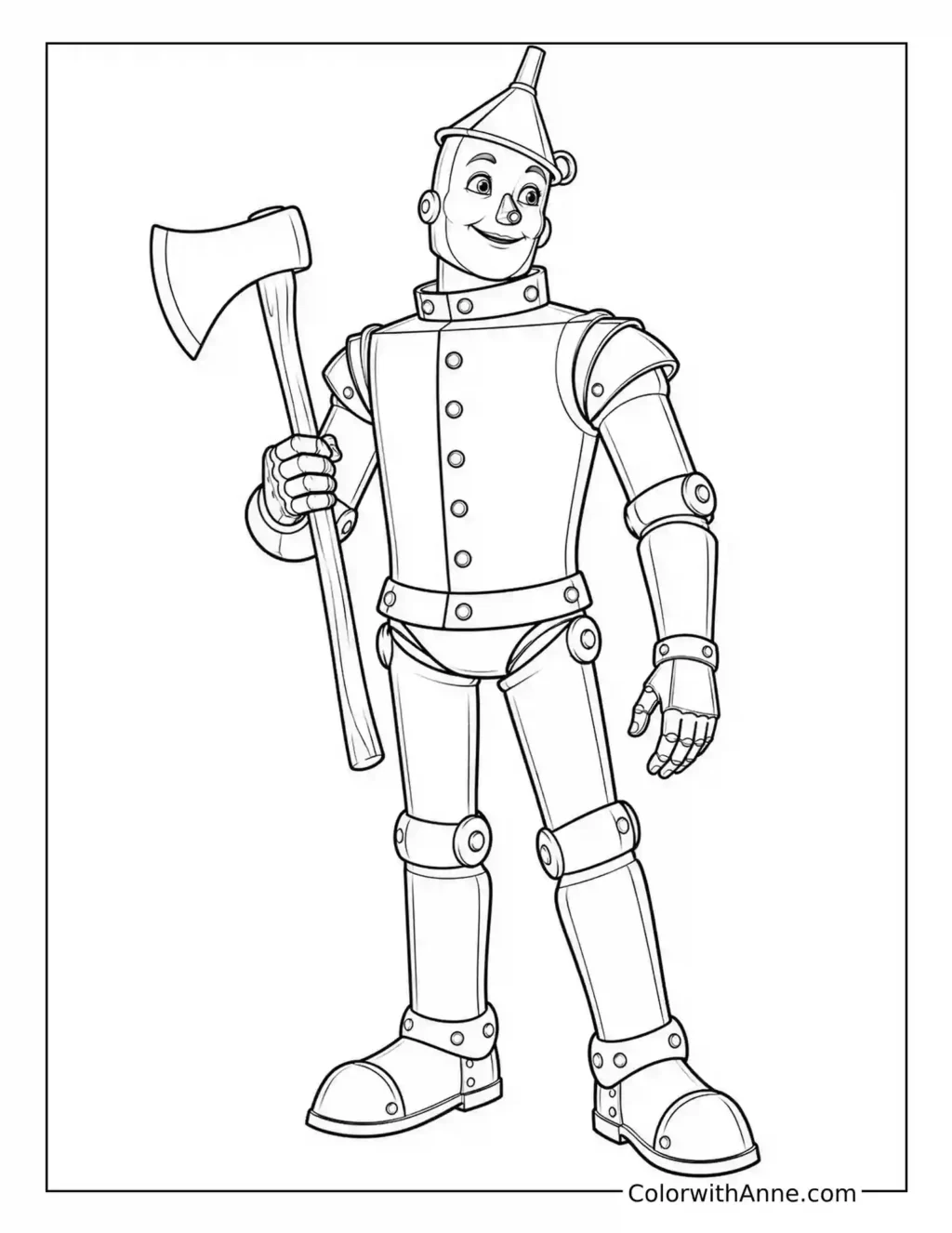
The Tin Woodman Begins to Move Again
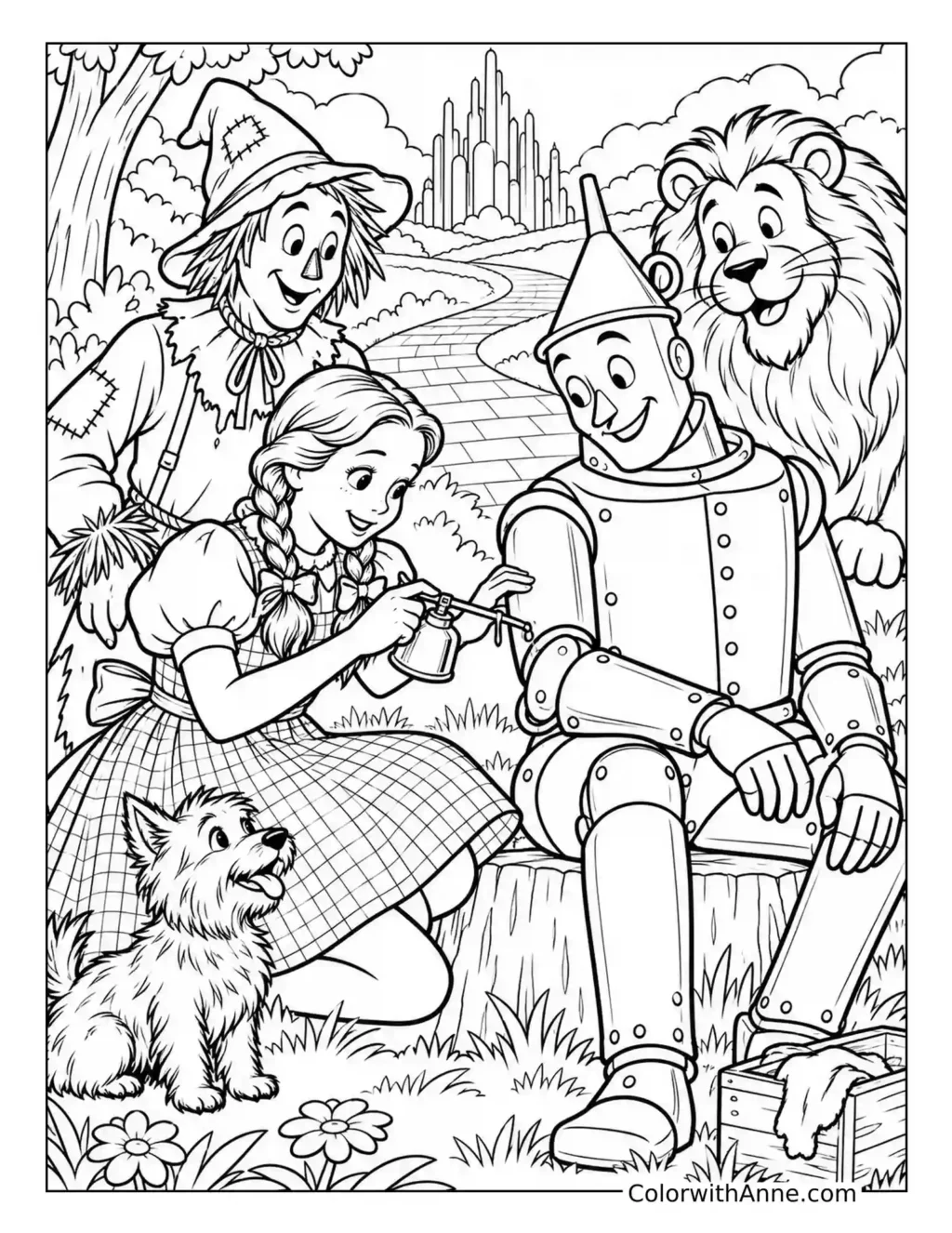
Dorothy helps the Tin Woodman while the others gather nearby. The scene centers on a small practical action that allows the journey to continue.
Use cool grays for the metal, leaving narrow pale areas for reflections. Warmer colors on Dorothy and the Scarecrow will separate them from their companion.
Draw a second small picture showing the Tin Woodman’s first movement afterward. Choose something simple, such as bending an elbow or taking a careful step. Place it beside the colored page as the next moment in the story, with a brief caption explaining which movement he was most relieved to recover.
Which Way Does the Oz Signpost Point?
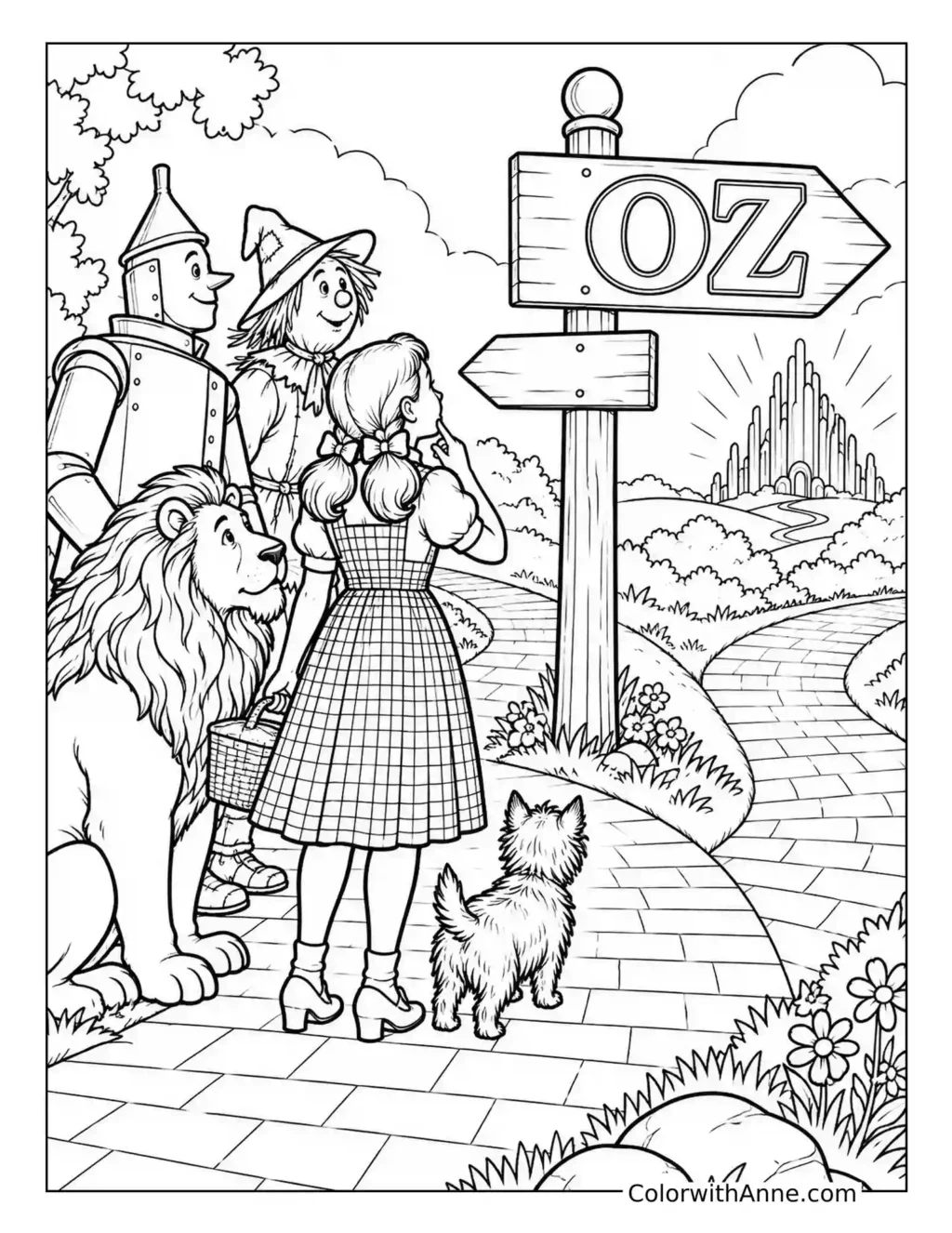
Dorothy and her friends pause at the signpost, giving the adventure a moment of uncertainty. A direction is useful only when the travelers know where they hope to go.
Warm wood colors will distinguish the sign from softer greenery. Keep its lettering clear, with the friends supplying the stronger accents.
Make a separate tabletop signpost with paper arrows pointing toward places from the story. Arrange a few destination cards around the room and check that each arrow points correctly. Ask another reader to guide the group from one place to the next using only the signs.
Let the Yellow Road Hold the Group Together
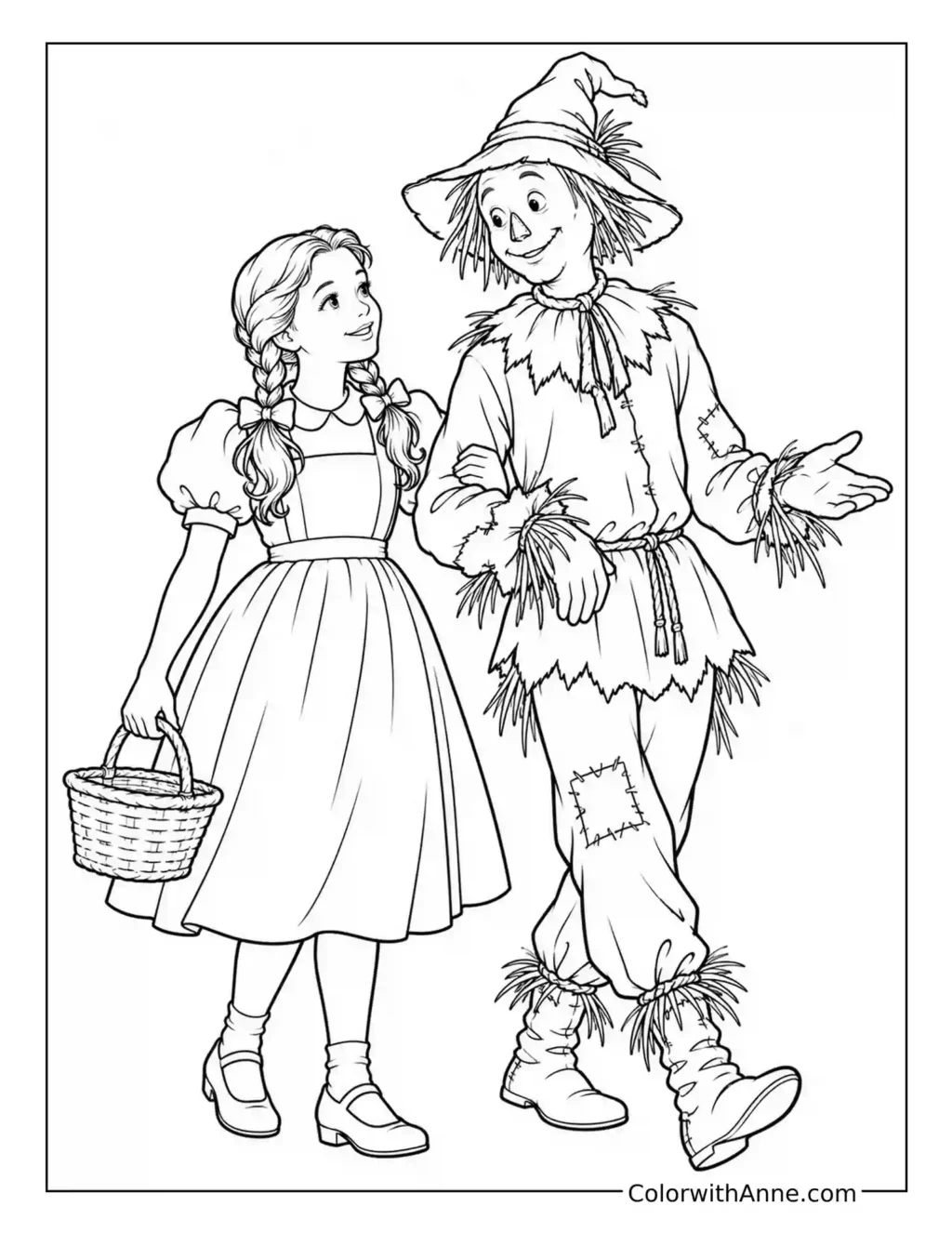
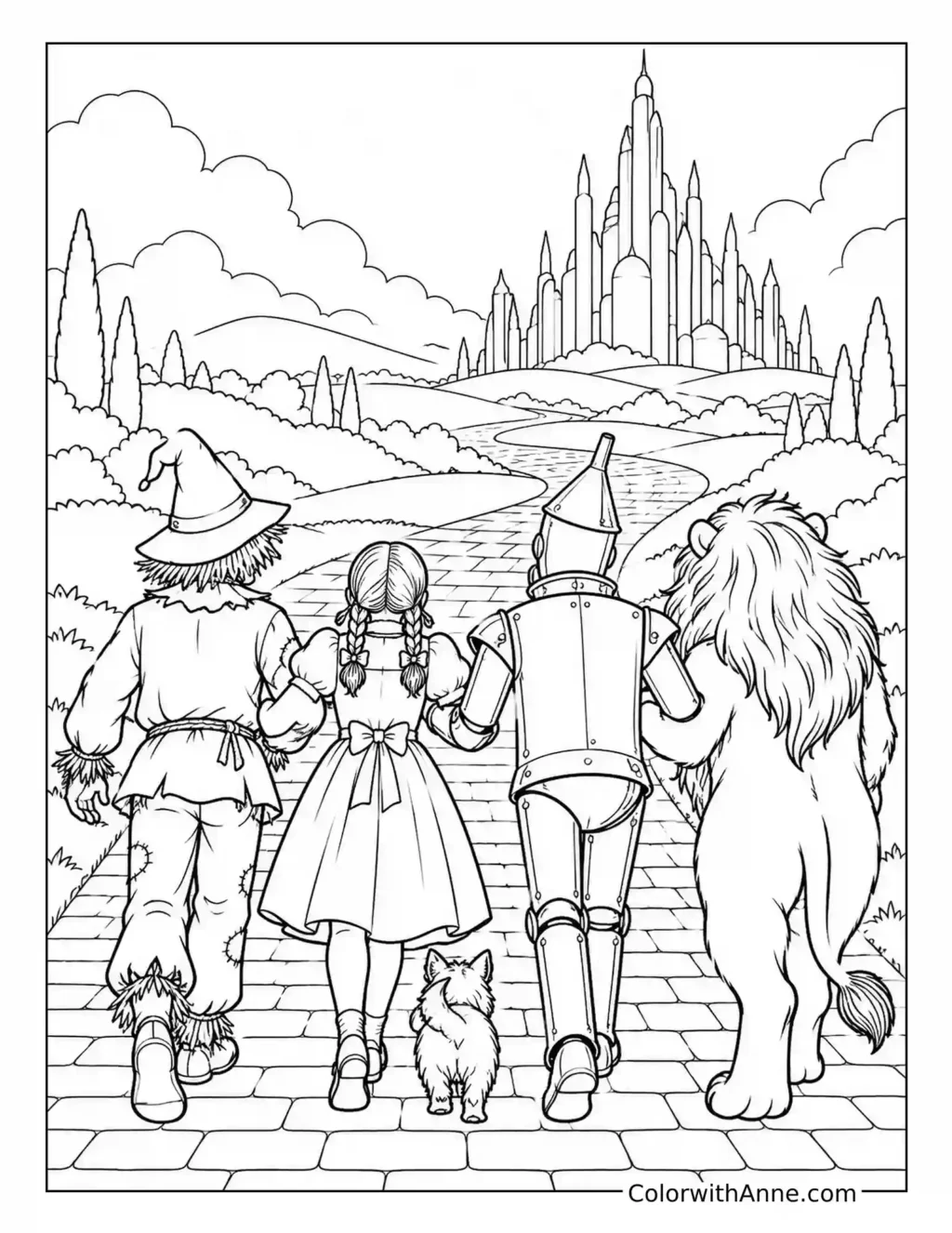
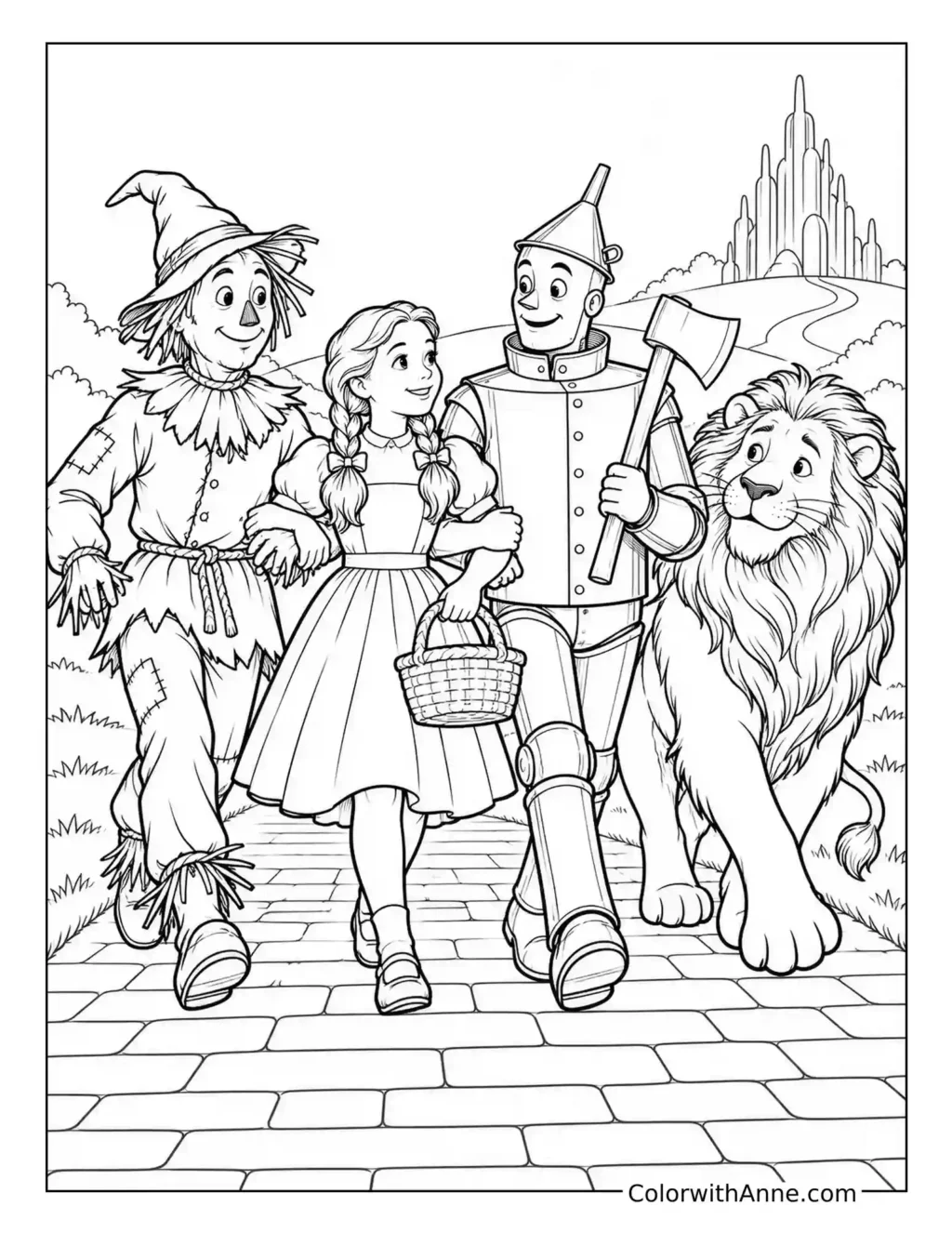
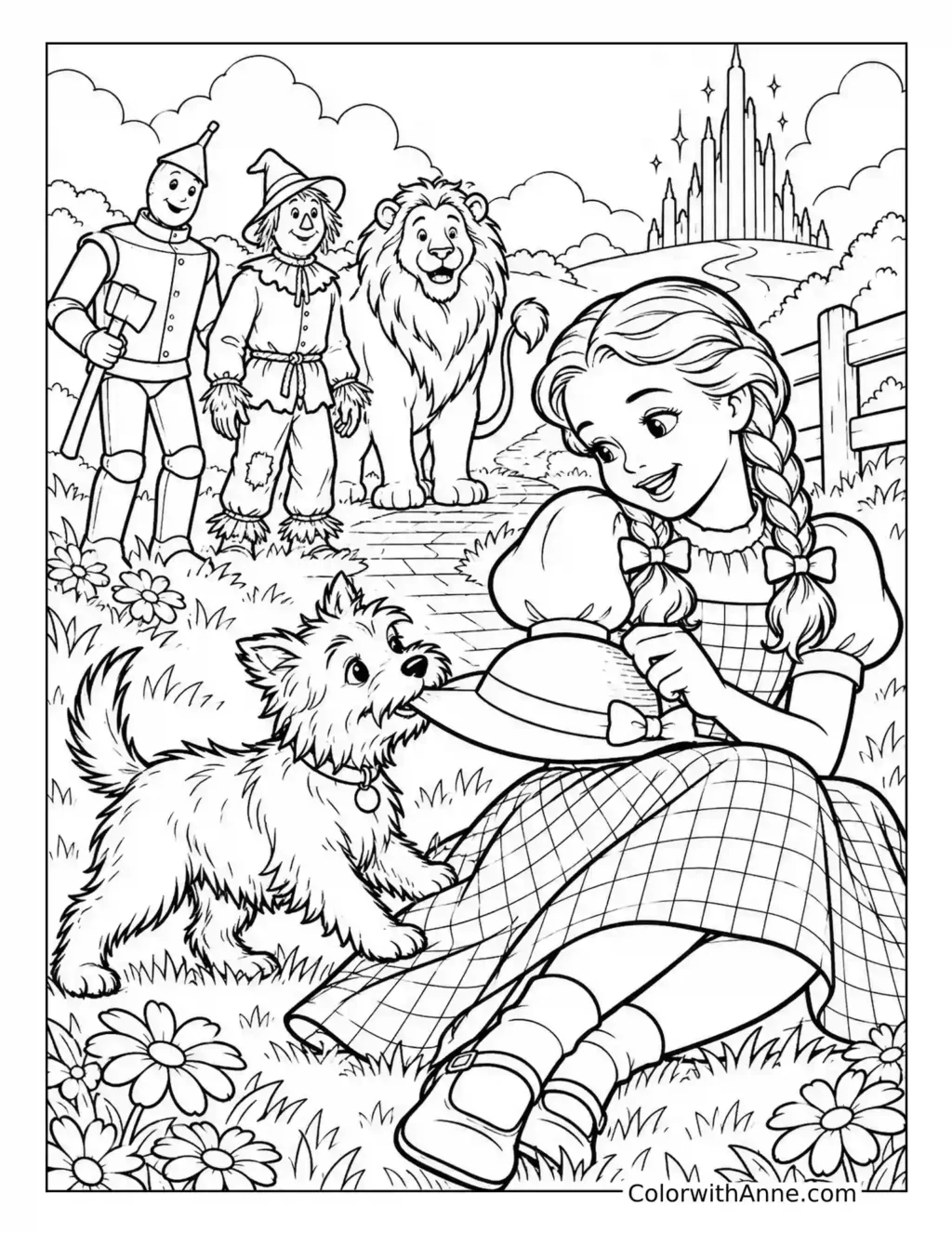
The companions walk together along the Yellow Brick Road, each bringing a different shape and texture to the group. The road can connect them without making their colors uniform.
Golden yellow beneath cool metal, warm fur, and softer cloth colors will keep the travelers distinct. Give the surrounding landscape quieter shades.
Begin with the road, then color one companion at a time. Pause before filling the background and look at how the yellow runs through the composition. Leave some nearby areas pale if the group already feels complete; the journey does not need every patch of scenery to compete for attention.
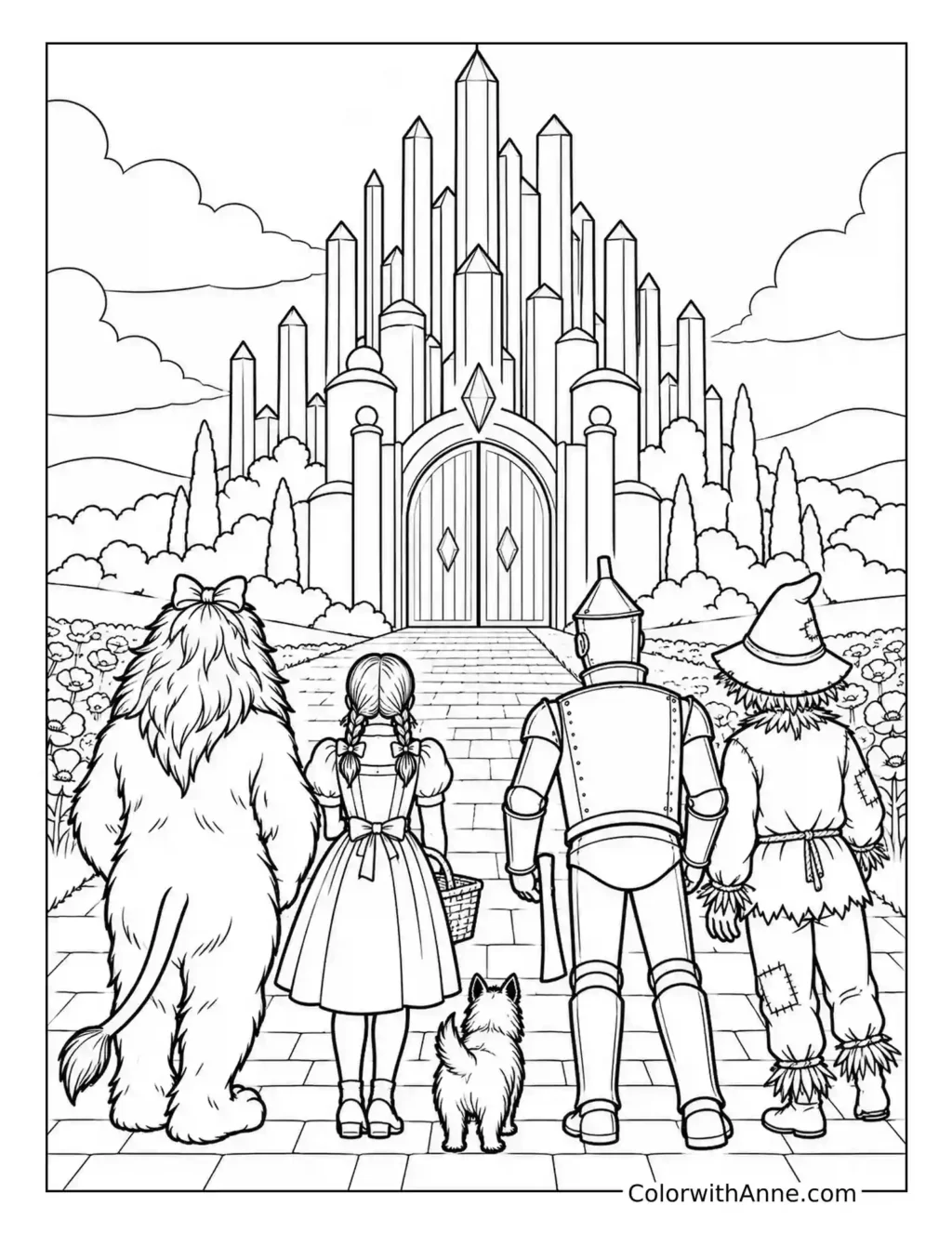
What Happens on the Other Side of the Gate?
The friends face the Emerald City gate, close enough to their destination for the entrance to feel important. The picture leaves their first moments inside open to invention.
Use several greens rather than one flat shade across the city entrance. Small gold accents can suggest something grand without covering every surface.
On another sheet, draw the first place the travelers encounter beyond the gate. Choose one useful detail, such as a place to ask directions or somewhere to rest. Set it beside the finished page as the next view in the journey, keeping the same greens so the two scenes belong together.
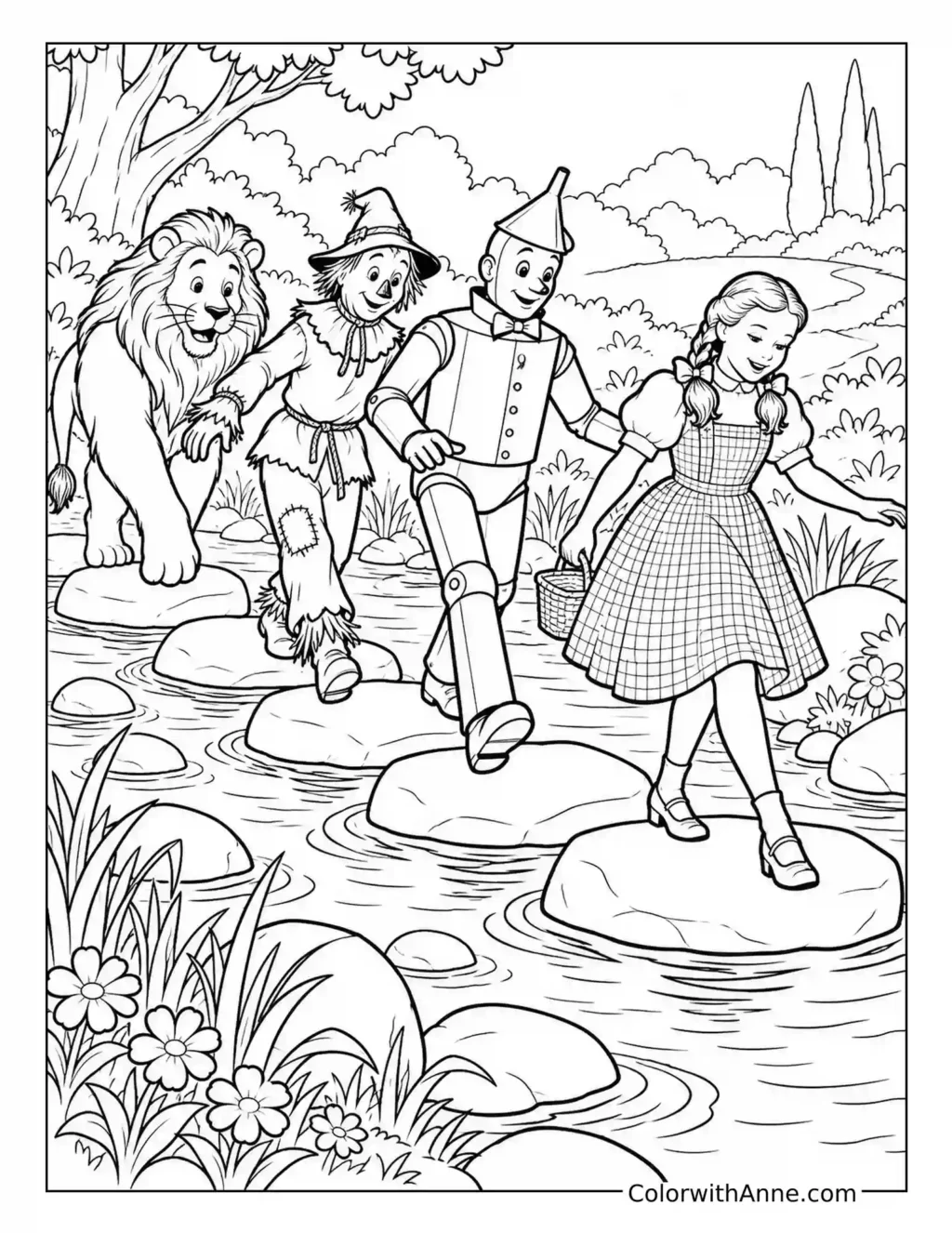
Find a Route across the Stepping Stones
The stream gives the companions a smaller obstacle than a distant castle or unfamiliar city. Their route depends on the stones immediately in front of them.
Cool blue water and warm gray stones will keep the crossing readable. Repeat the characters’ colors consistently as you work across the group.
Arrange paper stones on a blue sheet for a tabletop crossing game. Move small character counters across them, deciding who goes first and where someone might need help. Keep the finished picture nearby, then compare your chosen order with the travelers’ positions in the illustration.
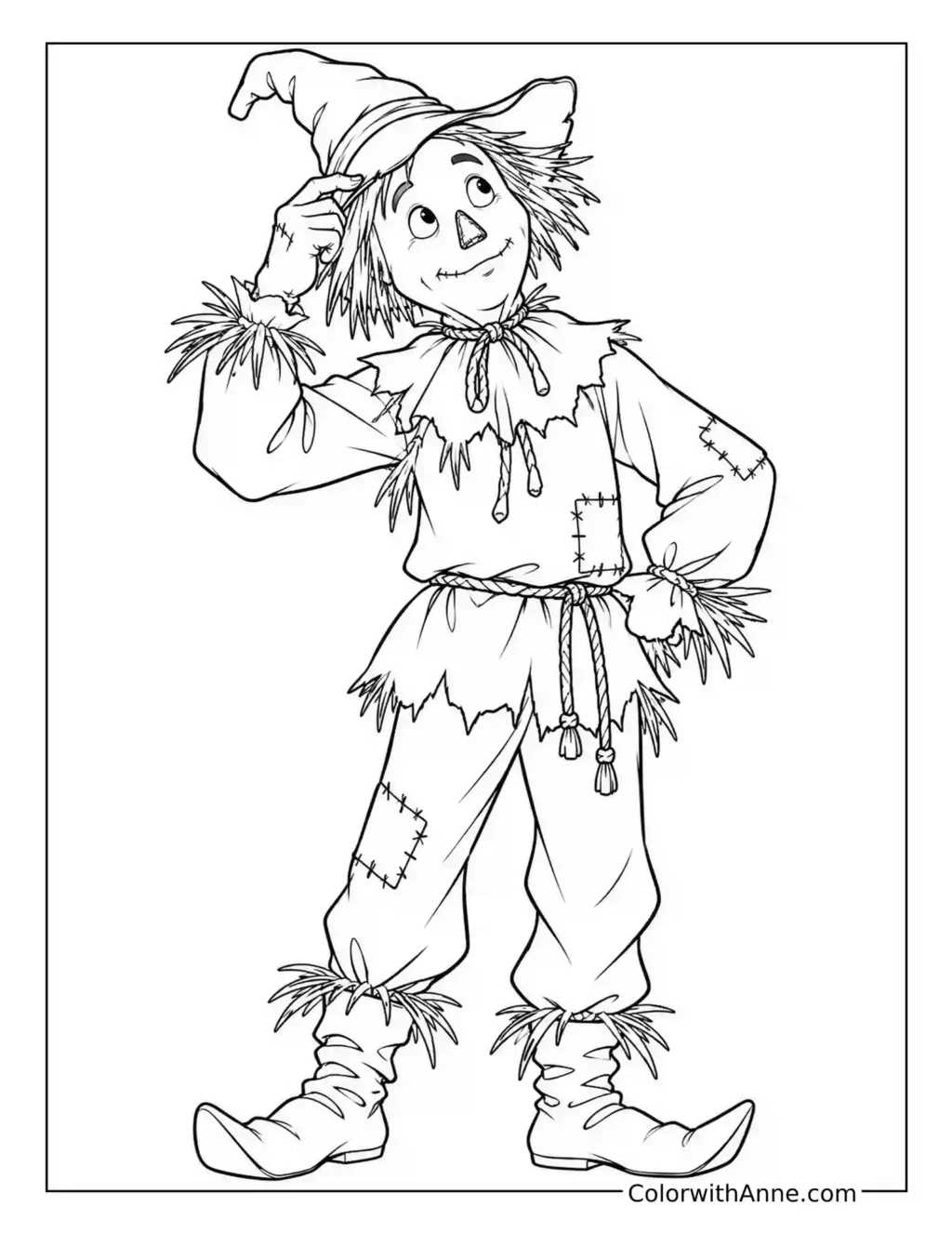
The Scarecrow Has an Idea
The Scarecrow touches his head in thought, making this a good picture for the moment before a solution arrives. His patchwork appearance can stay lively without turning every section a different color.
Try faded blue, warm brown, and straw yellow, repeating shades across the clothing. Keep the face lighter beneath the hat.
Invent a small problem for the travelers and write it on a folded card beside the page. Put the Scarecrow’s proposed solution inside. Ask another reader to suggest an answer before opening the card, then compare which idea would be easiest for the companions to try.
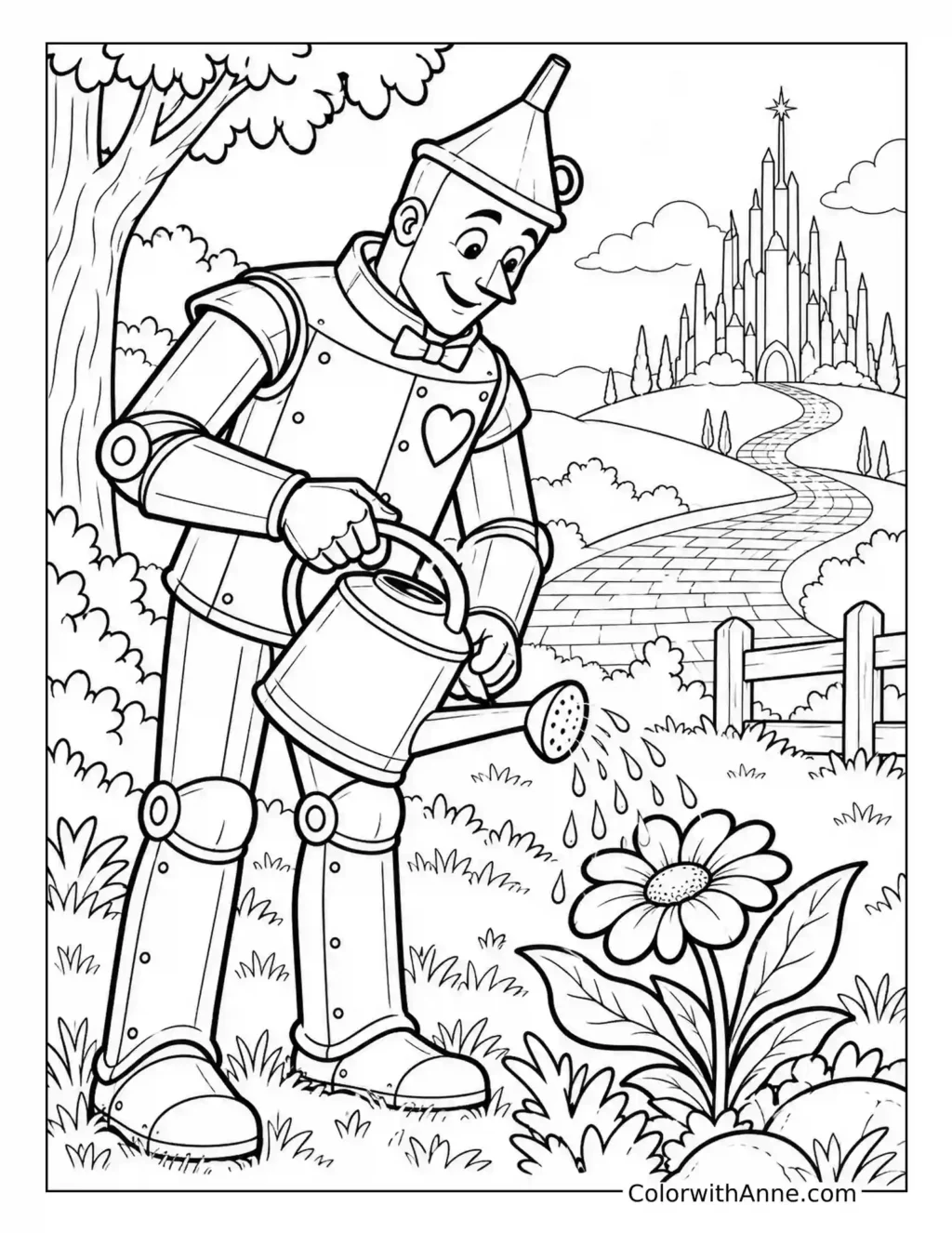
A Small Kindness beside the Road
The Tin Woodman pauses to water a flower, giving the journey a quiet moment of care. The small bloom can carry the strongest color in an otherwise restrained scene.
Cool silver-gray with pale blue reflections will suit the metal body. Choose a warm flower color and softer green leaves.
Write one sentence beneath the finished picture describing what he noticed that made him stop. Then choose a small act of care to carry out that day, perhaps watering a household plant or helping someone with a familiar task. The page can remain a reminder that a journey still leaves room to notice what needs attention nearby.