
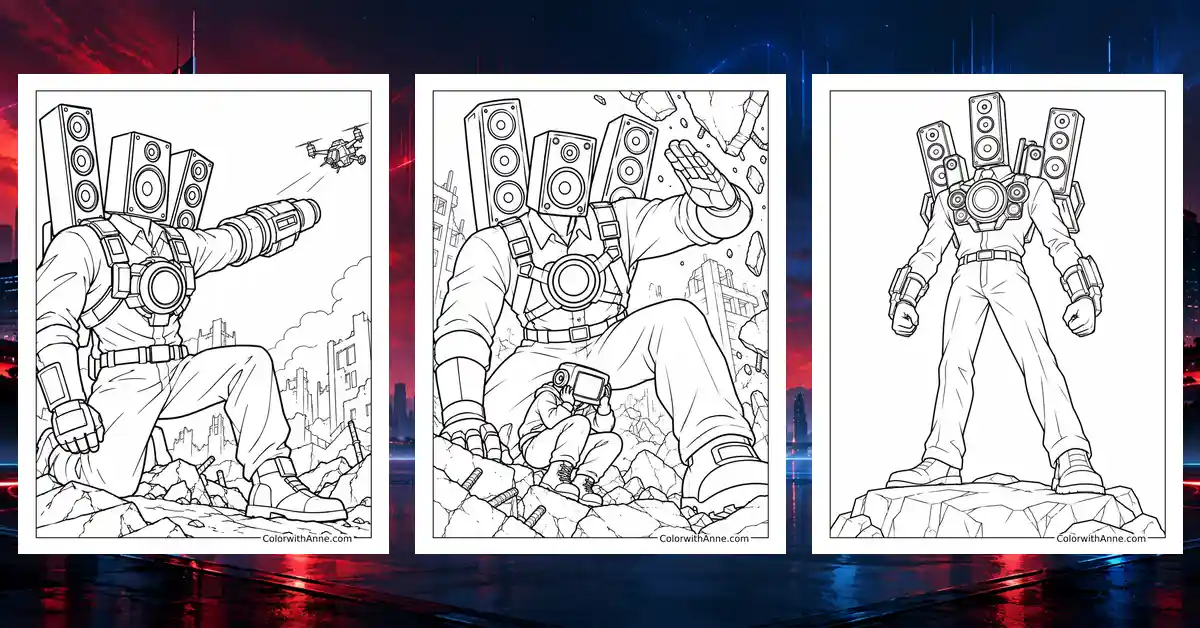
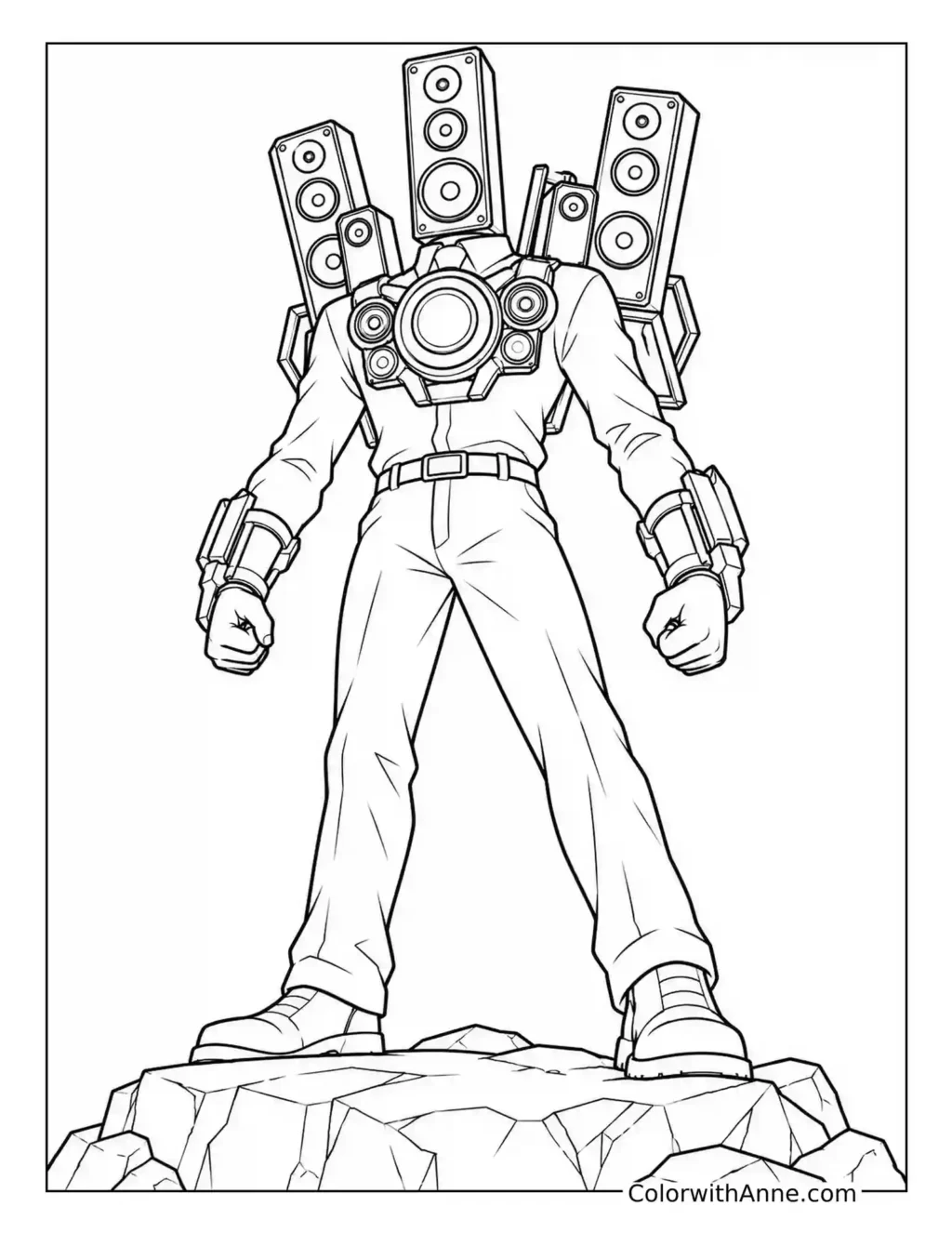
A speaker usually belongs on a shelf or beside a screen. Give it a towering body, and suddenly it becomes the character someone is waiting to see enter the battle. Titan Speakerman has that wonderfully improbable appeal: an ordinary object turned into a figure whose arrival deserves moving closer to the television.
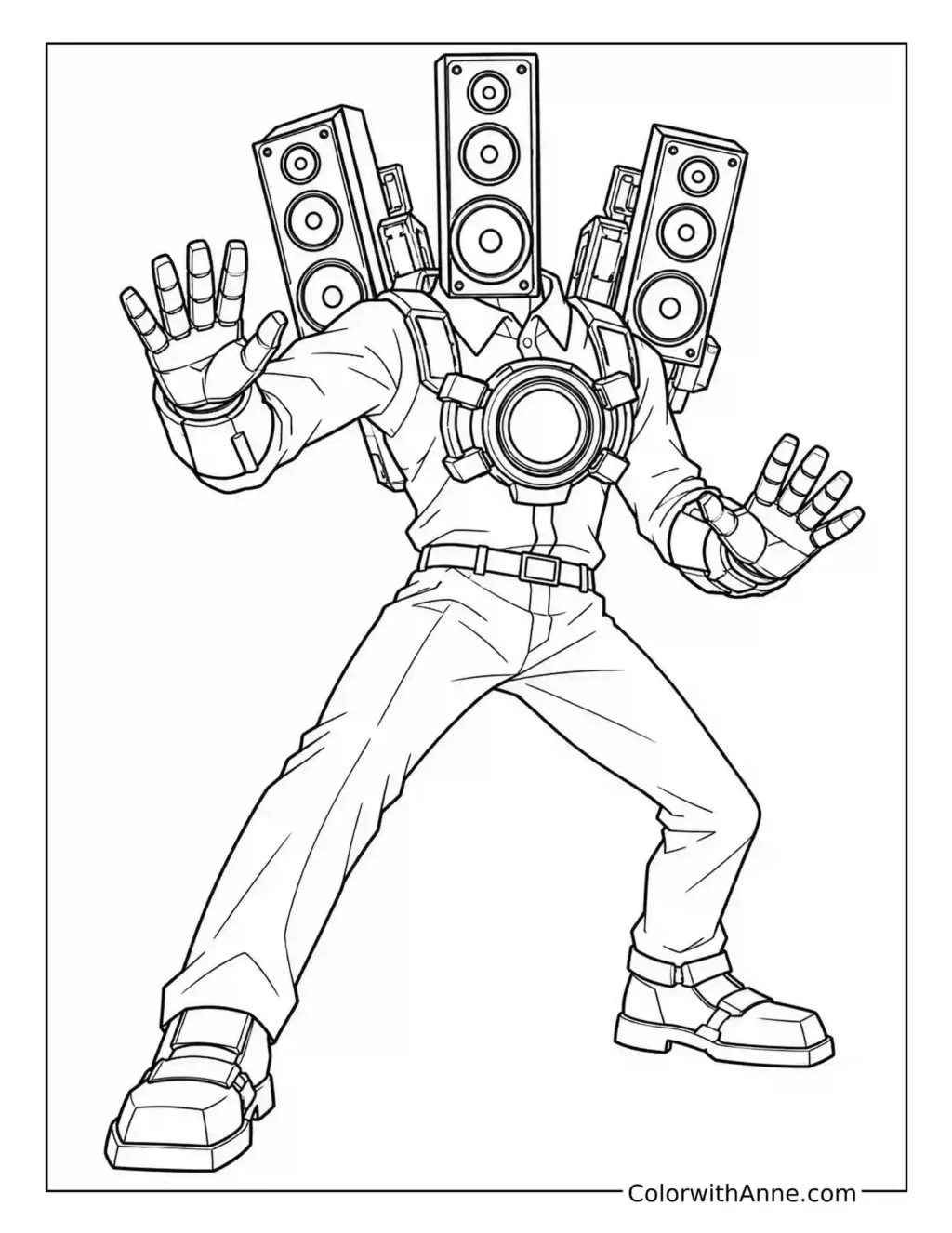
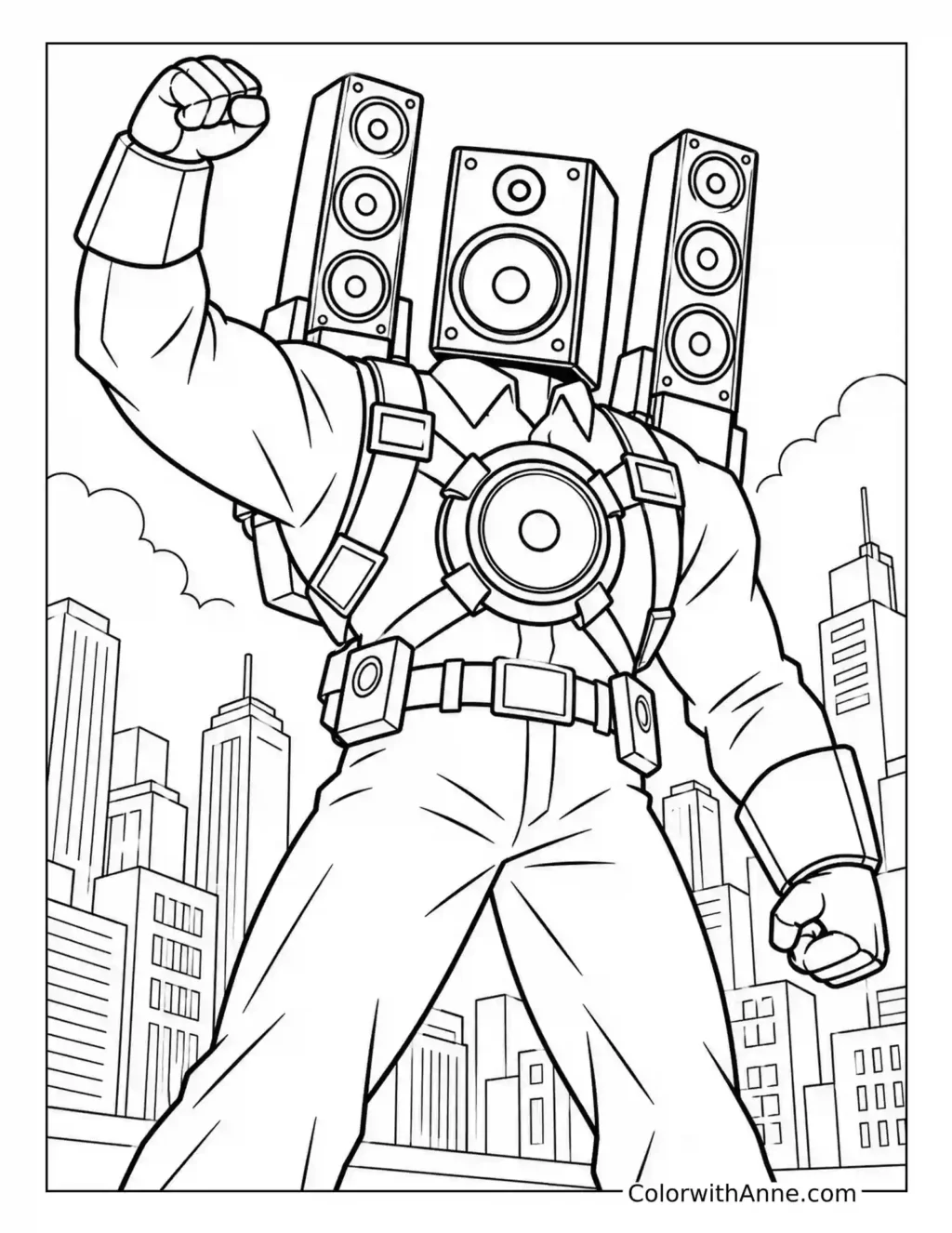
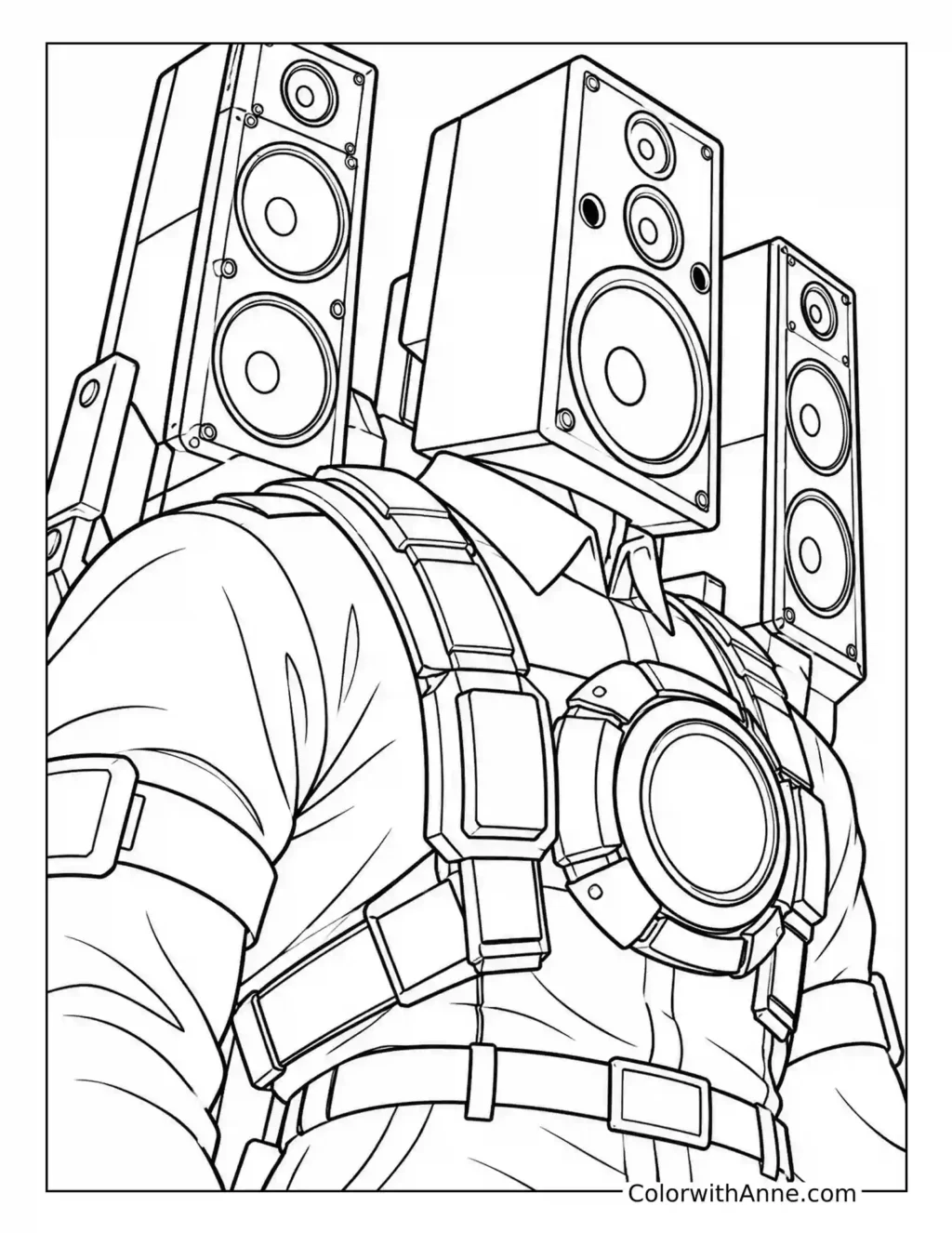
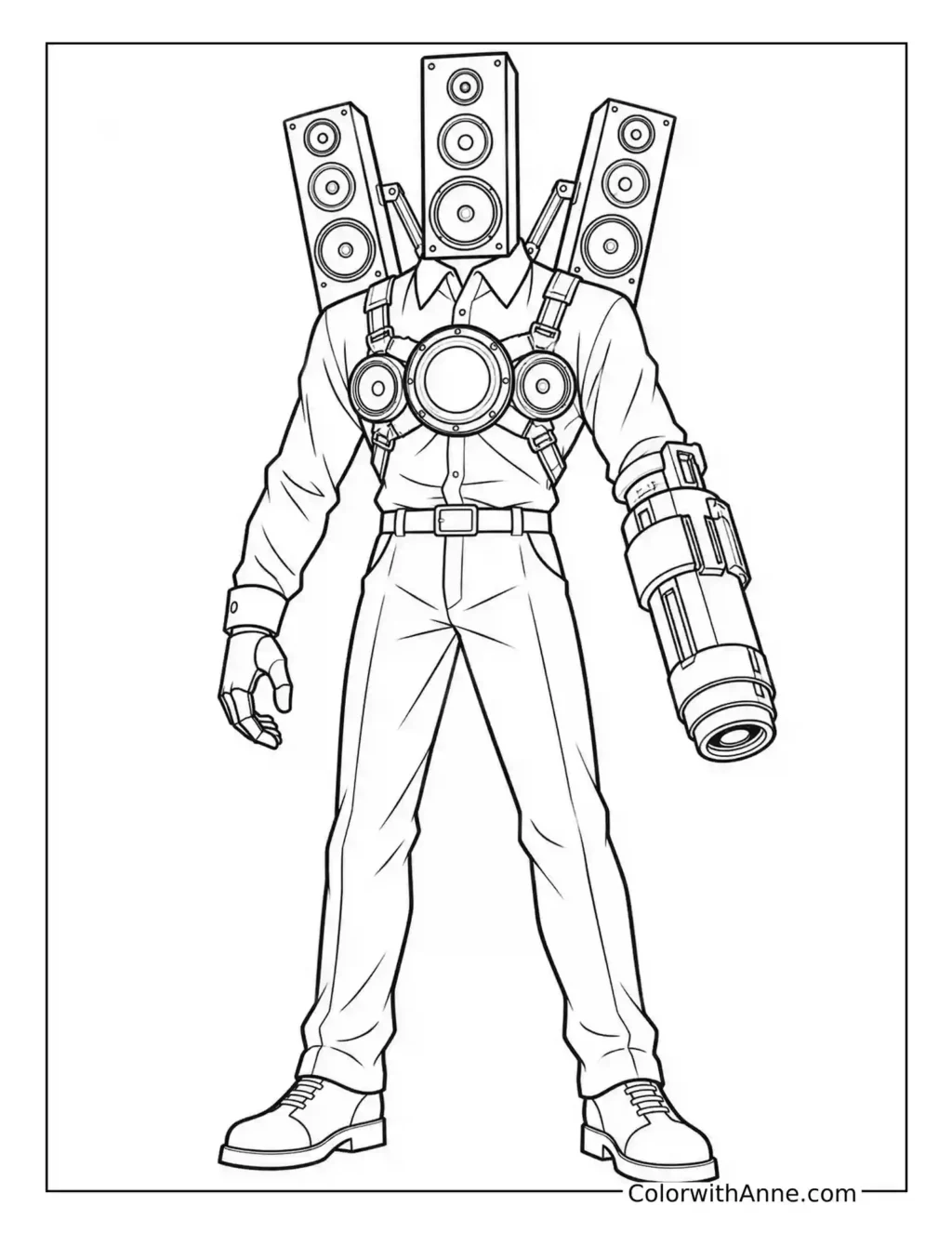
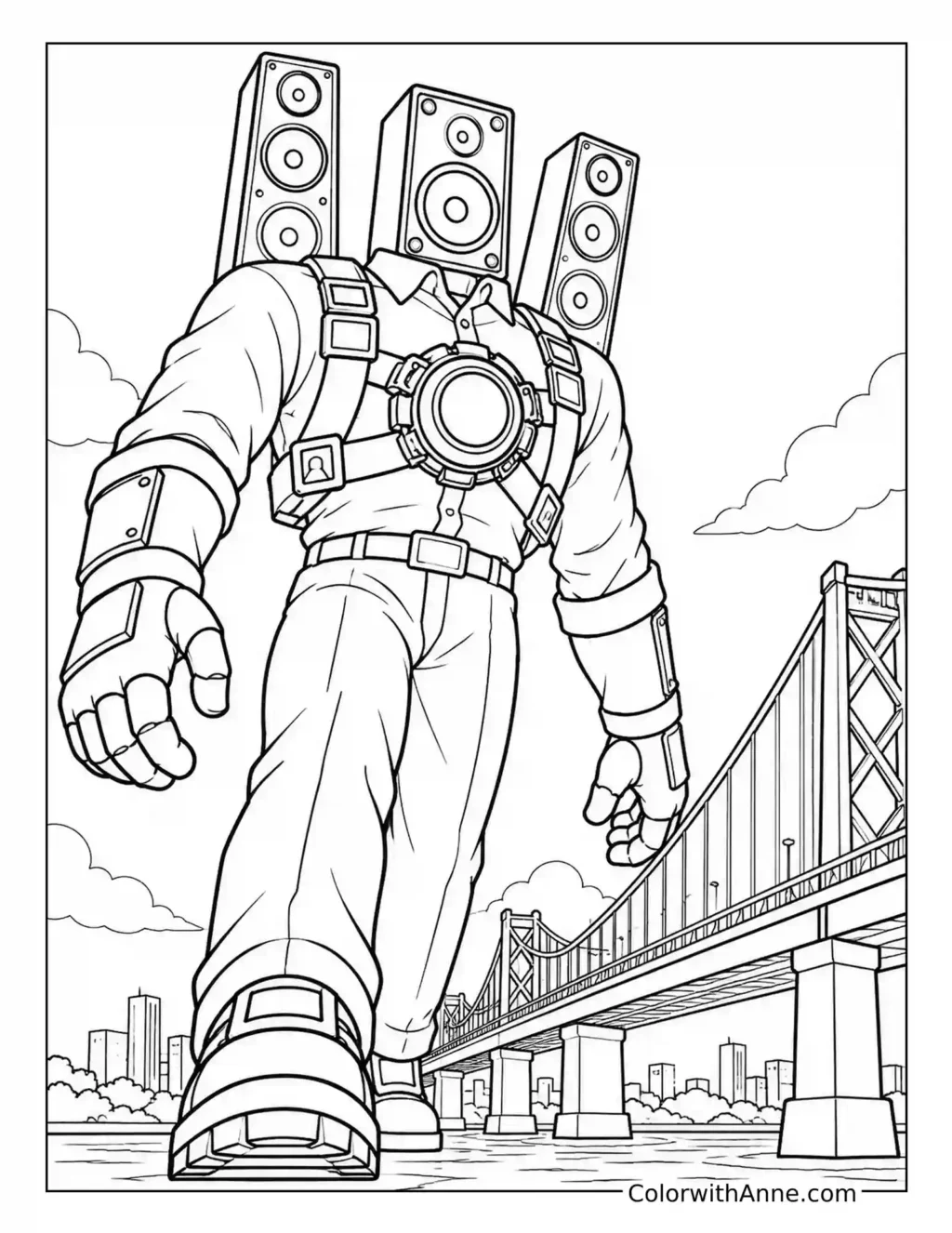
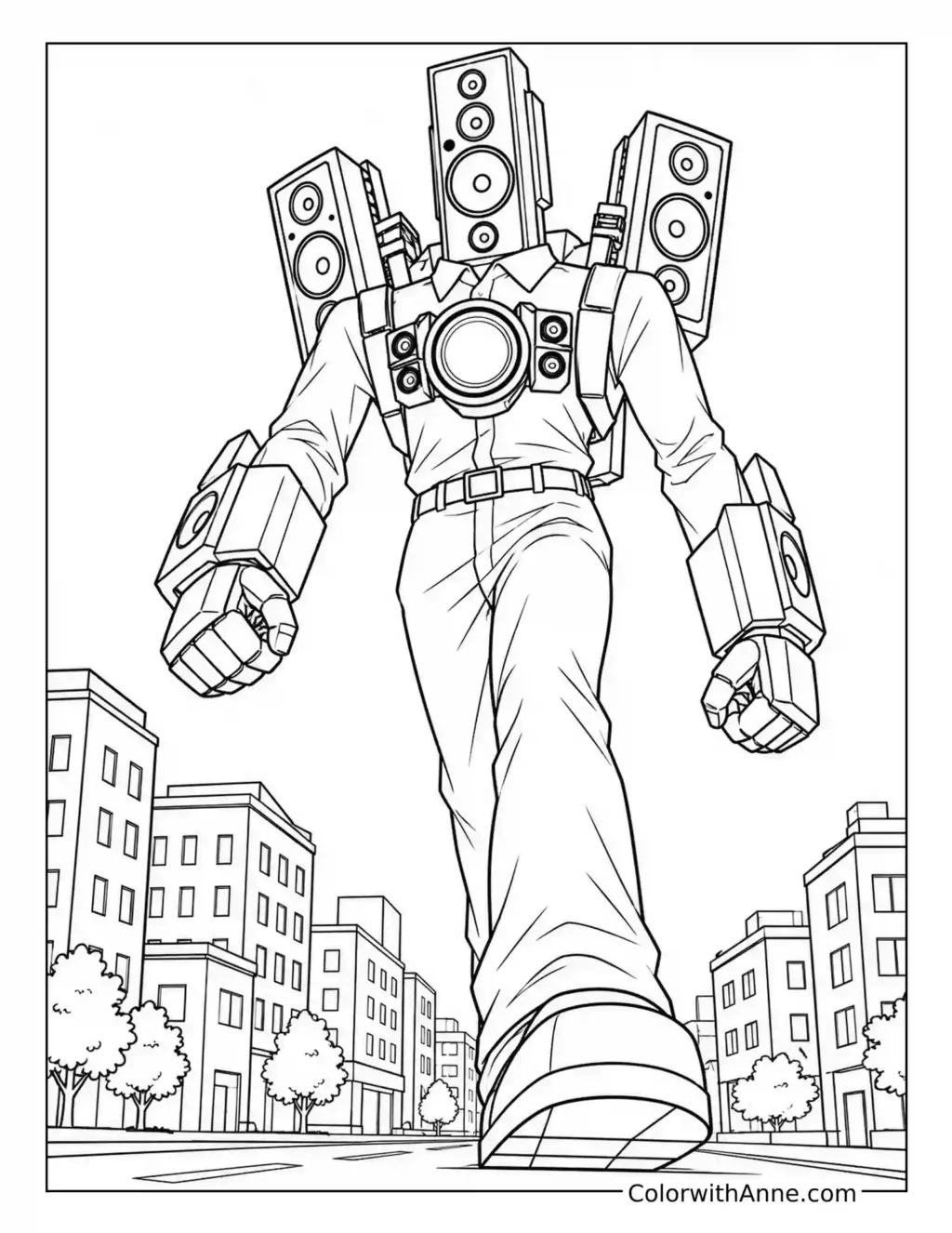
Titan Speakerman coloring pages leave time to take in that unmistakable silhouette without the action rushing ahead. The speaker shapes give the design its identity, even before a fan reaches for the familiar reds. Getting those details right can become a satisfying project for someone who already knows exactly how their favorite Titan should look.
Free Printable Titan Speakerman Coloring Pages
Click any coloring page below to open the PDF, then print on US Letter or A4 paper.
Did you find what you needed?
Help us choose what to create or improve next.
Coloring Ideas for Titan Speakerman Pages
Try these creative ideas to make the most of your coloring sheets.
Two Titans, One Team Palette
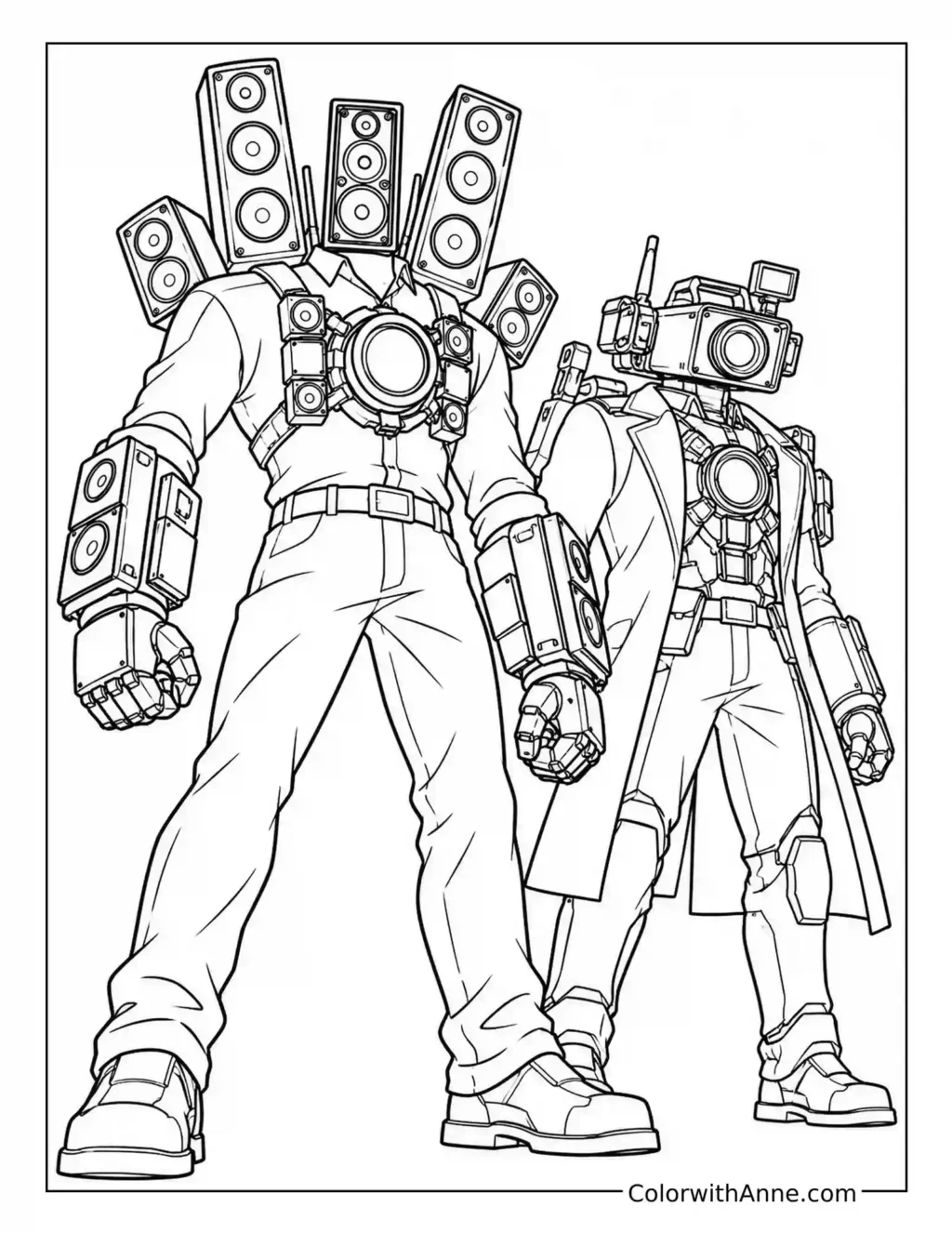
Titan Speakerman and Titan Cameraman stand together with distinctly different silhouettes. Start by choosing the colors they will share, then give each a separate accent.
Red for Speakerman and blue for Cameraman will distinguish them quickly. Use the same family of grays on selected equipment, varying the lightness where neighboring parts meet.
This page works well as a shared coloring project. Each person takes one titan, agreeing only on the common metal shades before beginning. Compare the result from across the table: the figures should feel connected while each still has a clear identity.
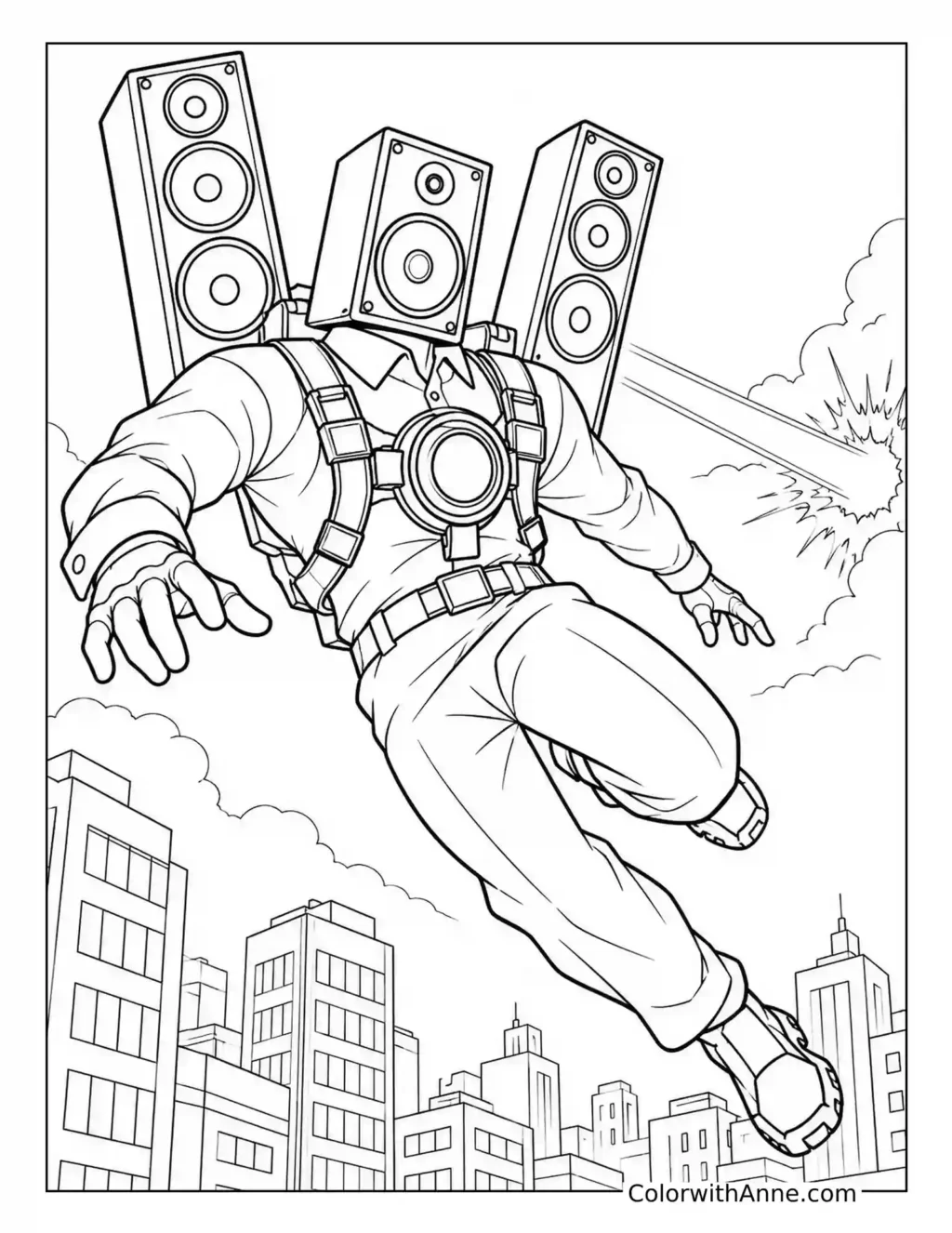
Follow the Beam Past the Dodge
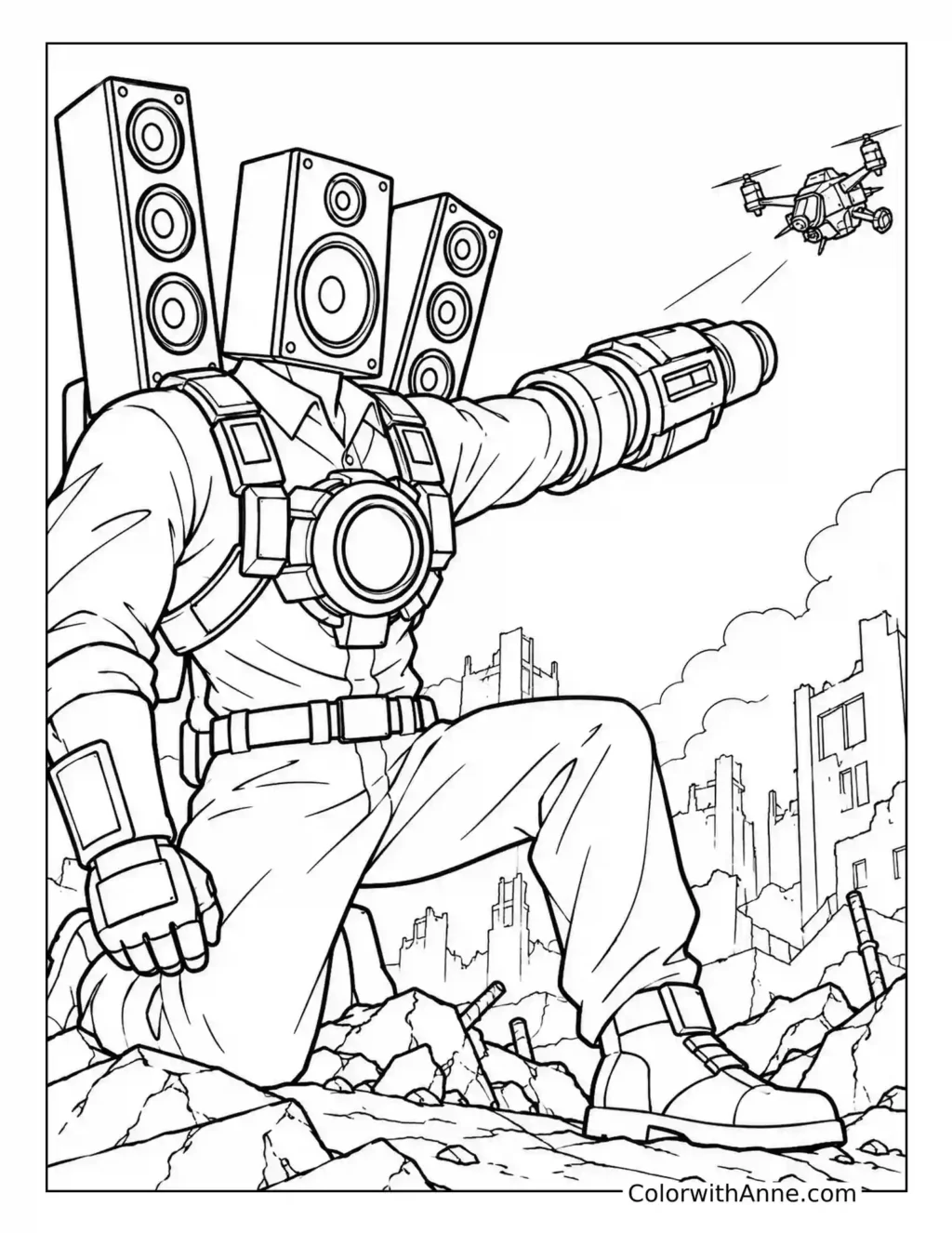
The beam creates a strong direction through the action, while the city below establishes the height. Trace its path with a fingertip before deciding where the brightest color should go.
Choose pale yellow, cyan, or another clear beam color. Keep a narrow area near its center almost white, then deepen the outer edge. The nearby buildings can remain subdued.
Repeat a faint trace of that color along the equipment edges closest to the beam. Use it sparingly. A small reflection can connect the light to the figure while preserving the feeling that the beam has only just passed.
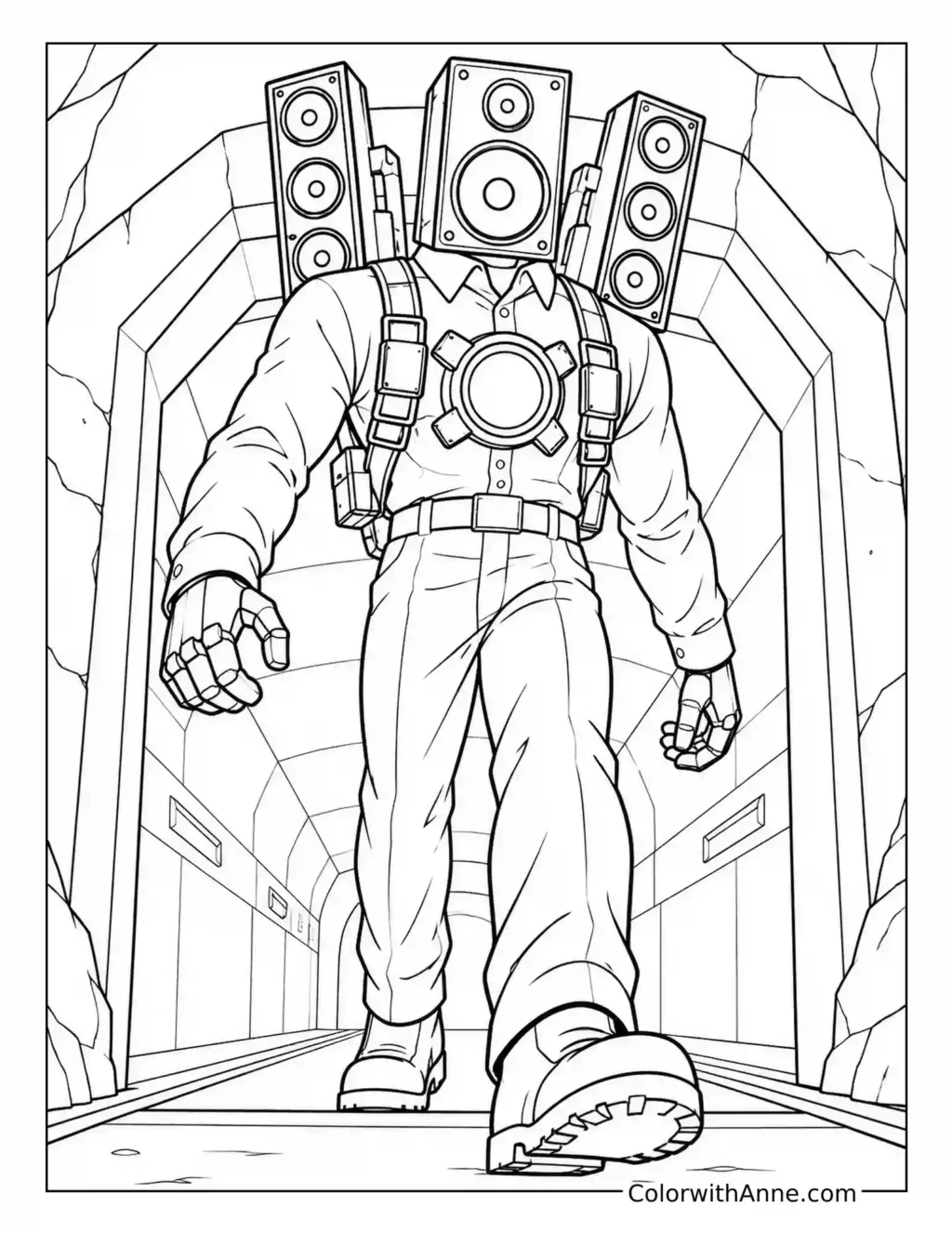
One Step from Tunnel Shadow into Daylight
The tunnel entrance offers a natural divide between shadow and light. Decide which forward surfaces have reached daylight before coloring the deeper areas behind them.
Use a darker version of each chosen color inside the tunnel, then a lighter version on the exposed parts. Red can shift from muted brick to a clearer, brighter shade across the figure.
Keep a little separation between the tunnel’s darkest edge and the equipment in front of it. The depth should come from overlapping tones, with enough visible detail to follow Titan Speakerman’s stride out of the entrance.
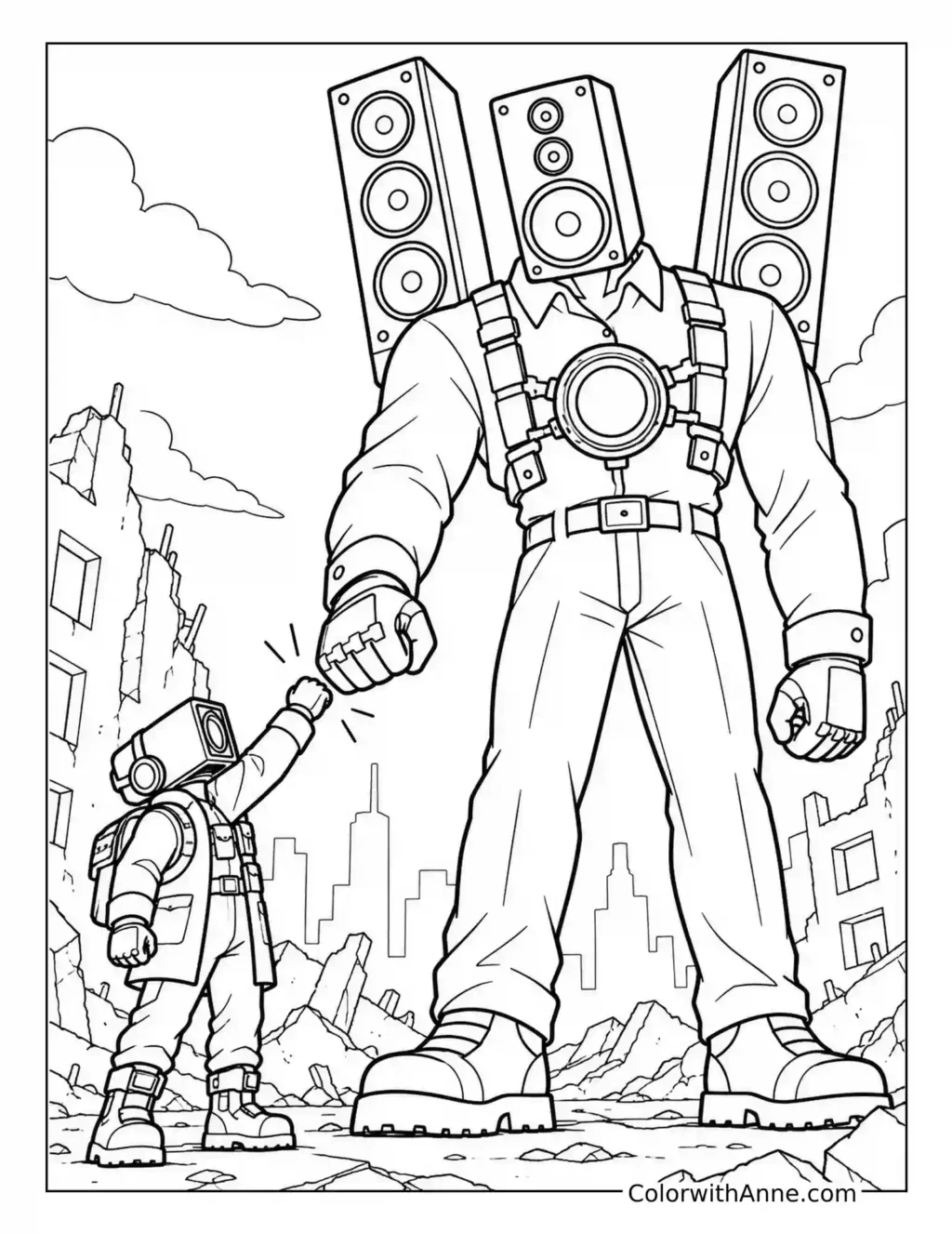
The Smaller Ally Earned That Fist Bump
The difference in size makes the fist bump the first thing worth noticing. Keep the two meeting hands clear before working through the rubble.
Choose one shared accent for the allies, then use different main colors on their equipment. Quiet stone tones will leave the gesture prominent.
Imagine what the smaller ally did to help: spotted a hidden route, delivered a warning, or stayed behind to finish an important task. Add a brief caption beneath the finished page that hints at it. Something specific will give the moment more character than a general victory slogan.
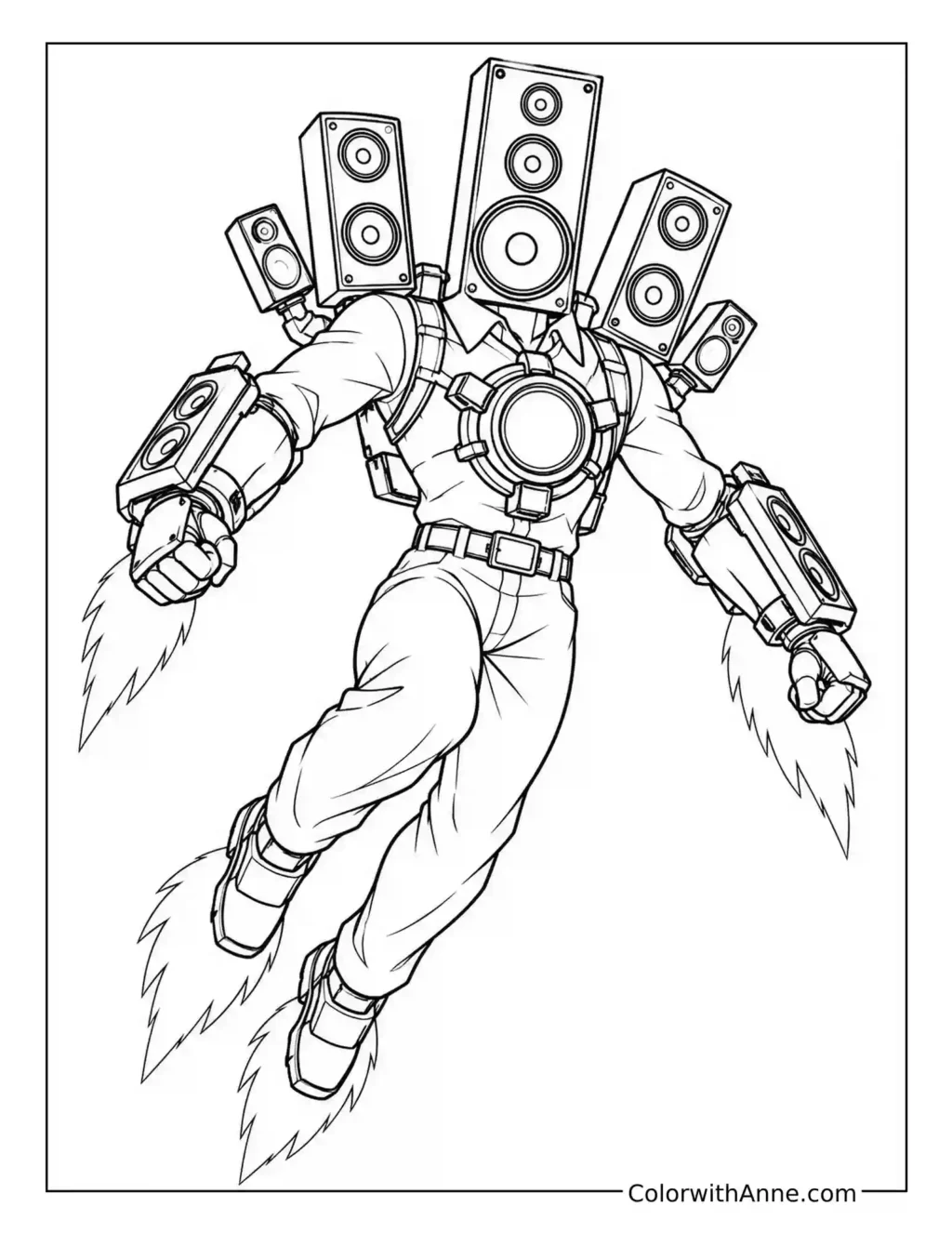
A Flight Scene Built around Hot and Cool Colors
The firing jets provide the movement, while Titan Speakerman’s equipment supplies the weight. Their different color treatments can make both feel more convincing.
Use warm yellow and orange through the exhaust, leaving its brightest areas pale. Cooler blue-gray on the surrounding machinery will sharpen the contrast. Keep the red clothing distinct from the orange jets.
Follow the longer equipment shapes with smooth color, then use lighter, less even strokes through the exhaust. The change in texture can suggest solid surfaces beside moving light without adding more detail to the sky.
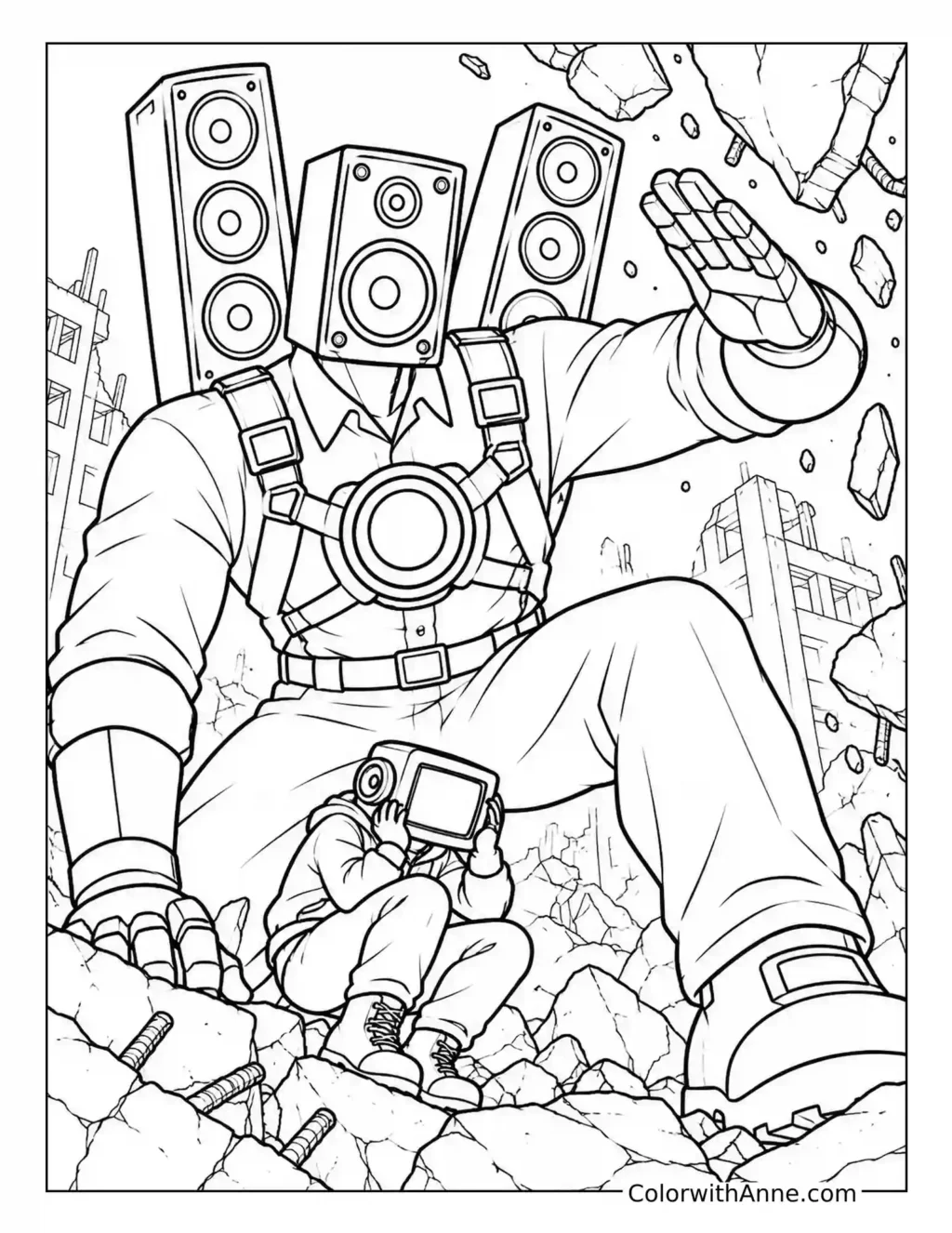
Find the Safe Space beneath the Shielding Pose
Titan Speakerman shields a smaller ally from falling debris. Begin with the ally, then follow the larger figure’s pose around the space being protected.
Give the smaller character a clear accent and keep the debris in restrained browns and grays. Check where falling pieces overlap the figures before filling those areas.
Use softer shading within the sheltered space and stronger contrasts on the exposed outer equipment. Step back once both characters are colored. The protective action should read clearly before the smaller fragments receive their final attention.
The City after the Action Has Passed
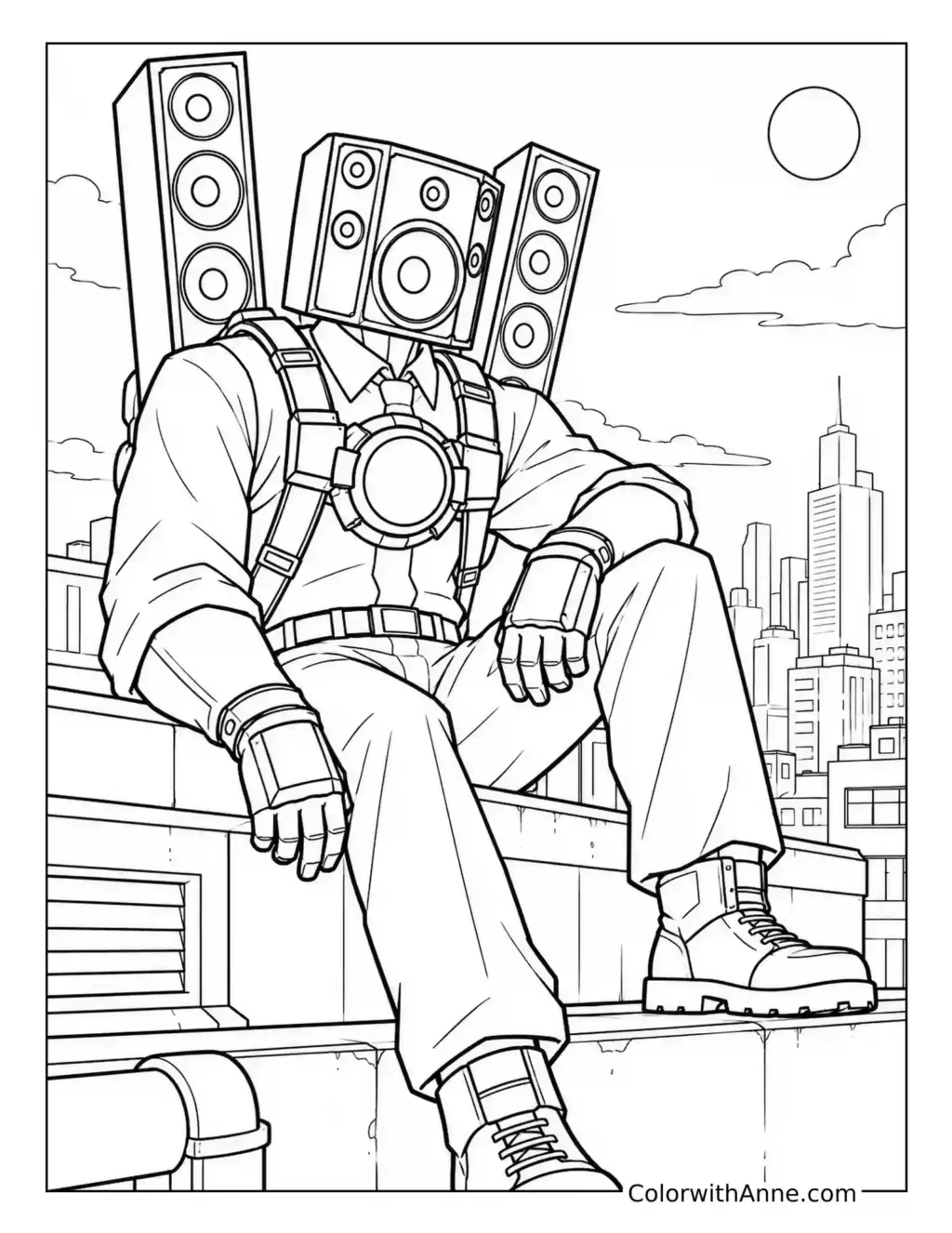
The seated rooftop pose changes the pace of the collection. Choose a time of day and let the city establish the mood around the resting figure.
For early evening, try a peach sky with muted blue-gray buildings. A few warm window colors can suggest life continuing below. Keep nearby rooftop surfaces stronger than the distant skyline.
Leave some buildings less detailed as they recede. The contrast between the close figure and quieter city gives the picture room to breathe. It can stand beside one of the action pages as the moment afterward, using the same character colors under a different light.
Turn a Beat into a Color Sequence
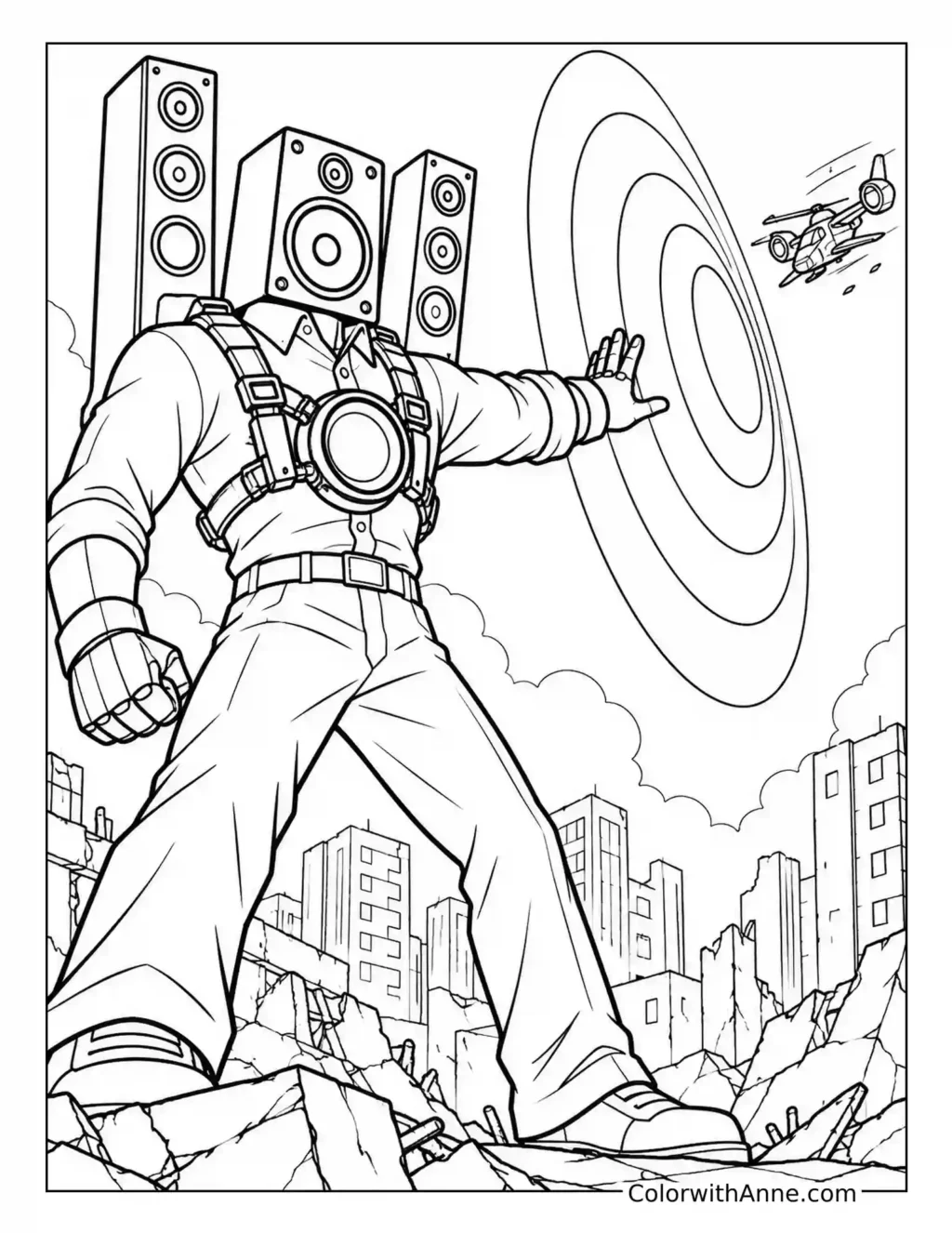
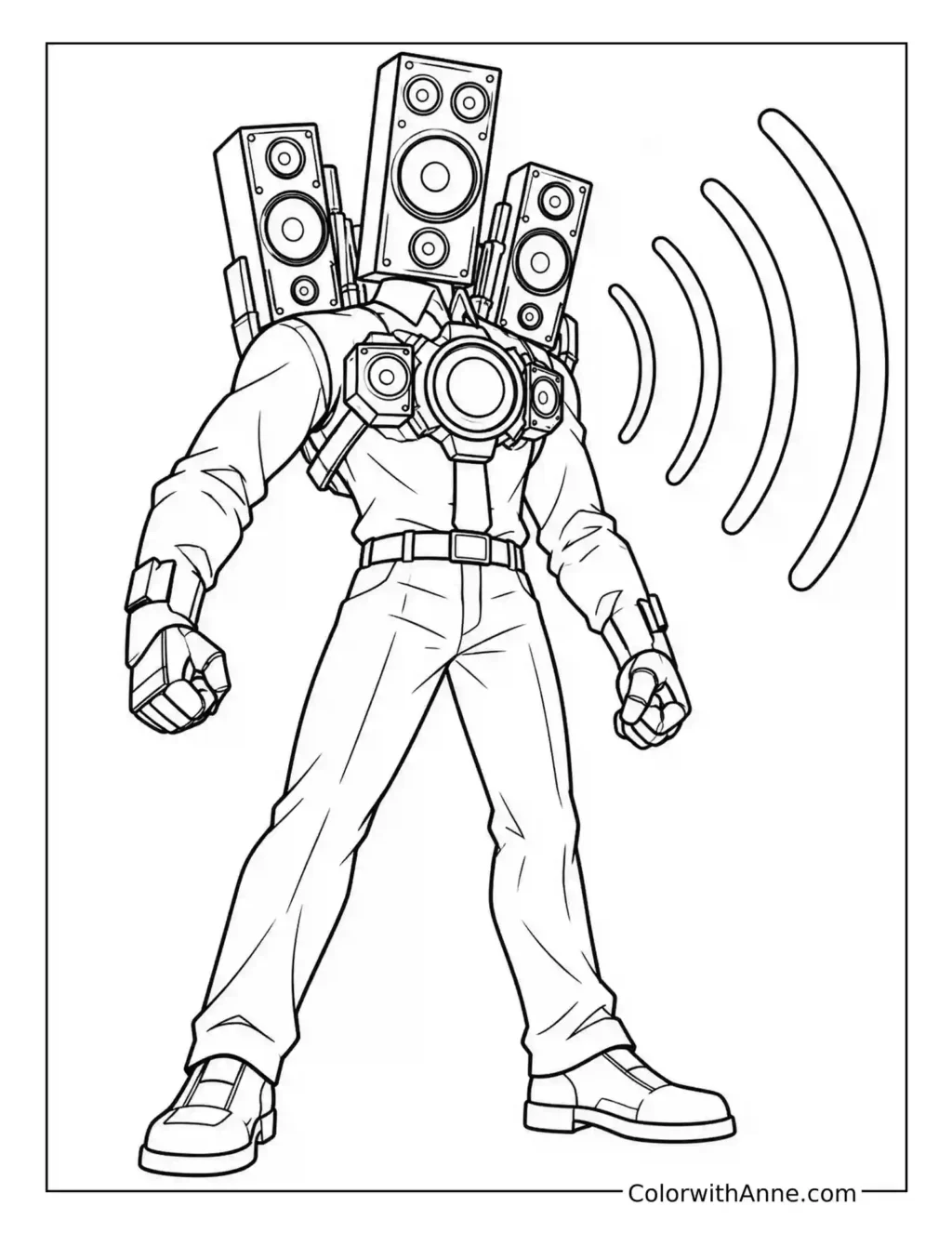
The radiating wave shapes give sound a visible pattern around Titan Speakerman. Choose a short repeating sequence before filling them.
Two related colors with a pale interval can create a steady pulse. A third, stronger accent used less often can suggest an occasional heavier beat. Keep the figure’s palette simple enough to remain distinct.
Tap a short rhythm on the table and assign a color to each kind of beat. Carry that order through the wave shapes, repeating it until the pattern is established. The result becomes a visual version of the rhythm, with the repetition doing more than a different color in every space would.