
A fish can turn a trip past an aquarium into a much longer stop. One moment it is close to the glass; the next it has slipped behind a plant, leaving everyone watching the same patch of water. Even a fish hovering in place gives the eye something to follow.
Fish coloring pages begin with that familiar urge to look a little longer. There is plenty to notice in an animal that moves so differently from anything on land. A quick turn, a flick of a tail, or the brief gleam of a passing body can stay in the mind after the visit is over.
Free Printable Fish Coloring Pages
Click any coloring page below to open the PDF, then print on US Letter or A4 paper.
Did you find what you needed?
Help us choose what to create or improve next.
Coloring Ideas for Fish Pages
Try these creative ideas to make the most of your coloring sheets.
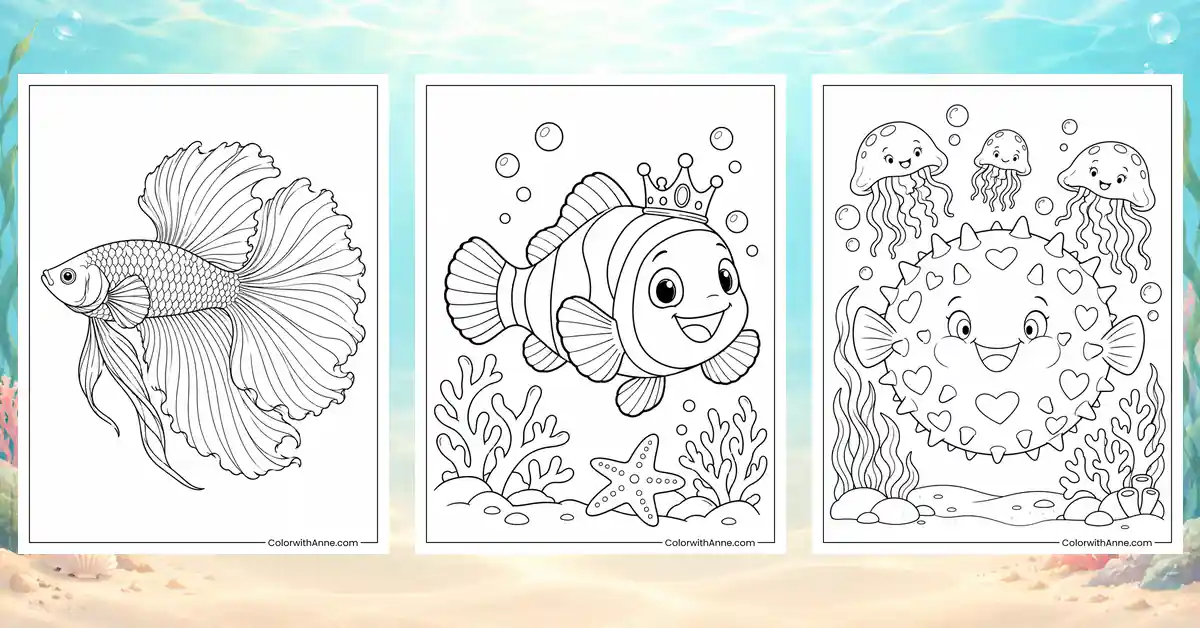
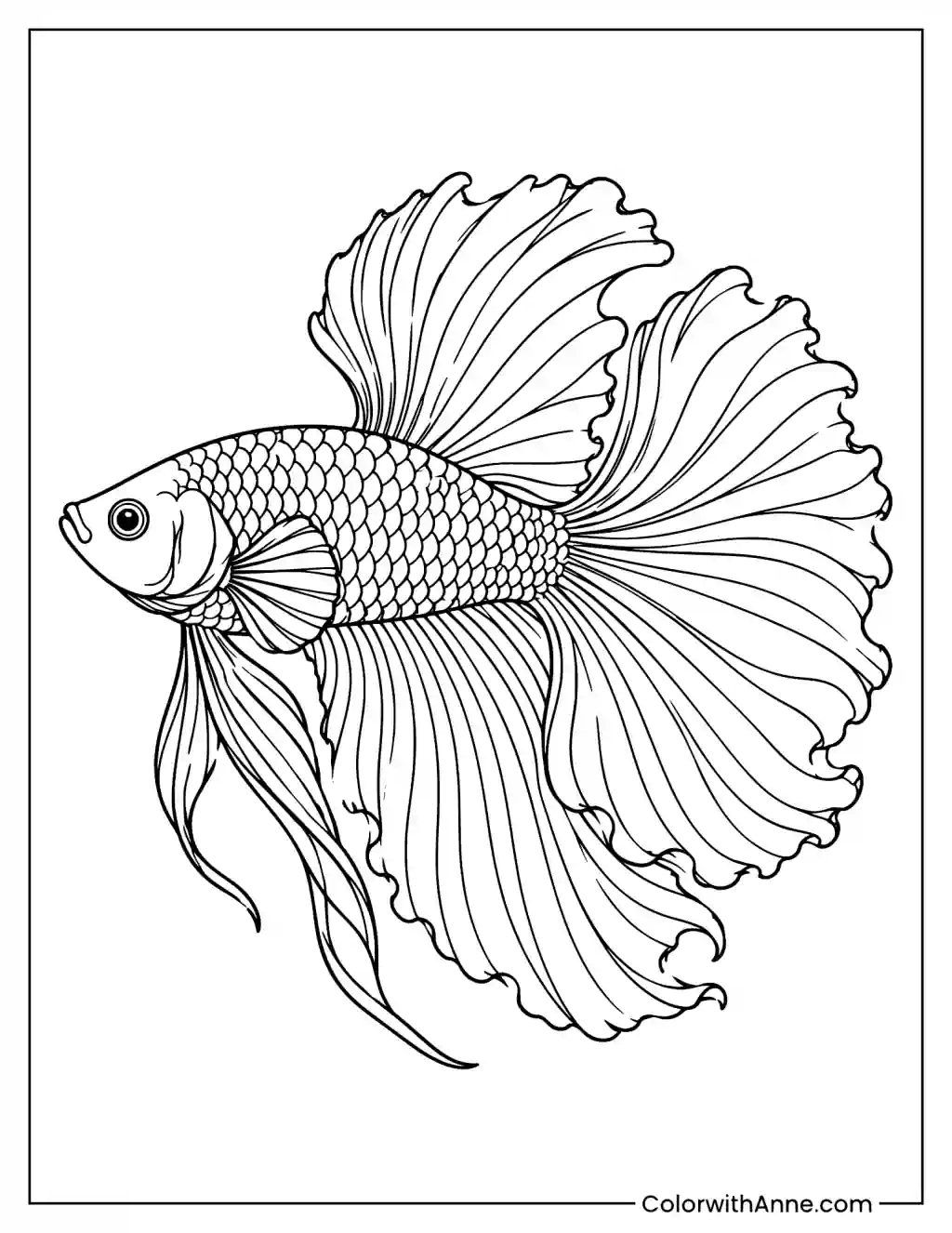
Hang the Betta Where It Can Turn
The betta's broad tail gives a hanging paper fish plenty of shape, even without a drawn background. A deep blue body and red fins would make a clear, bold version.
Cut around the finished fish with a little white space left beyond the outline. Keep the slender trailing fins inside a wider patch of paper rather than trying to cut each narrow part free.
Attach a thread through the white margin above the body and hang it where it has room to turn. Check how it sits before fixing the thread in place; moving the attachment slightly can help the fish hang level, with its fan of fins spread out.
Find a Fish From a Few Clues
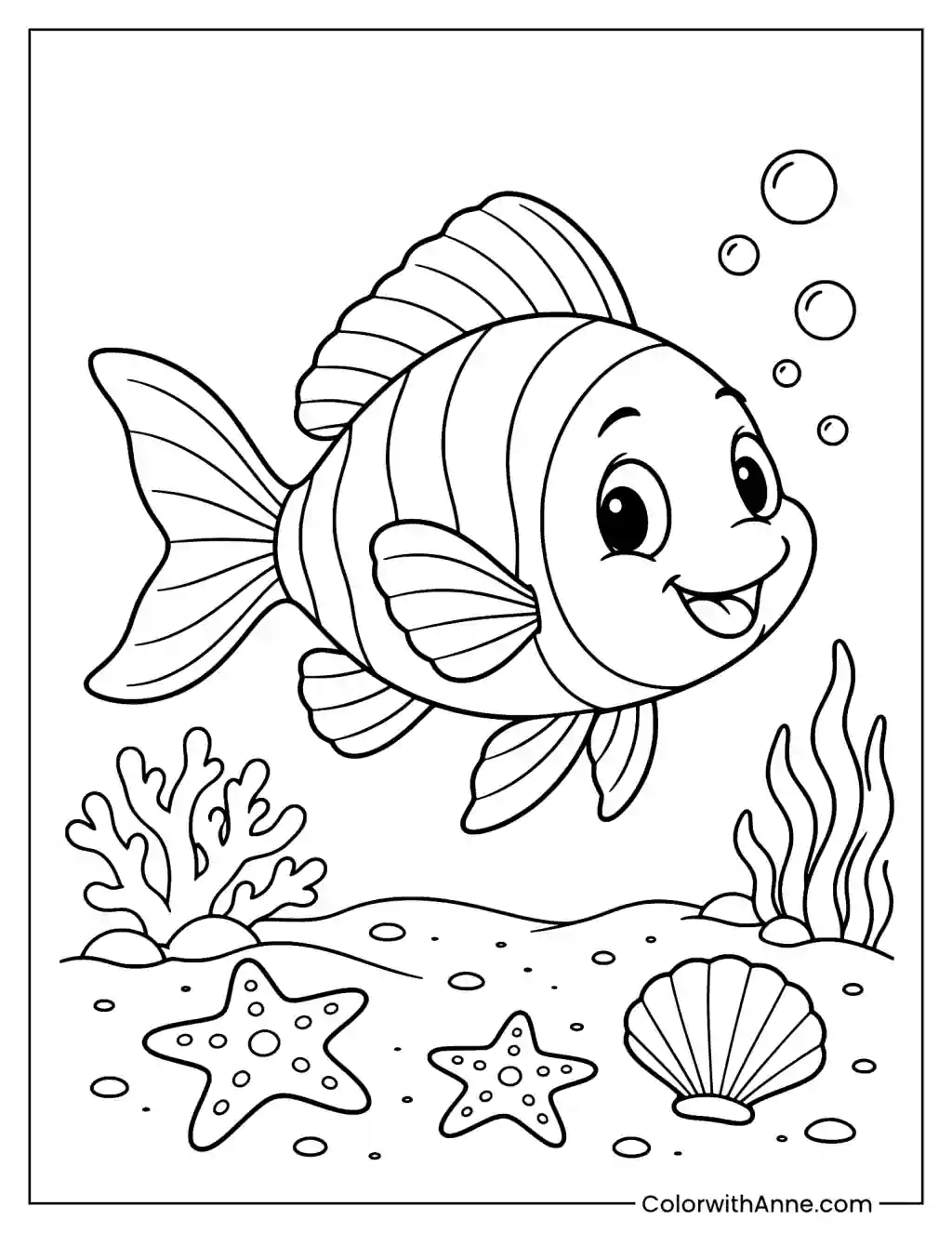
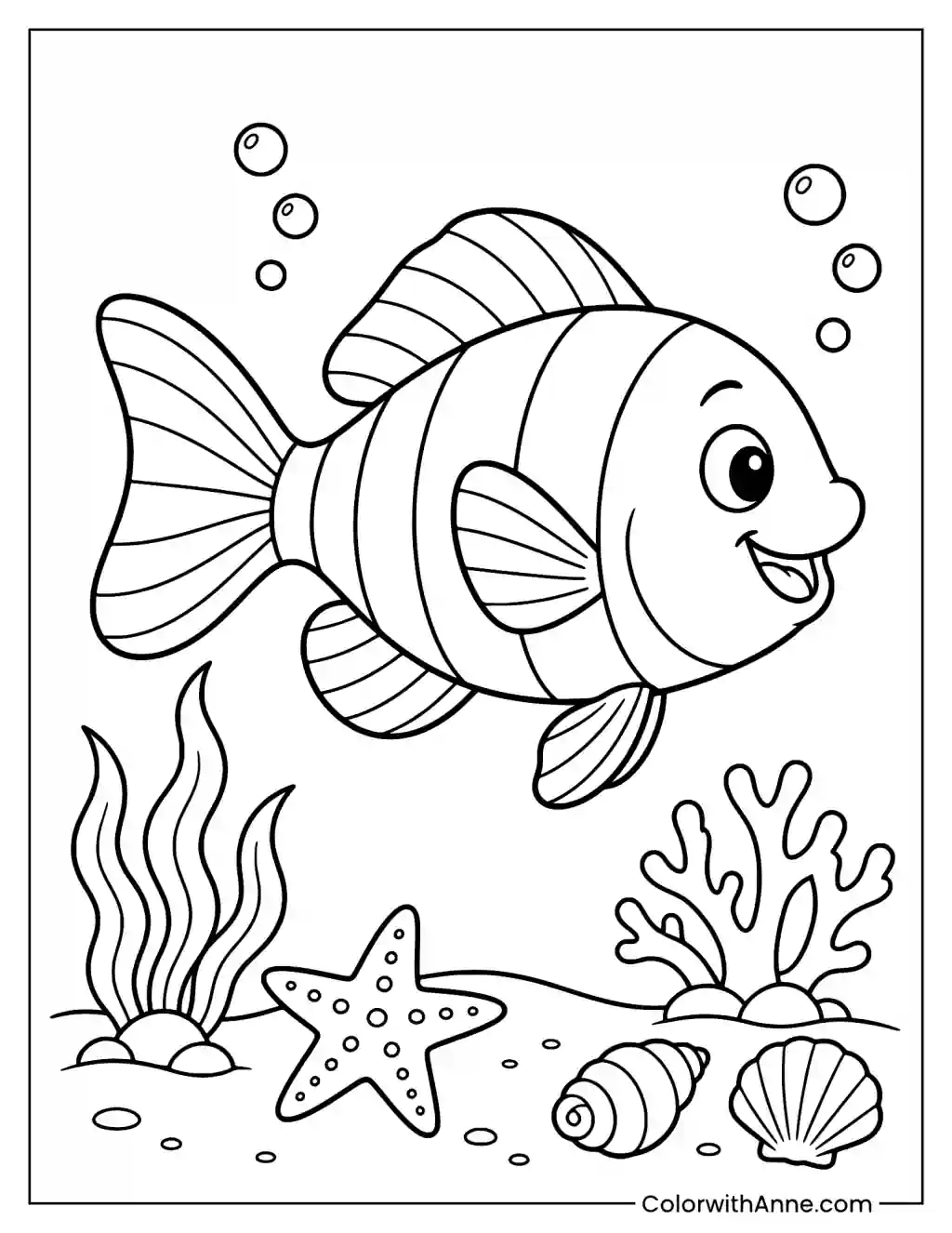
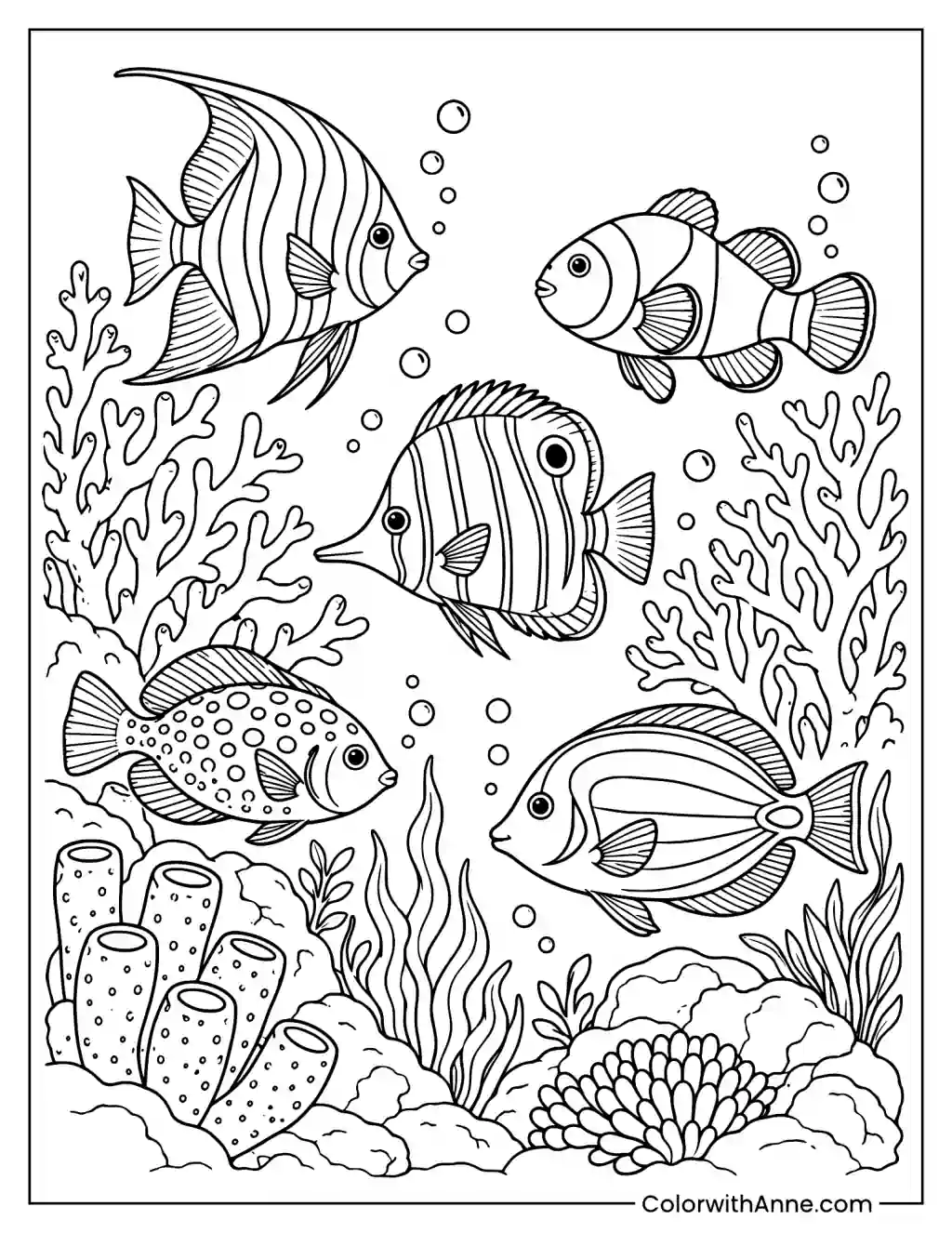
Choose one of the five fish in this crowded reef without pointing to it. Another person has to find your choice from clues about the drawing, looking past the coral and bubbles to the fish themselves.
Start with something broad, such as stripes or spots. If more than one fish still fits, add a clue about its outline: a tall fin, a rounder body, or the shape of its tail. Keep the answer secret until someone points it out.
Give each fish a different main color for a round with an extra set of clues. Then try again using only shapes and markings, leaving those easy color clues out.
Carry a Current Around the Seahorse
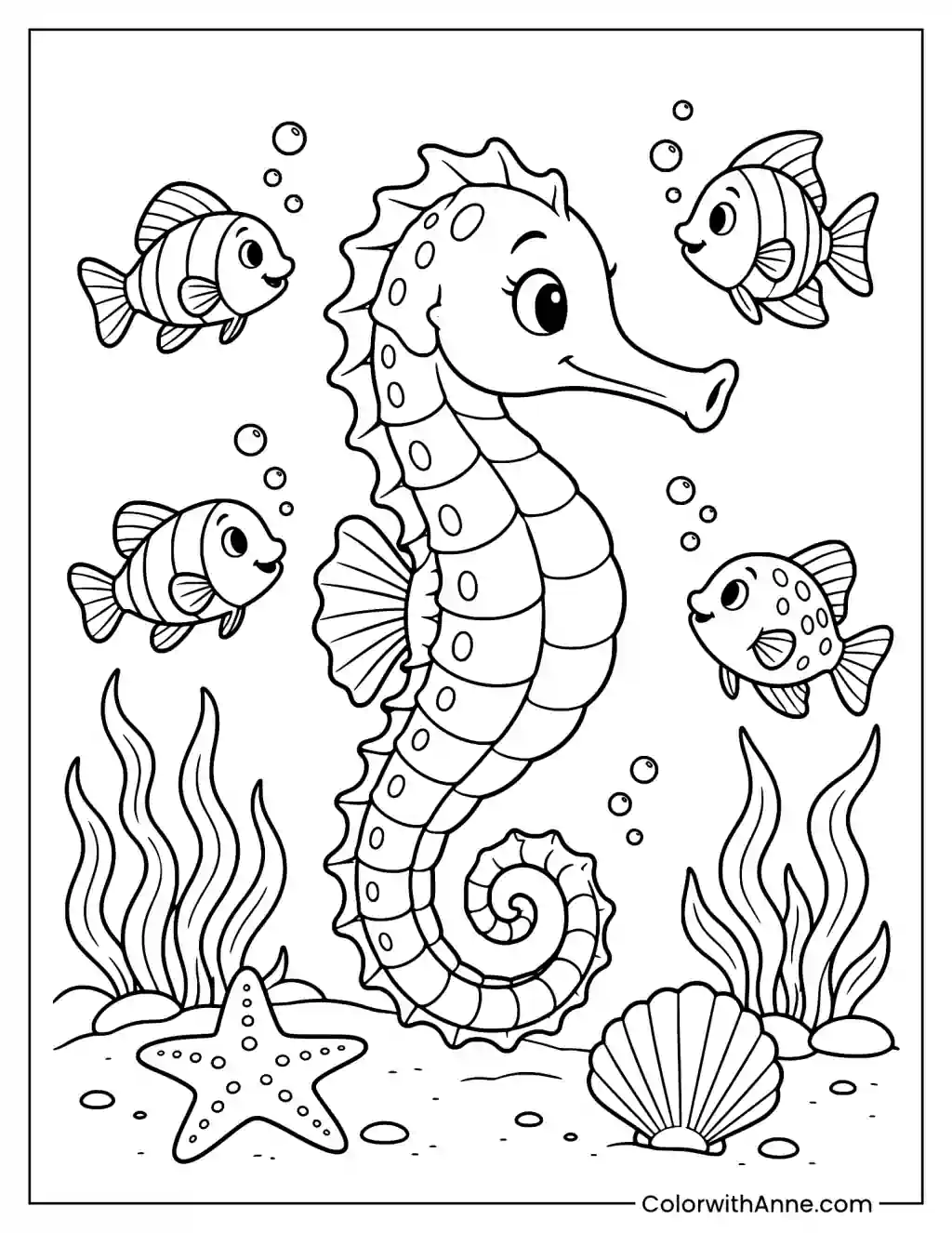
The seahorse's curled tail offers a starting point for drawing a current through the water. You could extend that curling movement into the open spaces around the four smaller fish, keeping each animal's outline clear.
An orange seahorse against pale turquoise water would keep the central shape easy to follow. Before filling the water, try the current's route with a finger, passing between the fish and above the shells rather than crossing straight through them.
Let the route open into a broad curve near the top of the page. A few short, curved marks along it can suggest movement without enclosing the animals in a ribbon. Leave breaks so the current does not become another solid object in the scene.
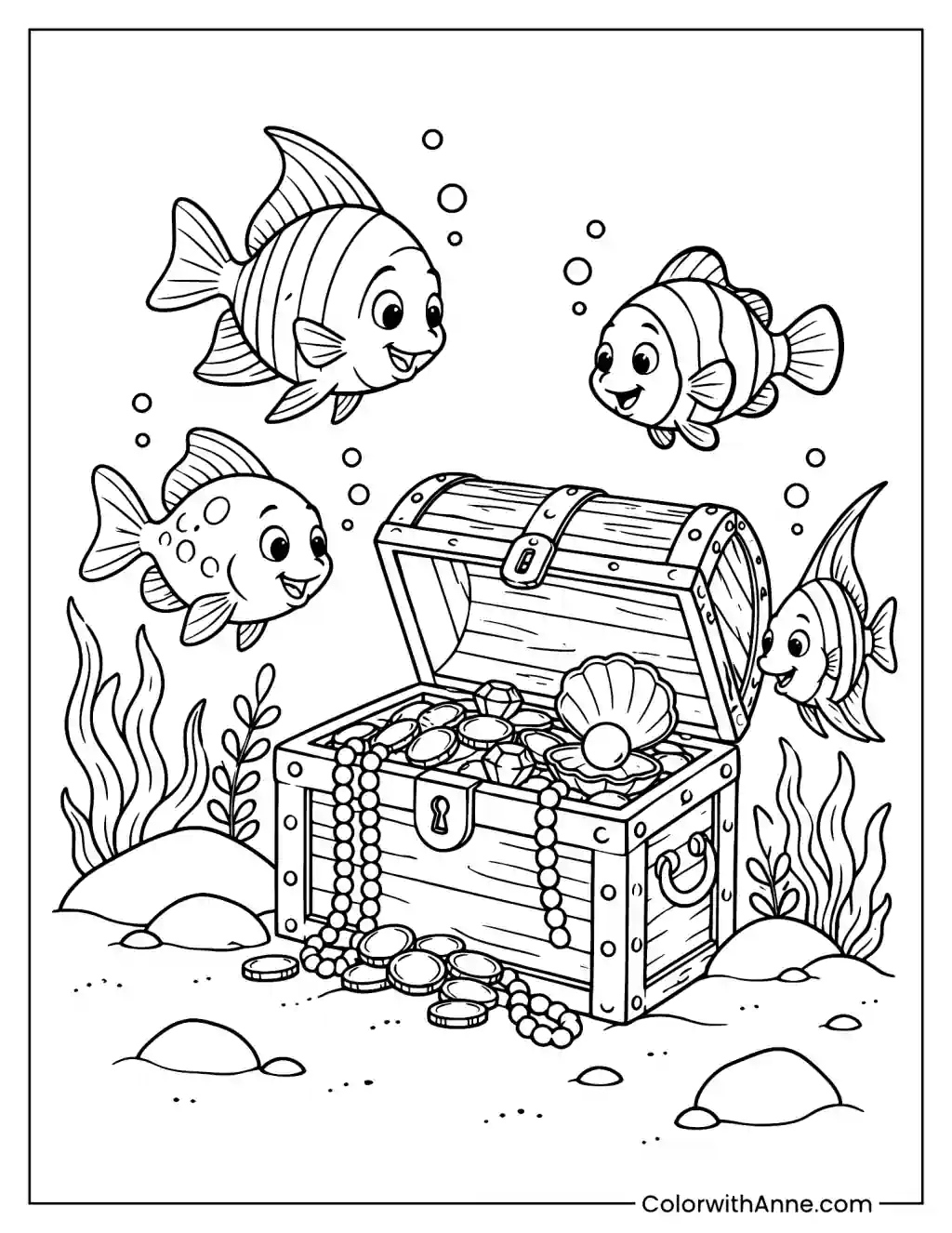
Take Stock of the Open Treasure Chest
This open chest already has enough treasure for an inventory. Start a small record beside the page with separate spaces for coins, strands of beads, and the large shell, then look for things lying outside the chest as well.
Gold coins and blue beads would make the two groups easy to distinguish. Some objects overlap inside the chest, so count only what you can clearly pick out and mark the hidden portion with a question mark.
Keep loose coins separate from those still in the chest. For the beads, record whole strands rather than every tiny circle. The finished record can sit beside the picture like the notes of someone checking what has been recovered.
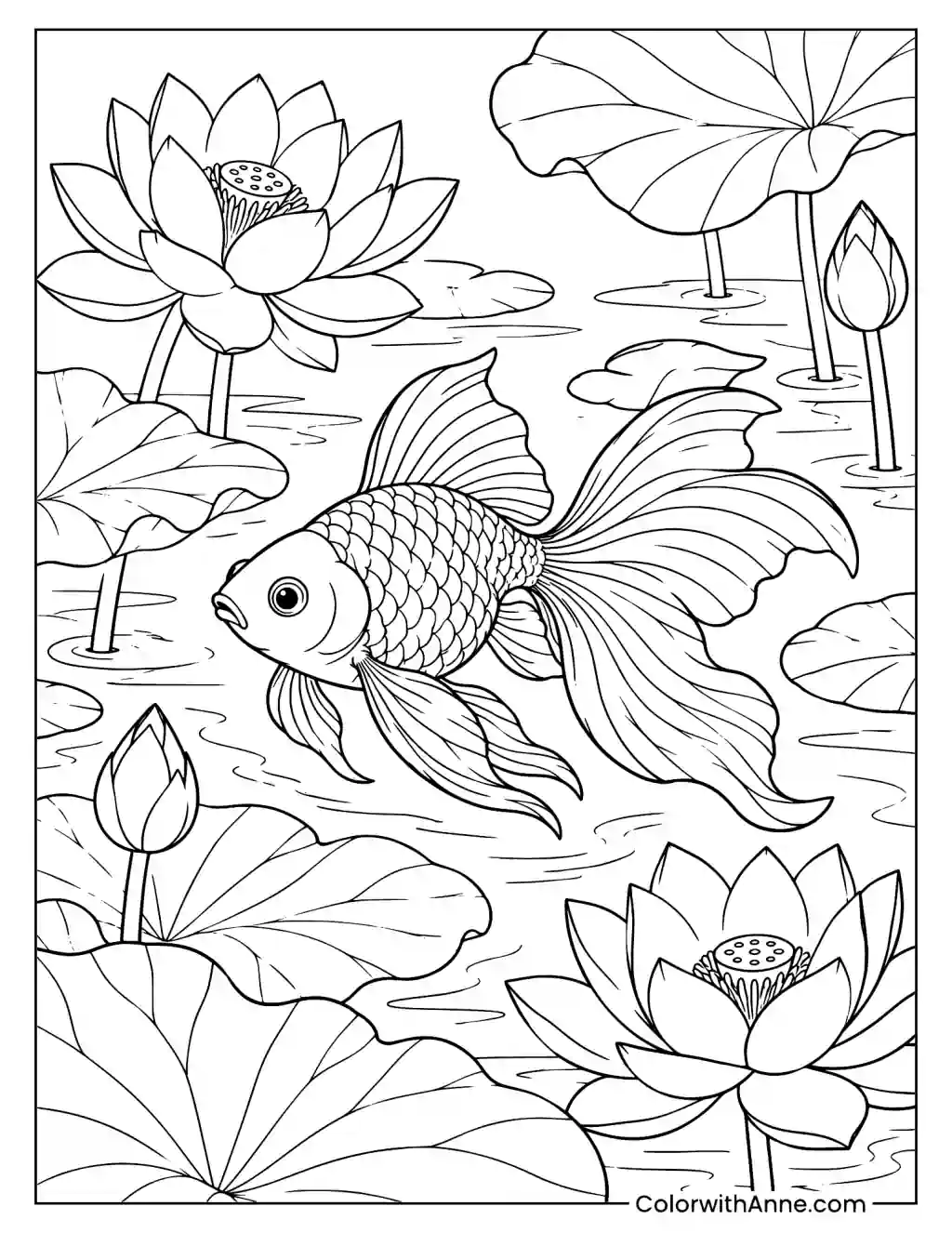
Find a Closer View of the Lotus Pond
Face two L-shaped pieces of scrap paper toward each other and overlap them to form an adjustable rectangular window. Move the paper pieces until the goldfish and part of a lotus flower share the opening, then try more leaves and less fish.
The long fins make the choice interesting: a narrow opening can lose their ends, while a wider one brings the surrounding water back in. Shift the paper pieces a little at a time and keep the original page whole.
Once you have a view you like, sketch that smaller arrangement on another sheet. A warm goldfish, pink flowers, and olive leaves would suit either the full pond or the closer study.
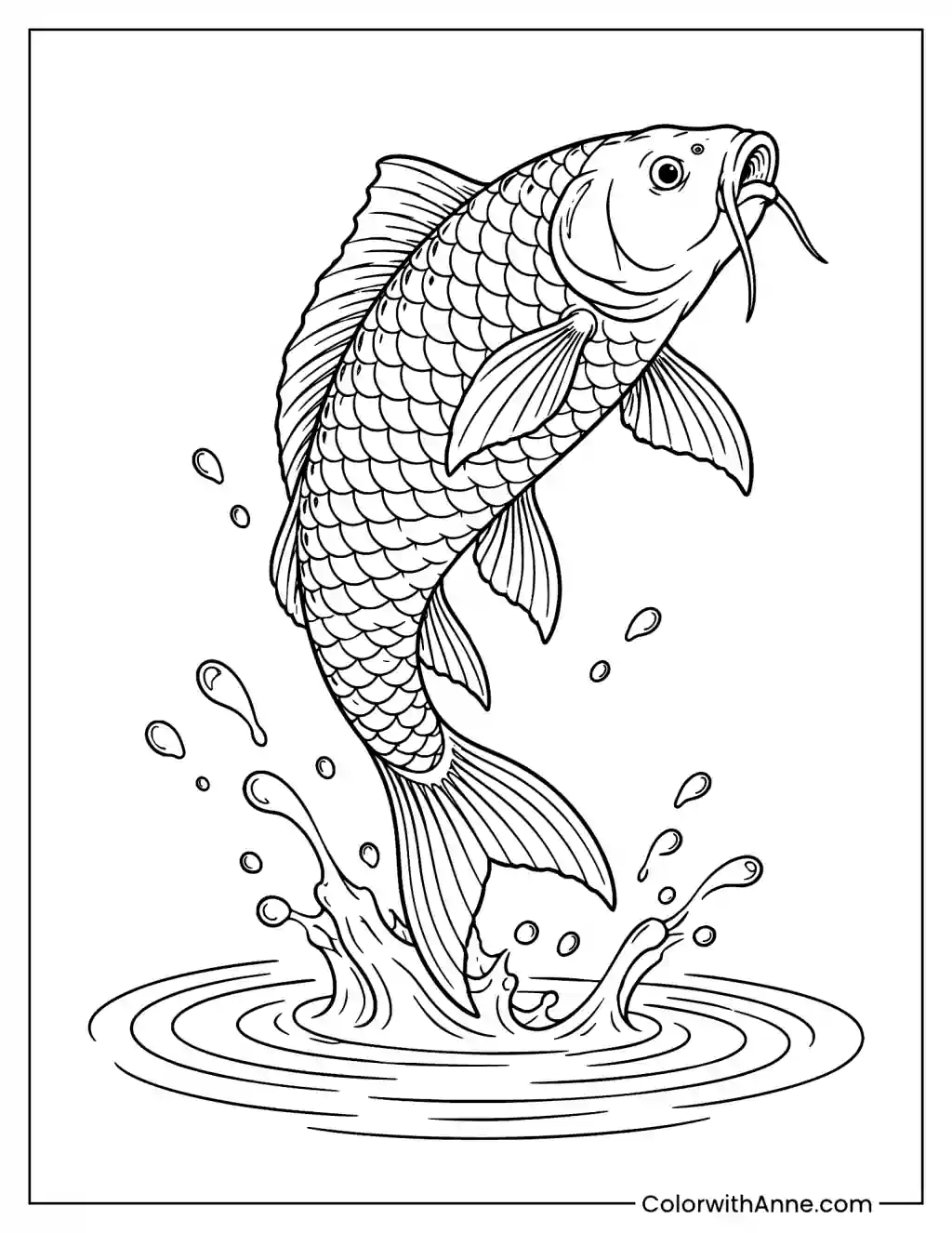
Put the Carp's Leap Into Three Pictures
The curved carp and splashing water catch one moment of a leap. Use that printed moment as the middle of a short sequence, with a simple sketch on either side to show what might come just before and after it.
For the first sketch, you could show only the head and upper back emerging above a ring of water. In the last, let most of the fish disappear below the surface, leaving the tail and a larger splash.
Keep the same curved back and fin shapes across the sketches so the fish remains recognizable. Copper scales with darker fins would carry through all three pictures. Add the strongest water marks around the places where the fish meets the surface.