
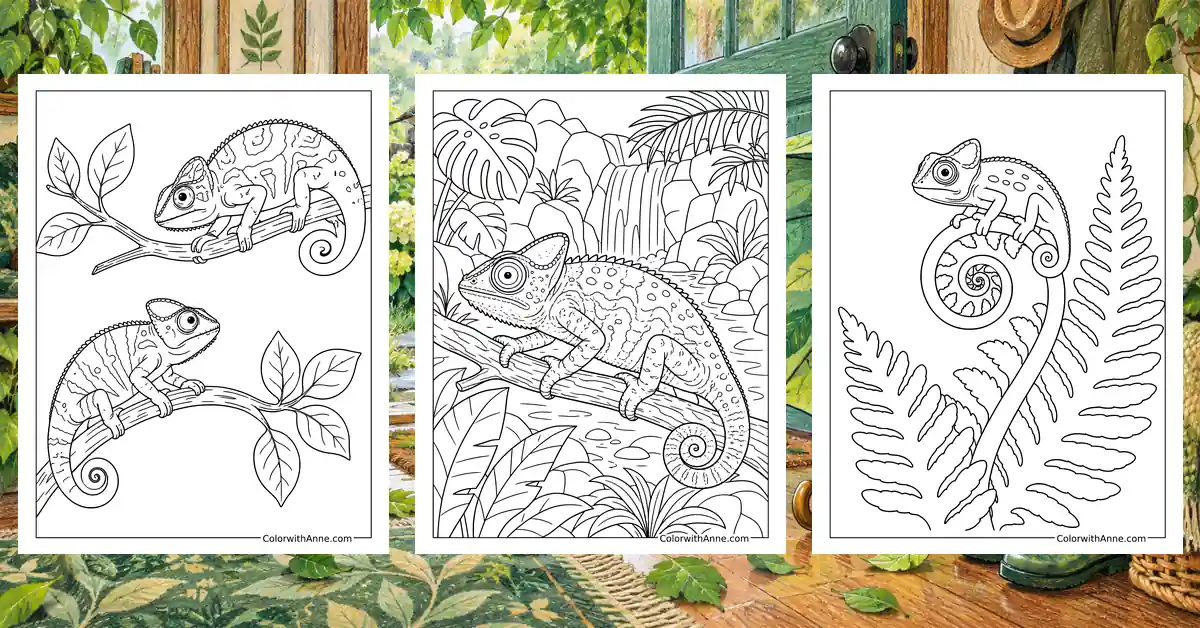
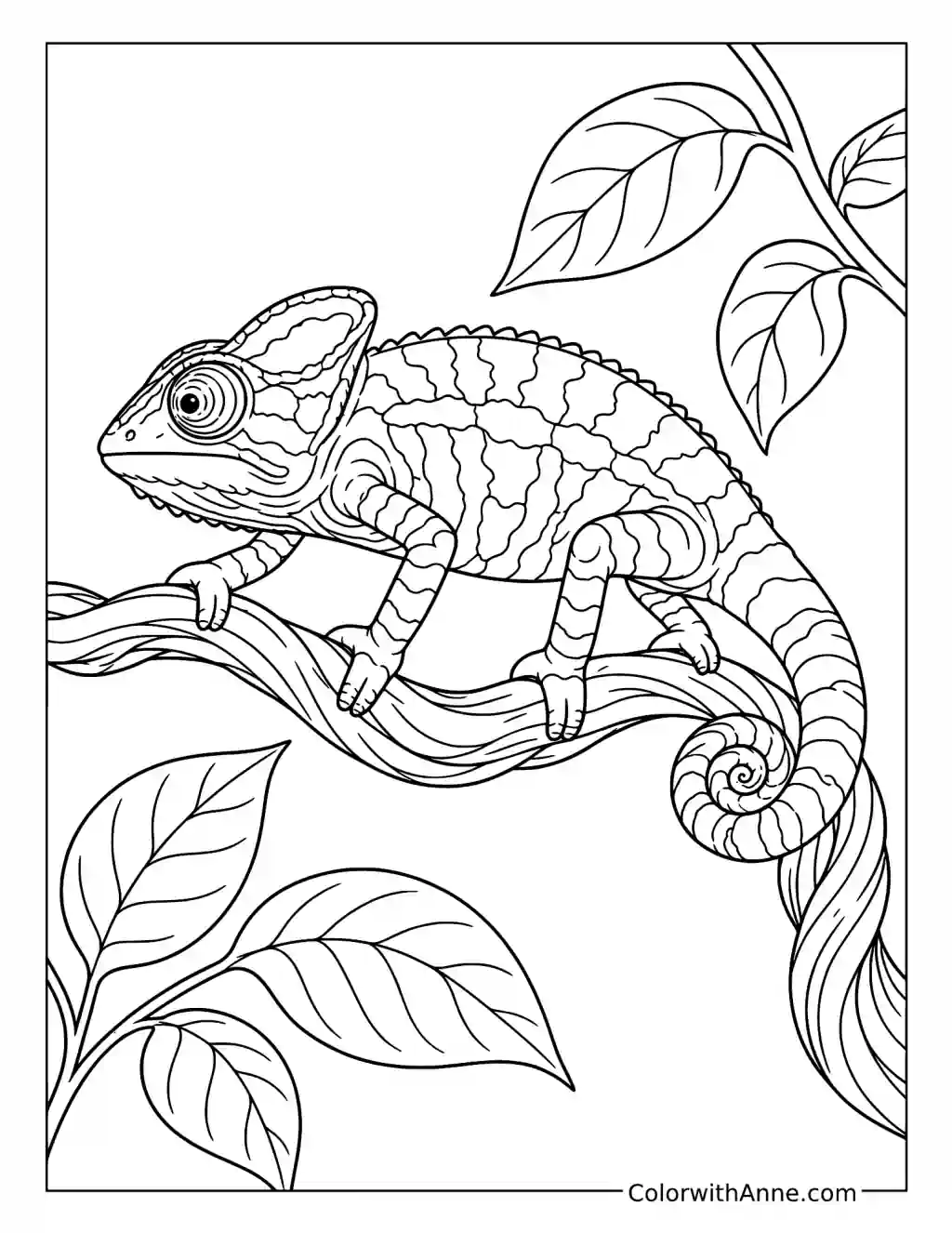
A chameleon takes its time along a branch, gripping carefully while its curled tail provides a little extra support. One eye watches nearby leaves; the other seems busy with separate business. Then a passing insect turns that slow, deliberate afternoon into a remarkably quick lunch. Life among the foliage clearly has its moments.
Chameleon coloring pages bring attention to the details that make these lizards so fascinating: rounded eyes, grasping feet, and that unmistakable spiral tail. Their changing colors give the theme a particular charm, inviting a closer look at how a quiet creature can carry so much personality beneath the leaves.
Free Printable Chameleon Coloring Pages
Click any coloring page below to open the PDF, then print on US Letter or A4 paper.
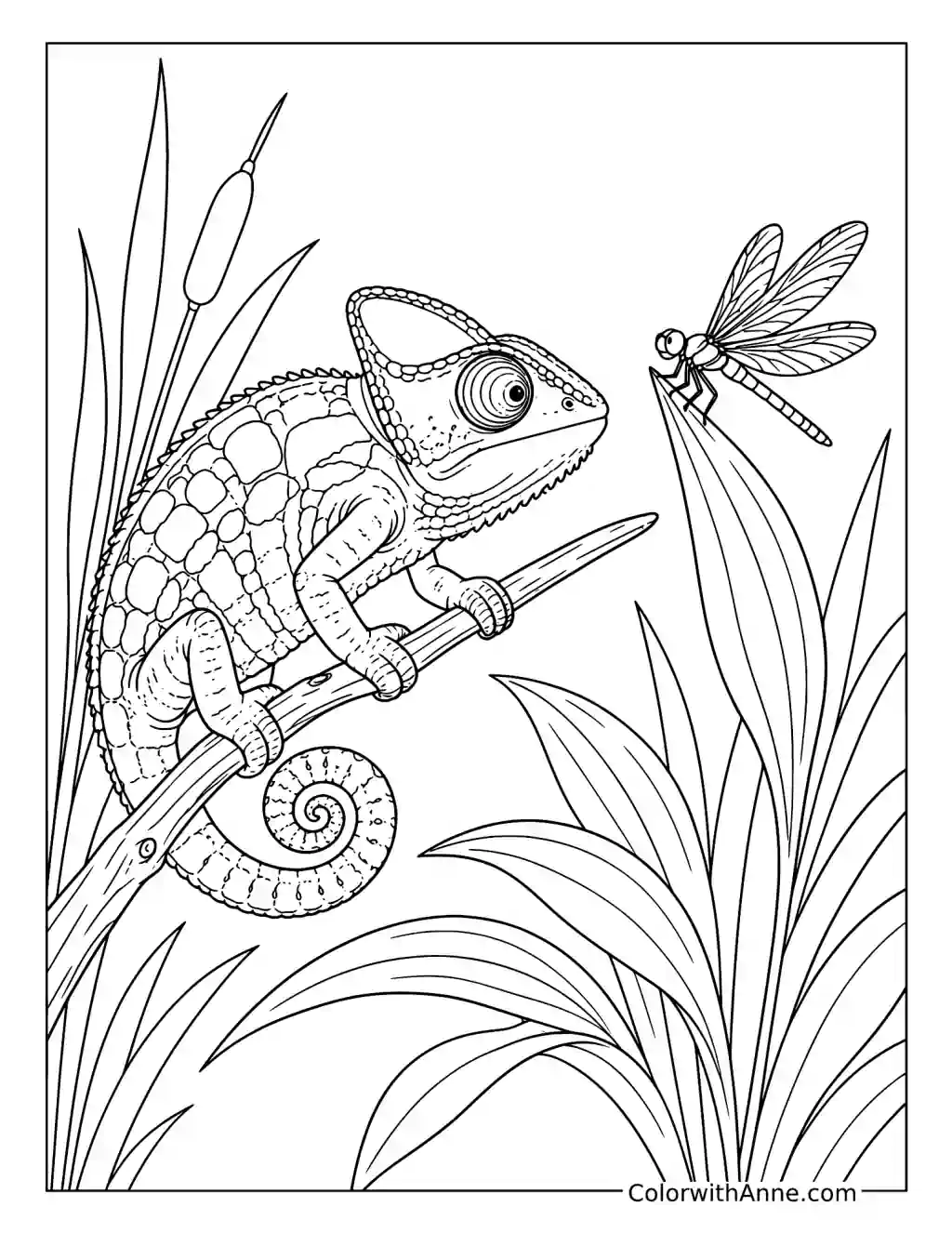
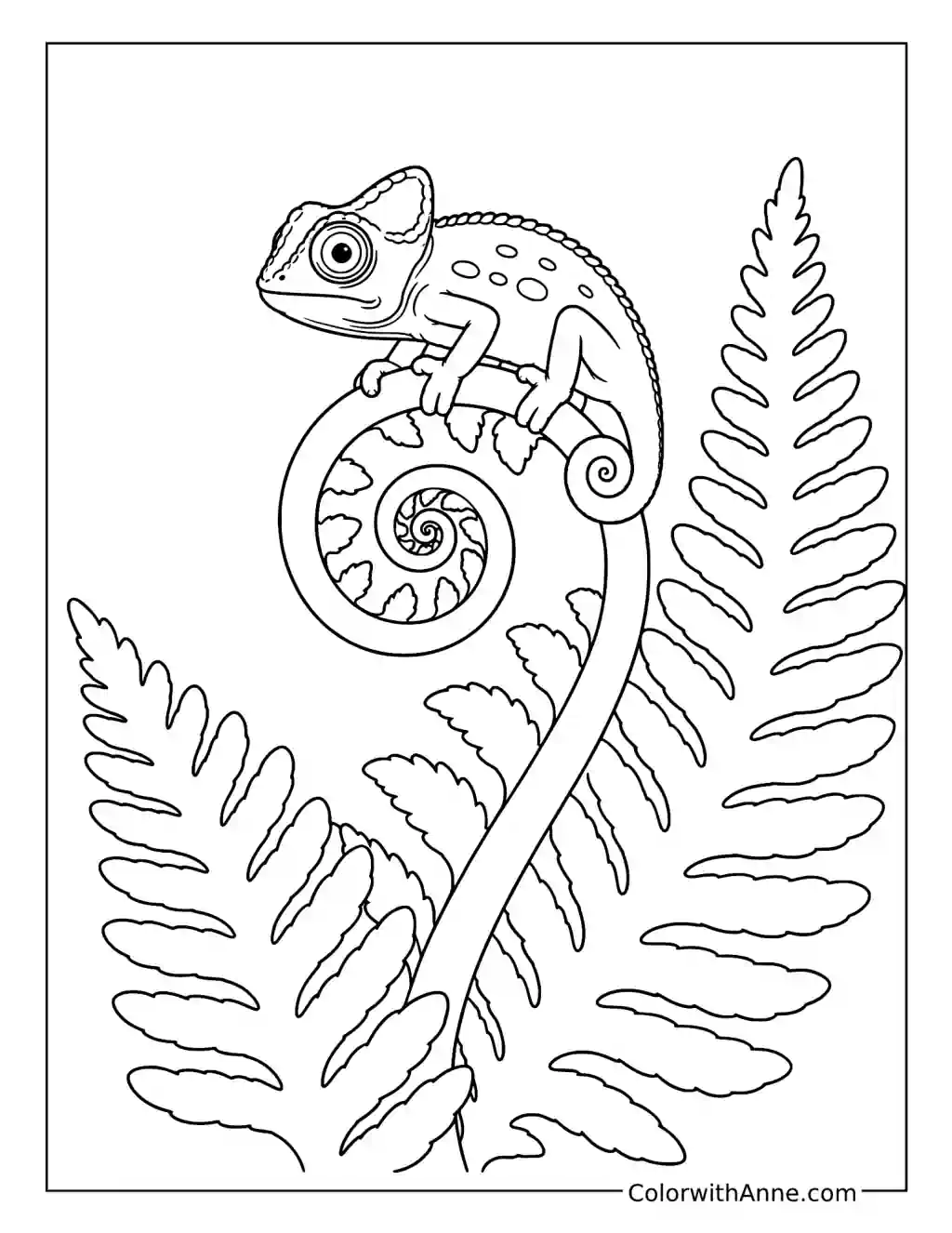
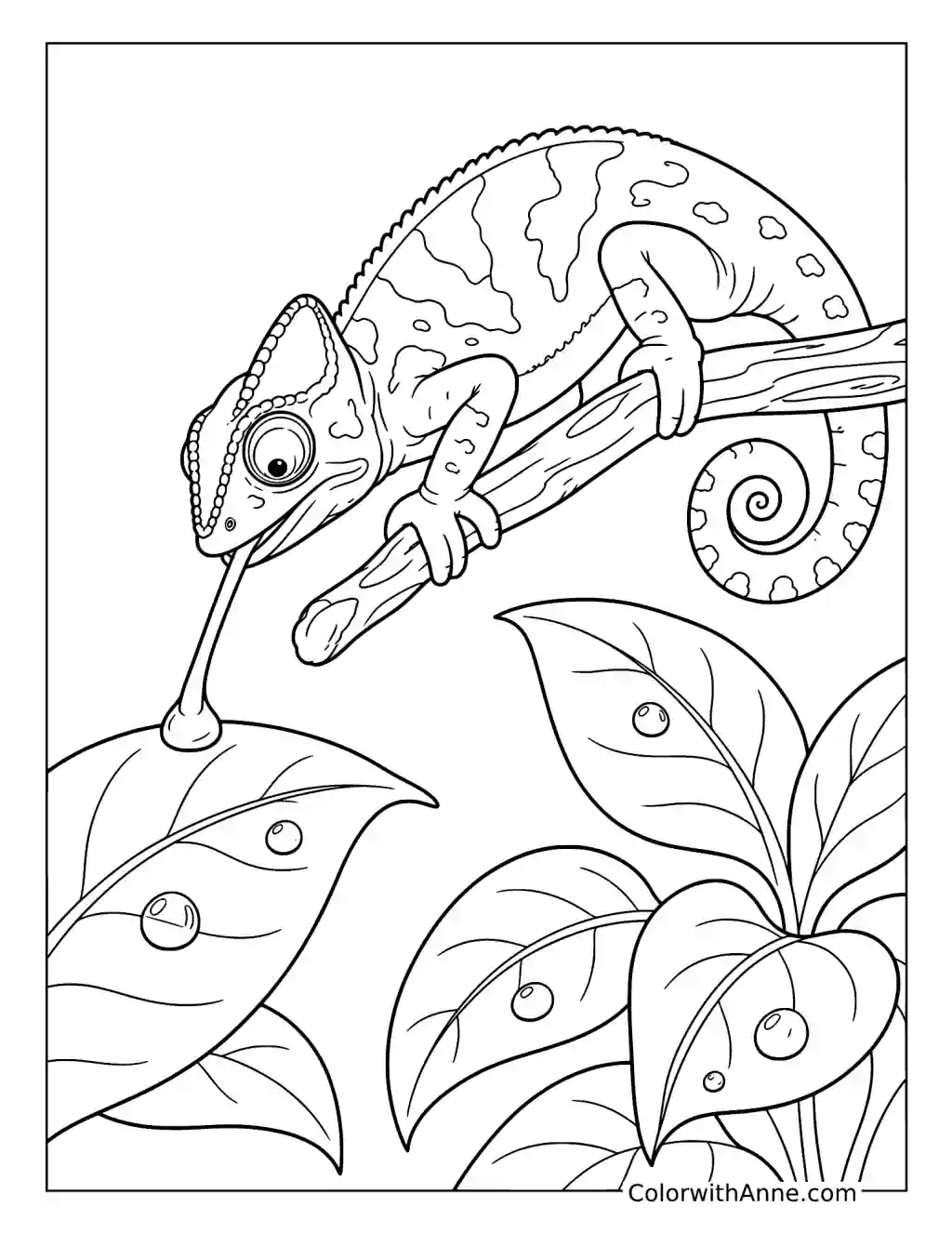
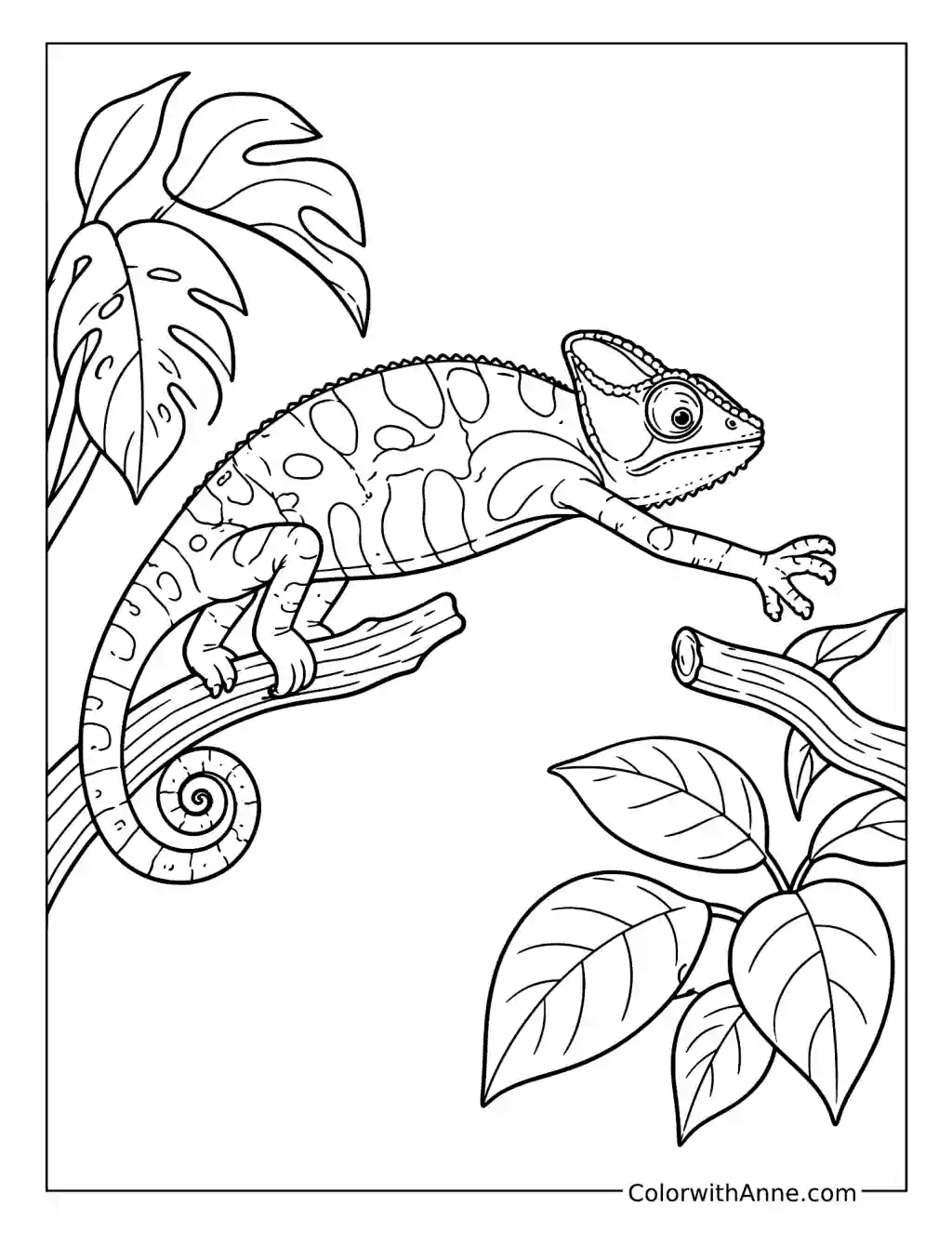
Did you find what you needed?
Help us choose what to create or improve next.
Coloring Ideas for Chameleon Pages
Try one of these coloring ideas, or use them as a starting point for your own.
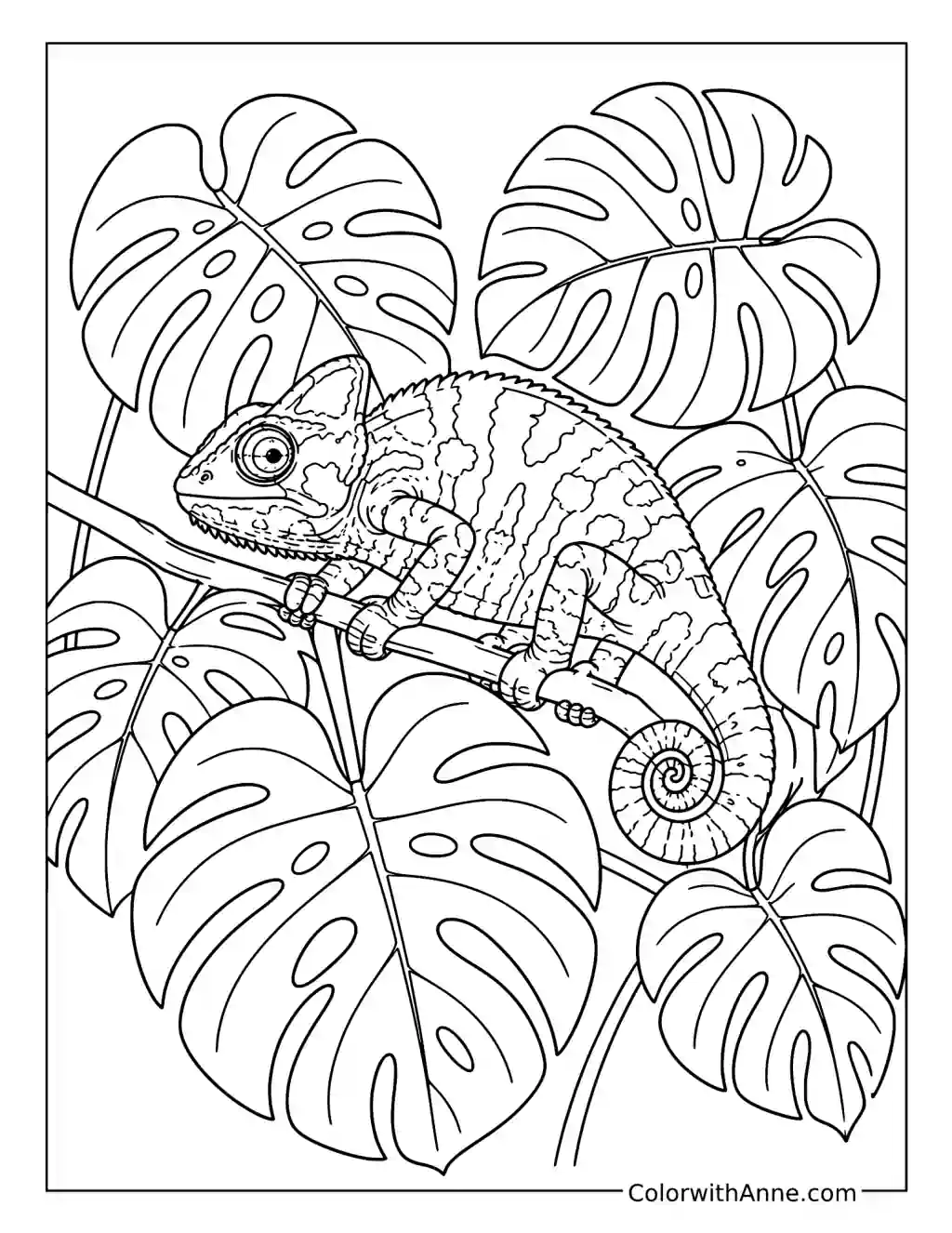
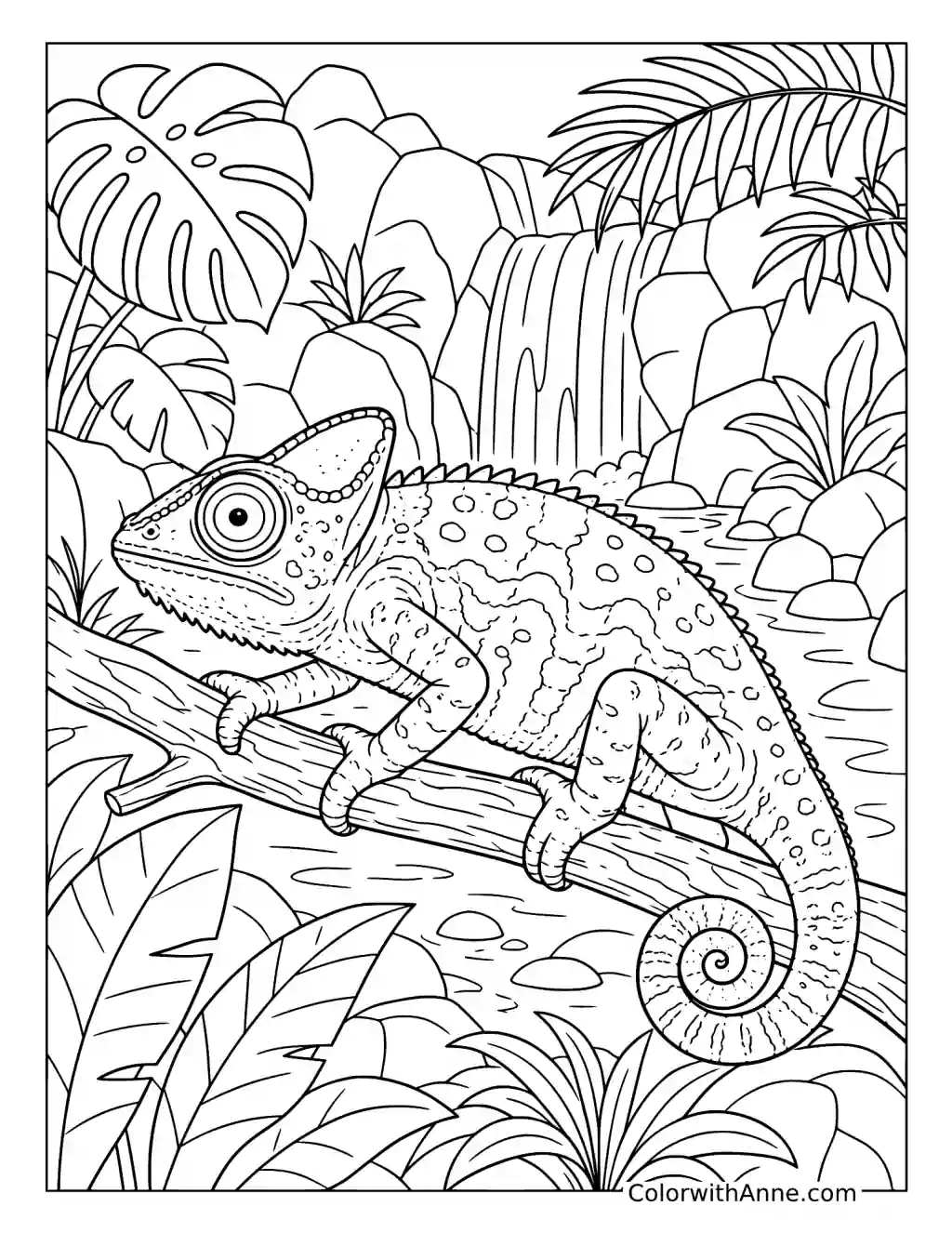
A Chameleon Among Monstera Leaves
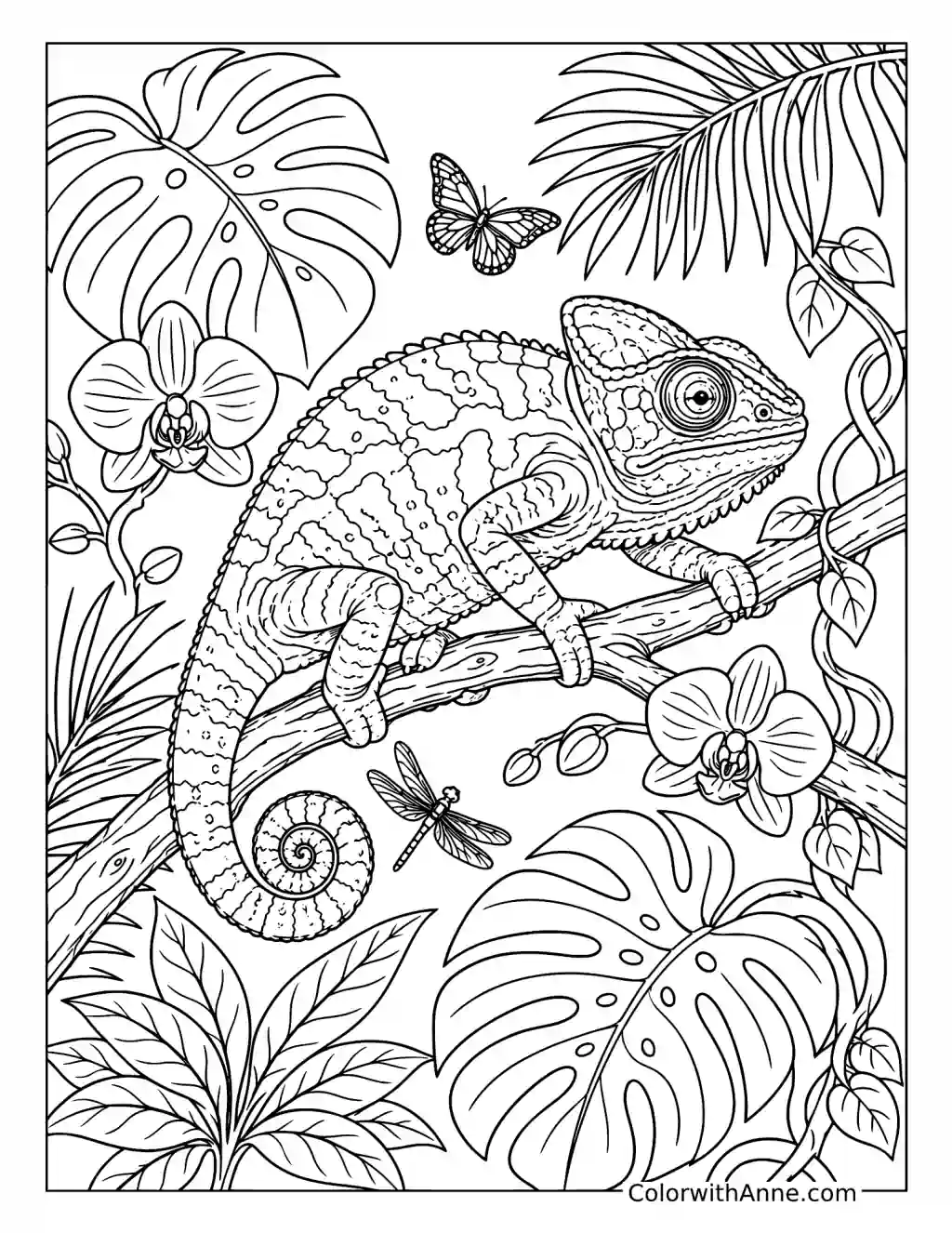
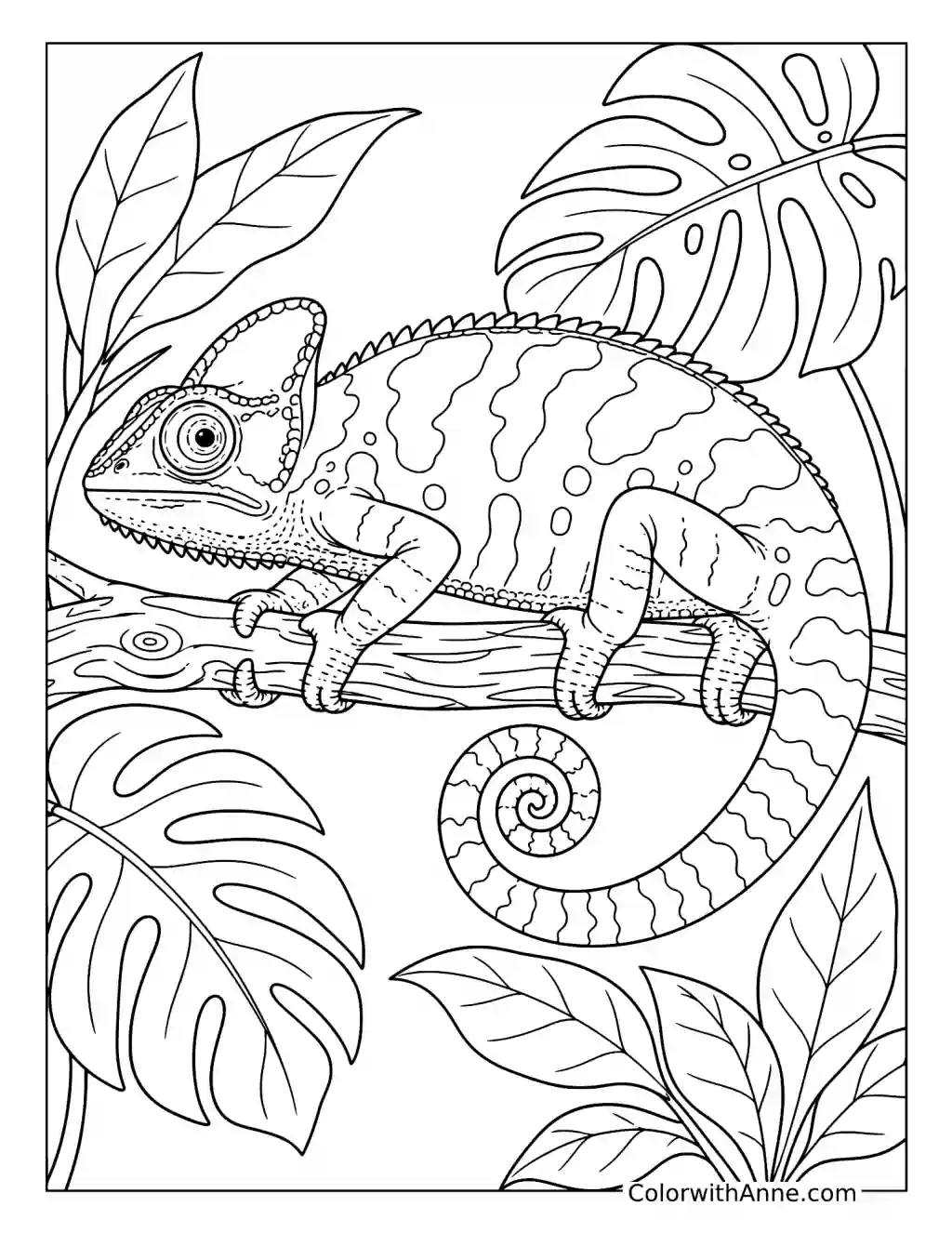
The broad, split leaves crowd around this chameleon, while its patterned body and tightly curled tail offer plenty of places for the eye to wander. Try making the animal a little harder to spot by repeating two or three leaf colors across its markings. Keep the branch brown so there is still a clear path through all that greenery.
For a second version, give the chameleon a contrasting color and leave the foliage unchanged. Set the pages beside each other and see which details become noticeable first. That prominent eye may give away the hiding place before the tail does.
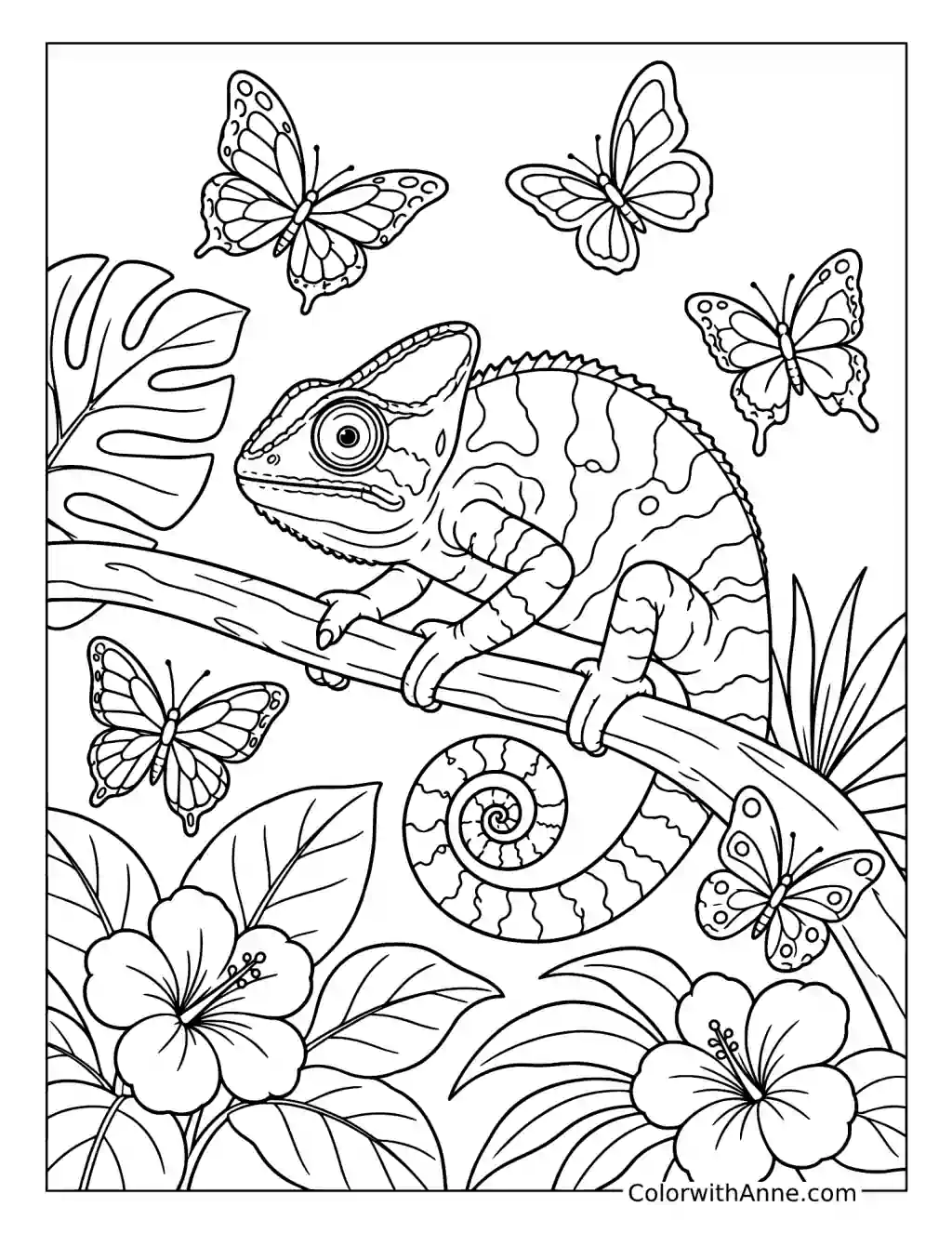
Hibiscus Flowers with a Colorful Neighbor
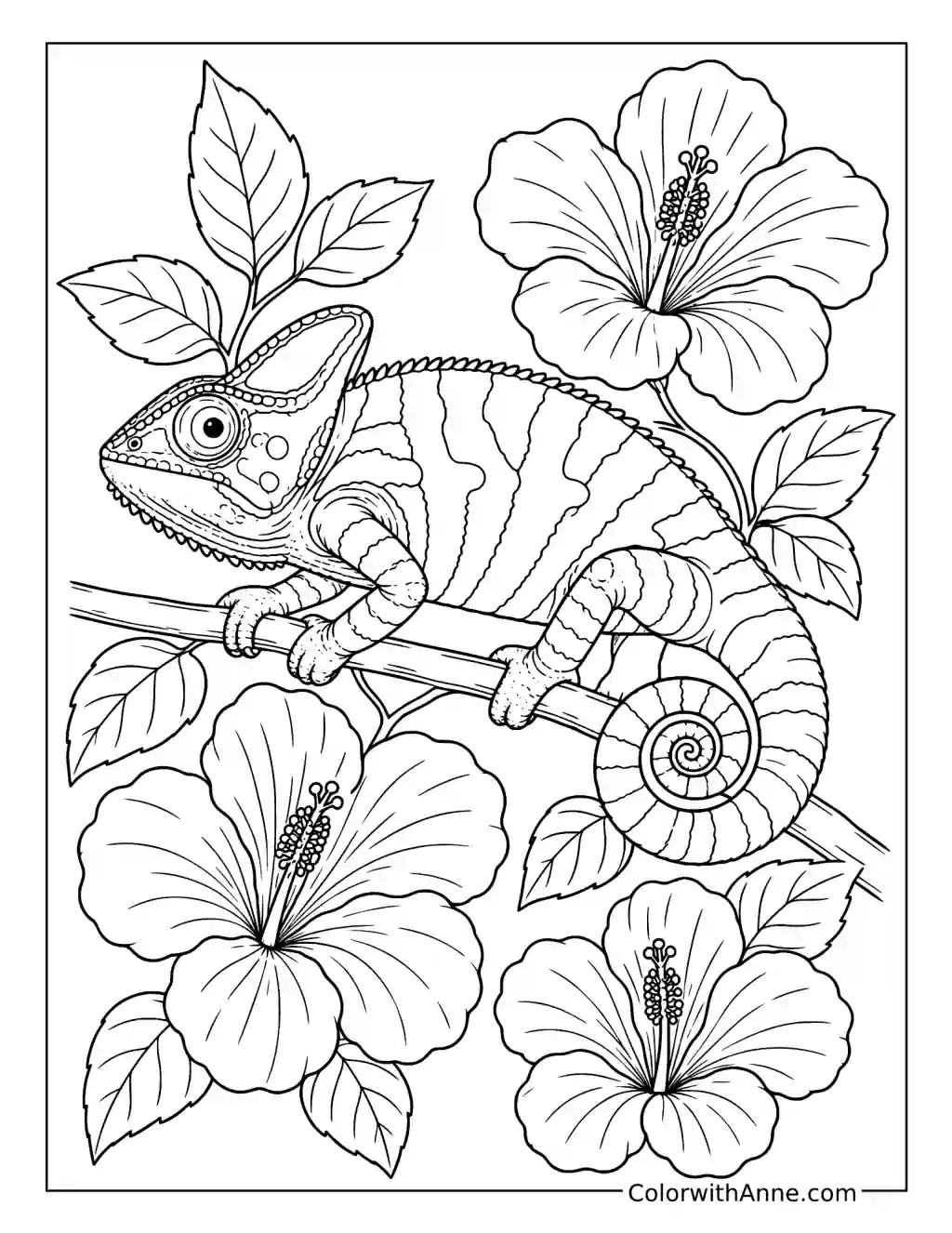
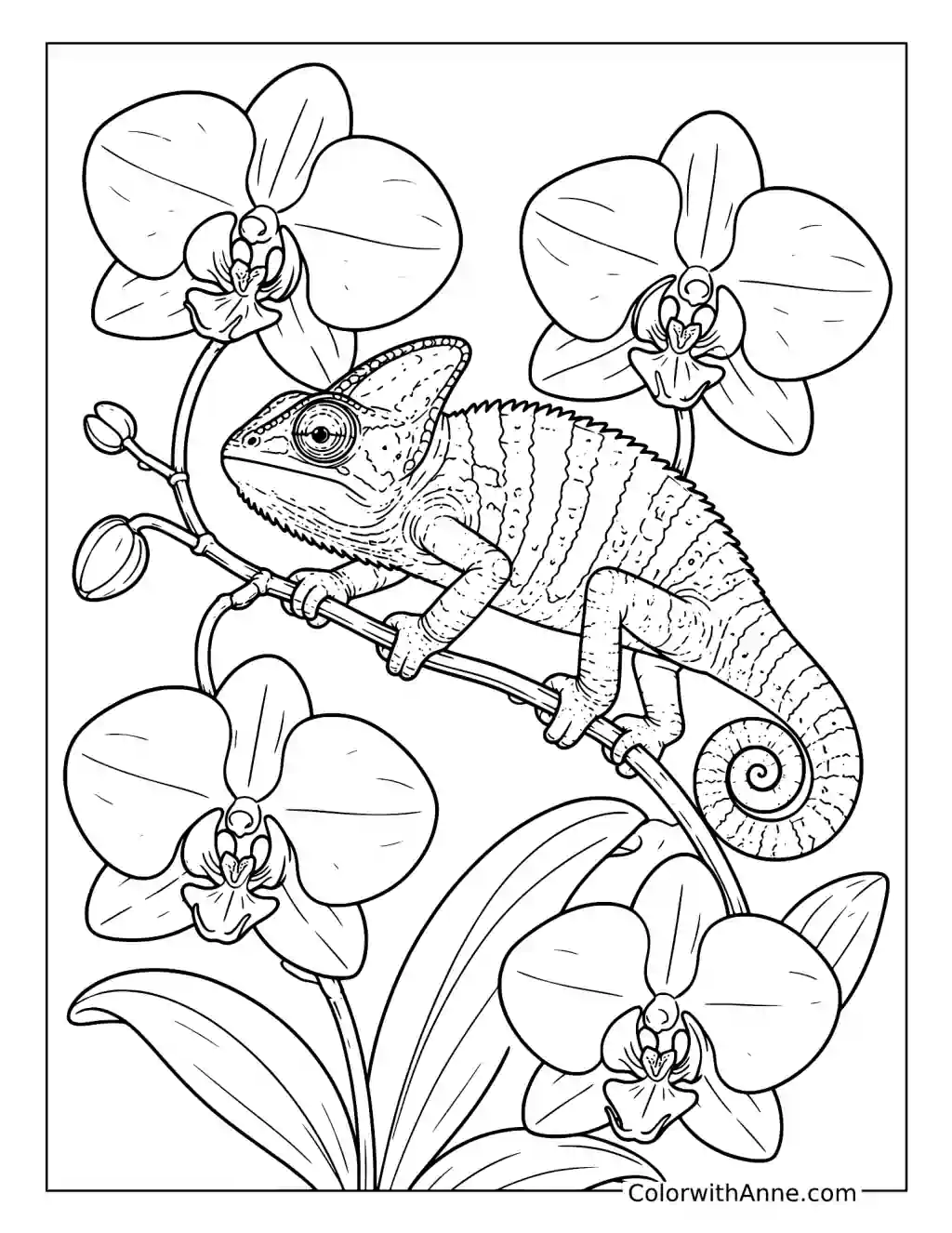
Three large hibiscus blooms frame the panther chameleon on its branch. Their open petals balance the narrow bands running across the animal’s body, making this a lovely picture for borrowing colors from one part of the scene and carrying them into another.
Choose a flower palette first: coral petals with golden centers, perhaps, or pink with touches of deep red. Repeat small amounts of those colors in the chameleon’s stripes, then use cooler greens for the surrounding leaves. The shared accents help the flowers and their resident feel connected without making every surface equally bright.
The finished page could inspire a handmade card. Mount it on plain cardstock in one of the flower colors, letting the printed design provide the decoration.
Warm Evening Light in the Savanna
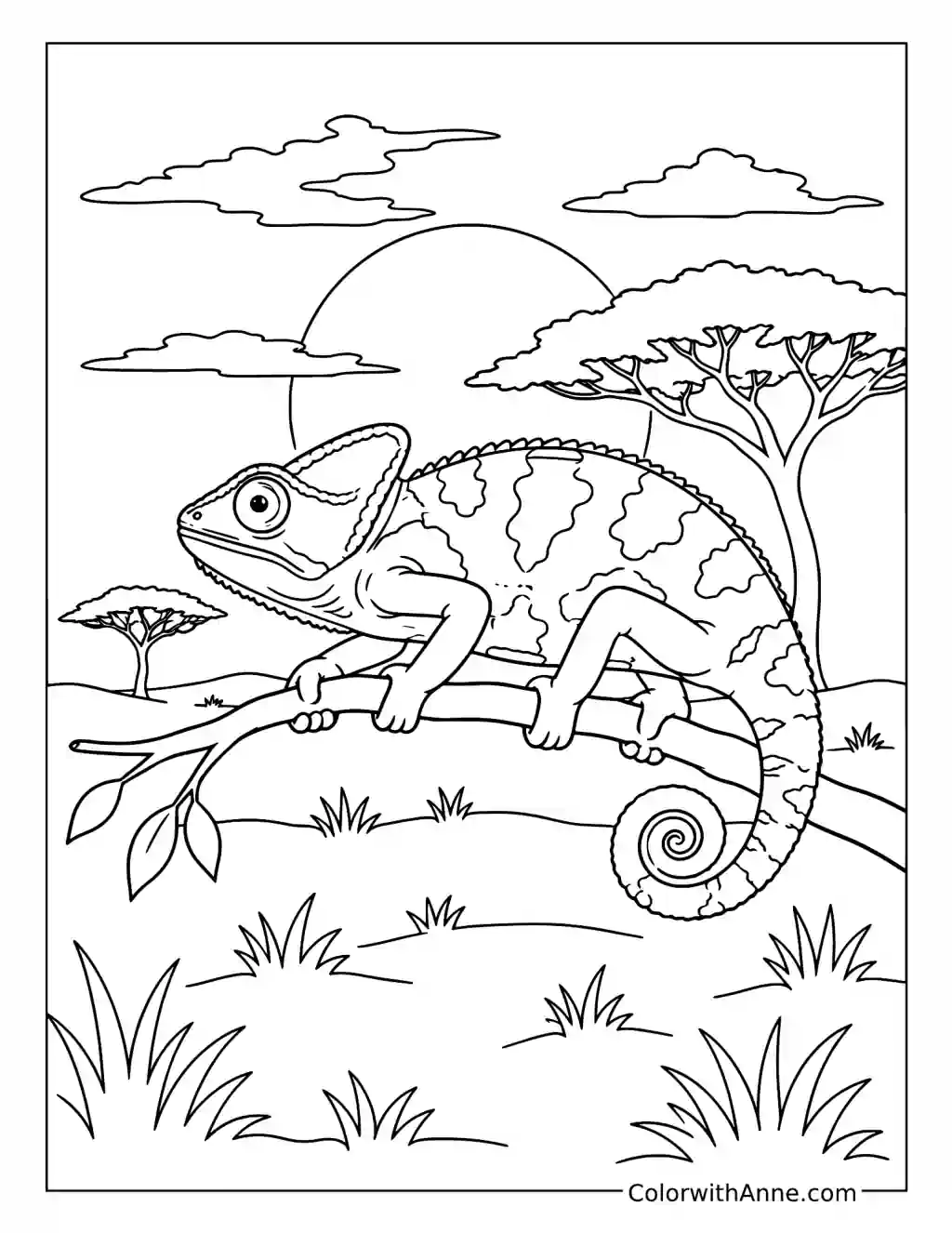
A large sun sits behind the chameleon, with clouds crossing the sky and flat-topped trees stretching across the landscape. This picture gives the background room to set the mood. Try a golden sky that shifts toward peach near the horizon, with muted ochre grasses below.
Carry a little of that warmth onto the upper edge of the branch and the chameleon’s back. Darker browns beneath its feet can suggest the shaded side of the perch. Keep the distant trees quieter in color so they sit comfortably behind the animal.
For a satisfying comparison, make another copy with a lavender sky and a pale yellow sun. The same patient-looking chameleon suddenly has a different evening ahead.
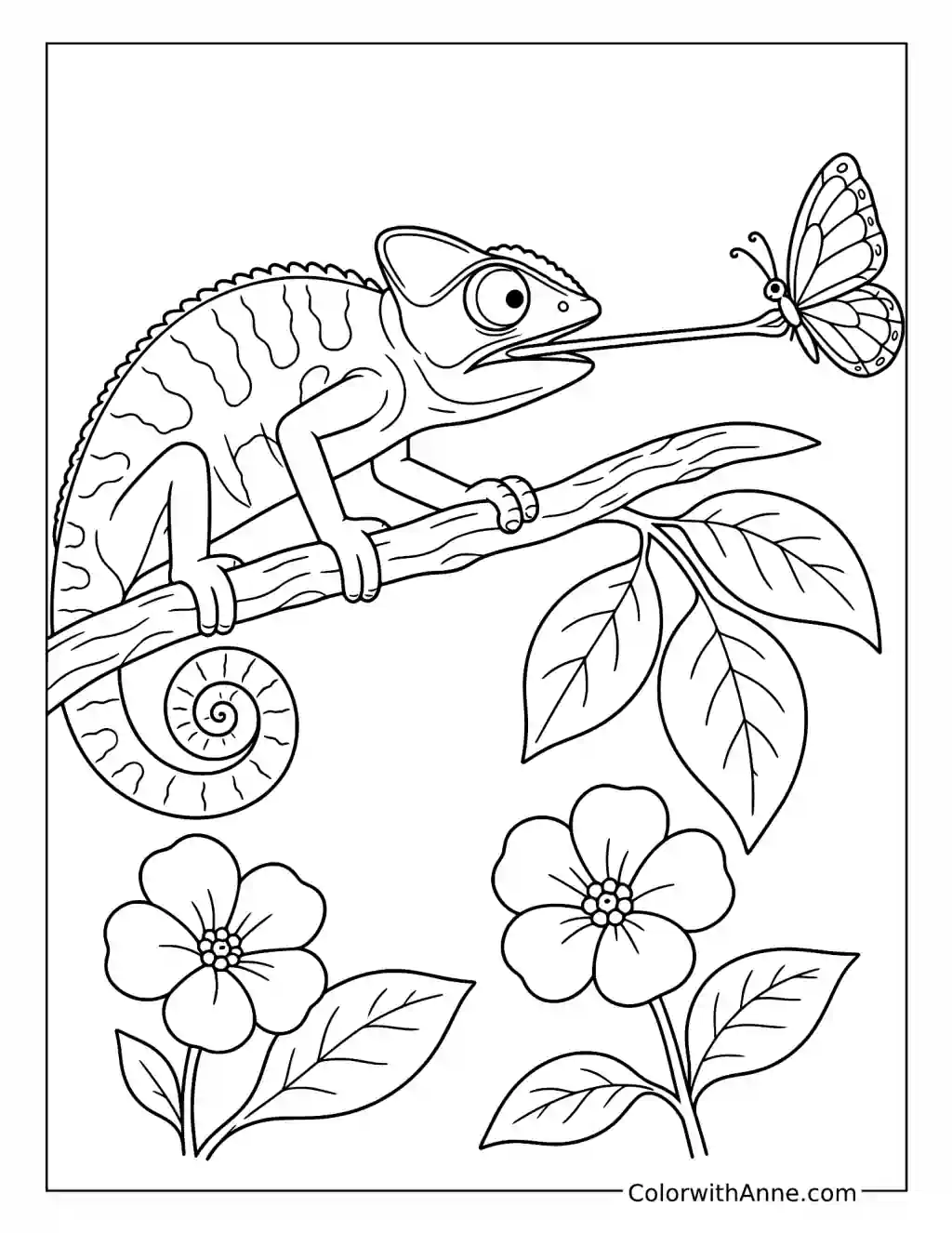
The Butterfly Catching Moment
The chameleon’s long, straight tongue reaches toward a butterfly at the edge of the page. Beneath the branch, two flowers sit far from the action, giving the scene an amusing mix of garden calm and sudden lunchtime business.
Use the strongest color on the butterfly’s wings, then echo a little of it in the flowers. A softer background will keep attention on the line between the chameleon’s mouth and its target.
This design also makes a useful middle panel for a tiny comic. On separate pieces of paper, draw what happens just before and just after the printed moment. Perhaps the butterfly changes direction, or the chameleon needs another try. Arrange all three panels in a row and let the pictures tell the story.
A Mossy Log Full of Small Discoveries
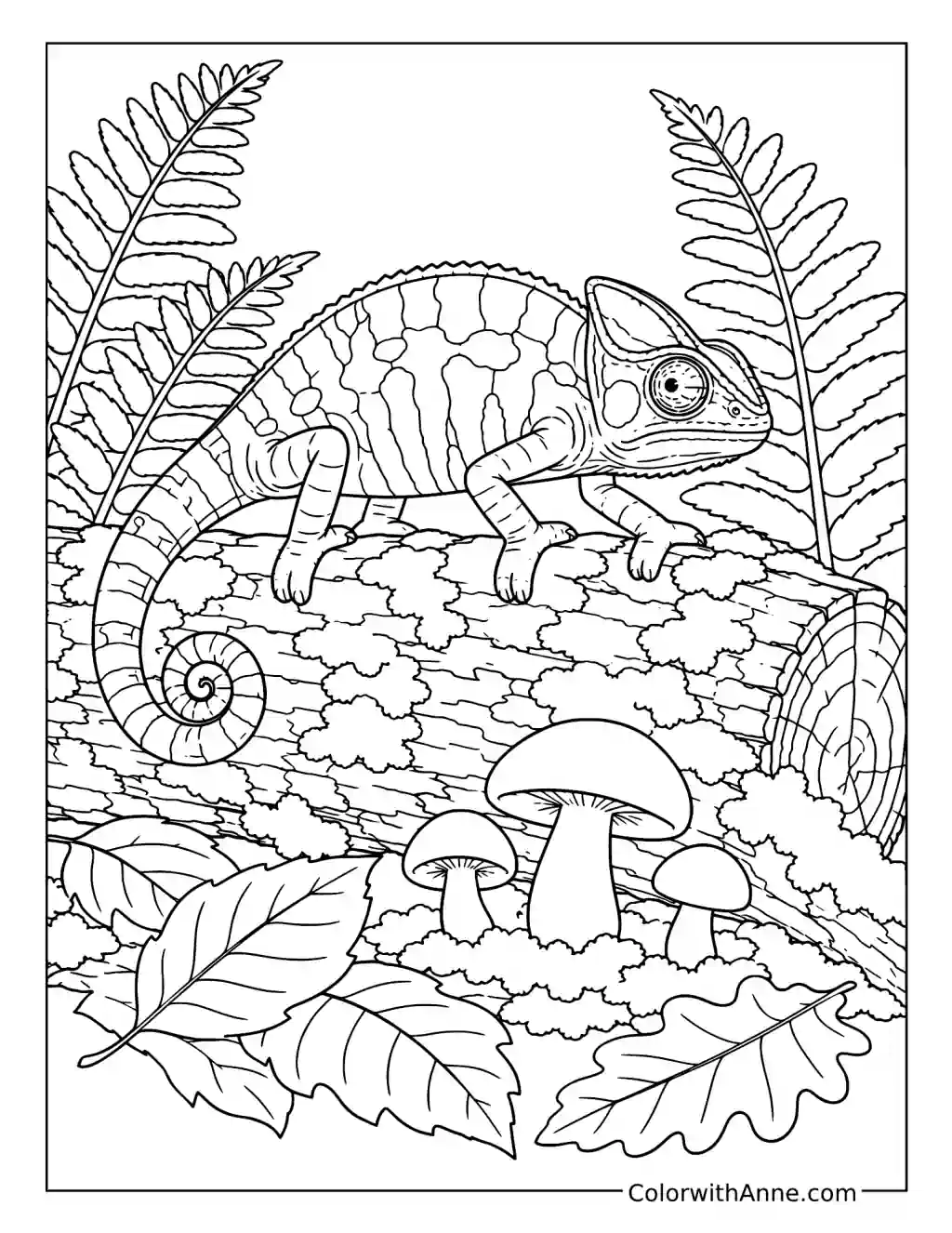
The chameleon rests across a log surrounded by fern fronds, fallen leaves, and mushrooms. There is more to notice here than the animal alone: the log’s broken patches, the mushrooms’ rounded caps, and the ferns’ repeated leaflets all suggest different surfaces.
Give each surface its own treatment. Short brown strokes can follow the bark, small clusters of green dots can suggest moss, and smoother areas of color can distinguish the mushroom caps. Leave occasional pale gaps in the moss so it looks irregular rather than like a solid green blanket.
Afterward, take the page on a garden or park walk and look for similar textures. Even a small fallen twig can offer a useful bark reference.
Little Spirals on a Curled Fern
The baby chameleon perches on the curved tip of a fern, its tiny coiled tail repeating the plant’s spiral shape. Tall fern fronds frame the pair, but those two curls are the detail worth lingering over.
Try a restrained palette with two fern greens and one warm color for the chameleon. Keeping the surrounding fronds similar in tone lets the small animal remain easy to find. A pale background leaves breathing room around the curved stem.
For a companion piece, draw a row of spirals on a separate strip of paper and turn them into little fern shoots or curled tails. Use the strip as a border when mounting the finished page.
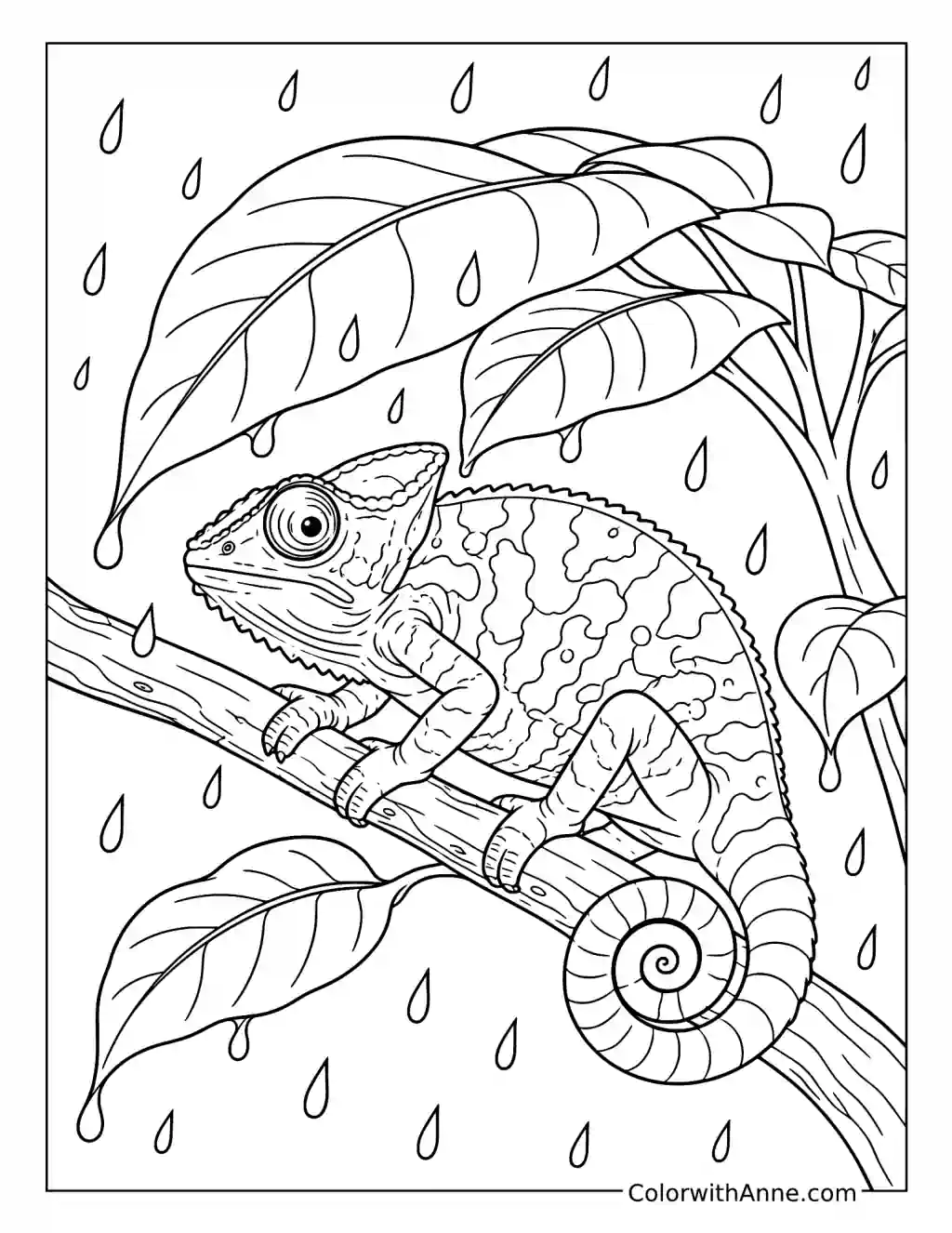
A Drink from a Leaf
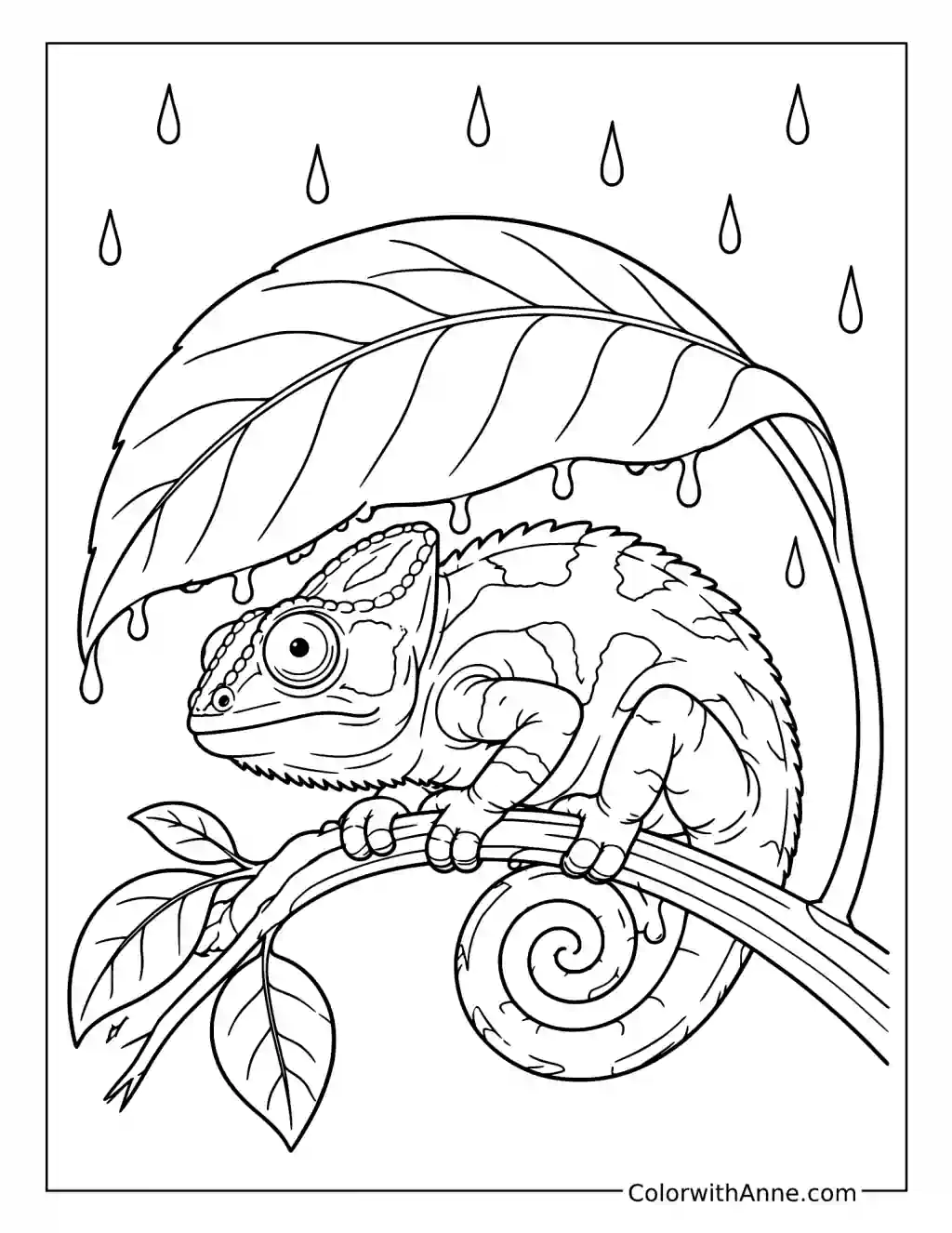
Leaning down from its branch, this chameleon extends its tongue toward a droplet on a leaf. More droplets rest on the foliage below. It is a small, quiet action, and the picture suits a close look at how water catches light.
Keep a tiny patch of each droplet white, with pale blue around one edge. Add a slightly darker green just beneath the droplets to suggest their shadows on the leaves. The water will stand out without needing a heavy blue fill.
Choose one direction for the light and repeat those white highlights consistently. That simple decision ties the scattered droplets together and makes the whole scene feel like one damp morning.
One Careful Reach Between Branches
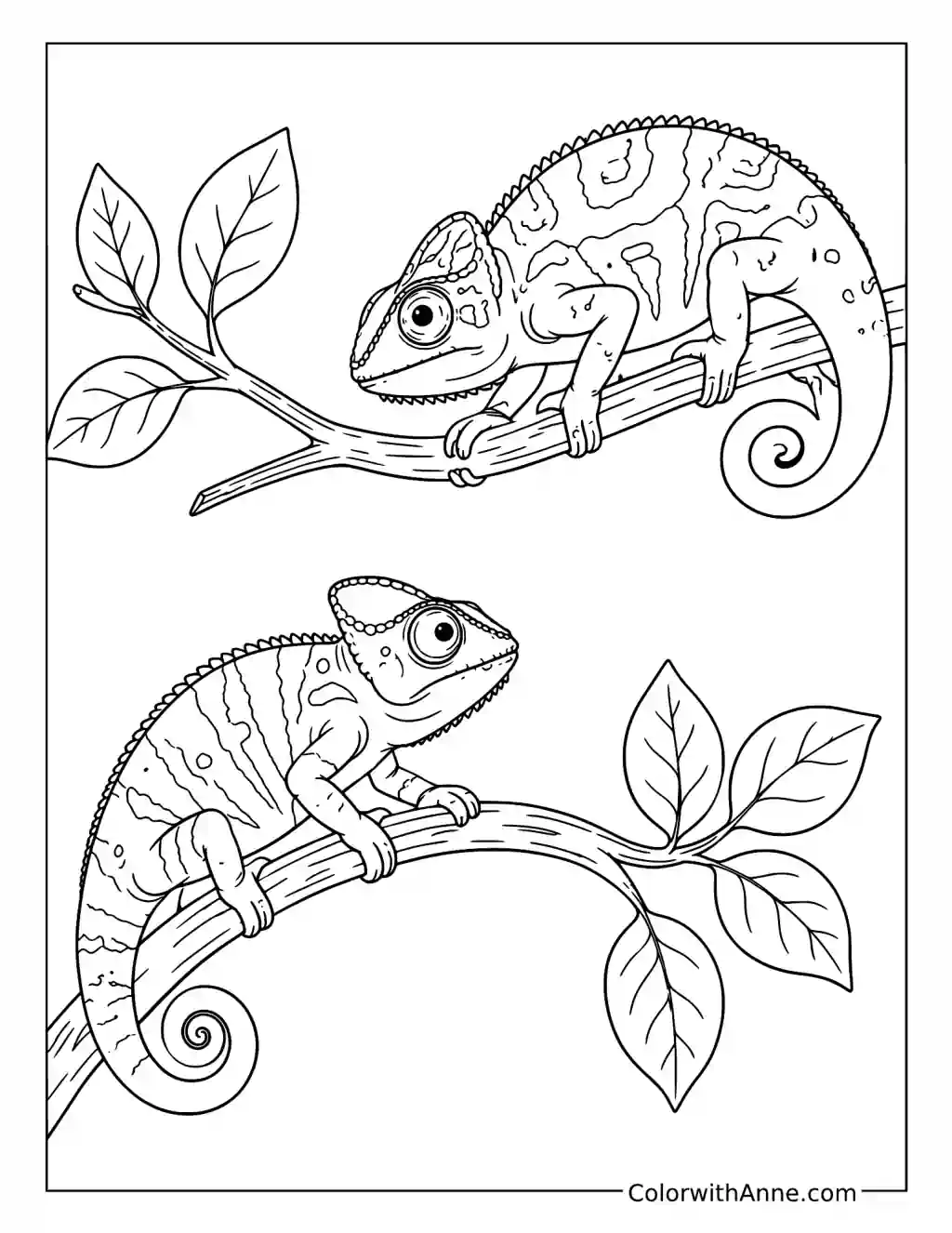
This chameleon stretches across an open gap, reaching a front foot toward the next branch while its other feet remain on the starting perch. The space between the branches makes the movement easy to follow. Even a creature built for climbing seems entitled to check its footing.
Try carrying a gradual color change along the body, from a darker tail to a lighter head and reaching leg. Keep both branches in related browns so the eye follows the animal across the gap.
Leave the central space pale to preserve that sense of distance. Below the finished picture, add a short handwritten title such as “One Step at a Time.” It makes a thoughtful desk-side reminder, with the chameleon doing most of the explaining.