
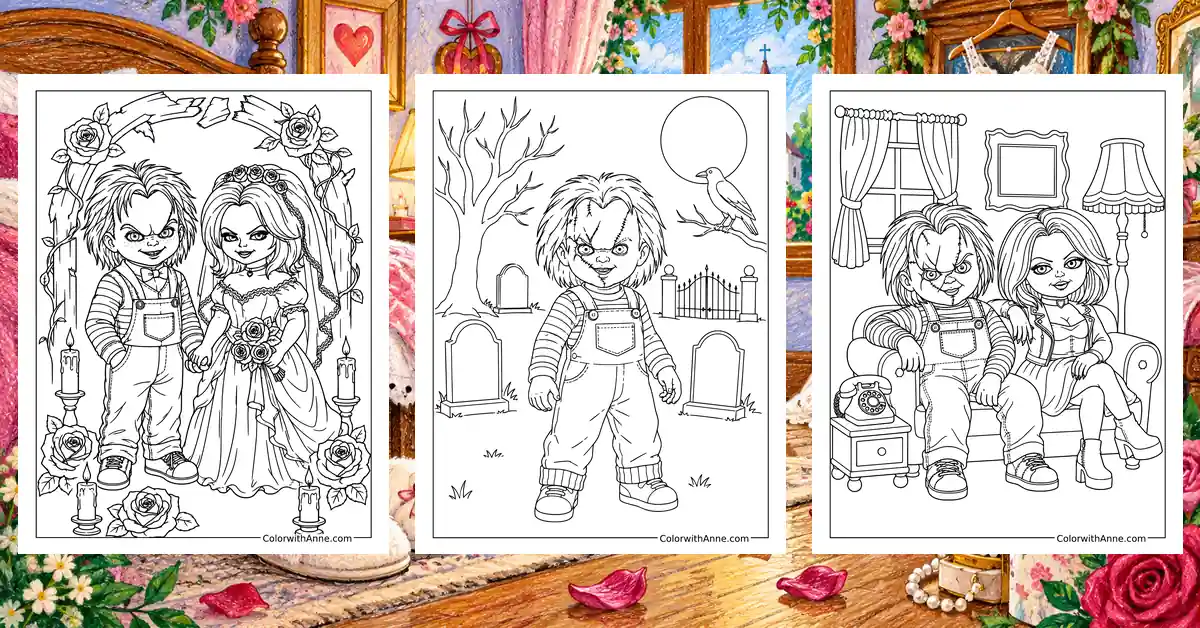
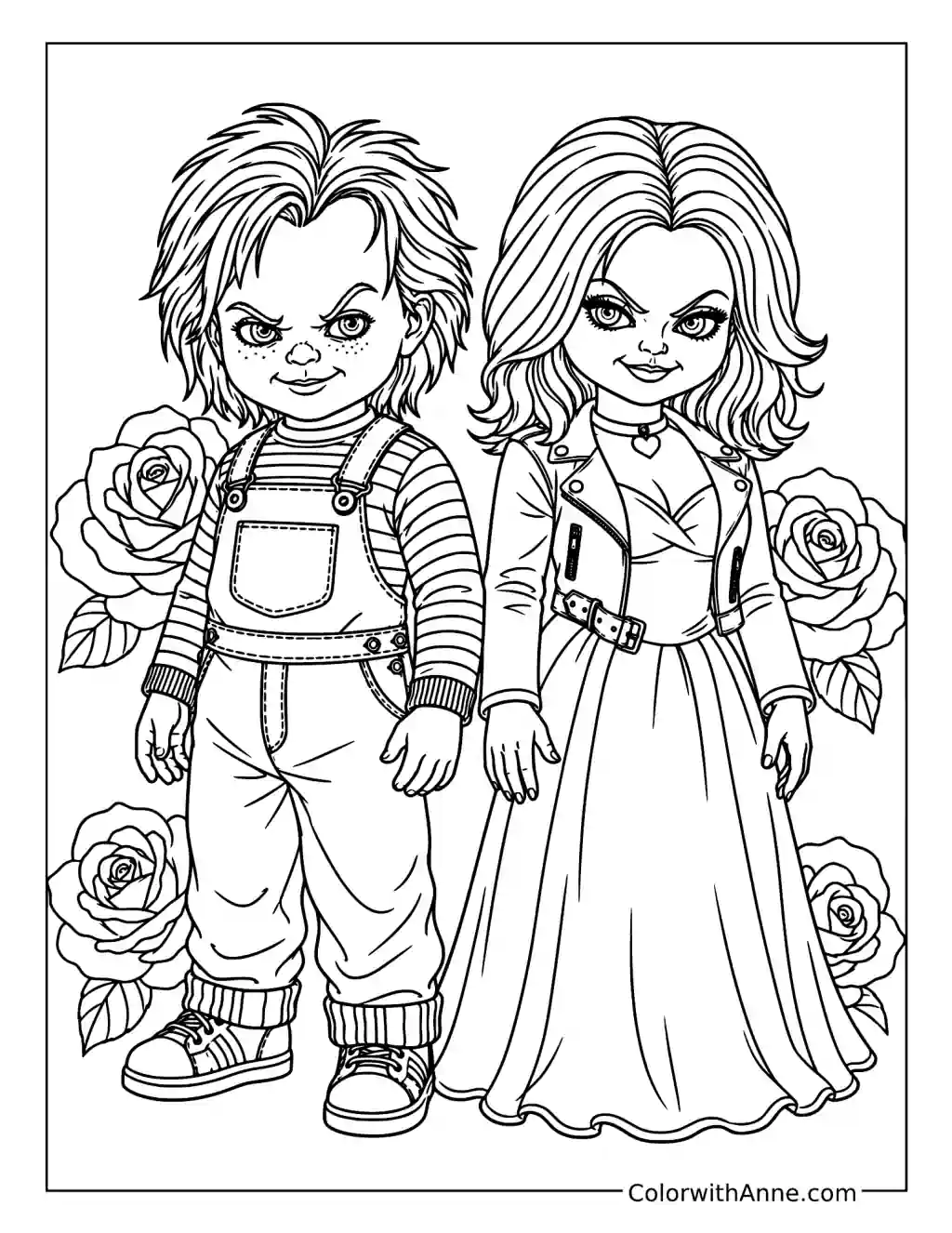
Chucky’s striped shirt and denim overalls ought to belong to an innocent toy. Then comes that grin, and suddenly the doll on the shelf deserves a second look. For horror fans settling in with popcorn and the lights turned low, his red hair is as recognizable as the uneasy feeling that follows him into a room.
Chucky coloring pages bring that unsettling personality to paper, where his familiar toy-box appearance takes on a different mood. There is something oddly entertaining about spending a quiet evening with a character so determined to cause trouble. At least this version stays exactly where it is put.
Free Printable Chucky Coloring Pages
Click any coloring page below to open the PDF, then print on US Letter or A4 paper.
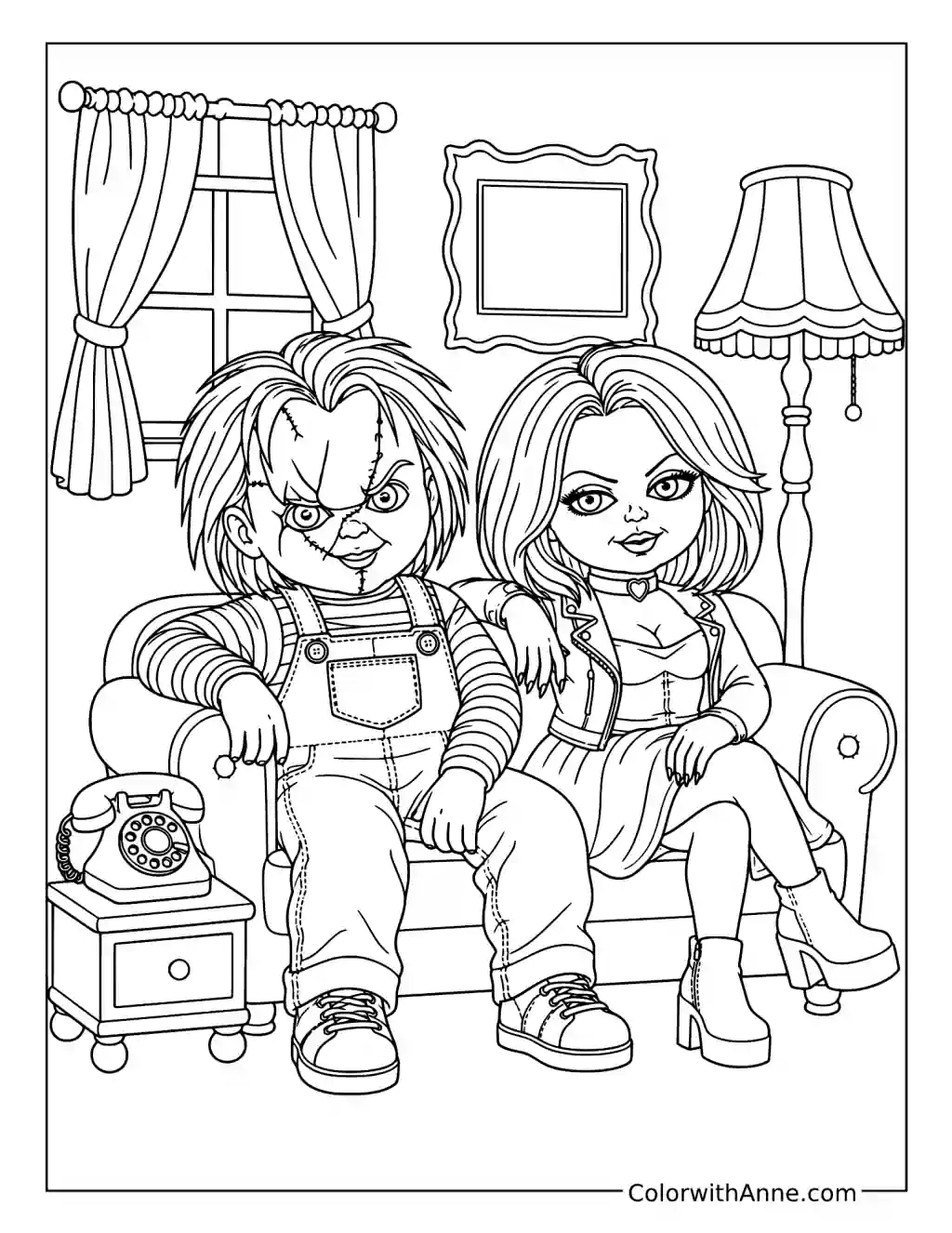
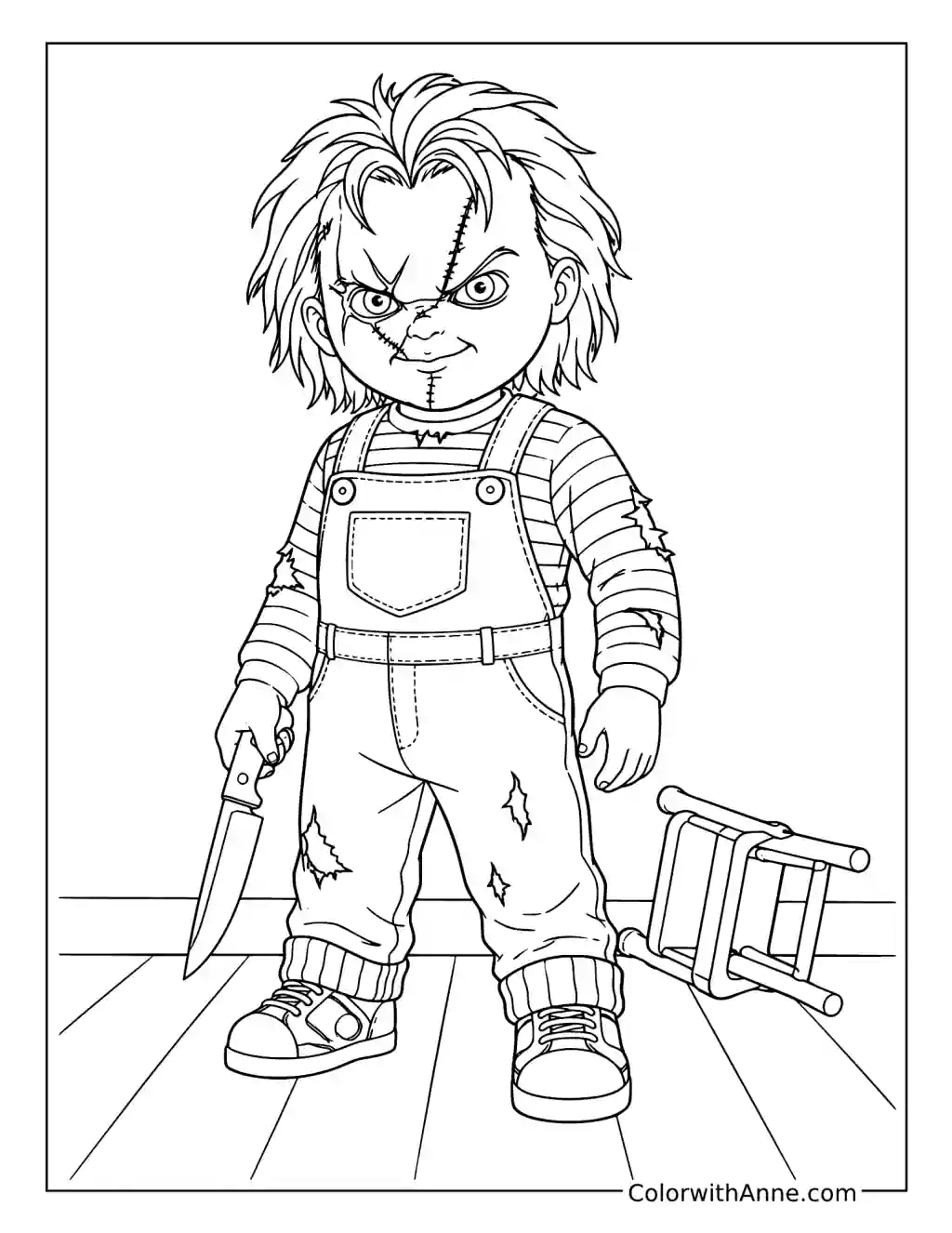
Did you find what you needed?
Help us choose what to create or improve next.
Coloring Ideas for Chucky Pages
Try one of these coloring ideas, or use them as a starting point for your own.
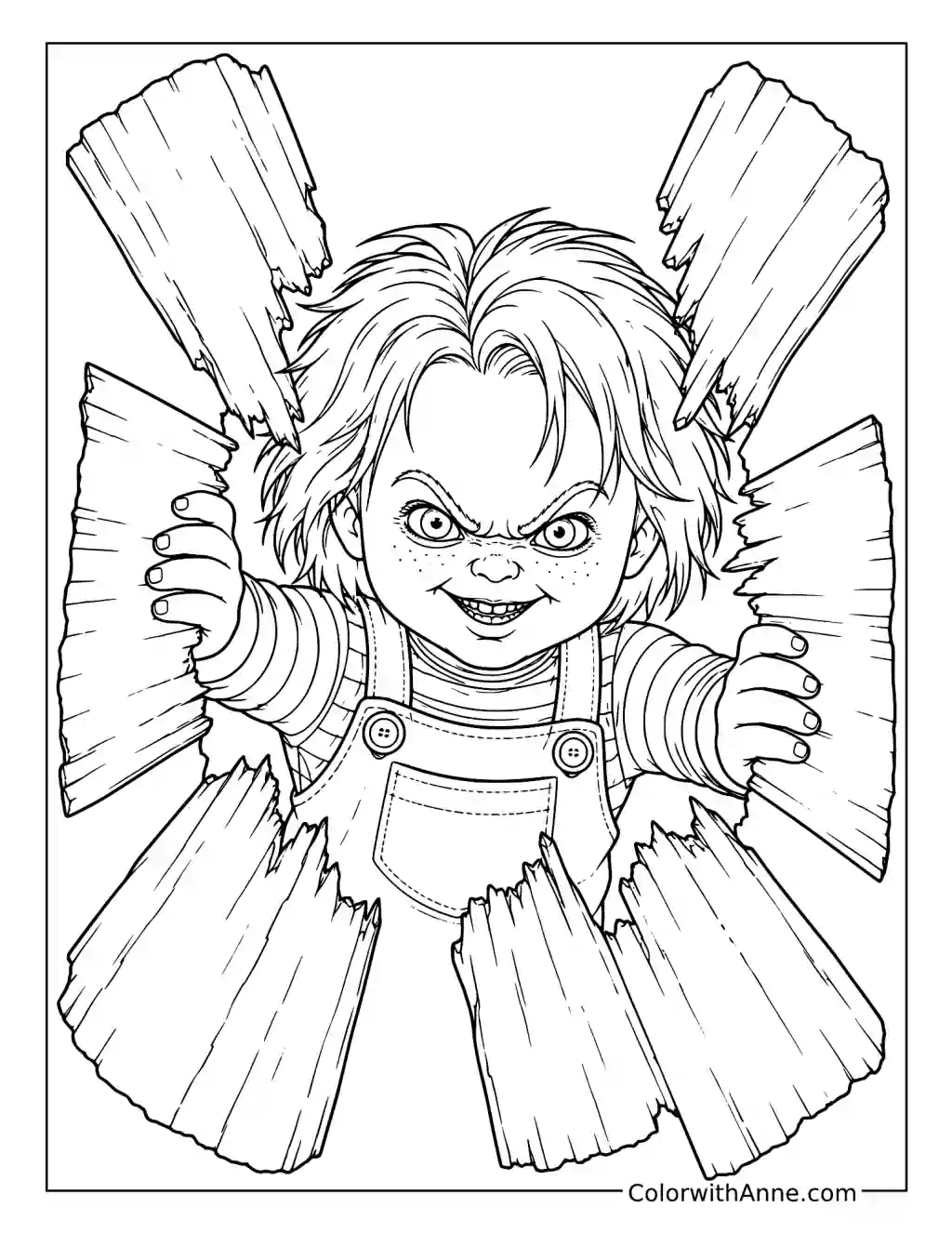
Turn Chucky’s Broken Door into a Horror Poster
Chucky grips the splintered door with both hands, his face filling the opening. The jagged boards already frame him like the central image on a horror poster.
Build a poster around that entrance. Mount the finished page on black paper, leaving room beneath it for a title of your own. A title about a locked room or an unexpected visitor will connect directly to the picture. Keep the lettering plain and give it space; his expression supplies enough drama. Rough brown wood and a deep shadow around the opening can make the face appear closer than the door itself.
Set a Sinister Wedding Table for Chucky and Tiffany
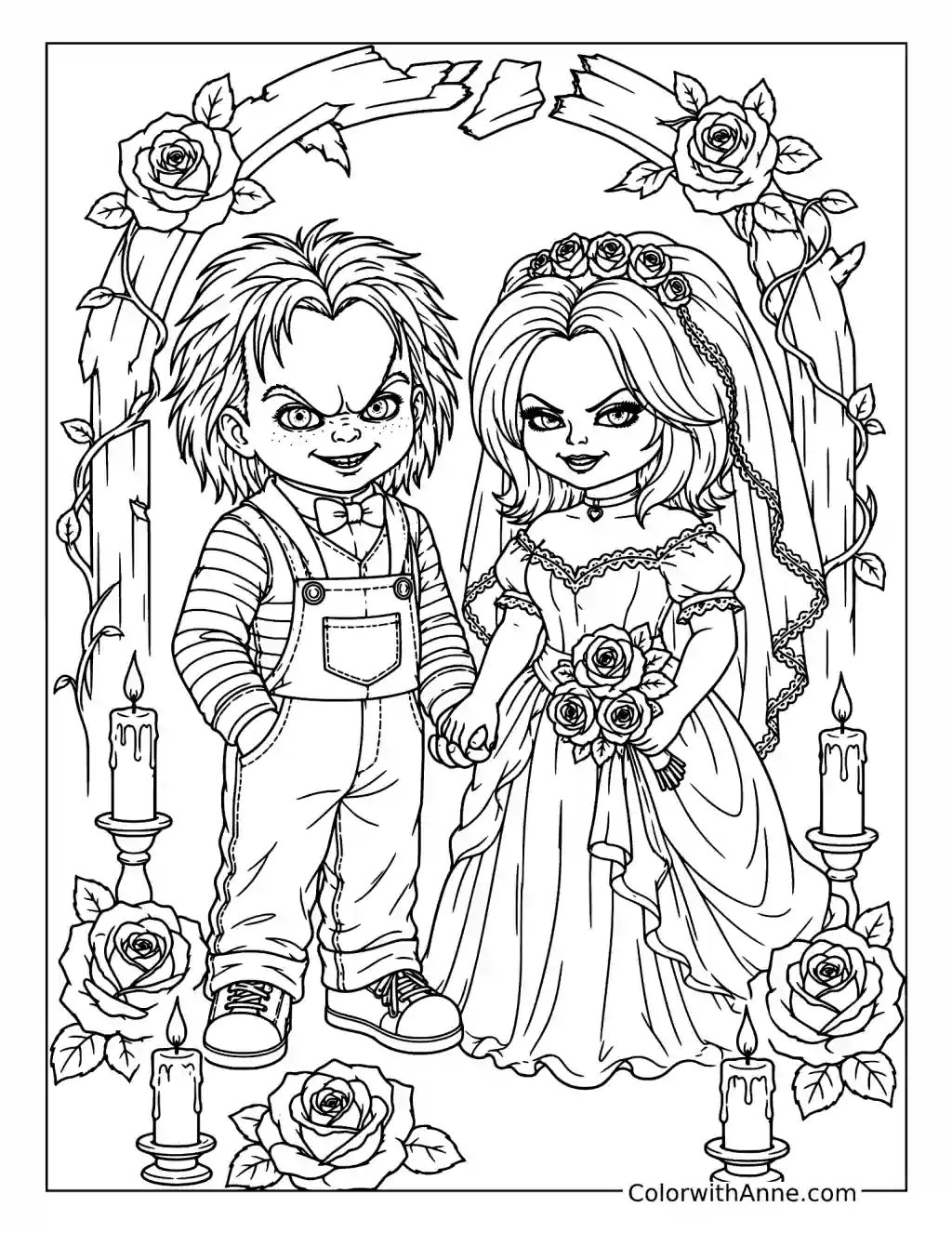
The floral arch, bouquet, candles, and Tiffany’s dress make this a fully arranged ceremony. Chucky even has a bow tie. That attention to wedding etiquette is what makes the pair so disturbing.
Use the page as the centerpiece for a horror-night table. Choose the flowers first, then carry their color into a few surrounding details, such as dark napkins or battery-operated candles. Faded burgundy roses and an ivory dress would suggest a wedding photograph left in an abandoned house. Put the finished picture in an old frame if one is available. The formal presentation suits the scene better than a border crowded with Halloween decorations.
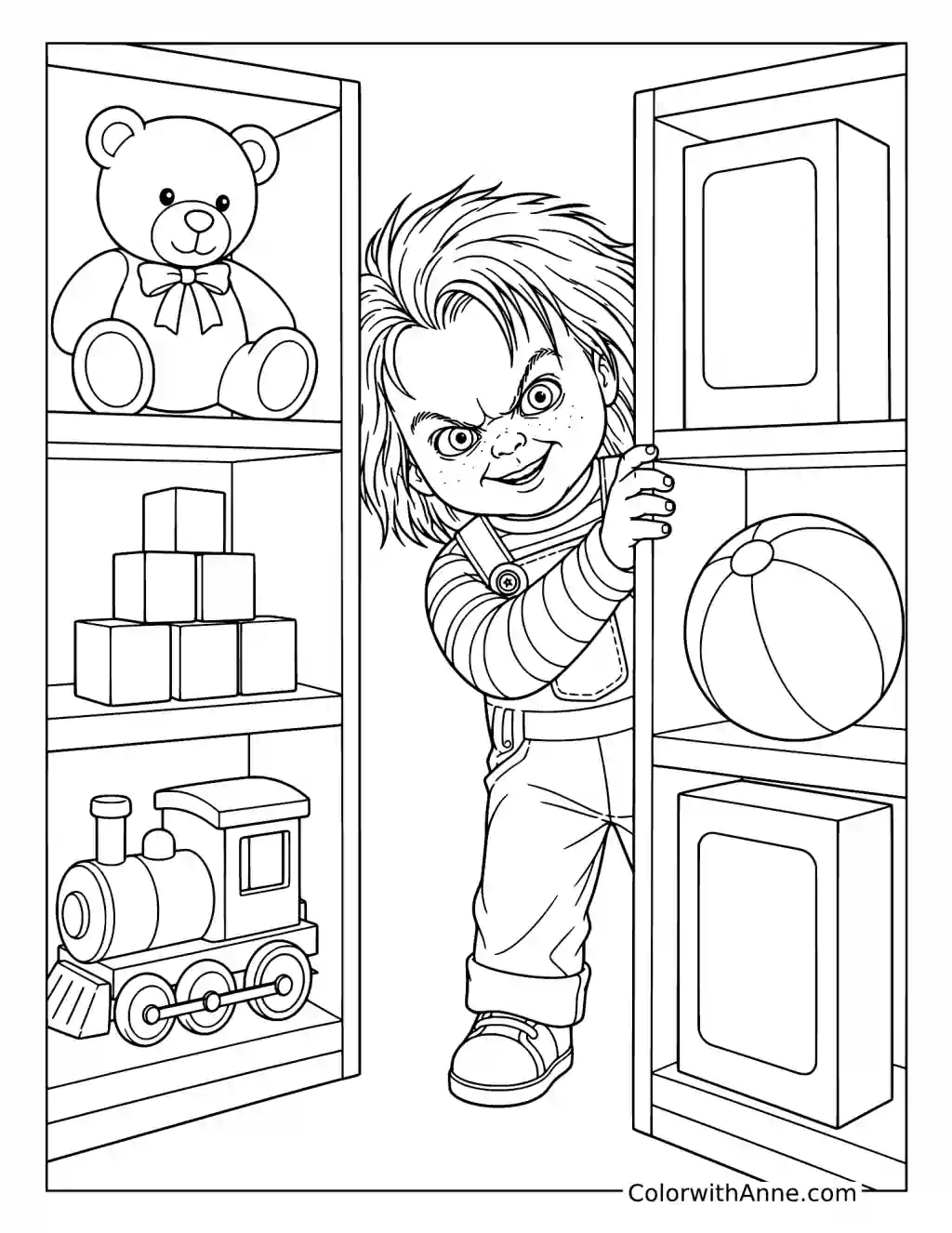
Test How Long Chucky Can Stay Hidden
There is plenty to inspect on these shelves: a teddy bear, stacked blocks, a ball, and a toy train. Chucky watches from the gap, with his fingers curled around the edge.
Turn the finished page into a brief observation challenge. Show it to someone for a few seconds, cover it, and ask what they remember. Did they notice the train, the bear, or the face between the shelves? Give the toys distinct colors so there are several details worth recalling. Chucky’s clothes can borrow those same colors, allowing him to blend into the display. His position does the unsettling work without an added warning.
Give the Graveyard a Case to Solve
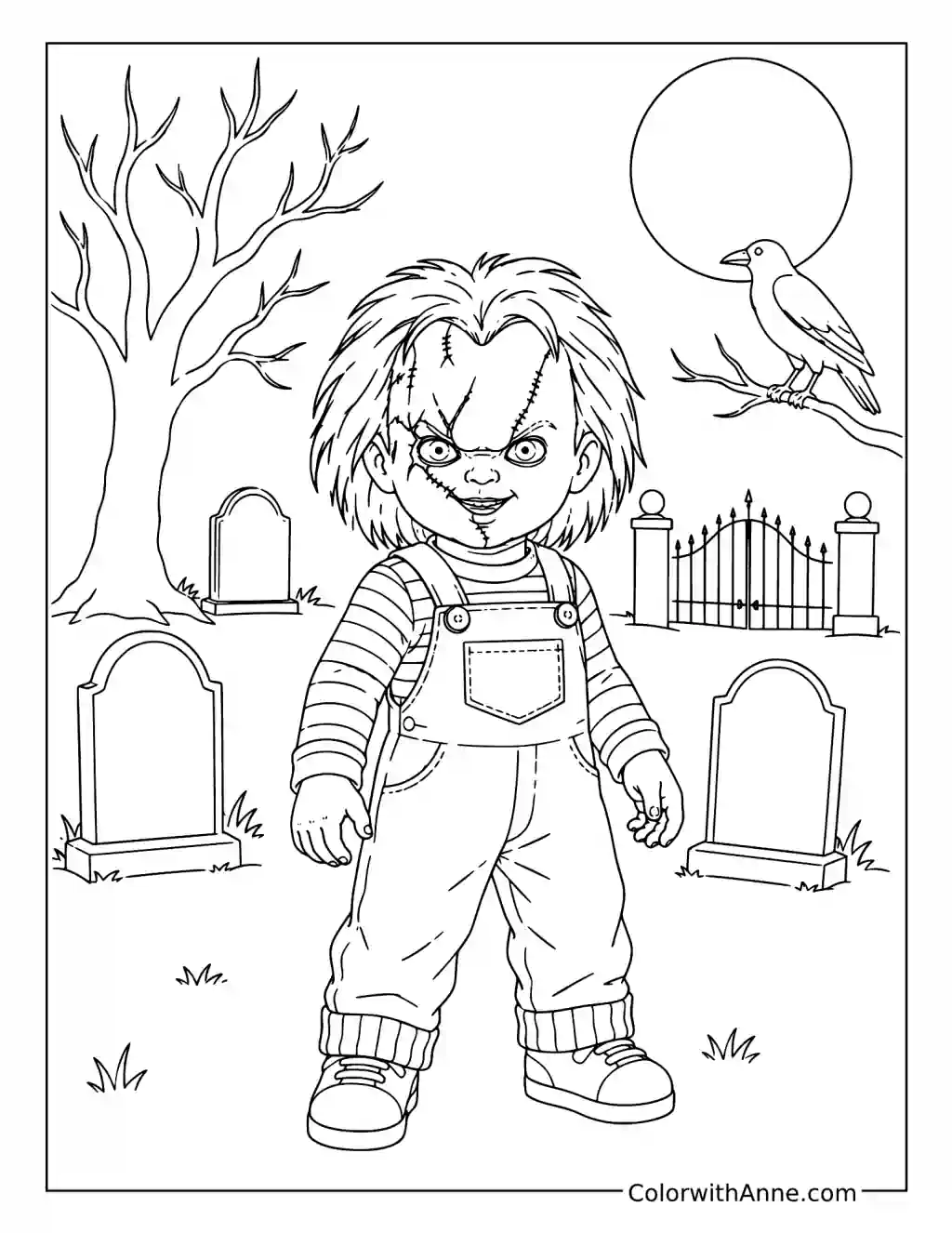
Chucky stands among gravestones beneath a round moon. A bare tree, a bird on its branch, and an iron gate surround him, but the picture offers no explanation for his presence.
After coloring, write a short incident note on a separate sheet. Record three visible details, then add one unanswered question: who left the doll there, or why was someone looking through the gate? Keep any invented explanation clearly part of the story you are creating. Slip the note behind the picture in a folder marked with a fictional case number. The image becomes something to examine for clues, with its quiet spaces left intact.
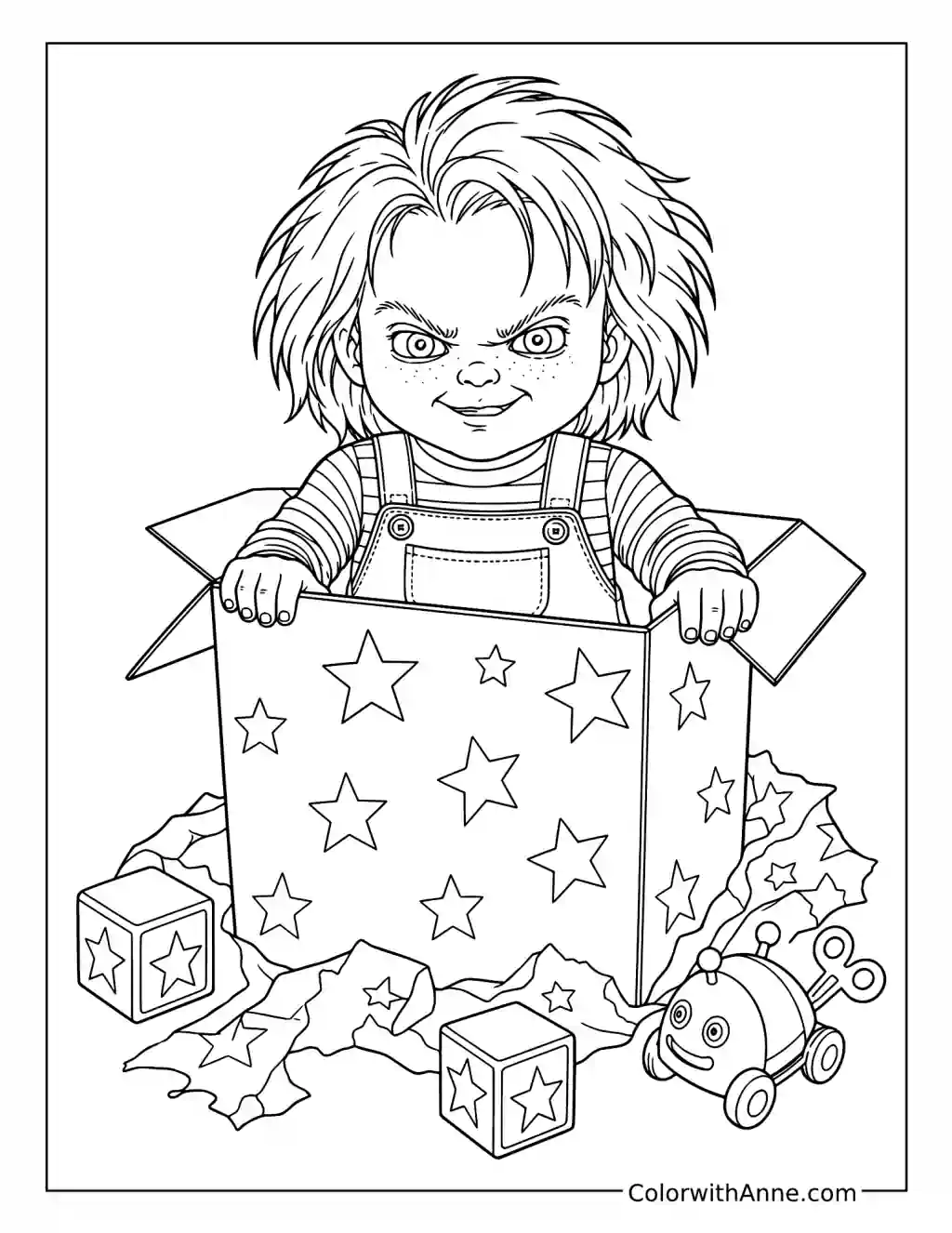
Make the Good Guys Doll an Unwanted Find
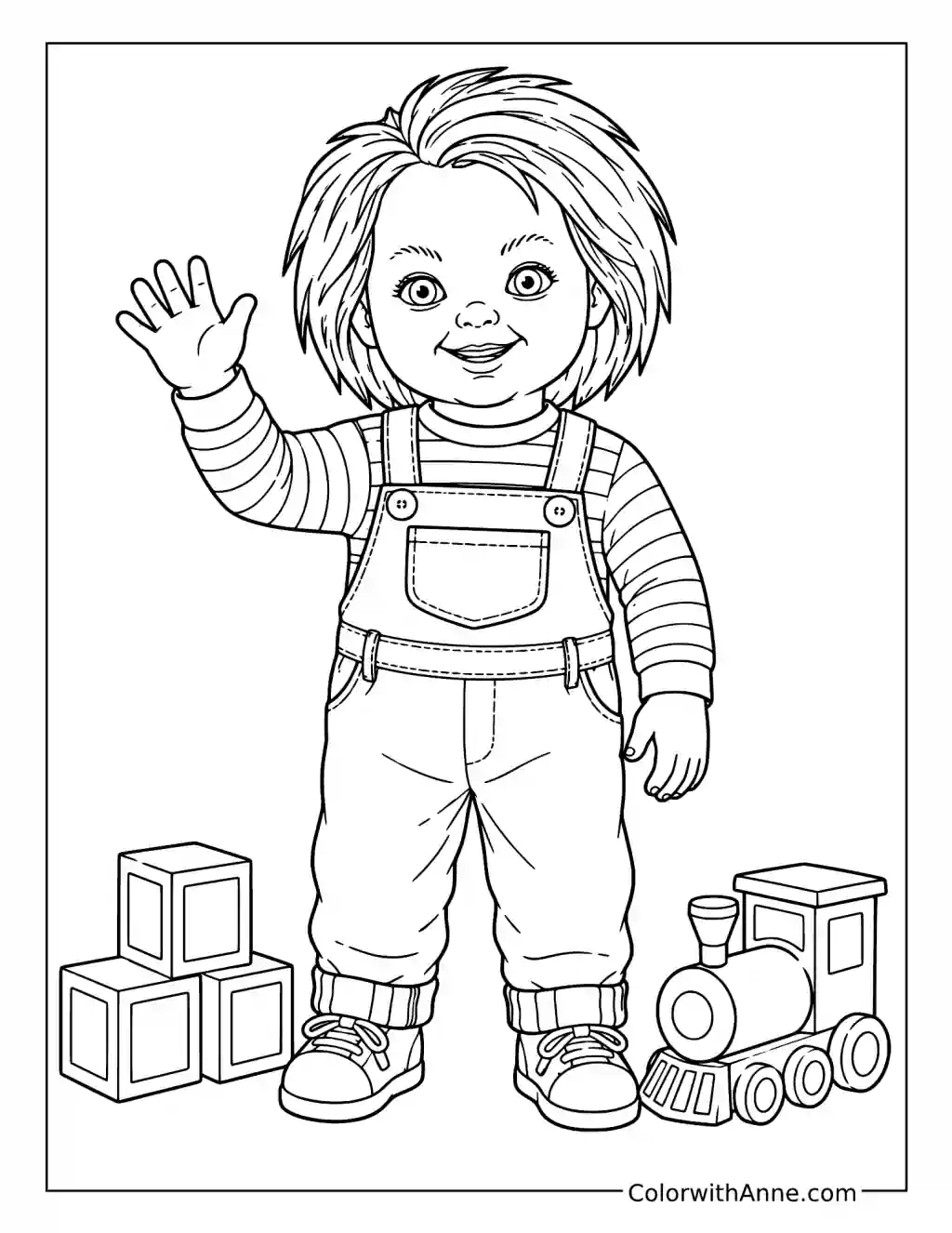
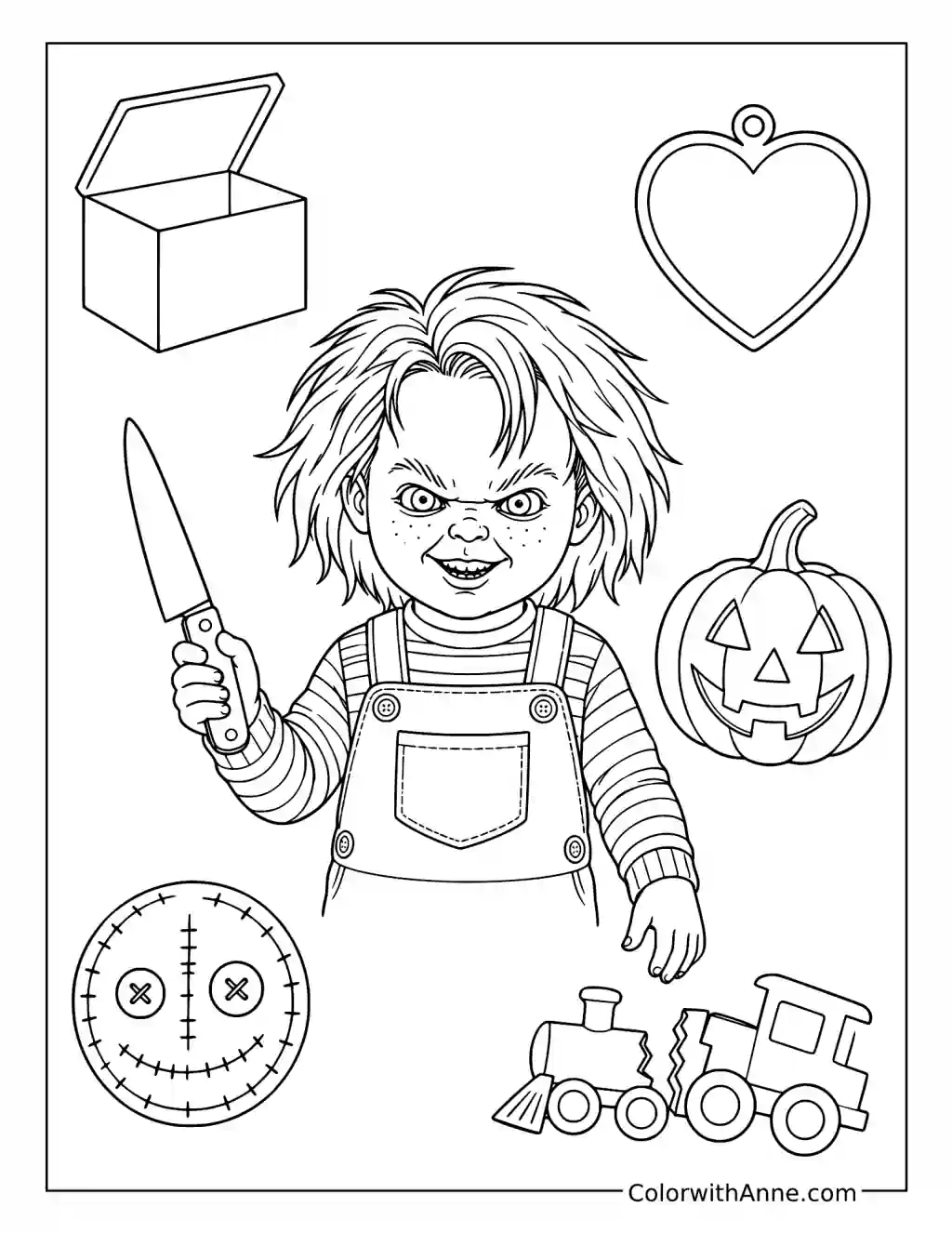
Chucky raises a hand beside blocks and a toy train. His clean overalls and open smile give this picture the appearance of an ordinary toy advertisement, which makes it useful for a more restrained kind of horror.
Create a fictional secondhand listing to accompany the page. Describe only what the picture shows, then add a brief seller’s note suggesting an uneasy reason for getting rid of the doll. Keep it understated; a long explanation would spoil the uncertainty. Display the listing beside the brightly colored picture. The cheerful presentation should make the reader pause before the seller’s note gives them a reason to look again.
Document Chucky’s Ritual Without Explaining It
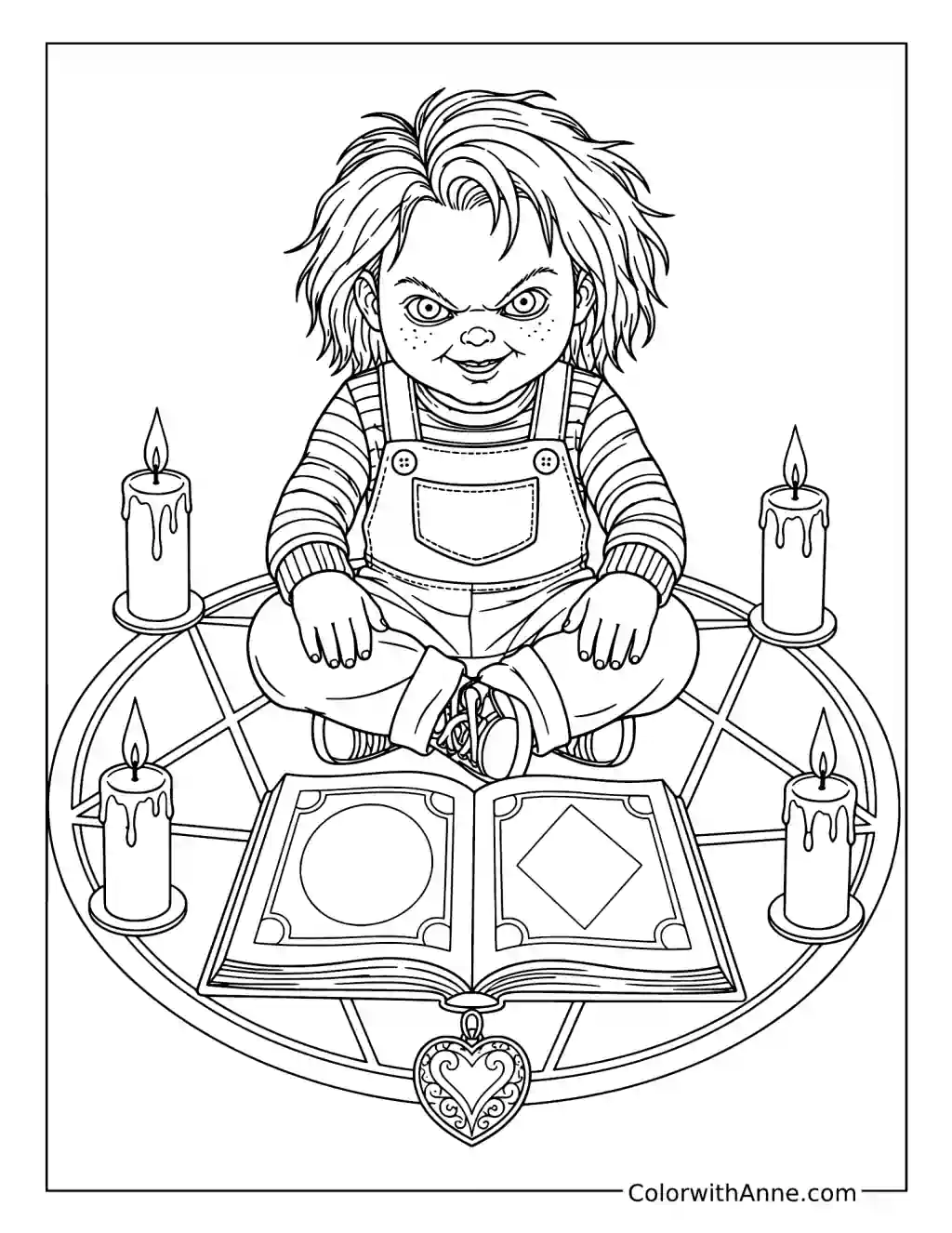
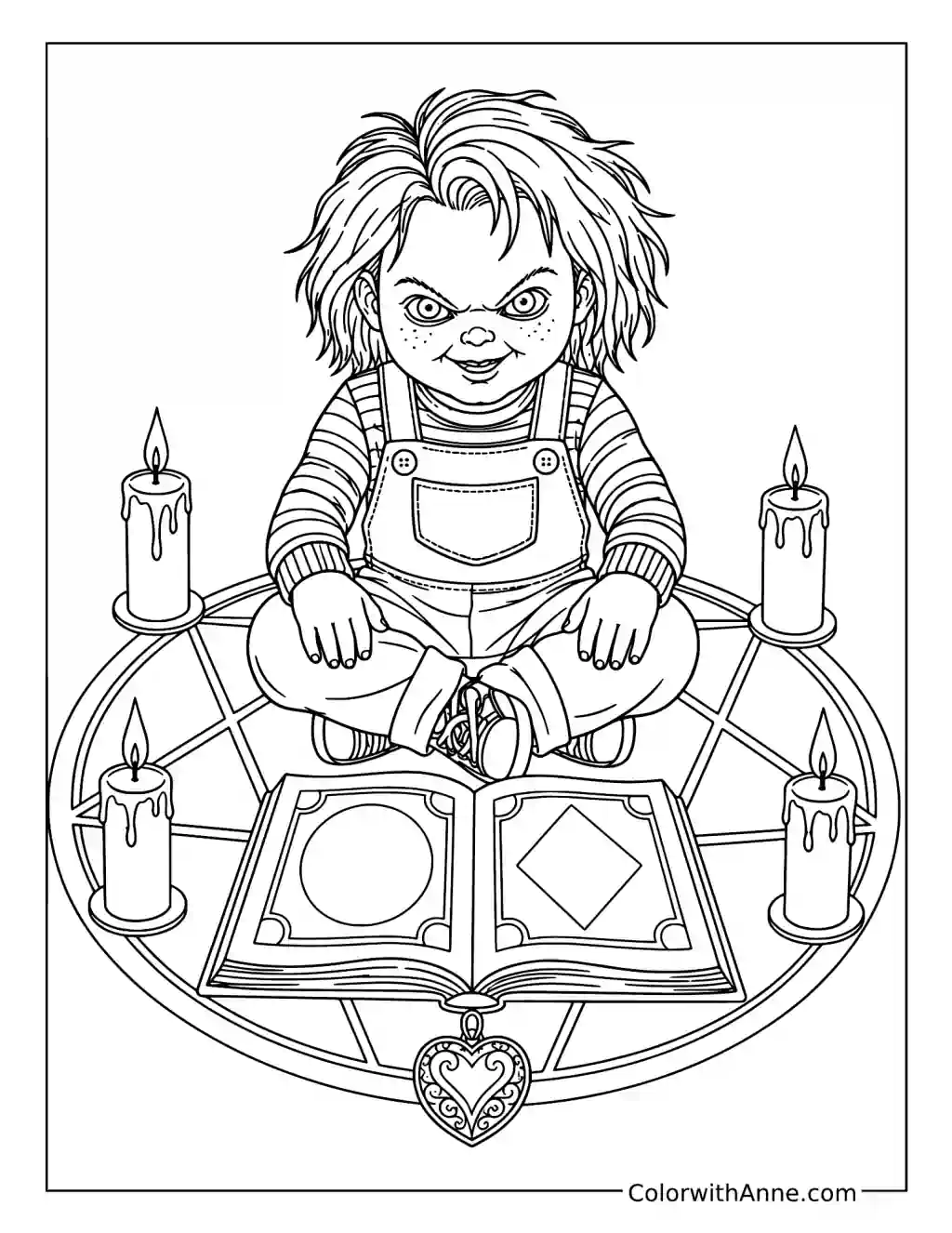
The candles form a ring around the seated Chucky. An open book lies in front of him, and a heart-shaped pendant rests at the circle’s edge. Everything has a place, but its purpose remains unclear.
Treat the picture as a scene someone discovered and had to document. On a separate sheet, sketch a small floor plan showing the candle positions, book, and pendant. Add observations about their arrangement without assigning supposed real-world meanings to the symbols. One final note about what the observer could not explain will leave room for suspense. This works especially well as a horror-writing prompt: the next paragraph begins when someone disturbs one of the objects.
Put Chucky on Guard Beside the Halloween Candy
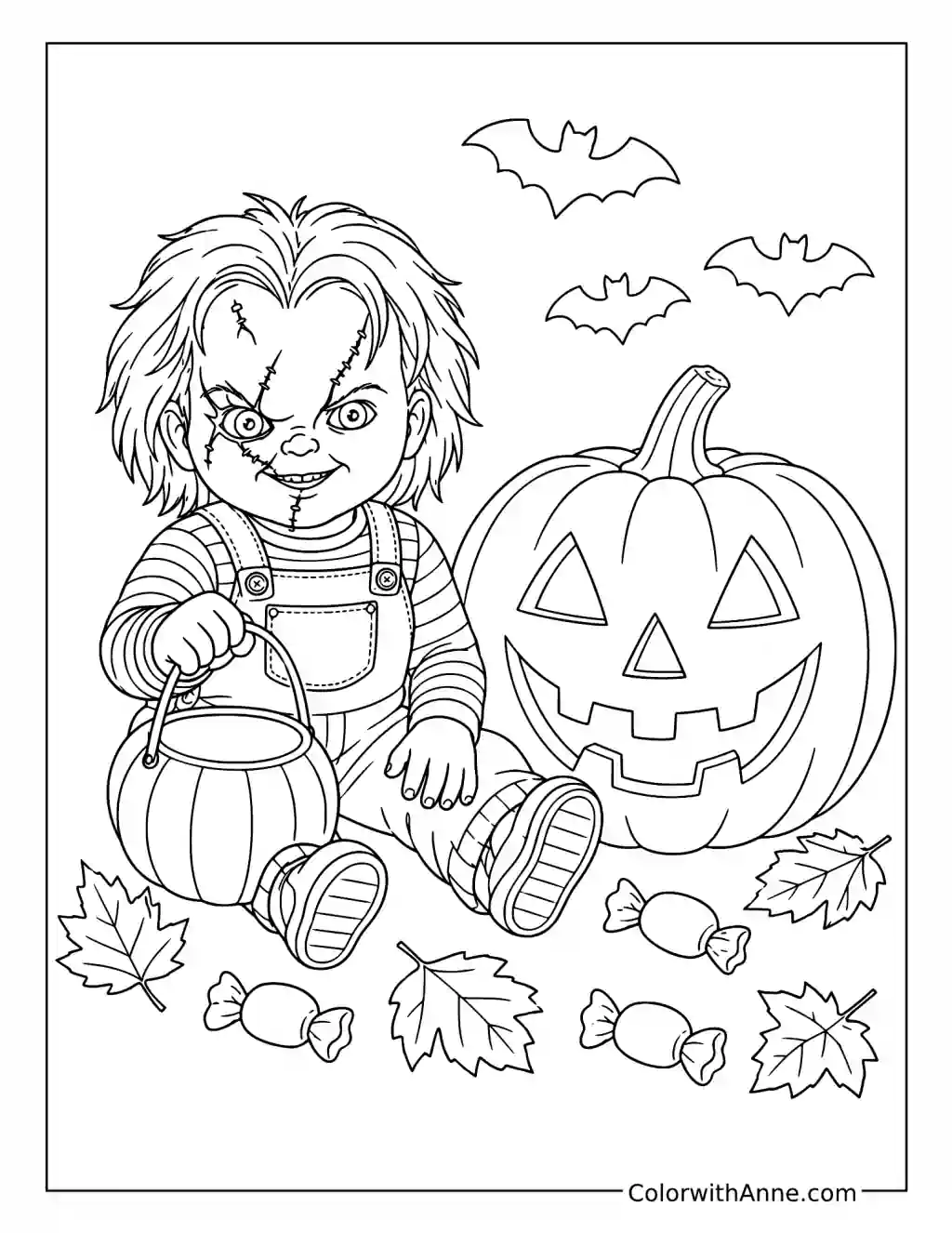
The bucket, wrapped sweets, scattered leaves, and jack-o’-lantern place Chucky squarely in Halloween territory. He sits close enough to the treats to make an effective, unwelcome guardian.
Set the finished page behind the candy bowl at a Halloween gathering. Keep the wrappers colorful, but leave the pumpkin’s mouth and eyes dark so its grin feels hollow. A small handwritten rule beneath the picture can give the display a purpose: one sweet per visitor, with Chucky apparently overseeing the arrangement. Let the doll and pumpkin carry the threat. Extra splashes, slogans, and decorations would make the setup busier without making it more disturbing.
Build a Bedtime Scare Around the Slippers
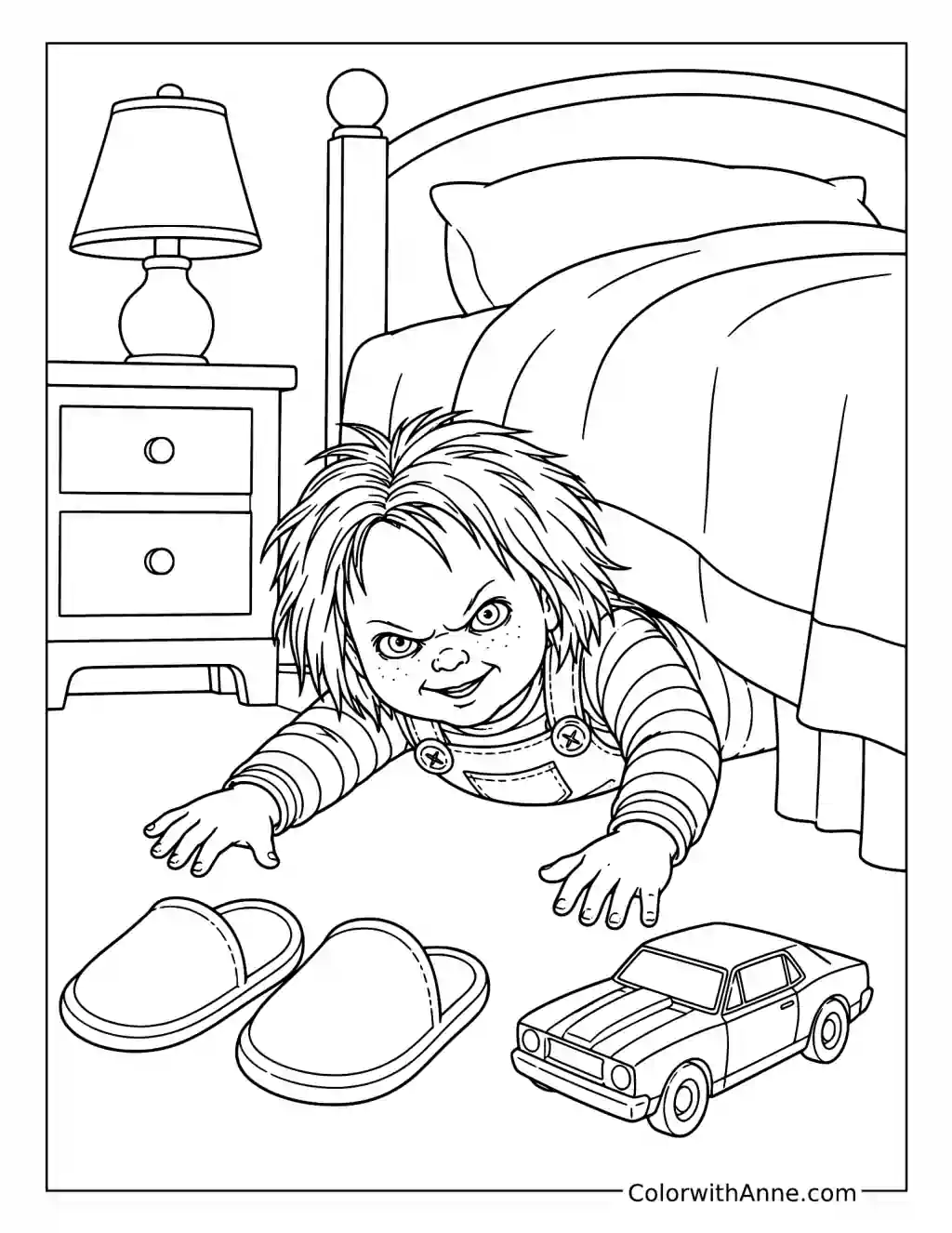
Chucky reaches out from beneath the bed, while slippers and a toy car remain on the floor in front of him. The lamp, nightstand, and pillows suggest an ordinary bedroom whose owner has missed something important.
Use this scene for a short suspense exercise. Write five sentences from the room’s owner’s point of view, beginning with the simple act of returning for the slippers. Delay mentioning Chucky until the last sentence. The lamp, floor, and toy car give the character ordinary things to notice along the way. Keep the finished picture beside the writing so the reader can see the danger before the character does.