
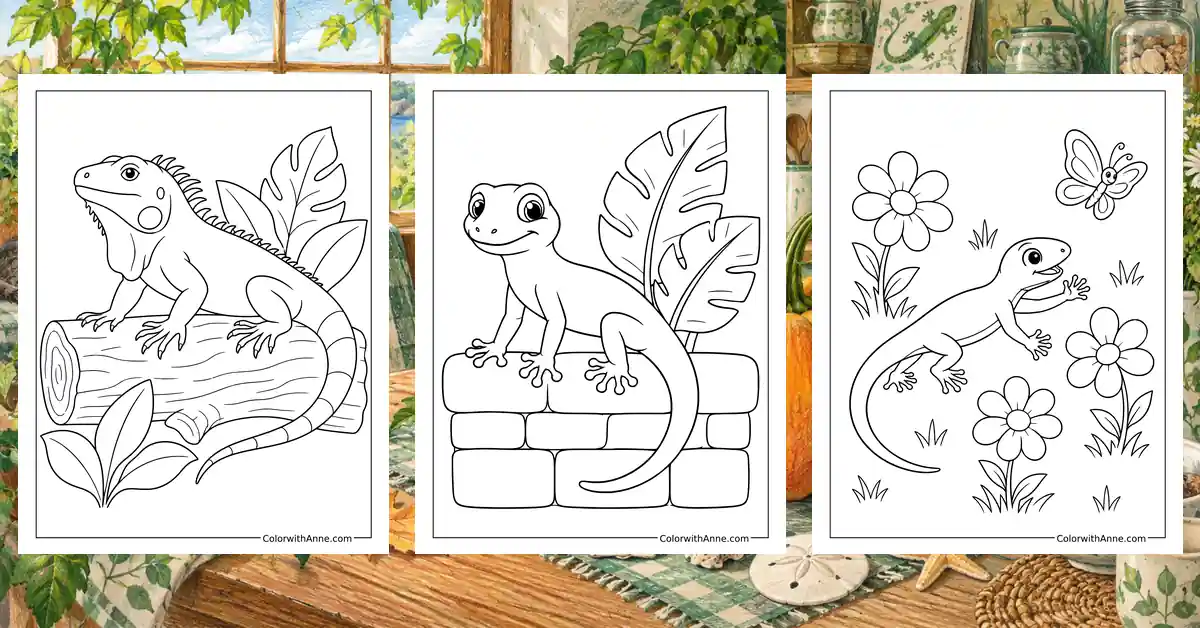
A warm patch of stone is prime real estate for a lizard. One minute it sits completely still; the next, a quick rustle reveals a tail disappearing behind a flowerpot. Tiny toes grip rough surfaces, heads tilt toward movement, and a sunny garden suddenly rewards anyone willing to pause and look closely.
Lizard coloring pages bring that small, watchful presence to the table. The theme recalls afternoons spent noticing creatures along fences and garden walls, where patience matters more than noise. There is something appealing about an animal that can make basking in the sunshine look like serious business.
Free Printable Lizard Coloring Pages
Click any coloring page below to open the PDF, then print on US Letter or A4 paper.
Did you find what you needed?
Help us choose what to create or improve next.
Coloring Ideas for Lizard Pages
Try one of these coloring ideas, or use them as a starting point for your own.
Find the Skink’s Most Recognizable Detail
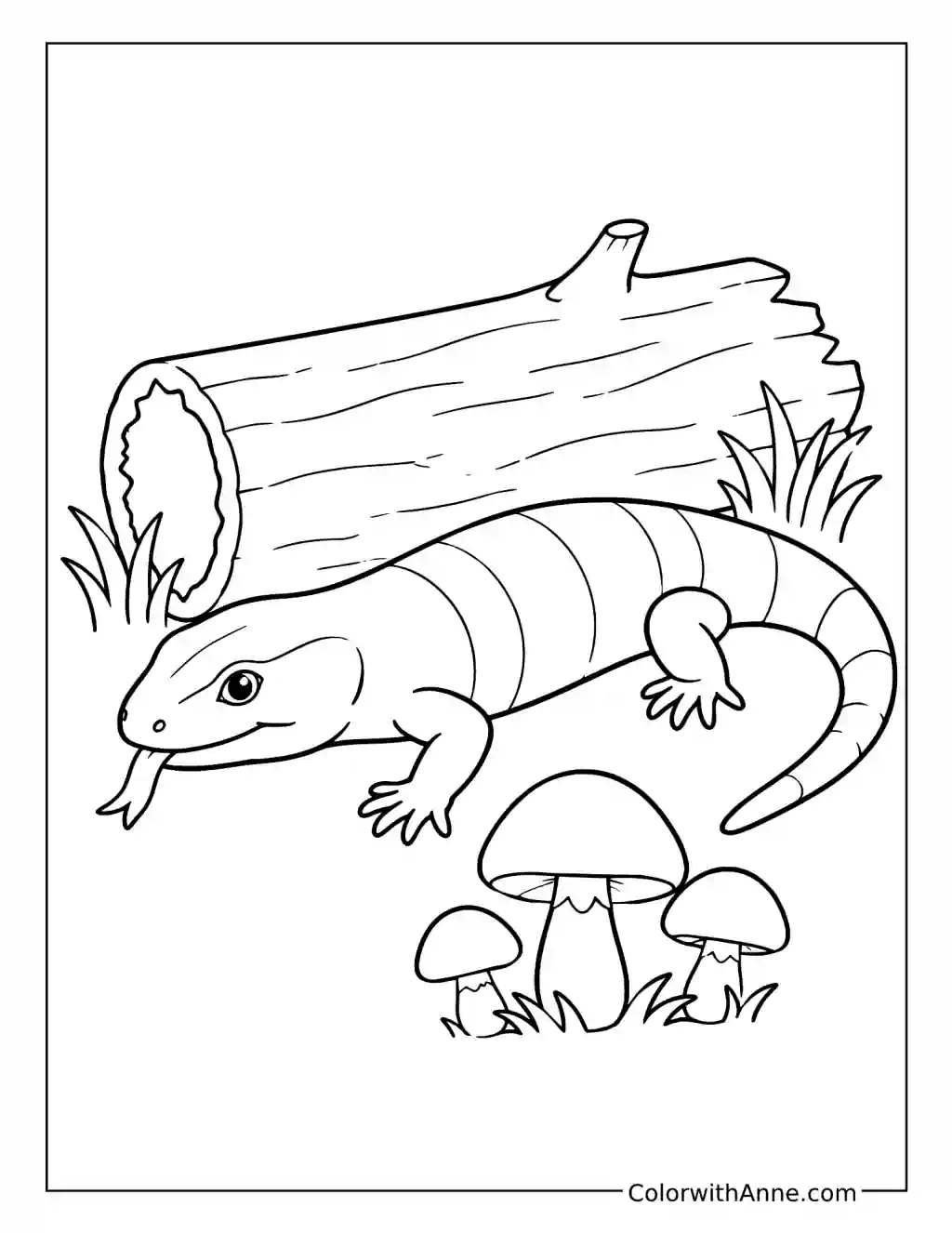
The skink’s tongue peeks out beside the mushrooms, giving this little forest encounter a very specific focal point. Start there with blue, then work outward through the bands on its body. Keeping the log and mushrooms relatively subdued lets that small flash of color do more than a whole page of bright scenery.
For a closer look, compare the drawing with a photograph of a blue-tongued skink. Notice which features the illustration simplifies. The broad body, short legs, and long tail become much more interesting once there is a real animal to compare them with.
Send the Flying Lizard through Sunlit Trees
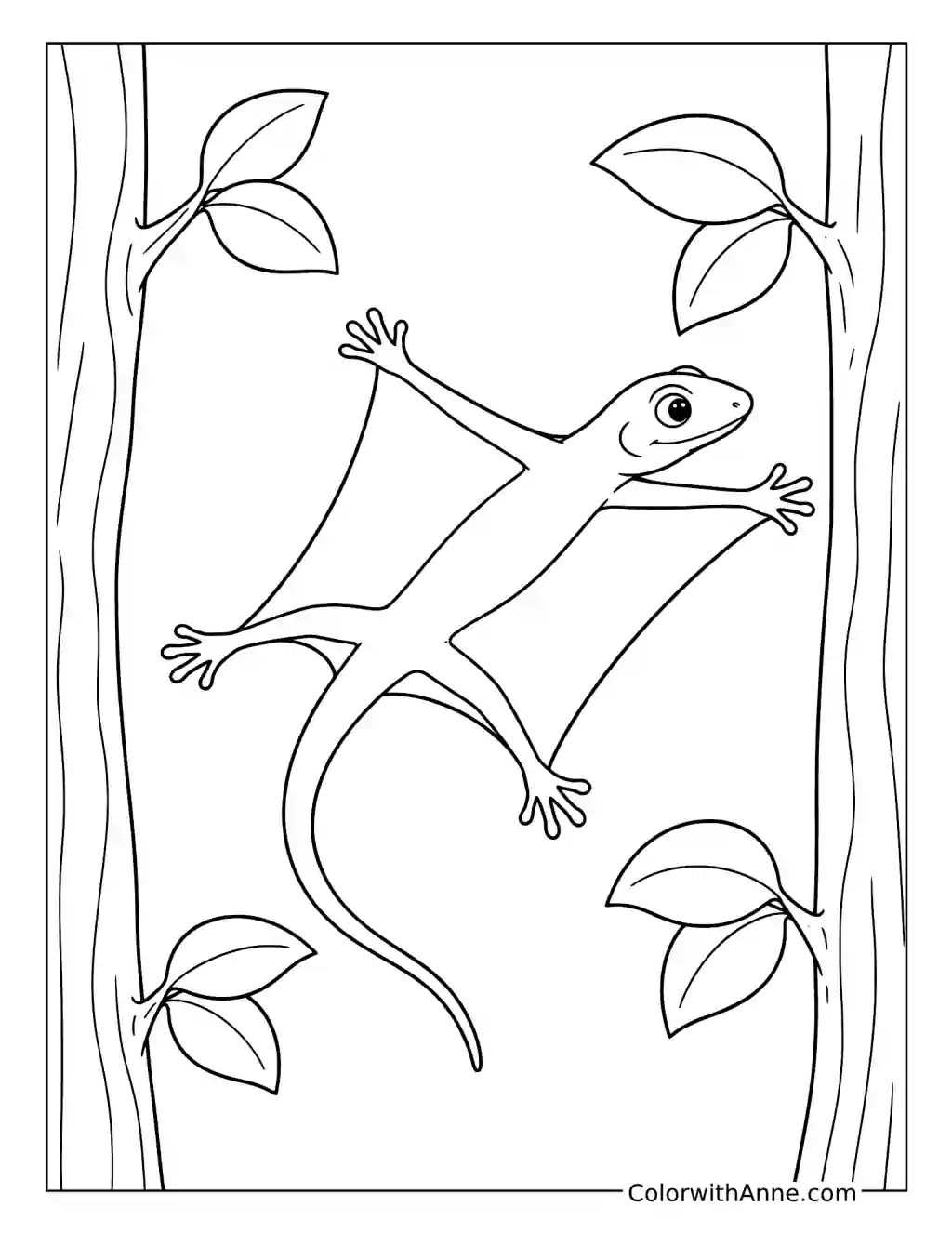
With its limbs spread between two tree trunks, this lizard gives the page a suspended, mid-flight feeling. Try a pale background with a few broad shafts of sunlight passing behind it. Keep the brightest area near the open space between the trees so the gliding shape remains easy to see.
The trunks can carry most of the darker color. That contrast makes the gap feel like a real opening in the canopy, rather than simply the white space left after finishing the leaves.
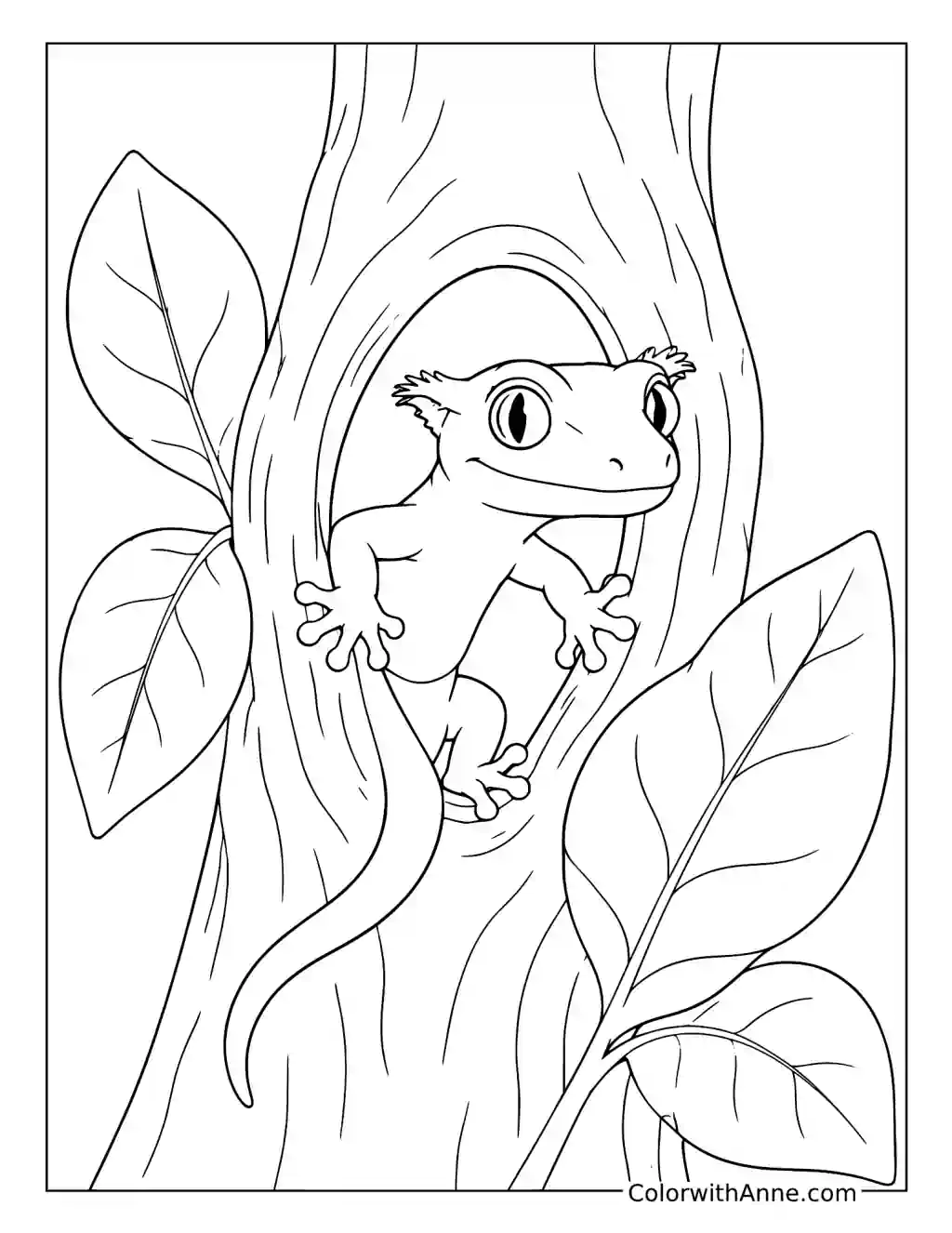
Hide the Gecko inside Its Tree Hollow
The crested gecko is already tucked into an opening in the trunk, with its face and toes visible among the leaves. This picture lends itself to a small reveal: cover the hollow with a hinged piece of brown paper, drawing bark lines across the flap to match the surrounding tree.
Lift the flap and the gecko appears. Keep its face brighter than the hollow behind it, especially around the eyes. It makes a lovely little discovery page for someone who enjoys noticing animals that almost escaped attention.
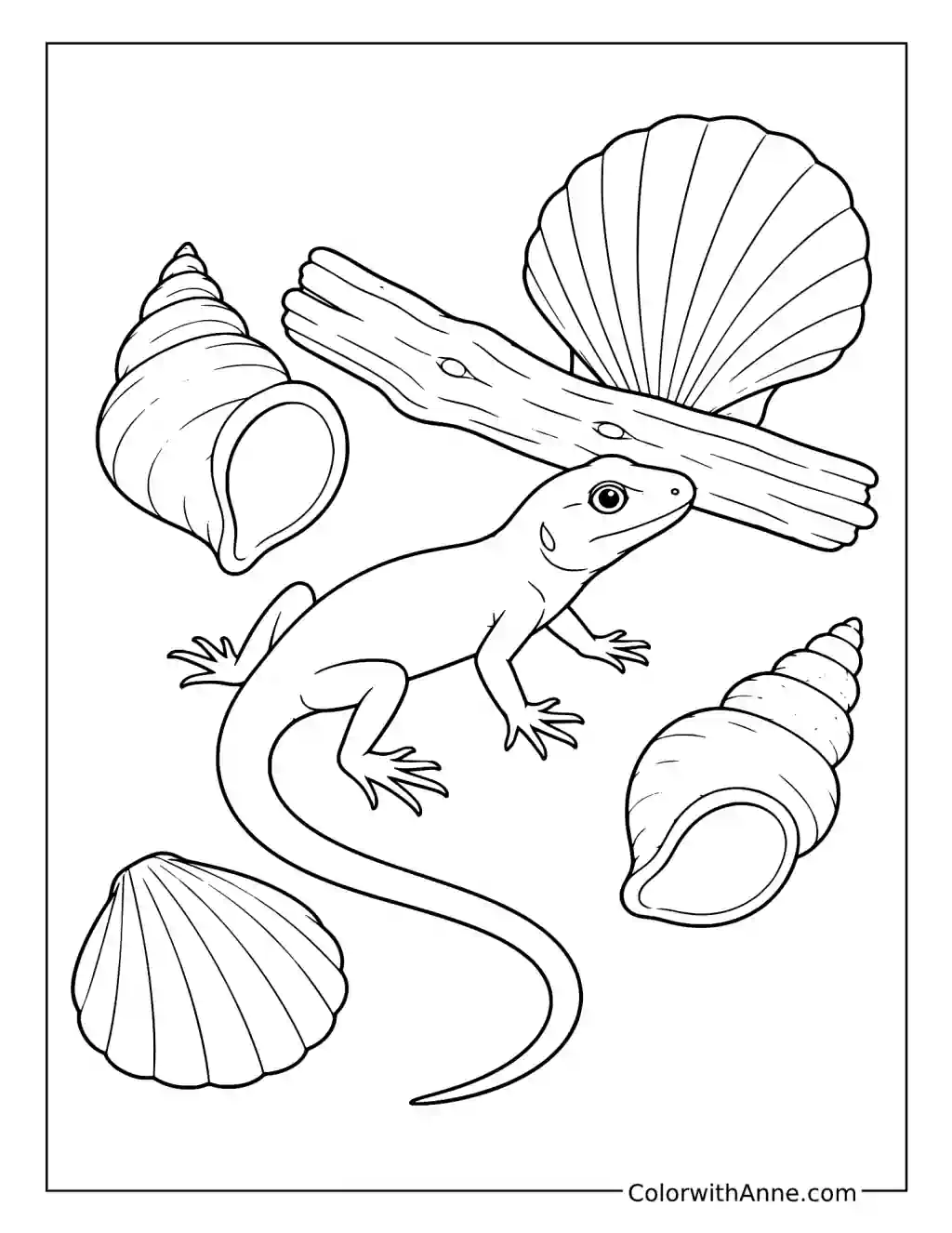
Look Closely at the Seashells
The beach lizard sits among shells with very different shapes: broad fans, curling spirals, and long ridged forms. Give those differences some attention before choosing their colors. A shell can look surprisingly convincing with pale cream and a little shadow tucked between its ridges.
If there are collected shells at home, set one beside the page and turn it slowly in the light. Follow its changes from smooth surface to groove. The drawing becomes an excuse to examine a beach souvenir that usually stays at the bottom of a jar.
Let the Forest Lizard Almost Disappear
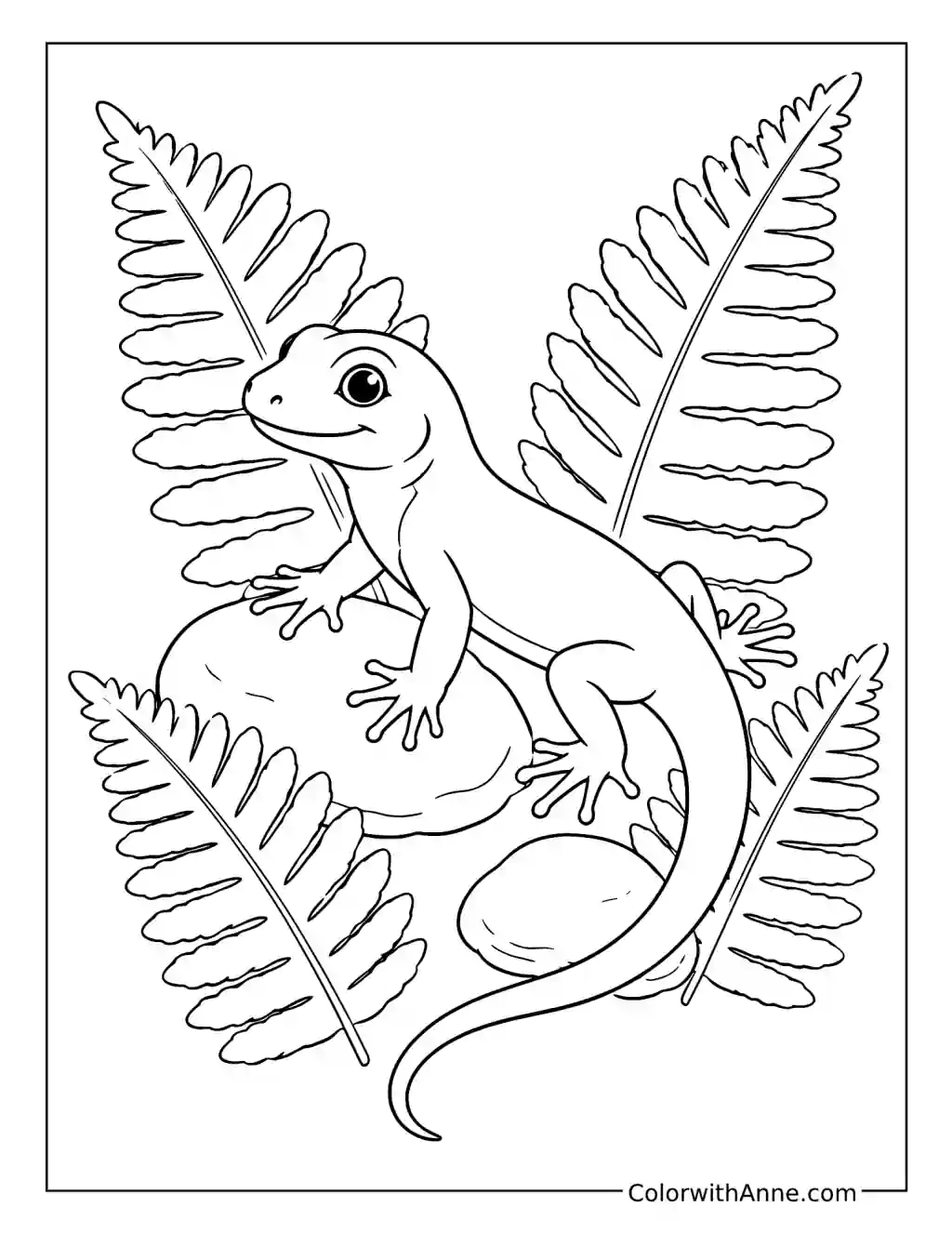
The fern fronds surround the lizard closely enough to make camouflage an interesting visual challenge. Choose related greens for the foliage and the animal, then separate them through light and darkness rather than completely different colors.
Leave the face and front feet a little clearer than the tail. Someone looking at the finished page should spot the expression first and then discover the rest of the body among the leaves. The fun is finding that point where the lizard is hidden, but still findable.
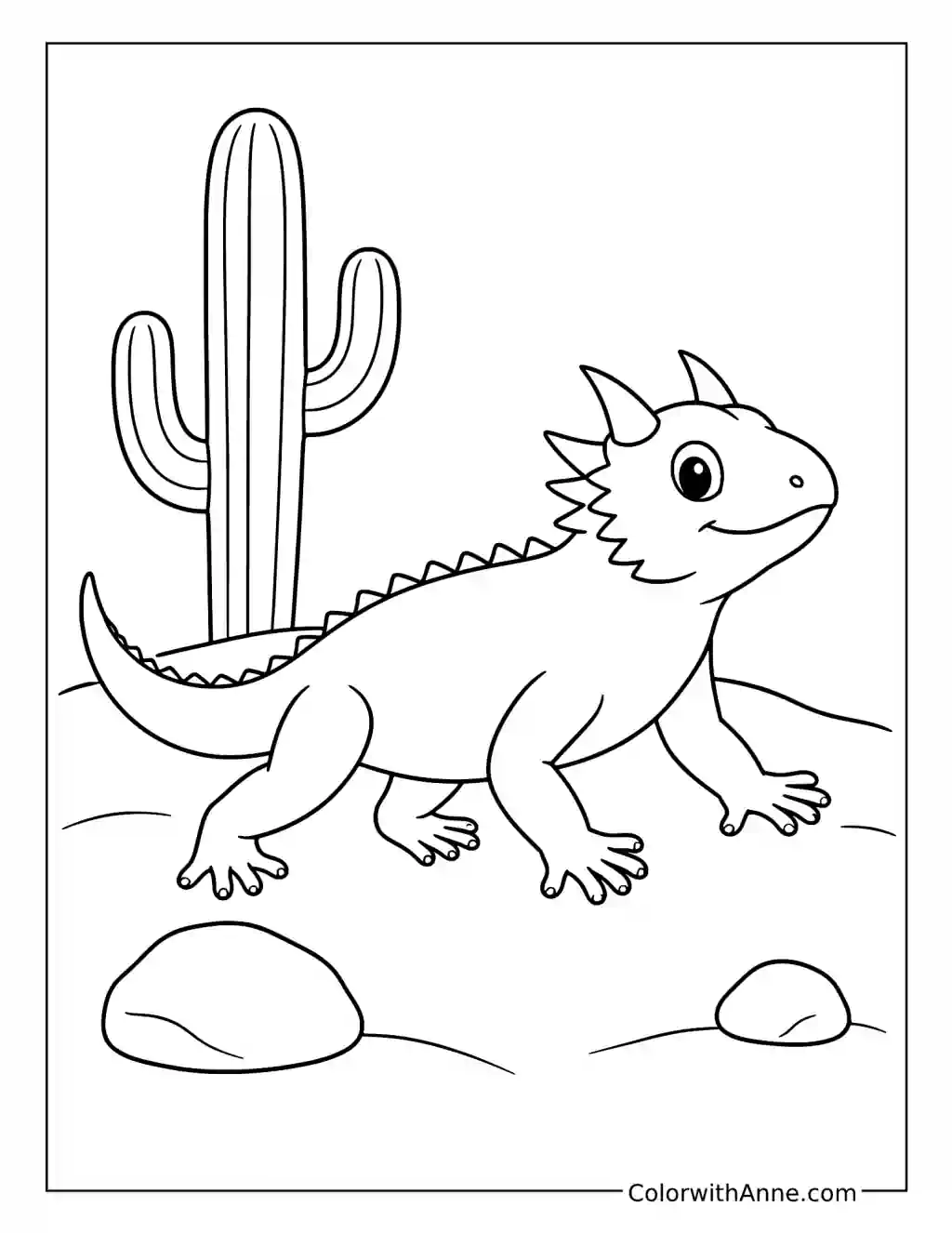
Make the Bearded Dragon’s Rock Feel Warm
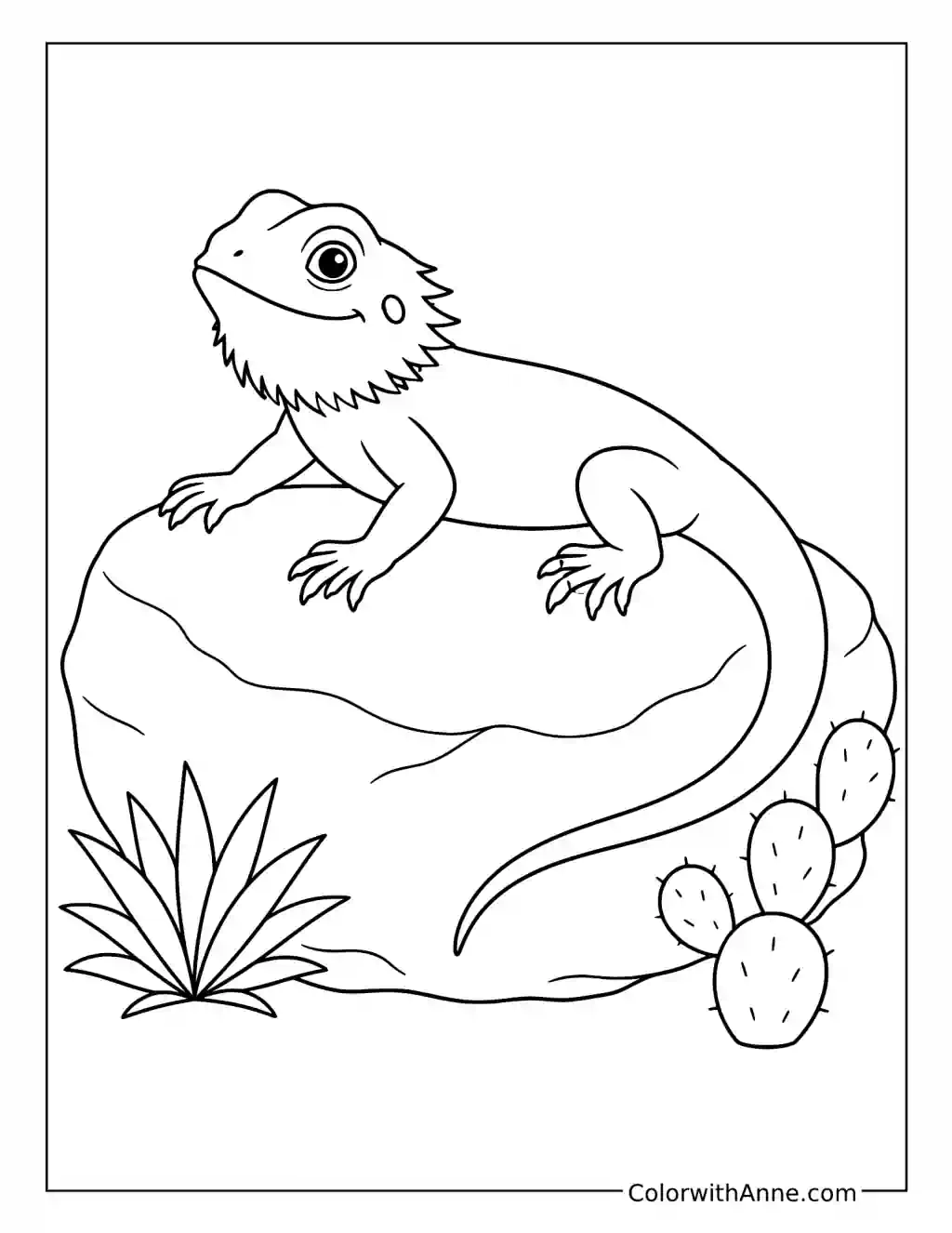
The bearded dragon has settled onto a broad rock beside a cactus, making the rock almost as important as the animal. Try sandy gold across its upper surface, with rust or muted brown underneath the overhanging edge.
Continue that sense of sunlight onto the dragon’s back, leaving its underside slightly darker. The whole scene should feel as though one steady patch of sunshine has warmed it. Tiny marks on the rock can suggest a rough surface without competing with the dragon’s spiky outline.
Follow the Chameleon’s Curves
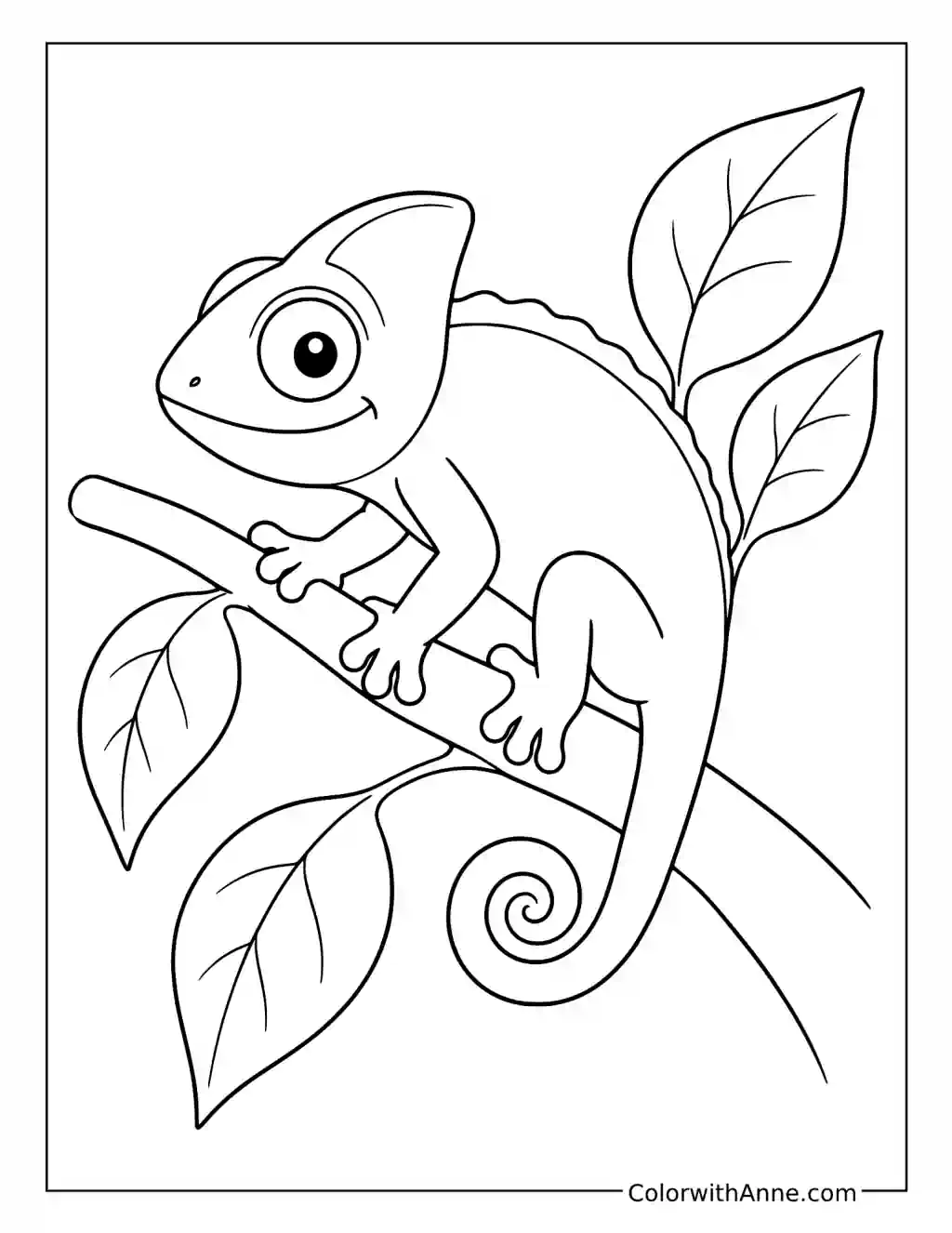
The chameleon’s curled tail and rounded body invite a flowing pattern. Invent bands that follow those curves, narrowing around the tail and widening over the back. A combination such as lime, turquoise, and small orange accents can make the animal feel wonderfully theatrical.
Keep the surrounding leaves simpler so the pattern has room to work. This is a chance to design an imaginary chameleon coat, letting the body’s shape guide every stripe instead of filling it with unrelated patches.
Notice the Small Visitors to a Garden Wall
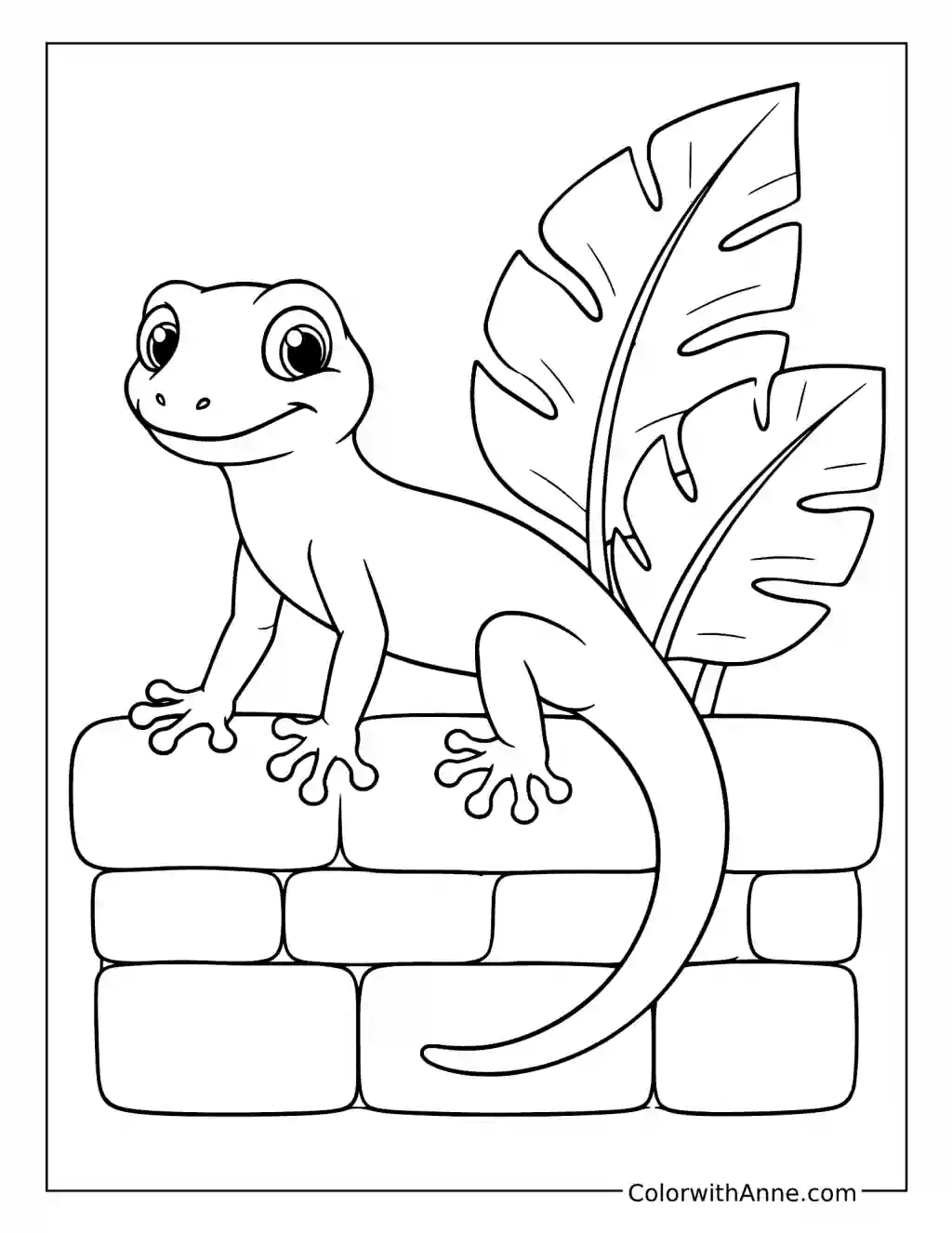
The gecko’s spread toes rest on the top of a brick wall, while broad leaves rise behind it. Look at how neatly the rounded animal contrasts with the rectangular bricks. Warm brick colors and cooler foliage can bring out that difference without requiring a busy background.
Afterward, spend a few quiet minutes looking at a wall, fence, or planter outside. There may be a small visitor using it as a resting place. Watch from a distance; the interesting part is seeing where it chooses to pause.