
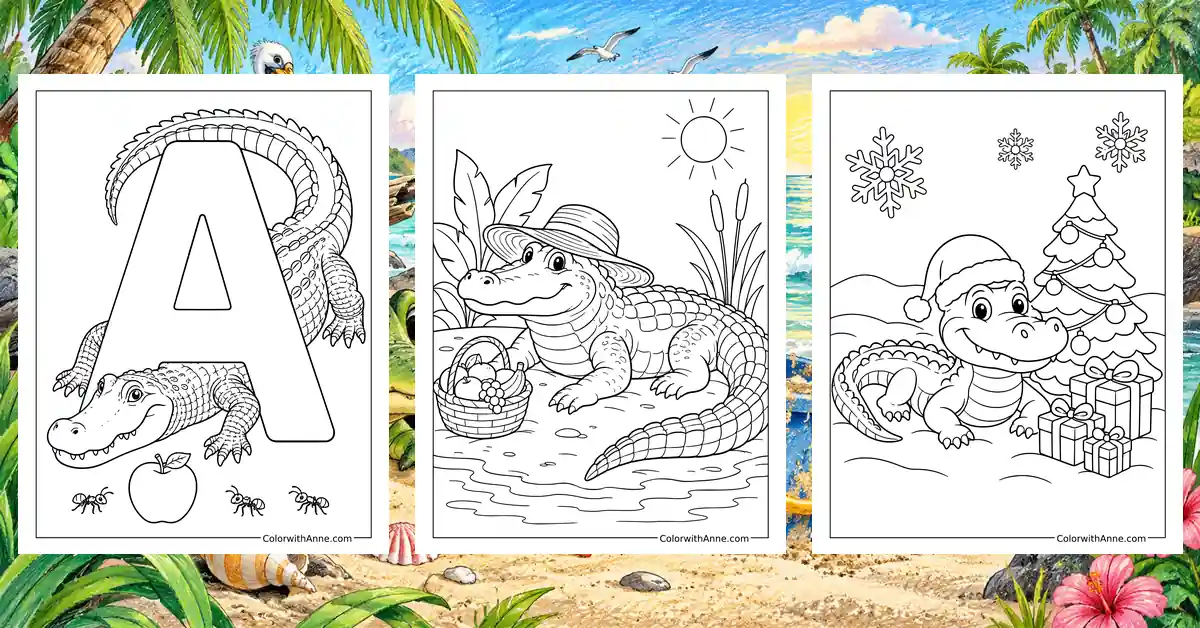
An alligator resting at the water’s edge can be difficult to distinguish from the bank around it. Then an eye becomes apparent, followed by the long outline of a jaw, and the whole view changes. Watching from a safe distance suddenly requires much less encouragement than it did a moment earlier.
Alligator coloring pages make that remarkable shape easier to examine without wondering whether it might move. Children often notice the teeth first, though the tail and low body deserve attention too. After a zoo visit or an animal documentary, the page can keep a lively discussion going about what makes this reptile so distinctive.
Free Printable Alligator Coloring Pages
Click any coloring page below to open the PDF, then print on US Letter or A4 paper.
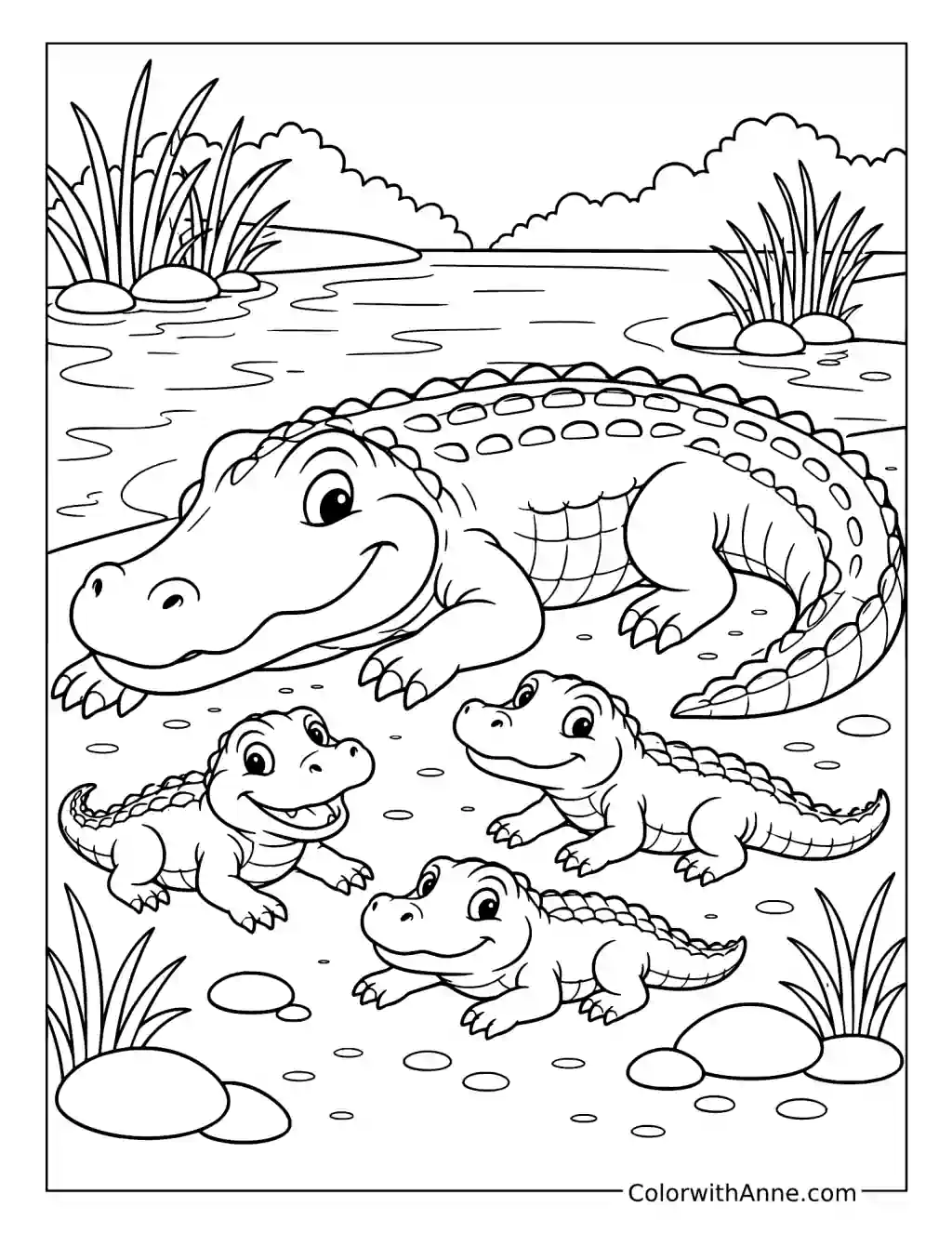
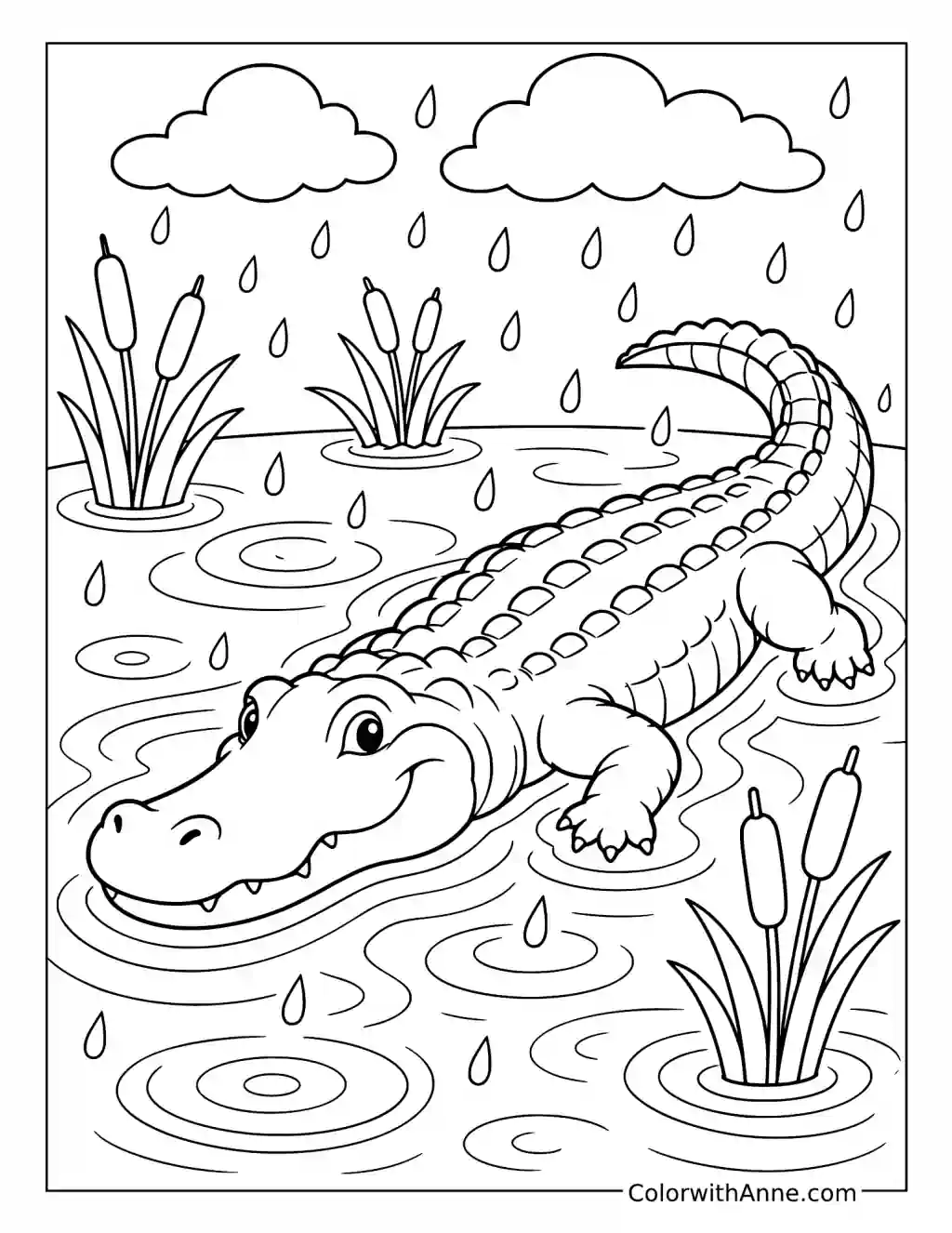
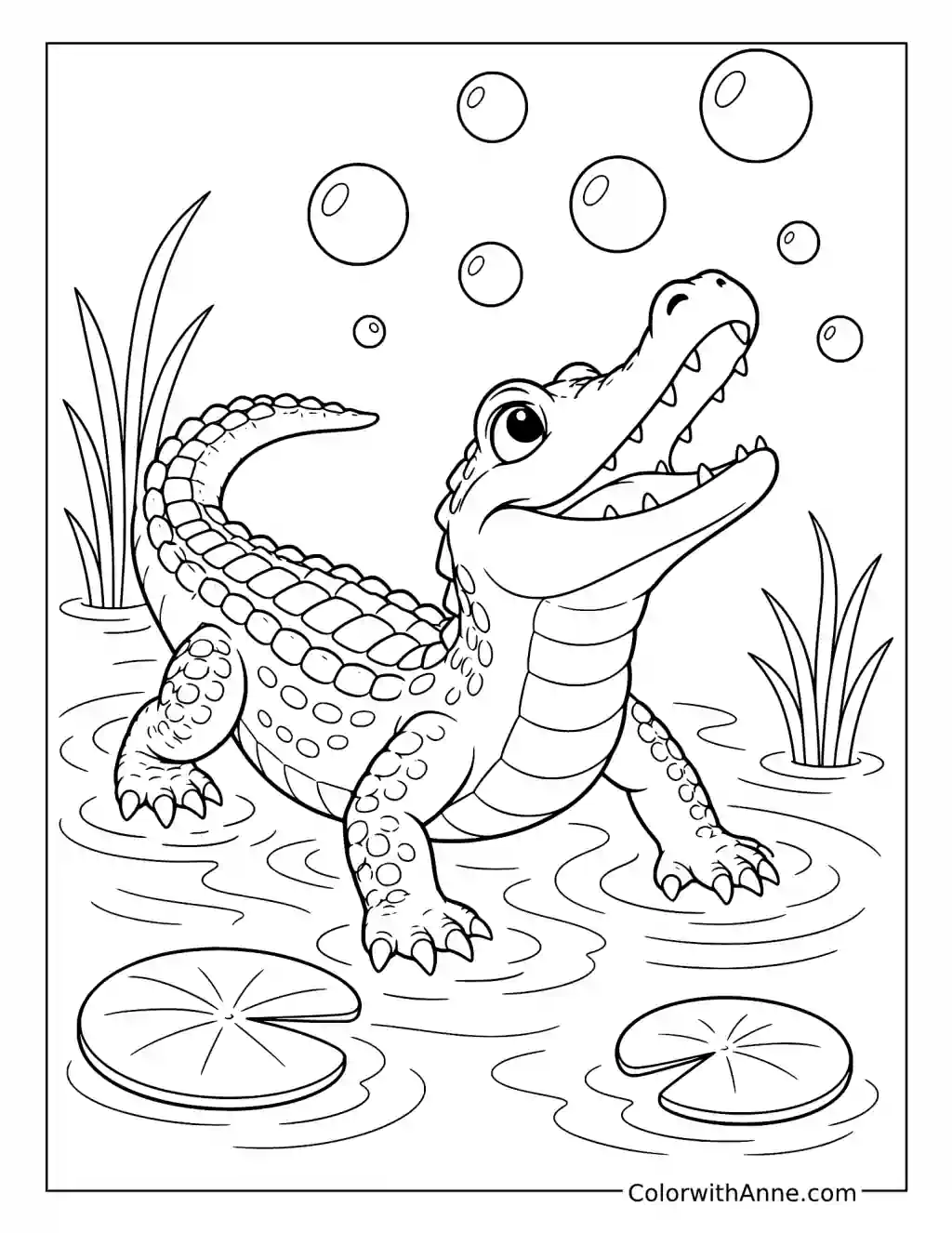
Did you find what you needed?
Help us choose what to create or improve next.
Coloring Ideas for Alligator Pages
Try one of these coloring ideas, or use them as a starting point for your own.
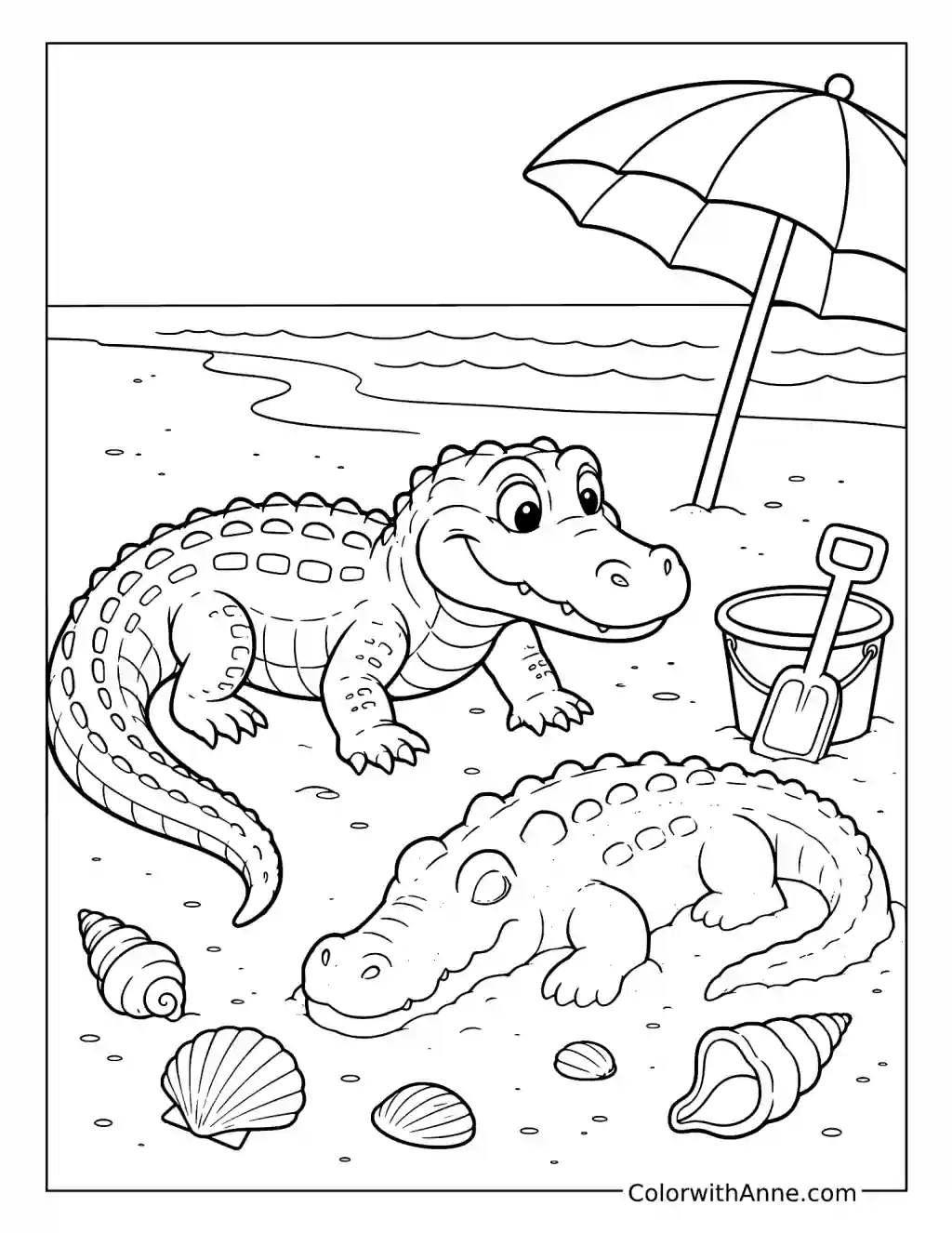
Build a Sand Alligator
An alligator inspects a sandy version of itself beneath a beach umbrella. The shovel is already nearby, and the long tail makes a refreshing change from another sandcastle tower.
Try olive green for the visitor, sandy yellow for its sculpture, and broad blue stripes on the umbrella.
At the beach or in a sandbox, start with a long mound for the body and a tapering trail for the tail. Press ridges along the back with a small scoop. The drawing can help with the outline, especially when the tail starts taking up more beach than expected.
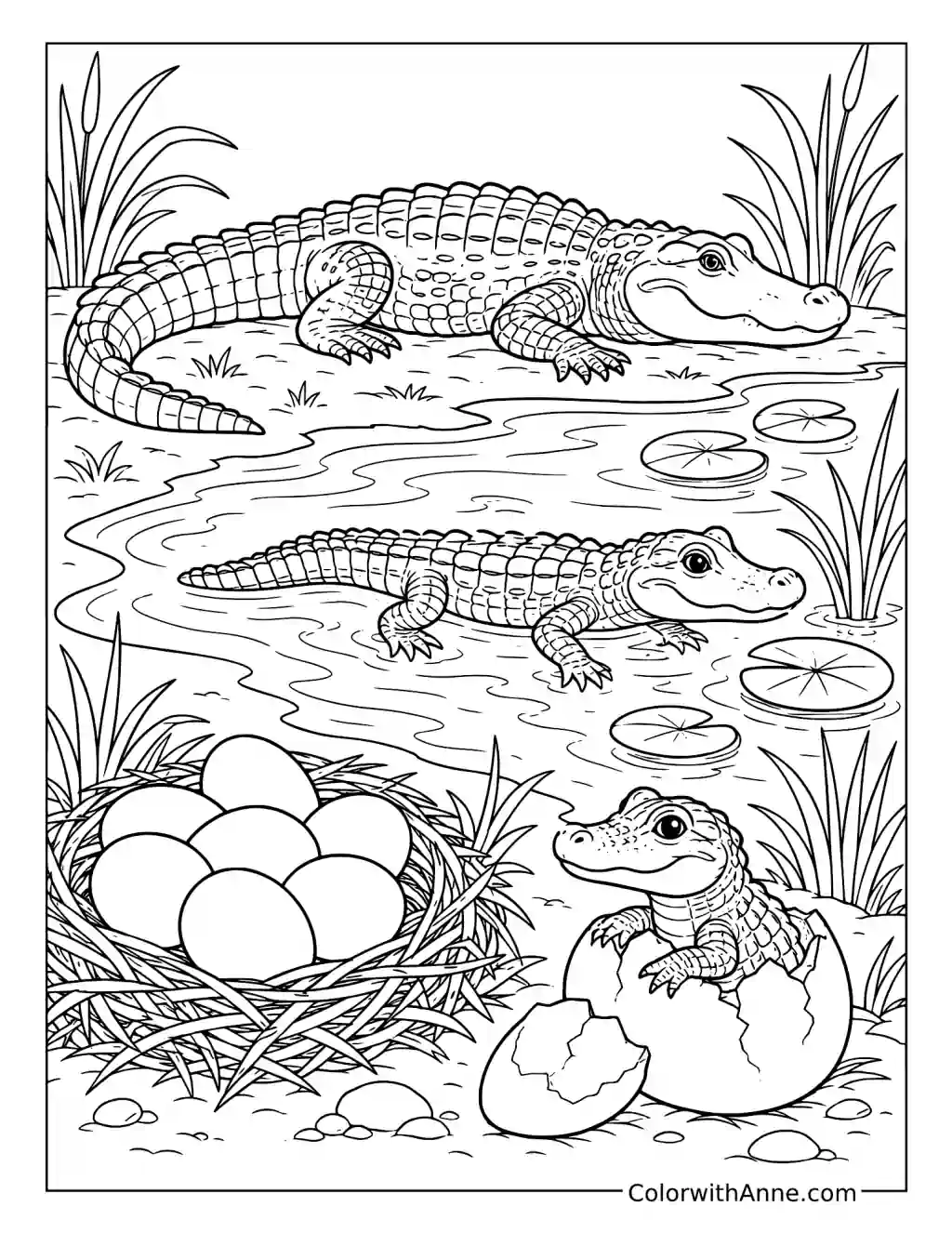
Follow the Alligator From Egg to Adult
Eggs, a hatchling, and larger alligators share this wetland picture. Rather than treating everything as one scene, look for the different stages shown across the page.
Use creamy colors for the eggs and related shades of green for the alligators. Blue water will separate them from the grassy banks.
On three separate cards, draw eggs, a hatchling, and an adult using the picture as a reference. Shuffle them and arrange them in order. Ask someone else to explain the sequence while pointing to the corresponding parts of the finished page.
Map a Route Through the Lily Pads
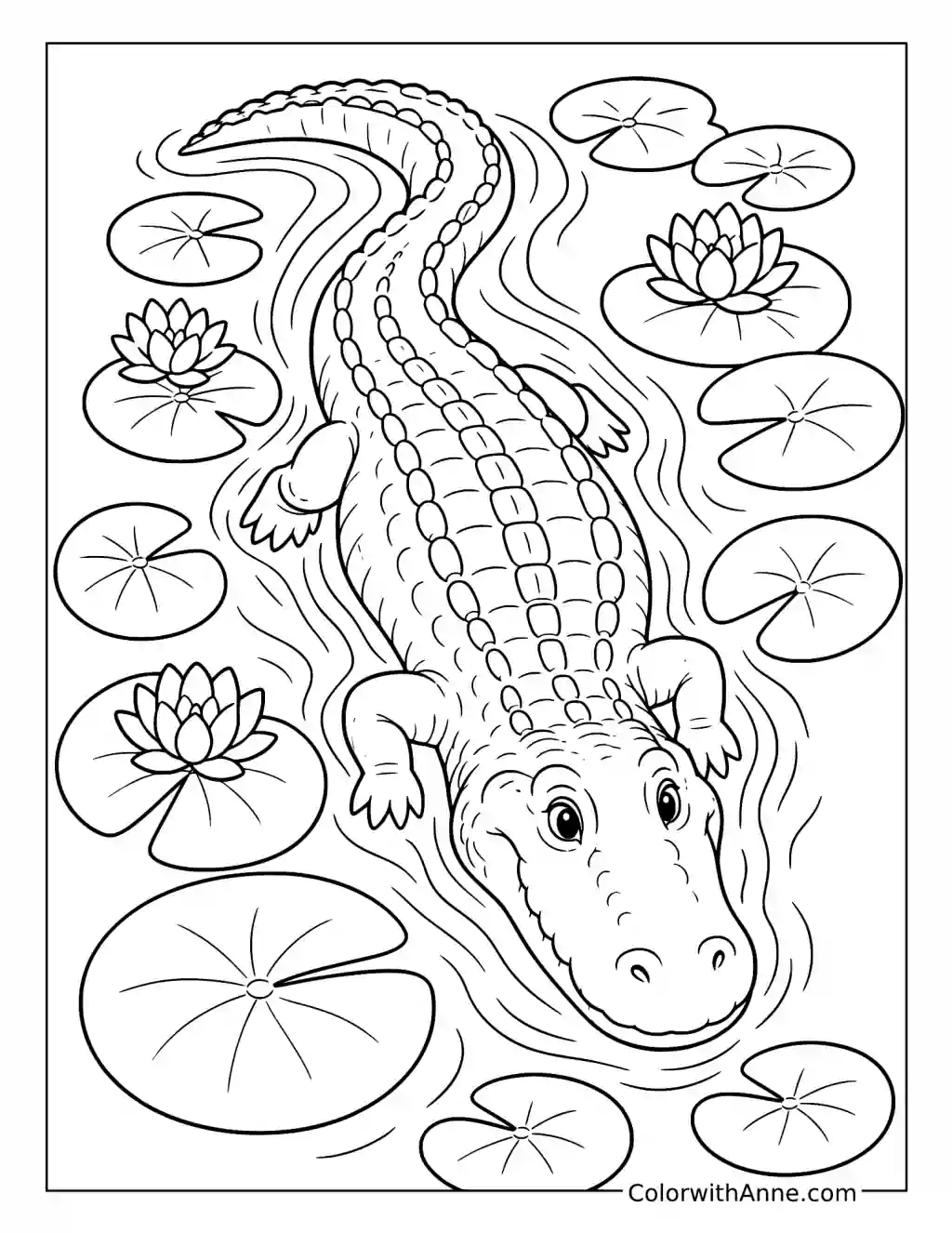
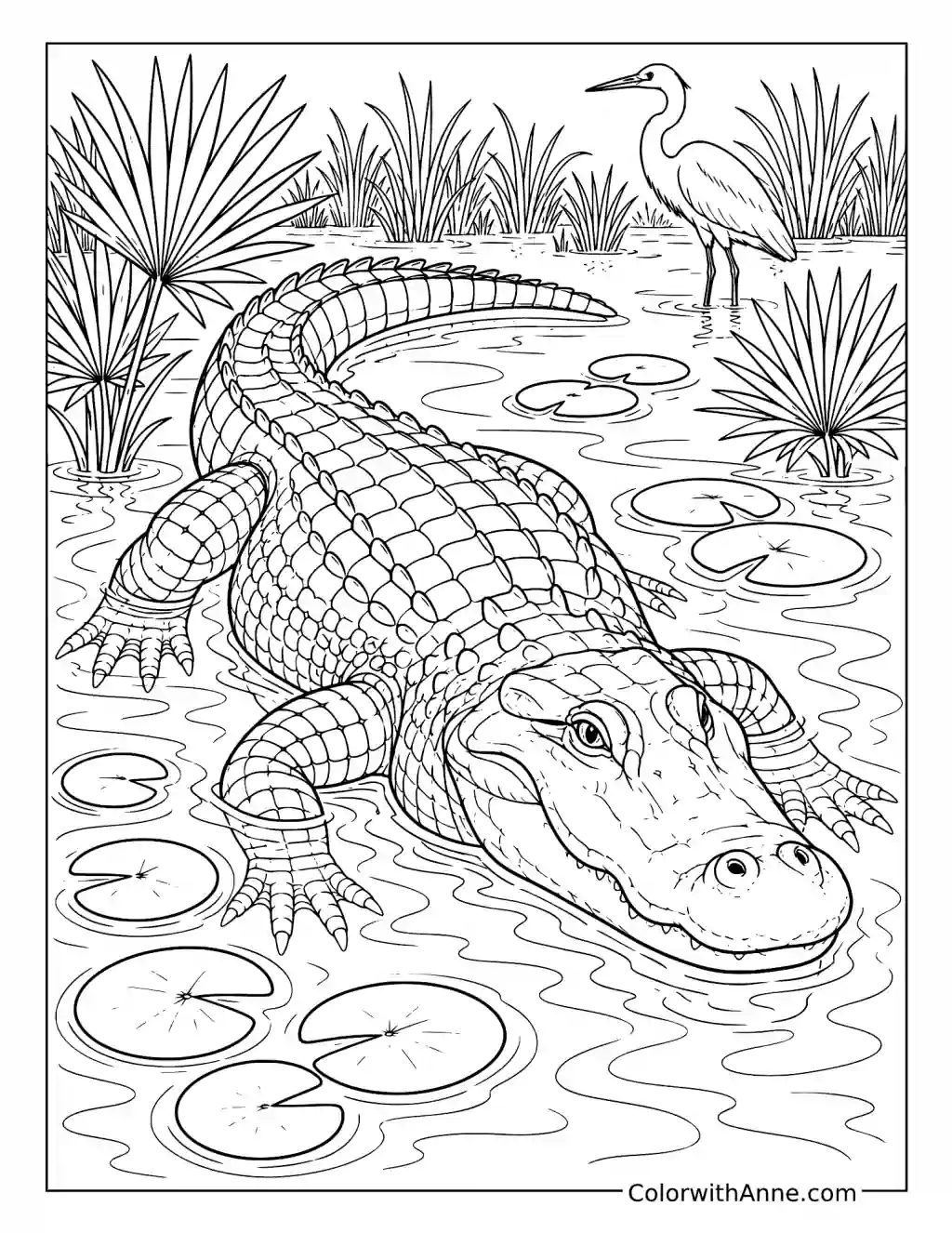
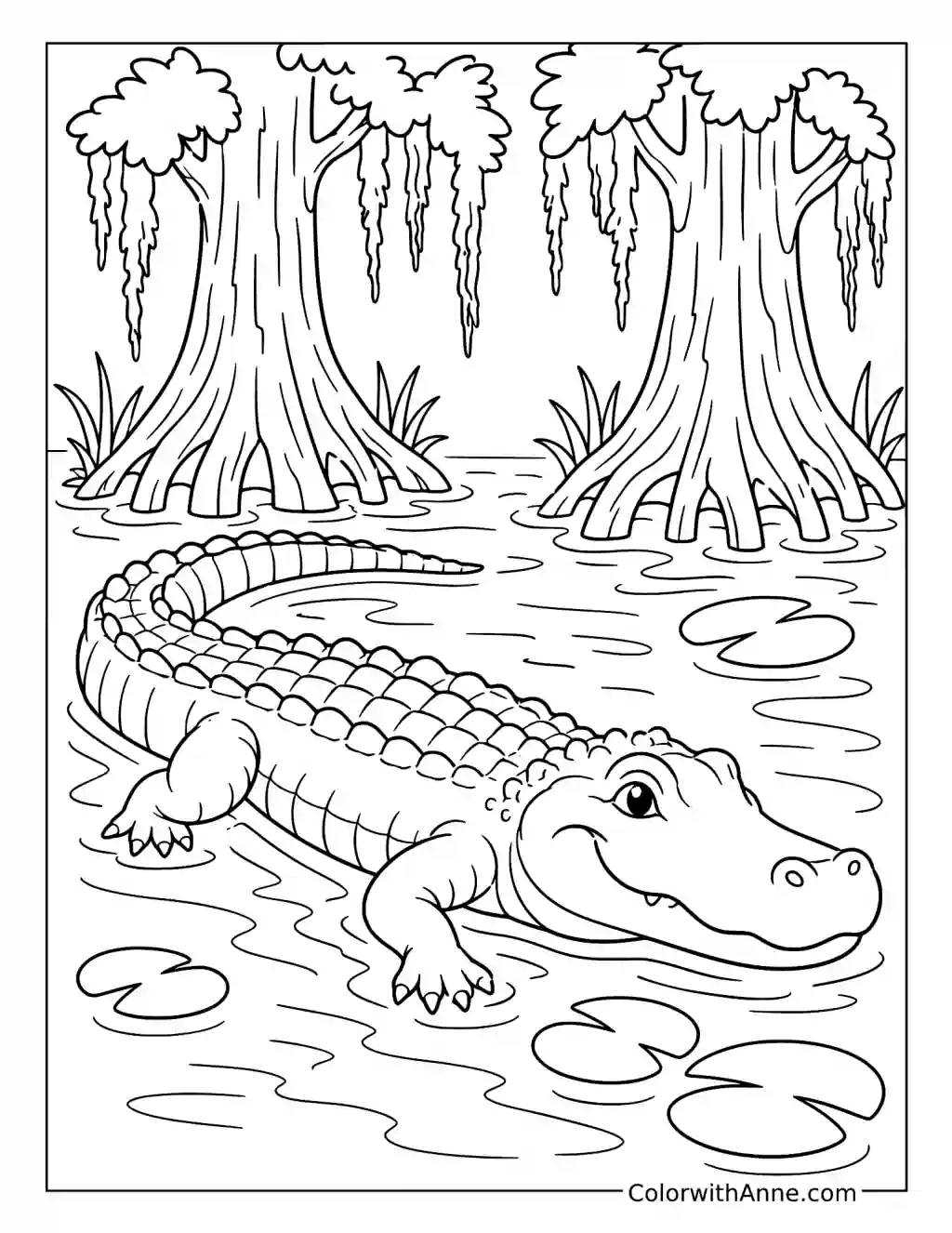
Seen from above, this alligator curves through water dotted with lily pads and flowers. That overhead view makes the picture feel almost like a small pond map.
Choose dark green for the alligator and lighter green for the pads. Pink flowers will stand out against pale blue water.
Draw a new pond beside the finished page, leaving a winding stretch of open water between paper lily pads. Move a small paper alligator along it without crossing the leaves. Rearrange the pads when the route becomes too easy, keeping enough room for that long tail.
Find the Other A Words
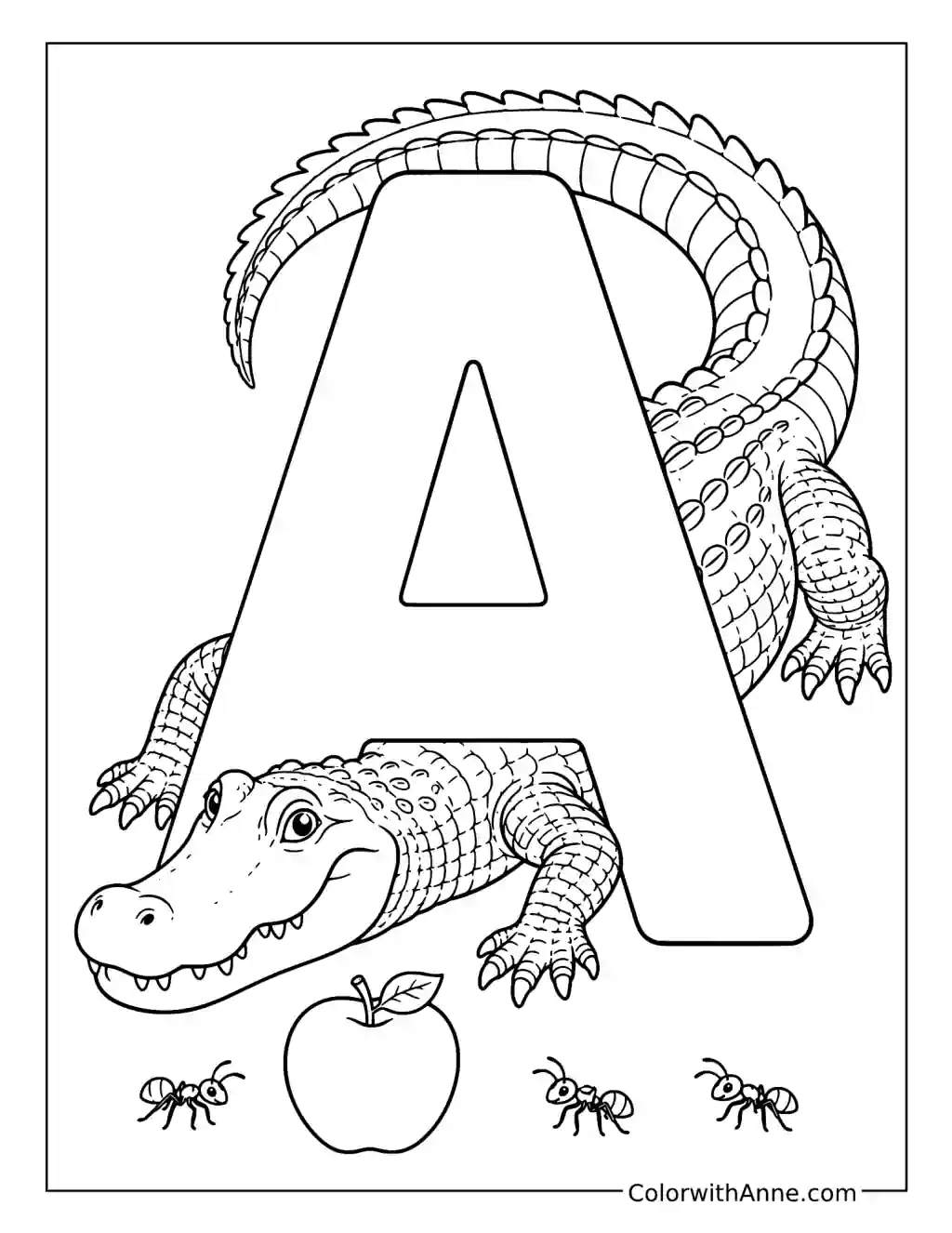
The alligator wraps around a giant A, with an apple and little ants below. There is more than one word beginning with A here, so let the smaller details have their turn.
A red apple, green alligator, and blue letter will keep the main shapes distinct. Give the ants a dark color so they remain visible.
Say the pictured words slowly, then draw another A object on a separate scrap. An astronaut or an airplane could join the group. Place the drawings around the finished sheet and revisit the words together, pointing to their shared first letter.
Give the Frog Something to Say
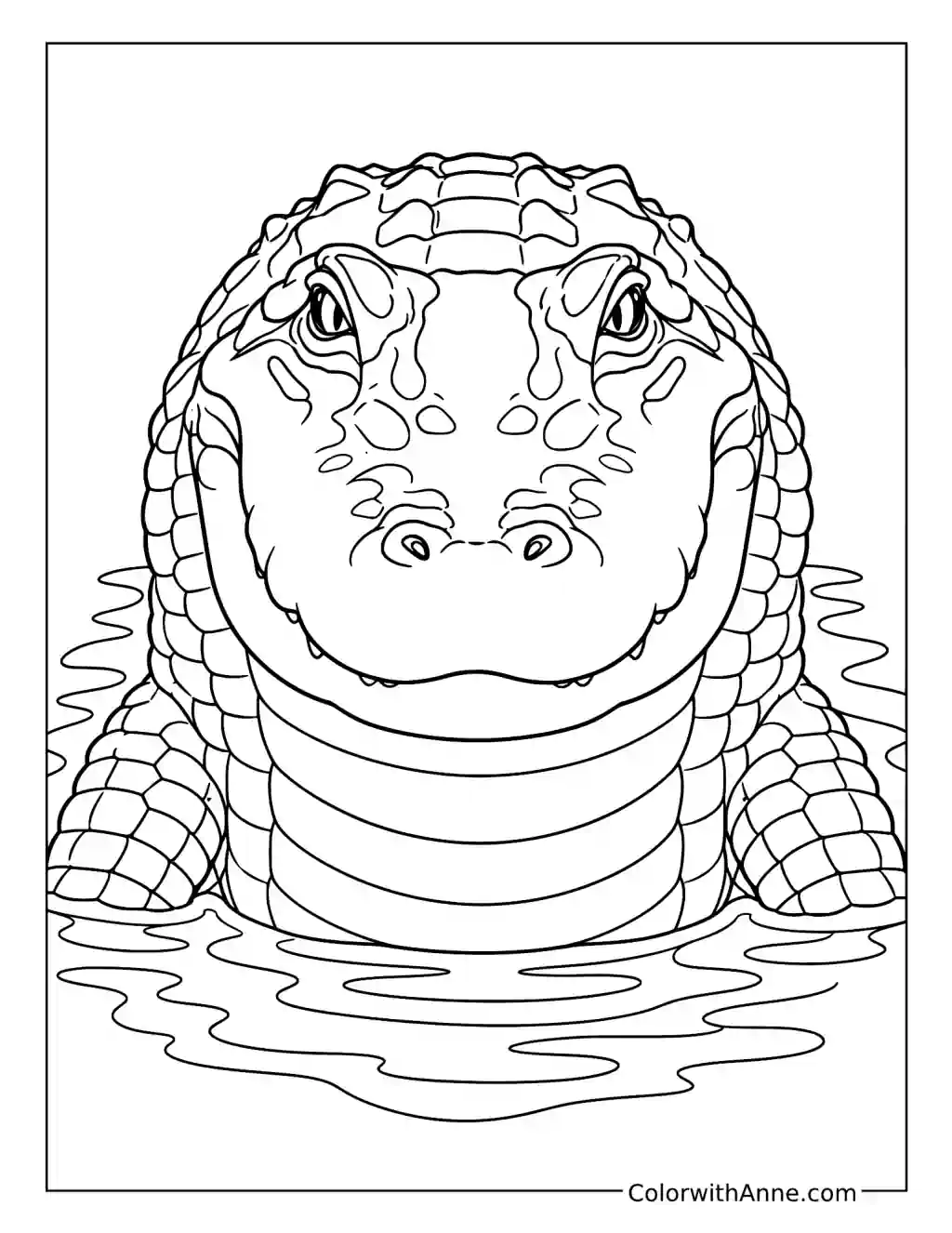
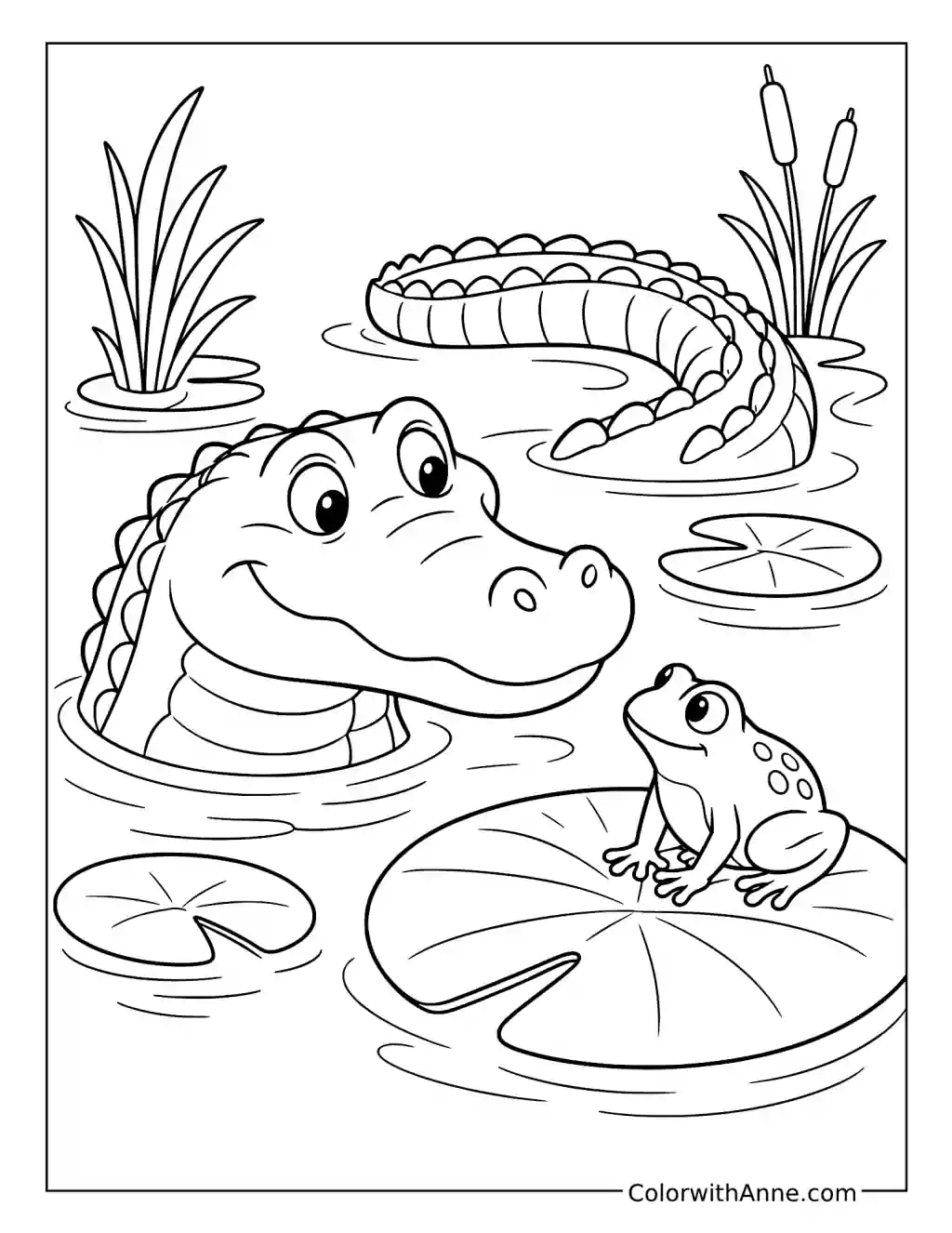
A tiny frog sits on a lily pad opposite a much larger alligator face. Their size difference does most of the storytelling; a short exchange could supply the rest.
Give the two characters different greens, with a bright lily pad and pale blue water. Keep some open water clear for speech bubbles.
Write one line for each character on removable paper bubbles. Perhaps the frog is asking for directions, or complaining about waves rocking its seat. Try a second conversation using the same picture. Keep the lines short enough that the expressions still carry some of the joke.
Make the Egg Open Again
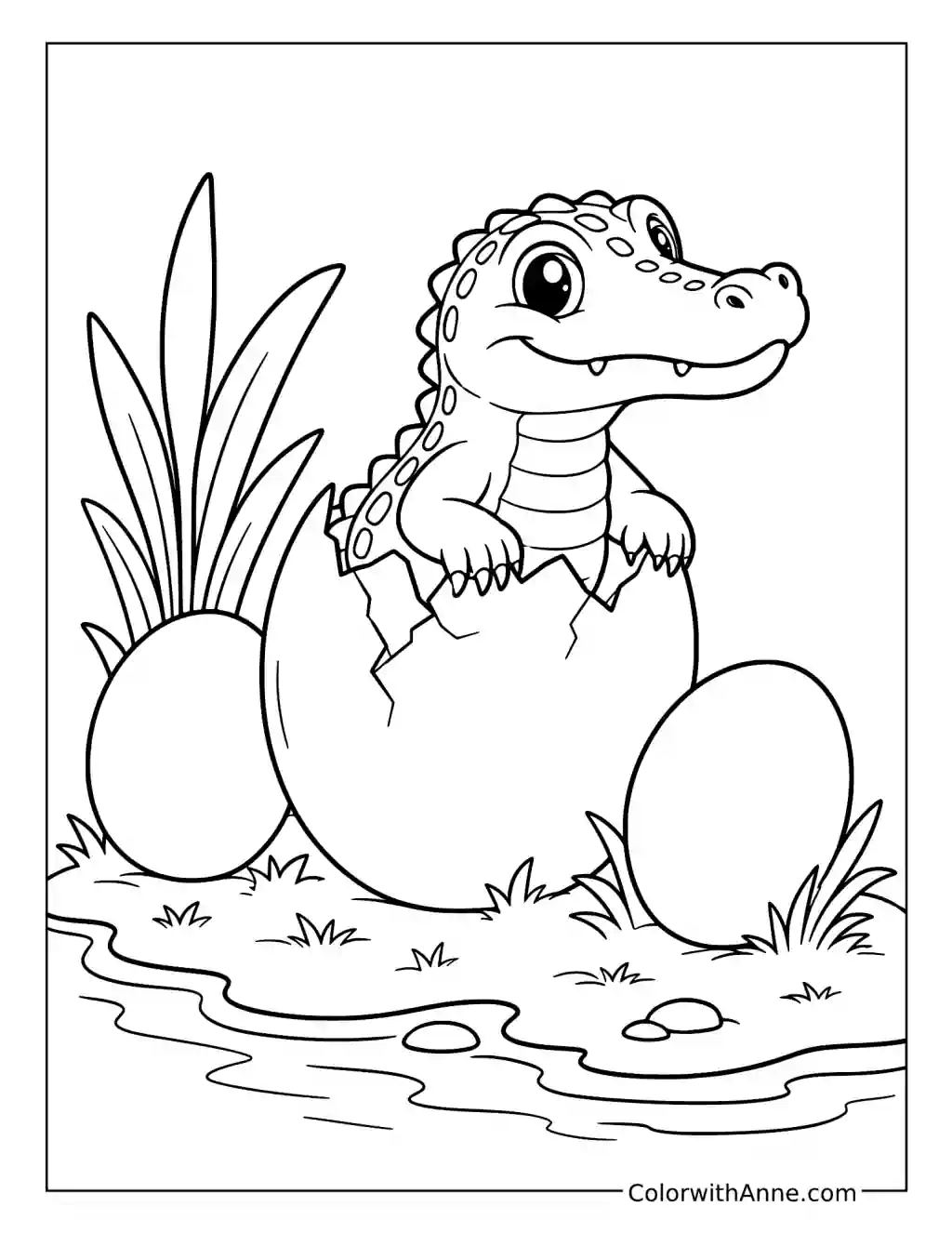
The baby alligator has pushed its head and front feet above a cracked shell. A simple paper flap can turn this moment into a little reveal.
Soft green suits the hatchling, with a cream shell and darker grass around its base. Leave the broken shell edges easy to see.
Draw an extra rounded shell top on scrap paper, sized to cover the baby’s head. Cut a zigzag lower edge and attach only its upper edge above the hatchling with tape. Lift the flap to reveal the new arrival, then close it for the next storyteller.
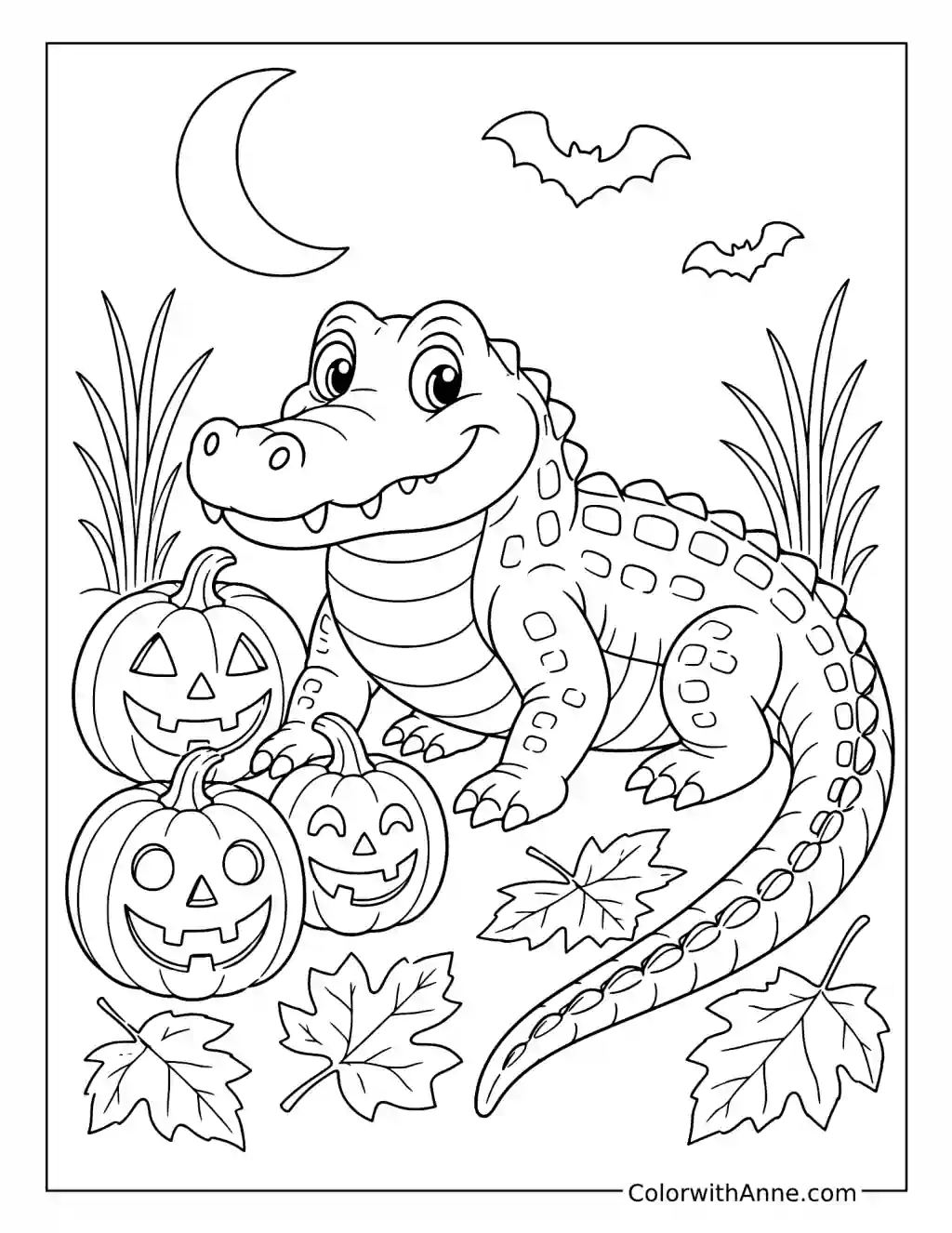
Borrow an Alligator’s Toothiest Pumpkin Grin
This Halloween alligator has company from jack-o’-lanterns, bats, and a crescent moon. Its broad, toothy grin offers an amusing starting point for another pumpkin face.
Orange pumpkins and a green alligator will stand apart nicely. Add purple to the night sky and yellow to the moon.
Sketch a wide alligator-inspired smile on a paper pumpkin, trying different arrangements of triangular teeth. Keep the eyes friendly or make them suspicious. The finished face can become a painted pumpkin design, with the coloring page nearby to settle any arguments about how many teeth are enough.
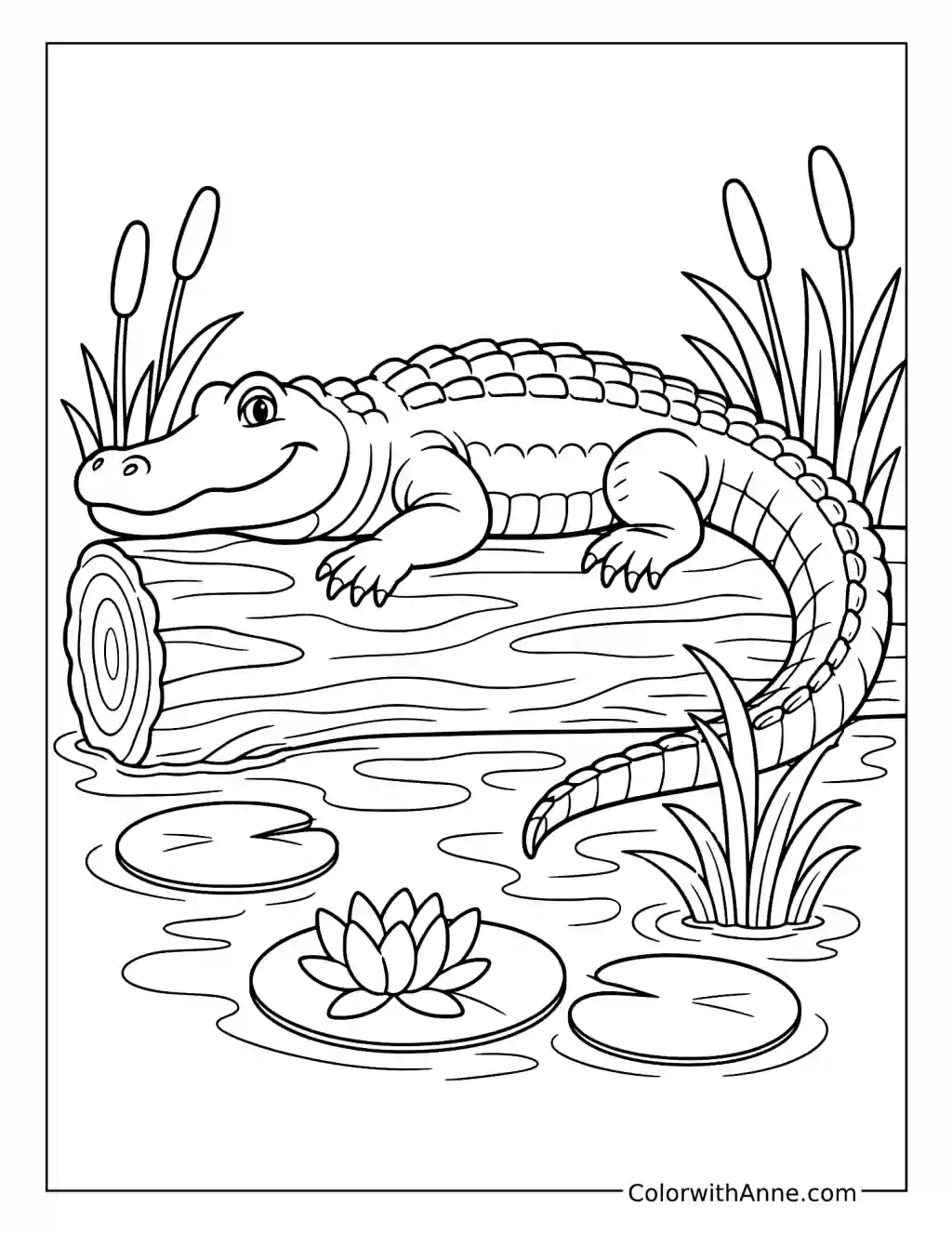
Give the Resting Log Some Texture
Stretched along a fallen log, this alligator appears thoroughly unavailable for further activity. The broad wood surface beneath it offers room for a texture experiment.
Keep the alligator muted green and the water pale blue. Use a light brown base on the log so extra marks will remain visible.
Place corrugated cardboard beneath the printed log and gently rub across it with the side of a brown crayon. Reposition the cardboard to change the direction of the marks. Try it on scrap paper first to find a pressure that adds texture without hiding the drawn wood grain.