
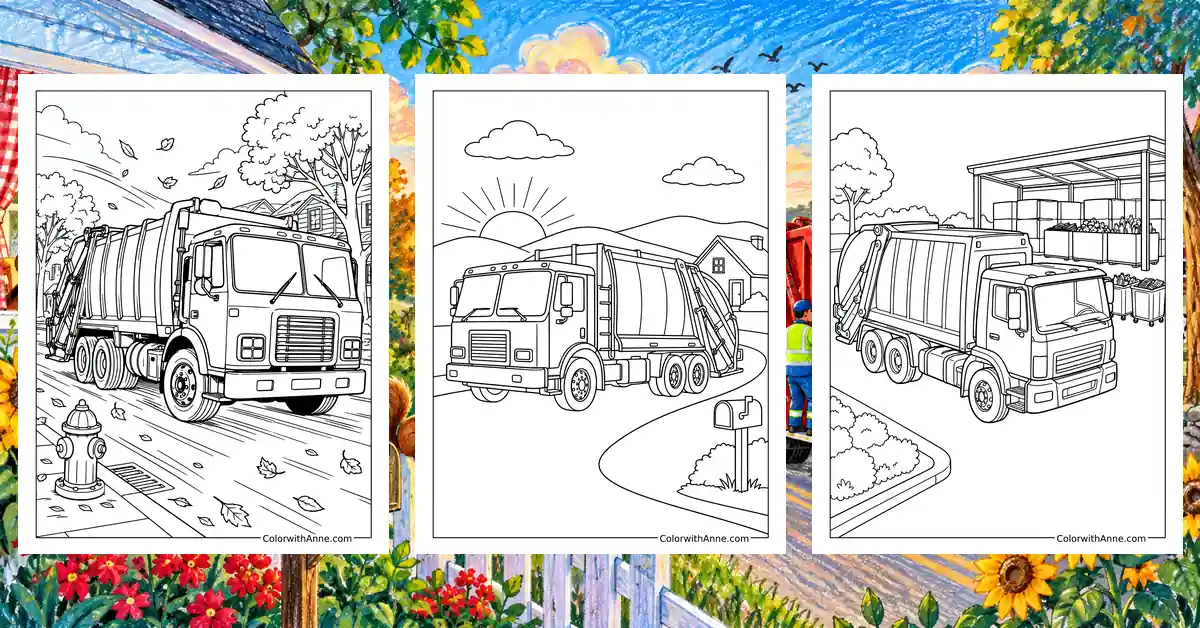
The garbage truck can be heard before it turns the corner, giving a child just enough time to reach the window. A bin rises, tips, and returns to the pavement while the truck waits with a low rumble. Then it moves a few yards, and the entire operation deserves to be watched again.
Garbage Truck coloring pages keep that fascination going after the street grows quiet. The vehicle has an understandable job, but the lifting mechanism can inspire a surprisingly detailed discussion. A child who knows collection day by heart may explain the whole process without needing any help from the calendar.
Free Printable Garbage Truck Coloring Pages
Click any coloring page below to open the PDF, then print on US Letter or A4 paper.
Did you find what you needed?
Help us choose what to create or improve next.
Coloring Ideas for Garbage Truck Pages
Try one of these coloring ideas, or use them as a starting point for your own.
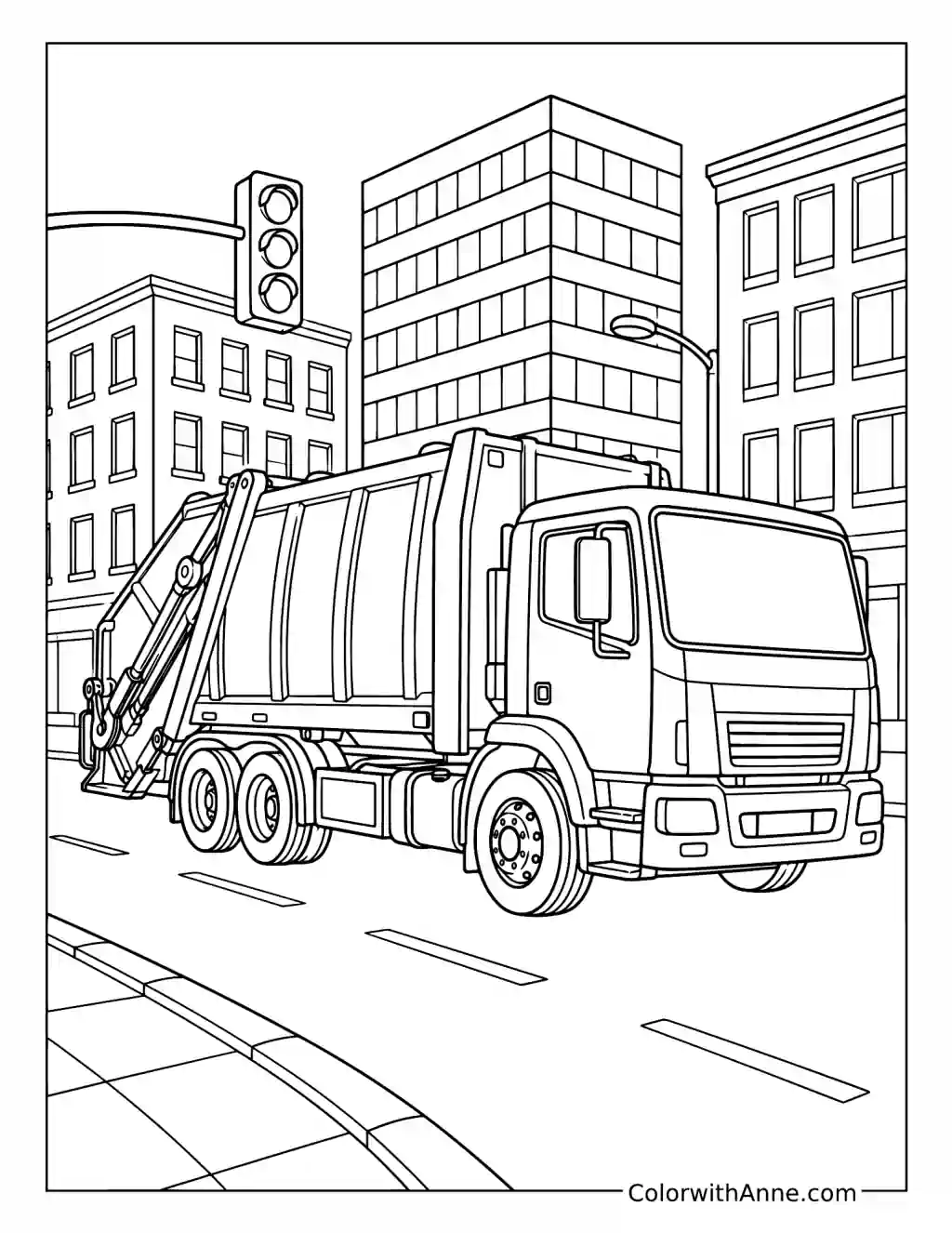
Make a Collection-Day Reminder
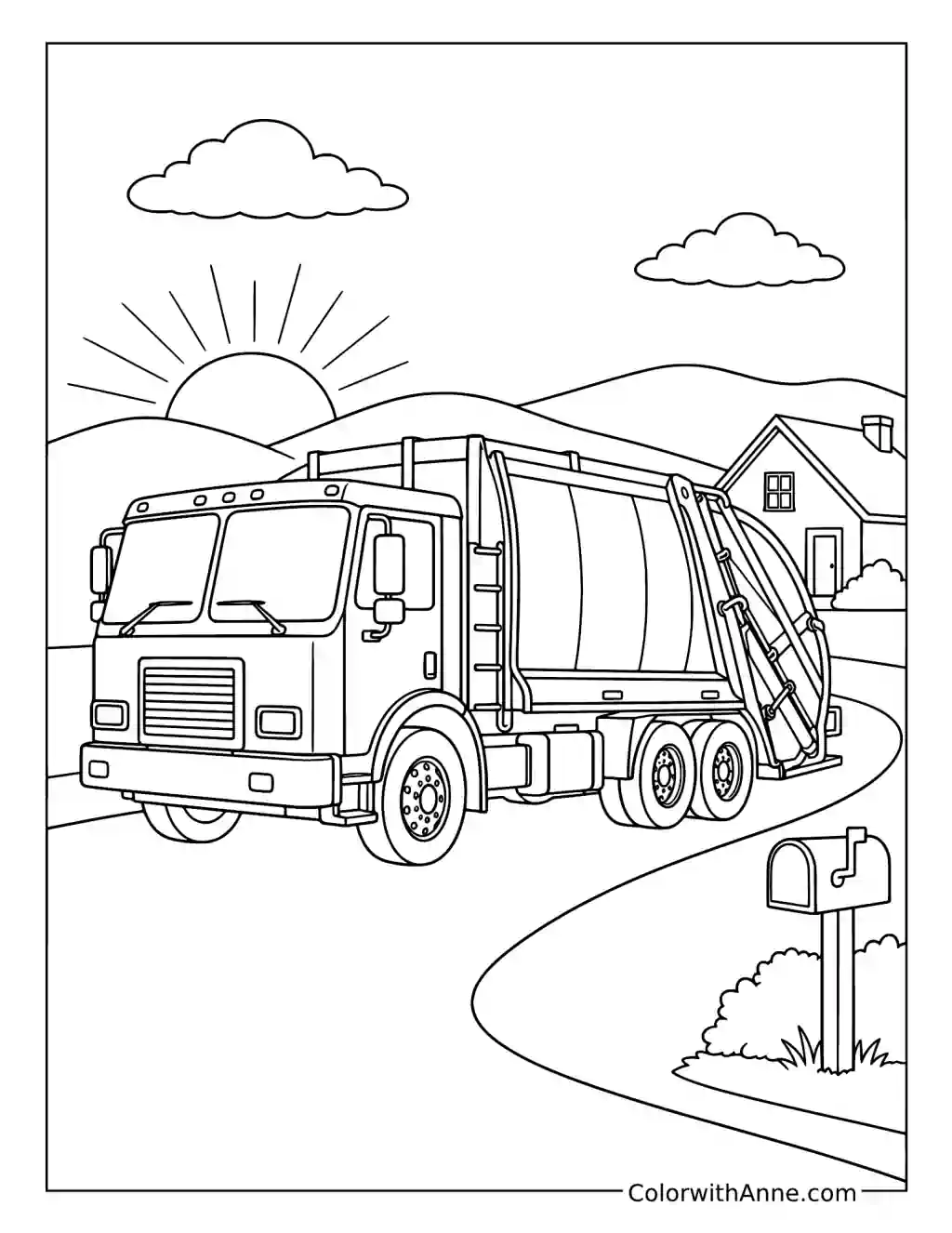
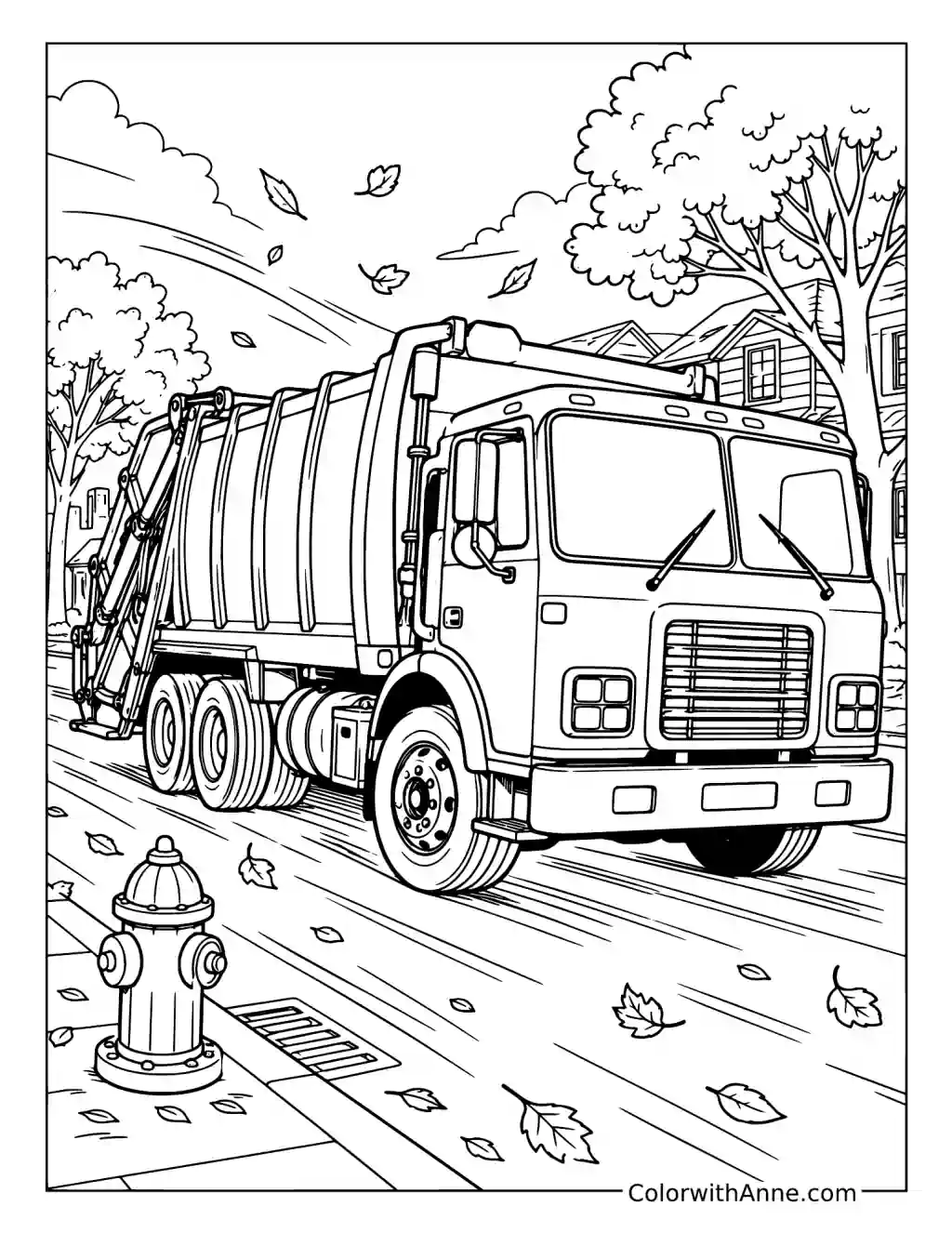
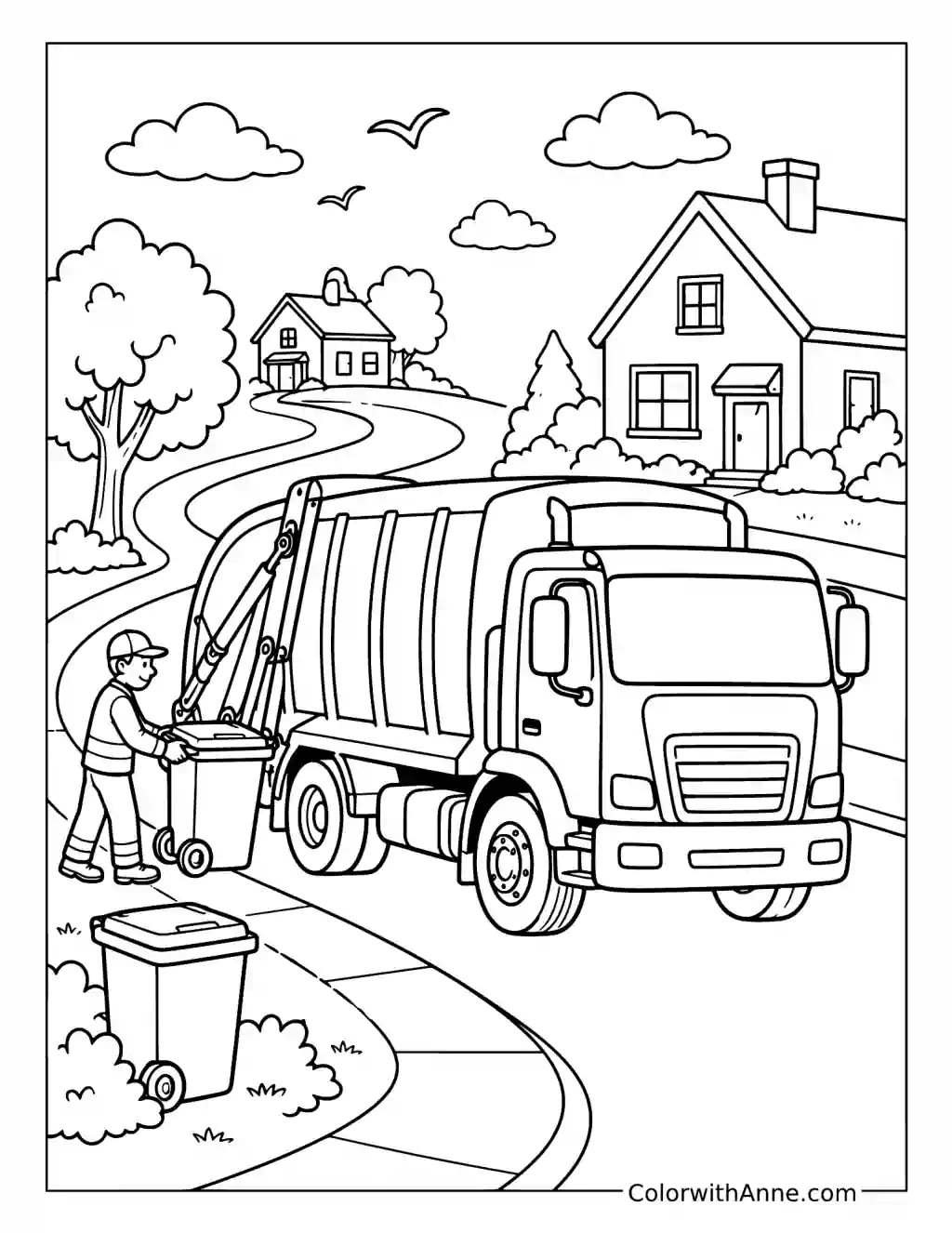
The truck rounds a neighborhood road as the sun rises behind it. The early setting will be familiar to households that hear collection day before they see it.
Choose a bright truck body, black tires, and a pale yellow sunrise. Keep the houses in softer colors.
Write your household’s actual collection day along the bottom and put the finished page near the calendar. A child who likes trucks can help check the reminder with an adult. The picture gives that weekly routine a recognizable vehicle instead of another easily missed note.
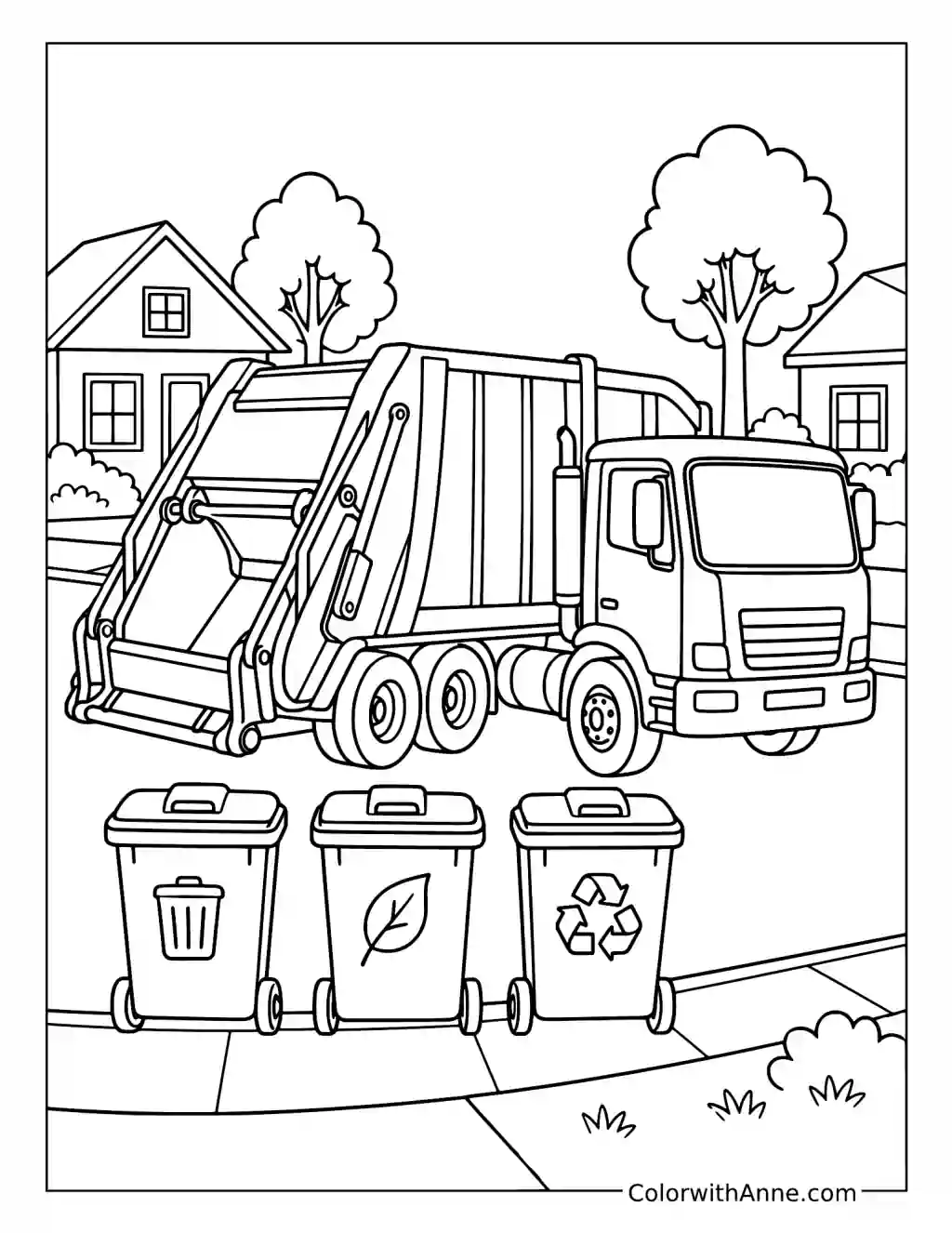
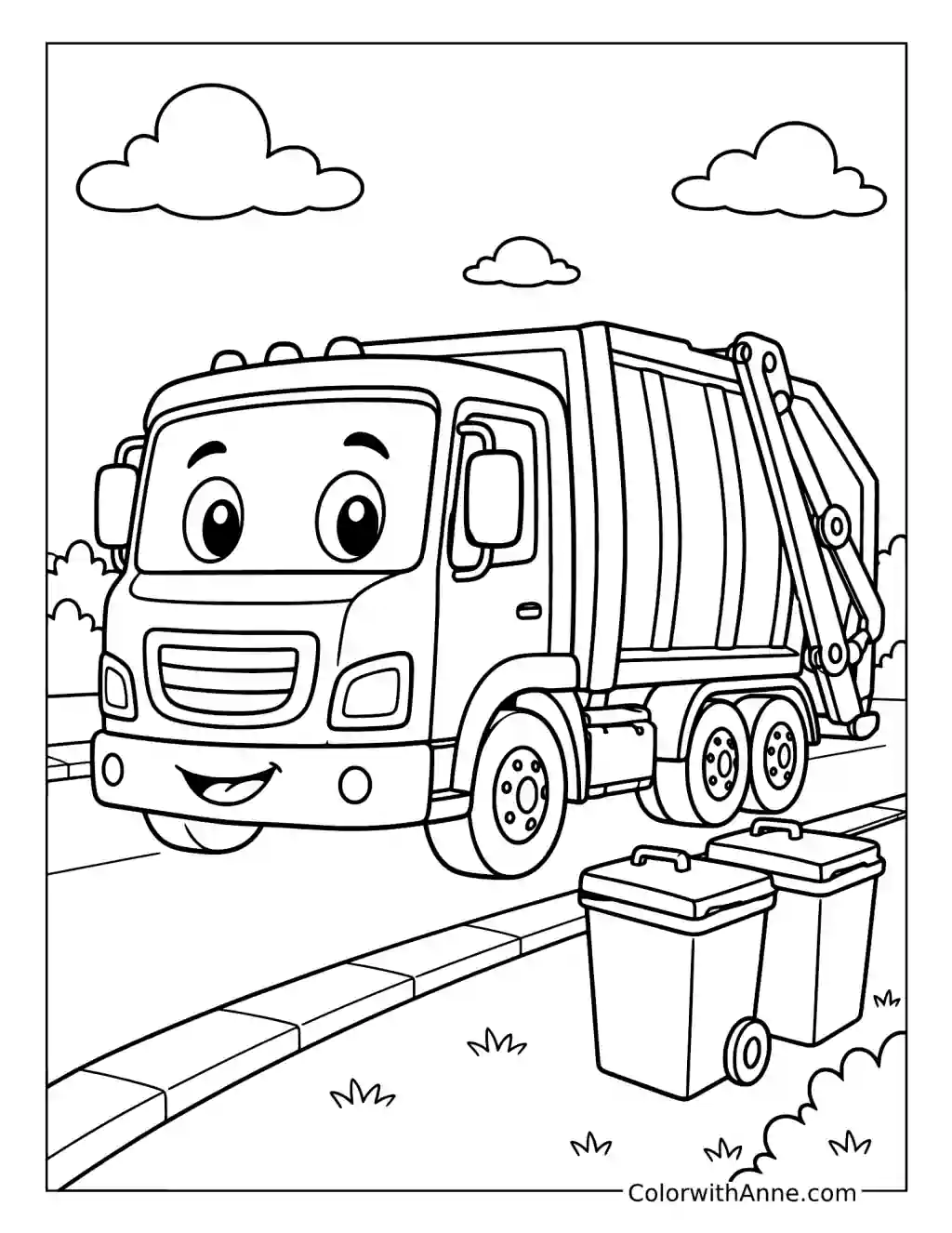
Check the Symbols on the Bins
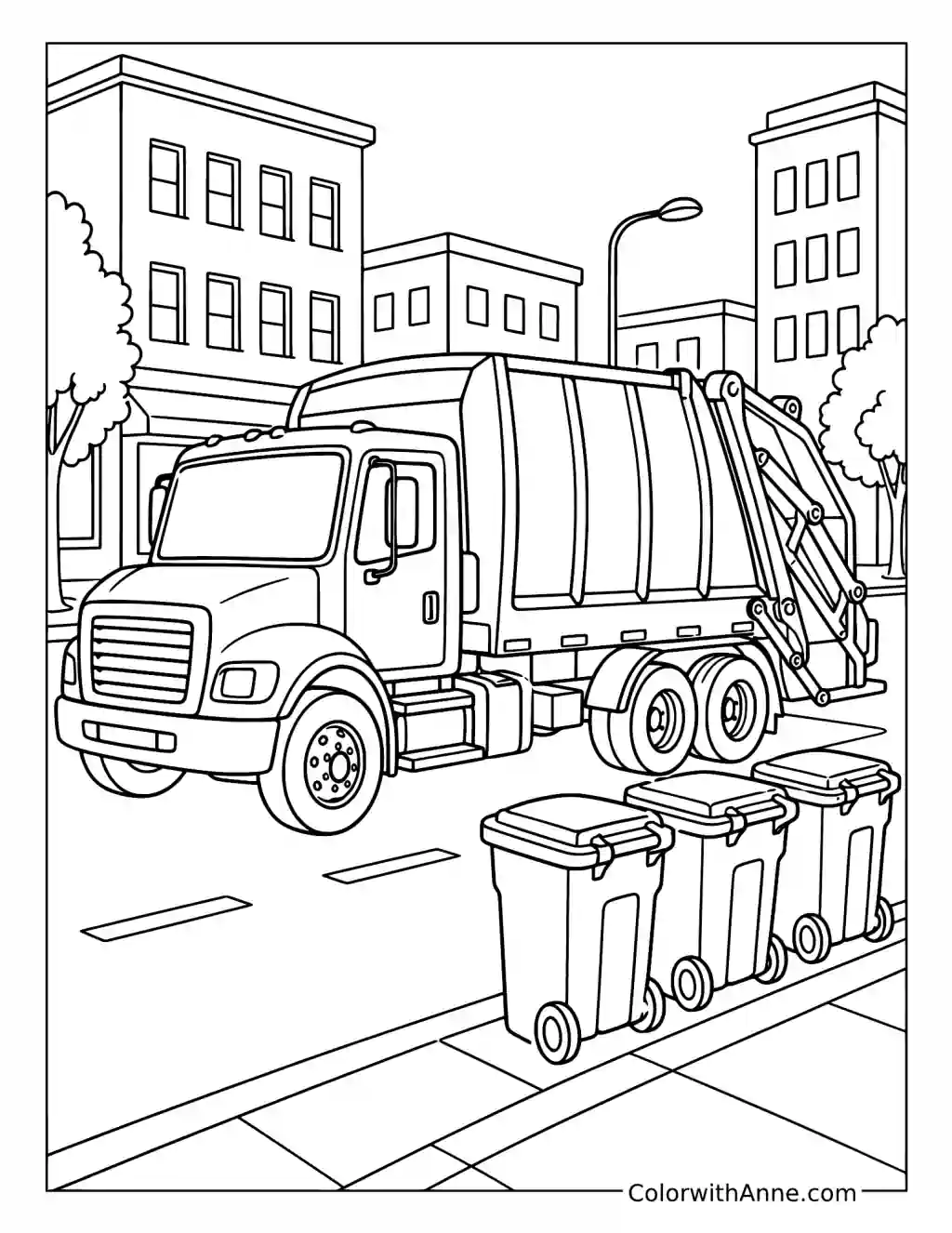
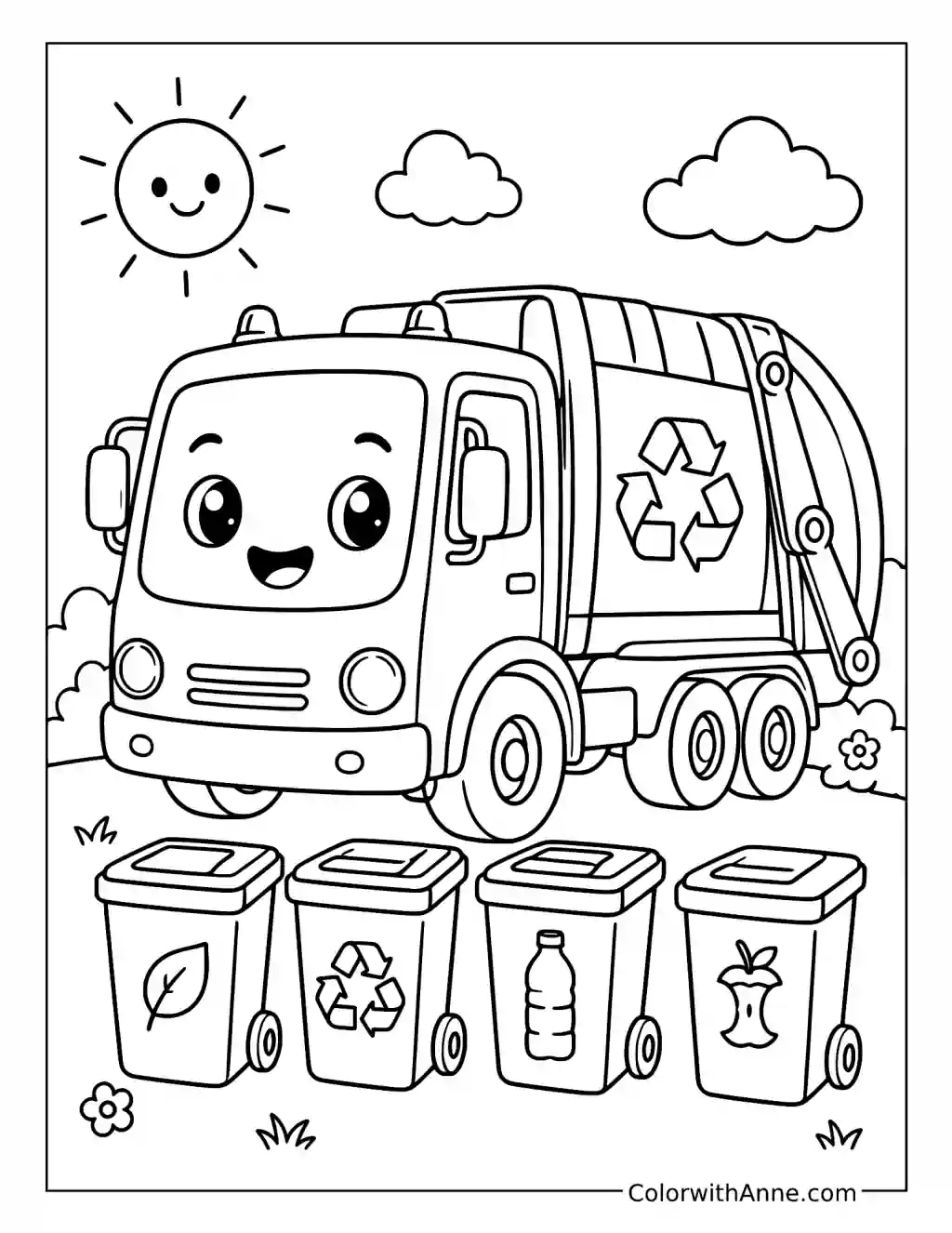
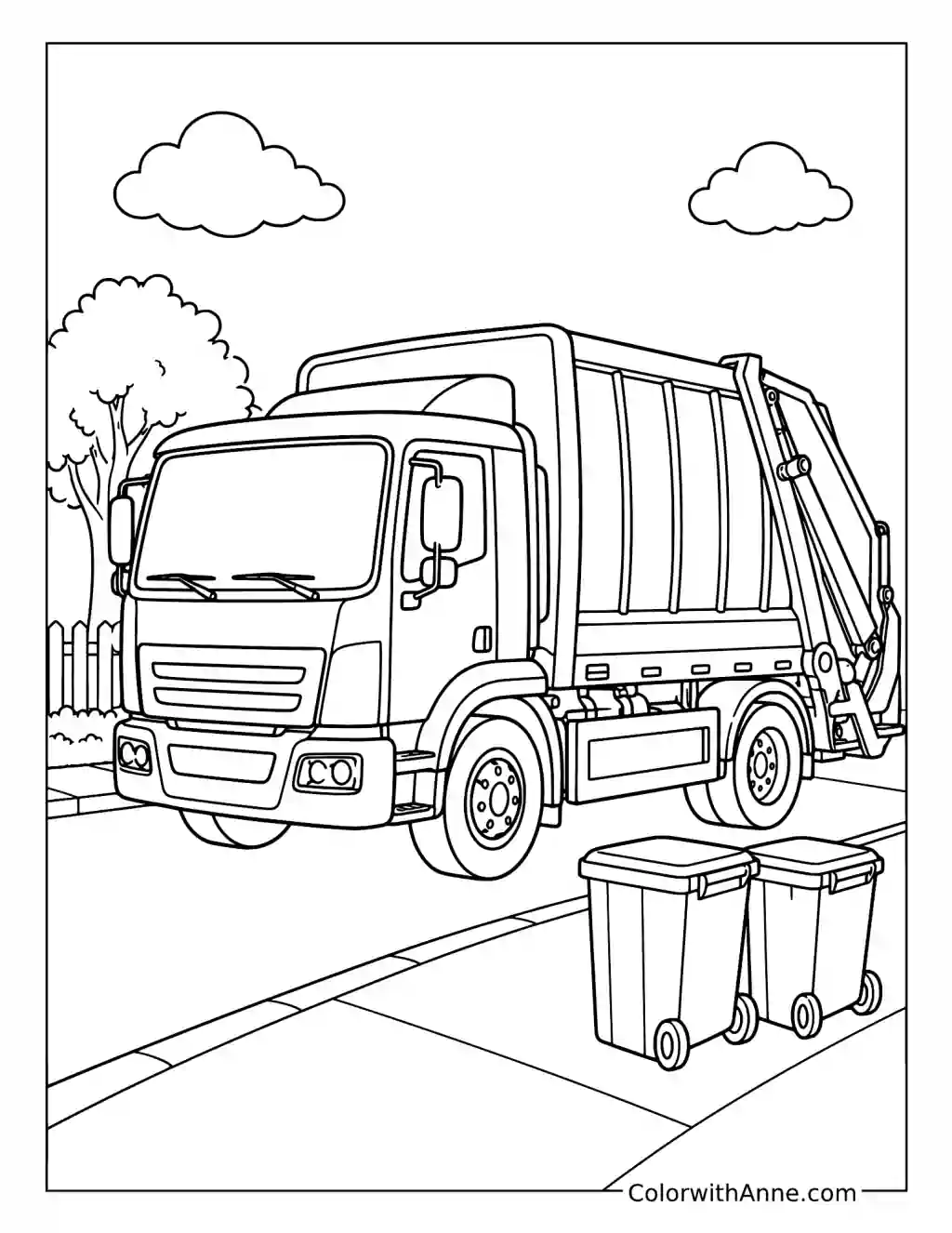
Three bins stand beside the truck, each with a different symbol. Their labels offer a better starting point for a sorting conversation than assuming every place uses the same bin colors.
Color the truck freely, then choose distinct colors for the three bins. Keep the printed symbols easy to see.
Compare the picture with the labels or collection guide used where you live. Pick one clean, empty household package and check which local category accepts it. The useful part is finding the answer together, especially when a material looks recyclable but its local instructions need checking.
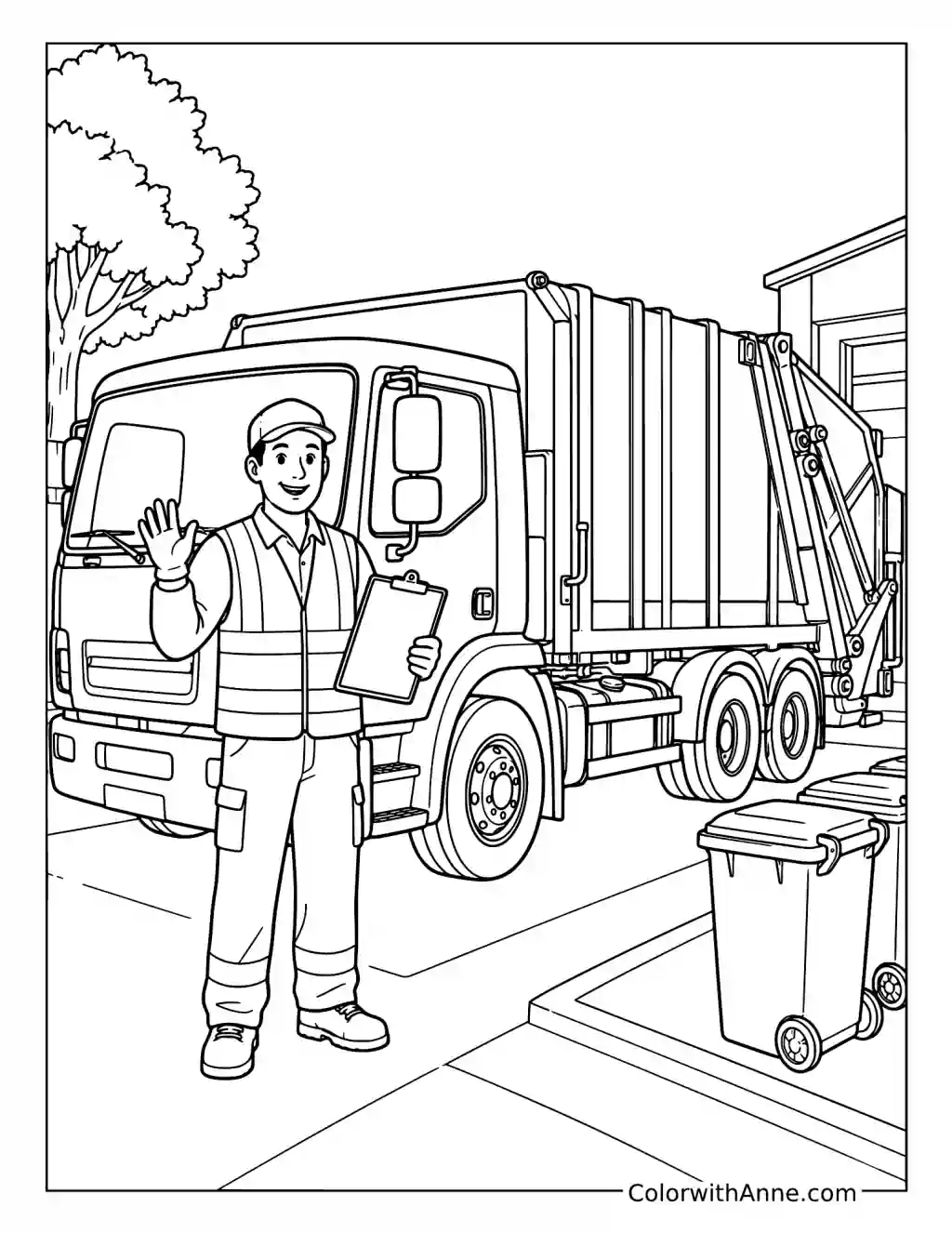
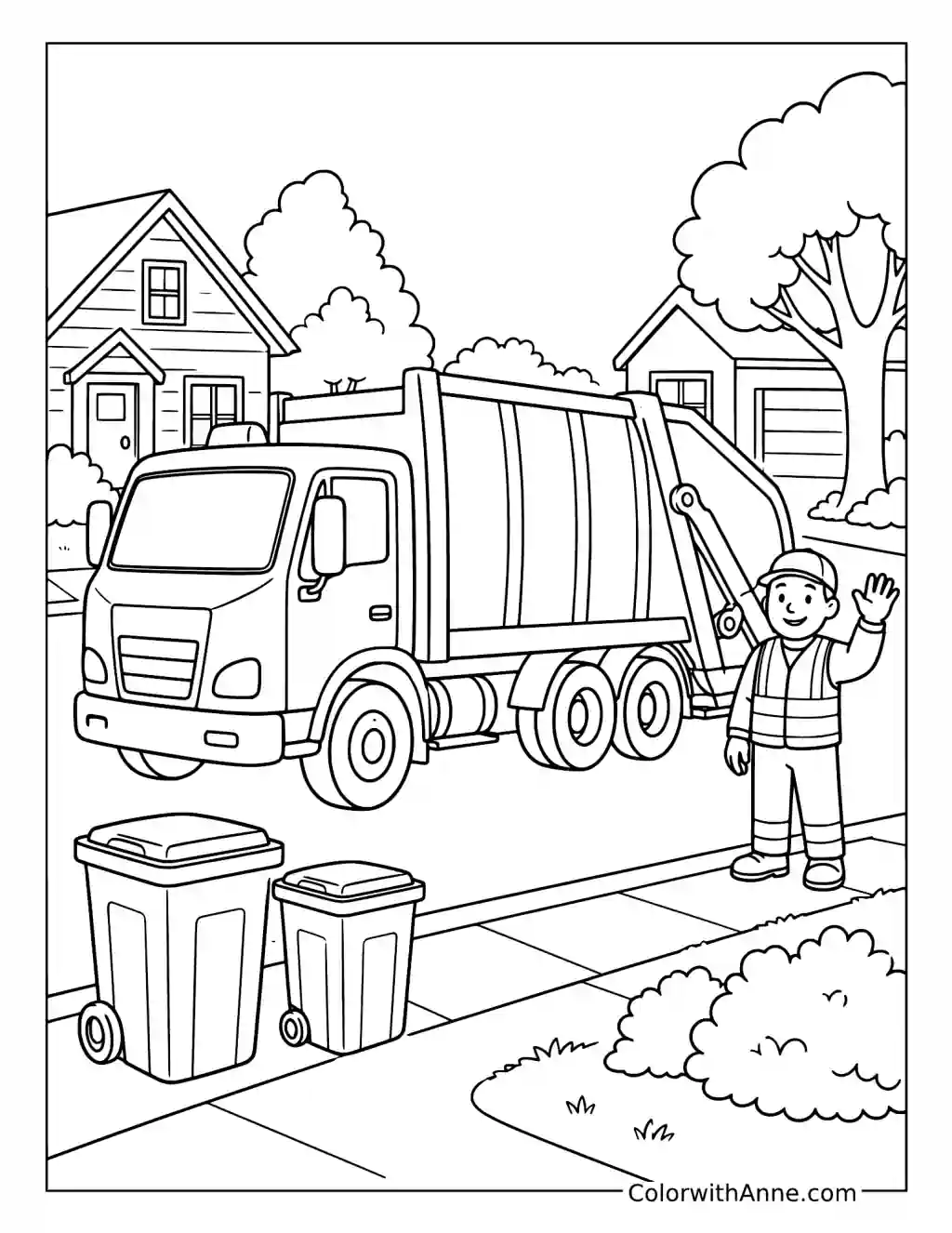
Thank the Driver Behind the Truck
The driver waves beside the parked truck, bringing a person into a subject often dominated by wheels and machinery. The reflective work clothing deserves as much attention as the vehicle.
Try a bright safety vest, dark trousers, and a contrasting truck body. Use silver-gray for steps and mechanical details.
Add a short thank-you on the back for the collection crew. Mention something concrete, such as keeping the street’s weekly collection running through wet weather. An adult can help pass it along through an appropriate opportunity or the service’s usual contact route.
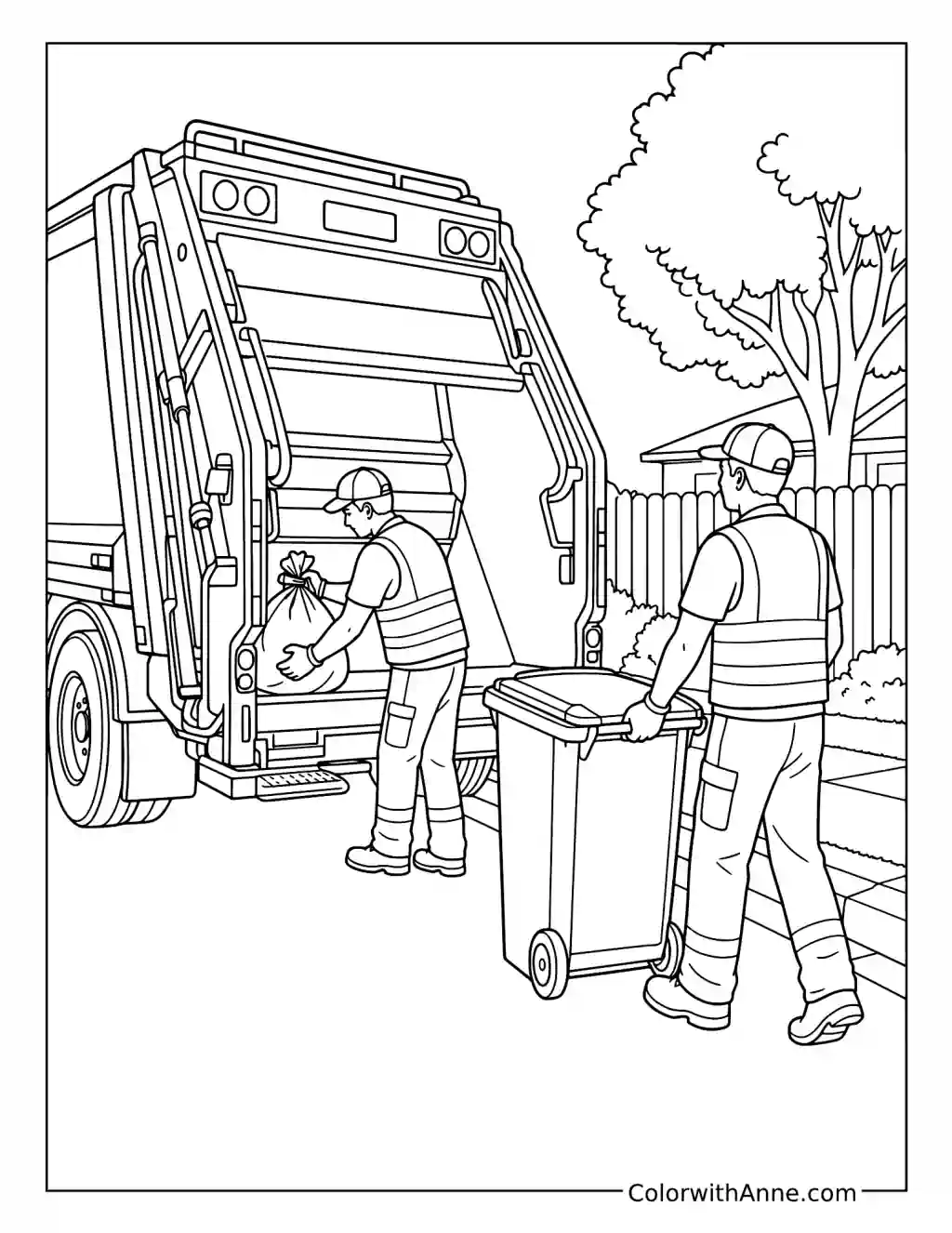
Give the Toy Collection Crew Two Jobs
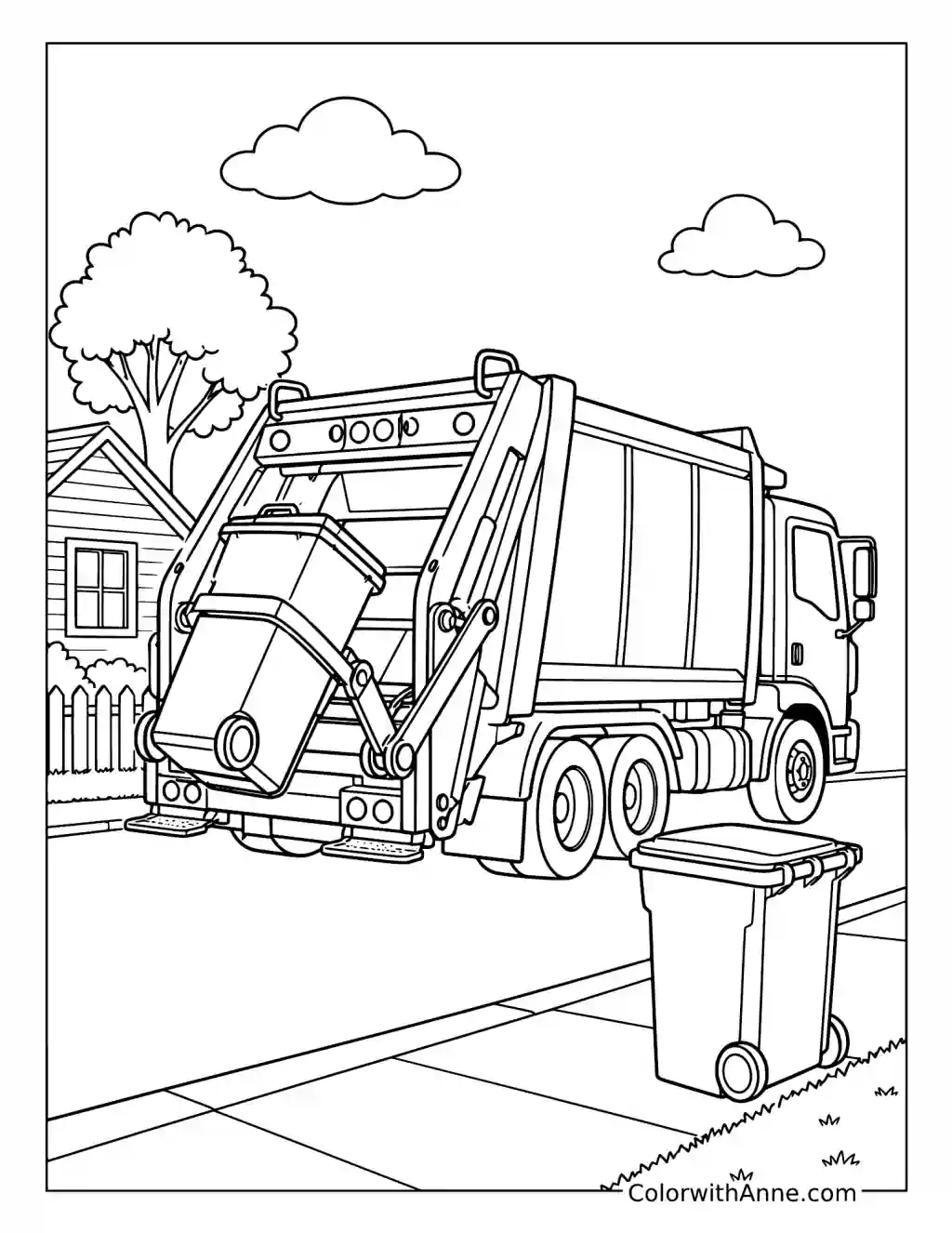
Two workers handle the collection beside the open rear of the truck. The scene shows a shared job, with the bins and loading area arranged around them.
Use matching bright vests, contrasting work clothes, and a muted truck body. Keep the rear opening darker than its frame.
With a toy truck and crumpled scrap-paper “bags,” divide a short collection round between two players. One brings the paper to the loading point while the other loads it, then swap. A handful of pieces is enough to make the cooperation visible without taking over the room.
Follow the Front Loader’s Lift
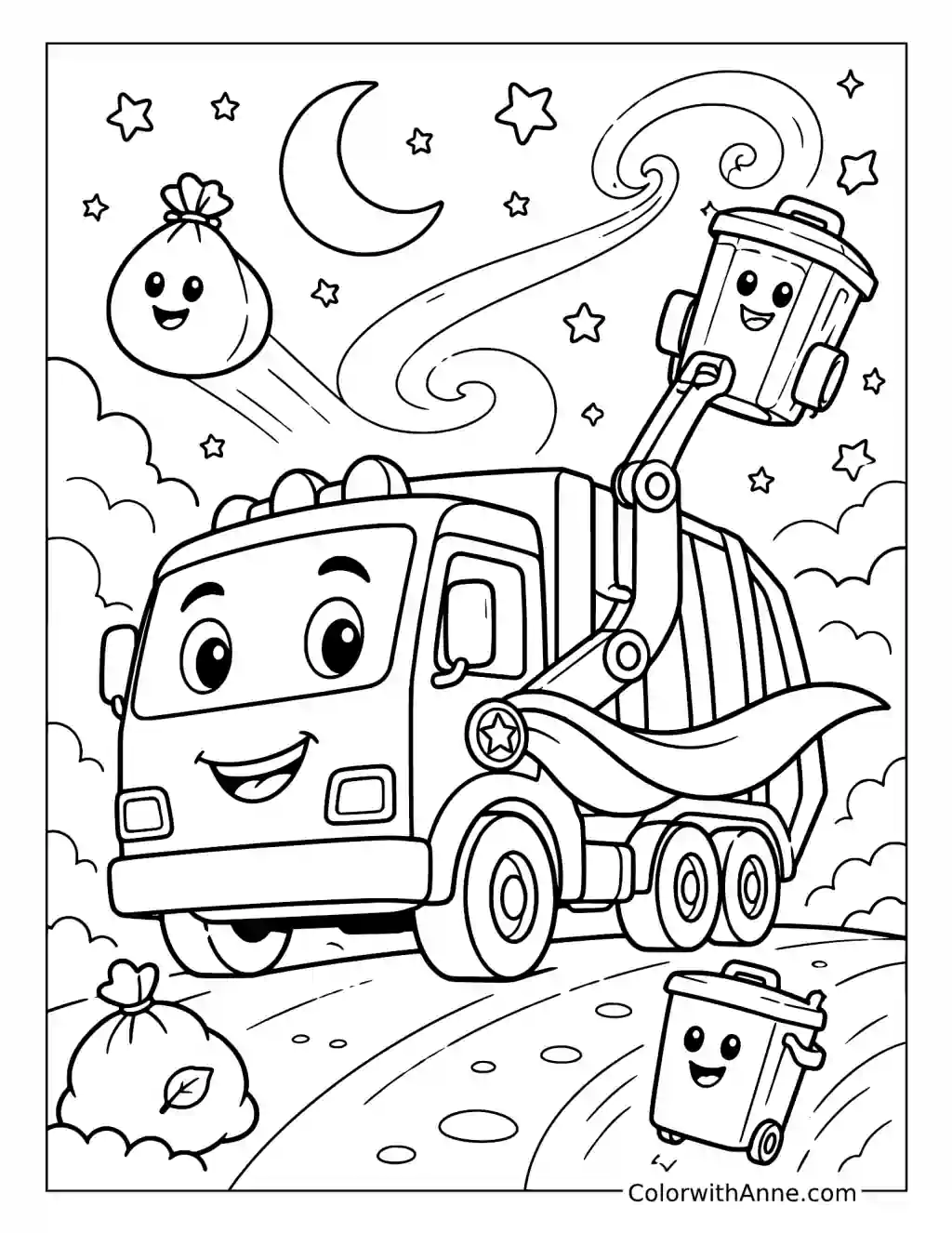
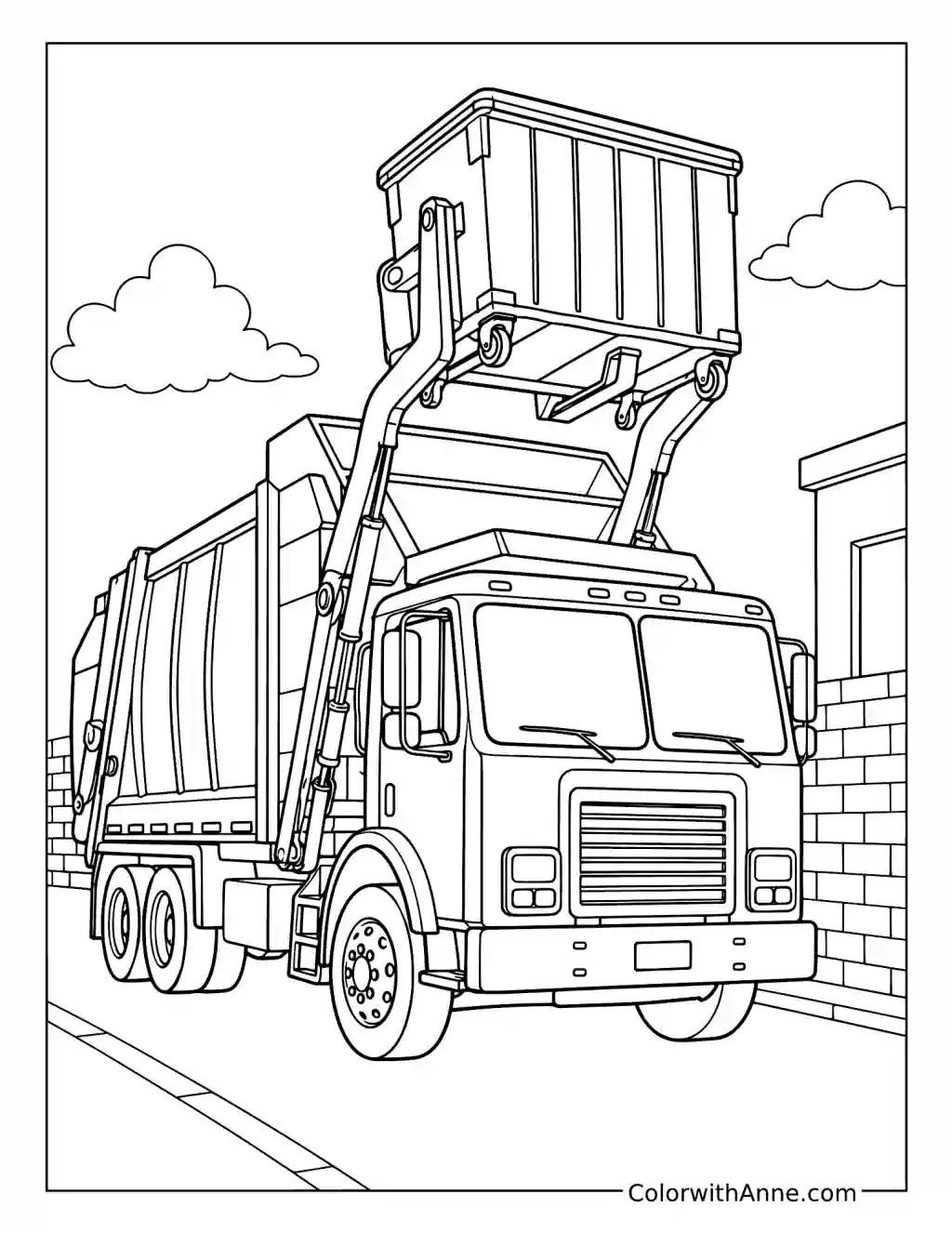
The dumpster rises above the cab on two long arms. This unusual position makes the front-loading truck particularly interesting to a child who wants to know how the moving parts connect.
Try a blue truck, gray lifting arms, and a contrasting dumpster. Keep the raised container distinct from the sky.
Follow the arms upward with a finger and find where they meet the container. Add a curved arrow on tracing paper to show the direction of the lift. Compare it with the side-loading design elsewhere in the gallery and notice how the collection point changes.
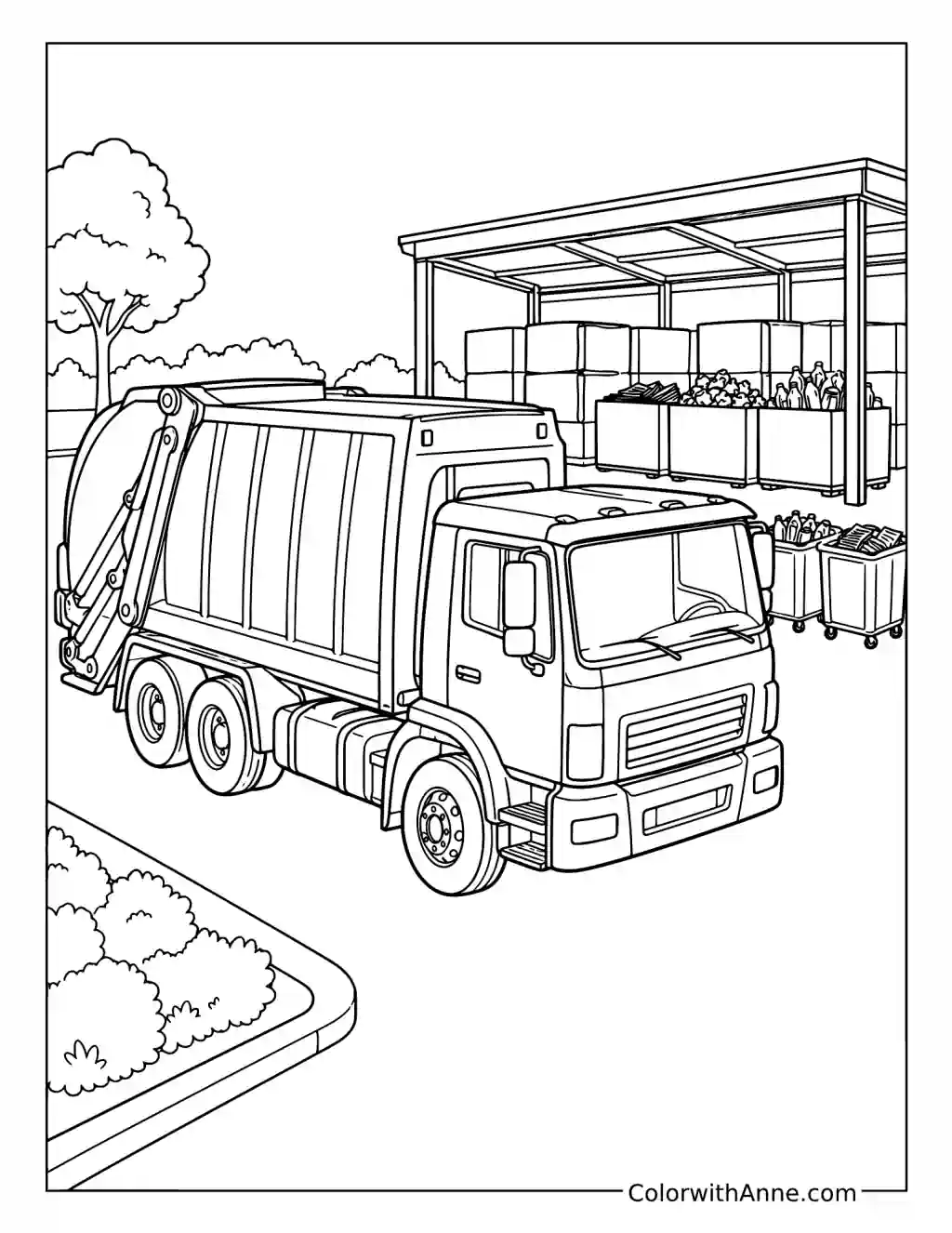
Ask Where the Load Goes Next
The truck has arrived at a covered facility, shifting the scene away from neighborhood collection. It offers a natural answer to one question and the beginning of another: where does the load go after this?
Use gray structural beams, a bright truck body, and subdued ground colors. Separate the vehicle from the material behind it.
Look at your local waste service’s information about collection destinations. Find out where one stream from your household is taken, then explain the journey in a few words. The pictured facility can prompt the question without being treated as a diagram of every local system.
Give the Country Truck a Collection Route
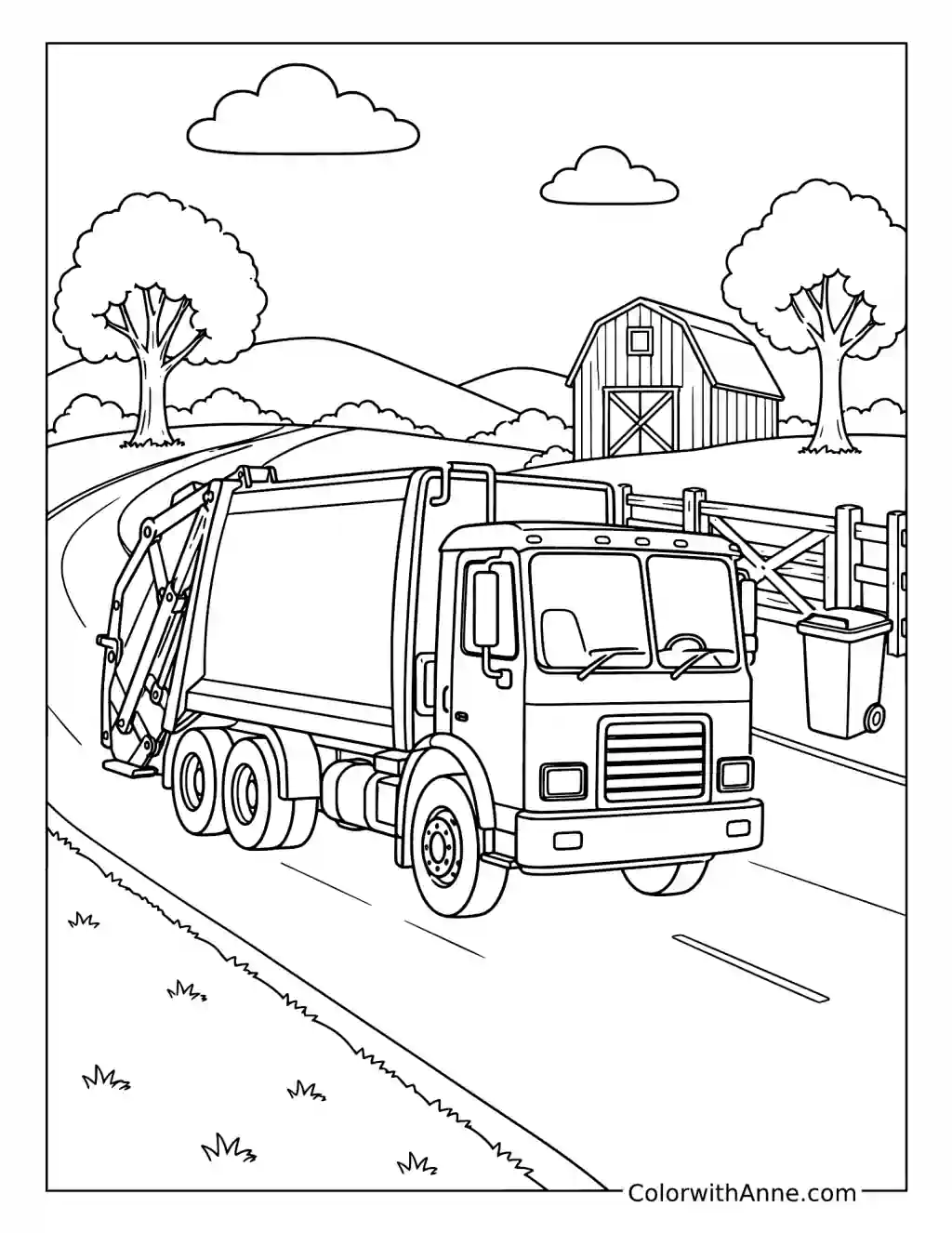
The truck travels past a barn and open land, with more room around the road than in the city scenes. A toy collection route could use the same wider spacing.
Try a green truck, red barn, and golden or green fields. Keep the road a clear gray path through the scene.
On a large scrap of paper, draw a road between a few simple farm buildings. Place small paper bins beside selected stops and drive a toy truck along the route. Leave a turning area at the end; planning where the truck changes direction is part of the fun.
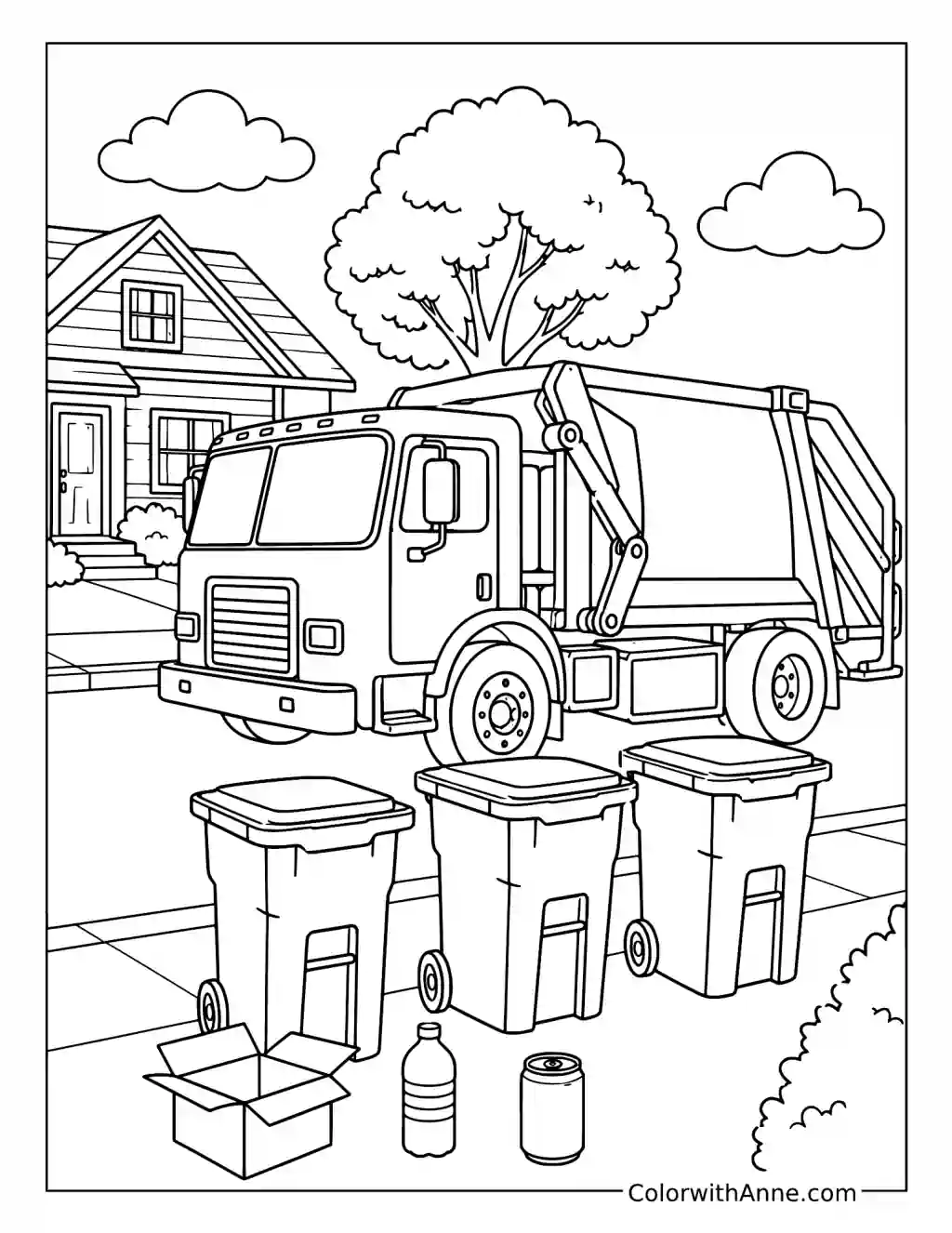
Build a Moving Side-Loader Arm
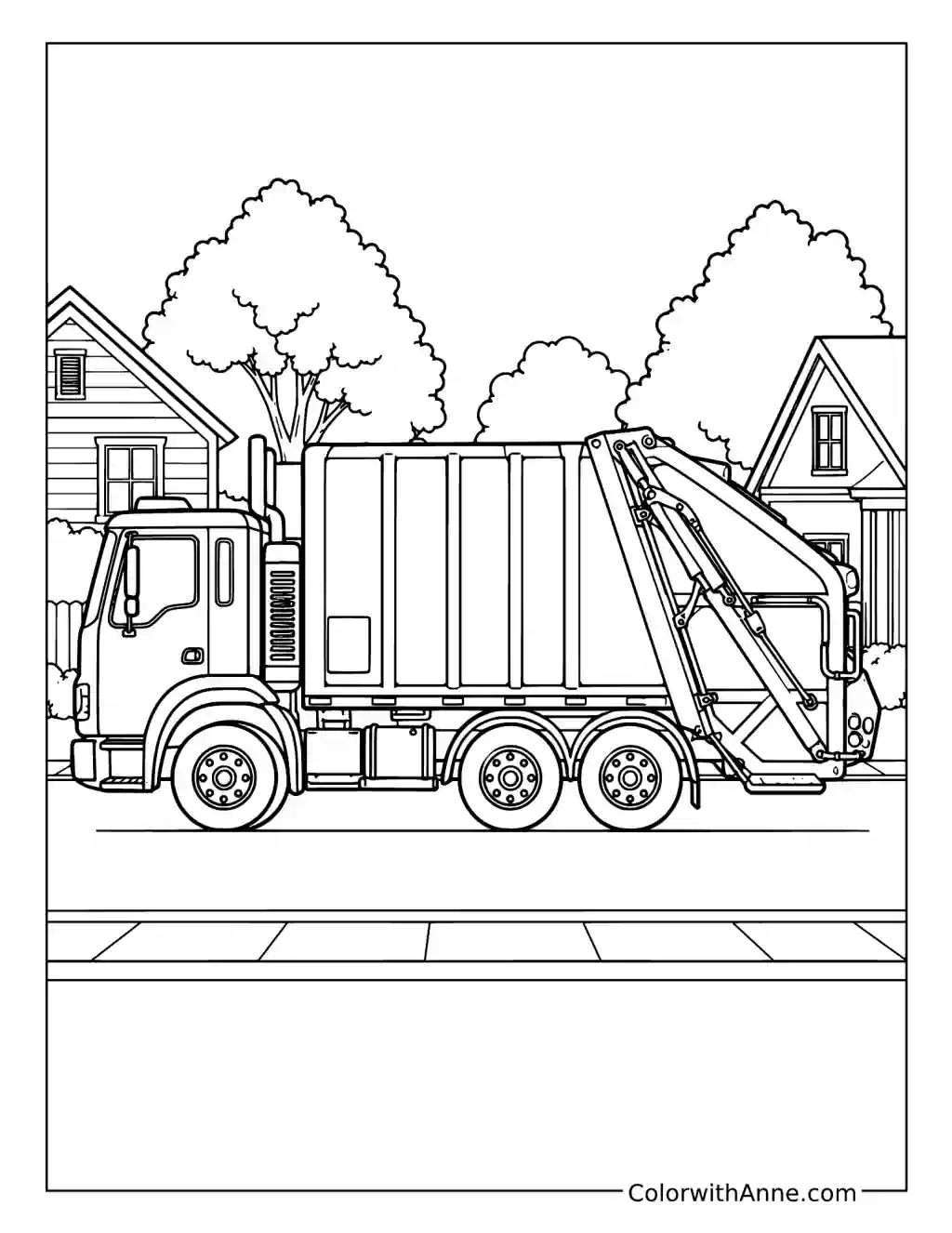
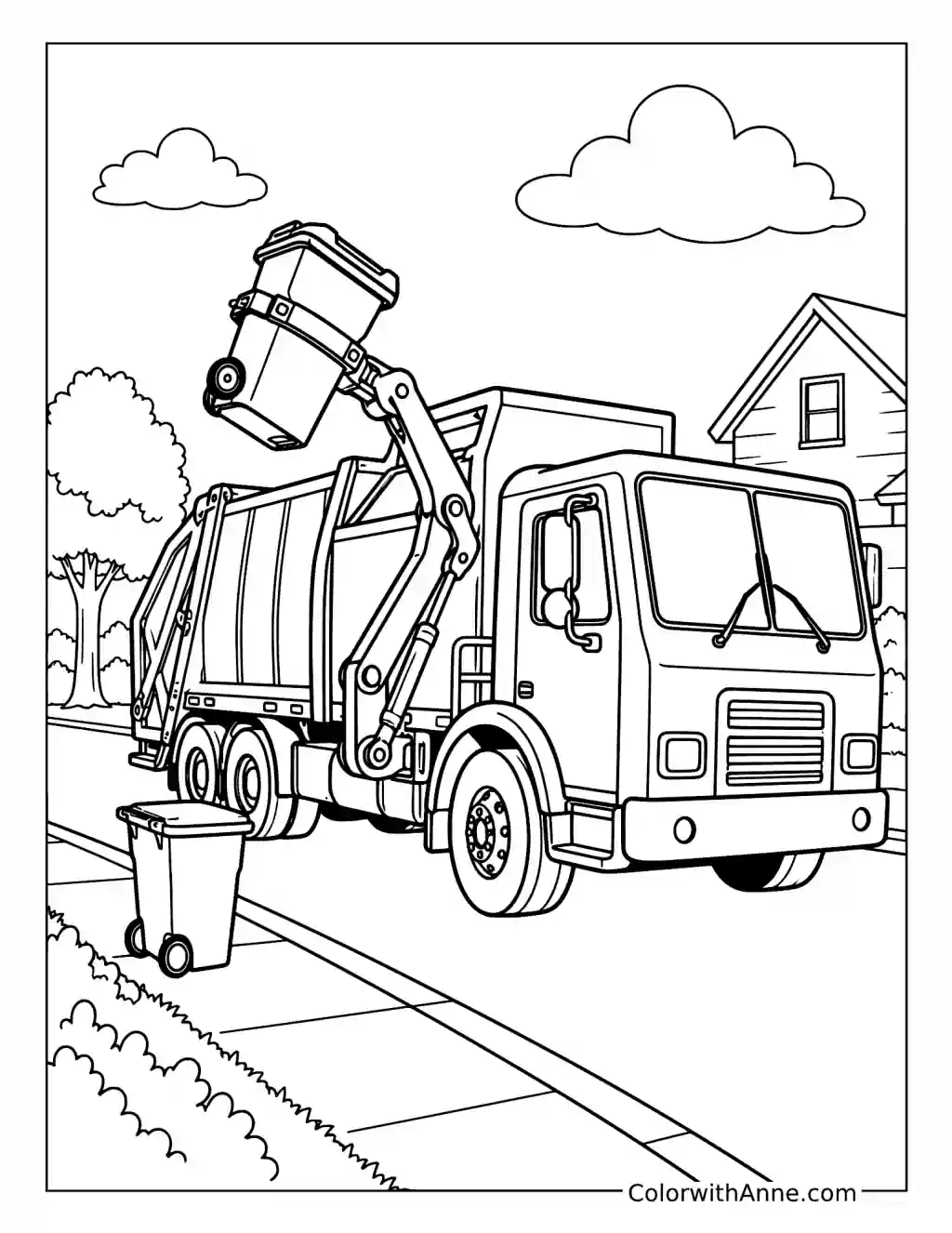
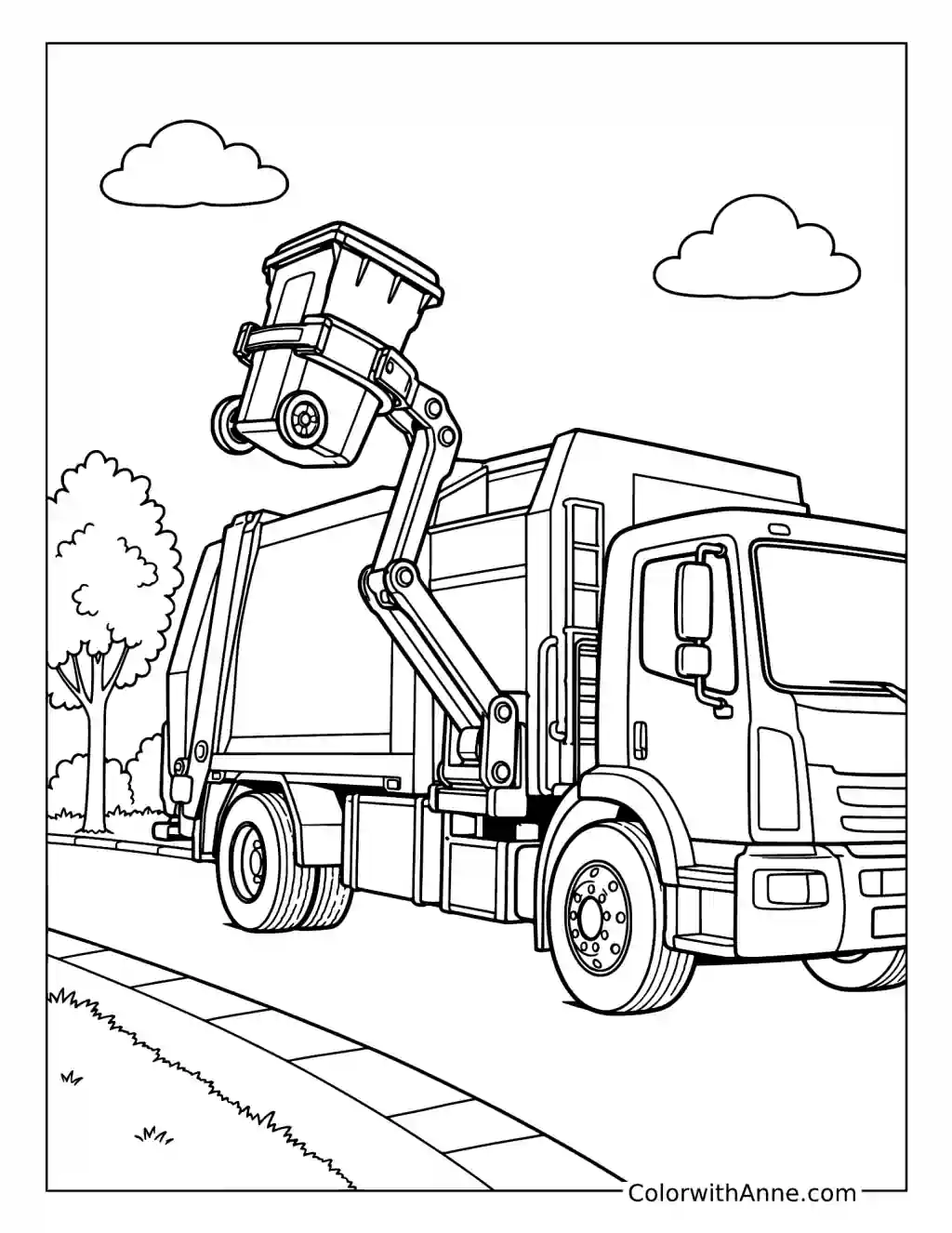
An articulated arm holds a bin beside the cab, exposing several bends in the mechanism. Those joints make this page a good reference for a simple moving-paper experiment.
Use gray on the arm, a bright truck body, and a different color on the bin. Keep the joints clearly separated.
Join three short cardboard strips with tape hinges and try bending them into the pictured arm’s shape. Hold a small paper bin at the end and see which joints must move to raise it. The model only needs to demonstrate the bends, rather than reproduce the whole truck.