
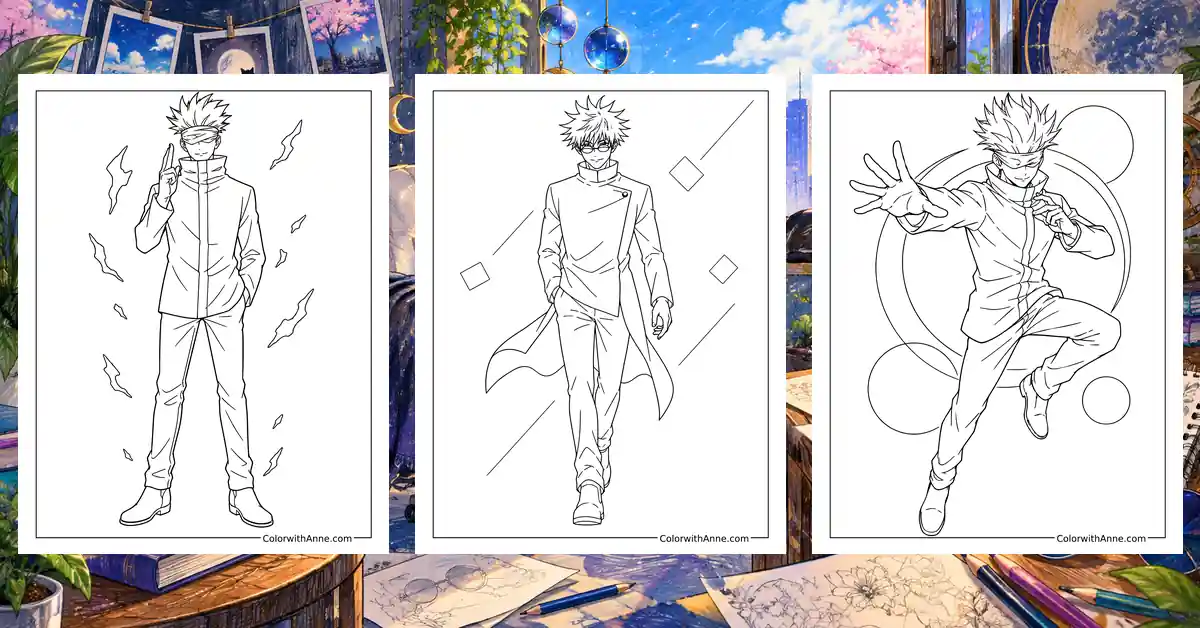
Satoru Gojo can look as though he is enjoying a private joke while everyone around him deals with a serious problem. The blindfold makes that casual confidence even more striking. In Jujutsu Kaisen, his relaxed manner often leaves the impression that he knows something the rest of the room would appreciate hearing.
Satoru Gojo coloring pages give fans time with the expression and posture that make him so recognizable. His appeal is not only about power; the teasing attitude matters too. A familiar grin can bring back a favorite exchange, particularly one where someone else had considerably less patience with him than he seemed to expect.
Free Printable Satoru Gojo Coloring Pages
Click any coloring page below to open the PDF, then print on US Letter or A4 paper.
Did you find what you needed?
Help us choose what to create or improve next.
Coloring Ideas for Satoru Gojo Pages
Try one of these coloring ideas, or use them as a starting point for your own.
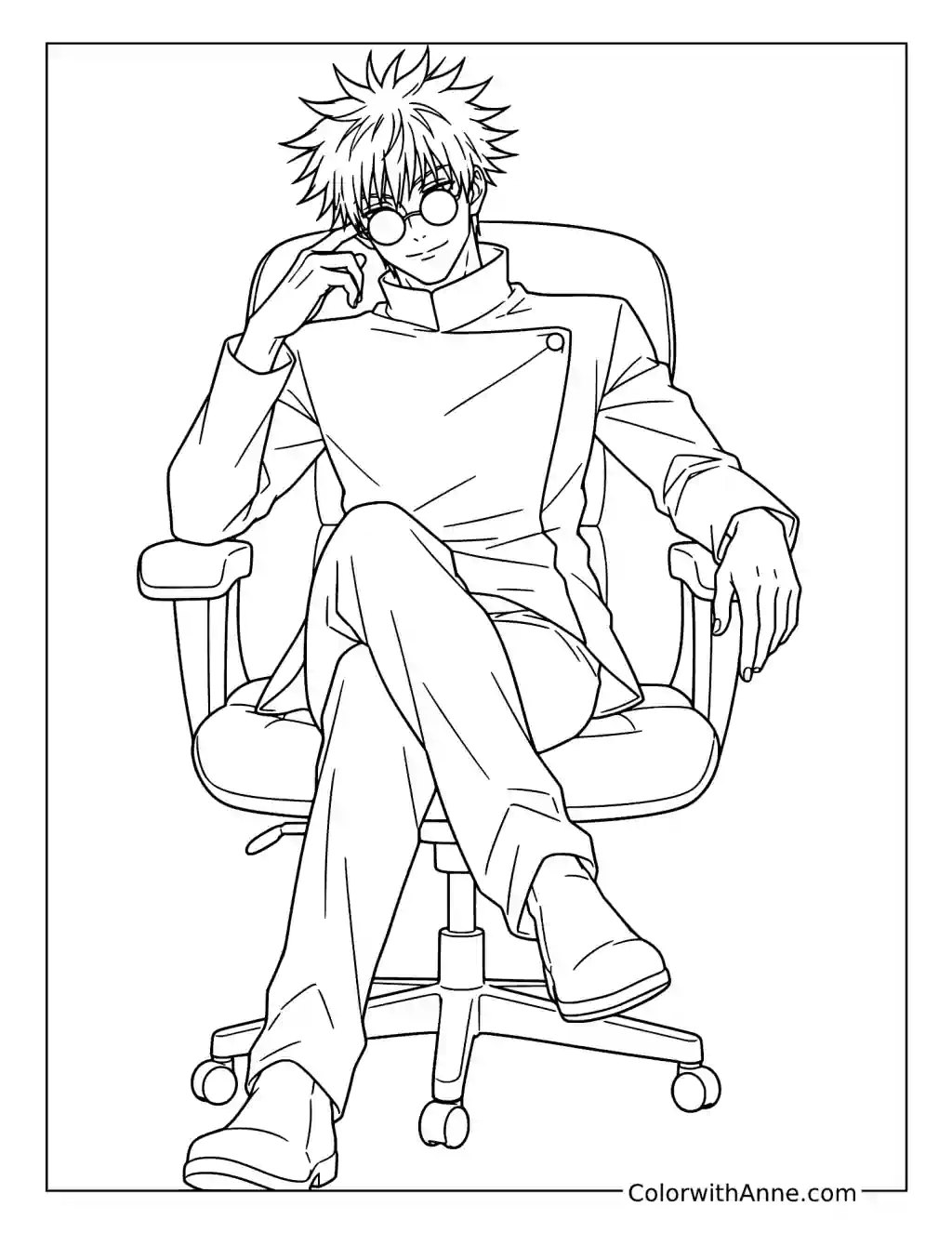
Give the Swivel-Chair Portrait a Dry Caption
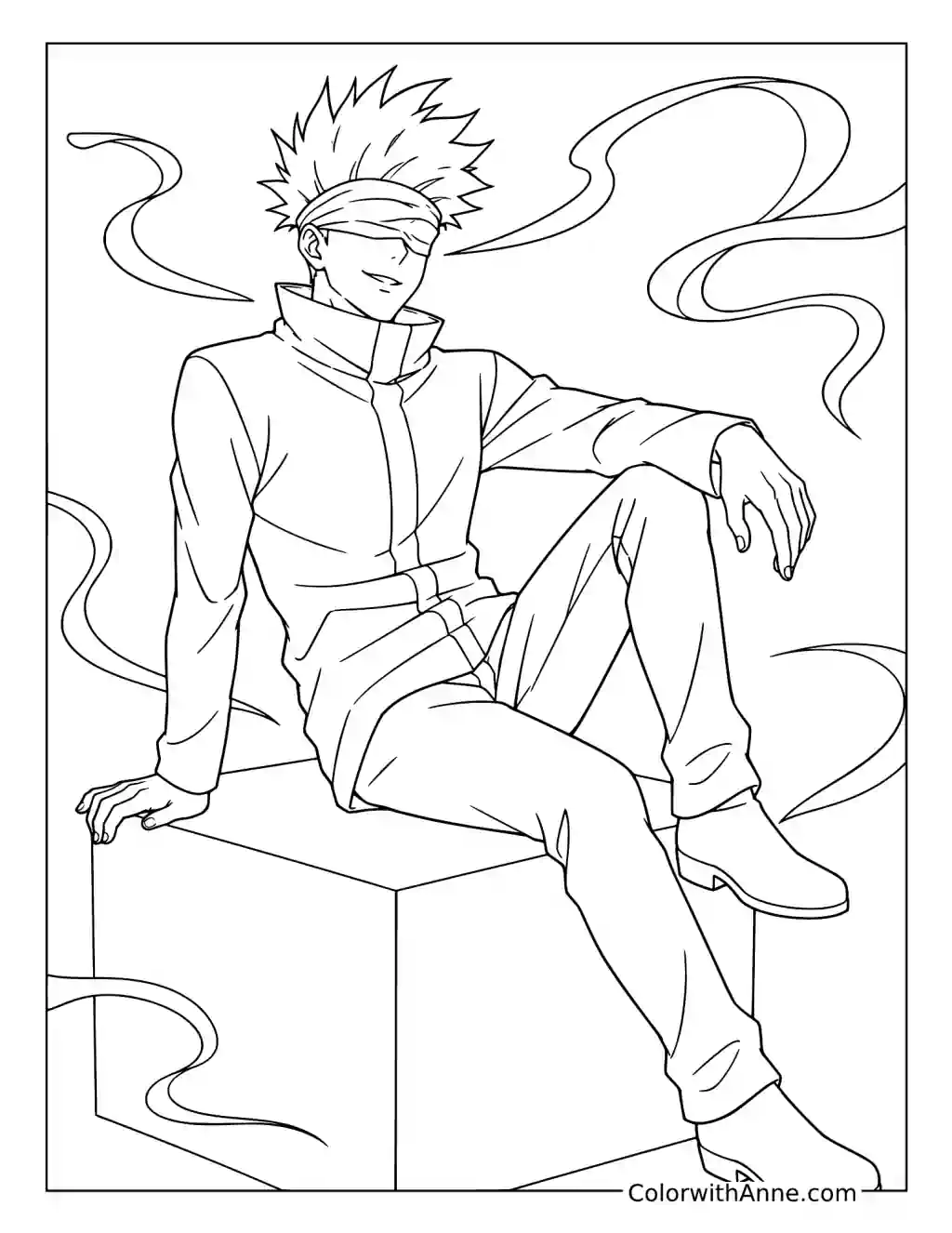
Gojo sits with crossed legs and one hand near his face, looking thoroughly comfortable in the swivel chair. The relaxed posture leaves room for a short fan-made caption.
Use a dark navy uniform, gray chair, and pale blue shadows in the white hair.
Write one understated caption beneath the picture about an ordinary meeting or an inconvenient interruption. Keep it clearly your own addition rather than a quotation from the series. The casual pose supplies enough attitude without a long explanation.
Keep the Sunglasses Portrait Simple
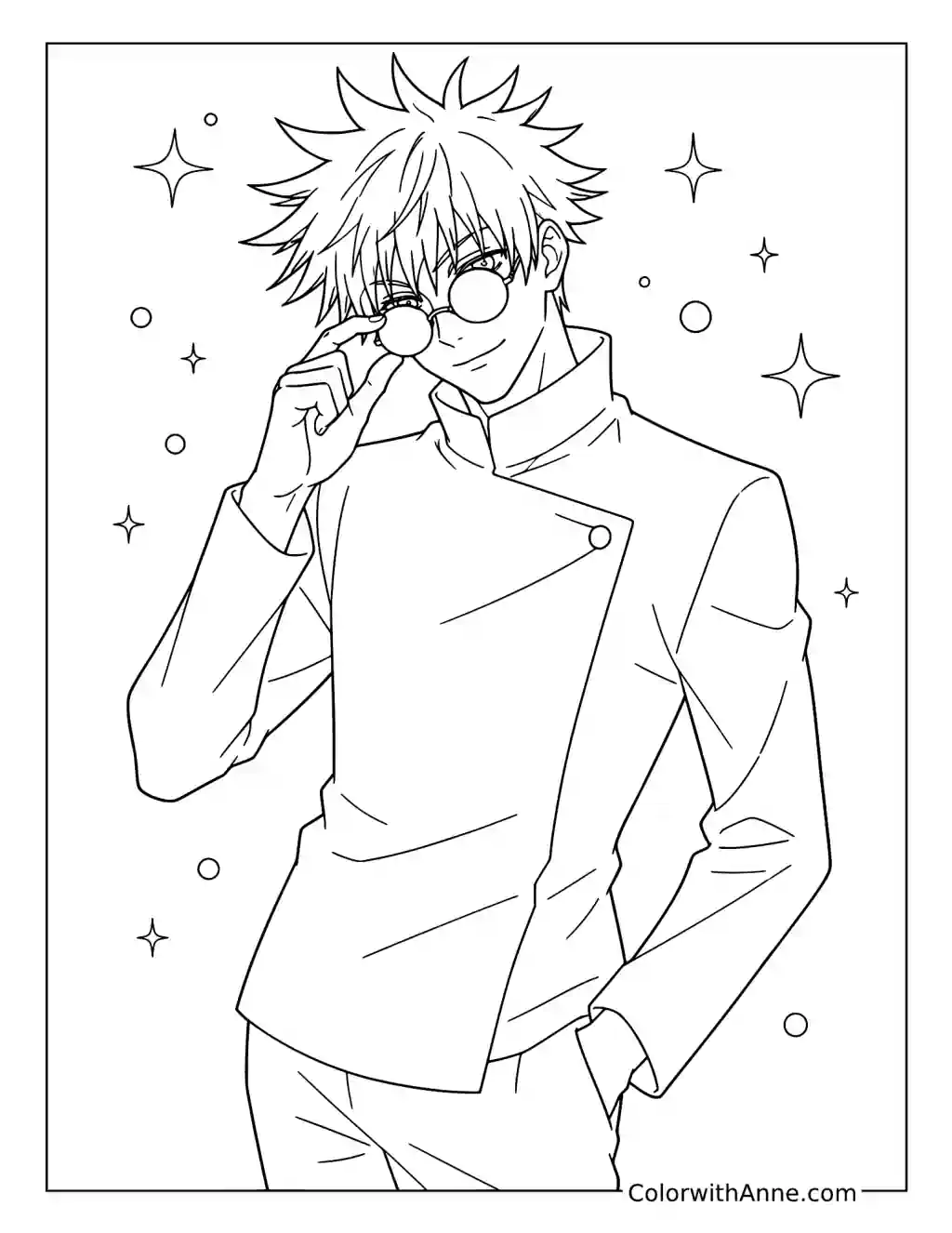
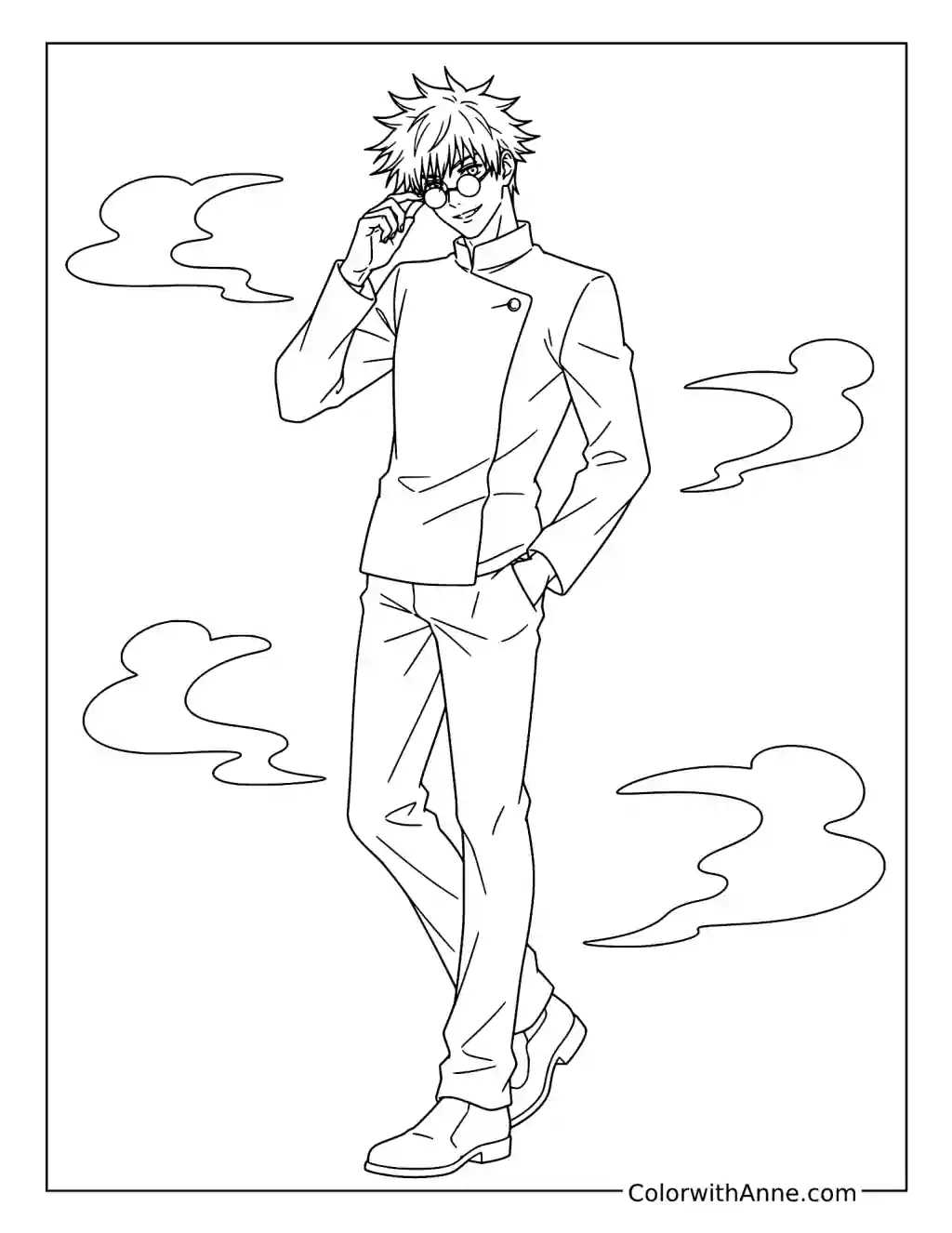
Gojo touches the edge of his round sunglasses while standing with one hand in his pocket. The clear silhouette and surrounding stars give this portrait a polished, self-assured feel.
Try a dark uniform, blue-black lenses, and very pale shadows in the hair. Choose one accent color for the stars.
Leave most of the background open and concentrate on the glasses, collar, and hairline. A small strip of color behind the shoulders can be enough to anchor the figure. The portrait does not need another elaborate energy effect to hold attention.
Study the Hand-Sign Close-Up
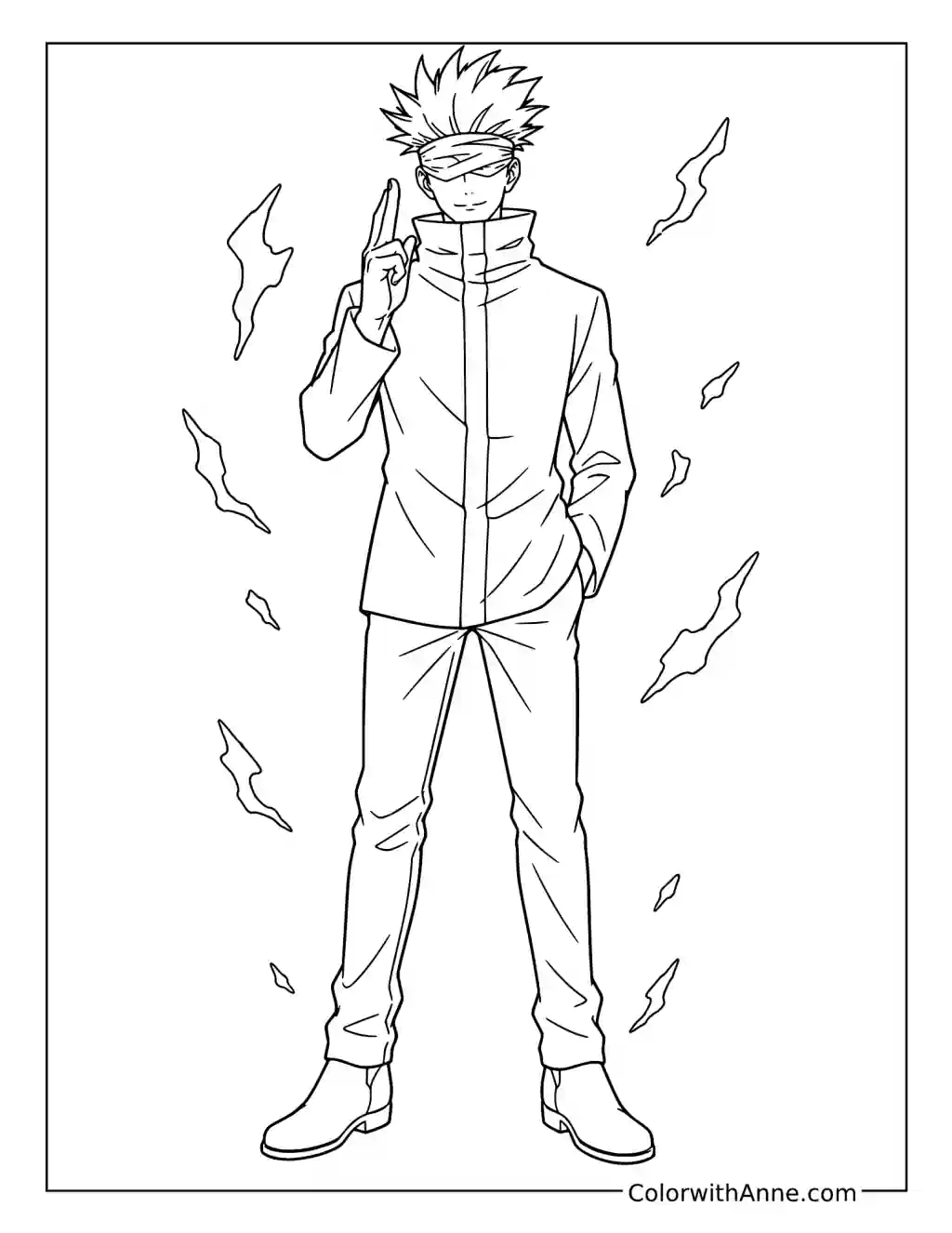
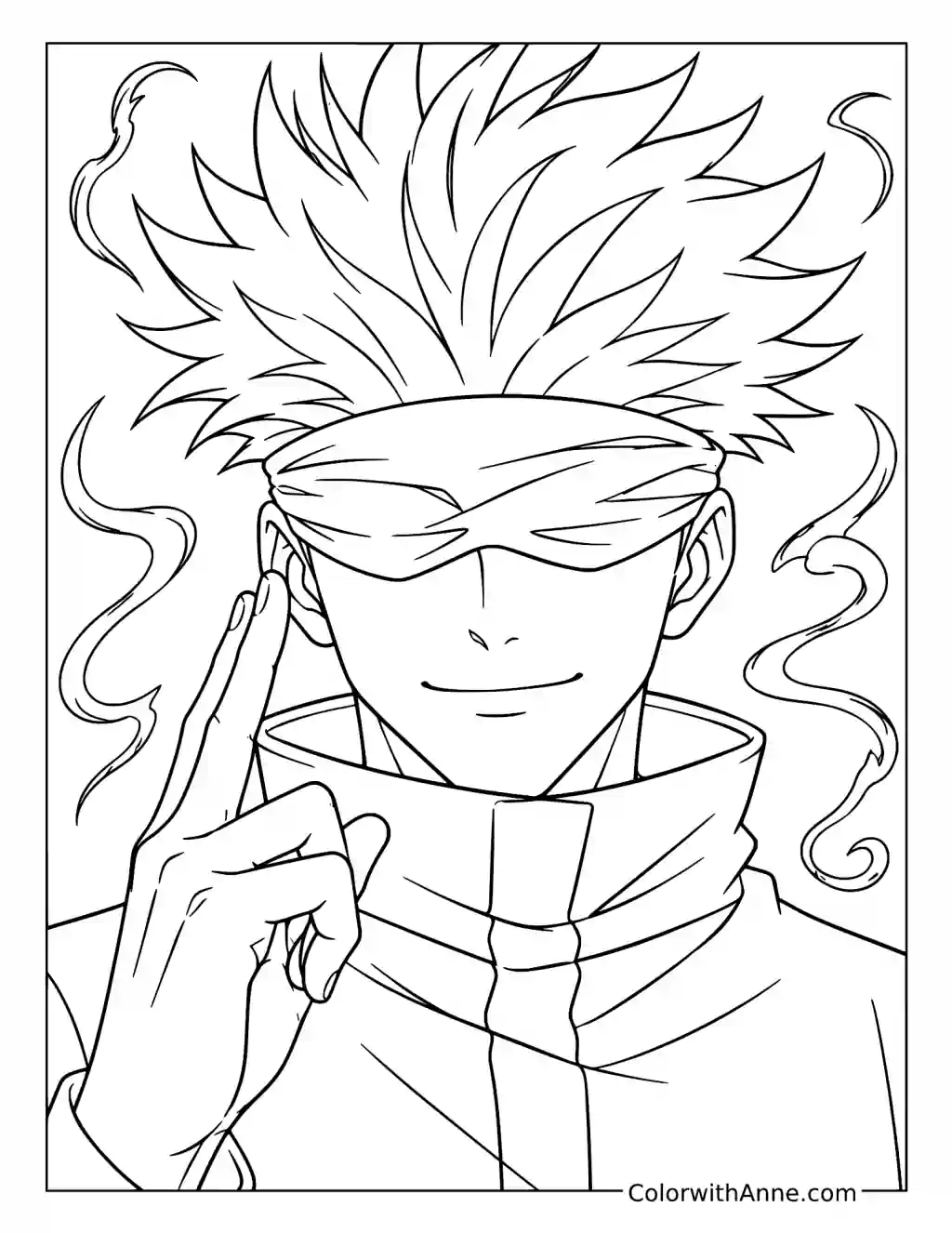
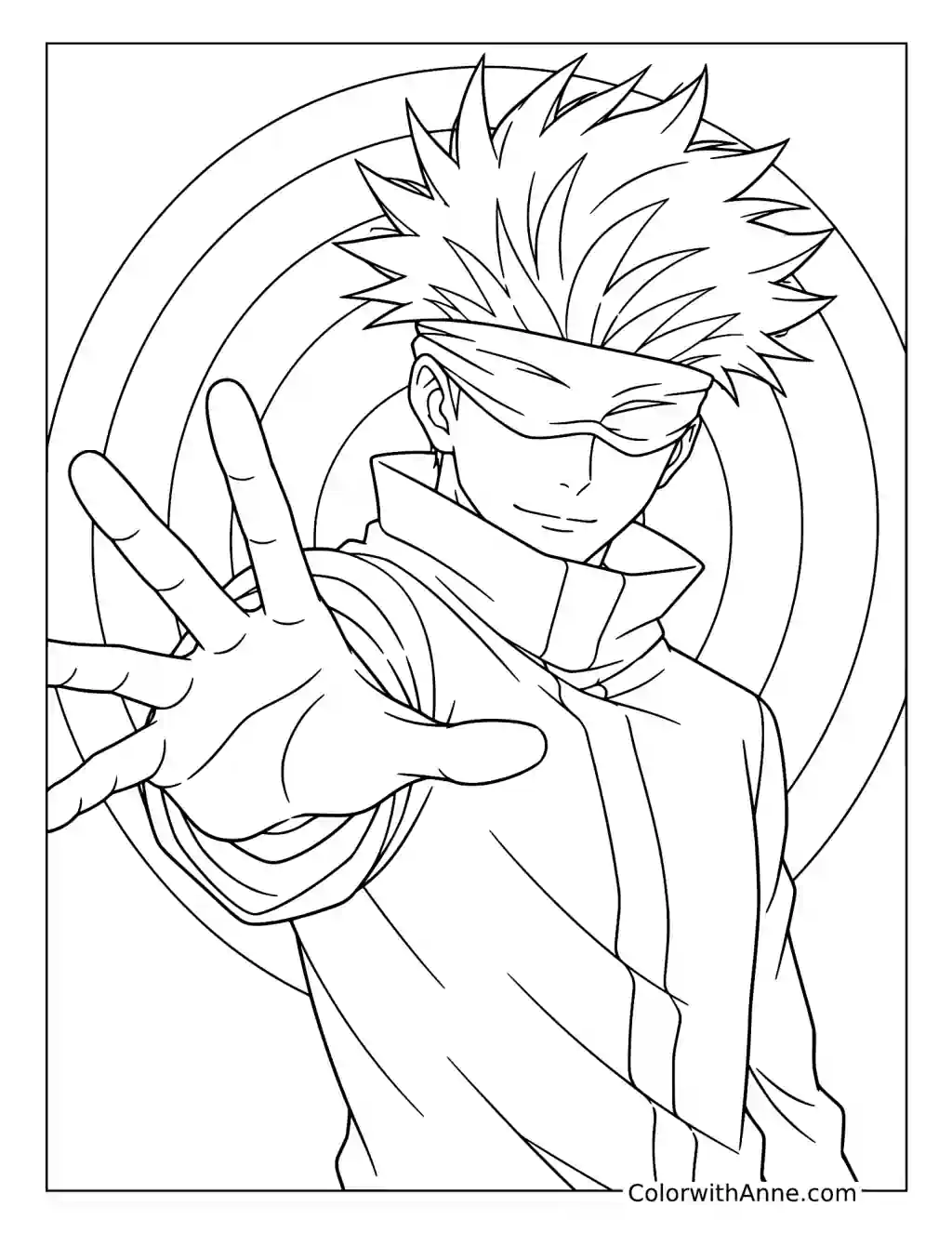
The close crop brings Gojo’s raised fingers, blindfold, and high collar together. Small differences in line weight already separate the hand from the face behind it.
Use dark blue-black clothing and blindfold, pale skin tones, and cool gray hair shadows.
For a drawing study, copy only the hand onto scrap paper, looking at the spaces between the fingers as well as their outlines. Keep the exercise small. Returning to the printed version afterward can make its overlapping shapes easier to color cleanly.
Style the Long Jacket
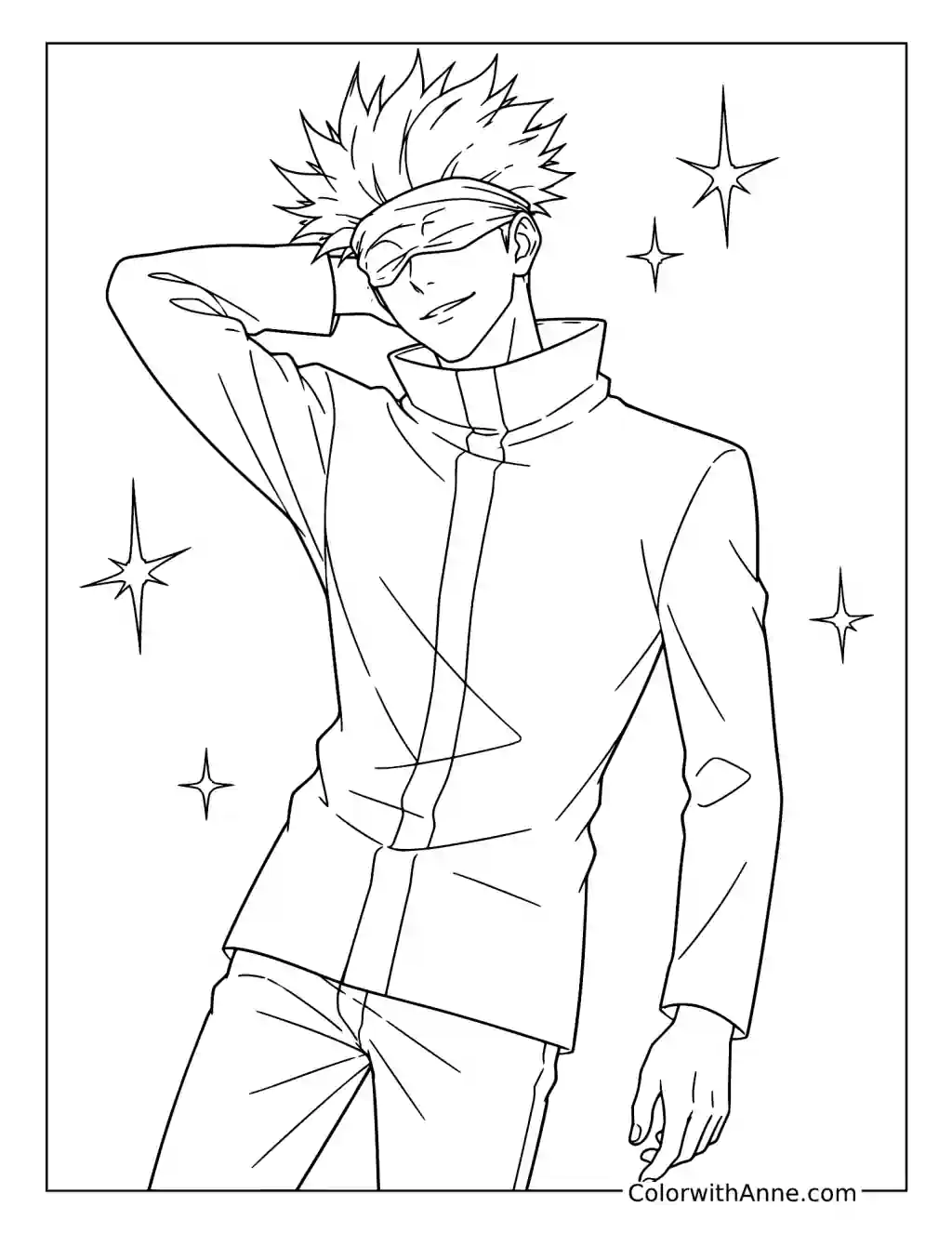
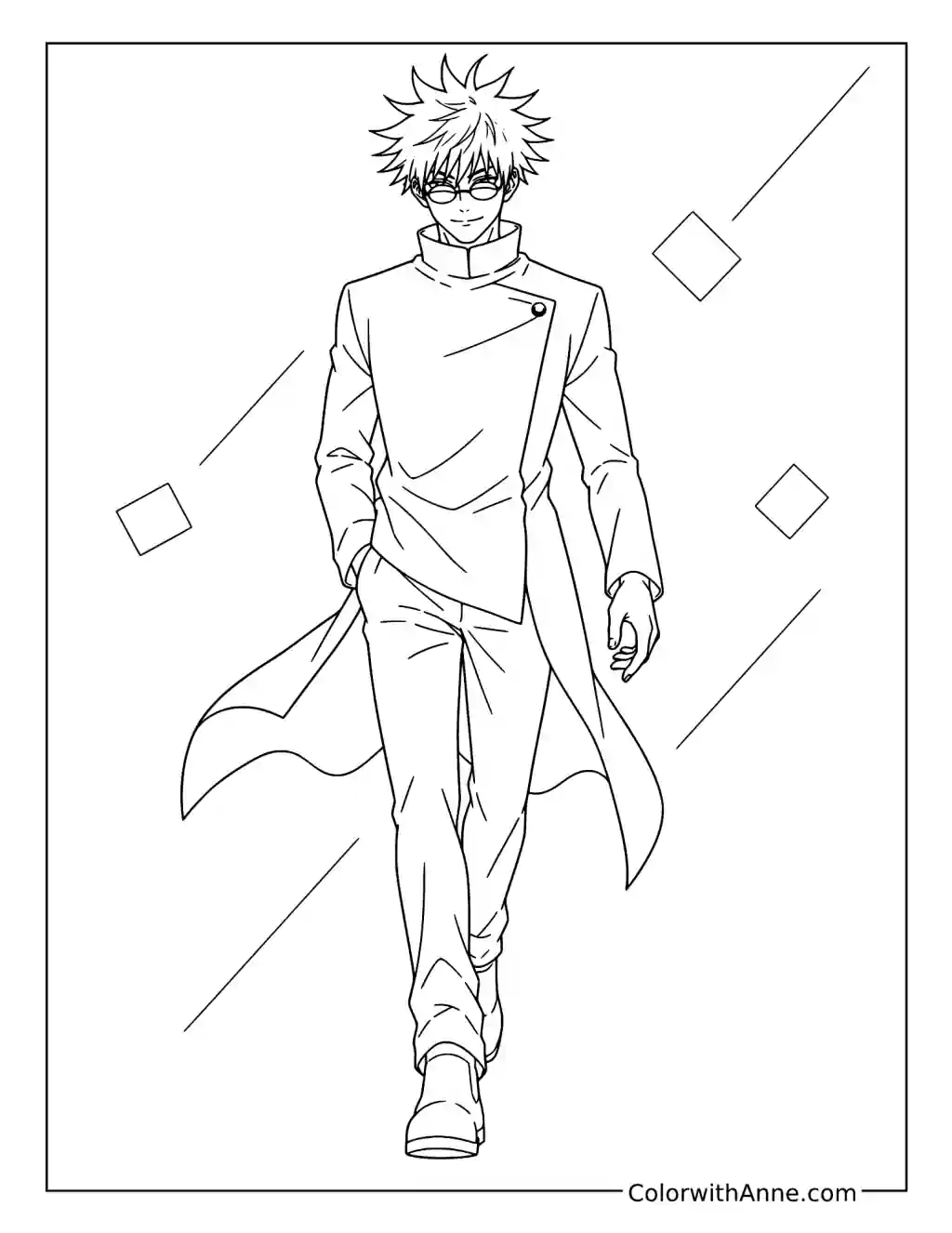
Gojo walks forward with a long jacket opening around his legs. The larger garment sections make this page well suited to a deliberate fashion illustration.
Choose charcoal or navy fabric, slightly lighter folds, and dark footwear. Keep the hair nearly white.
Try one contrasting detail along the inside edge of the coat or its lining. Follow the garment’s folds rather than making a flat stripe across the figure. A restrained change can give this fan-art outfit its own finish while preserving the original silhouette.
Split the Background Into Two Moods
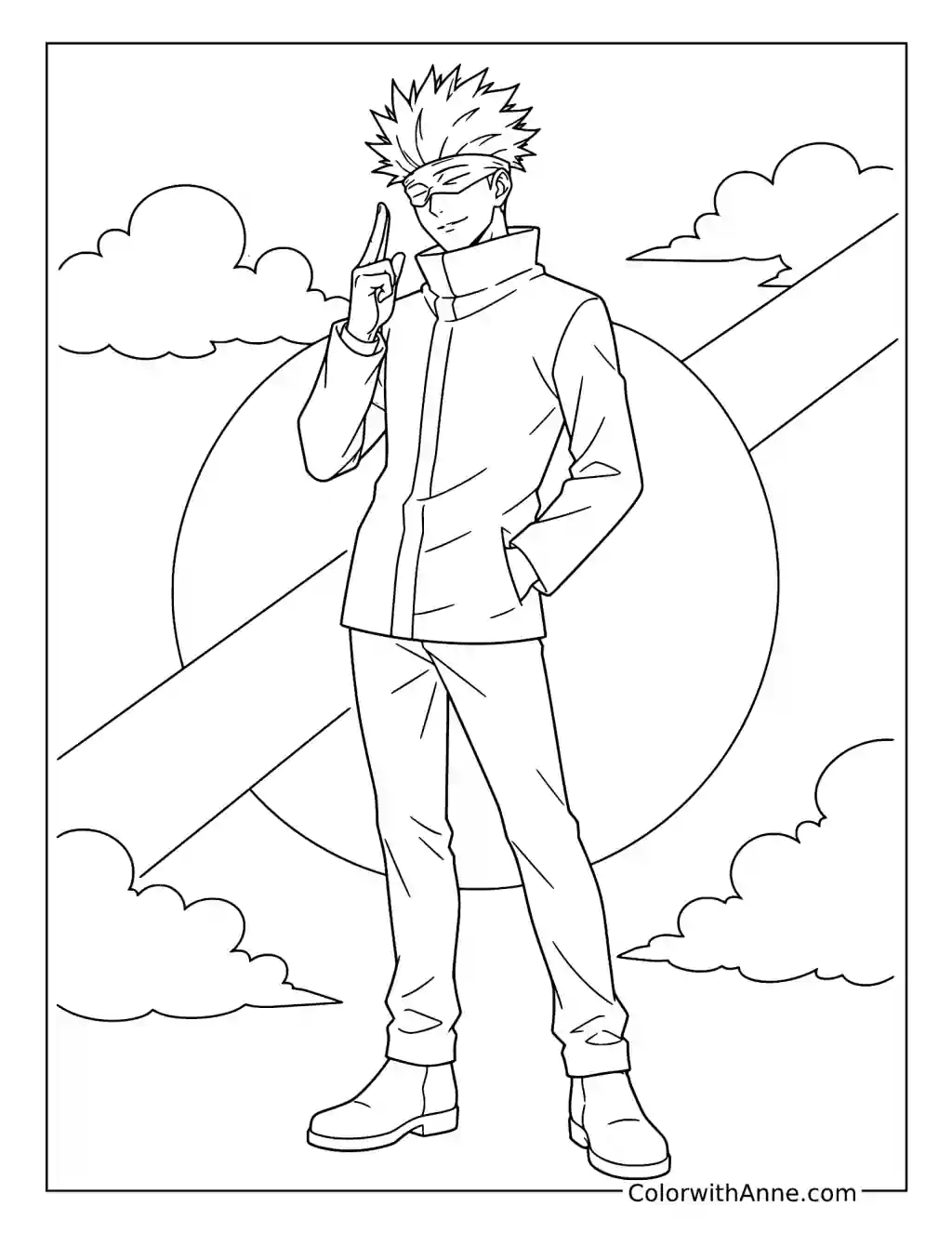
Gojo stands with a raised hand against clouds and a strong diagonal line. That division offers a simple structure for an alternative background treatment.
Keep the uniform dark and the hair pale. Use cool blue on one side of the diagonal and muted violet on the other.
Choose one background half for a sparse pattern, leaving the other comparatively open. A few small geometric marks will be enough. The contrast can frame the figure without competing with the hand near his face.
Add One Detail Near the Reaching Hand
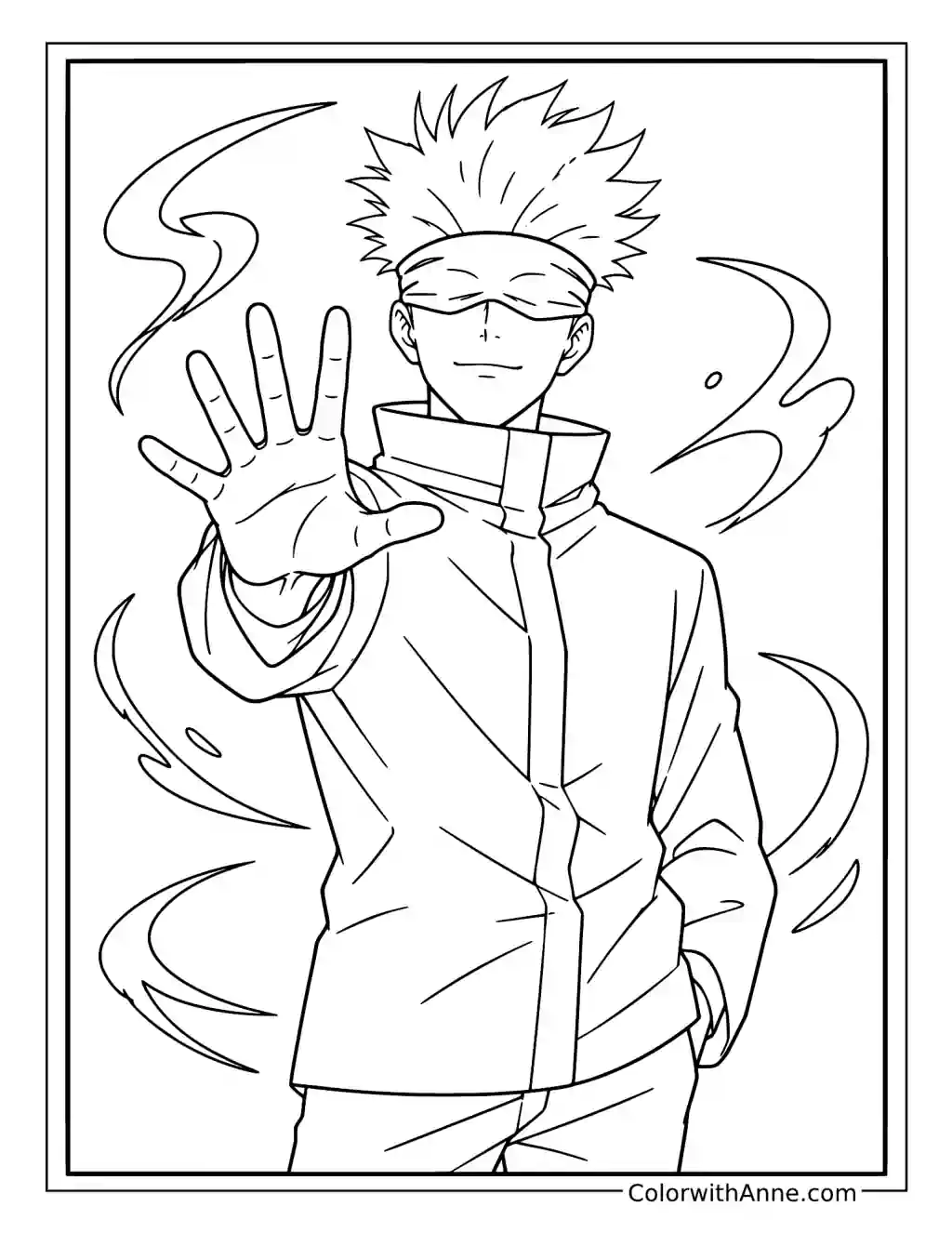
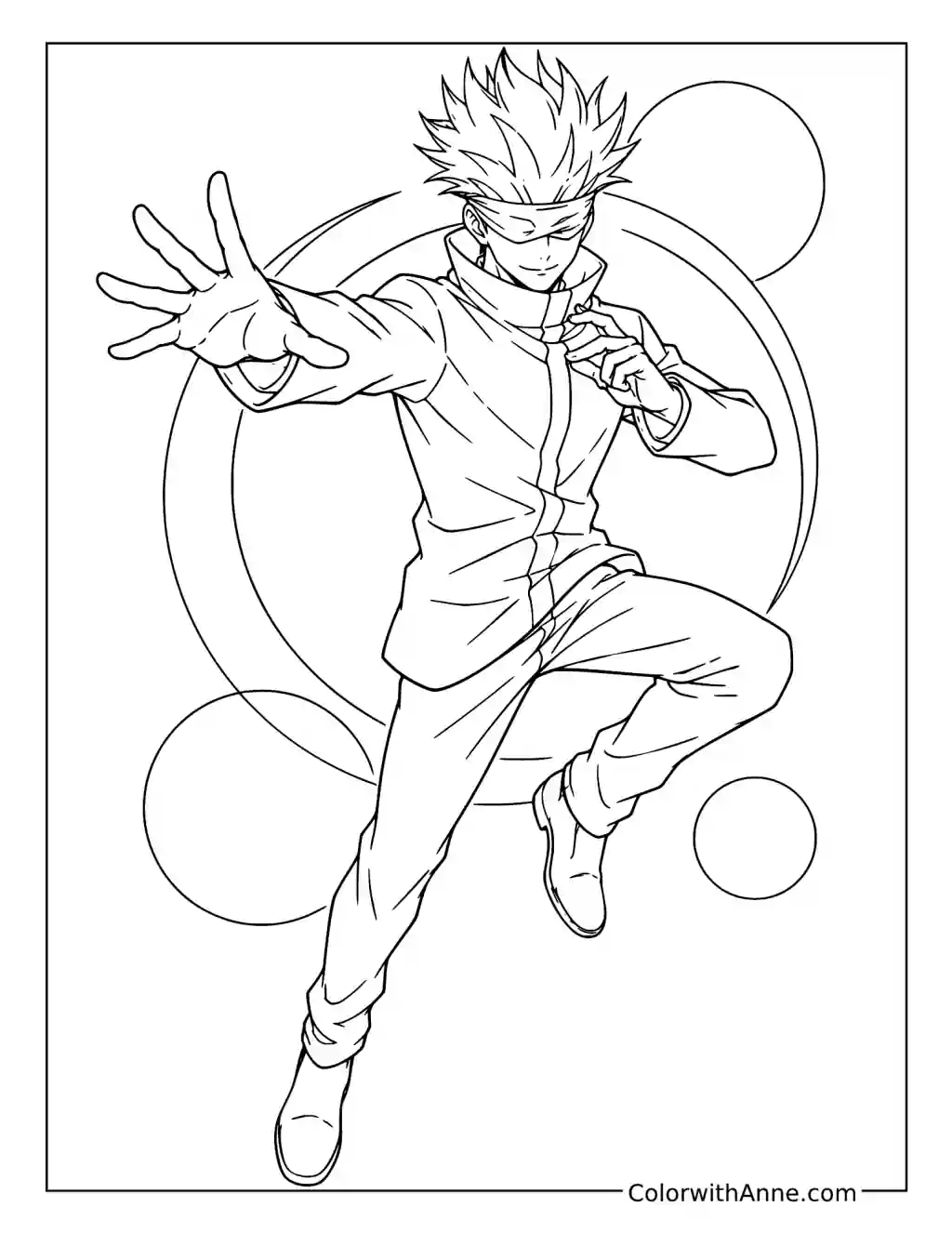
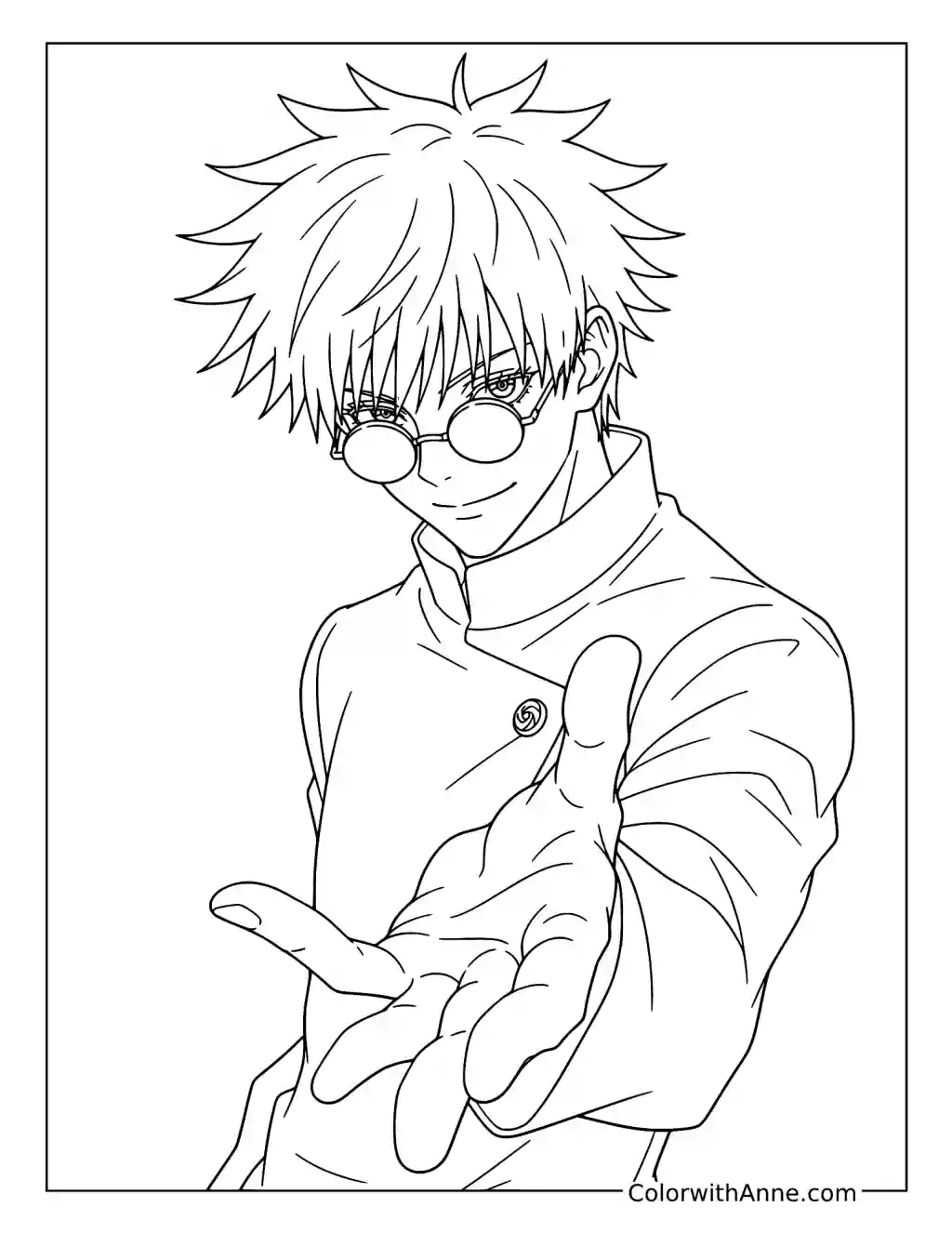
Gojo reaches toward the viewer, with the foreground hand appearing larger than the face. The open space near the fingertips offers a small place for an imagined addition.
Use a dark uniform, pale skin tones, and cool white hair. Keep the hand clearly separated from the sleeve.
Add one tiny floating object nearby, such as a feather, paper shape, or abstract spark. Decide what it contributes before drawing it. A single addition can change the feeling of the gesture while leaving the portrait itself intact.