
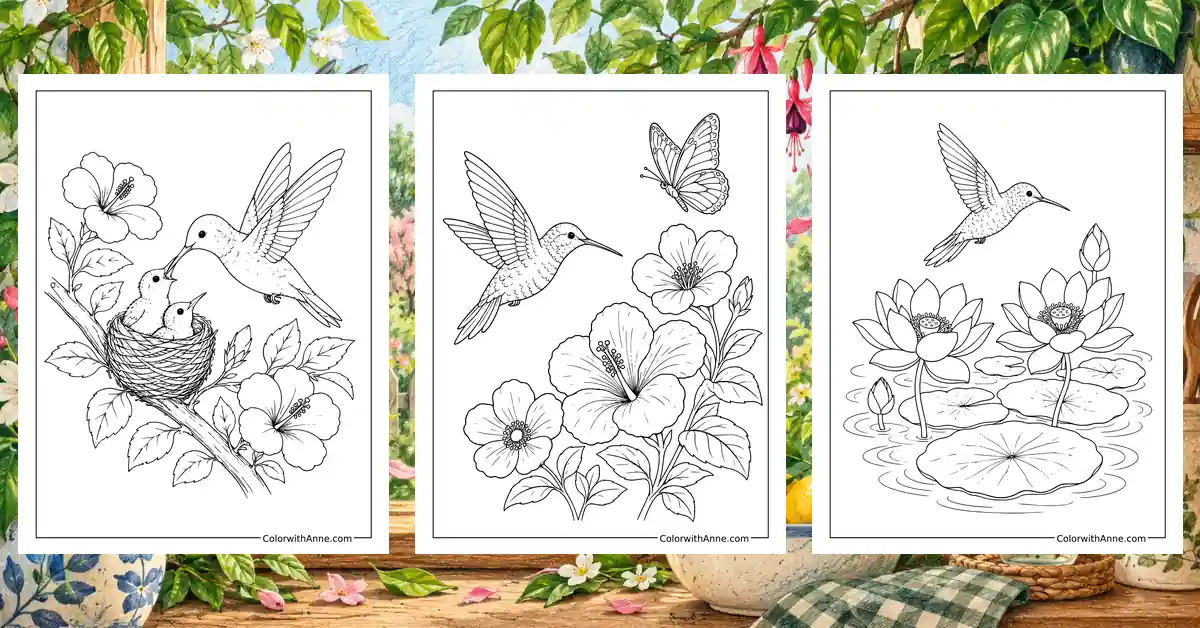
A hummingbird near a flower can look almost stationary until it darts sideways and disappears. Someone points, another person misses it, and both remain watching the same spot in case it returns. Such a brief visit can make a garden chair seem worth occupying for considerably longer.
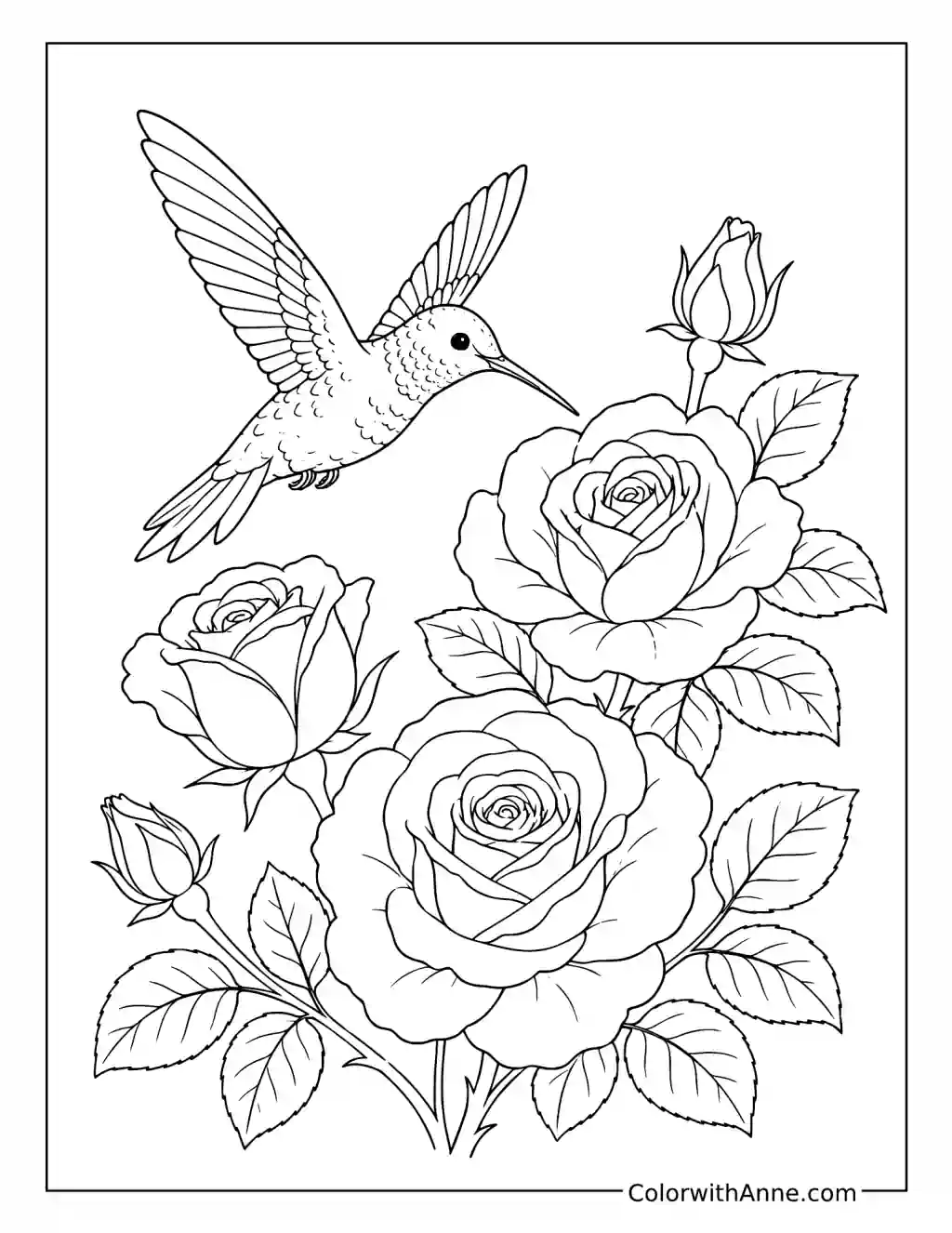
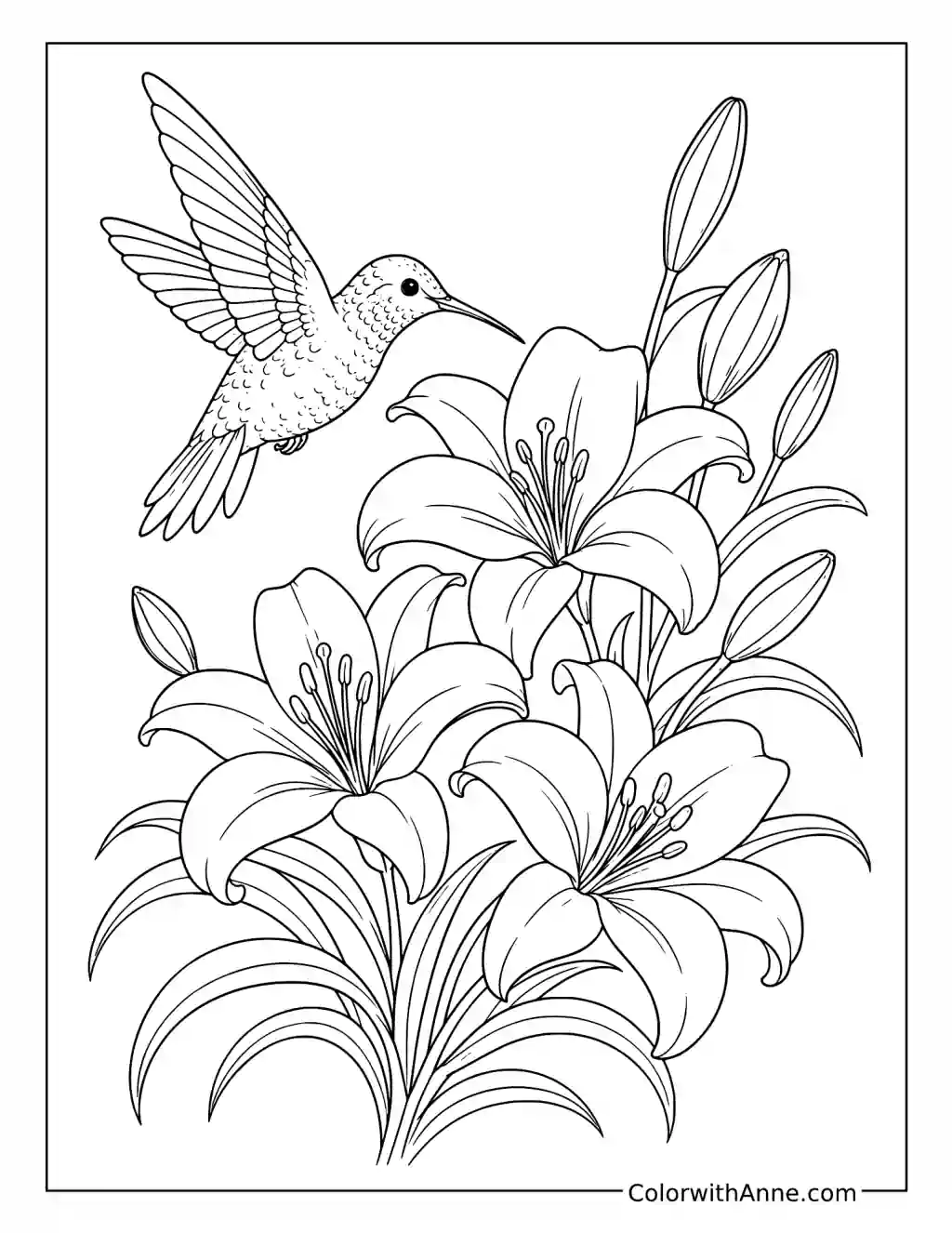
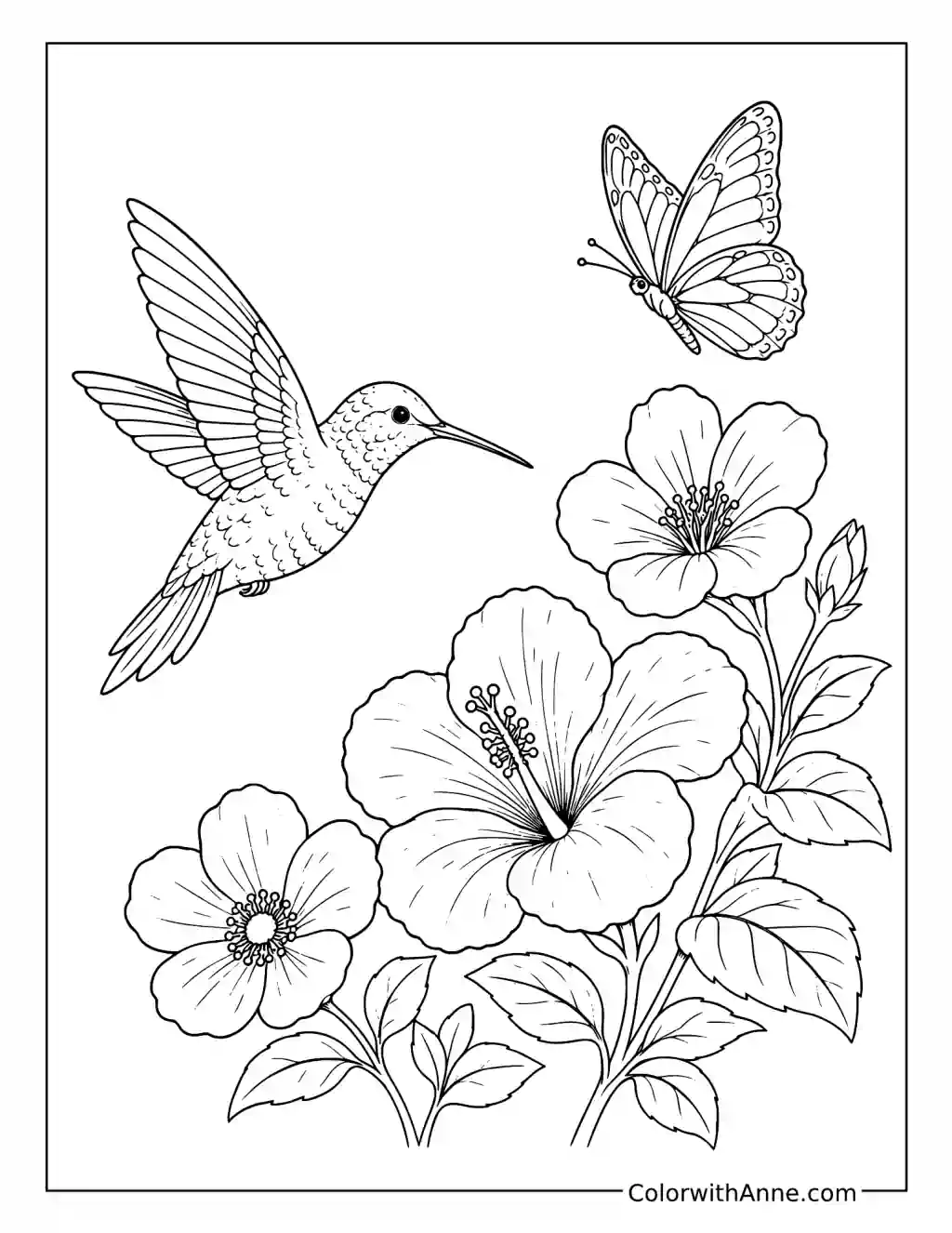
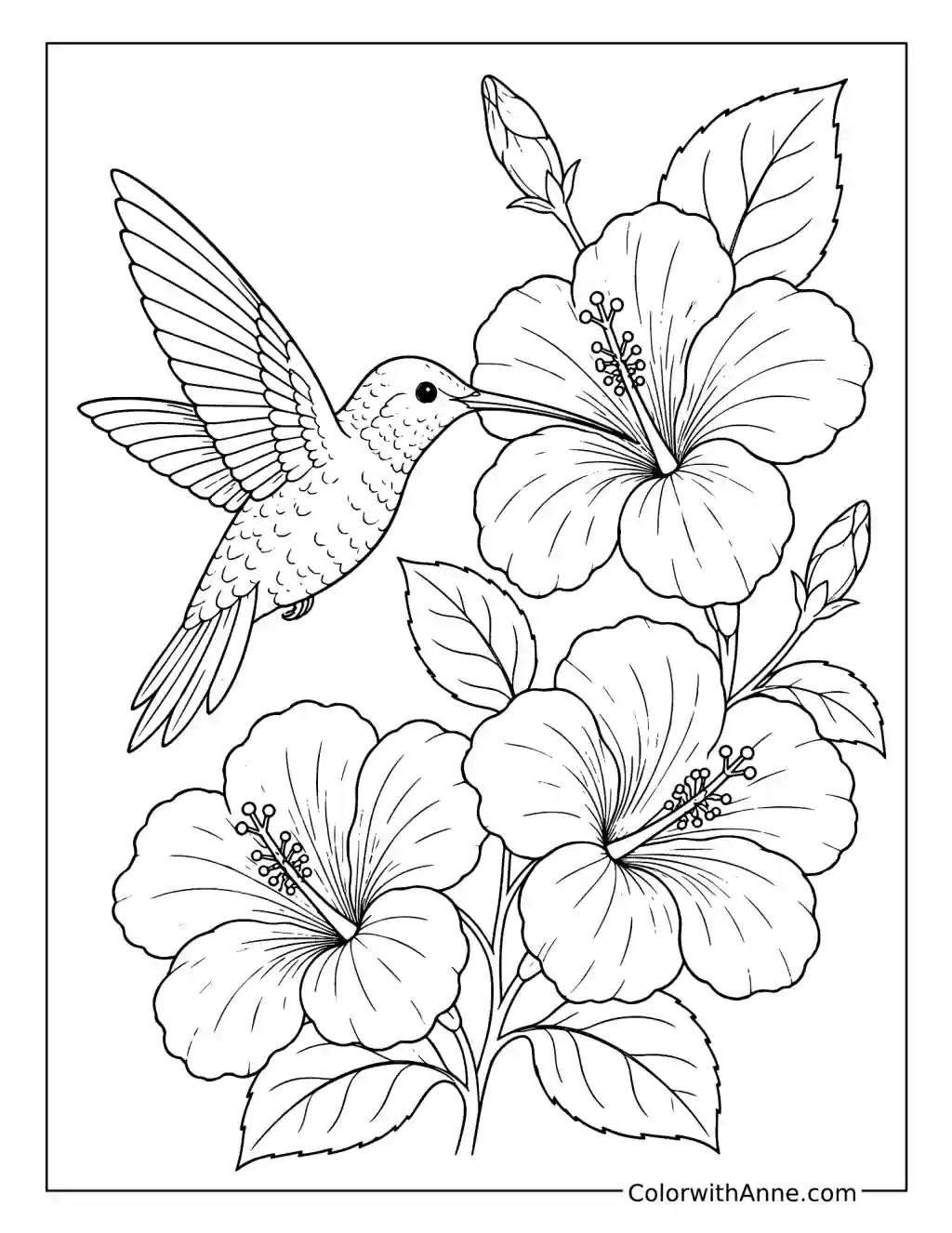
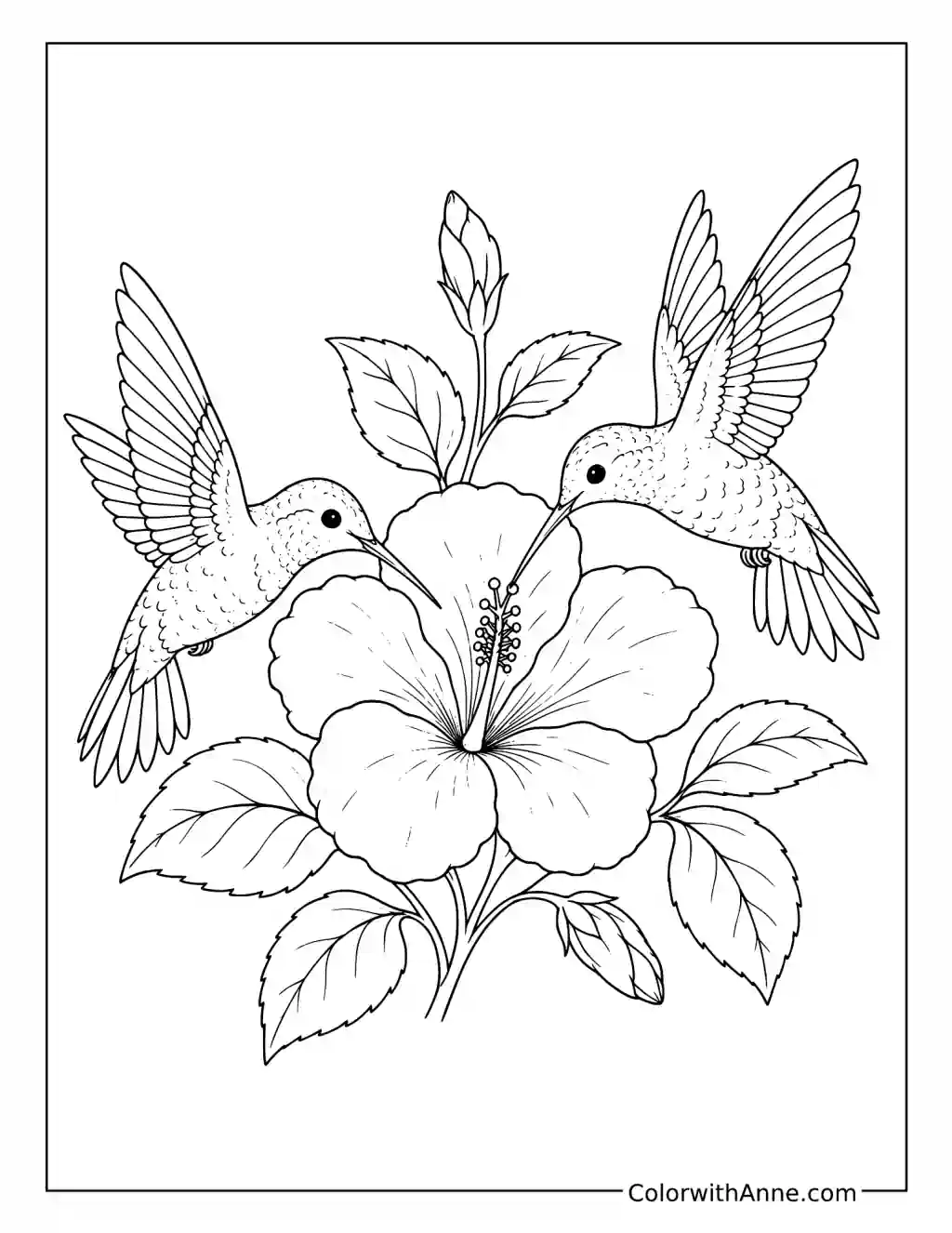
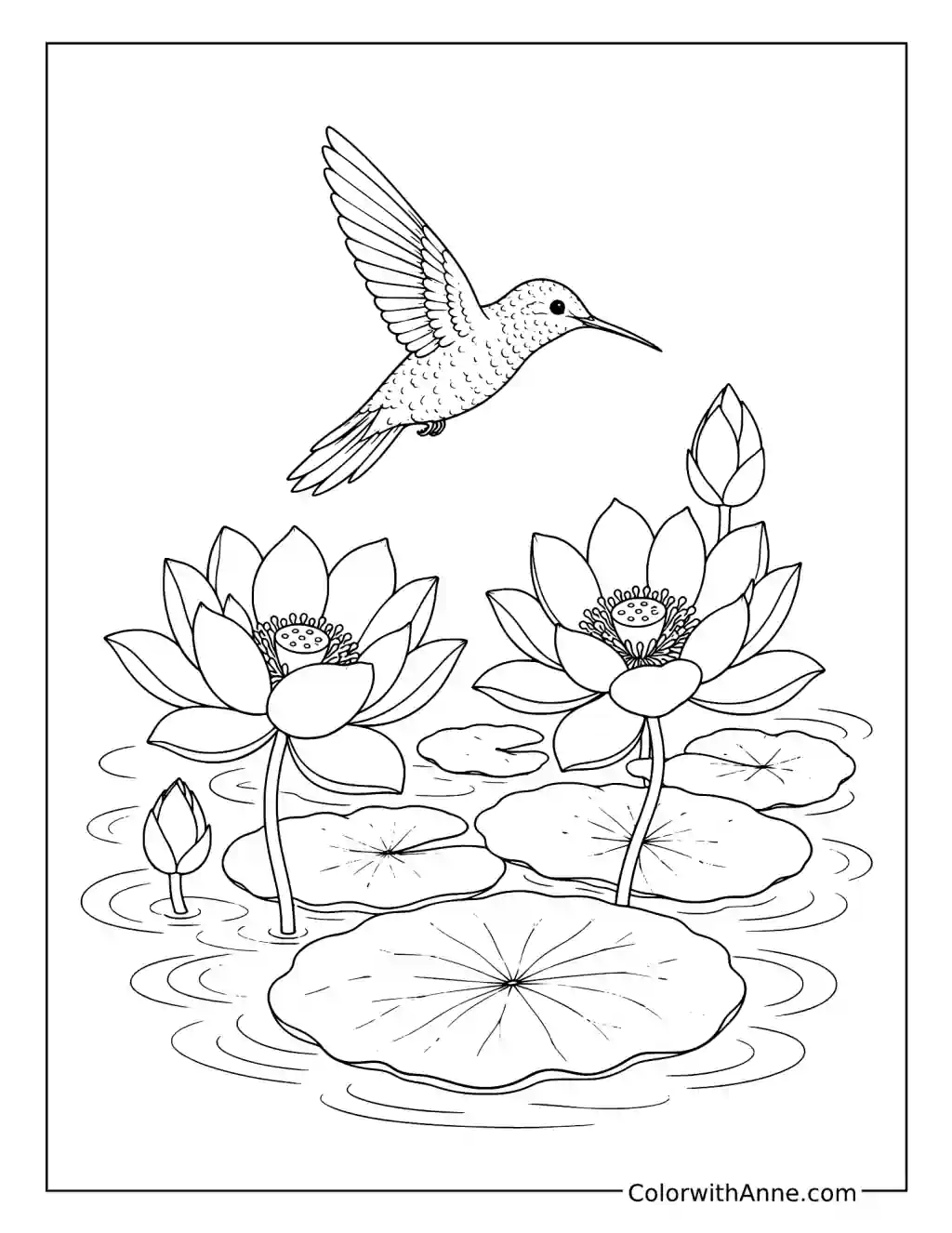
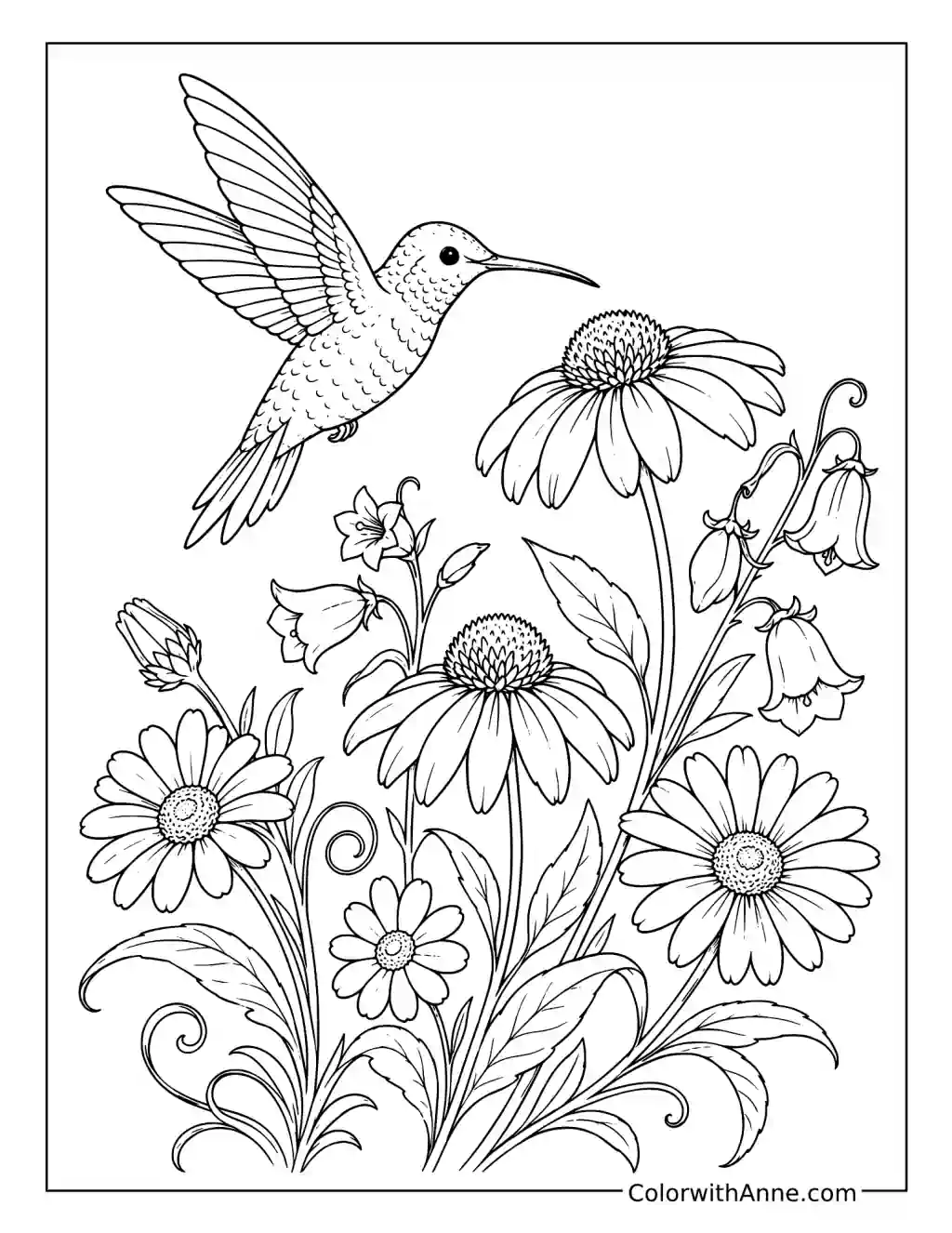
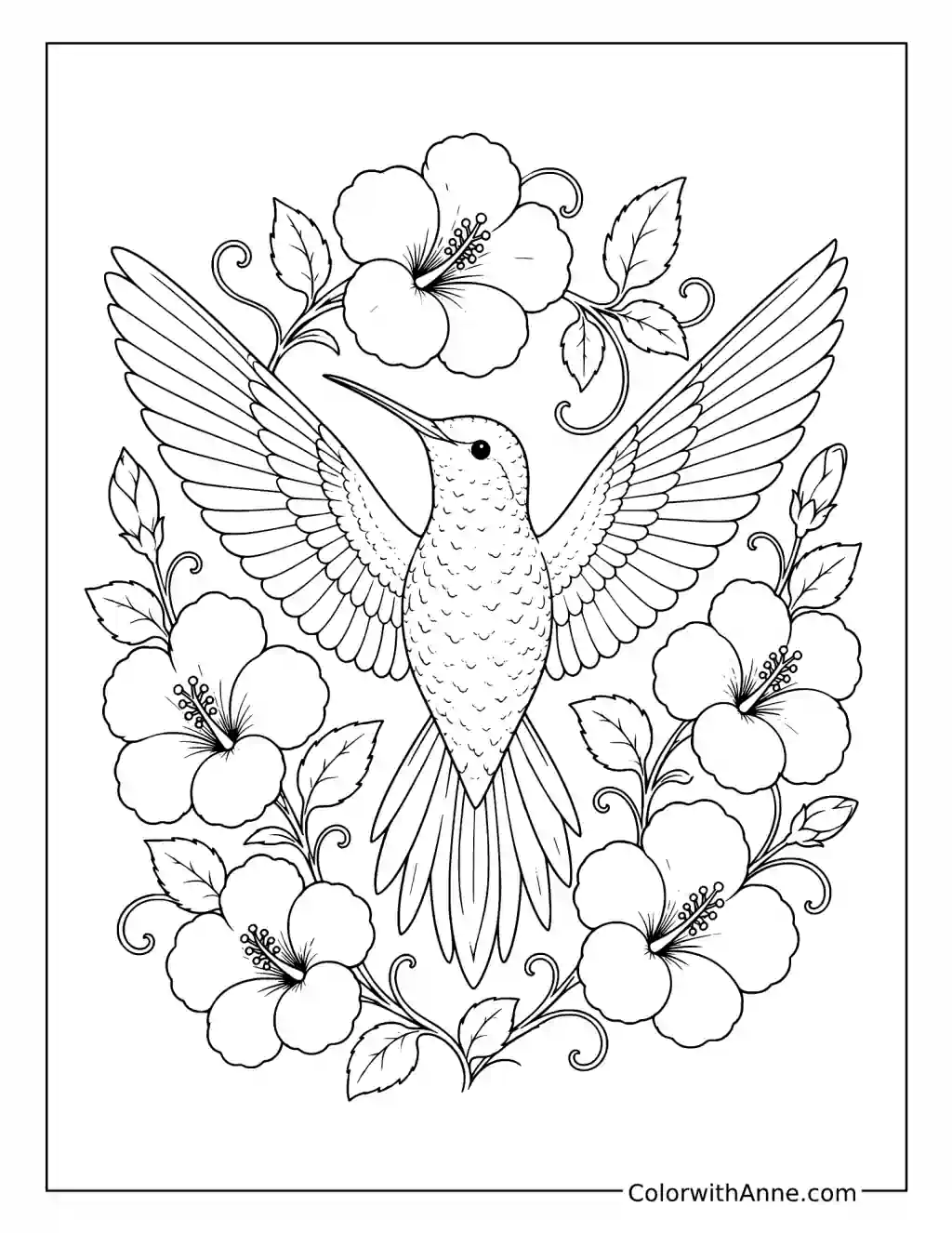
Hummingbird coloring pages allow the closer look that the real bird rarely grants. Its slender bill and small body become easier to notice when the wings are no longer a blur. After an actual sighting, a page can accompany the enthusiastic retelling, particularly from the person who saw it first and would like that detail remembered.
Free Printable Hummingbird Coloring Pages
Click any coloring page below to open the PDF, then print on US Letter or A4 paper.
Did you find what you needed?
Help us choose what to create or improve next.
Coloring Ideas for Hummingbird Pages
Try these creative ideas to make the most of your coloring sheets.
Send a Gentle Family Greeting
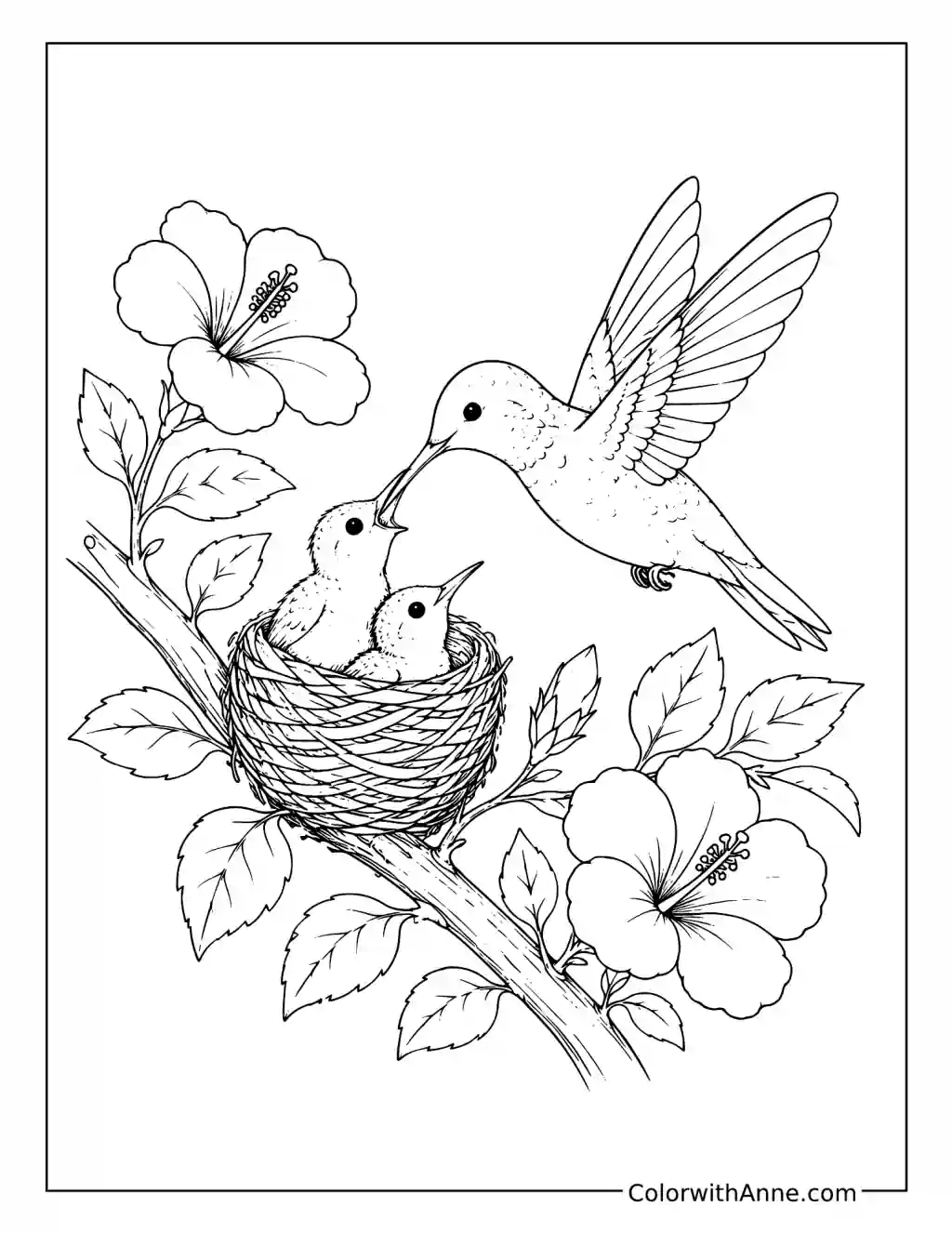
The adult hummingbird hovers above chicks tucked into a small nest, with flowers and leaves surrounding the branch. The close arrangement gives the scene its warmth.
Soft green feathers and a warmer throat accent could distinguish the adult from the nest. Pale blossoms would frame the family without competing with the tiny faces.
Use the finished picture for a note to a parent or caregiver. Mention one ordinary act of care you have noticed; the nesting scene gives that small thank-you a fitting image.
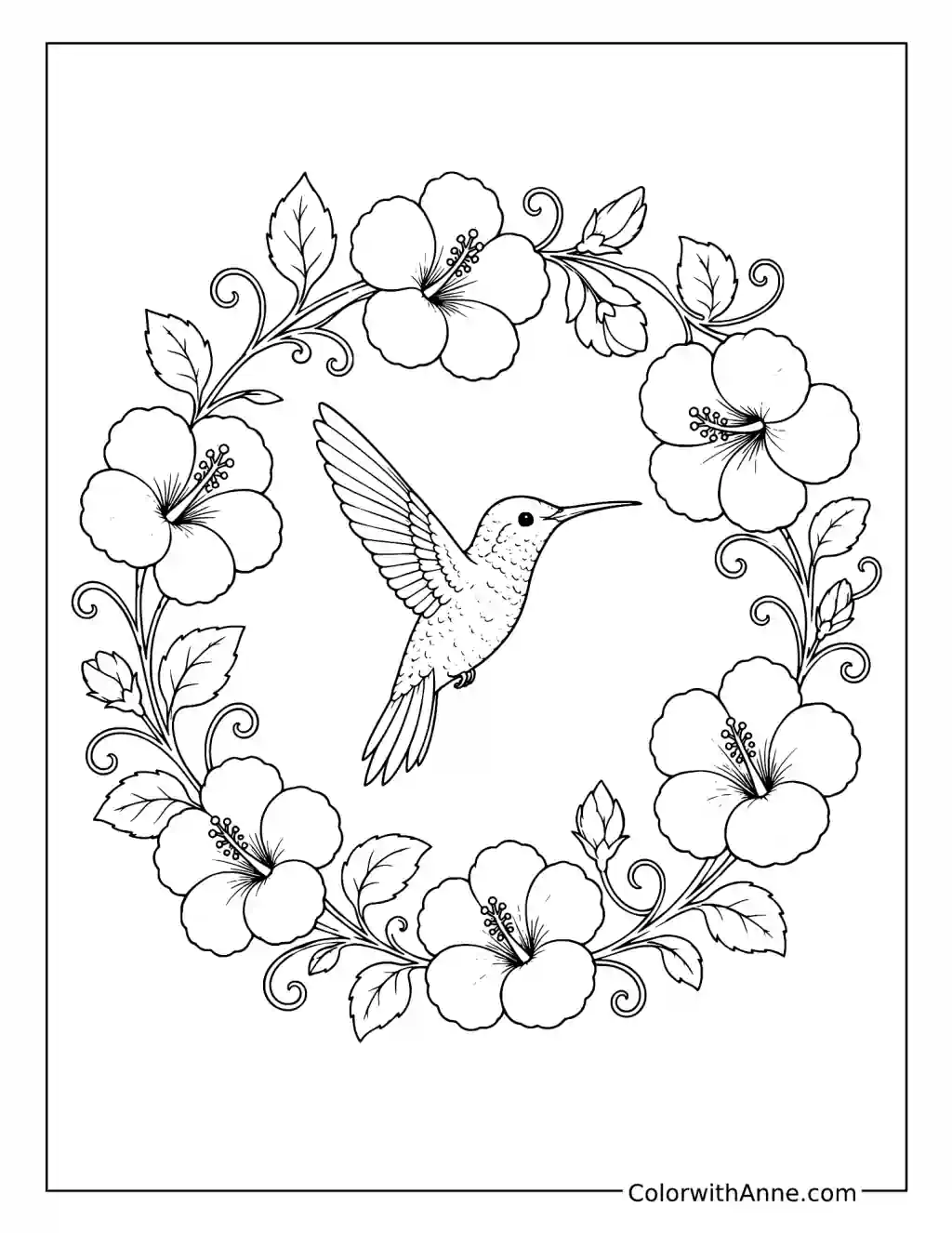
Put a Message inside the Floral Wreath
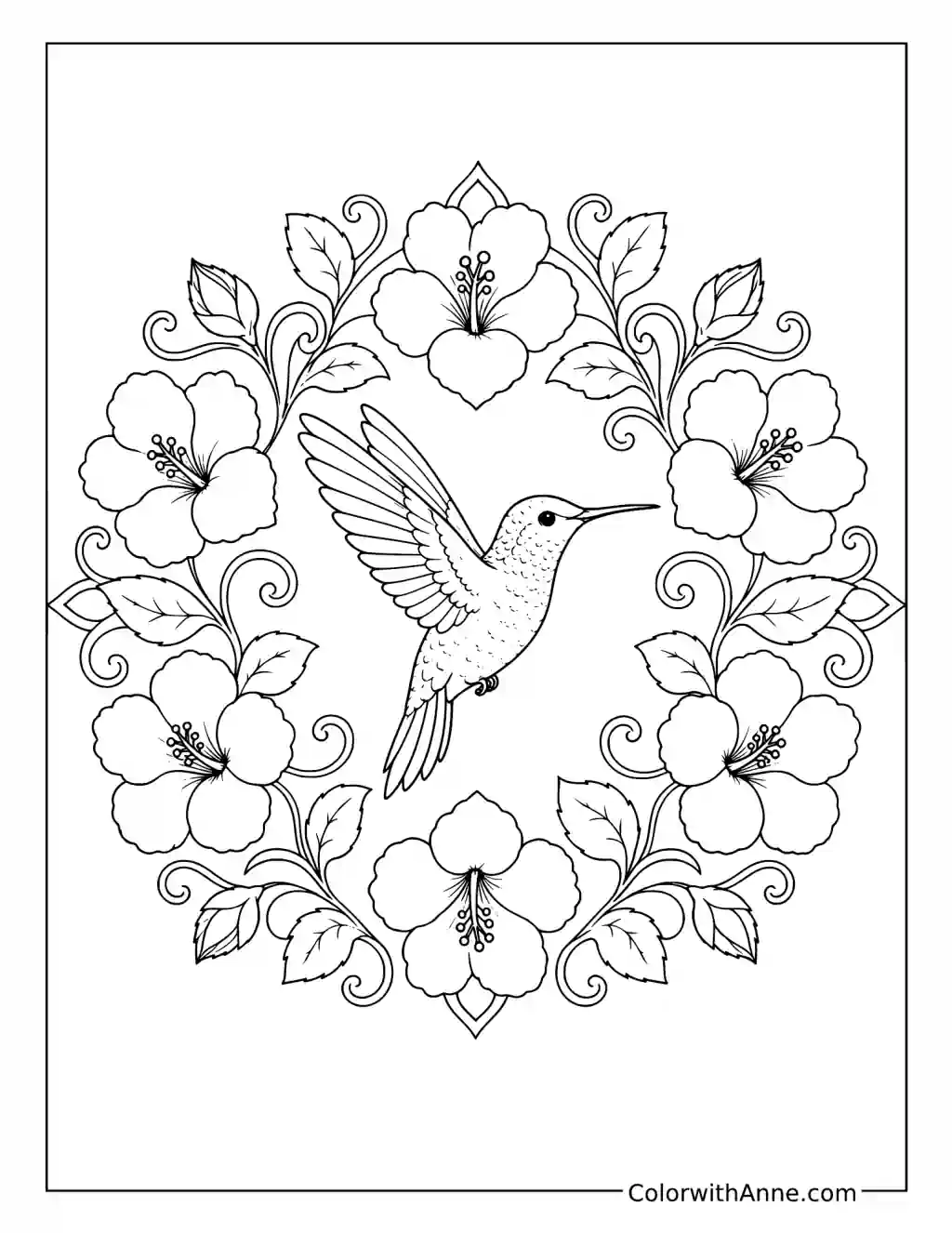
A hummingbird hovers inside a circular flower wreath. The open space around the bird keeps the composition light enough for a few carefully placed words.
Two main flower colors could keep the wreath cohesive, with deeper green leaves between them. A brighter throat or wing accent would help the bird remain central.
Add a short greeting along the lower curve of the wreath. The picture can become a birthday or thank-you card without needing a separate decorative border.
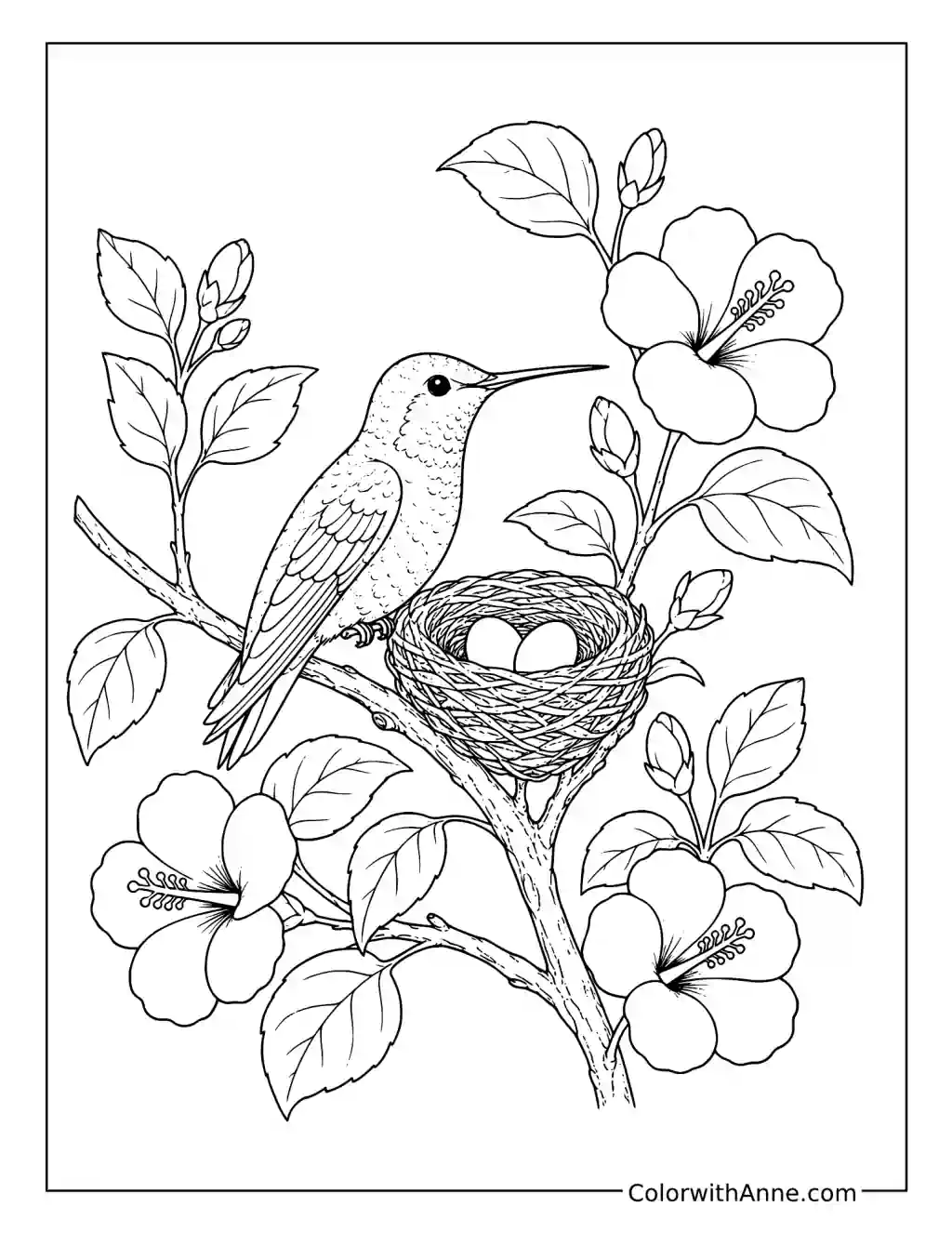
Look for a Bird at Rest
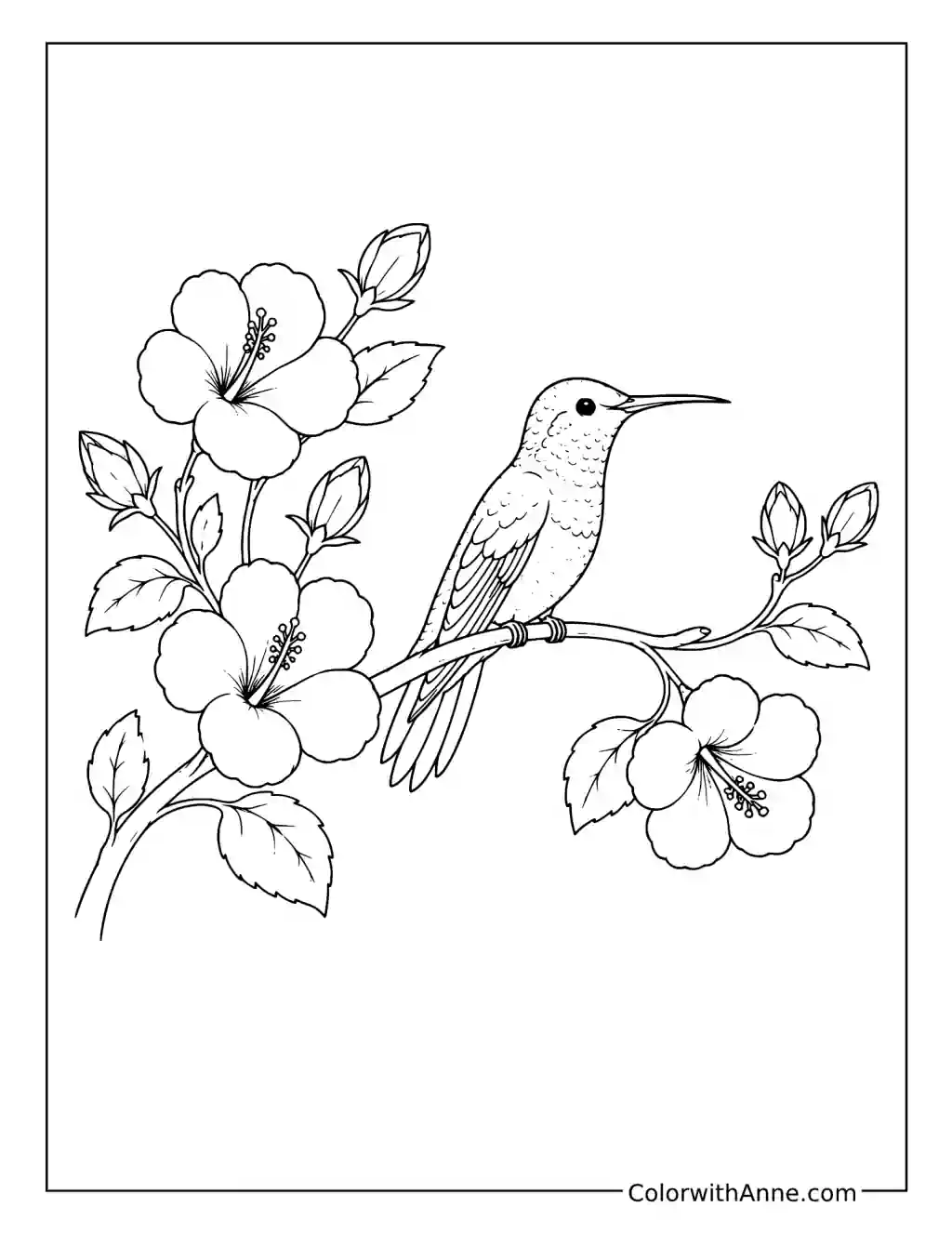
The hummingbird perches on a flowering branch with its wings folded. The quiet pose gives the small body a very different outline from the flying designs.
Muted green or warm brown feathers could sit among pale blossoms. Slightly deeper color beneath the folded wing would distinguish it from the body.
While birdwatching or watching a wildlife video, pause on a resting bird. Compare the tail, folded wings, and feet with the drawing before the bird moves again.
Make a Stained-Glass Window Picture
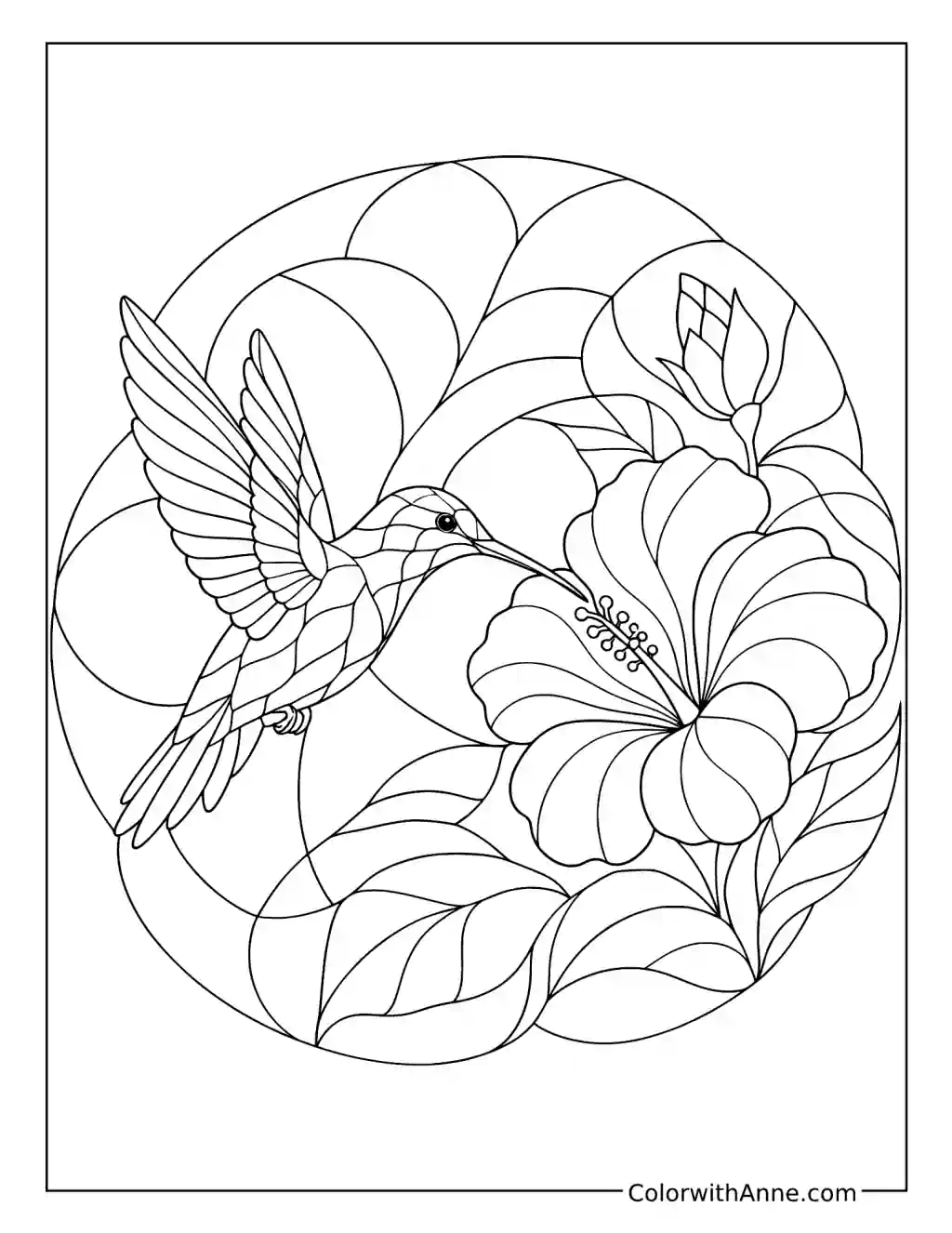
The hummingbird and flowers are divided into curved sections inside a circular frame. The lines already suggest separate pieces of colored glass.
Jewel shades could alternate with paler sections to keep the design luminous. Repeating one blue or green through the background would connect the different shapes.
Trace the main divisions onto translucent paper and color them with markers. Mounted in a paper frame near a window, the design can borrow its brightness from daylight.
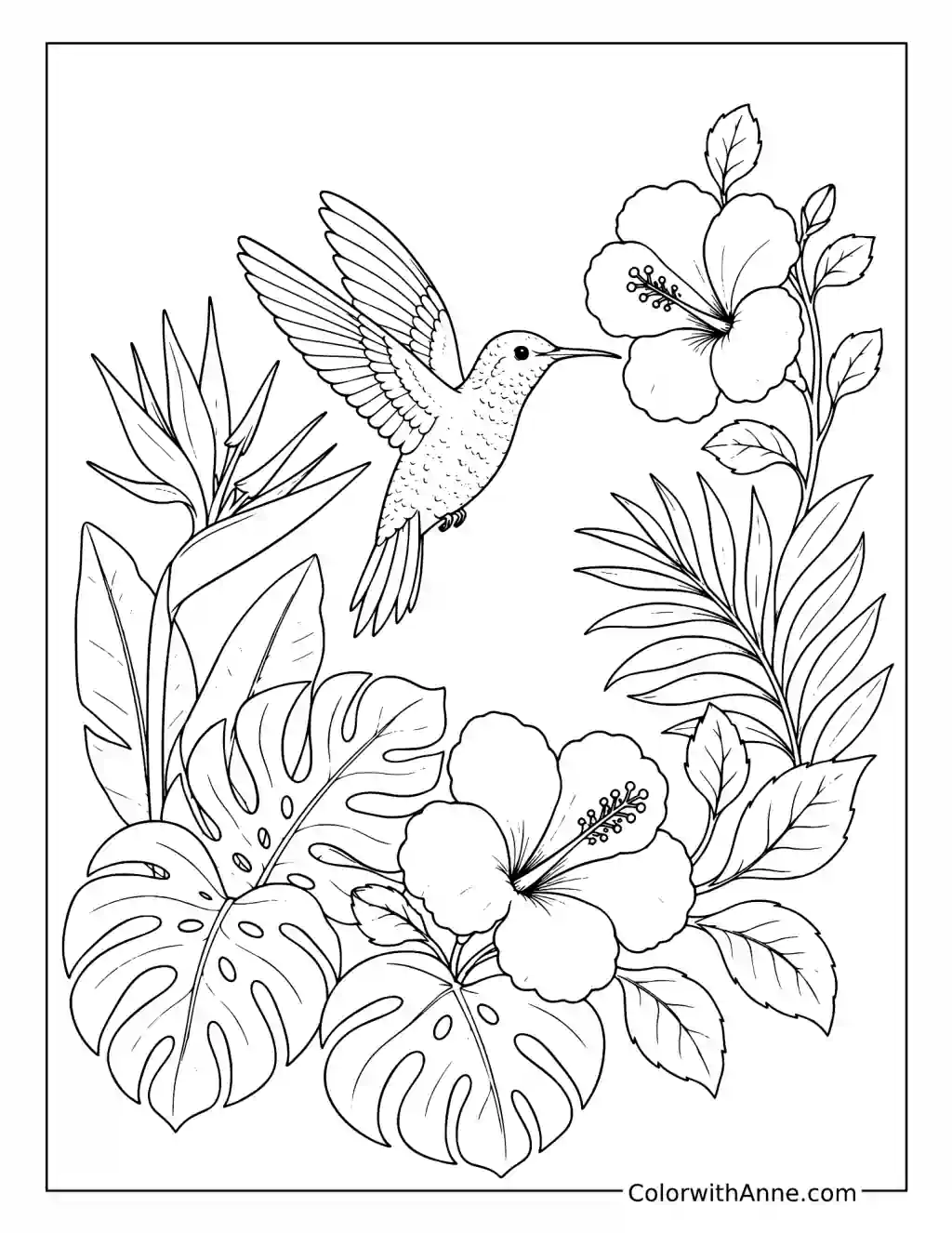
Follow the Shape of the Trumpet Flower
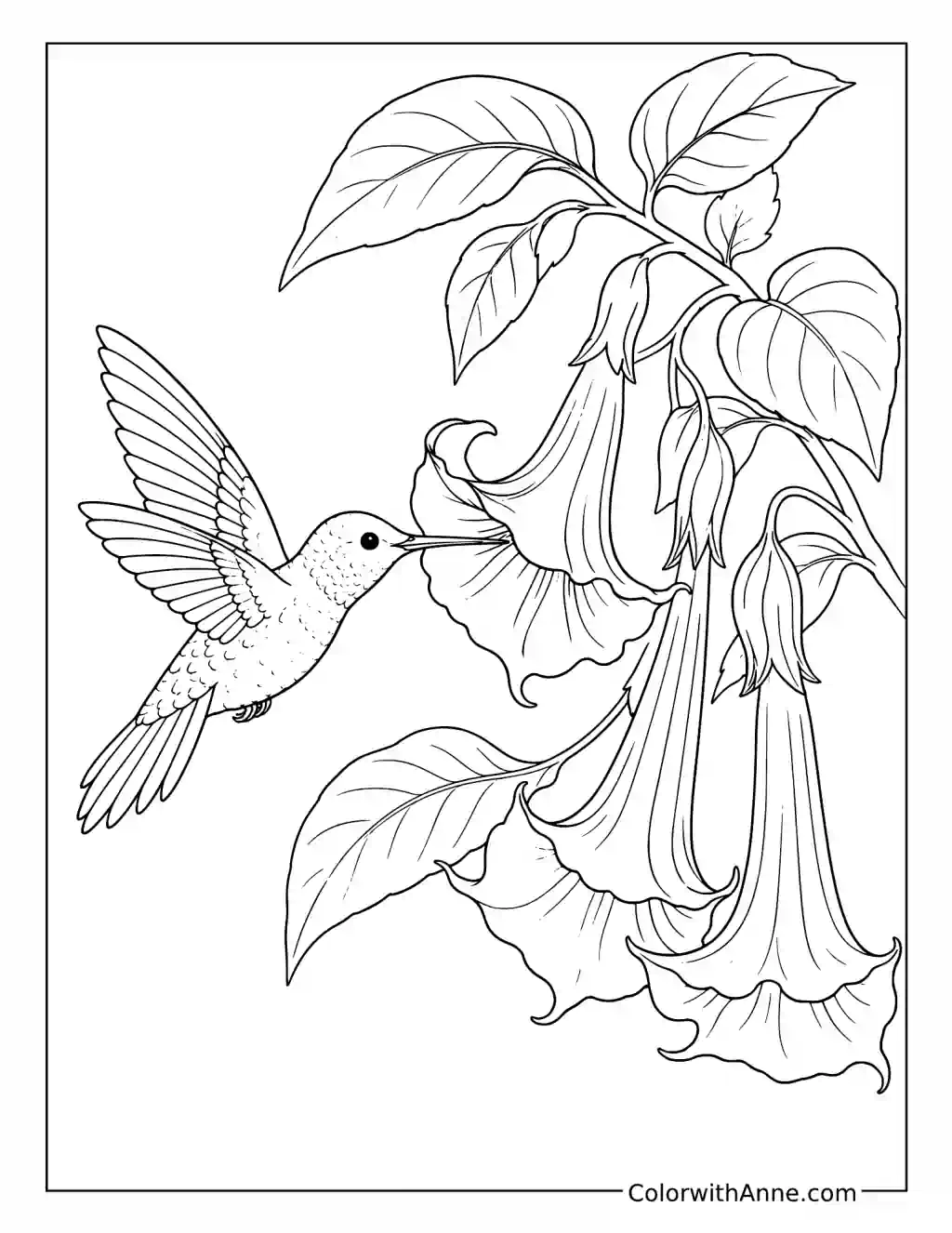
The hummingbird reaches toward a long hanging flower, with broad leaves above. The narrow bill and open blossom create a clear connection.
Warm orange or coral flowers could contrast with green feathers and leaves. A quieter background would keep the meeting point between bill and flower visible.
Look for similarly long or bell-shaped flowers in a garden, photograph, or plant book. Comparing the different openings is an interesting way to notice shapes that are easy to overlook.
Borrow a Motif from the Hummingbird Mandala
The bird sits at the center of a repeating floral design. Leaves and petals create a rhythm around the less symmetrical flying pose.
A few related colors repeated around the border would support the pattern. One brighter accent on the bird could distinguish it without breaking the overall balance.
Choose one small leaf or petal motif and repeat it along the edge of a handmade note. Borrowing a single shape is more manageable than trying to reproduce the whole mandala.