
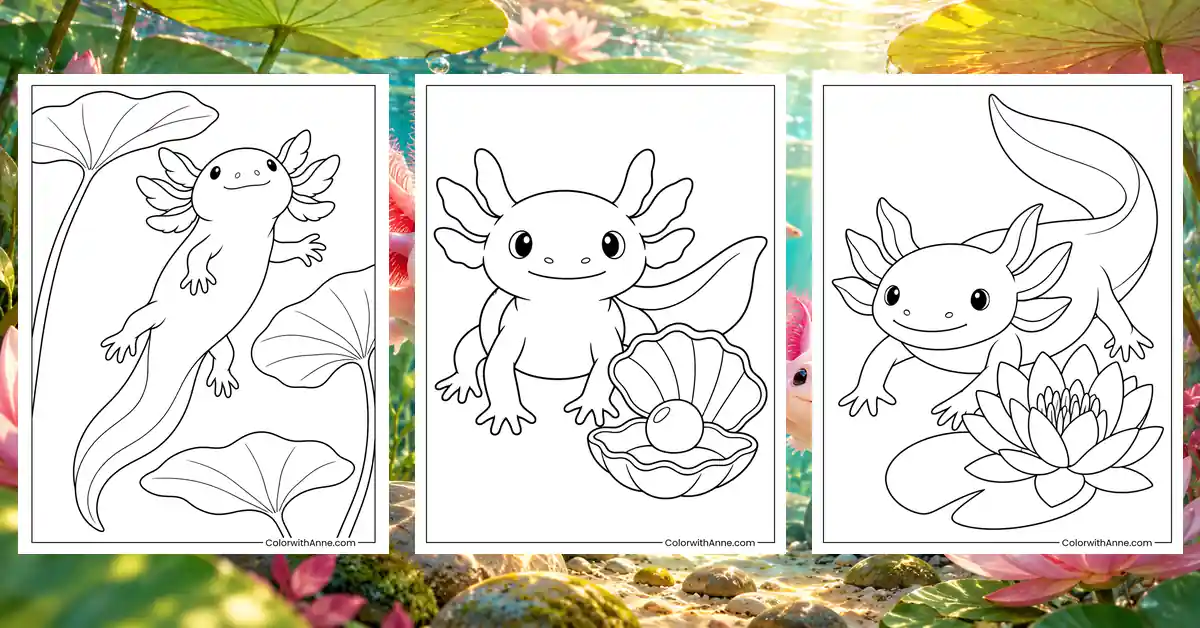
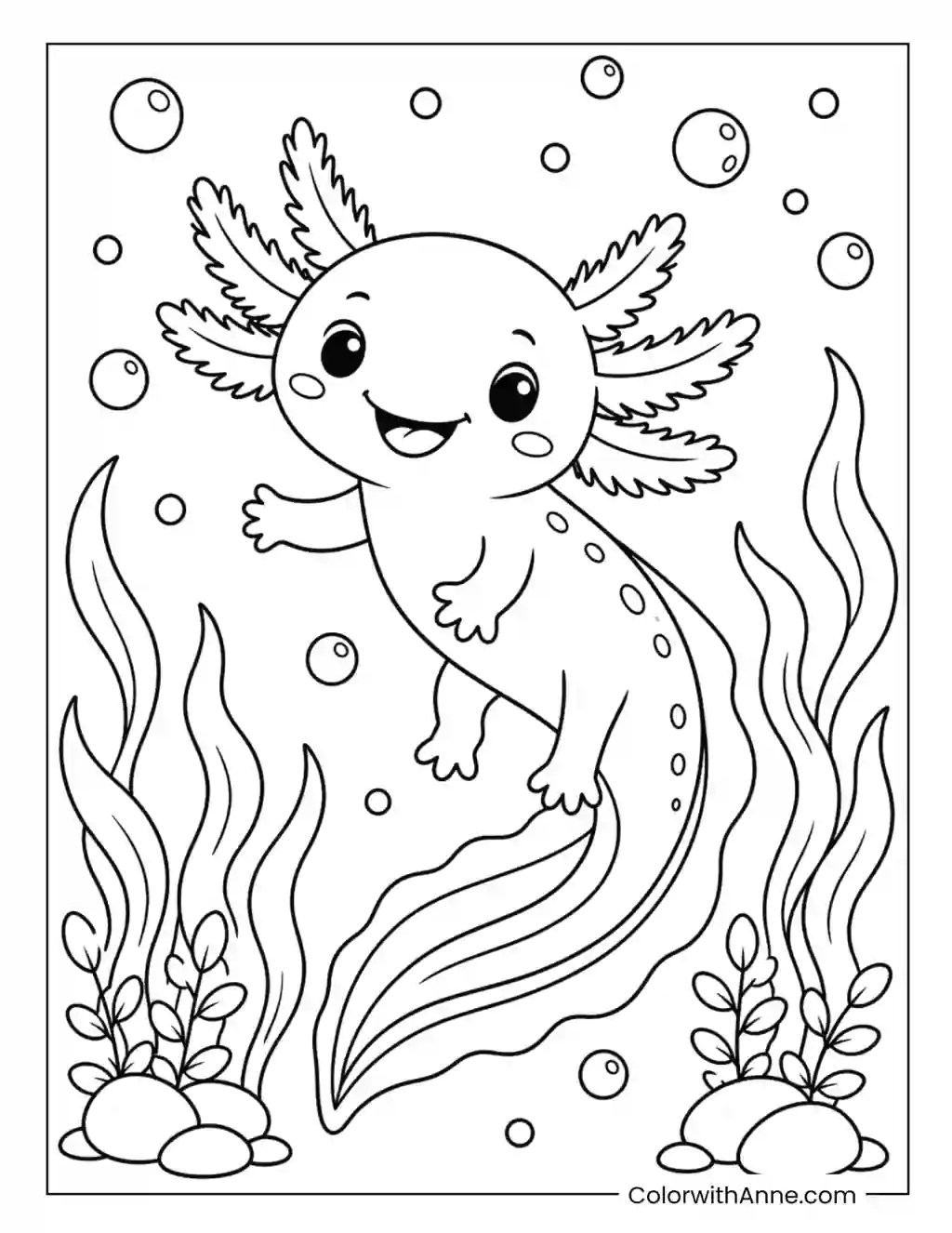
Axolotl coloring pages combine smiling characters with curved tails, branching gills, and playful underwater details. This collection includes broad pond leaves, a clam and pearl, a water lily, and a hollow log. Some drawings leave the background open, while others add plants, stones, or a small companion to color beside the axolotl.
Try pale pink, lavender, or soft gold for the body, then choose a deeper shade for the gills and tail fin. Greens and quiet browns can keep nearby objects distinct. The eight ideas below suggest simple palettes and gentle shading based on the visible details in each selected picture.
Free Printable Axolotl Coloring Pages
Click any coloring page below to open the PDF, then print on US Letter or A4 paper.
Did you find what you needed?
Help us choose what to create or improve next.
Coloring Ideas for Axolotl Pages
Try these creative ideas to make the most of your coloring sheets.
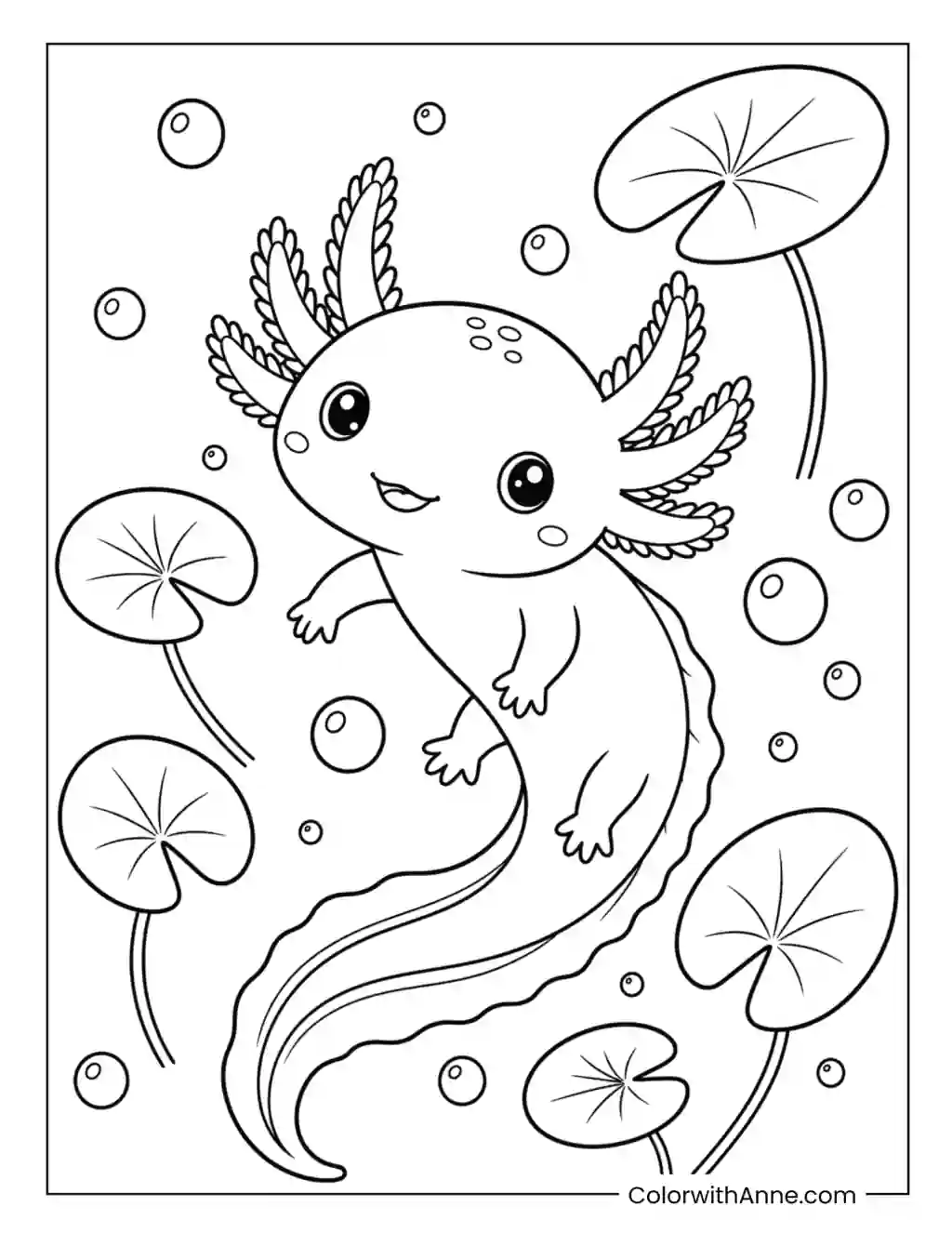
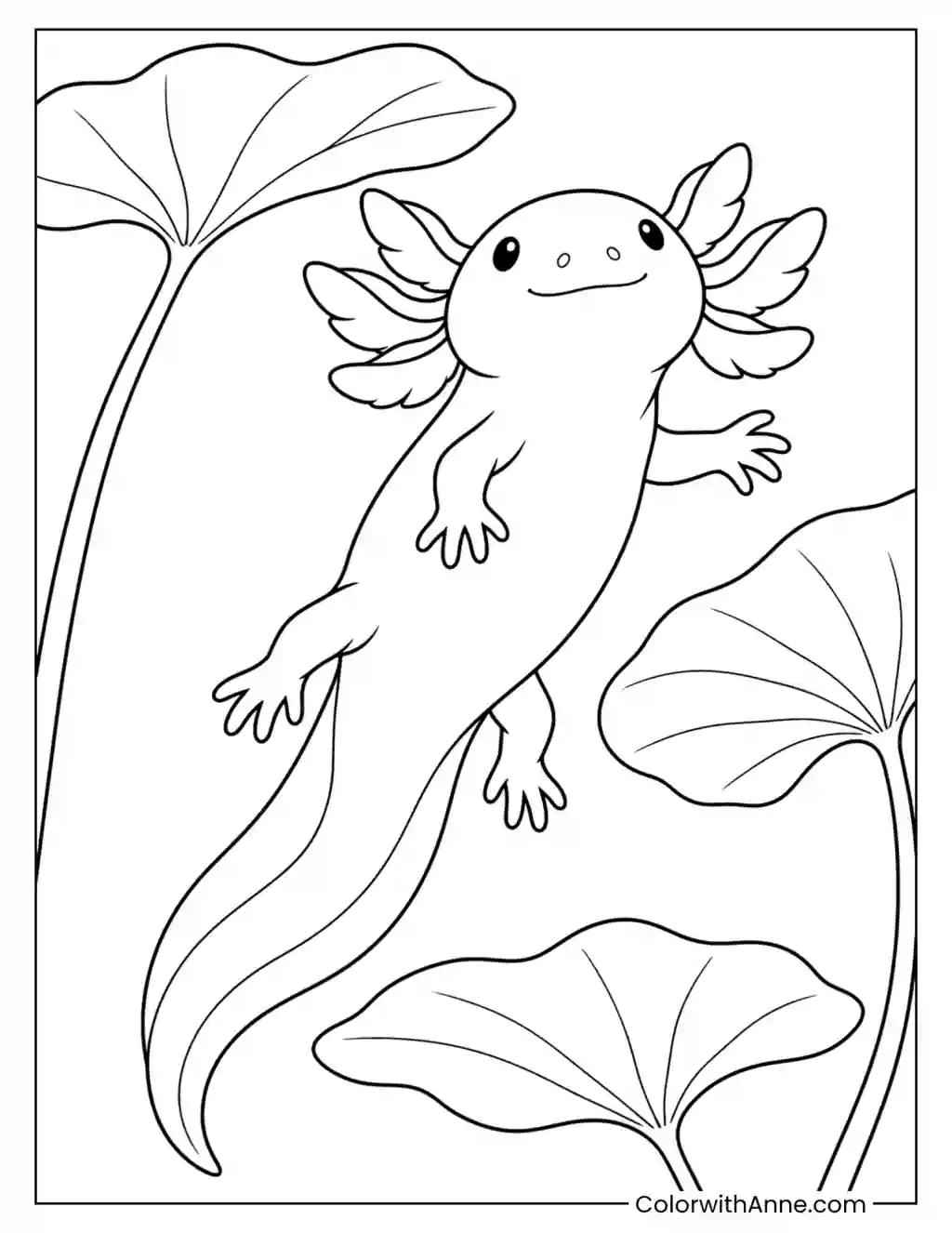
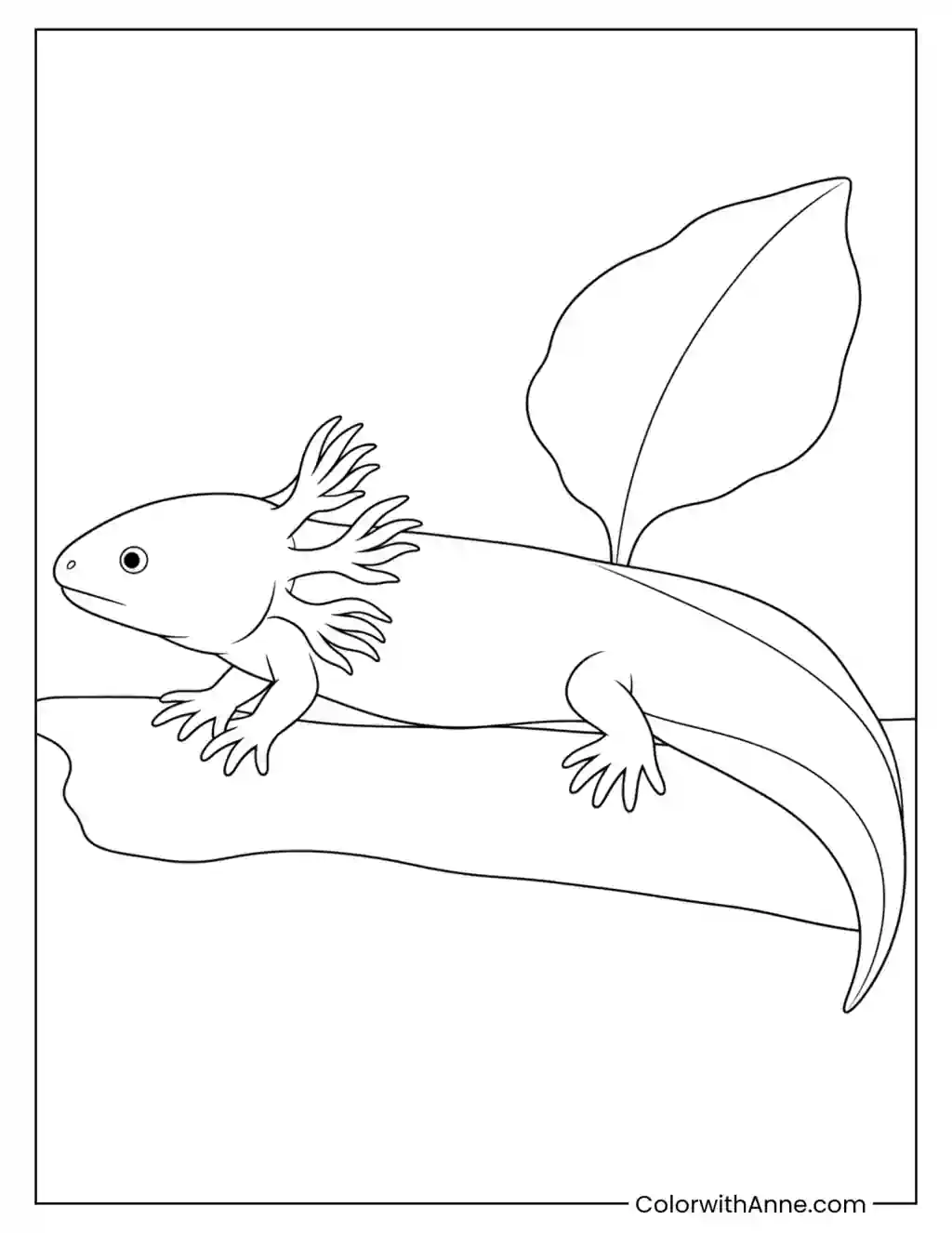
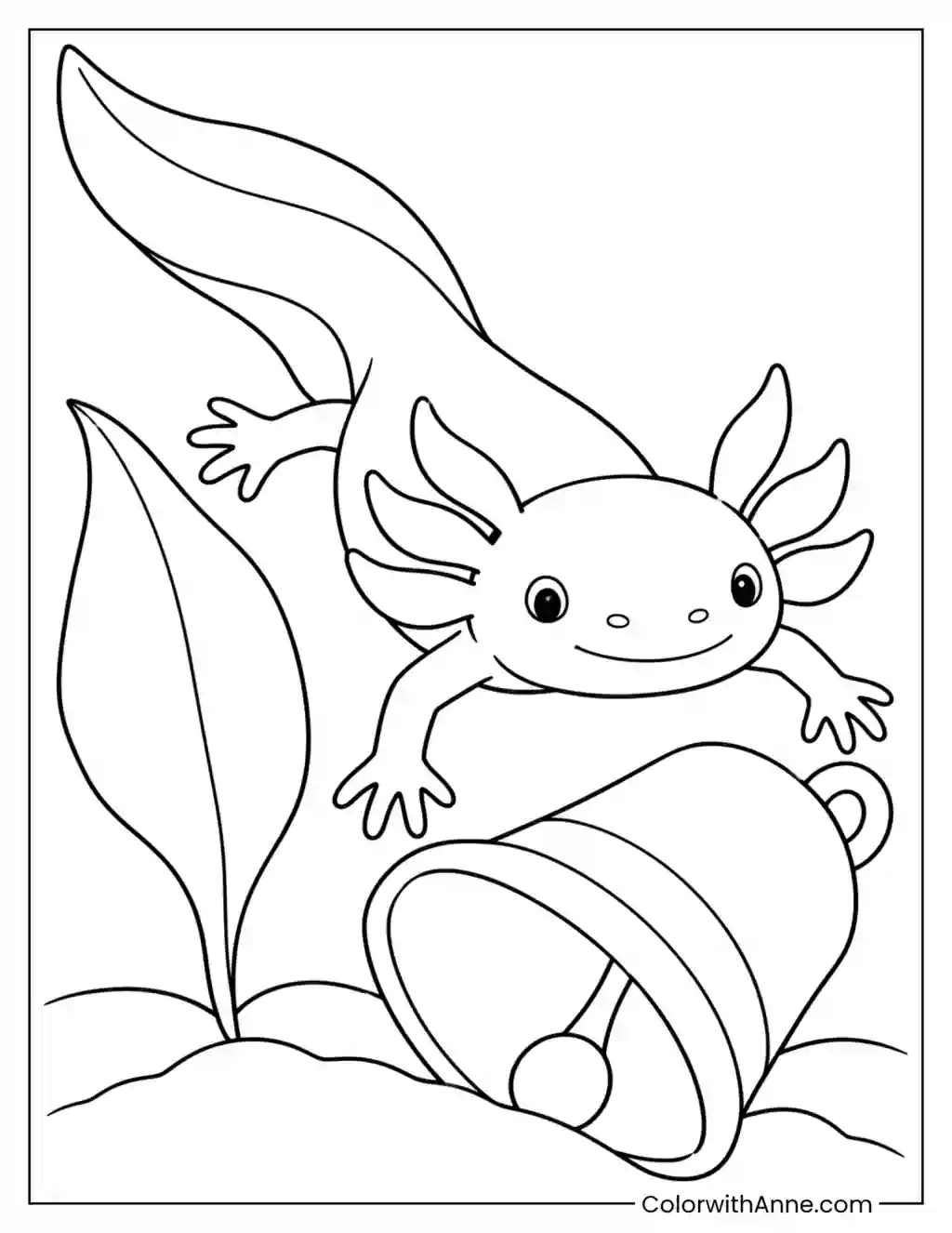
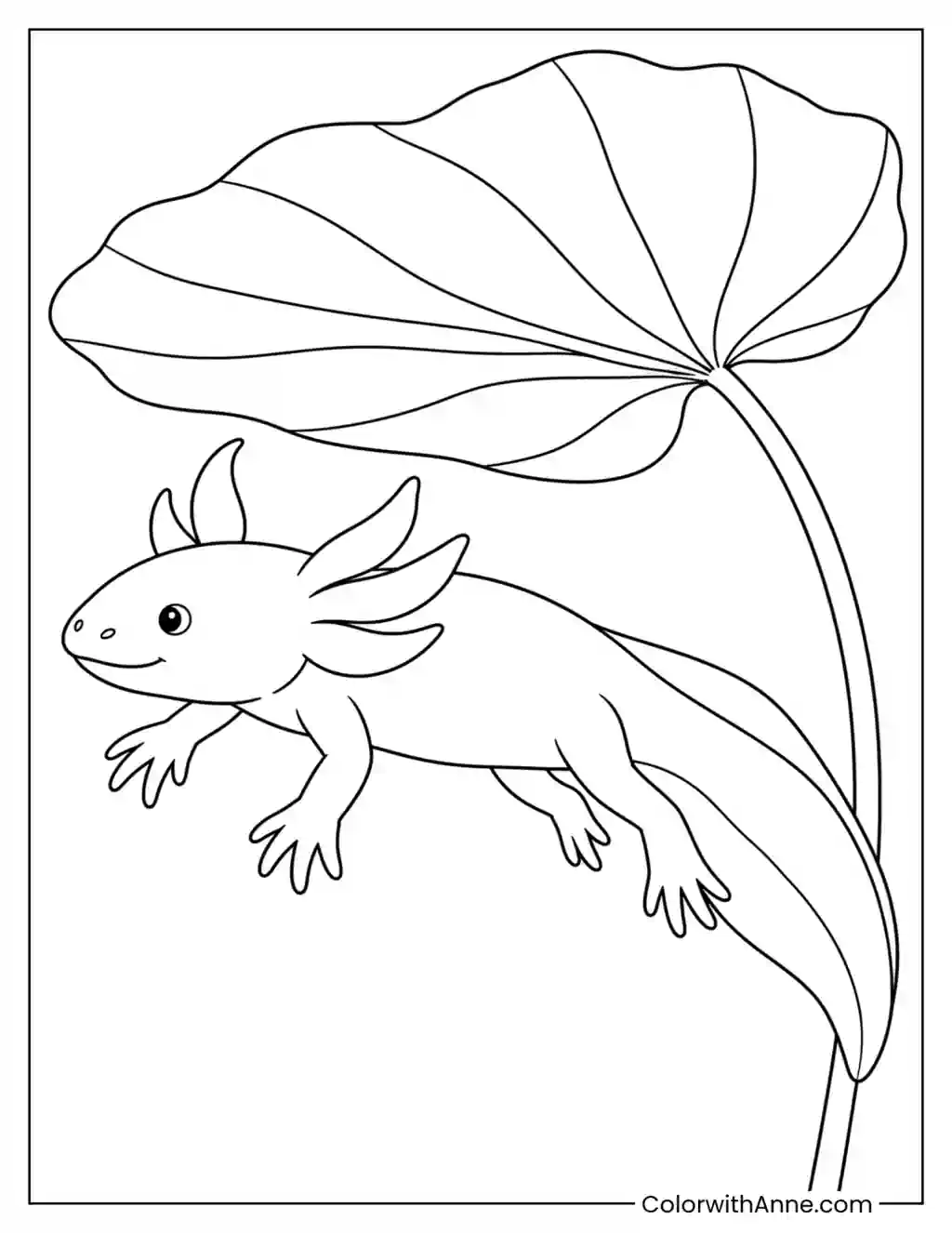
Set a Pale Axolotl Between Broad Green Leaves
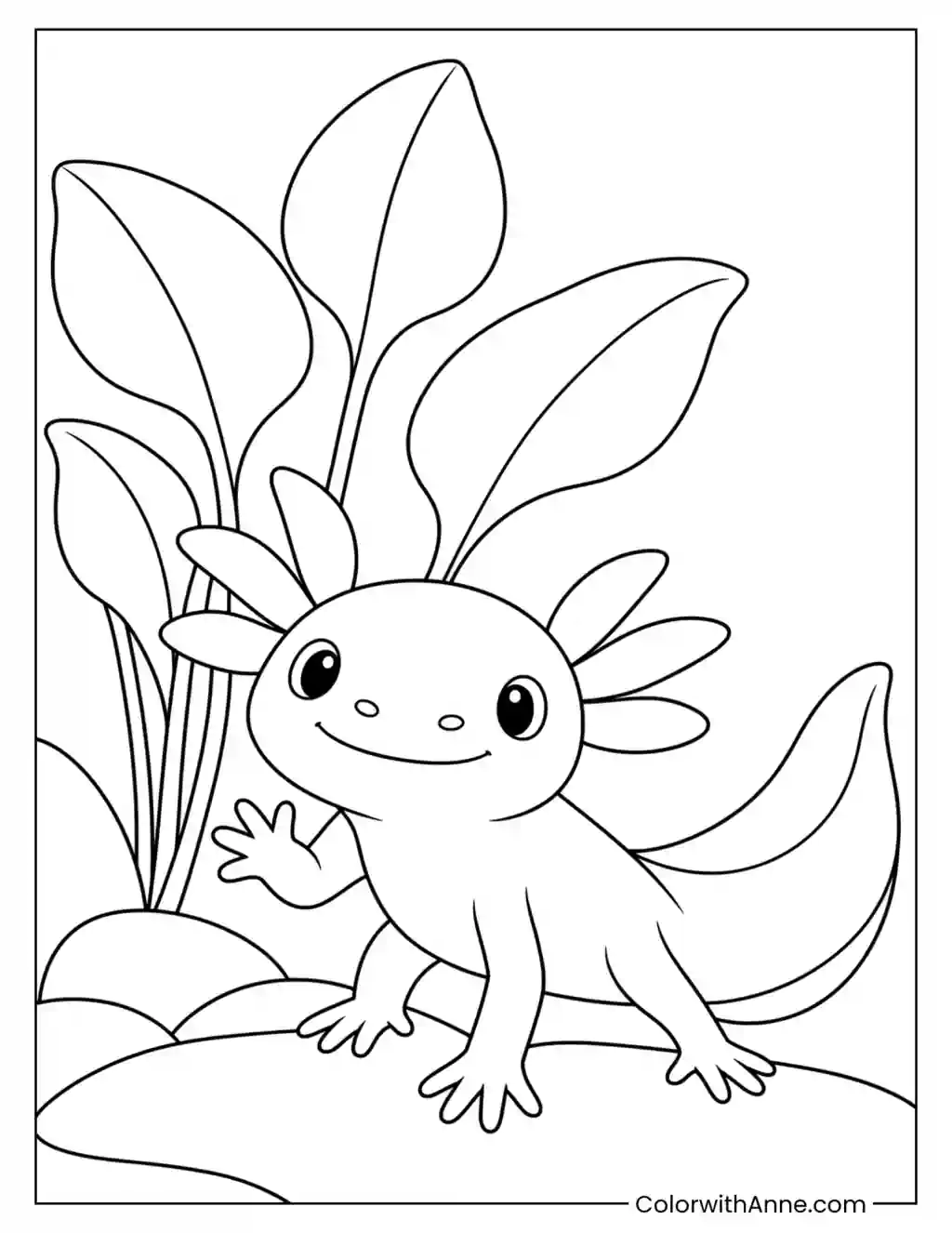
Try pale pink on the axolotl's rounded body and a deeper rose on the branching gills. Keep the small toes light, working around their narrow outlines.
Use two greens on the broad pond leaves, shading gently beside their radiating veins. Give the long stems a darker green so they remain clear beside the body.
Color the tail fin a lighter rose, adding a deeper touch near its inner curved line. Leave the open spaces white or add a faint blue around the leaves.
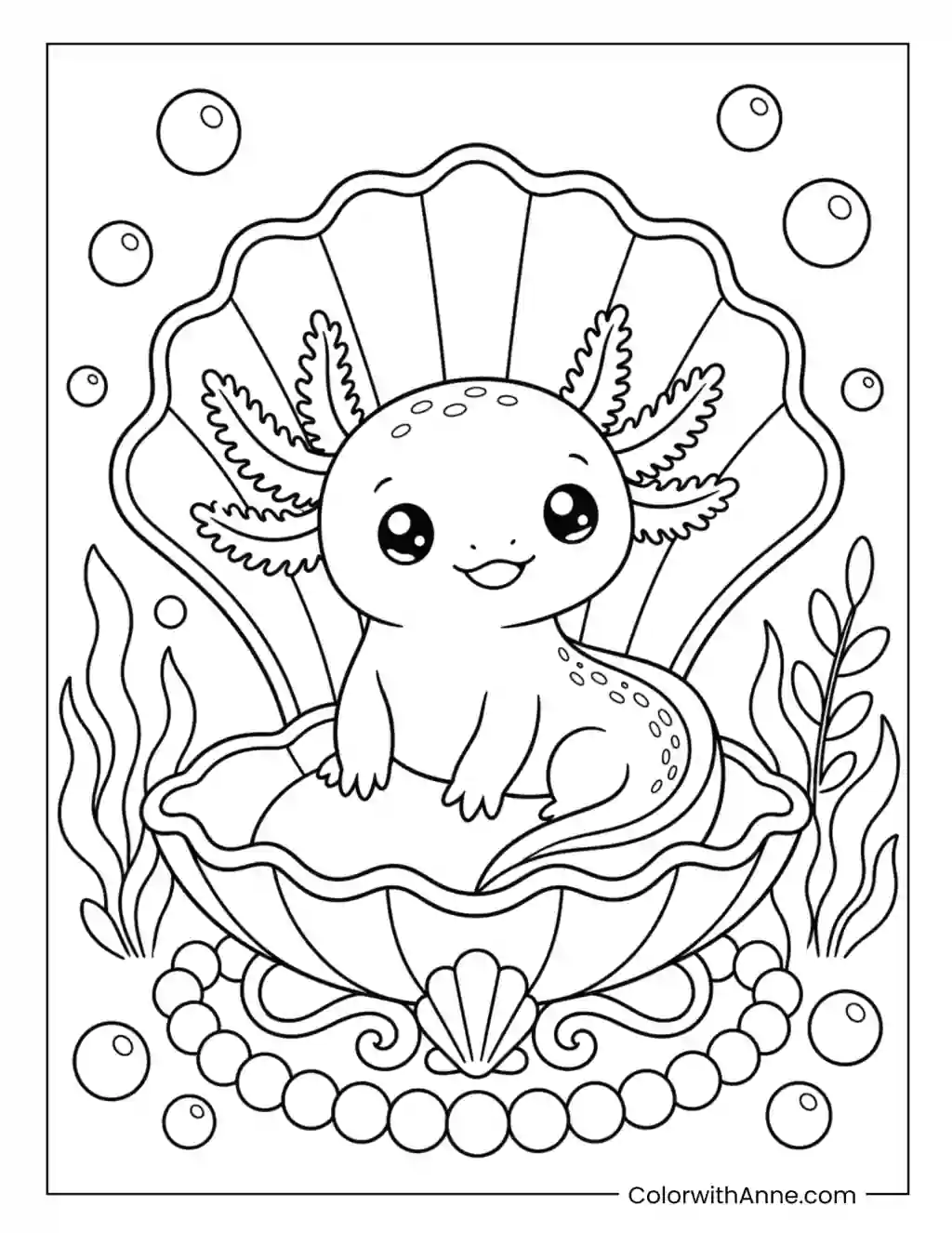
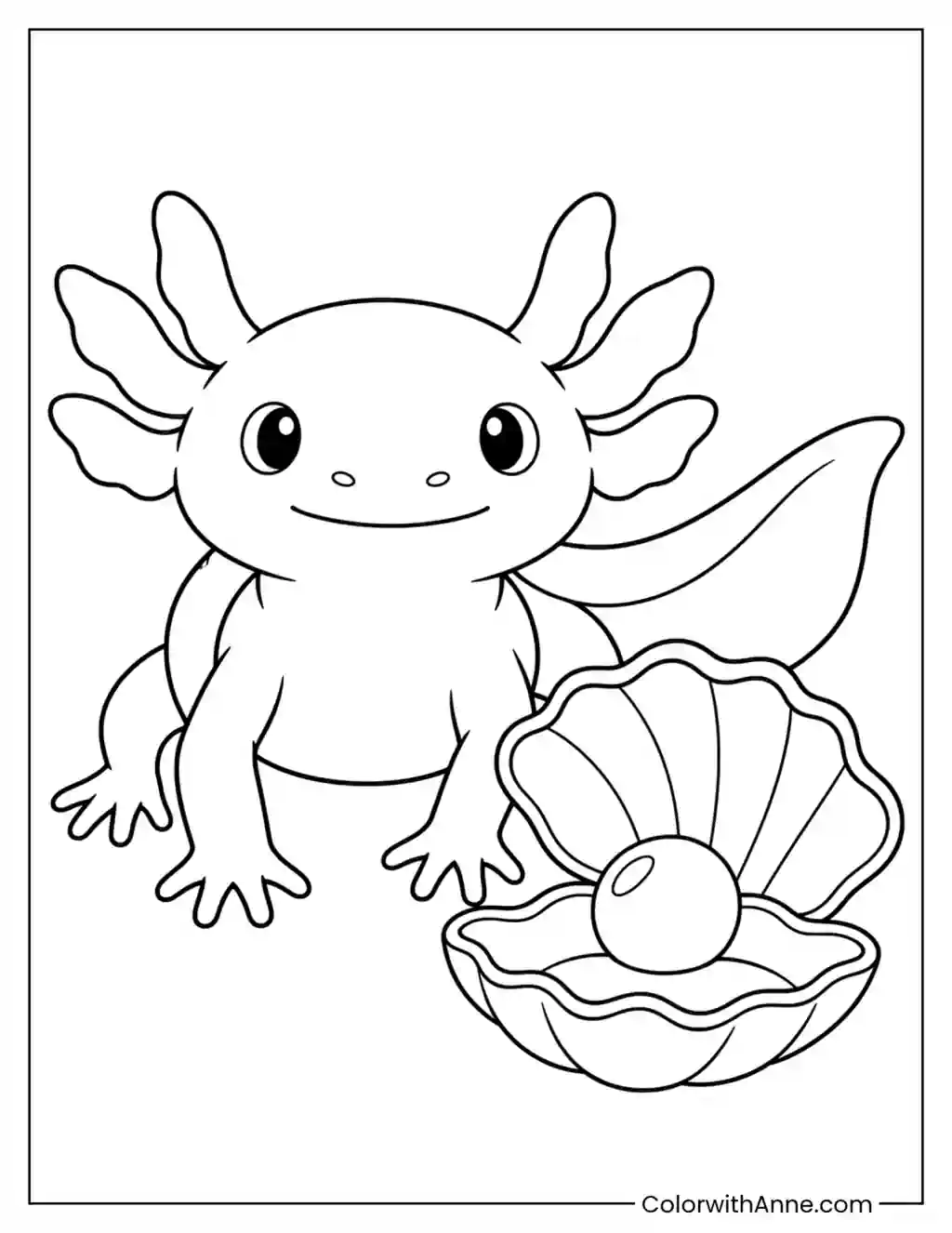
Keep the Pearl Light Inside the Ridged Clam Shell
Choose peach and pale lavender for the shell's divided sections. Use a deeper shade along its scalloped edges and beneath the lower shell's wavy rim.
Leave the pearl mostly white, adding a faint gray or pink crescent near its lower edge. Preserve the small oval highlight to suggest a smooth, shiny surface.
Try soft blue on the axolotl with lavender gills and a pale blue tail fin. Shade lightly where its front limbs overlap the rounded belly beside the shell.
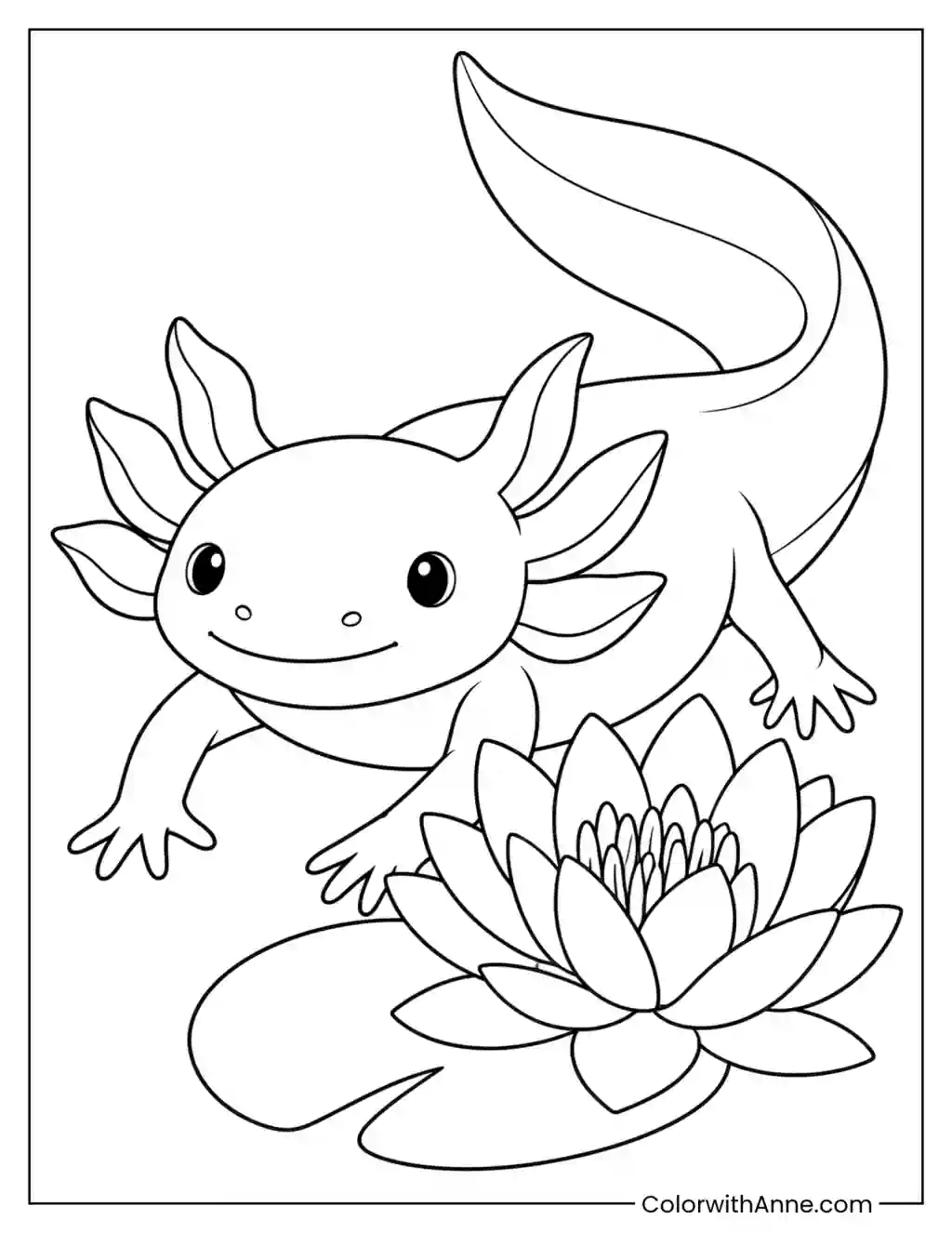
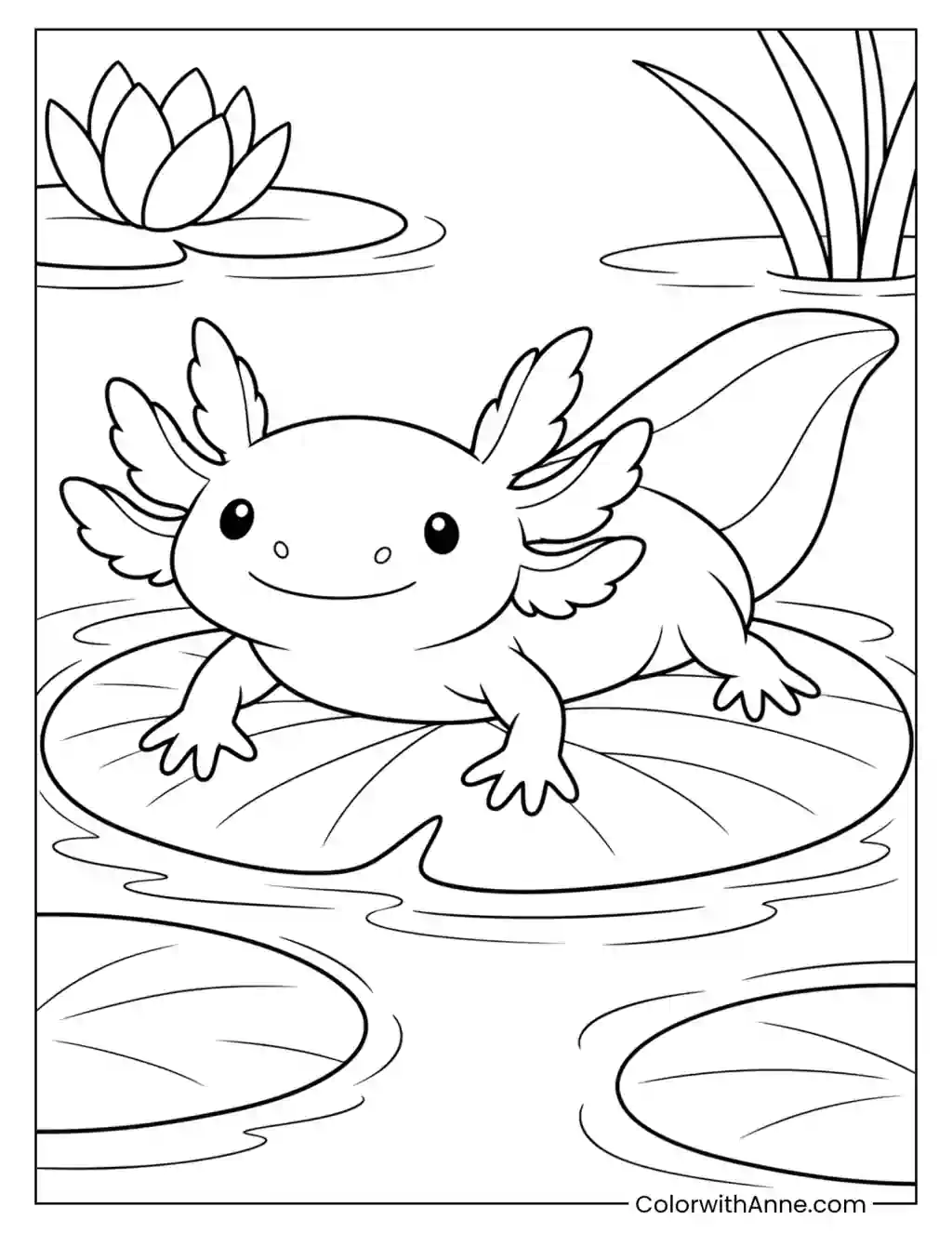
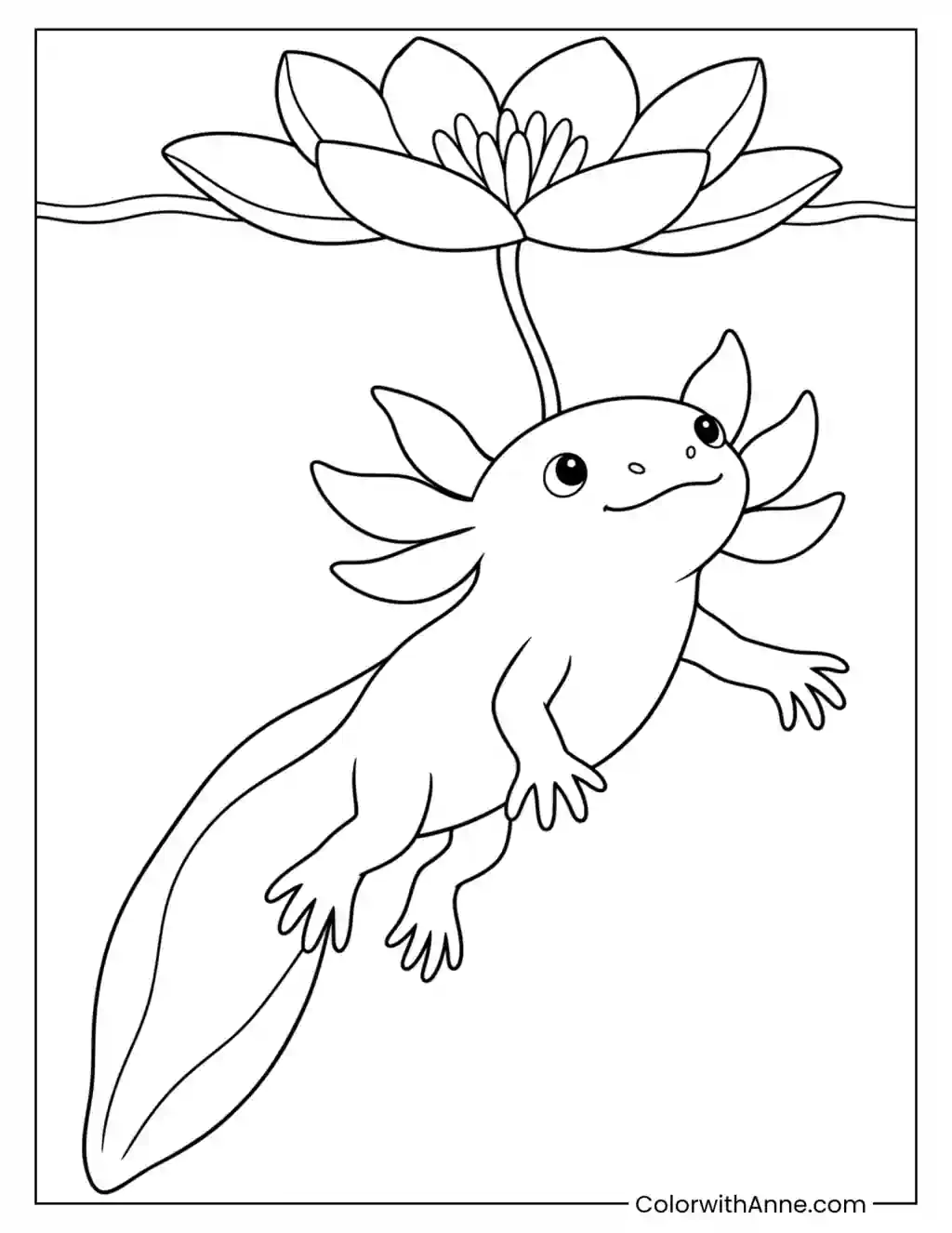
Layer Soft Petal Colors Around the Water Lily Center
Use pale pink on the lily's outer petals and a slightly deeper pink on the inner ones. Color the narrow central shapes golden yellow, keeping their separate tips visible.
Choose green for the broad lily pad, adding a darker touch beneath the flower. Leave the pad's notched edge clear beside the overlapping petals.
Try lavender on the axolotl, with rose gills and a lighter tail fin. Gentle shading beneath the chin and near the bent limbs can separate its curved shapes.
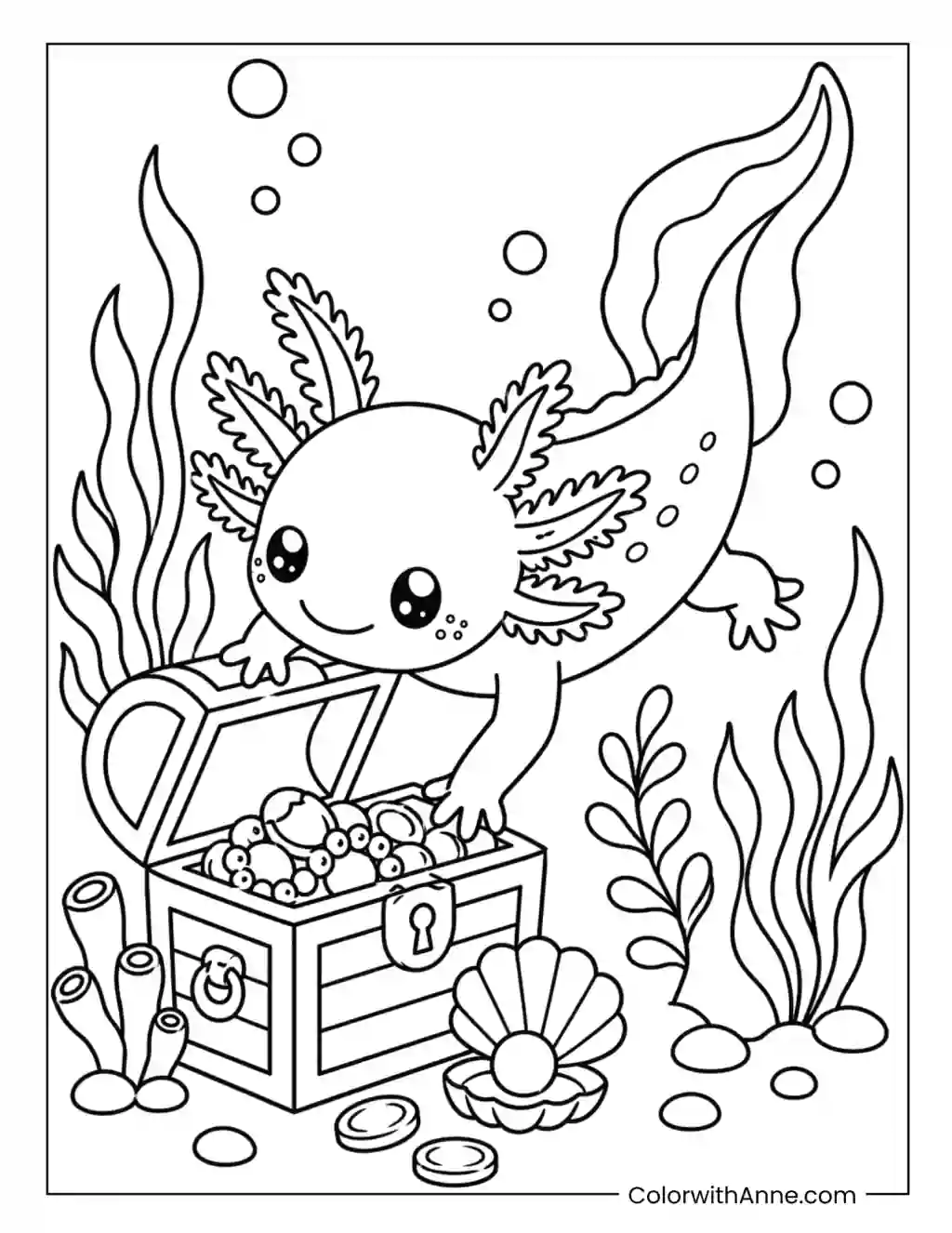
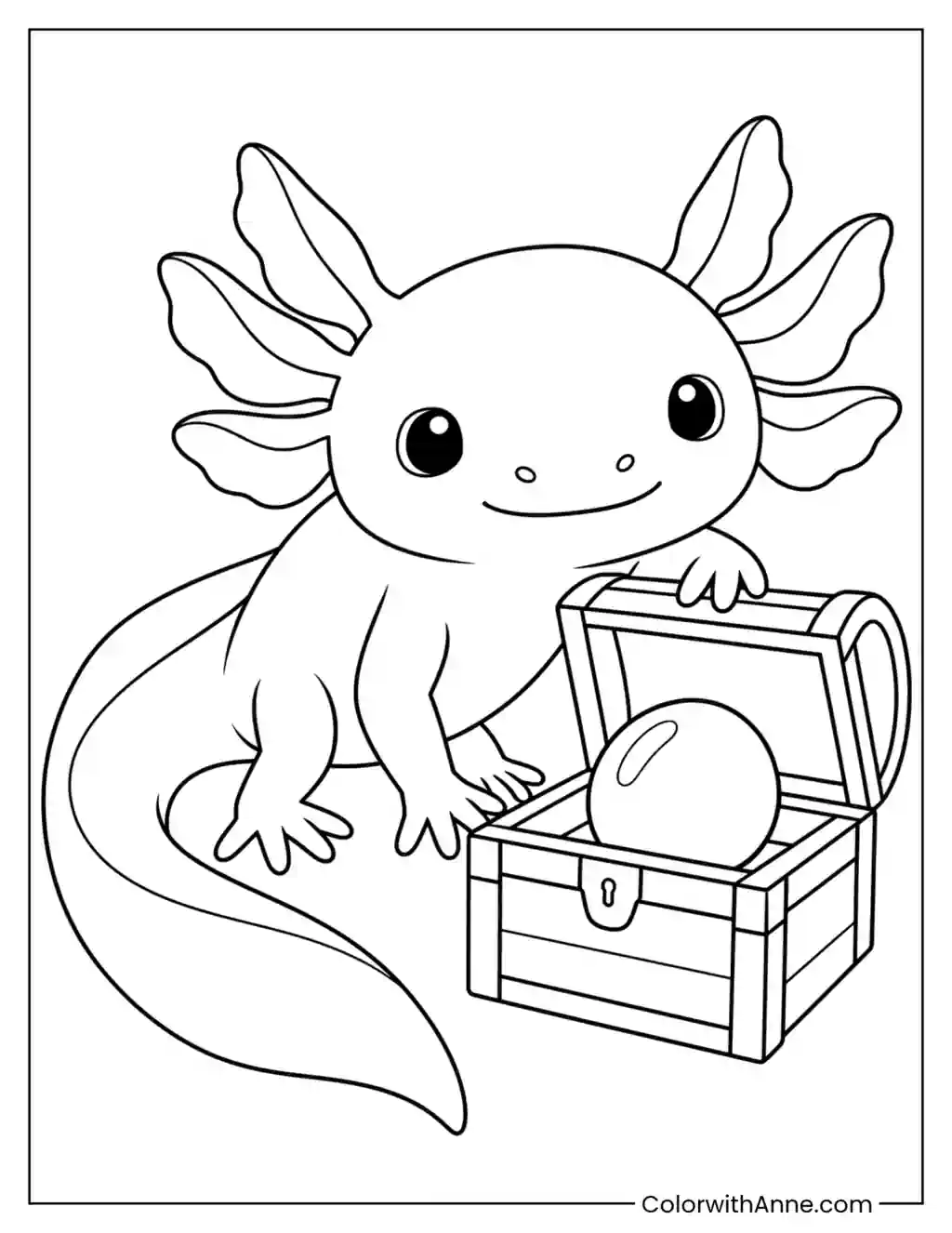
Contrast the Chest's Wooden Panels With Its Round Treasure
Color the chest panels warm brown and its narrow bands muted gold. Deepen the interior below the raised lid, working carefully around the axolotl's resting hand.
Try pale blue or lavender on the large round treasure inside the chest. Leave its oval highlight white and add a little darker shading near the lower edge.
Choose soft pink for the axolotl and deeper rose for the gills. Keep the long tail fin lighter, shading gently where it curves behind the body and chest.
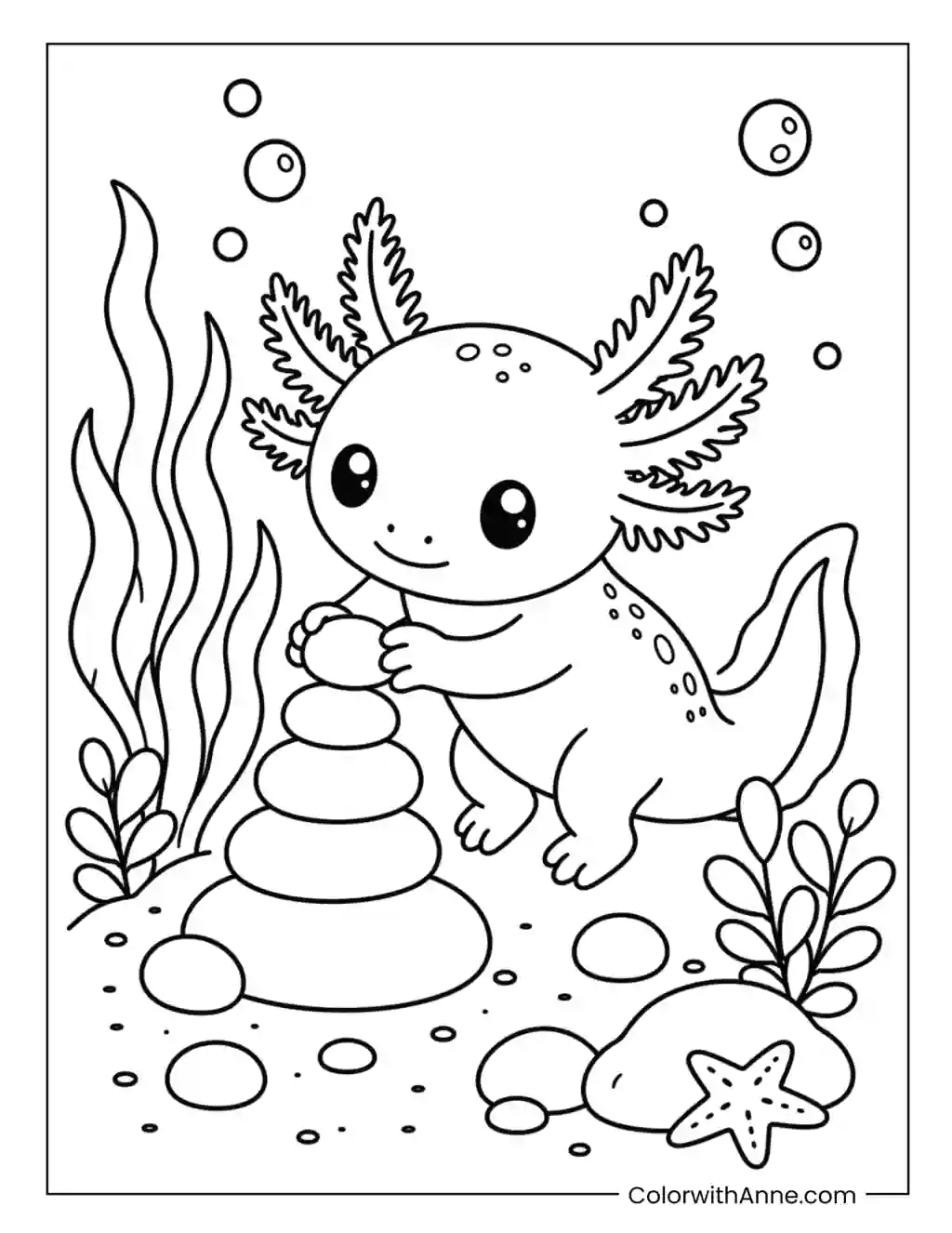
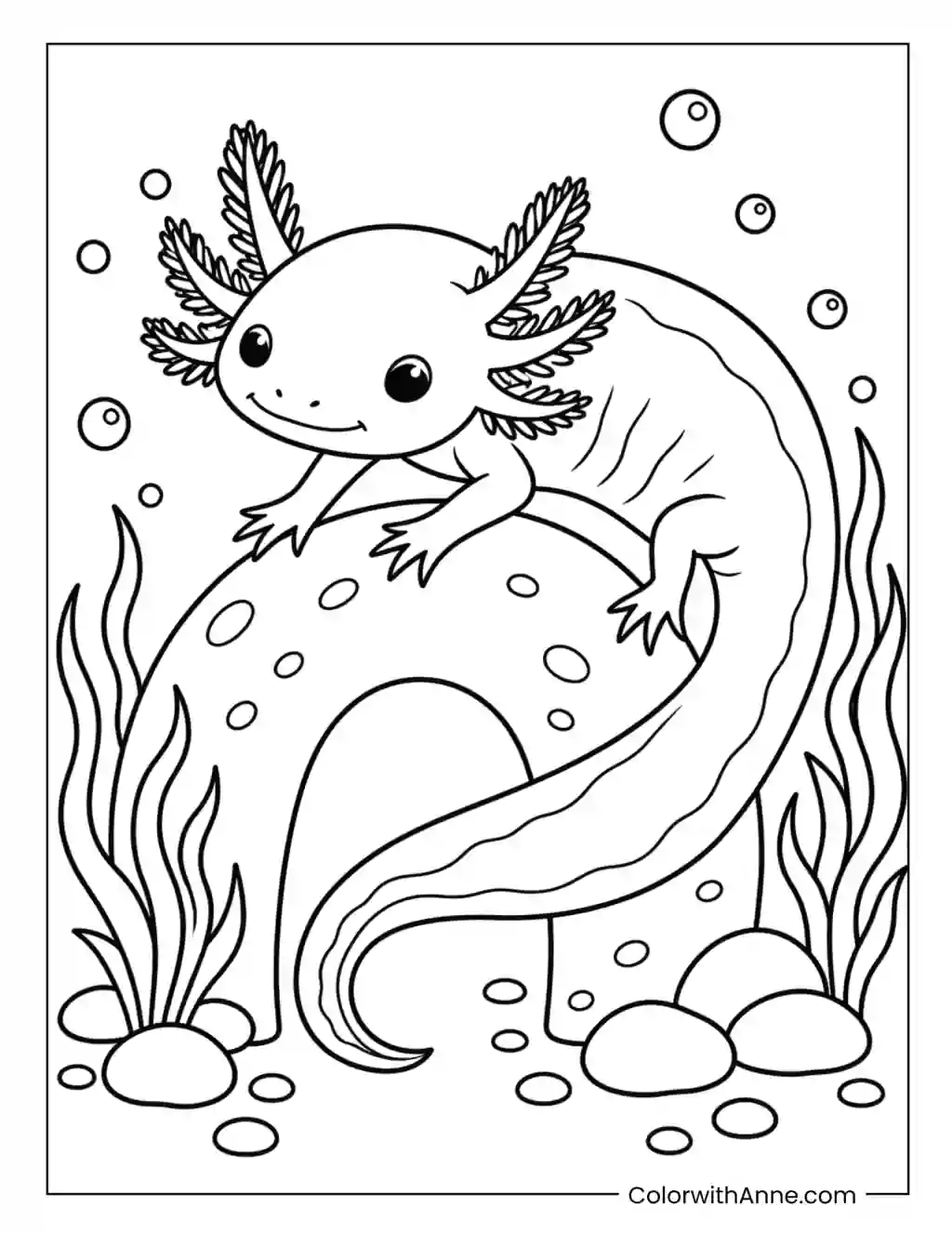
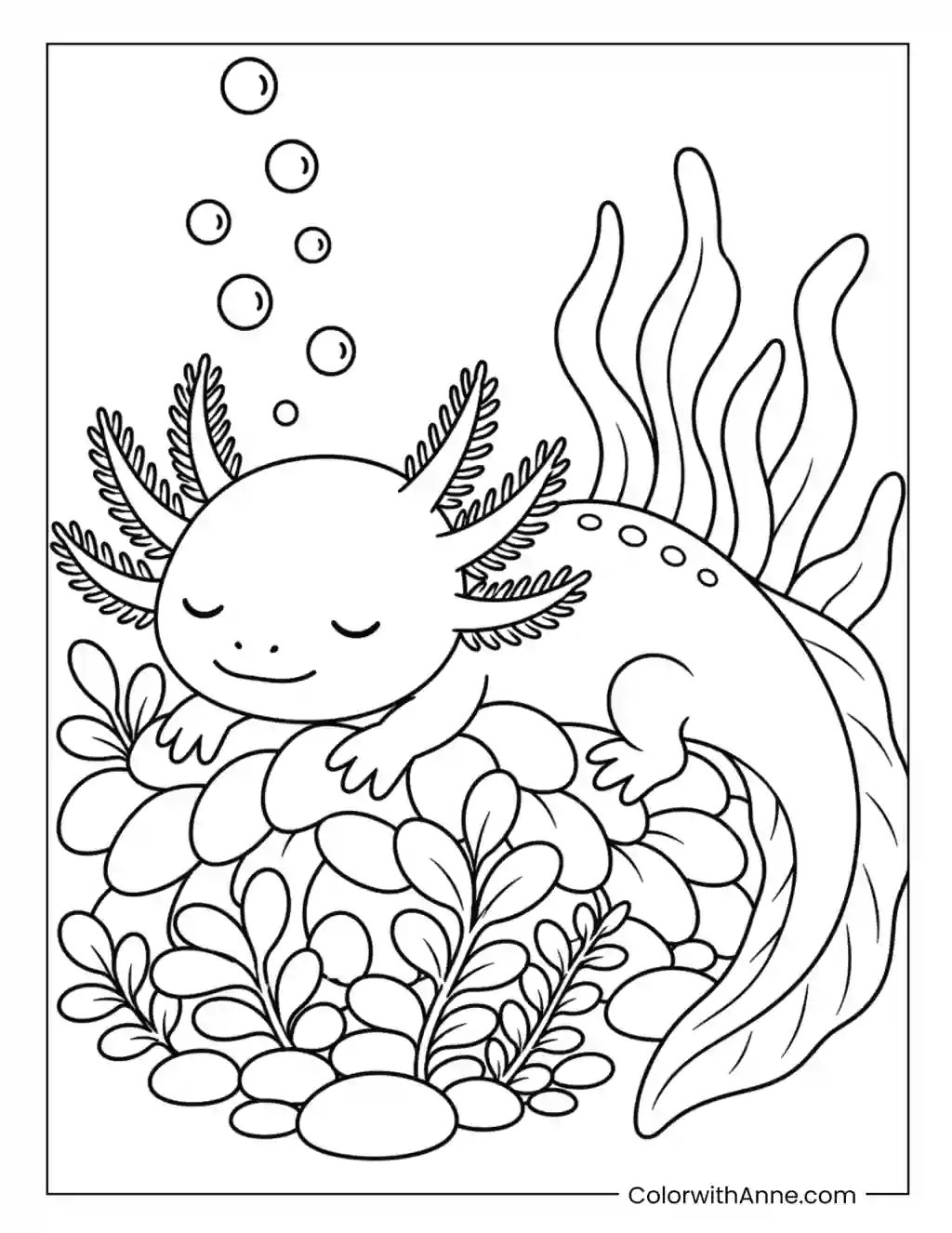
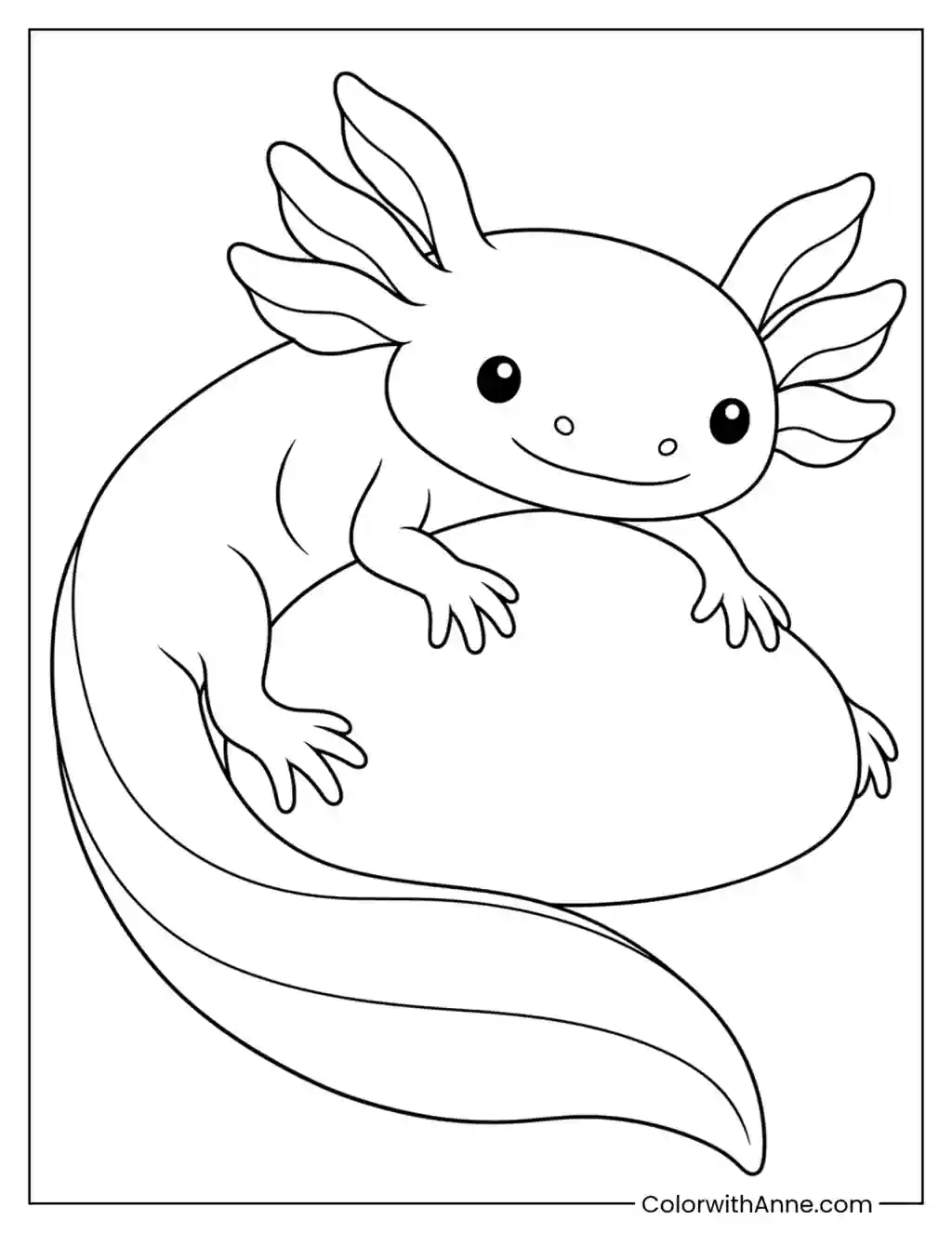
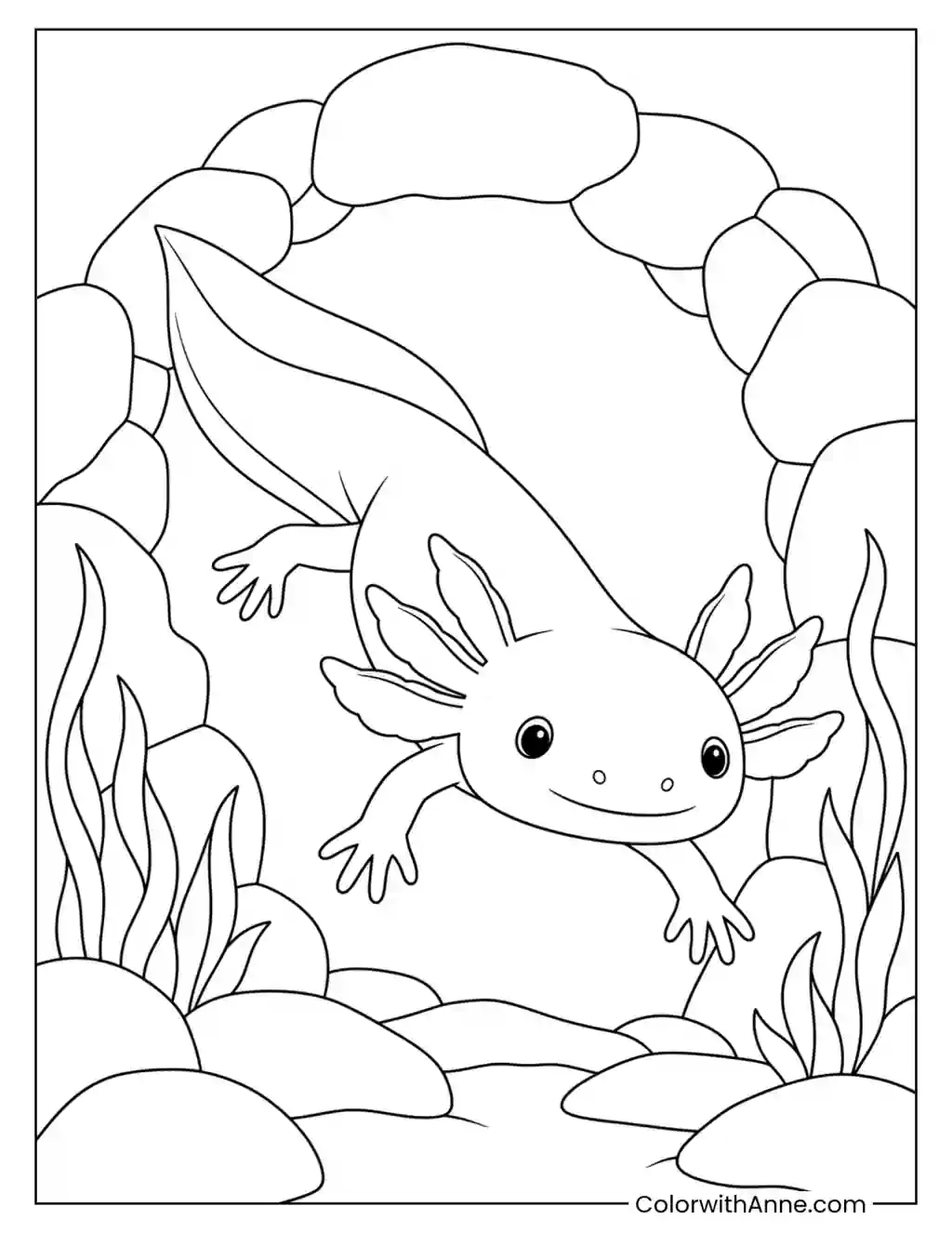
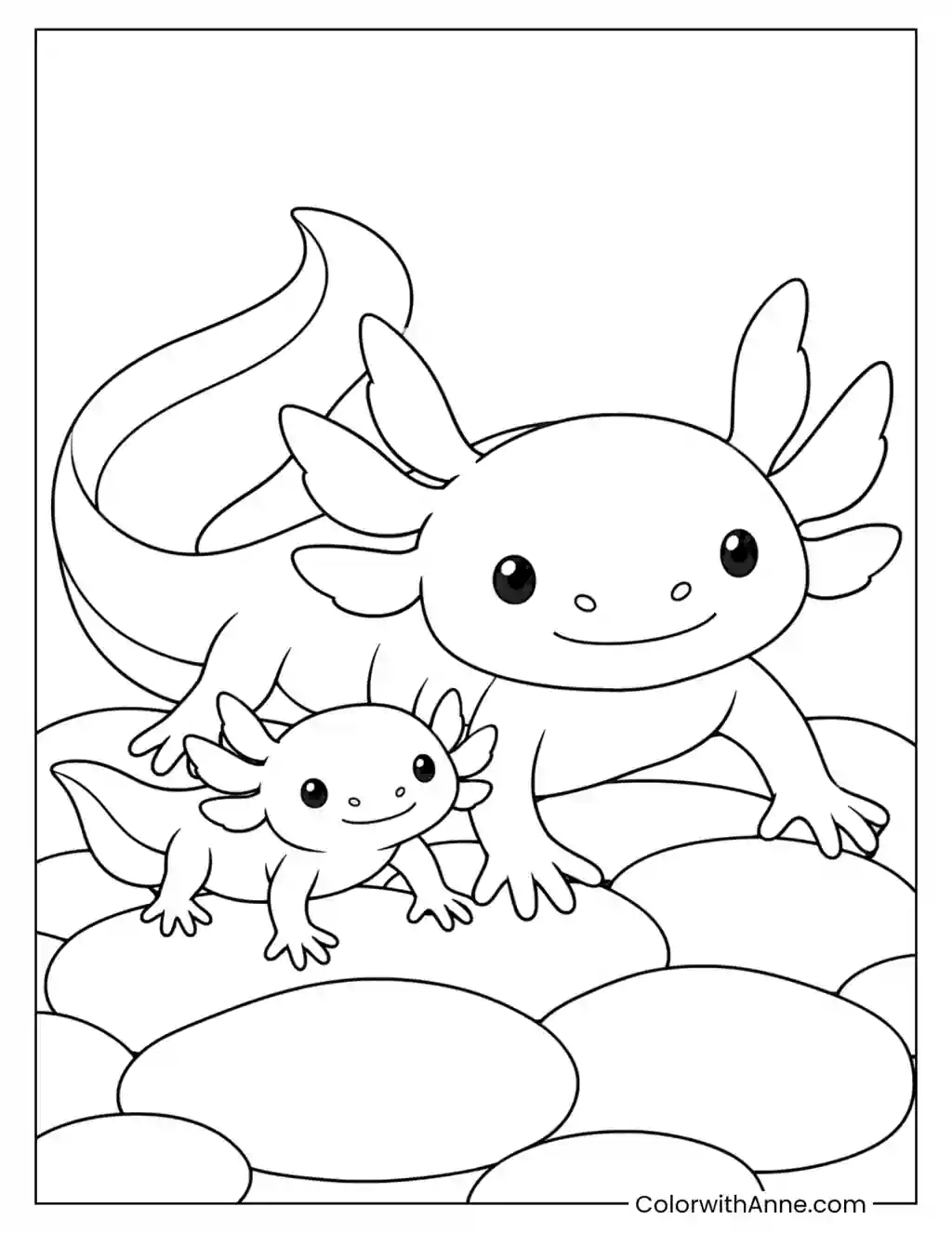
Shade a Smooth Pebble Beneath the Axolotl's Paws
Use pale gray or warm beige on the large pebble. Deepen one lower edge and the small areas beneath the axolotl's paws, leaving the broad center light.
Try golden cream on the axolotl's body and soft coral on its gills. Use short, light strokes around the tiny fingers so they remain distinct against the stone.
Carry a pale coral shade along the broad tail fin. Add slightly deeper color beside its long inner curve to show how the tail wraps around the pebble.
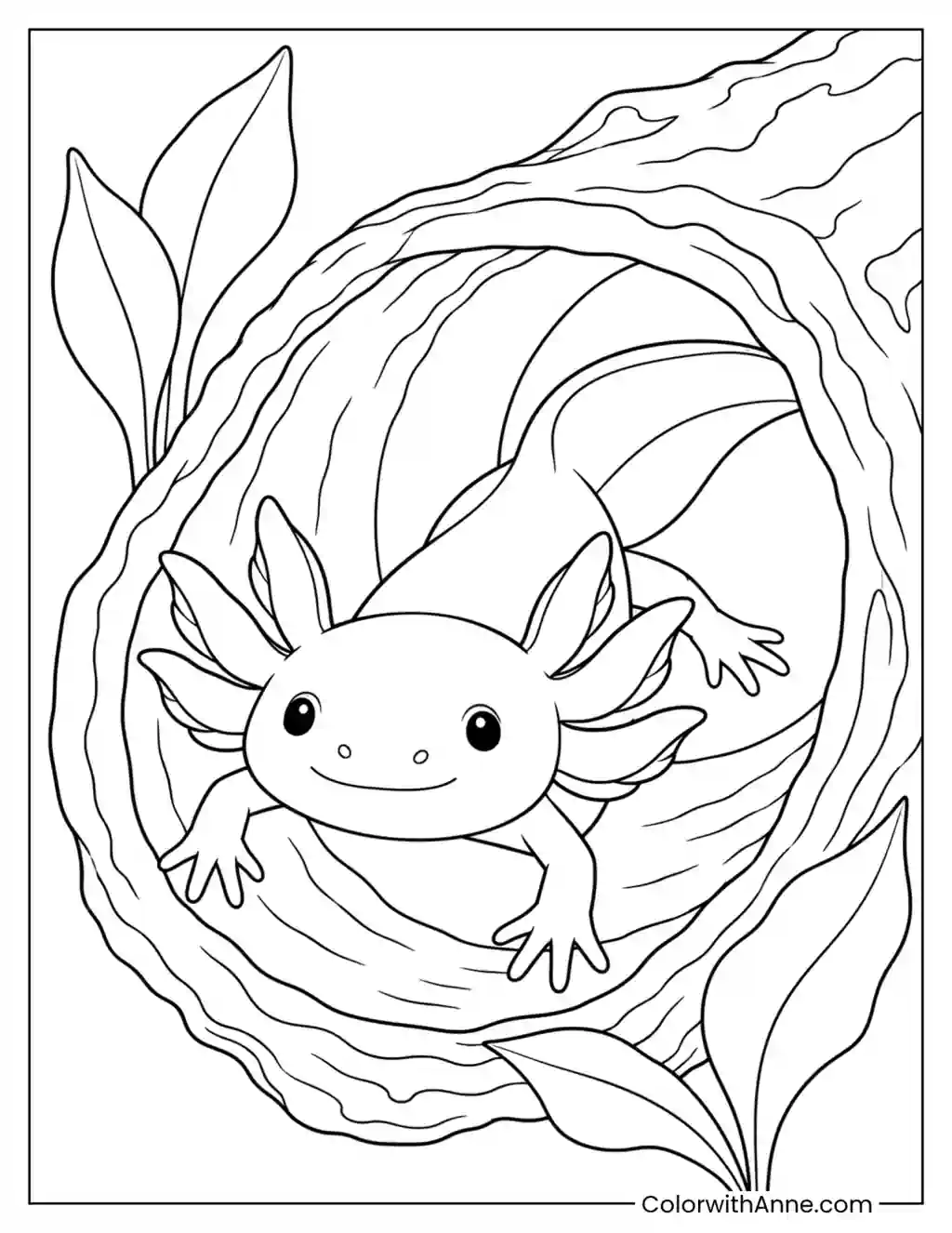
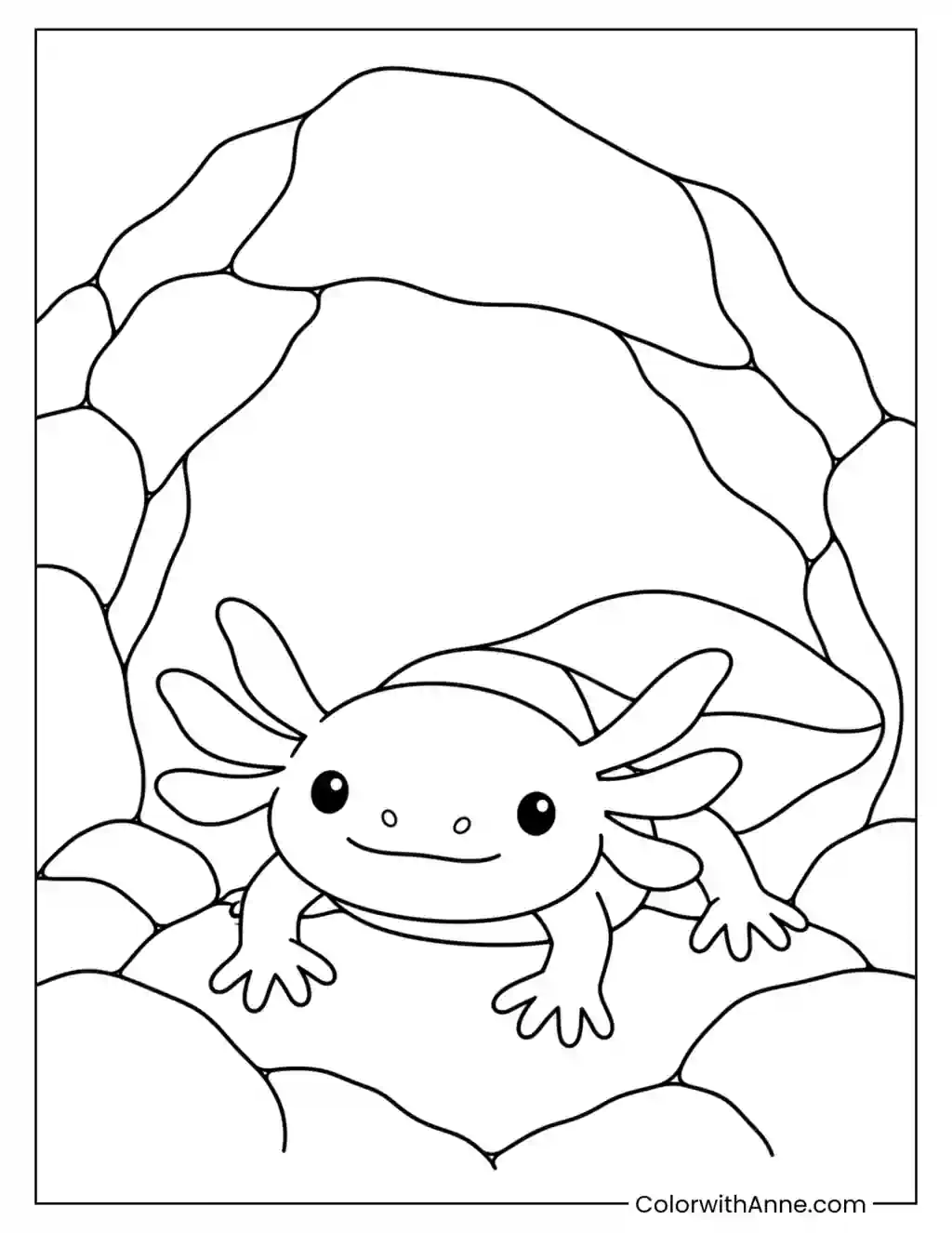
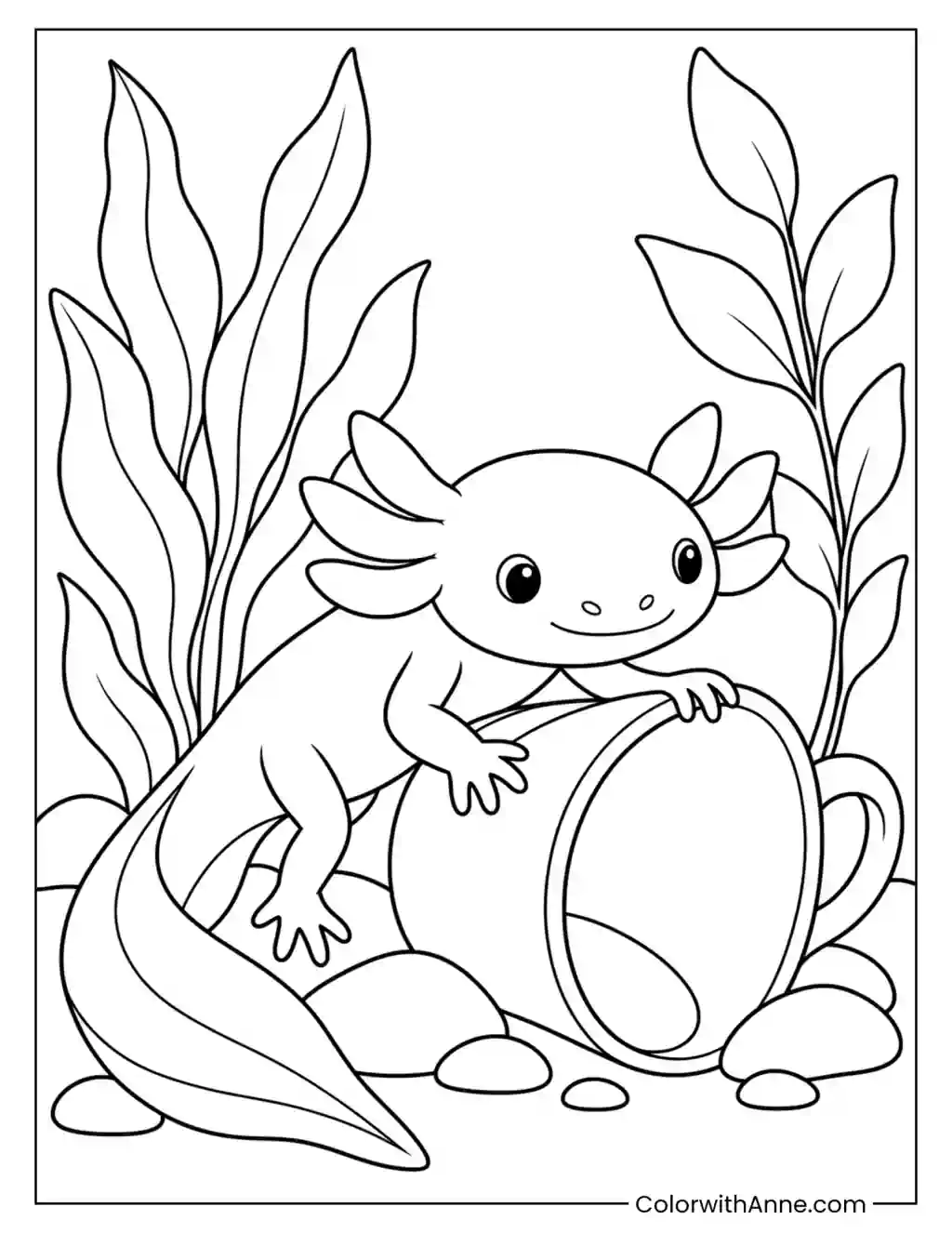
Make the Hollow Log Darker Behind the Axolotl
Choose warm brown for the log's outer bark, following its wavy grain lines. Use a deeper brown inside the opening, with a lighter band around the thick rim.
Color the axolotl pale pink or cream so its head and front paws stand out from the hollow. Give the gills a stronger rose shade and the tail fin a softer tint.
Use two greens on the pointed leaves beside the log. Keep the veins light and deepen the leaf bases where they overlap the bark.
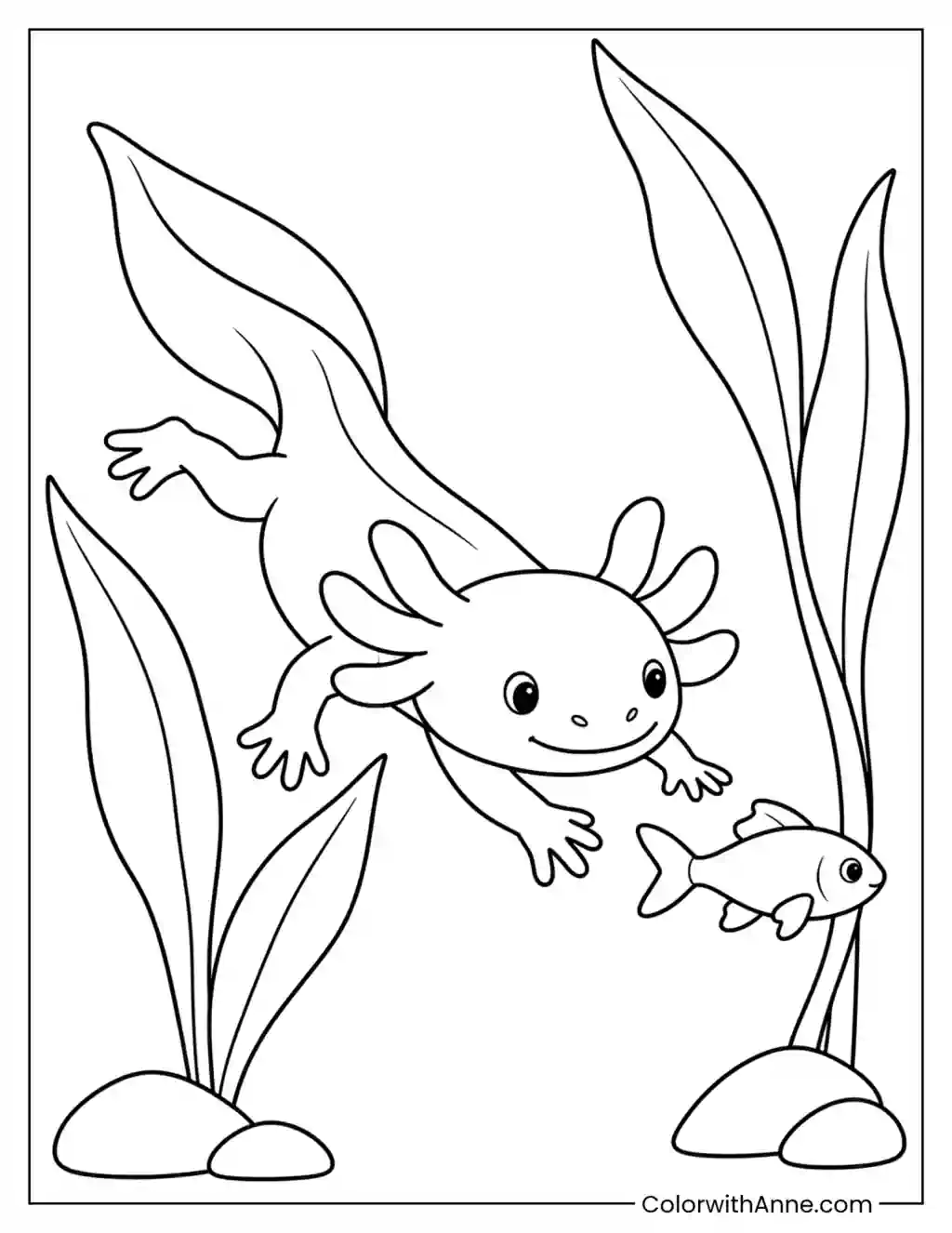
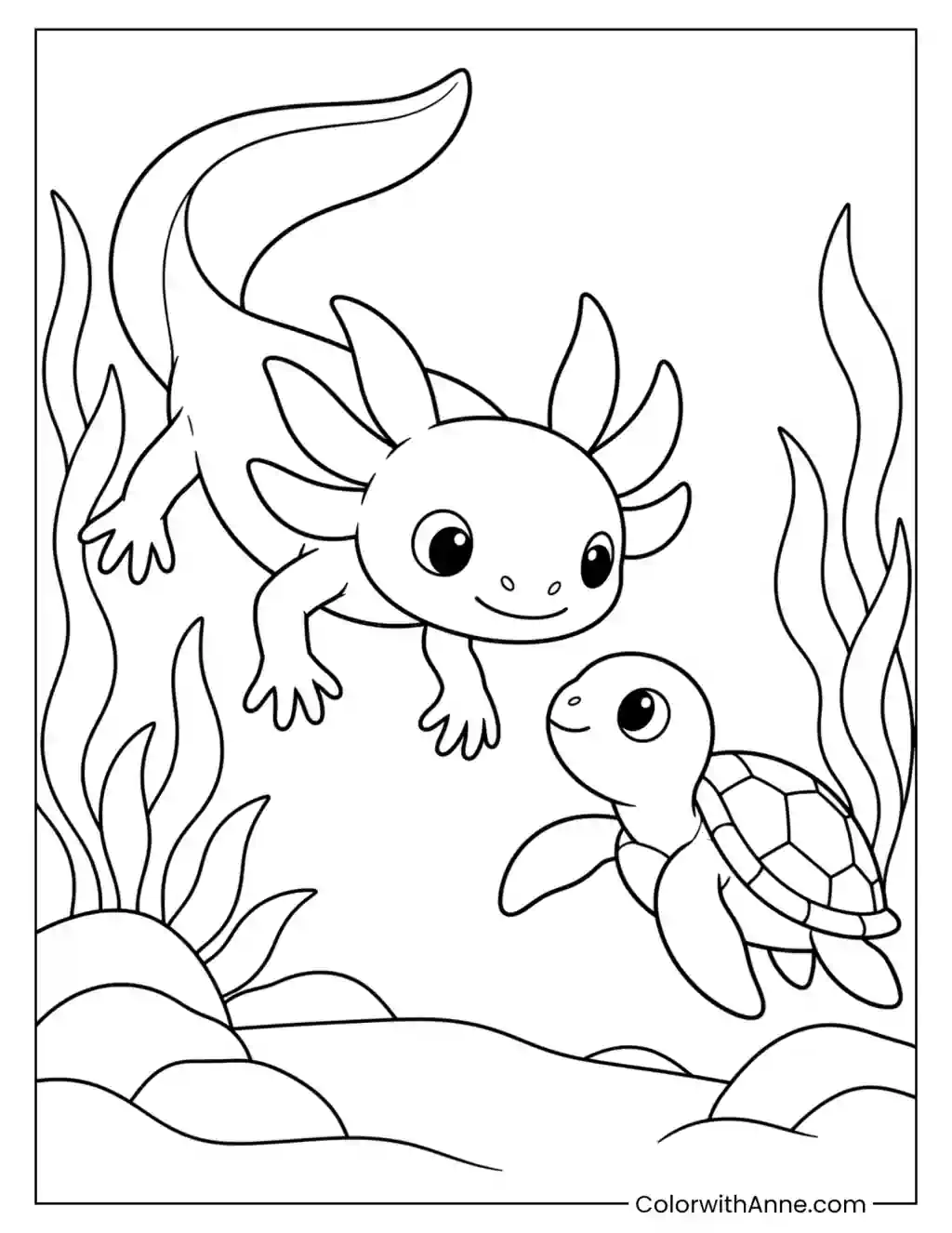
Give the Little Fish a Warm Accent Ahead of the Axolotl
Try orange on the little fish with golden yellow fins and tail. Keep the white area around its black pupil clear, using a sharpened pencil near the small mouth.
Choose lavender for the axolotl and pale rose for its branching gills. Use a lighter lavender on the swept tail fin, with gentle shading along its inner curve.
Color the tall leaves in two greens and the stones muted gray or tan. Leave the space between the two characters light so their facing profiles stay easy to follow.
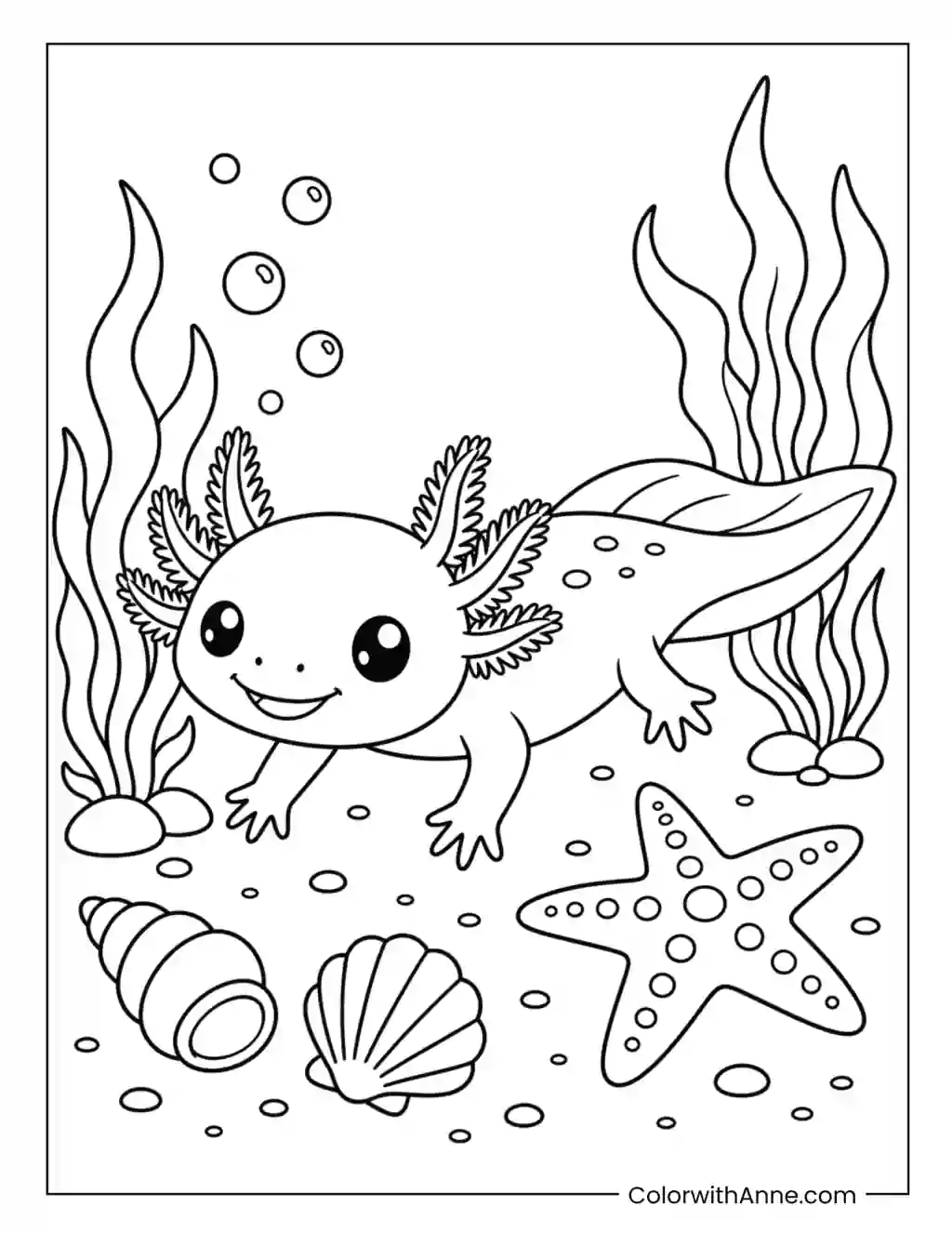
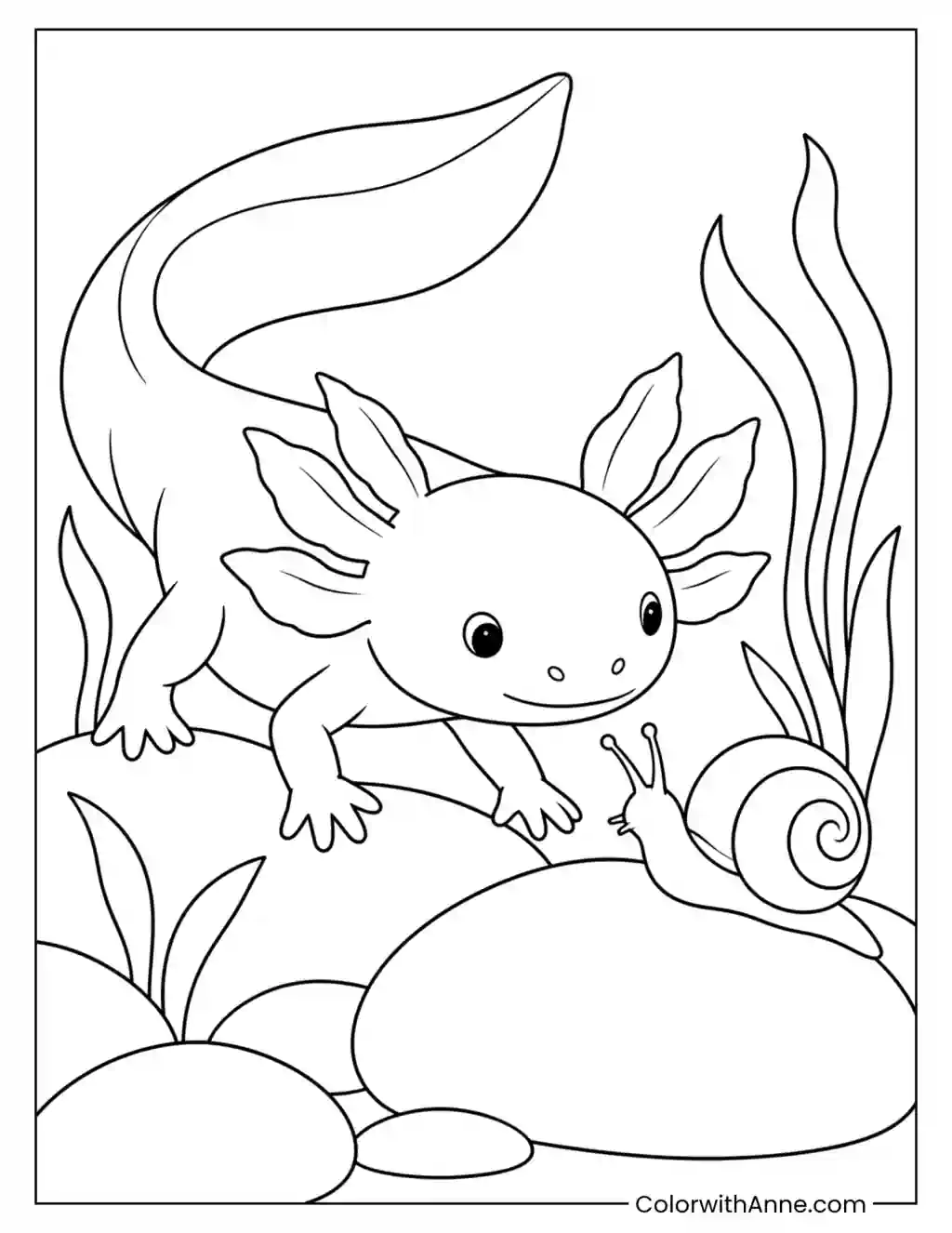
Follow the Snail Shell's Spiral Beside the Axolotl
Use warm ochre or pale brown on the snail shell, deepening the color beside its spiral line. Keep the snail's body a lighter cream, including its thin raised feelers.
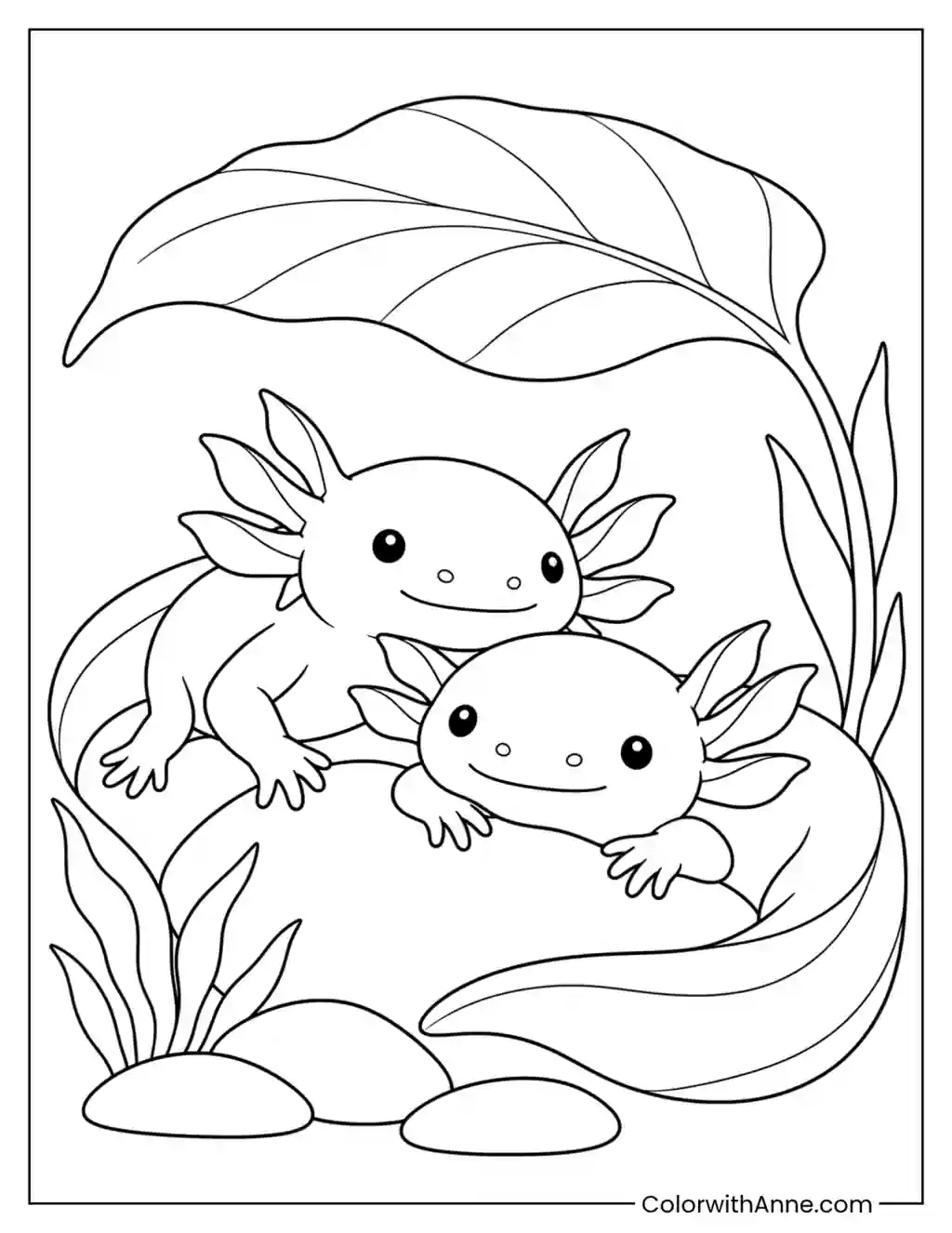
Try soft pink on the axolotl with darker rose gills. Shade lightly beneath its chin and front limbs, leaving its tiny toes distinct above the rock.
Give the large rock a quiet gray shade and the smaller stones softer tan colors. Use green on the narrow plants, keeping the long tail fin pale beside the taller leaves.